






Abstract
For many years, early autism interventions were developed without the involvement of autistic people. This review explores the views and experiences of autistic adults regarding psychosocial/educational interventions for young autistic children. Four databases (Web of Science Core Collection, Education Resource Information Centre, Education Database and PsycINFO) were searched; 19 studies were identified. Quality appraisal was performed using the Quality Assessment with Diverse Studies tool. Qualitative data were analysed using thematic synthesis. Quantitative data were analysed using descriptive narrative synthesis, including textual description, tabulation and a visual representation. Five themes were developed among studies with qualitative data: Hear the child’s voice, Let the child be a child, Celebrate autistic lives, Understand autistic challenges and, finally, a cross-cutting theme, Damage done, on negative experiences of autistic people who underwent early interventions. In studies with quantitative data, autistic people endorsed well-being, adult support/accessibility and reducing harmful behaviours, and did not endorse outcomes related to reducing autism traits. We conclude that, according to autistic adults, early interventions should take an autism-affirmative approach, be developmentally appropriate and foster self-determination. Given that the present research included studies from varied cultures and backgrounds, further research is required to examine how individual differences influence perspectives on interventions.
Lay Abstract
Our study aimed to understand what earlier studies found when they asked autistic adults for their views on intervention and support for young autistic children. We were interested in the views of autistic adults whether they had taken part in early interventions or not. After searching through online records, we found 19 relevant studies. We evaluated the quality of the studies and then separated qualitative (text-based) and quantitative (number-based) data. In studies with qualitative data, we found five themes. Hear the child’s voice talks about child’s assent, Let the child be a child addresses support being play-based and fun, Celebrate autistic lives focuses on autism acceptance and Understand autistic challenges examines making society more accessible. Damage done outlines the negative experiences of autistic people who took part in early interventions. Studies with quantitative data were very different to each other, so we described their similar aspects. In four quantitative studies, autistic people rated intervention goals based on how good or important the goal is for the child. Autistic people said the best/most important goals focused on safety, child well-being and adult support. The worst/least important goals focused on changing autism characteristics such as stimming and eye contact. A graph was made to show this. We need more research on intervention practices and contexts and more research where we ask diverse autistic people: autistic parents, autistic children, men, people of colour and people with higher support needs. Researchers and practitioners can use these findings to develop and provide support that aligns with autistic people’s priorities.
Keywords
Background
Early autism interventions are a type of specialised support for young autistic children, which are often aimed at promoting skill development, well-being or participation in the community (Sandbank et al., 2020), but can address a wide variety of target outcomes (Hume et al., 2021; National Institute for Health and Care Excellence [NICE], 2021). Much research has evaluated the effectiveness of specific interventions (see Daniolou et al., 2022; Hume et al., 2021; Rodgers et al., 2020; Sandbank et al., 2020 for recent reviews and meta-analyses). However, many fewer studies address other aspects, such as social validity (Callahan et al., 2017; Huntington et al., 2024; Leif et al., 2024) or adverse effects (Bottema-Beutel et al., 2021). Where early intervention research has explored stakeholder views, it has often focused on (primarily non-autistic) caregivers or teachers (see Estes et al., 2019; Jurek et al., 2023 for systematic reviews), whose perspective can be very different from that of autistic people (Carey et al., 2019). Very little research has investigated the views of autistic people themselves.
The notion that autistic people should have a voice in research about themselves is a key mandate of the neurodiversity movement, a self-advocacy, social justice and civil rights movement which advocates for the rights of neurodivergent people in different areas, including education (Kapp, 2019). The movement is based on the premise that diversity of minds and brains should be valued (Dwyer, 2022) and is aligned with the social model of disability (Dwyer et al., 2024; Pripas-Kapit, 2019), which suggests that many barriers disabled people face are solved by political action and social change, and support for disabled people should be dictated by and with them (“Nothing about us without us”) (Haegele & Hodge, 2016; Riddle, 2020). Giving all stakeholders, including autistic people, a voice in research about autism interventions is also important in the context of the wider movement towards co-production of public services, and stakeholder involvement in research decision-making (National Health Services (NHS) Health and Research Authority (HRA), n.d.). Such involvement has also been shown to improve the quality and impact of the research (Honingh et al., 2020).
Some goals and practices of early autism interventions have recently been challenged by autism community. For example, goals limiting autism traits such as reducing restrictive and repetitive movement or making eye contact are currently debated by autistic people in the community as they find those goals unhelpful and possibly even negatively affecting them (Kapp, 2019; Trevisan et al., 2017). Behavioural interventions in particular are a subject of heated discussion – autistic self-advocates, including those with lived experience of behavioural interventions, have been speaking about the potential harms over blogs, social media and other means of engagement (e.g., NeuroClastic, 2021; Sharland, 2025; Therapist Neurodiversity Collective, 2025). While several primary studies have recently been published, to our knowledge there is no current published literature review on the topic to synthesise the evidence from across studies. Summarising the current evidence is important as it allows us to see possible trends, gaps and limitations in a rapidly developing field. Early support is often varied in setting, aims and methodological approaches. Branded interventions under one umbrella approach can significantly differ in their practices, aims and overall context (Leaf et al., 2022). To bring more nuance to a polarised conversation, it is necessary to understand specific aspects of an intervention that cause conflict and the reasoning behind this conflict, as well as discover methodological and conceptual gaps in the research.
This study is a systematic literature review of peer-reviewed papers on the views and experiences of autistic adults on psychosocial and/or educational (i.e., not involving pharmaceutical or biomedical treatment) early interventions for autistic children. The review included studies where autistic adults shared their views on their lived experiences, as well as the studies where autistic adults expressed their views on components of early interventions. The review aimed to explore autistic adults’ views and attitudes regarding (a) early autism support in general; (b) specific practices, procedures and/or methods; or (c) specific goals.
Methods
The study was pre-registered on PROSPERO on March 8, 2024 (ID: CRD42024511590). Preferred Reporting Items for Systematic reviews and Meta-Analyses (PRISMA) guidelines were followed during all stages of the review where applicable. PRISMA checklists can be found in Supplementary Material 1 and 2.
Participatory Methods and Author Positionality
The author team includes autistic/neurodivergent people, family members of autistic people, practitioners who have delivered autism interventions, and researchers who have developed and evaluated autism interventions. The authors are theoretically aligned with neurodiversity-affirming approaches to autism interventions; some are engaged in primary research to influence, develop and evaluate interventions that are more acceptable to autistic people.
While the research question was prompted by many conversations with autistic people about the social validity of early autism interventions, there was no formal involvement of the wider autistic community in conduction of this study apart from a research team, as this is a desk-based study.
Search Criteria
We focused on published peer-reviewed journal articles rather than broader literature (e.g., grey literature) due to the diversity of the studies within the research questions.
We included both qualitative and quantitative studies that focused on experiences or views of autistic adults towards both specific interventions and early support in general. We included mixed stakeholder studies, provided that the findings were clearly disaggregated between autistic adults and other stakeholders. We defined early intervention as focusing on children diagnosed with autism < 7 years. However, during preliminary screening, we found that many studies did not disaggregate findings according to the intended recipients’ ages. In addition, some early interventions are also advised for use with older children or even adults (e.g., Autism Speaks, n.d.; Rodriguez et al., 2022), and the same goals are targeted throughout life (Hume et al., 2021). We therefore included studies that asked autistic adults about approaches used with young autistic children, even if they are also used at later ages.
The examples of excluded papers can be found in Supplementary Material 3.
Search Strategy
The following electronic bibliographic databases were searched on March 8, 2024, and August 16, 2024: Web of Science Core Collection, Education Resource Information Centre (ERIC), Education Database and PsycInfo. This is the search strategy in the ProQuest format:
autis* OR ASD OR ASC OR Asperger* OR PDD*
AND adult* or people or community
AND views OR experiences OR perspectives OR attitudes OR perceptions
AND early OR child* OR preschool
AND support OR treatment OR intervention OR programme OR therapy OR training
In PsychInfo, MeSH terms “Autism,” “Early Intervention” and “Attitudes” were added to the search. All searches were performed on every section except full text; the results were filtered by language (English) and type of item (journal article). In addition, the reference lists of articles deemed eligible or excluded due to the wrong study design were screened. The search was entered into Google Scholar and the first 20 pages were scanned.
Titles and abstracts were screened by the first author. Ten percent of randomly selected records (564 items, 442 and 122 in original and updated search, respectively) were blindly screened by two independent reviewers (330 and 234 items, respectively, non-overlapping). There was a 98% agreement as to which studies should be referred to the full text; the discrepancies were cross-checked between reviewers and subsequently, 100% agreement rate on final inclusion was achieved.
After screening, the full texts of potentially eligible studies were retrieved and assessed for eligibility. An independent reviewer blindly assessed 10% of studies referred to the full-text stage (10 studies), achieving 100% agreement with the first author on inclusion.
After the analysis was completed, the updated search with the same criteria and sources, aimed at identifying the papers between August 2024 and December 2025, was conducted on December 10, 2025, with one addition – the journal Neurodiversity was looked through manually, as it was not indexed in the databases at the time. Newly identified studies were later added into existing analysis.
Quality Appraisal
The quality of the studies was evaluated using the Quality Assessment for Diverse Studies (QuADS) tool (Harrison et al., 2021). Due to the diversity of studies in focus and methodology, it would not be appropriate to use cut-off scores or weight the impact of the studies (Harrison et al., 2021); rather, the tool was used as a guide for narrative reporting on specific aspects in the studies. The first and second authors discussed the criteria, applied them to four studies independently with 72.5% initial agreement rate and discussed the results until agreement. Then, the first author independently applied the criteria to the rest of the studies. The full quality appraisal table can be found in Supplementary Material 5.
The Analysis
A convergent segregated approach was used for analysis (Aromataris et al., 2024). The quantitative and qualitative data were analysed separately and then the findings were cross-checked and integrated. This approach was selected because the pool of identified studies differed both in the types of studies and their focus – while deductive studies explicitly targeted different dimensions of the research questions, inductive studies provided rich context, identifying data-driven themes.
Papers with qualitative data were uploaded into NVivo and analysed using thematic synthesis, coding the data line by line, developing descriptive themes and organising them into broader analytical themes (Thomas & Harden, 2008). We considered all text in Findings/Results and Abstract sections to be relevant data and coded accordingly.
Quantitative data were analysed using narrative synthesis (Popay et al., 2006), as the meta-analysis could not be applied due to diverse range of settings, measurement and focus. Quantitative studies were organised and tabulated according to the topics they had covered (preliminary synthesis, Supplementary Material 6). As there was very little information on methods and practices of early interventions, those aspects were briefly summarised textually. Four studies evaluated goals of interventions or support; a figure was created to visualise on one scale the questionnaire responses regarding goal priority/social validity (Figure 2 and Supplementary Materials 7 and 8).
Papers identified after August 2024 were added to both syntheses separately. For thematic synthesis, findings from the new papers were coded (a) according to the original themes to identify if the findings are sufficiently similar and (b) independently, highlighting codes that might have been new or underrepresented in the original themes.
Mixed-methods papers were treated based on their data: where possible, both qualitative and quantitative components were analysed separately. One study (Walton et al., 2023) did not disaggregate between stakeholders in a qualitative part, so only the quantitative part (survey results) was analysed.
Results
Search Results
A total of 19 studies were identified: 13 in or before August 2024 and six in December 2025. Out of them, 10 were qualitative, four quantitative and five mixed methods. The PRISMA flow diagram can be seen in Figure 1 and the full list of studies in Table 1.
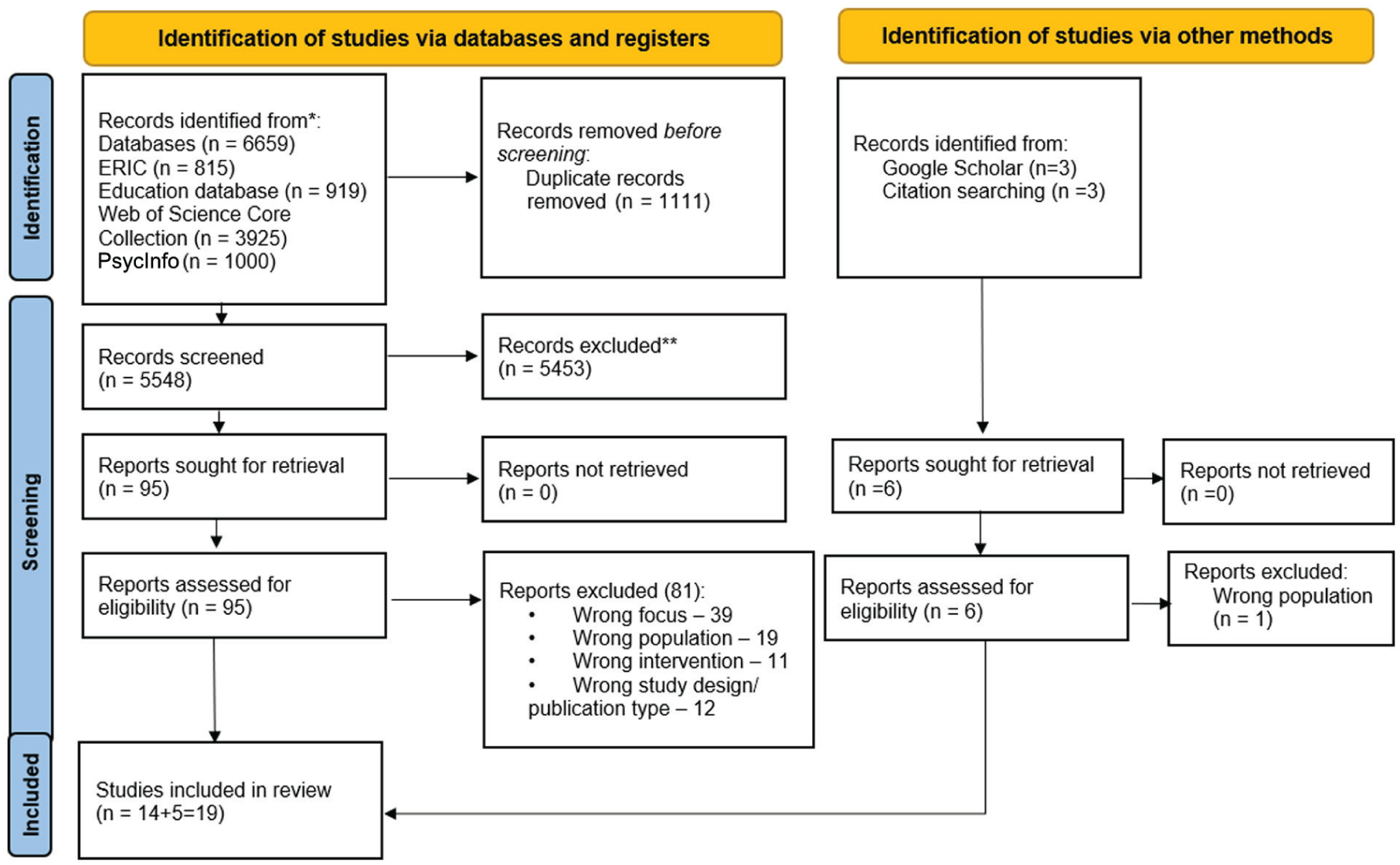
PRISMA flow diagram showing process of study selection.
Search Results.
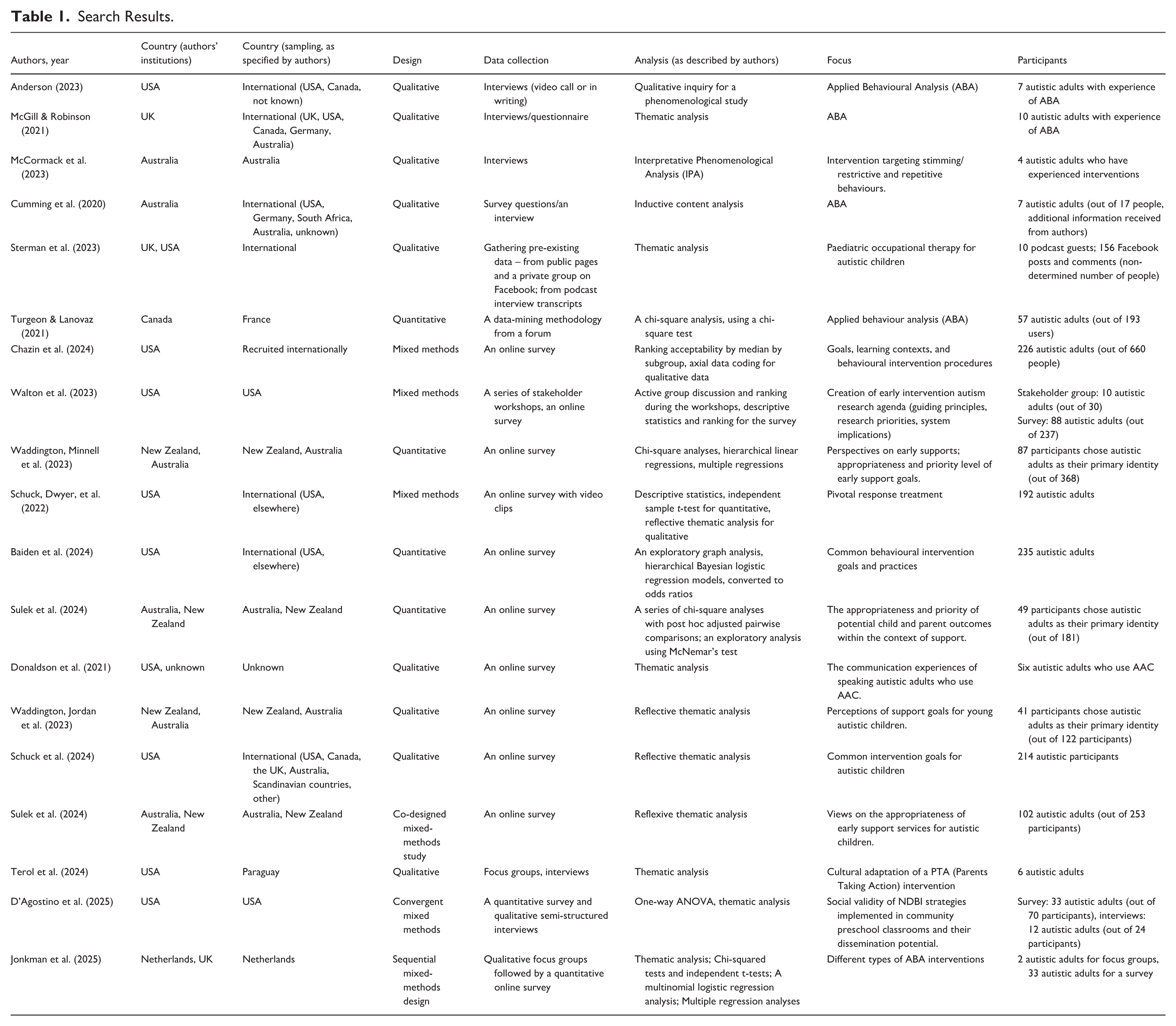
Five studies asked autistic adults about their experiences with childhood interventions: four of them on applied behavioural analysis (ABA) (Anderson, 2023; Cumming et al., 2020; Jonkman et al., 2025; McGill & Robinson, 2021) and fifth on the interventions that target stimming (McCormack et al., 2023). The other 14 studies focused on the opinions of autistic adults regardless of received interventions. Eight asked about specific approaches or therapies.
In 10 papers, the authors were based in the United States; in six papers, the authors were based in Australia and/or New Zealand. Eight papers sampled internationally in a wide range of countries, another four (based on two primary studies) sampled both Australia and New Zealand. Please see Table 1 for details. Out of 11 papers that contained questionnaires with a large number of participants, 10 (apart from Chazin et al., 2024) collected data on gender/sex and ethnicity/nationality. In eight of them, most of the participants were White/European and female. Due to the diversity of studies, it was not possible to aggregate demographic data. More details specific to each study are presented in the Supplementary Material 10.
Quality Appraisal
While it is difficult to compare the studies of such variety, most of the studies were situated relatively high on a 0 to 3 scale (mean = 2.34, SD = 0.5). Typically, lower marks were related to not providing an explanation or rationale rather than fundamental methodology or design flaws – for example, in qualitative experience-based studies, the authors rarely shared or provided information about interviews schedule/survey content. All but four studies involved autistic people in the design and conduct of the research; 12 had autistic adults on their research team, six consulted external panels and three did participant/collaborators checks during and after analysis. While most of the studies recruited people online, in seven studies, authors made effort to reach participants with diverse views (e.g., advertising both in the neurodiversity and ABA social media groups).
Behavioural/ABA interventions were mostly defined and interpreted differently within studies, including mentioned techniques, age and intensity. Only one study (Jonkman et al., 2025) collected and provided information about the specific intervention type, outcomes and practices used when talking about ABA. In other experience-based studies, participants’ ages when doing ABA and length of treatment were the only factors systematically collected or shared (e.g., Cumming et al., 2020).
Thematic Synthesis of Qualitative Findings
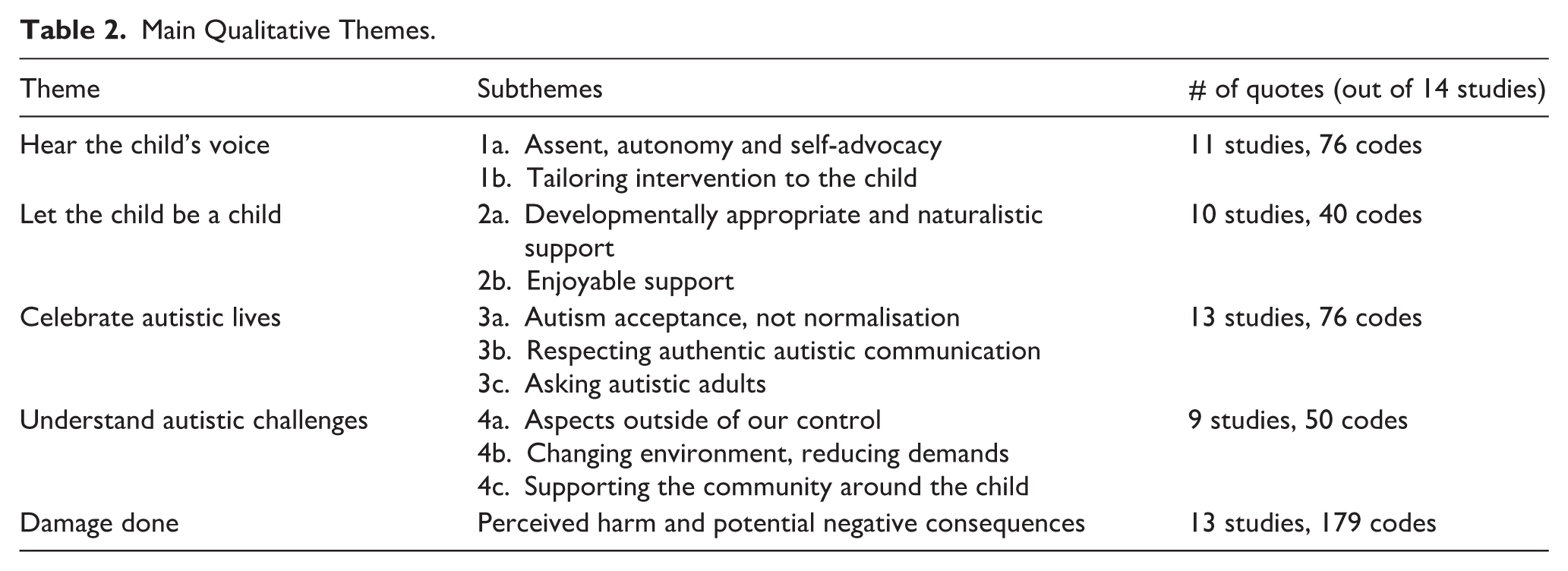
Five themes were generated to represent the views of autistic adults on early autism interventions. They can be seen in Table 2.
Main Qualitative Themes.
The original five themes were formed while analysing the first 13 papers, while the subthemes were formed when the last six papers were added to the analysis.
Four themes focus on the following areas: Hear the Child’s voice mentions considering child’s views and perspectives; Let the child be a child brings up the idea that support should be enjoyable, developmentally appropriate and play-based; Celebrate autistic lives talks about valuing autistic perspectives; and Understand autistic challenges describes the disabling aspects of autism and need for a society to be more accommodating.
Damage Done is a cross-cutting theme that captures previous negative experiences of autistic adults with autism interventions. While other themes talk about the values and suggestions, Damage Done is focused on instances where those values were violated. Findings related to Damage Done are interwoven in the text below within the main themes in every section.
Theme 1: Hear the Child’s Voice
Subtheme 1a: Autonomy, Assent and Self-Advocacy Skills
Autistic people in seven studies talked about the importance of giving the child agency and control over the situation. This included getting assent (occasionally referred to as consent) from the child during all stages of the process, helping the child to understand more about what is going on and respecting bodily autonomy. This also involved explicitly teaching the child self-advocacy skills and avoiding excessive focus on compliance:
Every movement is dictated by my child. Giving them total control over the situation builds trust. We tell my child everything that’s happening before, during, and after. (Sterman et al., 2023, p. 241)
Subtheme 1b: Tailoring Intervention to the Child
Autistic people talked about tailoring the intervention to the child and/or family, considering their unique strengths, needs, preferences and interests:
Bottom line for me is that the child seems to enjoy [being swung in a circle]. I think many autistic kids would be distressed by that but I think it’s okay for this child. (Schuck, Dwyer et al., 2022, p. 471)
Damage Done: In five studies, autistic people independently recalled their experience in terms of power imbalance, control and compliance:
And I remember very well that during the first few times of that ABA, that teddy bear was actually pulled out of my hands by the ABA practitioner and that I would never get it back, until I did that assignment or things they wanted to teach me until I – until I did that properly. (Jonkman et al., 2025, p. 5)
They mentioned how the experience of being trained to comply negatively affected their life later:
. . . mindless compliance <. . .> is dangerous, absolutely dangerous because then if someone in power wants to do bad stuff to you, you don’t know how to say no and I’ve actually got into some situations where maybe I wouldn’t have if I’d known how to say no. (Cumming et al., 2020, p. 78)
In four studies, autistic adults recalled their bodily autonomy being violated during behavioural interventions:
They physically made me sit the way they demanded without caring that it hurt. Once I was tied up for rocking. (McGill & Robinson, 2021, p. 274)
Theme 2: Let the Child be a Child
Subtheme 2a: Developmentally Appropriate and Naturalistic Support
Autistic people talked about early childhood support being developmentally appropriate and close to the real world (consequently, play-based when speaking about early years), allowing children to have typical childhoods:
. . . naturalistic, play based setting, taking into account the child’s unique strengths and interests. This does not rob children of their formative years . . . (Sulek et al., 2025, p. 1279)
Subtheme 2b: Enjoyable Support
Autistic people brought up that the support should be enjoyable and not distressing for the child. Some mentioned “treating autistic children just like you would treat other/non-autistic children” when talking about making the support comfortable and fun for the recipient:
Have it be geared towards what the child is interested in and doing everything possible to make the child feel comfortable and welcomed in their learning environment. Which any other student would expect, right? (Anderson, 2023, pp. 747–748)
Damage Done: Autistic adults recalled mindless, repetitive, extensive training that was not enjoyable and felt like a punishment:
I was punished by having to do it again, and again and again. <. . .> If it’s not done right the first time the treats were removed and you [were] punished by repeating the act or skill or reaction over until you get it right. (McGill & Robinson, 2021, p. 273)
Theme 3: Celebrate Autistic Lives
Subtheme 3a: Autism Acceptance, not Normalisation
Across 13 studies, autistic people talked about autism acceptance:
Bryan said that it is necessary to teach peers “who we are and to accept us for who we are, and not label us as some weird outcast.” (Anderson, 2023, p. 747)
They focused on the inappropriateness of normalisation-based goals like eye contact, functional play and reduced stimming:
No autistic person should be taught to hide their autistic traits, but do need help in learning coping skills because the real world is not fair and they will have to deal with a lot. (Chazin et al., 2024, p. 12) Autistic interpersonal skills will always be different than neurotypical interpersonal skills – and that’s ok. (Schuck et al., 2024, p. 6)
Subtheme 3b: Recognising Authentic Autistic Communication
Autistic communication was repeatedly brought up within this theme. One study specifically focused on adults who use alternative and augmentative communication (Donaldson et al., 2021); however, different means of communication were mentioned by another four studies:
A goal for autistic children could appropriately be using their preferred communication to communicate what they want and need, which means that the child would need to know how to communicate using their preferred method. (Waddignton et al., 2023b, p. 7)
Autistic people advocated for accepting different ways to communicate, including written communication, symbols and signs:
Any occupational therapy or speech goals should never be to use mouth words or [to] verbalize anything. It should be on communication, whether it is AAC, helping to say certain letters or combinations, or sign language, but child-led and never forced. (Sterman et al., 2023, p. 241)
Subtheme 3c: Asking Autistic Adults
In eight studies, autistic people mentioned that autistic adults should be involved when developing and implementing autism interventions:
Get autistic individuals in because who knows us better than ourselves? <. . .> we are probably the most knowledgeable about what we deal with besides the parents who raised us. (D’Agostino et al., 2025)
Damage Done: In studies about their experiences, autistic people almost unanimously brought up interventions that were aimed at “making them non-autistic” with regret:
I was taught that being able to fool people I was neurotypical was my best goal in life. (McGill & Robinson, 2021, p. 274)
In three studies, people mentioned that the focus on “fixing” them negatively affected their relationship with family:
I do think my parents put me in ABA thinking that they could fix me . . . I don’t think they wanted me to be autistic. I do think that they wanted me to be something that I couldn’t be. (Anderson, 2023, p. 744)
Theme 4: Understand Autistic Challenges
Subtheme 4a: Hidden Difficulties and External Factors
In five studies, autistic people felt that interventions and support do not always consider the factors affecting the child’s ability to control their own behaviour, such as underlying neurological differences or emotional stressors. They warned that due to miscommunications, the genuine struggles of autistic children can be minimised or misunderstood:
Trauma needs to be taken into consideration with behaviours that challenge. <. . .> Restricting access to reinforcement or persisting with a task that may have triggered their amygdala, for a child in survival mode, some behavioural strategies would be very unethical and cruel. (Chazin et al., 2024, p. 14)
Subtheme 4b: More Accessible Environment
As an alternative strategy of early support, autistic people proposed to change the environment, making it more accessible – often that meant reducing demands placed on a child:
If an Autistic child or adult is distressed and not complying, that’s indicating something is wrong with the environment or the demand, NOT the Autistic person. (Sterman et al., 2023, p. 241)
Subtheme 4c: Supporting the Community Around the Child
Autistic adults in five papers mentioned that we should educate and support parents and other meaningful adults in an autistic child’s life, so that they are informed on what to expect and how not to cause harm:
We need to start coaching and empowering parents so they can meet the needs of their autistic child instead of trying to change them into a neurotypical child. (Waddington, Jordan et al., 2023, p. 8)
Damage Done: Autistic adults recalled instances from their childhood when their needs were not understood or attributed to behavioural factors, while the underlying reason could have been sensory, neurological or otherwise outside of their control:
I was hyperattentive to adults, still can’t imitate, and am unable to comply with expectations because I have sensory and movement control issues that aren’t helped with drills and rewards. They are neurological problems, not problems with my social understanding or intellect. (Anderson, 2023, p. 743)
In three studies about experiences, autistic adults mentioned that their parents had potentially caused harm due to being misinformed:
Although my parents kept saying I succeeded in being as other people after ABA, I am still autistic. (Cumming et al., 2020, p. 78)
Quantitative Findings
Ten papers were included in the narrative synthesis. One paper (Turgeon & Lanovaz, 2021) performed a quantitative content analysis on the forum comments; others used surveys. Two studies focused on intervention goals for young autistic children, another two collected data on goals, practices and/or learning contexts, such as time spent in intervention or learning settings. Three focused on behavioural interventions in general, another two on naturalistic developmental behavioural interventions (NDBI). Details can be seen in Supplementary Material 6.
Goals
Four studies measured goals using Likert-type scale questionnaires: three (Chazin et al., 2024; Sulek et al., 2024; Waddington, Minnell et al., 2023) measured goal priorities and one (Baiden et al., 2024) measured social validity (the question was “X is a good intervention goal”). Three studies reported means and standard deviations; in one case (Chazin et al., 2024), means were extracted from their openly available dataset.
As all questionnaires were unique, synthesising the effects was not possible. However, the means were adjusted according to the range of the rating scale in each study and displayed on one graph (Figure 2). Goals on the right side indicate higher priority/social validity. A table with exact adjusted numbers can be found in Supplementary Material 7.
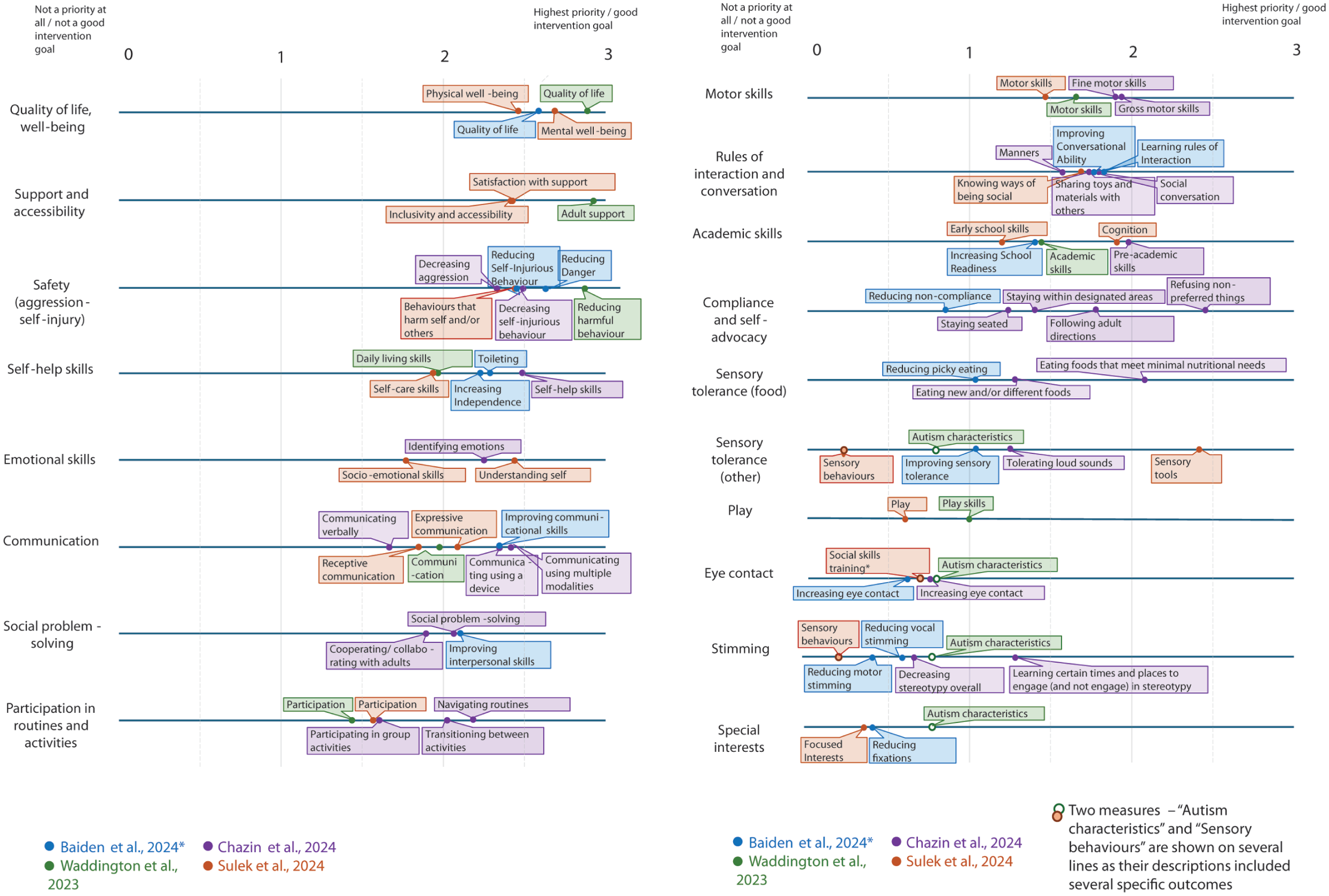
Goal priorities of early autism interventions.
All studies but Baiden et al. (2024) separately measured the percentage of goals that were deemed unacceptable or inappropriate (see Supplementary material 8). Goals that were deemed unacceptable/inappropriate for more than 10% of autistic adults broadly corresponded to the lowest priority goals and included play and autism traits.
Overall Context and Intervention Methods
The data on intervention methods were not sufficient for separate synthesis, as some aspects were mentioned by only one or two papers. They are summarised below.
Two papers (Baiden et al., 2024; Chazin et al., 2024) asked autistic adults’ perspectives on specific intervention methods/practices. Baiden et al. considered wider behavioural practices (e.g., focusing on the inner world vs. external behaviour of the child), while Chazin et al. evaluated specific strategies (e.g., providing fidget toys).
Three papers based on two primary studies focused on appropriateness of early support overall and found that, according to most autistic adults, early support is or may be appropriate, depending on the context (Sulek et al., 2024, 2025; Waddington, Minnell et al., 2023). In papers that ranked the stakeholders’ perspective by importance, the perspective of the child was rated most important (Baiden et al., 2024; Chazin et al., 2024).
Behavioural Interventions
Five studies focused on behavioural interventions; two of them on NDBI. In addition, one study asked about behaviour management strategies alongside general early years settings and goals (Chazin et al., 2024).
Autistic adults gave mixed opinions when talking about behavioural interventions and were slightly more positive when talking about NDBI. Schuck, Dwyer et al. (2022) and D’Agostino et al. (2025) both asked autistic adults about acceptability of the intervention and suggesting the intervention to others. Overall, most of the responses centred around “Somewhat Agree” to “Agree,” [that the intervention is acceptable and should be suggested] with D’Agostino et al. (2025) receiving slightly more positive responses. To compare, in Jonkman et al. (2025), autistic adults’ satisfaction rating with different ABA interventions centred around the middle point (means varied from 4.7 to 6.0, range 1–10), with a considerable spread in ratings (SD in five out of 11 cases ⩾3.4).
When several groups of stakeholders were asked, autistic adults tended to give more cautious rating than parents, professionals and legal guardians (D’Agostino et al., 2025), although in one case the difference was not significant (Jonkman et al., 2025). In the only study that was not a survey (Turgeon & Lanovaz, 2021), while autistic adults published slightly more ABA-approving (56%) than ABA-disapproving (44%) messages on the autism forum, the contrast was overall much less stark than for parents (84% and 16%, respectively).
Cross-Checking and Comparison
In several papers, the same sample was used for both qualitative and quantitative data (Baiden et al., 2024; Chazin et al., 2024; Sulek et al., 2023, 2025; Waddington, Minnell et al., 2023), or qualitative and quantitative data were analysed together (D’Agostino et al., 2025). Thus, we expect findings to be consistent between each other to some extent.
The ideas of asking autistic adults (Walton et al., 2023), respecting the child’s bodily autonomy and making the environment more accessible (Chazin et al, 2024), teaching communication using multiple modalities and incorporating the child’s interest (Baiden et al., 2024; Chazin et al., 2024) appear both in quantitative studies cited above and qualitative themes. In both qualitative and quantitative studies, autistic people talked about discouraging goals that are aimed at suppressing autistic symptoms. As part of the cross-checking process, the table outlining qualitative quotes in relation to autism intervention goals was created and can be seen in Supplementary Material 9.
Behavioural interventions were strongly discouraged in qualitative experiential studies; however, they received mixed ratings in quantitative and/or non-experiential studies.
Discussion
The aims of this review were to examine the views and experiences of autistic adults of early autism interventions, as well as specific goals and practices. Nineteen relevant studies were identified. In the identified studies, autistic people talked about their values regarding early support, such as self-determination, developmentally appropriate and enjoyable support, and autism acceptance. They also talked about past negative experience and identified the outcome areas they deemed largely more (well-being, safety, adult support) and less (autism traits) important.
Strong themes identified in this review concern interventions actively fostering autonomy, consent and tailoring the interventions to the child. While young children are supported by adults to make decisions, it is generally considered beneficial to foster self-determination (Linkiewich et al., 2021) and provide decision-making opportunities from an early age (Shaik, 2024). However, disabled children usually get fewer opportunities to exercise their autonomy and decision-making and can find it more difficult to make choices (Palmer et al., 2013). Moreover, the support for people with learning and developmental disabilities often assumes a high level of external control throughout their lives, including violations of bodily autonomy, from physical prompts (Biederman et al., 1998) to full-body physical restraints (Sturmey, 2015), which can make them more vulnerable to sexual and physical abuse (Sandoval-Norton et al., 2019). This review emphasises the importance of teaching self-determination from an early age to improve autonomy and prevent adverse events later in life.
Another major finding is that autistic people across the identified studies advocated for increased autism acceptance, not targeting unharmful autism traits but instead making the environment more accessible and educating the community around the child. They described negative mental health consequences from being taught to hide their innate autistic inclinations (the process known as camouflaging or masking; Cook et al., 2021) and suppress specific characteristics such as stimming. The potential negative consequences of teaching autistic people to suppress their natural traits have been discussed previously both within the intervention context (Sandoval-Norton et al., 2019; Taylor, 2023) and outside of it (Cassidy et al., 2020; Zhuang et al., 2023). More broadly, the finding from the review echoes the calls to action of proponents of the neurodiversity movement (Walker, 2021) and the social model of disability (Oliver, 2013), which emphasise the disablement to autistic and other disabled/neurodivergent people is often caused by socio-political and environmental factors, rather than intrinsic impairments, and therefore interventions should target the environment around the person to make it a better fit (Haegele & Hodge, 2016; Leadbitter et al., 2021).
Per our inclusion criteria, we did not include papers on the autistic perspective of support for infants with a higher likelihood of autism. However, it is worth noting that autistic adults in those papers express similar perspectives in relation to autism acceptance, educating families, considering the child’s assent, making the interventions tailored to the child and supports being co-designed with autistic people (Bent et al., 2025; Smith et al., 2025).
In the reviewed qualitative studies, many participants criticised behavioural interventions and named specific aspects they perceived as harmful. In the quantitative studies, autistic people typically gave mixed ratings to behavioural programmes, both from their experience and their views. There might be several reasons for such discrepancy: autistic people who participated in qualitative studies might have been more eager to participate, having strong opinions; perspectives may differ by culture (two quantitative studies about behavioural support came from the Netherlands and France, respectively); the methodological approach may have influenced findings (several qualitative experiential studies did not specify what is included in ABA, and the quotes mentioned very different practices and settings). It can be implied from both qualitative and quantitative parts that at least some proportion of autistic adults who have taken part in behavioural interventions believe they have experienced harm and negative consequences (Jonkman et al., 2025). In addition, in the quantitative studies, autistic people labelled some behavioural strategies as unacceptable (e.g., planned ignoring, food rewards) while being neutral or approving towards others (e.g., token boards, behavioural momentum). More research is needed on the social validity and acceptability of specific strategies used in behavioural interventions, especially those rated neutral or positive, and the contexts in which those strategies should and should not be applied. Currently, there is a discussion within research on whether behavioural interventions can be reconciled from neurodiversity perspective (e.g., Allen et al., 2024; Chapman & Bovell, 2022; Mathur et al., 2024; Schuck, Tagavi, et al., 2022; Shkedy et al., 2021; Travers & Tincani, 2025; Wilkenfeld & McCarthy, 2020) and time will tell whether this is indeed possible.
This review found a clear, consistent understanding among autistic adults of goals that are rated high priority (e.g., safety, well-being) and low priority (e.g., autism traits, play). In the studies that collected information from several stakeholders (Chazin et al., 2024; Sulek et al., 2024; Waddington, Minnell et al., 2023), the perspective of autistic adults was broadly comparable (within 1 Likert-type point on a 4- to 6-point scale) with the perspective of parents and practitioners. In addition, studies about broader autism research priorities elicited similar findings – autistic people tended to choose well-being, mental and physical health as higher priority goals (Roche et al., 2021). Therefore, there appears to be an emergent consensus from this body of research. However, autism traits are still targeted by interventions across countries. Restrictive and repetitive behaviours are a common target of early interventions (e.g., NICE, 2021; Turner-Brown & Frisch, 2020), and often harmful and non-harmful autistic behaviours are not separated out (Bottema-Beutel, 2024). Practitioners’ manuals and handbooks recommend targeting eye contact as a key prerequisite for further communication (Dart et al., 2024; Rogers & Dawson, 2010), although emerging evidence suggests autistic children may achieve joint attention through other pathways (Yurkovic-Harding et al., 2022). There is therefore an ongoing gulf between interventional practices and the views of autistic adults that needs to be addressed by providers across the globe.
This is, to our knowledge, the first review to draw conclusions about autistic adults’ views of early autism interventions across a number of studies using a range of methodologies. The main limitation of this review is a wide focus and generous inclusion criteria, which resulted in heterogeneity across the included papers and limited the degree of nuance within the synthesis. As papers from multiple countries were included and sampled internationally, it is not possible to draw conclusions about any particular educational context or socio-political environment, or to consider cultural differences among international autistic communities. This highlights the requirement for further primary studies investigating early intervention within different contexts, cultures and backgrounds.
A further limitation was that the participants in the studies with larger samples were typically women, white or European, who have received higher education (e.g., Sulek et al., 2024; D’Agostino et al., 2025; Waddington, Minnell et al., 2023), with an average age of diagnosis of 24 to 25 years (e.g., Baiden et al., 2024; Chazin et al., 2024; Schuck et al., 2024). At the same time, people who receive early interventions are more likely to be diagnosed early, have higher support needs or learning disability, and be boys (Ghanouni & Seaker, 2023; Hull et al., 2020). In part, this is inevitable due to the nature of online surveys that makes it accessible to those who use the internet, can read and spend 20 to 25 min completing a survey. In addition, while autistic adults can speak about their personal experiences, not all of them interact with young children or have knowledge on current early support systems. It would be valuable to hear specifically from autistic adults who have caring or educational responsibilities for autistic children of different ages and abilities to establish whether their perspectives are consistent with those reported in this review.
The findings of this review can assist researchers and practitioners in developing and offering early childhood support that aligns with the perspectives of autistic people. Specifically, this review promotes a focus on specific goals endorsed by autistic people, such as mental and physical well-being, adult support and reducing harmful behaviour, instead of goals that focus on autistic traits. We hope practitioners will consider aligning with the values expressed by autistic people, such as supporting autonomy and self-advocacy, making the support developmentally appropriate and fun, fostering the positive autistic self-identity and making the environment more accessible. This review also includes a synthesis of autistic adults’ experiences of the practices they perceive as harmful, and those aspects are worth re-considering. Finally, we hope that more researchers will collaborate with autistic people during all stages of the process when designing support for autistic children, as this wish was expressed by participants in most included studies.
Supplemental Material
sj-docx-1-aut-10.1177_13623613261460931 – Supplemental material for The Views of Autistic Adults on Early Autism Interventions: A Mixed-Methods Systematic Literature Review
Supplemental material, sj-docx-1-aut-10.1177_13623613261460931 for The Views of Autistic Adults on Early Autism Interventions: A Mixed-Methods Systematic Literature Review by Elizaveta Nosova, Alexandra Sturrock, Neil Humphrey and Kathy Leadbitter in Autism
Footnotes
Acknowledgements
Thank you to Dr. Charlotte Rothwell for the feedback on the manuscript and to Dr. Dimitra Magkafa and Liubov Pilshchikova for assisting as additional reviewers during screening.

Ethical Considerations
No ethical approval was required as this is a literature review.
Author Contributions
Funding
The authors disclosed receipt of the following financial support for the research, authorship, and/or publication of this article: The research is self-funded.
Declaration of Conflicting Interests
The authors declared the following potential conflicts of interest with respect to the research, authorship, and/or publication of this article: K.L. and N.H. conduct research into the development and evaluation of early autism interventions. A.S. conducts research into social communication support for autistic students.
Data Availability Statement
The Review Is Preregistered on PROSPERO
ID: CRD42024511590.
Supplemental Material
Supplemental material for this article is available online.
References
Supplementary Material
Please find the following supplemental material available below.
For Open Access articles published under a Creative Commons License, all supplemental material carries the same license as the article it is associated with.
For non-Open Access articles published, all supplemental material carries a non-exclusive license, and permission requests for re-use of supplemental material or any part of supplemental material shall be sent directly to the copyright owner as specified in the copyright notice associated with the article.
