







Abstract
Aims and objectives:
To evaluate whether bilingual education predicts academic self-concept (capacity, work procedure, and class participation) in primary school students, comparing bilingual and non-bilingual schools, and to explore gender differences.
Methodology:
Ex post facto study with 93 fifth- and sixth-grade students (M age = 10.93 years) from bilingual (n = 49) and non-bilingual (n = 44) schools in Spain. The Self-Concept Scale of Classroom Interaction was administered.
Data and analysis:
Multivariate analysis of variance (MANOVA) for differences by education type and gender; univariate analysis of variance (ANOVA) and independent sample t-tests; multiple regressions predicting self-concept from education type, age, and gender. Analyses conducted in SPSS 28.0.
Findings:
Significant differences by education type (Pillai’s trace = 0.27, p < .001): bilingual students showed higher self-concept in capacity (M = 5.35 vs. 4.34), participation (M = 5.32 vs. 4.46), and work procedure (M = 5.35 vs. 4.98; all p < .01). By gender, differences only in work procedure (females > males, p = .057). Education type predicted 22% of variance in capacity (β = .99, p < .001), 19% in participation (β = .85), and 11% in work procedure (β = .35).
Originality:
First study in a Spanish primary context linking bilingual education to academic self-concept in English as L2, using a validated classroom interaction scale.
Significance:
Bilingual education strengthens academic self-concept, supporting its use as an intervention in non-bilingual schools. Implications for plurilingual educational policies, emphasizing teacher training and family support.
Keywords
Introduction
The self-concept, one of the most important constructs in the history and research of education and psychology (Herrera et al., 2017), is undergoing something similar to a reawakening in contemporary social psychology (Gecas, 1982). In fact, throughout these last years, numerous investigations have brought to light the importance of self-concept for the development and functionality of the subject (van der Cruijsen et al., 2023).
According to Shavelson et al. (1976), self-concept is defined as “a person’s self-beliefs formed through experience with and interpretations of his or her environment” (p. 411). Therefore, self-concept is formed from the images that the rest of people express of each person. This means that the subject is reflected in the image that others offer (i.e., the closest people are like a mirror where those images are projected and make that person become what they think or believe; Ehm et al., 2019). Given this assumption, it is unquestionable that the social environment plays an extremely important role in the development of self-concept; and family, together with school, are of major significance, since social relationships, familiar responsibilities, and successes and failures in academic tasks offer the necessity feedback for the configuration of self-concept (Campo, 2013).
Early childhood shapes foundational self-concept, while adolescence brings significant development through social comparisons (van der Cruijsen et al., 2023). In primary education, academic self-concept emerges as a key predictor of motivation and achievement (Ehm et al., 2019). Self-concept remains stable if surroundings do not change significantly. New self-conceptions will emerge over time. However, established self-concepts rarely disappear, even when challenged repeatedly (García & Musitu, 2014).
The theory of social learning proposed by Bandura explains that children acquire attitudes toward themselves by means of an imitation process, whereby they interiorize the models they consider to be the most significant ones. Craven and Marsh (2008) identified three sources of self-concept development: (a) evaluation of the subject’s behavior carried out by the most representative figures for him or her; (b) checking the own experience and interpretations of the subject; and (c) stereotypes related with a collective in which the subject considers himself or herself to be included.
Therefore, self-concept is a determining factor in the pupils’ emotional, cognitive, intellectual, and psychological development, as well as in the behavior patterns they would show in both the educational and familiar environments. Self-concept plays an important role in language learning since “language, after all, belongs to a person’s whole social being; it is part of one’s identity, and it is used to convey this identity to other people” (Csizér & Magid, 2014, p. 1).
“The terms self-concept and self-esteem have historically and to this day been used interchangeably” (Craven & Marsh, 2008, p. 106). Notwithstanding, most authors associate the term self-concept with cognitive aspects of self-knowledge, using the self-esteem label for evaluative-affective aspects, and that results in people with high or low levels of self-esteem (Garaigordobil et al., 2008).
Early research viewed self-concept as unidimensional, measured by instruments like the Coopersmith Self-Esteem Inventory (Riding & Rayner, 2001). Since the 1970s, it has been reconceptualized as a multidimensional, hierarchical construct (Esnaola et al., 2008; Shavelson et al., 1976). Shavelson et al.’s (1976) model places global self-concept at the top, academic self-concept at an intermediate level, and nonacademic domains at the base (Arens et al., 2021). Academic self-concept further divides into subject-specific facets like mathematics and language. Lower levels are more situation-specific and less stable (Craven & Marsh, 2008). However, as one descends the self-concept hierarchy, self-concept increasingly depends in specific situations and thus becomes less stable. At the base of the hierarchy, self-concept varies greatly with alterations in situations. In addition, changes at the lower levels of the hierarchy are probably weakened by conceptualizations at higher levels, making self-concept resistant to change (Shavelson et al., 1976).
Unfortunately, this model was unable to measure the multiple facets of self-concept since multidimensional measurement instruments were unavailable. Nevertheless, the basic assumption of this model asserted that self-concept was a multidimensional construct and provided a blueprint for a new generation of self-concept theory, research, and practice (Craven & Marsh, 2008).
Among the self-concept components or dimensions, academic self-concept, inspired by Shavelson’s model (Shavelson et al., 1976), stands out due to its close association with academic performance (Weva et al., 2023; Wu et al., 2021). The two-level hierarchical model for academic self-concept consists of: (a) the upper level, encompassing mathematical-academic and verbal-academic self-concepts and (b) the lower level, comprising the academic subjects typically taught in schools. In fact, academic self-concept is also frequently understood as a mediating variable that facilitates the attainment of other desired outcomes. In education, for instance, research suggests that the attainment of a positive academic self-concept affects scholar behaviors, scholar choices, educational aspirations, and subsequent scholar achievement (Weva et al., 2023).
Despite the fact that there appears to be some agreement on the definition of academic self-concept, issues remain unsettled (Rosen, 2010). Academic self-concept, broadly defined, can be thought of as a pupil’s self-perception of academic ability formed through individual experiences and interaction with their closest environment (O’Mara et al., 2006). Thus, academic self-concept takes shape based on pupils’ level of achievement (Wu et al., 2021) as well as through social, dimensional, and temporal comparisons with peers (Sewasew & Schroeders, 2019). Key variables include: (a) gender (Ehm et al., 2019; Herrera et al., 2020; Sewasew & Schroeders, 2019; Vispoel & Forte, 2010); (b) socioeconomic status (Ehm et al., 2019; Sewasew & Schroeders, 2019); (c) ethnic group and race (Ehm et al., 2019; Sewasew & Schroeders, 2019); (d) age (Ehm et al., 2019; Sewasew & Schroeders, 2019;); and (d) demographic differences (Ehm et al., 2019; Sewasew & Schroeders, 2019). There is some suggestion that underlines the importance of considering academic self-concept when describing gender differences in academic achievement (Sewasew et al., 2018). Males and females have higher or lower levels of academic self-concepts depending on the field they are working on. For example, gender differences in academic self-concepts often fit stereotypical patterns in which females score higher in verbal and artistic domains and males score higher in math and physical domains (Vispoel & Forte, 2010). In addition, self-concept has been identified as a significant predictor of foreign language performance (Erten & Burden, 2014).
Bilingual children experience the simultaneous development of two languages, intensifying the most profound and integrative aspect of human language use (Bialystok, 2017). This heightened linguistic experience places increased demands on brain networks and their component structures, leading to enhanced executive functions (De Cat et al., 2017). The advancement of these functions has, in turn, been associated with improvements in self-concept (Festman & Schwieter, 2019). However, the relationship between academic self-concept and bilingualism has not yet been extensively studied.
Bilingual education programs have expanded rapidly in primary schools worldwide as educational systems respond to globalization demands. In Spain and Europe, these programs integrate English as a vehicular language for content subjects, aiming to develop both linguistic competence and cognitive skills from early ages (Cenoz, 2003). Proficiency in English has become essential for academic mobility, professional opportunities, and participation in global knowledge economies, making early bilingual education a strategic priority.
While cognitive advantages of bilingualism are well documented (Bialystok, 2017; De Cat et al., 2017), less is known about how bilingual programs influence pupils’ academic self-concept in L2 classrooms. Academic self-concept in language learning mediates motivation, persistence, and achievement (Erten & Burden, 2014), yet its relationship with bilingual education remains underexplored, particularly in primary contexts. Understanding this link is crucial for designing language policies that foster not only English proficiency but also students’ confidence and engagement in global communication.
In Spain, bilingual education (known as “programas bilingües”) has expanded since the 1990s as part of the European Union’s multilingualism strategy, with English–Spanish programs now implemented in over 2,000 primary schools (Ministry of Education and Vocational Training, 2023). These initiatives typically involve 20%–30% of instructional time in English for content subjects like science and social studies, contrasting with traditional non-bilingual schools where English receives 1–2 hours weekly through conventional foreign language classes. Bilingual programs often serve middle-to upper-middle-class neighborhoods, potentially creating disparities in L2 exposure and academic confidence between school types.
Internationally, similar patterns emerge: Singapore’s bilingual policy mandates English plus mother tongue from primary level; Canada’s immersion programs show cognitive benefits but socioeconomic selection effects (Genesee, 2004); and Content and Language Integrated Learning in Europe reveals achievement gaps favoring higher-SES students (Dalton-Puffer, 2011). Understanding how bilingual education influences academic self-concept across diverse contexts addresses a critical gap, particularly regarding whether program benefits extend beyond linguistic proficiency to foster L2 confidence essential for global participation.
Thus, the objective of this research was to investigate variations in academic self-concept based on gender and type of education (i.e., bilingual and non-bilingual) and assess the degree to which the type of education acts as a predictor for academic self-concept. To this end, the following hypotheses were established: (1) females are expected to show higher levels of academic self-concept (i.e., capacity, work procedure, and participation in classes) than males, and (2) participants from the bilingual school are expected to have higher academic self-concept levels (i.e., capacity, work procedure, and participation in classes) compared to those from the non-bilingual school.
Method
Participants
In this educational research, 93 pupils from the city of XXX (Spain) participated. They belonged to the third cycle of Primary Education, ranging in age from 10 to 13 years (M = 10.93; SD = .74). Among them, 47 were enrolled in the fifth grade, with 44.68% being male and 55.32% female, and 46 were in the sixth grade, with 52.17% male and 47.83% female. In terms of language instruction, 44 students attended a non-bilingual school, comprising 23 participants from the fifth grade and 21 from the sixth grade. In contrast, 49 students attended a bilingual school, with 24 pupils in the fifth grade and 25 in the sixth grade.
Convenience sampling was used (nonprobabilistic; Kalton, 2020).
Materials
The Self-Concept Scale of Classroom Interaction (Lobos et al., 2015) is a Likert-type scale made up of 22 items estimated between one point (“never”) and six points (“always”) grouped into three dimensions: (a) capacity, dealing with feeling able and skills to deal with scholar tasks (6 items); (b) work procedure, reflecting the importance of displaying appropriate behaviors such as obeying the teacher’s instructions (8 items); and (c) participation in classes, concerned with the habits of answering questions, discussing with a partner, giving opinions, and so on (8 items). The objective of the instrument is to measure how children see themselves when learning a second language, what skills they implement, and in which ways they work and take part in English classes to fulfill their expectations. The selection of this instrument was primarily based on its suitability for the research study and because, in its original version, it exhibited satisfactory levels of internal consistency for all three dimensions and the overall scale. Furthermore, it demonstrated evidence of the validity of its factor structure (Lobos et al., 2015). In this study, the internal consistency indexes, assessed through Cronbach’s alpha coefficient and Mcdonald’s omega coefficient, were as follows: (a) capacity: .93 and .92; (b) work procedure: .82 and .82; (c) participation in classes: .89 and .89. The overall scale demonstrated a Mcdonald’s omega of .87 and a Cronbach’s alpha of .84.
Design and procedure
An ex post facto research design was employed in this study (Ato et al., 2013). The research was conducted following the Declaration of Helsinki (World Medical Association, 2013).
In the initial phase, bilingual and non-bilingual schools in Granada (Spain) were chosen as the study’s field due to the study’s objectives, resource constraints, availability, and geographical proximity. Moving to the second stage, schools whose institutional administrators indicated interest in participation (n = 2) were included in the study after signing an informed consent form. Ultimately, a definitive sample was formed with students whose parents provided consent.
The Self-Concept Scale of Classroom Interaction (Lobos et al., 2015) was administered to the sample during class time within each participant’s respective reference groups, following the acquisition of necessary institutional permissions and authorizations. This process was conducted by the teacher-tutors in collaboration with a member of the research team in the first half of March 2025. Clear verbal instructions were provided to all students, emphasizing the task’s nonexam nature and the absence of right or wrong answers. The students were instructed to read and honestly respond to the 22 items, focusing on how they perceive themselves when learning English. Any uncertainties were addressed, and the entire group attentively listened to the resolution. To maintain confidentiality, students filled out the survey anonymously. The entire procedure took approximately 25 minutes and was conducted in a pen-and-paper format.
Data analysis
The preliminary analysis involved examining linearity, identifying atypical and missing cases, evaluating influential cases, and assessing data distribution using the Kolmogorov–Smirnov test. Descriptive statistics, such as the mean and standard deviation, were computed to analyze the data. To evaluate the research hypotheses, a multivariate analysis of variance (MANOVA) was conducted to explore variations in academic self-concept by education type and gender, followed by univariate analysis of variance (ANOVA) and independent sample t-tests for the significant interaction effects. In addition, multiple regression analyses were conducted to examine the predictive capacity of the type of education on academic self-concept variables. Regression models were also estimated for males and for females to explore whether the predictive role of education type differed by gender.
Statistical analyses were conducted using Statistical Package for the Social Sciences 28.0 (IBM Corp., Armonk, NY, USA).
Results
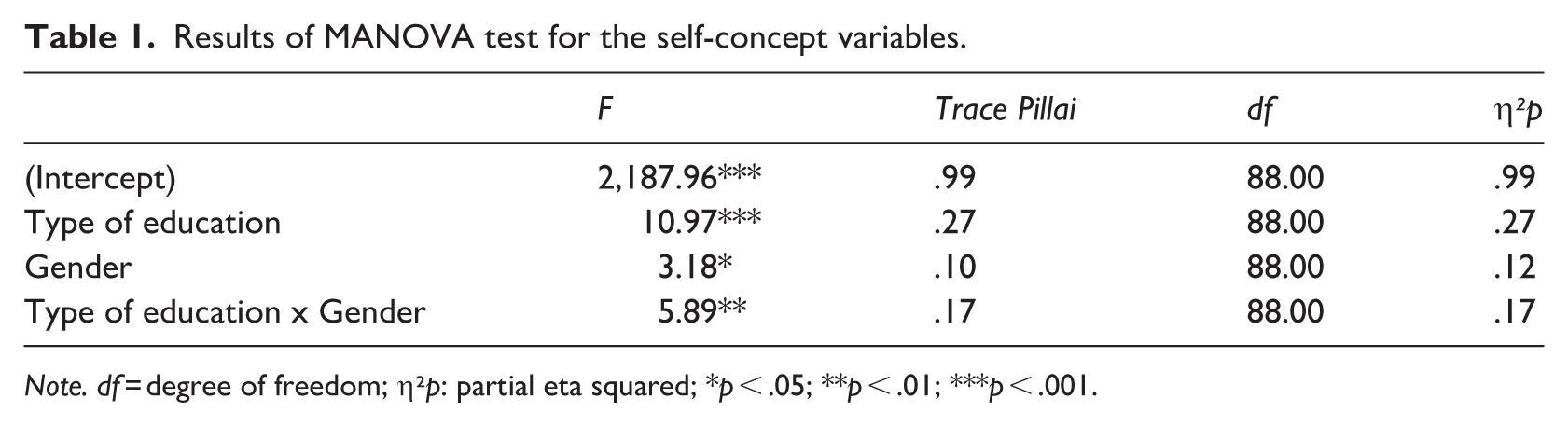
Table 1 displays the outcomes of the MANOVA test. Notably, the results indicated significant differences with respect to both gender and the type of education variables. The effect sizes revealed that type of education accounted for a large effect (η² = .27).
Results of MANOVA test for the self-concept variables.
Note. df = degree of freedom; η²p: partial eta squared; *p < .05; **p < .01; ***p < .001.
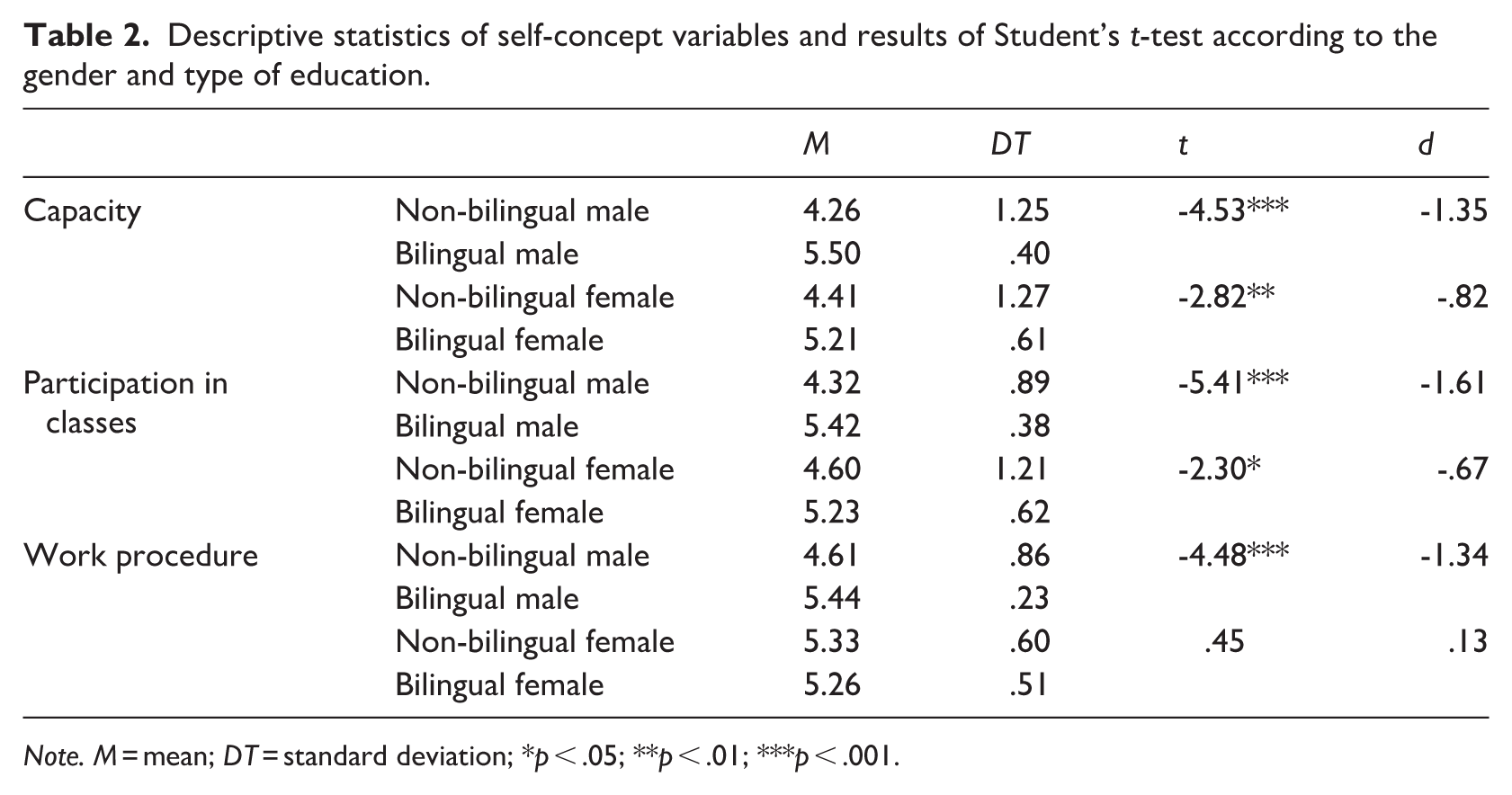
Given the significant interaction between education type and gender, follow-up independent samples t-tests were conducted within each gender group (Table 2). For males, those in the bilingual school reported higher academic self-concept than males in the non-bilingual school in all three dimensions. A similar pattern emerged for females. Bilingual females obtained higher scores than non-bilingual females in capacity and participation, whereas no significant differences were found for work procedure.
Descriptive statistics of self-concept variables and results of Student’s t-test according to the gender and type of education.
Note. M = mean; DT = standard deviation; *p < .05; **p < .01; ***p < .001.
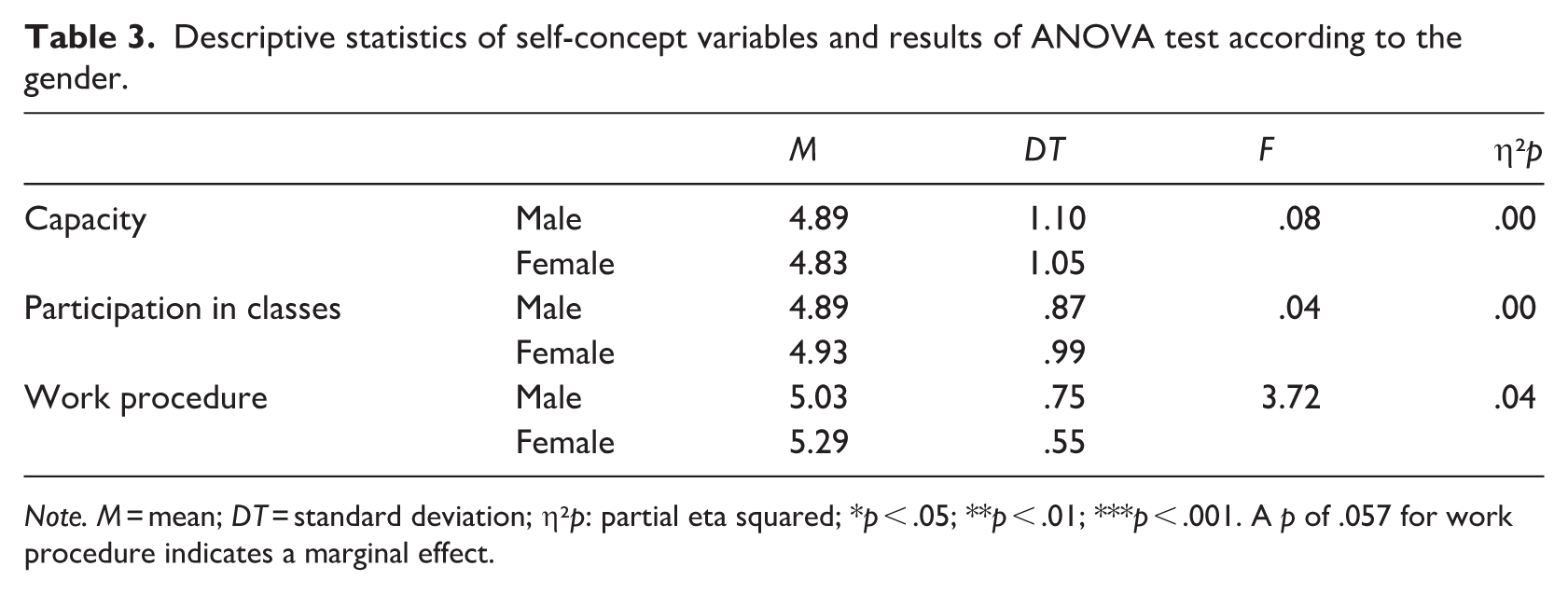
Table 3 presents the descriptive results for the study variables along with the outcomes of the ANOVA test regarding gender. A marginally significant gender effect was observed for work procedure, with females showing higher scores than males (F(1) = 3.72, p = .057, η²p = .04).
Descriptive statistics of self-concept variables and results of ANOVA test according to the gender.
Note. M = mean; DT = standard deviation; η²p: partial eta squared; *p < .05; **p < .01; ***p < .001. A p of .057 for work procedure indicates a marginal effect.
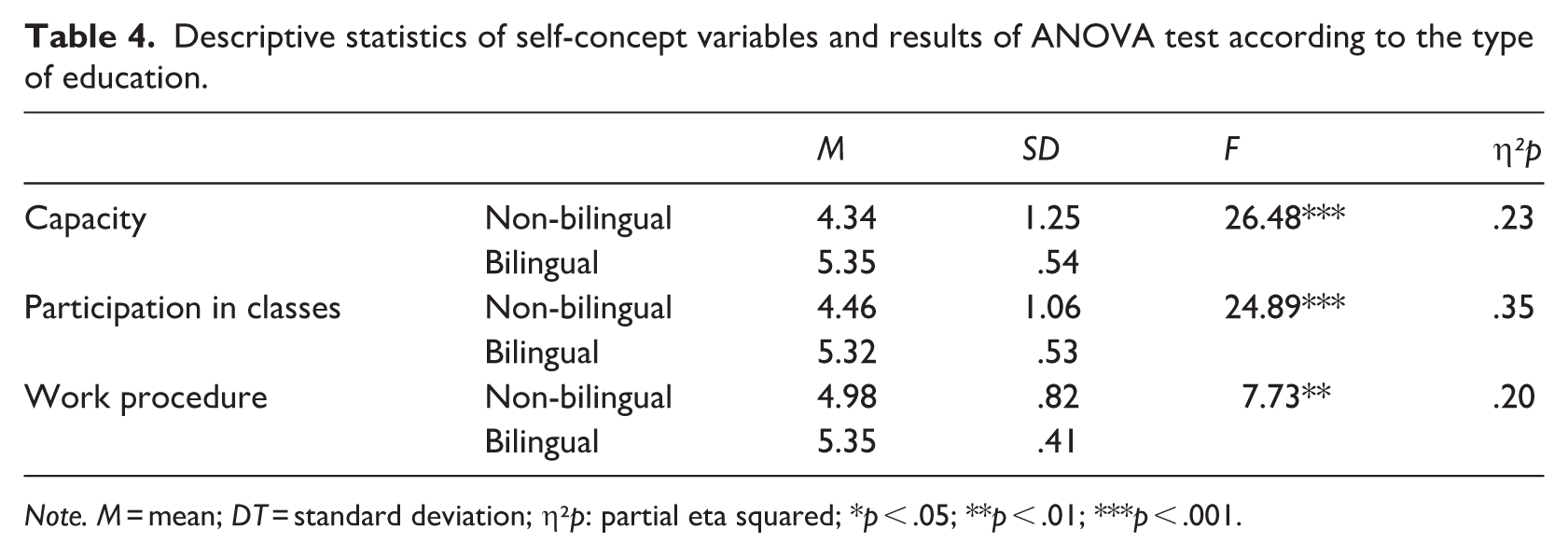
In addition, Table 4 displays the descriptive results for the study variables alongside the outcomes of the ANOVA test categorized by the type of education. Statistically significant differences were observed between bilingual and non-bilingual participants across all variables. Specifically, students from the bilingual school demonstrated higher levels of academic self-concept, including capacity, participation in classes, and work procedure, than their non-bilingual counterparts.
Descriptive statistics of self-concept variables and results of ANOVA test according to the type of education.
Note. M = mean; DT = standard deviation; η²p: partial eta squared; *p < .05; **p < .01; ***p < .001.
The regression analyses revealed significant models for predicting the self-concept variables, including capacity, participation in classes, and work procedure (Table 5). The type of education emerged as a predictor of each of the self-concept variables. Specifically, the model accounted for 22% of the variance in capacity, 19% of the variance in participation in classes, and 11% of the variance in work procedure.
Results of regression analyses for academic self-concept variables.
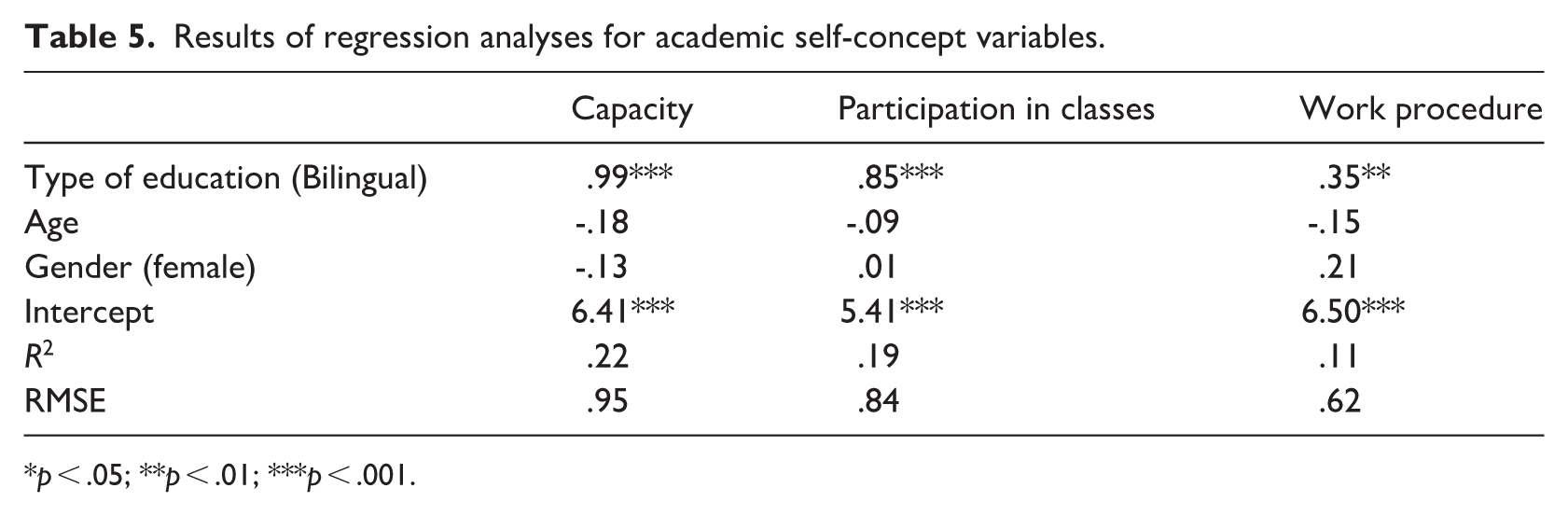
p < .05; **p < .01; ***p < .001.
To further examine whether these predictive relationships varied by gender, additional regression models were estimated separately for females and males (Table 6). Among females, bilingual education significantly predicted higher scores in capacity and participation in classes, whereas it did not significantly predict work procedure. Among males, type of education was a significant predictor across all self-concept dimensions. The explained variance was consistently higher for males (33–41%) than for females (12–18%).
Results of regression analyses for academic self-concept variables by gender.
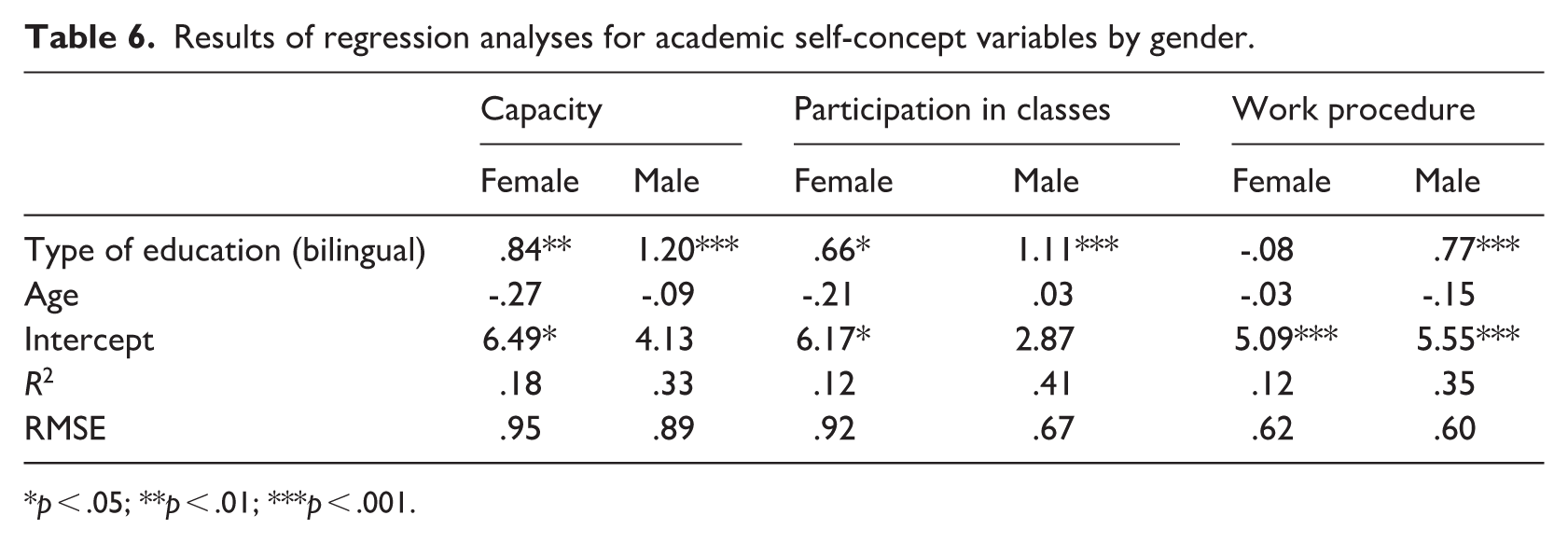
p < .05; **p < .01; ***p < .001.
Discussion
The objective of this research was to investigate variations in academic self-concept based on gender and type of education (i.e., bilingual and non-bilingual) and assess the degree to which the type of education acts as a predictor for academic self-concept. To this end, the following hypotheses were established: (1) females are expected to show higher levels of academic self-concept (i.e., capacity, work procedure, and participation in classes) than males and (2) participants from the bilingual school are expected to have higher academic self-concept levels (i.e., capacity, work procedure, and participation in classes) compared to those from the non-bilingual school.
Regarding the first hypothesis, only a marginal gender difference was found for work procedure, with females tending to report higher scores than males. Therefore, the first hypothesis cannot be clearly supported. These results differ from previous studies. Previous research shows domain-specific self-concept differences by gender. For instance, Vispoel and Forte (2010) found that females tend to score higher in the verbal and artistic domains. Nevertheless, the disparities in findings between this study and previous research may be attributed to the specific context and characteristics of the participants.
Concerning the second hypothesis, bilingual students showed significantly higher academic self-concept across all three dimensions (capacity, participation, work procedure), confirming that bilingual education predicts stronger self-perceptions of academic competence in L2 classrooms. Type of education explained 22%, 19%, and 11% of variance, respectively, indicating academic self-concept’s role as a key mediator between bilingual programs and learning outcomes (O’Mara et al., 2006). Complementary gender-specific regression analyses provided further nuance to these findings. For females, bilingual education positively predicted capacity and participation, but not work procedure, whereas for males, it predicted all three self-concept dimensions with higher proportions of explained variance. These patterns suggest that the beneficial impact of bilingual education on academic self-concept is robust across genders but appears more pronounced and generalized among males, particularly in classroom behavior and work routines. This supports the second hypothesis and aligns with evidence that positive academic self-concept fosters motivation and persistence in language learning (Erten & Burden, 2014).
Follow-up analyses clarified the interaction between education type and gender. Among males, those enrolled in the bilingual school showed substantially higher levels of capacity, participation in classes, and work procedure than males in the non-bilingual school, with large effect sizes. Among females, the same pattern emerged for capacity and participation, whereas no significant difference was found for work procedure. These results suggest that the positive association between bilingual education and academic self-concept is robust across genders, but may be somewhat stronger and more pervasive for males, particularly regarding classroom behavior and work routines.
Non-bilingual school students showed low academic self-concept levels. The results indicate that this disadvantage affects both males and females. However, this effect is substantially more pronounced for males, who demonstrate significantly lower academic self-perceptions across all three dimensions when they attend a non-bilingual school. Several factors may explain these results. To get started, the first reason might be the lack of connection between students and the English language, owing to the inexistence of a bilingual program. This problem worsens because pupils receive limited English exposure. Traditional methods often prevail. Diverse studies within Psychology and Pedagogy disciplines refer to the importance of studying an L2 during childhood as the child’s brain is very moldable and susceptible to new learning (Bialystok, 2017). Their brain will continue to increase its neural connections as well as learn at a faster pace and with more ease. Consequently, the most recommendable age at which to start teaching English is between 3 and 12 years, as children would not be able to pretend motivation or interest toward the L2, contrary to what adults could simulate if they seriously mean it (Cenoz, 2003).
The second reason behind the worrisome non-bilingual school academic self-concepts levels is concerned with the socioeconomic and cultural background of families who take part in this school community. The role of families regarding the teaching of learning English is cooperation without contact, that is, supporting their children but not in contact and in alignment with the educational institution (Flaborea et al., 2013). Unfortunately, this form of involvement in the pupil’s L2 learning only occurs in the luckiest cases, given that their English level is not very high. Another fact is the limitation of educational practices for learning, not only in resources but also in strategies, activities, creativity, habits, time, and attitude to foster the educational process, because within the sociocultural aspects of the neighborhood, it is recognized that families carry out few interaction activities which could favor the sociocultural enrichment in the English (foreign) language (Hill & Tyson, 2009).
Moreover, the quality of English teaching is decisive in improving the participants’ academic self-concepts. In teachers training programs, the foreign language is exclusively used as an educational vehicle, without the existence of an explicit objective to promote its learning (Jover et al., 2016). This entails the reduction of this training to minimum levels in the case of nonspecialist teachers, as a recent analysis about 60 primary education training teaching degrees from public and private institutions lays bare (De la Maya & Luengo, 2015). According to the results of the study, the preparation for teaching a foreign language within the nucleus of compulsory common training is rather scarce (Jover et al., 2016).
The acquisition of the English language is highly desirable from the aspirations of society; however, the social context, almost in its totality Spanish-speaking, does not offer real opportunities for communicative interaction in another language different from Spanish at the primary education level (Dewaele & MacIntyre, 2014). Thus, pupils cannot reflect on the English language outside the school environment (e.g., limited hours and access to developing skills in English), impoverishing in this way the quality of their learning in real-life situations and active learning.
Anxiety when speaking English before peers hinders L2 learning. The effects of these emotions impede or make second language acquisition more difficult (Rodríguez-Pérez, 2014). By contrast, those students who frequently manifest higher levels of motivation, self-control, and self-confidence in the development of scholar activities in the classroom environment and relationships with their peers, didactical materials, and knowledge demonstrate lower levels of anxiety, which facilitates the development of communicative competence in L2 (Horwitz, 2010). Hence, noncognitive skills are also a factor to consider in explaining why participants from non-bilingual schools acquired such low academic self-concept levels in the foreign language class.
Academic self-concept serves as a critical mediator between bilingual education and L2 achievement. Higher self-concept in bilingual students likely reflects enhanced perceived competence from increased L2 exposure and success experiences, which in turn reinforces motivation and engagement (Sewasew & Schroeders, 2019). This reciprocal relationship underscores why bilingual programs may yield cascading benefits for both linguistic proficiency and academic confidence in globalized contexts.
Practical implications
Bilingual programs represent a strategic intervention for enhancing academic self-concept in L2 contexts. Beyond linguistic gains, our findings highlight how such programs foster students’ confidence in their academic abilities, a crucial predictor of long-term language learning success and global competitiveness (Marsh, 1990; Weva et al., 2023). Nevertheless, before taking such a risk, a comprehensive exploration of bilingualism development must consider its interconnectedness with the social context encompassing language usage and the school environment (Arango, 2010). In practical terms, the non-bilingual school setting unveils several pressing vulnerabilities (e.g., diversity of students coming from different countries without being able to speak even the Spanish language, profound and critical necessities to attend, split families, absenteeism, delayed introduction to school, etc.). These challenges demand resolution before instituting English as a second language within the instructional framework for most academic subjects. Subsequently, according to Cenoz (2003), the following general measures are stated: (a) understanding bilingualism is a long-term project as its early introduction implies the necessity of adapting the curriculum and materials of primary education, and (b) establishing well-defined linguistic objectives for each cycle considering the sociolinguistic environment, school characteristics, and number of hours dedicated to foreign language teaching.
To enhance the school-family relationship, the school already makes an effort to inform parents and offer them true communicative opportunities (Moreno, 2010). Thus, the missing point is the lack of interest toward the knowledge of a language different from the mother tongue. Last but certainly not least, a crucial consideration proposed by Cenoz (2003) is to achieve the implication and support of the school community, especially families, for the successful execution of the project in the foreseeable future. Linguistic immersion experiences can engage families. These inform parents of L2 benefits and boost children’s motivation. However, this measure requires English teachers’ collaboration and time to prepare such laborious goals.
Besides, with the aim of improving the quality of the teaching of a foreign language and leveraging the school is submerged into the so-called Learning Communities project, teachers could employ it as a powerful strategy to foster permanent training because they incentive research and critical collective education with respect to the English language (Alcedo et al., 2014). At the school, Learning Communities allow teachers to discuss in a reflective way several problems inherent to the pedagogical practice and other aspects of the school, aiming to define concrete actions to find a short-, medium-, or long-term solution (Alcedo et al., 2014). For instance, through collaborative work in Learning Communities, participants can investigate about the same English pedagogical practice, analyzing the possible causes and consequences of troublesome situations and how to manage them (Alcedo et al., 2014). Hence, if English teachers can adeptly leverage this opportunity to incrementally enhance their English teaching skills, this potential intervention measure is likely to yield positive results. Consequently, it is directly correlated with students having increased opportunities for success in the English classroom. The corresponding measures in this context would involve ensuring comprehensive teacher training, encompassing both linguistic and methodological aspects. In addition, coordinating lesson plans across linguistic areas is essential to promote interdependence between languages and accrue cognitive and metalinguistic benefits for students (Cenoz, 2003).
Moreover, to provide participants with more real opportunities for communicative interaction, ludic activities would facilitate their active learning in the L2 classroom at the Primary Education level. As a result, pupils would have more possibilities to acquire the native’s pronunciation and fluency through game situations, which involve language with their psychomotor development (Alcedo & Chacón, 2011).
Children are more motivated and stimulated when authentic materials are used, such as games, images, and real objects, instead of artificial and traditional materials (e.g., textbooks or workbooks) (Wright et al., 2006). The use of authentic materials enhances students’ engagement and concentration levels, representing a benefit that should not be overlooked (Wright et al., 2006). Cenoz (2003) again advocates the implementation of a methodology to motivate students, which is adequate for their ages and could help pupils reach a high English level. If this is carried out from the early ages, students would be in a better position and attitude to avoid anxiety and some other negative feelings in the foreign language class, simulating more real-life situations where English is present, and achieving in this way more positive academic self-concepts.
In this sense, if the non-bilingual school diligently considers and earnestly adopts these potential changes, there is a significant likelihood that Primary Education pupils, regardless of the school attended, could cultivate elevated academic self-concepts. Consequently, this can enhance academic achievements and personal well-being within the L2 classroom.
Limitations and future research
The results of this study should be taken with caution as some limitations could be perceived: (a) small sample size; (b) self-report assessments to measure academic self-concept; (c) potential method bias due to social desirability; and (d) methodological study design. In future research, it is advisable to increase the sample size and employ multiple instruments. This approach would contribute to a more robust cross-validation of the results. In addition, the adoption of an experimental or quasi-experimental methodological design would facilitate the establishment of causal relationships between the variables investigated. Finally, the comprehensiveness of the study could be increased by incorporating additional variables associated with the context or academic skills, which would allow a more complete understanding of the phenomenon.
Conclusions
To conclude, we can state that the findings provided by this study will be used to improve the quality of English teaching in non-bilingual schools. Likewise, we should mention that this study is a successful advance regarding the research on bilingual and non-bilingual programs’ effects on primary education pupils. In this line, this experience seems particularly relevant and useful to educational policies, as the enhancement of self-concept is deemed a protective factor and a fundamental educational objective (Weva et al., 2023).
Footnotes

Funding
The authors disclosed receipt of the following financial support for the research, authorship, and/or publication of this article: This work was supported by the Ministry of Universities (MUNI) under Grants for the training of university professors (Ayudas para la formación del profesorado) (Grant AP- FPU23/01187).
Declaration of conflicting interests
The authors declared the following potential conflicts of interest with respect to the research, authorship, and/or publication of this article: All authors have participated in the research and/or article preparation. In addition, all authors have approved the final manuscript that is submitted.
The authors declare that the research was conducted in the absence of any commercial or financial relationships that could be construed as a potential conflict of interest.
Data availability statement
The access to data and study materials is possible upon request to the authors.
Declaration of generative AI in scientific writing
The authors declare that they have not used generative artificial intelligence (AI) and AI-assisted technologies in the writing process.
Submission declaration and verification
This work has not been published previously and that it is not under consideration for publication elsewhere.