







Abstract
In a comprehensive investigation involving a reanalysis of an existing study and five new preregistered studies (N = 4,032), we investigate whether empirically identified longtermists, determined by their Longtermism Beliefs Scale (LBS) scores, exhibit heightened moral regard for present and future generations across social distances. Longtermists consistently value future generations, present generations, outgroups, and nature more than the general population does, as measured by the Moral Expansiveness Scale (MES). They also exhibit reduced dehumanization tendencies towards outgroups and future people, alongside greater identification with their community, compatriots, and all humans. Various factors explain the link between longtermism beliefs and moral regard, with moral obligation and identification with all of humanity potentially mediating it. Notably, the LBS maintains its significant impact on moral regard even when considering other future-oriented factors, highlighting its unique predictive power. These findings offer valuable insights into longtermist ethics, bridging theory and practical implications for safeguarding present and future generations amidst existential threats.
In the face of existential threats like climat change, artificial intelligence (AI), and pandemic disease, there is interdisciplinary agreement on the need for people in the present day to take actions for the sake of securing the well-being of future generations (Blaser, 2018; Caviola et al., 2021; MacAskill, 2022; Ord, 2021; Syropoulos & Markowitz, 2021). Research in psychology demonstrates that moral consideration, or people’s judgments of who deserves moral regard, is a key driver in motivating prosocial behavior (Crimston et al., 2016, 2018a, 2018b; Graham et al., 2017; Rottman et al., 2021). Thus, to meet humanity’s future challenges, broad moral consideration that includes future generations might be necessary. Despite people extending relatively high moral regard to the present, there is a prevailing tendency for diminishing moral regard for the future (Bang et al., 2017; Law et al., 2023; Wade-Benzoni, 2002). Longtermism, an increasingly popular ethical philosophy and social movement advocating equitable consideration for present and future generations alike (MacAskill, 2022; Ord, 2021), might offer a framework for balance, even as we navigate present demands (Caviola et al., 2021; Singer, 2015). However, a common critique of longtermism is built on the assumption that its adherents, despite their heightened moral regard for the welfare of people in future generations, show lesser moral regard for the welfare of people in the present (Emba, 2022). Yet, the empirical basis for this critique remains crucially underexplored. Here, we address two primary questions: (a) relative to individuals in the general population, do individuals who strongly endorse longtermist principles express greater moral regard for future generations? And (b), do these longtermism-aligned individuals, as the movement’s critics would suggest, express lesser moral regard for those already living today? In essence, we investigate whether extending moral consideration to the future necessarily precludes extending moral consideration to the present.
Moral Regard and Its Consequences for Present (and Future) Prosocial Action
The subjective moral standing of future generations may be a pivotal factor towards action to avert existential risks, as moral regard consistently correlates with prosocial behavior towards present-day individuals across social boundaries (Anthis & Paez, 2021; Crimston et al., 2016, 2018a, 2018b). The Moral Expansiveness Scale (MES; Crimston et al., 2016) assesses one’s moral circle’s size, which maps moral consideration across concentric circles with oneself at the center. Typically, people exhibit a diminishing trend in moral regard for entities as social distance increases, placing close entities in inner circles (e.g., friends, family) and distant entities in outer circles (e.g., animals, outgroup members; Crimston et al., 2016, 2018a, 2018b; Rottman et al., 2021).
The size of one’s moral circle significantly impacts prosocial attitudes and behaviors. Those with larger moral circles, who extend greater moral regard to socially distant entities, tend to support humanitarian and environmental causes more, are more likely to make life-saving sacrifices, volunteer more, endorse other-oriented public health behaviors during crises like COVID-19 (Boggio et al., 2024), promote intergroup conflict resolution (Starzyk et al., 2021), and contribute more to real-world charitable endeavors (Wilks et al., 2023). These findings collectively underscore the critical role of moral circles in driving willingness to engage in prosocial actions, across various degrees of social distance, towards individuals in the present.
But does possessing a broader moral circle extend to pro-future attitudes and intentions spanning temporal distance? Although the MES measures moral regard exclusively across social distance, the considerable overlap in how people perceive both social and temporal distance, supported by behavioral (Gilead et al., 2020; Tuen et al., 2023) and neuropsychological (Hill et al., 2017; Soutschek et al., 2016) evidence, suggests that moral circles could offer substantial predictive power over prosocial behaviors and intentions directed towards future generations. Recent research compellingly connects the inclusion of distant future entities in one’s moral circle with future-oriented generosity, providing preliminary evidence of moral regard’s potential to predict relevant pro-future outcomes (Law et al., 2023). Nonetheless, well-established psychological (e.g., Hauser et al., 2014) and behavioral economics (e.g., intergenerational discounting; Bang et al., 2017; Wade-Benzoni, 2002, 2008; Wade-Benzoni et al., 2008) research reveals a tendency to discount the needs of future generations relative to present ones. Recent findings corroborate these earlier ones, demonstrating a similar trend in the subjective moral standing of future generations (Law et al., 2023). Specifically, this emerging work illustrates that moral circles, moral obligations, and prosocial intentions towards targets in the future progressively contract across increasing temporal distance. To summarize, while extending high moral regard to future entities would likely predict prosocial behavior towards future generations, evidence indicating that most people do not hold the future in such moral standing raises concerns about the practicality of using moral regard as a means to promote pro-future action.
Longtermism and Moral Regard for Future (and Present) Generations
Although present-oriented moral preferences are commonplace, there is preliminary evidence that they may vary across individuals. For one, the longtermism philosophy, an extension of the effective altruism movement (see Singer, 2015) which advocates valuing the welfare of future generations to the same extent as that of the present generation, has evolved into a small yet increasingly popular social movement (MacAskill, 2022; Ord, 2021). Longtermism, at its core, can be reduced to three primary principles: (a) the welfare of future generations matters, (b) there could be an immeasurable number of humans born in the future, and (c) securing a long and prosperous future for humanity is possible through present-day action.
Spreading widely from roots in philosophy, ideas related to longtermism have become a fruitful topic of discussion in psychology (Caviola et al., 2022; Syropoulos, Law, Kraft-Todd, & Young, 2023; Syropoulos & Markowitz, 2022; Wilks et al., 2023), the natural sciences (Blaser, 2018; Taylor et al., 2013), and popular culture (Hunter & Hewson, 2020; McLamb, 2022). Moreover, longtermism and future-oriented thinking have influenced public policy decisions in recent times as well. For instance, the U.S. government has reduced the discounting rate for future generations in 2023, recognizing the importance of factoring the needs of future people to a greater extent into the formulation of policy recommendations like stricter statutes regulating carbon emissions (The White House Office of Management and Budget [OMB], 2023). Although the longtermism movement itself remains small at present, perhaps in part due to lay perceptions that the movement prioritizes the future over the present (MacAskill, 2022), the apparent popularity of related ideas suggests that not everyone may discount the needs of future generations to the same extent as average trends in recent research suggest (Law et al., 2023).
Research employing the Longtermism Beliefs Scale (LBS), designed to gauge alignment with longtermism philosophy, has empirically identified that a significant portion of the American population (23.5%) endorses its fundamental principles (Syropoulos, Law, Kraft-Todd, & Young, 2023). These studies classified as longtermists those scoring highly (75 or more out of 100) on the scale’s items for close and distant future time frames alike, perhaps providing a more accurate glimpse into the longtermism ideology’s prevalence compared to assessing only the movement’s size, which might underestimate its popularity. It is important to note that the items on the LBS do not emphasize trading off welfare in the present for welfare in the future. Thus, it is possible that fewer subjects would score highly on the measure if such trade-offs were made explicit. Nonetheless, in studies using the LBS (Syropoulos, Law, Kraft-Todd, & Young, 2023), high scorers display stronger future-oriented attitudes than participants in control conditions, scoring notably higher on legacy motivation, future consequence awareness, future self-continuity, effective altruism beliefs, and utilitarianism. Moreover, individuals categorized as longtermists through the LBS are fivefold more inclined to expressly identify as longtermists upon learning about its foundational tenets (Syropoulos, Law, Amormino, & Young, 2023; Syropoulos, Law, Kraft-Todd, & Young, 2023). This finding underscores how the scale is effective not just in capturing individuals’ ideological alignment with the principles of longtermism, but also in capturing a sense of identification with longtermism, a component long considered central in the formation and maintenance of social movements (Polletta & Jasper, 2001).
While the LBS captures longtermism principles like intergenerational cooperation, future efficacy, and extinction threat prevention, it critically does not assess moral rights extended to people in future generations. Indeed, longtermism beliefs as a construct differs from the subjective moral standing of future generations, as the LBS focuses principally on practical future-oriented influence, lacking a means to capture ethical reflections on future individuals’ intrinsic value. The LBS only shows small to moderate associations with moral circles (MES; Syropoulos, Law, Kraft-Todd, & Young, 2023), further highlighting their distinct natures in reflecting the intricacies of long-term ethical considerations. A critical yet unexplored question is whether longtermists show diminished moral concern for distant future generations like the general population (Law et al., 2023), or whether they possess more inclusive intergenerational moral circles. Perhaps even more intriguing is whether longtermists, compared to the general population, show lesser moral concern for present generations, in line with common critiques of the movement, or if they instead possess a sense of moral regard that expands impartially across temporal and social boundaries alike.
No published study definitively links longtermism beliefs to the scope of one’s moral concern, but such a relationship is likely. Longtermism, in principle, promotes extending equivalent regard to present and future individuals. Thus, if the LBS accurately captures longtermism beliefs, longtermists identified using the scale should extend moral considerations not only to distant-future generations, but to people living in the present as well. Additionally, research shows Giving What We Can pledge takers—vowing to donate at least 10% of their income to endorsed charitable causes within the Effective Altruism movement—often have broader moral circles encompassing distant individuals (Wilks et al., 2023). While not all effective altruists are longtermists, those inclined toward long-term thinking might naturally possess moral considerations inclusive of temporally and socially distant others alike, given (a) substantial overlap in the processing mechanisms for social and temporal distance (Gilead et al., 2020; Hill et al., 2017; Soutschek et al., 2016; Tuen et al., 2023) and (b) the common followership between the two movements (MacAskill, 2022; Singer, 2015).
Investigating whether longtermists deviate from the common trend of diminishing moral consideration for socially and temporally distant individuals holds substantial promise for scientific and philosophical exploration. It could bolster the LBS’s convergent validity (Syropoulos, Law, Kraft-Todd, & Young, 2023), affirming its predictive ability aligned with longtermism principles. Additionally, it may reveal that longtermists do not exhibit reduced moral regard for present entities compared to nonlongtermists, challenging prominent criticisms of the philosophy (e.g., MacAskill, 2022). Furthermore, if longtermists demonstrate greater moral concern for both future and present generations than members of the general population, especially for socially distant entities (e.g., outgroups, nature), it would suggest they possess a unique capacity to extend moral regard across both the temporal and social dimensions of psychological distance. Most importantly, linking longtermism beliefs to ethical regard for present and future generations could provide practical insights for enhancing humanity’s well-being in both the present and future, given the consistent link between moral circle expansion and prosocial attitudes (e.g., Crimston et al., 2016).
Potential Mediators of the Relationship Between Longtermism Beliefs and Moral Regard
If empirical identification as a longtermist indeed aligns with heightened moral consideration for both current and future generations across different levels of social distance, several relevant variables may help elucidate this connection. Numerous factors have demonstrated links with moral circles and prosociality across social distance, encompassing mind perception, dehumanization, perspective taking, utilitarianism, identification with humanity, stereotyping, and discounting tendencies (Crimston et al., 2016, 2018a, 2018b; Fowler et al., 2021; Law et al., 2022, 2024; Rhoads et al., 2023; Wilks et al., 2023). Since individual differences in these attitudes consistently predict moral circle size and prosociality across social distance, they may also contribute to explaining variations in moral consideration for future generations across various temporal intervals. If these factors indeed exhibit associations with longtermism beliefs, this could suggest an enhanced ability of longtermists, compared to the general population, to extend moral regard across diverse aspects of psychological distance.
Furthermore, feelings of personal moral obligation to future generations (Syropoulos & Markowitz, 2021) and adherence to effective altruism beliefs (Caviola et al., 2022) predict future-oriented generosity, concern, longtermism beliefs, and the subjective moral standing of future generations (Law et al., 2023). These variables may therefore elucidate the connection between longtermism beliefs and the size of one’s moral circle across temporal and social dimensions. Additionally, the longtermism philosophy inherently implies a sense of optimism that positive change for the future can be achieved through present-day actions (MacAskill, 2022; Ord, 2021). Conceptually linked to future-oriented optimism is utopian thinking, characterized by contemplation of an ideal society. Research has shown that utopian thinking predicts greater societal engagement and favorable attitudes towards societal improvement (Fernando et al., 2018). Hence, it is plausible that longtermists, who believe in averting existential threats through present actions, engage in more utopian thinking about the future of society, thereby holding future generations in high regard.
Overview of Current Studies
The current research systematically examines whether individuals identified as longtermists by their high scores on the LBS extend greater moral consideration to future generations compared to nonlongtermist participants. In Supplemental Study 1 (Study S1), through reanalyzing data from a separate project (Law et al., 2023), we find preliminary evidence supporting this trend across levels of social distance on the MES. Studies 1 and 2 replicate these effects in well-powered, preregistered studies, demonstrating that the effects persist when participants consider future generations generally at different future time points (Study 1), and when participants individually consider each entity on the MES at various future time points (Study 2). These findings indicate the robustness of the effect across varied levels of social distance. Building on these results, Study 3a shows evidence that a multitude of cognitive, affective, and social phenomena support these robust patterns and suggest a potential mediating role of moral obligation and identification with all of humanity in the relationship between longtermism beliefs and moral consideration. Study 3b acts as a preregistered replication of these findings. Finally, in Study 4, we rule out alternative future-oriented constructs in explaining these relationships, indicating that longtermism beliefs and the LBS offer unique predictive ability for expansive moral regard.
To empirically address criticisms that imply individuals endorsing longtermism principles extend less moral consideration to present entities than the general population does (Emba, 2022), and to investigate whether longtermists display a high and consistent moral consideration across temporal and social dimensions of psychological distance, we conducted a comparison of the moral regard expressed by longtermists and nonlongtermists towards present-day entities at various social distances. Our results indicate that high scorers on the LBS, compared to low scorers, extend greater overall moral regard, and moral regard specifically to socially distant present-day entities (Studies S1, 1, 2, 3b, and 4). Longtermists also exhibit reduced dehumanization and enhanced mind perception tendencies towards present-day social outgroup members, along with a stronger shared sense of identity with compatriots and community members (Studies 3a–3b).
Moreover, longtermists display more expansive attitudes towards socially distant entities, both in the present and the future. The present findings remain consistent when assessing longtermism beliefs both as a dichotomous variable and as a quantitative individual difference. For instances where findings related to the assessment of longtermism beliefs as a numerical variable are not included in the main text of the article, they can be found in the supplemental online material (SOM). Our data challenge prominent criticisms of the longtermism movement (see MacAskill, 2022), and pivotally suggest that longtermism beliefs may serve as a tenable route towards the betterment of human welfare now and in the future for socially close and distant individuals.
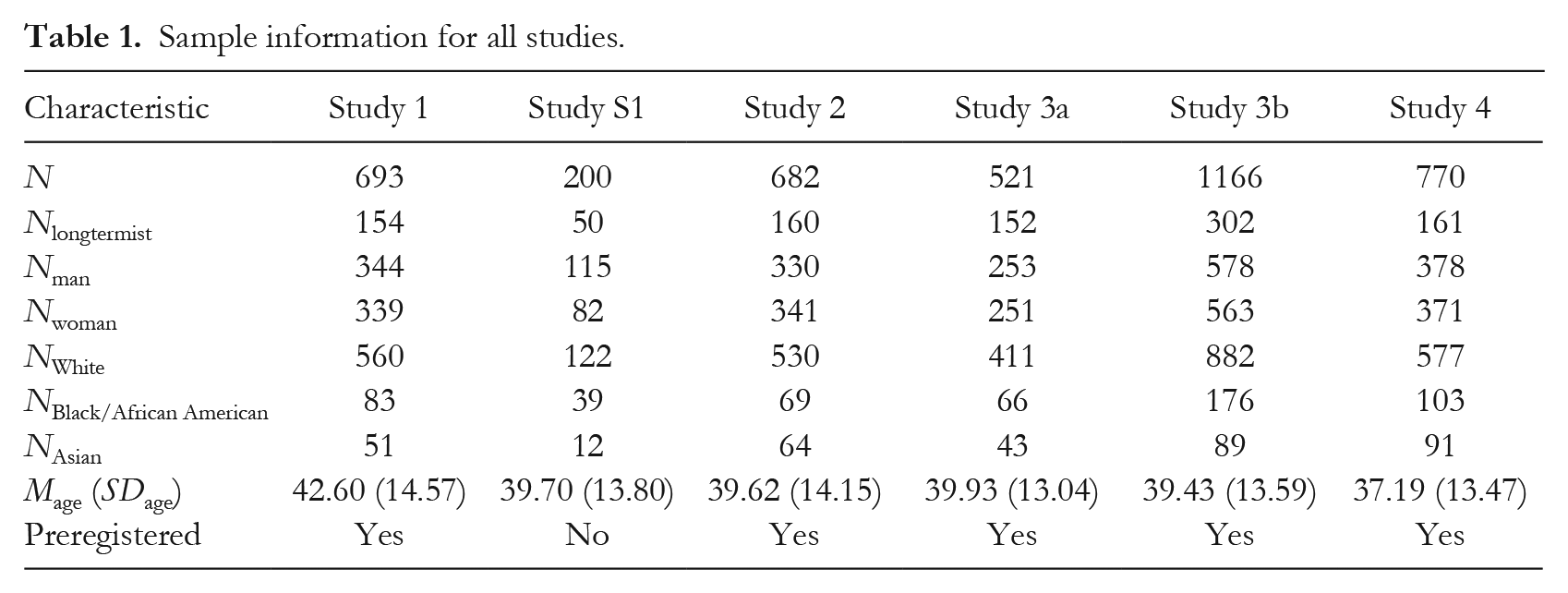
All data files, materials, and code for the studies are available on the Open Science Framework (OSF; https://osf.io/ahzr4/?view_only=71da02afff6f42a5af3c3f930cdeb0c1). An overview of the sample for each study is provided in Table 1.
Sample information for all studies.
Study 1
Our first study examined whether people who are identified as longtermists using the LBS extend greater moral rights and worth to people living in the future and present. We hypothesized that longtermists would attribute greater moral worth to people living in the future, regardless of how far into the future these people lived (H1). We also explored whether longtermists’ extension of greater moral worth to future people would potentially result in them extending less moral worth to entities in the present. All aspects of the study (power analysis and sample size, measures, hypotheses, and exploratory analyses) were preregistered (https://aspredicted.org/es234.pdf).
Methods
Participants
We collected data on Prolific. We sought to recruit a total of 700 participants. An additional seven participants completed the survey but did not submit their survey for payment, resulting in a sample of 707 participants. After removing participants who had a duplicate IP address and those who missed an attention check, 693 participants remained in the sample. The study lasted approximately 8 minutes, and participants received $1.45 for their participation.
Measures
Longtermism beliefs
The Longtermism Beliefs Scale (Syropoulos, Law, Kraft-Todd, & Young, 2023) was used to capture participants’ endorsement of longtermist philosophy principles. This scale consists of seven items (each shown four times, for a total of 28 responses), which participants are asked to answer for four different time frames: 1,000 years in the future, 10,000 years in the future, 100,000 years in the future, and 1,000,000 years in the future. Participants are presented with each item in a randomized order and are tasked with responding for each time frame simultaneously.
Responses are captured on a 0–100 slider scale. Participants are systematically identified as longtermists if they score high on the scale for the shortest time frame (which we set in our preregistration as a score equal to or greater than 75) and have an equally high or higher score for future time frames. The average score across all time frames was close to the midpoint (M = 59.01, SD = 26.55, α = .97).
Moral expansiveness
The Moral Expansiveness Scale (Crimston et al., 2016) was used to capture the attribution of moral concern to different entities. Individuals are given a brief explanation of the concept of moral circles and are then tasked with grouping different entities into one of four circles: outside the moral boundary (0), fringes of moral concern (1), outer circle of moral concern (2), and inner circle of moral concern (3).
In total, 30 entities were included. From these 30 entities, three focused on ingroup and family (M = 2.86, SD = 0.73, α = .71), three on technology and artificial intelligence (AI; M = 0.44, SD = 0.65, α = .77), 10 on nature and animals (M = 1.56, SD = 0.73, α = .95), 10 on outgroup members (M = 1.57, SD = 0.68, α = .92), and four on future people (M = 1.02, SD = 0.78, α = .89). The items for future people were phrased as follows: “a person living [100/1,000/10,000/100,000] years from now.” The total across all items excluding future people is indicative of overall moral expansiveness (M = 1.59, SD = 0.47, α = .90; e.g., Rottman et al., 2021).
Results
Analysis plan
To test our main hypothesis, namely whether longtermists ascribe greater moral worth to people in the future no matter how far into the future they are, we conducted a 2 × 4 mixed ANOVA. In an additional preregistered exploration, we examined the overall and relative moral expansiveness of longtermists compared to nonlongtermists, for which we hypothesized that longtermists, due to their expanded moral circle which would include people living in the future, would also be more morally expansive in general, including to outgroups and natural entities.
Moral expansiveness for future people
We conducted a 2 (longtermism; between-subjects: longtermists vs. general population) × 4 (MES time frame; within-subjects: 100, 1,000, 10,000, 100,000 years in the future) mixed ANOVA. A significant effect of time frame, F(3, 2016) = 110.69, p < .001, η2p = .14, and longtermism identification, F(1, 672) = 65.44, p < .001, η2p = .09, emerged; as well as a significant Longtermism x Time Frame interaction, F(3, 2016) = 14.62, p < .001, η2p = .02. Decomposing this interaction suggested that the decrease across time frames was larger for nonlongtermists than for longtermists, who scored significantly higher for each time frame: person in 100 years (t = 3.84, p < .001, d = 0.36); person in 1,000 years (t = 6.20, p < .001, d = 0.56); person in 10,000 years (t = 8.26, p < .001, d = 0.73); person in 100,000 years (t = 9.67, p < .001, d = 0.85). See Figure 1 for a graphical depiction of these results.
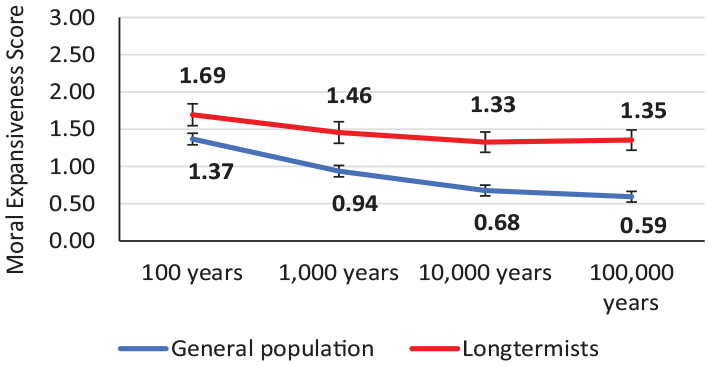
Line graph depicting scores for moral expansiveness for future people for longtermists and nonlongtermists at four different time frames.
Moral expansiveness for present entities
Supporting our preregistered prediction, longtermists scored significantly higher on overall moral expansiveness, t(690) = 4.21, p < .001, d = 0.38; moral expansiveness for outgroups, t(221.55) = 3.12, p = .002, d = 0.32; and moral expansiveness for nature, t(687) = 3.59, p < .001, d = 0.32. See Figure 2 for a graphical depiction of these results.
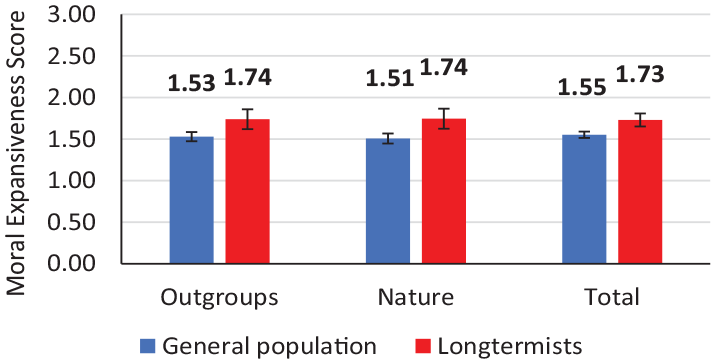
Bar graph depicting scores for longtermists and nonlongtermists for overall and relative moral expansiveness.
Discussion
Supporting our preregistered hypothesis, we found that longtermists ascribed greater moral worth to future generations, suggesting beliefs that the practical dimensions of influencing the future are associated with ethical reflections of the intrinsic worth of future people. This was the case regardless of how far in the future these hypothetical people existed. In fact, effect sizes increased for more distant time frames, indicating that both longtermists and nonlongtermists value near-future generations more similarly, but diverge with respect to more distal future generations.
In addition, contrary to prevalent criticism of the longtermist philosophy, longtermists also had greater overall and relative moral expansiveness for outgroup and natural entities. Importantly, even for longtermists, future generations were ascribed less moral worth compared to outgroups and natural entities (see supplemental material), suggesting that future people comprise a unique type of outgroup, one that is given less moral worth than groups that people tend to exclude from their moral circle (Rottman et al., 2021).
Study 2
Our second study was a preregistered attempt to conceptually replicate and expand on the findings of Study 1. We used the MES to determine whether longtermists extend greater moral worth to all future entities, and not just people, compared to nonlongtermists. Doing so (i.e., using the MES in multiple time frames, including the present) also gave us the ability to reevaluate the finding suggesting that longtermists have a more expansive moral circle in general. All aspects of the study (power analysis and sample size, measures, hypotheses, and exploratory analyses) were preregistered (https://aspredicted.org/u7e5n.pdf).
Methods
Participants
We collected data on Prolific Academic. We sought to recruit a total of 700 participants. After removing participants who had a duplicate IP address 1 and those who missed an attention check, 682 participants remained in the sample. The study lasted approximately 12 minutes, and participants received US $2.20 for their participation.
Measures
Longtermism beliefs
The Longtermism Beliefs Scale (Syropoulos, Law, Kraft-Todd, & Young, 2023) was again used to capture participants’ endorsement of longtermist philosophy principles. The average score across all time frames was close to the midpoint, albeit slightly higher than in Study 1 (M = 62.01, SD = 25.17, α = .96).
Moral expansiveness
An adapted version of the Moral Expansiveness Scale Short Form (MESx short form; Crimston et al., 2018a) was used to capture the attribution of moral concern to different entities across different time frames. The scale included 10 entities and measured moral expansiveness towards them for the present (M = 1.83, SD = 0.52, α = .79), 100 years in the future (M = 1.66, SD = 0.61, α = .85), 1,000 years in the future (M = 1.52, SD = 0.68, α = .88), and 10,000 years in the future (M = 1.37, SD = 0.73, α = .89). Three items focused on revered persons and ingroup members (genetic relative, charity/aid worker, citizen of your country), four on nature (dolphin, old-growth forest, apple tree, fish), and three on outgroup members (mentally challenged individual, somebody with different religious beliefs, murderer). Given the smaller number of entities, we only examined overall levels of moral expansiveness.
Results
Analysis plan
To test our main hypothesis, namely whether longtermists ascribe greater moral worth to future entities no matter how far into the future they are, we planned to conduct a 2 × 3 between-within-subjects ANOVA. Considering the results of Study 1, we amended our preregistration prior to our analyses to reflect the observed significant difference in overall moral expansiveness in the present. Thus, we ran a 2 × 4 mixed ANOVA.
Differences in moral expansiveness across time
We conducted a 2 (longtermism; between-subjects: longtermists vs. general population) × 4 (MESx time frame; within-subjects: present day, 100, 1,000, 10,000 years in the future) mixed ANOVA. A significant effect of time frame, F(3, 2040) = 119.88, p < .001, η2p = .15, and longtermism identification, F(1, 680) = 40.70, p < .001, η2p = .06, emerged; as well as a significant Longtermism x Time Frame interaction, F(3, 2040) = 22.94, p < .001, η2p = .03. Decomposing this interaction suggested that the decrease across time frames was larger for nonlongtermists than for longtermists, who scored significantly higher for each time frame: MES in the present, t(680) = 3.53, p < .001, d = 0.31; MES in 100 years, t(680) = 4.77, p < .001, d = 0.43; MES in 1,000 years, t(680) = 6.19, p < .001, d = 0.56; MES in 10,000 years, t(680) = 7.78, p < .001, d = 0.73. See Figure 3 for a graphical depiction of these results.
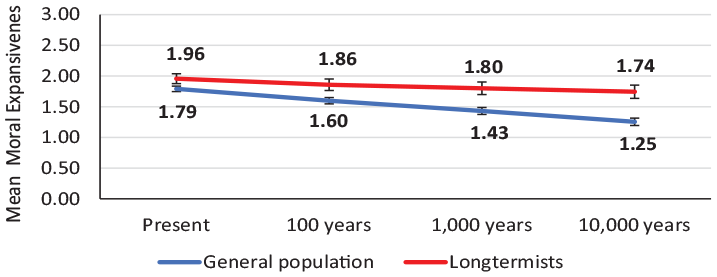
Line graph depicting scores for total moral expansiveness for longtermists and nonlongtermists at four different time frames.
Discussion
Our second study conceptually replicated and extended the results of Study 1 in a preregistered design, and directly replicated the results of a secondary reanalysis of data that were obtained for a separate investigation (see Study S1 in the supplemental material). Specifically, we again observed that longtermists ascribed greater moral worth to entities in the future relative to nonlongtermists, with the magnitude of this difference being larger for more distant time frames. Importantly, this effect was observed for total moral expansiveness, including outgroups, entities in nature, and ingroup members. These findings build upon those from Study 1, which were limited solely to future people. Specifically, we demonstrated that longtermists ascribe greater moral worth than nonlongtermists not only to future entities, but to present entities as well.
Crucially, critics of the longtermism philosophy regularly raise concerns that, despite expressing moral regard for future people, longtermists tend to express less moral regard for present-day people and challenges (MacAskill, 2022). These findings, which replicate those of Study 1, suggest that such concerns may be unfounded, as those who endorse the longtermism philosophy extend moral regard for the well-being of present-day entities to an even greater extent than those who do not endorse the longtermism philosophy.
Study 3a
Our third study sought to examine potential underlying mechanisms (i.e., mediators) of the effect of longtermism on ascription of moral rights to present and future generations. We considered the following variables as mediators since we deemed that it was probable for longtermists to score higher on them, and given that existing research suggests they might be related to moral expansiveness (and thus also to moral expansiveness for future people): expansive altruism, impartial beneficence, mind perception for future people, beliefs that future people can experience fear or pain (i.e., more humanization), (decreased) blatant dehumanization, perceived obligation to future people, identification with all of humanity, perspective taking, and greater utopian thinking. All aspects of the study (power analysis and sample size, measures, hypotheses, and exploratory analyses) were preregistered (https://aspredicted.org/vh5k6.pdf).
Methods
We collected data on Prolific Academic. We sought to recruit a total of 550 participants, and we received complete responses from 541. After removing participants who had a duplicate IP address (n = 4) and those who missed an attention check (n = 15), 531 participants remained in the sample. The study lasted approximately 20 minutes, and participants received $4.00 for their participation.
Measures
Longtermism beliefs and moral expansiveness were assessed as in Study 1. The measures listed below were included as potential mediators.
Expansive altruism
Six items (e.g., “I am willing to make significant sacrifices for people in need that I don’t know and will never meet”) from the Expansive Altruism Scale (Caviola et al., 2022) were used to measure endorsement of effective altruism principles. Answers were given on a 7-point Likert scale (1 = strongly disagree, 7 = strongly agree).
Impartial beneficence
Five items (e.g., “If the only way to save another person’s life during an emergency is to sacrifice one’s own leg, then one is morally required to make the sacrifice”) from the Impartial Beneficence Subscale of the Oxford Utilitarianism Scale (Kahane et al., 2018) were used to capture lack of bias in helping others. Answers were provided on a 7-point Likert scale (1 = strongly disagree, 7 = strongly agree).
Perspective taking
We measured participants’ ability to take perspective with seven items (e.g., “When I’m upset at someone, I usually try to ‘put myself in his shoes’ for a while”) from the Perspective Taking Subscale of the Interpersonal Reactivity Index (Davis, 1983). Answers were given on a 7-point Likert scale (1 = strongly disagree, 7 = strongly agree).
Obligation to future generations
Four items generated by the research team (one per future time frame; i.e., 1,000, 10,000, 100,000, and 1,000,000 years in the future) on a scale from 0 to 100 were used to capture to what extent participants personally felt a moral obligation to help or protect people in future generations, even when that meant making some sacrifices today.
Utopian thinking
We measured participants’ tendency to think of and visualize utopias with eight items (e.g., “I often think about what an ideal society might look like”) from Fernando et al. (2018), on a 7-point Likert scale (1 = strongly disagree, 7 = strongly agree).
Identification with all of humanity
A total of nine items (e.g., “How often do you use the word ‘we’ to refer to the following groups of people?”) from the Identification With All Humanity Scale (McFarland et al., 2012) were used. These items were shown three times, each focusing on (a) other people in one’s community, (b) other Americans, and (c) people all over the world. Responses were captured on a 5-point Likert-type scale.
Mind perception
We adapted the Measure of Mind Attribution (Rottman et al., 2021) to capture self-reports of mind attribution to outgroups (13 items; e.g., “A homeless individual has the ability to conceptualize abstract ideas”) and future people (seven items; e.g., “A person living 100 years in the future has many feelings”). Responses were captured on a 7-point Likert scale (1 = strongly disagree, 7 = strongly agree).
Future people can have human experiences
Participants answered how future people in each of the four time frames could (a) be capable of feeling fear, and (b) be capable of feeling pain. All items were captured on 1–6 Likert-type scales. Importantly, these measures were highly correlated with each other (r = .92, p < .001) and were subsequently averaged into a single construct capturing how much participants thought future people possess the ability to feel human experiences.
Humanization of future people
We used the Ascent of Man Scale (Kteily & Bruneau, 2017), with four items matching the future people items from the MES, three items focusing on neutral groups (Europeans, Japanese, Australians), and three on outgroups (Muslims, Mexican immigrants, ISIS members), with responses captured on 0–100 slider scales.
Results
Descriptive statistics, reliability estimates, and correlations between longtermism beliefs, moral expansiveness to future people, and total moral expansiveness are presented in Table 2. Overall, impartial beneficence, expansive altruism, obligation to future generations, utopian thinking, identification with all of humanity, and perceiving future generations as human related to both increased longtermism and moral expansiveness for future people.
Means, standard deviations, Cronbach’s alphas, and correlation coefficients: Study 3a.
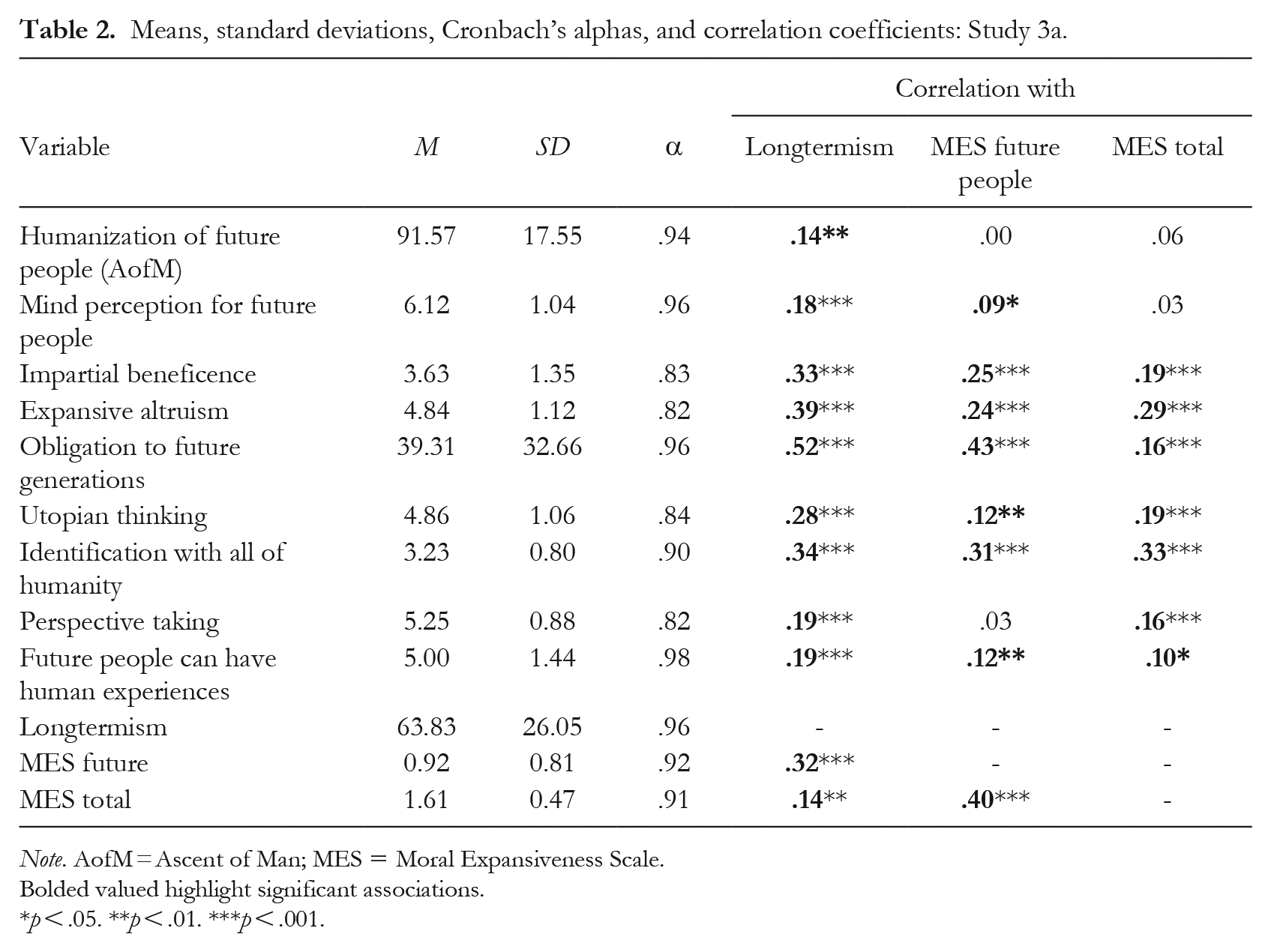
Note. AofM = Ascent of Man; MES = Moral Expansiveness Scale.
Bolded valued highlight significant associations.
p < .05. **p < .01. ***p < .001.
Differences between longtermists and general population
For every single mediator, longtermists scored significantly higher relative to the general population, with effect sizes ranging from d = 0.24 to d = 0.86 (see Table 3). Longtermists also allocated greater moral worth to future people, replicating the results of Study 1. These results suggest that longtermists are more likely to humanize future people, feel obligated to protect them, express less bias in their beliefs about helping others, identify with all of humanity more, and engage in more perspective taking and more utopian thinking.
Means, standard deviations, t tests, and effect sizes, from smallest to largest, for longtermists and the general population for outcomes relevant to future people.
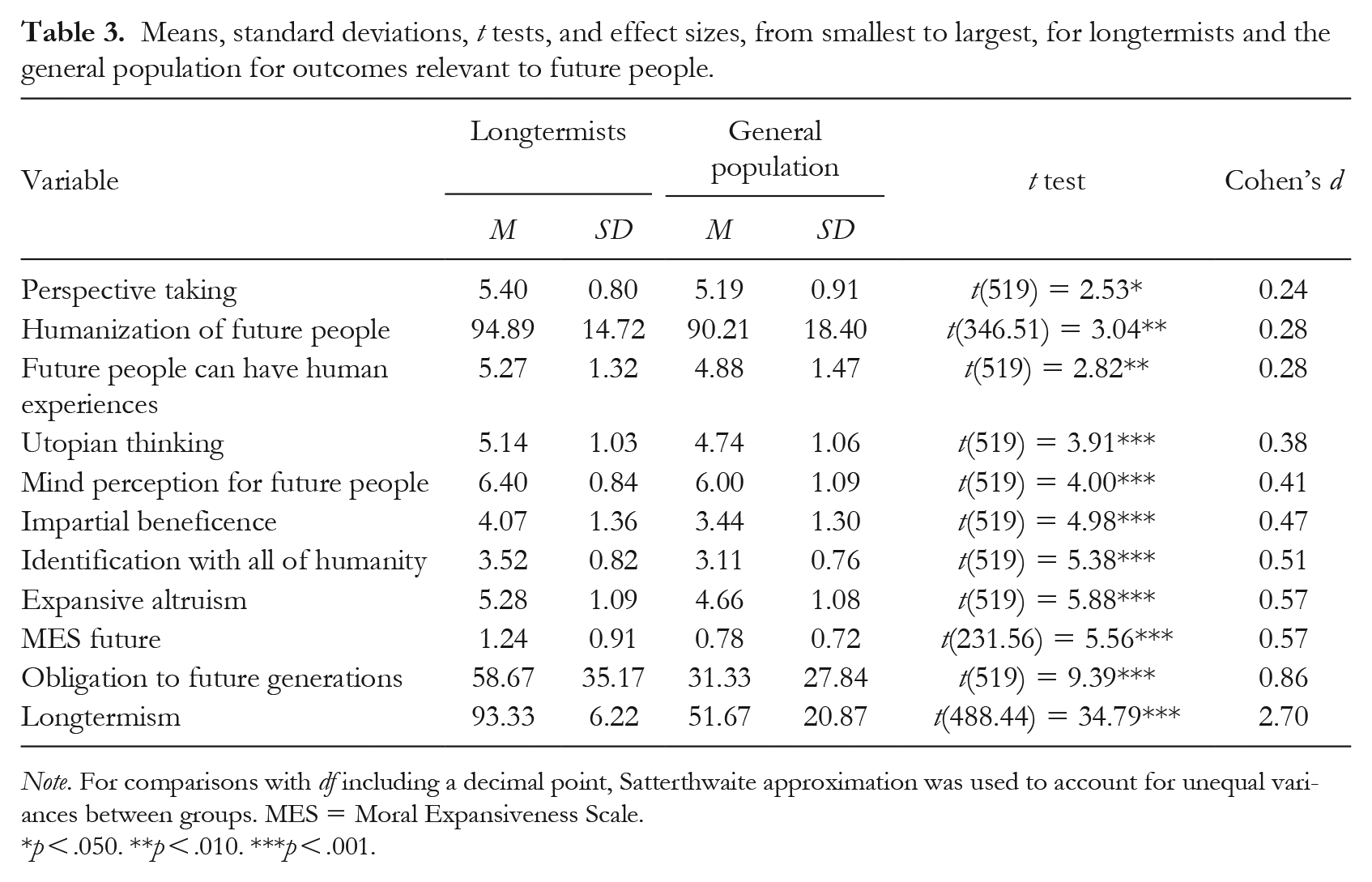
Note. For comparisons with df including a decimal point, Satterthwaite approximation was used to account for unequal variances between groups. MES = Moral Expansiveness Scale.
p < .050. **p < .010. ***p < .001.
Indirect effects
We deviated from our preregistered protocol for the mediation tests. Instead of using the LBS as a continuous predictor, we used the binary variable indicating whether a person was identified as a longtermist as the predictor. We were not expecting to necessarily have enough power to detect effects for all mediators, but our results suggest that all mediators were higher for longtermists (see Table 3). Thus, this variable was the predictor (X), each proposed mediator was inserted as a mediating variable in the model (M), and moral expansiveness to future people was the outcome (Y). We used the PROCESS macro (Hayes, 2013) with 10,000 bootstrapped samples. In particular, we used Model 4 (serial mediation). We first estimated models separately for each specific mediator (see Table S5 in the supplemental material). If a mediator had a significant effect, then we included it in a second model as a parallel mediator, controlling for other significant mediators. In this model, only identification with all of humanity and obligation to future generations emerged as significant mediators (see Table 4). Importantly the effect of being a longtermist on moral expansiveness for future people also remained significant (b = 0.16, 95% CI [0.01, 0.31]).
Mediation models* with all mediators inserted as parallel mediators.
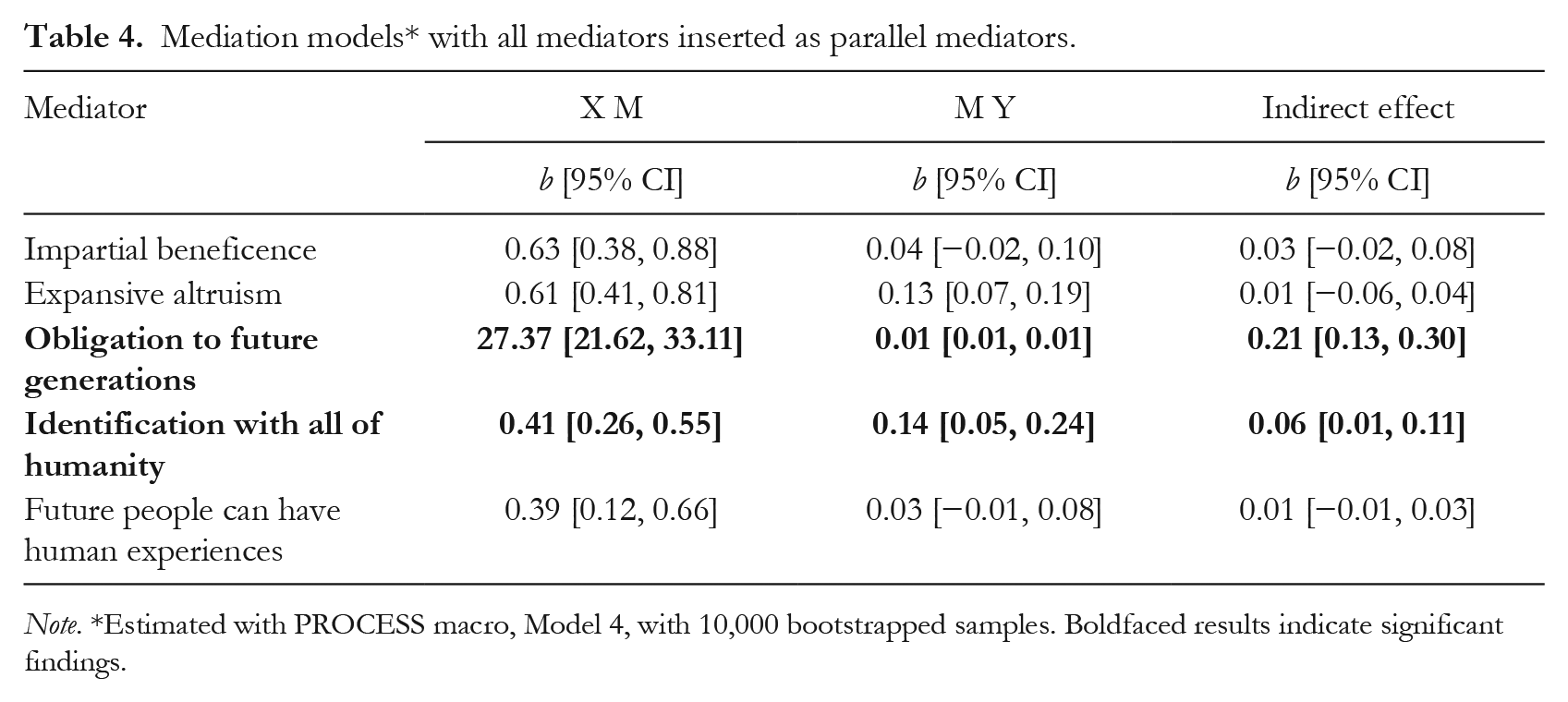
Note. *Estimated with PROCESS macro, Model 4, with 10,000 bootstrapped samples. Boldfaced results indicate significant findings.
Exploratory analyses: Longtermists’ attitudes towards future generations across outcomes and time
Although not preregistered, our design gave us the ability to examine whether longtermists care equally for future people regardless of their time frame, whether this is unique to them and not the general population, and whether this extends to how obligated they feel to help future people, how much they think future people can have human experiences, and how much they humanize future people. Thus, we ran four 2 × 4 mixed ANOVAs (one per outcome: moral expansiveness, obligation to future generations, future people can have human experiences, humanization of future people [Ascent of Man Scale]), similar to Studies 1–2. Our results replicated and extended the findings of our previous studies, as a significant Time Frame x Longtermist Identity interaction emerged, suggesting that longtermists scored higher regardless of how distal the time frame, while the general population, on average, scored lower and had decreased scores for more distal versus proximal time frames (see Figure 4). This was true in all cases except for humanization (Ascent of Man Scale), in which case longtermists scored higher than the general population, while the general population had a slight increase across time, but still scored lower than longtermists. Detailed results are reported in Table S6 in the supplemental material.
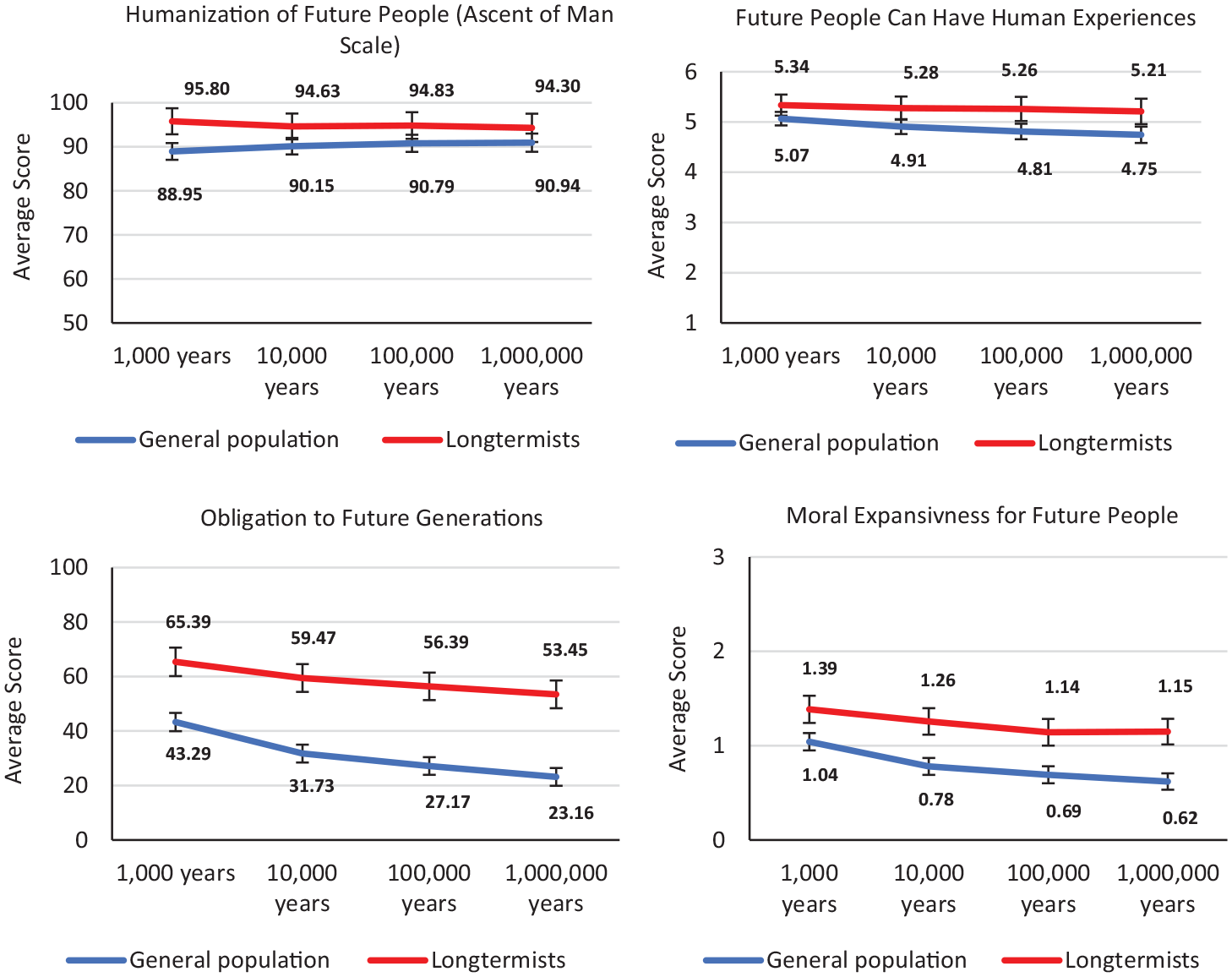
Line graphs depicting scores for moral expansiveness for future people for longtermists and nonlongtermists at four different time frames for all relevant outcomes.
Effects on present outcomes
Longtermists did not significantly differ from the general population in overall or relative moral expansiveness, failing to replicate the results of Study 1. Importantly, even if these findings failed to replicate, results were in the hypothesized direction. It is possible that the absence of significant effects can be attributed to limitations in statistical power. Nonetheless, longtermists did score significantly higher in humanization of and mind perception for outgroups, as well as the degree to which they identified with all Americans and other members in their community (see Table 5).
Means, standard deviations, t tests, and effect sizes, from smallest to largest, for longtermists and the general population for present outcomes.
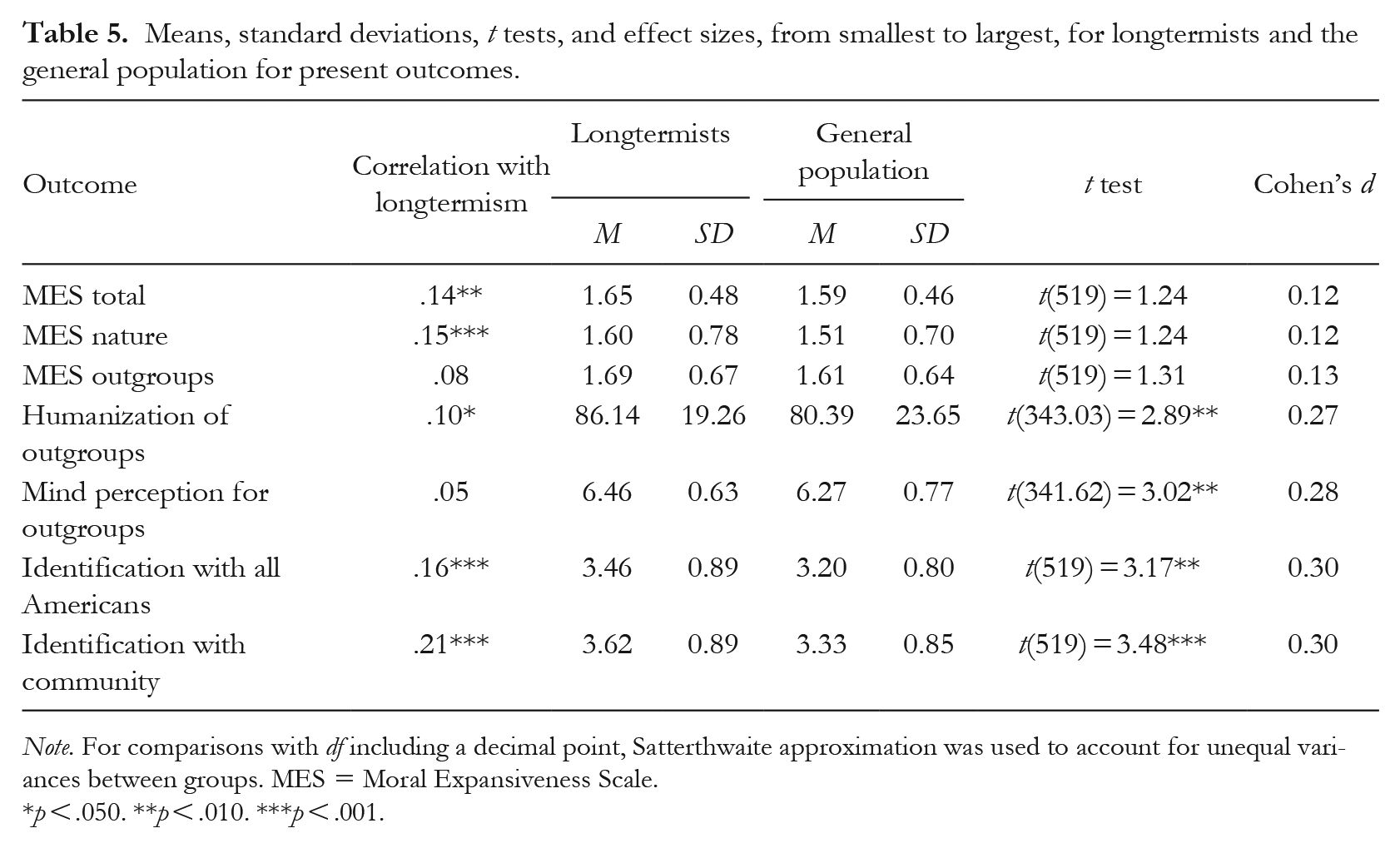
Note. For comparisons with df including a decimal point, Satterthwaite approximation was used to account for unequal variances between groups. MES = Moral Expansiveness Scale.
p < .050. **p < .010. ***p < .001.
Study 3b
Study 3b was a preregistered direct replication of Study 3a in a larger and highly powered sample. Importantly, we retained only the two significant mediators from Study 3a (identification with all of humanity and moral obligation). All aspects of the study (power analysis and sample size, measures, hypotheses, and exploratory analyses) were preregistered (https://aspredicted.org/cc8yk.pdf).
Methods
Participants
We collected data on Prolific Academic. We recruited a total of 1,200 participants. After removing participants who had a duplicate IP address (n = 7) and those who missed an attention check (n = 27), 1,166 participants remained in the sample. The study lasted approximately 12 minutes, and participants received $2.20 for their participation.
Measures
The following measures were included, shown to participants in a randomized order, and were identical to Study 3a: longtermism beliefs (α = .97), overall moral expansiveness (α = .91); moral expansiveness for outgroups (α = .92), nature entities (α = .95), and future people (α = .93); moral obligation to future people (α = .96); identification with all of humanity (α = .92), other Americans (α = .92), and community members (α = .93).
Results
Differences between longtermists and general population
For every single outcome, longtermists scored significantly higher relative to the general population, with effect sizes ranging from d = 0.34 to d = 1.46 (see Table 6). Importantly, we replicated our previous finding from Studies 1, 2, and S1, suggesting that longtermists have higher overall and relative moral expansiveness for present entities.
Means, standard deviations, t tests, and effect sizes for all outcomes.
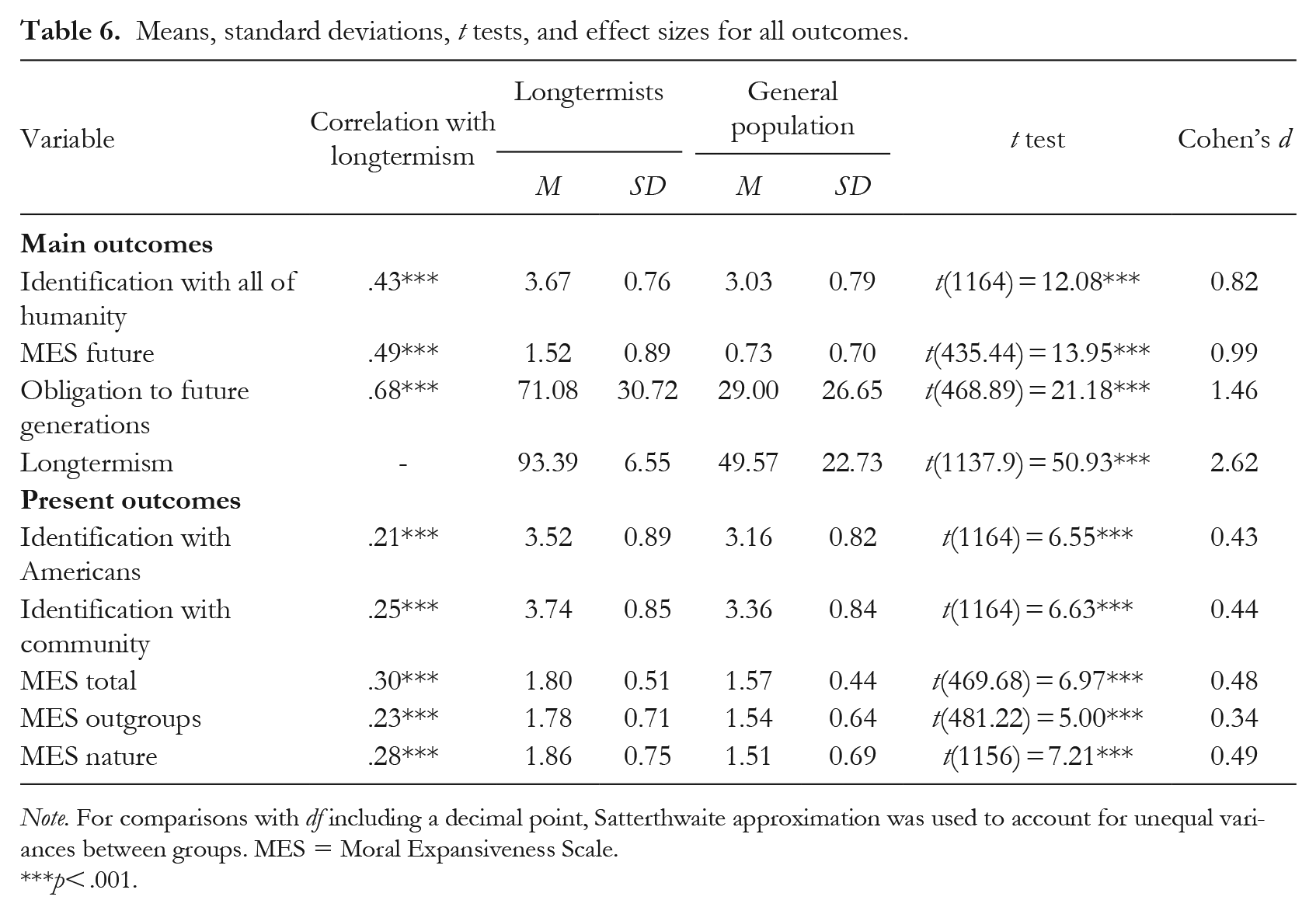
Note. For comparisons with df including a decimal point, Satterthwaite approximation was used to account for unequal variances between groups. MES = Moral Expansiveness Scale.
p< .001.
Longtermists’ attitudes towards future generations across outcomes and time
We estimated two 2 × 4 mixed ANOVAs (one per outcome) to examine differences within and across all time frames for moral expansiveness and moral obligation. Our results replicated and extended the findings of our previous studies, as a significant Time Frame x Longtermist Identity interaction emerged, suggesting that longtermists scored higher and consistently so across time, while the general population, on average, scored lower and had decreased scores across time (see Figure 5). Detailed results are reported in Table S6 in the supplemental material.
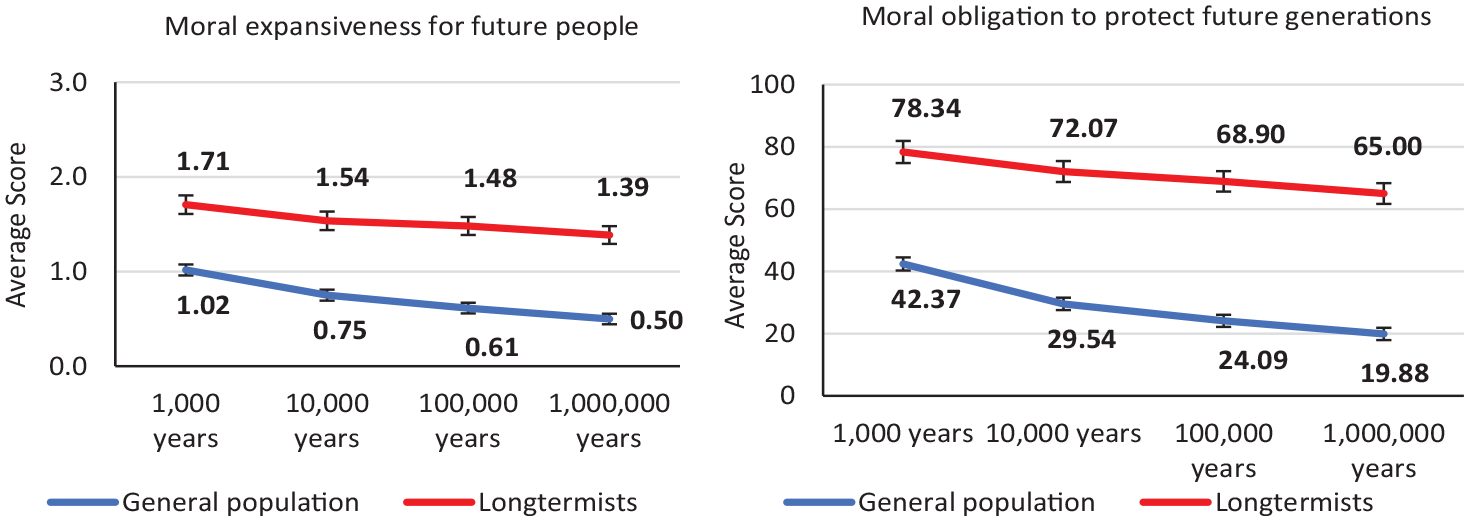
Line graphs depicting scores for moral expansiveness for future people for longtermists and nonlongtermists at four different time frames.
Indirect effects
Using the PROCESS macro with 10,000 bootstrapped samples, we estimated a mediation model in which being a longtermist (dummy-coded variable) was the predictor, identification with all of humanity and moral obligation were parallel mediators, and moral expansiveness for future people was the outcome (see Figure 6). Significant indirect effects through both moral obligation (b = 0.46, 95% CI [0.38, 0.58]) and identification with all of humanity (b = 0.08, 95% CI [0.04, 0.12]) were noted, supporting our preregistered hypothesis. Importantly, the effect of being a longtermist on moral expansiveness for future people also remained significant.
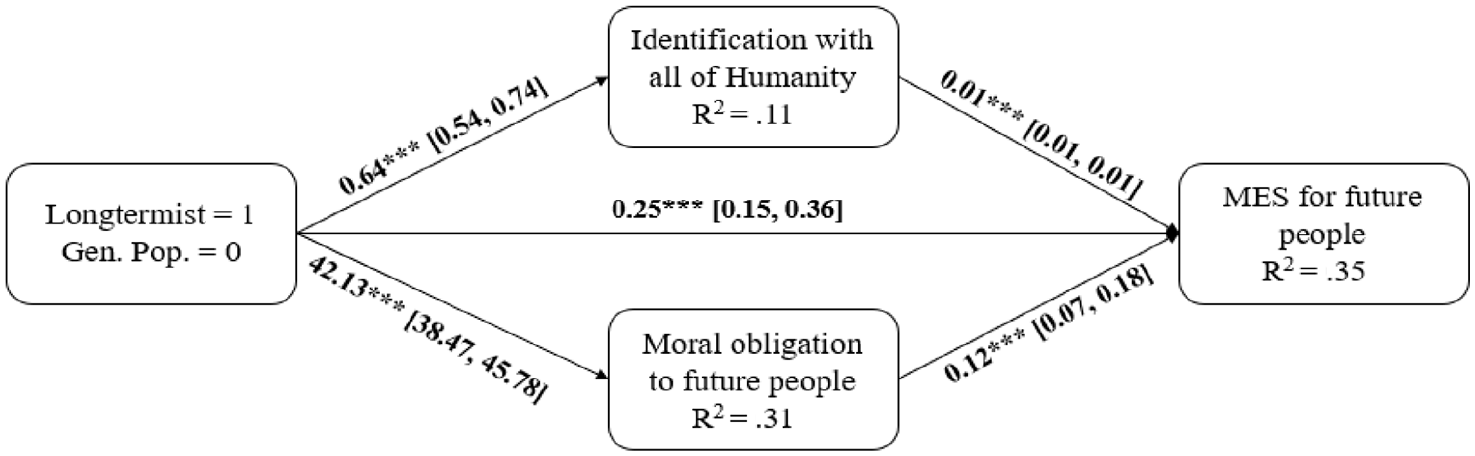
Preregistered mediation model with unstandardized regression weights and 95% CI.
Discussion
Studies 3a–3b conceptually replicated and extended the results of our previous studies. In Study 3a, we again found that longtermists ascribed greater moral regard to people in the future and did so more consistently relative to nonlongtermists, with the magnitude of this difference being larger for more distant time frames. Importantly, we extended this effect to the tendency to dehumanize future people, mind perception tendencies, perception of future people as capable of having human experiences, and to feelings of moral responsibility for protecting future people. Through two sets of mediation analyses, and an exploratory (Study 3a) and a confirmatory (Study 3b) study, we observed that moral obligation to protect future people and identification with all of humanity partially explained the effect of longtermism on moral expansiveness to future people.
Once again, contrary to popular belief that longtermists are only looking into the future, often at the expense of the present, longtermists scored significantly higher on a host of individual differences that relate to moral expansiveness for present and future entities and, in one of the two studies, scored higher on overall and relative (to outgroups and nature) moral expansiveness. In detail, they were significantly higher on impartial beneficence; expansive altruism; utopian thinking; identification with their community, other Americans, and all of humanity; humanization of outgroups; and mind perception for outgroups. Thus, aside from extending greater moral worth to present entities relative to the general population, longtermists also hold more prosocial attitudes and positive perceptions of outgroups.
Finally, these studies, which demonstrate that scores on the LBS correlate with more general measures of prosocial behavior (e.g., expansive altruism, impartial beneficence), may provoke inquiry into the distinct nature of longtermism as a unique construct, separate from a general inclination towards prosocial behavior. We argue that there is indeed value in measuring longtermism beliefs separately from a general inclination towards prosociality. Longtermism is an ethical philosophy emphasizing long-term consequences (MacAskill, 2022). Measuring longtermism beliefs offers a precise understanding of individuals who endorse these specific philosophical tenets even within the broader prosocial context. Furthermore, in Studies 3a and 3b, LBS scores strongly correlated with an obligation to future generations and only weakly to moderately with general prosociality. Even after considering expansive altruism, the LBS remains a significant predictor of scores on the MES with respect to future targets. Prior research supports these findings, suggesting that LBS uniquely predicts forward-thinking attitudes and behaviors beyond general prosocial tendencies (Syropoulos, Law, Kraft-Todd, & Young, 2023). In sum, although LBS scores correlate with measures of general prosociality, the present findings and prior research suggest that they are not one and the same. Nonetheless, future inquiry may shed light on whether general prosocial inclinations and longtermism beliefs share similar cognitive and neural foundations, as has been observed in research on temporal and social distance considerations more broadly (e.g., discounting; Gilead et al., 2020; Hill et al., 2017; Soutschek et al., 2016; Tuen et al., 2023).
Study 4
In our final study, we sought to eliminate any potential alternative explanations for the effect of longtermism on moral expansiveness. We reasoned that it is possible that a general ability to think about the future outcomes of one’s actions (consideration of future consequences [CFC]; Strathman et al., 1994), a broader orientation towards the future (long-term orientation [LTO]; Bearden et al., 2006), and a better ability to postpone present rewards to maximize future rewards (i.e., lower delay discounting [DD]; Tuen et al., 2023) could explain the effect. To that end, we compared longtermists to the general population while controlling for all these variables. All aspects of the study (power analysis and sample size, measures, hypotheses, and exploratory analyses) were preregistered (https://aspredicted.org/4a98k.pdf).
Methods
Participants
We collected data on Prolific Academic. Per our preregistration, we sought to recruit a total of 800 participants. After removing participants who had a duplicate IP address and those who missed an attention check, 770 participants remained in the sample. The study lasted approximately 12 minutes, and participants received $2.00 for their participation.
Measures
Longtermism beliefs
The Longtermism Beliefs Scale (Syropoulos, Law, Kraft-Todd, & Young, 2023) was again used to capture participants’ endorsement of longtermist philosophy principles. The average score across all time frames was close to the midpoint, albeit slightly higher than in Study 1 (α = .96).
Moral expansiveness
An adapted version of the Moral Expansiveness Scale Short Form (MESx short form; Crimston et al., 2018a) was used to capture the attribution of moral concern to different entities across different time frames. The scale included 10 entities and measured moral expansiveness towards them for the present (α = .78), with four items capturing moral expansiveness for future people living 1,000, 10,000, 100,000 and 1,000,000 years in the future (α = .90).
Long-term orientation
LTO was measured as the average of four items (on a 7-point Likert scale; α = .85) developed by Bearden et al. (2006).
Consideration of future consequences
CFC was measured as the average score of 12 items (on a 7-point Likert scale; α = .84) developed by Strathman et al. (1994).
Delay discounting
DD was measured by calculating participants’ impulsive choice rates (ICRs) on the Delay Discounting Task from Tuen et al. (2023), which was adapted from the Monetary Choice Questionnaire (Kirby et al., 1999). ICR was calculated based on decisions made for 27 trials where participants were asked to choose whether they would prefer a smaller reward now versus a larger reward at a point in the future (ranging from 1 week to 12 weeks). Specifically, the number of choices each participant made to accept a smaller reward now (the number of impulsive choices) was divided by the total number of choices on the task to yield an ICR for each participant. Hence, higher ICR scores were interpreted to signify a greater tendency to discount the subjective value of future relative to current rewards.
Results
We compared longtermists (N = 160) to the general population (N = 609) on their moral expansiveness to present entities and future people. Longtermists scored significantly higher on both moral expansiveness to present entities, t(767) = 4.57, p < .001, d = 0.40, and to future people, t(227.90) = 7.94, p < .001, d = 0.73, compared to the general population. 2 In fact, replicating the results of our previous studies, the tendency to extend greater moral worth to future people was found to be robust across time frames (see supplemental material). Importantly, these effects remained significant after controlling for LTO, CFC, and DD, with longtermism being the sole significant predictor of moral expansiveness for present entities, and the strongest predictor of moral expansiveness for future people (see Table 7).
Preregistered linear regression models predicting moral expansiveness.
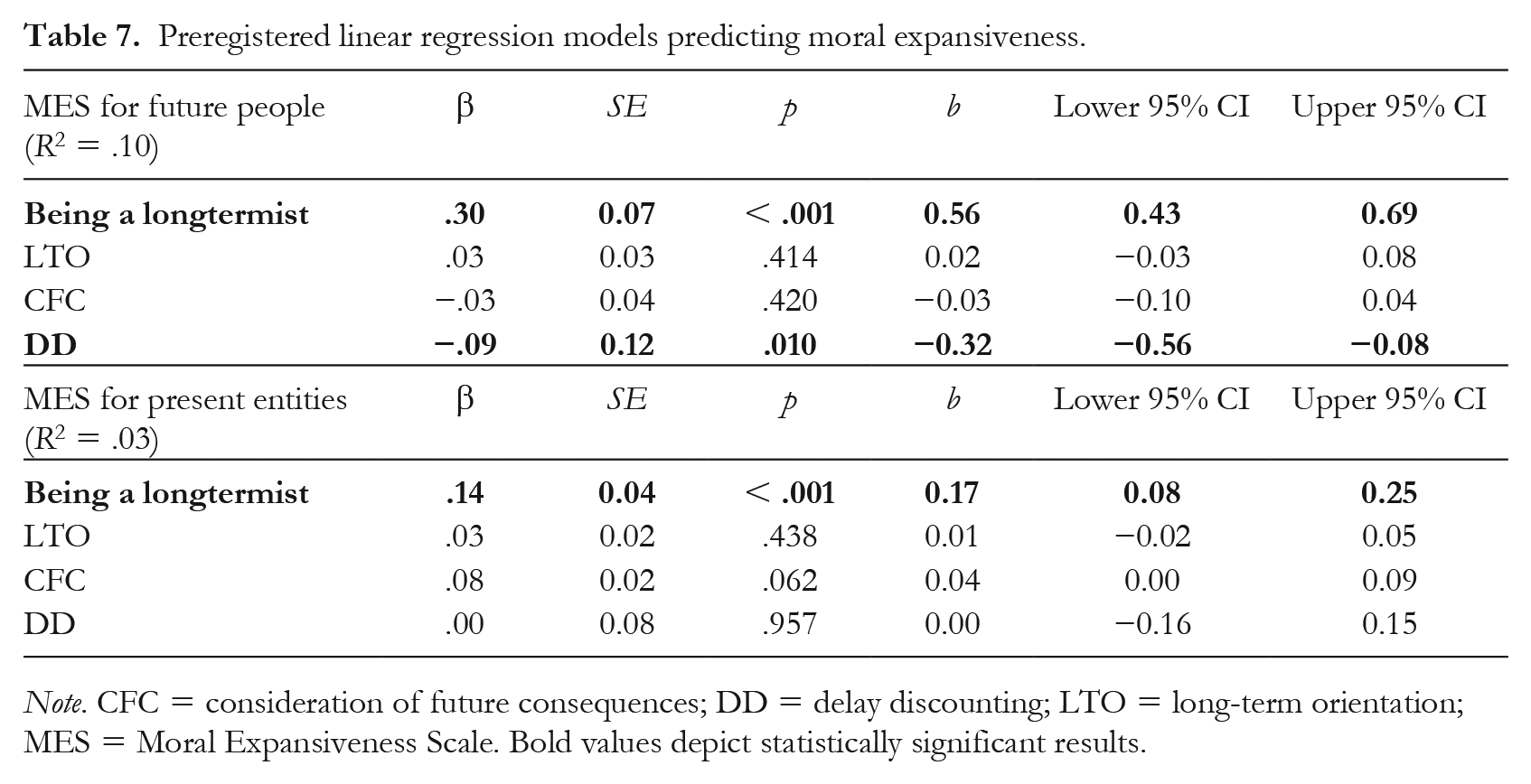
Note. CFC = consideration of future consequences; DD = delay discounting; LTO = long-term orientation; MES = Moral Expansiveness Scale. Bold values depict statistically significant results.
Discussion
Results from our final study demonstrated that the effect of longtermism on moral expansiveness for both present and future targets is robust and not explained by a person’s ability to think about the future outcomes of their actions (CFC), their tendency to be more future oriented (LTO), or their ability to delay receiving rewards (DD). Therefore, we conclude that the inclination of longtermists to assign greater moral value to individuals (and entities in a broader context) in the present or future can be more effectively accounted for by their endorsement of the fundamental principles of longtermism, as opposed to a more generalized farsighted orientation.
Internal meta-analysis of present and future moral expansiveness
Utilizing the methodology developed by Goh et al. (2016), we conducted an internal meta-analysis of the overall tendency to extend moral worth to present and future entities. To do so, we examined overall moral expansiveness for present and future entities (measured in Studies 1, 2, S1, 3a, 3b, and 4). For future entities, we collapsed across all time frames to estimate the average effect for each study. Results suggested that longtermists scored significantly higher on overall moral expansiveness to present entities (d = 0.37, SE = 0.04, Z = 9.04, p < .001, 95% CI [0.29, 0.45]) and future entities (d = 0.77, SE = 0.04, Z = 18.49, p < .001, 95% CI [0.69, 0.85]), compared to the general population. Thus, across all six studies, longtermists consistently scored higher on moral expansiveness for present and future entities.
General Discussion
The findings from the current research provide intriguing insights into the moral perspectives of longtermists and how they view the moral standing of both future and current generations at varying levels of social distance. Perhaps not surprisingly, we show that alignment with longtermism beliefs predicts greater ethical consideration of the inherent moral value of future people. That is, longtermists identified as such by their high scores across multiple time frames on the LBS (Syropoulos, Law, Kraft-Todd, & Young, 2023) exhibit a distinctive pattern of moral regard for future generations. Whereas the general population tends to hold future generations in progressively lower moral standing as they become more temporally remote (Law et al., 2023), empirically identified longtermists show attenuated contraction in their moral circles for future generations regardless of whether they consider them existing at proximal or distal future time frames. This effect is consistent across a series of rigorous studies, including the supplemental reanalysis of existing project data (Study S1), five highly powered, preregistered investigations (Studies 1–4), and an internal meta-analysis of our data (see above). Crucially, we eliminate the possibility that these patterns can be attributed to alternative future-oriented constructs such as delay discounting, consideration of future consequences, or long-term orientation, demonstrating that the LBS accounts for distinctive variance beyond these other variables (Study 4).
Perhaps even more compelling is that longtermists show elevated ascriptions of moral standing to future and present generations alike when compared to nonlongtermist participants (Studies S1, 1, 2, 3b, 4, and an internal meta-analysis; these effects were nonsignificant in Study 3a despite patterns being in the predicted direction, perhaps due to limitations in statistical power). Furthermore, longtermists similarly show attenuated dehumanization of and greater mind perception and human-like qualities attributions to social outgroup members, as well as a greater sense of shared identity with their compatriots and community members (Studies 3a–3b). Critically, these findings suggest that longtermists not only emphasize future entities in their moral circles, but simultaneously uphold the moral value of present-day individuals. Further emphasizing longtermists’ expansive moral circles, the elevated moral standing longtermists ascribe to both present and future generations is observed in the overall size of their moral circles, comprising the full range of entities included on the MES (Crimston et al., 2016), and also in the relative size of their moral circles encompassing specifically socially distant targets such as outgroups and entities in nature.
These intriguing findings strongly suggest that longtermists possess more expansive moral circles, encompassing both socially close and distant individuals in the present and future, in contrast to the moral circles typically observed in the general population. Furthermore, these results build upon previous research that highlights the interconnected processing mechanisms that come into play when people contemplate information related to both social and temporal distance (e.g., Gilead et al., 2020; Hill et al., 2017; Soutschek et al., 2016; Tuen et al., 2023). When considering the present results as a whole, it appears that longtermists may possess a heightened ability to surpass the usual limitations that often constrain human morality, as well as prosocial attitudes and intentions (e.g., Crimston et al., 2016, 2018a, 2018b; Law et al., 2023).
Equally important to consider is whether longtermism beliefs represent a stable individual trait or rather a set of malleable attitudes that can flexibly contract and expand within individuals over time and across different contexts. If the latter is true, this could have significant implications for driving not only positive changes across various dimensions of moral concern, but also changes towards real-world behaviors that be more sustainable for humanity (e.g., climate advocacy, pro-environmental engagement, support for sustainable public policy, reductions in personal resource consumption). Specifically, it is possible that longtermism beliefs can be leveraged to inform targeted interventions aimed at enhancing both current and future welfare simultaneously.
Previous research has demonstrated that brief exposure to philosophical arguments associated with longtermism, even in low-cost and short-duration formats, can foster forward- thinking attitudes and behaviors that contribute to the well-being of future generations. These outcomes include farsighted policy support, donations to future-focused charities, and a sense of responsibility towards the welfare of future generations (Syropoulos, Law, & Young, 2023; Syropoulos et al., 2024). Future investigations could explore whether similar interventions, potentially by instilling a sense of identification with all of humanity, have the capacity to simultaneously encourage expansive attitudes and behaviors that benefit socially distant or marginalized groups in the present. Recent work by Paek et al. (2024) harnessing interventions to drive charitable behaviors via legacy motivation, a future-oriented construct positively related to longtermism beliefs (Syropoulos, Law, Kraft-Todd, & Young, 2023), suggests this may be possible. Moreover, there is room for future research to examine whether integrating the expansive and forward-thinking principles of longtermism into educational settings, such as college courses or open-access online programs, can inspire enduring attitudes and substantial actions aimed at enhancing societal well-being. This approach may include encouraging career choices that contribute to the betterment of both current and future generations (MacAskill, 2022; Singer, 2015). In sum, while the present findings serve as a foundational step in demonstrating that increasing longtermism beliefs through intervention is unlikely to be harmful to people in the present, they also pave the way for future research to leverage these insights to foster a more sustainable present and future.
Relatedly, the present findings help to dispel common criticisms of the longtermism social movement (e.g., Emba, 2022) asserting that, in extending moral regard to future generations to a greater extent than the general population do, longtermists extend relatively less moral regard to present generations. Contrary to this perspective, our results suggest that individuals scoring high on longtermism beliefs in fact extend moral consideration to future and present-day entities alike to a greater extent than members of the general population do. Likewise, many of the challenges facing future generations can also pose considerable risk to present-day humans (MacAskill, 2022). Thus, efforts to promote current and future welfare are not necessarily at odds with each other nor may be the forces thought to expand and contract individuals’ moral circle across psychological distance (e.g., see Graham et al., 2017).
Nonetheless, people often perceive prosociality directed towards distant others to be in direct competition with prosociality directed towards close others, at least in the context of social distance (e.g., Everett et al., 2018; Law et al., 2022; McManus et al., 2020, 2021). Furthermore, these studies show that socially distant altruists are consequently perceived as less trustworthy social partners. Thus, an exciting question to address through future empirical investigations is whether people tend to make similar negative appraisals of longtermists, and whether such appraisals can be challenged by presenting evidence from the current work that present- and future-oriented attitudes do not necessarily reflect zero-sum trade-offs in theory or in practice. It is essential, however, to highlight that, in our current studies, participants were not explicitly tasked with making trade-offs when extending moral consideration to present versus future generations. Therefore, it remains a possibility that individuals with strong longtermism beliefs might still prioritize future entities over present ones within a zero-sum framework. It is also possible that a smaller subset of the population would be identified as longtermists by their scoring on the LBS if the scale’s items were reframed to emphasize present/future trade-offs. Future research should explore these possibilities.
Moreover, the present findings build upon existing evidence speaking to the credibility of the LBS as a construct and a convergently valid measure of longtermism beliefs that offers the power to predict relevant future-oriented phenomena. Prior work has already shown this instrument to predict a host of future-oriented attitudes and behaviors, such as legacy-related motivation, consideration for the future consequences of one’s behaviors, increased donations to future-oriented and pro-environmental charities, and greater willingness to exert cognitive effort to raise money to promote future welfare (Syropoulos, Law, Kraft-Todd, & Young, 2023; Syropoulos, Law, & Young, 2023; Syropoulos et al., 2024). Nonetheless, the present studies are the first to link longtermism beliefs to the subjective moral standing of future generations, and the current generation as well, yet another outcome central to the foundational principles of the longtermism philosophy, which advocates, in principle, extending equal moral regard to future and present generations alike (MacAskill, 2022; Ord, 2021). Importantly, however, these findings have profound implications not only by extending theoretical knowledge related to longtermism beliefs and the manner in which people evaluate the moral worthiness of future and present generations (e.g., Law et al., 2023; Syropoulos, Law, Kraft-Todd, & Young, 2023), but also for efforts to safeguard the long-term future of humanity from existential threats advanced in philosophy (MacAskill, 2022; Ord, 2021), the natural sciences (Blaser, 2018; Taylor et al., 2013), and public policy (Bose & Shepardson, 2023; OMB, 2023).
Although not directly examined, the remarkably high prevalence of longtermism beliefs uncovered in this research offers hope that endeavors aimed at safeguarding humanity from early extinction through individual and collective future-oriented actions may indeed bear fruit. These findings align with other emerging research underscoring the profound influence of longtermism beliefs (Syropoulos, Law, Kraft-Todd, & Young, 2023) and moral expansiveness (Law et al., 2023) on prosocial attitudes and intentions towards future generations. While the formal longtermism movement remains relatively small (MacAskill, 2022), and future generations are often marginalized from moral consideration, approximately 25% of participants in our studies endorsed the core principles of longtermism—prioritizing and recognizing the efficacy of present-day actions for the future—as measured by the LBS for both near and distant future targets. An important avenue for future research is to explore whether longtermism beliefs, mediated through the subjective moral standing of future generations, can predict future-oriented prosocial intentions and real-world engagement in future-oriented behaviors. Delving deeper into these inquiries and related questions has the potential to provide critical insights into moral future-oriented thinking while also offering practical implications for promoting pro-future actions that not only secure the future but address pressing present-day challenges as well, as suggested by the current findings linking longtermism beliefs to an expansive regard for distant and close individuals in the here and now.
Yet another key finding the present research reveals is that longtermists exhibit a constellation of individual differences in cognitive, affective, and social phenomena associated with moral expansiveness, including impartial beneficence, expansive altruism, utopian thinking, and identification with all of humanity. Notably, moral obligation and identification with all of humanity emerge as key factors mediating the link between longtermism and heightened moral expansiveness. Future research might seek to explore the dynamic interplay between these various attributes and future-oriented prosocial action. For instance, the association found between utopian thinking and longtermism beliefs could have profound implications regarding the impact of valenced narrative descriptions of the future featured in popular media (e.g., news articles), fiction literature (e.g., science fiction), and educational contexts. A growing body of literature has already demonstrated that positively valenced narratives garner generosity towards socially distant others, whereas negatively valenced narratives often constrain socially distant-oriented generosity (Hillenbrand & Verrina, 2018; Paravati et al., 2022). A ripe avenue for future inquiry is whether presenting narratives of a positive or utopian future might serve to inspire generosity and prosocial intentionality towards future generations. If the valence of narratives depicting the future differentially predicts future-oriented action, then popular media, fiction literature, and educational curricula could offer a tractable means to encourage such action, if protecting the future is indeed a societal priority.
Limitations
While the present research contributes valuable insights into the moral considerations of longtermists and their implications for future and current generations, several limitations warrant acknowledgment. First, it is possible that participants identified as longtermists through their scoring on the LBS may show distinct patterns of responding compared to individuals who identify with the longtermism social movement itself. Indeed, high scorers on the LBS are more likely to self-identify as longtermists after learning of the philosophy’s principles (Syropoulos, Law, Kraft-Todd, & Young, 2023), but it stands to reason that these individuals may be meaningfully distinct from members of the movement proper. Future research should seek to replicate the present findings in a subject group comprising members of the longtermism community to explore this possibility.
A second limitation is that our research primarily relied on self-reported measures, which could introduce response biases or social desirability effects. To mitigate this, future studies could incorporate behavioral measures to bolster the robustness of our findings. Additionally, the use of hypothetical scenarios to assess moral regard might not fully capture the complexity of real-world moral decision-making. Incorporating real-life scenarios or longitudinal designs could provide a more ecologically valid understanding of how longtermism beliefs manifest in actual moral judgments and behaviors, and whether they remain stable over time.
Furthermore, our investigation predominantly explores the link between longtermism beliefs and moral regard for future and current generations. However, the intricate interplay between various psychological, cultural, and contextual factors that contribute to ethical considerations remains multifaceted. For instance, while our findings suggest that longtermists possess a nuanced moral framework that extends beyond temporal and social boundaries, the potential cultural and demographic variations in these dynamics have not been fully examined in these studies. Exploring how these patterns manifest across diverse populations could enrich our understanding of the generalizability and broader applicability of our findings. Future research could delve deeper into these factors to provide a comprehensive understanding of the nuanced mechanisms at play.
Conclusion
Longtermists adhere to a unique moral framework that spans temporal and social boundaries. Their heightened moral regard for both future and present individuals underscores the potential of longtermism to guide ethical considerations and actions in the face of existential threats. These insights contribute to the ongoing discourse surrounding the role of longtermism in shaping our responsibilities towards the collective well-being of humanity, bridging theory and practice in the pursuit of a more secure and promising future and present.
Supplemental Material
sj-docx-1-gpi-10.1177_13684302241242115 – Supplemental material for Caring for present and future generations alike: Longtermism and moral regard across temporal and social distance
Supplemental material, sj-docx-1-gpi-10.1177_13684302241242115 for Caring for present and future generations alike: Longtermism and moral regard across temporal and social distance by Stylianos Syropoulos, Kyle Fiore Law and Liane Young in Group Processes & Intergroup Relations
Footnotes
Declaration of Conflicting Interests
The author(s) declared no potential conflicts of interest with respect to the research, authorship, and/or publication of this article.
Funding
The authors disclosed receipt of the following financial support for the research, authorship, and/or publication of this article: This research was funded by the John Templeton Foundation (Grant Number: 62221).

Supplemental Material
Supplemental material for this article is available online.
Notes
References
Supplementary Material
Please find the following supplemental material available below.
For Open Access articles published under a Creative Commons License, all supplemental material carries the same license as the article it is associated with.
For non-Open Access articles published, all supplemental material carries a non-exclusive license, and permission requests for re-use of supplemental material or any part of supplemental material shall be sent directly to the copyright owner as specified in the copyright notice associated with the article.
