







Abstract
Bamboo has been studied and utilized quite significantly in recent years because of its advantages such as short growth period, good appearance, environmental protection and superior mechanical properties. Bamboo is processed into profiles to address inherent issues with size limitation and self-defects and use of BFRP can enhance the mechanical properties of bamboo for widespread application. In this paper, the mechanical properties of BFRP strengthened chamfered laminated bamboo lumber (LBL) columns with four eccentricity e0 of 30 mm, 60 mm, 90 mm, and 120 mm were tested. The strengthening effect of BFRP on the performance of LBL columns subjected to eccentric loading was compared with the specimens without any reinforcement. Several analytical models to capture the mechanical performance of BFRP reinforced LBL columns with different eccentricities have been proposed in the current study.
Introduction
As a green building material, bamboo has short growth cycle and abundance of resources in some parts of the world. Compared with traditional building materials, bamboo has the advantages of protecting environment as naturally grown material thus it is widely used in Bridges (Quintero et al., 2022) and building structures (Liu et al., 2022; Mimendi et al., 2022). However, naturally grown bamboo cannot meet the requirements of large size and performance, and hence engineered bamboo is becoming more common in construction (Lv et al., 2019a; Reynolds et al., 2016; Verma and Chariar, 2013; Yu et al., 2019). Laminated bamboo lumber (LBL) is a kind of engineered material, which is divided into specification LBL and flat bamboo laminated lumber (Tao et al., 2020). LBL offers superior strength and the dimensional stability that is required to meet the requirements for large scale multi-story building structures. LBL can be used to form beams and columns of building structures (Lv et al., 2019b; Sinha et al., 2014). Significant research has been conducted in recent years to exploit the full potential of LBL in structural applications (Chen et al., 2020; Dauletbek et al., 2021; Su et al., 2021; Xiao et al., 2018). Other engineering bamboos such as flattened bamboos (Li and Lou, 2021; Liu et al., 2021) and bamboo scrimber (Liu et al., 2021) are also widely applied and studied.
To enhance mechanical properties and to tackle the effects of natural defects, LBL members would have to be repaired and strengthened. Traditional reinforcement methods such as metal reinforcement will damage the original structure of bamboo to a certain extent and will also affect the attractive appearance of the structure. Use of BFRP can be a viable option that will eliminate the aforementioned problems while strengthening and retrofitting a structure. The mechanical properties of bamboo components can also be improved by the treatment of raw materials (Lei et al., 2021) or the composition with other materials (Xiao et al., 2021).
Bamboo species type, properties of adhesive and the manufacturing process affect the mechanical properties of LBL. Zhao et al. (2017) analyzed the influence of bonding lengths and adhesives on LBL specimens and proposed a cohesive damage model of bamboo adhesives. Guo et al. (2016) presented a comparative study on the compressive strength, elastic modulus, ductility and failure mechanism of bamboo/wood materials. Their analysis results showed that the compressive strength of bamboo was 1.5–2 times that of wood. Ni et al. (2016) introduced the production process of bamboo bonded laminate (GBL) and tested its mechanical properties. The results showed that the mechanical properties of different grades of GBL are significantly different, but the properties are controllable. Sulastiningsih et al. (2021) studied the influence of bamboo species on the performance of glued laminated bamboo lumber (GLBL) and obtained results showed that bamboo had superior physical and mechanical properties.
Several studies have been reported on the methods to enhance the mechanical properties of LBL to protect from certain failure modes. Wei et al. (2011) studied the flexural performance of glulam bamboo beams used in a bamboo structure by conducting tests of 10 large bamboo beams; they identified four typical failure modes including the bottom fiber brittle fracture, top buckling fracture, bottom fiber lamination fracture and oblique tear. Brito et al. (2018) suppressed LBL with three adhesives, including formaldehyde, urea-formaldehyde and polyvinyl acetate. They compared and analyzed the shear properties, failure rate, axial compression modulus and fracture modulus at different temperatures, and found that specimens suppressed by formaldehyde had superior mechanical properties. Li et al. (2020) studied the mechanical response of LBL column under eccentric loading and proposed an analytical formula for predicting the ultimate bearing capacity of LBL columns. Luna et al. (2010) studied the compressive performance of 68 circular columns with different heights and 60 short columns with box-shaped cross sections. The results showed that the LBL has high elastic and plastic properties. The average elastic modulus of the short solid column was 5924 MPa, and the average elastic modulus of the box section is 4653 MPa.
The properties and applications of basalt fibers have also been studied significantly (Bai et al., 2021; Jin et al.; Zhang et al., 2022; Zhao, 2021). Basalt fiber is the fiber made of platinum-rhodium alloy wire drawing leakage plate after the ore is broken and added to the melting kiln at 1450–1500°C. It is the fourth high-tech fiber after carbon fiber, aramid fiber and ultra-high molecular weight polyethylene fiber. Its excellent performance of heat insulation, water resistance, fire resistance, acid and alkali resistance, good tensile strength, corrosion resistance etc. make it a low-cost substitute for high-tech fibers such as carbon fiber (Yuan et al., 2018). Wang et al. (2021) used glass fiber reinforced polymer (GFRP) to reinforce LBL in anti-torque connection. The test results showed that the ultimate strength of bending moment was increased by 37% compared with the specimen without reinforcement. Wei et al. (2017) studied the flexural performance of bamboo truss beams strengthened with different FRP layers as well as different FRP types, and the results showed that adding FRP composite materials and bamboo plates in the reinforced beams improved the flexural capacity and flexural stiffness of tested beams. Aramid fiber reinforced polymer (AFRP) was also used in the current study to prevent premature failure of the LBL column (Li et al., 2022).
Use of BFRP for retrofitting is primarily focused on concrete structures. However, there is potential for this technique to be used in strengthening engineered bamboo elements for large scale structural applications. Engineered bamboo can be reinforced with FRP to enhance mechanical properties and expand the application range. In this paper, the influence of eccentricity on the mechanical properties of specimens was analyzed by loading the bias column strengthened by BFRP, and the reinforcement effect of BFRP was analyzed by comparing it with the unreinforced specimen, and then proposes analytical models to accurately capture the behavior observed during tests.
Material and methods
Materials and specimens
The LBL was manufactured by Ganzhou Sentai Bamboo Co. LTD. located in Jiangxi province. Phyllostachys pubescens was used as raw material of LBL and the bracket. Bamboo was processed into small bamboo pieces of 2005 mm × 21 mm × 7 mm, which were lengthened by finger joint using resorcinol adhesive and the bamboo pieces were pressed at 9 MPa for 15 min at 157°C to form specific LBL sections. The compressive strength, compressive elastic modulus and ultimate compressive strain of LBL is 66.83 MPa, 6324 MPa and 0.02 respectively. The height of column was 1100 mm, Sanyu resin l-500 series resin adhesive produced by Shanghai Sanyou resin Co. Ltd. was used to paste a layer of BFRP sheet on the tension surface of the bias column (surface D of the test piece), as shown in Figure 1(c). The tensile strength and elastic modulus of BFRP were 1676 MPa and 83.5 GPa, the tensile strength, ultimate tensile strain and tensile modulus of bamboo composite are 90 MPa, 0.012 and 6640 MPa respectively. Figure 1 shows the geometric dimensions and other characteristics of typical LBL columns. The eccentricities used in the current study were 30 mm, 60 mm, 90 mm and 120 mm. Unidirectional knife hinge was used at both ends of the specimen to apply the eccentric loading. To facilitate differentiation, the specimens were numbered by FRP + E + eccentric distance + specimen number. For example, BE30-1 represents the BFRP-reinforced LBL column sample with eccentricity of 30 mm, and this is the first specimen of this specific group. Geometric dimensions of the eccentric LBL columns. (a) Cross-section of LBL column. (b) Dimensions of the bracket used to design eccentricity. (c) Four sides of LBL columns. (d) Schematic diagram of test loading arrangement.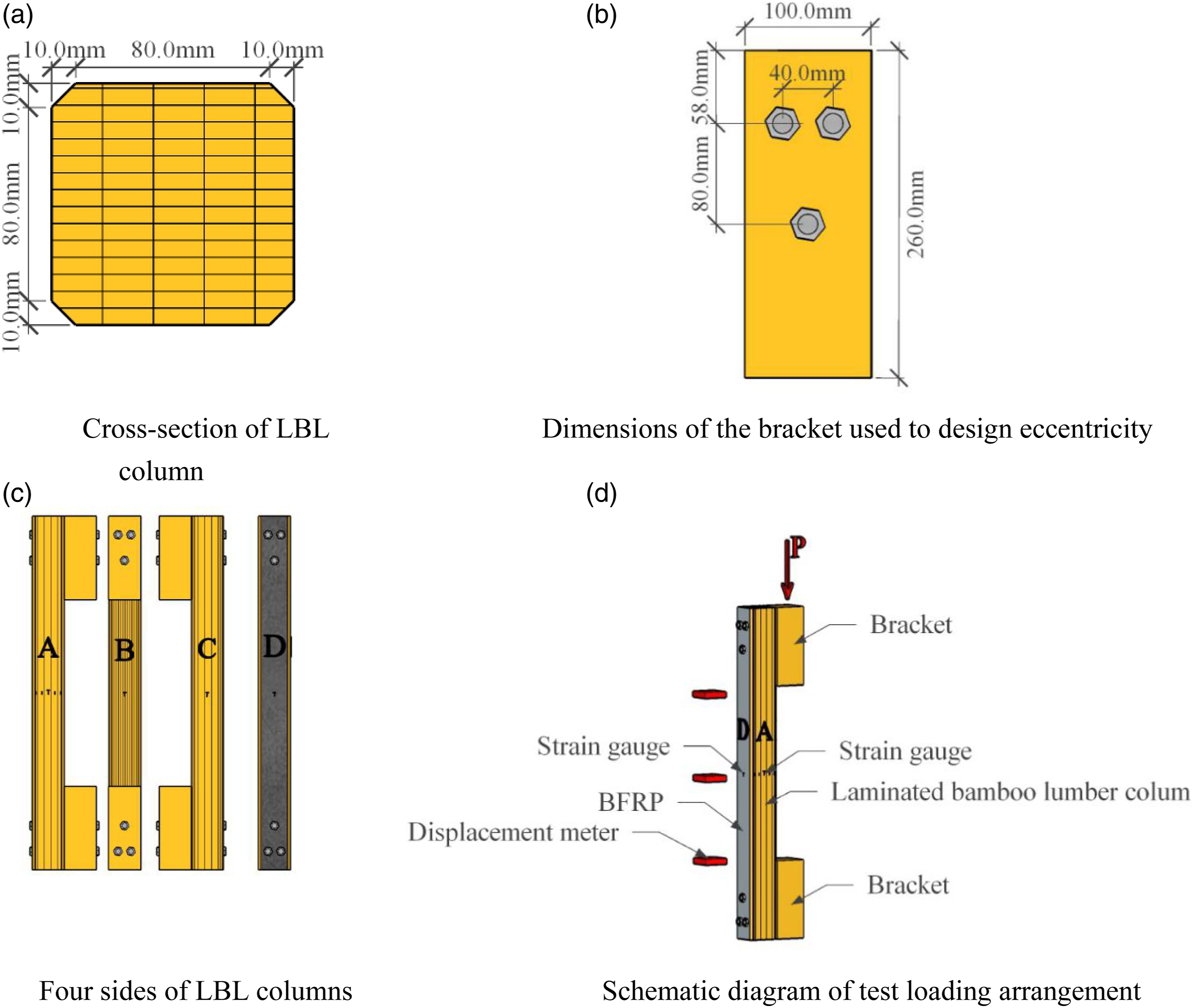
Test methods
Specimen parameters.

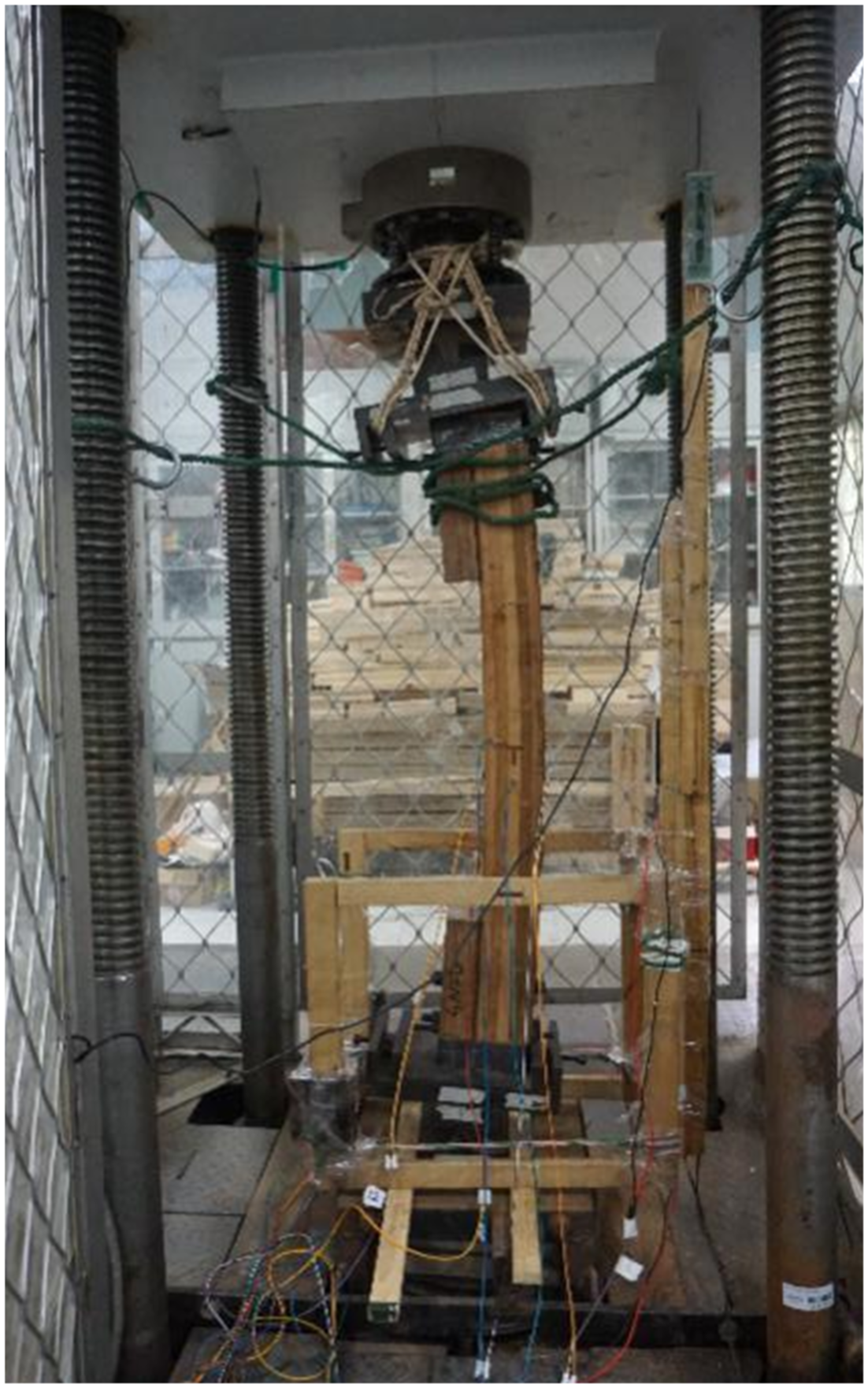
Experimental site diagram.
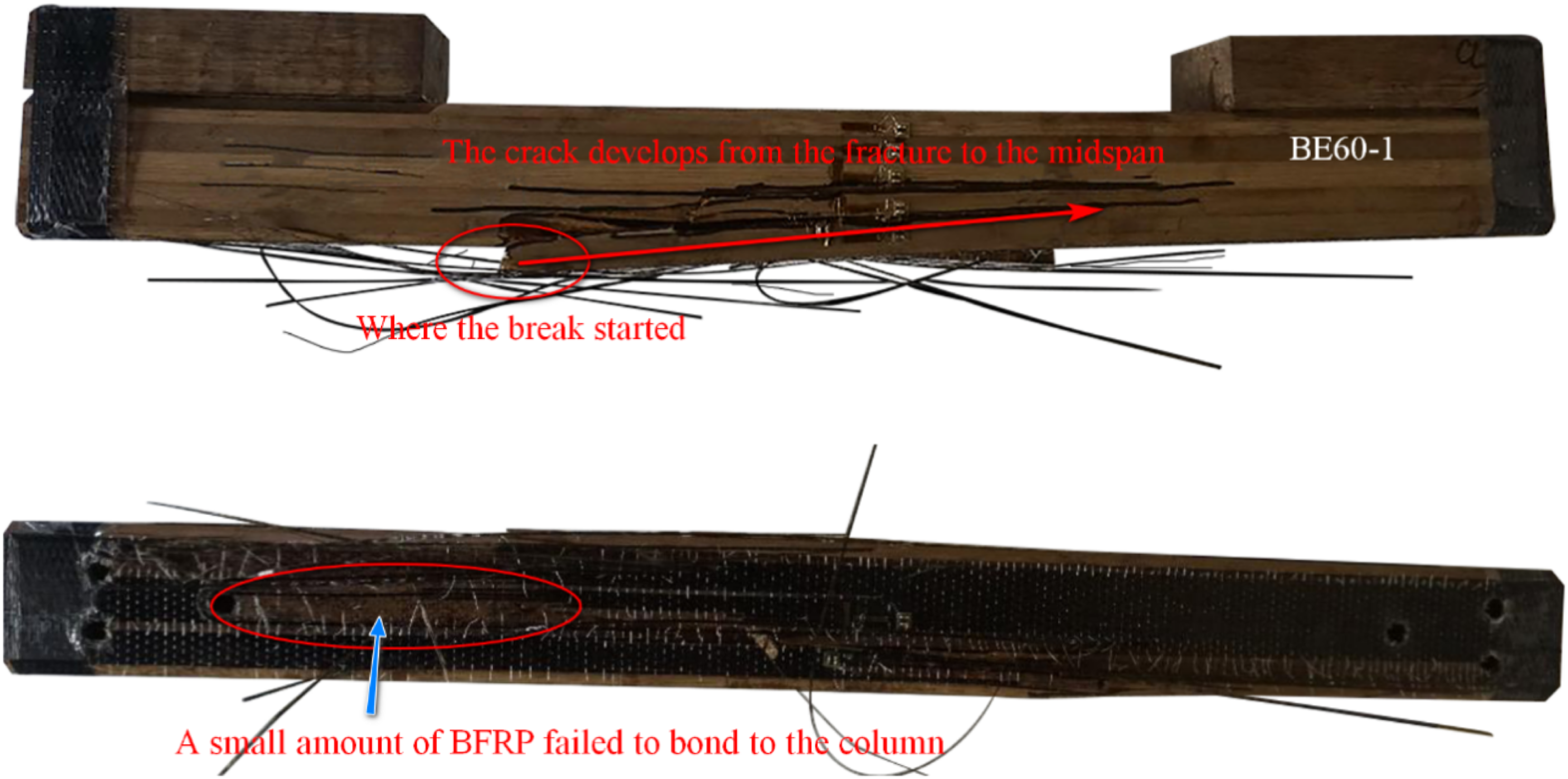
The first type of failure mode (BE60-1).
Results and discussion
Analysis of failure modes
Damages observed in BFRP reinforced LBL columns could be divided into the following two categories:
As shown in Figure 3, in the first type of failure, the internal bamboo slice breaks, and the bond between the fiber of the external BFRP sheets and the LBL column fails and falls off in a filamentous manner. Specimen BE60-1 shows this type of failure; at the initial stage of loading, the specimen was axially deformed and the load gradually increased. When the load increased to 58% of the ultimate load, the upper bracket slipped and the load dropped to 45%, and then the load continued to increase. When the load reached 93% of the ultimate load, the deformation of BFRP sheets outside the column increased and began to delaminate from the column body in a filamentous manner. There were two vertical cracks in the middle of the column height. With the increase of deformation, the cracks became obvious, and the width became larger and gradually propagated towards ends. Finally, the crack developed to the finger joint position, the bamboo protruded outwards causing the column to fail. The bond between BFRP sheets and the column failed at the failure point, and the BFRP sheets fell off from the fracture position to the bolt hole position.
In the second type of failure (Figure 4), the bamboo strip fractured at the chamfering of the LBL column but the external BFRP sheets as well as and the bond between BFRP and the column remained intact. Specimen BE30-1 experienced this type of failure. There were no distinct phenomena during the loading process of the specimen, and no obvious cracks were observed on the column before the failure of the specimen. After the damage, the BFRP sheets were not significantly damaged, the length of vertical cracks in the tensile region of the specimen was short, the cracks did not extend up to the bracket, and the distance from the strained side (D) was also close, and the number of cracks was small. The failure degree of the specimen is obviously smaller than that of the first kind. After unloading, the deformation energy of the specimen was recovered to a greater extent.
Analysis of test results
Main data results of BFRP reinforced column data results.
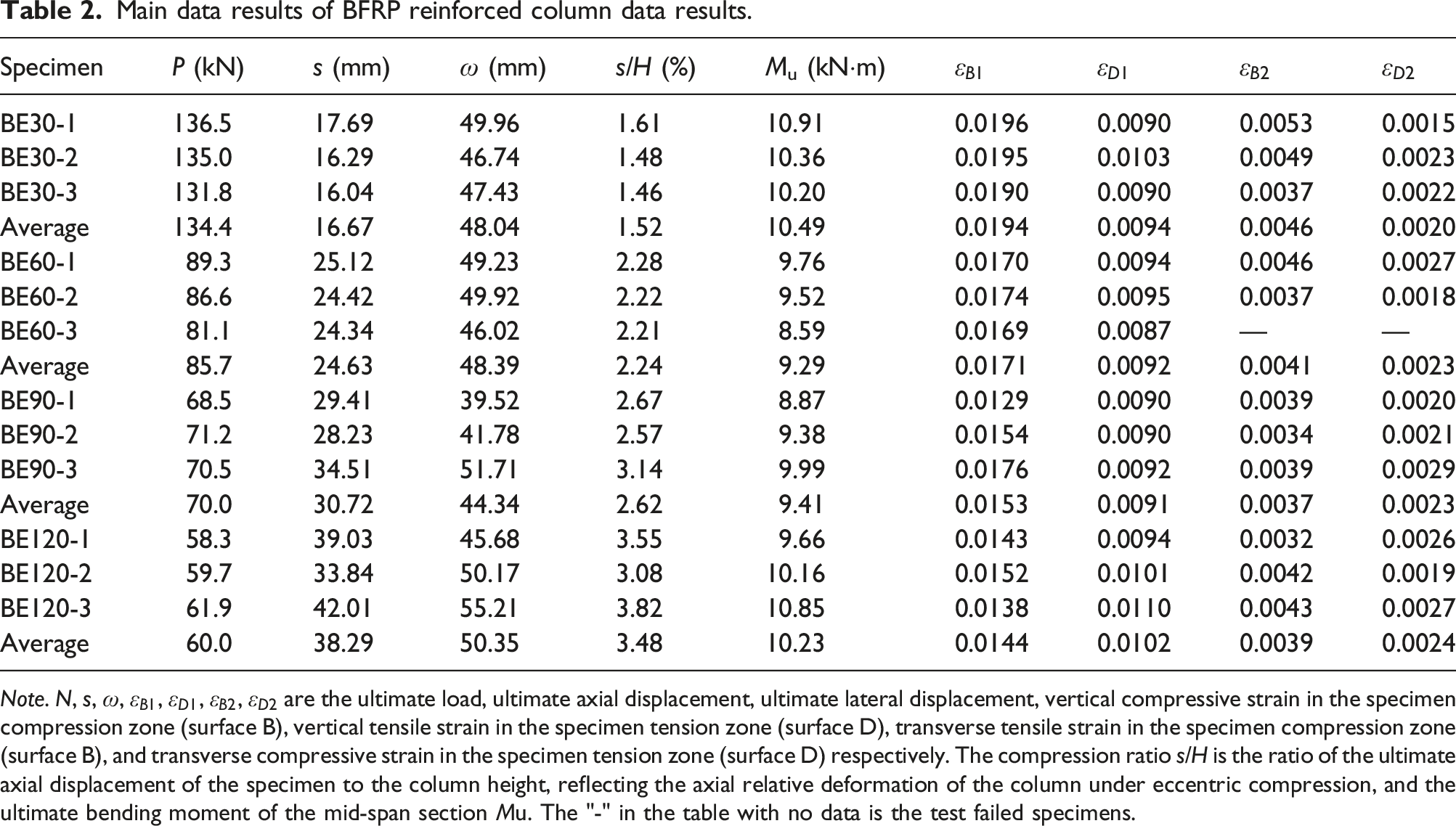
Note. N, s, ω,
It can be seen from the data in the Table 2 that the ultimate load of BFRP reinforced column decreases and the ultimate axial displacement increases with the increase of the initial eccentricity. The ultimate lateral displacement of the specimen increases. The second type of failure mode (BE30-1).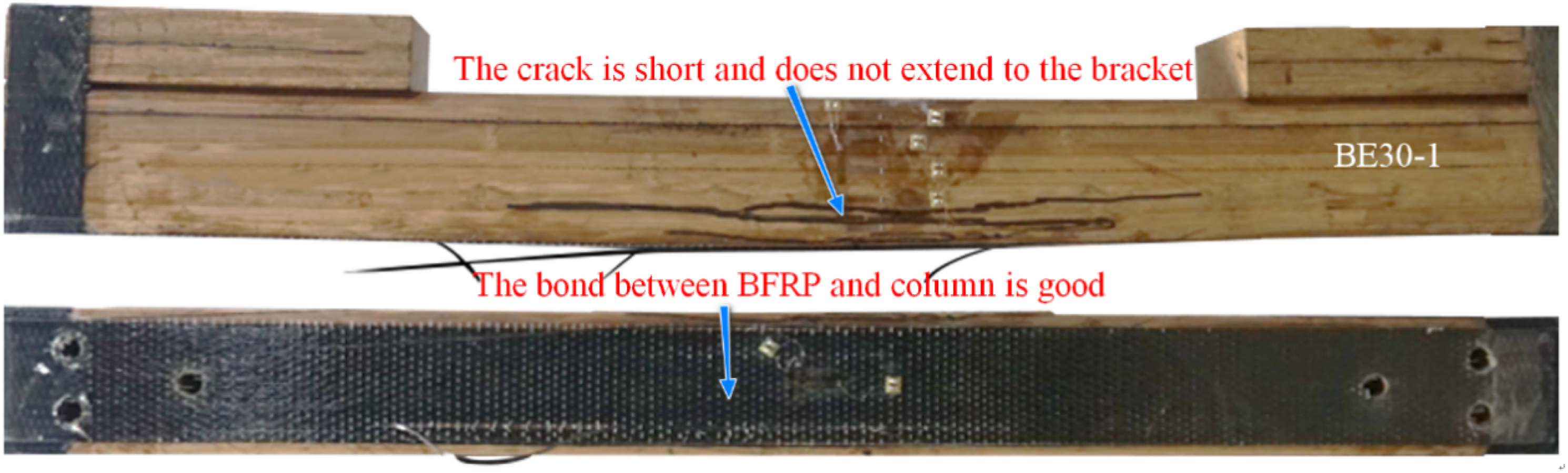
Load-displacement analysis
Figure 5 shows load-axial displacement curves of unreinforced specimens and BFRP reinforced LBL column at under different eccentricities. In the Figure 5, P is the load and s is the axial displacement. Load-displacement curves of each group of specimens. (a) Uncoated specimens (Hong et al., 2021). (b) BFRP reinforced column specimens.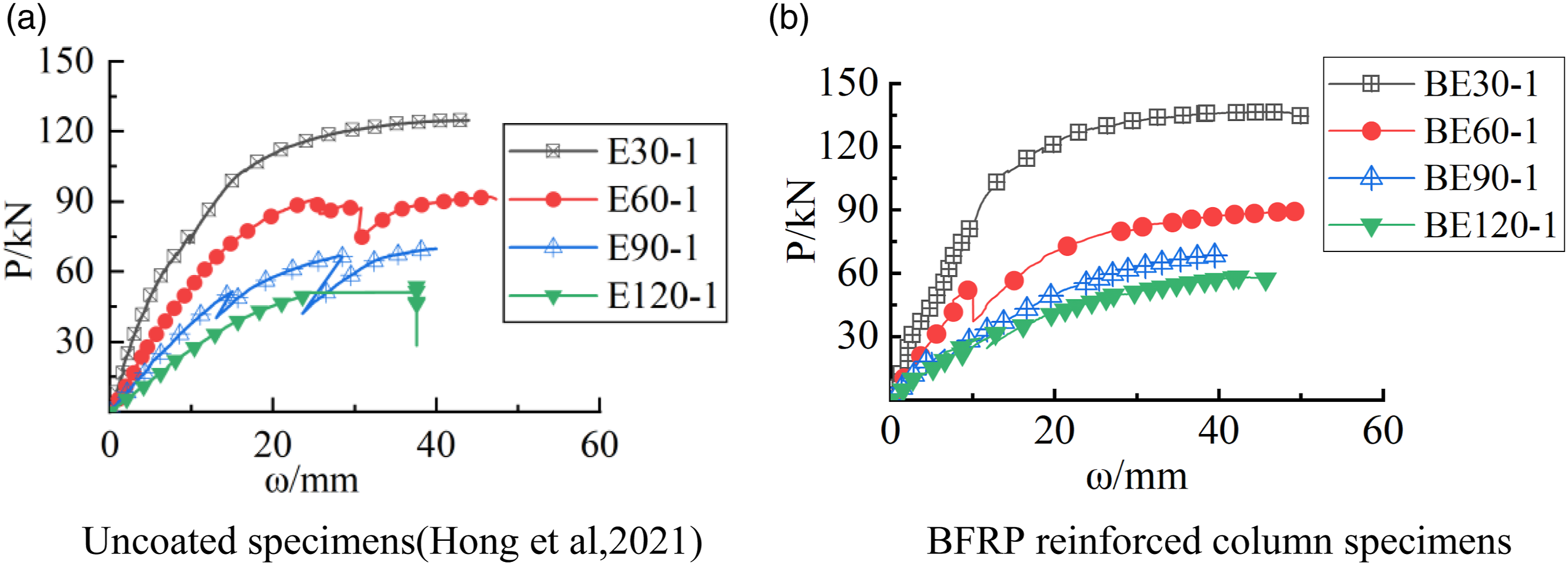
Figure 5 shows that with the increase of initial eccentricity, the ultimate load of BFRP reinforced LBL column decreased but the columns showed more displacement prior to failure. During the early stages of test, load and axial displacement of BFRP reinforced columns were linear but as the load increased, the load-displacement response became nonlinear. Specimens with more than 30 mm eccentricity showed slip between the bracket and the specimen during the loading and hence showed sudden drops in load as can be seen in Figure 5. However, the drops were stabilized, and the load gradually increased until the columns completely failed. It is worth noting that the recorded ultimate loads may be somewhat smaller than the actual capacity due to the advance slip between the bracket and the specimens.
It is obvious from the Figure 5 that the ultimate axial displacements of the BFRP-reinforced LBL columns were higher than those of the specimens without BFRP reinforcement regardless of the initial eccentricity. The maximum axial deformation of specimens increased with the increase of the initial eccentricity.
Figure 6 shows the load-mid-span lateral displacement curves of LBL columns reinforced with BFRP sheets at different initial eccentricities. It can be seen from Figure 6 that the maximum mid-span lateral displacement of LBL column reinforced with BFRP sheets were between 50 mm and 60 mm, and the maximum mid-span lateral displacement of LBL column with BFRP sheets could be higher than 60 mm. The maximum lateral displacements of LBL columns without BFRP sheets were between 40 mm and 50 mm in span, which is obviously smaller than that of BFRP sheets reinforced column. However, when the column size is constant, the mid-span lateral displacement of LBL column and BFRP reinforced column did not increase or decrease significantly with the increase of the initial eccentricity of load. Therefore, there is no obvious correlation between the mid-span lateral displacement of LBL column and BFRP reinforced column and the eccentricity of load. Load-lateral displacement at mid-height curves of each group of specimens. (a) Uncoated specimens (Hong et al., 2021). (b) BFRP reinforced column specimens.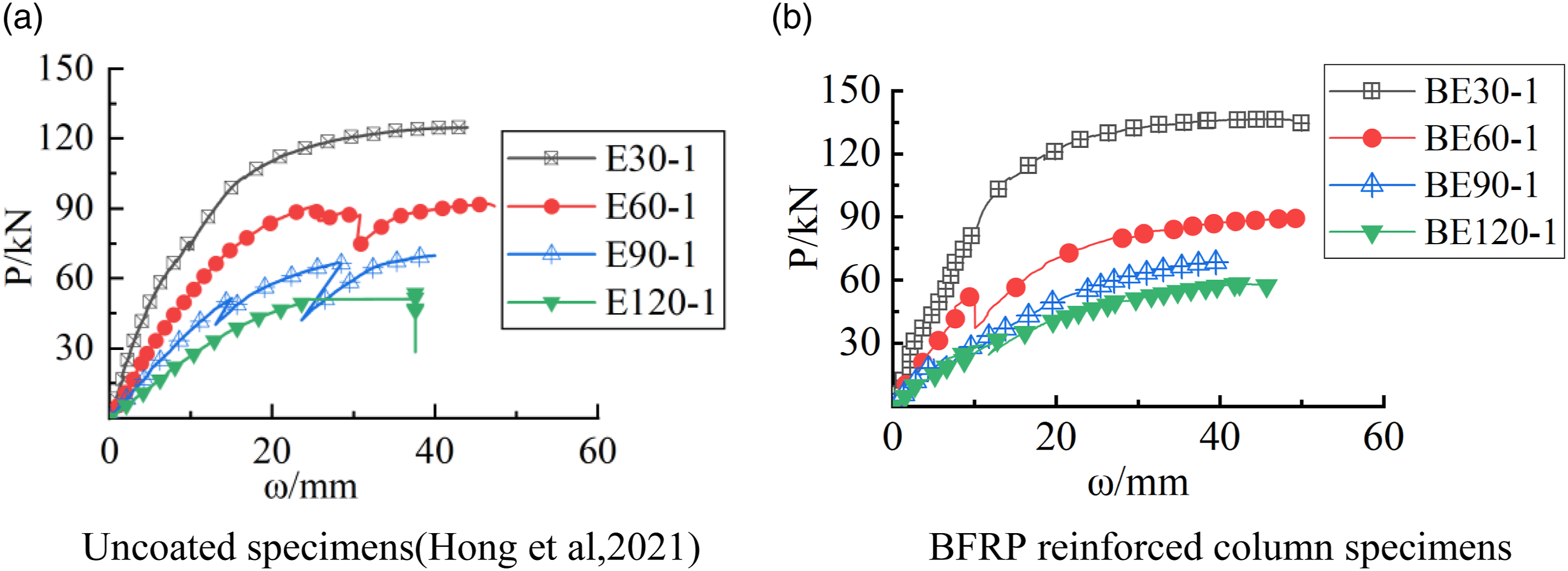
Figure 7 shows the lateral displacements of columns with four eccentricities at specific section heights i.e., 0, 300 mm, 500 mm, 700 mm, 900 mm and 1100 mm under different loads. In the Figure 7, H is the height, ω is the lateral displacement. It can be seen from the Figure 7 that the lateral displacements at each section height under the same load change in a quadratic form, and the midpoint of the section is the peak displacement. The displacements at the same distance on both sides of the key point are roughly equal, and the lateral displacements at the same position increase with the increase of load. Lateral displacements at different heights under different loads. (a) BE30-1. (b) BE60-2. (c) BE90-1. (d) BE120-1.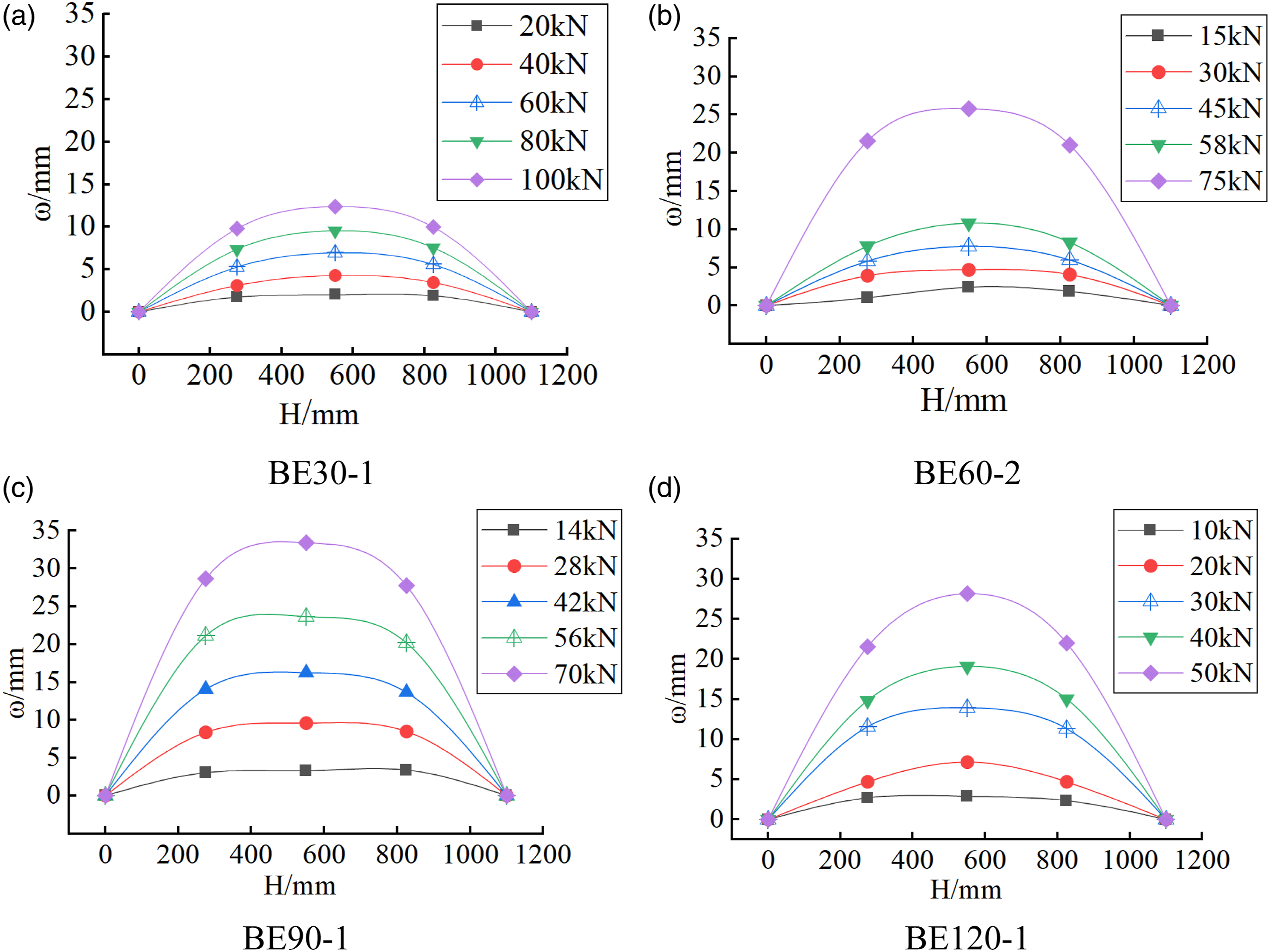
Load-strain analysis
Figure 8 shows the mid-span strain of BFRP reinforced columns under different eccentric loads, and the load-strain of a group of unreinforced specimens (E30-1) with 30 mm eccentric distance; tensile strain is denoted as positive whilst the compressive strain is considered negative. Load-strain curves. (a) E30-1 load-axial strain. (b) E30-1 load-lateral strain. (c) BE60-1 load-axial strain. (d) BE60-1 load-lateral strain. (e) BE90-1 load-axial strain. (f) BE90-1 load-lateral strain. (g) BE120-1 load-axial strain. (h) BE120-1 load-lateral strain.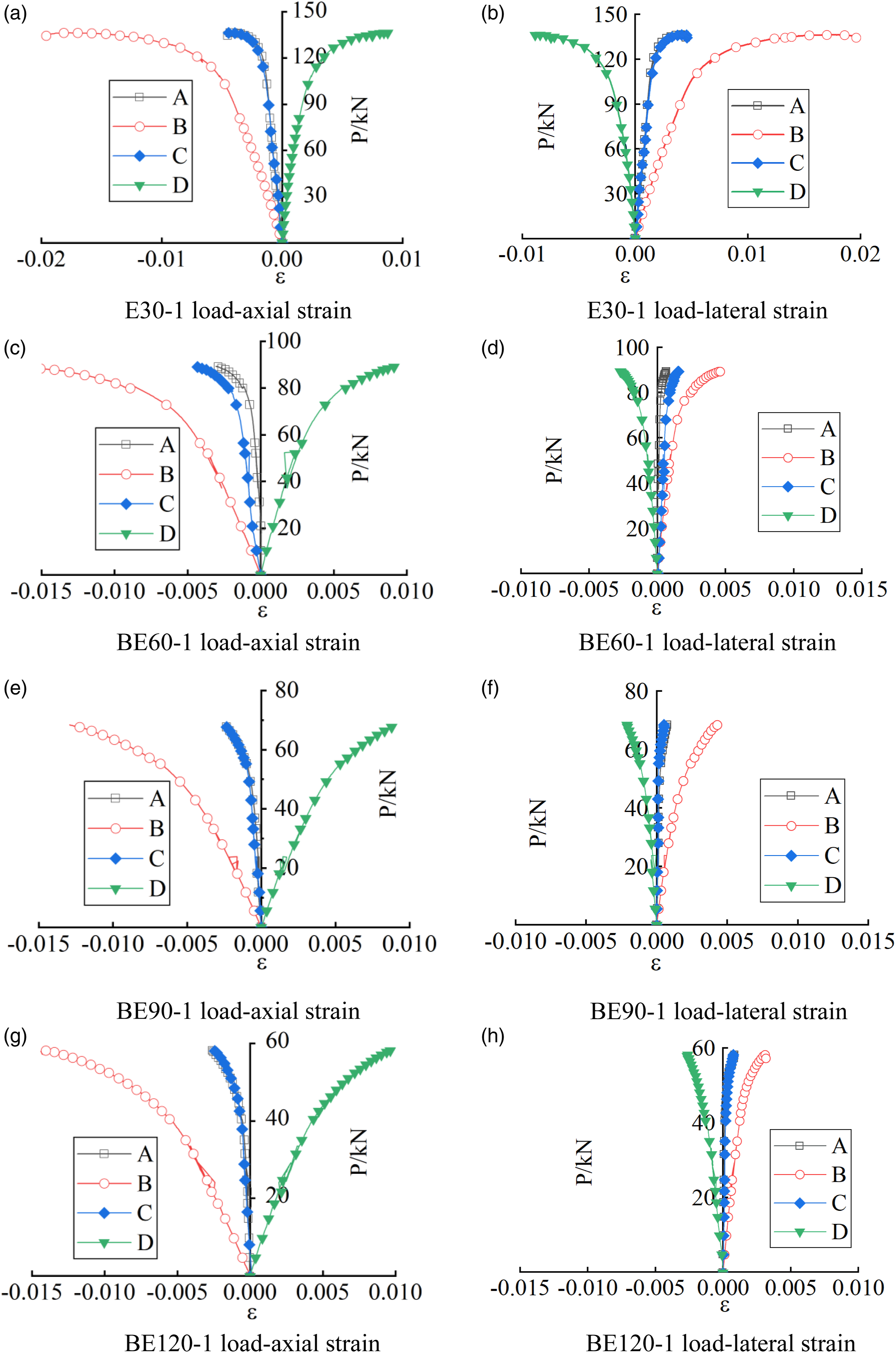
In the Figure 8, ε is strain. By comparing the load-strain diagram of E30-1 and BE30-1 specimens, it can be found that the ultimate load of the specimens reinforced with BFRP is larger, and the maximum compressive strain on the surface B of the compression zone is significantly larger than that of the specimens without BFRP sheets. In the geometric center of the specimen, the middle part of surface A and surface C is under compression. In addition, the maximum compressive strain of the specimens reinforced with BFRP is also larger than that of the specimens not reinforced with BFRP. This indicates that the height of the compression zone of BFRP reinforced column is larger than that of the specimens without addition, which makes more areas of the specimens under compression state, thus increasing the ultimate load.
As can be seen from Figure 8, the relationship between load and strain changes linearly in the initial loading stage. As the load increases, the specimen begins to yield, the load increase rate slows down, but the strain continues to increase. Since the bending moment is equal to the product of axial pressure and eccentricity, the ultimate load decreases with the increase of eccentricity. For the BE30 group of specimens, after the specimens reached the ultimate load, the strain continued to increase and the load remained basically unchanged. After a period of deformation, the specimens failed. However, for the specimens with large eccentricity, there was no obvious plateau period and the specimens immediately failed after reaching the ultimate load.
Analysis of surface cross-section remain surface assumption
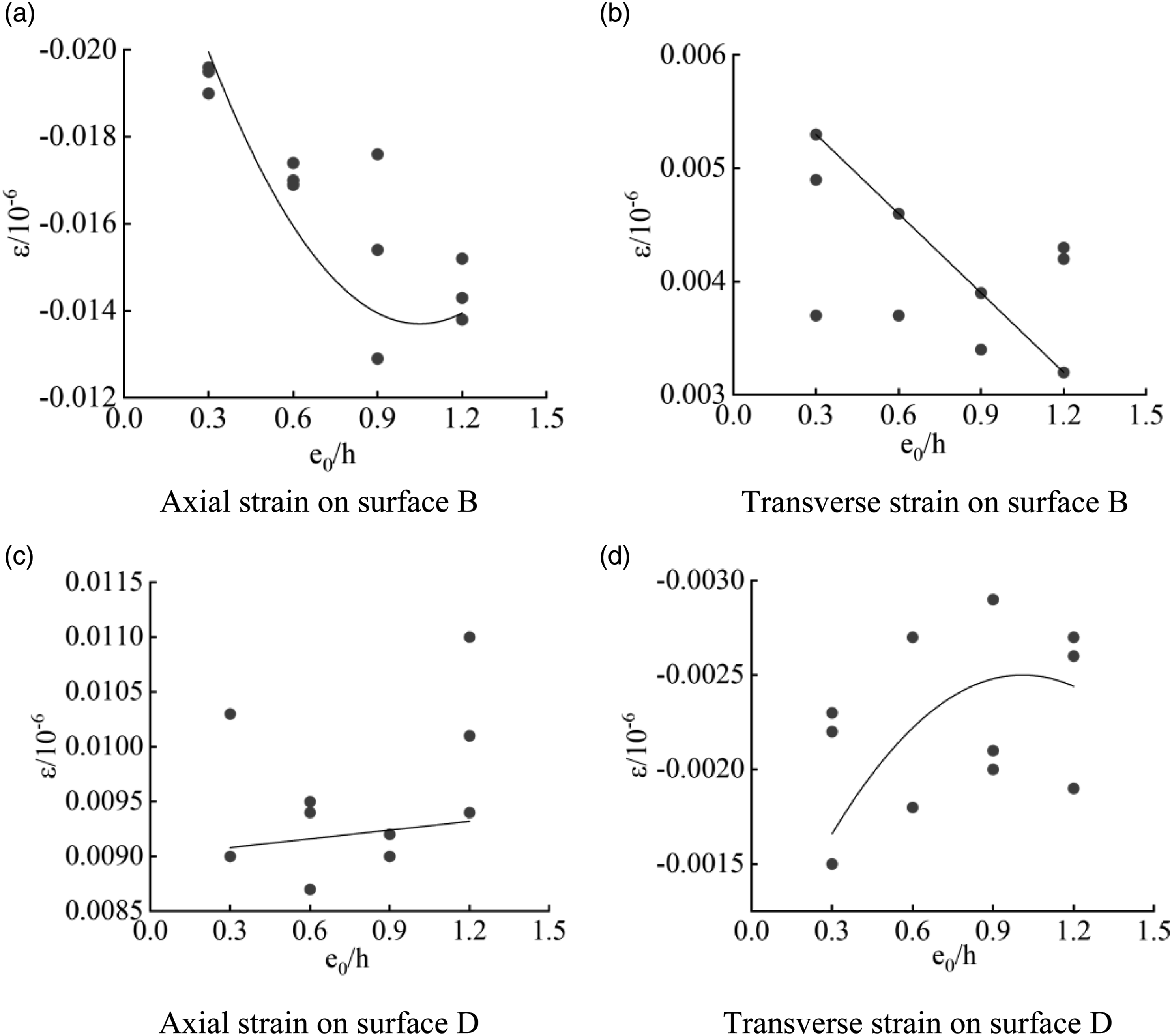
Figure 9 shows the variation of the maximum strain of the mid-span section with the height of the specimen in the limit state of BFRP reinforced column. In the Figure 9, H is the section height, ε is the ultimate strain. It can be seen from the Figure 10, with the increase of specimen eccentricity, the tension zone of the LBL column height is increased and tensile zone height is less than 50 mm. The maximum compressive strain of the specimen with different eccentricity decreases with the increase of eccentricity. Figure 9 shows that the strain in the span of the specimen with different eccentricities varies linearly with the height of the section under various loads, and the assumption of plane section remain plane is valid. Relationship between strain and section height. (a) BE30-1. (b) BE60-1. (c) BE90-1. (d) BE120-1. Strain versus eccentricity. (a) Axial strain on surface B. (b) Transverse strain on surface B. (c) Axial strain on surface D. (d) Transverse strain on surface D.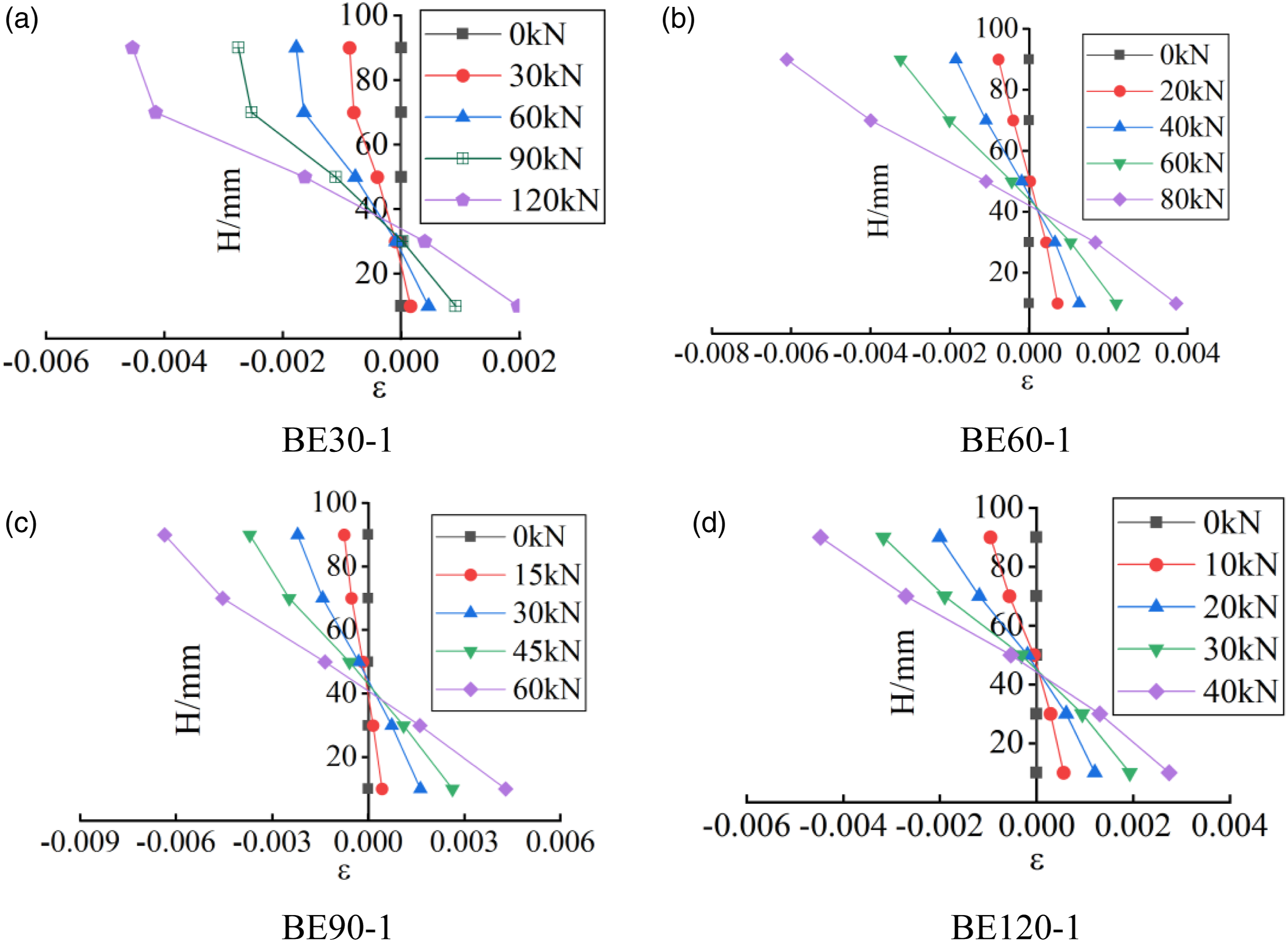
Analysis of data results
Rate of increase in mechanical properties of specimens.
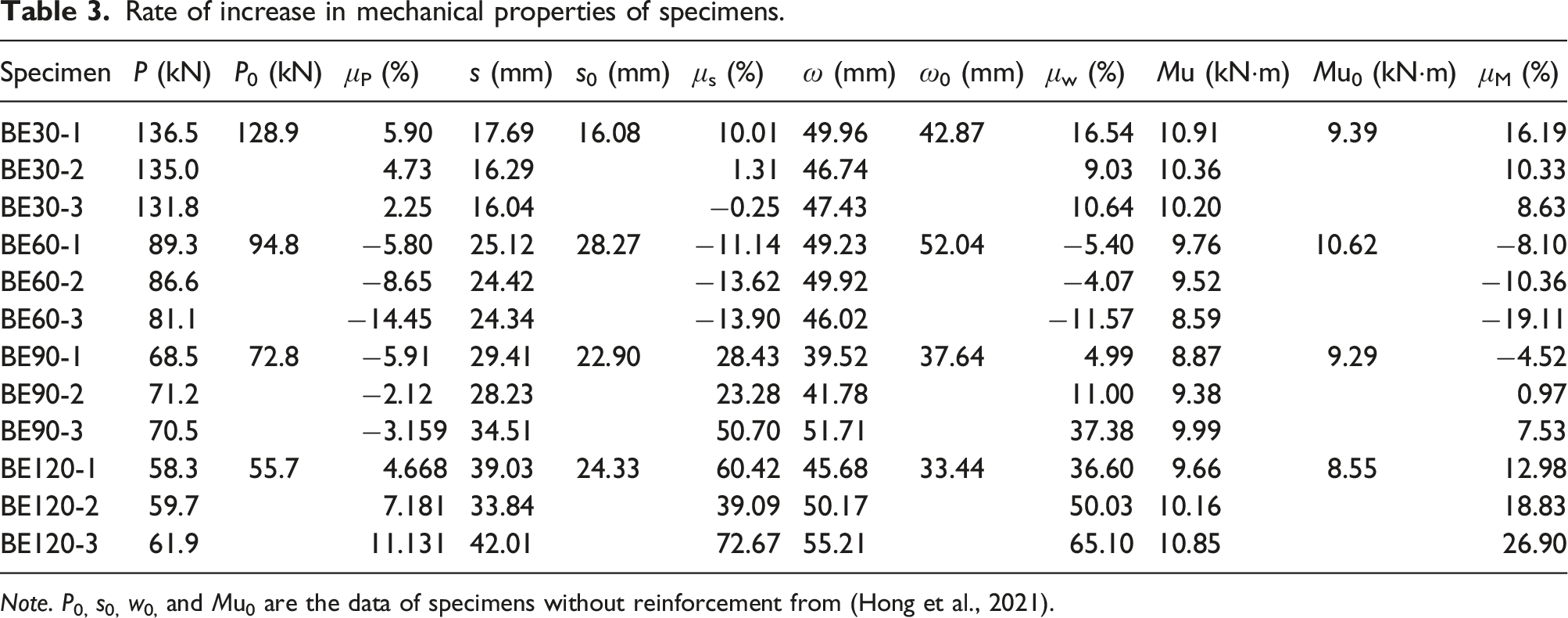
Note. P0, s0, w0, and Mu0 are the data of specimens without reinforcement from (Hong et al., 2021).
According to the results, under different initial eccentric loads, the BFRP reinforced LBL columns can effectively improve the mechanical properties of the column, including bearing capacity and deformation capacity, especially the deformation capacity of the column and the ultimate bending moment of the mid-span section.
It can be observed that under the effect of 60 mm initial eccentricity, the most of the data are not ascending effect, this is because the 60 mm eccentricity of the specimen without at the same time to complete, because of the influence of the new crown outbreak, interval is longer, are influenced by environmental temperature and moisture content, 60 mm eccentricity did not account for fabric specimen test completed in specimens of moisture content of 9% in January, the reinforced column specimen was completed in May with a moisture content of 15%, the moisture content affects the bearing capacity of the bracket, thus the bracket slipped in advance during the loading process, resulting in unsatisfactory results of this group of specimens.
Comparison of strain between BFRP reinforced column and unreinforced specimen.
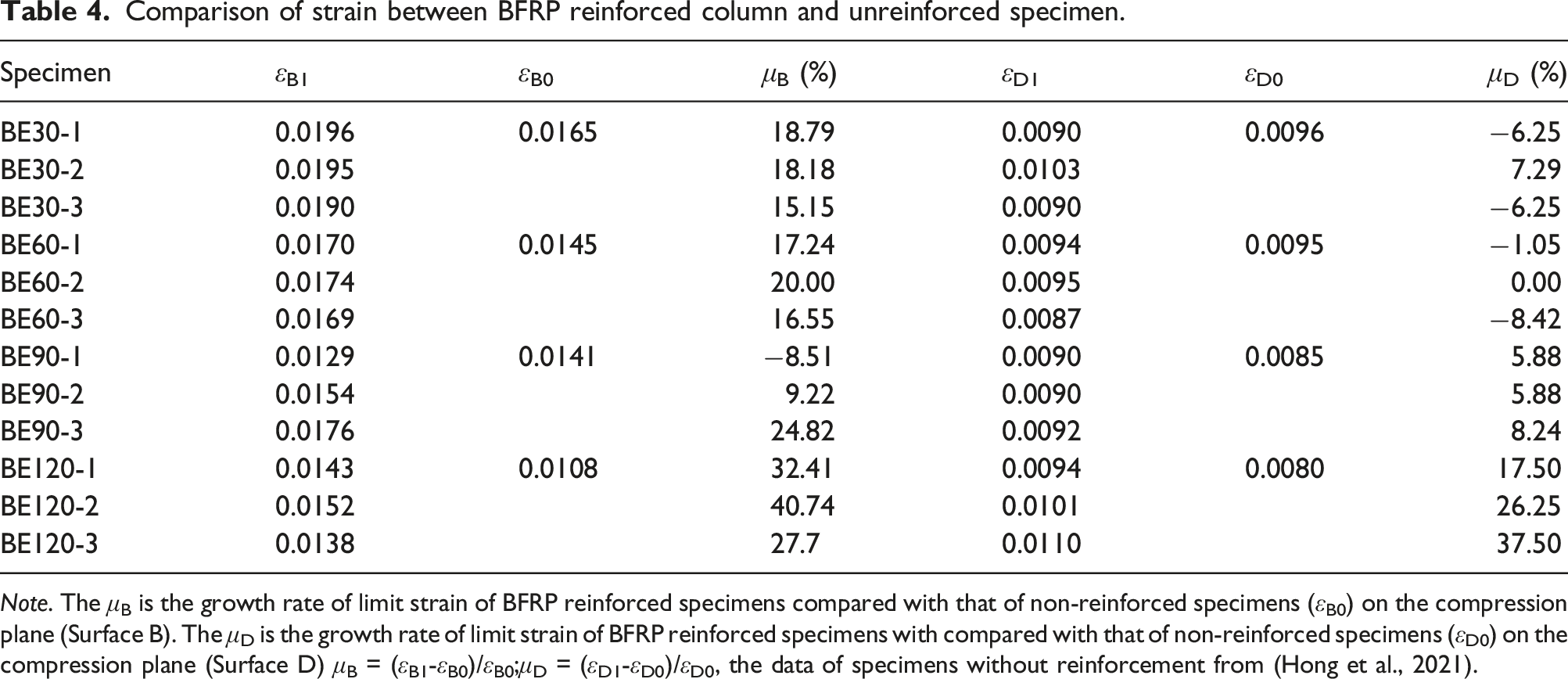
Note. The μB is the growth rate of limit strain of BFRP reinforced specimens compared with that of non-reinforced specimens (εB0) on the compression plane (Surface B). The μD is the growth rate of limit strain of BFRP reinforced specimens with compared with that of non-reinforced specimens (εD0) on the compression plane (Surface D) μB = (εB1-εB0)/εB0;μD = (εD1-εD0)/εD0, the data of specimens without reinforcement from (Hong et al., 2021).
Analysis of eccentricity and ultimate strain
Figure 10 shows the variation of ultimate strain on the tensile surface and compression surface of BFRP reinforced column with eccentricity. The axial compressive strain and transverse strain of surface B decrease with the increase of eccentricity, while the axial tensile strain of surface D is about 0.01 and increases with the increase of eccentricity, while the transverse strain increases with the increase of eccentricity.
Enhancement effect at unit distribution rate
Variation of BFRP reinforced column under unit distribution ratio.
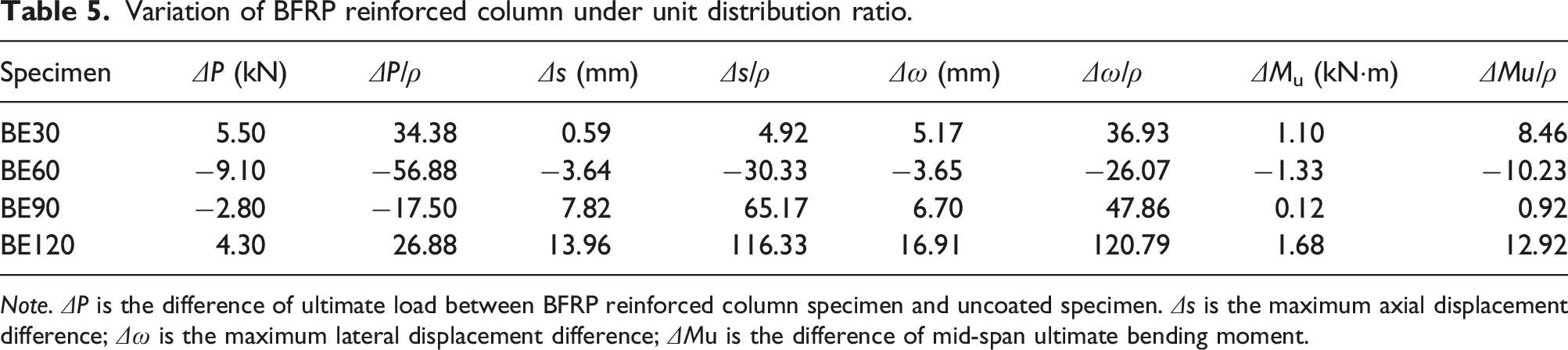
Note. ΔP is the difference of ultimate load between BFRP reinforced column specimen and uncoated specimen. Δs is the maximum axial displacement difference; Δω is the maximum lateral displacement difference; ΔMu is the difference of mid-span ultimate bending moment.
The distribution ratio of specimens (Zhang et al., 2022) is calculated from formula (1):
Calculation of bearing capacity
For the convenience of calculation and analysis, the basic assumptions are as follows: (1) It is assumed that the material is uniform everywhere, and the influence of internal defects of LBL column is ignored. For example, the bonding part, bamboo joint and bonding surface, the performance of LBL column is determined by the stress-strain relationship along the fiber direction, and the stress-strain relationship of BFRP is linear elasticity. (2) Before the test load reaches the ultimate state of bending capacity, the bond between fiber sheets and LBL column and between BFRP is reliable, without relative slip and strain coordination, and the effect of BFRP thickness on BFRP strain is ignored. (3) The strain of the LBL column conforms to the assumption of flat section, that is, the strain at any point of the section is proportional to the height of the section during the deformation process. (4) Due to the chamfering of the column, the nonlinearity of the section in the compression zone and the nonlinearity of the stress-strain relationship of the LBL under compression along the grain will lead to the complexity of the calculation formula. It is assumed that the chamfering part of the compression zone is all in the limit state, and the load of the chamfering part is only 6 kN, with little influence. Therefore, in the calculation process, the chamfered part of the compression zone trapezoidal part is simplified into a rectangular section with half the height, that is, the height of the calculated compression zone is 5 mm smaller than the actual compression zone.
According to the maximum compressive strain on side B in the limit state of BFRP reinforced column, it can be divided into two types of calculation:
In the first type of failure
In the first category, the stress-strain distribution of the most unfavorable section, namely the mid-span, is shown in Figure 11: Stress-strain distribution.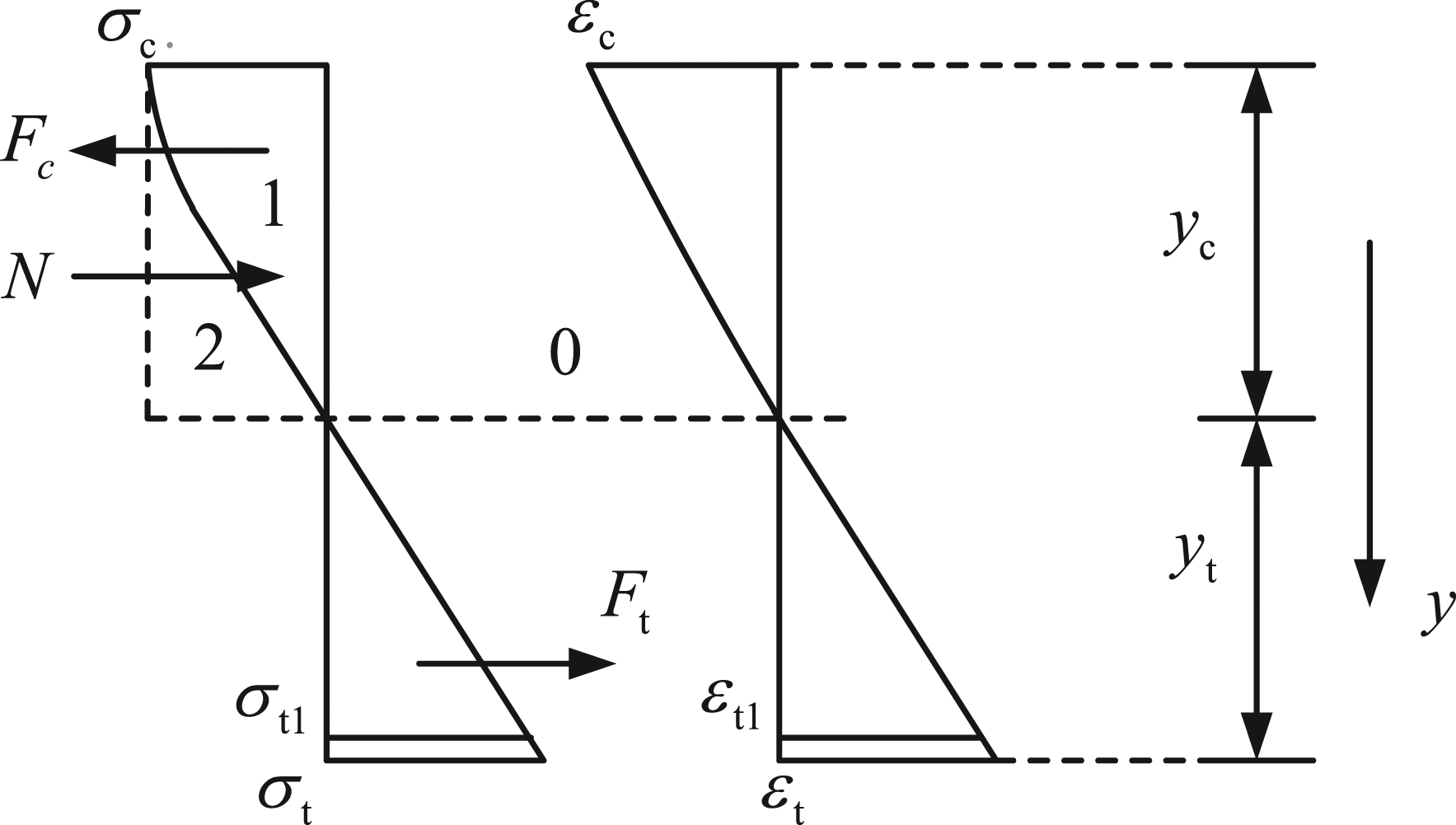
According to the balance of force:


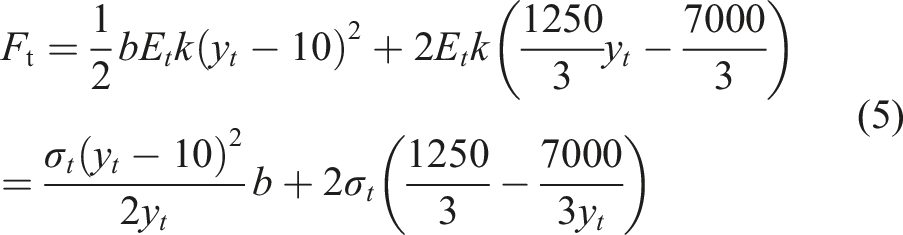

The Fc (resultant force in the compression zone) can be calculated by equation (6):
The stress-strain relationship of LBL proposed by Li et al. (2013, 2018) is substituted into the stress-strain relationship of LBL along the grain, and the stress-strain relationship of LBL along the grain is shown in Figure 12. The Et is tensile elastic modulus, Ec is tensile elastic modulus, σcy is proportional ultimate stress, εcy is proportional ultimate strain, σtu ultimate tensile stress, εtu ultimate tensile strain, σc0 is ultimate compressive stress, σc0 ultimate compressive strain. Stress-strain relationship.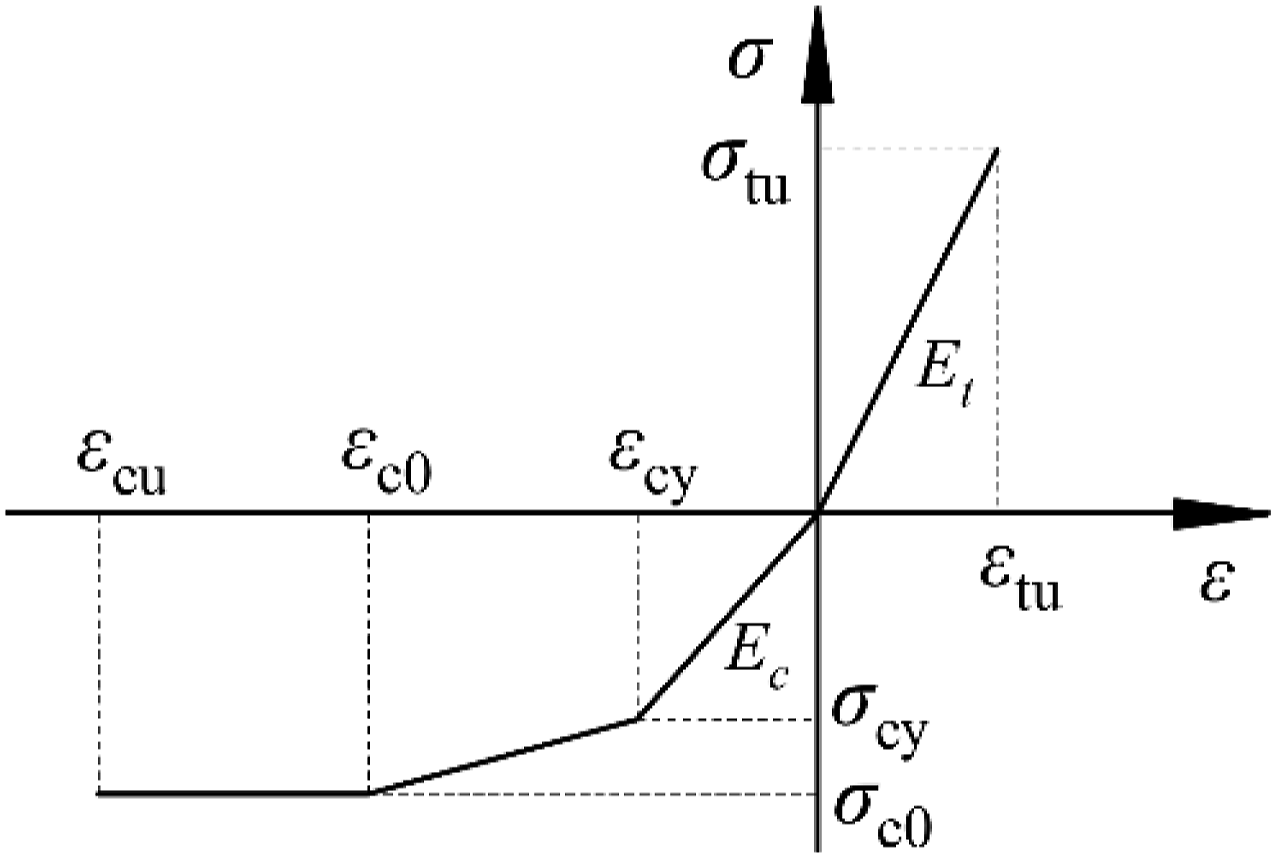
The tension and compression stress-strain relationship of LBL is shown in equation (8). Stress-strain distribution.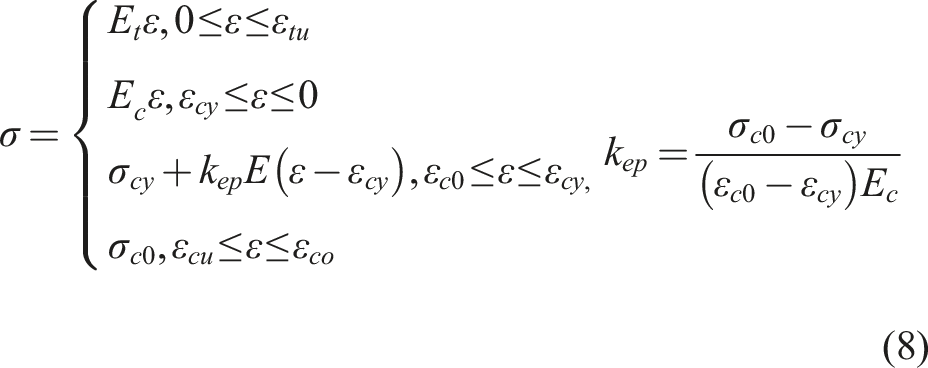



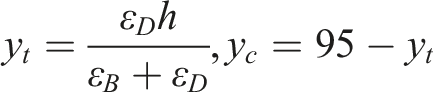

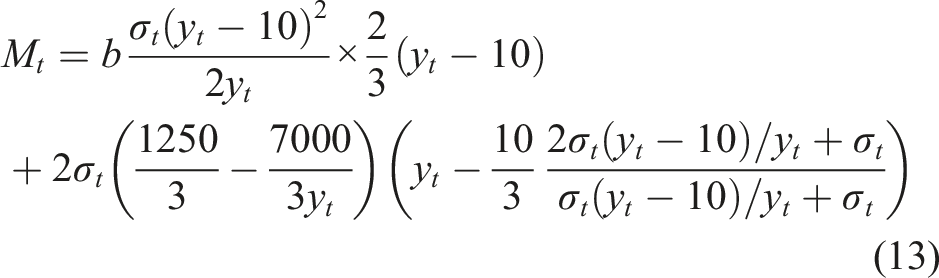

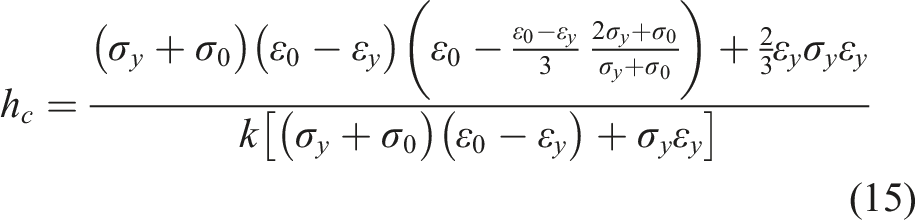
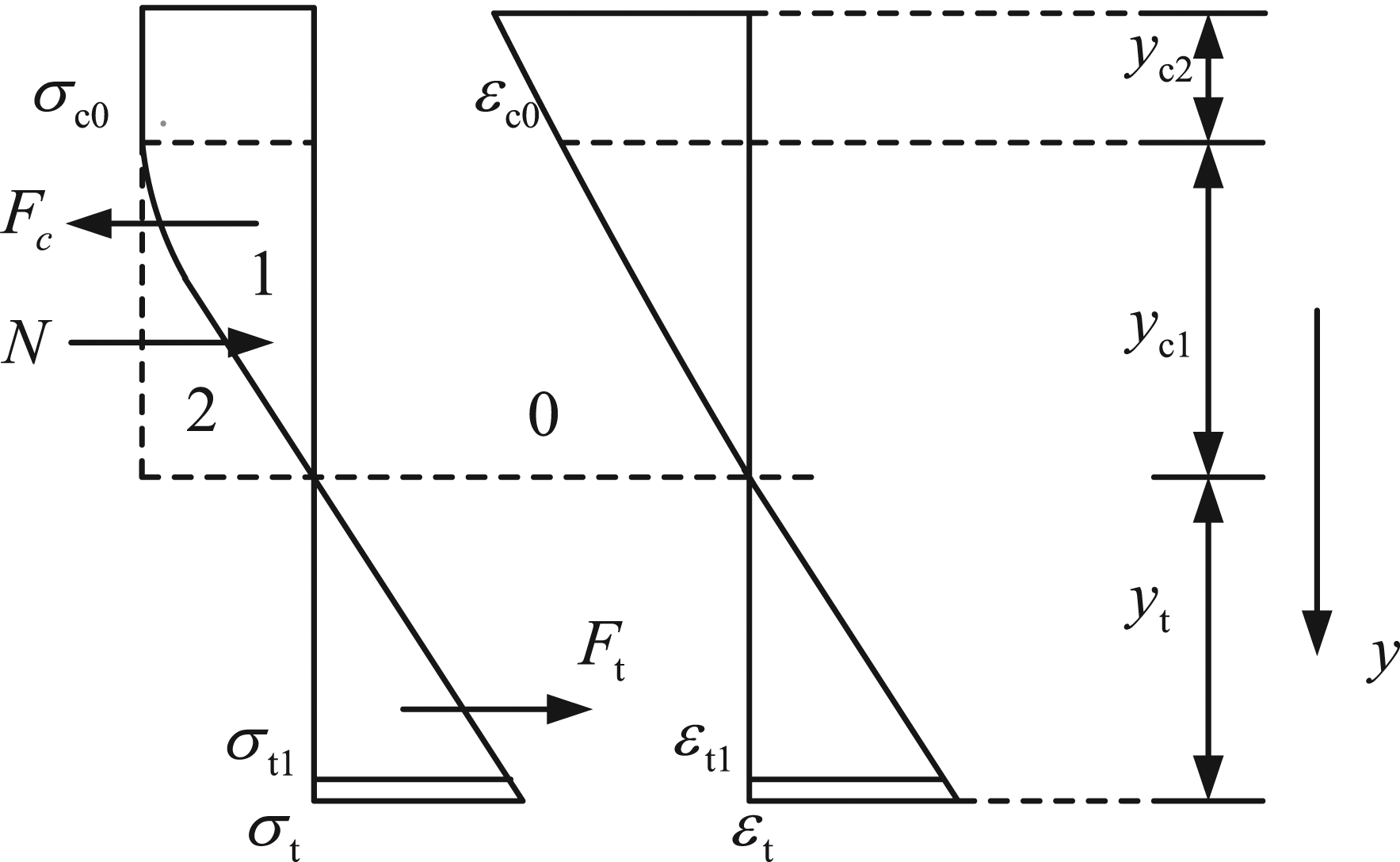
It can be seen from Figure 13 that in the second case, the calculation formula of joint force of yt in tension zone and yc1 in compression zone is the same as that in the first case. For the joint force of yc2 in compression zone, Fc2 is:


Comparison of experimental results and calculation results.
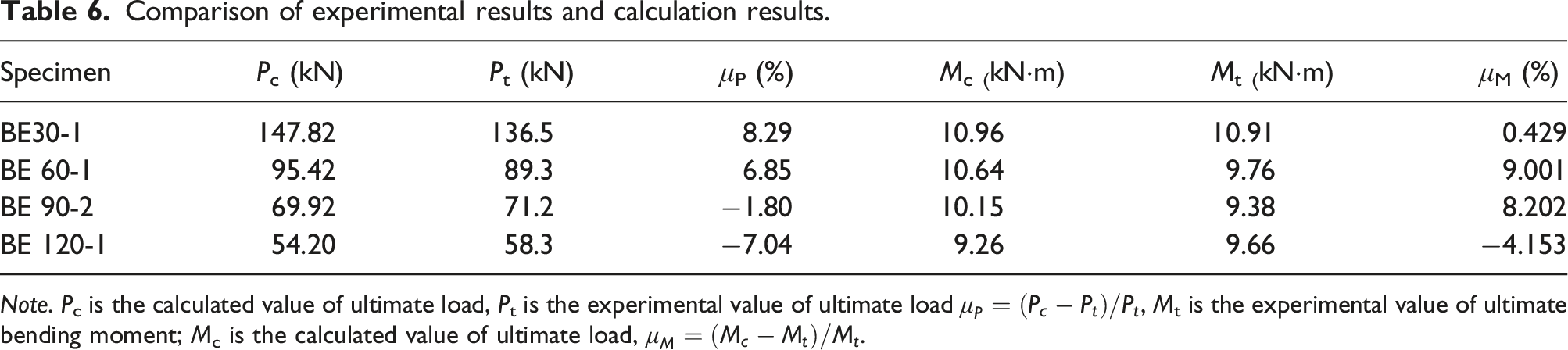
Note. Pc is the calculated value of ultimate load, Pt is the experimental value of ultimate load
Figure 14 shows the variation of the ratio of ultimate bearing capacity of BFRP-reinforced LBL columns with eccentricity as a function of eccentricity. P is the ultimate load of BFRP- reinforced column, and P0 is the ultimate bearing capacity of column with the same eccentricity but without reinforcement. It can be observed from the Figure 14 that the ratio of ultimate load decreases first and then increases with the increase of eccentricity. Through regression analysis and calculation, the functional relationship between the ratio of ultimate load and eccentricity may be presented as follows: Eccentricity - rate of increase of ultimate load.
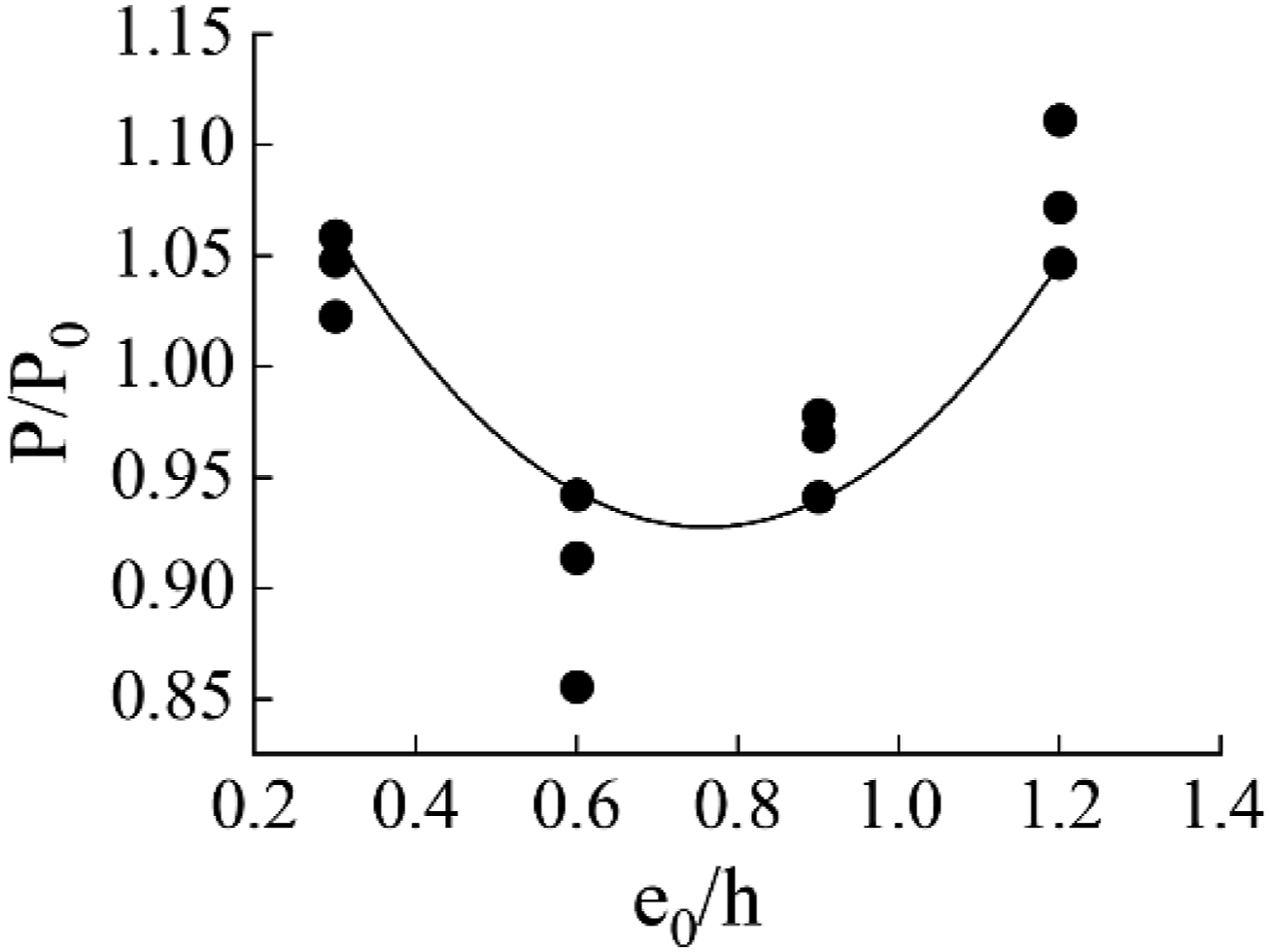
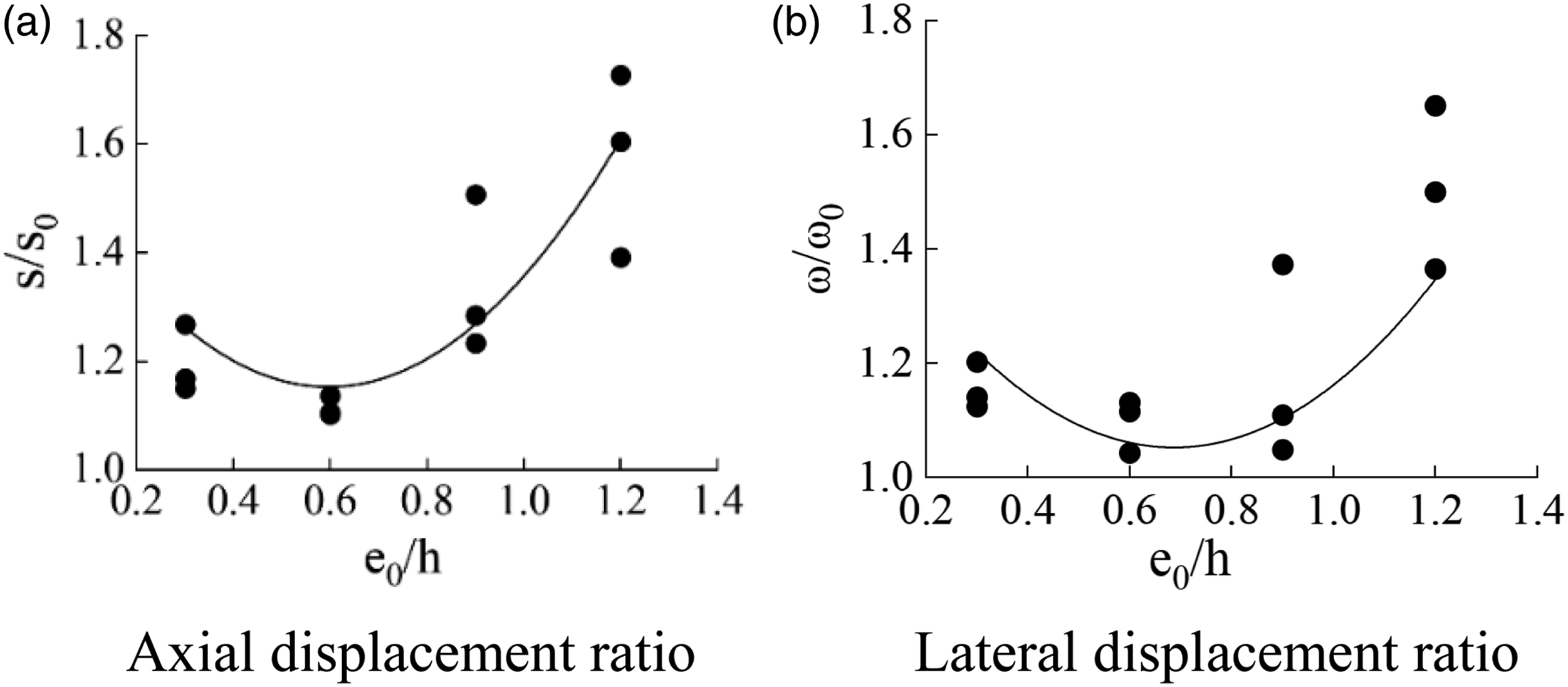
Figure 15 shows the ratio of axial and lateral ultimate displacements of BFRP-reinforced LBL columns and specimens with the same eccentricity but without reinforcement as a function of eccentricity. It can be seen from the Figure 15 that with the increase of eccentricity, the axial displacement ratio of the column increases, while the lateral displacement ratio decreases first and then increases. Through regression analysis and calculation, the functional relationship between eccentricity and the ratio of ultimate axial and lateral displacement is as follows: Eccentricity - ultimate displacement ratio. (a) Axial displacement ratio. (b) Lateral displacement ratio.

Conclusion
In this paper, four groups of specimens with different eccentricities were tested and the following conclusions are obtained through observation and analysis: (1) The failure of BFRP-reinforced column is mainly caused by the bamboo fracture in the tensile zone. There are two types of damage of BFRP sheets when the specimen is destroyed. In the first type of failure, the BFRP sheet is pulled in the mid-span area, the bond between BFRP sheet and the column fails, and the BFRP sheet falls off in a large area. The second failure BFRP is relatively intact, and only part of the bond fails. (2) As the eccentricity of specimens were increased, the ultimate load of BFRP reinforced columns decreased and the axial displacement increased. The lateral displacement of specimens was less affected by the variation of load eccentricity. The deformation patter of columns conformed to the assumption of plane sections remain plane, and the displacements at different column height conforms to the quadratic function of column height. BFRP sheet can increase the height of the specimen compression zone and hence improved the bearing capacity of the column. (3) The mechanical properties of specimens reinforced with BFRP, such as ultimate load, axial displacement, lateral displacement, section bending resistance, tensile resistance, compressive maximum tensile strain and compressive strain, are higher than those of specimens without reinforcement. Therefore, pasting BFRP sheets in the tensile area can improve the bearing capacity and deformation capacity of LBL columns. (4) Through regression analysis, analytical formula for predicting the ultimate load of BFRP-reinforced LBL columns was obtained, and the model was shown to produce good agreement with test results showing less than 10% deviation.
Footnotes
Acknowledgment
The writers gratefully acknowledge Yukun Tian, Chen Chen, Hang Li, Shaoyun Zhu, Liqing Liu, Dunben Sun, Jing Cao, Yanjun Liu, Junhong Xu and others from the Nanjing Forestry University for helping.
Declaration of conflicting interests
The author(s) declared no potential conflicts of interest with respect to the research, authorship, and/or publication of this article.
Funding
The author(s) disclosed receipt of the following financial support for the research, authorship, and/or publication of this article: This work was supported by the National Natural Science Foundation of China (No. 51878354 & 51308301); the Natural Science Foundation of Jiangsu Province (No. BK20181402 & BK20130978); 333 talent high-level project of Jiangsu Province and Qinglan Project of Jiangsu Higher Education Institutions.
