







Abstract
The purpose of this study is to explore the environmental quality and hygiene in crowded living environments, subdivided units in Hong Kong. Subdivided units are an emerging form of housing environment for the urban poor. It is hypothesised that subdivided unit residents have a higher risk of exposure to poor hygiene conditions but no measurement has ever been taken to test this hypothesis. Twenty questionnaires and environmental assessments were conducted. Dominant bacterial species were identified as Micrococcus luteus and Staphylococcus spp., and the microbial counts were correlated with building, occupants and environmental parameters. Driven by the high bacterial counts and poor hygiene observation, eight subdivided units were selected for endotoxin, glucan and allergen analysis in bed and floor dust. Total airborne bacterial counts and endotoxin and glucan in dust were found at very high levels in some subdivided units, while unexpectedly, the allergen and mould levels were low. In crowded environments the skin bacteria may mislead the environmental and atmospheric bacterial contamination. Outdoor microbial pollution and deteriorated building conditions can be the main source of indoor contamination. ‘Good’ or ‘Excellent’ class of bacterial counts satisfying the Indoor Air Quality Objective does not guarantee a low endotoxin and glucan level.
Introduction
The trend for human populations to flock to cities for employment and cultural amenities, among other things, shows no signs of stopping. Arguably as a result, indoor and outdoor living environments, particularly for the urban poor, are worsening. A number of surveys have reported that about 35,000 to 280,000 households are living in subdivided units (SDUs) in Hong Kong.1–3 A ‘subdivided unit’ is defined as individual living quarters that have been divided into two or more smaller units for rental. 1 These units are generally perceived to have poor indoor environment quality (IEQ), and residents are worried about their health as a result of exposure to a substandard environment. However, more specifically, no measurement has ever been taken to determine the extent to which a substandard environment in SDUs poses a health risk and the causes of the poor environment.
Housing and health are intricately linked in a variety of ways.4,5 Indoor air quality (IAQ) measurements for certain chemical (e.g. VOCs and CO2), physical (e.g. PM10) and biological (e.g. bacteria and fungi) agents are commonly used as indicative parameters for further environmental investigations. 6 Some environmental and hygiene factors such as noxious odours, cleaning routine, abundance of pests and mis- and non-management of waste around living areas are treated as indicators for environmental hygiene quality and signs of the presence of environmental hazards. Environmental allergens, from cockroaches, rodents and dust mites, endotoxin and glucan are some of the common agents found in low-income inner city areas and are associated with asthma, skin irritations and other respiratory symptoms in children and susceptible adults.7–9 Dampness and mould contamination is also an acknowledged risk factor for poor health. 5 Poor ventilation and maintenance of air conditioning systems may degrade occupants’ IAQ and provide breeding grounds for microbial growth. 10 The rise in reports of fleas and pathogen vectors in Hong Kong represents yet another important environmental health concern linked to the urban environment and current lifestyles. 11
With a wide range of possibilities that can deteriorate the environmental quality, this study is proposed to collect data and identify the potential sources of contamination. In addition, the current IAQ Objectives used to assess the IAQ in public places in Hong Kong will be examined for use in this housing environment. Housing transformation can create new environmental challenges and health concerns to different groups of city dwellers.
Methods
Environmental assessment and questionnaires
Environmental assessment and questionnaires were designed to collect information about the occupants, building and building conditions, environmental hygiene and cleaning practices and the impression of environmental quality given by residents and our researchers. From July to September 2013 we successfully visited 20 households and interviewed 19 respondents in different districts.
IAQ analysis and dust sampling
With the consent of respondents, we arranged the IAQ measurements and other samplings before the environmental assessment and questionnaires. All the samplings were conducted in the daytime. These units were located in four districts: five in Tsuen Wan (TW); seven in Mong Kok (MK); three in Kwun Tong (KT) and five in Kwai Chung (KC). Each of the household units was identified through the use of location and unit number, e.g. TW01. Indoor and outdoor air samples were taken simultaneously in each SDU in accordance with the HK IAQ Certification Scheme. 6 The parameters measured comprised the following: temperature (temp), relative humidity (RH), air velocity, carbon dioxide (CO2), carbon monoxide (CO), total volatile organic compounds (total VOCs), PM10 and airborne bacteria and fungi. Fungal count is not yet included in the IAQ objectives, but an indicative level of 500 CFU/m3, for both ‘Good’ and ‘Excellent’ classes, will be added to the next IAQ review. 6 Samplers were also placed outside windows to obtain outdoor information. In units without windows or with restricted access, samples were taken in lobbies or building stairwells. Bacterial and fungal samples were collected using SAS SUPER 100 Air sampler with the corresponding agar plate (Bacteria: Tryptic soy agar, Fungi: Potato Dextrose Agar) and incubated at 35℃ for 48 h (Bacteria) and 28℃ for 3–7 days (Fungi). Floor and bed dusts were collected in accordance with ISACC phase II protocol and stored at −20℃ until analysis. 12
Microbial identification
Other than the total bacterial and fungal counts in the IAQ assessment, bacteria were also counted separately, in accordance with their morphological differences, on agar plates and under the microscope after gram staining. The most abundant types of bacteria were further identified by sequencing the 16S rRNA gene at V3–V4 region using 341 Forward and 805 Reverse Primers on MiSeq System following the Illumina Nextera protocol (Illumina, USA). Fungi were identified at genus level based on the morphological difference.
Endotoxin, glucan and allergen extraction and analysis
Samples were extracted in accordance with the study Prevention of Allergy: Risk factors for Sensitization In children related to Farming and Anthroposophic Lifestyle (PARSIFAL). 8 Extracted endotoxins were analysed using endpoint chromogenic Limulus amebocyte lysate (LAL) assay. Dust mite (Dermatophagoides pteronissinus), cockroach (Blattella germanica), rat and Aspergillus fumigatus allergens were measured using Der p 1 ELISA kit, Bla g 1 ELISA kit, Bla g 2 ELISA kit, Rat n 1 ELISA kit and Asp f 1 ELISA kit (Indoor Biotechnologies, Inc., USA). (1→3)-β-D-glucans were analysed using the Glucatell® assay kit (Associates of Cape Cod, Inc., USA). Sensitivity and limit of detection of these assays are provided by the manufacturer. A calibration curve was prepared for each sample run. Levels of the contaminants were presented as concentration per gram of dust (unit/g) and load per metre square of the sampling surface (unit/m2).
Statistical analysis
IAQ parameters that were measured in inside and outside environments of the units were presented as median and range; and the percentage of the units meeting the HK IAQ objectives was calculated for each parameter. Microbial parameters were correlated with building, occupant and environmental factors using Spearman’s rank correlation (p < 0.05 or p < 0.01). Microbial community data were fourth root transformed and statistically analysed using Analysis of Similarities (ANOSIM) calculated by PRIMER (v.6) (significant level p < 0.05) in order to determine the differences in the community composition among indoor or outdoor air in each district and total indoor and outdoor air.
Results
Questionnaire and environmental assessment
Characteristics of the sampling sites.
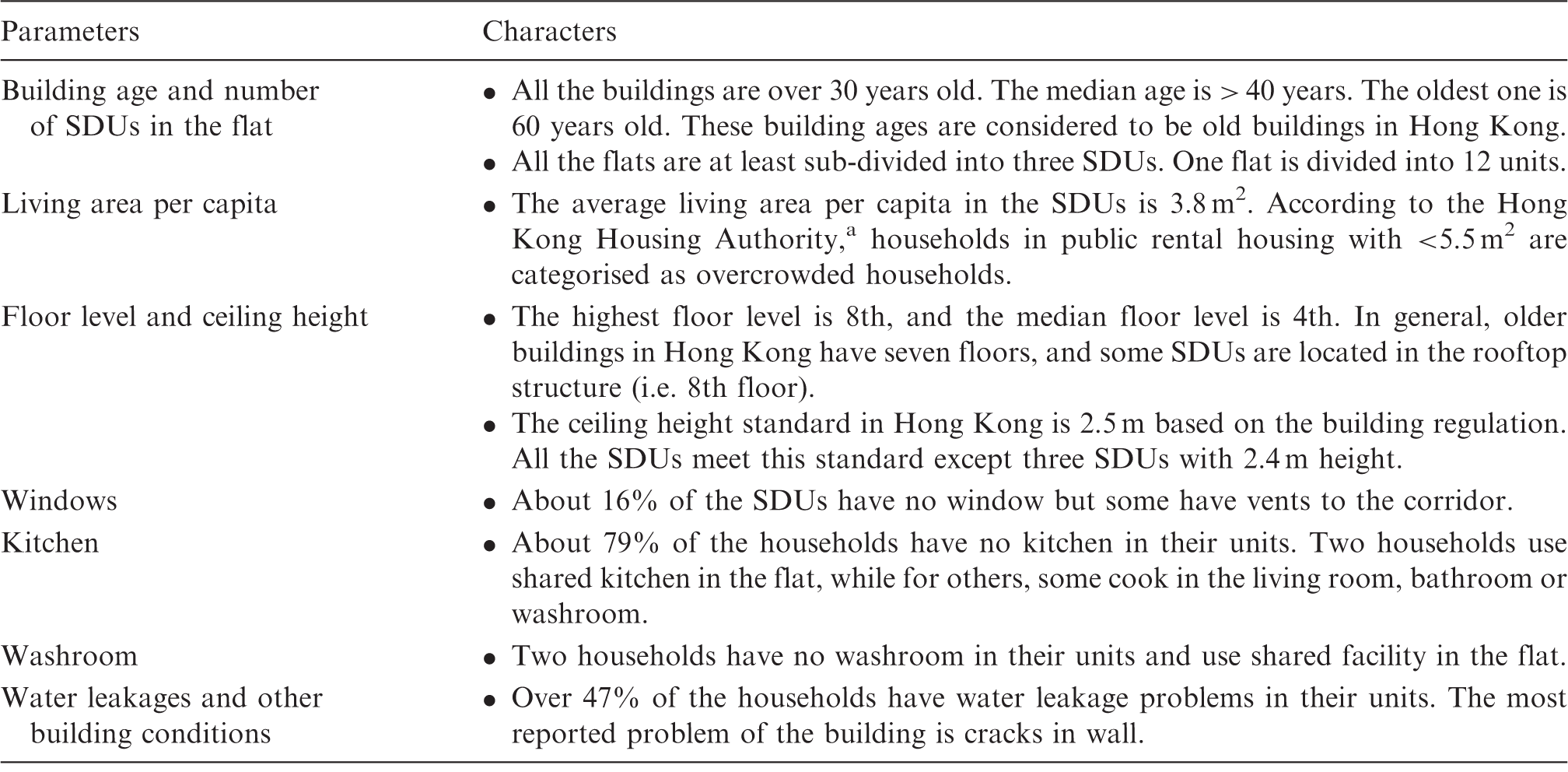
SDU: subdivided unit.
Hong Kong Housing Authority, ‘Housing in Figure 2013’ http://www.housingauthority.gov.hk/en/common/pdf/about-us/publications-and-statistics/HIF.pdf.
IAQ in SDUs
IAQ measured compared to HKIAQ objectives. 6
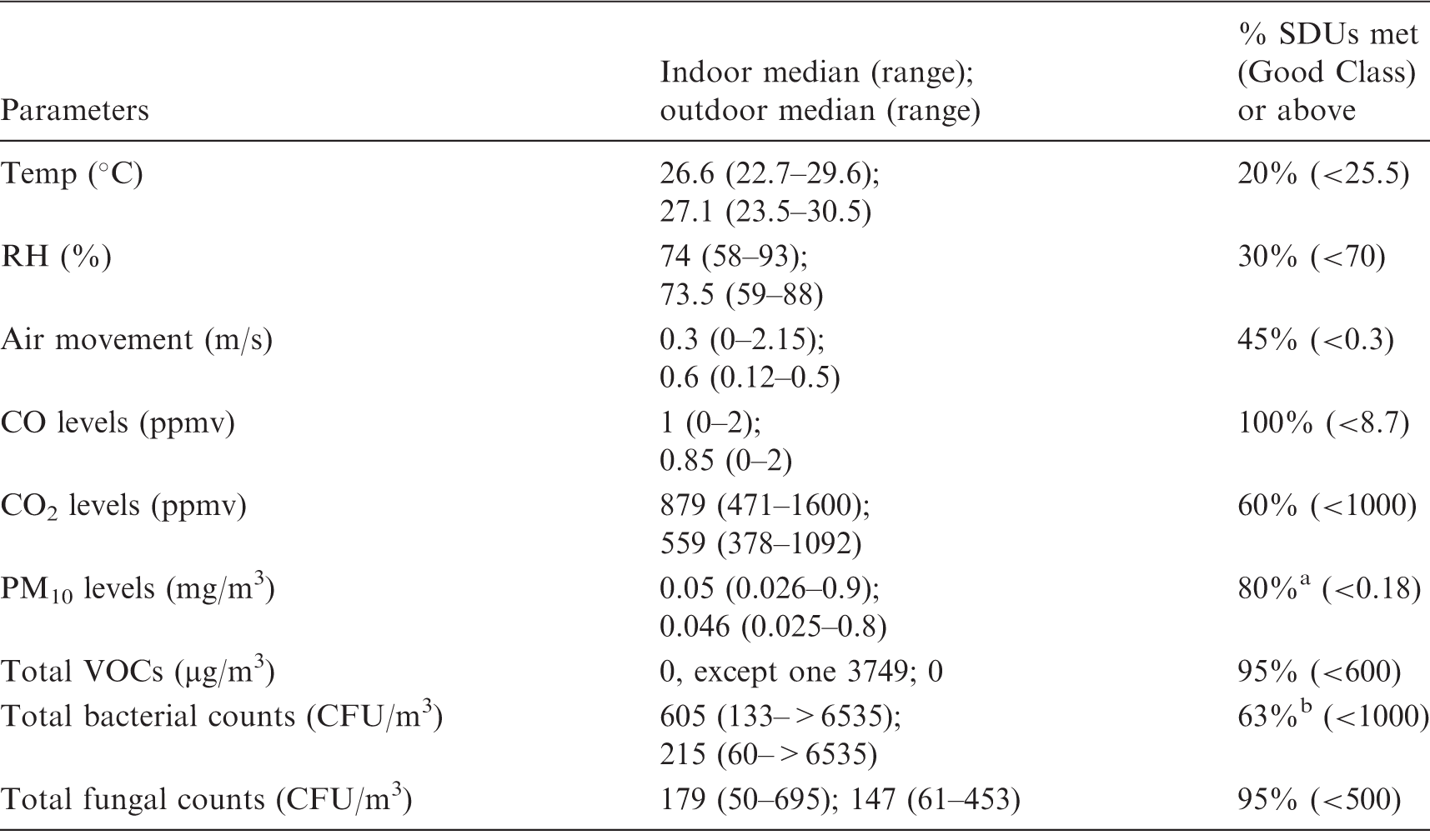
IAQ: indoor air quality; SDU: subdivided unit.
% Calculated from 15 SDUs.
% Calculated from 19 SDUs.
The indoor total VOCs in one unit (KT03) was high (3749 µg/m3) compared to no detection outdoors. The potential source of VOCs was, however, unknown, e.g. no storage of solvents and no new furniture and decoration were reported but this unit was in fact located above a wood-crafting workshop. For the bacterial data, although approximately 63% of the units met the ‘Good’ Class levels, those not meeting the level reported up to six times higher bacteria than the ‘Good’ Class level (>6535 CFU/m3). The IAQ objectives only consider indoor measurements, but when we compared the indoor and outdoor microbial counts, SDUs had different indoor/outdoor count ratios (I/O), indicating the likely variation of the source of microorganisms. In summary, high temperature, RH and biological contamination from bacteria were of the greatest public health concern in the SDUs.
Microbial community
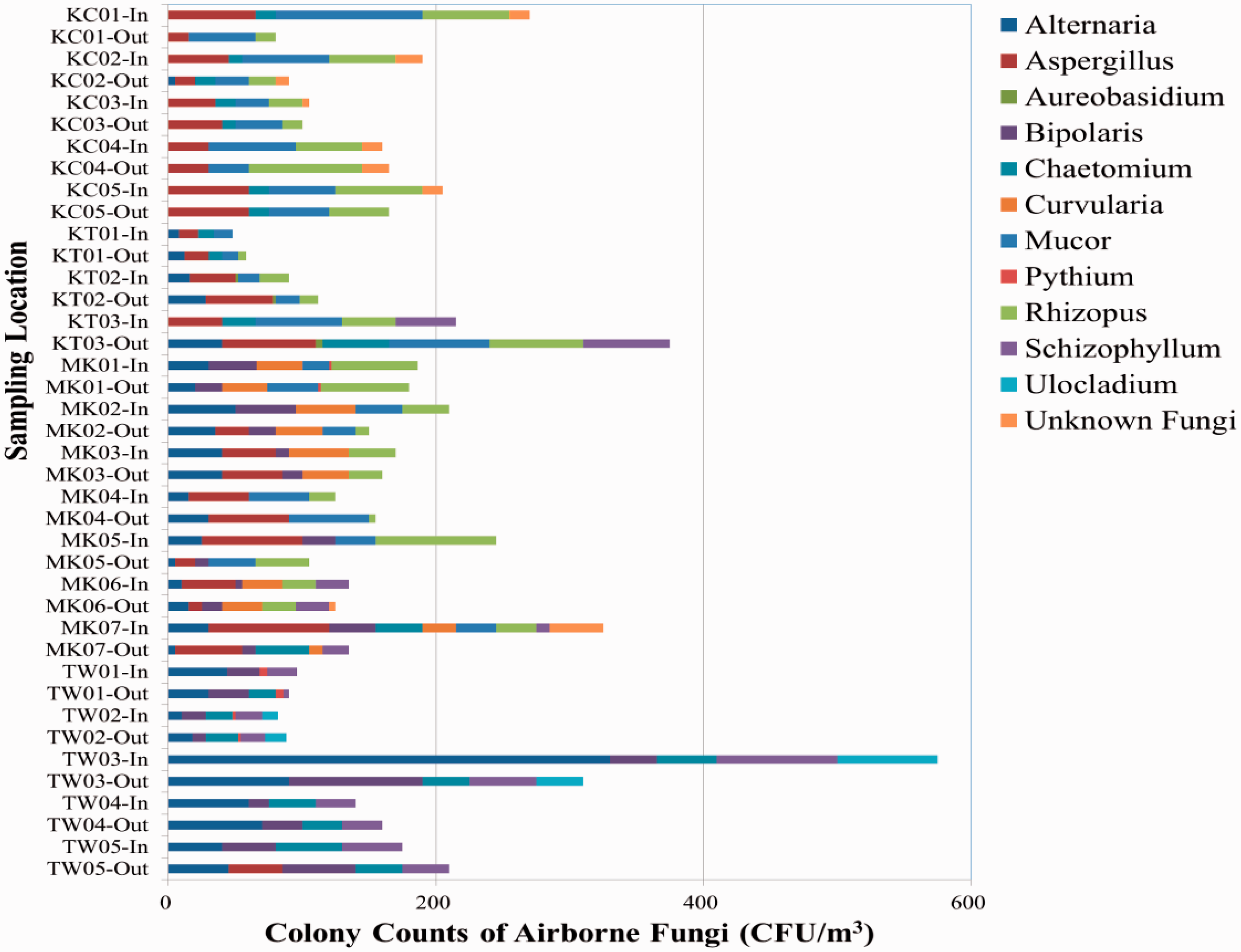
In total, 81 types of Gram +ve and 115 types of Gram −ve were identified morphologically. Seven species could not be identified and one species was not a bacterium. The most abundant and frequently identified bacteria indoors and outdoors were all Gram +ve bacteria. Using the 16S rRNA sequence method for identification, these dominant bacteria were Micrococcus luteus, Staphylococcus capitis, Staphylococcus cohnii and Staphylococcus epidermidis (Figure 1). The number of bacterial types ranged from 8 (MK07) to 63 (MK01) types, with a median of 30 types. The number of total bacterial counts in Figure 1 is less than in Table 2, because these counts are absolute CFU data without adjusting the statistical data conversion. Twenty-seven fungal species were isolated from the units and the outside environments among the genus Alternaria, Aspergillus, Aureobasidium, Bipolaris, Chaetomium, Curvularia, Mucor, Pythium, Rhizopus, Schizophyllum and Ulocladium (Figure 2). The most abundant and frequently identified fungi in both indoor and outdoor samples were Alternaria spp., Aspergillus spp. and Rhizopus spp.
Bacterial diversity in indoor and outdoor air in the 20 SDUs. Fungal diversity in indoor and outdoor air in the 20 SDUs.
Spearman’s correlation between biological parameters and environmental, building and occupant factors. a
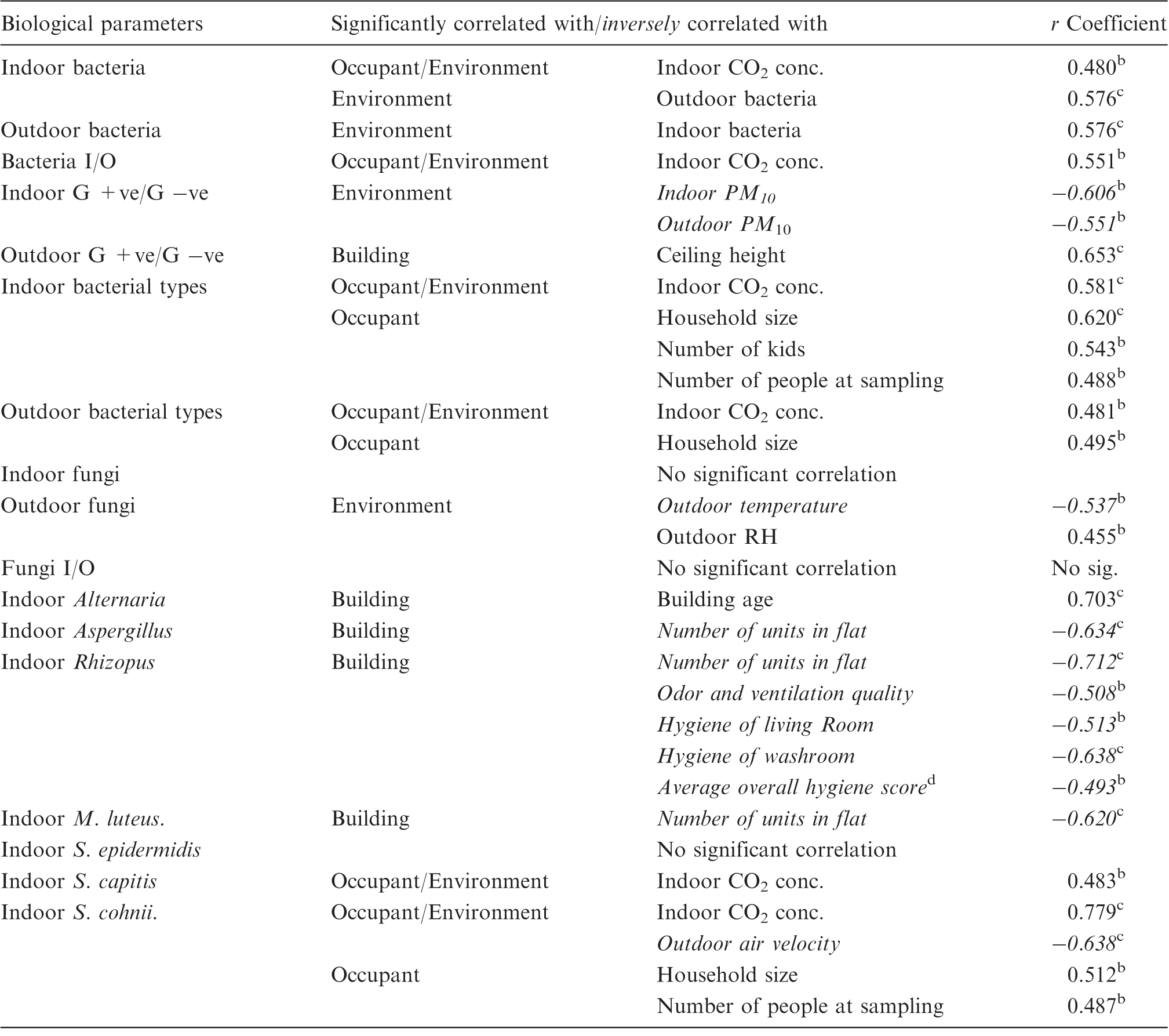
I/O = Indoor/outdoor ratio.
Factors correlated: Environment – Inside and outside temperature, RH, CO2, PM10, air velocity, bacteria, fungi; Building – Living area, living area per capita, building age, floor levels, number of units in flat, ceiling height, window coverage area, hygiene of living room, hygiene of washroom, odor and ventilation quality, average overall hygiene score; Occupants – Household size, number of people at sampling, number of kids under the age of 12, average hours staying at home.
Correlation is significant at the 0.05 level (2-tailed).
Correlation is significant at the 0.01 level (2-tailed).
Average hygiene score = Hygiene score given by our researchers (from 1 to 10; 1: Clean, 5: Acceptable, 10: Very Dirty).
Based on the ANOSIM analysis, the grouped indoor and outdoor microbial communities across all districts were significantly different (p = 0.008). The outdoor bacterial community of TW was markedly different from that of MK (p = 0.002), while MK was different from KC (p = 0.002), MK differed from KT (p = 0.022) and KT differed from KC (p = 0.043). The indoor air bacterial communities among the districts were significantly different between TW and MK (p = 0.028) and TW and KC (p = 0.034). Fungal communities between indoor and outdoor samples and districts were also demonstrably different (p = 0.001). As illustrated in Figure 3, the outdoor fungal diversity was clustered by districts. The closer the sampling locations shown would mean the higher similarity of their fungal diversity.
Comparison of fungal diversity in different districts.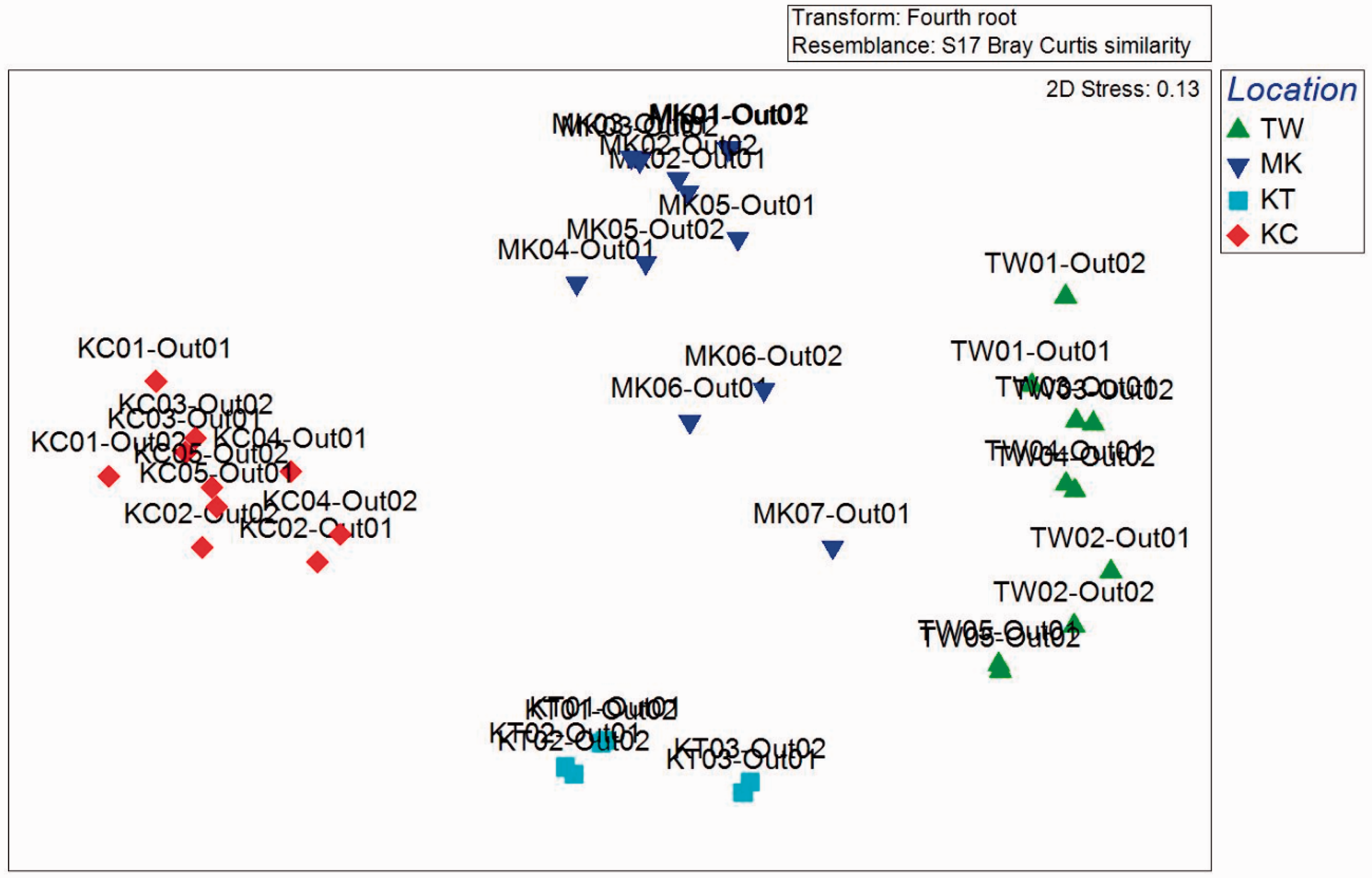
Level of allergens, endotoxins and glucans in eight units
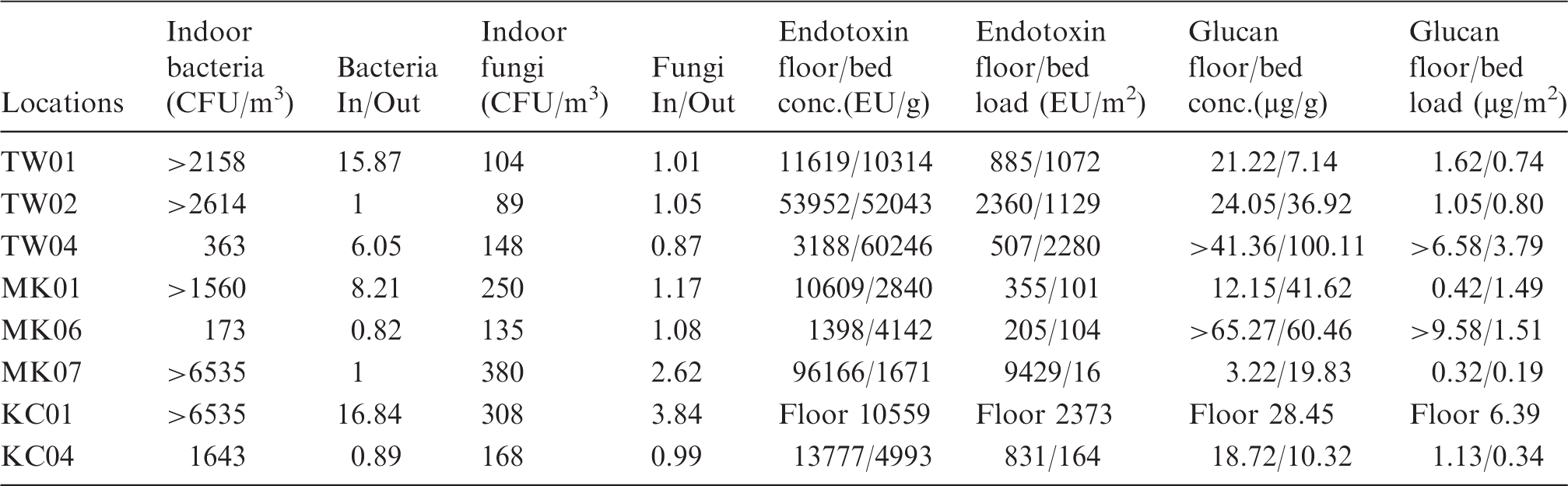
Levels of indoor and outdoor microbes and endotoxin and glucan in dust samples.
Discussion
Our findings reveal some of the air quality and hygiene issues in SDUs. Although most IAQ parameters are satisfactory, the high levels of airborne microbial counts and endotoxin and glucan levels in dust are worthy for further discussion. In this section, we first compare the fungal and bacterial levels between SDUs and the conventional homes in Hong Kong because local environments can play an intrinsic role in the environmental microbial level. Only when the microbial levels in SDUs are higher than the conventional homes, we can presume a poorer microbial air quality in SDUs. Afterwards, the health risk of endotoxin and glucan found in the SDUs is discussed by referencing the health outcomes after exposure to these contaminants in other studies. The allergen levels in SDUs are compared to the local data as well. Microbial counts are commonly used in IAQ inspection but SDUs are a unique environment crowed with people, which are one of the main sources of bioaerosols in indoor environments. Therefore, we also discuss the potential limitation of using the current bacterial count method to indicate the microbial air quality. Finally, we examine some of the urban and building management issues hoping to improve the environmental quality in SDUs.
Fungal and bacterial counts in SDUs in comparison with the conventional homes
Airborne fungal and bacterial counts are indicative parameters, which reflect the potential biological contamination such as microbial growth and emissions from a proximate source and the accumulation of microbes due to poor cleaning or inadequate ventilation. Among our tested parameters the bacterial level could be six times higher than the HK IAQ recommended ‘Good’ Class objective. Results from other studies in Hong Kong have shown that 100 to >85% of conventional living rooms had indoor bacterial counts below 1000 CFU/m3. Furthermore, the conventional flats exceeding the level had bacterial counts below the average 1500 CFU/m3.13,14 The implication here is that not only do more SDUs have poor biological air quality, but the level of contamination in SDUs is also much more severe. In the Lee et al. 14 study, the conventional flats with high indoor bacterial counts also had a similar level of outdoor bacterial counts, thereby designating outdoor air as the source of the indoor air pollution. However, in our study, only three of the seven problematic units were directly associated with an outdoor source, and the remainder were linked to indoor contamination. Most of the SDUs we visited had no separate kitchen area: cooking and food preparation were carried out in the same space as the living room and bedroom. This squeezed layout may also contribute to the high bacterial counts in SDUs. 14 The sampling period of the Lee et al. 14 study also took place from July to October. Outdoor air samples can therefore be reasonably compared between ours and their study; in their study, only one outdoor sample exceeded 1000 CFU/m3 and the rest (five samples) had bacterial counts below 500 CFU/m3, i.e. 17% of the outdoor air had a high bacterial count above 1000 CFU/m3. These values closely approximate to ours, in which 16% of the outdoor air in SDUs exceeds 1000 CFU/m.3 However, our samples (two out of three) have much higher counts of over 2500 CFU/m3, exceeding the upper range measured in their study (about 1500 CFU/m3). In other words, although the frequency of encountering poor environments outside the SDUs is no higher than outside the conventional flats, the environmental quality can be much worse where a problem arises.
SDUs are concentrated in deprived areas so we also investigated whether each district has its own microbial communities. Interestingly, fungal communities are distinctive in each district, while bacterial communities in some districts differ from other districts. Our finding implies that neighborhood outdoor environments contribute to the spatial disparity of indoor biological air quality. 15 Although further studies are needed to assess the health implications of exposure to distinct microbial communities in different districts, our study has highlighted that living in different districts can have different inherent risks of exposure to different types and levels of microbial species. For fungal counts, although humid weather conditions (high temperature and RH), poor ventilation and over 40% of mouldy conditions were reported in the SDUs compared to only 27.5% of visible dampness and mould patches present at conventional homes, 16 fungal counts were mostly at the ‘Good’ Class level.
Health risks of endotoxin and glucan
Unlike the total microbial count, which can only serve as an indicative parameter, endotoxin and glucan are biological hazards that can precipitate different health responses after exposure. Among the SDUs tested, 87.5% of them (seven units) had at least one of the endotoxin measurements (either on bed or floor; concentrations or loads) above the median value found in conventional homes with asthmatic children in Hong Kong. 17 In addition, as in the previous study, all homes had detectable endotoxin levels. In the Leung et al. study, 17 they found that mattress endotoxin levels were associated with the increasing frequency of wheezing episodes (11,300 EU/g associated with 1–3 attacks and 12,300 EU/g with >12 attacks). The implication here is that two SDUs (TW02 and TW04) with >50,000 EU/g can trigger >12 wheezing attacks if asthmatic children live in the units. In the Park et al. 18 study of endotoxin and fungi in floor and chair dust in a water-damaged office building, 33,700 EU/mg of floor dust and 6700 EU/m2 of floor area were categorised as high contamination levels. Endotoxin levels in MK07 exceeded both of the aforementioned levels. Park et al. 18 reported a causal relationship of endotoxin and fungal exposure on wheezing, cough attacks and throat irritation. Other factors can impact the indoor endotoxin level such as cigarette smoking, cockroach infestation and cat and dog ownership. 19 Smoking habits of the occupants were not collected in this study, while no household owns a cat or dog.
With regard to indoor glucan concentrations and loads, we found no reference in Hong Kong; instead a study from Taiwan was used for comparison due to the similarity in terms of people and environment with Hong Kong. Half of the housing units had glucan concentrations in bed dust above the geometric mean of 25.5 µg/g and 27.9 µg/g on the sleeping pad and the bamboo side of the mattress, respectively. 9 In our study some of our respondents also used a bamboo mattress to help reduce heat during sleep in the summer time. According to a review of glucan and respiratory health, 7 0.169 µg/m2 of glucan on living room floors were associated with peak flow variability, particularly in atopic children from a similar indoor study. All of our SDUs had glucan loads above this value. However, it is noteworthy that respiratory health effects of glucan are not well defined. 7
Allergens
Different kinds of allergens are commonly detected in inner city homes and are associated with the development of asthma.20,21 Gruchalla et al. 20 reported that housing type influences the levels of cockroach (higher risk in high-rise flats) and dust-mite allergens (higher risk in detached homes). MK01 had 3.62 U/g of Bla g1, surpassing the sensitisation level of 1 U/g. Bla g1 levels over 1 U/g are associated with sensitisation in asthmatic children, and over 2 U/g increases the risk of wheezing in infants.9,16,22 MK01 had the best hygiene score but occupants also reported cockroaches at home and in common areas. The windows were facing wet markets and restaurants, the most likely source of the cockroaches. The undetectable levels of cockroach allergens in most SDUs may be due to the type of cockroach species present in the area. In our cockroach survey study (data not shown), Supella longipalpa and Periplaneta australasiae are the dominant species found at homes in Hong Kong. Although Bla g 1 and Bla g 2 from Blattella germanica are the common markers for cockroach infestation, these markers are limited to detect other cockroach species. The simplicity of room layout and furnishings may reduce cockroach hiding places. For example, fixed cupboards are uncommon, most of the units have no separate kitchen, and tables and other kitchen utilities are moved around regularly while in use. In addition, tenants usually move frequently in SDUs, e.g. every 1–2 years, which could help to reduce pest infestation in the room due to cleaning. The sighting of cockroaches and rats is likely to be associated with a poor outdoor environment. Kulhankova et al. 23 found that the effect of co-exposure of endotoxins with cockroach allergens was more than additive. The implication here is that in a complex environment like SDUs, where co-exposure to various contaminants may occur, an integrated approach to health assessment should be considered.
In terms of dust mite allergens, Leung et al. 17 found that the median value of Der p 1 in bed dusts in the control and asthmatic homes were about 2 µg/g and 0.61 µg/g, respectively, and 58 to 70% of the samples had detectable levels in Hong Kong. However, none of our samples had detectable levels of Der p 1, which may be due to the regular use of bed space for other purposes. As a result of this practice, favourable conditions for the growth of dust mite are limited. Other than Der p 1, Blo t 5 from Blomia tropicalis has also been measured in house dust samples in Hong Kong. 24 In relation to the assessment of risk, other than the environmental exposure level, sensitivity to these allergens is also important in the determination of risk. Yuen et al. 25 reported that among the 977 patients with chronic rhinitis in Hong Kong, 63% had positive skin prick test reactions with house dust mite allergens, 23% with cockroach, 14% with cat, 5% with dog, 4% with pollen and 3% with mould. In summary, allergen levels in SDUs were unexpectedly lower than those of conventional homes in Hong Kong.
Limitation of the bacterial count method in IAQ objectives
In 2003 the IAQ Management Group of the HKSAR Government 6 issued a set of objectives to assess IAQ in offices and public places, but at that time did not apply objectives for residential buildings. Only a few available studies focussing on residential environments in Hong Kong have been published.13,14,17 Total airborne bacterial count is one of the most common biological parameters used in IAQ inspection. It is also the only parameter used for biological analysis in the IAQ objectives. 6 It is therefore necessary and timely to carry out investigations of environmental quality and hygiene in SDUs, and through this study to examine and improve the use of airborne bacterial and fungal counts in these crowed living environments. The HKIAQ recommendation states that ‘the exceedance of bacterial count does not necessarily imply health risk but serves as an indicator for further investigation’. In air-conditioned public places and offices, cleaning the air-handling system is one of the most common actions taken if the bacterial count level is poor, under the assumption that the air-handling system is the most probable source of airborne bacteria. However, what should be the appropriate further investigation in SDUs? More importantly, should we eliminate further investigation in the SDU units rated with a ‘Good’ Class microbial level because they are supposedly ‘clean’?
The results show that in crowded environments like SDUs, the environmental and atmospheric bacterial contamination may be masked or over-loaded by the skin flora, 26 although skin floras can live in environments other than human skin, such as in soils and by forming biofilms on various surfaces. 27 We are aware that when sampling indoor and outdoor environments at the same location, cross sampling between indoor and outdoor air can happen; however, with the close proximity between buildings and flats, bacteria originated from human sources are likely to pass from one place to the others. Therefore, the use of the conventional non-selective agar medium in sampling may actually limit the indicative power of the bacterial counts for other sources of environmental microbial contamination. Although physical and chemical parameters are commonly used in IAQ inspection, total microbial counts are not applied globally to reflect potential microbial contamination because there is no solid evidence linking the total microbial exposure levels to pathogens or hazardous agents, and subsequently, to health effects. More importantly, based on our data we can summarise that only endotoxin loads in floor dusts were correlated with the indoor bacterial counts. It is important to keep in mind that a low microbial count level does not guarantee low bio-contamination. Therefore, on the basis of our research, it is not justifiable to quit further investigation into the unit(s) with a ‘Good’ Class microbial objective. Public health inspectors should be cautious about using microbial counts as indicative parameters for hygiene investigation.
Urban and building management
Traditionally, the management of the domestic environment is the occupant’s responsibility, and environmental health intervention is focused on educating and changing the occupant’s behaviour. However, in this complex environment, where the source of contamination is multiple and usually beyond the control of the tenants, this occupant-centred strategy is not adequate to secure a healthy environment. We assessed that most of the SDUs we visited are considered ‘clean’. SDUs with children have the best hygiene score, while SDUs occupied by retired men have the worst scores. This finding verifies that cleaning is critical to the reduction of endotoxin and glucan levels. However, in TW02, the occupants with children cleaned their floors every day and washed bed sheets every 10 days using water, cleansing detergent or bleaching agents (i.e. they clean more frequently than do other SDUs); they nevertheless still had a high floor and bed endotoxin concentration and load. Considering the outside environment of TW02, the high contamination level may be due to the rubbish and other poor conditions in the outside environment, which continuously release organic dusts into the SDUs. Here lies a complex problem with regard to cleaning the outer environment. In old buildings owners may not be as proactive in building maintenance as the new building owners may be. In some situations, responsibility for maintenance may not be clearly defined because some buildings may not comply with stated building codes and thus be illegal. Finally, there is no recommended guideline or standard of ‘clean’ to follow.
Poor building conditions are likely to be the leading contributor of the highest endotoxin concentration and load. Ventilation infrastructure, e.g. windows and air vents, and their quality and accessibility certainly can play a role in reducing pollutant levels emitted from indoor sources. We found that close proximity between buildings and multiple units subdivided inside the same space, security issues, privacy and unpleasant outdoor environments can restrict the use of ventilation infrastructure and further worsen the indoor condition. A squeezed environment can further restrict airflow and ventilation. For example, in one of the SDUs we visited, three adults live together in the unit. Clothes are hung around the living space (no wardrobe) further blocking sunlight and ventilation from the already limited window space. The overcrowded environment can also increase moisture accumulation in the unit. Most occupants would open windows widely during summer time. The opening of windows would help to remove indoor moisture and reduce condensation. Arguably though, it also reinforces the indoor and outdoor air quality connection, and if outside air quality is poor, it would pose a significant impact on the indoor environment. Poor hygiene conditions in the surrounding environment such as garbage or sewage accumulation in canopies and patios are characteristic of SDUs. For the SDUs with particularly high levels of PM10 and airborne bacterial counts, a nylon shade roof covered with rubbish and clutter was located outside these units. For the unit with a high level of VOCs, although we could not confirm if the lower level wood-crafting workshop is the source of VOCs, it reinforces the problem that surrounding areas can also largely impact on the SDU environment. Various wood, glass and metal workshops, recycling facilities and auto repair shops are closely situated around some SDUs. Other SDUs are located directly above restaurants, e.g. MK01, which can increase the risk of pest infestation. Further studies should also examine these non-residential sources of pollution.
Conclusions
Housing transformation creates new environmental challenges and health concerns. This study explored the environmental quality of some SDUs and justified the need of more health-oriented studies in this housing environment. We hope this information will be useful for different professionals to improve the SDU environment. From our experience, many IAQ inspectors only consider the bacterial count to decide the follow-up action in the hygiene aspect. Although airborne bacterial counts are useful to indicate the environmental quality and hygiene as we perceived, other signs of poor hygiene should not be ignored. Neighbourhood environments, built environments, building conditions and occupant’s behaviour can all contribute to the indoor environmental quality, a more integrated approach can help create a healthy living environment.
Footnotes
Acknowledgements
We thank Tommy Lo at the World Green Organization for organizing the site visits and Maggie Chan and KK Ma at HKBU for their technical support.
Authors’ contribution
Dr Lai and Dr Yu initiated this research and contributed to the design of the study. Dr Lai led her team to conduct the study and prepare the manuscript, while Dr Yu arranged for the site visits. Dr Lee contributed to the microbial diversity analysis. All the authors read, commented and approved the final manuscript.
Declaration of conflicting interests
The author(s) declared no potential conflicts of interest with respect to the research, authorship, and/or publication of this article.
Funding
The author(s) received no financial support for the research, authorship, and/or publication of this article.