







Abstract
European energy politics, usually focused on the single building scale, are now broadening their field of interest towards a wider context, defining more adequate intervention strategies aiming at facilitating virtuous relationship between buildings at district, city and region levels. Themes related to human comfort are properly considered as well, both at physical and social level, namely relational comfort between people living in the same built environment. Again, relationship is the key word. In this context, university student residences have been often studied as large buildings hosting several and complex functions, where people with different habits, education, origins and culture live together. Besides, dorms have particular relationships with the city, often acting as places for urban regeneration. The study presented here concerns the analysis of the recent San Bartolomeo student dorm, performed with focus groups with the occupants and questionnaires, on-site monitoring survey and energy modelling in transient state. The purpose is to present a comprehensive study on the constructive and energetic aspects of existing building complexes, in order to define a possible procedure aimed at considering the overall comfort level of the living community and the interaction with the urban surrounding from an operational and social point of view.
Keywords
Introduction
In order to meet the European Union strategic priorities on climate change, an appropriate energy planning in the building sector cannot focus only on the unit formed by the building and its plants. For the past 20 years, much has been changing on this specific issue, until the recent European Directive 2010/31/EU 1 that promotes the improvement of the energy performance of buildings within the Union towards the zero-energy target, taking into account outdoor climatic and local conditions, as well as indoor climate requirements and cost-effectiveness. Besides, the concept of Zero Energy Community has been introduced as well, being that community able to greatly reduce energy needs through efficiency gains such that the balance of energy for vehicles, thermal and electrical energy within the community is met by renewable energy. 2 So, it is now important to consider not only isolated units but also relationships and urban interactions at a social level. 3 In fact, buildings, residents and neighbourhood are demonstrated to be fundamental in order to achieve a high reduction of energy consumption in buildings 4 and occupants have a strong influence on both energy consumption and indoor environment. 5
Indeed, there is a close connection between housing satisfaction and experience of home. A home is something more than the physical building; it is a place that people attach either a positive or a negative meaning to. 6 Researches show how young people reflect more upon the meaning of their housing for identity than older people, 7 probably because they need more to develop and express their own identity. The relationship of the students with their neighbours, their own accommodation and the surrounding neighbourhood is crucial to understand if a student dorm project can be considered as a successful project or not.
Moving from a micro to a macro planning level, buildings, districts, cities and regions can then be four possible key areas of action. 8 Each one is characterized by different critical issues, stakeholders and interests involved, in which a better and more coordinated management of intervention policies could lead to improved energetic, economic and social opportunities.
Several aspects must then be taken into consideration, from single building to spatial planning practices that can be summarized into three main aspects:
The relationship between the building and the occupants, in terms of indoor comfort conditions, use of healthy building materials and indoor air quality.9,10 The relationship between the building and the surrounding environment, considering the energy performance of the building itself using both passive (bioclimatic architecture) and active (renewables) solutions; here, the urban form and the solar exposure acquire great importance.11–13 Energy efficiency, in terms of high performance building components and systems as well as the integration of smart devices for the remote control of the building behaviour.14,15
In the backdrop, a fourth issue to be addressed regards mobility with special emphasis on public transportation.
16
In this context, university student residence is a theme of particular interest, often studied and analysed by an energy and environmental point of view 17 as well as considering the possibilities to adopt passive strategies for energy performance and indoor comfort conditions. 18 Dorms are complex systems tied to the university extension but also in dynamic relationship with the city. They are often placed in suburban areas or new developments where new functionalities are introduced in order to drive the area to develop and recreate activities, services and infrastructures, as city trains or cycle paths. In another case, dorms are realized in degraded or disused areas waiting for an urban regeneration, where the introduction of a strong function acts like a starting point in the requalification process, gradually followed by the integration with recreational and cultural activities.
This dual model, generally used in highly urbanized countries with a strong historical heritage such as Italy, responds well to the Smart City definition wherein the economic investments in traditional or Information Communications Technology (ICT) infrastructures create sustainable development, high quality of life and wise management of natural resources, through participatory action and engagement of citizens. 19
Aim of the paper
The study here presented aims to analyse the recent San Bartolomeo student residence, realized in Trento (Italy) in 2008 (Figure 1).
View of the inner court of San Bartolomeo dorm.
In recent years, great attention has been paid to meet the needs of the student community, so halls of residence (or dormitory, shortened to ‘dorm’) are now considered not only as simple ‘accommodations’, but also as places including several facilities as study areas, computer clusters, laundrette, music and recreational areas, sport fields, Barbecues (BBQ) areas and so on. In this respect, in this article, residence, centre, campus and dorm are considered as synonyms.
San Bartolomeo campus can accommodate more than 830 people (coming from more than 80 different countries all around the world) among single or twin rooms and small apartments.
Connected to the city through cycle paths and a city train (Figure 2), the complex is provided with sport facilities, recreational areas, one of the biggest indoor climbing centre in Europe and a theatre open to the public. This multi-service university centre, called ‘Sanbapolis’, is an example of smart community which, in the course of time, has also equipped itself with a radio channel, ‘Sanbaradio’.
Position of San Bartolomeo dorm in the South part of the city and connection through cycle path (yellow line) and city train (green line).
In detail, all the planning actions, from preliminary discussion with the customers to the execution and use of the building, referring to the fulfilment of the local social, energetic and environmental needs, have been considered. The main parameters affecting indoor human comfort (hygrothermal, acoustic and visual comfort and indoor air quality), energy efficiency and social and relational comfort (occupants and users satisfaction in relation to the building, its facilities and connections with the context) will be presented and discussed. The overall comfort level of the community of daily users as well as the interaction with the urban environment are the crucial issues that will confirm the importance of stressing the relationship between elements of the built environment rather than focusing on the performance of a single object.
San Bartolomeo student residence
In Italy the topic of the university residence has been encouraged by the application of the Parliament amended Law no. 338 of 14 November 2000, aimed at regulating and increasing the offer of housing facilities for students since the market, restricted especially on private houses, was particularly motionless and inadequate. The law provides for the co-financing, for public and private parties operating in the sector, of specific projects, concerning not only works to existing buildings (the removal of architectural barriers, adaptation to the current regulations on health and safety, extraordinary maintenance, renovation and refurbishment), but also expansion works, the creation of new buildings and the acquisition of properties to be used as housing or residences for university students, paying particular attention to energy efficiency and indoor comfort. In this sense the Autonomous Province of Trento, together with its operating body Opera Universitaria, has submitted a number of projects among which the San Bartolomeo students dormitory. The idea we have come up initially was a compliance with the student dorms in Germany as European model. Anyway, the German cities have different conditions than ours: they have higher space availability and the possibility of concentrate universities, canteens and student dwellings in campus that can be positioned in green areas with a 10 minutes distance from the city. For the city of Trento a different choice has been made: an urban campus, as integrated part of the city with services and urban facilities, instead of being in the urban peripheries where these types of buildings are usually located.
20
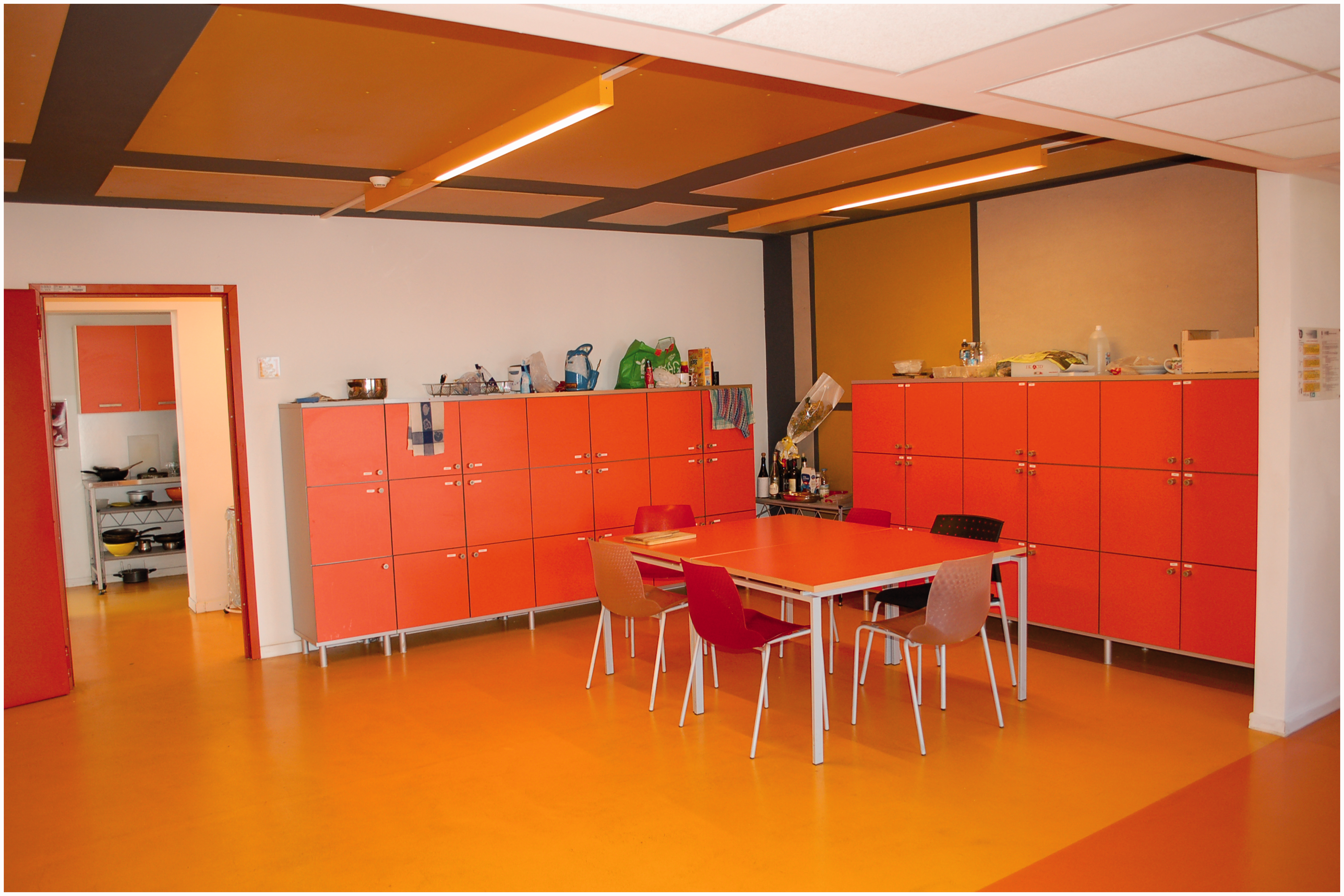
The project began in 2004 and was completed in 2008, providing more than 800 accommodations for students. The complex, situated on a hill with a south-west exposure, south of the city, is made up of nine integrated units with an angled and descending disposition, in order to assure maximum daylighting and exposure to every floor (Figure 3). The units are designated to accommodate the student dwellings, the facilities (as administration offices and food court) and recreation and sports activities. The residences consist in single or twin rooms with bathroom and balcony, completely furnished and with entry provided with magnetic badge. There are also small flats with private kitchen. Furthermore, a number of common facilities can be found, as kitchen, laundromats, reading and studying rooms (Figures 4 and 5).
Aerial view of the complex with residential units, administration, sport and cultural facilities, the new city train station. Building A is the monitored one. Common areas: kitchen and dining room. Relax area.

The complex is connected to the city centre with a cycle path and a city train along which a dedicated stop has been set up.
The building structure
The buildings present a reinforced concrete column-beam structure with two typologies of brick cladding:
Wall-1 realized with plaster (2.5 cm thick), porous brick block (45 cm) and plaster (1.5 cm), with a thermal transmittance U = 0.46 W/m2 K. Wall-2 realized with an external cladding panel (1.5 cm thick), air cavity (3.0 cm), glass wool insulation (6.5 cm), concrete (30 cm) and plaster (1.5 cm), with a thermal transmittance value U = 0.46 W/m2 K. This typology has been used on the façades facing north.
The interior walls present also different typologies, in relation to the different end use, but are mainly realized with double layer plasterboard (2.5 cm thick) mounted on a metallic support system, 12–20 cm thick.
The internal slabs are reinforced concrete slabs (predalles) with a lightweight insulation in polystyrene (13.0 cm thick) on the underside, an acoustic insulation layer, a concrete screed and a linoleum finishing layer on the upper side. The roofs are extensive green roofs with solar energy panels installed on.
The windows are insulating double glazing units in the composition of 4–12–4 with aluminium frame and low emitting glass panel. The thermal transmittance value is lower than 2.1 W/m2 K.
The heating system consists of a gas thermal central boiler and the distribution occurs through floor radiant system. The mechanical cooling system is not provided.
Since the buildings have been realized prior to the transposition of the European Directive 2002/91 on the Energy Performance of Buildings from Italy, occurred in 2005, the requirements for the energy efficiency of the building envelope and the mechanical systems were not such strict as they become at a later stage.
Methodological approach
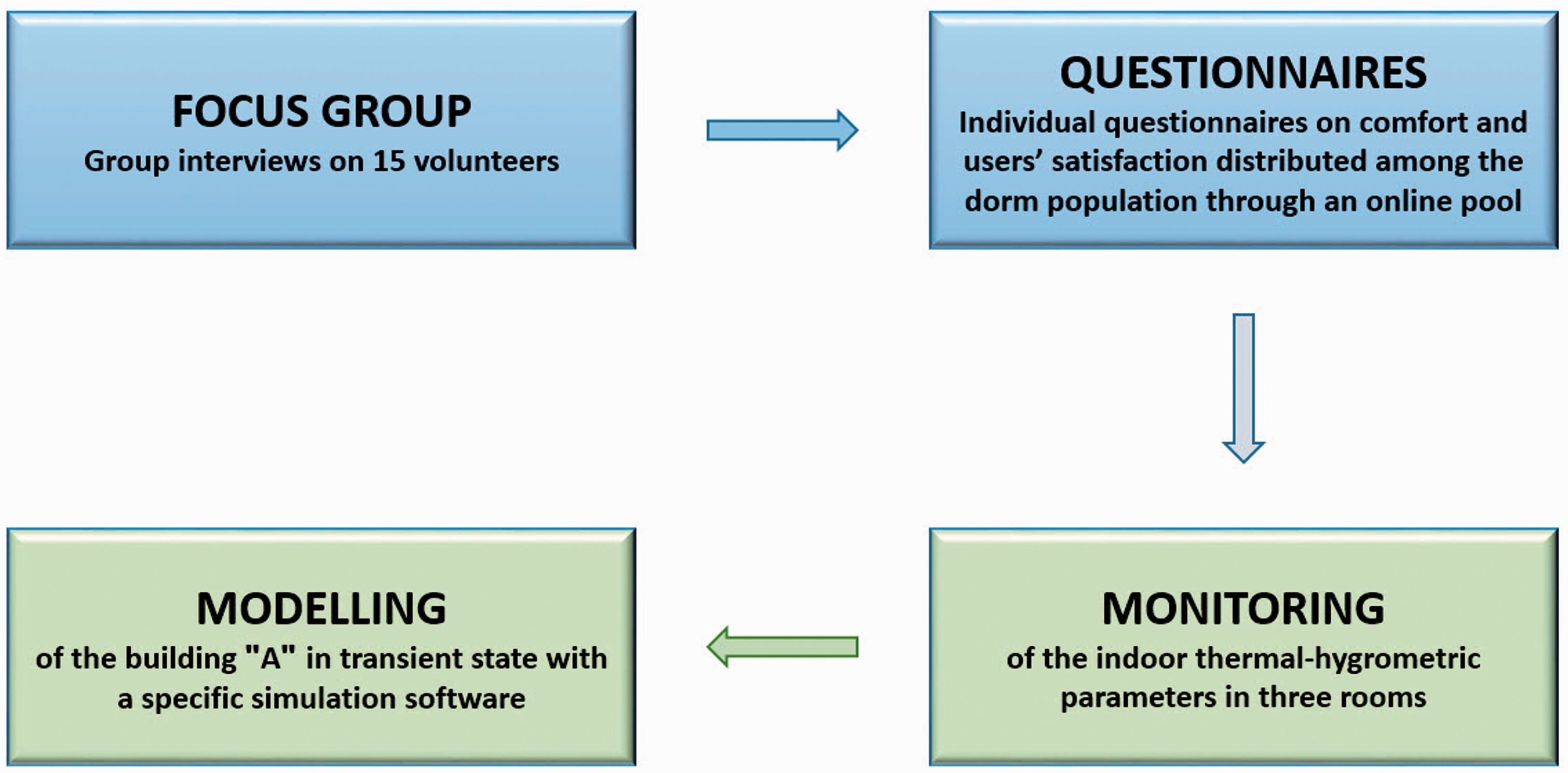
As mentioned before, the main objective of the research is to investigate the main parameters affecting indoor human comfort, energy efficiency and social and relational comfort in San Bartolomeo dorm. In order to get useful information and data on these issues so to have broad picture of the community satisfaction, from a methodological point of view the research has been carried out in four main steps, illustrated below (Figure 6).
Focus group. The aim of the focus group is to take a first contact with the people living in San Bartolomeo dorm in order to better understand their everyday life within the campus and acquire useful information to develop an adequate questionnaire. Initially, 15 volunteers were selected throughout informal channels and organized into a couple of groups that were useful in helping to understand life in the dorm under several point of views: hygrothermal comfort, indoor air quality, visual comfort, acoustic comfort and relational well-being. Since the research group identified three different kinds of spaces within the dorm, namely public, semi-public and private, the discussion during the focus groups followed a matrix made by the intersection of the aforementioned comfort level and the three spaces typologies. The public space is the space accessible to everyone: the park and the streets around the blocks and the access roads to the dorm. If a student wants to enter the dorm, he has to use the smartcard to get in. Once inside, he is within a so-called semi-public space, namely those spaces that are not completely ‘a world of strangers’.
21
Semi-public spaces are the hallways, the common kitchens and more generally all the spaces shared by students behind the door of the dorm. Private spaces are the single student’s rooms. The discussion during the two focus groups was well participated, the students willing to give their opinion about the several aspects taken into account. This former phase has led to the understanding of the weak and strong points of the complex and helped to better define the research goals as well as the scheme for the individual questionnaires, given to the entire student community in a second step. Questionnaires. Individual questionnaires have been elaborated according to Standard EN ISO 10551:2001,
22
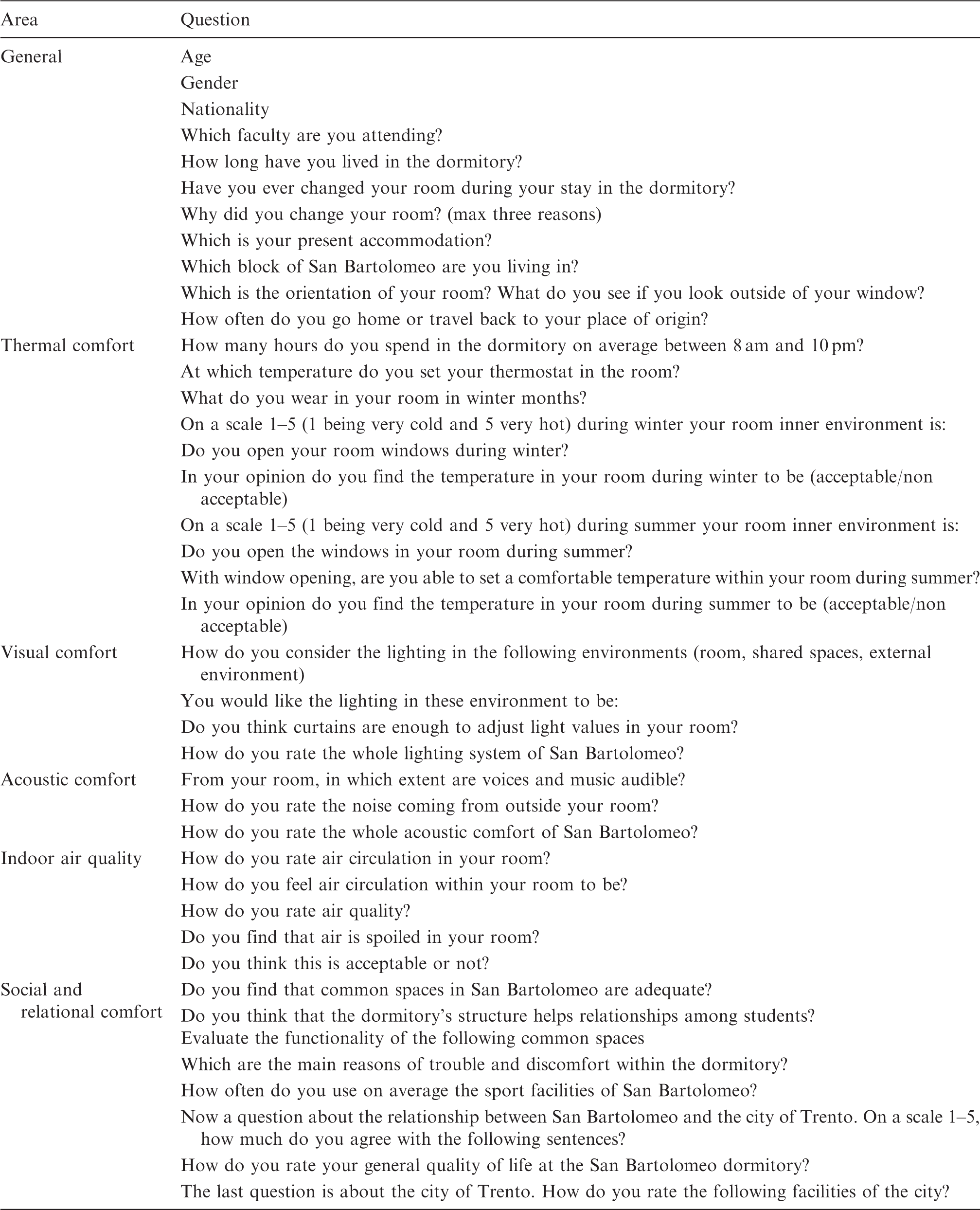
with questions concerning different aspects influencing indoor comfort. The Standard covers the assessment of thermal stress in the work environment. In particular, it provides a set of specification on direct expert assessment of thermal comfort/discomfort expressed by person subjected to various degrees of thermal stress during period spent in various climatic conditions at their workplaces. For each condition analysed, a subjective judgement scale is used, defined as a symmetrical 7° two-pole scale, where 0 is the point of indifference, −3 high discomfort for cold conditions, +3 high discomfort for hot conditions. Even if the regulation focuses only on working spaces and contemplates comfort perception in the very precise moment of the subject response, this research does follow the methodological and operating instructions for residential building, considering the answers dependent on a subjective assessment of the living quality. The questionnaire is subdivided in four topic areas: winter and summer thermal comfort, visual comfort, acoustic comfort, indoor air quality. There are also a preliminary section for the collection of user personal data and a final one concerning social and relational quality. A synthetic version of the questionnaire is presented in Table 1. Each question presents multiple answers, not reported here for the sake of brevity. The questionnaires have been distributed among the dorm population through an online pool. The aim is to gain the users’ perception on comfort and relational quality to better understand to what extent the assumptions taken during the design phase have effectively fulfilled the users’ expectation. Monitoring. Once analysed the questionnaires, trends of thermal-hygrometric parameters for the evaluation of comfort have been studied. During the months of November/December 2012 and July 2013, a measurement campaign has been conducted to investigate the indoor thermal comfort conditions of three single rooms of the building ‘A’, located on three different floors and facing south-west and east. The rooms were considered appropriate in terms of shape and exposure. Indoor comfort conditions have been evaluated through the indices of discomfort developed by Fanger.
23
In this way, the results of the questionnaires have been tested out and it has been possible to calibrate the building model for the further dynamic simulation. The characteristic of the probes used and the technical data are presented in Table 2. The probes were placed on a tripod at 90 cm from the floor, in an intermediate position between the bed and the desk, 1.5 m from the window. Modelling. An energy modelling of the building ‘A’ has been carried out with Energy Plus. This specific building is considered significant as shape, exposure and use, to represent the whole dorm performance in terms of energy and comfort. Technical data of the probes used for the monitoring of indoor thermal comfort conditions. Main questions in the questionnaire. Flow chart of the methodology. Blue: actions concerning users’ responses. Green: instrumental and software analysis.

The model has been calibrated based on the data emerged from the questionnaires and the monitoring in terms of interactions of users with mechanical systems and building envelope (as windows opening/closing, shading system activation, and so on). Through the realistic model obtained, it has been possible to introduce some corrections on the initial design project to analyse feasible improvements of the complex in terms of comfort and energy efficiency. This last complex and articulate phase will be partially illustrated in this article highlighting the most significant achievements.
Results
Below the analysis of the results from the interviews is provided, section by section, followed by the results of the monitoring campaign.
Section 1: Personal data. It consists of questions aimed at knowing the sample in terms of gender, nationality (and habits, as a consequence), stay period in the complex (useful to understand the engagement level with the examined issues and, therefore, the results reliability), personal room area (to check if punctual critical situations are present in some parts of the complex).
Replies were received from 318 users up to 830, equal to 38%, percentage that can be considered high and significant for this kind of survey (voluntary, free and anonymous). Among them, 170 were Italians (equal to 53.4%), 72 European (around 22.6%), 76 non-European (24%), 55% male and 45% female, with an age between 20 and 23 years. The sample emerged was heterogeneous as nationality, fairly distributed as gender and fundamentally young.
The majority of the respondents (50.6%) has been living in the dorm for less than 12 months (33.9% for less than 24 months), lives in single rooms (84.9%) and had not recently moved to another room (83.9%).
The survey participants rooms are homogeneously facing the four cardinal points, with a slight predominance in the south and west directions.
Most of those polled (61%) lives continuously in the dorm at least for a month and the 30.1% for all the year. Furthermore, considering the time slot from 8 to 22, 64.4% of the users spent from 4 to 8 h in the complex.
The sample used for the value is then representative of the population concerned since the interviewed reside in the complex in a nearly continuously way, throughout both the day and the year. The high level of frequentation and the low number of room change requests are significant data that already indicate a satisfaction with a more than acceptable living standard within the complex, which is recognized as a suitable place to live and study in. The essentially uniform distribution of occupied rooms allows to consider the results of the survey as valid for an average performance and attributable to the whole complex.
Section 2: Thermal comfort. Most users (63.3%) show satisfaction with their own room temperature during winter time, and the results distribution assumes a bell-shaped distribution, which indicates a dispersion attributable to a physiological condition and different perception of comfort. The 86.5% of the interviewed, in fact, found the environment acceptable. The average set-point temperature of the room thermostat is 21.4℃ for the room facing west and 22.1℃ for the room facing east, characterized by lower solar radiation.
The situation differs in the summer period, where 68.5% of the users express a thermal sensation of warm (43.3% hot), and, as consequence, 46.5% of them keep the windows open (40.9% of users open them only in situations of extreme hot). However, 50% of the interviewed fail to reach an acceptable level of comfort simply by opening the windows. Nevertheless, 60.0% of users indicate the conditions as acceptable.
This common warm thermal sensation is due to the fact that most rooms are facing south and west and are not equipped with shading or cooling system. Forty per cent of unsatisfied respondent claim that appropriate corrective action is necessary.
Section 3: Visual comfort. The rooms and the common areas (internal and external) appeared to be well lit for l.80% of the users, even if a higher night-time lighting would be preferred, especially outdoor, for safety (and safety perception) reasons. Internal blinds in rooms regulate well the solar radiation for the 68.9% of respondents, while for the 13.5% this matter is irrelevant. Generally, 95.7% of those interviewed claim to be satisfied with the visual comfort.
Section 4: Acoustic comfort. The acoustic performance results to be the weak point of the building. Most of those polled consider exterior noise intelligible (voices, music, footsteps or doors shutting, regardless) and this is expressed as discomfort by 64.3% of the users, while 43.5% indicate the acoustic environmental conditions unacceptable. This is basically due to the lightweight of the internal walls, which cannot ensure an adequate level of sound insulation between rooms or between rooms and corridors. However, among the most relevant causes of discomfort indicated by the survey, noise and confusion from rooms rank only seven out of nine, showing that acoustic discomfort is not generally perceived as much as a criticism if not in specific hours, limited through the day, for example in the evening.
Section 5: Indoor air quality. Indoor air quality is considered as acceptable (with an average value of 3.08 on a scale from 1 to 5); nevertheless, 43.5% of those surveyed point out the occasional presence of unpleasant smells (for 17.3% it recurs more frequently). The environment is considered as acceptable by 76.9% of the users. Odours come principally from the common kitchen on every floor that, although adequate from a regulatory point of view for what concerns ventilation rates, is used throughout all day by people with different cooking habits that can be challenging for the cohabitation. Partitioning or a partial closure of those areas, in order to limit this issue, would modify the conceptual asset of the complex that is precisely open to ensure meeting, exchange and dialogue among occupants.
Section 6: Social and relational quality. Although 13.5% of the survey respondents consider the space available inadequate and 16.5% rather inadequate, 90.9% claim that the dorm is a liveable environment, rich and multicultural where you can constantly meet different people. A total of 72.7% find easy to meet new people and to spend time together, 77.4% consider the dorm not simply a place to go to sleep and 83.5% think that the common areas are sufficient.
However, for the 59.2% the internal rules would be too strict and the 88.7% find easy to meet new people only on their own floor (recalling that, for safety reasons, the entry is protected by badges).
An in-depth analysis of the results shows that the most problematic area is the kitchen, considered inadequate from 70.8% of the users while sport facilities, green areas and bar are the most appreciated ones.
Sport facilities are very popular, with 33.7% of users using them at least once a week and 19.9% once a month.
Among the most relevant causes of friction and dissatisfaction, users find: dirt in the common areas (39.2%), disappearance of food from the fridge (38%), unpleasant cooking smells (36.2%). These basic problems of coexistence are taken care of by Opera Universitaria that tries to meet the needs of the users with social/psychological support services, regular meetings with the representatives of the directorate and with the participation in discussion about internal rules and regulations. Moreover, there is a constant presence of administrative staff on-site. However, the proposal made by the directorate to elect representatives to facilitate the dorm internal management and the dialogue with the directorate itself has never been accepted, probably due to the limited stay period imposed (maximum two years in order to ensure turnover between arrivals and departures of students in the University of Trento).
For what concerns the relationship with the city, although the dorm is perceived as stand-alone and independent neighbourhood and is located in a semi-peripheral area of the city, 90.6% consider this as resource rather than a disadvantage, 93.1% indicate it as a safe place to live, well connected to the city (87.9%).
This causes 19.5% of the participants to consider a very high level of living standard in the dorm, high for 51.2% and medium for 24.4%, with an overall satisfaction that exceeds 94%.
Finally, the consideration of the city of Trento is also high for what concerns research, cultural activities, recreation, sports and outdoor activities, while is considered lacking in terms of entertainments and leisure activities (concerts and public locals) by most of those pooled.
Winter conditions
Indoor temperature and humidity are very similar among the monitored rooms (in Figure 7 trends of temperature T, operative temperature Top and relative humidity HR in room 522, third floor). In detail, the values for the indoor temperature range between 20 and 21℃, for the operative temperature are very similar (as expected in moderate thermal environments) and for the relative humidity range from 40 to 55%. The substantial uniformity of T in time is due to continuous operation of the radiant floor heating system.
Trend of temperature, operative temperature and relative humidity in one of the monitored rooms – winter period.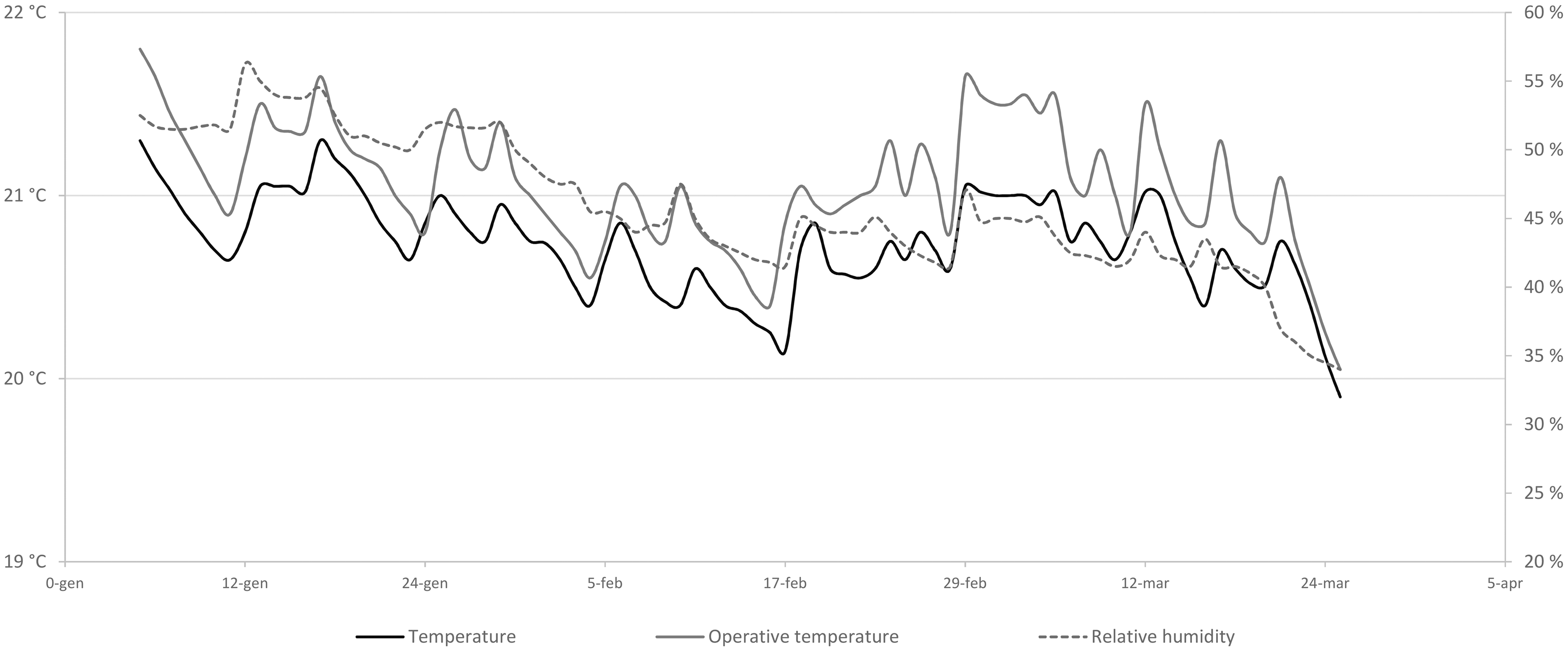
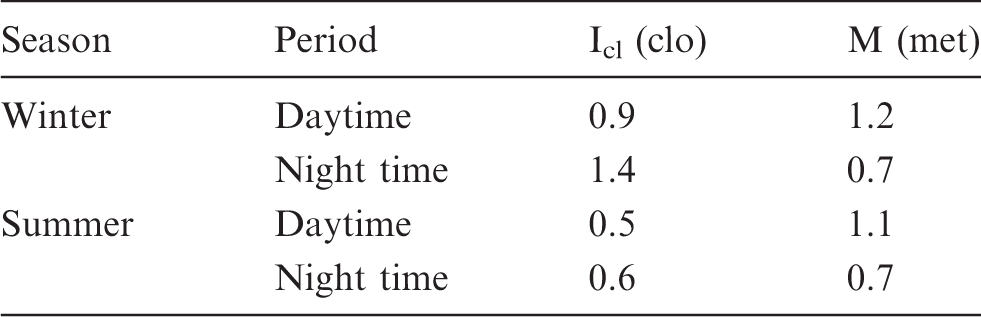
The evaluation of comfort has been carried out considering as metabolic rate (met) and clothing thermal insulation (clo) the values reported in Table 3, after interviews with the users. As may be seen in Figure 8, the simulate perception of the personal thermal stage expressed by the predicted mean vote Predicted Mean Vote (PMV) is generally in the range of [0–0.5], that is a slightly cool sensation, defined by the EN ISO 7730:2005 as acceptable for buildings in category B with a percentage of dissatisfied Predicted Percentage of Dissatisfied (PPD) less than 10%.
Predicted Mean Vote (PMV) and Predicted Percentage of Dissatisfied (PPD) indexes in one of the monitored rooms – winter period. Values of metabolic rates and thermal insulation of clothes in rooms under monitoring.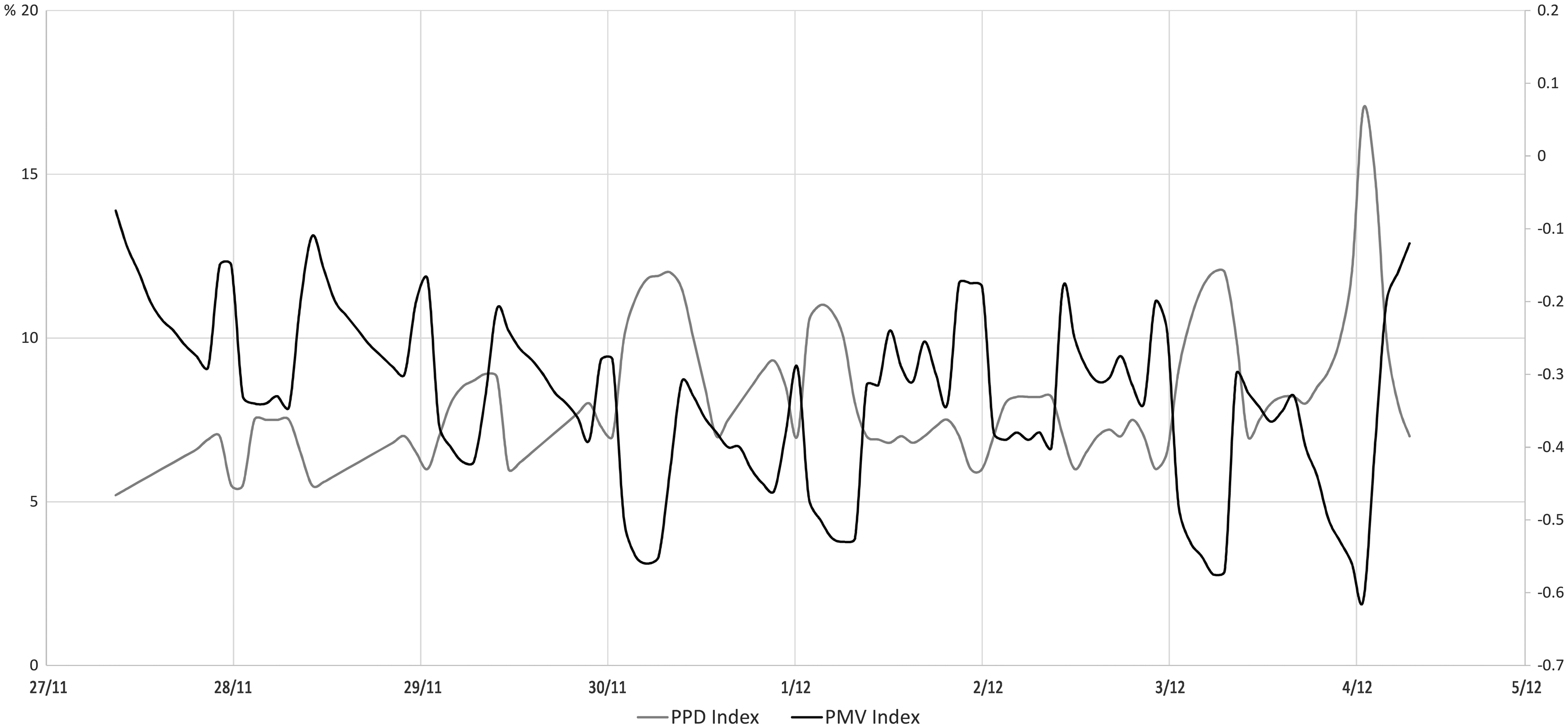
Summer conditions
Since the building is a non air-conditioned and without any indoor climate controls (free running), the evaluation of indoor comfort in summer season has been carried out according to the adaptive comfort theory by Nicol and Humphrey, adopted by EN 15251:2007,
24
considering the building in the Category II (Normal level of expectation). As illustrated in Figure 9, the measured Top values in rooms do not lie in the comfort zone when the maximum daily outside temperature exceeds 25℃, producing unacceptable microclimatic conditions. The width of deviation of monthly discomfort hours exceeds the maximum number of 36 as suggested by standard EN 15251, Table G.1. The monitoring results confirm the discomfort conditions that were identified during the focus group and the questionnaire survey.
Trend of operative temperature in one of the monitored rooms – summer period.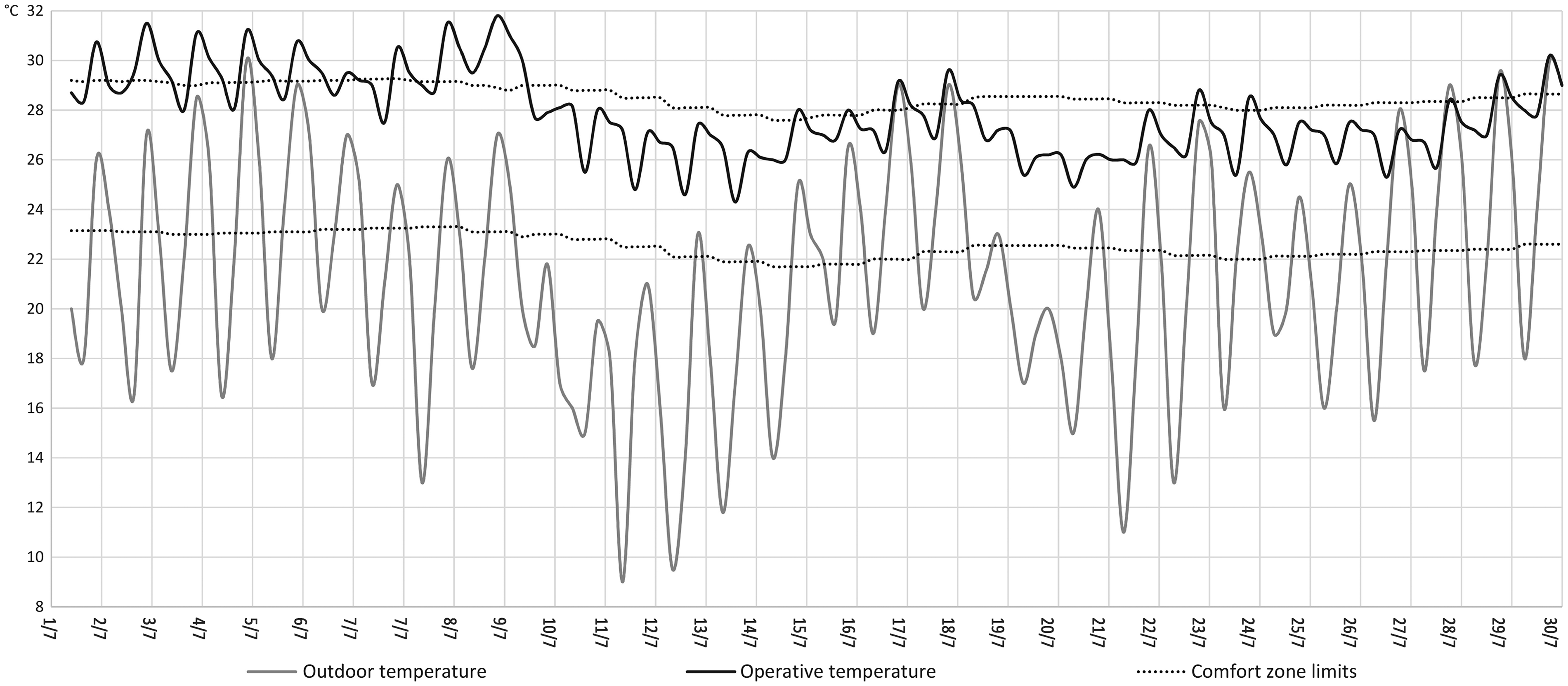
Discussion
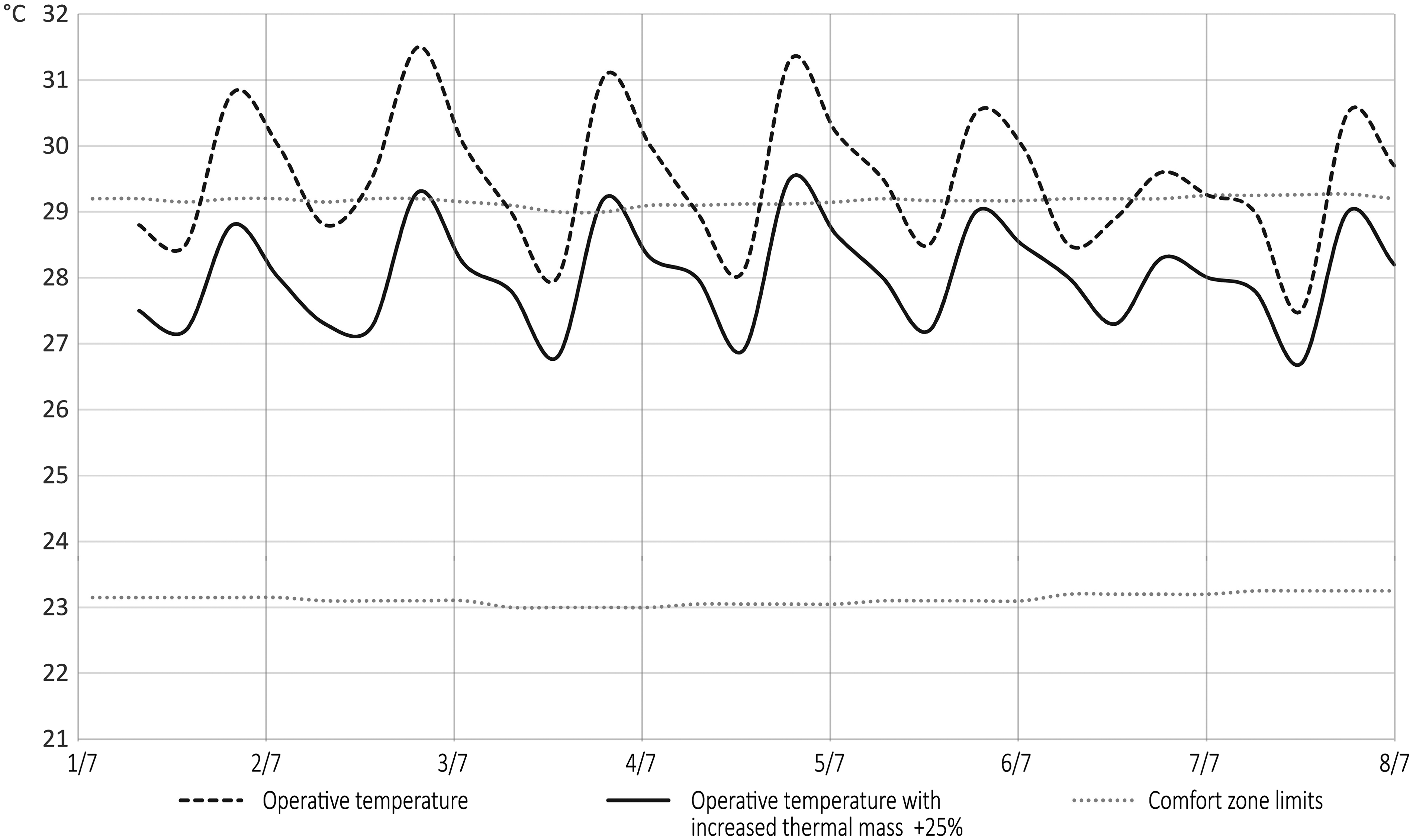
Considering the results of the focus group interviews, of the questionnaires and of the monitoring campaign, in order to determine how the existing buildings can be changed and improved, a dynamic model has been realized, properly calibrated based on the results of the observations and measurements made. Particular attention has been paid to the building envelope, with the aim of increasing the energy and indoor comfort performance. The results of the questionnaires and the monitoring survey showed that the most relevant criticisms are connected to summer comfort. This phase has been complex and articulated, and the results of the application of the model are reported as follows, considering the improvements proposed that are resulted as the most significant for reducing discomfort in summer period: shading system management and increase of thermal capacity of the external envelope as well as of the internal partitions.
Shading system
Currently, windows and balcony doors do not have any external shading system, but only a traditional internal semi-transparent sliding blind.
The improvement of this element, by replacing the existing blind with a roller one in synthetic fibres with a solar reflecting film and by installing reflective window film on the external side of glass panel for solar control, has been proposed. As shown in the graph in Figure 10, representing the indoor temperature trend during the first week of July, maximum temperature values are diminishing up to 1–1.5℃, reducing the daily thermal gradient. The application of an external shading system, certainly more effective, has not been considered since would have caused a significant alteration of the building façades, not realistic for economic and time-related operating reasons.
Temperature decrease inside the room due to an improved shading device – summer period.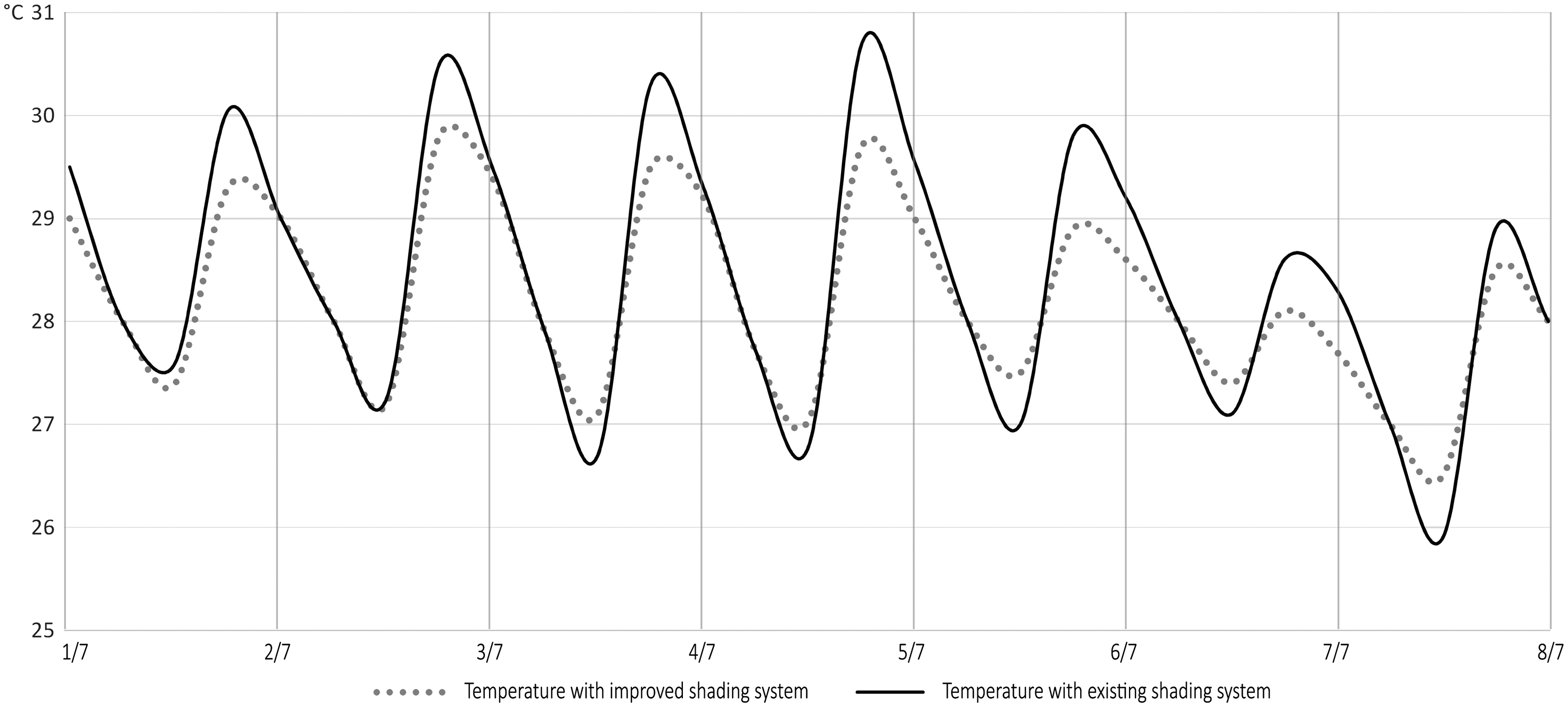
Thermal mass of the building envelope
To control temperature peaks in indoor environments, due to solar radiation through transparent components and to internal gains (people, appliances and so on), thermal effusivity of finishing internal surfaces is fundamental. Thermal effusivity of a material is defined by Equation (1), as
Temperature decrease inside the room due to an increased thermal mass value – summer period.
General observation
Even if the campus has been completed in 2008, the design phase started in 2003, a period where the sustainability concepts were already present but the energy and environmental-related standards, codes of practice and national laws were not so stringent as today. It means that, at that time, San Bartolomeo dorm was a construction of high standards both considering inner space distribution and facilities, materials used, technologies installed. Progress in urban and building sustainability has been very fast, so nowadays the design development would probably proceed along a different path. The use of more effective passive devices (such as external shading systems integrated in the façade, passive windows with low thermal transmittance Uw values, massive external and internal finishing, reflective base coats) and active systems (controlled mechanical ventilation, geothermal system with heat pumps, radiant system for summer cooling) could now give better results in terms of energy efficiency and inner comfort conditions. The coupling with a building automation system should allow a better management of the overall building performances. However, as stated before, we should keep in mind the challenge and even the risk to use quite new technologies 10/15 years ago, especially when the construction of a public work is considered. In fact, in this case not only construction costs but also the ones related to long-term maintenance must be carefully considered.
Conclusions
The present research aimed to propose a holistic approach to analyse the energy and comfort performance in existing buildings, considering also the overall comfort level of the living community and the interaction with the urban surrounding from an operational and social point of view. Three main principles have been taken into account and these are explained as follows:
Building energy simulations are useful tools to conduct a comparative analysis between different solutions but are not sufficient to provide the basis of understanding the real building performance. An essential element remains the occupants’ interaction that can help to individuate weak and strong points of a building and, therefore, to support the designer, at least in the first phase, in identifying hidden problems. In this respect, focus group interviews and individual questionnaires are preparatory tools within an interactive and participatory project planning. Human beings have physiological, psychological and social needs. Comfort assessment needs to take into account all those aspects that, while acting at various levels, are correlated and equally important to determine the level of comfort and occupants’ satisfaction. The overall well-being of people depends on relationships (user–buildings, user–environment, whether natural or man-made, user–other users). It is therefore important, both in a preliminary stage and at a definitive stage of the project, to consider not only the single project but also the wider context in which it is located, starting from local to regional level.
More specifically, the initial focus group interviews have shown the dorm main criticisms, essentially discomfort conditions in summer, not adequate acoustic insulation and improper use of certain common areas which generate dissatisfaction, but also its main strong points, namely its multicultural dimension, sense of safety, adequate facilities and good connection to the city. The pool has then deeply explored some specific issues concerning the occupants, giving to the project designers’ useful insights both for corrective action on the existing building and for defining some guidelines for future projects also on community level. The monitoring in situ, that has been limited on thermohygrometric comfort as considered the most problematic aspect, has added quantitative parameters to the qualitative ones already examined. Finally, the focus on the building energy simulation, properly calibrated, has confirmed the outcome of the interviews and questionnaires concerning summer discomfort, and therefore it has been useful to identify specific corrective actions, influencing the indoor conditions and having impact on comfort, energy efficiency, operation costs and maintenance.
Besides human comfort and energy performance at building level, the research has been an attempt to enlarge the field of intervention at a wider scale. In a province of 534,000 inhabitants, San Bartolomeo dorm, with its 830 students, is like a small village with a strong relationship with the neighbouring city of Trento but also with its own inner rules and dynamics. Therefore, it can be considered a district, meaning a specific area characterized by a particular feature or activity.
In accordance with Conti,
26
Architecture is more than the art of constructing buildings. It is also the creation of environment. Buildings do not exist in isolation. They not only impose their character on their surroundings but also have an incalculable effect on the lives of human beings who inhabit them.
Footnotes
Authors’ contribution
All authors contributed equally in the preparation of this manuscript.
Acknowledgment
Authors would like to thank Prof. Fulvio Zuelli and Dr Paolo Fontana, respectively, past President and Director of Opera Universitaria Trento, as well as arch. Roberto Ferrari, the project designer, for their availability during the research development. The energy and comfort monitoring campaign and analysis have been carried out in collaboration with eng. Emanuele Ghirardini and eng. Fabio Bolognini.
Declaration of conflicting interests
The author(s) declared no potential conflicts of interest with respect to the research, authorship, and/or publication of this article.
Funding
The author(s) received no financial support for the research, authorship, and/or publication of this article.