







Abstract
Building thermal technologists are occasionally faced with the problem of creating thermal balance in space-limited places situated in a very large cold hall whose complete heating would not be economical. A typical case may be a small local workplace in a large industrial hall. Such a workplace is usually arranged for temporary and intermittent work of one or several persons. Portable electric radiant panels as sources of heat for local workplaces seem to be convenient due to their directional heat radiation. In practice, local heating is solved intuitively using the method of trial and error, although there may be a chance to develop a numerical method to solve this problem exactly. In this paper, a new computational method is presented to create thermal balance in a local workplace situated in a large cold hall. The method intensively employs view factors in combination with the algebraic radiosity method and metabolic heat output of working persons. Although the radiant heat flows of the radiant panels represent dominant parts of their heat powers, the complete energy characterization of the panels requires adding heat transfers caused by convection. The convective heat transports have been estimated using the Rayleigh and Nusselt numbers.
Keywords
Introduction
The advantages of radiant heaters have been utilized prevalently in full-space heating of large commercial halls, for example, the gas radiators or watering panels placed at the ceilings of large industrial halls. In smaller spaces (offices, apartments), small electric radiant panels can be installed on ceilings or walls. Radiant floor heating is also often installed in apartments. In the technical literature, a huge number of journal papers concerning radiant heating have been published (in the last ten years, about 600 papers and in the last 5 years about 300 papers). In recent times, several innovative papers on radiant heating have also been published.1–18 Wu et al. 1 investigated the thermal responses and the thermal environmental parameters of various indoor and outdoor spaces to compare the thermal comfort of these spaces. In the study by Zhang et al. 2 a two-dimensional numerical model of the floor heating system combined with the phase-change materials has been developed. To verify their model, these authors established an experimental room and performed thermal measurements that showed good agreement with the modelling results. Quin et al. 3 analyzed the functionality of the radiant wall composed of capillary tubes and have proposed a heat transfer ratio model in a steady state condition. The model explores the heat transfer capacity from the capillary layer (active layer) toward the indoor and outdoor sides. The model has been successfully validated. The paper by Karacavus and Aydin 4 was devoted to the investigation of thermal comfort in an office equipped with radiant panels. Different placements of these panels were investigated in the office room, namely, the placement on the wall below the window and on the ceiling. When the outside temperature was 10°C, the inside thermal comfort was inadequate, whereas at higher outdoor temperatures near zero degrees of centigrade, the inside thermal comfort was acceptable. Zhao et al. 5 experimentally verified an essential energy saving potential of the capillary mat radiant heating system assisted by an air source heat pump. These savings were proven to be greater than those with the common floor heating system. Deng et al. 6 investigated human body heat exchange in asymmetric radiant environments and developed a computational model based on heat balance between occupants and the surroundings. The valuable feature of their publication lies in the fact that view factors have been implemented in their computational model. In contrast to our paper, their study was focused on the thermal balance in the whole inner space but not in space-limited workplaces situated within large cold commercial halls. Tota-Maharaj 7 applied recycled steel powder to concrete to increase the thermal properties of radiant floor heating systems. The project aimed to increase the efficiency of thermal conductivities, allowing radiant heat to produce higher energy-efficient outputs for heating of surrounding space. Verma et al. 8 employed the artificial neural network for the development of a simplified heat flux model for radiant floor cooling and heating systems. Noro et al. 9 modelled an innovative hybrid condensing radiant tubes heating system for industrial buildings in three climatic zones of Italy. Dynamic simulation software was used to explore the thermal conditions within the inner space. Fu et al. 10 developed a new promising composite for the floor radiant heating system that showed very good thermodynamic properties. Kim et al. 11 used phase-change materials in the radiant floor heating system to increase the heat storage capacity of the floor. Zhang et al. 12 tested a modified phase-change material impregnated with expanded perlite to improve thermal properties of radiant floor heating systems. Ye et al. 13 designed and produced a miniaturized microhole radiant plate to improve radiant heat transfer within indoor spaces. Hai et al. 14 performed a numerical analysis of the radiant floor system in a building in the presence of phase-change materials inside the external walls as well as the roof. Kong et al. 15 proposed a novel heating system, the so-called low temperature radiant floor coupled with intermittent stratum ventilation. The new system met the requirements for high indoor air quality and thermal comfort. Gu 16 proposed a new condensation-free radiant cooling panel structure with multiple air layers. A two-dimensional heat transfer model of the radiant cooling panel with multiple air layers was established to remove condensation problems with the heating cooling system. Zheng et al.17,18 studied the thermal performance of a partially irradiated radiant floor by solar radiation. Results showed that solar radiation can promote the heat transfer from the irradiated floor to the room and reduce the heat transfer from the hot water to the floor.
However, all papers (about more than 600 papers) published since the year 1950 have not analyzed the problem of thermal balance in local workplaces situated in large cold halls whose entire volume remained almost untouched by the local heating. In this study, the problem of thermal balance in local workplaces was analyzed on a rigorous basis and provides an exact numerical method for its solution.
Local workplace
Under the term ‘local workplace’, we understand a small space of several m2 located in a very large industrial or commercial hall that covers many hundreds m2. The local workplace does not need to be limited by some barriers, but it may be an open part of the large hall. The local workplace usually contains a work table where a standing or sitting person performs some work activity. For this person, adequate thermal balance should be ensured even if the rest of the hall may suffer from cold air. If the person at the workplace performs temporary and time-limited work while the rest of the hall is without the working activities of other people, it would be wasteful to heat the whole large hall. Thus, the question arises regarding the attainability of thermal balance in such a local workplace without heating the rest of the hall. Ensuring economical thermal balance under such difficult physical conditions represents one of the most complicated problems occurring not only in building thermal technology but also in the theory of directional heat transfer. In practice, this problem is solved by the method of trial and error. However, in this contribution, we show that such a problem can be solved on an exact computational basis using the matrix of view factors and the concept of radiosity related to radiant panels that are located near the workplace.
Since the workplace is arranged for a limited time period, for example, for several hours, the heat sources should not be installed like permanent heaters, but rather as portable light heaters easily connected to external energy sources preferably to electricity. Heaters should emit energy preferably to the person in the workplace and not to the rest of the hall. The air in the hall should not be heated, either. Under such conditions, the unwanted full-space heating of the hall could be eliminated and the heat balance in the local workplace may be created. All these requirements may be fulfilled by portable electric panels working in the radiant regime that enables directional heat transfer. Radiant heat, which is of electromagnetic nature (electromagnetic waves), passes through pure air almost without loss (diathermal environment) and, after impacting solid surfaces including persons, electromagnetic energy heats these objects. This is exactly what we need for attaining the heat balance at the local workplace without heating the whole space of the hall.
Traditional full-space heating is based on estimating the overall heat losses of the hall and adapting the heaters to compensate for those losses, but local heating cannot be based on such a concept since the whole hall is not heated but only in limited space, that is, the small workplace. This requires the replacement of the concept of overall heat losses with a new concept based on the balance between the energy produced (or absorbed) by the worker and the energy absorbed (or produced) by the surrounding environment. The thermal balance between these two sides ensures an acceptable environment for the working person. Shortly, if these two energy flows are balanced, the person feels well. However, if the balance is not reached, the person may feel hot (the person produces more metabolic energy than the environment can absorb) or the person may feel cold (the environment absorbs energy that exceeds the metabolic energy of the person). As can be seen, energy balance is crucial. In our considerations, the balance of energy between the person and the environment represents a major condition for attaining thermally acceptable spaces at local workplaces and becomes the governing concept of the computational method.
The balance between metabolic human energy and the heat powers of the used electric radiant panels situated near the local workplace were analyzed and solved in this study. The heat power of the radiant panels was estimated according to the radiosity concept introduced by Hottel.
19
This author also used the total view factor F
ij
to classify the effectiveness of radiant heat transfer between surfaces. Hotell and Sarofim
20
improved the method by introducing the total-exchange area
The inner space of the hall was characterized in this study and described in the next section from the viewpoint of geometric and thermodynamic parameters. The metabolic heat output of the standard person was also evaluated but its exact value is shown in the Appendix. The matrix of view factors of the workplace imbedded in the large hall was formed. The radiosity method was used to determine the required radiant power of electric panels that maintain thermal balance at the workplace. The convective heat transports associated with electric panels were also estimated. The experimental validation of the method and the concluding remarks are presented.
Characterizing the hall and the working person
The small local workplace was situated in a large cold hall with dimensions 6.75 m × 4.41 m x 4.90 m. Under the term ‘large hall (large space)’, we understand the hall with a volume Person at workplace.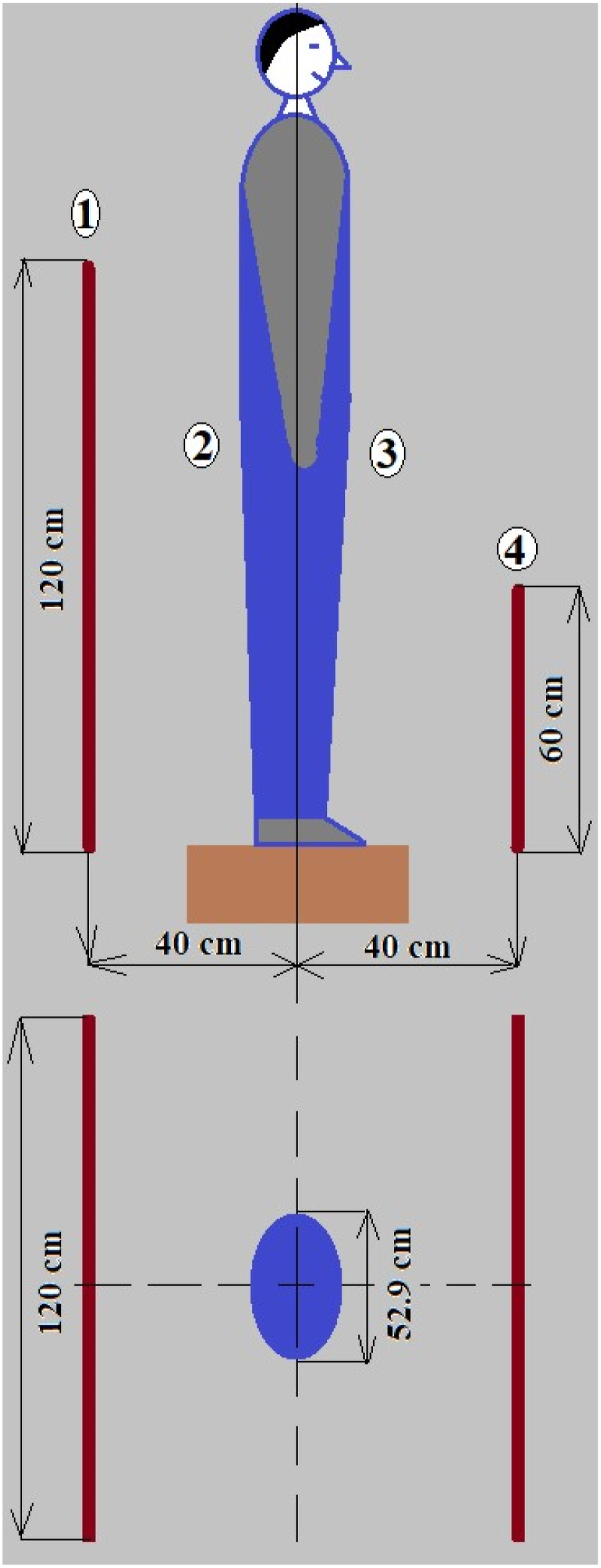
Height, mass and surface of the standard person:

Metabolic energy output Pm may be realized by several processes as described by equation (2), that is, by heat convection Pc along the surface of the person, the heat radiation Pr of the person, ‘dry’ sweating Ps, breathing Pb and heat conduction Pd:

Heat radiation

The specific radiation P
r
guarantees the thermal balance between the person and the environment. In the Appendix, there is a detailed calculation of the quantities P
c
, P
s
, P
b
and P
d
. Based on those quantities and equation (3), the required radiation P
r
of the standard person was determined according to equation (4):

This portion of radiation was emitted from the person into the environment of the hall, and the radiant panels should serve as control elements that balance all the radiant heat flows in such a way that the required radiation of the person
Matrix of view factors F ij
Figure 1 shows a standing person at the local workplace. The front area of the person was 1.8/2 = 0.9 m2 and the width of the person was 0.9/1.7 = 0.529 m = 52.9 cm. Behind the person there was a larger radiant panel 120 cm × 120 cm, and in front of the person there was a smaller panel 60 cm × 120 cm. The smaller panel was placed under the working table which has a height of 85 cm (the table was not drawn in Figure 1).
The radiant surface of the back panel was marked by number
Since the radiosity method was used in the computational procedure, the matrix of view factors was formed. These factors would assist in determining the heat exchange between the surfaces.
A view factor
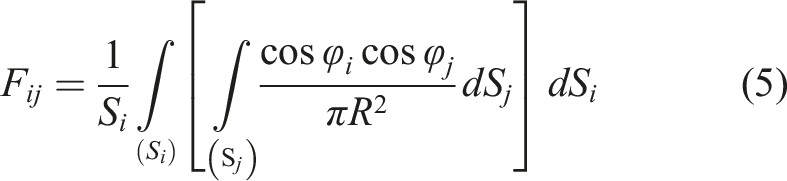
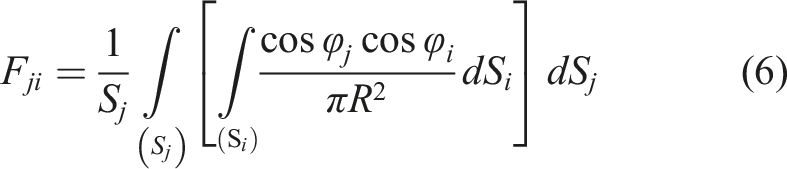
From Equations (5) and (6), the symmetry relation between

Equation (7) represents a symmetry rule that holds quite generally regardless of the types of surfaces and their geometrical positions.
If a radiant surface is incapable of irradiating itself, its view factor is zero as represented in equation (8):

For example, perfectly flat surfaces belong to this class of surfaces. The zero rule of equation (8) does not hold generally but is restricted to special surfaces.
For closed envelopes consisting of

The summation rule is valid only for closed envelopes. These may be, for example, inner spaces of buildings.
For better orientation, the arrangement of the workplace was redrawn, and the standing person was replaced by an ellipsoidal cylinder (see Figure 2). The whole front and back surfaces of the human body were considered separately. In Section ‘Validation of the computational model’, the experimental verification of temperatures in different heights has shown that not only the legs but also the head of the working person are exposed to operative temperatures close to 20°C, which is recommended for light work and this fact advocates the partitioning of the human body into two separate surfaces. Thus, the numbering of surfaces remained unchanged (1, 2, 3 and 4). The number 5 represents the entire inner surface of the hall that is not included in Figure 2. The small panel no. 4 was imaginary extended to the height of 120 cm and its extended areas were marked by symbols with asterisks (4a*, 4b*, 4c*). The auxiliary extension served only for computations of view factors, but when energy computations were performed, the true panel dimensions were used (120 cm × 60 cm). The scheme of workplace.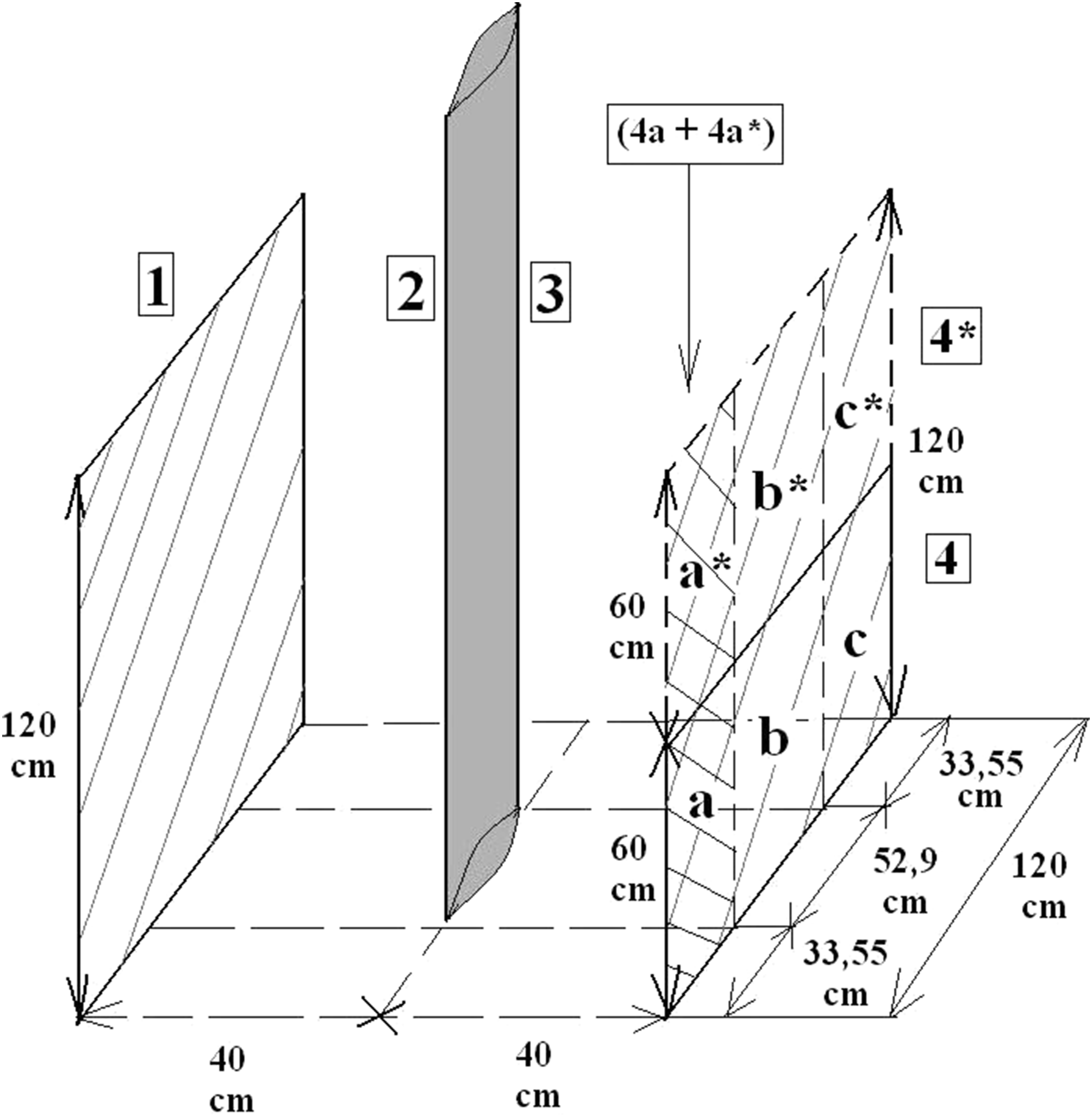
Areas of surfaces
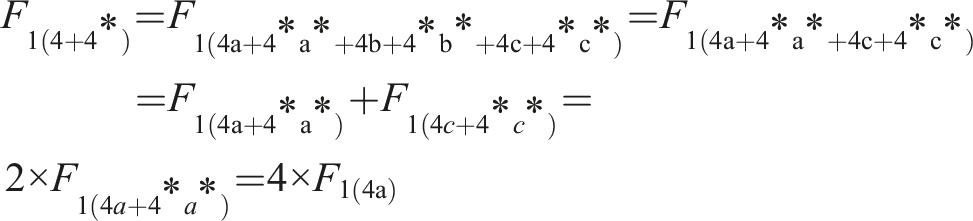
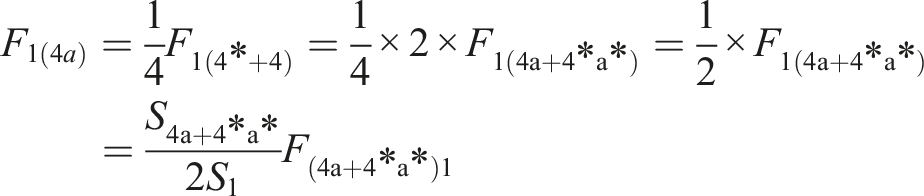
Determining view factors
Zero view factors
Panel surfaces 1, 4 versus person surfaces 2, 3
Panel 1 versus panel 4 when the person shades

Surfaces nos. 1, 2, 3, 4 versus surface no. 5 (summation rule of equation (9))




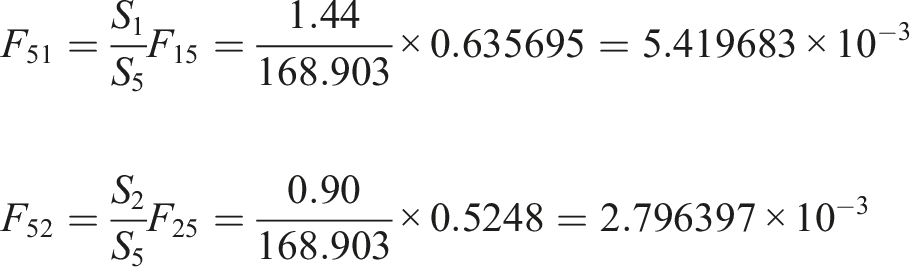
The inner surface of the hall no. 5 versus other surfaces 1, 2, 3, 4 (symmetry rule of Equation (7))


The resulted matrix of view factors:

Radiosity method
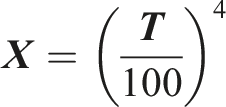
Input data.
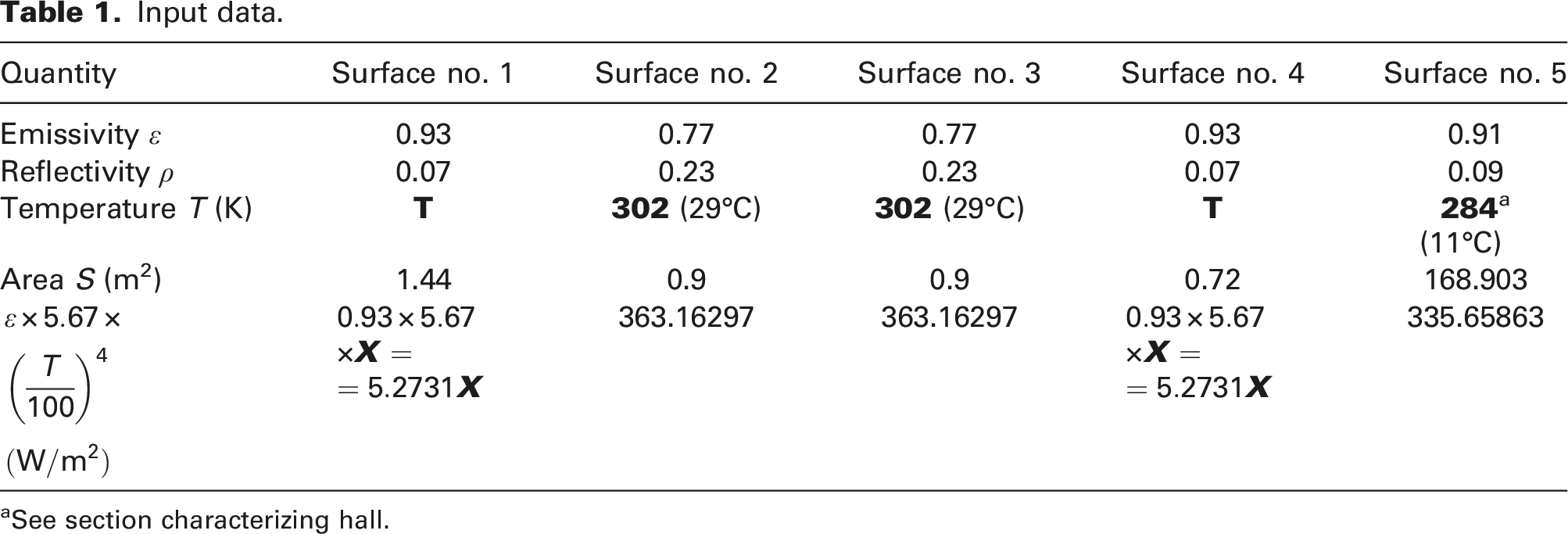
aSee section characterizing hall.
Computing radiosities 





If the correct temperature 
The computations must satisfy the restrictive condition that limits the radiative heat power of the person to the value of 51 W as defined by equation (12):
However, the unknown temperature may be found by the iterative method implemented on the computer. In our case, after several iterative cycles, the optimal temperature was found, that is, 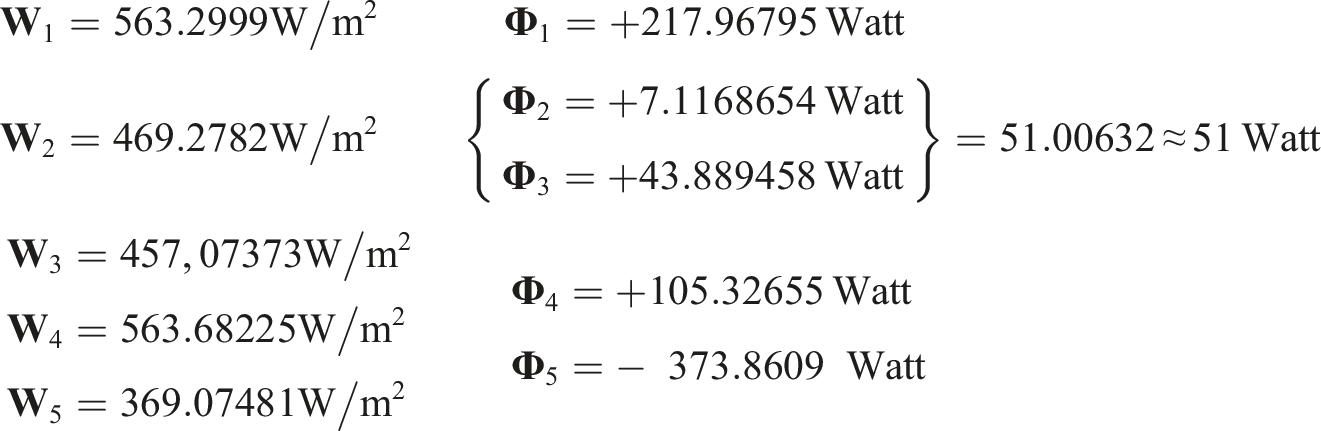
As can be seen from the signs of the radiant heat powers
The radiative power of both panels amounts
Convective heats of panels
Thermodynamic data for air that flows along the panels were taken from tables. 34
The average temperature of convective air film was
Kinematic viscosity
Thermal diffusivity
Heat conductivity
Prandtl number
Volume expansion coefficient of air
The coefficients of heat transfer 
Critical distance for transition from laminar to turbulent flows
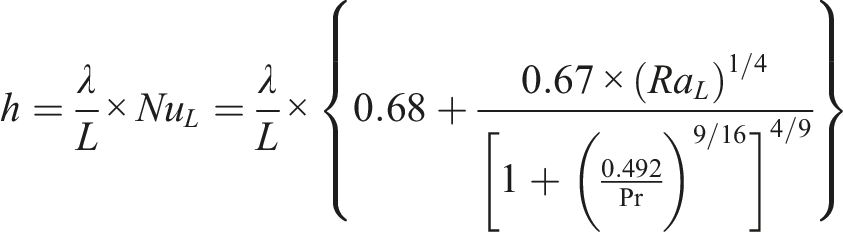
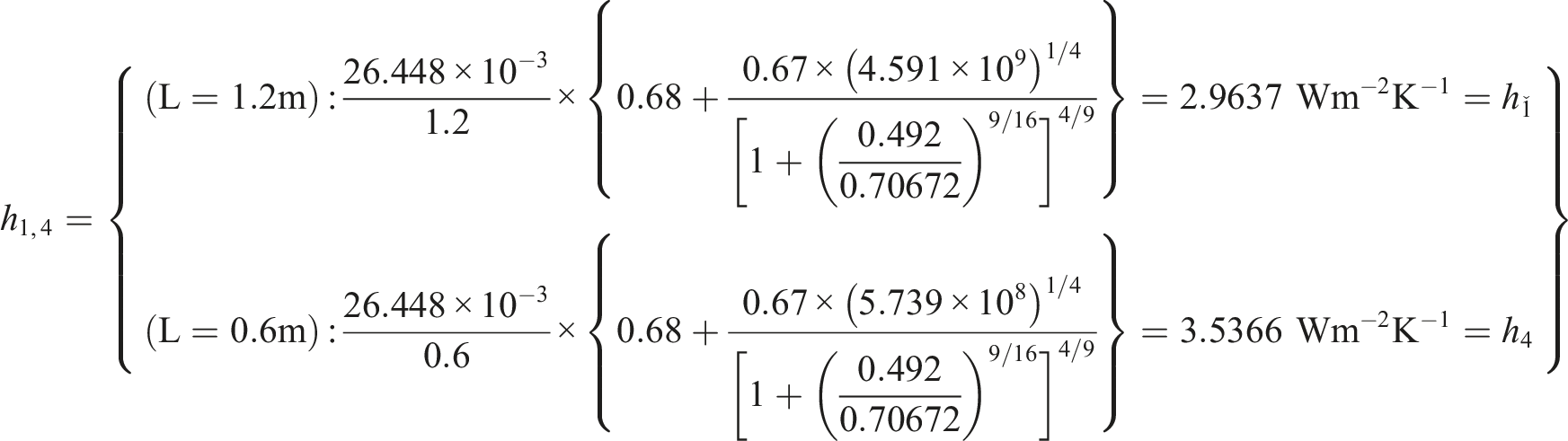
The total heat power (346.785 W) of panel no. 1 consists of 63% of radiative heat and 37% of convective heat.
Safety correction 20%:
Panel no. 4:
The total heat power (182.09 W) of panel no. 4 consisted of 58% of radiative heat and 42% of convective heat.
Safety correction 20%:
The overall heat power of both panels
Since the radiant heat output of the panels dominates over the convective one, both panels can be considered true radiant heaters that may offer all the advantages of radiant heating.
The computations have shown that the thermal balance at the local workplace requires both panels to have a heat power of 635 W. If the whole hall were heated classically, that is, by common convective heating units, these units would have to cover at least the complete heat losses of the hall, which would be in our case about 2000 W (winter season). By heating only the local workplace, the savings of 1365 W are essential. Undoubtedly, such savings represent a great financial benefit and illustrate the pronounced advantage of the directional radiant heating of local workplaces located in large cold halls.
Validation of the computational model
To our knowledge, no similar model on the heating of the local workplace has been published in the technical literature so far, and thus a direct comparison with other authors is impossible. There is only one publication by Deng et al. 6 focused on the heat exchange between the human body and asymmetric radiant environments. In contrast to our paper, their study concerns thermal balance in the whole inner space of the building but not in the space-limited workplace situated within large cold commercial halls. Thus, a direct comparison is hardly possible. For this reason, we performed experimental measurements during the winter season to test the functionality of our model.
The validation of the model was based on the following idea. The model has been designed to meet the thermal requirements of a person performing light work at the local workplace. As such, it should ensure a temperature within the workplace that is close to operative one
The local work place (work table) was placed in a larger cold hall (Figure 3(a)). The hall and the electric radiant panels had the same dimensions and thermal data as used in the computations. The inner air temperature was ∼14°C (Figure 3(b)), the average temperature of the hall envelope was ∼11°C (measured by an infrared thermometer). A thermocouple was placed at the centre of the surface of each panel (Figure 3(c)) and connected to an electronic relay maintaining the panel temperature (∼44°C, Figure 3(d)). This temperature showed small oscillations The workplace in the large hall. (a) The placement of the working table containing the black globe thermometer. (b) The temperature of 14°C of air inside the hall. (c) The person executing light work at the local workplace; the black spots on the panels were thermocouples. (d) The panel temperatures were set to 44°C. The globe temperatures measured at two different heights.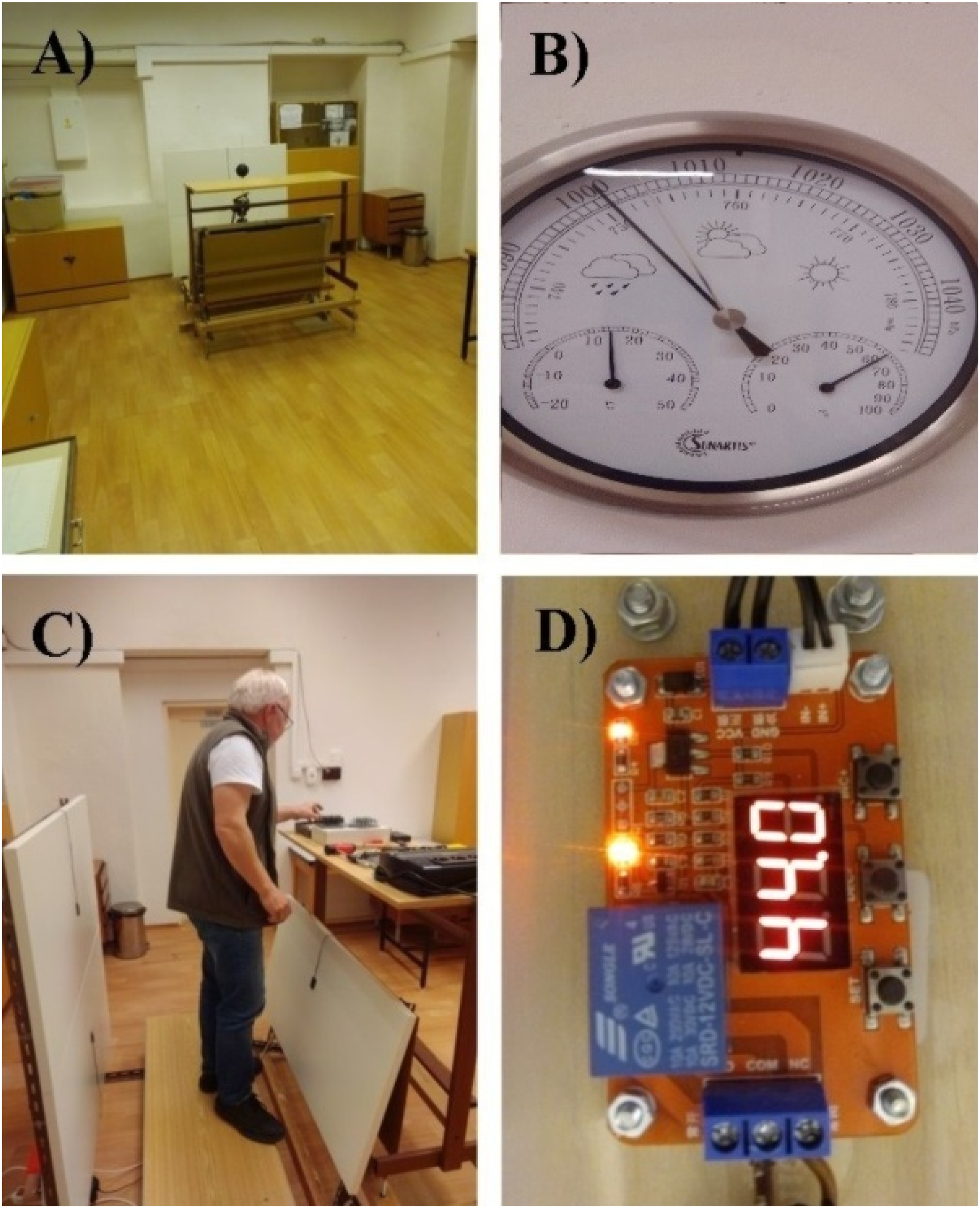
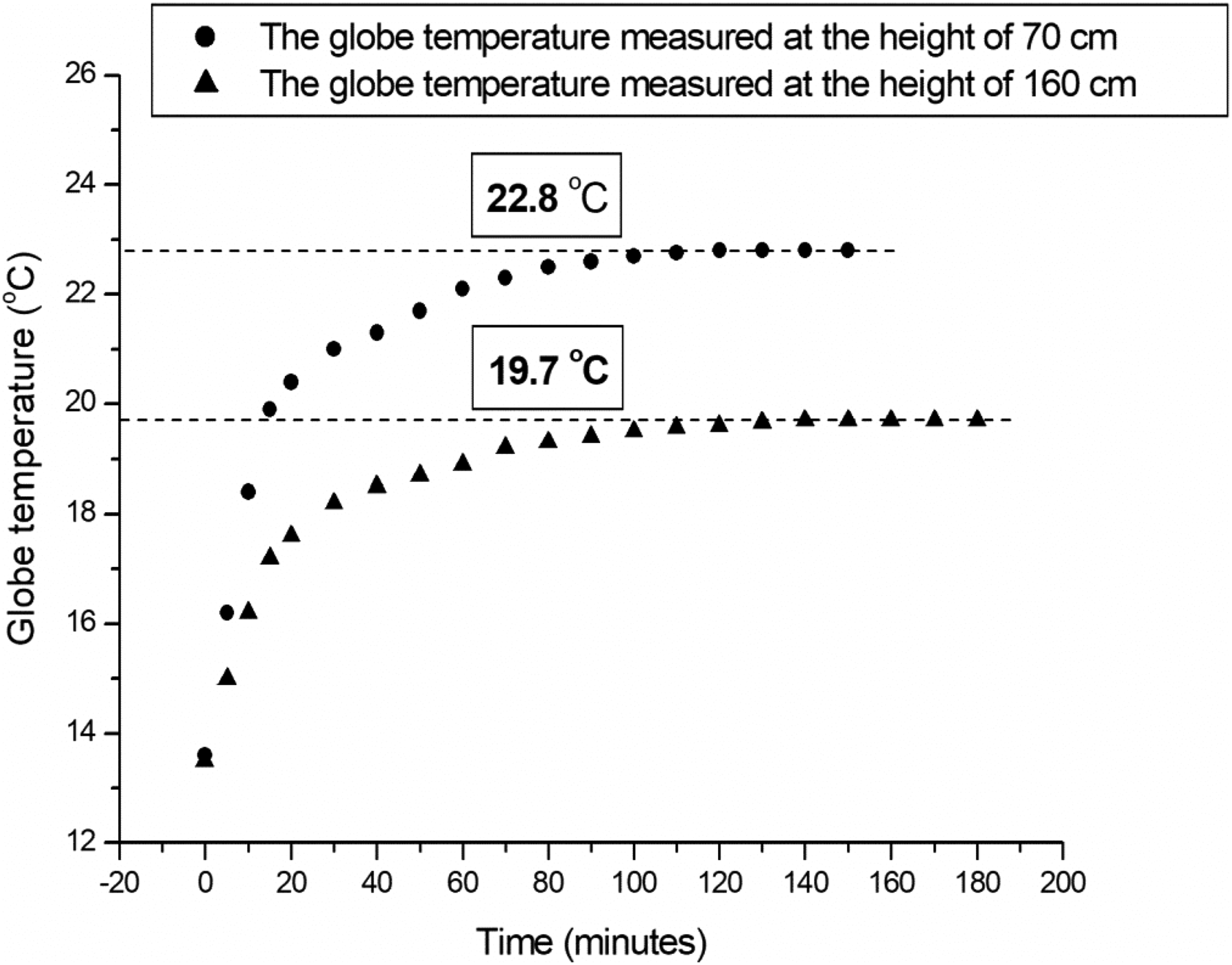
The measurement of temperature with the globe thermometer was performed without the presence of the person. When the person was present, the final temperature of the globe thermometer changed only negligibly (an increase by three tenths of a degree). This is because the small radiant output of the person (51 W) was only 15% of the radiant output of the panels (323 W). If the person did hard work, the radiant output would be much higher and this would enhance the change in the temperature of the globe.
The permanent value of the basic globe temperature represents the stationary thermal state in which the thermal balance was ensured only in the workplace but not in the rest of the cold hall. The stationary temperatures measured by the globe thermometer at two different heights (see Figure 4) were close to the value of
The accomplished experimental observations have verified the capability of the computational model to ensure operational temperature close to an optimal value of
Conclusion
Heating local workplaces, that is, attaining thermal balance in local workplaces that are parts of large cold spaces, is one of the most difficult problems occurring not only in building thermal technology but also in the theory of directional heat transfer. The difficulty is due to the fact that only a small local space of a very large hall should be optimally heated to attain thermal balance, whereas the rest of the hall should remain cold and almost thermally untouched. Thus, such computations cannot be based on the common procedure that considers the heat losses of the whole hall. An untraditional new procedure has been developed that relies only on the metabolic output of the person working at the local place. The new procedure combines the metabolic output with the directional radiant heat transfer between all the participating surfaces, that is, the complete matrix of view factors was formed. The view factors along with some thermal parameters may serve as input data for the algebraic radiosity method, finally resulting in the panel temperature optimal for thermal balance at the local workplace. The convenient radiant heat powers of the panels were determined from their temperatures, areas and thermal reflections. All of these components were taken into account in the radiosity method. Although the radiant energy emitted by the panels represents the dominant part of their heat output, the convective heat energies are necessary to specify the complete heat powers of the panels. However, the panel temperatures are the most important parameters because the desired powers of the panels are maintained by these temperatures, whose values are controlled by electronic relays connected to thermocouples positioned at the centres of the panel surfaces.
The presented computational procedure was based on an untraditional concept that requires the balance between the energy produced (or absorbed) by the working person and the energy absorbed (or produced) by the surrounding environment. The method is convenient, especially for local workplaces situated in large cold halls. Local radiant heating is far more economical than common overall heating. However, local workplaces are not intended as permanent full-time working places but rather as temporary working places with intermittent activity.
Footnotes
Author contributions
The paper was written by Tomáš Ficker as the sole author.
Declaration of conflicting interests
The author(s) declared no potential conflicts of interest with respect to the research, authorship, and/or publication of this article.
Funding
The author(s) received no financial support for the research, authorship, and/or publication of this article.
