







Abstract
Research indicates a significant, positive relationship between racial prejudice and death penalty support among white people. The racist punitive bias hypothesis has been proposed as a possible explanation for this relationship, indicating that racially prejudiced people might be more supportive of the death penalty because they perceive minority individuals to be criminal and, therefore, more likely to be subject to the punishment. This study attempted to test the validity of the racist punitive bias hypothesis using or with a convenience sample of U.S. residents. Path and regression analyses indicated a link between racial prejudice and white death penalty support, but did not support the racist punitive bias hypothesis. Policy implications and directions for future research are discussed.
Introduction
Research shows a correlation between racial prejudice among white people and white death penalty support (Barkan and Cohn, 1994; Buckler et al., 2008; Unnever and Cullen, 2007; Unnever et al., 2008; Young, 2004). This relationship elicits concern that capital jurists may harbor racial prejudices given that such juries are likely to include a high number of white death penalty supporters due to death qualification as well as white people’s higher levels of death penalty support when compared with black people (Bobo and Johnson, 2004; Cochran and Chamlin, 2006; Unnever et al., 2008). Racial prejudice among capital jurists has implications for fairness in death sentencing, and it has been hypothesized that such prejudice might predict racial disparities in the imposition of the death penalty in the USA, where black people are disproportionately sentenced to the punishment (Baldus et al., 2011; Baldus and Woodworth, 1998; Barkan and Cohn, 1994; Buckler et al., 2008; Cohn et al., 1991; Keil and Vito, 2006; Pritchard and Wiatrowski, 2008; United States General Accounting Office, 1990; Unnever and Cullen, 2007; Young, 2004). For reasons related to the arbitrariness of its imposition, and the imperfect nature of its administration, capital punishment has been abolished in 19 states, the most recent of which includes the state of Nebraska (Death Penalty Information Center, 2015). Furthermore, the United States Supreme Court has recently decided on the constitutionality of the use of a controversial mixture of drugs for execution (See Glossip v. Gross, 2015). Although the Court determined that the use of midazolam in the three-drug mixture did not render cruel and unusual punishment under the 8th Amendment, the dissenting opinion expressly indicated a continued constitutional debate with regard to the practice at large (Liptak, 2015).
To facilitate a more advanced understanding of underlying philosophies that support the death penalty so that policy decisions pertaining to its use are more expansively informed, it is helpful to explore the reasons why racially prejudiced white people are more likely to support the death penalty than white people who do not harbor such prejudices. This study endeavored to do this by testing the racist punitive bias hypothesis with a convenience sample of U.S. residents. The racist punitive bias hypothesis proposes that, when thinking about crime and punishment, racist people frame the issue in racial terms, leading them to support a punitive law, which they perceive will primarily punish minority groups. In brief, the positive relationship between racist attitudes toward black people and white support for the death penalty can be explained by racist white people’s belief that black people have criminal traits and, therefore, are more likely to be subject to a sentence of death. According to the hypothesis, this belief underlies their death penalty support (Dambrun, 2007).
To date, only Dambrun (2007) has conducted a study that has attempted to test the racist punitive bias hypothesis in particular, and it was in France (Dambrun, 2007). The USA would appear to be an ideal location to test the validity of the racist punitive bias hypothesis because a link between racial prejudice and death penalty support has been fairly well established in the literature (Barkan and Cohn, 1994; Buckler et al., 2008; Cohn et al., 1991; Unnever and Cullen, 2007; Unnever et al., 2008; Young, 2004). If research supports the validity of the racist punitive bias hypothesis, the possibility that those who are likely to serve on capital juries might harbor racial prejudices against black people is disconcerting and may merit closer investigation and analysis.
Review of the literature
Racial prejudice and death penalty support
Before summarizing studies that have attempted to explain the link between racial prejudice and white death penalty support, it is useful to discuss briefly research that has provided support for this relationship. One early study examined the relationship between white punitiveness and racial prejudice (Cohn et al., 1991). Using data from the National Opinion Research Center’s (NORC) 1987 General Social Survey, a random sample of the adult, non-institutionalized population of the USA, the authors examined the reasons for punitiveness among white and black people, hypothesizing that the two groups would exhibit different bases for their similar levels of punitiveness. The authors found support for their hypothesis, concluding that white punitiveness is partly based on racial prejudice. Specifically, a unit change in racial prejudice increased the odds of a punitive attitude by 5.57 times. The finding that white punitiveness rests partially on a foundation of racial prejudice, the authors explained, alludes to the possibility that white people see the courts as a means of controlling and remaining dominant over black people (Cohn et al., 1991). This finding is consistent with later research, which indicated that white people’s death penalty support is unaffected by information about racial prejudice and racial disparities in death penalty practices. This suggests that, at the very least, white death penalty supporters may not find such occurrences to be particularly concerning (Barkan and Cohn, 2005).
Although this study did not examine the relationship between racial prejudice and white death penalty support in particular, its findings regarding punitiveness indicate the possibility of such a relationship. Several studies have since examined this connection (Barkan and Cohn, 1994; Buckler et al., 2008; Unnever and Cullen, 2007; Young, 2004). Two studies used data from the General Social Survey (Barkan and Cohn, 1994; Young, 2004) to examine whether death penalty support among white people is associated with racial prejudice. Using multivariate analyses, Barkan and Cohn (1994) found that antipathy to black people and racial stereotyping (the authors’ measures for racial prejudice) predict death penalty support among white people, suggesting that racial prejudice at least partly explains higher levels of death penalty support among white people (Barkan and Cohn, 1994). Likewise, Young (2004) analyzed data using ordinary least squares and logistic regression and found that death penalty support was higher among those who held racially prejudiced attitudes toward black people than those who did not harbor such prejudices. It is noteworthy that those who support the death penalty are more likely to become capital jurors (because capital juries must be death-qualified). This, taken with the research findings described above, introduces the possibility that such jurors are more likely to be prejudiced against black defendants in capital cases (Young, 2004).
Although these results are important, the authors included only white people in their analysis, making it impossible to compare levels of racial prejudice and death penalty support between white people and black people. Several studies have since attempted to address this limitation. First, a large, nationally representative sample of black and white people from the USA responded to a survey regarding punitiveness and racial prejudice. Results indicated higher levels of punitiveness among white people and, additionally, that white people’s opinions are influenced by racial prejudice to a greater degree than are the opinions of black people (Bobo and Johnson, 2004). Second, using data from the National Election Study, a probability sample of the American voting-age population in the 48 contiguous states, two studies further explored the relationship between racial prejudice and death penalty support (Buckler et al., 2008; Unnever and Cullen, 2007). Ordinary least squares regression results suggested that racial prejudice positively predicts the degree to which white people support the death penalty. It was also shown that non-racist white people had levels of death penalty support comparable with their black counterparts (Unnever and Cullen, 2007). Similarly, Buckler and colleagues (2008), using logistic regression, determined that participants who exhibited racial prejudice were more likely to indicate strong death penalty support, providing further evidence of a link between racial prejudice and death penalty support.
Authoritarianism
Although the research above strongly suggests that greater racial prejudice among white people is significantly related to death penalty support, the reasons for this relationship remain uncertain. To date, few studies have attempted to explain this relationship. One possible explanation lies in individual levels of right-wing authoritarianism. Adorno and colleagues (1950) asserted that the theory of the authoritarian personality may explain racist attitudes, specifically stating that prejudiced people are those whose personalities render them inclined to racist or fascist ideas. As such, it is possible that the relationship between racial prejudice and death penalty support might be explained, at least in part, by individual levels of right-wing authoritarianism. Research indicating positive correlations between right-wing authoritarianism and racial prejudice (Heaven and St. Quintin, 2003; Whitley, 1999) and right-wing authoritarianism and death penalty support (Stack, 2000, 2003; Young, 1992), lend some credence to this possibility. However, an examination of these results indicates that right-wing authoritarianism is not sufficient to explain entirely the relationship between racial prejudice and death penalty support (Soss et al., 2003). Specifically, although Stack (2000) found that controlling for right-wing authoritarianism eliminated the correlation between racial prejudice and death penalty support, the internal consistency of the right-wing authoritarianism scale used in the analysis was subject to question, given its low Cronbach’s alpha of .37, which is generally considered unacceptable (DeVellis, 2003). Further, using data from the 1992 National Election Study, Soss and colleagues (2003) found that, although right-wing authoritarianism significantly enhances white death penalty support, the relationship between racial prejudice and death penalty support remained significant even after controlling for it (and more than 15 other variables). Given such results, it would be erroneous to conclude that right-wing authoritarianism fully explains the relationship between racial prejudice and death penalty support.
Racist punitive bias hypothesis
The lack of a clear explanation of the relationship between racial prejudice and death penalty support has led others to examine it from a different perspective. Few have considered what has been termed the racist punitive bias hypothesis, which is the explanation hypothesized in this research. As discussed previously, Cohn et al. (1991) tested whether punitiveness (death penalty support has been used as a measure for punitiveness in some research; Borg, 1997; Mackey and Courtright, 2000) among white people was a product of racial prejudice, hypothesizing that white people may view the courts as a means of controlling black people, and their punitive attitudes, thus, may be encouraged by racial prejudice and a desire to maintain a dominant position over black people. The authors found that differing levels of prejudice had a significant impact on punitiveness for white people, but not for black people, offering some support for the above explanation.
Other attempts have been made to study the relationship between racism or racial animus (negative attitudes toward African Americans) and political views, including support for the death penalty; studies have utilized scales that measure a range of constructs, including negative racial stereotypes and racial resentment or symbolic racism (Unnever and Cullen, 2007). Most notably, there has been a line of research which has established a relationship between “racial typification of crime” (the perception that black people are responsible for the bulk of the crime “problem”) and support for punitive punishments (Barkan and Cohn, 2005; Hurwitz and Peffley, 2005, as cited in Unnever et al., 2008; Welch, 2004).
Although the authors of the aforementioned studies did not propose the racist punitive bias hypothesis as an explanation for their findings, they did provide the impetus for others to put forth this premise. Specifically, Dambrun (2007) interpreted the authors’ conclusions as implying that racially prejudiced individuals might have higher levels of death penalty support because they assume that racial and ethnic minorities are more likely subject to the punishment, thus reflecting a motive to punish (and perhaps control) such groups. The author called this hypothesis “racist punitive bias” and examined its validity in his research.
In a series of three studies, Dambrun (2007), using path and regression analyses, tested whether racially prejudiced individuals support the death penalty as a means of punishing minority individuals who are perceived as being criminals and whether controlling for right-wing authoritarianism would affect the relationship between racial prejudice and death penalty support. Seven-point Likert scales were used to measure death penalty support, overall evaluation of Arab and black people (racial prejudice), and criminal traits attribution. In measuring criminal traits attribution, participants were asked how various stereotypical criminal characteristics (e.g. violence, aggression, and theft) were associated with Arabs. It was hypothesized that those who are prejudiced toward Arabs support the death penalty because they assume that Arabs are often criminals and would likely be subject to the punishment; and, further, that controlling for right-wing authoritarianism would not eliminate the relationship between racial prejudice and death penalty support.
The results of Dambrun’s (2007) study suggest that right-wing authoritarianism does not explain the relationship between racial prejudice and death penalty support. The author used the right-wing authoritarianism scale composed by Altemeyer (1988), which is believed to be a better measure of authoritarianism, in this study. The alpha coefficient for this scale was .78, which is significantly higher than that of the scale used in the Stack (2000) study, and suggests that Altemeyer’s (1988) scale is more likely valid. Using this improved measure, it was found that, as hypothesized, controlling for right-wing authoritarianism did not eliminate the relationship between racial prejudice and death penalty support. In addition, Dambrun (2007) reported that criminal traits attribution significantly mediated the relationship between racial prejudice and death penalty support and right-wing authoritarianism and death penalty support, suggesting that the perceived criminality of minority individuals is at least part of the explanation of the significant and positive relationship between racial prejudice and death penalty support. Additional research using National Election Study and General Social Survey data lends some support to the belief that white people’s views on violence proneness of minority ethnic individuals are significantly associated with death penalty support (Unnever and Cullen, 2010, 2012), further legitimizing the possibility that the racist punitive bias hypothesis might help to explain the relationship between white racism and death penalty support.
Although the results of previous studies identify the relationship between racial prejudice and death penalty support, it is the only study to the authors’ knowledge that tests the validity of the racist punitive bias hypothesis as an explanation. Notably, the Dambrun (2007) study was conducted in France and specifically examined racial prejudice against Arabs. As a group, Arabs are perceived to be stigmatized in that country (See Pettigrew and Meertens, 1995). As such, the results of this research cannot be generalized to other countries, including the USA. The present study endeavored to explore the validity of the racist punitive bias hypothesis in the USA, with particular focus on racial prejudice toward black people. Specifically, the authors were interested in answering the following research questions: Is there an association between racial prejudice and death penalty support among white people? To what extent does controlling for right-wing authoritarianism alter the relationship between racial prejudice and death penalty support? To what extent does the belief that minority groups will be disproportionately sentenced to death (traits attribution) alter the relationship between racial prejudice and death penalty support among white people?
Based upon these questions and the research presented in the Literature Review, the following hypotheses were constructed:
Method
Sample and procedure
To test the above hypotheses, individuals were recruited on Facebook—a popular social networking site. The researchers anticipated that potential respondents would be obtained in one of three ways: (a) unsolicited individuals would encounter the profile page and link directly to the survey; (b) individuals who were actively sought out for participation by the principal investigator would link directly to the survey from her profile page; and (c) through the principal investigator’s existing Facebook contacts who assisted recruitment efforts by re-posting or forwarding the survey link to their own personal contacts. Active recruitment was accomplished through the following distribution method: the principal investigator utilized her existing Facebook account to announce the survey to her Facebook contacts (“Friends”) on a daily basis over the course of approximately 3 months. Using the site’s announcement feature (“Update Status”), the researcher described the study and provided the active link so that her primary contacts (“Friends”) could participate directly and re-post the survey information to their network of contacts. These efforts continued until an acceptable number of surveys had been completed.
Of the 377 participants who started the survey over the 3-month period between May and August 2013, 332 completed it. Given the lack of variation on race, the authors eliminated non-white respondents (n = 30) from further analyses leaving a total of 302 cases for analyses. Participants included 76 males and 224 females and their average age was 38 years.
There were two reasons for selecting an Internet-based survey for this study. First, given time and financial constraints, the research did not permit the use of a large-scale probability sample. Thus, to obtain an adequate sample size and some variation in terms of cultural, social and demographic factors (including geographic location), a cross-national convenience sample of Internet users was attempted. Second, in conducting a review of the literature pertaining to the racist punitive bias hypothesis, the only study identified at the time of this writing was conducted in France. Although this survey methodology may ultimately limit the generalizability of the results, the information collected from this sample will contribute to the limited body of literature examining the racist punitive bias hypothesis as a viable explanation for the link between racial prejudice and death penalty support among white people in the USA.
Survey instrument
A self-report survey design was utilized for its practicality given the nature of our study. We recognize that self-reports have their limitations which must be considered when interpreting the results. Although respondents were recruited through a social network of one of the researchers, the nature of our research questions precluded such concerns. In particular, we were interested in measuring constructs related to self-perception (e.g., attitudes toward the death penalty, racial prejudice, and traits attribution), and self-reports have arguably been the most efficient and inexpensive method by which to accomplish such an objective (Paulhus and Vazire, 2007).
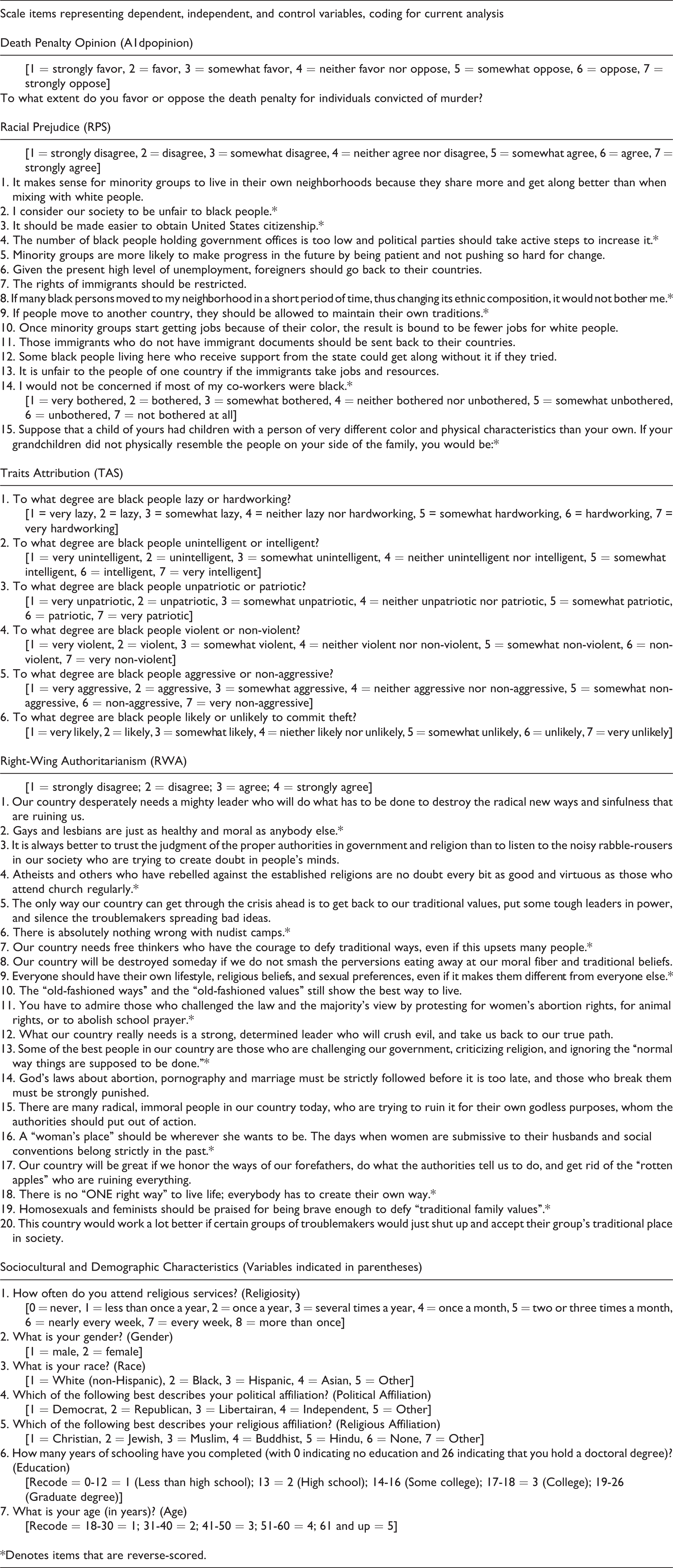
The survey contained five main components: (a) a measure of death penalty support; (b) a right-wing authoritarianism scale; (c) a racial prejudice scale; (d) a traits attribution scale; and (e) seven questions designed to assess various social, cultural, and demographic characteristics (e.g., gender, age, and educational attainment, political and religious affiliation) (Appendix A). All measures used 7-point rating scales.
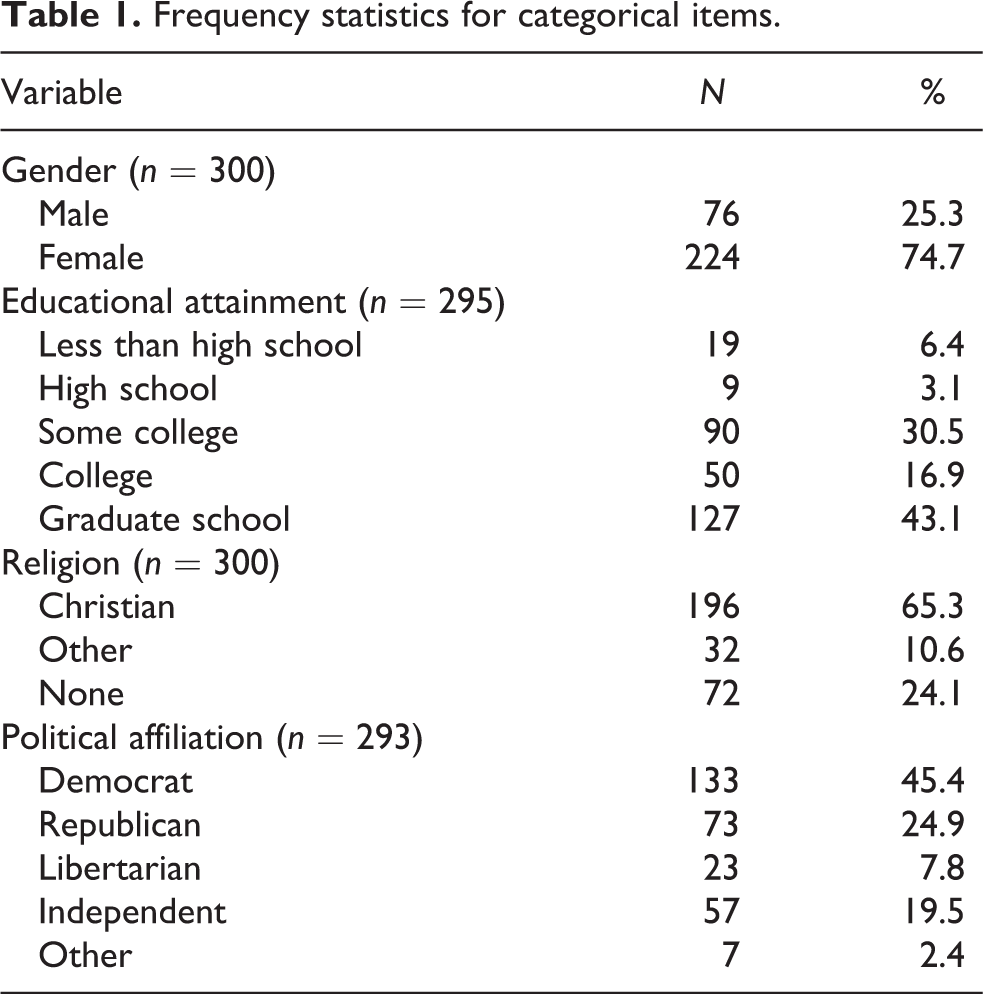
To obtain an understanding of the sample of respondents, the frequencies and descriptive statistics were examined for the categorical and continuous control variables that represented social, cultural, and demographic characteristics. This information is presented in Tables 1 and 2.
Frequency statistics for categorical items.
Descriptive statistics for continuous independent variables.
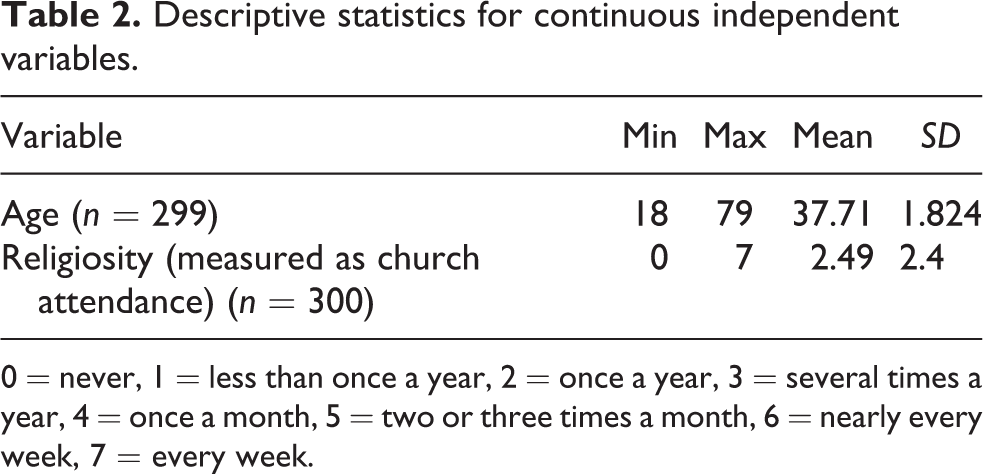
0 = never, 1 = less than once a year, 2 = once a year, 3 = several times a year, 4 = once a month, 5 = two or three times a month, 6 = nearly every week, 7 = every week.
Control variables: Demographic, social, and cultural measures
Participants’ ages ranged from 18 to 79 with a mean age of 37.71 years. Analysis of the remaining demographic variables revealed that the sample consisted of an overwhelming proportion of females (75%) who have obtained a graduate-level education (43%). In terms of social and cultural characteristics, the sample was no more varied. Of those who reported their religious affiliation, a substantial majority identified as “Christian” (n = 196, 65.3%), although church attendance was relatively sparse (M = 2.44); the most common political affiliation was Democrat (n = 133, 45.4%), although 25% identified as Republican, and 20% as Independent.
Independent variables
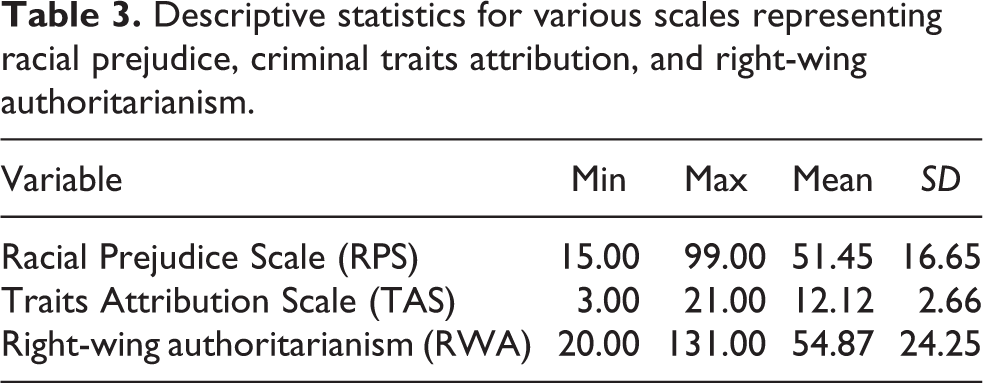
To address the research questions, this study incorporated independent variables designed to measure racial prejudice, criminal traits attribution, and right-wing authoritarianism as predictors of death penalty support among respondents. Descriptive statistics for these scales (i.e., means and standard deviations) are presented in Table 3, and information pertaining to item and scale measures and reliability are discussed.
Descriptive statistics for various scales representing racial prejudice, criminal traits attribution, and right-wing authoritarianism.
The measure of prejudice toward black people and Latinos was a 15-item scale developed on the basis of previous research (Dambrun, 2007). As can be seen in Appendix A, this “Racial Prejudice Scale” included eight positively phrased statements (e.g., “I consider our society to be unfair to African Americans” and “If many black persons moved to my neighborhood in a short period of time, thus changing its ethnic composition, it would not bother me”) and seven negatively phrased statements (e.g., “It makes sense for minority groups to live in their own neighborhoods because they share more and get along better than when mixing with white people” and “Those immigrants who do not have immigration documents should be sent back to their country of origin”). Positive statements were reverse-coded so that higher scores on this scale indicated greater prejudice. Although the content of the items is similar to that utilized in Dambrun’s (2007) study, it was adapted to the intergroup context in the USA, where black people and Latinos are the predominant minority groups (United States Census Bureau, 2012). Inspection of item-analysis using SPSS revealed that the internal consistency of the scale was satisfactory (α = .898).
Respondents’ scores on the scale ranged from a low of 15 to a high of 99 (possible range 15–105), with a mean score of 51.45 for the summated items, and a standard deviation of 16.65. An initial inspection of the data indicated that the overall scores were relatively low (low prejudice) for this sample. Mean item scores were higher (indicating greater prejudice) for items related to immigration, including respondents’ disagreement with the maintenance of ethnic traditions (e.g., “If people move to another country, they should be allowed to maintain their own traditions”), and their agreement with the deportation of illegal immigrants (e.g., “immigrants who do not have immigrant documentation should be sent back to their countries”). The highest mean scores were centered on items directed at black people specifically. In particular, respondents were more likely to score highest (reflecting greater prejudice) on statements related to black abuse of public assistance and concern for having black co-workers. Interestingly, the highest mean score overall was related to respondents indicating their concern for interracial child-rearing.
Criminal traits attribution, or a belief that certain criminal traits can be automatically ascribed to members of racial and ethnic minority groups, including likelihood of violence, use of aggression, and likelihood of committing theft, were also accounted for in these analyses because of their significance in prior research—particularly, research on a “racist punitive bias” explanation for death penalty support among racially prejudiced white people. The racist punitive bias hypothesis was measured using a three-item Traits Attribution Scale (TAS) designed to examine respondents’ perceptions of black violence (Item One: “To what degree are black people violent or non-violent?”), aggression (Item Two: “To what degree are black people aggressive or non-aggressive?”), and involvement in criminal theft (Item Three: “To what degree are black people likely or unlikely to commit theft?”). Again, the theoretical implication is that people who are prejudiced against black people support the death penalty because they infer that black people are often criminals (Dambrun, 2007). A 7-point Likert scale was used to measure the three items. Responses were reverse-coded so that higher scores on this scale indicated greater criminal traits attribution. The internal consistency of this scale was found to be very good (α = .926).
The summated scores for the three-item scale ranged from a low of 3 to a high of 21 (range = 18), with high scores indicating strong criminal traits attribution. Respondents had a mean score of 12.12 for the summated items, and a standard deviation of 2.66.
For each of the 20 items on the right-wing authoritarianism scale (originally constructed by Altemeyer, 1988), subjects were asked to rate the degree of agreement with a series of 10 positively and 10 negatively phrased statements designed to measure personal levels of right-wing authoritarianism (Appendix A). Responses were based on a 7-point scale ranging from 1 (strongly disagree) to 7 (strongly agree). Responses to negative items were reverse-coded so that higher scores on this scale indicated greater levels of right-wing authoritarianism. The summated scores ranged from a low of 20 to a high of 131 (possible high of 140), the internal consistency of this scale was found to be very good (α = .947). An initial inspection of the data indicated that the overall scores were relatively low (low levels of right-wing authoritarianism).
Dependent variable
A single item was used to assess the outcome variable—death penalty support. Participants were asked to rate on a 7-point scale the extent to which they did not support (1) or support (7) the death penalty (for a similar methodology, see Stack, 2000). Frequency and descriptive statistics for this item are presented in Table 4.
Frequency and descriptive statistics for dependent variable.
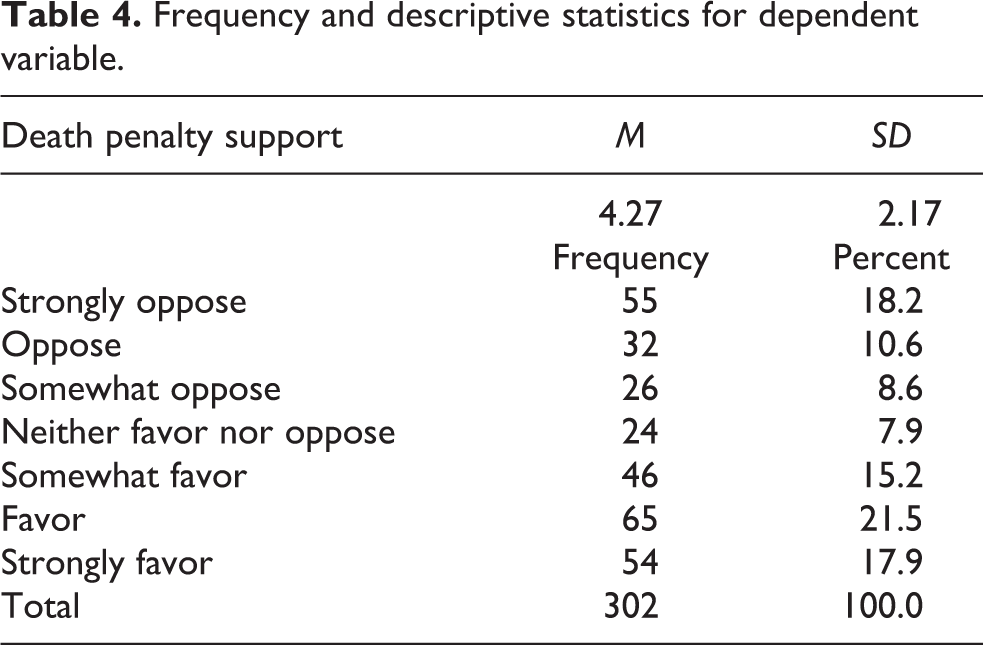
Frequency statistics reveal substantial support for the death penalty. When asked to what extent they favor or support the death penalty for individuals convicted of murder, 54.6% of our sample favored it to some extent, whereas 37.4% responded that they opposed its use. Summary statistics for the death penalty support item revealed a mean score of 4.27 and a standard deviation of 2.17, indicating that there is only minimal variation in death penalty support scores within this sample.
Results
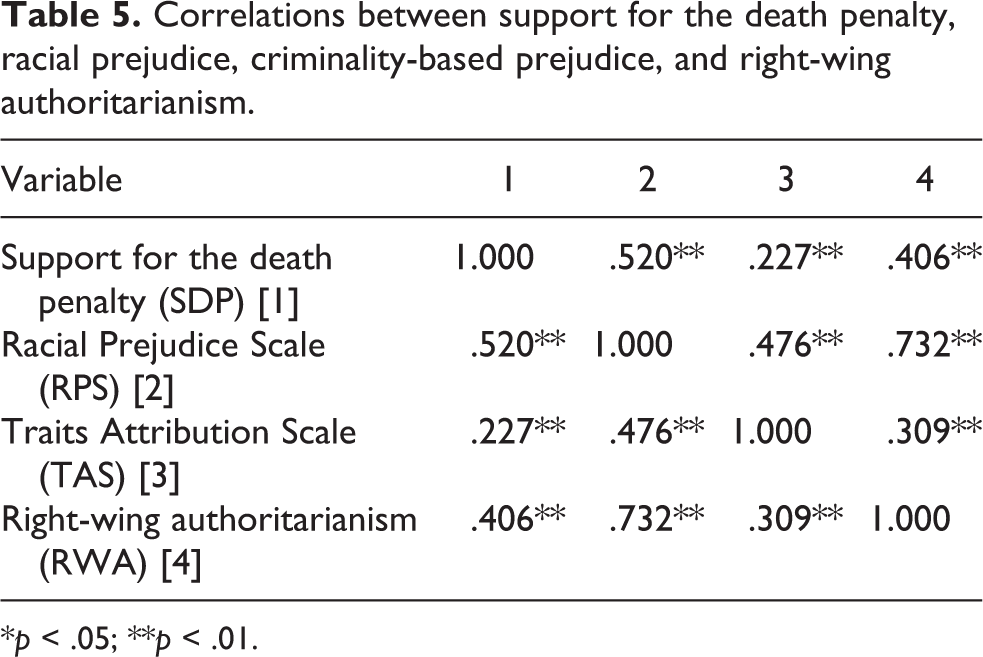
The relationships among the study variables were analyzed using zero-order correlations (Table 5). The results show that all three variables (racial prejudice, right-wing authoritarianism, and traits attribution) were significantly and positively correlated with death penalty support, with racial prejudice having the strongest relationship (r = .520). The independent variables were also correlated with each other. Racial prejudice and right-wing authoritarianism had a very strong positive correlation (r = .732). Given evidence of significant correlations, collinearity statistics were computed in SPSS (Tolerance and Variance Inflation Factor). An examination of the results indicated that multicollinearity was not an issue.
Correlations between support for the death penalty, racial prejudice, criminality-based prejudice, and right-wing authoritarianism.
*p < .05; **p < .01.
Although these correlations explain the bivariate relationships among these variables, they do not allow for the direction of the relationship to be tested for, nor do they control for effects in a multivariate model. For instance, one of the major research questions concerned the impact that controlling for right-wing authoritarianism might have on the relationship between racial prejudice and support for the death penalty. In addition, it was hypothesized that traits attribution will have a moderating effect on the relationship between racial prejudice and death penalty support.
To determine whether moderating effects existed among these variables, a series of regression models were estimated to construct a path analysis. Figure 1 depicts the saturated or just-identified path model that accounts for all possible relationships among the study variables. This path model simultaneously allowed for the exploration of three major research questions outlined in the Method section of this paper.
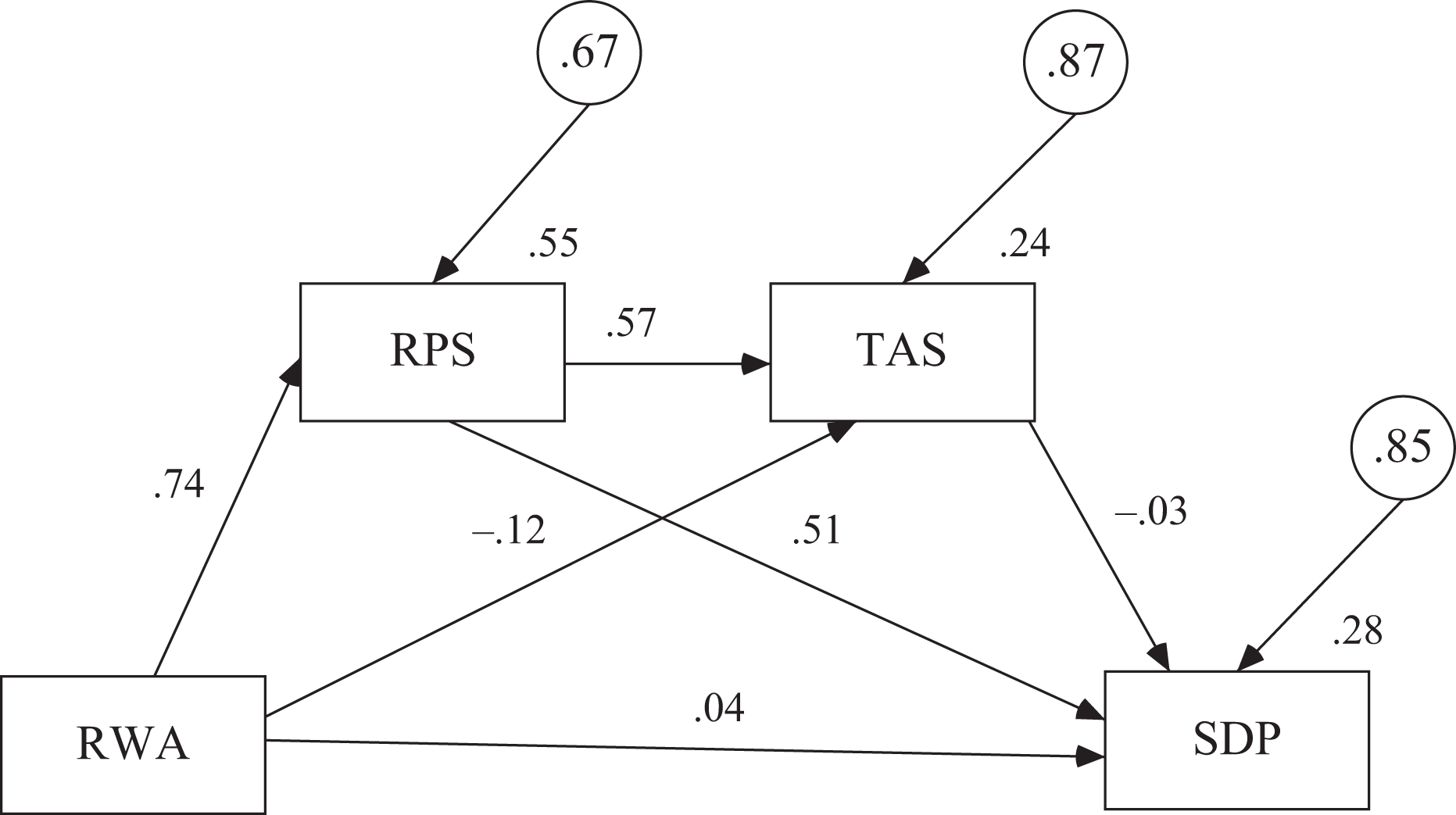
Just-identified path model.
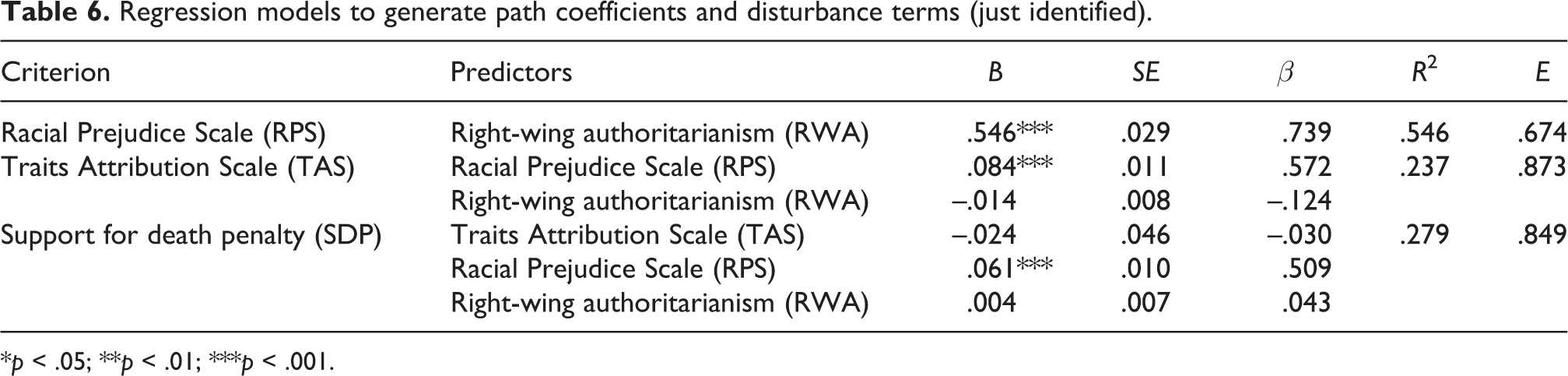
Table 6 presents the results of the regression analyses utilized in the path model. AMOS software was used to conduct these regression analyses, which were based on maximum likelihood estimates and not ordinary least squares estimates. The standardized coefficients from these regression analyses can be found in the path model (Figure 1).
Regression models to generate path coefficients and disturbance terms (just identified).
*p < .05; **p < .01; ***p < .001.
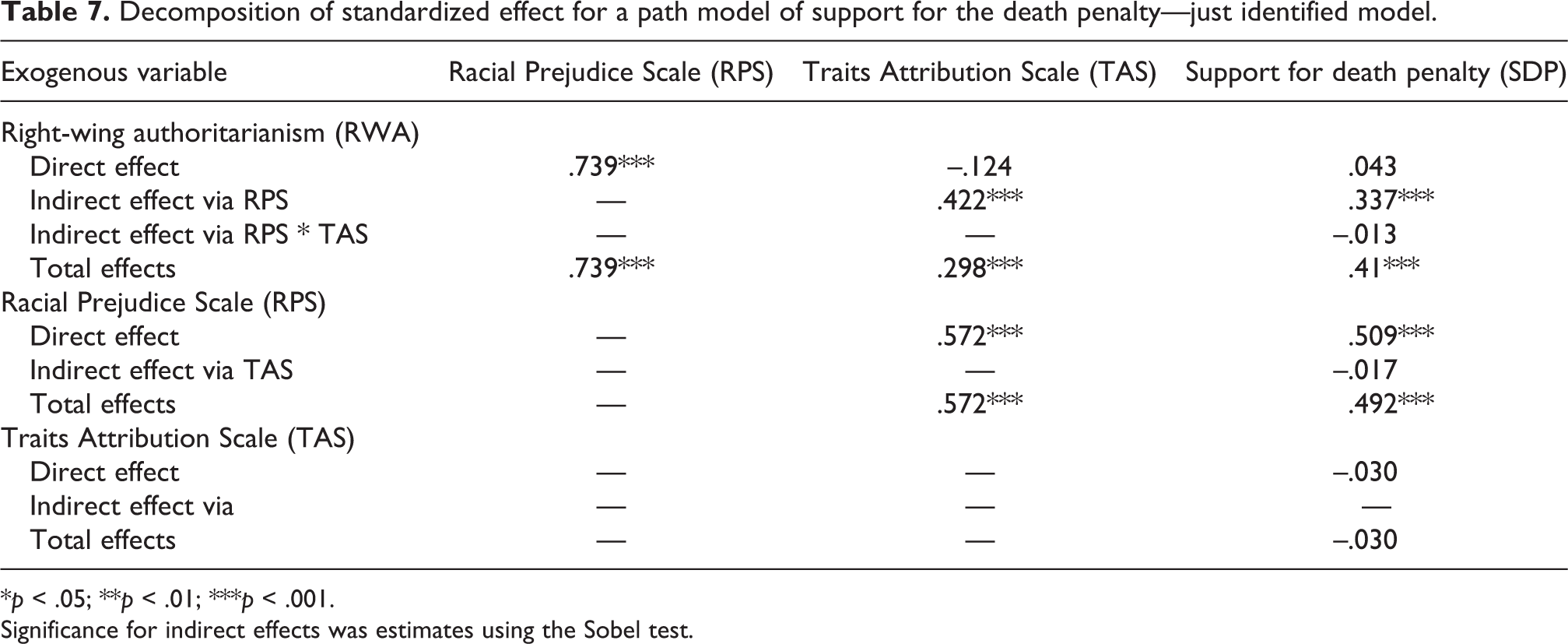
One of the benefits of path analysis is that it permits for the total effect of an independent variable (exogenous) on a dependent variable (endogenous) to be decomposed into direct and indirect effects among the variables in the model (Babbie, 2015). Table 7 shows the decomposition of standardized effects in death penalty support. Statistical significance for indirect effects was calculated using the Sobel test.
Decomposition of standardized effect for a path model of support for the death penalty—just identified model.
*p < .05; **p < .01; ***p < .001.
Significance for indirect effects was estimates using the Sobel test.
The path analysis showed that right-wing authoritarianism has a significant direct effect on racial prejudice (β = .739, p < .001). The results also suggest that, although right-wing authoritarianism does not significantly predict either traits attribution (β = –.124) or death penalty support (β = .043), it does have significant indirect effects on both traits attribution (β = .422, p < .001) and death penalty support (β = .337, p < .001) that operate through racial prejudice. This finding supports the idea of an interactive effect between right-wing authoritarianism and racial prejudice on the other two variables. Racial prejudice has a significant impact on both traits attribution (β = .572, p < .001) and death penalty support (β = .492, p < .001).
This just-identified path model included every direct and indirect regression path from the exogenous to endogenous variables. It allowed for the identification of significant relationships between the study variables once all variables were controlled. Any non-significant relationships can be removed from the analysis to create a simpler, more parsimonious model. The simpler, or over-identified model, was trimmed of all non-significant paths—the relationships between right-wing authoritarianism and death penalty support, traits attribution and death penalty support, and right-wing authoritarianism and traits attribution (Figure 2). The results of the regression analyses for the over-identified path model are found in Table 8.
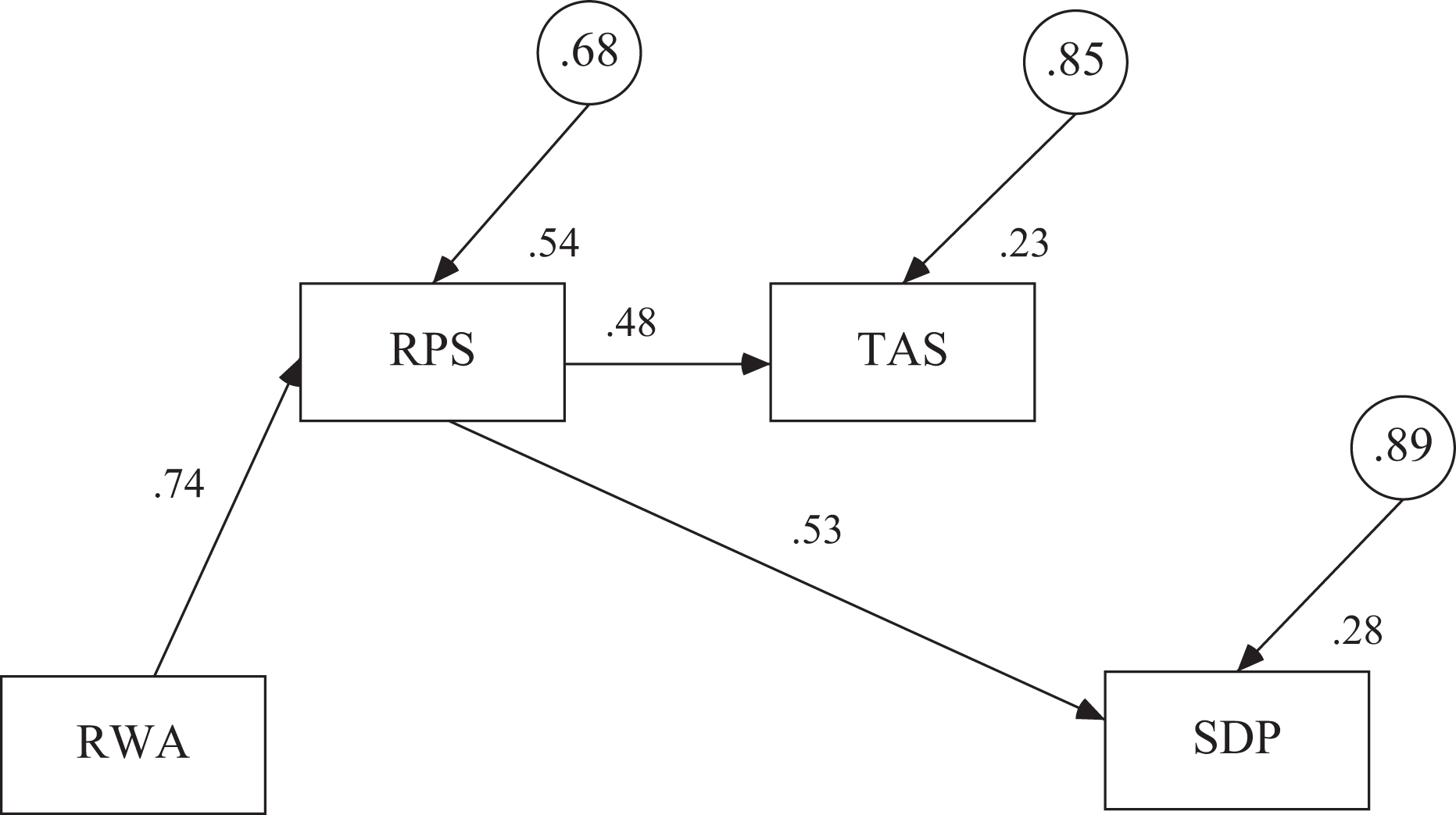
Over-identified path model.
Regression models to generate path coefficients and disturbance terms (over identified).
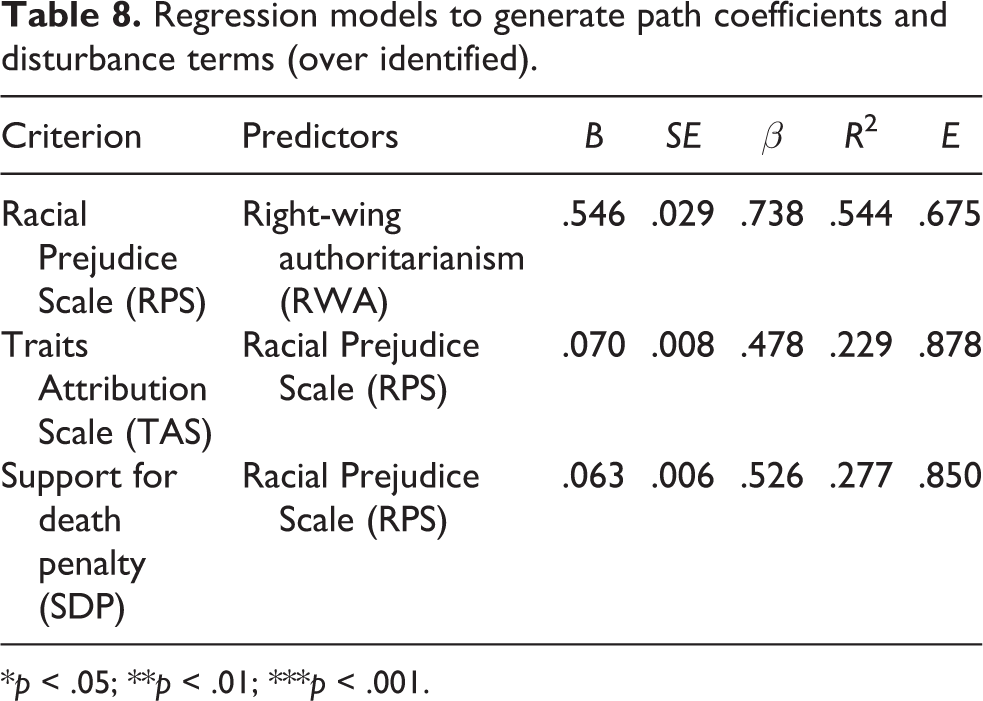
*p < .05; **p < .01; ***p < .001.
The over-identified model shows three significant direct effects. Right-wing authoritarianism is a significant predictor of racial prejudice (β = .738, p < .001). Racial prejudice is a significant predictor of traits attribution (β = .478, p < .001). Finally, racial prejudice is a significant predictor for death penalty support (β = .526, p < .001).
The over-identified path model also contains two statistically significant indirect effects (Table 8). Right-wing authoritarianism has a significant indirect effect on traits attribution that operates through racial prejudice (β = .353, p < .001). Right-wing authoritarianism also operates indirectly through racial prejudice to predict death penalty support (β = .388, p < .001).
Table 9 provides the model fit summary for the over-identified model. The model fit indexes indicate that the over-identified (default) path model is preferred to the just-identified (saturated) model. The X2 statistic, CMIN, has a value < 5 and is not statistically significant indicating that the over-identified model is a good fit (CMIN = 3.3286, df = 3, p = .350). Among the baseline comparisons, both the Normed Fit Index (NFI = .992) and Comparative Fit Index (CFI = .999) have values > .95 indicating good fit. The Root Mean Square Error of Approximation (RMSEA) indicates a good fit when values are < .05, and the over-identified model obtained a RMSEA value of .018. The Akaike’s Information Criteria (AIC) is 25.286, which is lower than the AIC for the just-identified model (28.000). All of the indexes suggest that the over-identified model is a better fit than the just-identified model.
Model fit summary.
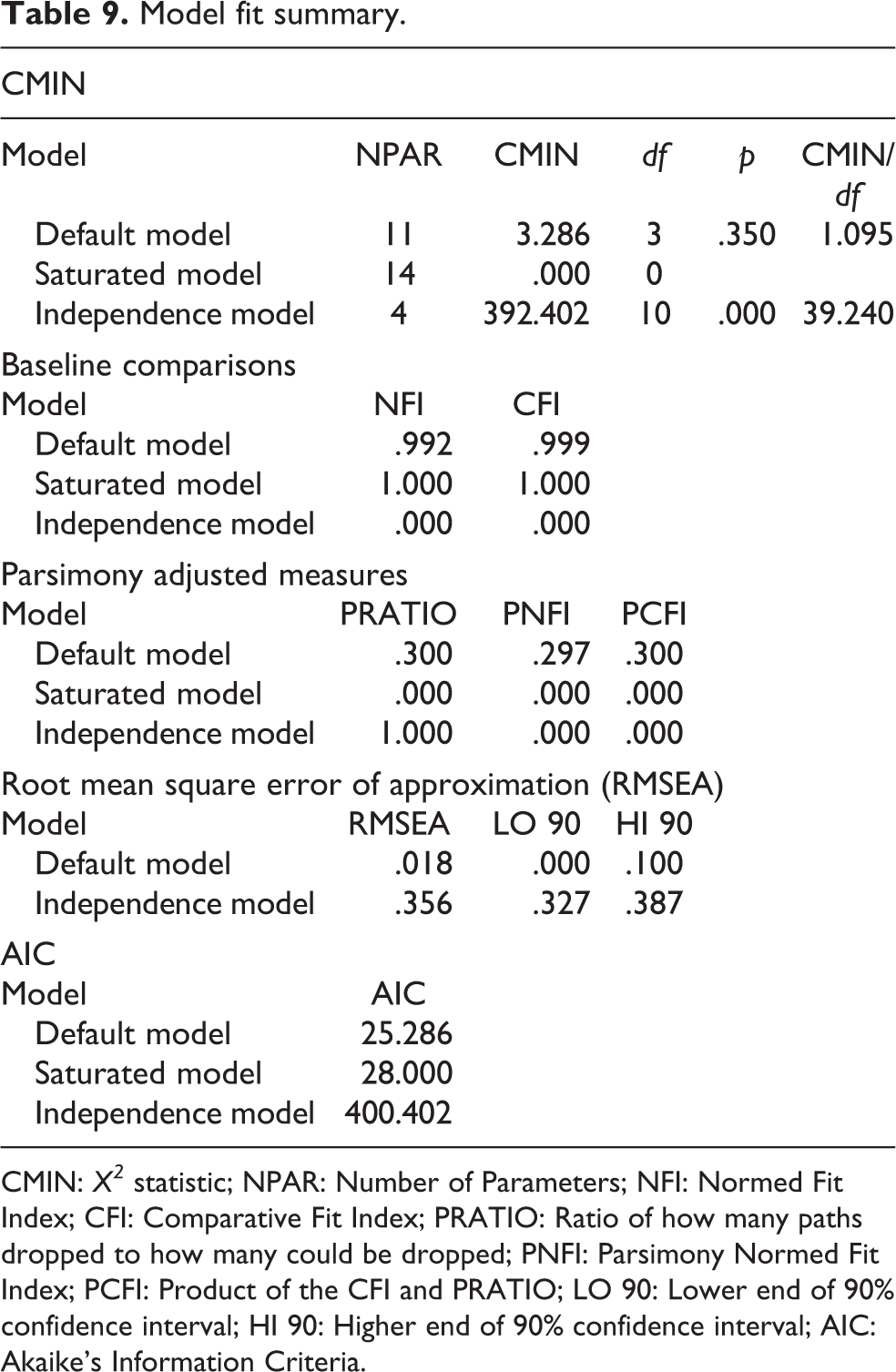
CMIN: X2 statistic; NPAR: Number of Parameters; NFI: Normed Fit Index; CFI: Comparative Fit Index; PRATIO: Ratio of how many paths dropped to how many could be dropped; PNFI: Parsimony Normed Fit Index; PCFI: Product of the CFI and PRATIO; LO 90: Lower end of 90% confidence interval; HI 90: Higher end of 90% confidence interval; AIC: Akaike’s Information Criteria.
Discussion
This research attempted to provide further insight into the validity of the racist punitive bias hypothesis as an explanation for the relationship between racial prejudice and death penalty support among white people. Although some results are in agreement with previous research, others are not. First, consistent with previous research (Barkan and Cohn, 1994; Buckler et al., 2008; Cohn et al., 1991; Unnever and Cullen, 2007; Young, 2004) and the authors’ first hypothesis, racial prejudice was significantly and positively correlated with white death penalty support, suggesting that racially prejudiced participants in this convenience sample were more likely to support the death penalty than those who were not prejudiced. Second, the results show that, consistent with previous research (Dambrun, 2007; Soss et al., 2003) and the authors’ second hypothesis, right-wing authoritarianism is not sufficient to explain the relationship between racial prejudice and death penalty support among white people. Specifically, this research showed an indirect relationship between right-wing authoritarianism and death penalty support (operating through racial prejudice). Right-wing authoritarianism did not predict death penalty support, nor did it serve as a moderating function in the relationship between racial prejudice and death penalty support among white people. Third, traits attribution was not a moderator of the relationship between racial prejudice and death penalty support among white people, suggesting that the attribution of criminal traits to racial minorities does not explain the relationship between racial prejudice and death penalty support among white people. This finding is contrary to both the authors’ third hypothesis and previous research supporting the racist punitive bias hypothesis. Previous research indicated support for the idea that racially prejudiced people perceive racial minorities to hold criminal traits and, thus, believe they are more likely subject to a sentence of death. This idea, it is believed, underlies their death penalty support (Dambrun, 2007). Although this hypothesis was not supported by our research, it should not be rejected. It is possible that our results differ from those of previous research due to varying contextual factors. As mentioned previously, the only test of the racist punitive bias hypothesis was conducted in France with a focus on racial prejudice against Arabs. It is possible that our study showed differing results because it was conducted in the USA with a focus on racial prejudice against black people. Additionally, it is possible that limitations of this study impacted the validity of the results. This possibility is discussed in the Limitations section of this discussion.
Another finding not directly related to the authors’ hypotheses is that although levels of racial prejudice were generally low in this sample, respondents exhibited greater levels of racial prejudice when asked about interracial child-rearing. This finding indicates that, among some populations, people who do not seem to exhibit overtly prejudiced attitudes, might have such ideas in situations that they deem to be non-traditional (such as interracial marriage). This finding helps to highlight the complexity and situational nature of racial prejudice in the USA.
To summarize, the results of this study indicate support for the authors’ first two hypotheses, suggesting that racial prejudice is significantly and positively correlated with death penalty support. However, right-wing authoritarianism does not explain this relationship. The authors’ third hypothesis was not supported by the results, indicating that, in this study, the attribution of criminal traits to ethnic minority individuals (and, thus, a belief that such individuals would be more likely subject to the death penalty) does not moderate the relationship between racial prejudice and death penalty support. A discussion of the implications and limitations of these results is provided below along with recommendations for future research.
Implications
Because this study examined support for the most severe punishment, the death penalty, it has important policy and ethical implications. The finding that racial prejudice is significantly and positively correlated with death penalty support, although anticipated, is concerning. The fact that capital juries in the USA must be death-qualified illustrates this concern. “Death-qualification” is the requirement that those selected to serve as capital jurors be willing to impose a death sentence if the defendant is found guilty and deserving of such punishment (Wainwright v. Witt, 1985). Although this process does not require, nor does it guarantee, that all capital jurors will be supportive of the death penalty, research indicates that supporters of the death penalty are more likely to be selected to serve on capital juries than those who oppose the death penalty (Swafford, 2011). Given this, and the fact that white people are more likely than black people to support the death penalty (Pew Research Center, 2014), it is disturbing that racial prejudice is associated with death penalty support among white people, because it presents the possibility that those likely to serve on capital juries (white people who support the death penalty) hold racial prejudices against black people. Further, the research indicates that racially prejudiced individuals are more likely than non-prejudiced individuals to attribute criminal characteristics to black people, which presents the possibility that capital jurors may view black defendants as criminal simply because of their race. Such possibilities are inconsistent with a justice system that values equality and fairness and prides itself on being “blind” to such extralegal factors as race. These results, as well as other studies that have had similar outcomes (Barkan and Cohn, 1994; Buckler et al., 2008; Cohn et al., 1991; Unnever and Cullen, 2007; Young, 2004), suggest that an assessment and re-examination of the death penalty with regard to its potential for fairness should be undertaken.
Finally, although this study has limitations that are discussed below, it is important to note that (to the knowledge of the authors) it is the only one to test the racist punitive bias hypothesis as an explanation of the link between racial prejudice and death penalty support among white people in the USA. As mentioned previously, the only study testing the racist punitive bias hypothesis was conducted in France. As such, this study contributes to the existing literature and also may provide the motivation for additional research of this nature. Such research would further our understanding of the relationship between racial prejudice and death penalty support in the USA.
Limitations
Although this research has important policy implications, it is not without limitations. First, a significant limitation results from the use of a convenience sample. The authors attempted to achieve a diverse sample of respondents by posting the survey on Facebook, but this diversity did not come to fruition. Specifically, the majority of respondents were white females with a graduate-level education. The results of research based upon the responses of such a homogenous group cannot be generalized to other groups. For example, these results do not enhance our understanding of the impact of racial prejudice and criminal traits attribution on the death penalty attitudes of high-school educated males. Further, because demographic characteristics such as race, sex, and education level have been shown to impact death penalty support (Bohm, 2003; Mackey and Courtright, 2000; Selke, 1980), having variation on these and other factors might have facilitated more revealing results. Specifically, a greater number of black participants would have allowed for comparisons to be made between white and black people, as has been done in previous research (Buckler et al., 2008; Unnever and Cullen, 2007). Likewise, recent research has emerged which has examined gender differences in death penalty support in China, Bangladesh, Nigeria, and the USA. Results of that study revealed significant differentials in opinions specifically among U.S. respondents (Lambert et al., 2014). In consideration of this finding, it would have been interesting to have a greater number of males in the sample so that meaningful comparisons could have been made. Although a homogenous sample is a limitation, the intention of this study was not to draw firm conclusions regarding the relationship between racial prejudice and death penalty support. Rather, the intention was to provide a preliminary analysis of a theoretical perspective that has not yet been examined in the USA. Improvements to the methodology will be made in future studies. Second, the cross-sectional nature of the study prevents the authors from making any causal inferences about the variables in question. Because data were collected at one point in time, it is not possible to know with certainty the exact direction of the relationships examined.
A third limitation in this study was the use of a self-report survey to collect data from respondents. It is well-established that results from self-report measures may suffer from validity concerns related to respondents’ memory, bias, and self-deception (Paulhus and Vazire, 2007). Additionally, it must be noted that some important variables were left out of this study. Previous research indicates that social dominance orientation might help explain the relationship between racial prejudice and death penalty support. Social dominance orientation refers to the degree to which a person holds positive evaluations of group-based hierarchy and the domination of minority groups by majority groups (Dambrun, 2007). Because participants in this study were not evaluated with regard to social dominance orientation, no conclusions can be drawn regarding how this factor might be related to the relationship between racial prejudice and death penalty support. Finally, research indicates that death penalty support varies by geographic location (Bohm, 2003); thus, the failure to include this variable as a control in the present study is a limitation that should be addressed in future research.
Recommendations for future research
Given the implications and limitations of the research, a number of recommendations for future research can be made. First, because this study used a convenience sample, future research should attempt to use a nationally representative sample to explore further the validity of the racist punitive bias hypothesis. A random sample would allow researchers to make stronger conclusions regarding the nature of the link between racial prejudice and death penalty support among white people. Similarly, because one study found support for the racist punitive bias hypothesis (Dambrun, 2007) in France, this hypothesis should be further explored in the USA with more representative samples of participants so that a greater understanding of the relationship between racial prejudice and death penalty support among white people might occur. Second, future research should focus on alternative explanations of the link between racial prejudice and death penalty support. Although the results of this study are limited in terms of generalizability, the possibility that the racist punitive bias hypothesis does not fully explain the relationship between racial prejudice and death penalty support among white people (specifically in the USA) was presented. Similarly, past research indicates that other constructs, such as social dominance orientation, might increase our knowledge and understanding of this relationship (Dambrun, 2007). Consequently, future research should include a measure of social dominance orientation in examining the relationship between racial prejudice and death penalty support among white people.
Conclusion
Previous research illustrates a link between racial prejudice and death penalty support among white people (Barkan and Cohn, 1994; Buckler et al., 2008; Cohn et al., 1991; Unnever and Cullen, 2007; Young, 2004), and this study provides further support for this relationship. Few studies have attempted to explain the reasons for this relationship; this was a purpose of our research. Overall, this research suggests that racially prejudiced people are more likely to support the death penalty than those who are not prejudiced and that this association, in this study, is not explained by individual levels of right-wing authoritarianism or a belief that racial minorities hold criminal characteristics. The lack of explanatory power of either right-wing authoritarianism or traits attribution, however, might be due to limitations of this study, including the use of a convenience sample. Given the link between racial prejudice and death penalty support and the dearth of research examining the reasons for this relationship, additional research should be conducted in this area with nationally representative samples. Finally, the link between racial prejudice and death penalty support suggests that a reexamination of the death penalty as fair and just punishment policy is warranted, especially given the United States’ emphasis on liberty, justice, and equality for its citizens.
Footnotes
Conflict of interest
The author(s) declared no potential conflicts of interest with respect to the research, authorship, and/or publication of this article.
Funding
The author(s) received no financial support for the research, authorship, and/or publication of this article.
Appendix A
| Scale items representing dependent, independent, and control variables, coding for current analysis |
| Death Penalty Opinion (A1dpopinion) |
| [1 = strongly favor, 2 = favor, 3 = somewhat favor, 4 = neither favor nor oppose, 5 = somewhat oppose, 6 = oppose, 7 = strongly oppose] |
| To what extent do you favor or oppose the death penalty for individuals convicted of murder? |
| Racial Prejudice (RPS) |
| [1 = strongly disagree, 2 = disagree, 3 = somewhat disagree, 4 = neither agree nor disagree, 5 = somewhat agree, 6 = agree, 7 = strongly agree] |
| 1. It makes sense for minority groups to live in their own neighborhoods because they share more and get along better than when mixing with white people. |
| 2. I consider our society to be unfair to black people.* |
| 3. It should be made easier to obtain United States citizenship.* |
| 4. The number of black people holding government offices is too low and political parties should take active steps to increase it.* |
| 5. Minority groups are more likely to make progress in the future by being patient and not pushing so hard for change. |
| 6. Given the present high level of unemployment, foreigners should go back to their countries. |
| 7. The rights of immigrants should be restricted. |
| 8. If many black persons moved to my neighborhood in a short period of time, thus changing its ethnic composition, it would not bother me.* |
| 9. If people move to another country, they should be allowed to maintain their own traditions.* |
| 10. Once minority groups start getting jobs because of their color, the result is bound to be fewer jobs for white people. |
| 11. Those immigrants who do not have immigrant documents should be sent back to their countries. |
| 12. Some black people living here who receive support from the state could get along without it if they tried. |
| 13. It is unfair to the people of one country if the immigrants take jobs and resources. |
| 14. I would not be concerned if most of my co-workers were black.* |
| [1 = very bothered, 2 = bothered, 3 = somewhat bothered, 4 = neither bothered nor unbothered, 5 = somewhat unbothered, 6 = unbothered, 7 = not bothered at all] |
| 15. Suppose that a child of yours had children with a person of very different color and physical characteristics than your own. If your grandchildren did not physically resemble the people on your side of the family, you would be:* |
| Traits Attribution (TAS) |
| 1. To what degree are black people lazy or hardworking? |
| [1 = very lazy, 2 = lazy, 3 = somewhat lazy, 4 = neither lazy nor hardworking, 5 = somewhat hardworking, 6 = hardworking, 7 = very hardworking] |
| 2. To what degree are black people unintelligent or intelligent? |
| [1 = very unintelligent, 2 = unintelligent, 3 = somewhat unintelligent, 4 = neither unintelligent nor intelligent, 5 = somewhat intelligent, 6 = intelligent, 7 = very intelligent] |
| 3. To what degree are black people unpatriotic or patriotic? |
| [1 = very unpatriotic, 2 = unpatriotic, 3 = somewhat unpatriotic, 4 = neither unpatriotic nor patriotic, 5 = somewhat patriotic, 6 = patriotic, 7 = very patriotic] |
| 4. To what degree are black people violent or non-violent? |
| [1 = very violent, 2 = violent, 3 = somewhat violent, 4 = neither violent nor non-violent, 5 = somewhat non-violent, 6 = non-violent, 7 = very non-violent] |
| 5. To what degree are black people aggressive or non-aggressive? |
| [1 = very aggressive, 2 = aggressive, 3 = somewhat aggressive, 4 = neither aggressive nor non-aggressive, 5 = somewhat non-aggressive, 6 = non-aggressive, 7 = very non-aggressive] |
| 6. To what degree are black people likely or unlikely to commit theft? |
| [1 = very likely, 2 = likely, 3 = somewhat likely, 4 = niether likely nor unlikely, 5 = somewhat unlikely, 6 = unlikely, 7 = very unlikely] |
| Right-Wing Authoritarianism (RWA) |
| [1 = strongly disagree; 2 = disagree; 3 = agree; 4 = strongly agree] |
| 1. Our country desperately needs a mighty leader who will do what has to be done to destroy the radical new ways and sinfulness that are ruining us. |
| 2. Gays and lesbians are just as healthy and moral as anybody else.* |
| 3. It is always better to trust the judgment of the proper authorities in government and religion than to listen to the noisy rabble-rousers in our society who are trying to create doubt in people’s minds. |
| 4. Atheists and others who have rebelled against the established religions are no doubt every bit as good and virtuous as those who attend church regularly.* |
| 5. The only way our country can get through the crisis ahead is to get back to our traditional values, put some tough leaders in power, and silence the troublemakers spreading bad ideas. |
| 6. There is absolutely nothing wrong with nudist camps.* |
| 7. Our country needs free thinkers who have the courage to defy traditional ways, even if this upsets many people.* |
| 8. Our country will be destroyed someday if we do not smash the perversions eating away at our moral fiber and traditional beliefs. |
| 9. Everyone should have their own lifestyle, religious beliefs, and sexual preferences, even if it makes them different from everyone else.* |
| 10. The “old-fashioned ways” and the “old-fashioned values” still show the best way to live. |
| 11. You have to admire those who challenged the law and the majority’s view by protesting for women’s abortion rights, for animal rights, or to abolish school prayer.* |
| 12. What our country really needs is a strong, determined leader who will crush evil, and take us back to our true path. |
| 13. Some of the best people in our country are those who are challenging our government, criticizing religion, and ignoring the “normal way things are supposed to be done.”* |
| 14. God’s laws about abortion, pornography and marriage must be strictly followed before it is too late, and those who break them must be strongly punished. |
| 15. There are many radical, immoral people in our country today, who are trying to ruin it for their own godless purposes, whom the authorities should put out of action. |
| 16. A “woman’s place” should be wherever she wants to be. The days when women are submissive to their husbands and social conventions belong strictly in the past.* |
| 17. Our country will be great if we honor the ways of our forefathers, do what the authorities tell us to do, and get rid of the “rotten apples” who are ruining everything. |
| 18. There is no “ONE right way” to live life; everybody has to create their own way.* |
| 19. Homosexuals and feminists should be praised for being brave enough to defy “traditional family values”.* |
| 20. This country would work a lot better if certain groups of troublemakers would just shut up and accept their group’s traditional place in society. |
| Sociocultural and Demographic Characteristics (Variables indicated in parentheses) |
| 1. How often do you attend religious services? (Religiosity) |
| [0 = never, 1 = less than once a year, 2 = once a year, 3 = several times a year, 4 = once a month, 5 = two or three times a month, 6 = nearly every week, 7 = every week, 8 = more than once] |
| 2. What is your gender? (Gender) |
| [1 = male, 2 = female] |
| 3. What is your race? (Race) |
| [1 = White (non-Hispanic), 2 = Black, 3 = Hispanic, 4 = Asian, 5 = Other] |
| 4. Which of the following best describes your political affiliation? (Political Affiliation) |
| [1 = Democrat, 2 = Republican, 3 = Libertairan, 4 = Independent, 5 = Other] |
| 5. Which of the following best describes your religious affiliation? (Religious Affiliation) |
| [1 = Christian, 2 = Jewish, 3 = Muslim, 4 = Buddhist, 5 = Hindu, 6 = None, 7 = Other] |
| 6. How many years of schooling have you completed (with 0 indicating no education and 26 indicating that you hold a doctoral degree)? (Education) |
| [Recode = 0-12 = 1 (Less than high school); 13 = 2 (High school); 14-16 (Some college); 17-18 = 3 (College); 19-26 (Graduate degree)] |
| 7. What is your age (in years)? (Age) |
| [Recode = 18-30 = 1; 31-40 = 2; 41-50 = 3; 51-60 = 4; 61 and up = 5] |
| *Denotes items that are reverse-scored. |