






Abstract
Astrology has become a visible and normalized element of contemporary digital public spaces, where it functions less as a system of belief and more as a medium for emotional expression, identity narration, and everyday sense-making. This study conceptualizes astrology-related communication not as an epistemic claim requiring validation, but as a form of emotional discourse embedded in platformed public life. Drawing on Affective Publics theory and Uses and Gratifications, the study examines how astrology circulates emotionally within digital environments and how users engage with such content at both collective and individual levels. Using a large-scale computational content analysis, the study analyzes 112,800 English-language astrology-related posts collected from the X platform (formerly Twitter). Sentiment classification was conducted using a transformer-based language model fine-tuned for social media text, complemented by lexicon-based measures of subjectivity and evaluative polarity. The findings reveal that astrology-related discourse is dominated by neutral and positive sentiment, with negative sentiment representing a relatively small proportion of overall communication. Positive expressions exhibit higher levels of subjectivity and evaluative intensity, indicating strong personal engagement, while negative expressions tend to be more restrained and less personally invested. Moreover, emotionally defensive patterns are rare, indicating that astrology functions as a low-conflict communicative space largely insulated from polarized legitimacy struggles. The study contributes to research on digital culture and emotion by showing how emotionally resonant yet low-stakes discourse sustains participation and affective alignment without polarization, positioning astrology as a salient case of affective publicness in digital media.
Keywords
Introduction
Astrology has become a prominent and increasingly normalized feature of contemporary digital public spaces, where it functions not merely as entertainment but as a versatile medium for emotional expression, identity construction, and community-oriented interaction. Across social media platforms such as Douyin (TikTok), X (formerly Twitter), and Instagram, astrology-related content circulates widely in the form of horoscopes, zodiac-based narratives, memes, and short-form videos, enabling users to articulate personal experiences, negotiate intimacy, and construct what has been described as an imagined self through algorithmically mediated encounters (Zhang and Wang, 2025). These practices suggest that astrology operates less as a doctrinal belief system and more as a culturally available interpretive resource embedded in everyday digital communication.
Recent scholarship demonstrates that sentiment analysis—employing both traditional lexicon-based techniques and advanced deep learning architectures—offers robust methodological tools for capturing the affective texture of online discourse, including conversations related to spirituality and astrology (Akhila et al., 2025; Chhetri et al., 2025; Hossain et al., 2024; Pellert et al., 2022; Rodríguez-Ibáñez et al., 2023). Large-scale analyses of social media data reveal that digital platforms serve as dynamic environments for tracking public mood fluctuations, emotional diversity, and patterns of affective engagement across a wide range of topics (Pellert et al., 2022; Rodríguez-Ibáñez et al., 2023). Within this literature, astrology-related discourse emerges as a particularly illustrative case due to its emotionally expressive yet culturally ambivalent status, occupying a space between play, spirituality, and everyday sense-making.
Importantly, the present study does not approach astrology through the lens of scientific validity, epistemic accuracy, or debates surrounding pseudoscience. While such discussions have a well-established place in philosophy of science and science communication research, they are not the analytical focus of this article. Rather than evaluating astrology as knowledge, the study conceptualizes astrology-related communication as a form of emotional discourse—a patterned mode of expression through which users articulate feelings, manage uncertainty, and engage in symbolic interaction within digital public spaces. This perspective aligns with research emphasizing that digital communication practices often derive their social significance not from factual veracity but from affective resonance, interpretive flexibility, and communicative function.
This orientation is consistent with sociological approaches that conceptualize belief not primarily as a matter of epistemic assent, but as a lived, narrative, and relational practice embedded in everyday life. Research on lived religion and everyday spirituality emphasizes that meaning-making practices often persist and circulate independently of formal doctrinal coherence or scientific validation, functioning instead through symbolic resonance, shared storytelling, and situational relevance (Ammerman, 2014). From this perspective, astrology-related discourse can be understood as part of a broader repertoire of culturally available interpretive resources through which individuals articulate experience, negotiate uncertainty, and sustain a sense of continuity in everyday contexts. Situating astrology within this framework allows the present study to examine its communicative and emotional functions in digital public spaces without reducing it to questions of truth, falsity, or scientific legitimacy.
At the same time, prior research cautions that sentiment analysis is not without methodological limitations. Sampling biases, platform-specific performativity, and context insensitivity in automated classification models can distort aggregate representations of public emotion (Ou et al., 2024; Pellert et al., 2022). Scholars therefore emphasize the importance of theoretically informed interpretation and methodological triangulation when analyzing affective data at scale. Temporal dimensions further complicate the affective landscape, as emotional expressions on social media fluctuate in response to external events, cultural rhythms, and algorithmic amplification processes (Akhila et al., 2025; Pellert et al., 2022; Rodríguez-Ibáñez et al., 2023).
Building on this body of work, the present study synthesizes recent advances in sentiment analysis with theories of affective communication to examine how astrology functions as emotional discourse in digital public spaces. By analyzing large-scale social media conversations, the study seeks to move beyond reductive framings of astrology as belief or misinformation and instead illuminate its role as a low-conflict, emotionally resonant communicative practice embedded in everyday platformed life.
Research questions
Despite the growing body of research examining astrology-related content and the increasing use of sentiment analysis to map emotional expression in digital environments, existing studies have largely focused either on platform-specific identity practices or on methodological advancements in emotion detection, without integrating these strands into a unified theoretical account of astrology as a form of public emotional discourse. In particular, little empirical work has systematically examined how aggregate sentiment patterns, subjectivity, and evaluative polarity jointly structure astrology-related communication across large-scale social media conversations, or how such patterns relate to broader affective dynamics beyond polarized or legitimacy-driven debates. Addressing this gap, the present study offers a theoretically grounded and methodologically scalable analysis that conceptualizes astrology as a low-conflict emotional discourse within digital public spaces. By combining transformer-based sentiment classification with complementary measures of subjectivity and polarity, and situating the findings within Affective Publics and Uses and Gratifications frameworks, the study contributes to research on digital culture and emotion by elucidating how emotionally resonant yet epistemically peripheral content sustains participation, affective alignment, and everyday sense-making in platformed public life.
Literature review
Astrology’s contemporary resurgence in platformed environments can be read less as a revival of “belief” and more as the rise of a shareable, emotionally resonant vernacular for sense-making under uncertainty. In digitally networked contexts, publics often cohere not primarily through stable ideological alignment, but through felt intensities—rhythms of mood, solidarity, anxiety, humor, and reassurance that circulate through hashtags, comments, and short-form posts. The concept of affective publics is particularly useful here because it explains how emotion becomes a connective infrastructure of publicness: networked participation is organized through ambient, contagious feeling, and through narrativized fragments that help individuals locate themselves in unfolding events and everyday stressors (Papacharissi, 2016). Importantly, affective publics also illuminate how discourse blends information, opinion, and emotion into hybrid “storytelling” streams, where the value of a post may lie less in factual verification than in its capacity to express and synchronize experience (Papacharissi and De Fatima Oliveira, 2012). Within this frame, astrology content operates as a cultural resource that helps users articulate anxiety, hope, relational tension, and identity uncertainty in socially legible forms—thereby enabling a low-threshold kind of belonging that is sustained through repetitive micro-acts of reaction, sharing, and commentary.
Building on this, affective publics research shows that platform discourse frequently becomes a site where emotional meaning is collectively produced through patterned language and interpretive cues. The “public” is thus not a pre-existing audience but an emergent formation shaped by expressive conventions, attention dynamics, and the affective charge of circulating narratives (Papacharissi, 2016). Hashtag-based conversations, in particular, can focus attention toward personally meaningful framings of events and self-relevant interpretations—making affective expression a primary mechanism through which discourse gains traction and coherence (Blevins et al., 2019). In the context of digital astrology, this helps explain why zodiac archetypes and horoscope scripts “work” as discourse: they provide emotionally efficient categories for narrating the self (“I’m anxious because I’m a Cancer”), legitimizing relational judgments (“that’s such a Scorpio move”), and compressing complex feelings into culturally recognizable shorthand. Rather than treating astrology talk as merely irrational or escapist, an affective publics lens invites analysis of how these expressions coordinate attention, stabilize emotion, and produce momentary solidarity in everyday digital life (Papacharissi and De Fatima Oliveira, 2012).
While affective publics clarifies how emotional connectivity organizes public discourse, Uses & Gratifications theory specifies why individuals repeatedly choose particular media practices to meet psychological and social needs. U&G proposes that users are active agents who select media to gratify motivations such as connection, identity management, surveillance/monitoring, entertainment, and coping. This approach has been productively applied to social platforms by showing that different features and interaction modes correspond to different motive structures, and that treating “platform use” as homogeneous can obscure what people are actually trying to achieve (Smock et al., 2011). In a similar vein, research on Twitter use demonstrates that active participation can gratify a need for connection and informal camaraderie, suggesting that posting and interacting may function as a relational regulation strategy rather than mere information exchange (Chen, 2011). When applied to astrology content, U&G helps theorize engagement as a patterned response to everyday needs: users may seek quick interpretive frames (cognitive economy), mood management (comfort/relief), interpersonal utility (relationship sense-making), and social belonging (shared symbolic language), which are all gratifications readily supported by short, repeatable, platform-native astrology formats.
U&G scholarship also shows that platform-specific motives (e.g., surveillance/knowledge about others, documentation, coolness, creativity) can shape sustained engagement, indicating that astrology’s appeal may combine self-oriented gratifications (identity narration, emotional regulation) with socially oriented ones (relational talk, trend participation) (Sheldon and Bryant, 2016). Moreover, comparative work across major platforms suggests that motivations and outcomes (including forms of social capital) differ by platform affordances, and that users derive distinct benefits depending on whether the platform supports broader weak-tie connection or more intimate bonding (Phua et al., 2017). This is analytically useful for your article because astrology discourse often travels cross-platform: short horoscope clips, meme-like zodiac stereotypes, and comment-thread confessions each invite different gratifications and may cultivate different affective formations. In combination, affective publics and U&G provide a coherent theoretical scaffolding: affective publics explains astrology as emotionally networked publicness, while U&G specifies the recurring motivational logics that make astrology a reliable, low-cost meaning-making practice in everyday digital routines (Papacharissi, 2016; Smock et al., 2011). This integrated perspective allows for a nuanced examination of how individuals actively seek out and utilize astrological content across various digital platforms to fulfill diverse needs, ranging from personal introspection to social connection and identity expression (Lin et al., 2021). This approach further enables a deeper understanding of the interplay between user-oriented and platform-oriented gratifications, acknowledging that the specific features of digital media can cue cognitive heuristics that shape user assessments and engagement with astrological content (Chiasson et al., 2018). Indeed, U&G’s enduring relevance lies in its capacity to adapt to evolving media landscapes, providing a robust framework for investigating how digital media consumption fulfills psychological and social needs while also acknowledging the influence of technological affordances on user gratification (Omar and Wang, 2020; Quan-Haase, 2012).
While early formulations of affective publics emphasized the role of networked emotion in shaping political and civic engagement, subsequent work has highlighted the broader applicability of this framework to everyday, non-polarized forms of digital participation. Papacharissi (2015) conceptualizes affective publics as flexible and narratively driven formations in which emotional expression organizes connectivity even in the absence of overt ideological conflict. This expanded view is particularly relevant for understanding astrology-related discourse, which circulates through emotionally resonant storytelling rather than argumentative persuasion. At the same time, developments in Uses and Gratifications 2.0 emphasize that user motivations in digital environments are increasingly shaped by platform affordances, interface cues, and algorithmic feedback mechanisms (Sundar and Limperos, 2013). From this perspective, engagement with astrology content can be understood not only as need-driven media choice, but as an affordance-enabled practice in which emotional gratifications are amplified by platform design. Together, these advances extend classical affective and motivational theories to better account for emotionally expressive, low-stakes, and algorithmically mediated forms of discourse characteristic of contemporary digital public spaces.
Empirical studies increasingly demonstrate how these affective and motivational dynamics materialize across specific platform environments. Astrology-themed content on platforms like Douyin (TikTok) is used by individuals to make sense of their identities and relationships through emotionally charged narratives. Users interpret astrological videos to construct personal meaning while engaging with collective spiritual narratives; this process is shaped by platform algorithms that reinforce certain affective themes (Zhang and Wang, 2025). Similar patterns are observed across other platforms where astrology serves as a tool for self-reflection and community bonding.
To empirically examine such affective and motivational dynamics at scale within digital public discourse, scholars increasingly rely on computational sentiment analysis techniques. Sentiment analysis methods including lexicon-based approaches (e.g., VADER), machine learning models (e.g., SVMs), and deep learning architectures (e.g., BERT) are widely used to classify emotions expressed in social media posts (Akhila et al., 2025; Chhetri et al., 2025; Hossain et al., 2024; Pellert et al., 2022; Rodríguez-Ibáñez et al., 2023). Studies report high accuracy rates (often above 85%) for emotion classification when using advanced models (Akhila et al., 2025), with deep learning outperforming traditional methods in handling nuanced language typical of online spiritual or astrological discussions (Akhila et al., 2025; Chhetri et al., 2025).
Temporal sentiment analysis reveals that emotions expressed around astrology fluctuate over time in response to external events or platform-specific trends (Pellert et al., 2022; Rodríguez-Ibáñez et al., 2023). For example, positive sentiments may peak during certain astrological events or holidays, while negative emotions can surge during crises or controversial discussions (Pellert et al., 2022; Rodríguez-Ibáñez et al., 2023).
Despite advances in sentiment analysis accuracy, challenges remain: sampling biases can distort aggregate mood measurements; performative behaviors influenced by platform norms may skew results; and existing tools sometimes struggle with rapidly evolving language or context-specific meanings found in astrological discourse (Ou et al., 2024; Pellert et al., 2022). Ethical considerations around privacy and data use are increasingly emphasized in recent frameworks for large-scale social media analysis (Chhetri et al., 2025).
Taken together, Affective Publics theory and Uses and Gratifications theory provide a complementary framework for interpreting astrology-related discourse as an emotionally structured and functionally motivated form of digital communication. From an affective publics perspective, the circulation of astrology content can be understood as part of a networked emotional environment in which collective moods, low-intensity solidarities, and shared interpretive frames shape public discourse (Papacharissi, 2016; Papacharissi and De Fatima Oliveira, 2012). This perspective directly informs RQ1 by situating aggregate sentiment distributions as indicators of how astrology functions within emotionally networked publics, and RQ3 by framing emotionally defensive expressions as potential responses to perceived legitimacy challenges within affective environments. In parallel, Uses and Gratifications theory offers an individual-level explanation for the observed variations in subjectivity and evaluative polarity by conceptualizing astrology engagement as a purposive media practice oriented toward emotional regulation, identity narration, and social connection (Chen, 2011; Smock et al., 2011). This theoretical lens is particularly relevant for RQ2, as it explains why positive astrology-related discourse exhibits higher levels of subjectivity and evaluative intensity, reflecting users’ active pursuit of affective and symbolic gratifications. Together, these frameworks allow the present study to link large-scale sentiment patterns to both collective affective dynamics and individual motivational logics, thereby grounding the empirical analysis in a coherent and multi-level theoretical structure.
Methodology
Research design
This study employs a quantitative computational content analysis to examine the emotional and evaluative characteristics of astrology-related discourse on social media. The research conceptualizes astrology not as an epistemic claim requiring validation, but as a form of digital public discourse warranting empirical investigation. The analytical approach focuses on identifying affective patterns through which astrology is discussed in online environments, using sentiment analysis to capture large-scale emotional tendencies and their relationship with subjectivity and evaluative polarity in user-generated content.
Data collection and sampling
The empirical dataset comprises publicly accessible English-language social media posts related to astrology, collected from the X platform (formerly Twitter) between 14 December 2024 and 25 December 2025. The dataset represents global online discourse rather than content restricted to specific national or cultural contexts. Posts were retrieved through a systematic keyword-search strategy incorporating astrology-related terms and hashtags commonly used in online discussions, including references to zodiac signs, horoscopes, birth charts, and astrological practices.
Publicly accessible posts published between 14 December 2024 and 25 December 2025 were collected for the study. The initial retrieval yielded 123,459 posts, which were subjected to systematic filtering to ensure data quality and relevance. Posts identified as commercial advertisements, automated bot-generated messages, or exact duplicates were excluded to ensure that the dataset reflected authentic user discourse. Following preprocessing and quality-control procedures, the final analytical corpus comprised 112,800 unique posts. Only publicly accessible content was retained, and no personally identifiable information was collected or analyzed. Because the study relied exclusively on publicly available, de-identified secondary data and involved no interaction or intervention with human participants, formal institutional review board approval was not required.
X was selected as the empirical site due to its prominence as a public-facing platform where discourse is predominantly textual, searchable, and organized around topical hashtags. Compared to more visually oriented platforms, X affords clearer access to discursive patterns of sentiment, subjectivity, and evaluative polarity in large-scale public communication.
Text preprocessing and preparation
All textual content underwent standardized preprocessing prior to analysis. The preprocessing protocol involved removing line breaks and non-textual formatting elements while intentionally preserving punctuation, emojis, and informal linguistic structures. This decision reflects the recognition that these features are often integral to emotional expression in social media communication and may carry sentiment-relevant information that lexicon-based approaches would otherwise miss. Posts containing fewer than three characters after cleaning were excluded to eliminate noise and non-informative entries.
Because the dataset consisted entirely of English-language content, no translation procedures were required. The preprocessing approach was deliberately minimal to retain contextual cues such as irony, sarcasm, ambivalence, and conversational tone, which are essential for accurate sentiment interpretation in social media discourse.
Sentiment classification procedure
Sentiment analysis was conducted using a transformer-based language model specifically fine-tuned for social media text. The study employed the cardiffnlp/twitter-roberta-base-sentiment model, a RoBERTa architecture pre-trained on a large corpus of social media content and fine-tuned for sentiment classification tasks. Transformer-based models utilize contextual embeddings and multi-head self-attention mechanisms, enabling sentence-level semantic interpretation rather than relying on isolated lexical indicators or fixed sentiment dictionaries. This approach is particularly appropriate for social media discourse, where emotional meaning is frequently conveyed implicitly, through context-dependent expressions, or via ironic constructions that would confound traditional lexicon-based methods.
The model classified each post into one of three sentiment categories: positive, neutral, or negative. Beyond categorical labels, the model generated probabilistic scores for each sentiment class, providing measures of classification confidence. These probability distributions were retained for subsequent analysis to assess the clarity and intensity of emotional positioning within each sentiment category.
Complementary subjectivity and polarity assessment
To provide a multidimensional characterization of emotional discourse, the analysis incorporated lexicon-based measures of subjectivity and polarity alongside the transformer-based sentiment classification. Subjectivity scores reflect the extent to which textual content expresses personal opinion or experiential claims rather than factual or descriptive statements. Polarity scores capture the directionality and intensity of evaluative tone, ranging from negative to positive valence.
These measures were calculated using the TextBlob library, which applies pattern-based sentiment lexicons to compute continuous scores. While conceptually distinct from the transformer-based categorical sentiment classification, subjectivity and polarity measures offer complementary perspectives on affective expression. The inclusion of both approaches allows for examination of how contextual sentiment categories relate to lexicon-derived indicators of personal engagement and evaluative positioning.
Mean subjectivity and polarity scores were computed for each sentiment category to examine patterns of co-occurrence between emotional valence, personal involvement, and evaluative intensity across the corpus.
Operationalization of defensive discourse
To address the third research question concerning emotionally defensive or legitimizing patterns, a composite indicator was constructed to identify posts exhibiting characteristics of defensive affect. Drawing on theoretical frameworks suggesting that defensive communication combines negative emotional valence with heightened personal engagement, posts were classified as exhibiting defensive affect if they simultaneously satisfied two criteria: classification as negative sentiment by the transformer-based model, and subjectivity scores exceeding the dataset median.
This operationalization captures emotionally charged negative responses characterized by elevated personal involvement, distinguishing defensive or justificatory positioning from emotionally detached critique or neutral skepticism. The proportion of posts meeting these dual criteria was calculated to assess the prevalence of defensive emotional strategies within astrology-related discourse.
This operationalization carries acknowledged validity constraints that must be foregrounded rather than treated as minor caveats. The combination of negative sentiment and above-median subjectivity is a proxy measure that cannot distinguish genuinely defensive or legitimacy-oriented communication from sarcasm, ironic humor, personal frustration, self-deprecation, or rhetorical ridicule. As such, the results pertaining to RQ3 should be interpreted as indicative of the relative rarity of a particular affective signature high-subjectivity negativity rather than as direct evidence of the presence or absence of defensive discourse in the sociologically meaningful sense. Claims about the prevalence of defensive positioning are therefore advanced with this qualification, and the findings should be read as a lower bound estimate pending validation through human coding or qualitative annotation. The term “defensive affect” is retained in this article as a theoretically motivated label, but readers are advised that the construct validity of this proxy has not been independently confirmed.
Analytical approach
The analytical strategy employed descriptive statistical methods to examine sentiment distributions and their associations with subjectivity and polarity dimensions. Results are reported using frequency distributions, percentages, and mean values with appropriate precision. The analysis prioritizes the identification of broad emotional patterns characterizing collective discourse rather than individual-level psychological inference.
All computational procedures were implemented using Python 3.x. Data manipulation and descriptive statistics were performed using the pandas library, sentiment classification utilized the transformers library with PyTorch backend, and lexicon-based measures were computed using the TextBlob package. This computational framework ensures methodological transparency, analytical reproducibility, and scalability for processing large volumes of social media text.
Ethical considerations
The study adheres to established ethical principles for social media research. The analysis relies exclusively on publicly accessible content posted to a public platform without expectation of privacy. No interaction with users occurred, and no private or protected information was collected. All data were analyzed in aggregate form, with no attempts made to identify, profile, or contact individual users. The research design received [specify institutional review board status if applicable] and complies with platform terms of service and applicable data protection regulations.
Results
The results are organized to address each research question sequentially, beginning with the overall distribution of sentiment categories in astrology-related discourse, followed by an examination of how sentiment relates to subjectivity and evaluative polarity, and concluding with an analysis of defensive emotional patterns. All findings are based on the analysis of 112,800 astrology-related social media posts collected from the X platform.
Distribution of sentiment categories in astrology-related discourse
The first research question examined the dominant sentiment patterns characterizing astrology-related discourse on social media. Table 1 presents the frequency distribution of sentiment categories identified through transformer-based classification.
Sentiment distribution of astrology-related social media posts.
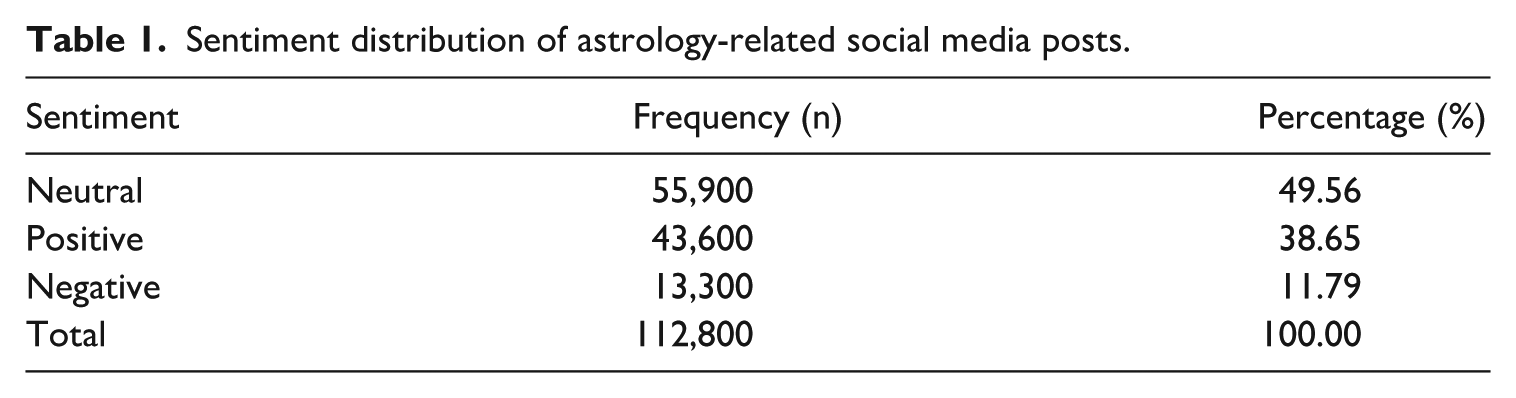
The findings reveal that neutral sentiment constitutes approximately half of all astrology-related posts, representing the single most prevalent emotional tone in the dataset. Positive sentiment accounts for nearly two-fifths of the discourse, while negative sentiment comprises just over one-tenth of all posts. The combined proportion of neutral and positive sentiment exceeds 88% of the corpus, indicating that astrology-related content on social media is predominantly characterized by either emotionally neutral presentation or favorable affective positioning. Critical or skeptical discourse, while present, represents a minority position within the broader conversational landscape.
This distribution pattern suggests that astrology functions primarily as a normalized topic of discussion in digital public space rather than a persistently contested domain. The substantial prevalence of neutral sentiment indicates that much astrology-related content serves descriptive, informational, or conversational functions without strong emotional coloring. The relatively modest proportion of negative sentiment further suggests limited antagonistic framing or sustained critical engagement within mainstream astrology-related discourse.
It is important to note that this distribution pattern alone cannot establish that astrology discourse is uniquely or distinctively low conflict. Without a comparative baseline for instance, sentiment distributions drawn from wellness, entertainment, political, or other spirituality-related discourse on the same platform, it remains possible that the observed profile (approximately 50% neutral, 39% positive, 12% negative) reflects a common feature of social media communication more broadly rather than a property specific to astrology. Accordingly, the claim of “normalization” and “low conflict” is advanced here as a descriptively grounded interpretation of this dataset rather than a conclusion validated through cross-topic comparison. Future research employing comparative baseline designs would be necessary to confirm the distinctiveness of astrology’s affective profile relative to other cultural or wellness topics.
Classification confidence across sentiment categories
Beyond categorical assignment, the sentiment classification model generated probabilistic scores reflecting the degree of confidence in each classification decision. Analysis of these probability distributions provides insight into the clarity and intensity of emotional positioning across different sentiment categories. Figure 1 illustrates the mean predicted probability scores for each sentiment class, organized by the assigned sentiment category.
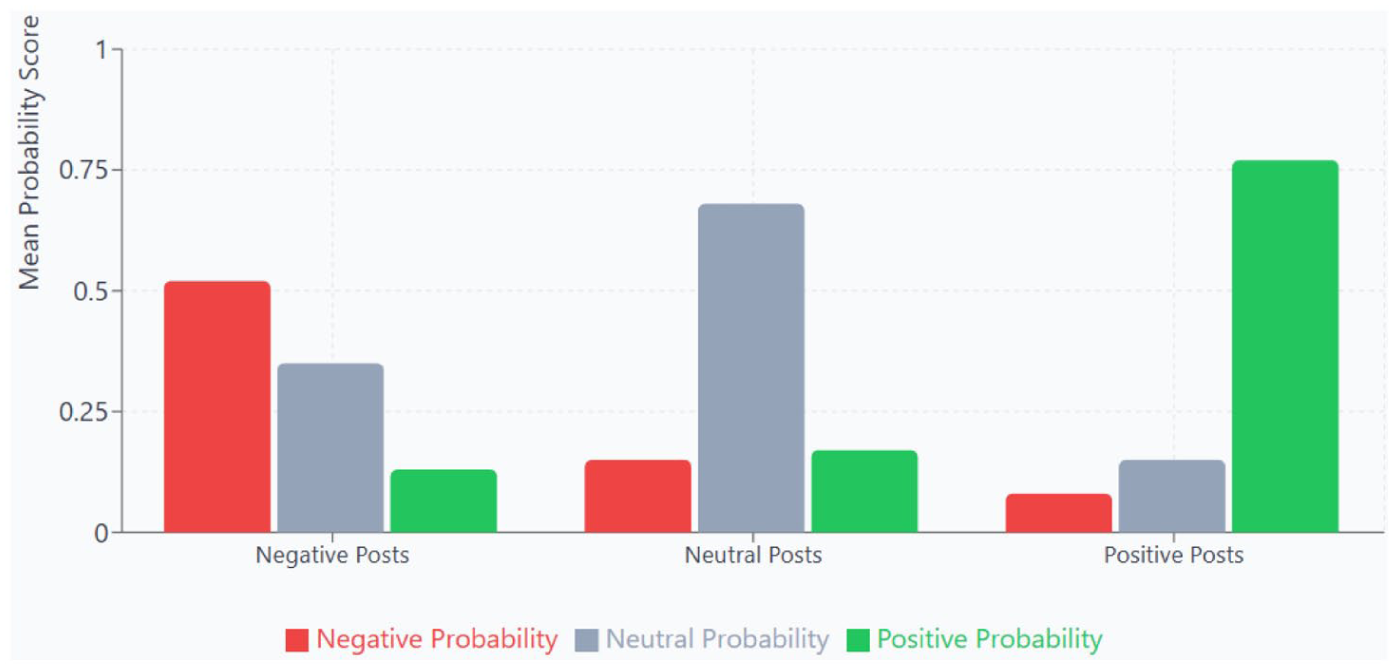
Mean sentiment probability scores by sentiment category.
The probability patterns reveal meaningful distinctions in emotional clarity across sentiment categories. Posts classified as positive sentiment exhibited consistently high positive probability scores, indicating unambiguous favorable affective positioning. In contrast, posts classified as negative sentiment displayed probability distributions that more frequently approached the neutral boundary, suggesting greater emotional ambivalence or mixed affective cues within critical discourse.
This asymmetry in classification confidence implies that positive expressions about astrology tend to be emotionally explicit and straightforward, while negative expressions more commonly incorporate qualifying language, hedging, or tonal complexity that produces less definitive emotional signals. The finding suggests that favorable astrology-related discourse operates through clearer affective channels, whereas critical or skeptical discourse may be tempered by social conventions, ambivalence, or rhetorical strategies that soften negative positioning.
Relationships between sentiment categories and subjective-evaluative dimensions
The second research question examined how sentiment categories relate to levels of subjectivity and evaluative polarity in user discourse. Table 2 presents mean subjectivity and polarity scores calculated for each sentiment category.
Mean subjectivity and polarity scores by sentiment category.
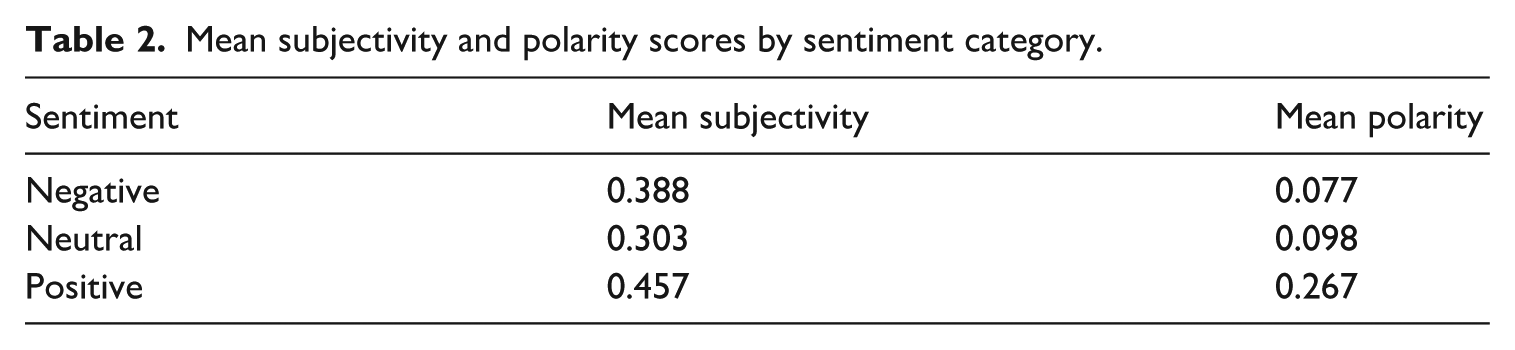
Substantial differences emerged across sentiment categories on both subjective and evaluative dimensions. Positive sentiment posts exhibited the highest mean subjectivity scores, indicating that favorable astrology-related discourse is strongly associated with personal opinion, experiential claims, and subjectively framed expression. These posts also demonstrated the highest mean polarity scores, reflecting pronounced evaluative intensity and directional valence in language use. The convergence of elevated subjectivity and polarity in positive discourse suggests that favorable engagement with astrology is characterized by both personal investment and emotionally charged evaluative language.
Neutral sentiment posts displayed the lowest mean subjectivity scores, consistent with descriptive, informational, or observational communication styles that minimize personal positioning. The polarity scores for neutral posts, while low, exceeded those of negative posts, likely reflecting the presence of mildly positive descriptive language that does not rise to the threshold of categorical positive sentiment.
Negative sentiment posts demonstrated moderate subjectivity levels, falling between neutral and positive categories. This intermediate positioning indicates that critical or skeptical astrology-related discourse is not uniformly detached or impersonal, but neither does it exhibit the degree of subjective engagement observed in positive discourse. Notably, negative posts exhibited the lowest mean polarity scores despite their classification as negative sentiment. This apparent contradiction likely reflects the asymmetric nature of polarity measurement, where negative evaluative language may register lower absolute polarity values than intensely positive language, and where critical discourse may employ more neutral vocabulary even when expressing disapproval or skepticism. Figure 2 provides a visual representation of these patterns across sentiment categories.
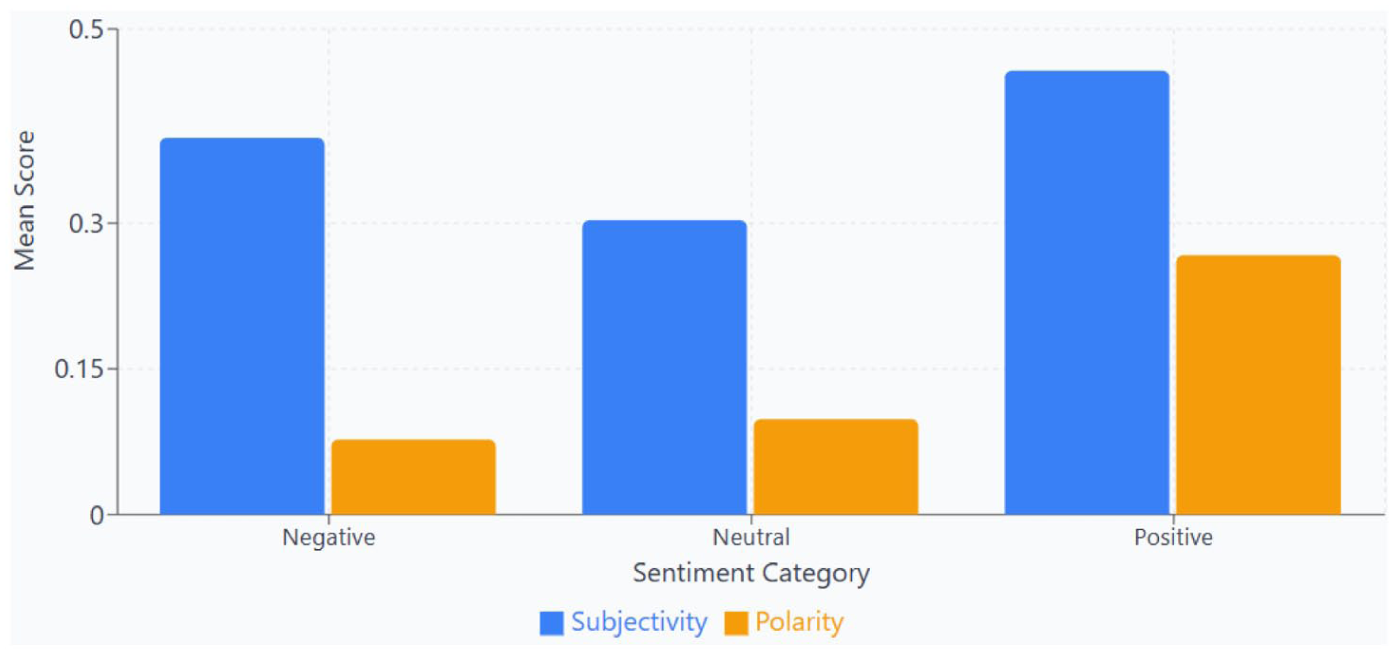
Mean subjectivity and polarity scores across sentiment categories.
It should be acknowledged that the positive mean polarity score among negatively classified posts (0.077) points to a genuine methodological tension between the transformer-based sentiment classifier and the TextBlob lexicon-based polarity measure. These two instruments capture partially distinct dimensions of affect: the transformer model assesses contextual, sequence-level sentiment, while TextBlob assigns polarity based on lexicon matches at word level. Their divergence in the negative category suggests that some posts flagged as negative by the contextual model contain lexical items coded as mildly positive by the polarity lexicon a pattern consistent with hedged criticism, ironic understatement, or sarcastic positivity. This discrepancy is a recognized limitation of multi-instrument sentiment frameworks (see Pellert et al., 2022) and constrains the degree to which polarity scores should be interpreted as simple reinforcing evidence for sentiment categories. Findings from the two measurement approaches are therefore best read as complementary rather than convergent indicators of affective tone.
The relationship between sentiment categories and subjective-evaluative dimensions reveals that affective tone in astrology-related discourse operates in conjunction with distinct patterns of personal engagement and evaluative intensity. Favorable discourse combines emotional positivity with high subjectivity and strong evaluative positioning, suggesting that positive engagement with astrology is characterized by personal investment and explicit value judgments. In contrast, critical discourse maintains more restrained subjective and evaluative profiles, indicating that negative sentiment in this domain does not typically manifest as highly personalized or intensely evaluative expression.
Prevalence of defensive emotional patterns in astrology-related discourse
The third research question investigated the extent to which astrology-related discourse exhibits emotionally defensive or legitimizing patterns, particularly in response to negative sentiment. Using the composite defensive affect indicator, posts were identified as potentially defensive if they simultaneously demonstrated negative sentiment and above-median subjectivity, signaling emotionally charged critical engagement with heightened personal involvement.
Table 3 presents the distribution of posts meeting the criteria for defensive affect.
Prevalence of defensive emotional patterns.
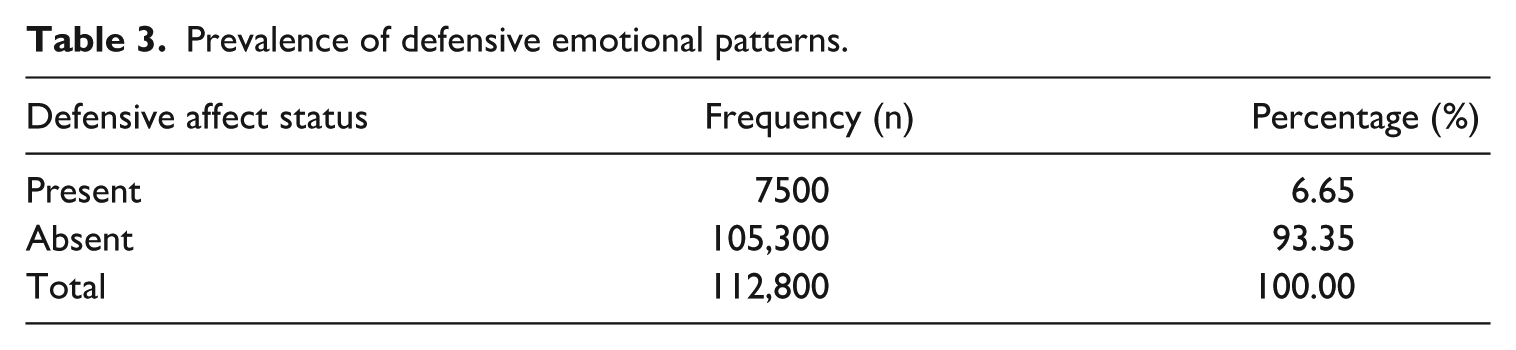
The analysis revealed that only 6.65% of all posts exhibited characteristics consistent with defensive affect, while the overwhelming majority of discourse did not demonstrate emotionally defensive positioning. This finding indicates that emotionally charged, personally engaged defensive responses constitute a minor subset of astrology-related social media discourse. Among the 13,300 posts classified as negative sentiment, 7500 (approximately 56%) met the additional criterion of elevated subjectivity.
The low prevalence of defensive emotional patterns suggests that astrology-related discourse on social media does not typically operate under conditions of sustained legitimization pressure or emotional conflict. Most content, including posts expressing critical or skeptical perspectives, does not exhibit the combination of negative affect and heightened personal engagement that characterizes defensive communication. This pattern implies that astrology has achieved a degree of normalization within digital public discourse such that discussions occur without pervasive defensiveness from proponents or aggressive criticism from skeptics.
The finding also suggests that the limited negative sentiment observed in the overall distribution is not primarily driven by emotionally defensive reactions, but rather reflects genuinely limited critical engagement or the presence of mild skepticism expressed without strong emotional investment or personal stakes.
Synthesis of findings
Collectively, the results provide a comprehensive empirical characterization of astrology-related discourse on social media across multiple affective dimensions. The data demonstrate that this discourse is dominated by neutral and positive emotional tones, with negative sentiment constituting a modest minority. Positive discourse exhibits clear affective positioning, high subjectivity, and strong evaluative intensity, indicating that favorable engagement with astrology is characterized by personal investment and emotionally explicit expression. Negative discourse, while present, displays more ambiguous emotional signals and moderate subjective engagement, suggesting that critical perspectives are expressed with greater emotional restraint.
The minimal presence of defensive emotional patterns further reinforces the interpretation that astrology functions as a normalized element of digital public discourse rather than a persistently contested belief domain requiring active legitimization. The affective landscape of astrology-related social media conversation appears characterized more by casual engagement, positive identification, and descriptive exchange than by polarized debate or emotionally charged conflict. These patterns provide empirical support for conceptualizing astrology as a culturally integrated form of digital discourse with distinct emotional characteristics that differentiate it from more contentious topics in online public space.
Discussion
Existing research increasingly demonstrates that astrology functions as a meaningful form of emotional discourse within digital public spaces, enabling users to articulate feelings related to identity, uncertainty, hope, and anxiety through platform-mediated interaction (Zhang and Wang, 2025). Rather than operating merely as entertainment or belief affirmation, astrology-related content appears embedded in broader affective economies of social media, where emotional expression, symbolic interpretation, and relational sense-making intersect. Within this context, sentiment analysis offers valuable methodological tools for capturing large-scale affective patterns—particularly when employing advanced deep learning models capable of handling contextual nuance and informal language. At the same time, prior scholarship cautions against overinterpretation of aggregate sentiment signals, noting persistent challenges such as sampling bias, performativity shaped by platform norms, and context insensitivity in automated classification (Akhila et al., 2025; Pellert et al., 2022; Rodríguez-Ibáñez et al., 2023). Temporal approaches further underscore that affective expressions around astrology and spirituality are not static, but fluctuate in response to social events, cultural rhythms, and platform dynamics (Pellert et al., 2022; Rodríguez-Ibáñez et al., 2023), highlighting the importance of situating sentiment findings within broader communicative and ethical frameworks (Chhetri et al., 2025).
Interpreted through the lens of Affective Publics theory, the findings of this study suggest that astrology-related discourse constitutes a form of low-conflict affective publicness within digital environments. The dominance of neutral and positive sentiment, alongside the relatively limited presence of emotionally defensive expressions, indicates that astrology operates largely outside the polarized legitimacy struggles that characterize many contemporary online debates, such as those surrounding science, politics, or public health. Rather than mobilizing antagonistic affect or justificatory rhetoric, astrology-related communication circulates as a normalized emotional vernacular through which users coordinate moods, manage uncertainty, and engage in lightweight forms of belonging (Papacharissi, 2016; Papacharissi and De Fatima Oliveira, 2012). This pattern challenges assumptions that affective publics are inherently conflictual or polarizing, instead illustrating how emotionally networked publics may also stabilize discourse by enabling shared emotional orientation without sustained contestation or ideological escalation. This interpretation aligns with broader conceptualizations of affective publics as narratively driven and emotionally connective formations beyond overt political contestation (Papacharissi, 2015), while also resonating with updated uses and gratifications perspectives that emphasize how platform affordances and algorithmic feedback amplify emotionally oriented media practices (Sundar and Limperos, 2013).
From a Uses and Gratifications perspective, the observed associations between positive sentiment, elevated subjectivity, and stronger evaluative polarity can be understood as outcomes of purposive engagement with astrology content. Users appear to mobilize astrology less as a site of epistemic debate and more as a symbolic resource for emotional regulation, identity narration, and interpersonal sense-making—gratifications well aligned with the affordances of short-form, repeatable, and algorithmically amplified content (Chen, 2011; Smock et al., 2011). The comparatively restrained subjectivity and polarity associated with negative sentiment further suggest that critical engagement with astrology rarely reflects deep personal investment or strong oppositional stance. Instead, skepticism tends to be expressed in emotionally muted ways, reinforcing the interpretation of astrology as a low-stakes, affectively oriented media practice rather than a contested knowledge domain.
Two important theoretical scope limitations must be acknowledged here. First, regarding Affective Publics: the empirical analysis in this study measures sentiment at the level of individual posts and does not analyze network structure, reply chains, retweet cascades, hashtag diffusion, or temporal interaction patterns. Affective publicness, as theorized by Papacharissi (2015, 2016), refers to connectivity and collective formation through circulating emotion dynamics that require relational and structural data to be directly observed. Accordingly, claims about “affective publicness” in this article should be read as theoretically motivated interpretations of aggregate affective tone, not as empirically established evidence of public formation or networked emotional co-production. The Affective Publics framework is employed here as an interpretive lens for situating the findings within a broader literature on emotionally structured digital communication, not as a framework whose core mechanisms have been operationalized and tested. Second, regarding Uses and Gratifications: because no survey, experimental, or interview data on user motivations were collected, conclusions about specific gratifications (comfort, identity narration, belonging, emotional regulation) are inferred from text-level sentiment patterns rather than measured directly. U&G is similarly employed as an interpretive framework rather than a tested theoretical model in this study. These limitations do not invalidate the empirical findings but they do constrain the scope of valid theoretical inference.
While the findings highlight astrology as a low-conflict affective discourse, this pattern should not be assumed to extend uniformly to all forms of culturally contested or epistemically peripheral content. Domains such as alternative medicine, conspiracy narratives, or politicized spirituality may activate stronger legitimacy pressures and defensive affect, producing markedly different affective dynamics. Future comparative work could clarify the boundary conditions under which emotionally resonant discourse remains low conflict rather than polarizing.
Taken together, these findings extend Uses and Gratifications scholarship by demonstrating how emotionally expressive yet low-conflict gratifications can sustain recurring engagement with culturally ambivalent content in platformed public spaces. At the same time, they contribute to affective publics research by empirically showing how affective resonance—rather than polarization or argumentative intensity—can organize durable forms of public connectivity. Astrology thus emerges not as an anomaly within digital culture, but as a revealing case of how emotionally meaningful, epistemically peripheral discourses persist and circulate through affective alignment, symbolic flexibility, and everyday communicative routines.
Conclusion
This study advances research on digital culture and emotion by conceptualizing astrology not as a belief system to be evaluated epistemically, but as a low-conflict emotional discourse embedded in platformed public life. By integrating Affective Publics theory with Uses and Gratifications, the analysis demonstrates how astrology-related communication operates simultaneously at collective and individual levels: as a shared affective vernacular through which users coordinate moods, uncertainty, and lightweight forms of belonging, and as a purposive media practice oriented toward emotional regulation, identity narration, and interpersonal sense-making. The predominance of neutral and positive sentiment, together with the limited presence of emotionally defensive expressions, indicates that astrology occupies a normalized communicative space largely insulated from the legitimacy struggles and polarization dynamics that characterize many contemporary digital debates. Rather than mobilizing antagonistic affect or justificatory rhetoric, astrology-related discourse circulates as an emotionally resonant yet low-stakes mode of public expression.
In theoretical terms, these findings contribute to affective publics scholarship by empirically illustrating that emotionally networked publics are not inherently conflict-driven; they may also function as stabilizing environments in which shared affective orientations are sustained without sustained contestation. At the same time, the results extend Uses and Gratifications research by showing how emotionally expressive gratifications—such as comfort, reassurance, symbolic self-understanding, and relational framing—can underpin recurring engagement with culturally ambivalent content that lacks strong epistemic authority. Astrology thus emerges as a paradigmatic case of how emotionally meaningful but epistemically peripheral discourses persist and circulate in digital environments through affective resonance rather than argumentative force.
Methodologically, the study demonstrates the value of combining transformer-based sentiment classification with complementary subjectivity and polarity measures to capture both the distribution and the qualitative texture of emotional discourse at scale. While sentiment analysis—particularly when leveraging advanced NLP models—offers powerful tools for mapping affective patterns in digital public spaces, the findings also underscore the importance of theoretical grounding when interpreting aggregate emotional signals. Future research may build on this approach by extending comparative analyses to other culturally contested yet emotionally salient domains, exploring cross-platform variations, or incorporating longitudinal designs to examine how affective normalization evolves over time. Taken together, the study highlights astrology as a revealing site for understanding how emotion, media use, and public discourse intersect in contemporary digital life. More broadly, the findings invite scholars of digital communication to reconsider how emotional legitimacy is negotiated in everyday online discourse, suggesting that not all emotionally charged publics are sites of contestation. Recognizing low-conflict affective formations may be essential for understanding how platforms sustain participation through reassurance, familiarity, and symbolic play rather than through polarization.
Limitations and scope of inference
The theoretical claims advanced in this article must be understood within the bounded scope of what the empirical strategy can and cannot establish. Several limitations are foregrounded here as substantive constraints on inference, not merely procedural caveats. First, the absence of a comparative baseline means that the observed sentiment distribution approximately 50% neutral, 39% positive, 12% negative cannot be confirmed as distinctive to astrology-related discourse. Whether this profile is meaningfully different from other wellness, entertainment, or spirituality topics on X remains an open empirical question. The study therefore describes the affective profile of this corpus rather than establishing astrology as uniquely or comparatively low conflict. Second, the empirical method analyzes isolated post-level sentiment and does not capture interaction data, reply structures, repost cascades, or temporal dynamics. Because Affective Publics theory fundamentally concerns networked emotional connectivity the circulation and co-production of affect across linked actors, the current analysis supports interpretations about aggregate affective tone within this sample, but not about the formation, maintenance, or structure of affective publics per se. Third, Uses and Gratifications theory is employed as an interpretive framework for contextualizing sentiment patterns, not as a tested explanatory model. User motivations (e.g., comfort-seeking, identity narration, belonging) are inferred from text-level signals rather than measured through surveys or interviews, and should therefore be understood as theoretically plausible rather than empirically confirmed. Fourth, the operationalization of “defensive affect” through the combination of negative sentiment and above-median subjectivity is a computational proxy that cannot distinguish genuinely defensive communication from sarcasm, ironic self-deprecation, or rhetorical frustration. The prevalence figures for defensive affect reported in this study should be read accordingly. Fifth, the divergence between transformer-based sentiment labels and TextBlob polarity scores most notably the positive mean polarity among negatively classified posts reflects a methodological tension between contextual and lexicon-based tools. These instruments should be treated as complementary rather than mutually validating measures. Taken together, these constraints mean that the study’s contribution is best understood as descriptive and theoretically generative: it characterizes the aggregate affective profile of a large corpus of astrology-related social media posts and situates those patterns within relevant theoretical frameworks, rather than offering confirmatory evidence for strong causal or comparative claims. Future research addressing these limitations through comparative baselines, human coding validation, interaction and network analysis, and longitudinal design would substantially strengthen the theoretical inferences drawn here.
Footnotes

Funding
The author received no financial support for the research, authorship, and/or publication of this article.
Declaration of conflicting interests
The author declared no potential conflicts of interest with respect to the research, authorship, and/or publication of this article.