






Abstract
Underpinned by the theory of planned behaviour (TPB) and the attitude-social influence-efficacy (ASE) model, this study develops an integrative framework to unveil the key antecedents and consequences of sustainable consumption behaviour (SCB) in tourist destinations. This research applied a quantitative approach, using an online survey to gather 744 responses from Oman and India. The PLS-SEM results depicted that visitors’ sustainable consumption intention (SCI) is affected by their attitudes, subjective norms, and perceived behavioural control. Visitors’ SCI significantly influenced SCB, which in turn, impacted their well-being. The moderating impact of perceived risk is not supported. This work is among the first attempts to develop a comprehensive model to investigate the determinants and consequences of SCB. Additionally, it broadens the scant research on SCB conducted in India and Oman.
Keywords
Introduction
Given the growing worldwide environmental risks, sustainable consumption (SC) has gained remarkable significance among researchers and practitioners (Ayar and Gürbüz, 2021). SC refers to the use of products and services in ways that minimize environmental harm, ensuring resource preservation for both current and future generations (Al-Nuaimi and Al-Ghamdi, 2022). It has emerged as a practical response to the challenges posed by traditional consumption patterns, emphasizing practices and behaviours that meet ecological needs, protect the environment, and foster social development (Glavič, 2021). Sustainable consumption, within the tourism context, encompasses environmentally conscious practices (e.g., purchasing eco-friendly products or services, minimizing solid waste, and deploying sustainable disposal methods) while visiting the destination (Lee and Lee, 2015). In addition, SC is paying great attention to certain factors such as health, education, and quality of life, alongside environmental concerns, poverty reduction, industrial efficiency, and economic development. It emphasizes a balanced approach to meeting current needs without compromising future generations’ ability to thrive (Ayar and Gürbüz, 2021;Christie and Venter De Villiers, 2023; Nekmahmud et al., 2022).
While still providing for fundamental needs, SC seeks to minimise the use of natural resources, waste emissions, and ecologically hazardous materials (Ayar and Gürbüz, 2021; Hariram et al., 2023; Quoquab and Mohammad, 2020). By doing so, SC contributes to achieving the Sustainable Development Goals (SDGs), such as mitigating harm to human health and the environment, curbing waste generation, fostering eco-friendly lifestyles (Ramkissoon et al., 2013; Van Driel et al., 2024), and promoting ethical consumerism. However, while these goals are extensively addressed within the context of developed nations in Western academia, significant challenges specific to developing countries remain underexplored (Chun, 2024; Kutaula et al., 2024).
Globally, the approaches of SC continue to evolve through the adoption of emerging technologies (Sargın, 2024), shifts in economic conditions (Kontautienė et al., 2024), and the influence of cross-cultural behaviours (Chun, 2024), broadening its scope and applications across diverse regions. Although approaches like responsible tourism, green tourism, the circular economy, and community-based tourism are effective in reducing the negative effects of tourism (Li et al., 2024). However, without taking well-being and perceived environmental risk into account, sustainable tourism consumption cannot be completely comprehended or optimised. These components are crucial for attaining long-term sustainability and are intricately linked. Nonetheless, a more comprehensive understanding of the relationship between perceived risks and well-being can help both tourists and tourism stakeholders make better decisions. By considering these components, sustainable tourism can actively promote favourable outcomes for people, places, and the environment rather than just minimising harm (Ghaffar and Islam, 2023; Maduku, 2024; Wang et al., 2024). Additionally, to provide safe and wholesome living circumstances, human-related consumption habits have to be changed given the accelerating pace of environmental depletion, climate change, and their resulting crisis (Ramkissoon, 2022). Such threats also produced socioeconomic and cultural issues and propelled the idea of sustainable consumption behaviour (SCB) to the fore. SCB has recently emerged as a critical field of research in behavioural and consumer market studies (Mohd Suki et al., 2022; Verma and Chandra, 2018). A different school of scholars defines SCB as the adoption of green living habits, while another school defines it as an act of voluntary minimalism or aversion to consumption (Chatterjee, 2020; Michel et al., 2023; Vergura et al., 2023).
Diverse perspectives make it a complex phenomenon to explain and anticipate at institutional and personal levels (Hosta and Zabkar, 2021). Prior research shows that environmentally conscious individuals have become more prevalent over time, and they became more alarmed by environmental issues when they experienced them (Hosta and Zabkar, 2021; Nekmahmud et al., 2022). A variety of factors affect the SCB of an individual, including sociocultural and psychographic factors like value, belief, and personal norms (Elhoushy and Lanzini, 2021; Nekmahmud et al., 2022). Prior studies have highlighted SCB across different contexts, ranging from specific behavioural domains (Saari et al., 2021) to purchasing green products (Nekmahmud et al., 2022). Further, individuals’ habits and past behaviour substantially predict consumption behaviour (Elhoushy and Lanzini, 2021), while altruistic and environmental variables including environmental concern, knowledge, and environmental behaviour could shape the behavioural pattern (Saari et al., 2021). Ghaffar and Islam (2023) suggested that the antecedents of sustainable consumption intention (SCI), which eventually lead to SCB, include perceptions of environmental awareness, risk, societal pressure, and health consciousness.
In tourist destinations, it is crucial to understand visitors’ intentions and behaviours, which are predominantly shaped by several factors, including psychological and social factors (e.g., attitude, subjective norms, and perceived behavioural control) (e.g., Soliman, 2021) and health consciousness (e.g., Ghaffar and Islam, 2023; Soliman et al., 2023a). However, little is known regarding the key factors shaping the SCB of visitors in their destinations. Therefore, this work seeks to develop an integrative model of the key antecedents and outcomes of SCB drawing on the Theory of Planned Behaviour (TPB) (Ajzen, 1991; Ajzen and Fishbein, 2000) and the Attitude-Social Influence-Efficacy Model (ASE) (De Vries et al., 1988). Furthermore, the research model has been expanded, in this study, by incorporating some crucial variables, including tourist well-being, and perceived risk, that could determine SCB by evaluating the relationship between an individual’s consumption behaviour and well-being. Assessing a person’s risk perception behaviour will aid in predicting their behaviour (Mohammed Abubakar, 2016). The concept of well-being is increasingly being incorporated into both consumer behaviour and tourism research (Huang et al., 2019). In fact, tourist exhibits a propensity to buy or use a good or service that satisfies their needs for well-being (Dekhili and Hallem, 2020). Put differently, customers who perceive high well-being are likely to feel joyful, satisfied, at ease, serene, and quiet in addition to being in good health. Additionally, risk perceptions focus on individuals’ observations of the factors that lead to unfavourable outcomes in the natural environment (Saari et al., 2021). Studies conducted across national borders have demonstrated that people’s perceptions of environmental risks vary widely across the globe and are related to attitudes and behaviour (Saari et al., 2021).
Despite the TPB model’s widespread application in research on tourist behaviour, however, earlier scant studies examined how tourists behaved when making green purchases (Verma and Chandra, 2018; Wang et al., 2018). So far, within the TPB framework, some scholarly articles examined the SCB of consumers/tourists (Abbasi et al., 2021; Bui, 2023). Even though scholarly research on SCB is plentiful (Francis and Sarangi, 2022; Nekmahmud et al., 2022), there have been insufficient scholarly attempts to evaluate tourists’ SCB while it deals with rational choice in favour, or it is against and has become a central focus for national and international policy for decades (Ghaffar and Islam, 2023). More specifically, the authors are aware of no previous studies, that have combined and extended the TPB and ASE models to examine the essential predictors and consequences of SCB within the tourist destination setting, especially in both Oman and India, though the potentiality is very high in terms of economic and cultural perspective (Chun, 2024) and will work together in certain areas like sustainability and scientific harnessing of resources (Department of Science and Technology, Government of India, 2024). Integrating perceived risk and well-being into the TPB and the ASE models offers a valuable opportunity to generate deeper insights into their influence on tourists’ behavioural perspectives towards SCB. This integration not only highlights the critical role of perceived risk in shaping tourist decision-making but also enriches theoretical frameworks with new dimensions relevant to the advancement of sustainable tourism in the face of evolving attitudes toward sustainability. In particular, incorporating perceived risk into the TPB enhances its predictive accuracy by offering a more comprehensive understanding of how tourists assess and respond to uncertainties associated with sustainable consumption (Maduku, 2024; Zeng, 2023). Additionally, embedding well-being within the TPB framework expands its scope by emphasizing the psychological and intrinsic benefits tourists associate with sustainability practices. This approach illuminates how factors such as psychological happiness and personal values significantly impact sustainable decision-making, thereby offering a broader perspective on the motivations driving sustainable tourism behaviour (Lv et al., 2024; Wang et al., 2024).
Finally, a complete insight can be possible into how to achieve visitors’ well-being through improvising SCB (Seeler et al., 2021) in a wide spectrum. Moreover, as far as the authors are aware, no research has integrated perceived risk, and well-being to unveil the SCB of tourists in a cross-country context. Besides, India and Oman share strong bilateral relations indicated by shared cultural, historical, and economic realities, seeking strategic partnerships in various sectors including infrastructure, tourism, healthcare, education etc. (Manohar Parrikar Institute for Defence Studies and Analyses, 2024). This more comprehensive and nuanced use of the TPB paradigm will close knowledge gaps about how tourists interact and behave with SC.
Given the preceding gaps, this study consequently aims to (a) assess the influence of tourists’ attitudes, subjective norms, and perceived behaviour control (PBC) on their SCI, (b) examine the interrelationship between tourists’ SCI, SCB, and their well-being, (c) investigate the moderating role of perceived risk on the path between tourists’ SCI and their SCB. This study presents major contributions by filling up the knowledge gap in the literature about SCB and its associated determinants and outcomes within the tourist destination setting. It also expands the extant studies on tourists’ well-being, justifying the contents for sustainable development of tourism from a cross-country perspective (Chun, 2024) of two different regions. The findings presented in this research also support the importance of personal risk perception in promoting sustainable behaviours at tourism destinations. Furthermore, by incorporating the consumption preferences of tourists, the study’s findings can support the development of effective marketing strategies and policies concerning SCB in tourist destinations.
Theoretical background and hypotheses
Underpinning theories
The theoretical foundation of this paper is built upon two theories: the TPB (Ajzen, 1991) and ASE (De Vries et al., 1988) models. The TPB holds that behaviour is driven by individuals’ intentions, which are influenced by their attitudes, subjective norms, and PBC. The TPB was developed to identify underlying causes of behaviour while looking at environmentally conscious buying. The TPB model is frequently employed to investigate environmental behaviour patterns (Ajzen, 1991; Hameed et al., 2019). Additionally, the ASE model asserts that an individual’s behaviour is a function of their intention, with both being most directly influenced by three categories of proximal cognitive factors: expectancies related to self-efficacy, social influences, and attitudes. ASE explains how behaviour can be predicted by examining human behaviour intentions (De Vries et al., 1988), further prior research highlighted that behaviour can also be predicted by connecting an individual’s attitude, social influence, and self-efficacy with their behavioural intentions (Aminifar et al., 2023).
Attitude, subjective norms, perceived behavioural control, and intention
Attitude is a psychological tendency that manifests as favouritism or disafforestation of a specific entity, as well as ideas and feelings about the object that lead to consistent behaviour towards it (Ajzen and Fishbein, 2000). In tourism literature, tourists’ attitude is composed of three components viz. Cognitive (an assessment made in the formation of an attitude), affective (a psychological response expressing a visitor’s preference for a destination), and behavioural (a verbal declaration of the intention to visit) (Soliman, 2021). Visitors’ attitudes in the tourism industry may be categorized broadly into two segments, viz. Pre-trip experience without actual consumption and post-trip experience with actual consumption (Wang et al., 2021). Subjective norms denote the societal pressures that people feel to conform to specific behaviours or acts (Ajzen, 1991). This indicates that subjective norms are an individual’s idea of what it means to behave or not act in a social setting when it comes to behaviour (Abbasi et al., 2021). Individuals’ perceived control over their behaviour to the extent that they influence these diverse internal and external elements, following their intentions, is advised (Ayar and Gürbüz, 2021). The attitude of visitors, subjective norms, and PBC are integrated with altruistic values based on the TPB, which significantly influences intention. Travel decision-making is associated with psychological (attitudes), social (subjective norm) factors and PBC (Bianchi et al., 2017; Soliman, 2021). Passafaro (2020) underlined that attitudes can positively contribute to the understanding of people’s conduct in various sectors (e.g., sustainable consumption). The results of contemporary scholars have highlighted that consumer attitudes, subjective norms and PBC are significant determining factors of consumers’ intentions. For instance, Han and Kim (2010) and Abbasi et al. (2021) empirically prove the same while gauging the intention to revisit a destination, which has a significant influence on tourists’ behaviour (Hwang et al., 2020; Rojas-de-Gracia & Alarcón-Urbistondo, 2018). Therefore, the following hypotheses are:
Visitors’ attitude positively impacts sustainable consumption intention
Subjective norms positively impact sustainable consumption intention
Perceived behavioural control positively impacts sustainable consumption intention
Sustainable consumption intention and behaviour
Cleaner manufacturing, distribution, eco-innovation, circular economy, and waste systems are all facilitated by SCB (Giannetti et al., 2022). Concerns regarding the environment are prevalent among consumers, and their sustainable or green consumption patterns are found challenging because of the disconnect between their intentions and attitudes towards the environment and the reality of sustainable consumption on a global scale (Khan and Thomas, 2023; Wang et al., 2018). SCB is positively associated with a consciousness of the long-term effects that individual consumption patterns have on the natural or social environment, and it is often characterised by terms like responsible, environmentally, and socially friendly consumption behaviour (Carrington et al., 2010). Prior studies have revealed that intention is an effective predictor of behaviour within different settings. For instance, Asuamah Yeboah (2023) found that socio-cultural factors (i.e. social norms, cultural values and social influences process) strongly affect individual behaviour, and also inferred that values that emphasise social responsibility and environmental protection, for example, encourage pro-sustainability attitudes and behaviour. Also, Han and Kim (2010) and Soliman (2021) inferred that individual intentions are the driver of human behaviour while measuring revisit intentions. Ayar and Gürbüz (2021) and Garay et al. (2019) found similar results in their investigations, highlighting the fact that an individual’s behavioural intention is a proximate predictor of their actual behaviour and is formed through both volitional and non-volitional processes. Thus, it is hypothesized that:
Sustainable consumption intention positively impacts sustainable consumption behaviour
Sustainable consumption behaviour and well-being
Well-being has always been a philosophical and social concern for academics and thinkers; it is linked to gratifying idealised needs rather than real ones (Heathwood, 2014). It is also related to positive emotions resulting from interactions with others (Alizadeh, 2021). Many academics classify well-being in various ways, viz. Psychological, sociological etc. As it is still in its relative infancy (Chi, 2022). However, in empirical research, well-being is discussed in its hedonic (happy), cognitive (satisfaction), and eudaemonic (subjective vitality) components in various contexts (Guillen-Royo, 2019; Chun. 2024). The connection between behaviour and well-being has been investigated in prior studies. For example, Guillen-Royo (2019) found a positive association between SCB and an individual’s happiness and life satisfaction in Norway. Another study revealed that visitors’ SCB can directly result in favourable psychological outcomes, including hedonic and deeper level eudaemonic well-being (Aggarwal et al., 2024; Alizadeh, 2021), implying a positive correlation between the SCB and psychological well-being in tourism experiences (Aggarwal et al., 2024; Alizadeh, 2021). Guillen-Royo (2019) also found high levels of compatibility between SCB and subjective well-being and inferred that several psychological and lifestyle factors are linked to the well-being and sustainable consumption of an individual (Guillen-Royo, 2019; Kasser, 2017).
Within the realm of sustainable tourism marketing, Vinzenz et al. (2019) demonstrated that tourists who have a self-enhancement value orientation that is associated with an increase in emotional well-being and are less interested in sustainability are more likely to be persuaded by messages that provide information about a hotel’s sustainability performance in order to improve social and environmental well-being than are those who have a biospheric-altruistic value orientation and are highly interested. Leong et al. (2016) also opined that consumer behaviour and well-being may vary from one continent to another. Conversely, prior studies suggest that tourists’ consumption patterns only account for a small portion of their total happiness (Dominko and Verbič, 2022; Yue et al., 2023). Therefore, the following hypothesis is formulated:
Sustainable consumption behaviour of visitors has a positive impact on their well-being
The moderating role of perceived risk
Risk perception is understood as value assessments connected to uncertain circumstances arising from a specific risk (Matiza, 2020), which may be associated with ecology, climate change, health or other travel hazard. Risk perception is a primary predictor of behaviour, and lots of research investigated the concept of perceived risk (Dillard et al., 2012). There are two aspects to risk perception: cognitive and affective (Brug et al., 2004). Individuals’ assessed risk sensitivity and severity are the emphasis of the cognitive dimension, whereas their anxiety around risk exposure is the focus of the affective dimension (Higgins-Desbiolles et al., 2022). On the other hand, environmental risk perception is centred on an individual’s perceptions of the factors that lead to unfavourable consequences in the natural world (Saari et al., 2021). Research has shown that perceived environmental risk plays a significant role in behaviour prediction (Mohammed Abubakar, 2016).
Conventionally, prior studies have examined the effects of perceived risk on visitors’ behaviour towards outdoor leisure, mentioning the relationship between risk perception, behaviour, and intentions (Chi, 2022). Many studies have already measured the moderating role of perceived risks in a service context, which may be in credit card usage or to measure loyalty intention to reduce post-purchase dissonance etc. (Chahal et al., 2014). Since perceived risk is not always in line with the actual risk, Caber et al. (2020) found that perceived risk has a negative moderating influence on travel motivations, destination image and travel intention relationships. Joo et al. (2021) also found that perceived risks for tourism activities are negatively associated with their travel behaviour and travel decisions (intentions). Additionally, cross-national research has indicated that individual’s perceptions of environmental risk vary between countries and are related to their intentions and behaviour on various dimensions (Hadler and Haller, 2013). Based on this discussion, we hypothesize that:
Perceived risk negatively moderates the link between sustainable consumption intention and sustainable consumption behaviour Considering the aforementioned discussion, the theoretical hypothesized framework is provided in Figure 1.
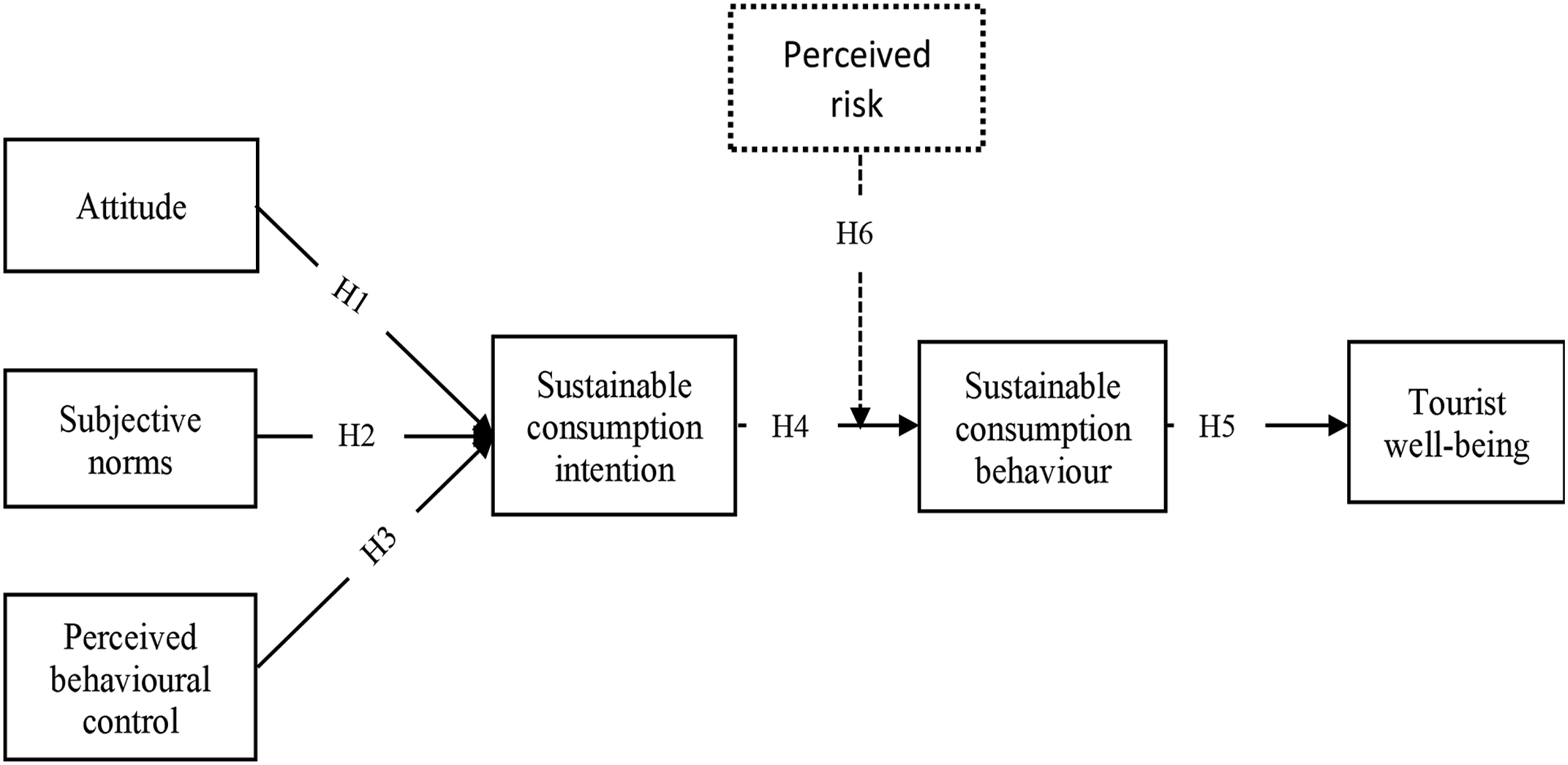
The theoretical model.
Methodology
Measures
The theoretical framework comprises seven reflective variables that are measured using validated items derived from previous literature (see Appendix 1). Attitude is determined by three items adapted from Wang et al. (2021). Subjective norms (4 items) and perceived behavioural control (4 items) were adapted from Abbasi et al. (2021). SCI was quantified using four items from Wang et al. (2021). A four-item scale is used to measure SCB, derived from (Saari et al., 2021). The measurement of perceived risk was conducted using a four-item scale adapted from Abbasi et al. (2021). Visitors’ well-being was scrutinized by three instruments collected from (Su et al., 2018).
Sample and data collection
Tourists who have recently visited any tourist destination in either India or Oman were the target sample. India and Oman have been chosen to examine the variations in the key antecedents and outcomes of SCB across two geographically and culturally distinct contexts. These countries were selected for their contrasting cultural landscapes and because they cater to diverse segments of residents and tourists, each drawn by the unique destination offerings. India has a rich cultural heritage, vibrant traditions, and expansive natural attractions, while Oman has serene landscapes, deeply rooted Arabian culture, and luxury experiences (Gulvady et al., 2023; Soliman et al., 2023a). This diversity allows for a comprehensive analysis of how destination-specific attributes influence sustainable tourism behaviours. For data gathering, non-probability sampling approaches were executed, considering the population is dispersed over the two countries’ diverse geographical regions. First, the survey was sent to respondents through their contacts (e.g., Facebook, WhatsApp, etc.) using self-purposive sampling. Second, convenience sampling is implemented by sharing the questionnaire’s link on social media platforms. Third, by requiring the participants to forward the link to their contacts, snowball sampling was carried out. This combined approach of non-probability sampling has been effectively utilized in prior tourism research (e.g., Hassan and Soliman, 2021; Soliman et al., 2023b) to mitigate nonresponse bias and enhance response rates.
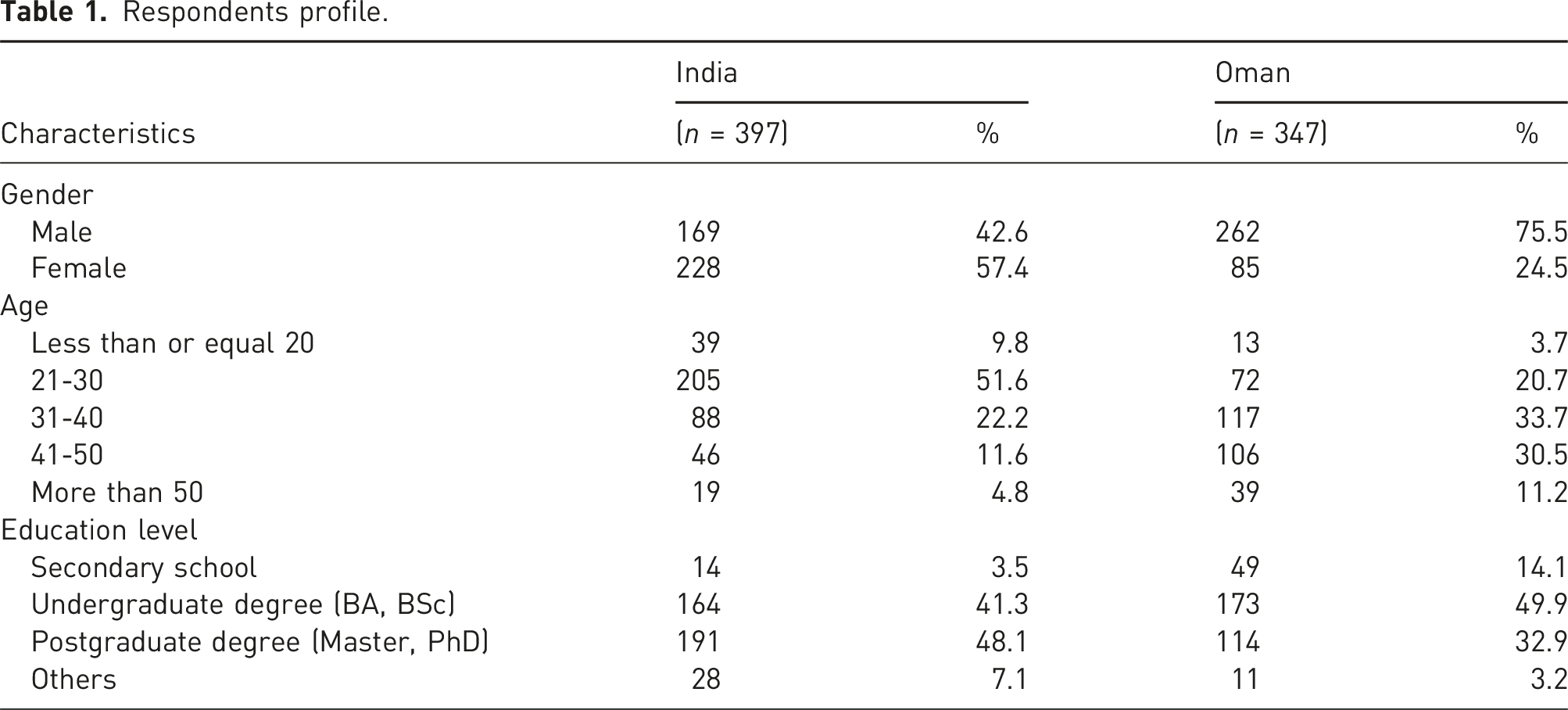
Respondents profile.
Data analysis
The demographics of survey participants are presented by descriptive statistics using SPSS 26. To test the hypotheses, PLS-SEM has been adopted using SmartPLS 4. PLS-SEM is undergoing significant advancements as a statistical modelling approach. It is an appropriate method for evaluating an extended theory’s integrative framework, incorporating moderating variables as well (Hair et al., 2020; Manley et al., 2021). Furthermore, it has garnered significant interest from scholars across different disciplines, including the realm of consumer behaviour (e.g., Gam et al., 2023; Mathew and Soliman, 2021; Selmi et al., 2021) and tourist destinations (e.g., Elbaz et al., 2023; Soliman et al., 2023a).
Results
Measurement model
Measurement model.
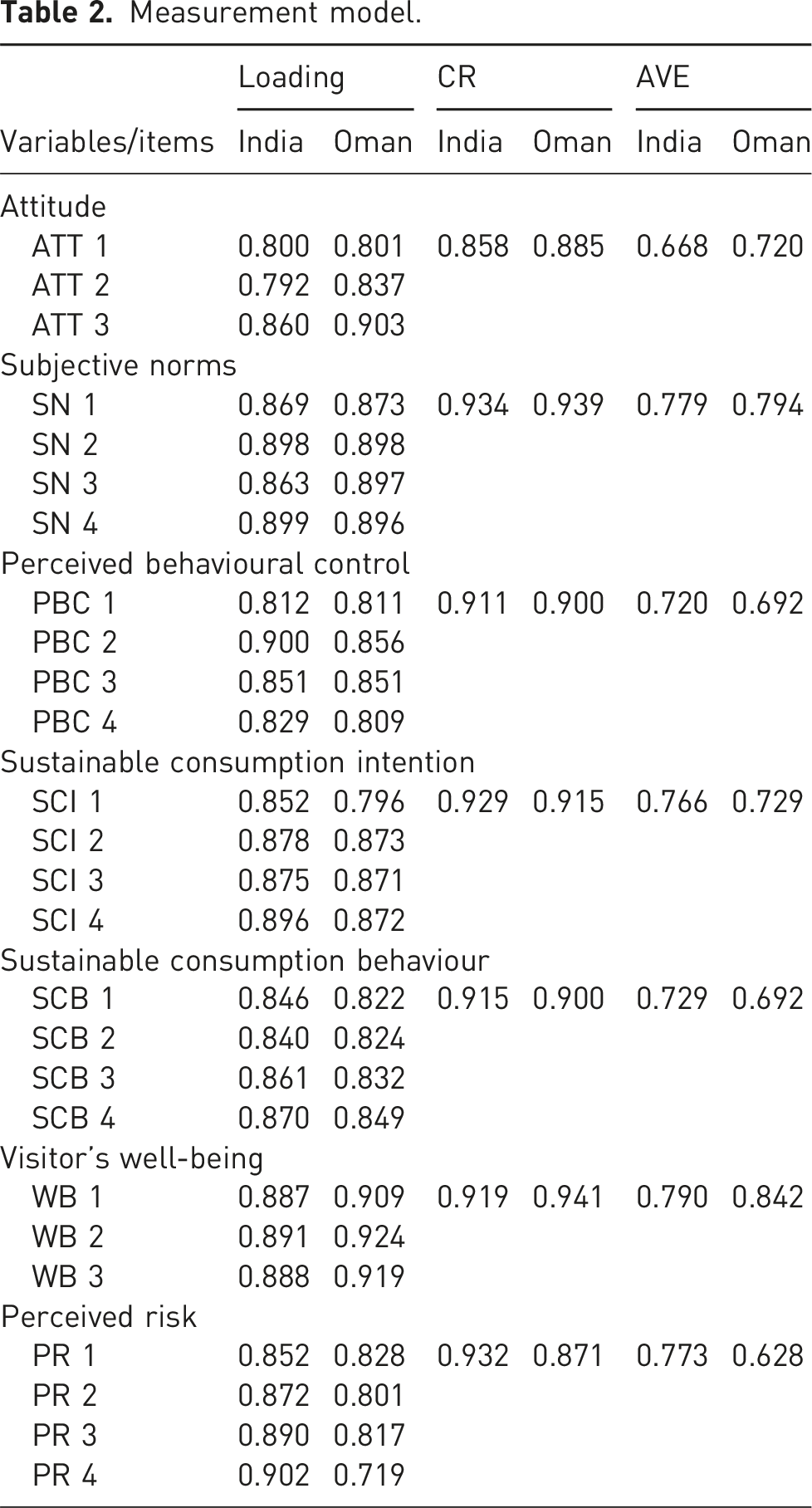
Discriminant validity.
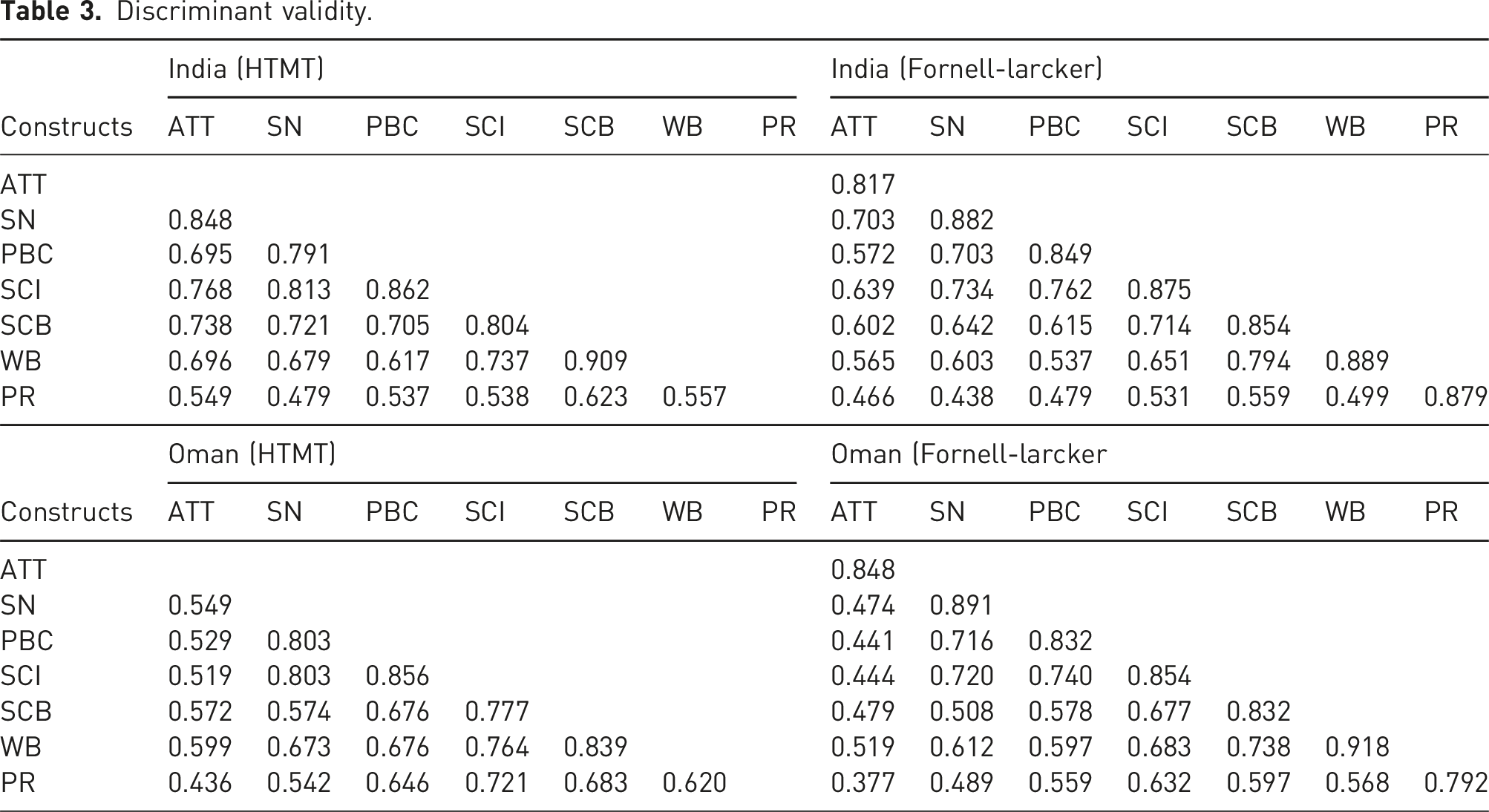
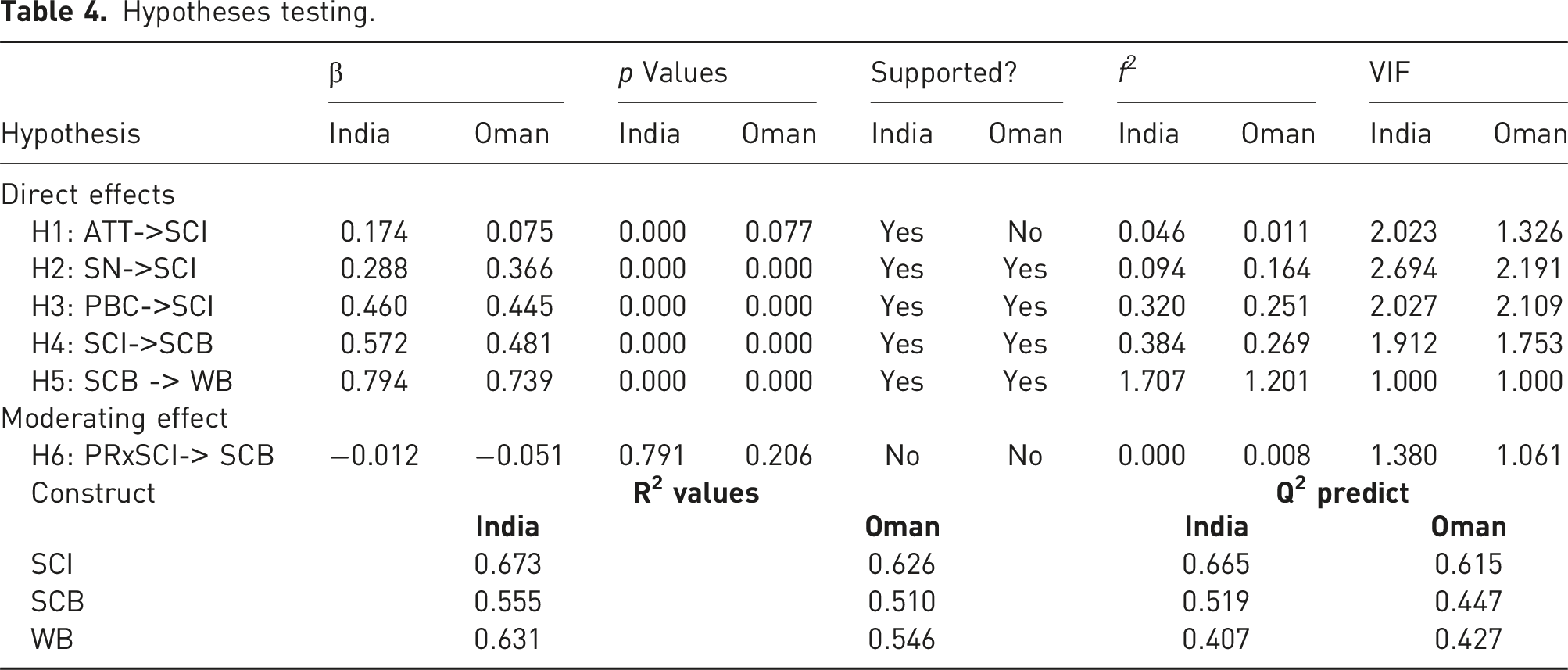
Hypotheses testing.
Structural model
Assessment of path coefficients (β), p values, and R2 values was performed to evaluate the structural model. The results (Table 4) revealed that visitor’s attitude toward sustainable consumption has a significant impact on SCI (β = 0.174, p = .000) in the case of India. Thus, the H1 is supported for India. However, this hypothesis is not supported in the case of Oman due to the lack of influence of attitude on SCI, as the p-value shows a non-significant result (β = 0.075, p = .077). Additionally, H2 and H3 are supported as the results provided satisfactory β and p-value (H2: β = 0.288, p = .000) (H3: β = 0.460, p = .000) for India and (H2: β = 0.366, p = .000) (H3: β = 0.445, p = .000) for Oman. The results related to H4 also expressed a similar trend (H4: β = 0.572, p = .000) for India and (H4: β = 0.481, p = .000) for Oman. Thus, H4 is also supported. Moreover, H5 is supported as all the criteria are satisfied (H5: β = 0.794, p = .000) for India and (H5: β = 0.739, p = .000) for Oman.
Regarding the R2 values (Table 4), the three independent constructs (ATT, SCI, and PBC) combined explained 67% variance in SCI for India and 63% for Oman. SCI explained 56% and 51% variance in SCB for India and Oman respectively. Moreover, the variance explained by SCB in WB is 63% for India and 55% for Oman.
Additionally, the effect size (f2) was evaluated, with values of 0.02 regarded as small, 0.15 as moderate, and 0.35 as large. In our study, the values of f2 are shown in (Table 4), where all the direct paths show either moderate or large effects except the direct path between ATT and SCI. Whereas, the only indirect path (PRxSCI-> SCB) in this model depicts a very low effect in both countries.
Moderation analysis
This research aimed to assess the moderating effect of perceived risk on the link between SCI and SCB. Table 4 indicated the following results regarding perceived risk (H6: β = −0.012, p = .791) for India and (H6: β = −0.051, p = .206) for Oman. The p-values depicting the significance levels clearly indicate that H6 is not supported in both cases. Figure 2 demonstrates the high-low values of the data points of perceived risk, as moderating variables, following the approach of Kock (2022). Simple slope analysis of the moderating effect perceived risk.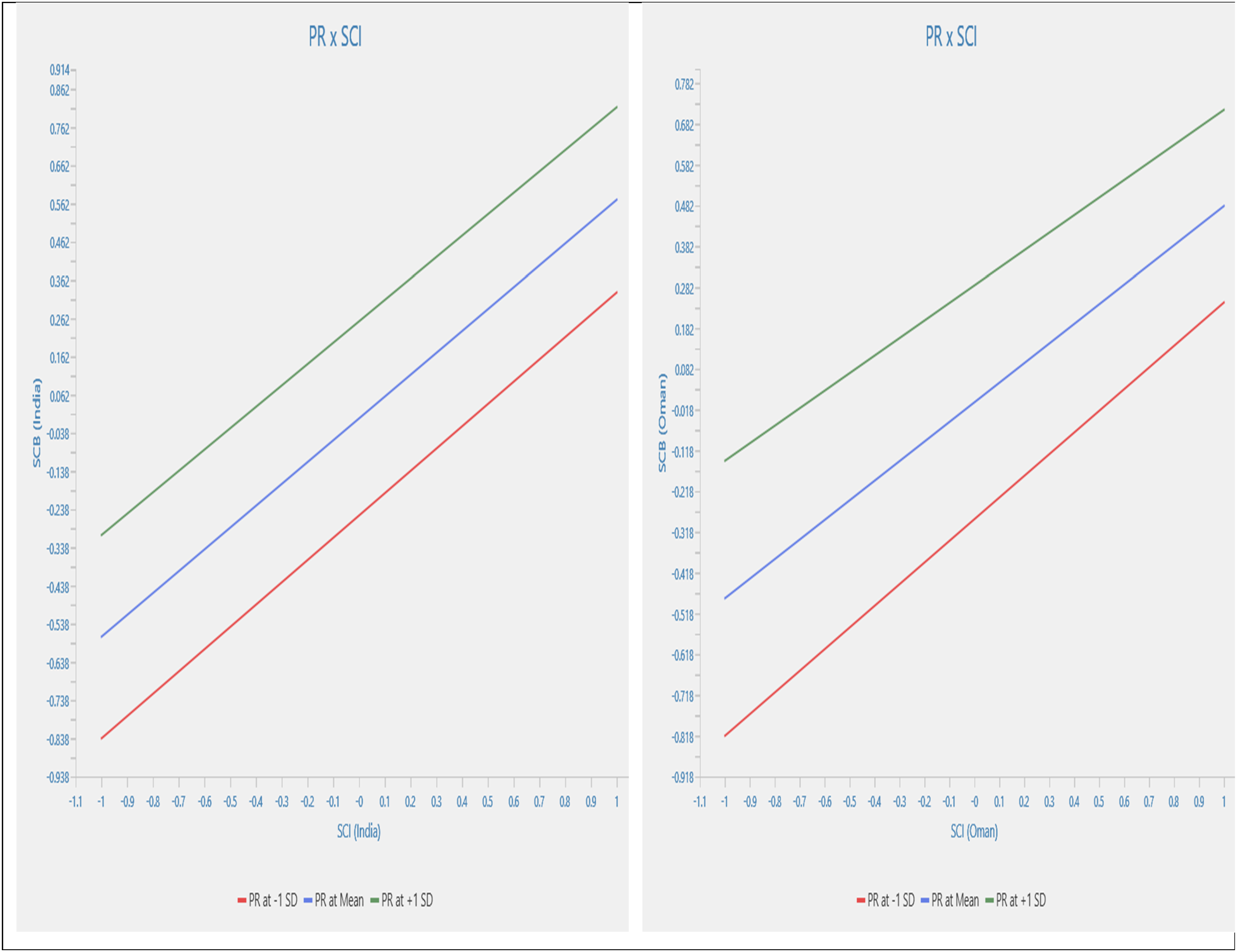
Multigroup analysis
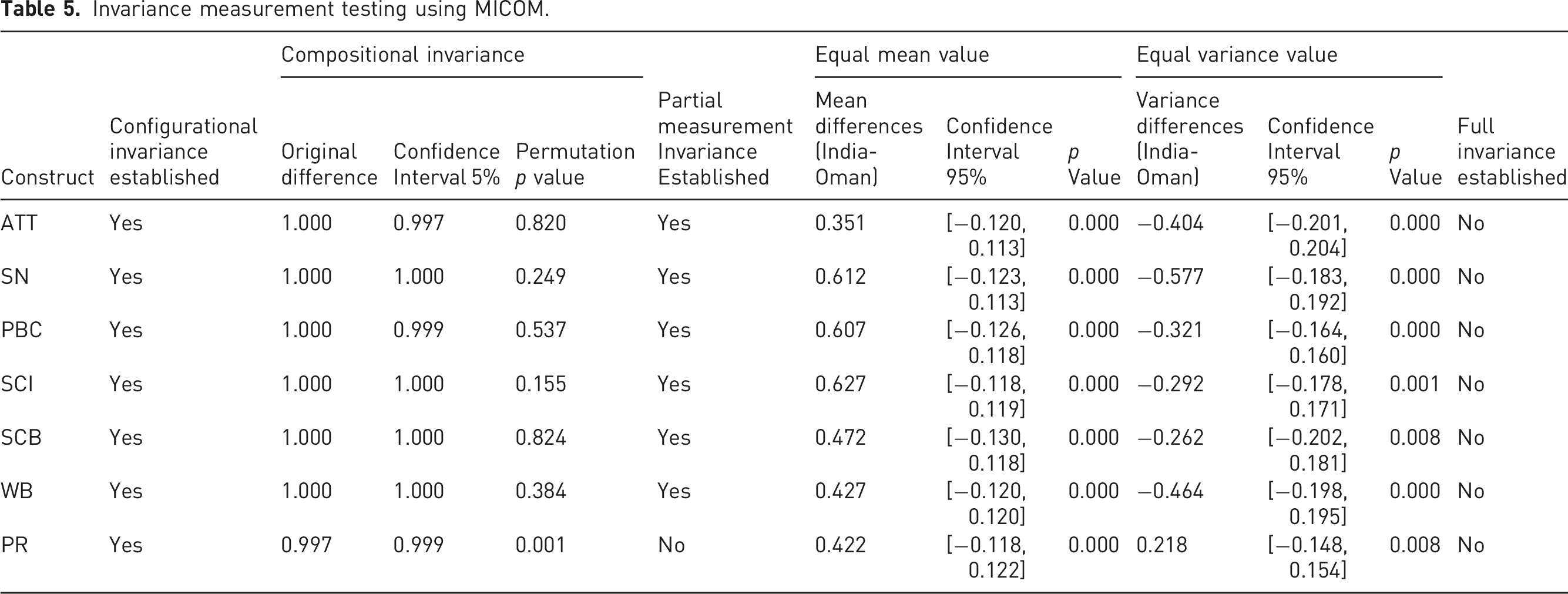
Invariance measurement testing using MICOM.
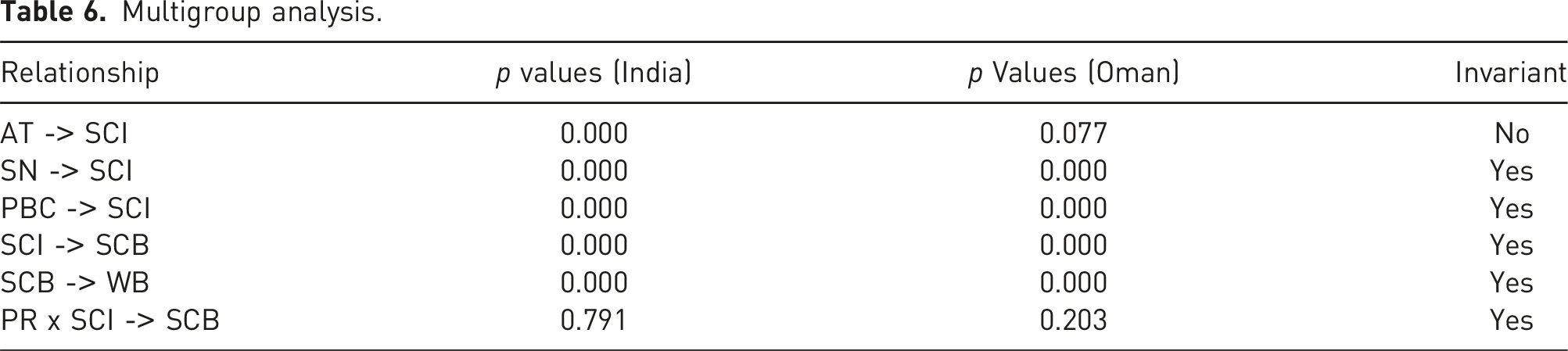
Multigroup analysis.
Discussion of findings
To develop a deeper insight into the visitors’ SCB while visiting tourist destinations in Oman and India, this paper developed a novel framework by extending the TPB and ASE models. The modified model includes some important elements from the marketing and behaviour literature (perceived risk and visitor well-being). Based on the ASE model, intention and behaviour constructs were taken and integrated with TPB extended constructs to form the novel model.
The empirical findings demonstrated that, in the case of India, visitors’ attitudes toward sustainable consumption (SC) have a significant effect on SCI. This finding is consistent with earlier research (Francis and Sarangi, 2022; Passafaro, 2020), which found that an increase in attitude will increase SCI. Nevertheless, earlier studies have confirmed that attitude is one of the key determinants of sustainable consumption (Wang et al., 2021). Conversely, a negative and non-significant result was found in the Oman case. Because there are not many studies on SCI in the Oman context, these results cannot be compared or validated, but they can be supported by similar findings on the cross-cultural understanding of Oman’s sustainable consumption determinants (Quoquab and Mohammad, 2020). The findings also illustrated that subjective norms owned by visitors have a significant impact on SCI in both countries. Previous studies emphasize that SCI is driven by subjective norms (Abbasi et al., 2021; Ayar and Gürbüz, 2021), and behavioural control perceived by visitors has a significant impact on SCI in both the countries, these findings aligned with the studies (Hwang et al., 2020; Rojas-de-Gracia & Alarcón-Urbistondo, 2018), reveals that PBC to be a significant predictor of SCI. Indicating a rise in the positive attitude, subjective norm, and perceived behavioural control of visitors will lead to a rise in their intentions to consume sustainably.
Moreover, this result also demonstrated that the SCI of visitors has a significant influence on their SCB. The findings are consistent with earlier research (Durmaz and Akdoğan, 2023; Khan and Thomas, 2023; Rahman et al., 2023), showing that visitors’ consumption intentions play a crucial role in identifying their behaviour patterns. Further, it is found that perceived risk does not negatively moderate the path between SCI and SCB. This is not reinforced by the findings that perceived risk strongly influences consumption intention, which further mediates SCB (Alizadeh, 2021; Guillen-Royo, 2019), similar findings on the important role of risk perception in moderating SCI and SCB have been reported by earlier studies (Saari et al., 2021).
Implications
There are multiple scholarly contributions offered by the current academic endeavour. First, it contributes to the body of knowledge across several disciplines, including sustainable tourism, destination management and marketing, and tourist behaviour. By examining and highlighting SCB among tourists in two distinct cultural and geographic contexts—India and Oman—it offers valuable insights into how sustainable practices are perceived and adopted in diverse settings. This comparative approach deepens our understanding of the factors driving SCB in tourism. More specifically, the study’s findings support the scant research that has been done on the theme of sustainable tourism in general and SCB in both nations in particular. India still faces several innate difficulties in sustainable consumption and production because it is in the process of moving from a developing country to a major player on the international stage (Francis and Sarangi, 2022). However, Oman, a significant sociocultural setting in the Middle East region, is constantly threatened by several issues, including climate change (Al Salmi et al., 2022).
Furthermore, the present study makes a significant contribution by extending the TPB framework through the integration of the ASE model. While both TPB and ASE have been extensively applied across various research domains, their combined use is rare, especially in predicting SCB among tourists at destinations. To the best of the researchers’ knowledge, this study is among the first to merge these two theoretical frameworks into a cohesive model. Moreover, the proposed integrated framework expands the existing literature by incorporating two pivotal variables from tourism marketing and consumer behaviour—perceived risk and tourists’ well-being. By including these essential factors, the study seeks to identify the key drivers and outcomes of SCB in tourism settings. This comprehensive framework advances theoretical understanding of the mechanisms influencing tourist behaviour and improves the predictive accuracy of SCB, offering a powerful tool for fostering sustainable practices among destination visitors.
Moreover, this study makes a valuable contribution by conducting a comparative analysis of the perspectives of tourists visiting destinations in Oman and India. To the best of our knowledge, it is the first to examine the determinants and outcomes of SCB both in general and within the context of these two countries specifically. This research provides scholars with the opportunity to develop cumulative insights through various unique research approach within the broader scope of comparative studies.
Further, this study holds a wide range of managerial implications for destination managers, destination marketers, and tourism officials. This cross-national study on SCB could shed light on the most crucial aspects and practical guidelines for sustainable behaviour in tourism. The paper’s findings illustrate the significant effects that tourists’ attitudes, subjective norms, and perceived behavioural control have on their intentions as sustainable consumers at tourist destinations. The substantial effect that these psychological elements have on the choices and actions of tourists constitutes an issue that destination managers need to acknowledge and consider while building their strategies and policies. Here, it is imperative to comprehend and address the attitude that visitors have towards sustainability, the subjective norms that influence their decisions, and their perceived control over adopting sustainable practices. It is recommended that destination management allocate resources towards educational programs aimed at cultivating positive attitudes towards sustainable habits, encouraging a sense of responsibility among tourists through social norms, and offering concrete support and resources to augment visitors’ perceived influence over their behaviour. In addition, the establishment of unambiguous communication channels and the involvement of stakeholders in sustainable initiatives and endeavours could effectively contribute to the development of an atmosphere that fosters and supports SCB. The chances of successfully promoting responsible tourism practices within tourist destinations improve significantly when management strategies align with the psychological factors impacting people’s sustainable choices. This means that if tourism managers recognize and address what motivates travellers to act sustainably—such as a sense of environmental responsibility, personal values, or a desire to support locals—they are more likely to inspire actions that benefit both the destination and the environment.
Furthermore, the findings did not support the moderating role of perceived risk, however, it is crucial to emphasize how important perceived risk is in influencing tourists’ decisions to deploy sustainable behaviours at their selected destinations. Higher levels of risk perceptions by tourists could negatively impact their behaviours, leading to avoiding travelling to such destinations. Thus, destination managers should be proactive in diminishing perceived sustainability-related risks. They can foster an atmosphere that is more conducive to SCB, drawing in environmentally conscious tourists and ultimately improving the destination’s quality of life.
Moreover, destination managers and marketers have to strategically align their offerings with the evolving ideals of social and environmental responsibility, as these considerations increasingly do impact tourists’ preferences and decision-making processes. Embracing and actively promoting sustainable practices enhances the destination attractiveness as well as contributes substantially to the overall well-being of its visitors. Some examples of such initiatives include providing eco-friendly accommodation units that minimize environmental impact, advocating for responsible tourism-related activities that respect host communities and ecosystems, and ensuring the ethical sourcing of products and services to support fair trade and local economies. These efforts foster a sense of authenticity and purpose in travel experiences, ultimately enhancing the destination image and positioning the destination as a forward-thinking, conscientious choice for environmentally and socially aware tourists. To meet such goals, those managing and promoting destinations should focus on creating and supporting initiatives that minimize negative impacts on the environment and society while enhancing visitors’ experiences. This shift necessitates a holistic strategy involving careful planning, active involvement of stakeholders, and ongoing assessment to effectively incorporate sustainability into the destination’s offerings. By adopting SCB, destination managers can create a more robust and appealing tourism landscape. This strategy addresses the changing preferences of environmentally conscious tourists and promotes a positive feedback loop between tourist satisfaction and destination sustainability, leading to improved long-term success and tourist’s well-being.
Limitations and further studies
Notwithstanding the research contributions, some limitations lead to possible directions for future research. The study developed and examined a thorough framework of the variables influencing SCB in tourist destinations in both India and Oman, two Asian nations. As a result, future studies might compare developed and developing countries or investigate the same framework in other countries within a different region (like Europe or America). Indeed, this leads to providing in-depth understanding and insightful overviews regarding the key issues related to SCB. Additionally, a questionnaire based on a quantitative technique was used to collect the primary data for this study. Future studies may use a qualitative method or a mixed-methods approach using multiple data collection instruments. Given that the target sample is made up of individuals who have visited tourist destinations, future research with a larger sample size is advised to obtain accurate and trustworthy results.
Regarding the research model, there are various future research directions. First, future studies could examine the mediating effect of perceived risk in the relationship between the core variables of the TPB (i.e., attitude, subjective norms, and PBC) and SCI. Second, since the outcome variable of our model (well-being) was assessed as a second-order variable, future work could thus examine this variable as a first-order variable including (social, environmental, and economic well-being). Third, future studies could focus on destination evangelism (e.g., Soliman and Al Balushi, 2023) as an outcome variable of the existing framework. Fourth, incorporating other variables such as visitor trust, destination attachment, and destination engagement into the existing model could be a promising avenue for further academic work.
Footnotes
Declaration of conflicting interests
The author(s) declared no potential conflicts of interest with respect to the research, authorship, and/or publication of this article.
Funding
The author(s) received no financial support for the research, authorship, and/or publication of this article.

Appendix
Measures.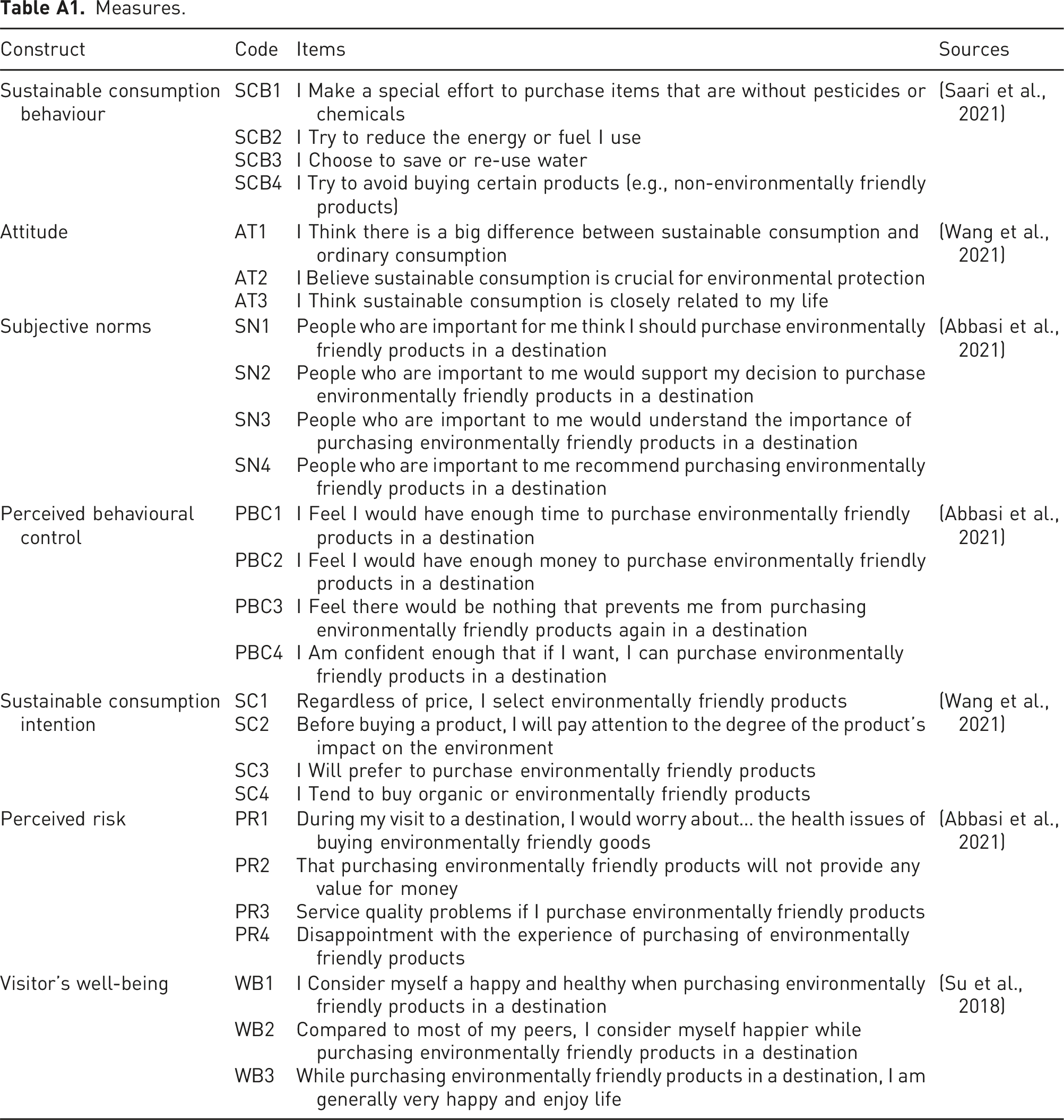
Construct
Code
Items
Sources
Sustainable consumption behaviour
SCB1
I Make a special effort to purchase items that are without pesticides or chemicals
(Saari et al., 2021)
SCB2
I Try to reduce the energy or fuel I use
SCB3
I Choose to save or re-use water
SCB4
I Try to avoid buying certain products (e.g., non-environmentally friendly products)
Attitude
AT1
I Think there is a big difference between sustainable consumption and ordinary consumption
(Wang et al., 2021)
AT2
I Believe sustainable consumption is crucial for environmental protection
AT3
I Think sustainable consumption is closely related to my life
Subjective norms
SN1
People who are important for me think I should purchase environmentally friendly products in a destination
(Abbasi et al., 2021)
SN2
People who are important to me would support my decision to purchase environmentally friendly products in a destination
SN3
People who are important to me would understand the importance of purchasing environmentally friendly products in a destination
SN4
People who are important to me recommend purchasing environmentally friendly products in a destination
Perceived behavioural control
PBC1
I Feel I would have enough time to purchase environmentally friendly products in a destination
(Abbasi et al., 2021)
PBC2
I Feel I would have enough money to purchase environmentally friendly products in a destination
PBC3
I Feel there would be nothing that prevents me from purchasing environmentally friendly products again in a destination
PBC4
I Am confident enough that if I want, I can purchase environmentally friendly products in a destination
Sustainable consumption intention
SC1
Regardless of price, I select environmentally friendly products
(Wang et al., 2021)
SC2
Before buying a product, I will pay attention to the degree of the product’s impact on the environment
SC3
I Will prefer to purchase environmentally friendly products
SC4
I Tend to buy organic or environmentally friendly products
Perceived risk
PR1
During my visit to a destination, I would worry about… the health issues of buying environmentally friendly goods
(Abbasi et al., 2021)
PR2
That purchasing environmentally friendly products will not provide any value for money
PR3
Service quality problems if I purchase environmentally friendly products
PR4
Disappointment with the experience of purchasing of environmentally friendly products
Visitor’s well-being
WB1
I Consider myself a happy and healthy when purchasing environmentally friendly products in a destination
(Su et al., 2018)
WB2
Compared to most of my peers, I consider myself happier while purchasing environmentally friendly products in a destination
WB3
While purchasing environmentally friendly products in a destination, I am generally very happy and enjoy life