







Abstract
This manuscript investigates how curvilinear (organically curved) retail designs influence consumer behavior, extending traditional views of retail performance beyond brand strategy, pricing, and operations to include environmental psychology. Grounded in the Stimulus-Organism-Response (SOR) model, biophilic design theory, and store atmospherics, this research demonstrates that curved store layouts, fixtures, and point-of-purchase containers enhance store and product attractiveness, elevate expected product cost, and increase purchase intent. Overall, curvilinear elements act as subconscious biophilic cues, eliciting positive affect and approach behaviors that drive consumer engagement. Experimental findings across multiple retail settings indicate that curved designs can increase perceived value, enhance perceived cost, and improve the likelihood of purchasing a given product, thereby creating opportunities for premium positioning. However, implementation must consider product compatibility and operational challenges. By spanning atmospheric dimensions from architectural layout to display design, this research offers actionable insights and theoretical contributions, highlighting the strategic potential of curvilinear aesthetics in retail environments.
Introduction
The retail world is filled with stimuli and incentives that seek to attract and retain customers in countless ways. Within this environment, the consumer experience is similarly complex, often encompassing interactions between customers and the brand (Gentile et al., 2007), as well as the customer’s response to direct or indirect contact with a company (Meyer & Schwager, 2007). One core driver of creating beneficial customer experiences is retail atmospherics (Verhoef et al., 2009). Atmospherics is a critical component of a consumer’s experience when interacting with brands and products in retail settings (Ceylan & Alomari, 2024). Specifically, retail atmospherics refers to both physical and nonphysical store elements that can be manipulated to influence the behavior of customers and employees (Basu et al., 2022). Retail atmospherics can influence human behavior in commercial settings through all five senses (visual, auditory, olfactory, tactile, and gustatory) and through interactive elements such as spatial layout, lighting, color, scent, and music (Ramlee & Said, 2014). Thus, retail atmospherics and their strategic design can play a critical role in shaping customer perceptions, emotional responses, and ultimately, purchase decisions.
Within retail atmospherics, shape (specifically, the use of curvilinear versus angular forms in spatial layout, shelving, and packaging) represents one of the most manipulable yet under-theorized aspects of retail design. Although prior studies have shown that consumers often respond more favorably to curved designs (e.g., Bar & Neta, 2006; Westerman et al., 2012), this general preference has rarely been examined in the context of holistic retail environments or across multiple atmospheric domains. Moreover, there is a lack of clarity about why this preference matters in practice. For example, if curvilinear forms are indeed effective, how do they influence specific consumer outcomes, such as store exploration, product evaluation, or sales intent, across different points of retail engagement? Furthermore, the specific role of shape as a visual-spatial cue remains undertheorized, often treated as an aesthetic preference rather than a strategic design variable. As such, most extant studies focus on isolated elements (e.g., packaging design or architecture), offering limited integration across store environments and design elements.
This research addresses these gaps by drawing on the biophilia hypothesis, which posits that humans have an innate tendency to seek connections with nature (Wilson, 1986) and experience positive effects from doing so (Grinde & Patil, 2009). This inherent attraction to nature can be exhibited through activities such as nurturing plants, caring for pets, or designing buildings to maximize natural light. Alternatively, it can manifest as a preference for earth tones or an appeal for organic shapes in furniture and fixtures. Across all manifestations, there exists an inherent, and potentially subconscious, human connection to nature. While biophilic design has gained traction in architecture and wellness studies, its application to retail atmospherics remains underdeveloped (Esan-Ojuri & You, 2021; Rosenbaum et al., 2018). We argue that curvilinear forms evoke biophilic responses (i.e., a sense of safety, softness, and natural appeal), in turn, enhancing consumer engagement and perceived value. Our work thus contributes to both theory and practice by integrating biophilic theory into atmospheric design and testing the functional outcomes of curvilinear design across multiple consumer touchpoints.
Specifically, we examine how organically curved spaces and fixtures (as opposed to angular ones) elicit a heightened appraisal of store or product attractiveness, increased intent to explore, higher expected product cost, and a greater likelihood of purchase across multiple retail settings. Given that atmospheric effects can often be manipulated independently (e.g., lighting, music, store layout) and that curvilinear elements span several atmospheric categories (e.g., store design, fixtures, point-of-purchase displays), this research can significantly impact consumer purchase behaviors, targeted product promotions, and overall firm performance for retailers. We explore the following research questions: (1) Are curvilinear architectural elements or higher ceilings in retail stores associated with increased evaluations of store attractiveness and a higher intention to explore? (2) Are curvilinear shelves, curvilinear product displays, or a combination of both in retail stores associated with increased evaluations of product attractiveness and higher expectations of product cost? (3) Are curvilinear point-of-purchase containers associated with increased product sales? How does store traffic affect this relationship?
Conceptual Background
Atmospherics is a foundational subject in retail research, with scholars routinely underscoring its importance and expanding its application (e.g., Ahmed & Ting, 2020; Lyu et al., 2022; Vinitha et al., 2025). More specifically, design aesthetics are an essential yet often underexamined component of retail atmospherics. While literature recognizes atmospherics as a key determinant of customer behavior and brand experience (Turley & Milliman, 2000; Verhoef et al., 2009), the specific role of spatial form, particularly curvilinear versus angular designs, has received less critical attention. Nonetheless, research continues to validate that environmental stimuli within retail spaces can shape store image (Baker et al., 2002), evoke affective responses (Spence et al., 2014), and drive behavioral outcomes such as time spent in-store and purchase likelihood (Arora et al., 2020). However, most investigations treat design aesthetics as isolated elements rather than analyzing how it interacts with broader operational priorities and consumer expectations across retail formats.
The Stimulus-Organism-Response (SOR) model is a foundational framework that explains how external stimuli affect internal states, thereby driving behavioral outcomes (Mehrabian & Russell, 1974). The model comprises three components: a stimulus (S), representing environmental factors; an organism (O), representing an individual’s internal emotional or cognitive state; and a response (R), representing the resulting behavior. In essence, the model posits that external environmental cues influence an individual’s internal processing (emotions, perceptions, evaluations), which, in turn, leads to a behavioral response such as approach, avoidance, or purchase. The SOR model is particularly relevant for studying settings in which atmospheric and contextual cues significantly influence decision-making, such as consumer experiences and behaviors in retail environments (e.g., Arora et al., 2020; Chang et al., 2011; Saricam, 2023). Stimuli in this setting include a range of store design elements (including color schemes, product layout, and fixture shape) that act as environmental cues that shoppers perceive, internalize, and evaluate, both consciously and subconsciously. Responses emerge through behaviors such as increased time spent in-store (Arora et al., 2020), impulse buying (Chang et al., 2011), or willingness to recommend or repurchase from the store (Zhu et al., 2020). Overall, the SOR model provides a structured framework for analyzing how intentionally designed and complex retail environments can strategically influence consumer responses to store-initiated product stimuli, thereby impacting engagement, sales, and brand loyalty.
Extant literature suggests an underlying preference for curves (Bar & Neta, 2006; Dazkir & Read, 2012), with research in aesthetics, architecture, and product design linking curvature to increased feelings of safety, beauty, and emotional engagement (Leder & Carbon, 2005; Vartanian et al., 2013). For example, curvilinear forms elicit significantly stronger emotions (such as relaxation, peace, and calm) than rectilinear forms (Dazkir & Read, 2012). Additionally, research has shown that architectural spaces perceived as more beautiful feature curvilinear rather than rectilinear forms (Vartanian et al., 2013), and that subjects prefer car interiors with curved surfaces (Leder & Carbon, 2005). Furthering our understanding of why humans naturally prefer curved designs, functional magnetic resonance imaging (fMRI) has revealed that architecturally curvilinear contours activate a brain region associated with reward and emotional responses to objects (Vartanian et al., 2013). More recently, the impact of outdoor architectural atmospherics on shopping behavior (Bloch & Kamran-Disfani, 2018), the effects of visual merchandising and store layout on customer shopping decisions (Florea et al., 2025), and the shape of point-of-purchase retail fixtures affecting consumer behavior (Zhang et al., 2023) have been considered with calls for further exploration.
Yet despite this empirical support, the critical question remains: If curves are universally preferred, why do many retail environments still rely heavily on angular designs? This disconnect suggests a gap in the literature regarding how aesthetic preferences for curvature translate into commercial effectiveness, especially in operationally constrained environments. Moreover, much of the existing research lacks nuance in contextualizing when curved designs may or may not be effective. Retailers must balance aesthetic appeal with functional imperatives, including clear navigation, shelf access, breadth of assortment, and stock visibility (particularly in fast-moving consumer goods or discount formats). Our research seeks to address these overlooked tensions by examining how curvilinear versus angular forms influence consumer evaluations across multiple points of engagement, including store layout, shelf displays, and point-of-purchase displays. Rather than assuming a blanket superiority of curves, we examine how consumer responses vary across store contexts, shopper goals, and environmental conditions, such as crowding and product category.
We also contribute to theory by extending the SOR framework through integration with biophilic design theory (Wilson, 1986), which explains humans’ innate preference for organic, naturalistic forms. We posit that curvilinear elements may act as biophilic cues that subconsciously trigger approach behavior, positive affect, and enhanced perceptions of value. By integrating this with existing atmospheric and operational literature, our study moves beyond aesthetic preference to explore when, where, and why curvilinear design impacts behavior (and when it may not). We propose that consumers prefer retail environments with curvilinear spaces and designs and seek to better understand this phenomenon by investigating the use of curvilinear design elements at the store, shelf, and point-of-purchase levels.
Hypotheses Development
Store Design
Curvilinear design is an increasingly important component in the development and management of desirable retail environments (Basu et al., 2022). It encompasses a wide range of architectural and interior design choices that influence how consumers perceive and engage with different spaces. At a broad level, such design decisions shape the spatial layout and ambiance of retail stores (Mantratzis et al., 2023), thereby influencing how customers and other stakeholders respond cognitively and emotionally to the environment (Ceylan & Alomari, 2024). As part of a larger atmospheric strategy, the use of curvilinear elements offers retailers a relatively low-cost yet impactful way to shape consumer experience through form and space. Specifically, we argue that curvilinear store design and ceiling height influence consumers’ appraisals of store attractiveness and their intention to explore. Drawing on the SOR model (Mehrabian & Russell, 1974), we view these spatial design elements as environmental stimuli that elicit internal cognitive and affective responses (e.g., aesthetic appreciation or spatial comfort), which, in turn, shape behavioral intentions such as exploration and purchase.
Research in design psychology has shown that curvilinear forms are generally perceived as more aesthetically pleasing, calming, and emotionally engaging than angular designs (Leder & Carbon, 2005; Vartanian et al., 2013). Curvilinear forms are associated with softness, safety, and beauty, whereas rectilinear or angular forms can be perceived as rigid or harsh (Bar & Neta, 2006). Curvilinear elements may also convey a more organic or biophilic appeal, mirroring forms commonly found in nature, to which humans are evolutionarily predisposed to prefer (Grinde & Patil, 2009; Kumar et al., 2020). These biophilic associations can also foster a subconscious sense of comfort, interest, and emotional well-being in retail spaces (Esan-Ojuri & You, 2021). In addition, curvilinear store designs may enhance consumers’ exploratory tendencies by creating novel, less predictable layouts that feel more fluid and dynamic. Such spaces may be interpreted as more modern, creative, or experiential (Behera et al., 2023), inviting deeper engagement with the retail environment. Consumers might also find curvilinear forms more engaging and exciting to navigate due to the inclusion of organic, biophilic design elements (Vinitha et al., 2025). Thus, we hypothesize:
Consumers perceive retail stores with curvilinear designs as more attractive than retail stores utilizing rectangular designs.
Consumers have a greater intention to explore retail stores with curvilinear designs than retail stores utilizing rectangular designs.
In addition to spatial layout and shape, ceiling height, a vertical dimension of atmospheric design, plays a meaningful role in shaping consumer perceptions and behaviors within retail environments. As a form of “cubic space,” ceiling height not only shapes the aesthetic character of an area but also influences consumers’ psychological responses to it. For example, ceiling height can influence how consumers process information and experience space, with higher ceilings promoting more abstract thinking and a sense of psychological freedom (Meyers-Levy & Zhu, 2007). Ample retail space is also often associated with premium quality, with voluminous areas perceived as more valuable and prestigious (Petermans & Kent, 2016). A store with a grandiose feel conveys a luxury and exclusivity aesthetic, conveying expectations of high-end or aspirational retail experiences (Chevalier & Gutsatz, 2012). These perceptions can enhance store attractiveness and contribute to brand image.
According to the SOR model, ceiling height functions as an environmental stimulus that affects emotional and cognitive states (e.g., openness, curiosity, decision comfort), driving consumer responses such as exploration or lingering time (Saricam, 2023; Spence et al., 2014). In particular, spacious and high-ceilinged environments may serve as visual and psychological cues that signal abundance, opportunity, and freedom of movement, thereby enhancing consumers’ intentions to browse or explore. Additional space to navigate may reduce perceived crowding and stress (Michon et al., 2005), while simultaneously increasing the sense of novelty and control, factors that promote exploratory behavior (Berlyne, 1960). Spaciousness may also reduce cognitive load by offering clearer visual fields, making the shopping experience feel less task-driven and more enjoyable (Hoyer, 1984; Huffman & Kahn, 1998). Thus, we hypothesize:
Consumers perceive retail stores with higher ceiling heights as more attractive than those with lower ceilings.
Consumers have a greater intention to explore retail stores with higher ceiling heights than those with lower ceilings.
Shelf Design
Beyond the broader store environment, the design of shelving and fixtures plays a critical role in shaping how consumers evaluate and respond to products (Florea et al., 2025). As part of the visual merchandising toolkit, shelf design can act as a powerful atmospheric cue that influences both affective impressions and cognitive judgments about merchandise. Drawing on biophilic design theory and the SOR model, we posit that curvilinear shelving offers a distinct sensory and emotional experience relative to rectilinear or angular designs. Research suggests that curved, biomorphic shapes are inherently more attractive, emotionally calming, and subconsciously safer than sharp-edged alternatives (Dazkir & Read, 2012; Lyu et al., 2022). This connection to natural forms can subtly influence emotional states, leading consumers to feel more relaxed, open to exploration, and positively disposed toward the products on display. Curved shelving may also function as a visual differentiator, drawing attention to specific product areas and enhancing perceived value. Unique visual presentation techniques have been shown to increase product salience, capture attention, and elicit perceptions of quality and distinctiveness (Hoegg & Alba, 2011; Orth & Wirtz, 2014).
Products displayed on curved shelves may be interpreted as more thoughtfully curated or special, particularly when located on feature displays or end caps. The distinctiveness of these shelves signals intentional design and presentation, potentially leading consumers to infer that the products are exclusive or more valuable, thereby influencing price expectations and purchase intentions (Behera et al., 2023). Moreover, curved displays may signal greater care in product handling and presentation, thereby fostering perceptions of quality and desirability. In retail settings where visual cues substitute for direct product experience (especially for packaged or non-interactive goods), the form of presentation becomes a critical cue for inferred value. Because curved shelving deviates from the standard visual schema of straight, grid-like fixtures, it may stimulate cognitive elaboration and curiosity, increasing product engagement (Berlyne, 1960; Reber et al., 2004). Thus, we hypothesize:
Consumers perceive products displayed on curved shelving as more attractive than products displayed on straight shelving.
Consumers perceive products displayed on curved shelving as being more expensive than products displayed on straight shelving.
In addition to shelf structure, how products are arranged on shelves plays a critical role in shaping consumer perception. Alignment, spacing, and display orientation are key components of visual merchandising, as they influence how consumers attend to, interpret, and evaluate product offerings (Bianchi-Aguiar et al., 2016; Lacoste-Badie et al., 2020). When products are presented with intentional symmetry and coherence, they are more likely to be perceived as high-quality and well-managed, signals that enhance the overall attractiveness of both the product and the retail environment (Grewal et al., 1998; Orth & Wirtz, 2014). Building on this premise, we examine the effects of curved product alignment on straight shelving, which can serve as a subtle yet effective design cue. Visually, a curved row introduces a sense of movement and flow that contrasts with the more rigid, angular alignment common in most retail settings. This dynamic curvature may suggest heightened intentionality, making the arrangement appear more curated, premium, or luxurious (Behera et al., 2023). In turn, this can increase the perceived value of the displayed items, as consumers may associate visual distinctiveness and extra effort in presentation with actual product quality (Reber et al., 2004).
Moreover, curved arrangements can expand the product’s visibility and accessibility. Unlike flat rows that present a frontal view, curved rows provide a wider visual field, allowing shoppers to engage with products from multiple angles and distances. This broader exposure not only improves product visibility but also creates a sense of dimensionality and depth, resulting in a display that stands out within the retail environment and attracts attention through visual novelty and aesthetic appeal. Just as distinctive packaging can elevate perceived value through uniqueness (Orth & Wirtz, 2014), so too can unique product arrangements signal that the items are handled more carefully or distinguished from standard merchandise. These cues contribute to perceived quality, especially in settings where physical product interaction is limited and consumers rely heavily on environmental heuristics to assess quality and price (Kapferer, 2012; Spence et al., 2014). Thus, we hypothesize:
Consumers perceive products displayed in curved rows on straight shelving as more attractive than products displayed in straight rows on straight shelving.
Consumers perceive products displayed in curved rows on straight shelving as more expensive than products displayed in straight rows on straight shelving.
The combination of curvilinear shelving with curved product arrangements provides a form of sensory congruence in retail design. Viewed through the lens of the SOR model (Mehrabian & Russell, 1974), this congruence acts as a powerful stimulus, shaping emotional and cognitive responses that guide consumer behavior. When design elements are harmonized in a cohesive visual presentation, such as curved product rows displayed on curved shelving, they can amplify feelings of intentionality, sophistication, and aesthetic pleasure (Lindblom, 2023). From a visual perception perspective, organic and curvilinear shapes are more effective than angular or linear forms in capturing attention and evoking emotional responses (Kumar et al., 2020; Vartanian et al., 2013). This combination of curved shelves and product layout creates a unique, flowing visual rhythm that can enhance product salience and encourage consumers to interact with the display. The integration between fixtures and merchandise may also suggest curation and care, signaling that the products have been purposefully arranged, thereby positively influencing perceptions of quality and value (Behera et al., 2023; Orth & Wirtz, 2014).
Additionally, the physical constraints of curved shelving might limit the number of products that can be displayed simultaneously, creating a visual sense of scarcity. This scarcity effect can lead consumers to perceive products as limited, thereby increasing their value and desirability (Cialdini, 2001; Shi et al., 2020). Even if unintentional, reduced product volume on curved shelving may contribute to perceptions of exclusivity or luxury. Combined with the novelty of the curvilinear presentation, this could lead consumers to infer that the items are rarer, premium, or more important. However, curved product rows also present operational challenges as nontraditional layouts may require more frequent restocking and more careful maintenance to avoid appearing disorganized (Lindblom, 2023). Despite these requirements, the visual harmony of curved rows on curved shelving should help differentiate a display and strengthen the shopper’s impression of product value. Thus, we hypothesize:
Consumers perceive products displayed in curved rows on curved shelving as more attractive than products displayed in straight rows on curved shelving.
Consumers perceive products displayed in curved rows on curved shelving as more expensive than products displayed in straight rows on curved shelving.
Point-of-Purchase Design
Beyond store layout and shelving, the design of point-of-purchase (POP) displays is crucial for capturing consumer attention and driving impulse purchases. These brief, high-traffic moments of engagement offer retailers an opportunity to influence last-minute decision-making through carefully selected visual and tactile cues. Among these, the shape and form of the display container itself can act as a subtle yet powerful stimulus in the consumer’s perceptual and emotional evaluation of products (Zhang et al., 2023). Curvilinear point-of-sale fixtures may enhance consumer engagement by appealing to deep-seated aesthetic preferences for organic and rounded forms (Bertamini et al., 2016). Research in design psychology demonstrates that curved shapes are perceived as more pleasant, softer, and more approachable than angular or rectilinear shapes (Palumbo et al., 2015; Silvia & Barona, 2009). Furthermore, curved containers may facilitate more intuitive and comfortable interaction by reducing perceived harshness or rigidity (Bertamini et al., 2016).
Additionally, curvilinear POP displays may carry symbolic associations with artisanal quality, creativity, or natural origin. Consumers can infer quality from non-standard packaging and display forms, particularly when they deviate from mass-produced or highly uniform structures (Cotter et al., 2017). This visual distinctiveness, especially in dense and often cluttered checkout environments, can increase salience, helping the product stand out and appear more desirable. Specifically, unfamiliar or unexpected visual forms routinely capture attention, thereby heightening product visibility and emotional resonance (Reber et al., 2004). The SOR model provides a useful lens for this phenomenon in that curvilinear design functions as a sensory stimulus, evoking an internal positive affective state (e.g., curiosity, comfort, aesthetic pleasure), which then increases the likelihood of approach behavior in the form of impulse purchases (Chang et al., 2011; Mehrabian & Russell, 1974). Retailers incorporating curved POP containers at checkout can therefore capitalize on visual and emotional advantages. By being both physically approachable and perceptually engaging, these fixtures may drive sales in ways that exceed the performance of more standard rectangular or angular displays. Thus, we hypothesize:
Consumers are more likely to buy point-of-purchase products featured in curvilinear containers than in square containers.
While the visual appeal of curvilinear POP containers can enhance consumer engagement and increase purchase likelihood (Zhang et al., 2023), the effectiveness is not uniform across all environments. One key boundary condition is store traffic volume (i.e., the perceived density of shoppers within a retail space at a given time). The complex relationship between crowding and purchasing behavior has been acknowledged in retail literature (Eroglu et al., 2022; Knoeferle et al., 2017), where crowding is often associated with negative emotional responses, such as anxiety, frustration, and reduced satisfaction (d’Astous, 2000; Machleit et al., 2000). In low-traffic environments, consumers tend to experience greater psychological freedom, reduced time pressure, and improved attentional capacity (Eroglu et al., 2005). These conditions allow shoppers to slow down, process more atmospheric and product-related cues, and form deeper evaluations of design, packaging, and shelf presentation. In such settings, the subtle aesthetics of curved POP containers are more likely to be consciously noticed and positively appraised. A less crowded environment also enhances the intimacy of the shopping experience, enabling consumers to feel more personally connected to the space and more comfortable lingering at displays (Baker & Wakefield, 2012; Machleit et al., 2000).
In contrast, high-traffic environments increase cognitive load and create sensory competition for consumers’ attention (Puig et al., 2022). Under these conditions, shoppers may default to simpler decision-making heuristics, focusing on familiar layouts, minimizing time spent browsing, and avoiding displays that appear unconventional or cognitively demanding. Even if curvilinear designs are visually appealing, their novelty may become a liability in overstimulating environments, where consumers prioritize speed and simplicity over creativity and exploration (Knoeferle et al., 2017). According to the SOR model, environmental stimuli (e.g., crowding and fixture design) interact with a consumer’s internal state, thereby influencing their behavioral responses (Mehrabian & Russell, 1974). As such, the success of curved POP displays may depend on whether the environment facilitates or impedes focused consumer attention and emotional receptivity. Overall, these findings suggest that the positive effects of curvilinear POP containers on product evaluation and purchase likelihood are amplified in low-traffic settings, where consumers have the attention and mental bandwidth to engage with and appreciate the design. In high-traffic environments, however, these effects may be weakened or even negated by competing sensory inputs and shopper urgency. Thus, we hypothesize:
Lower store traffic volume strengthens the relationship between curvilinear point-of-purchase containers and the likelihood of purchasing the displayed product.
Methodology and Results
Experiments were conducted at the store, shelving, and point-of-purchase container levels to test the hypotheses. Specifically, the first study evaluates store designs featuring curvilinear versus rectilinear and height-based elements. The second study examines the effects of curvilinear versus rectilinear shelf fixtures and product display. The third study examines the impact of curvilinear versus rectilinear point-of-purchase (POP) containers on product purchase decisions.
Study 1 – Store Design Experiment
This study tests the differential effects of store design and ceiling height on store attractiveness and shopper exploration intentions. A 2-by-2 between-subjects experiment was conducted to compare curvilinear versus rectilinear store designs and high versus low ceiling heights. As a pre-test, online participants (n = 74) viewed 27 photos depicting actual brick-and-mortar retail stores. To ensure a mix of store designs and ceiling heights, participants judged each photo based on its curvilinear versus rectilinear qualities and low versus high ceiling height. The pretest culminated in 12 photos (the three highest-scoring photos for each between-group condition) for the study. Data was collected via an online survey. Participants (n = 251) were put into one of four conditions (curvilinear store design, high ceiling; rectilinear store design, high ceiling; curvilinear store design, low ceiling; rectilinear store design, low ceiling) and asked to evaluate the three store designs in the condition by the attractiveness of the store and whether the participant would be more likely to explore the store. Attractiveness was measured on a 7-point scale from beautiful to not beautiful, and intention to explore was measured on a 7-point scale from leave to explore. Figure 1 shows the hypothesized model. Curvilinear store design hypothesized model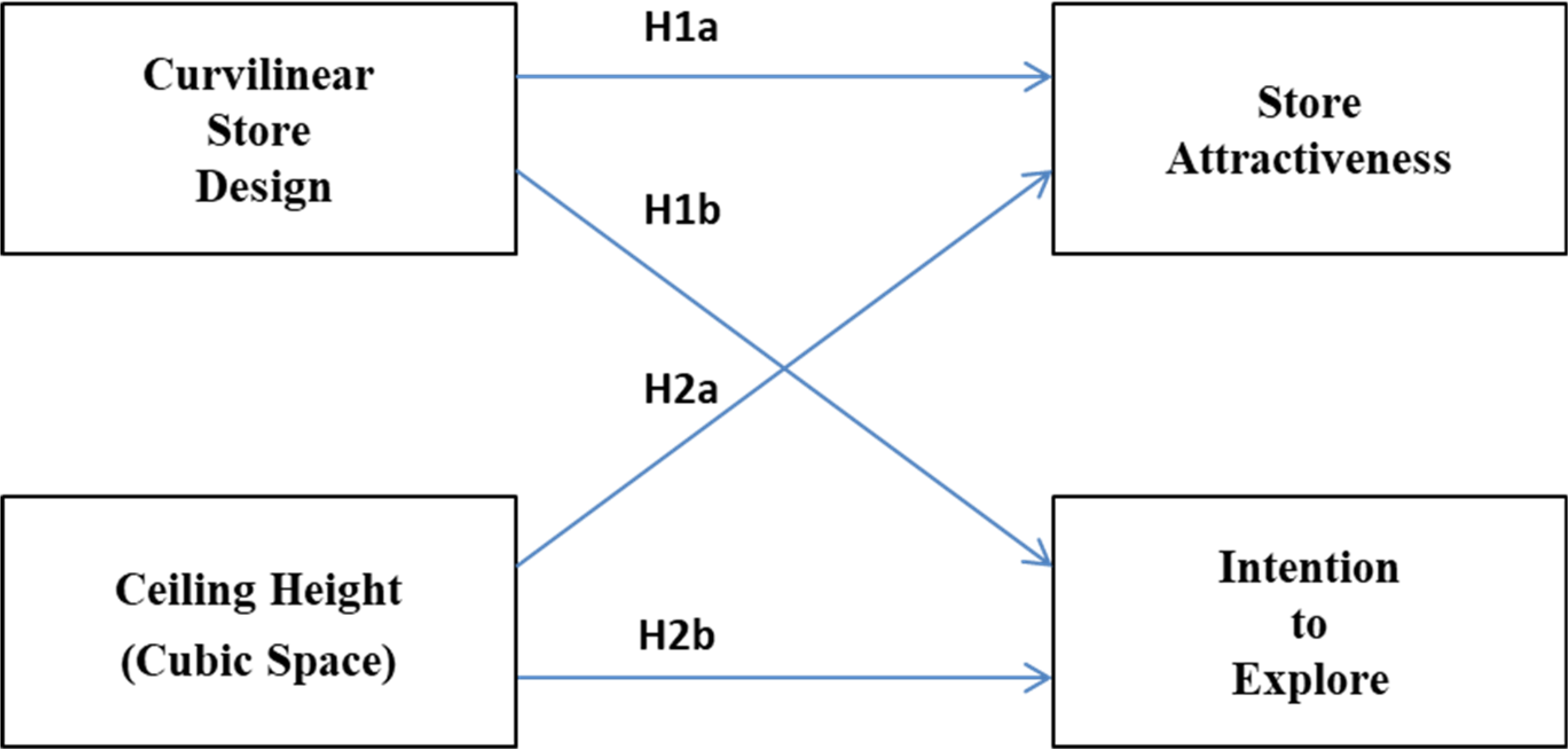
Results indicate that participants found curvilinear store designs more attractive, thus supporting H1a; the main effect of curvilinear store design on store attractiveness was significant (F = 9.658, p = 0.002). However, H2a was not supported, as results indicated that ceiling height did not significantly affect store attractiveness (F = 1.527, p = 0.218). Regarding intention to explore the retail store, curvilinear store design (H1b) and high ceiling height (H2b) were both supported. Specifically, the main effect of curvilinear store design on intention to explore was significant (F = 4.389, p = 0.037), as was the effect of ceiling height (F = 5.443, p = 0.020). These findings suggest that (1) curvilinear stores are more attractive and enticing, and (2) stores with higher ceilings are more likely to be explored.
Study 2 – Shelf Design Experiment
A one-way between-subjects ANOVA was conducted to compare the effect of shelf profile and product facing on product attractiveness and expected product cost. Product attractiveness and expected product cost were tested via three conditions: (1) straight shelving with straight product facing; (2) curvilinear shelving with straight product facing; and (3) curvilinear shelving with curved product facing (see Figure 2). Shelf configurations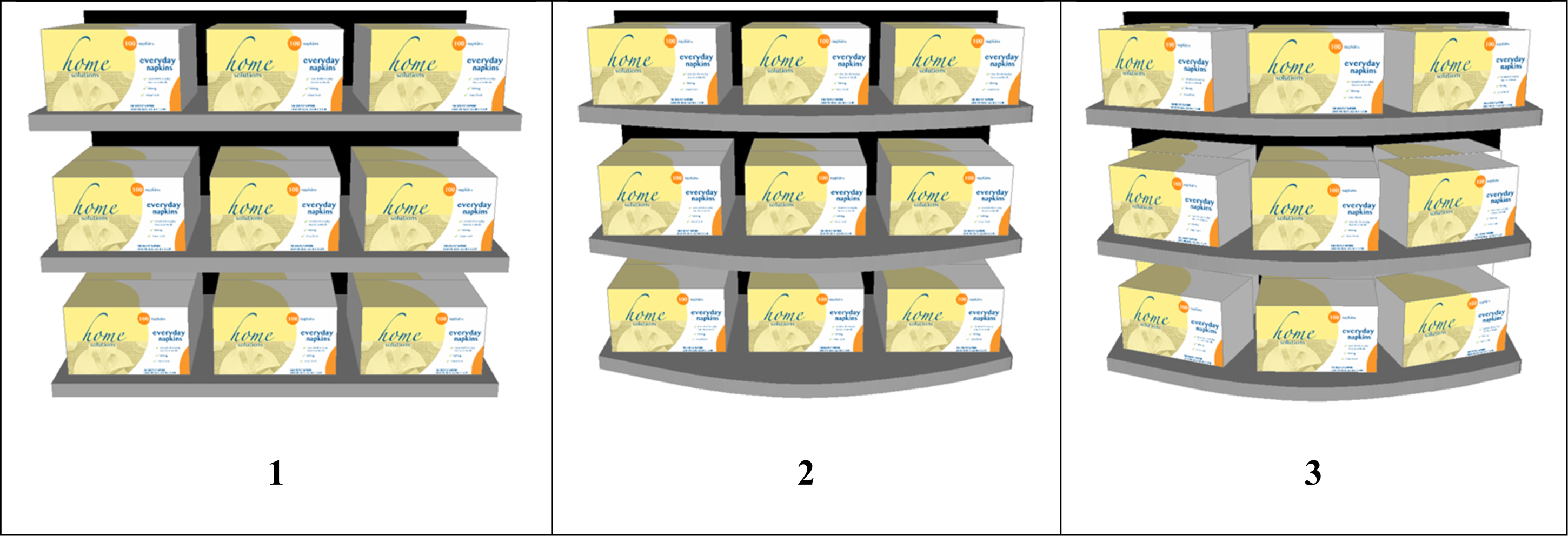
Data was collected via an online survey. Participants (n = 201) were put into one of three conditions and asked to evaluate product attractiveness and expectation of cost for a fictional package of store-brand paper napkins arranged on a set of shelves. Product attractiveness was measured on a 10-point scale, ranging from “Not at all” to “Extremely” attractive. The expected cost was measured by asking participants what price they expected to pay and by providing cost options ranging from $1.00 to $6.25 in $0.25 increments. Figure 3 shows the hypothesized model. Curvilinear shelf design hypothesized model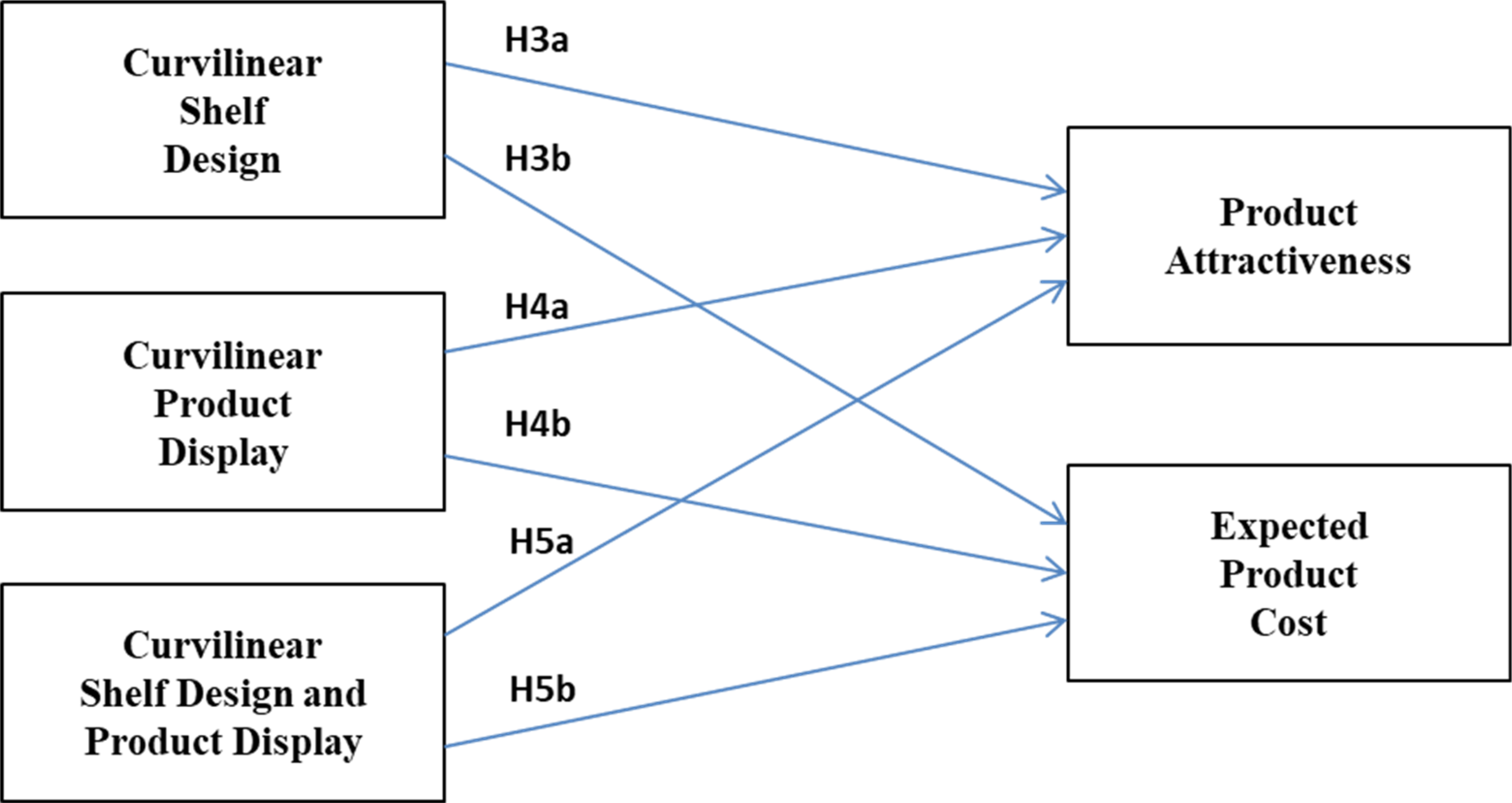
There was a borderline significant effect of shelf-facing configuration on product attractiveness across the three conditions (F = 2.869, p = 0.059), thus partially supporting H3a, H4a, and H5a. Post hoc comparisons using the Tukey HSD test revealed that the mean score for configuration 1, straight shelving with straight product facing (M = 6.14, SD = 2.01), differed significantly from that of configuration 2, curvilinear shelving with straight product facing (M = 5.25, SD = 2.02). However, configuration 3, curvilinear shelving with a curved product-facing orientation (M = 5.75, SD = 2.15), did not differ significantly from configurations 1 and 2. There was a significant effect of shelf-facing configuration on expectations of product cost across all three conditions (F = 4.391, p = 0.014), thus supporting H3b, H4b, and H5b. Post hoc comparisons using the Tukey HSD test indicated that the mean score for configuration 1 (M = 2.00, SD = 0.78) differed significantly from that of configuration 3 (M = 2.45, SD = 0.89). However, configuration 2 (M = 2.24, SD = 0.95) did not differ significantly from configurations 1 or 3. These results suggest that product attractiveness and cost expectations are influenced by shelf design and product display.
Study 3 – Point-of-Purchase Field Experiment
The final study was designed to determine the effects of the checkout counter impulse-buy container’s shape on the enclosed product. We conducted a two-phase experiment testing round and square point-of-purchase impulse-buy containers. The product used in the container was a typical impulse-buy food item, a popular regional candy bar (Salted Nut Roll). We collected data for our field experiment from a home and garden store in a medium-sized Midwestern city. Importantly, respondents were not recruited in the traditional sense; rather, the shoppers who made purchases during the observation periods constituted a naturally occurring sample. No additional incentives or recruitment procedures were used, as the intent was to capture natural shopping behavior without priming or interference.
We divided our data collection into two phases to assess the shape design effects of (POP) containers across varying store traffic levels. Phase 1 lasted six weeks, during peak traffic, at a home and garden center in the spring (May 21–July 1). Phase 2 lasted four weeks during the off-season, from September 17 to October 14. Data collection yielded 70 days of transactional data. The different container configurations were rotated weekly to collect data for each container-type condition across similar scenarios. Major holidays were avoided during data collection to prevent days with unusually high transaction volumes. Figure 4 shows the hypothesized model. Curvilinear point-of-purchase design hypothesized model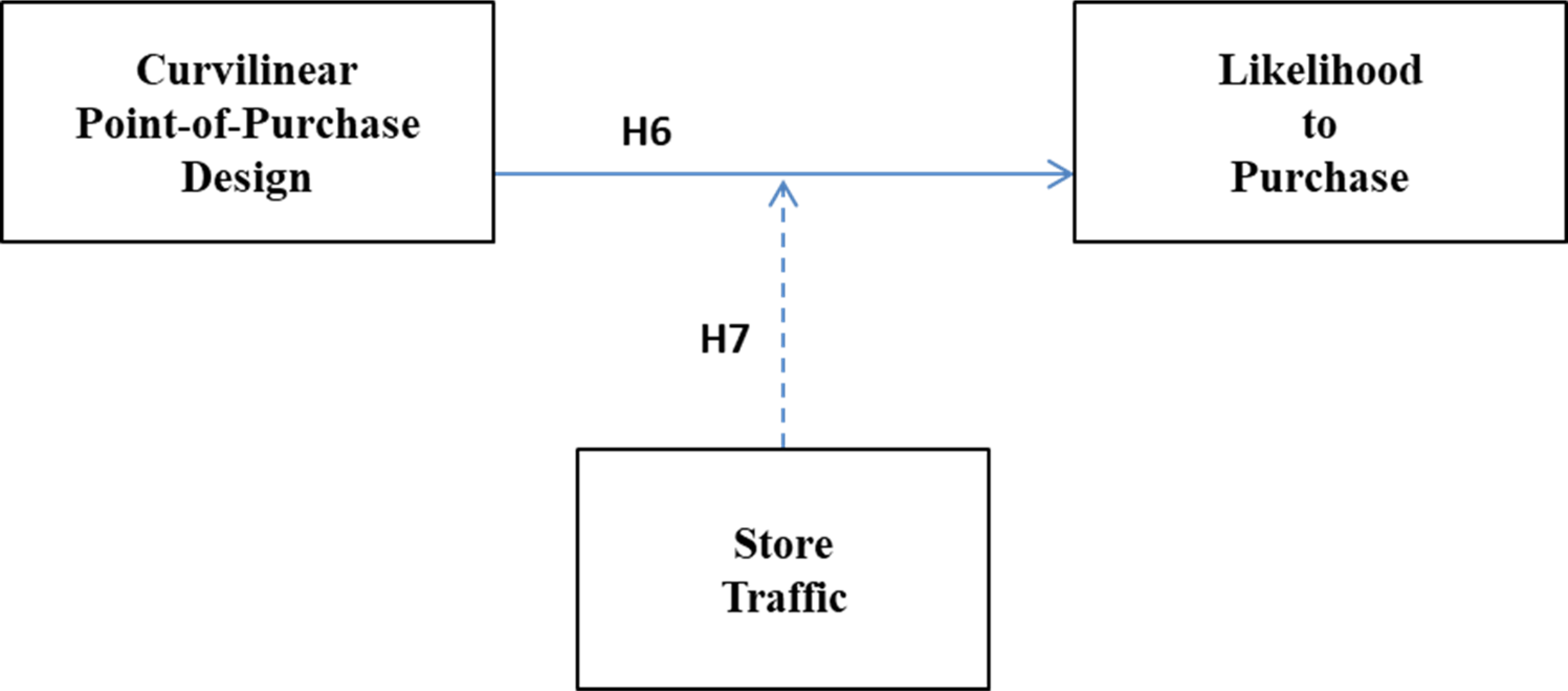
A general linear model univariate ANOVA was conducted to compare curvilinear (cylinder) versus rectilinear (cube) POP containers across daily store traffic levels. Because overall daily store transactions are highly correlated with total daily POP transactions, we computed a ratio of POP transactions to daily store transactions. The resulting transaction ratio is treated as a continuous variable and used as the dependent variable in this analysis. We ran a two-step cluster analysis of daily store transactions to identify high- and low-traffic levels. The clusters identified a natural breakpoint in the data (between 817 and 933 transactions), with the low-traffic category encompassing days with fewer than 817 transactions and the high-traffic category encompassing days with 933 or more transactions. Daily transactions range from 178 to 2608. The average number of transactions per day in the low-traffic condition was 498, while the average number of transactions per day in the high-traffic condition was 1,771. Since shopper traffic and store congestion could not be directly measured in this study, we used store transactions as a proxy for store traffic at checkout.
The traffic level (high vs. low) had a significant main effect on the likelihood of purchasing (F = 5.456, p = 0.023), but container shape did not (F = 1.962, p = 0.166), thus not supporting H6. However, H7 was supported, as the interaction between fixture shape (cylinder vs. cube) and traffic level was significant (F = 5.833, p = 0.019). Specifically, as store traffic decreases, the curvilinear container has a greater impact, and impulse purchases increase. The pattern of the transaction-to-traffic ratio is shown in Figure 5. Point-of-purchase container sales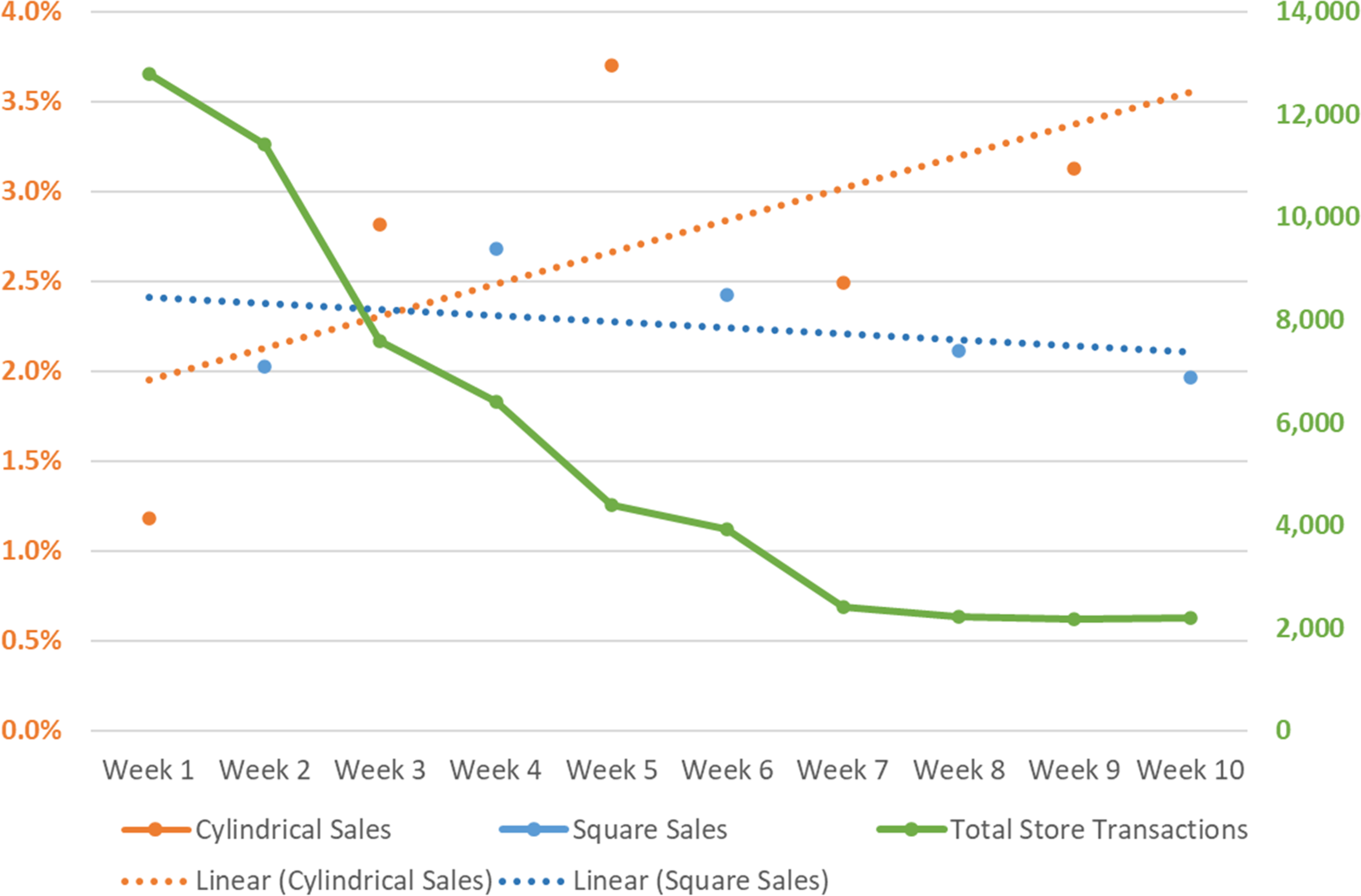
Discussion
This manuscript investigates how curvilinear versus angular spatial and fixture designs influence consumer perception and behavior in retail environments. Grounded in the frameworks of retail atmospherics (Turley & Milliman, 2000), biophilic design theory (Grinde & Patil, 2009; Wilson, 1986), and the Stimulus-Organism-Response (SOR) model (Mehrabian & Russell, 1974), this research addresses a significant yet underexplored phenomenon: how store shape, fixture curvature, and product alignments affect shoppers’ cognitive, affective, and behavioral responses. While previous studies have examined aspects of visual merchandising and product display, few have integrated atmospheric design across multiple levels, from store layout to point-of-purchase fixtures, through a theoretically cohesive lens. Our findings contribute a more nuanced understanding of how visual-spatial stimuli evoke emotional and cognitive appraisals that influence engagement, exploration, and purchase likelihood. Beyond theory, this study offers actionable insights for retail strategy as incorporating curvilinear design elements can increase perceived product value, foster approachability, and enhance the in-store experience (without altering product assortment, pricing, or promotion). These low-intrusion, atmosphere-driven modifications can be implemented across a variety of retail formats and settings.
Theoretical Implications
This research advances marketing strategy and consumer behavior theory by introducing curvilinear design as a meaningful, under-theorized atmospheric variable in retail environments. While prior studies have established that design elements such as lighting, scent, and color influence affective and cognitive states (Spence et al., 2014; Turley & Milliman, 2000), the role of curvilinear store and fixture designs has not been systematically incorporated into major theoretical frameworks. Our findings address this gap by demonstrating that curvilinear spatial features influence both consumer perception (e.g., attractiveness, perceived value) and behavioral intentions (e.g., exploration, purchase likelihood).
First, this study extends the SOR model (Mehrabian & Russell, 1974) by identifying spatial curvature as a visual-spatial stimulus that consumers process both consciously and subconsciously. We show that curved designs elicit emotional responses, such as comfort, intrigue, and perceived luxury, which mediate downstream behaviors, including increased product evaluation and POP engagement. While the SOR model has been widely used in atmospheric research, this manuscript applies it across multiple design layers, from macro-level store layouts to micro-level POP fixtures, demonstrating its utility in explaining multisensory, multi-touchpoint effects in retail design. Second, our work deepens the integration of biophilic design theory into retail research by empirically demonstrating that consumers respond favorably to organic, naturalistic forms in commercial environments (Grinde & Patil, 2009; Wilson, 1986). While biophilic design has been explored in architecture and wellness contexts, it remains underutilized in marketing and retail scholarship. By linking curved store features to perceptions of safety, approachability, and aesthetic appeal, we position biophilic theory as a valuable lens for understanding consumer affect in brick-and-mortar retail spaces. Third, this research contributes to the emerging literature on design aesthetics and consumer inference-making (e.g., Orth & Wirtz, 2014; Reber et al., 2004), showing that nontraditional fixture forms can serve as heuristics for product quality, exclusivity, or brand differentiation. In doing so, we highlight the functional role of design aesthetics as behavioral triggers rather than merely ornamental enhancements.
Overall, our findings provide a theoretical foundation for future research on the psychological and behavioral impacts of spatial form in retail environments. This provides an opportunity for scholars to examine how design congruence, sensory harmony, or visual complexity interacts with shopper traits, product categories, or situational contexts. More broadly, this work helps shift the field toward a multi-dimensional understanding of atmospherics that includes form, structure, and spatial flow as integral components of the underlying consumer experience and overarching store strategy.
Managerial Implications
Curvilinear design elements offer retailers a powerful yet often underutilized tool for shaping consumer perceptions and behaviors in-store. By enhancing the sensory and emotional dimensions of the shopping experience, curved spatial forms can make retail spaces feel more welcoming and distinctive, particularly in categories where aesthetic appeal and immersive experience are central. Our findings reinforce that these design choices can increase dwell time, exploration behavior, and perceived product value, all of which are key drivers of retail performance. From a merchandising perspective, curved shelving and fixtures can strategically signal product quality and exclusivity. For example, our results indicate that when a product is placed on a curved shelf and positioned along the curve, consumers have a 21.9% higher expectation of the product’s cost. This pricing signal is actionable in two ways: (1) retailers may highlight these items as value deals when actual prices fall below expectations, or (2) they may choose to adjust pricing upward to align with perceived value. Moreover, curved fixtures can serve as visual anchors for differentiated pricing zones, justifying higher slotting fees or promotional placement for brands seeking a more upscale presentation.
However, these benefits come with operational considerations that must be weighed carefully. Unlike linear fixtures, curvilinear shelves may require more frequent maintenance and restocking to preserve visual appeal and spatial integrity. Misalignment or disorganization can erode the aesthetic advantage and even reduce perceived product value, as our findings showed that straight-faced products on curved shelves were significantly less attractive than those on straight fixtures. In other words, poor integration of curvature can create cognitive dissonance, thereby weakening the intended signal. Product compatibility is another important consideration. Certain product categories may not be well-suited for curved displays. For example, children’s goods or utilitarian products may appear less premium on curvilinear shelves, potentially clashing with the intended brand image. Additionally, consumers in functional or price-sensitive categories (e.g., grocery, discount, or hardware stores) may prioritize clarity and simplicity over novelty, thus reducing the effectiveness of curved displays in these contexts. As such, retailers operating in utilitarian formats should selectively test curved fixtures, possibly using them in feature areas or for seasonal promotions rather than across the full store.
Additionally, store congestion matters. As traffic decreases, shoppers may feel more relaxed, free from the pressure of a busy store environment, and have more time to evaluate containers and products at checkout. This suggests that slow-to-moderately busy checkouts may benefit most from curvilinear fixtures for impulse products, as these environments provide shoppers with sufficient time to be influenced by curvilinear POP containers. Importantly, the value of curvilinear design lies not only in its visual novelty but also in its ability to support branding, shopper engagement, and emotional connection. Retailers should treat design as part of an integrated strategy that aligns with customer expectations, category dynamics, and operational capabilities. Overall, curvilinear design is not a one-size-fits-all solution but rather a context-sensitive strategy. When applied thoughtfully, it can elevate the retail experience and signal brand quality. However, successful implementation requires coordination among marketing and operations to ensure that the design intent is preserved throughout execution and ongoing maintenance. As retailers increasingly compete on experience rather than on assortment alone, the physical design of the store becomes a key differentiator, with appropriately applied curvature as part of that competitive edge.
Limitations and Future Research
As with any research, limitations exist that present opportunities for future investigation. While we explored the effects of curved versus straight fixtures in general retail settings, it would be valuable to test these effects across a broader range of store types, such as grocery stores, specialty boutiques, department stores, and big-box retailers. Applying and investigating these findings with specific store or product categories, or considering additional implementation and logistical factors (across store types), presents intriguing future research opportunities, as the impact of curvilinear designs may vary significantly depending on the store format, product categories, and target consumer demographics.
Future research should also investigate how cultural differences influence consumer responses to curvilinear versus angular designs, as aesthetic preferences can differ widely across regions and societies. Another area for exploration is the prominence and degree of curvature in store and fixture designs. For example, shallow curves may have a subtler impact than more pronounced, dramatic curves. This could be tested using augmented or virtual reality, where consumers can navigate and interact with varying degrees of curvilinear store design elements and fixtures. Understanding these nuances could help retailers optimize their design choices to achieve specific objectives, such as enhancing product visibility or supporting specific product positioning.
Additionally, the interaction between curved fixtures and product packaging shape warrants further investigation. Products with angular or boxy designs may not benefit as much from curved displays, whereas items with organic or fluid shapes might align better with the overall aesthetic. While examining POP effects with curved versus square containers provided valuable insights, extended data collection over a longer period would help validate these findings and account for potential seasonal variations in consumer behavior. Moreover, examining additional product types, such as non-food items or high-ticket goods, could reveal differential effects of curved designs. Future studies should also consider the potential impact of external factors, such as economic conditions and technological advancements, on the effectiveness of curvilinear designs.
Conclusion
This research demonstrates that integrating curvilinear design elements into retail environments offers a strategically meaningful and empirically supported pathway to enhancing consumer perception, engagement, and purchase behavior. By moving beyond traditional linear layouts and fixtures, retailers can create store atmospheres that foster deeper shopper connection and increased perceived product value. Drawing on the Stimulus-Organism-Response framework and biophilic design theory, this study underscores the psychological and behavioral power of spatial form as a retail design variable. Importantly, the findings provide actionable guidance for practitioners, revealing how subtle design interventions can shape shopper experiences without altering core elements such as pricing or product assortment. Simultaneously, this work extends theoretical models of atmospherics and consumer behavior by identifying curvature as a potent, yet underexplored, environmental cue. As retail competition increasingly shifts toward experience and engagement, curvilinear design presents a compelling opportunity for both academic advancement and real-world application.
Footnotes

Ethical Considerations
This research received ethical approval (exempt status, category #2 as governed by 45 CFR 46.101b) from the Marquette University Office of Research Compliance (IRB approval HR-1801022023) on January 24, 2018.
Consent to Participate
Written informed consent was obtained online, including components on the communication of information, comprehension of information, and voluntary participation.
Consent for Publication
Informed consent for publication was provided by the participant(s) when valid.
Author Contributions
Both authors contributed equally.
Funding
The authors disclosed receipt of the following financial support for the research, authorship, and/or publication of this article: This research was supported in part by the College of Business Administration at Marquette University.
Declaration of Conflicting Interests
The authors declared no potential conflicts of interest with respect to the research, authorship, and/or publication of this article.