







Abstract
The highly competitive retail industry pushes retailers to seek strategies like creating atmospheric in-store experiences to boost consumer satisfaction and encourage return visits. Store atmosphere and layout design influence consumer decision-making, perception, and satisfaction. Factors such as building design, customer patterns, merchandise mix, and proximity requirements impact consumer perception and store layout.
This article investigates the effect of supermarket chains’ layouts on consumer behavior, focusing on atmospheric elements. A Greek field study involving 205 participants assessed perceptions and attitudes toward supermarket layouts and design elements. Results suggest that retail environment characteristics impact emotional reactions, which in turn influence impulse buying behavior.
Emphasizing the importance of a superior customer experience throughout the purchasing process, the study identifies key atmospheric elements affecting consumer behavior in supermarkets. The article concludes by discussing implications for retail marketers and suggesting future research directions.
Keywords
Introduction
The retail industry is a highly competitive and rapidly growing sector, with the success of retail businesses being influenced by their ability to quickly respond to and understand consumer behavior, preferences, and changing shopping trends. Therefore, retailers are always searching for new strategies to gain a competitive edge (Farida & Setiawan, 2022; Greenland & McGoldrick, 1994). One such strategy is to create an atmospheric in-store experience that enhances consumer satisfaction and increases their likelihood of returning (Vilnai-Yavetz et al., 2021). The characteristics of a store’s atmosphere can shape a consumer’s decision-making process in selecting and visiting the store, ultimately influencing their perception of the store image (Klaus, 2022).
Designing a retail store’s layout is a complex process, with the primary objective of maximizing sales while minimizing total cost and ensuring customer satisfaction (Klaus, 2022). Many factors, such as building design, customer arrival patterns, merchandise mix, and proximity requirements, influence the store layout design (Marques et al., 2016). The store’s layout can significantly impact consumer perception of the retail environment, affecting their purchase decision-making process (Basu et al., 2022; Vilnai-Yavetz et al., 2021). Retailers recognize the importance of providing a superior customer experience in their stores, which includes the overall shopping experience, from search to purchase to post-sale phases, and is closely related to the store layout design.
Retailers devote significant resources to store design and merchandising activities as consumer purchasing decisions are influenced by specific variables that create positive in-store experiences. Supermarkets, which generally offer similar products at similar prices, use internal configurations such as merchandise, in-store promotions, location, environment, and atmosphere to differentiate themselves from competitors (Marques et al., 2016). The elements of a store’s environment and atmosphere are challenging to replicate, which provides a successful differentiator for the retailer to gain a competitive advantage.
The objective of this article is to examine how the layout of large supermarket chains affects consumer behavior, as well as to identify new challenges and best practices in retail store marketing. Specifically, the article will focus on the impact of atmospheric elements in supermarket stores on consumer behavior. The retail industry, particularly supermarkets, is continuously evolving, requiring new marketing techniques and strategies to keep up with changes in social, economic, and environmental trends. Thus, the importance of this research lies in enriching current literature with new data on how to manage the retail store environment as a marketing tool and analyzing consumer behavior in today’s domestic retail trade.
Literature Review
The Supermarket Sector
Supermarkets are self-service retail stores that typically have a departmentalized layout and an estimated area of over 200 m2. They offer a wide variety of food and related products, with only 10–25% of non-food items (Levy et al., 2018). Due to their focus on meeting daily needs, particularly food, personal care, and hygiene, supermarkets typically have the highest traffic of all retail stores (Kotler, 2021). Supermarkets offer competitive advantages such as a wide variety of products, competitive prices, and easy access to stores (Fahy & Jobber, 2014).
In Greece, the supermarket sector has experienced steady growth over the years and is currently one of the fastest-growing retail sectors. Despite facing many adjustments and fluctuations, the sector has managed to maintain a healthy profile, with both old and new businesses contributing to its growth. According to estimates from ICAP (2019), the supermarket sector is expected to continue growing between 2% and 2.5% in the current year.
The concept of store atmospherics in retailing was first introduced by Kotler (1973). It refers to the mood created by the retail environment, which is then interpreted by the consumer. Store atmospherics are the perception of individuals about the external and internal environment, as well as the interpersonal factors (Daňo, 2018). According to Kotler (1973), store atmospheres have four dimensions that appeal to people’s senses, including visual, aural, olfactory, and tactile. Visual elements such as color, brightness, size, and shapes, aural elements such as volume and pitch, olfactory elements such as scent and freshness, and tactile elements such as softness, smoothness, and temperature all contribute to creating a positive atmosphere that encourages certain outcomes in buyers.
Taking a broader approach to the store atmosphere, the physical environment can be divided into three sub-categories. The first category includes intangible characteristics such as music, temperature, lighting, and scent. The second category is related to the layout and functionality, such as the equipment, facilities, and furniture. The third category consists of the signs and symbols used for direct or indirect communication with consumers, as well as the store decoration (Bitner, 1992).
Another analysis by Baker et al. (1994) identifies the retail store environment as a multidimensional variable with three components. The first component includes internal factors related to the store atmosphere, such as temperature, aroma, noise, background music, and lighting. The second component is related to design factors that influence consumers’ perception of store layout, such as architecture, color, materials, facilities, store and merchandise layout. The third component includes social factors such as the behavior and appearance of employees and staff, other customers, and crowding.
Furthermore, Turley and Milliman (2000) suggest that the complex store environment can be divided into five categories of atmospheric cues: external environment, general interior, store layout and design, point of purchase, and human variables. The external environment includes building size and shape, awning, exterior windows, parking availability, and surrounding area. The general interior category includes atmospheric variables such as lighting, music, interior colors, ambient scent, temperature, and general cleanliness of the store. Layout and design variables consist of merchandise grouping, traffic flow and aisle design, department locations, shelves and lighting, and placement of cash registers. The point-of-purchase and decoration category involves atmospheric elements such as point-of-purchase displays, signs and cards, product displays, interactive displays, and kiosks. Lastly, human variables in the environment include dimensions such as employee characteristics, crowding, and retail density.
As discussed earlier, the store layout is a crucial element of retail store atmospherics. It refers to the physical arrangement and distribution of store elements, including architecture, floor surface design, placement of merchandise, equipment, furniture, cash registers, and exits, as well as the flow of traffic, waiting areas, and shelves (Ong et al., 2012; Turley & Milliman, 2000). The layout of a retail store plays a significant role in shaping consumer behavior and their choice of purchasing (Baker et al., 1994). Additionally, a well-designed store layout can improve operational efficiency, consumer satisfaction, and even influence their desires and preferences (Cil, 2012; Ghosh, 1994). Ultimately, an effective store layout design can contribute to product sales and store profitability (Cil, 2012).
Consumer behavior is defined as the actions and decision-making process of individuals when acquiring, using, evaluating, and disposing of products, services, and ideas to satisfy their needs (Schiffman & Kanuk, 2007). It includes the study of how products are purchased, used, and disposed of, and how personal characteristics and environmental factors influence individual decision-making processes. Consumer behavior research aims to understand how individuals allocate their resources, such as time, money, and effort, in the consumption process (Paul et al., 1999). It also explores the thoughts, feelings, and actions of consumers, as well as the environmental factors that influence them.
A marketer’s understanding of consumer behavior can help them understand how consumers think, feel, and choose between products and brands. It can also provide insight into how the store environment, family, and vendors influence consumer behavior. Consumer behavior is influenced by various factors, including individual differences, psychological processes, and environmental influences, which must be considered to understand consumer behavior comprehensively (Tai & Fung, 1997).
The Influence of Store Atmospherics on Consumer Behavior
The initial attempt to examine the influence of store atmospherics on consumer behavior originated from the field of environmental psychology. In 1974, Mehrabian and Russell developed the stimulus–organism−response (SOR) model, which posits that the environment’s physical or social stimuli directly impact an individual’s emotional state, which, in turn, affects their behavior within that environment (Mehrabian & Russell, 1974). As a result, consumer behavior is dependent on three sets of factors: stimuli, responses or outcomes, and intervening variables between the stimuli and outcomes. Stimuli encompass the physical design and layout of the business, while the recipients of these stimuli include both employees and consumers. Responses are defined as customers’ behaviors in response to the stimuli (Hoffman & Bateson, 1997).
The SOR model links the arousal characteristics of an environment (S) to approach-avoidance (R) behaviors through the emotions elicited in the consumer (O) (Tai & Fung, 1997). Approach-avoidance behaviors in the store environment are mediated by three basic emotional states: pleasure/displeasure, arousal/non-arousal, and dominance/submissiveness. These emotional states comprise Mehrabian’s (1996) PAD model. The pleasure–displeasure emotional state reflects the degree to which the client feels content, happy, or satisfied in the store (Marsella et al., 2010), while the arousal–non-arousal emotional state pertains to how excited or alert the individual feels. Dominance/submissiveness is the emotional state that concerns the degree to which the consumer feels in control or free to act within the store environment (Ghosh, 1994). These emotional responses result in two opposing behaviors in a store: approach or avoidance. Approach behavior reflects a desire to stay, explore, and engage, while avoidance is the opposite (Gebhard, 2005). Greater feelings of pleasure and excitement lead to more positive attitudes toward the store (Gebhard, 2005). Conversely, an atmosphere that generates a submissive emotional state results in avoidance behavior (Ghosh, 1994).
Numerous studies have examined the impact of retail store design and layout, particularly in supermarkets, on consumer perception and behavior. These studies have confirmed that store layout is a critical factor in the purchase process, with the potential to influence customer mood and behavior, as well as the duration of their stay and ultimately, sales (Behera & Mishra, 2017; Bitner, 1992; Botsali, 2016; Choubey, 2017; Elbers, 2016; Hui et al., 2009; Lu & Seo, 2015; Turley & Millian, 2000).
One important effect of store layout is the creation of positive emotions in consumers, leading to increased perceived value and positive behavioral intentions (Jang & Namkung, 2009; Kotler, 1973). Moreover, store layout has been found to significantly influence consumer purchasing behavior (El-Murad et al., 2012) and purchase intention (Aghazadeh, 2005). A well-designed layout can also promote unplanned and impulse purchases, maximizing sales (Kacen et al., 2012) and increasing shopping motivation and environmental familiarity, providing a strategic advantage (Turley & Chebat, 2010). Consumers often make their purchasing decisions based on the visual influences of store layout and merchandise type (Baker et al., 1994; Behera & Mishra, 2017; Cil, 2012; Elbers, 2016; Soomro, 2017).
A well-organized retail store can also enhance and speed up the shopping process, making it easier for consumers to find the desired products (Randhawa & Saluja, 2017) by ensuring that products are easily accessible and well-organized. Movement patterns, crowding, and operational efficiency also play a key role in creating a positive image for consumers (Ainsworth & Foster, 2017; Vrechopoulos et al., 2004). In addition to convenience, comfort within the store is an essential element for forming a positive perception among consumers (Ainsworth & Foster, 2017).
A poorly planned layout can have the opposite effect, resulting in negative emotions and avoidance behaviors among consumers. This can be caused by factors such as perceived crowding, long wait times, difficulty navigating the store and finding products, and other elements that can negatively impact consumer behavior (Alawadhi & Yoon, 2016).
As demonstrated above, the layout of retail stores, particularly supermarkets, can have a significant impact on the emotional and behavioral reactions of consumers. It can yield both positive and negative outcomes for the respective business.
Design Layout Elements and Consumer Behavior
As stated earlier, the components of the layout encompass all the physical and non-physical objects that exist between the checkout area and foot traffic, and contribute to the internal configuration of a business. Specifically, these elements comprise the floor plan, product placement and grouping on shelves, in-store traffic flow, passageways, as well as the store entrances/exits and placement of cash registers (Elmashhara & Soares, 2020).
Floor Layout
Proper utilization of available space, as well as an effective layout, is crucial to facilitate smooth communication and coordination among different departments of a store. This requires sufficient space for movement within the store, easy access from the exterior, and clear signage to aid navigation (Cowles, 2002).
A well-designed floor space not only enhances customers’ desire to spend more time in the store and explore its different sections, but also promotes interaction with other shoppers and staff. Such a layout can positively impact the perceived shopping value, leading to improved customer satisfaction and repeat purchase behavior (Michon et al., 2008).
The floor plan of a retail store can significantly influence traffic flow, shopping experience, buying behavior, and operational efficiency (Ragel & Nirushan, 2016).
Aisles
The primary determinant of store design is the structure of the aisles, as they create convenient corridors for consumers to navigate (Bianchi-Aguiar, 2015; Bianchi-Aguiar et al., 2016). Aisles are crucial since most of the shopping activity occurs in this space (Juel-Jacobsen, 2015; Larson et al., 2005). The revenue generated by a section is directly related to its size and exposure to the market network within the aisles (Yapicioglu & Smith, 2012).
Since shoppers spend an average of 8 minutes in a store, the aisles must be designed to slow them down slightly, allowing them to browse through all the merchandise without creating long queues that can discourage browsing (Baby Shop Magazine, 2008).
Crowding
Crowding is a critical aspect of store ambiance (Turley & Milliman, 2000) that has a significant social impact on various in-store retail outcomes, including consumer satisfaction (Eroglu et al., 2005) and purchasing behavior (Mehta, 2013). Overcrowding is often linked to negative consumer evaluations and generates an unfavorable response, such as a decline in customer satisfaction (Mehta, 2013). Moreover, store crowding can impact customers’ behavioral responses, leading to discomfort and negative shopping experiences (Eroglu et al., 2005; Machleit et al., 2000).
Traffic Flow
Numerous studies have explored the significance of a well-organized customer traffic flow, revealing that increased store traffic does not always result in increased sales (Beemer, 2003). This can be attributed to improper management of store traffic (Elbers, 2016).
Store layout significantly affects in-store traffic patterns, shopping experience, ambiance, and operational efficiency (Behera & Mishra, 2017; Vrechopoulos et al., 2004). Effective management of store traffic is dependent on proper supermarket layout (Russell & Kamakura, 1997).
Waiting Lines
Despite meticulous attention to all other aspects of service, waiting can be a detrimental factor to a store’s image. Whether it is waiting in line at the checkout or for any other reason within the store, it is associated with service failure (Craighead et al., 2004; Tom & Lucey, 1995), thereby negatively impacting the store’s image and customers’ satisfaction with the service provided (Hartley & Ward, 2006). Waiting also elicits emotions that can potentially undo any previously positive impression of the retail environment (van Riel et al., 2012).
Positioning of Entry and Exit Points
Retail companies often underestimate the positive impact that store entrances and exit points can have on their business performance.
Effective and well-designed store entrances can trigger unplanned or impulse purchases by the consumer even before they enter the store. This, in turn, can lead to increased browsing and in-store consumer spending, creating a positive consumer behavior towards the store (Noad & Rogers, 2008). As a result, retail stores are placing more and more importance on the location and design of their entrances, recognizing the business advantage they offer (Wilson & Boyle, 2004).
Research suggests that developing good store entrances and exits can contribute to business success, and practitioners have begun to use this concept to attract and retain customers (Priluck, 2003). In the retail (supermarket) sector, easy movement through simple store entrances and an attractive appearance are positive factors that promote consumer engagement (Moerloose et al., 2005).
Selves
Finally, the impact of merchandise display on consumer behavior in-store is discussed. This refers to the way in which products are presented and encompasses various aspects of store design and layout. Thus, it is often used synonymously with the design component of in-store marketing (Zentes et al., 2007).
Merchandise display serves two primary marketing objectives. First, it aims to facilitate the search process for customers by designing the store in a way that enhances internal orientation. Second, it aims to create a positive store atmosphere that induces a positive emotional state in consumers during their visit.
Effective merchandise display can boost sales and enhance the shopping experience for customers. A pleasant shopping atmosphere positively impacts the amount of time and money customers spend in a store, as well as their overall shopping sentiment (Huddleston et al., 2015; Kim & Jin, 2001).
From a customer’s perspective, merchandise visibility enhances the appeal and perceived image of a store. Color and lighting combinations have a significant impact on purchase intentions, leading to more beneficial consumer purchasing behavior and store patronage (Hefer & Cant, 2013; Law et al., 2012).
Consumer behavior is driven by two main shopping conditions: hedonic and utilitarian shopping values. Hedonic value shopping involves seeking pleasure, recreational consumption, and high arousal stimuli (Babin et al., 1994), while utilitarian shopping value involves more efficient and rational shopping, with customers shopping in a deliberative and efficient manner (Batra & Ahtola, 1991).
Consumers are motivated by their senses and desires, and hedonic value is subjective, with entertainment and exploration being key factors in shopping. Aesthetics are also an important aspect of the shopping experience, as customers often consider shopping to be an adventure and an enjoyable session (Hashmi et al., 2020).
In conclusion, the literature review on the influence of store atmospherics on consumer behavior has shed light on the significant impact of design layout elements on consumer behavior. The review has identified several design layout elements, including music, lighting, color, and product placement, which can influence consumer behavior in various ways.
This review has highlighted the importance of studying the impact of store atmospherics on consumer behavior. Understanding how these design layout elements affect consumer behavior can help retailers create a more engaging and positive shopping experience for their customers. By doing so, retailers can increase the likelihood of making sales and building customer loyalty.
Moreover, studying the impact of store atmospherics on consumer behavior can also help retailers stay competitive in a rapidly evolving retail industry. With the rise of e-commerce, retailers must continually adapt their store designs to meet the changing needs and preferences of consumers. By understanding the impact of store atmospherics on consumer behavior, retailers can design stores that are relevant and attractive to consumers, both now and in the future.
In summary, the study of store atmospherics and its impact on consumer behavior is essential for retailers seeking to create a positive and engaging shopping experience for their customers. The insights gained from this research can help retailers increase sales, build customer loyalty, and stay competitive in a rapidly evolving retail industry.
Methodology
To achieve the objectives of this research, the behavior of consumers in relation to supermarkets’ layout was studied through a field research in Greece. The field research involved 205 participants, who provided insights into how the layout of large supermarket chains affects their store choices and how atmospheric elements influence their behavior. The responses from consumers shed light on good practices and new challenges in the field of marketing in retail stores.
The present work is an adaptation of the SOR model, which posits that stimuli influence the internal status of an individual, and that the organism processes these stimuli before producing a response. In this article, the stimuli are the environmental characteristics of the retail trade, such as layout and individual elements, which influence the emotional reactions of the consumer. Positive and negative consumer reactions resulting from respective positive or negative feelings toward environmental attributes of retail are investigated, representing the emotional aspect of the organizational component.
In the modified model, the individual characteristic of hedonic or utilitarian motivations is investigated as a mediator of the relationship between the environmental stimulation and the consumer’s emotional response. Researchers have suggested that variables such as environment, design, and social characteristics contribute to the perception of hedonic benefits associated with a shopping experience.
To investigate consumers’ perceptions and attitudes towards the layout and design elements of large supermarket store chains, a five-section questionnaire was used. First, the questionnaire began with questions about the demographic characteristics of the respondents. The first section contained four closed-ended questions to investigate store preference. The second section included five questions to capture consumers’ perceptions regarding stores’ layout and design elements. The third section contained two questions to assess various elements of the stores’ layout and the extent to which these elements influenced consumers. Lastly, the fourth section investigated the effect that supermarket layout elements can have on the consumer.
To capture consumers’ preferences, a 5-point Likert scale was used, with 1 denoting total disagreement and 5 denoting absolute agreement with the given statement. The responses were analyzed using a quantitative data analysis approach.
In summary, the research explores how consumers’ perceptions of retail environment characteristics influence their emotional reactions, which in turn are expected to influence impulse buying behavior.
Results
The average age of the participants was 37 years, with a standard deviation of 1.7 years. The age distribution of the participants was as follows: 6.3% were between 18 to 25 years old, 34.1% were between 26 to 35 years old, 23.4% were between 36 to 45 years old, 17.6% were between 46 to 56 years old, and 18.5% were 56 years old or above. The majority of the participants were women (67.8%), and 32.2% were men.
In terms of education, 85.4% of the participants had higher education degrees, 14.1% graduated from high school, and only 0.5% had a primary school education. The majority of the participants were working adults (84.3%), while 15.7% were retired.
Regarding monthly income, 18 participants (8.8%) reported earning up to €500, 70 participants (34.3%) reported earning between €501 and €1,000, 71 participants (34.8%) reported earning between €1,001 and €1,500, 21 participants (10.3%) reported earning between €1,501 and €2,500, 2 participants (1%) reported earning between €2,501 and €5,000, 2 participants (1%) reported earnings above €5,000, and 20 participants (9.8%) chose not to answer this question.
The survey data were analyzed using the statistical software IBM SPSS Statistics 26.
First, the consumers were asked about how often they visited the store. Out of 205 respondents, 56.6% (116) reported visiting once or twice a week, 31.2% (64) reported visiting three or more times a week, 10.7% (22) reported visiting once every 15 days, and 1.5% (3) reported rare visits, about once a month or less.
Second, the consumers, responded about the average time that consumers spent in the store. Among the 205 participants, 27.5% (56) reported spending 5 to 15 minutes, 55.9% (114) reported spending 15 to 30 minutes, and 16.7% (34) reported spending more than 30 minutes.
Lastly, the consumers, responded about the amount that consumers spent on their weekly purchases in a supermarket. Only 8.9% (18) of the participants reported spending up to €20, while most people, 42.1% (85), spent from €21 to €50, 38.1% (77) spent from €51 to €100, and 10.4% (21) spent over €100. One participant (0.5%) gave an alternative answer.
Τhe questionnaire continues with 8 questions which investigated the participants’ perception of the store’s layout and design.
It appears that consumers place significant importance on layout and design elements when choosing a store, as evidenced by a mean value of 4.044 with a standard deviation of ±0.853 for the corresponding question. The subsequent question was more specific, as it inquired about the basic elements of the layout and design, with the results reported in Table 1.
Importance of the Basic Layout and Design Elements.
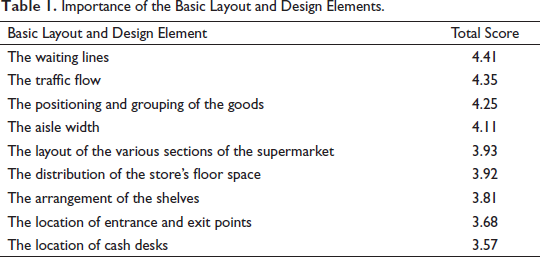
The first column of Table 1 lists the individual items that constitute the basic elements of layout and design, while the second column shows the total score calculated from consumer responses. The alpha coefficient for all elements was 0.916, suggesting a relatively high level of internal consistency among the elements. It appears that waiting lines are the most critical element, followed closely by overcrowding, which also significantly impacts a satisfying buying experience.
Table 2 displays the descending order of importance of various elements. We then examined potential differences in the importance of these items based on respondents’ demographics. Our findings indicated that neither their preferences, visit frequency, time, nor costs influenced their importance ratings. However, age
Rating the Items that Cause Disturbance or Annoyance.
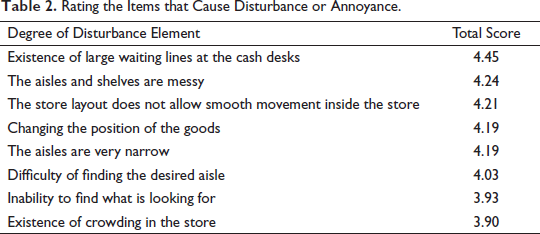
Consumers were also asked to rate elements that cause them disturbance or annoyance when encountered in a store. The results are presented in Table 2, and the alpha coefficient for the specific items was calculated at 0.898, indicating a relatively high level of internal consistency. As expected, waiting lines were once again considered the most bothersome element.
During the research, consumers were asked about the emotions evoked by the layout elements of a supermarket. The internal consistency of their responses was calculated to be 0.843, indicating a very good level of consistency. The results are presented in Table 3, where it is apparent that consumers feel happy when the layout and design make it easier for them to find what they desire quickly and easily, without being hindered by overcrowded environments or complex interiors.
Importance of the Emotional Effect of the Layout Items.
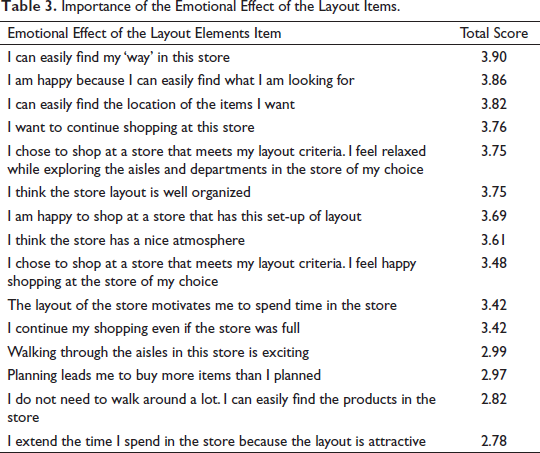
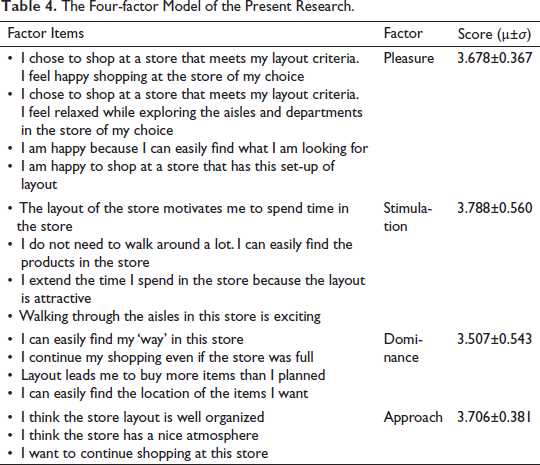
As part of the research, consumers were asked to rate a number of items according to their experience, which formed the four factors of the model: pleasure, stimulation, dominance, and approach, based on their store visits. The specific items in Table 3 emerged from these four factors.
The four factors play a crucial role in shaping positive emotional reactions, which often translate into impulsive buying behavior. Pleasure reflects the emotional state of feeling good, happy, or satisfied in the store. Stimulation, on the other hand, refers to the degree of excitement or alertness that the individual experiences. Dominance is the emotional state that reflects the extent to which the consumer feels in control or free to act within the store environment. Finally, approach reflects the desire to stay, explore, and engage with the environment. Positive approach behaviors include actions such as browsing, making purchases, and intending to stay in the store.
This article employed a framework comprising of four factors to comprehend and analyze consumer behavior and how it is influenced by the store’s environment. Table 5 illustrates these factors and their creation process. The components of the factors were derived from the items listed in Table 3. To group the items, the authors employed a brainstorming process based on their natural affinity. The second column of Table 4 displays the specific factors, while the third column shows their average and standard deviation. The first column represents the items, and the corresponding factor of the model is recorded in the second column, while the third column presents the score of each factor. The score was determined by calculating the average ± standard deviation from the consumers’ responses. It is noteworthy that all factors received high scores, indicating their importance.
The Four-factor Model of the Present Research.
Correlation between Compliance of the Layout and Design Elements and the Four-factors Model.
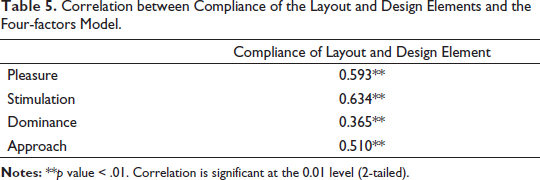
The questionnaire utilized in this article consisted of a question containing 10 sentences, each stating an observation of a layout and design element. Respondents were asked to rate their degree of satisfaction with each of the 10 propositions using a 5-point Likert scale. As expected, the results indicated that consumers agreed somewhat to strongly with the statements. The importance of this question was found to be very high, with a mean score of 4.234 and a standard deviation of 0.432, surpassing all other questions. This conclusion was supported by the results of the correlation analysis presented in Table 5.
Table 5 presents the correlation results between the compliance of layout and design elements and the degree of satisfaction regarding the four factors proposed in this article. It illustrates the degree of correlation between the importance attributed to layout and design elements and the level of satisfaction experienced by consumers while visiting the supermarket.
According to the results obtained from the Pearson correlation index (r), this research has found a statistically significant positive correlation between compliance with layout and design elements and four dimensions, namely pleasure (r = 0.593), stimulation (r = 0.634), dominance (r = 0.365), and approach (r = 0.510). These findings suggest that stores with high levels of compliance in layout and design elements also tend to exhibit higher levels of pleasure, stimulation, dominance, and approach, while the reverse is also true.
Furthermore, the correlation analysis demonstrated that the quality of the layout elements of the branded store visited by consumers is positively and significantly correlated with each of the four factors (p = .000 < .01), as reported in Table 5. This means that for customers who place importance on the quality of layout elements, they also tend to experience high levels of pleasure, stimulation, dominance, and approach, and vice versa.
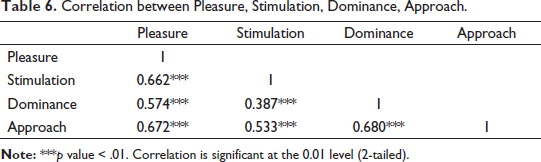
The correlation analysis of the four factors presented in Table 6 reveals a significant and positive correlation among all the factors (p = .000 < .01). This suggests that high levels of stimulation in customers are associated with high levels of approach, and vice versa. Moreover, individuals who experience high levels of stimulation also exhibit high levels of dominance and approach. Likewise, the correlation between dominance and approach indicates that a high level of dominance from a customer is linked to a high level of approach from the salesperson.
Correlation between Pleasure, Stimulation, Dominance, Approach.
Conclusion
The aim of this study is to examine the impact of store layout arrangement on consumer behavior using the pleasure–stimulation–dominance–approach (PSDA) model, which is a modified version of the SOR model and the PAD model. The PSDA model consists of four factors: pleasure, stimulation, dominance, and approach. These factors reflect the degree to which consumers feel satisfied or happy, how excited or stimulated they are, the degree of control they feel, and their desire to stay, explore, and engage in the store. To determine the impact of store atmospherics on consumer behavior, the study surveyed consumers about their emotions and desires triggered by various elements of the store environment such as equipment and merchandise placement, department locations, furniture, traffic flow, and shelves.
The findings of the study indicate a statistically significant positive correlation between consumers’ perceptions of the quality of layout and design elements and their emotional and behavioral responses. This supports the original hypothesis and is consistent with prior research suggesting that positive environmental and atmospheric elements can have a favorable effect on consumers’ emotions and behaviors. Consumers place a high degree of importance on various elements of supermarket layout, particularly queues, traffic flow, and the organization and grouping of merchandise. It is evident that for consumers, comfort and convenience in the store space are key value drivers. The importance of layout and design elements also appears to be a significant factor in supermarket choice, regardless of the chain.
Interestingly, the frequency of visits, time spent in-store, and amount spent do not significantly impact the classification of items by degree of annoyance. In terms of motivations, the majority of consumers appear to have a stimulation orientation, with 60% considering a visit to the supermarket as an opportunity for entertainment, while 40% visit primarily to purchase needed products. Consumers who view their supermarket visit as entertainment show higher levels of pleasure and stimulation compared to those who visit only for products, reflecting a broader trend in the retail industry to encourage hedonistic motives in purchasing decisions.
The study also investigated potential correlations between demographic characteristics and the above factors. Significant differences were observed in the importance of layout and design elements when selecting a supermarket across various age categories. The majority of consumers between 18 and 45 years of age consider these elements to be quite important, whereas those aged 46–56 deem them to be very important. Those over 56 years of age are divided between considering them quite or very important. Moreover, those aged 46–56 exhibit higher levels of annoyance compared to the 18–25 age group, while the other age groups fall in between. Consumers with a higher education degree consider layout and design elements quite important when selecting a supermarket. In terms of emotional response factors, individuals with higher education degrees exhibit significantly higher levels of stimulation, dominance, and approach, compared to those who have finished high school. Regarding monthly income, the majority of those earning up to €2,500 per month consider layout and design elements to be quite important when selecting a supermarket, whereas those earning €2,501 and above consider them to be moderately important.
The study emphasizes the need for retailers to provide a pleasant atmospheric experience, keeping in mind consumer motivations that are more hedonistic than utilitarian. While previous research has focused more on the overall store atmosphere as sensory or visual merchandising elements, this study analyzes the exclusive layout of the store, which is difficult to change as a whole. Further research is required to better understand the impact of store layout elements on consumers and to develop innovative, functional retail store formats.
To maximize consumer comfort and convenience, retailers need to focus on improving store layouts, particularly in areas such as traffic flow, waiting, and merchandise placement that have negative reactions from consumers.
Moreover, retailers can consider implementing digital signage that can enhance the overall shopping experience by providing relevant information about products and promotions, increasing brand awareness, and creating a more engaging store environment. Digital signage can also help retailers to streamline their operations by reducing the need for printed signage and providing real-time information about inventory levels, sales data, and customer behavior. However, retailers need to carefully balance the desire to implement new technologies with the need to ensure that they do not disrupt the overall shopping experience or create confusion among customers.
Another best practice that retailers can adopt is to use data analytics to optimize their store layouts and product placements. By collecting and analyzing data about customer behavior, such as the path they take through the store, the items they purchase together, and the time they spend in different areas of the store, retailers can gain insights into how to improve their store layout and merchandising strategies. For example, they can identify the most popular and profitable product categories and place them in high-traffic areas of the store, or they can identify areas of the store that are frequently ignored by customers and experiment with new product placements or displays.
However, retailers need to ensure that they respect customers’ privacy and use data analytics in an ethical and transparent way. They should clearly communicate their data collection and usage policies to customers and obtain their consent before collecting any sensitive data. They should also ensure that they comply with relevant data privacy regulations, such as the General Data Protection Regulation in the European Union.
In conclusion, store layout and design elements play a critical role in shaping consumers’ emotional and behavioral responses to the store environment. Retailers need to focus on improving store layouts and creating a pleasant atmosphere that meets consumers’ needs and desires. They can adopt best practices such as prioritizing the layout and design elements that are most important to their target audience, regularly assessing and optimizing the store layout based on customer feedback and preferences, and using data analytics to optimize their store layouts and product placements. However, retailers also face several challenges, such as balancing the desire to create a visually appealing store environment with the need to ensure convenience and functionality, managing operational costs, balancing the desires of different customer segments, and minimizing environmental impact. By addressing these challenges and adopting best practices, retailers can create a store layout that maximizes consumer comfort and convenience, enhances the shopping experience, and ultimately increases customer satisfaction and loyalty.
Future research could investigate the impact of store layout on specific product categories, such as fresh produce or prepared meals, to gain a deeper understanding of how layout elements can influence consumers’ purchasing decisions. Additionally, researchers could explore how emerging technologies, such as virtual reality and augmented reality, can be used to enhance the store layout and create more immersive shopping experiences. Furthermore, researchers could investigate how the store layout and design elements can be optimized for online and mobile shopping channels, which are becoming increasingly important in the retail industry.
In conclusion, the study highlights the importance of store layout and design elements in shaping consumers’ emotional and behavioral responses to the store environment. Retailers need to focus on improving store layouts and creating a pleasant atmosphere that meets consumers’ needs and desires, while also addressing the challenges that come with optimizing store layouts. By adopting best practices and leveraging emerging technologies, retailers can create a store layout that enhances the shopping experience, increases customer satisfaction and loyalty, and ultimately drives business success.
Footnotes
Declaration of Conflicting Interests
The authors declared no potential conflicts of interest with respect to the research, authorship, and/or publication of this article.
Funding
The authors received no financial support for the research, authorship, and/or publication of this article.
