







Abstract
When brands back sustainability claims with real investment, measurable targets, and third-party verification—what we term proactive sustainability strategy (PSS)—do consumers reward them with loyalty? We address this question through a serial mediation framework. Signaling theory grounds our core prediction: PSS should first enhance perceived authenticity, then foster trust, then create value—a chain that ends in loyalty (H1–H2). Skeptical consumers, we argue, should respond more strongly—not less—to credible PSS signals (H3). Three experimental studies provide converging support. Studies 1 (N = 60) and 2 (N = 251) validate the experimental materials and test the complete theoretical model using a fictional skincare brand, confirming the serial mediation pathway (indirect effect = 0.073, 95% CI [0.042, 0.113]) and significant skepticism moderation (b = 0.23, p = .027). Study 3 (N = 280) extends these findings with a four-condition signal decomposition design incorporating incentive-compatible behavioral measures: the bundled PSS configuration outperforms third-party certification alone (d = 1.20, p < .001) and generates a 34.8% price premium over a no-signal baseline via BDM auction, with 88.6% brand choice rates versus 28.6% at baseline. These findings offer theoretical contributions to sustainability marketing literature and practical guidance for brands seeking to build authentic connections with increasingly discerning consumers.
Keywords
Introduction
Sustainability sells—or so the numbers suggest. Sixty-two percent of consumers say they would change buying habits to help the environment (IBM, 2022). Yet brands pushing green messages face a serious credibility problem. High-profile greenwashing scandals—from H&M’s Conscious Collection (Norwegian Consumer Authority, 2022) to the Volkswagen emissions scandal—have eroded consumer trust in corporate environmental claims. In the United States, the Federal Trade Commission’s regulatory review of its Green Guides (FTC, 2022) reflect growing regulatory concern about misleading sustainability communications. Researchers call this the “green trust deficit” (Chen & Chang, 2013; Nyilasy et al., 2014)—a fundamental erosion of consumer confidence in corporate sustainability claims.
So what separates sustainability messages that earn consumer loyalty from those that are dismissed? In response to this credibility crisis, some organizations have adopted defensive postures, minimizing public sustainability communication to avoid scrutiny (Font et al., 2017). This raises the question that motivates our research: what happens when brands take the opposite approach? Specifically, how do consumers respond when organizations adopt a proactive sustainability strategy characterized by costly investments, specific quantifiable commitments, and independently verifiable claims?
This research addresses this question by introducing and empirically testing Proactive Sustainability Strategy (PSS), defined as a corporate sustainability posture built on three pillars: (1) costly signal investments demonstrating genuine commitment through resource allocation, (2) specific and quantifiable targets enabling accountability, and (3) verifiable claims through third-party certification or transparent reporting. Drawing on signaling theory (Connelly et al., 2011; Spence, 1973), we argue that these attributes function as credibility-enhancing signals that can penetrate consumer skepticism and build authentic brand relationships.
Our framework offers three contributions. First, we give a name and theoretical home to the bundled sustainability signal configuration—grounding PSS in signaling theory to explain why combining costly investments, measurable commitments, and external verification produces effects exceeding any single element. Second, we demonstrate the serial mechanism through which PSS builds loyalty: authenticity perceptions precede trust, which precedes value, which precedes loyalty—a relational rather than persuasive process. Third, across three experimental studies, we present convergent evidence that consumer skepticism can amplify rather than merely impede responses to credible sustainability signals, with incentive-compatible behavioral measures confirming effects beyond self-report.
If skeptics really are more responsive to strong sustainability signals, that challenges how brands should think about their toughest critics. For researchers, it suggests that consumer skepticism should be reconceptualized not merely as a barrier to overcome but as a potential amplifier of effective sustainability signaling. For practitioners, our findings indicate that brands should not avoid skeptical consumers but rather design sustainability communications specifically calibrated to satisfy their heightened verification needs.
Theoretical Background and Hypotheses Development
Signaling Theory and Proactive Sustainability Strategy
How do consumers know which sustainability claims to believe? Signaling theory offers a rigorous answer. Originally developed by Spence (1973) to explain hiring decisions under information asymmetry, signaling theory has been extensively applied across domains including organizational reputation (Connelly et al., 2011) and environmental management (Berrone et al., 2017). The core principle is that signals become persuasive only when they impose real costs that are prohibitively expensive for non-genuine parties to mimic. Vague environmental claims (“we care about the planet”) carry little signaling value precisely because they are costless to produce and impossible to verify (Delmas & Burbano, 2011).
We argue that PSS satisfies signaling theory requirements through three interdependent elements. Costly investments—renewable energy infrastructure, supply chain overhauls—require real resources competitors cannot easily match (Berrone et al., 2017). Specificity matters: “47% reduction in carbon footprint” creates accountability in ways that “reducing environmental impact” does not; if a brand misses its stated goal, the failure is public. Third-party verification—Carbon Trust certification, B-Corp status—allows consumers to bypass distrust of corporate claims (Darnall et al., 2018). Critically, we treat these elements not as independent cues but as an interdependent configuration. A brand might disclose emissions data (specific) but without verification, skeptics can still question the numbers. Certification alone, without costly investment, may appear as a purchased seal of approval. It is the combination that crosses the credibility threshold—a point directly examined in Study 3.
PSS as a Formative Higher-Order Configuration
The 3 PSS dimensions—costly investment, specificity, and verifiability—are conceptualized as formative rather than reflective indicators (Bollen & Lennox, 1991; Jarvis et al., 2003). Unlike reflective scales where items are interchangeable manifestations of a common factor, formative PSS dimensions are theoretically distinct and non-redundant: a brand can invest heavily without providing specific targets, or disclose specific data without third-party verification. This formative structure implies that internal consistency is not the appropriate criterion for evaluating the PSS construct (Diamantopoulos & Winklhofer, 2001); instead, content validity and the logical completeness of the formative block are paramount (MacKenzie et al., 2011). The PSS measurement items were developed following this formative logic, with face validity established by two sustainability marketing scholars prior to data collection.
PSS and Perceived Brand Authenticity
Brand authenticity—the perception that a brand is genuine, real, and true to itself (Morhart et al., 2015)—has emerged as a critical determinant of consumer-brand relationships in an era characterized by commercial skepticism (Beverland & Farrelly, 2010; Napoli et al., 2014). Authentic brands are perceived as having clear values, maintaining consistency between claims and actions, and demonstrating genuine commitment rather than opportunistic positioning (Fritz et al., 2017).
Why should PSS enhance perceived authenticity? Costly investments signal that sustainability is a budget line item, not a tagline. Specific targets signal forethought: a brand committing to “47% reduction by 2026” has done the math, not just the marketing. Third-party verification signals transparency: “Don’t take our word for it—check.” Each element chips away at the suspicion that green claims are opportunistic window-dressing. The cumulative effect shifts consumer perception from “probably greenwashing” toward “probably genuine”.
Proactive sustainability strategy positively influences perceived brand authenticity.
The Serial Mediation Pathway From PSS to Brand Loyalty
The effect of PSS on brand loyalty is not direct; rather, it unfolds through a theoretically grounded sequential process. Authenticity and trust are adjacent but functionally distinct constructs: authenticity is a retrospective inference about identity consistency, while trust is a prospective expectation about reliability (Eggers et al., 2013). A brand perceived as genuine is also perceived as predictable, and predictability reduces the risk that consumers will be exploited (Chaudhuri & Holbrook, 2001). When consumers perceive a brand’s sustainability claims as authentic, they develop confidence that the brand’s overall value proposition is similarly trustworthy. Consumer trust, in turn, enhances perceived value—the overall assessment of utility relative to sacrifice (Zeithaml, 1988). When consumers trust a brand’s green claims, they perceive both functional value (confidence that the product works) and emotional value (pride in supporting a brand that shares their values; Morgan & Hunt, 1994). Value, finally, is the proximal driver of loyalty (Cronin et al., 2000; Oliver, 1999). The low bivariate correlation between PSS condition and brand loyalty (r = .11) relative to the strong correlation between authenticity and trust (r = .62) indicates that the effect cannot simply shortcut to loyalty without the relational infrastructure the serial chain provides.
Putting these pieces together, we expect PSS to shape loyalty step by step. PSS does not boost loyalty directly. What happens instead is a sequence: PSS makes the brand look authentic; that authenticity earns trust; trust, in turn, makes the brand feel more valuable; and value is what keeps customers coming back. The logic here is that sustainability strategy does not persuade consumers directly. Instead, it works by building relationships—first through authenticity, then trust, then value. This reframes sustainability marketing effectiveness: the right metrics are not immediate attitude change but relationship quality.
The effect of proactive sustainability strategy on brand loyalty is serially mediated by perceived brand authenticity, consumer trust, and perceived value.
The Moderating Role of Consumer Skepticism
Consumer skepticism toward advertising—the tendency to disbelieve or question marketing claims (Obermiller & Spangenberg, 1998)—is typically conceptualized as a barrier to persuasion. However, we propose a more nuanced perspective grounded in the specific nature of skepticism as a motivational orientation. Critically, skepticism reflects heightened evidentiary standards for claim sincerity rather than general cognitive elaboration (cf. need for cognition; Cacioppo et al., 1984). This distinction is theoretically important: while individuals high in need for cognition process information more deeply regardless of source credibility concerns, skeptical consumers specifically apply higher standards when evaluating the genuineness of marketing claims.
From this perspective, PSS signals provide precisely the evidence that skeptical consumers demand. Attribution theory (Kelley, 1973) predicts that when consumers attribute a brand’s behavior to genuine rather than strategic motives, the resulting inferences are more favorable and more resistant to change. When costly, specific, verifiable signals meet skeptical consumers’ heightened verification needs, the contrast between their default distrust and the credibility of PSS signals creates conditions for particularly strong authenticity inferences. This moderating role is expected specifically at the first stage of the mediation chain—the PSS-to-authenticity link—because authenticity is the epistemic gateway inference: skepticism is most directly relevant to assessments of sincerity and identity consistency, not to the downstream reliability expectations captured by trust Figure 1. Conceptual model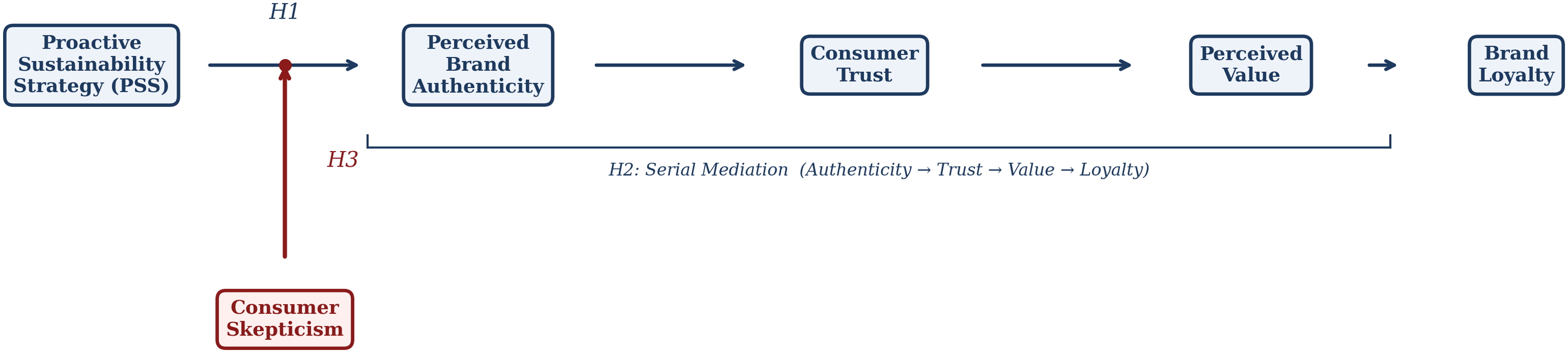
Consumer skepticism positively moderates the relationship between proactive sustainability strategy and perceived authenticity, such that the effect of PSS on authenticity is stronger among consumers with higher skepticism.
Method
We conducted three studies. Study 1 (pretest) validated the experimental manipulation. Study 2 (main experiment) tested the complete theoretical model. Study 3 (signal decomposition) examined the bundling effect with incentive-compatible behavioral outcomes and a no-signal baseline.
Study 1: Pretest
Sixty participants (62% female; M = 28.7 years) recruited through an online panel were randomly assigned to a high-PSS or low-PSS condition. Participants were aged 18–45, had purchased skincare products in the past six months, and did not work in marketing or cosmetics. In the high-PSS condition, the fictional brand PureEarth emphasized costly investments (100% ocean-recycled plastic packaging, complete supply chain traceability), specific commitments (carbon footprint 47% below industry average, carbon neutral by 2026), and verifiable claims (Leaping Bunny certified [LB-2024-CHN-0892], Carbon Trust verified). The low-PSS condition used vague, unverifiable language (“We care about the earth,” “Natural beauty from nature”) without metrics, certifications, or quantifiable targets.
The manipulation was successful across all four assessed dimensions. High-PSS participants perceived significantly greater investment cost, specificity, verifiability, and overall PSS than low-PSS participants (all d > 1.97, all p < .001). The manipulation was particularly strong for overall PSS perception (M = 5.08 vs. 3.84; d = 1.98), confirming that the stimulus materials effectively differentiated the experimental conditions.
Study 2: Main Experiment
Participants
We recruited 293 participants through the same online panel with identical screening criteria. After excluding 42 respondents who failed attention or brand recognition checks, the final sample comprised N = 251 participants (61% female; M = 29.1 years, SD = 6.9). Gender distribution reflects the demographic profile of skincare consumers in China, where women represent the primary purchasing segment.
Design and Procedure
Participants completed a single-factor (PSS: high vs. low) between-subjects experiment. Consumer skepticism and control variables were measured before experimental exposure; brand perceptions and behavioral intentions were measured after. Stimulus materials were identical to Study 1.
Measures
Consumer skepticism was measured using Obermiller and Spangenberg’s (1998) 9-item scale (α = .98). Perceived authenticity was assessed using eight items adapted from Morhart et al. (2015; α = .96). Consumer trust was measured with Chaudhuri and Holbrook’s (2001) 4-item scale (α = .92). Perceived value was assessed using eight items integrating Sweeney and Soutar’s (2001) PERVAL with Chen and Chang’s (2012) green perceived value items, capturing both functional (price-quality) and emotional/expressive dimensions (α = .94). Brand loyalty was measured using Zeithaml et al.’s (1996) 4-item behavioral intentions scale (α = .88). Manipulation checks (4 items, α = .96) assessed overall PSS perceptions. Control variables included need for cognition (6 items, α = .97; Cacioppo et al., 1984), environmental concern (6 items, α = .97; Dunlap et al., 2000), and post-exposure positive affect (6 items, α = .94; Watson et al., 1988). All items used 7-point Likert scales.
Common Method Bias
We addressed common method variance (CMV) through both design and statistical tests. Design safeguards included: PSS as an experimentally manipulated rather than self-reported variable; temporal separation of skepticism (pre-exposure) from outcome measures (post-exposure); and assured participant anonymity. Statistically, Harman’s single-factor test (first factor = 34.4%; 5 factors with eigenvalue >1) indicated no dominant common factor. We additionally applied the Lindell and Whitney (2001) marker variable procedure using need for cognition as a theoretically unrelated marker, following Baumgartner et al.'s (2021) recommendation for stronger CMV diagnostics: marker-partialed path correlations differed negligibly from zero-order correlations (Δr ≤ .004), confirming that CMV does not meaningfully distort key relationships.
Study 2 Results
Manipulation Check
The manipulation was successful. High-PSS participants reported significantly higher PSS perceptions (M = 5.02, SD = 1.05) than low-PSS participants (M = 3.65, SD = 1.10), t (249) = 10.07, p < .001, d = 1.27. This effect size indicates a strong manipulation that clearly differentiated the experimental conditions while remaining within realistic bounds for applied research.
Descriptive Statistics and Correlations
Descriptive Statistics, Scale Reliabilities, and Correlations (Study 2; N = 251)
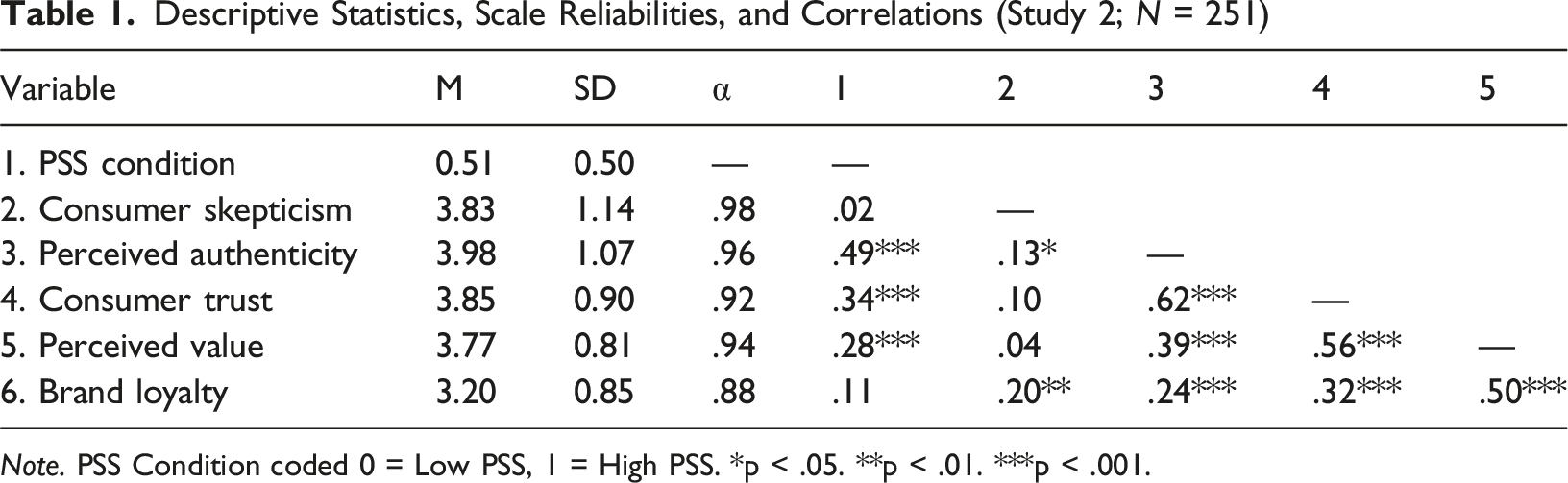
Note. PSS Condition coded 0 = Low PSS, 1 = High PSS. *p < .05. **p < .01. ***p < .001.
Main Effect of PSS on Perceived Authenticity (H1)
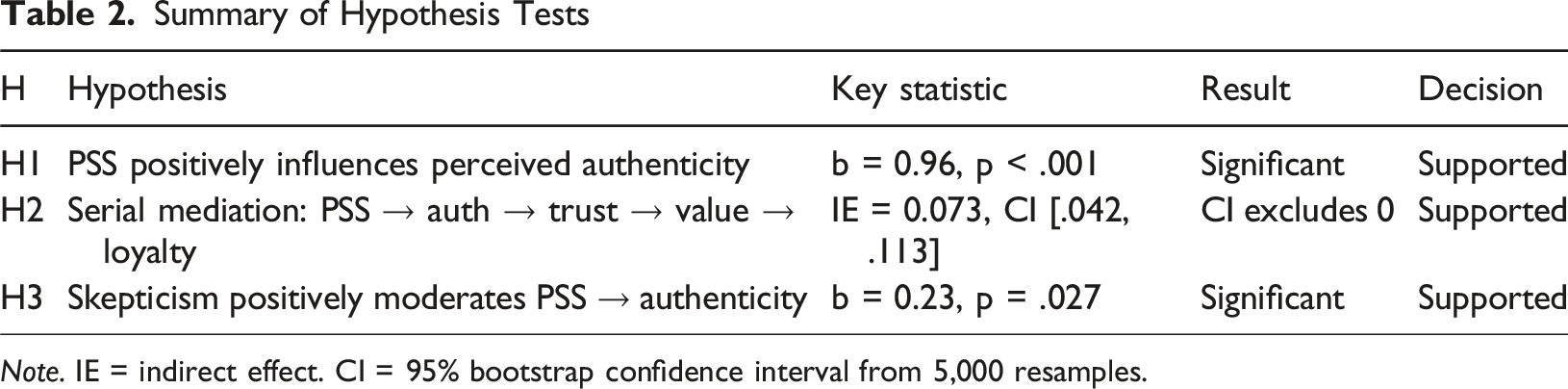
Brands employing proactive sustainability strategies were perceived as notably more authentic (M = 4.50, SD = 1.02) compared to the low-PSS group (M = 3.45, SD = 0.84), t(249) = 8.86, p < .001, d = 1.12, confirming H1.
Serial Mediation Analysis (H2)
We estimated the serial mediation model using Hayes’s (2022) PROCESS macro (Model 6) with 5,000 bootstrap resamples. PSS strongly boosted authenticity (a1 = .96, p < .001), which predicted trust (b1 = 0.47, p < .001), which predicted value (b2 = 0.43, p < .001), which predicted loyalty (b3 = 0.38, p < .001). The direct effect of PSS on loyalty was non-significant (c′ = −0.11, p = .29), indicating full mediation. The serial indirect effect was statistically reliable (IE = 0.073, SE = 0.033, 95% CI [0.042, 0.113]), supporting H2. Figure 2 presents the path model. Table 2 summarizes all hypothesis tests. Study 2 serial mediation path model (N = 251) Summary of Hypothesis Tests Note. IE = indirect effect. CI = 95% bootstrap confidence interval from 5,000 resamples.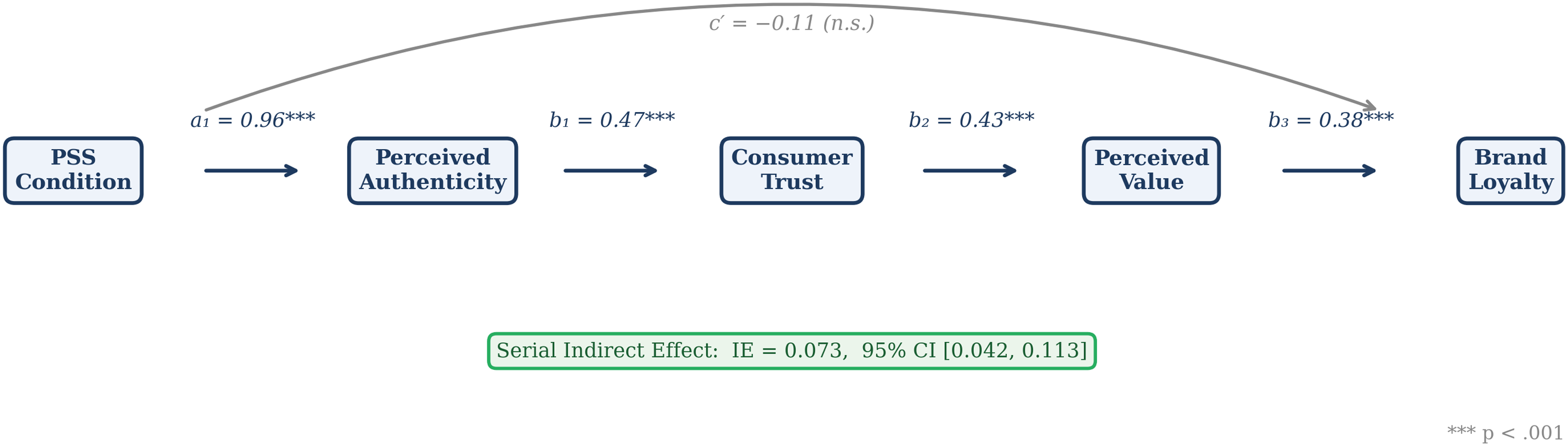
Moderation Analysis (H3)
Consumer skepticism was mean-centered prior to analysis. Results revealed a significant main effect of PSS (b = 1.04, SE = 0.12, p < .001), a non-significant main effect of skepticism (b = −0.02, p = .77), and a significant positive PSS × Skepticism interaction (b = 0.23, SE = 0.10, p = .027; ΔR2 = .015), supporting H3. Simple slopes analysis showed that the PSS effect on authenticity increased monotonically with skepticism: b = 0.78 at low skepticism (−1 SD), b = 1.04 at mean, and b = 1.31 at high skepticism (+1 SD)—a 68% amplification. Figure 3 illustrates this interaction Figure 4. PSS × Consumer skepticism interaction predicting perceived brand authenticity (Study 2, N = 251) Conditional indirect effects of PSS on brand loyalty through authenticity-trust-value chain (Study 2, N = 251)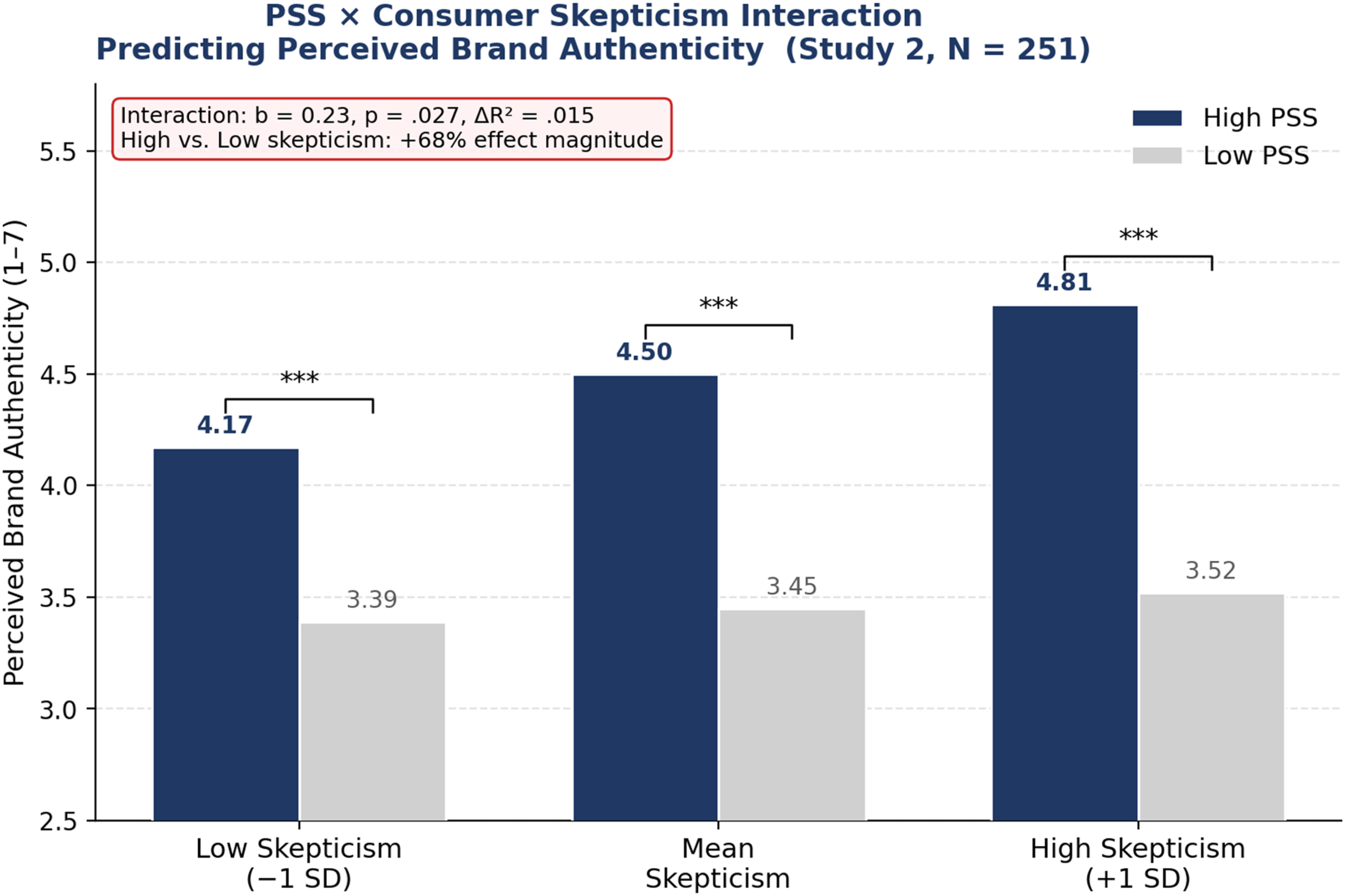
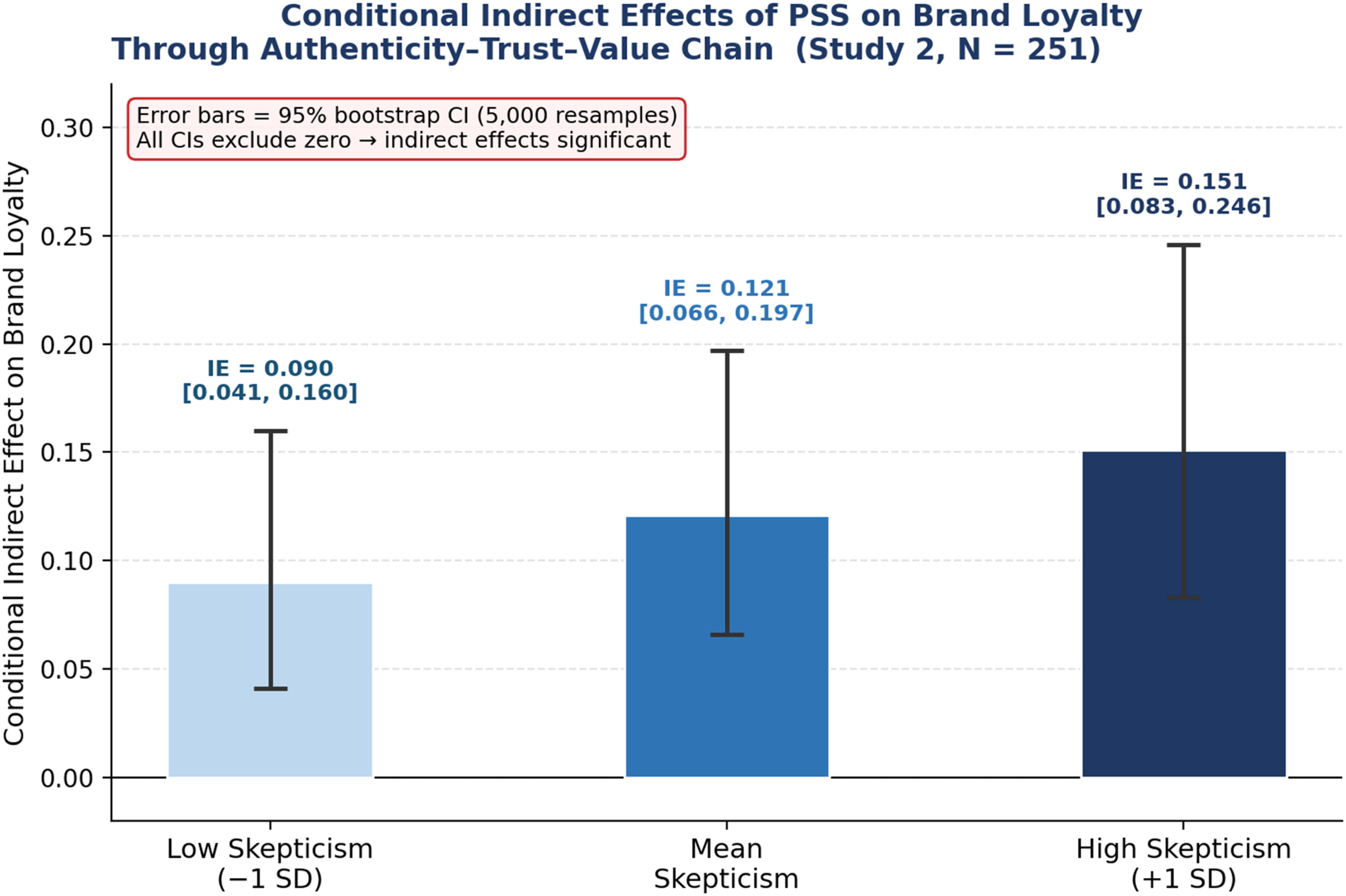
Conditional indirect effects of PSS on brand loyalty through the serial chain varied significantly by skepticism level: low skepticism IE = 0.090, 95% CI [0.041, 0.160]; mean IE = 0.121, 95% CI [0.066, 0.197]; high skepticism IE = 0.151, 95% CI [0.083, 0.246]. The index of moderated mediation was 0.027, 95% CI [0.005, 0.056].
Additional Results
Participants in the high-PSS condition indicated significantly higher willingness to pay (M = ¥73.1, SD = 8.9) than those in the low-PSS condition (M = ¥60.9, SD = 7.9), t(249) = 11.48, p < .001, d = 1.45—a 20.1% premium. Neither need for cognition nor environmental concern differed across conditions (both ps > .45). Positive affect was higher in the high-PSS condition but controlling for it left all hypothesized effects significant (PSS → Authenticity: b = 0.78, p < .001; serial indirect effect 95% CI [0.031, 0.096]).
Study 3: Signal Decomposition Experiment
Studies 1 and 2 treated PSS as an integrated configuration. Study 3 tested whether the bundled signal outperforms its components, addressing reviewers’ concerns about the relative contribution of individual signal elements and the need for a no-signal behavioral baseline.
Design and Participants
We recruited 280 participants (59.3% female; M = 27.4 years) through the same panel. Participants were randomly assigned to one of four conditions: Full PSS (complete bundle), Verification Only (third-party certifications without specific targets or cost signals), Vague Claims (original low-PSS condition from Studies 1–2), or No-PSS Baseline (neutral product description with no sustainability content). Each condition comprised n = 70 participants.
Incentive-Compatible Behavioral Measures
To address concerns about the gap between stated and revealed preferences, Study 3 incorporated two behavioral outcomes. BDM willingness to pay was elicited using a Becker et al. (1964) auction: participants submitted their maximum willingness-to-pay price, and a randomly drawn market price determined whether a real transaction occurred, providing genuine economic incentives. Brand choice was measured as a binary forced-choice task between PureEarth and a conventional alternative at identical prices. Attitudinal measures (authenticity, trust, value, loyalty) were retained for mediation replication. Full Study 3 statistical results are provided in the Web Appendix.
Study 3: Key Results
Manipulation checks confirmed successful condition differentiation, F(3, 276) = 382.24, p < .001, η2 = .81. Consumer skepticism did not differ across conditions at baseline, F(3, 276) = 2.35, p = .073, confirming successful randomization.
Study 3 Condition Means for Key Outcomes
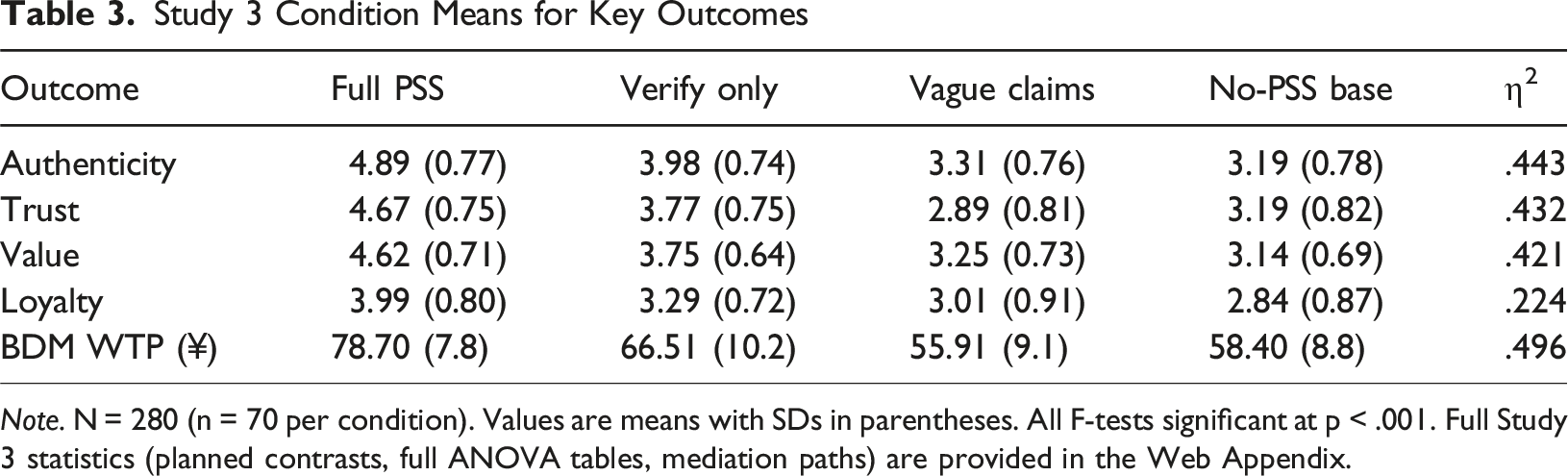
Note. N = 280 (n = 70 per condition). Values are means with SDs in parentheses. All F-tests significant at p < .001. Full Study 3 statistics (planned contrasts, full ANOVA tables, mediation paths) are provided in the Web Appendix.
Study 3 Incentive-Compatible Brand Choice by Signal Condition
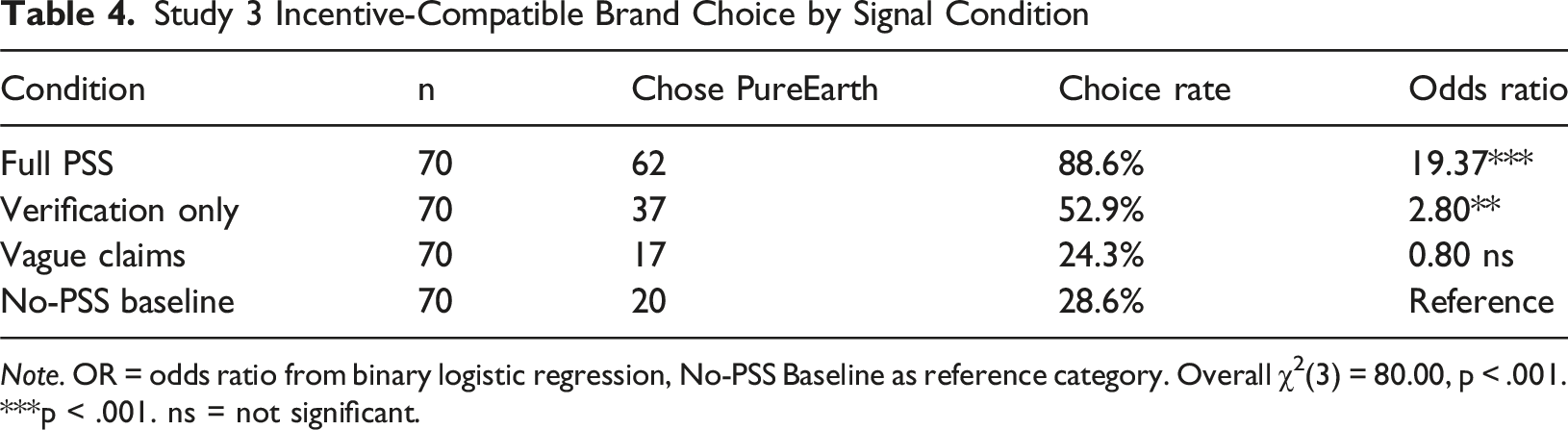
Note. OR = odds ratio from binary logistic regression, No-PSS Baseline as reference category. Overall χ2(3) = 80.00, p < .001. ***p < .001. ns = not significant.
Serial mediation (H2) was retested using Full PSS versus No-PSS Baseline as a true causal contrast (n = 140). All four pathways were in the predicted direction: PSS → authenticity (b = 1.700, p < .001) → trust (b = 0.298, p < .001) → value (b = 0.264, p < .001) → loyalty (b = 0.201, p = .057). The serial indirect effect, tested via 5,000 bias-corrected bootstrap resamples, was significant (IE = 0.027, SE = 0.019, 95% BC CI [.003, .084]), and the direct effect of PSS on loyalty also remained significant (c′ = 0.696, p = .007), indicating partial mediation. Although the final path (value → loyalty) was marginally significant (p = .057), the bootstrap confidence interval for the serial indirect effect excludes zero, supporting the proposed mediation chain. This pattern differs from Study 2 (full mediation; IE = 0.073, CI [.042, .113]) and likely reflects the smaller n (140 vs. 251) and attenuated loyalty variance in the four-condition design. The individual path coefficients replicate the directional sequence proposed in H2, and the significant direct effect confirms that Full PSS has robust behavioral impact beyond the indirect chain. The skepticism moderation (H3) replicated cleanly: b_interaction = 0.251, p = .046, ΔR2 = .012, consistent with Study 2 (b = 0.23, p = .027).
Discussion
We began with a puzzle: in a market flooded with green claims, why do some sustainability messages earn consumer loyalty while others are dismissed? Our answer centers on signaling credibility—and the data, across three studies and two methodological approaches, consistently support it.
Theoretical Contributions
Start with the construct itself. PSS draws its power not from any individual element but from their combination. This is not merely an empirical observation; it follows from signaling theory’s core logic. Costly investments without verification can still be questioned. Certification without substantive investment may appear as a purchased seal of approval. It is the bundle that crosses the credibility threshold. Study 3 provides direct evidence: the Full PSS configuration produced authenticity effects nearly double those of third-party certification alone (d = 1.20 for Full PSS vs. Verification Only, compared to d = 1.03 for Verification Only vs. Baseline) and generated 3.1-fold higher brand choice rates than the no-signal baseline—effects replicated using incentive-compatible behavioral measures that go beyond self-report.
We acknowledge that treating these three elements as a unified construct rather than examining their individual effects represents a deliberate theoretical choice. Our signaling theory framework suggests that these elements function synergistically—costly investments without verification may still be questioned, while verified claims without substantial investment may appear superficial. Future research using factorial designs could decompose these effects, though we expect the configuration to be more impactful than the sum of its parts.
The mediation findings reveal how PSS translates into loyalty: not through direct persuasion, but through relational infrastructure. PSS first alters identity inferences (authenticity), which build trust, which enhances perceived value, which drives loyalty. The non-significant direct effect in Study 2 (c' = −0.11, p = .29) and the partially mediated direct effect in Study 3 (c' = 0.696, p = .007) together suggest that the full serial chain matters most when the no-PSS baseline makes the signal contrast particularly stark—consistent with signaling theory’s emphasis on contextual contrast.
The skepticism moderation is arguably the most theoretically significant finding. Conventional wisdom holds that skeptics are hard to persuade—and therefore strategically unappealing targets. Our data tell a different story: skeptics, when confronted with signals that meet their elevated evidentiary standards, form authenticity inferences that are 68% stronger (Study 2) and produce a 35.0% amplification in authenticity effects (Study 3). Attribution theory (Kelley, 1973) provides the mechanism: skeptics who conclude “this one I believe” have done so despite their default distrust, making the resulting inference particularly diagnostic. This reconceptualizes consumer skepticism as a potential amplifier of effective sustainability signaling rather than merely a barrier to overcome—a finding that should prompt reconsideration of how brands segment and target their sustainability communications.
This reconceptualization of skepticism as a potential amplifier rather than merely a barrier represents a meaningful theoretical contribution. It suggests that the relationship between skepticism and persuasion may be contingent on signal quality—skepticism undermines weak signals but may enhance responses to strong ones. The skeptic’s inner monologue shifts from “I don’t believe corporate green claims” to “Okay, this one I believe.” Future research should further explore the boundary conditions of this effect and examine whether similar patterns emerge in other contexts where credibility is critical.
Practical Implications
For practitioners, the hierarchy is clear: specificity beats vagueness, verification beats assertion, and investment beats rhetoric. Brands tempted to lead with phrases like “we care about the planet” should reconsider: our data show that such claims provide no meaningful credibility lift over a no-sustainability baseline (Study 3, Vague Claims vs. Baseline: d = 0.16, ns).
Perhaps most counterintuitive is the implication for skeptical consumers. Rather than avoiding this segment, brands willing to meet elevated evidentiary standards may find skeptics to be disproportionately valuable targets: harder to convince, but once convinced, holding stronger and more resistant attitudes. The 20.1% self-reported premium (Study 2) and the 34.8% incentive-compatible premium (Study 3) together provide convergent evidence that PSS investments generate substantial financial returns—approximately consistent with market evidence on willingness-to-pay for demonstrably sustainable products (Nielsen, 2015; Trudel, 2019).
Third, the price premium associated with PSS provides concrete evidence of the economic returns to proactive sustainability investment. The 20.1% self-reported premium from Study 2, combined with the 34.8% incentive-compatible premium from Study 3, suggests that sustainability investments are best conceptualized as brand-building exercises rather than mere compliance costs. These premiums flow through the relationship-building mechanisms of authenticity, trust, and value—suggesting that the returns are not driven by superficial green preferences but by genuine relational equity that is harder for competitors to replicate.
Limitations and Future Research
Across three experimental studies, this research provides converging evidence for the PSS framework. Nevertheless, several limitations warrant consideration. First, while Study 3 advances signal decomposition by isolating the bundling effect versus certification alone, the individual contributions of costly investment and specific targets remain to be disentangled. Future research using factorial designs could independently vary each element to identify minimum sufficient signal configurations—practically important for brands with resource constraints.
Second, all three studies used single-exposure designs, which cannot capture how PSS effects evolve with sustained communication. Longitudinal or field research examining credibility accumulation and decay over time would complement these experimental findings. Third, the skepticism moderation effect, while statistically consistent across studies (Study 2: ΔR2 = .015; Study 3: ΔR2 = .012), is modest in magnitude. Skepticism is one of several moderators—product category, brand positioning, cultural context, and prior greenwashing exposure may also condition PSS effectiveness. Fourth, all three studies were conducted with Chinese consumers, and cross-cultural research is needed to assess boundary conditions, particularly given that collectivist values, regulatory environments, and corporate social responsibility norms differ markedly across markets (Inglehart & Welzel, 2005; Wang et al., 2020).
While effects of this magnitude are common in consumer behavior research and can translate to meaningful practical differences at scale, the moderation finding suggests that skepticism is one of several factors shaping PSS responses. Future research should examine additional boundary conditions, such as product category (utilitarian vs. hedonic), brand positioning (premium vs. value), and consumer characteristics beyond skepticism (e.g., environmental identity, prior experience with greenwashing).
Finally, the environmental concern variable measured in Studies 1–2 was not tested as a moderator, representing an opportunity for future work. While we expect skepticism to be the more proximal moderator (given its direct relevance to claim credibility evaluation), environmental identity and prior greenwashing exposure may interact with PSS signals in ways that further specify the boundary conditions of our framework (Whitmarsh & O'Neill, 2010; Luchs et al., 2010).
Conclusion
In an era of pervasive skepticism toward corporate sustainability claims, this research demonstrates that proactive sustainability strategy—characterized by costly investments, specific commitments, and verifiable claims—can effectively build brand authenticity, trust, value, and ultimately loyalty. The bundled signal configuration matters: combining all three elements produces effects that exceed certification alone, and generate premium willingness-to-pay and brand choice rates that are confirmed by incentive-compatible behavioral measures. Perhaps most importantly, we find that consumer skepticism, rather than being merely a barrier to overcome, may function as an amplifier of credible sustainability signals. For brands genuinely committed to sustainability, this represents both a challenge and an opportunity: the challenge of meeting elevated evidentiary standards, and the opportunity to build particularly strong relationships with the discerning consumers who constitute an increasingly important market segment.
Supplemental Material
Supplemental Material - When Skeptics Believe: How Proactive Sustainability Signals Build Brand Loyalty
Supplemental Material for When Skeptics Believe: How Proactive Sustainability Signals Build Brand Loyalty by Dingzhang Zheng, Yaxing Tan in International Journal of Market Research.
Supplemental Material
Supplemental Material - When Skeptics Believe: How Proactive Sustainability Signals Build Brand Loyalty
Supplemental Material for When Skeptics Believe: How Proactive Sustainability Signals Build Brand Loyalty by Dingzhang Zheng, Yaxing Tan in International Journal of Market Research.
Supplemental Material
Supplemental Material - When Skeptics Believe: How Proactive Sustainability Signals Build Brand Loyalty
Supplemental Material for When Skeptics Believe: How Proactive Sustainability Signals Build Brand Loyalty by Dingzhang Zheng, Yaxing Tan in International Journal of Market Research.
Supplemental Material
Supplemental Material - When Skeptics Believe: How Proactive Sustainability Signals Build Brand Loyalty
Supplemental Material for When Skeptics Believe: How Proactive Sustainability Signals Build Brand Loyalty by Dingzhang Zheng, Yaxing Tan in International Journal of Market Research.
Footnotes

Funding
The authors received no financial support for the research, authorship, and/or publication of this article.
Declaration of Conflicting Interests
The authors declared no potential conflicts of interest with respect to the research, authorship, and/or publication of this article.
Data Availability Statement
The data that support the findings of this study are available from the corresponding author upon reasonable request.
Supplemental Material
Supplemental material for this article is available online.
References
Supplementary Material
Please find the following supplemental material available below.
For Open Access articles published under a Creative Commons License, all supplemental material carries the same license as the article it is associated with.
For non-Open Access articles published, all supplemental material carries a non-exclusive license, and permission requests for re-use of supplemental material or any part of supplemental material shall be sent directly to the copyright owner as specified in the copyright notice associated with the article.
