







Abstract
The paper presents jet noise computations performed using the original and some recently proposed modified formulations of detached-eddy simulation, based on alternative definitions of the subgrid length-scale and/or a modified version of the subgrid Spalart-Allmaras model, which involves the Wall-Adapting Local Eddy-viscosity model. The modifications are aimed at the elimination or, at least, a significant weakening of a known flaw of detached-eddy simulation, namely, the severe delay of the Kelvin–Helmholtz instability and transition from fully modeled to mostly resolved turbulence in the free and separated shear layers. This flaw makes the original detached-eddy simulation formulation, in fact, non-applicable to the prediction of the noise of high Reynolds number jet flows when typical grids are used, and has led to the use of Implicit Large-Eddy Simulation instead. Based on examples of application of these modifications to such flows, already available in the literature, they were found capable of resolving the issue and providing quite accurate predictions of the aerodynamic characteristics and turbulent statistics of the high-Re jets. The study performed in the present work allows us to draw a similar conclusion regarding the accuracy of the enhanced detached-eddy simulation formulations in terms of jet-noise prediction. The new formulation gives noise results very close to those of ILES except at the highest frequencies, while being more general and less sensitive to grid resolution. In addition, it removes a (1–3) dB underestimation of the noise spectral maximums for the peak radiation direction, which is typical of ILES on fine grids.
Keywords
Introduction
Since its conception in 1997,
1
the detached-eddy simulation (DES) method, with its later extensions and improvements (delayed DES (DDES)
2
and improved DDES (IDDES)
3
) aimed at increasing the reliability and widening the applicability of the original formulation, has become a powerful computational tool for complex aerodynamic and aeroacoustic problems. However, some DES-related issues still remain unresolved. This, first of all, concerns the so-called “Grey Area” issue. In the free shear layers and jet flows, this issue manifests itself in a significant delay of the natural Kelvin–Helmholtz instability and “secondary transition” to turbulence. This delay prevents a plausible representation of turbulence in the initial regions of the shear layers, in general, and jets, in particular, which drastically deteriorates the jet-noise prediction
4
the present study is devoted to. The general reasons of the delay are discussed in detail by Shur et al.
5
Its origin is associated with peculiarities of the grids typically used in DES of jet flows. In particular, in order to capture the initial jet region, these grids are refined across the jet shear layers and, typically to a lesser extent, in the streamwise direction, but are relatively coarse in the azimuthal direction. This creates strongly anisotropic grid cells which are very different from the nearly isotropic cells assumed when Large Eddy Simulation (LES) or the LES function within DES are applied within the cut-off in the inertial range.
6
This flaw was anticipated already in the first DES formulation
1
and is primarily related to the measure of subgrid length scale, Δ, which enters the Subgrid Scale (SGS) branch of DES and all but very few other hybrid and LES methods. Initially, in 1997
1
this measure was defined as the maximum of the cell sizes in all three directions,
In the archetypal LES (and LES region in DES or similar hybrid RANS-LES methods), that is, with regular grids which have essentially cubic cells of a size Δ falling within the Kolmogorov inertial range, these definitions are nearly identical. However, when applied in unstructured and/or irregular and highly anisotropic structured grids, the definitions become far from equivalent, and even in the normal LES situation with statistically isotropic eddies near the cut-off, it is easy to see that the smaller dimensions of a strongly anisotropic grid cell do not really contribute to the grid resolution capability, and therefore should not be involved in the subgrid length-scale supplied to the SGS model. This makes the cube root definition physically unjustified. On the other hand, in the initial jet region with the azimuthal grid step much larger than the other two, the
In the authors’ earlier studies of jet-noise,4,8,9 this motivated disabling the eddy viscosity in the jet plume, i.e. employing implicit LES (ILES) combined with Reynolds-averaged Navier–Stokes (RANS) inside the nozzle, instead of using DES in the whole domain. The approach turned out to be rather robust and accurate for a wide range of jet flows.10–13 However, it is zonal, which complicates its application to jets from nozzles with complex geometry, 11 and is not applicable to jets interacting with bodies, which is typical, for instance, of the exhaust jets of aviation engines interacting with pylons or wings and especially flaps of an airplane. So some other approaches are needed, which would be compatible with the non-zonal DES formulation, on one hand, and allow a significant decrease of the SGS viscosity in the initial jet region without deterioration of the regular SGS model activity in the rest of the flow, on the other hand.
Two types of approaches have been recently proposed along these lines.
The first approach 5 is based on alternative, solution-dependent, definitions of the subgrid length-scale Δ in the original DES formulation, whereas the second one14,15 relies upon the incorporation of alternative SGS models which discern between quasi-2D and developed 3D flow states. In the papers,5,14,15 both approaches were shown to be rather efficient for the prediction of the aerodynamic characteristics of a set of both generic and fairly complex free and separated shear flows and jets without drastic grid refinement in the azimuthal direction, which justifies their further evaluation in terms of the jet-noise prediction. This is exactly the primary objective of the present study, where both approaches are applied to the computation of the far-field noise generated by a subsonic round jet. A detailed comparison of results of the simulations with experimental data is carried out, allowing an objective assessment of the capabilities of the newly proposed DES versions in terms of accuracy and efficiency.
The rest of the paper is organized as follows.
In the Formulation of the enhanced DES versions section, for the sake of completeness, formulations are presented of the abovementioned approaches. Then, in the Problem statement and numerical setup section, some aspects of the problem statement and numerics used are briefly outlined, and in the Results and discussion section results of the simulations are presented, analyzed, and compared with experiments. The Concluding remarks section gives conclusions.
Formulation of the enhanced DES versions
Below, we briefly outline the two types of modifications to the original DES formulation mentioned in the Introduction.
Modifications to the subgrid length-scale within non-zonal hybrid approaches
Sensitizing the DES cell-size measure to strongly anisotropic cells in early shear layers
The first modification of the subgrid length-scale Δ proposed and outlined in detail in Shur et al.
5
ensures the sensitization of Δ to the strongly anisotropic cells which, as mentioned in the introduction, are typically used in DES of the quasi-2D initial jet-region. This is achieved by taking into account the direction of the local vorticity vector. For a cell with the center vector

The quantity
A measure for the identification of early shear layer regions
The second modification to the standard DES subgrid length-scale definition
5
is grid-independent and therefore, unlike the first one (equation (1)), is active on arbitrary (including isotropic) grids. It turns out to be needed because unless the grid is fine enough for accurate resolution of the vortical structures in the initial region of a thin shear layer, which is currently non-affordable, the use of the modification (1) alone does not ensure a sufficiently low (meaning close to that of ILES) level of the SGS viscosity in this region. In other words, the grid anisotropy alone is not a sufficient driver, and one needs an additional, purely kinematic, measure allowing the identification of quasi-2D flow areas, in which nearly ILES treatment is desirable for facilitating the KH instability and accelerating transition, via secondary instabilities, to resolved 3D turbulence. Such a measure, called the Vortex Tilting Measure (VTM), presents a normalized cross product of the inviscid vorticity-evolution vector

The mathematics and semantics of this formula which is an intuitive construct are explained in detail in Shur et al. 5 and not repeated here. Note only that the VTM is bounded by 0 and 1, it is close to zero in the quasi-2D flow regions, where the vorticity vector is an eigenvector of the strain tensor (so that the cross-product in the formula is 0), and it is close to 1.0, although with very sharp downwards excursions, in developed 3D turbulence.
Combining the length-scale


Here Plots of different functions 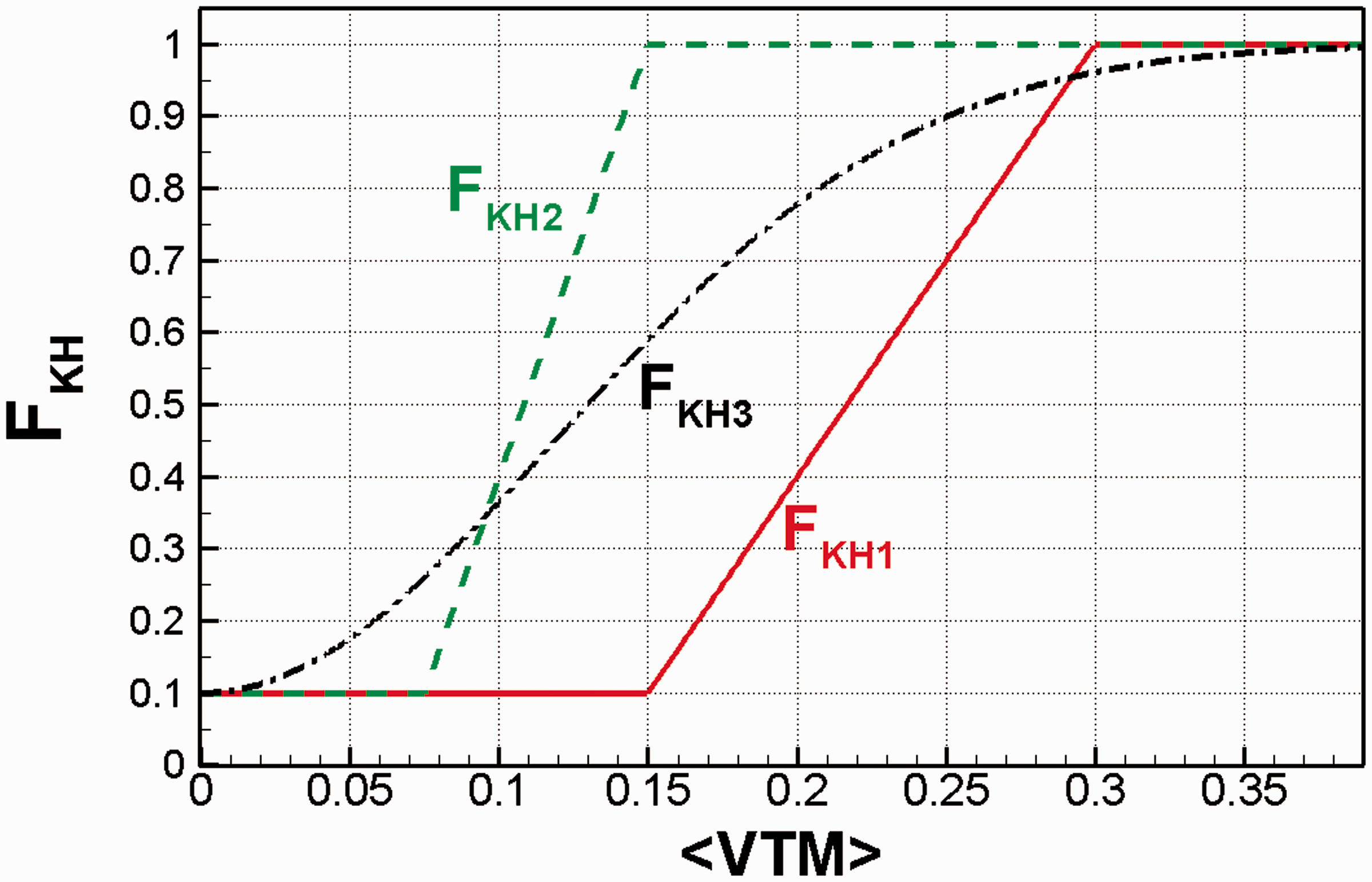
Note finally that in the inviscid flow regions, the quantity <

Modification of the LES branch of the SA-based DES
We in addition use the approach (SA-WALE DES), proposed in Mockett et al.
14
and outlined in more detail in Fuchs et al.
15
Unlike the original DES, the LES branch of which represents an SGS version of the Spalart-Allmaras (SA) RANS model
16
that reduces at equilibrium (i.e. assuming that generation of turbulence is equal to its dissipation) to the algebraic Smagorinsky SGS model, the LES branch of the SA-WALE DES reduces at equilibrium to the algebraic WALE SGS model of Nicoud et al.
17
An advantage of this model over the Smagorinsky one in the context of the present study is that it discerns between stable quasi-2D and developed 3D states of the flow and ensures very low levels of eddy viscosity in the former, while recovering the regular SGS model activity in the latter. Hence, in a sense, it is similar to the function
The SA-WALE subgrid model is obtained from the subgrid version of the SA model by modification of the definition of the modified vorticity magnitude


In equations (6) and (7),
The modification of equation (6) leading to the SA-WALE SGS model, as proposed in Mockett et al.,
14
consists in replacing of

In the original studies,14,15 the capabilities of the SA-WALE subgrid model outlined above (both in isolation and in combination with the modification to the subgrid length-scale defined by equation (1)) were illustrated by examples of simulations of a free shear layer, round subsonic jet, and generic delta-wing (in the latter case, in the framework of the SA-WALE DDES). In particular, it has been shown that, as far as jets aerodynamics is concerned, if coupled with the modified length-scale (1), the approach is quite competitive with ILES. 4 Results of its application to the jet-noise prediction are presented and discussed in the Results and discussion section.
Problem statement and numerical setup
The specific jet flow chosen for an evaluation of the different approaches to an acceleration of RANS-to-LES transition in the framework of non-zonal hybrid DES-like methods presented above is a classic round unheated subsonic jet exiting from a conical nozzle with diameter D = 0.06223 m. The Mach number of the jet at the nozzle exit is M = 0.9 and its Reynolds number based on the nozzle diameter is equal to 1.1×10⁶. The noise generated by this jet in the far-field has been studied experimentally by Viswanathan, 18 and the aerodynamic characteristics of similar jets were investigated in a number of experiments.19–23 The flow is a very common test case which has been used for validation of different numerical aeroacoustic approaches in numerous studies devoted to jet-noise prediction, including those of Shur et al.8,9 where both the aerodynamic and noise characteristics of the jet were successfully predicted with the use of the two-stage zonal RANS–ILES approach. Hence, a primary objective of the present study is to find out if the enhanced versions of DES outlined in the Formulation of the enhanced DES versions section, which do not have the zonal ILES restrictions mentioned in the Introduction, are capable of delivering an accuracy comparable with that of ILES. Considering this, the problem statement used in the present work is similar to that employed in ILES of the jet.4,9 For example, the flow parameters at the nozzle exit specified as the inflow boundary conditions in the LES of the jet are defined based on a precursor SA RANS computation. This emulates the practical situation of using non-zonal DDES or IDDES model for a coupled nozzle-plume computation, in which the interior of the nozzle is automatically treated by the RANS branch and the jet-plume by the LES branch of DDES/IDDES.
The other elements of the computational problem setup (computational domain, boundary conditions, and grids) and specifics of the numerics used in the present study are also similar to those used in Shur et al.4,9 and so they are outlined here only very briefly.
All the simulations were carried out in the same computational domain 9 which extends from 10D upstream to 70D downstream of the nozzle exit. In the radial direction, the outer radius of the domain varies from 15D in the vicinity of the nozzle to 30D at the end of the domain.
Computations were performed with the use of the compressible branch of the in-house NTS code.24,25 It is a cell-vertex, finite-volume code accepting multi-block overset grids of Chimera type. The spatial approximation of the inviscid fluxes in the governing equations in the LES region of DES is based on the weighted (fourth order central/fifth order upwind-biased) variant of the Roe scheme
26
with solution-dependent weight of the upwind differences
Finally, for the far-field noise extraction, the code employs the Lighthill acoustic analogy in the form of a modified version of the integral Ffowcs Williams and Hawkings (FWH) method 28 with nested closed permeable control surfaces and omitted input of the external volume integral (see Spalart and Shur 29 for more details). The narrowest control surface is placed in the immediate vicinity of the turbulent area in order to minimize propagation losses.
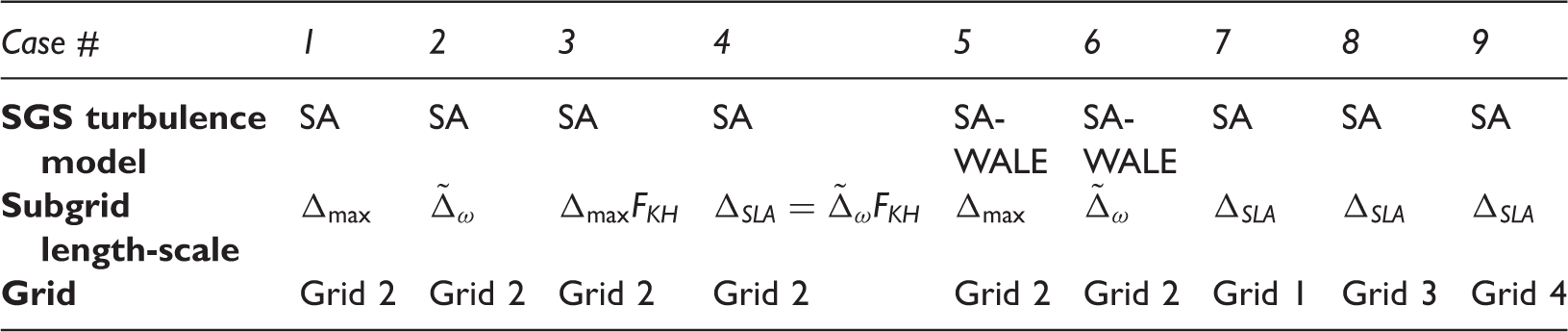
The study was designed as follows.
Key parameters of the computational grids. a
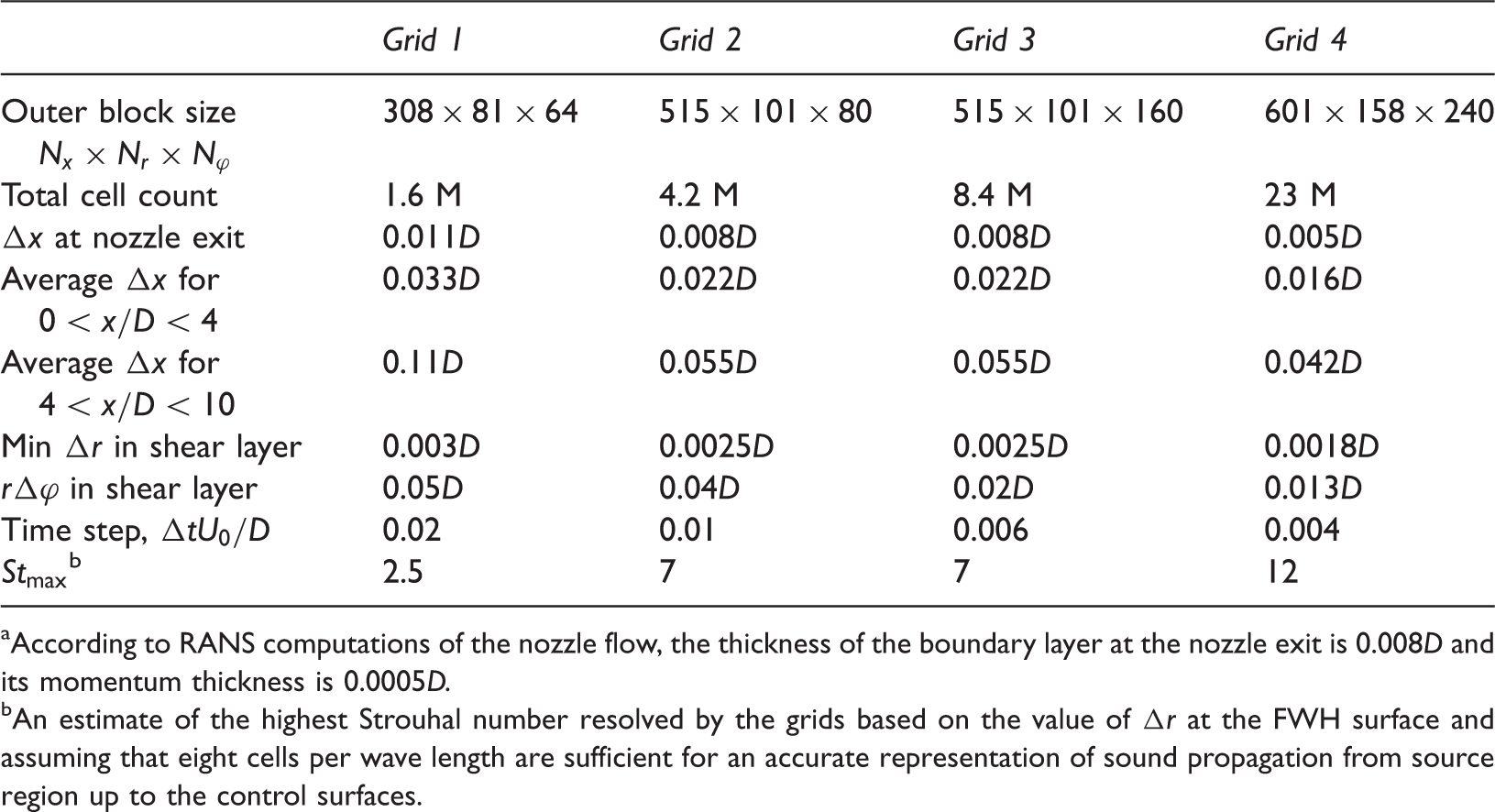
According to RANS computations of the nozzle flow, the thickness of the boundary layer at the nozzle exit is 0.008D and its momentum thickness is 0.0005D.
An estimate of the highest Strouhal number resolved by the grids based on the value of
Matrix of simulations.
Results and discussion
Comparative evaluation of different approaches on Grid 2 (Cases 1–6)
We start from the flow visualizations which visibly highlight the respective performance of the various approaches in terms of turbulence representation. In particular, the observations based on the comparison of the instantaneous fields in the meridian plane of the jet shown in Figures 2–6 and of the radial velocity on a grid surface inside the mixing layer (Figure 7) from different simulations are as follows.
Snapshots of subgrid viscosity in jet meridian plane from simulations using the SA and SA-WALE SGS models combined with different definitions of subgrid length-scale (numbers in the frames correspond to numbering of cases in Table 2). Note the exponential scale of the contours in this figure and in Figures 3, 5, and 6.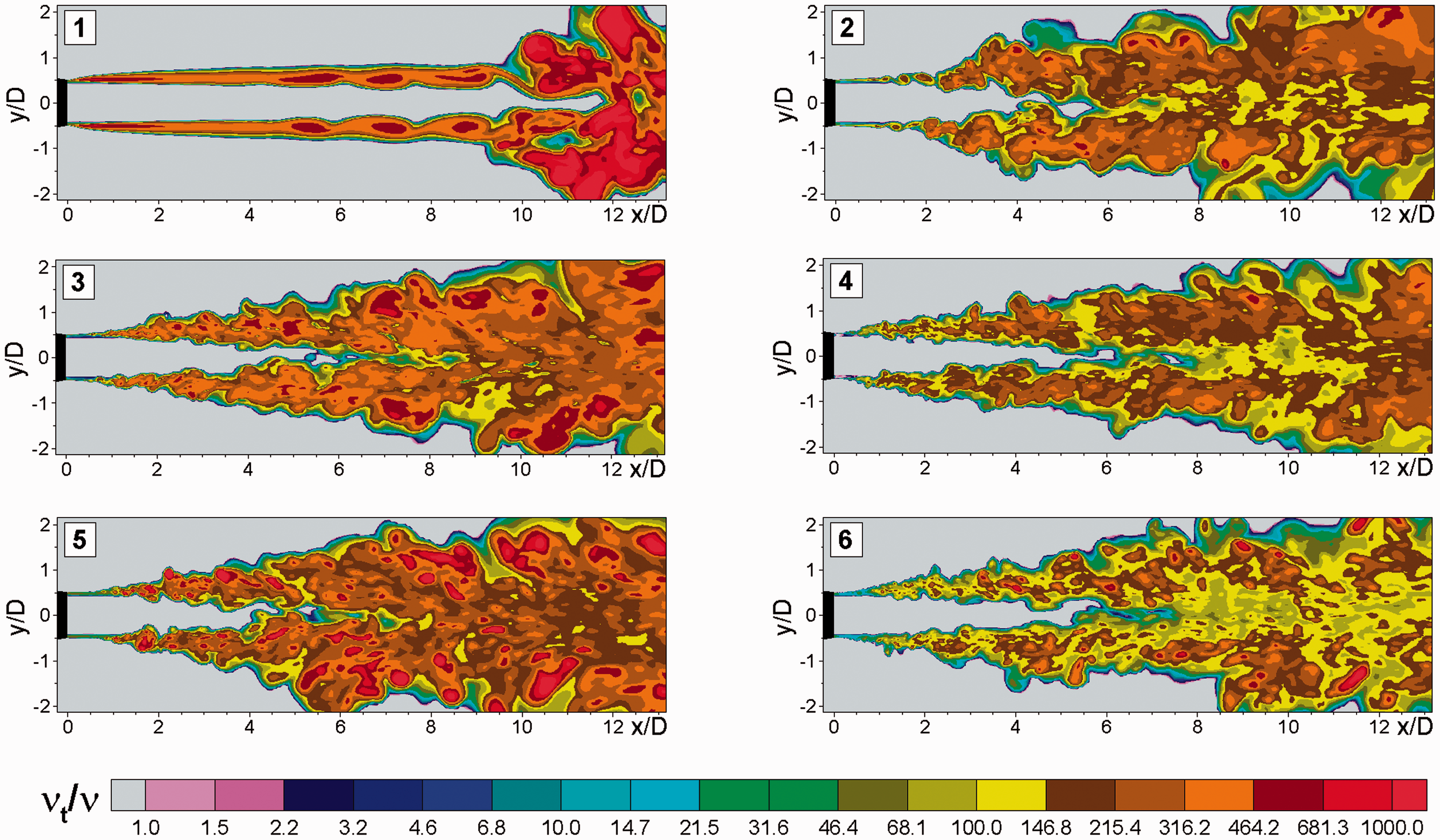
As far as the SA SGS model with different subgrid length-scale definitions is concerned (Cases 1–4 in Table 2), a comparison of the corresponding SGS viscosity snapshots in Figures 2 and 3 clearly reveals the strong decrease of Same fields as in Figure 2; zoomed in on the initial part of the shear layer.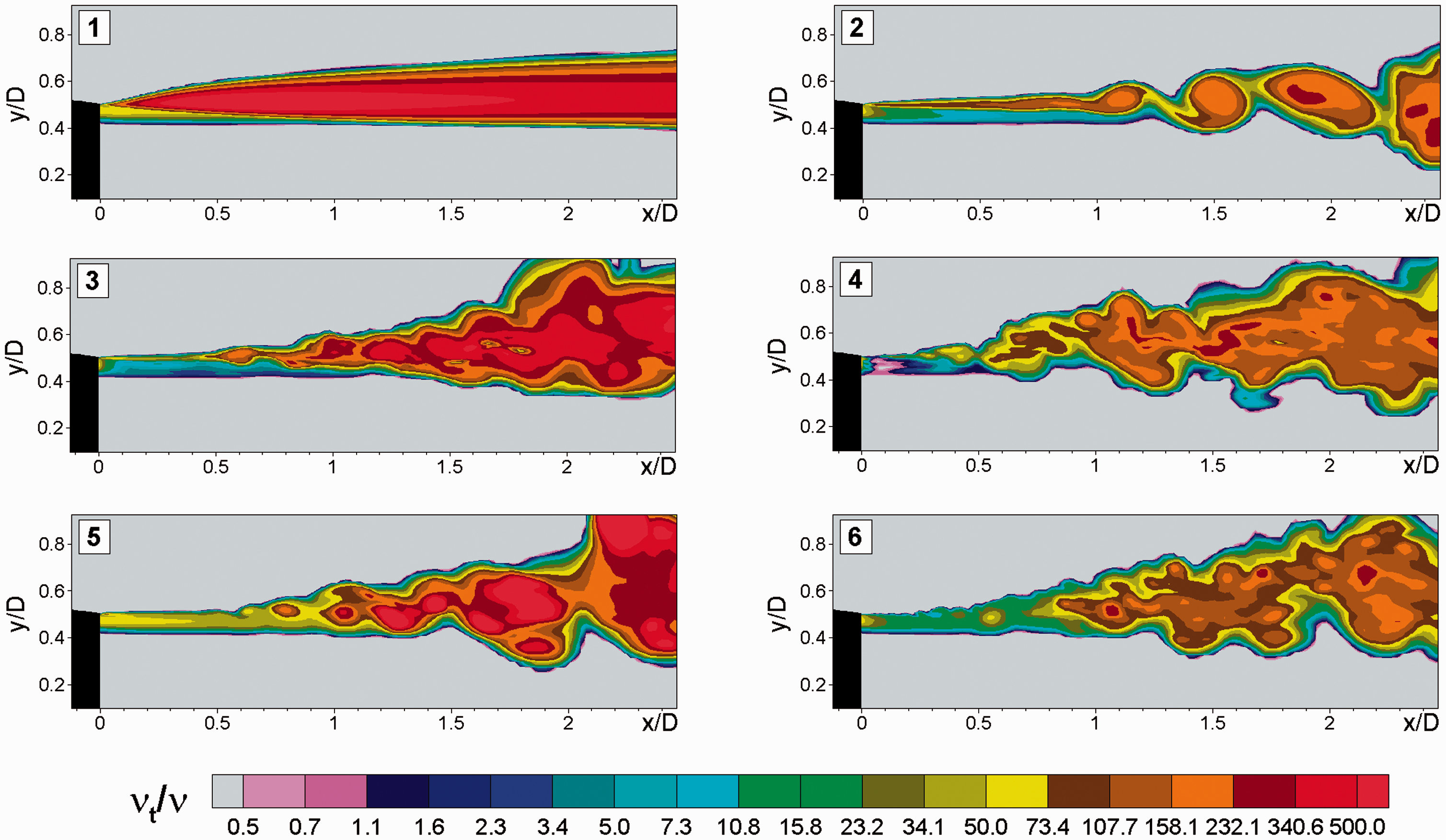
The mechanism of the action of the Snapshots of the quantity 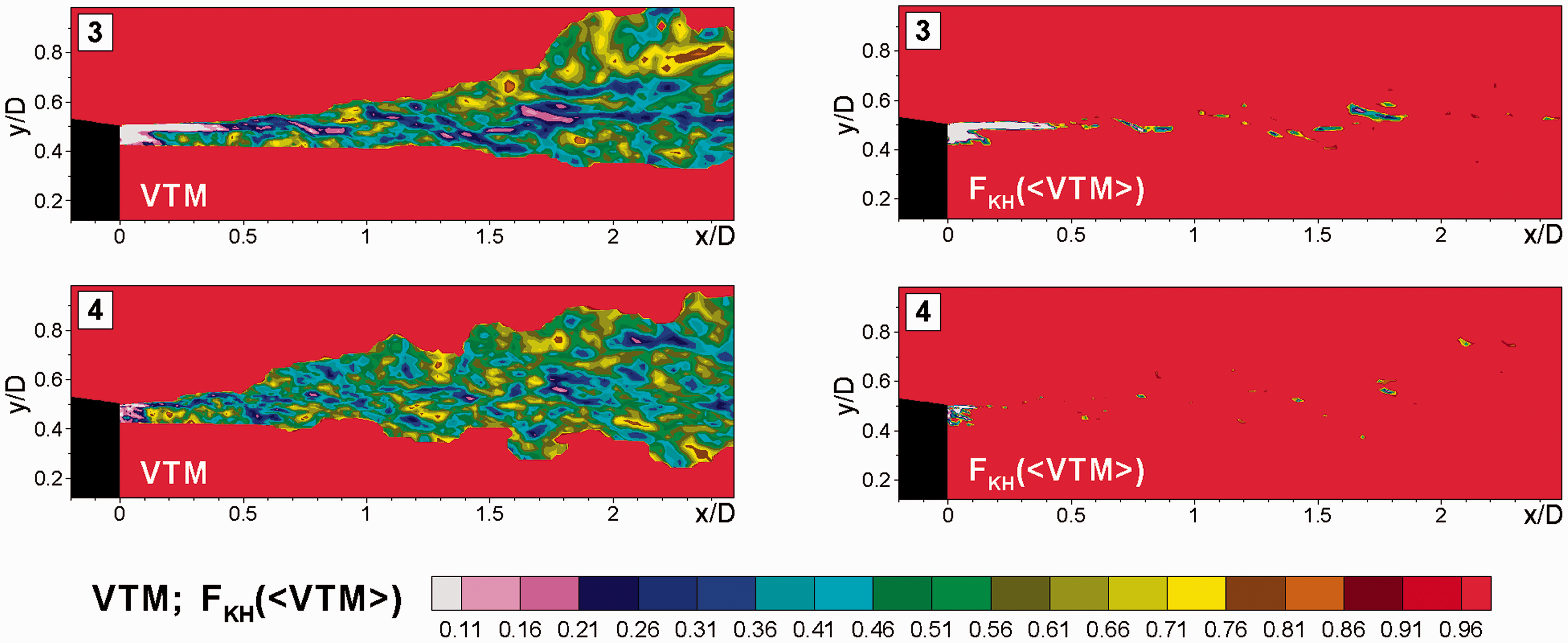
As a result, as seen in Figures 5–7, where snapshots of the vorticity magnitude and of the radial velocity inside the shear layer from the different simulations are compared, the transition from RANS to LES in the simulations with Same fields as in Figure 5; zoomed in on initial part of the shear layer.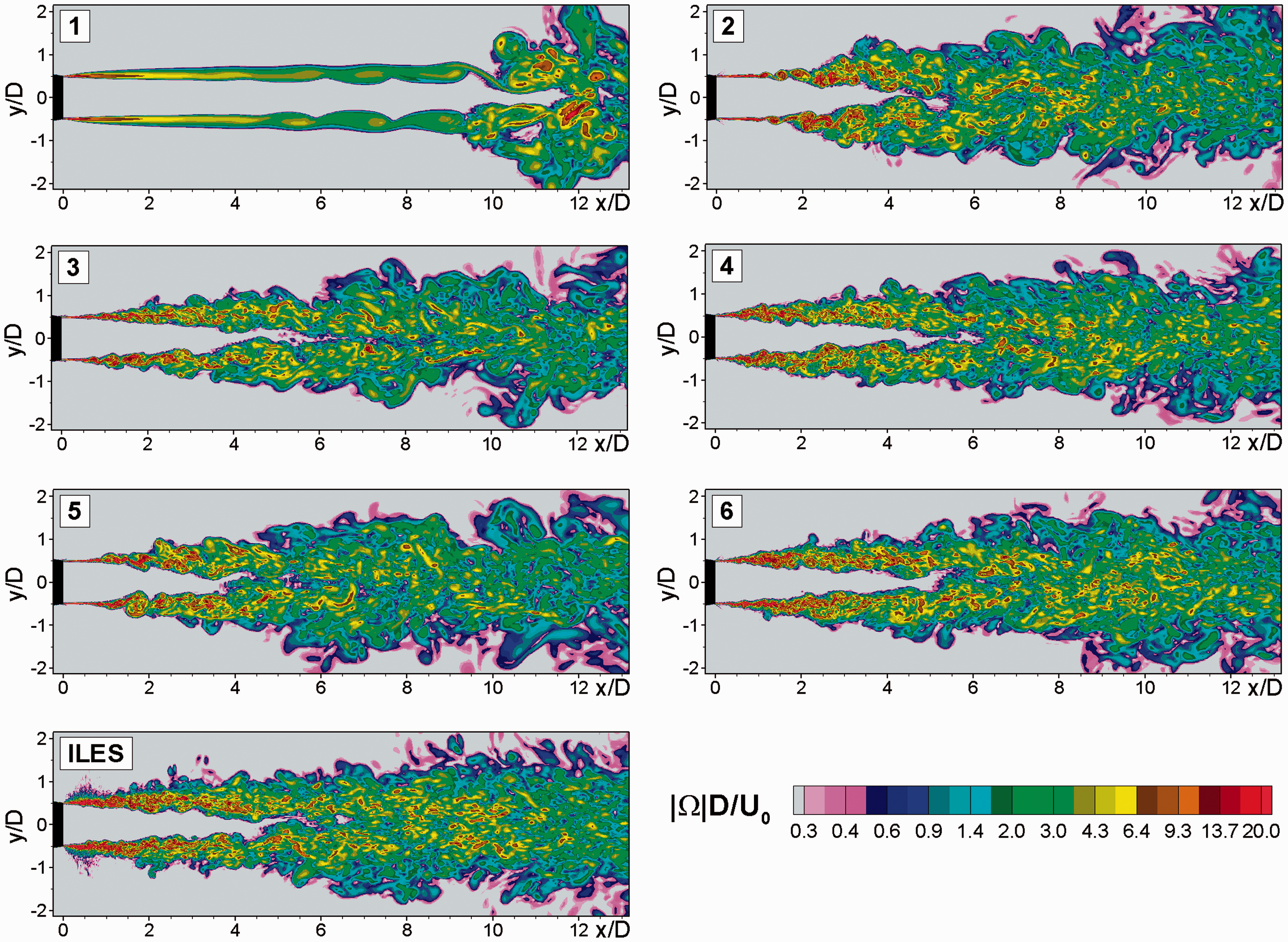
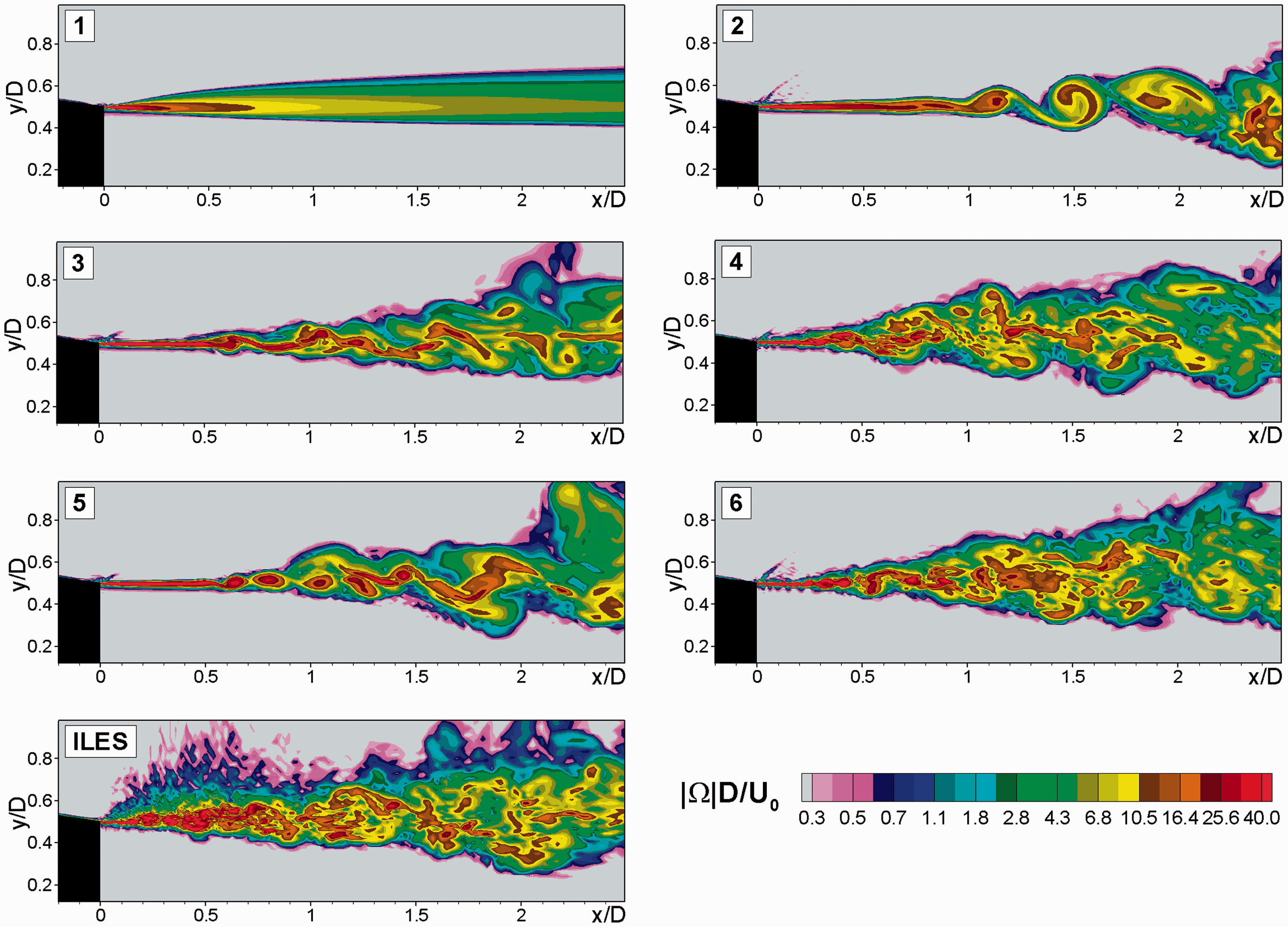
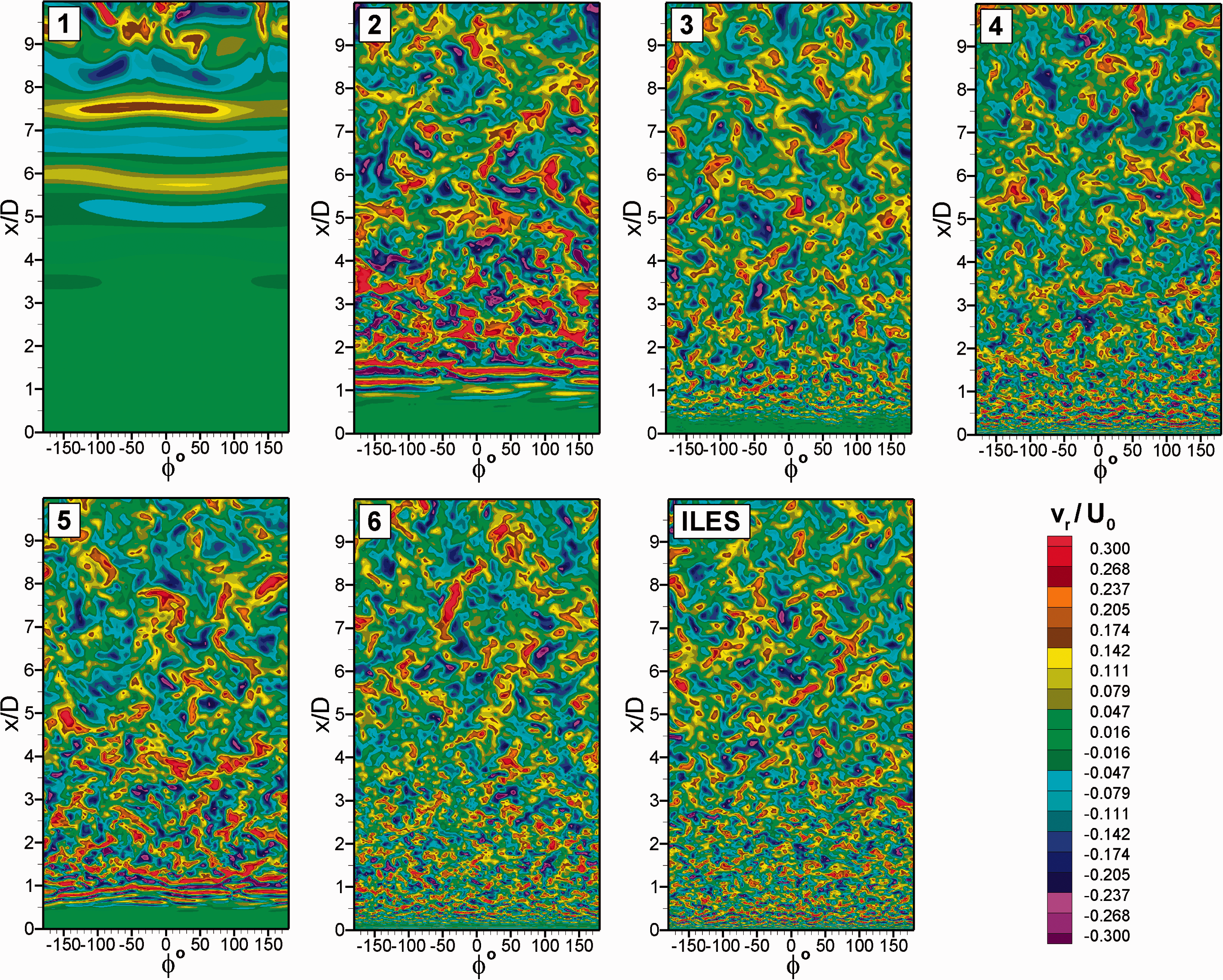
Moving to the visualizations of the SA-WALE solutions (Cases 5 and 6 from Table 2, see Figures 2, 3, 5 and 6), one can see that the model returns turbulent flow structures fairly close to those observed in Cases 3 and 4, although the effect of the use of the SA-WALE SGS model turns out to be somewhat weaker than that of the activation of the
The above observations suggest that the noise computed based on the simulations relying upon the SA SGS model combined with 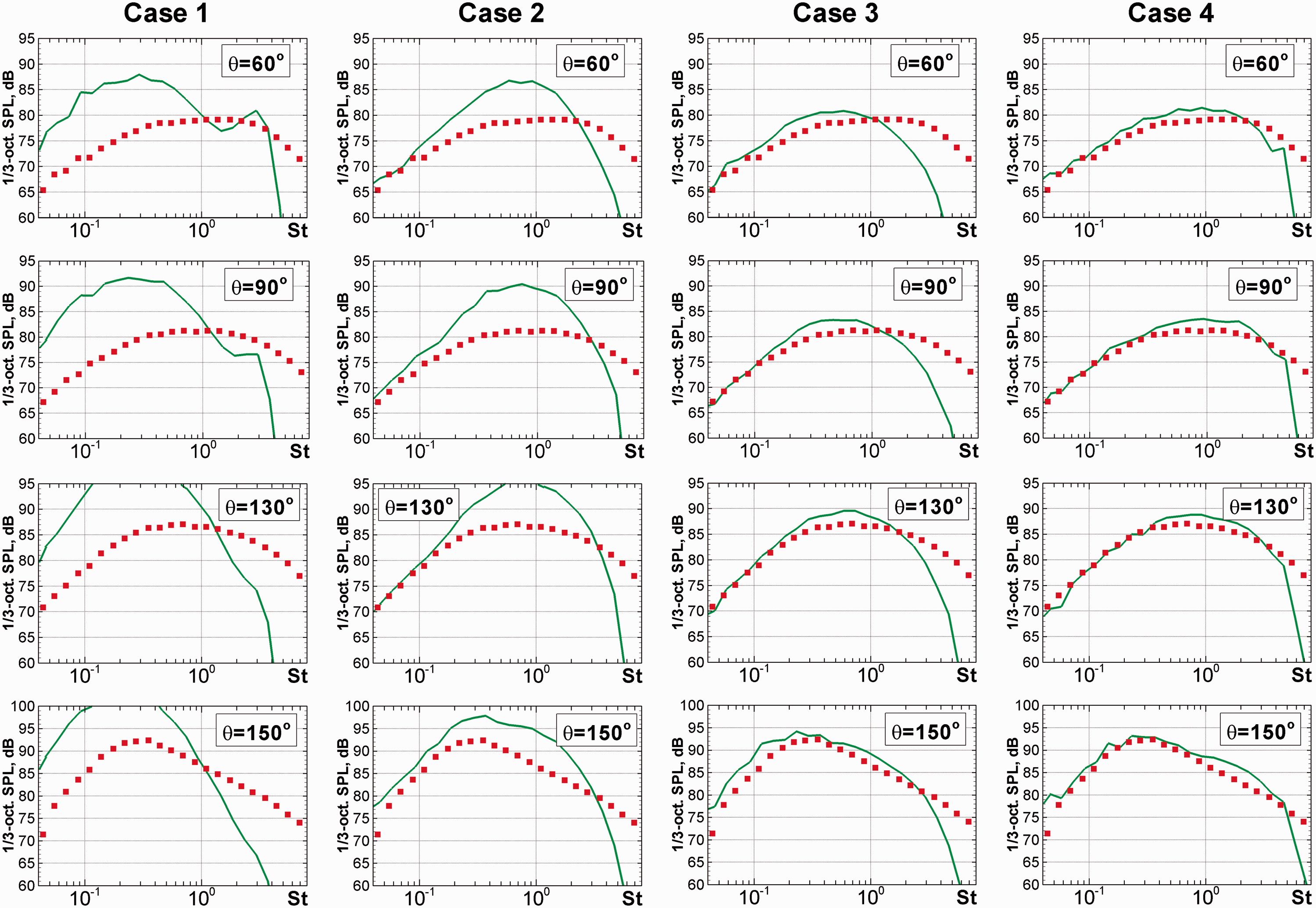
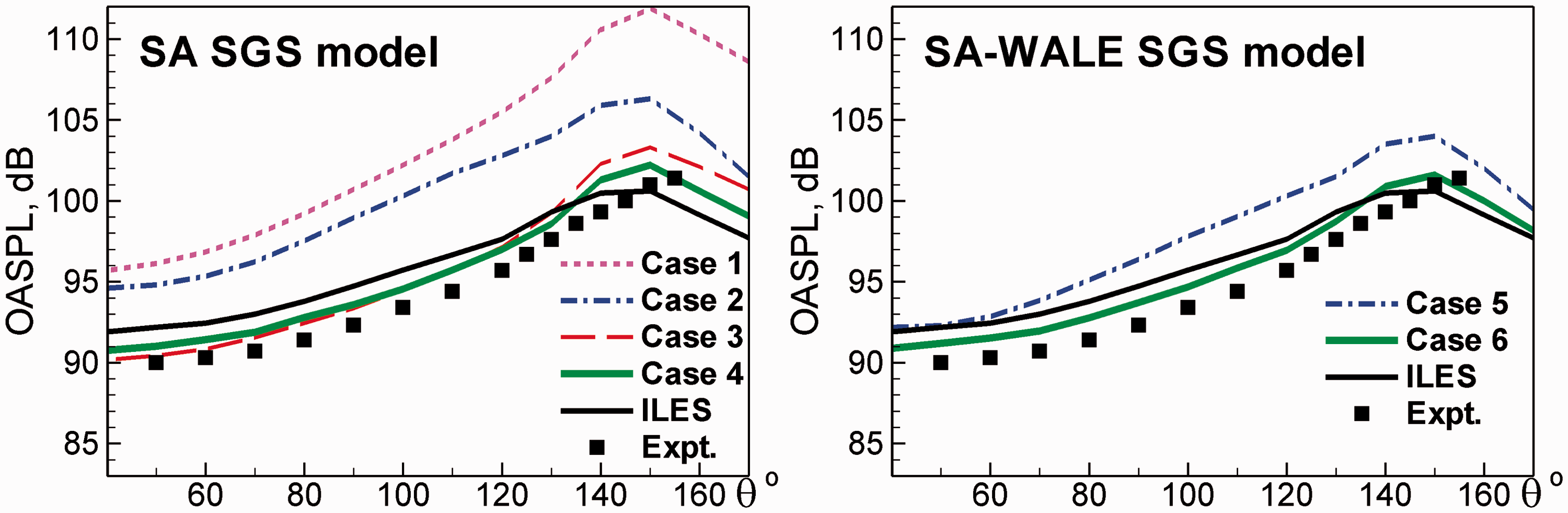
The figures show, in particular, that although the SA SGS model combined with
A similar conclusion can be made regarding the SA-WALE SGS model. For example, the positive effect of using this model alone (i.e. without modification of the subgrid length scale, Case 5) is not sufficient, whereas its combination with
Grid-sensitivity study (Cases 4, 7–9)
Recall that in Shur et al., 9 ILES of the considered jet was carried out on four successively refined grids (see Table 1). These simulations demonstrated a clear trend towards grid-convergence in terms of both the jet mean flow/turbulence statistics and the spectra/overall directivity of the noise generated by the jet. Other than that, a tangible improvement of the agreement of predicted and measured noise characteristics with grid-refinement was observed, except for the directions close to the peak radiation (θ around 150°–160°), for which the noise level was underestimated by 1–3 dB, the effect unfortunately being slightly more pronounced on finer grids.
In the present work, a similar grid-convergence study was performed in the framework of LES with the use of the SA SGS model coupled with the 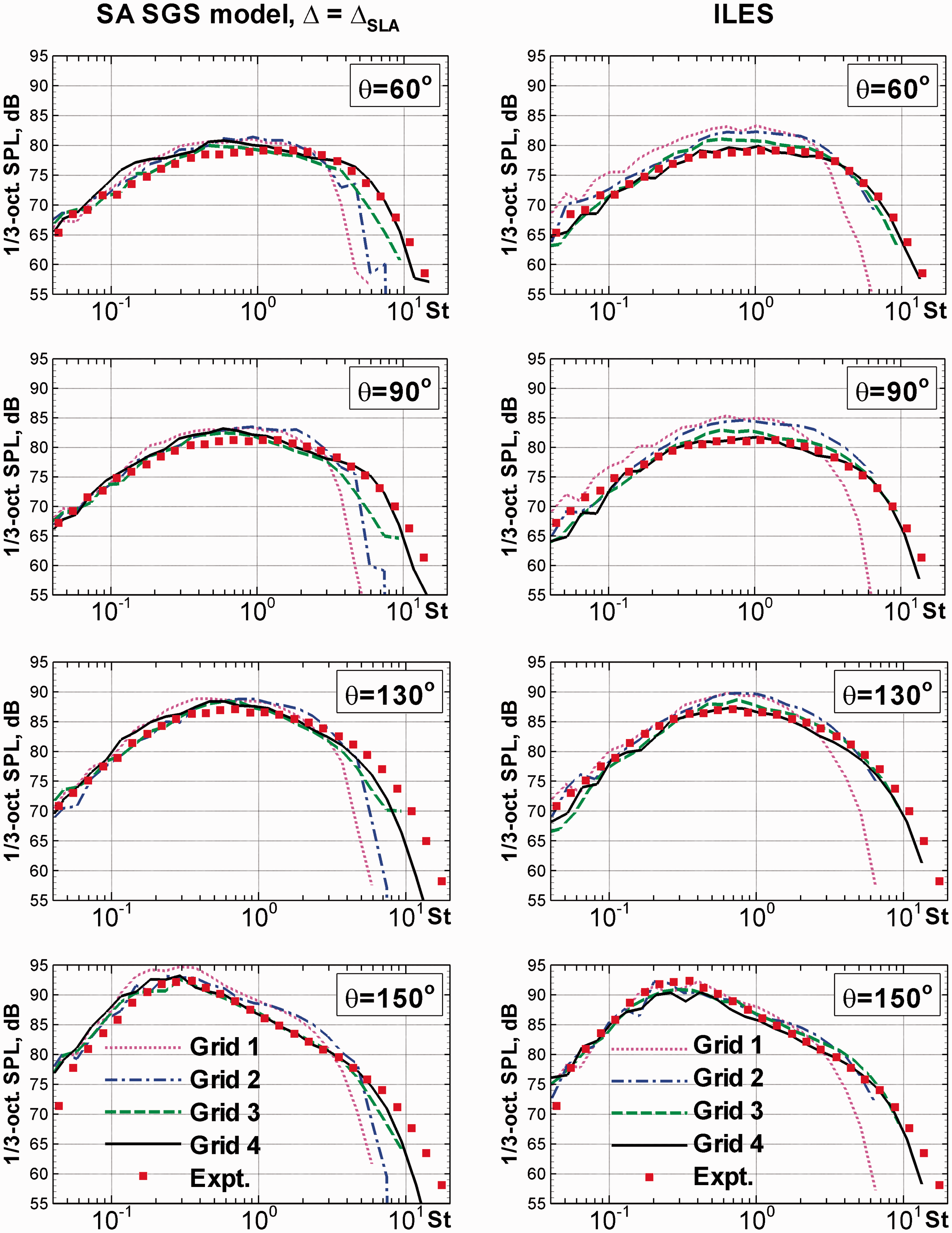
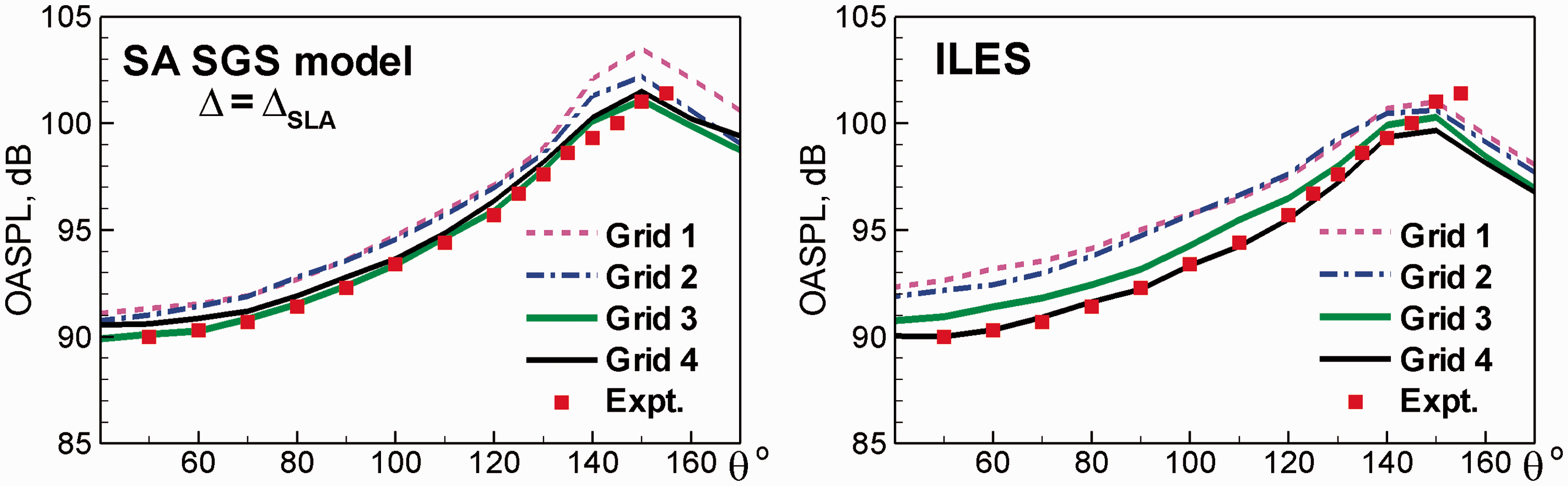
The major conclusions that can be drawn based on these figures are as follows.
First, in terms of the rate of grid-convergence of the jet noise characteristics, the explicit LES based on the SA SGS model with
Second, in contrast to the ILES noise predictions, the explicit LES does not lead to the same “noise deficit” in the vicinity of the spectral maximums for the peak radiation direction (see spectra at θ = 150° in Figure 10) and to the corresponding underestimation of the maximum of the OASPL curve (Figure 11). c As a result, the spectra and OASPL obtained on the finest grid (Grid 4) are in a fairly good agreement with the data in a wider (virtually the whole) range of observer angles than the spectra and OASPL obtained with ILES.
On the other hand, the spectra predicted based on the SA SGS model with
Concluding remarks
This study presents a direct continuation of the previous efforts5,14 aimed at the elimination of the delay of transition from fully modeled to resolved turbulence in free and separated shear layers, which for many years has seemed to be an inherent flaw of DES and similar non-zonal hybrid RANS-LES approaches. A major outcome of this study is that the simple and robust proposal for its mitigation without sacrificing the non-zonal nature of DES proposed in Shur et al. 5 turns out to be efficient not only in pure aerodynamics, but also in jet aeroacoustics. This seems to be a substantial step forward in the field of hybrid RANS-LES methodology. However, the proposed approach should still be validated for jets from complex nozzles with account of installation effects, and also for airframe noise problems where it has to be used in the framework of the fully coupled DDES/IDDES formulations.
Footnotes
Declaration of conflicting interests
The author(s) declared no potential conflicts of interest with respect to the research, authorship, and/or publication of this article.
Funding
The author(s) disclosed receipt of the following financial support for the research, authorship, and/or publication of this article: The authors from SPbPU acknowledge the financial support of the Russian Scientific Foundation (grant no. 14-11-00060).