







Abstract
As one of the primary agents of socialization during adolescence, schools have become an important place for crime prevention. Many programmes have been developed but many of them lack a theoretical basis. Therefore criminological learning theories are examined for possible starting points for successful school-based crime prevention. Theses derived from these theories concerning the direct and indirect impact of student–teacher relationships on students’ attitudes and later self-reported delinquency are analysed with the first four waves (ages 13 to 16) from the German prospective panel study Crime in the Modern City. The findings suggest that the quality of the student–teacher relationship is a causal link in the generation of adolescent delinquent behaviour and hence a promising starting point for crime prevention measures.
Keywords
Introduction
During the most recent decades, schools have become a very popular place for crime prevention. Many programmes have been developed and are currently operating in schools (see, for example, the lists of school-based Blueprints Model and Promising Programmes and The Office of Juvenile Justice and Delinquency Prevention’s Model Programs Guide). One reason for this preference is a practical one: many students can be reached in schools each day. Moreover, since schools are places where so many different young people interact, they are also a place where interpersonal conflicts and interpersonal aggression occur. In the end, the official character of schools facilitates the implementation of prevention measures. This is not as easy with family-based programmes that are dependent on the voluntary participation of the families.
Accordingly, despite the fact that some young people cannot be reached because they do not attend school any more, 1 schools are clearly suitable settings for crime prevention measures. Besides these many special new programmes, however, preventive work is and has always been carried out by schools in day-to-day school life. In addition to family and friends, schools are among the primary agents of socialization during adolescence. They are not limited to knowledge transfer and academic instruction, but are also responsible for educating students socially, emotionally and morally. This is particularly true at a time of rapidly changing societies where young people face growing uncertainty as well as economic and social pressures (see Roeser et al., 2000; Zins and Elias, 2006). In the end, successful social and moral socialization is probably the most effective means to prevent delinquent behaviour (Elliott, 1998: 306).
Thus, school-based crime prevention comprises the implementation of special programmes as well as the usual learning and educational processes that have always taken place in schools.
Still, the question is how schools and teachers can support the social development of young people, thereby preventing delinquent behaviour. The purpose of this paper is to contribute to answering that question. In doing so, a basic condition for successful crime prevention is observed: we have to make use of what we know about the causes of crime. This is the only way to target these causes specifically (Hawkins et al., 1998: 188; Sutherland et al., 1992: 575, 587). In 1977, the National Task Force to Develop Standards and Goals for Juvenile Justice and Delinquency Prevention summarized this idea very well, saying that ‘it is necessary to clarify assumptions about what causes delinquency before deciding what to do about it’ and that ‘since each theory sets forth assumptions about what causes crime, the theories, by implication, should also suggest appropriate public action to reduce delinquency’ (Task Force on Juvenile Justice and Delinquency Prevention, 1977: 8). Thus, what we must do when searching for successful ways to prevent juvenile delinquency via schools, is to look at empirically proven criminological theories and consider the role of schools and teachers within these theories. The lack of a theoretical framework is an important shortcoming of many current crime prevention programmes (see Elliott, 1998: 288–292). Since schools are among the most important learning environments for students, this paper resorts to learning theories as a theoretical basis.
The main question to be answered is: How can schools and teachers help prevent juvenile delinquency? This question will be answered with reference to theoretical assumptions of learning theories. So the second important question is: What role do schools and teachers play in the development of delinquent behaviour according to learning theories and what does this mean for school-based crime prevention?
Lastly, the paper will investigate whether these theoretical assumptions stand up to empirical scrutiny. As will be shown, according to learning theories, the quality of the student–teacher relationship should affect students’ attitudes and behaviours. Thus, the third question to be answered is: Is there empirical evidence for the identified learning theoretical assumptions concerning the causal relationships between the quality of the student–teacher relationship, students’ attitudes and delinquent behaviours?
Therefore, the following sections will present an overview of learning theories and their understanding of the role of schools and teachers as well as a brief summary of previous research in those fields. The latter will concentrate on findings about the influence of attitudes, the student–teacher relationship and evaluations of special crime prevention programmes. Subsequently, data from the German longitudinal study Crime in the Modern City is used to analyse hypotheses about teachers’ influence on their students derived from the discussion up to that point.
Theoretical basis
In relation to delinquent behaviour, the term ‘learning theories’ generally refers to Edwin H. Sutherland’s Theory of Differential Association (Sutherland et al., 1992: 88 ff) and its reformulation by Ronald A. Akers (Akers 1998, 2001; Akers and Jensen, 2006). The basic assumption of Sutherland’s theory is that both delinquent and conforming behaviours are learned through interaction with others within intimate personal groups through the process of communication. In particular, this process involves the communication and learning of definitions of the legal codes as favourable or unfavourable. The term ‘differential association’ refers to the assumption that every person is in contact with criminal and anti-criminal behaviour patterns and definitions presented by other people. The theory states that a person will become delinquent only if there are more definitions favourable to the violation of law than definitions unfavourable to the violation of law. Which group of definitions prevails is influenced by the frequency, duration, priority and intensity of the associations. Definitions both favourable and unfavourable to the violation of law are weighted by the modalities of this association (see also Matsueda, 1982: 489). Thus, the influence of people one meets very early in life and of those with whom one spends a lot of time will have a greater impact on one’s attitude, more precisely one’s definitions of the legal code, and thereby one’s behaviour. The same is true for intense associations. Concerning this, Sutherland writes that intensity has to do with ‘such things as the prestige of the source of a criminal or anti-criminal pattern and with emotional reactions related to these associations’ (Sutherland et al., 1992: 89).
With regard to schools, the first crucial point in the Theory of Differential Association is that attitudes in the form of internalized moral rules play a causal mediating role in the emergence of delinquent behaviour. These moral rules are learned and can thus be influenced externally, inter alia by teachers. As Sutherland writes, schools are related to delinquency ‘through the effects school activities have on the students’ associations with delinquent and anti-delinquent behaviour patterns’ and ‘are expected to inculcate juveniles with values which are unfavourable to violation of law’ (Sutherland et al., 1992: 232). This means that, to prevent delinquent behaviour and promote prosocial or conforming behaviour, teachers must ensure that students are exposed to an excess of definitions unfavourable to the violation of law over definitions favourable to violation of law. They must counterbalance the influences of other associations that present delinquent behaviour patterns to the students (see Figure 1).
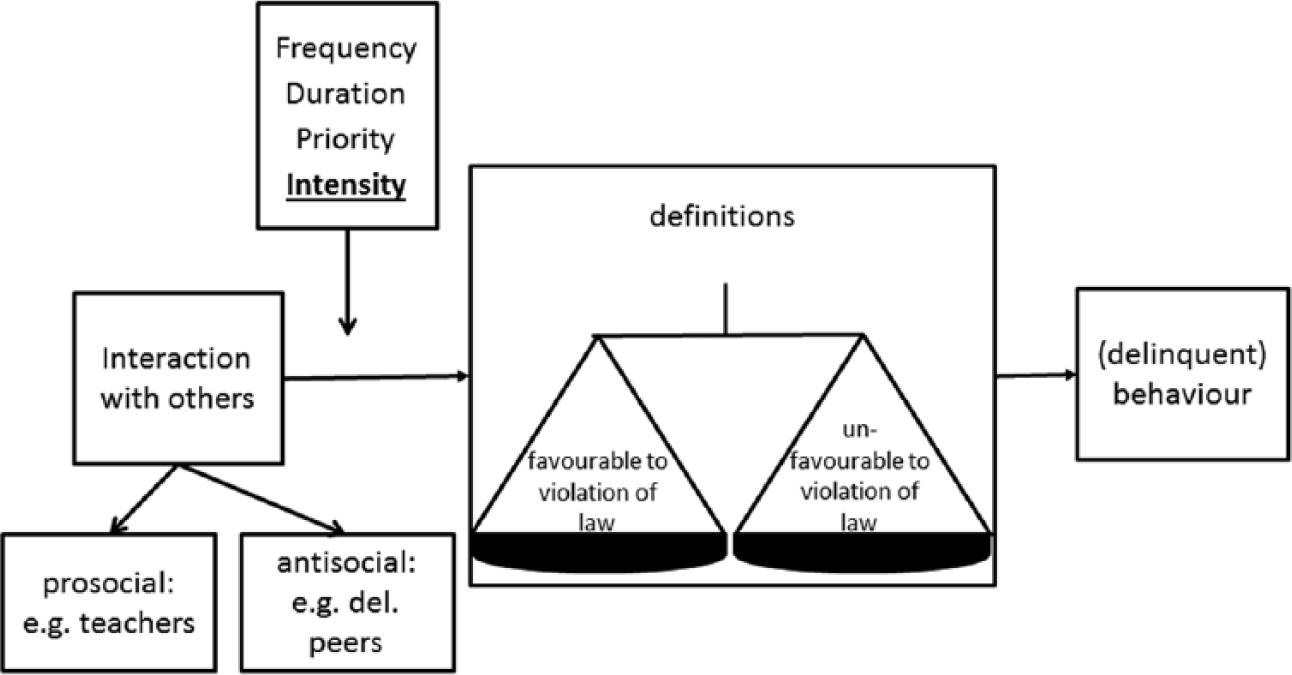
Teachers’ role in the Theory of Differential Association.
The second essential point is that teachers’ influence can be enhanced via the modalities of the associations with their students. In terms of priority, frequency and duration, teachers are in an optimal position because they spend so much time with students at school. In addition, teachers are among the first people outside the family who play important roles in young students’ lives. Ultimately, intensity seems to be the modality that accounts for the greatest part of teachers’ influence on their students. If a teacher enjoys high prestige among his or her students and is well liked, his or her influence on them will be much greater. Thus, from a crime preventive perspective, the key issue is to promote good student–teacher relationships, which will enable teachers to successfully equip students with prosocial moral attitudes.
Although Sutherland’s theory already provides important information about the role of schools and teachers in socializing students and preventing delinquent behaviour, its often criticized drawback is that it does not explain the mechanisms of learning in detail (Akers, 2001: 193). Therefore, Ronald A. Akers reformulated the Theory of Differential Association and integrated it with behavioural principles of learning (Akers 1998, 2001; Akers and Jensen, 2006). All of the differential association processes are retained in this broader ‘Social Learning Theory’. Thus, differential associations still play an important role as ‘the groups with which one is in differential association provide the major social contexts in which all the mechanisms of social learning operate’ (Akers, 2001: 194). The first of these mechanisms adopted from behavioural learning theory is differential reinforcement. This means that operant or voluntary behaviour is conditioned by rewards and punishments (operant conditioning). Anticipated and actually rewarding outcomes or reactions to an act will increase the probability that the act will be committed or repeated (positive reinforcement), as does the possibility of avoiding or escaping aversive or unpleasant events (negative reinforcement). On the other hand, anticipated or actual punishments in the form of aversive stimuli (positive punishment) or the loss of rewards (negative punishment) that follow or are consequences of a behaviour will weaken it. The balance of these forms of rewards and punishments will determine an individual’s behaviour.
Imitation is a second learning mechanism that operates within the primary groups with which students are associated. It refers to the ‘engagement in behaviour after observation of similar behaviour in others’ (Akers, 2001: 196). The process of imitation is affected by characteristics of the models and the observed consequences of the modelled behaviour. To clarify and to illustrate the influence of the models’ characteristics, Akers refers to Baldwin and Baldwin (1981: 187) and cites: ‘Observers tend to imitate modelled behaviour if they like or respect the model . . . . Inverse imitation is common when an observer does not like the model’ (Akers, 1998: 75). The influence of observed consequences of modelled behaviour (vicarious reinforcement) refers to the consideration that observers tend to imitate observed behaviour if the model is reinforced for it. Conversely, observers are likely to refrain from the observed behaviour if the model gets punished (see Bandura, 1979: 38).
According to Akers (1998: 50), these two learning mechanisms produce both overt behaviour as well as cognitive definitions, defined as ‘evaluative and moral attitudes that define the commission of an act as right or wrong, good or bad, desirable or undesirable, justified or unjustified’ (Akers, 2001: 195). In its behavioural or interactional dimension, differential association offers direct interaction with other people who engage in certain conforming or deviant behaviours, and in its normative dimension it exposes an individual to different patterns of norms, values and attitudes (Akers, 1998: 61). Thus, consistent with Sutherland’s idea, these associations have indirect effects on behaviour, which are mediated by attitudes. In addition they may also affect behaviour directly (see Figure 2).
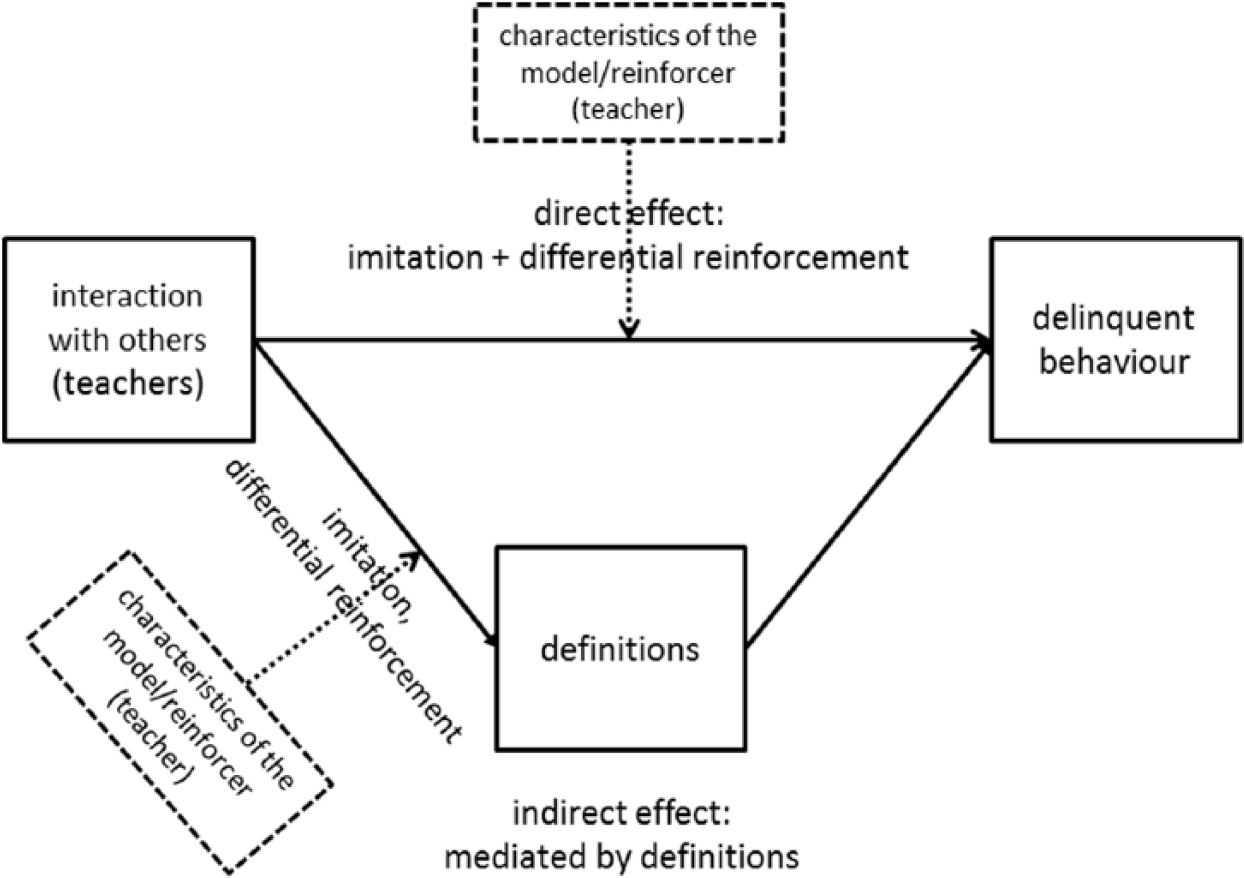
Teachers’ role in Social Learning Theory.
Schools, of course, are primary learning environments where the mechanisms of social learning operate. Teachers provide positive reinforcement as well as punishment 2 when evaluating students’ work and behaviour. In terms of vicarious reinforcement, praise or criticism for one student should also have an effect on other students who are present and observe it. Teachers also function as role models, exposing their students to culturally transmitted and individually espoused definitions.
As demonstrated by the Theory of Differential Association, teachers’ influences on students can be enhanced if they are able to establish intense relationships with them. The same applies to teachers’ influences in Social Learning Theory. Akers attempted to describe the modality of intensity more precisely and speaks of the ‘significance, saliency, or importance of the association to the individual’. He sees the closeness of the relationship as an indicator of its intensity (Akers, 1998: 64). This quality of the relationship between students and teachers should also have an effect on all learning mechanisms. The greater the value of reinforcement for a person’s behaviour, the greater is the likelihood that it will be repeated or maintained (Akers, 2001: 196). The quality of the relationship then affects the quality of reinforcement. Being praised by a teacher one likes and respects will be of greater value than praise by a teacher one does not like. The same reasoning should also apply to negative reactions. It is likely that students are more willing to accept and act on criticism by a popular teacher.
In addition, the intensity of a student–teacher relationship should be relevant for observational learning. As described above, Akers assumes that models who are liked and respected by the observers tend to be imitated to a greater extent than those who are not. Also, students are more likely to emulate and respond to teachers with whom they have an intense relationship. In contrast, a bad relationship between students and teachers should diminish the chances that conventional behaviour and attitudes displayed by the teachers will be imitated by his or her students. At worst, it may even lead to inverse imitation, meaning that students behave in a manner contrary to the teacher’s behaviour or accept norms contrary to those espoused by the teacher.
Thus, according to learning theories, school’s potential for crime prevention lies in the quality of interpersonal associations. A positive student–teacher relationship should facilitate all learning processes between students and teachers. Since behaviours as well as attitudes are learned, the quality of the relationship should affect both.
Previous research
The above-described causal relationships between the quality of the student–teacher relationships, students’ attitudes and delinquent behaviour derived from learning theories have never been investigated empirically. In particular, there are no longitudinal investigations, and the mediating effects of attitudes have not been considered. Still, there are certain studies whose results provide valuable clues about these relationships, which are reported below. Findings about the learning of attitudes and about the relationship between the quality of student–teacher relationships and both delinquency and learning success are displayed. The section concludes with a short overview of meta-analytical findings on the effects of school-based crime prevention measures that support learning theoretical assumptions.
Attitudes
Because attitudes or definitions play an important role in learning theories, their relationship to delinquent and deviant behaviour has often been analysed (for example, Akers et al., 1979; Akers and Lee, 1996) and found to be strong. Many results also suggest that they actually mediate the effects of differential associations on behaviour (Foshee et al., 1999; Matsueda, 1982; Matsueda and Heimer, 1987). However, most of the research works concentrated on delinquent definitions or attitudes favourable to the violation of law and to associations with peers and parents (Akers and Jensen, 2006: 11). The effects of positive associations with teachers on students’ prosocial attitudes have not been the focus of research. But there is some evidence that suggests that attitudes can be influenced externally by persons other than peers and parents and that characteristics of those persons play an important role in this process. For example, an experiment carried out by Bandura and McDonald (1963) showed that children’s moral judgements can be modified by the use of adult role models who express judgemental responses in opposition to the child’s initial moral orientation. Andrews (1980) found desired changes in attitudinal measures of prisoners who took part in regular guided discussions about law-related topics with conform-minded student and citizen volunteers. These changes were strongest among those prisoners who had interacted with the more interpersonally skilled volunteers. Though neither investigation involved students and teachers in a school setting, their results provide important hints for the latter.
Student–teacher relationship and delinquency
Results of several, mostly cross-sectional, studies indicate that positive student–teacher relationships are associated with a lower likelihood of delinquent and deviant student behaviours. In Germany, most research works on this issue were published during the 1990s under the topic ‘schools and violence’. A positive relationship between students and teachers was often found to be related to less violence, whereas a poor relationship was often accompanied by more violence at school (for example, Tillmann et al., 2007). But there are also some more recent international studies. For example, Stracuzzi and Mills (2010) found that students who reported greater perceptions of teacher support were significantly less likely to engage in delinquent behaviours. Teacher support was measured using questions about the extent to which students felt that teachers were willing to help with personal problems and students felt close to and valued by their teachers. Similarly, Murray and Greenberg (2000) detected a negative relationship between affiliation with teachers and self-reported delinquency. To measure teacher affiliation they asked whether students trust and like their teachers, whether teachers pay attention to them and respect their feelings and whether students can count on their teachers when they have a problem.
Although all these cross-sectional relationships back up the assumptions of learning theories, it is still unclear whether student behaviour affects the student–teacher relationship or whether the student–teacher relationship affects student behaviour. However, results from an analysis carried out by Crosnoe et al. (2004), who used data from two panel waves of the National Longitudinal Study of Adolescent Health, indicate that the direction of influence is from relationship to behaviour. The authors found that positive student–teacher relationships predicted a lower likelihood of disciplinary problems. They focused on questions about the feeling that teachers care about students and treat them fairly.
Still, the role of students’ attitudes was not considered in any of these studies. They might have mediated the relationship between school climate characteristics and student behaviour.
Student–teacher relationship and learning success
That a positive student–teacher relationship may indeed have a favourable impact on prosocial attitudes could be concluded from research on the connections between the quality of student–teacher relationships and academic learning outcomes. They are far better researched than the links between student–teacher relationship and delinquency. Since there are no major differences between learning academic skills and learning social skills (see Greenberg et al., 2003: 468), results from these studies may be transferred to the effects of student–teacher relationships on learning moral rules and social behaviour. For example, many studies have shown that teacher caring 3 and teacher immediacy 4 correlate positively with students’ learning achievements (Christophel, 1990; Teven and Hanson, 2004; Teven and McCroskey, 1997). If students feel that teachers care about them, they will probably perceive those teachers as credible sources and be open to learn from them. Similarly, Cornelius-White (2007), using meta-analysis techniques, found that person-centred teacher variables such as empathy and warmth have an above-average association with positive student outcomes. Moreover, a study conducted by Wang et al. (1993) revealed that student and teacher social interactions are among the determinants of learning with the strongest explanatory power. Lastly, Roeser et al. (2000) found in their longitudinal study that students who perceived their teachers as treating them disrespectfully at the end of seventh grade reported less motivation to learn and more school problem behaviour in eighth grade. On the other hand, students who perceived their teachers as being available to assist with emotional problems showed increased motivation and better mental health over time.
Prevention measures
Besides the above-mentioned findings on relationships between certain learning variables, strong support for the theoretical assumptions of learning theories can be found in meta-analyses of school-based crime prevention programmes. One category of treatment type or intervention modality often found in these analyses is behavioural or cognitive-behavioural methods. Measures applying these strategies have turned out to be particularly effective (Beelmann et al., 1994; Beelmann and Lösel, 2006; Gottfredson et al., 2002; Wilson et al., 2003). Behavioural strategies relate back to those learning mechanisms of differential reinforcement and imitation described by Akers. For example, some strategies use token systems or regular praise for prosocial behaviour to influence student behaviour (see, for example, Bry, 1982). Moreover, many behavioural programmes rely on teachers or other adults as positive role models (see, for example, Farrell et al., 2003). Cognitive-behavioural strategies aim at teaching students thinking strategies (Gottfredson et al., 2002: 63) and are based on the assumption that cognitive deficits and thinking processes leading to delinquent behaviour (such as self-justificatory thinking, misinterpretation of social cues or displacement of blame) are learned rather than inherent. Thus, they can be changed using the mechanisms of Social Learning Theory (see Lipsey et al., 2007: 4). On the other hand, the effects of instructional programmes that do not make use of behavioural or cognitive-behavioural instructional methods were found to be less consistently positive and much smaller (Gottfredson et al., 2002; Hahn et al., 2007). Instead of making use of modelling or providing frequent feedback, these programmes depend more on traditional fact-oriented methods of instruction such as workbooks and lectures. Similarly, school-based counselling interventions where counsellors are often employed not by the school but by outside agencies show no promise for reducing crime or other problem behaviour (Gottfredson et al., 2002; Wilson et al., 2001).
The proven success of behavioural or cognitive-behavioural methods suggests that learning theories are an adequate theoretical basis for the design of prevention measures. Differential reinforcement and imitation seem to be promising ways to influence student behaviour. Since cognitive-behavioural methods proved to be effective as well, the learning theory suggestion that attitudes can be influenced externally just like behaviour is also supported. Moreover, the important role of teachers and their interaction with students in day-to-day school life is highlighted again. Teachers who are perceived as caring, empathetic and fair by their students are probably those who use behavioural methods more often even outside of special prevention programmes. The essential role of teachers is also reflected in the meta-analytical finding that prevention programmes delivered by teachers were more effective than those delivered by laypeople, school administrators or external counsellors (Hahn et al., 2007; Wilson et al., 2003). From a theoretical perspective, this result is not surprising. According to learning theory, definitions and behaviours are learned in intimate personal groups. Teachers and their school classes typically represent such groups. External people who do not spend much time with students are less likely to have established the necessary close relationships with them to be effective.
Hypotheses
To summarize theoretical and empirical findings up to this point: there is much to suggest that the quality of the student–teacher relationship influences students’ attitudes and behaviours. According to learning theories, an intense relationship between students and teachers promotes the learning of prosocial attitudes and conformable behaviours. If prosocial attitudes prevail, they should in turn determine students’ behaviour, leading to less delinquency. Thus, a direct negative effect of an intense student–teacher relationship on student delinquent behaviour, as well as an indirect effect mediated by students’ attitudes, is expected (see Figure 3).
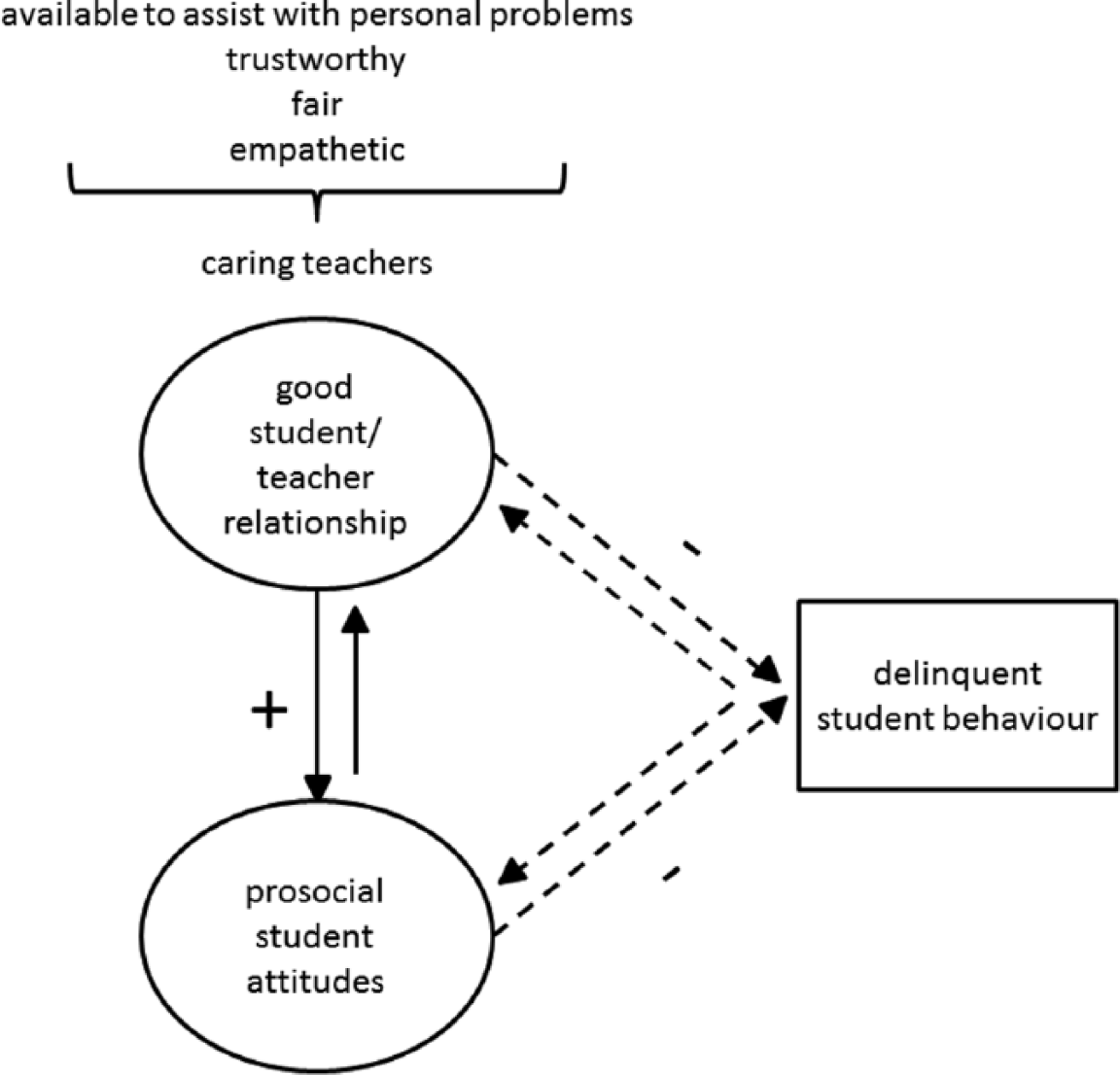
Analytical model for a good student–teacher relationship.
At the same time, there might be causal processes running in the opposite direction. If a student behaves delinquently, this may affect his or her relationship with the teachers. Also, he or she might find excuses or rationalizations for the behaviour and apply them retroactively (see Akers and Jensen, 2006: 41), leading to an effect of behaviour on later attitudes. Finally, the internalization of attitudes can affect later relations with teachers, though the effects of student delinquent behaviour should be stronger. Teachers may tend to treat students with prosocial attitudes differently from students with anti-social attitudes and students might assess their relationship with teachers differently, depending on their own attitudes. Hence, reciprocal relations between the three variables are expected (see Figure 3).
There are also some indications on the effects of bad relationships between students and teachers. As they are probably not intense relationships in terms of learning theory, they should not foster positive learning outcomes. Rather, influence from other learning environments, for example peer groups, should prevail in these cases. It is expected that a bad student–teacher relationship fosters delinquent behaviour and that delinquent behaviour in turn promotes the bad relationship. Furthermore, a bad relationship is expected to inhibit the internalization of prosocial attitudes, whereas prosocial attitudes might protect against bad relationships with teachers (see Figure 4).
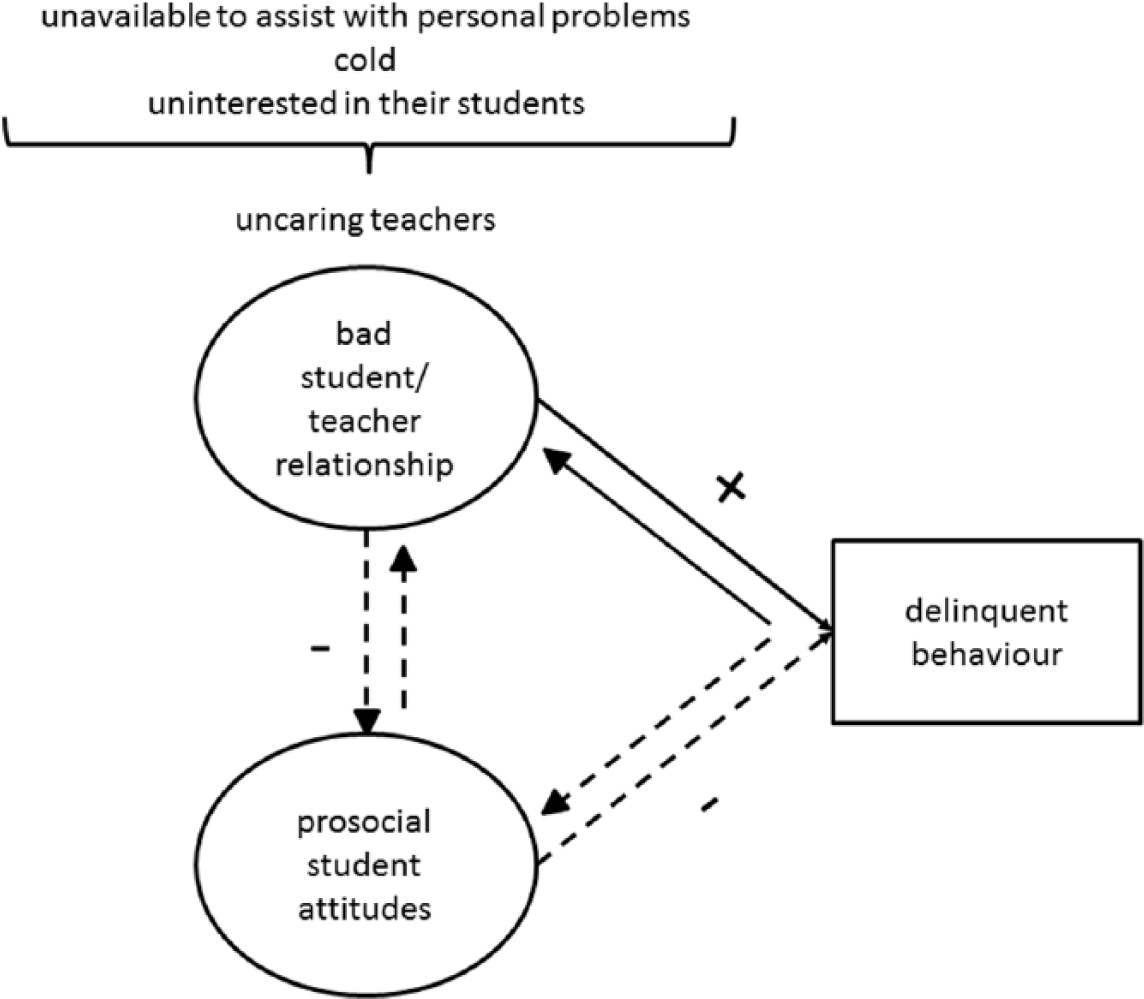
Analytical model for a bad student–teacher relationship.
Whereas previous research supports these hypotheses, the exact causal processes have not been analysed yet. Since the use of panel data is ideally suited for examining causal relations (see Bachman, 2003: 155 ff), the German longitudinal study Crime in the Modern City provides appropriate data to analyse the hypothesized relationships.
Data and method
Study and participants
Since 2002, students from 40 schools in the city of Duisburg have taken part in annual surveys about their delinquent behaviour as well as relevant covariates. During the first four years, students completed the questionnaires anonymously in class. 5 To ensure the assignment of later questionnaires to the correct students without threatening their anonymity, students were asked to create individual codes consisting of letters and numbers with questions about time-stable features (for example, natural hair colour, month of birth). This resulted in various panel datasets comprising answers from the same students at different points in time. Since the focus of this paper is on school-related questions, the first four panel waves are used here. This dataset comprises data on 1769 students, aged 13–16, in grades 7 to 10 from all four German school types (Gymnasium, Gesamtschule, Realschule, Hauptschule). 6
Measures
Student–teacher relationship
In all four years, students were asked to indicate on a four-point scale to what extent certain statements apply to their school (‘does not apply at all’ to ‘fully applies’). The relevant statements concerning the relationship with their teachers were:
‘I am mostly treated fairly by my teachers’ ‘Teachers take care that there is no violence between students’ ‘I have a teacher I really trust’ ‘Teachers do not care about students’ personal problems’ ‘Teachers tend to look away when it comes to severe fights between students’
Exploratory factor analysis reveals that these items represent two factors. The first three items load on the first factor and the last two items load on the second factor. Tables 1 and 2 show the results of confirmatory factor analysis for the four years investigated, that is, the measurement models in the later structural equation models. The fit statistics indicate good model fit. Factor loadings of all indicators are sufficiently high. Accordingly, the proposed model structures represent the empirical data well.
Measurement models for the factor ‘good student–teacher relationship’ standardized and unstandardized factor loadings and measurement errors.
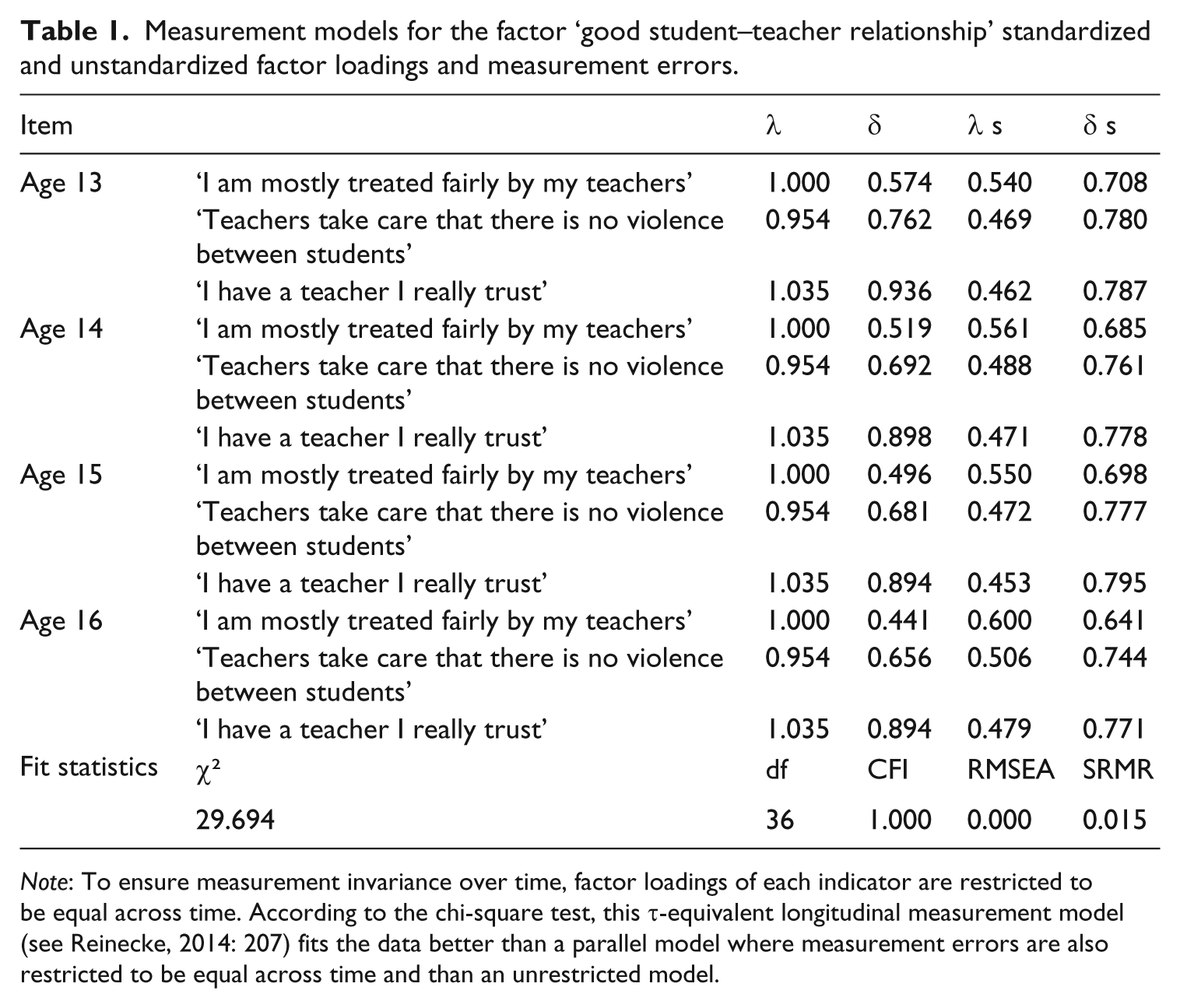
Note: To ensure measurement invariance over time, factor loadings of each indicator are restricted to be equal across time. According to the chi-square test, this τ-equivalent longitudinal measurement model (see Reinecke, 2014: 207) fits the data better than a parallel model where measurement errors are also restricted to be equal across time and than an unrestricted model.
Measurement models for the factor ‘bad student–teacher relationship’ standardized and unstandardized factor loadings and measurement errors.
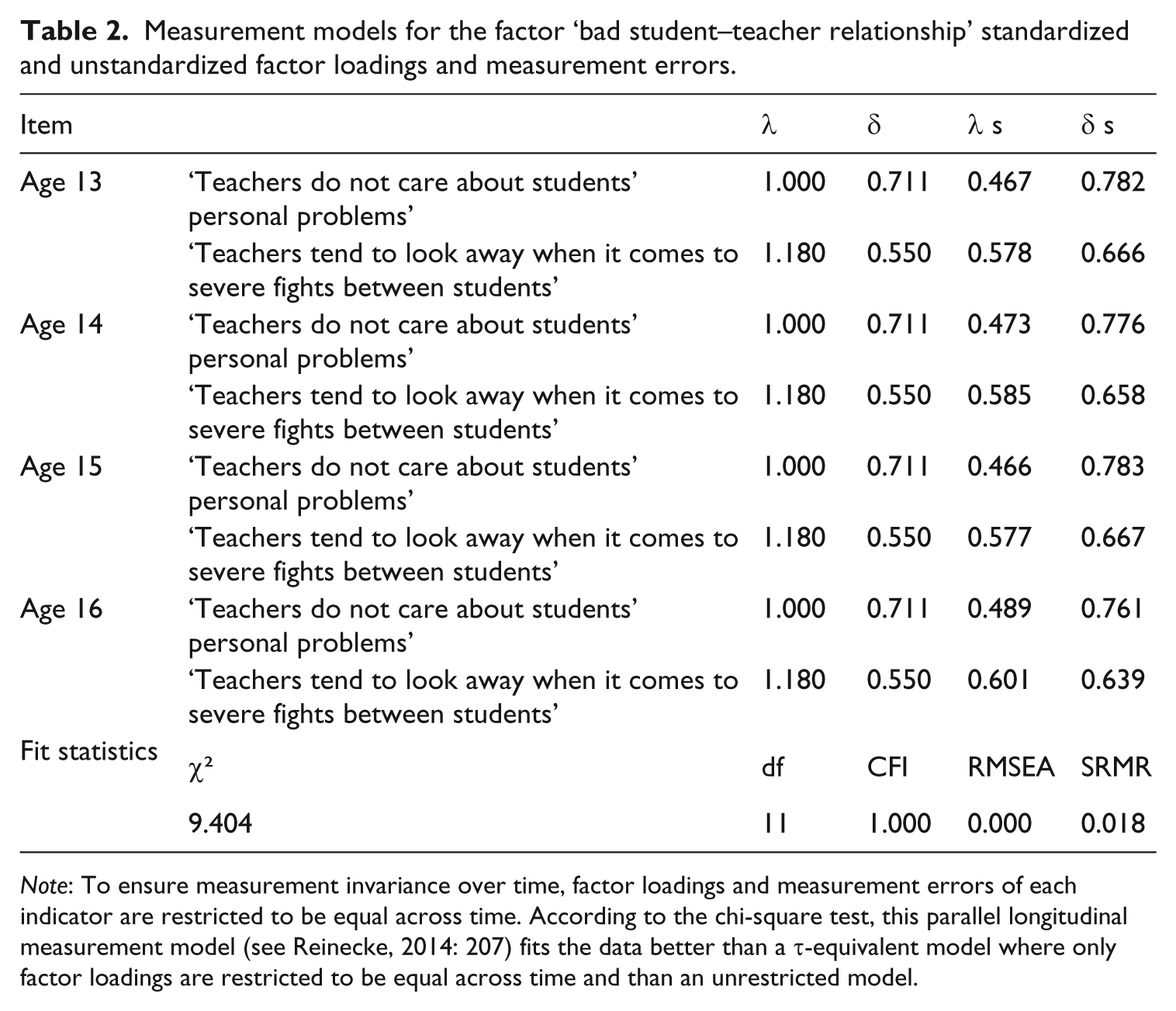
Note: To ensure measurement invariance over time, factor loadings and measurement errors of each indicator are restricted to be equal across time. According to the chi-square test, this parallel longitudinal measurement model (see Reinecke, 2014: 207) fits the data better than a τ-equivalent model where only factor loadings are restricted to be equal across time and than an unrestricted model.
In terms of content, the first factor represents a good student–teacher relationship. In particular, the questions about trust and fair treatment have been used in a similar form in some of the above-described studies. They come very close to what Sutherland meant by emotional reactions related to associations. The third statement is formulated more generally and asks broadly whether teachers take care that there is no violence between students. Even though neither Sutherland nor Akers mentioned something like that in their descriptions of intensity, the question captures part of what is meant by teachers caring in the research works on learning success described above. It expresses that teachers care for their students and are not indifferent to their wellbeing. Sutherland himself wrote that ‘intensity is not precisely defined’ (Sutherland et al., 1992: 89). Thus, it is the task of research to fill this term with content. In doing so, the specific role of people with whom students are in differential association must be taken into consideration. For example, intense relationships with teachers ought to differ from intense relationships with peers. Features such as fair treatment, trust and teachers caring for students’ wellbeing should typically characterize intense student–teacher relationships. On the whole, the three items used here provide helpful hints about practical ways to build up good and intense relationships between students and teachers. As the purpose of this paper is to utilize learning theories as a theoretical framework to find out how schools and teachers can help prevent delinquency, the items should be appropriate to measure intense student–teacher relationships.
The second factor, on the other hand, represents a bad student–teacher relationship that is characterized by teachers’ lack of interest in their students. Again, the items do not capture questions of prestige, significance or importance related to the associations with teachers directly. But, once more, they can readily be brought into accordance with the concept of intensity. If students think that their teachers do not care about their personal problems and rather look away when it comes to violence, this should mean that associations with these teachers are not important to the students and that they would ascribe low prestige to those teachers. The teachers’ influence on students should thus be weak. Again, the questions comply with operationalizations used in prior research works. In particular, the item about personal problems expresses teachers’ unwillingness to help and the absence of a caring relationship with their students.
Taken together, the factors ‘good and bad student–teacher relationship’ should be suitable to test the role of teachers in the development of delinquent behaviour according to learning theories and thereby provide important hints as to how teachers can prevent juvenile delinquency.
Attitudes
Both the Theory of Differential Association and the Social Learning Theory attach great importance to definitions in the development of delinquent behaviour. Whereas Sutherland spoke of definitions of the legal codes as favourable or unfavourable, Akers discussed evaluative and moral attitudes that define the commission of an act as right or wrong, good or bad, desirable or undesirable, justified or unjustified. Thus, it seems appropriate to use participants’ statements about their attitudes towards crime to measure the concept of definitions. In all four years, students were asked how strongly on a five-point scale they agree with the statements
‘You should not commit a crime because . . . . . . you just should not do that’ . . . it is important to abide by the law’ . . . it is important to obey rules, others should obey them as well’ . . . it is good to have a clear conscience’ . . . you harm others who can do nothing about it’ . . . it is important to be a good role model’ . . . you harm yourself’
Exploratory factor analysis revealed that all indicators load on one factor. Table 3 shows the results of confirmatory factor analysis, that is, the measurement models in the later structural equation models. Again, factor loadings are consistently high and fit statistics indicate good model fit.
Measurement models for the factor ‘prosocial attitudes’ standardized and unstandardized factor loadings and measurement errors.
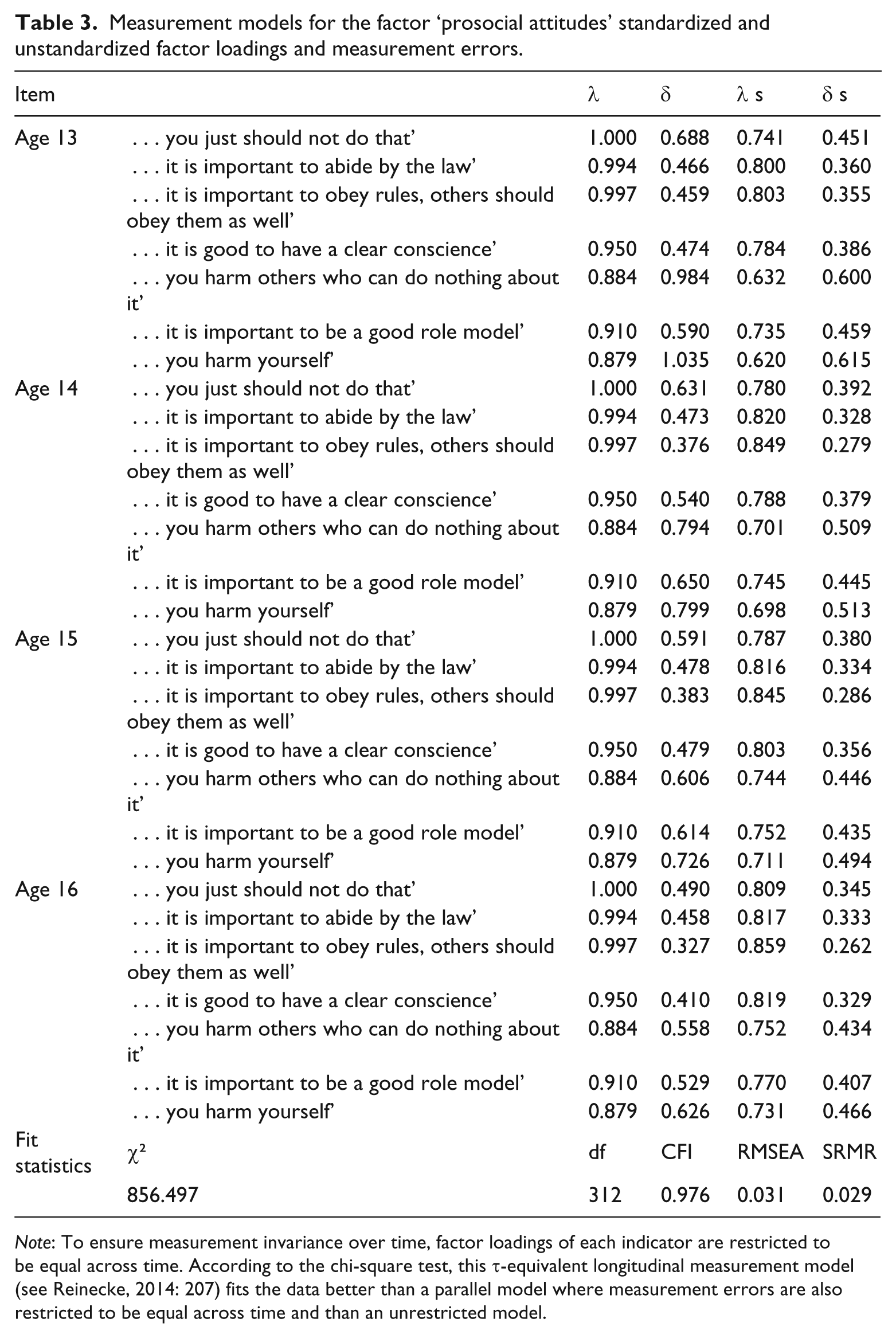
Note: To ensure measurement invariance over time, factor loadings of each indicator are restricted to be equal across time. According to the chi-square test, this τ-equivalent longitudinal measurement model (see Reinecke, 2014: 207) fits the data better than a parallel model where measurement errors are also restricted to be equal across time and than an unrestricted model.
Delinquency
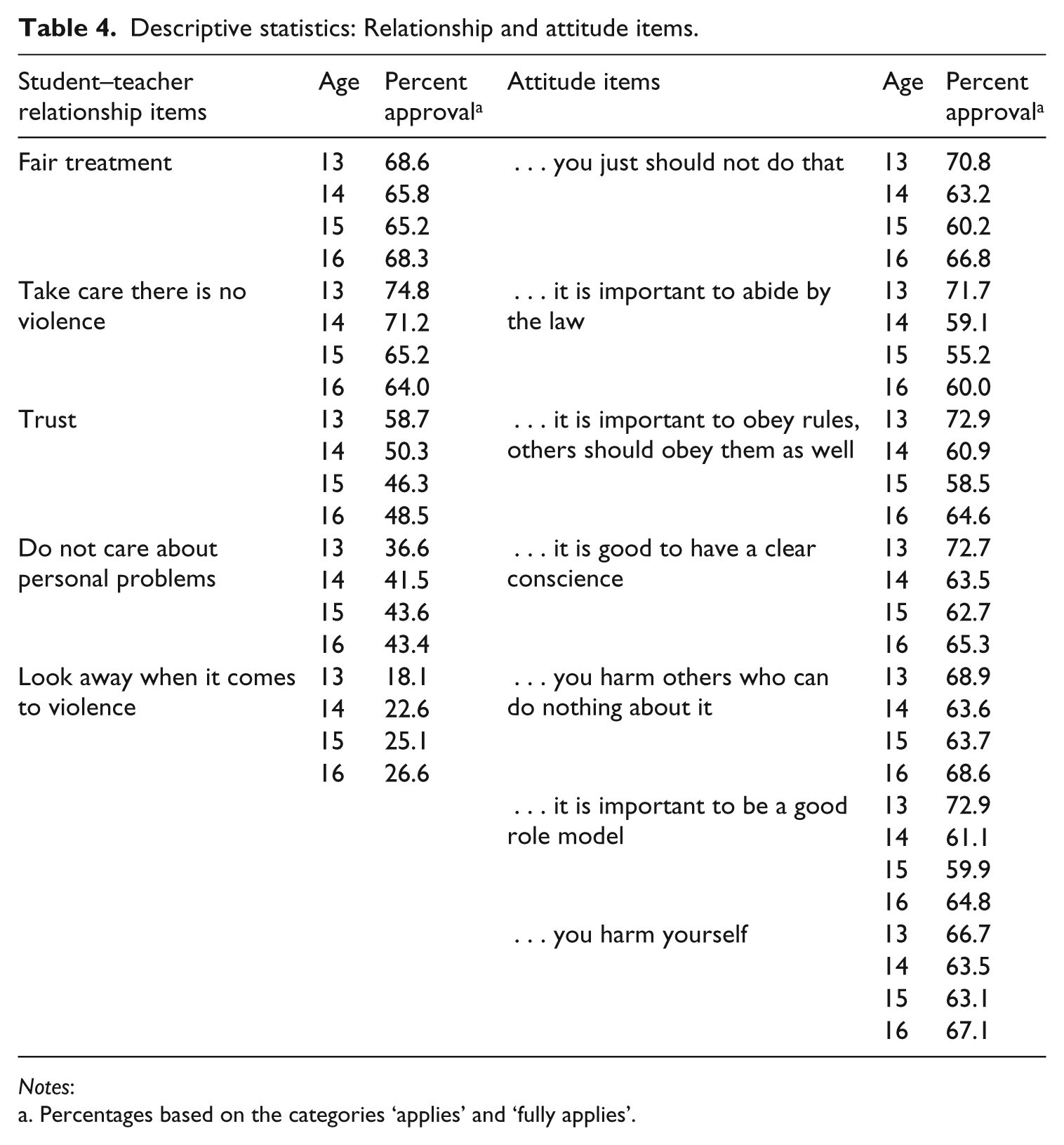
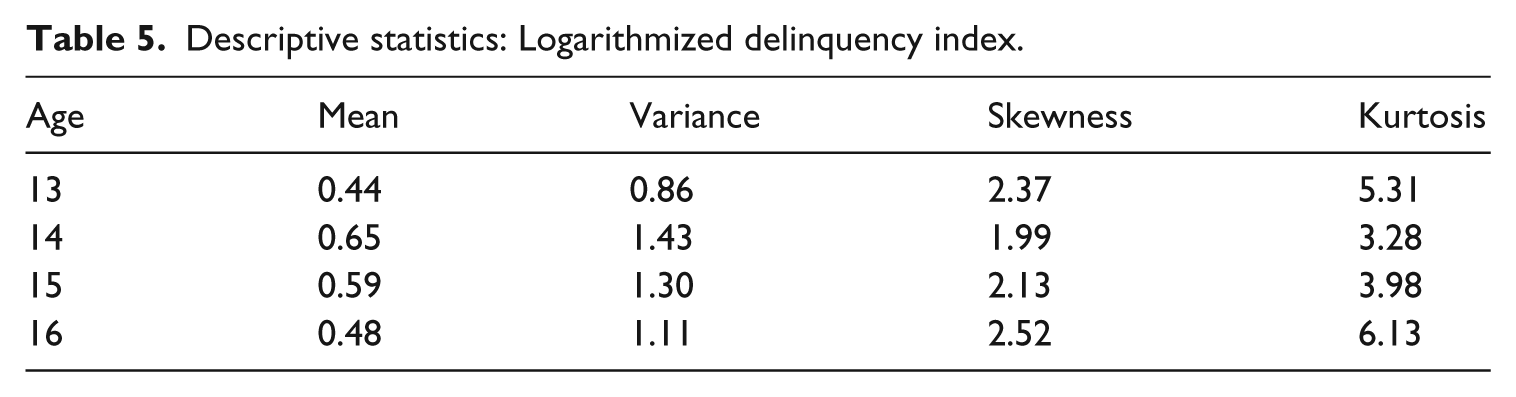
Students’ reports of committing several acts 7 during the last year are used to measure delinquency. The individual incidence rates for every act are added up to compute a total incidence rate for each participant. As expected, these frequency data are not distributed evenly because there were many students without any acts and only a few with many acts. Hence, the data are logarithmized to compensate for their skewness (see also Thornberry et al., 1991: 19; Seddig, 2014: 9).Descriptive statistics of all manifest variables can be found in Tables 4 and 5.
Descriptive statistics: Relationship and attitude items.
Notes:
Percentages based on the categories ‘applies’ and ‘fully applies’.
Descriptive statistics: Logarithmized delinquency index.
Method
As mediating effects of students’ attitudes are hypothesized, structural equation modelling (Bollen, 1989; Reinecke, 2014) is an adequate method to analyse the relationships between student–teacher relationship, attitudes and delinquency. This method is a combination of path and confirmatory factor analysis where structural and measurement models are tested simultaneously. The structural model provides the opportunity to model causal relations between variables, thereby implementing
theoretical assumptions. In particular, indirect or mediating effects can be modelled (see ‘Indirect effects’ in Table 6). The magnitude of these indirect effects is computed by multiplying the two corresponding path coefficients. Measurement models allow the construction of latent variables, thereby considering the unreliability of measurement adequately. Moreover, the longitudinal design of the study offers the possibility of measuring the causes at a time prior to the measurement of the effects, which is a crucial requirement for testing causality assumptions.
Causal relationships between good–bad student teacher relationship, prosocial attitudes and self-reported delinquency, standardized coefficients depicted.

Note: Parameters without labelling are statistically significant at p-values less than .05; parameters labelled by ~ are statistically significant at p-values less than .10.
In accordance with the hypothesized suppositions, time-lagged reciprocal effects between the relationship variables and attitudes as well as delinquent behaviour are modelled. Moreover, attitudes and delinquent behaviour are expected to mutually influence each other over time. Thus, time-lagged reciprocal effects between these variables are modelled as well (see ‘Time-lagged effects’ in Table 6). Additionally, stability effects between the same variables at different points of time are specified (see ‘Stabilities’ in Table 6). To take simultaneous connections between all variables into account, the errors of the three variables at each point in time are correlated (see ‘(Residual) covariations’ in Table 6).
As seen in Tables 4 and 5, all variables are not distributed normally. Therefore, Maximum-Likelihood Estimation cannot be used to calculate the parameters. Robust Maximum-Likelihood Estimation (MLR) is an alternative for non-normal distributed data. This method adjusts the standard error and χ² statistics for each model and is thus used to estimate the following models.
Results
The models depicted in Table 6 and Figures 5 and 6 turned out to fit the data best. 8 The fit indices indicate good overall model fits for both models.
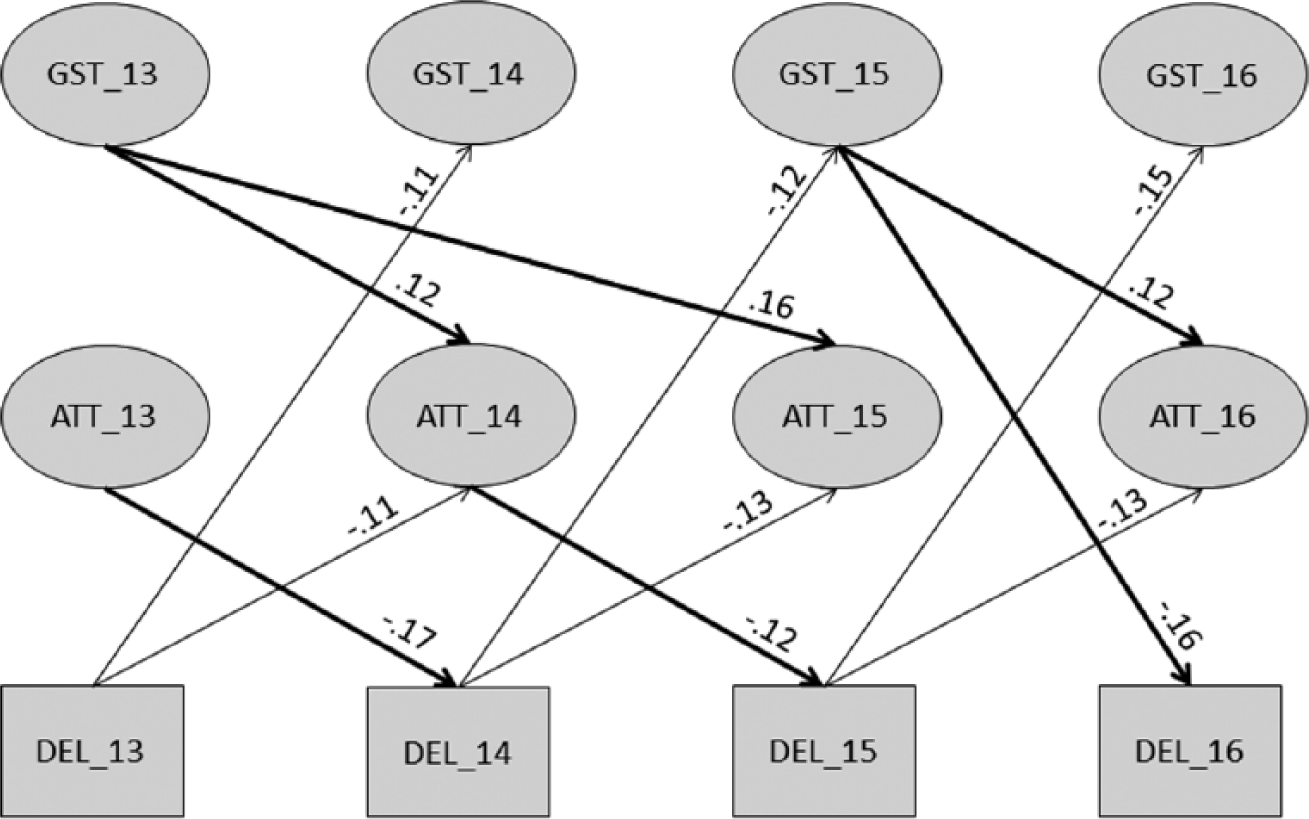
Significant cross-lagged effects between good student–teacher relationship, prosocial attitudes and self-reported delinquency.
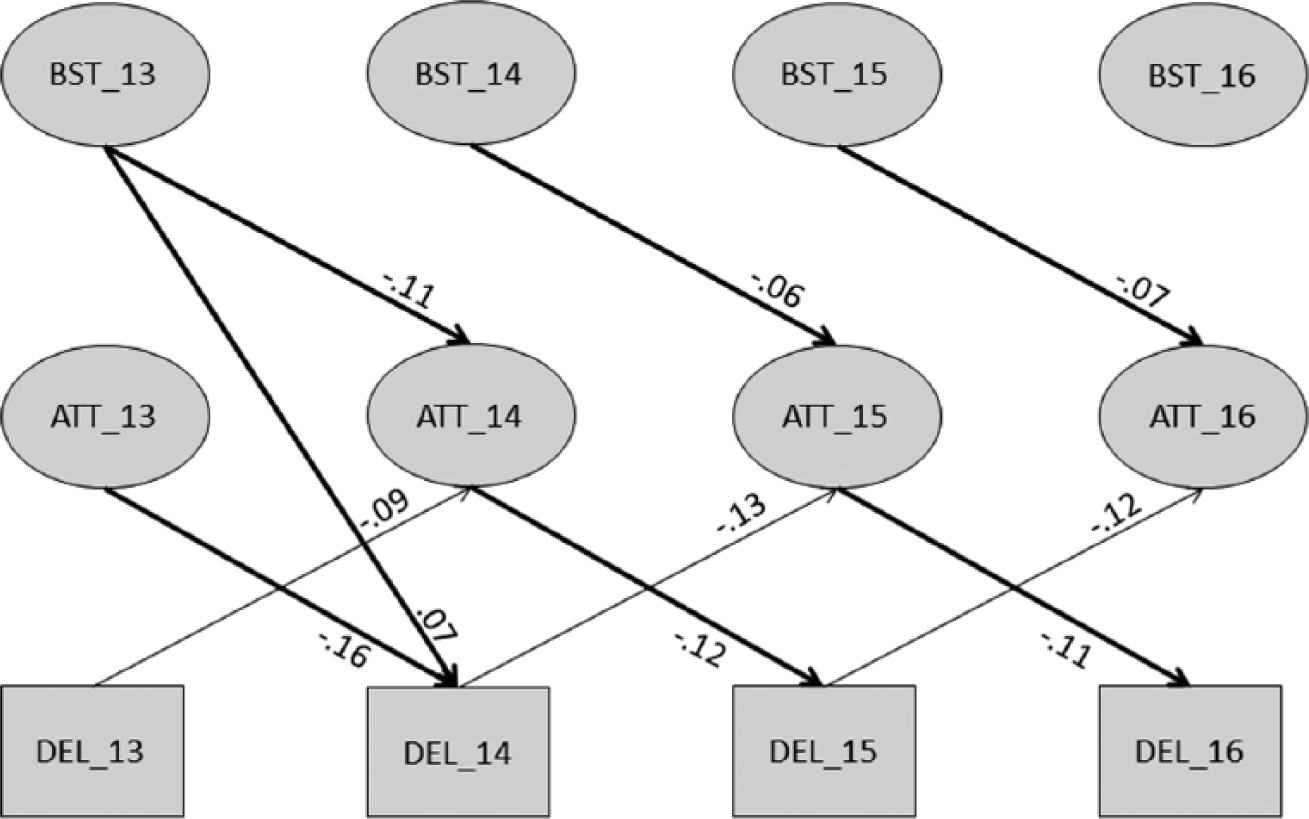
Significant cross-lagged effects between bad student–teacher relationship, prosocial attitudes and self-reported delinquency.
Effects of a good student–teacher relationship
As hypothesized, there are significant time-lagged effects of a good student–teacher relationship on later prosocial attitudes as well as on later delinquent behaviour. But whereas attitudes at all times can be explained significantly by previous relationship variables (β = 0.122, β = 0.158, β = 0.123), there is only one direct effect of a good relationship on delinquent behaviour running from age 15 to age 16 (β = −0.157). Thus, the indirect effects of good student–teacher relationships, mediated by prosocial attitudes, seem to be far more important than direct effects on delinquent behaviour. Also in accordance with the hypotheses, prosocial attitudes at ages 13 and 14 significantly affect later delinquency (β = −0.170, β = −0.123). The resulting significant indirect effect of a good student–teacher relationship at age 13 via attitudes at age 14 on self-reported delinquency at age 15 amounts to −0.036.
Contrary to the theses, students’ attitudes at prior points in time do not affect their later relationship with teachers. Delinquent behaviour, on the other hand, has the expected significant effects on later relationships (β = −0.106, β = −0.124, β = −0.147). Hence, it is not students’ attitudes that influence the quality of their relationship with teachers, but rather their behaviour. If teachers are aware of students’ delinquent behaviour, they might treat them differently afterwards, leading to the feeling of being treated unfairly on the part of students. Also, students who behave delinquently may become inwardly alienated from school, thus leading to less intense relationships with their teachers.
Lastly, delinquent behaviour also affects later attitudes (β = −0.106, β = −0.126, β = −0.127). This should be due to excusing or rationalizing one’s behaviour retroactively.
Besides these time-lagged effects, there are also significant cross-sectional relationships between the variables. In all four years, the residuals of a good student–teacher relationship correlate positively with the residuals of simultaneous prosocial attitudes (ψ = 0.596, ψ = 0.443, ψ = 0.369, ψ = 0.314). The same is true for prosocial attitudes and delinquent behaviour (ψ = −0.392, ψ = −0.261, ψ = −0.244, ψ = −0.283), except that this relationship is a negative one. The relationship and the behaviour variables correlate cross-sectionally only in the first two years (ψ = −0.225, ψ = −0.170). As expected, this relationship is negative. Firstly, these residual covariances point out that the variables not only influence each other over time but also are interrelated at each point in time. Secondly, the mediating effect of attitudes is highlighted once again. The student–teacher relationship and delinquent behaviour are more strongly related to prosocial attitudes than with each other.
Stability effects for all variables are consistently high (between β = 0.383 and β = 0.540), but in comparison a little lower for attitudes during the first years. This suggests room to influence young students’ attitudes and thus underlines the importance of moral education and value transmission in school.
Effects of a bad student–teacher relationship
Similar to Model 1, there are consistent time-lagged effects of the bad student–teacher relationship on students’ attitudes (β = −0.110, β = −0.056, β = −0.073). As expected, they run in the opposite direction, indicating that a bad student–teacher relationship leads to less prosocial student attitudes the year after. Again, only one significant direct effect of the relationship variable on later delinquent behaviour could be found (β = 0.066), indicating that it is once more the mediation by attitudes that links a bad student–teacher relationship with delinquent behaviour. Prosocial attitudes at every age affect later delinquency negatively (β = −0.156, β = −0.122, β = −0.108). Thus, two indirect effects can be computed. The first one runs from the bad student–teacher relationship at age 13 via less prosocial attitudes at age 14 to delinquent behaviour at age 15. It amounts to 0.045. The second (0.019) runs from the relationship at age 14 via attitudes at age 15 to delinquency at age 16.
As in Model 1, there are no time-lagged effects of attitudes on later relationships with teachers. However, in contrast to the first model, there are no effects of students’ delinquent behaviour on relationships either. Hence, students’ assessments of impersonal relationships with their teachers seem to be independent of their own former attitudes or behaviours. This means that working on teachers’ indifferent attitudes towards students and ensuring that students do not have the impression that teachers do not care about them is even more promising.
Discussion
Altogether, the results are very much in line with assumptions derived from learning theories. Most hypotheses could be confirmed.
The questions raised above may thus be answered as follows: There is empirical evidence for the learning theory assumptions that an intense relationship between students and teachers affects students’ prosocial attitudes positively over time, and prosocial attitudes, in turn, prevent later delinquent behaviour. On the other hand, bad student–teacher relationships evidently hinder the internalization of prosocial norms and thereby indirectly foster delinquent behaviour. Obviously, the quality of student–teacher relationships is more important for the learning of attitudes than for the direct learning of behaviour. Whereas Social Learning Theory suggests that attitudes and behaviour are learned in similar ways and should thus be influenced by similar circumstances, the results are more in favour of a mediating effect of attitudes as Sutherland originally assumed.
This means that schools and teachers can help prevent juvenile delinquency by fostering positive relationships between students and teachers. According to the results of this study, it is important that students feel that they can trust their teachers and that teachers treat them fairly, care about them personally and are not uninterested in violence between students.
Still, there are some shortcomings of this study that need to be taken into consideration when evaluating the present findings. First, the questions concerning the student–teacher relationship refer to all teachers. Maybe there are rather individual teachers who significantly influence students’ development. Secondly, as indicated above, there are different ways to measure the intensity of student–teacher relationships. The variables used here do not ask directly for the prestige attributed to teachers by students or the significance and importance related to the associations with teachers. Therefore, future research should also ask about individual teachers and use items such as ‘I respect my teacher(s)’, ‘I look up to my teacher(s)’, ‘I like my teacher(s)’ or ‘I value my teacher(s)’ opinion’. Furthermore, future research should concentrate on the causes of good or bad student–teacher relationships. If we know why some teachers are not able to develop positive relationships with their students, prevention and teacher training programmes can directly address these points. Additionally, the role of teachers besides other units of socialization like family and peers should be analysed.
On the whole, the present study already provides important information about the significance of socialization processes at school. Obviously, between ages 13 and 16, teachers play major roles in the transmission of prosocial norms and values. The way they relate with students apparently affects their success in this process. Crime prevention work is thus carried out automatically at schools by teaching students prosocial norms. Moreover, special prevention programmes should be particularly effective if they place emphasis on value transmission and work on improving student–teacher relationships. Both should also be important components of teacher training.
Footnotes
Funding
The author declared the following potential conflicts of interest with respect to the research, authorship, and/or publication of this article: This work was supported by the Deutsche Forschungsgemeinschaft (DFG) [grant number BO 1234/6-8].