







Abstract
Background
The misconceptions and conspiracy theories against the Covid-19 vaccines have been identified as potential factors that could negatively impact herd immunity for the Covid-19 vaccination.
Focus of the article
From the perspectives of the Health Belief Model and the Theory of Planned Behavior, the study sought to determine an effective social marketing intervention to address the misconceptions about the Covid-19 vaccines.
Research Hypotheses
The hypotheses stipulate that perceived susceptibility, perceived severity, perceived benefit, and perceived barriers of the coronavirus will positively influence Covid-19 vaccination behavior. The study further hypothesized that subjective norms (important others) would significantly mediate the relationships.
Methods
Structured questionnaires were used to collect data from 821 individuals from three administrative regions, which constitutes 65% of the population of Ghana. The quota and convenience sampling technique was used in selecting the respondents due to the lack of a sampling frame.
Results
The study’s findings show that only perceived susceptibility and the perceived barrier directly influence the Covid-19 vaccination behavior. The result, however, shows a significant improvement when important others were introduced as a mediating variable. Thus, all four constructs had a positive and significant influence on Covid-19 vaccination behavior through subjective norm (important others) as an intervening variable. The study shows the value of using opinion leaders as a communication channel in addressing the misperceptions and conspiracy theories against the Covid-19 vaccines.
Recommendation for Research/Practice
To effectively address the misconceptions about the Covid-19 vaccines and improve herd immunity, social marketers should identify key influencers in various communities and cities and use them in promoting the vaccination program. The study examined and found subjective norms (perceived social pressure from important others in society on an individual to perform or not to perform a behavior) as a significant mediator for promoting the Covid-19 vaccination behavior.
Limitations
The current study examined the mediating role of subjective norm and the HBMs' constructs. Future studies could also consider integrating subjective norm as a mediator in other behavioral change theories to predict the target audience’s behavior.
Introduction
The outbreak of the Covid-19 pandemic has altered our usual way of life as we know it, which has resulted in an unprecedented global public health and economic crisis. The Covid-19 pandemic has brought untold hardship to the entire world, with millions of lives lost and many businesses losing money and employees (Okereke et al., 2021; Sarkodie & Owusu, 2021). There have been several calls on the scientific community to develop a vaccine to deal with the pandemic and bring life back to normal. Billions of dollars have been invested in vaccine development projects by governments all over the world. For instance, as of December 2020, an amount of €86.5 billion has been invested in vaccine development globally (Health Policy Watch, 2021). As a result of this massive investment, several vaccines (e.g., Pfizer/BioNTech, Janssen, Oxford/AstraZeneca) have been developed and proved as safe and effective at generating an immune response (Loomba et al., 2021).
Despite these developments, there are several misconceptions and misinformation about the coronavirus disease and many conspiracy theories against the acceptance of the Covid-19 vaccines (Romer & Jamieson, 2020; Ullah et al., 2021). Some general misinformation about the Covid-19 pandemic includes the following: Covid-19 is a disease for white people and not black people; the disease only attacks and kill people living in could regions; African Blood is immune to coronavirus; the disease is not real, it is staged; taking alcohol, ginger, garlic and exposing oneself to hot temperatures can prevent or cure Covid-19. These conspiracies and misinformation about the Covid-19 pandemic and possible vaccines are fueled on social media and offline platforms. Some of these include; the 5G mobile network being responsible for the Covid-19 pandemic, the vaccine will change our DNA, and the vaccine containing a microchip, which could control our lives with the 5G network. Others include the vaccine’s potential to cause infertility, a bioweapon to wipe out the African content, and that vaccine trial participants have died after taking the vaccination (Cooper et al., 2021; Ullah et al., 2021).
Designing an effective intervention to deal with these negative pieces of information and conspiracy theories against the Covid-19 vaccine is critical to achieving herd immunity. This is particularly important as past studies have shown misinformation and conspiracy theories as a major source of large-scale rejection of vaccination programs, particularly in less developed economies like Ghana (Salmon et al., 2015; Dubé et al., 2013). Recent surveys gauging the preparedness and willingness of people to accept the Covid-19 vaccines presents worrying reports. For instance, a nationwide survey in Ghana to gauge the potential acceptance of the Covid-19 vaccine reveals that as of April 2021, 46% of Ghanaians had a high-risk perception of acquiring the vaccine (Lamptey et al., 2021). A similar survey in South Africa also shows a high hesitancy of acquiring the vaccine (Cooper et al., 2021). Similar worrying reports were received from other parts of the world. For instance, a report by Tyson et al. (2021) reveals that as of April 2021, 49% of US adults are still not prepared to get vaccinated, mainly due to some conspiracies and concerns about side effects. This was a sharp fall from 72% of US adults who were willing to take the Covid-19 vaccine in June 2020 if the vaccines were available at that time (Reiter et al., 2020). A national survey on Covid-19 vaccine acceptance in Malaysia shows that 95.8% of Malaysians have hesitancy regarding the safety, side effect, and effectiveness of the Covid-19 vaccine.
For the current Covid-19 vaccination program to be successful and achieve herd immunity, at least 55% of the population needs to accept being vaccinated (Knok et al., 2021). In some cases, the estimates are as high as 85%, depending on the country and infection rate (Loomba et al., 2021). However, vaccine hesitancy (a behaviour where people are reluctant or refuse to accept a vaccine despite its availability) is a big issue globally and considered a significant health threat to achieving herd immunity (French et al., 2020; Knok et al., 2021). Thus, to achieve the current vaccination program’s success rate, designing an effective intervention is required to change peoples' perception of the vaccine and encourage its acceptability (French et al., 2020). Given the history of vaccine hesitancy worldwide (Ullah et al., 2021) and the current misconceptions and conspiracy theories against the Covid-19 vaccine, effective measures must be taken to achieve herd immunity. As a behavioral change mechanism, and given the history of its success rate, designing an intervention from a social marketing perspective is more likely to produce the required success rate to achieve herd immunity.
Although there is a growing body of research on achieving herd immunity for the Covid-19 vaccination program (Cooper et al., 2021; Rahi & Sharma, 2020; Ullah et al., 2021), limited studies have looked at the issue from a behavioral change perspective. From the social marketing perspective, the current study contributes to knowledge by developing a framework for designing effective interventions that seek to encourage people to take the Covid-19 vaccine using the theory of planned behavior (TPB) and the health belief model (HBM). Using theories to predict and understand behavior (i.e., understanding why people behave the way they do) is important in the social marketing field (Luca & Suggs, 2013). Despite the importance of theories in social marketing, the works of Rundle-Thiele et al. (2019) Luca and Suggs (2013) show limited utilization of theories by social marketers. The current study uses the HBM and TPB to further enhance the social marketing field to understand how the conspiracy theories against the Covid-19 vaccination could be addressed to achieve the vaccination program’s success. The remainder of the paper is structured as follows: • review of the literature; • theoretical perspectives and hypotheses development; • methodology; • results; and discussion • implications for theory and practice • limitations and future research direction.
Literature review
As of mid-February 2021, the Pfizer-BioNTech, the Modena, and the AstraZeneca/Oxford Covid-19 vaccines have been approved by WHO as safe for the global vaccination program. Nevertheless, hesitancy to the vaccines promises to be a significant impediment or stumbling block in achieving herd immunity. As stated earlier, this is mainly due to the conspiracy theories and negative information about the safety and intention of the Covid-19 vaccination program. Past studies on vaccine hesitancy suggest that factors influencing vaccine hesitancy are multifaceted, involving individuals’ beliefs about the severity and lack of trust in vaccine’s efficacy, governments or pharmaceutical companies (Knok et al., 2021; Dubé et al., 2013; Salmon et al., 2015). The review of the extant literature shows that previous scholars and efforts to improve vaccine acceptance and uptake have mainly focused on awareness, public health education, sources of vaccine hesitancy, and strategies to address vaccine hesitancy (Dubé et al., 2013, 2015; Salmon et al., 2015).
Despite these efforts, vaccine hesitance continues to be a significant health issue globally, with WHO declaring it a health threat in 2019 (Knok et al., 2021). This is an important indication that there is a need to identify other strategies to promote vaccine acceptance and uptake. To the best of our knowledge, what is lacking in the literature is behavioral change initiatives from the perspective of social marketing, which deals with the application of commercial marketing principles to change behavior or encourage the adoption of new behavior. Using the Covid-19 vaccination program as a case, we seek to contribute to the literature by providing a framework from a social marketing perspective using HBM and TPB to encourage vaccine acceptance. Understanding the behavior (why people behave the way they do) is vital to designing an effective behavioral change intervention. Thus, these two theories were used to predict or explain the phenomenon under study. Based on the findings, the 4ps of the marketing mix (Product, Price, Promotion, and Place) were used to proffer practical solutions for both practitioners and policymakers.
Theoretical perspectives
The study uses the HBM and TPB to predict the willingness of the target audience to take the Covid-19 vaccine. The HBM postulate that the willingness of individuals to accept a health-related behavior is dependent on the individual’s belief and perception about four major constructs – susceptibility, perceived severity, perceived benefits, and barriers that could hinder or prevent people from taking action to perform the desired behavior (Sulat et al., 2018; Tajeri Moghadam et al., 2020). When people believe or feel that they are vulnerable to attracting a dangerous disease or condition (susceptible to a condition), which could have a damming consequence on their health (perceived severity), they are likely to accept a recommended solution. Likewise, when people perceive that the benefits of performing the recommended behavior outweigh the negatives or associated barriers, the probability that they will take a step to perform the proposed behavior is higher (Tweneboah-Koduah, 2018). In other words, if people perceive the coronavirus to be a dangerous disease which if contracted, will have a damming impact on their health and finances, they are more likely to accept the intake of the Covid-19 vaccine. For the current study, the perceived barrier is operationalized as the misconceptions and conspiracy theories concerning the Covid-19 vaccine. From the HBM’s perspective, the findings of Tweneboah-Koduah (2018) show that Ghanaian women were more willing to perform breast self-examination (BSE) when they perceived susceptibility and severity of the breast cancer disease and the benefits of performing the BSE. The work of Obirikorang et al. (2018) also shows lack of susceptibility and severity as the significant predictors of noncompliance to antihypertensive therapy among hypertensive patients in Ghana. The authors, therefore, theorize that for the Covid-19 vaccination program to succeed, these perceived barriers should be effectively dealt with or removed. Again, for an effective intervention seeking to encourage the uptake of the Covid-19 vaccine, it must project the coronavirus disease as a very severe illness with alarming consequences. Additionally, the benefits of performing the behavior (the product) should be highly projected above the perceived cost or barriers (price) associated with taking the vaccine. Based on these discussions, we proposed the following hypotheses.
H1a: perceived susceptibility to the Covid-19 disease will significantly influence people to take the Covid-19 vaccine.
H2b: perceived susceptibility has a positive connection with subjective norm.
H1b: perceived severity of the Covid-19 pandemic will significantly influence people to take the Covid-19 vaccine.
H2b: there is a positive association between perceived severity and subjective norm.
H1c: perceived benefits of taking the Covid-19 will significantly influence behaviour to take the Covid-19 vaccine.
H2c: there is a positive link between perceived benefit and subjective norm.
H1d: perceived barriers to taking the Covid-19 vaccine will significantly influence willingness to accept the Covid-19 vaccine.
H2d: the relationship between perceived barriers and subjective norm will be positive and significant.
The mediating role of subjective norm
According to the theory of planned behavior (TPB), subjective norm (SN) represents a perceived social pressure to perform or not to perform a behavior (Ajzen, 1985). The individual is under pressure to conform to what important people in his life think is acceptable. Thus, an individual is most likely to perform a given behavior if he believes that the people he respects the most or look up to want him to perform that behavior. Similarly, he is much likely not to perform the behavior in question if he believes that the referents think he should not perform the behavior. These referent people could be religious leaders, professionals, politicians, traditional leaders, and people considered role models in society (Catalan-Matamoros & Elías, 2020; Nwaze & Mohammed, 2013; Tweneboah-Koduah et al., 2020). In this case, if the individual believes that the referents think that taking the Covid-19 vaccine is good, he is most likely to comply with the vaccination program, and the reverse is true. Past studies have shown that subjective norm plays a vital role in influencing behavior (Walker, 2015; Kautonen et al., 2013; Tweneboah-Koduah et al., 2019). For instance, the work of Tweneboah-Koduah et al. (2019) found subjective norm to be the most significant predictor of physical activity behavior among Ghanaian youth. Nwaze and Mohammed (2013) provide evidence on the effectiveness of subjective norms on how the engagement of traditional and religious leaders as strategic stakeholders helped achieve a polio-free status in Nigeria. The findings of Dror et al. (2020) confirm that Israeli health workers’ skepticism about the safety of possible Covid-19 vaccine directly impacted negative public perception and unwillingness to take the Covid-19 vaccine.
We theorize that for effective improvement in vaccination programs to achieve herd immunity, particularly for the current Covid-19 vaccination program, important others (subjective norms) will play a significant role. Thus, if people believe that important people in society want them to take the Covid-19 vaccine, they will be more willing to accept it. The key identifiable referents in the case of Covid-19 could be religious leaders, health professionals, journalists, political leaders, and local leaders (Catalan-Matamoros & Elías, 2020). The words of these people will play a significant role in the success or failure of the vaccination program. The work of Gichuru et al. (2018) and Adedini et al. (2018) in Kenya and Nigeria, respectively, shows religious leaders as very influential people in Africa. The work of Kestenbaum and Feemster (2015) have also shown health professionals, particularly those with expertise in vaccines are essential promoters of vaccine acceptance. We further postulate that communicating the constructs of the HBM through important others will have a more profound impact on influencing behavior towards the vaccination program. The following hypotheses were developed based on the above discussions.
H3a: SN mediates the relationship between perceived susceptibility and Covid-19 vaccination behaviour
H3b: SN significantly mediate the relationship between perceived severity and Covid-19 vaccination
H3c: SN mediates the relationship between perceived benefit and Covid-19 vaccination behaviour
H3d: SN mediates the relationship between perceived barriers and Covid-19 vaccination behaviour
H3e: SN significantly influences Covid-19 vaccination behaviour.
Methodology
The study is a cross-survey that uses a quantitative research approach to test the hypothesized paths in the study. The study used a self-administered structured questionnaire to collect data from the respondents, which were selected from capital cities of three administrative regions of Ghana (Greater Accra, Ashanti, and Eastern region). These regions were purposively selected since, according to the Ghana Statistical Service, they constitute the largest regions of Ghana in terms of population density (65%) (GSS, 2020). Due to the lack of a sampling frame, the convenience sampling technique was deemed appropriate in this case. This approach was used by Tweneboah-Koduah et al. (2020) to predict Ghanaians' waste management behavior where there was a lack of sampling frame. The questionnaires were distributed to people in churches, market places, shopping malls, and bus terminals in each city. The respondents were assured of their anonymity and verbally consented to participate in the survey. Using the quota system, 40% of the respondents were selected in the Ashanti Region, with 35% and 25% from Greater Accra and Eastern Regions respectively. Two weeks were spent in each region for data collection.
Following Wolf et al.(2013)’s sample size determination approach (2013), a sample size of 1250 was arrived at. A total number of 1500 questionnaires were, however, distributed to make room for a non-response rate. At the end of the data collection period, 967 completed questionnaires were received, making a response rate of 64.5%. However, a total of 821 was used for further analysis after eliminating incomplete responses. Figure 1. Conceptual framework.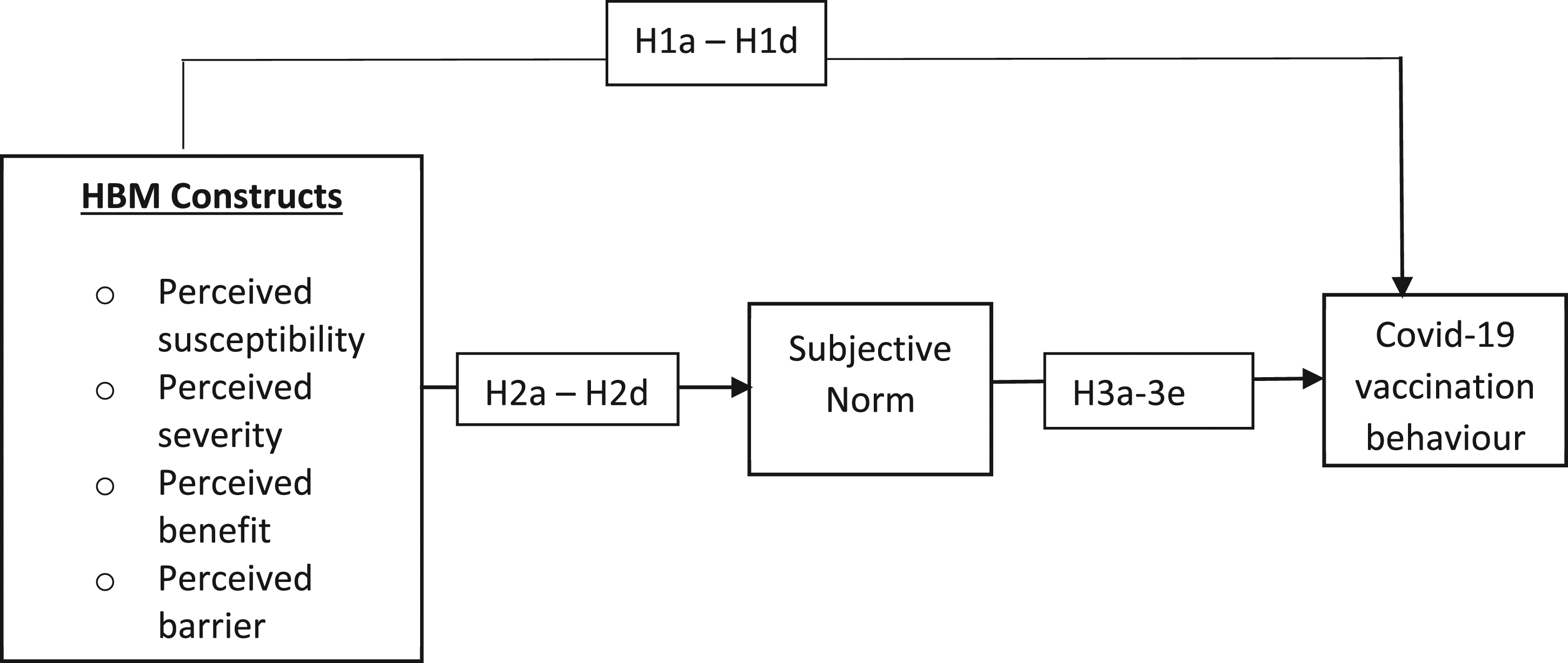
The measurement items were adapted from the literature to suit the context of the current study. The items measuring perceived susceptibility were adapted from (Deshpande et al., 2009; Tweneboah-Koduah, 2018). Perceived severity, perceived benefits, and barriers were measured using 5, 6, and 4 items, respectively. These items were adapted from Razmara et al. (2018) and D’Souza et al. (2011). Subjective norm was measured using five items adapted from (Tweneboah-Koduah et al., 2019). The items were measured on a five-point Likert scale from 1 (strongly disagree) to 5 (strongly agree). Before administering the questionnaires, we pilot tested them with 50 people in Accra to ensure clarity and better comprehension of the questions.
The data was analyzed using SmartPLS-SEM. The two-step approach recommended for structural equation modeling was followed (Anderson & Gerbing, 1988). First, the measurement model was assessed, followed by the analysis of the structural model.
Data analysis and results
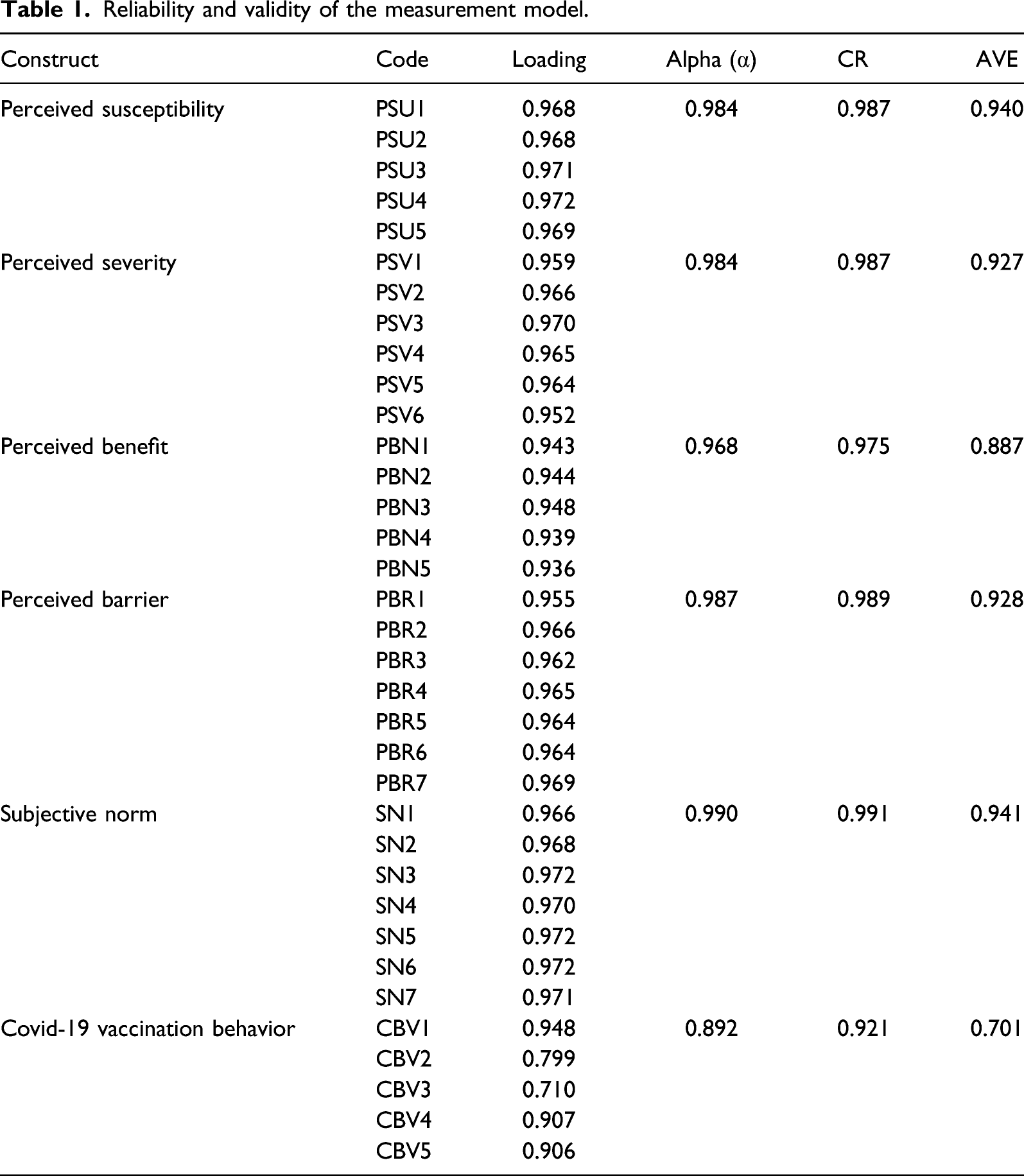
The measurement model was first tested to ascertain the validity and reliability of the constructs. An examination of the structural model followed this to assess the hypothesized relationships. The measurement and structural model were analyzed using partial least squares structural equation modeling (PLS-SEM).
Reliability and validity of the measurement model.
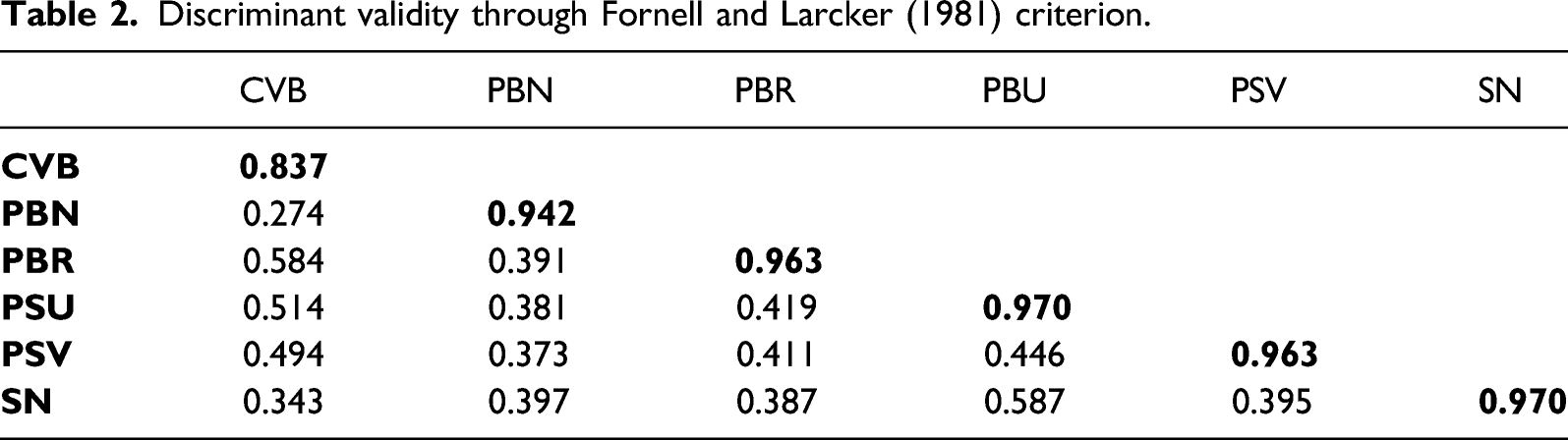
Discriminant validity through Fornell and Larcker (1981) criterion.
Assessment of the structural model
After achieving the validity and reliability of the measurement items, the structural model was assessed. The structural model represents the predictive ability of a study’s framework and the significance of the paths hypothesized in the framework. The predictive ability is determined by the R2 value, while the significant paths are determined by the p-values (Sarstedt et al., 2017).
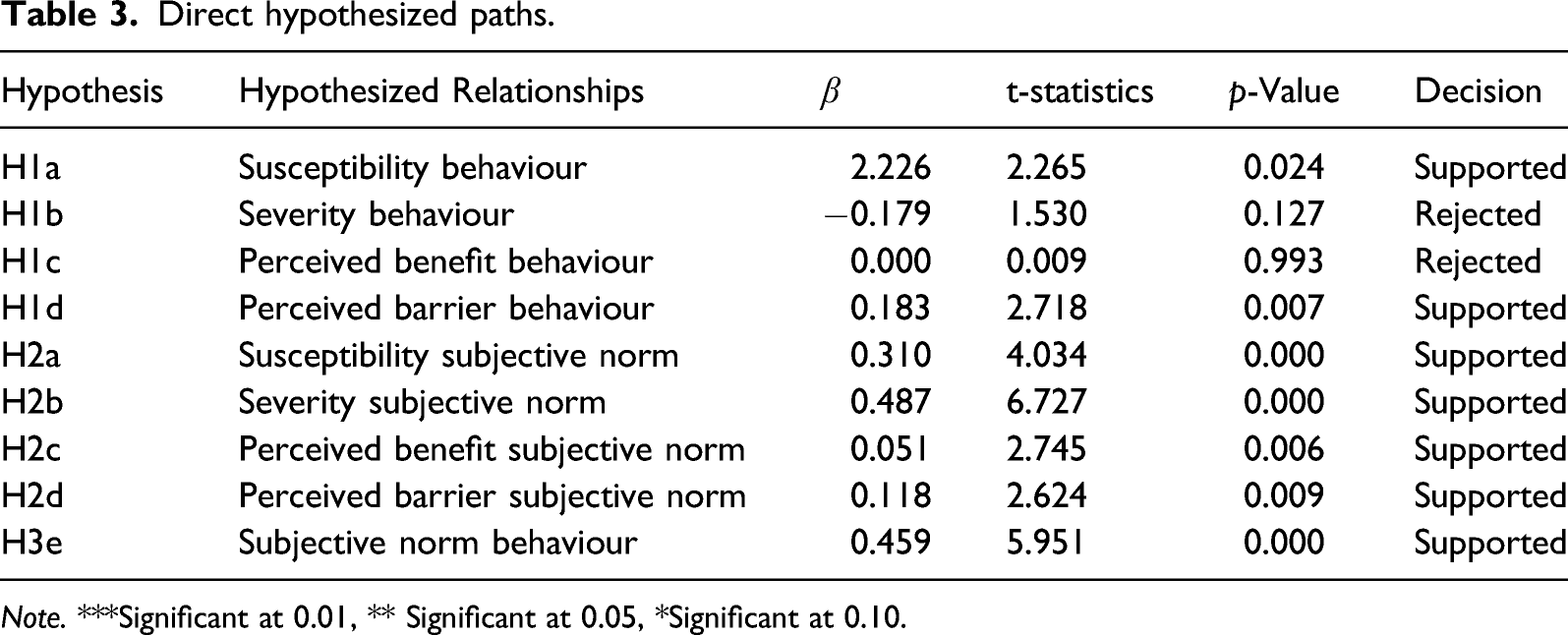
The results in Figure 2 show that the dependent variables and the mediator variable directly explained 42.5% of the vaccination behavior of the target audience. Thus, the model moderately predicted vaccination behavior (Sarstedt et al., 2017; Ahmad et al., 2020). The results in Table 3 further indicate that the direct hypothesized path between perceived susceptibility of the Covid-19 pandemic and willingness to get vaccinated was statistically positive and significant (β = 2.226, t = 2.365, p = 0.024), providing support for hypothesis Measurement model. Direct hypothesized paths. Note. ***Significant at 0.01, ** Significant at 0.05, *Significant at 0.10. Mediation analysis. Note. SN = subjective norm; ***Significant at 0.01, ** Significant at 0.05, *Significant at 0.10.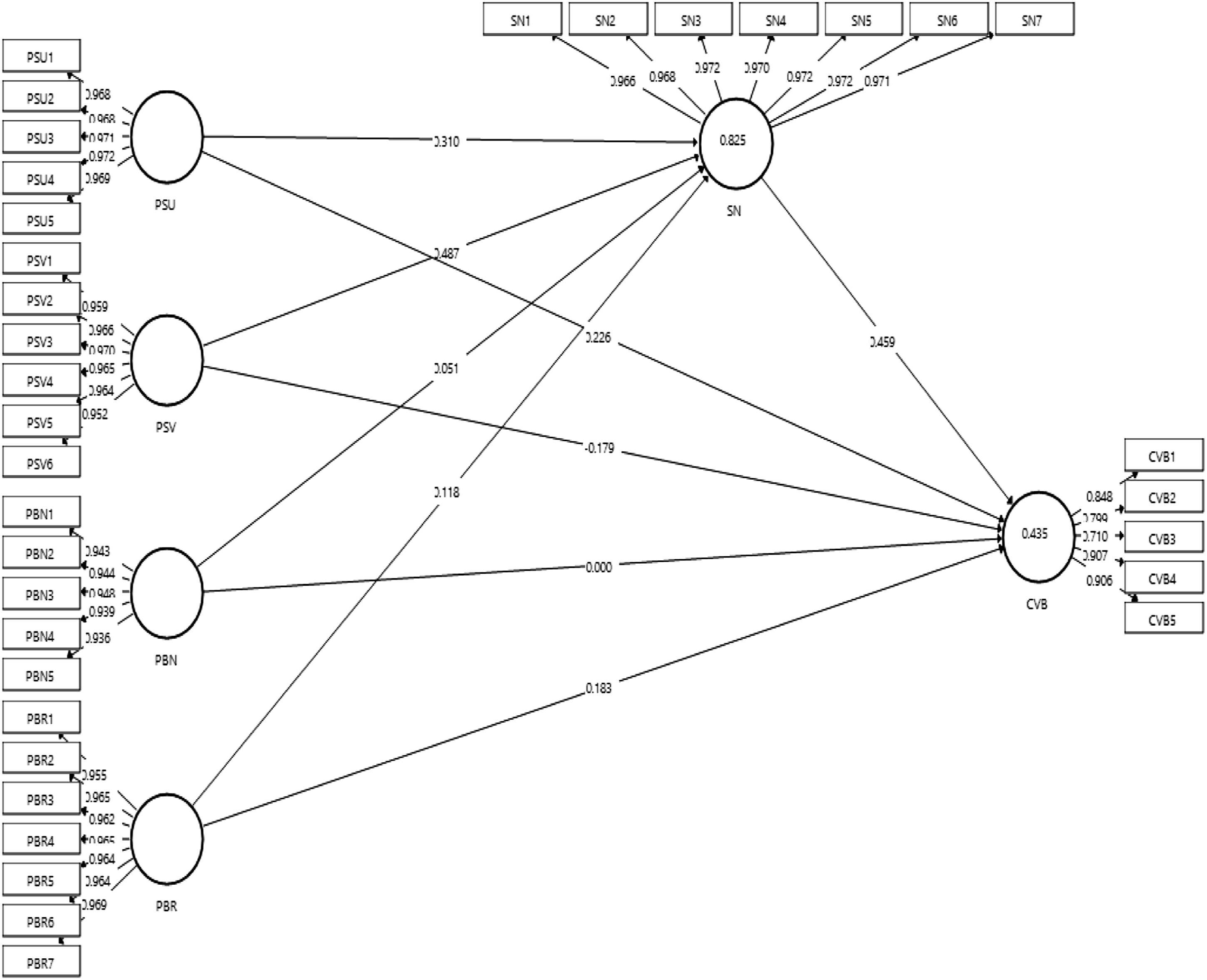
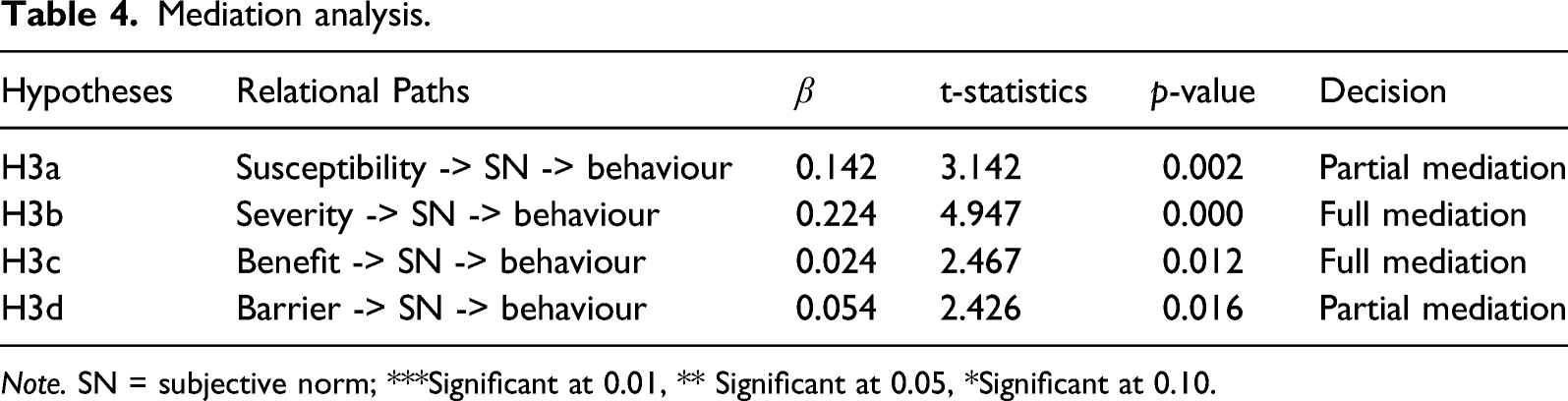
The mediation analysis shows that subjective norm (important others) fully mediate the relationship between perceived severity, perceived benefit and vaccination behaviour. Thus, only the indirect relationships through subjective norm was significant (β = 0.224, t = 4.947, p = 0.000) and (β = 0.024, t = 2.467, p = 0.012). This provides support for
Discussions
From the perspective of the health belief model, the study sought to examine the role of social marketing in addressing the myths surrounding the Covid-19 vaccination, focusing on important others as a mediating variable. The direct hypothesized relationships show a significant positive relationship between perceived susceptibility and willingness to get vaccinated. This is an indication that the perceived vulnerability of the coronavirus will have a significant direct influence on the target audience’s willingness to seek vaccination against the virus. This supports the findings of Tweneboah-Koduah (2018), who also found a positive relationship between susceptibility and breast screening behavior. Thus, perception of vulnerability has a direct influence on vaccination behavior.
Additionally, the result shows a positive, direct, and significant relationship between perceived barriers and performance of the vaccination behavior. This is consistent with past studies that found a significant relationship between removing barriers and performance of behavior (Moghadam et al., 2020; Sulat et al., 2018; Rundle-thiele et al., 2017). For instance, the work of Rundle-thiele et al. (2017) shows that consumers with low perceived barriers to exercise are more likely to engage in physical activity than those with high perceived barriers. This suggests that dealing with the perceived myths about the coronavirus vaccines will significantly improve target audiences’ willingness to take the vaccine. The current study shows that removing perceived misconceptions about the vaccination will significantly improve the performance of the vaccination behavior. The study’s result further shows that dealing with the misconceptions regarding the Covid-19 vaccines through important others (opinion leaders) will be an effective means of increasing willingness to get vaccinated.
In this study, we hypothesized that projecting the severity of the Covid-19 pandemic will significantly influence the target audience vaccination behavior. Interestingly, in contradiction to past studies (Moghadam et al., 2020; Sulat et al., 2018; Weinstein, 2000), the current study shows insignificant relationship between severity of the coronavirus and willingness to be vaccinated. This could be attributable to the myth suggesting that the coronavirus is not as dangerous as being presented by health professionals and that it could be cured through conventional means. The result suggests that though the target audience may perceive vulnerability of the virus, they may not perceive it to be severe, and thereby, may be reluctant to get vaccinated to protect themselves against the virus. Again, surprisingly, in contrast to past studies (Sulat et al., 2018; Tweneboah-Koduah, 2018; Rundle-thiele et al., 2017), the result shows that the perceived benefit of getting vaccinated has no significant direct link with the vaccination behavior. These results show that directly focusing on the severity of the Covid-19 pandemic and benefits of getting vaccinated might not yield a significant result or influence people to get vaccinated. However, the result significantly improved when important others (subjective norm) was introduced as an intervening variable. Specifically, both perceived severity and perceived benefit for vaccination became statistically significant through the indirect path of important others (subjective norms). This implies that by using important others (opinion leaders) to explain the dangers of the Covid-19 pandemic and disseminate the benefits of the product (vaccination behavior), consumers (target audience) are more likely to accept the product (get vaccinated). In other words, the target audience in Ghana is more likely to embrace the vaccination program when important others/opinion leaders ask them to do so. This finding is consistent with the findings of previous scholars who found important others as key influencers of behavior, particularly in the Sub-Saharan Africa region (Walker, 2015; Gichuru et al., 2018). For instance, Walker (2015) found that the target audience in Nigeria was more willing to obey Islamic leaders as opinion leaders on child marriage behavior. The findings of Gichuru et al. (2018) also show a positive result when religious leaders in Kenya were engaged to support HIV prevention programs for gays (Men Having Sex with Men). The current study provides evidence to show that engaging opinion leaders for the Covid-19 vaccination program will have a significant positive result.
Implication for theory and practice
The study contributes to knowledge by investigating the role behavioral change approach (social marketing) in addressing the Covid-19 vaccination myths to achieve herd immunity. The study shows that using social marketing will significantly address the conspiracy theories against the Covid-19 vaccination program, thereby, improve herd immunity. The study also contributes to the social marketing literature by integrating subjective norm of the TPB into the health belief model framework. This answer calls for more integrative perspectives in predicting and understanding behavior (Domegan et al., 2016; Truong et al., 2019). The study, therefore, contributes to the social marketing theory building by investing the mediating role of subjective norms between perceived susceptibility, perceived severity, perceived benefits, perceived barriers, and performance of recommended behavior. The study’s findings provide evidence to show that conveying the beliefs of the HBM through important others (subjective norm) as a mediator will significantly improve willingness to perform the behavior. Thus, the target audience will be more willing to patronize a recommended behavior (product) if it is promoted by important others revered by the target audiences. Social marketers can consider the significant role of subjective norm as a key mediator variable in designing effective behavioral change campaigns, particularly for the Covid-19 vaccination program.
In the current study, misconceptions and conspiracy theories against the Covid-19 vaccine were operationalized as barriers preventing people from getting vaccinated. A significant relationship was found between perceived barriers and vaccination behavior, suggesting that dealing with these barriers will significantly result in vaccination behavior. The result, however, shows that dealing with these barriers through key influencers yielded a much higher result. This implies that reducing these conspiracy theories and misconceptions will be much more effective if targeted through opinion leaders in various communities.
The path between perceived severity, perceived benefit, and vaccination behavior was fully mediated through the intervening variable of important others (subjective norms). This suggests that promoting the product (vaccination behavior) directly to target consumers will produce little or no significant impact in addressing the myths surrounding the Covid-19 vaccines and the success of the vaccination program. In other words, communicating the severity of the coronavirus and the benefits of the recommended solution (vaccination) through key identified influencers in society. Thus, social marketers seeking to promote the Covid-19 vaccination should identify key influencers in various communities and cities to use them to promote the vaccination program. These individuals could be first vaccinated to encourage others to do the same.
Limitations and future research direction
The study investigated and found subjective norms as a significant mediator between the constructs of the HBM and Covid-19 vaccination behavior. Future studies should consider examining the mediating role of important others between the HBM and other behaviors. Future studies could also consider integrating subjective norm as a mediator in other behavioral change theories to predict target audiences' behavior. This study’s findings are based on cross-sectional data, indicating static correlations among the variables at a specific point in time. To determine the pattern of change and the amount to which important others influence behaviors, future researchers may need to take a longitudinal approach.
Additionally, the current study generically examined the role of important others in influencing the vaccination behaviour without looking at how each referent may influence the behaviour. That is, which important others will influence the vaccination behaviour the most in the Ghanaian context? Will it be traditional leaders, religious leaders, political leaders, health professionals, or journalists that will most influence the target audience’s vaccination behaviour? Knowing this will help the effective allocation of resources and most likely have the most significant impact in achieving the desired vaccination goal. Future studies should therefore identify various important others and examine their role in influencing the vaccination behaviour.
Footnotes
Declaration of Conflicting Interests
The author(s) declared no potential conflicts of interest with respect to the research, authorship, and/or publication of this article.
Funding
The author(s) received no financial support for the research, authorship, and/or publication of this article.
