







Abstract
Background
Littering, the incorrect disposal of waste has become a widespread and costly social issue globally. Consequently, sustainable management of litter has evolved into a global necessity, highlighting its essential role in attaining various Sustainable Development Goals (SDGs). India plays a major role in contributing to the solid waste in the continent and hence, is struggling with this social problem.
Focus of the Article
Guided by the empirically tested integrated model developed in previous studies by the authors, the current study designs and explores the practical social marketing strategies targeted at encouraging anti-littering behavior.
Research Question
What are the key social marketing interventions that can be effective in adopting anti-littering behavior?
Method
The present research used a survey questionnaire to gather data. Subsequently, by performing Exploratory Factor Analysis (EFA), a four-component social marketing intervention mix was suggested to target the most impactful determinants identified by testing the aforementioned integrated model.
Importance to the Social Marketing Field
The current study proposes a social marketing interventions mix based on an empirically tested integrated behavior change theoretical framework to guide the development of effective social marketing behavior change campaigns.
Recommendation for Research or Practice
The intervention mix proposed in the current studymay act as a tool for policymakers to identify appropriate social marketing intervention mix to target diverse groups requiring diverse treatments to change their undesired behavior.
Keywords
Introduction
Littering, the incorrect disposal of waste has become a widespread and costly social issue globally (Chaudhary et al., 2021; Ojedokun et al., 2022). India is facing significant challenges concerning management of solid waste due to its swiftly rising population and ongoing urbanization (Kumar et al., 2017; Sharma & Jain, 2020). This global issue is associated with numerous adverse effects on human health as well as the environment. Moreover, it imposes a financial burden due to the costs involved in collecting and disposing of litter appropriately (Musora et al., 2017). Consequently, sustainable management of litter has evolved into a global necessity, highlighting its essential role in attaining various Sustainable Development Goals (SDGs) outlined by the UN in the 2030 agenda (McKinsey & Company, 2023). This is especially relevant to Goal 11 (“Sustainable Cities and Communities”) and Goal 12 (“Responsible Consumption and Production”), both of which emphasize the importance of reducing waste and promoting cleaner, more sustainable urban environments.
The widespread issue of littering has prompted extensive research efforts, with scholars examining behavioral patterns and intervention strategies to mitigate its environmental and social consequences (Chaudhary et al., 2021; Hu et al., 2018; Ojedokun et al., 2022). Moreover, it has also been stressed in a previous study that, like various other environmental challenges, littering is fundamentally caused by human behavior which makes it a behavioral problem (Ojedokun et al., 2022). While litter can originate from various sources such as construction sites, industries and households, its prevalence in public spaces is influenced by broad systemic factors such as waste management policies and urban planning. These macro-level factors influences individual behavior towards littering by creating or limiting opportunities for responsible disposal of waste. Therefore, the present research specifically focuses on handheld litter generated solely by individual behaviour as it represents the point where systemic conditions and individual behavioural aspects intersect most visibly. Moreover, it has also been revealed in the literature that individual behavior is the primary cause of littering (Freije et al., 2019; Schultz et al., 2013).
Due to its negative effects on the environment, health as well as aesthetics, littering is regarded as a crime in various developed nations (Setiawan et al., 2020). However, littering behavior is becoming a major problematic behavior in various developing nations (Chaudhary et al., 2021; Ojedokun et al., 2022). Almosa et al. (2017) highlighted that most of the anti-littering interventions have been focused on developed nations and the research on developing interventions to change littering behavior in emerging nations is warranted. Therefore, the current research addresses Takahashi’s (2009) call to social marketing domain to encourage environmental friendly behaviors in developing nations. In recent years, this call has been reinforced through a growing body of literature that highlights the importance of social marketing in advancing pro-environmental behaviors and supporting Sustainable Development Goals (Braithwaite et al., 2025; Deshpande & Lee, 2013; Sewak et al., 2021). These studies underscore the need for well-designed, benchmark-driven interventions that address both individual behaviors and systemic factors to achieve lasting environmental impact.
India plays a major role in contributing to the solid waste in the continent by generating around 0.5 to 0.9 kg of waste per person per day (Kaza et al., 2018). Although specific data on litter is not available in the Indian context, the country approximately generates 143,449 metric tons of solid waste daily (Kumar et al., 2017). Littering behavior in India is influenced by deeply embedded subjective norms that vary across different states and regions. This influence of subjective norms is very peculiar in the country that follows a tight culture and places great emphasis on adhering to social norms (Coffey et al., 2017). In response, the government of India launched a massive campaign, namely Swachh Bharat Abhiyan (Clean India Mission), to increase awareness about this social issue. However, this campaign focuses more on eradicating open defecation and municipal solid waste management. Another recent innovative program leveraged a digital platform and examined the feasibility of the crowdsourcing technique in promoting household waste segregation behavior (Krishnan et al., 2023).
However, more initiatives are needed to promote anti-littering behavior (Suthar et al., 2019). Moreover, an expanding body of literature suggests that simply raising awareness about environmental issues may not be enough to bring social change (Green et al., 2019; Jesson, 2009). Evans et al. (2007) suggested that individual behavior can significantly impact the planet’s health. It is important to focus on addressing the actual barriers that may prevent individuals from engaging in pro-environmental behavior (Basil et al., 2020; Kemper & Ballantine, 2019; Pearson & Perera, 2018). Addressing such issues necessitates a focus on behavioral change, which is a core principle of social marketing and fundamental to sustainability (Lee & Kotler, 2022). This underscores the importance of developing a comprehensive social marketing approach to address littering in India, aiming to protect the environment and improve individual well-being.
The field of social marketing is one of the potential solutions to promote anti-littering behavior in individuals. Unlike approaches that rely heavily on spreading awareness, social marketing focuses on a more practical approach. Social marketing leverages a diverse set of tools ranging from persuasive communication, incentive-driven interventions, to digital and community-wide strategic engagement interventions. These tools focus on driving not just individual behavior change but also broader shifts in social norms. The ultimate focus of this concept is to achieve sustainable behavior change by integrating social, cultural and psychological insights while designing the campaigns. Keeping this in mind, social marketing campaigns should remain open to diverse approaches to behaviour and social change (Sutinen, 2022). It carefully selects the desired behavior, identifies the benefits and barriers associated with the desired behavior and tests the strategies at the individual level before scaling it up (McKenzie-Mohr & Schultz, 2014). This concept fosters voluntary change in behavior by utilizing interventions that are user-centered and crafted using formative research and macro-level thinking (Saunders et al., 2015; Truong et al., 2019).
The results of various studies place significant emphasis on contextual factors concerning littering behavior (Almosa et al., 2017, 2020). While designing interventions to address littering behavior, it is imperative to move beyond contextual factors and also consider emotional drivers that influence individual behavior. For instance, it was demonstrated in a study that emotions such as shame and guilt play a significant role in shaping individual behavior by reinforcing social expectations (Trondsen et al., 2025). Further, Badawi et al. (2024) highlighted in their study that subjective norms significantly affect waste management behaviors. The strong influence of the subjective norms construct is extremely peculiar, especially in the Indian context, where the tight culture places huge importance on norms (Coffey et al., 2017). Finally, a study conducted by Farage et al. (2024) reveals that the construct of perceived barriers has a significant effect on anti-littering behavior. Moreover, several researchers in the past have also stressed the crucial role of guiding social marketing theories and models in developing effective and successful behavior change interventions (Manikam & Russell-Bennett, 2016; Willmott & Rundle-Thiele, 2022). Furthermore, various studies asserted that social marketing interventions should be focused on targeting the salient constructs and beliefs underlying the behavior in that specific situation (Manikam & Russell-Bennett, 2016).
The current study is a continuation of the previous work conducted on anti-littering behavior that identified the most impactful determinants based on an integrated behavior change framework. Based on those findings, this research aims to design and explore practical interventions targeting these determinants. To this end, the primary research question that the current research aims to answer is:
Which key social marketing interventions can be most effective in adopting anti-littering behavior by individuals in India?
Theoretical Background
Social Marketing
Social marketing is inherently an approach that uses behavior change theories alongside a variety of marketing tools and principles, such as the marketing mix, market segmentation, to influence behavior change (Kotler & Lee, 2008; Lilo et al., 2023). The concept is focused on the target audience and develops strategies to influence voluntary behavior change that maximize the benefits while minimizing the barriers to desired behaviors (Lee et al., 2023). Pang and Kubacki (2015) suggest that behavior change interventions based on established theories and models not only are effective but also help in achieving sustainable behavior change. The social marketing intervention may be designed based on the key behavioral determinants reflected by the guiding theoretical framework (Fishbein & Yzer, 2003; Manikam & Russell-Bennett, 2016). The social marketing benchmarks highlight theory as a critical factor for the success of the intervention, positioning it as one of the most crucial benchmark for achieving effective behavioral outcomes (Sewak et al., 2021; Xia et al., 2016). In other words, theory plays an important role in identifying the factors that influence the behaviors, intentions to change behavior and the key determinants of the behavior change (Michie et al., 2005). The understanding of these underlying elements may help in designing more selective and customized behavior change interventions (Michie et al., 2005; Michie & Prestwich, 2010).
Contextual Research Setting
The current research aims to identify the components of the social marketing interventions mix for anti-littering behavior. A previous study conducted by the authors proposed and tested an integrated model including the constructs that complement each other from the two most widely applied behavior change models in the domain of both preventive health behavior and pro-environmental behavior. TPB (Ajzen, 1991) is the most widely adopted theoretical framework in studying and predicting pro-environmental behaviors, particularly those related to waste management (Jamaludin et al., 2018; Pakpour et al., 2014; Panwanitdumrong & Chen, 2021) and recycling (Chaisamrej, 2006). Similarly, HBM is the most prominent theoretical framework in studying and predicting preventive health behaviours (Janz & Becker, 1984; Rosenstock, 1974). This is due to the conceptual parallels between health and environment-friendly behavior, both of which involve self-regulation and preventive action. Several studies suggest that HBM can act as an effective framework for predicting pro-environmental behaviors such as littering (Kim & Cooke, 2021; Lindsay & Stratham, 1997).
Therefore, the TPB and HBM provide a complementing integrated theoretical framework for predicting pro-environmental behaviours, including anti-littering behavior. Nonetheless, both of these theories individually have their limitations. While TPB emphasizes normative, control and attitudinal constructs, HBM contributes additional constructs like perceived benefits, barriers and self-efficacy, which are equally relevant in shaping pro-environmental behaviors. Recognizing that each model addresses the gaps left by the other, a holistic theoretical framework that synthesizes the strengths of both the aforementioned models was proposed and tested by the authors in a previous study. The empirical testing of this comprehensive framework (Figure 1) highlights the most impactful determinants, namely subjective norms, environmental factors, attitude, perceived barriers, perceived benefits, PBC and self-efficacy. Building on this foundation, the current study leverages the significant determinants to design and explore practical social marketing strategies targeted at encouraging anti-littering behavior. Integrated theoretical framework. Source: Author’s own work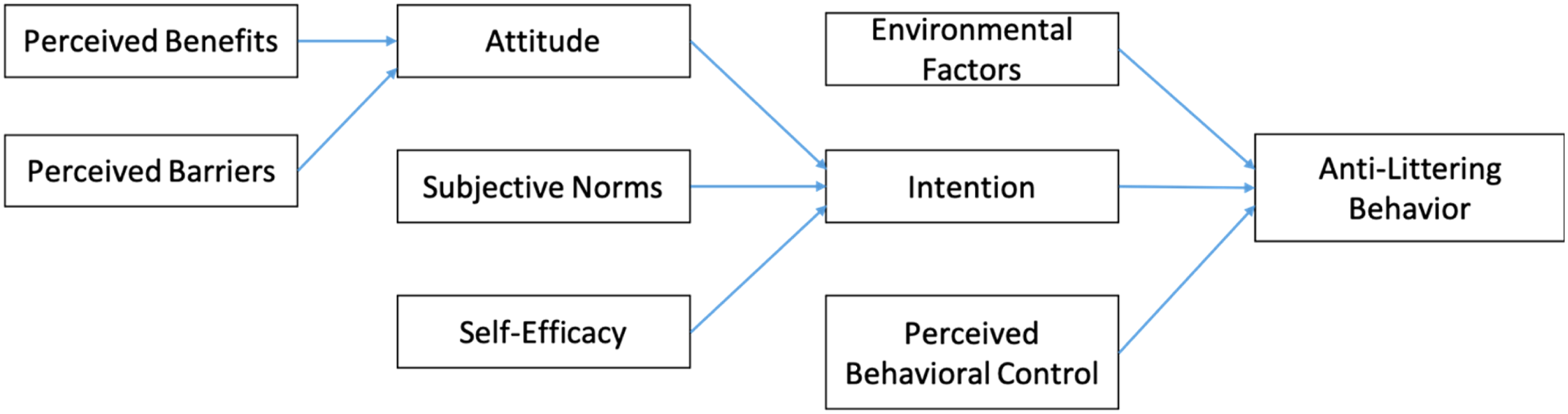
Attitude
Attitude can be referred as an individual’s inclination to respond either favorably or unfavorably to a particular behavior that is shaped by beliefs and evaluations of an individual of the outcomes of the behavior (Ajzen, 2002). It is a crucial component of the TPB that has been consistently recognised as a significant determinant of behavior. The theory assumes a direct link between an attitude and behavior, implying that this construct is essential to induce behavior change. Furthermore, the literature indicates that enterprises like “Keep America Beautiful” have been successful in altering littering behavior by prioritizing targeting attitude in their campaigns. It has also been confirmed in some previous studies that the interventions designed to promote anti-littering behavior should focus on altering attitudes to foster sustainable behavior change (Farage et al., 2024; Ojedokun, 2015).
Subjective Norms
Subjective norms refer to the perception of an individual of how their reference group may evaluate a specific behavior (Ajzen, 1991). People are often influenced by the opinion of their social group and also by the behavior of their social group. They may then feel pressured to engage in a behavior that conforms to the actions of their reference group or is approved by them. Ajzen (1991) further states that this concept is associated with an intangible reward namely normative rewards that the individuals feel they receive when they engage in the desired behavior. Various studies have confirmed a significant positive link between subjective norms and behavior. For instance, it was found in some studies on littering behavior that subjective norms have a significant effect on the intention toward reduction of litter and pro-environmental behavior (Onel & Mukherjee, 2017; Panwanitdumrong & Chen, 2021).
Perceived Barriers
It is the perception of an individual of the hurdles in the way of adopting the desired behavior. This theoretical construct is the most important determinant in inducing behavior change (Janz & Becker, 1984). For an individual to adopt a preventive behavior, they must perceive that the perceived benefits of the desired behavior outweigh the perceived barriers (Dadipoor et al., 2019). It has been highlighted that the construct of perceived barriers has come out as one of the most significant variables that has an indirect influence on behavior mediated by attitude and intention (Farage et al., 2024).
Perceived Benefits
The perceived benefit is the perception of the individual as to how valuable and useful the desired behavior is in reducing the threat of the hazards caused by the undesired behavior. This construct plays a pivotal role in the adoption of prevention behaviors. The perception of an individual of the advantages of engaging in desired behavior to lessen the risk of severity and susceptibility is considered a basic aspect of behavioral evaluation. The basic component of most behavior change models and intervention studies is the comparison of the barriers and benefits of the desired behavior (Goldenhar & ConneIl, 1992). The perceived benefits have a significant positive effect on waste management behavior as highlighted by a previous study (Ma et al., 2020). However, it was also highlighted in the study that this construct has less influence on the behavior as health behaviors and environmental behaviors. It has also been confirmed in a research on pro-environmental behaviors that individuals experience perceived barriers personally, but the perceived benefits are viewed as societal (Thogersen, 1994).
Environmental Factors
Ecological systems theory suggests that an individual’s behavior is influenced not only by internal constructs like attitude, norms and self-efficacy but is also influenced by external contextual factors. Research has also highlighted diverse contextual elements such as cleanliness and accessibility of dustbins, and existing levels of litter that can significantly impact littering behavior (Almosa et al., 2017, 2020). Furthermore, Sewak et al. (2021) also suggest that individual factors have been reported to contribute more towards social littering environmental factors such as lack of bins hinder individuals from engaging in waste management. This suggests that people are likely to adopt the behavior if the contextual factors and environment support them.
PBC and Self-Efficacy
PBC refers to the objective effect of external contextual factors on one’s capacity to adopt a certain behavior. This is the perception that further influences the belief of a person whether they possess the ability to engage in a specific behavior (Russell et al., 2017). It was revealed in a study that PBC significantly impacts the attitude towards technology-dependent shopping behavior (Wang et al., 2021). Numerous scholars have used the concepts of PBC and self-efficacy interchangeably. However, it has been highlighted in some studies conducted on anti-littering behavior that the operationalization of these two concepts is different (Manstead & van Eekelen, 1998). Self-efficacy is an individual’s confidence in their capability to engage in a behavior and also the perceived difficulty or ease of engaging in it. However, PBC is referred to the evaluation of control an individual has over the desired behavior (Armitage & Conner, 1999). Moreover, some previous studies have confirmed a direct link between PBC and behavior (Gholamrezai et al., 2021; Wang et al., 2021) and an indirect link between self-efficacy and behavior mediated by intention (Armitage & Conner, 1999).
Method
The current study has been conducted to identify the most impactful determinants of anti-littering behavior based on an empirically tested integrated model of the two most widely used behavior change theories. This model has been used to design an effective social marketing intervention mix, focusing on the most impactful determinants identified in previous empirical studies conducted by the authors.
Sampling Design
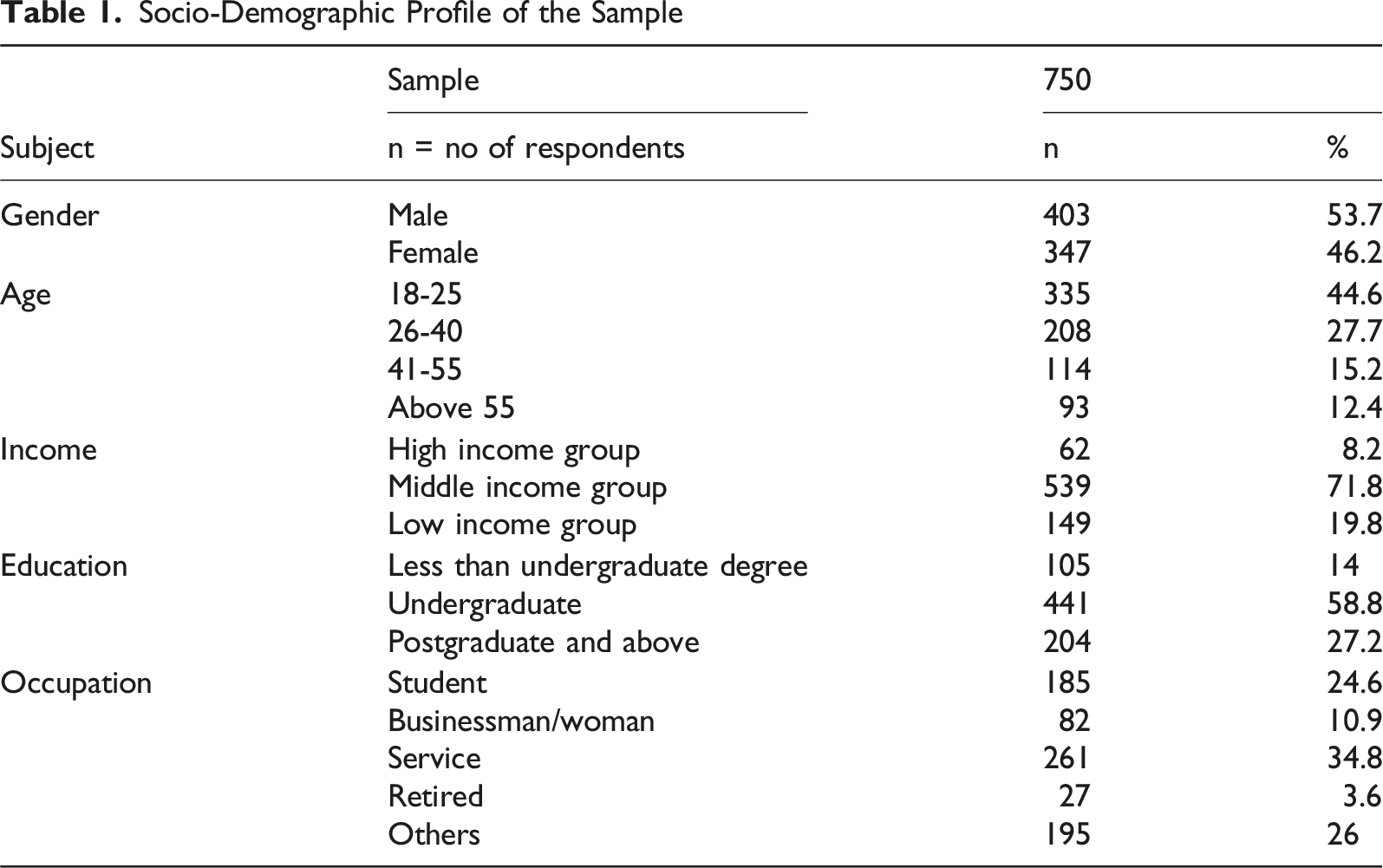
Socio-Demographic Profile of the Sample
Survey Design and Analysis
The social marketing interventions mix survey was conducted to design and examine the social marketing interventions mix. Eighteen items measuring the effectiveness of social marketing strategies were drafted. These items were designed after an extensive review of the literature and expert opinions. A pilot study was undertaken on a sample of 20 respondents to refine and fine-tune the items of the scale by taking their recommendations. The pilot participants included 12 males and 8 females. The questionnaire was administered in English and was conducted across both Delhi and Punjab to ensure the suitability of the questionnaire for diverse respondent groups in both regions. All the items were assessed using a five-point Likert scale. The measurement items have been sourced from the studies conducted by Gerbner and Gross (1976), Kahneman and Tversky (1982), Shahahan (2004), Reno et al. (1993), Semin and Fiedler (1988), Liu and Sibley (2004), Schultz et al. (2013), ENCAMS (2007) and Lindsay and Stratham (1997).
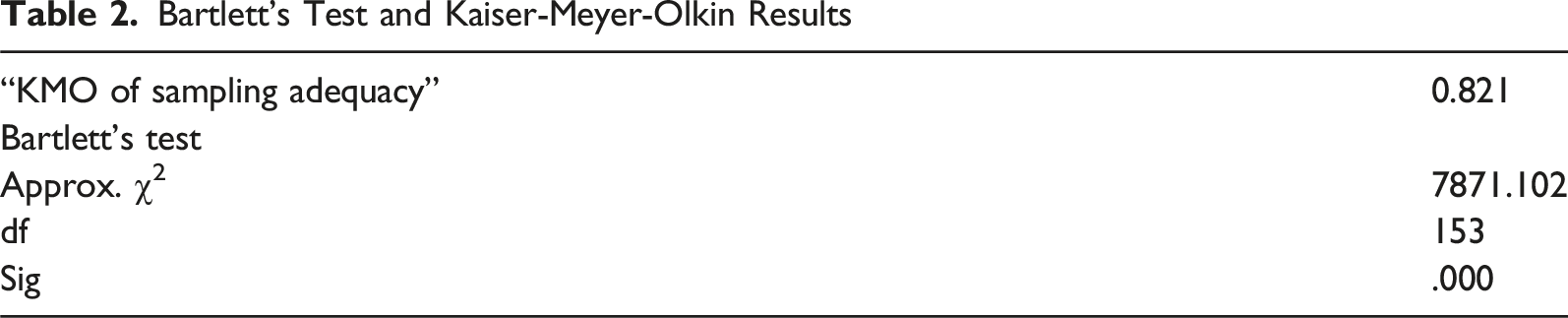
As suggested by Hair et al. (2010) and Field (2000), Exploratory Factor Analysis (EFA) was performed in SPSS 20.0 using Principal Component Analysis (PCA) with Varimax Rotation and Kaizer Normalization to determine principal components of the social marketing intervention mix. The Kaiser-Meyer-Olkin measure of sampling value closer to 1 indicates that correlation patterns are relatively tight and hence, produce dependable and distinct factors. A statistically significant Bartlett’s test of Sphericity signifies that the R-matrix was not an identity matrix and there were some relationships between variables that were needed to employ EFA (Field, 2000).
Results
Exploratory Factor Analysis
Exploratory Factor Analysis (EFA) was performed in SPSS 20.0 using “Principal Component Analysis (PCA) with Varimax Rotation and Kaizer Normalization” to determine principal components that could summarize various intervention types. The suitability of the data for PCA was examined before conducting exploratory factor analysis.
Bartlett’s Test and Kaiser-Meyer-Olkin Results
Total Variance Explained
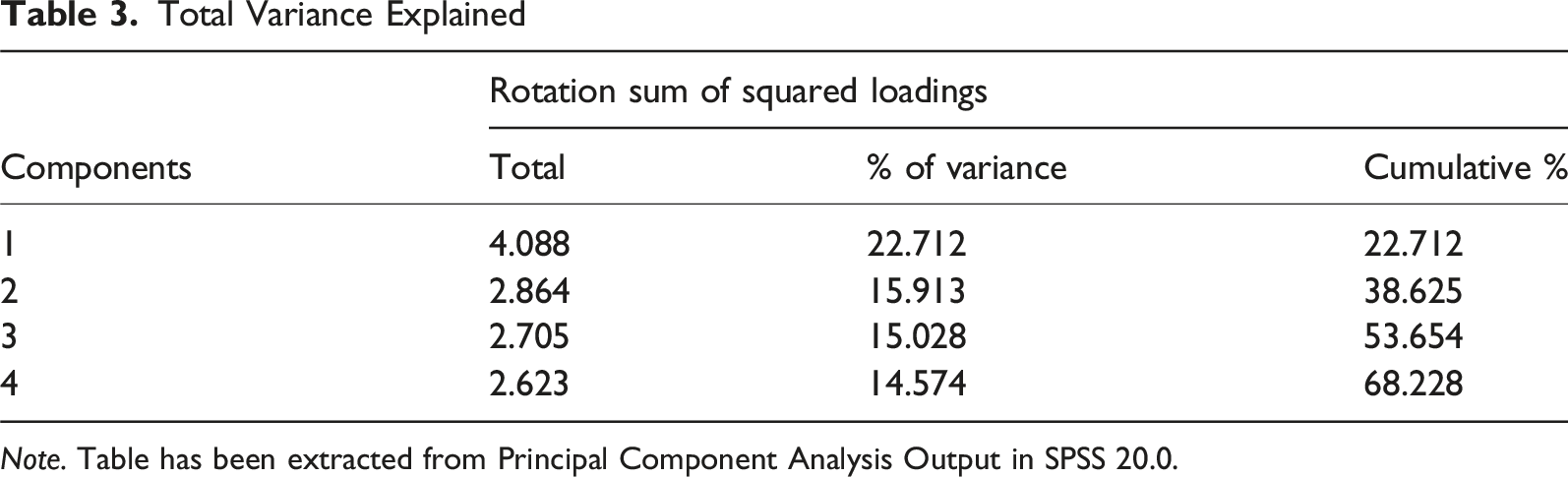
Note. Table has been extracted from Principal Component Analysis Output in SPSS 20.0.
Factor Loadings for Ant-Littering Intervention Strategies Using Principal Component Analysis
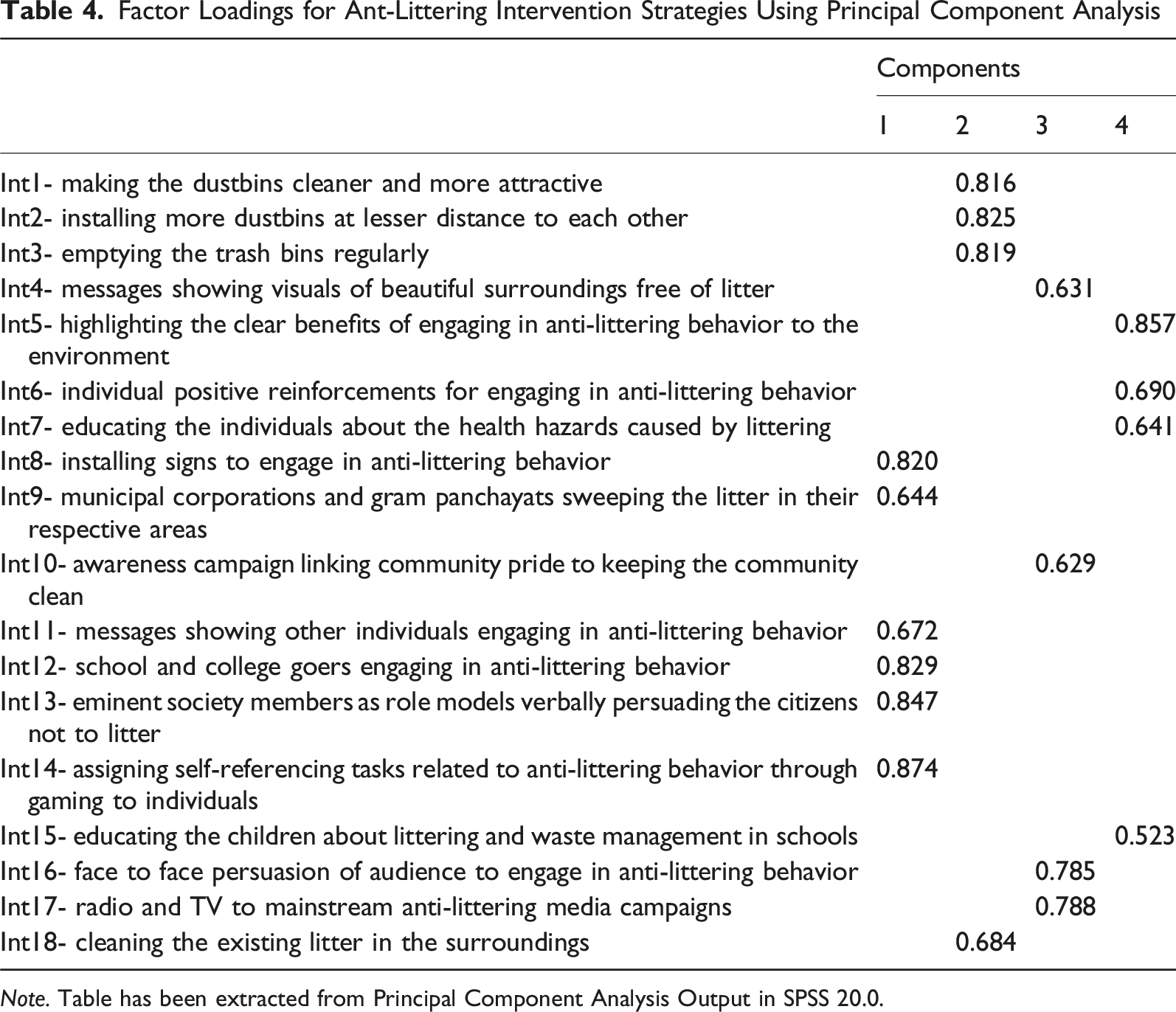
Note. Table has been extracted from Principal Component Analysis Output in SPSS 20.0.
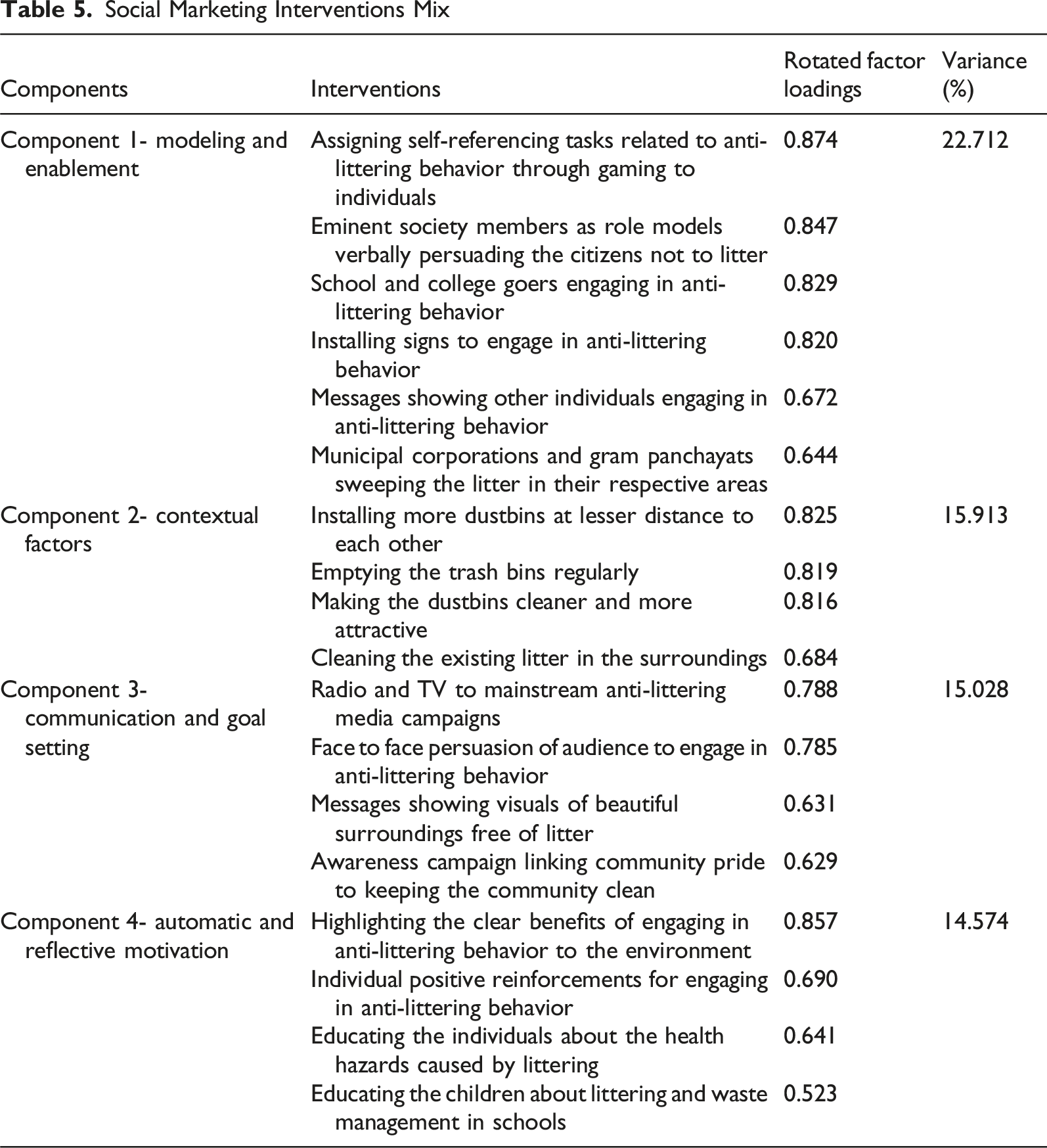
Social Marketing Interventions Mix
Discussion
The current study aimed to design an intervention mix for addressing littering behavior within the Indian context where waste management remains a major concern, especially in metropolitan cities like Delhi and expanding states like Punjab. Given that Delhi generates one of the highest amounts of daily solid waste (CPCB, 2018) while Punjab reflects urban, semi-urban and rural dynamics, the findings of this study offer insights to address bothmetropolitan challenges and state-level issues. The intervention mix proposed here offers a structured, scalable framework adaptable to both contexts.
The four-component social marketing intervention mix developed based on EFA in the current study reflects an integrated social marketing approach, with constructs tailored to foster behaviour concerning littering. The first component, Modeling and Enablement, emerged as the most important component of the intervention mix. It is in line with the findings of the empirical study conducted earlier by the authors where subjective norms were identified as the most impactful determinant. The high importance of modeling highlights that these interventions would foster the subjective norms favoring anti-littering behavior and thus, it would encourage individuals to engage in anti-littering behavior. Enablement strategies complement this by enhancing self-efficacy and instilling confidence in the people to raise their self-belief that they have the capability to keep the environment free of litter by changing their behavior. It confirms the earlier finding that self-efficacy is an impactful determinant that has a significant effect on the behavior (Chou et al., 2024). The combination of subjective norms and self-efficacy is vital in this context as a voluntary commitment to adopt a specific behavior may not develop even when attitudes are highly favorable, if self-efficacy is lacking. Hence, the interventions that showcase role models whom individuals can emulate or aspire to are likely to be more effective in promoting anti-littering behavior.
The second important component of the interventions mix, Contextual Factors, reinforces the need to address the external environment to support pro-environmental behaviors. Previous research has also highlighted the importance of establishing a favorable external physical environment before implementing behavior change interventions (Brennan et al., 2014). This finding is in line both the previous studies conducted by the authors and the global literature (DeKort et al., 2008; Ong & Sovacool, 2012; Schultz et al., 2013). The findings indicate that contextual factors such as well-maintained, accessible dustbins and surroundings that are free of litter are crucial determinants of littering behavior. Particularly in Delhi, where solid waste volumes overwhelm existing systems and in Punjab, where infrastructure varies across regions, these contextual factors are crucial for fostering individual behaviour change. This finding implies that a positive intention will not successfully translate into engaging in behavior without creating enabling environments that make desired behaviors easier to adopt.
Next, the third component of the interventions mix of Communication and Goal Setting includes strategies that provide individuals with a sense of achievement. It underscores the role of persuasive messaging and structured goal setting in reinforcing anti-littering behavior. Hence, it may increase commitment towards engaging in anti-littering behavior while working on enhancing a positive attitude towards anti-littering behavior. Goal setting will lead to a sense of achievement, which in turn will increase self-efficacy, eventually resulting in sustainable behavior change. Therefore, persuasion techniques using mainstream media, such as radio and television may be used to build an explicit positive attitude in individuals towards anti-littering behavior. Additionally, social marketing interventions focused on communication have the potential to target diverse individuals via powerful messages (Brown et al., 2010). Integrating goal setting with these interventions gives individuals a sense of achievement and purpose, which enhances self-efficacy and fosters sustainable behavior change. Future social marketing interventions can strengthen the impact of mass media campaigns with community-level engagement to ensure that messaging resonates with heterogeneous populations and distinct socio-cultural segments.
Finally, Automatic and Reflective Motivation has been identified as the fourth component of the interventions mix. Schultz et al. (2013) also suggested the important role of motivation-based interventions in targeting littering behavior in addition to the strategies focusing on contextual factors. Automatic motivation refers to needs, desires, inhibition and emotional reactions, whereas reflective motivation refers to evaluations and self-conscious intentions. Activating reflective and automatic motivational triggers by emphasizing the clear benefits of engaging in a behavior and incorporating positive reinforcements can help in fostering a positive attitude. These interventions can be targeted for individuals to inculcate habits for performing anti-littering behavior. Individuals may be targeted using these interventions to fostera positive attitude concerning anti-littering behavior. Therefore, interventions in this component may be used to increase perceived threats and perceived benefits, particularly among those individuals whose attitude is less favourable toward anti-littering behavior.
Implications
Theoretical Implications
Littering poses not only aesthetic problems but is also a major environmental issue. It has been recognised as a major social problem, however, this issue has not been addressed sufficiently in literature, specifically in the context of developing nations. The severity of this ignored social issue has necessitated looking beyond legislation and penalties to curb it. It is crucial to base social marketing interventions on robust holistic theoretical frameworks that may offer deep insights into littering behavior to tackle this issue effectively. Unfortunately, the application of such holistic theories in designing these interventions is very limited. The current study contributes to theory building by designing a social marketing interventions mix based on an empirically tested integrated theoretical framework to guide the development of effective social marketing behavior change campaigns. It responds to the call of various scholars (West et al., 2019; Willmott & Rundle-Thiele, 2022) who emphasise designing interventions based on theory that may help in designing effective campaigns that may provide empirical tests for their efficacy. The intervention strategies are not based on an additive framework but are based on a holistic causal model targeting the most impactful determinants of HBM and TPB. This study further sets the stage for broader behavior change initiatives.
The findings highlight Modeling and Enablement as the most important component of the mix. This highlights the central role of subjective norms and self-efficacy in driving behavior change, confirming the application of social cognitive theories in pro-environmental behaviors. By emphasising the importance of role models and enhancing the confidence of an individual in their capability to adopt anti-littering behavior, the study extends the theoretical understanding of behavioral mechanisms through which these two constructs operate. Furthermore, the current study supports the ecological models of behavior change by showing how contextual factors may interact with individual factors while designing social marketing behavior change interventions for anti-littering behavior. It responds to the call by Parkinson et al.(2016) to use theoretical models that focus on the interaction between contextual setting and individual factors while designing effective social marketing strategies. Finally, the present research also extends the understanding of goal setting theory in social marketing by revealing that setting explicit goals can increase the self-efficacy and commitment that may lead to sustainable behavior change.
Implications for Social Marketers/Policymakers
Furthermore, the four-component social marketing interventions mix suggested in the present study may be utilized by policymakers and social marketing practitioners for developing anti-littering interventions. In a country grappling with diverse regional challenges, including gaps in waste management infrastructure and low awareness levels, this mix may provide a flexible toolkit to design effective interventions targeted at diverse groups. Specifically, the interventions focused on Modeling and Enablement may help in fostering the subjective norms favoring anti-littering behavior and in enhancing self-efficacy to adopt anti-littering behavior. The strategies focusing on this component may also enhance the perceived behavioral control in the individuals by highlighting the control they have over performing desired behavior. This component of the mix should be central to the social marketing campaign with a strong focus on providing visible role models who have adopted anti-littering behavior. Social marketers may also collaborate with local government and municipal agencies to provide environment that supports and reinforces anti-littering behavior. The Communication and Goal setting component can be leveraged to build a positive attitude and nurture a sense of shared responsibility. The interventions may include mainstream media messages linking anti-littering behavior to community pride and may plan some local initiatives that set collective targets. Meanwhile, Automatic and Reflective Motivation-based interventions may be used to increase perceived threats and perceived benefits, particularly among those individuals whose attitude is less favorable toward anti-littering behavior.
Beyond India, the current study’s findings hold relevance for addressing littering and waste management challenges in low and middle-income countries. The study can help to improve the mass scalability and comprehensiveness of the interventions designed to reduce littering by providing policymakers with an empirically confirmed social marketing interventions mix. For example, the Modeling and Enablement component can be leveraged to design strategies targeted at regions where community leadership and peer group influence play a strong role in shaping behavior. This framework can also be extended to developed nations with well-established waste management systems. Automatic and Reflective Motivation strategies can be leveraged to refine existing interventions and address the littering problem through behavioral nudges and reminders. In other words, the intervention mix offers scalability and enables cross-cultural adaptability while retaining core principles of effective social marketing to target pro-environmental behaviors.
Limitations
First, the present study was conducted in only two states. Consequently, these findings may not apply to other regions. Future research can be conducted in other regions of the country to gain broader understanding and validate the generalizability of the intervention mix. The current study did not analyze the data by site and demographic variables. Future studies may explore these subgroup differences to provide deeper insights. Although the content of the questions in the questionnaire was carefully crafted to rule out social desirability bias, the same caused by the presence of the researcher cannot be completely ruled out for which no such measure was taken to control it. This can be overcome by carrying out an experimental study that may further validate the findings of the present research (Bateson et al., 2013).
Finally, while the current study focuses only on designing the intervention mix, it does not test these strategies. A field experiment may be conducted in future studies using a post-test only design. Four treatments specific to the aforementioned components of the interventions mix can be applied. In addition to this, future studies may also explore new variables such as behavioural nudges, technology-driven interventions to examine the role of psychological triggers and digital engagement strategies in promoting littering as well as other waste management practices. Future studies can also explore conducting a longitudinal study to assess the sustained impact of social marketing interventions over extended periods to better understand long-term behavior change. Overall, the present research serves as a starting point for addressing a widespread social problem and the findings of the research can expand to various other social issues in the domain of pro-environmental behaviors in the country.
Footnotes
Acknowledgement
The authors highly acknowledge the Department of Humanities and Management, Dr. B R Ambedkar National Institute of Technology, Jalandhar, India, for their support and guidance.

Ethical Considerations
Ethical approval for this study was obtained from the Institutional Review Board at Fortune Institute of International Business (Approval Number: FIIB/AY 2024-25/144).
Consent to Participate
Respondents gave written consent before filling the questionnaire.
Funding
The authors received no financial support for the research, authorship, and/or publication of this article.
Declaration of Conflicting Interests
The authors declared the following potential conflicts of interest with respect to the research, authorship, and/or publication of this article: On behalf of the authors, Ranjit Kaur, the corresponding author, states that they have no conflict of interest to declare.