







Abstract
Background
The rising demand for energy in India due to tropical weather conditions, rising income levels and rapid urbanization has caused an increase in buying and use of air conditioners. Air conditioners are energy guzzlers. Strangely, although there is a high consideration for use of energy efficient air conditioners and high concern for the environment, yet the adoption of these appliances is considerably less, leading to an energy efficiency gap.
Focus of the Article
The present study aims to fulfill the energy efficiency gap by comparing the influence of psychological factors (expanded Theory of planned behavior (TPB) model) with technical factors (Diffusion of innovation (DOI) model) on the intention to purchase energy efficient air conditioners. The study also compares serial mediating effects of expanded TPB constructs and DOI constructs to transform environmental concern into purchase behavior towards energy efficient air conditioners.
Research Questions
The study attempts to answer the research questions, how do psychological factors influence purchase intention towards energy efficient air conditioners, how do technical factors influence purchase intention towards energy efficient air conditioners, and what extent, psychological and technical factors, carry the influence of environmental concern on purchase behavior towards energy efficient air conditioners? The hypotheses stipulate that the psychological factors and the technical factors have a significant influence on intention. The study also compares the sequential mediation of psychological and technical factors that carry the effect of environmental concern on purchase behavior towards energy efficient air conditioners.
Methods
A quantitative descriptive study was carried out by distributing a self-administered questionnaire within three regions: Delhi & NCR, Punjab and Tri-city. The data collected from 424 respondents have been analysed using AMOS 23.0. Path analysis has been used to test the direct relationship of psychological and technical factors on purchase intention towards energy efficient air conditioners. Further, serial mediating effects were analysed using bias-corrected bootstrapping analysis in AMOS 23.0.
Results
Both psychological factors and technical factors (except trialability) significantly influence purchase intention towards energy efficient air conditioners. However, the psychological factors have been found relatively more influential than technical factors. Further, psychological factors sequentially mediate the effect of environmental concern on purchase behavior, whereas technical factors do not mediate.
Importance to Social Marketing Field
Social marketing practitioners can promote the adoption of energy efficient air conditioners by designing interventions based on extended TPB model to transform environmental concern into purchase behavior. The study will contribute towards bridging the energy efficiency gap, considering the infirm impact of current commercial marketing campaigns focusing solely on technical aspects.
Recommendations for Research/Practice
The present study manifests that integrated marketing communication based on both the types of TPB and DOI constructs will put synergetic impact on purchase intention.
Limitations
The context of the study is limited in terms of one product, regions and households covered. Future studies can be carried out with larger samples, multiple products, and wider regions to generalise the study’s findings in situations involving pro-environmental purchase behavior.
Keywords
Introduction
In recent years, environmental issues like global warming, ozone layer loss, natural resource scarcity, and air pollution have increased due to increased human activity (Mateus et al., 2023). Energy is vital for economic development and human welfare. The residential sector is one of the fastest-growing sectors in India due to its large population base, rising income level and rapid urbanization. Increased buying of appliances including air conditioners for the sake of comfort and convenience, has led to an increase in energy consumption in the residential sector. It has been estimated that demand for energy consumption in the residential sector will reach 646-758 Terawatt hour (TwH) in 2030 (Bureau of Energy Efficiency, 2021). The International Energy Agency (IEA, 2019) has declared energy efficiency a major strategic goal so as to ensure less emissions of greenhouse gases, less pollution, and improved energy security (Su, 2022). According to the report of the Bureau of Energy Efficiency (2021), the Standards and Labelling (S&L) programme resulted in estimated savings of 70.57 billion units (BU) of electricity, a reduction of 57.16 million tonnes (MN) of carbon dioxide emissions, and annual monetary savings of Indian Rupee (INR) 423.40 billion during Financial year (FY) 2021–22 as a result of interventions carried out during 2018-22. The adoption of energy efficient appliances not only leads to the cost savings, but also benefits the environment. Hence, there is a larger social good in the adoption of energy efficient appliances.
A survey conducted across four two-tier Indian cities reveals that among the potential household consumers, more than seventy percent of the households wanted to buy high-star (four-five stars) labelled air conditioners (energy efficient). However only fourteen percent of them actually purchased four-five stars labelled air conditioner (Bhasin et al., 2020). As per Greendex (2014), Indian consumers are relatively more concerned towards the environment as compared to the consumers of other countries, such as Brazil, America, and Canada. However, such concerns and awareness do not turn entirely into behavior. This discrepancy between desire and purchase decision leads to an energy efficient gap (Bhasin et al., 2020).
Considering the fact that despite high environmental concern, the market penetration of these appliances is very low. Previous research also indicates a gap between environmental concern and eco-friendly or green purchasing decisions (Hossain et al., 2022). Past studies suggest that environmental concern do not directly influence particular behavior (Hines et al., 1987). Instead, it would indirectly impact intention through specific beliefs and attitudes (Bamberg, 2003). Researchers have found that a consumer’s consumption pattern is multi-dimensional and depends upon various factors, such as psychological, technical and situational factors (Chander et al., 2023).
Social marketing helps in deciding what behaviors to maintain or influence and how to go about it. The present study simultaneously considers and compares socio-psychological determinants and social diffusion aspects to establish their relative effectiveness with respect to behavior change towards energy efficient air conditioners.
The theory of planned behavior (TPB) (Ajzen, 1991) is the most widely used theory that delves into psychological and social aspects influencing consumer’s intentions and behavior (Acikgoz et al., 2023). TPB has been extensively used to study the adoption of behaviors, such as, anti- littering behavior (Singh & Kaur, 2021), binge drinking quitting intention (Machaka-mare et al., 2023), preventive sexual behaviors (Ayikwa et al., 2020) and energy efficient appliances (Tan et al., 2017). Therefore, the present study identified the following research question:
RQ1- How do psychological factors (attitude, subjective norms, perceived behavioral control and personal norms) influence purchase intention towards energy efficient air conditioners?
Diffusion of innovation theory (DOI) is a well-known theory that explains innovation characteristics and how these characteristics influence user’s adoption of the new technology (Chander et al., 2023). The technical factors or perceived innovation characteristics are particularly important in understanding how consumers perceive the innovation and its characteristics (Jansson, 2011). DOI emphasizes technical aspects, i.e., perceived features of technology such as, relative advantage, compatibility, complexity, observability and trialability (Acikgoz et al., 2023). Roger’s innovation diffusion framework has also been used to predict the intention in adopting solar energy (Pathania et al., 2017) and Fintech (Koloseni & Mandari, 2024). Some researchers have integrated TPB and DOI to investigate the adoption of smart watches (Acikgoz et al., 2023) and green appliances (Dilotsotlhe, 2021). Therefore, the present study identified the following research question:
RQ2 How do technical factors (relative advantage, compatibility, complexity, observability and trialability) influence purchase intention towards energy efficient air conditioners?
Environmental psychology examines the dynamic interplay between the natural and built environment, and human behavior (Moser & Uzzell, 2003). It often employs theories like the Theory of Planned Behavior (TPB), Norm Activation Model (NAM), and Value-Belief-Norm Theory (VBN) to understand green consumer behavior, with a focus on values, attitudes, norms, and beliefs (Jansson, 2011). However, its application to innovation adoption remains limited. Jansson (2011) combined DOI and VBN theories to identify factors that drive or hinder eco-innovation adoption. There are negligible studies relating to pro-environmental behavior that have studied and examined DOI and TPB models in a comparative manner, especially in the context of energy efficient appliances. In other words, the gaps in the literature have been found in terms of relative degree of influence of socio-psychological determinants and social diffusion aspects of adopting innovative products. Therefore, there is a need to investigate what factors to what extent help in translating environmental concern into purchase behavior towards energy efficient air conditioners. Therefore, the present study attempts to answer the following research question:
RQ3 What extent, psychological and technical factors, carry the influence of environmental concern on purchase behavior towards energy efficient air conditioners?
The present study has been carried out with an aim to influence purchase behavior in terms of encouraging (persuading) the voluntary adoption of energy efficient air conditioners. The promotional campaigns of these appliances by and large are based on technical aspects (Ahmad et al., 2023; Kapoor & Dwivedi, 2020). In view of larger social good in the adoption of energy efficient air conditioners, it is imperative to go beyond the commercial marketing. Low adoption of energy efficient appliances reveals inadequate impact of current interventions based on DOI considerations. Considering significant prevalence of environmental concern, the social marketing may play a vital role in the persuasion of consumers to voluntary adopt energy efficient air conditioners, provided the research sets the premises for designing appropriate interventions. Therefore, this study compares DOI model with expanded TPB model so as to test the comparative robustness of these models for fulfilling value-action gap. The findings of the study will act as a premise for developing suitable marketing interventions including scope for social marketing practitioners. It was evident from the research that marketing interventions based on theoretical frameworks are more effective in changing behavior than those not based on theoretical frameworks (Kaur & Singh, 2023). The social marketing interventions may catalyze the voluntary adoption of energy efficient air conditioners. The present study is an attempt to examine the adoption of energy efficient air conditioners through a multidimensional lens.
Theoretical Background
Social marketing is “a process that applies marketing principles and techniques to create, communicate, and deliver value in order to influence target audience behaviors that benefit society as well as the target audience” (Kotler & Lee, 2020). In the context of social marketing, the product refers to social proposition that connects the desired behavior with the benefits accrued to the target adopters and others. Product mix refers to the associated benefits of using behavior (Sheau-Ting et al., 2013). In the case of energy efficient appliances, the product mix refers to the use of energy efficient appliances that provide dual benefits; one less spending on electricity bills, and second environmental benefits due to less carbon emissions. Social marketing strives for sustainable behavioral change and motivates people to perform socially desirable behavior (Andreasen, 1994). The purchase of energy efficient appliances can be described as pro-environmental behavior that has both direct and indirect effects on the environment. The present study considers both theory of planned behavior (TPB) (Ajzen, 1991)and the diffusion of innovation theory (DOI) (Rogers, 2003) because these two main theories have been extensively used to predict consumer’s behavior and explain adoption of a new product.
Theory of Planned Behavior (TPB)
The theory of planned behavior is one of the most influential works for predicting human social behavior (Acikgoz et al., 2023). However, there are certain limitations. TPB does not address influence of environmental concern that may play a critical role in influencing TPB factors towards desired behavior. Although the usefulness of TPB in explaining variance has been validated through much empirical research, yet a significant proportion of variance remains unexplained. Therefore, there is a need to include additional factors to increase its predictive power (Kaiser, 2006). TPB considers that attitude remains stable, but in reality attitude may also change with time (MacVaugh & Schiavone, 2010). Personal norms provide a sense of moral duty or responsibility to act in a particular environmentally friendly manner (Onel, 2017). The present study incorporates an additional construct ‘personal norms’, along with attitude, subjective norms, perceived behavioral control, and purchase intention.
Attitude
Attitude refers to the consumer’s beliefs about the advantages and disadvantages of a given acceptance behavior (Fiandari et al., 2024). An attitude that reflects positive value will find its acceptance by the group due to positive perception regarding specific behavior (Fiandari et al., 2024). Attitude refers to “a learned predisposition to behave in a consistently favorable or unfavorable way toward a given object” (Schiffman & Wisenblit, 2015). Therefore, the study proposed the following hypothesis:
Subjective Norms
Subjective norms refer to perceived social pressure to engage in or refrain from behavior (Ajzen, 1991). Subjective norms consist of two components: injunctive norms and descriptive norms. Injunctive norms refer to whether social circle approves or disapproves the behavior and descriptive norms refer to ‘providing evidence as to what is likely to be an effective and adaptive action’ (Niemiec et al., 2020). Descriptive norms serve as ‘social proof’, when behavior is adopted by majority and therefore, it leads to personally advantageous actions (Jacobson et al., 2021). Therefore, the study proposed the following hypothesis:
Perceived Behavioral Control (PBC)
Perceived behavioral control refers to an individual’s perception regarding how easy or difficult is performing a specific behavior, which is determined by individual’s means and opportunities to perform the behavior (Ajzen, 1991). PBC is evaluated by factors that facilitate or impede the performance of the behavior. These factors include both internal (information, personal deficiencies, skills, abilities, emotions) and external (opportunities, dependence on others, physical constraints) control factors (Conner, 2020). Therefore, the study proposed the following hypothesis:
Personal Norms
Personal norms refer to a person’s intrinsic motivation and sense of duty that motivates them to take action. They are characterised as the degree to which an individual feels morally obligated to carry out a particular action (Onel, 2017; Schwartz, 1977). Individual’s reasoning is influenced by their beliefs and values, as explained by Behavior Reasoning Theory (BRT) (Asif et al., 2023). According to the value-belief-norm theory, consumers are usually motivated by their values and beliefs that serve as reasons for their actions (Schwartz, 1977). People’s expected behavior can be directly linked to how they interpret their value orientation. Research has also shown that consumers will adopt things faster, if they believe that these align with their beliefs or are compatible with them (Asif et al., 2023). Therefore, the study proposed the following hypothesis:
Diffusion of Innovation Theory
The innovation characteristics that affect the adoption of innovation products/services include (a) relative advantage, (b) compatibility, (c) complexity, (d) observability and (e) trialability (Rogers, 2010). There are certain limitations of Innovation characteristics in diverse cultural contexts. The relevance of innovation characteristics may vary across different situations that might make their general applicability challenging. For instance, trialability may be crucial for software or electric vehicles, but less relevant for appliances (Dilotsotlhe, 2021). DOI theory emphasizes maximizing utility and does not consider socio-psychological orientation and social adoption (MacVaugh & Schiavone, 2010).
Relative Advantage
Relative advantage is the extent to which a specific user’s believes that an innovation is superior to the idea or practice it replaces (Rogers, 2003). It is frequently determined in terms of social prestige, economic profitability, time, convenience, satisfaction, effort savings and decrease of discomfort (Dilotsotlhe, 2021). Rogers (2003) asserts that greater the perceived relative advantage and perceived usefulness, higher will be the rate of its adoption (Bakkabulindi, 2014). Energy efficient appliances are usually cost-effective in the long run, save electricity costs, and provide comfort to the potential adopters. Therefore, the study proposed the following hypothesis:
Compatibility
Compatibility has been defined as “the degree to which an innovation is perceived as consistent with the existing values, past experiences, and needs of potential adopters” (Rogers, 2003). An innovation may be compatible with (a) socio-cultural beliefs, (b) previously introduced ideas and (c) the consumer’s needs for innovations (Maria, 2023). Innovations compatible with norms, values and everyday life of individuals will be adopted more rapidly than incompatible ones (Dilotsotlhe, 2021). Therefore, the study proposed the following hypothesis:
Complexity
Complexity is “the degree to which an innovation is perceived relatively difficult to understand and use” (Rogers, 2003). According to Rogers (2003), if an innovation technology is more complex than the existing ones, it won’t be adopted by individuals or decision-making units. When consumers have knowledge about the innovation, or possess related skills required to use it, or find ease of use, they are more attracted to innovation (Dilotsotlhe, 2021). Therefore, the study proposed the following hypothesis:
Observability
Observability refers to ‘the extent to which the outcomes of an innovation are noticeable to others’ (Rogers, 2003). Observability may alternatively be defined as an innovation’s perceived communicability or ‘describability’ (Bakkabulindi, 2014). Observability is usually described in terms of the degree to which an innovation is visible in society and its expected benefits can be observed and shared. This indicates that there is a very high chance of adopting a product, when they observe the advantages enjoyed by important others, close friends, family, and other individuals they know and trust. Observability plays a crucial role in the adoption because it raises awareness about newness in the product (Koloseni & Mandari, 2024), and consumers can see the consequences of its use by others. The consumers make judgements through viewing and word of mouth of people having experience of using it (Ahmad et al., 2023). Therefore, the study proposed the following hypothesis:
Trialability
Trialability refers to the extent of evaluating and testing a new innovation before its actual adoption (Maria, 2023). The potential adopters are more likely to adopt an innovation, when prospective users can try an idea or innovation in small doses and adopt an innovation gradually (Rogers, 2010). Spyridaki et al. (2020)found that first trials help in facilitating the adoption of energy efficient technologies by Greek households. Therefore, the study proposed the following hypothesis:
Purchase Intention
Purchase intention refers to the willingness of an individual to perform a given behavior. It is the most immediate antecedent of the behavior (Ajzen, 1991). When a consumer has stronger intent to purchase energy efficient appliances, there will be higher engagement in the purchase behavior (Hossain et al., 2022).
Translating Environmental Concern Into Purchase Behavior Through Psychological Constructs
Environmental concern is “the degree to which people are aware of problems regarding the environment and support efforts to solve them and or indicate the willingness to contribute personally to their solution” (Dunlap & Jones., 2002). When a person is more concerned towards the environment, the stronger will be their intention to perform specific environment-friendly behavior (Hossain et al., 2022). However, many studies did not find the direct influence of environmental concern on intention and purchase behavior (Hines et al., 1987; Hossain et al., 2022; Kaur et al., 2023). Ajzen and Fishbein (1980) revealed that a general attitude, such as environmental concern, affects a specific behavior indirectly rather than directly. They further proposed that an individual’s attitude, subjective norm, and perceived behavioral control are determined by their general attitude through situation-specific behavioral, normative, and control beliefs. An individual will engage in a pro environmental behavior, when they feel moral obligation to behave responsibly (Onel, 2017). Therefore, the study proposed the following hypothesis:
Psychological factors and purchase intention sequentially mediate the effect of environmental concern on purchase behavior towards energy efficient air conditioners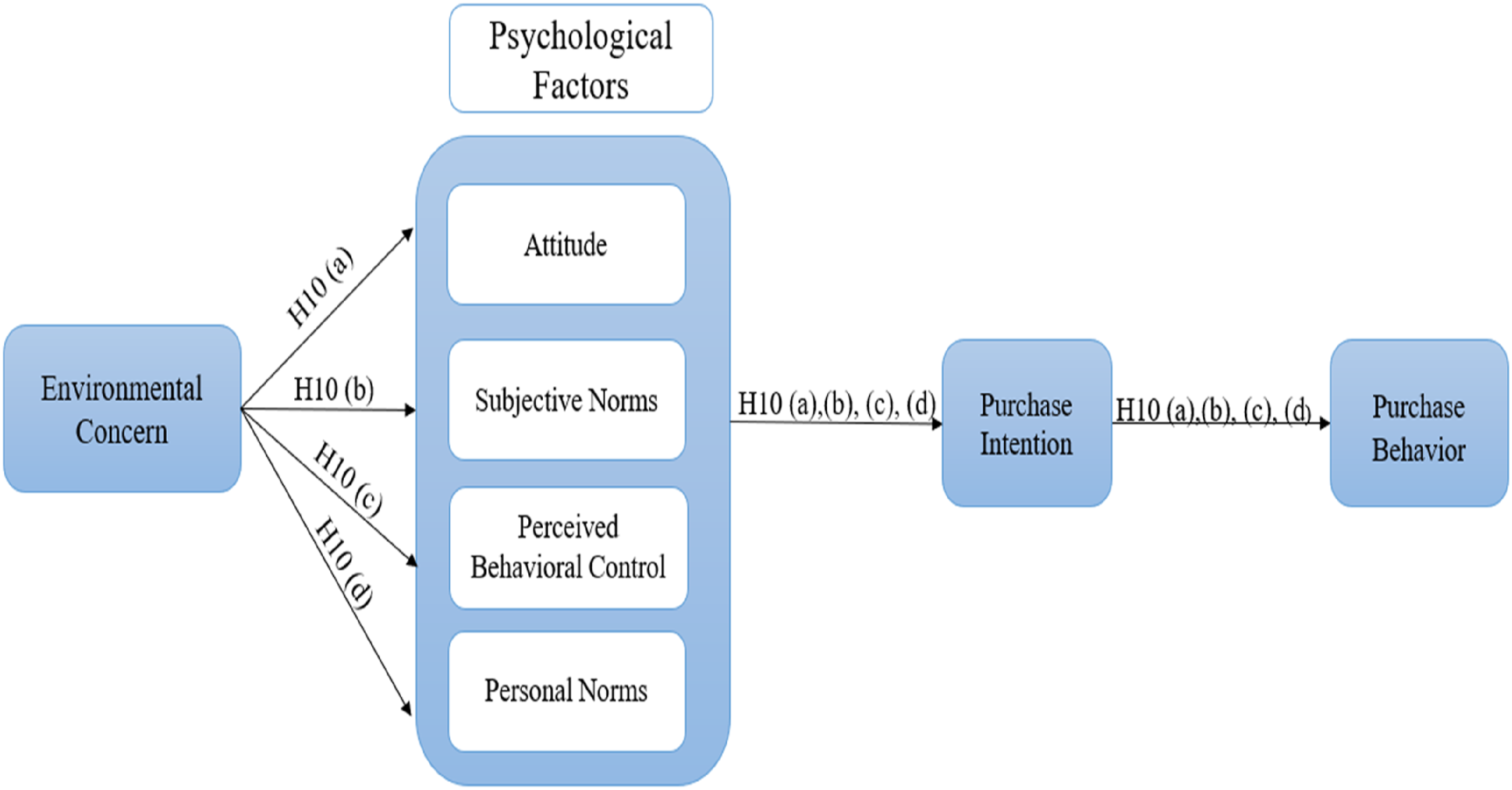
Translating Environmental Concern Into Purchase Behavior Through Technical Constructs
Ozaki (2011) revealed the overlapping of DOI and TPB theories for consumer decision-making in the context of adopting green electricity. The diffusion of innovation theory and cognitive behavioral theory have factors with different emphases, yet overlapping in some aspects in their influence on adoption decisions (Ozaki, 2011). According to Ozaki (2011), perceived relative advantage of diffusion of innovation theory overlaps with attitude (behavioral beliefs) of theory of planned behavior. Consumers see the benefit (relative advantage) and positive consequences (attitude) of adopting energy efficient air conditioners. Consumers perceive social pressure (subjective norms) to purchase energy efficient air conditioners and observe others adopt them. This indicates the overlapping between observability and subjective norms.
Overlapping Between Diffusion of Innovation Theory and Expanded Theory of Planned Behavior
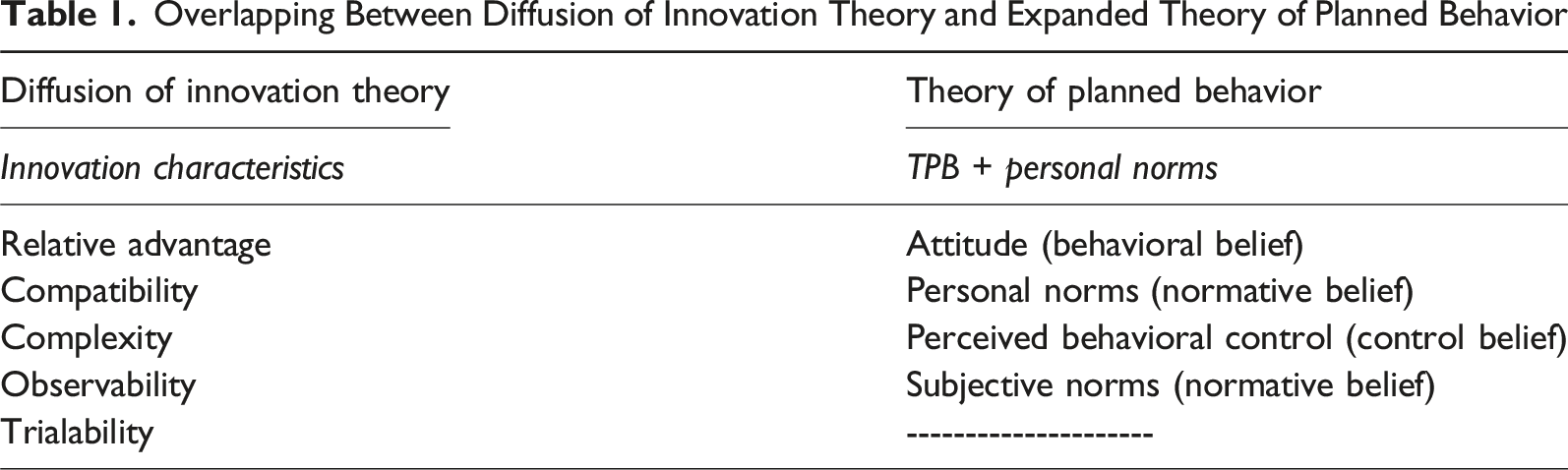
In view of overlapping between TPB and DOI constructs, the study proposed the following hypothesis:
H11- Technical constructs ((a) Relative advantage (b) observability (c) complexity (d) compatibility) and purchase intention sequentially mediate the effect of environmental concern on purchase behavior towards energy efficient air conditioners (Figure 2). Technical constructs and purchase intention sequentially mediate the effect of environmental concern on purchase behavior towards energy efficient air conditioners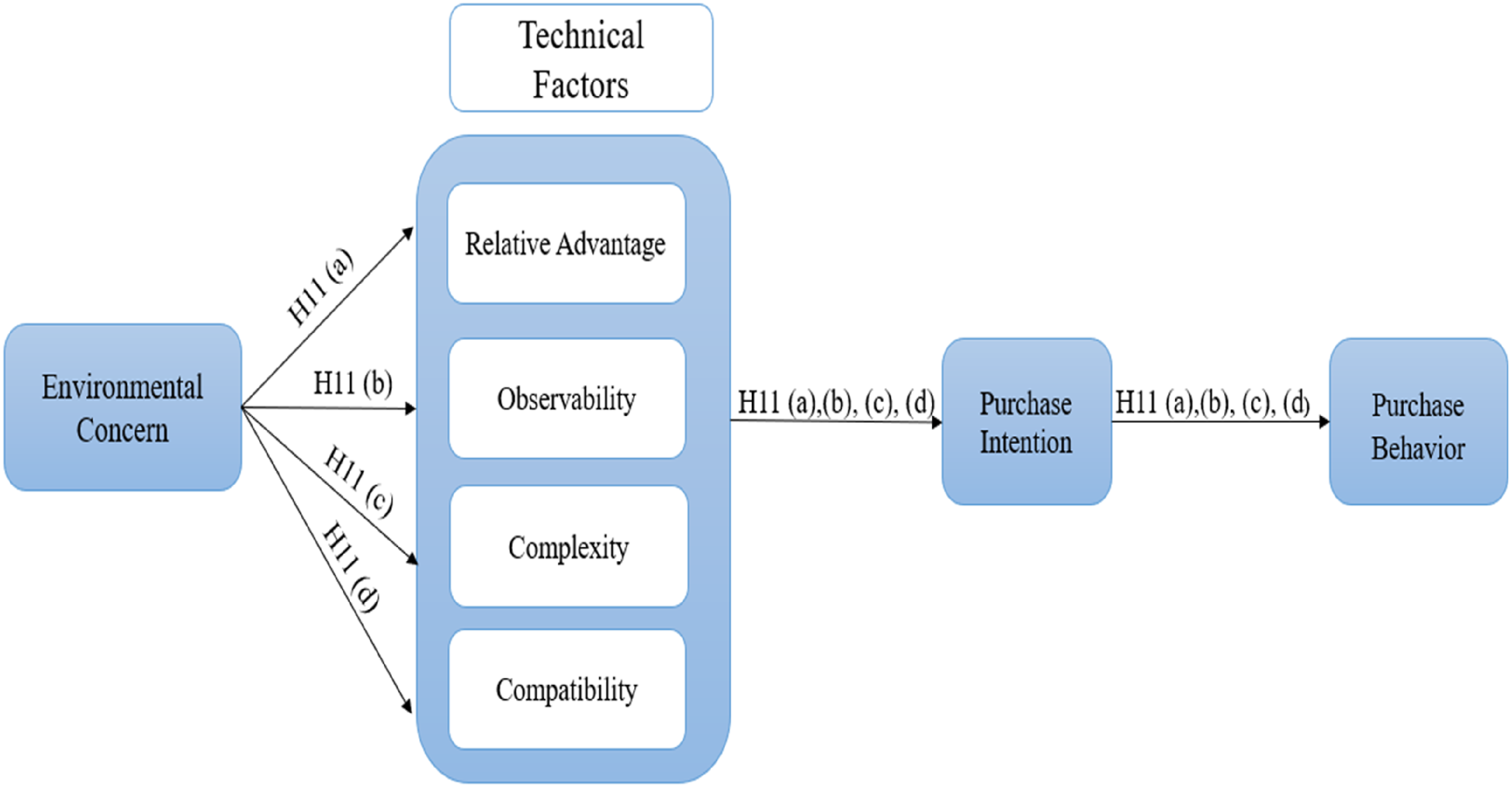
Research Methodology
Sampling and Sample Size Determination
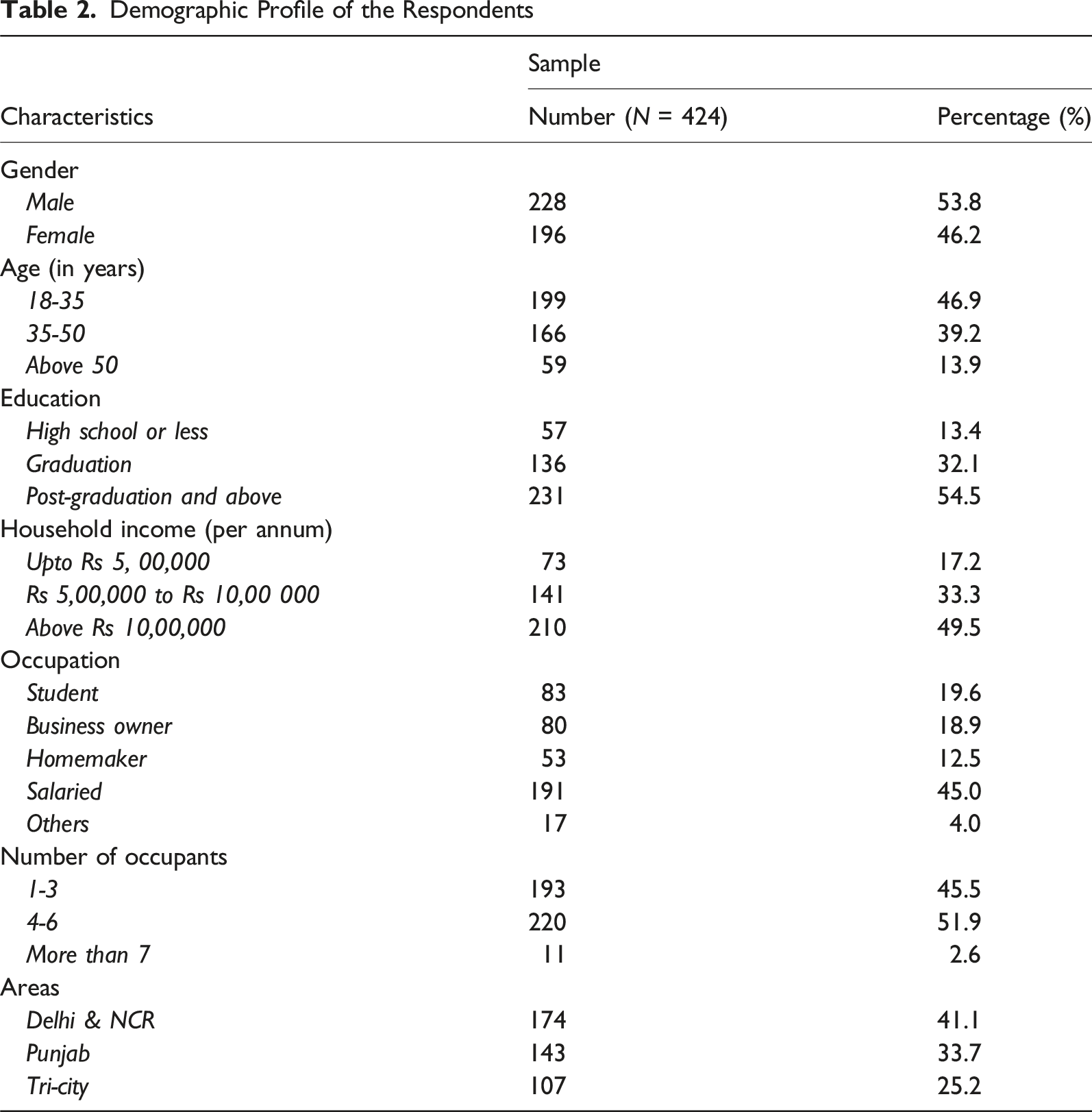
The target respondents of the study were the household consumers who had either purchased energy efficient air conditioners in past six months or were likely to buy very shortly in the three specified regions (Delhi & NCR, Punjab and Tri-city). The present study calculated sample size using ‘Raosoft sample size calculator’. The minimum sample size of 385 was estimated with a five percent margin error and ninety-five percent confidence interval.
Data Collection Procedure
Demographic Profile of the Respondents
Pilot Study
The questionnaire was pretested on 50 respondents. To improve the questionnaire’s clarity, certain modifications were made to the measuring tool in response to feedback from the participants and experts in the pilot study. It has been found that the measurement items supporting the proposed scales are valid and reliable.
Non-response Bias
In the present study, those who completed the questionnaire and returned it within a month were referred to as early respondents, while those who did so after that time were referred to as late respondents. Of the 424 respondents, 200 (47.16%) responded early, whereas 224 (52.83%) responded late. The factors were tested for Levene’s test for homogeneity of variances. No significant difference could be observed between early and late respondents (R. Kaur & Singh, 2023), and hence non-response bias was ruled out.
Common Method Variance
Harman’s one-factor test was used to analyse common method variance. The data revealed that no single factor explained more than 25.22 % of the variance, which is well within the limit of 50% established by previous research (Podsakoff & Organ, 1986).
Questionnaire Development
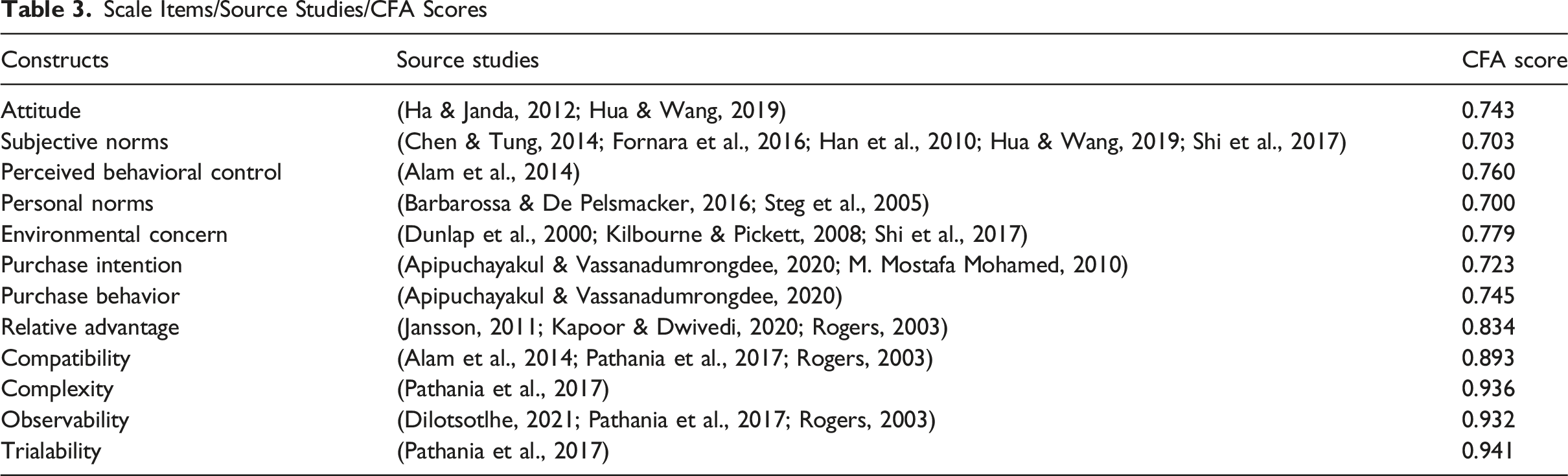
Scale Items/Source Studies/CFA Scores
Results
Confirmatory Factor Analysis
Confirmatory factor analysis (CFA) has been used for evaluating the data and analysing the reliability and validity of the constructs. The combined CFA score greater than or equal to 0.4 signify the presence of the respective constructs (Table 3).
Reliability and Validity Analysis
Reliability and Validity Analysis (Expanded Theory of Planned Behavior)
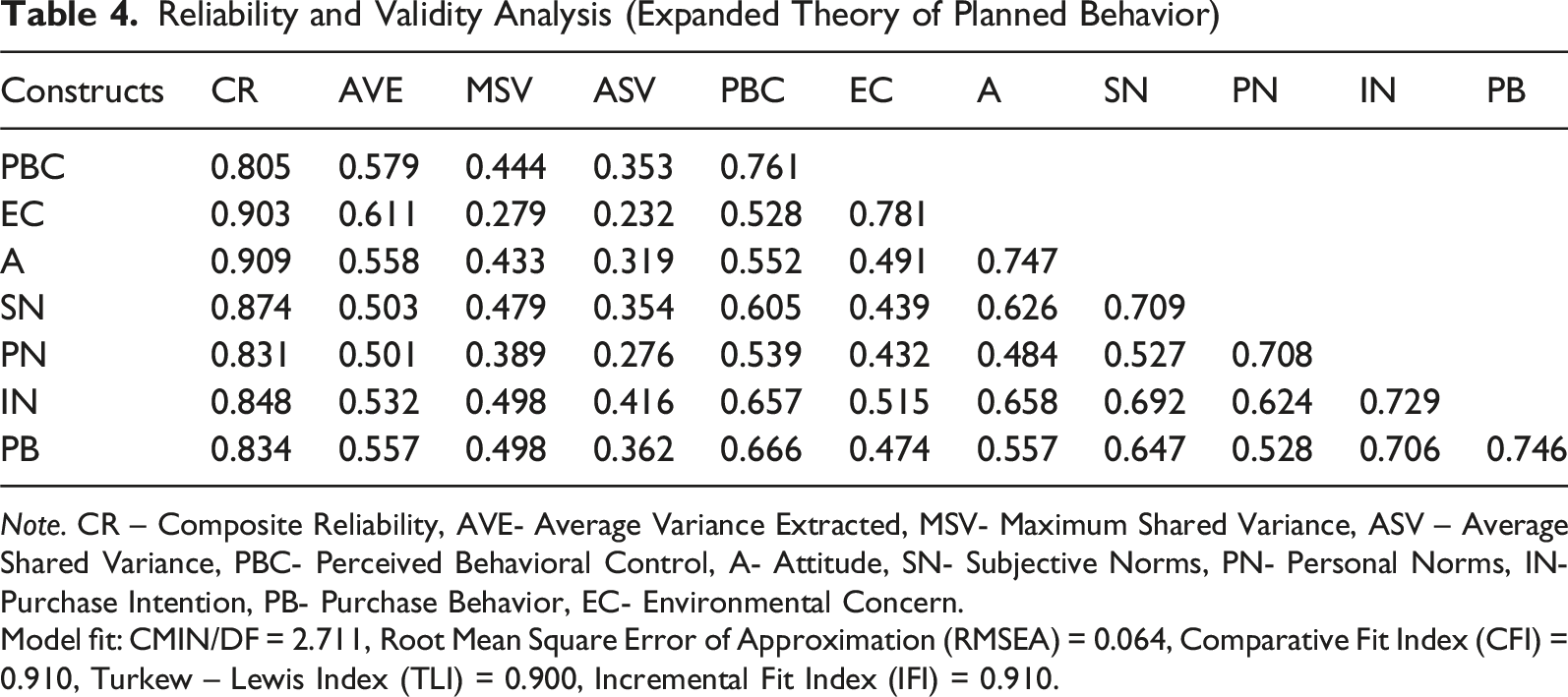
Note. CR – Composite Reliability, AVE- Average Variance Extracted, MSV- Maximum Shared Variance, ASV – Average Shared Variance, PBC- Perceived Behavioral Control, A- Attitude, SN- Subjective Norms, PN- Personal Norms, IN- Purchase Intention, PB- Purchase Behavior, EC- Environmental Concern.
Model fit: CMIN/DF = 2.711, Root Mean Square Error of Approximation (RMSEA) = 0.064, Comparative Fit Index (CFI) = 0.910, Turkew – Lewis Index (TLI) = 0.900, Incremental Fit Index (IFI) = 0.910.
Reliability and Validity Analysis (Innovation Characteristics)
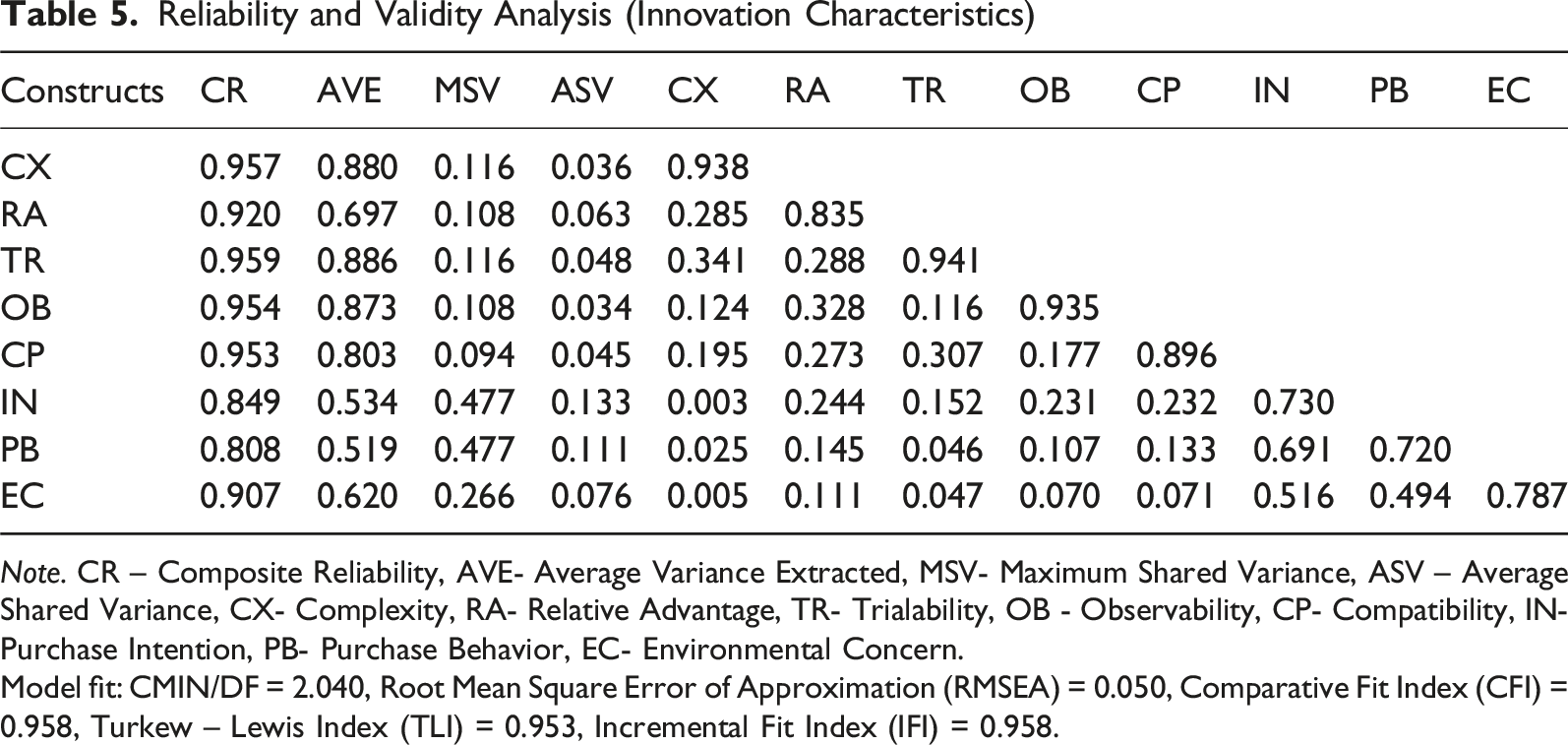
Note. CR – Composite Reliability, AVE- Average Variance Extracted, MSV- Maximum Shared Variance, ASV – Average Shared Variance, CX- Complexity, RA- Relative Advantage, TR- Trialability, OB - Observability, CP- Compatibility, IN- Purchase Intention, PB- Purchase Behavior, EC- Environmental Concern.
Model fit: CMIN/DF = 2.040, Root Mean Square Error of Approximation (RMSEA) = 0.050, Comparative Fit Index (CFI) = 0.958, Turkew – Lewis Index (TLI) = 0.953, Incremental Fit Index (IFI) = 0.958.
Structural Equation Model Results
Path Analysis of Psychological Factors (Expanded Theory of Planned Behavior)
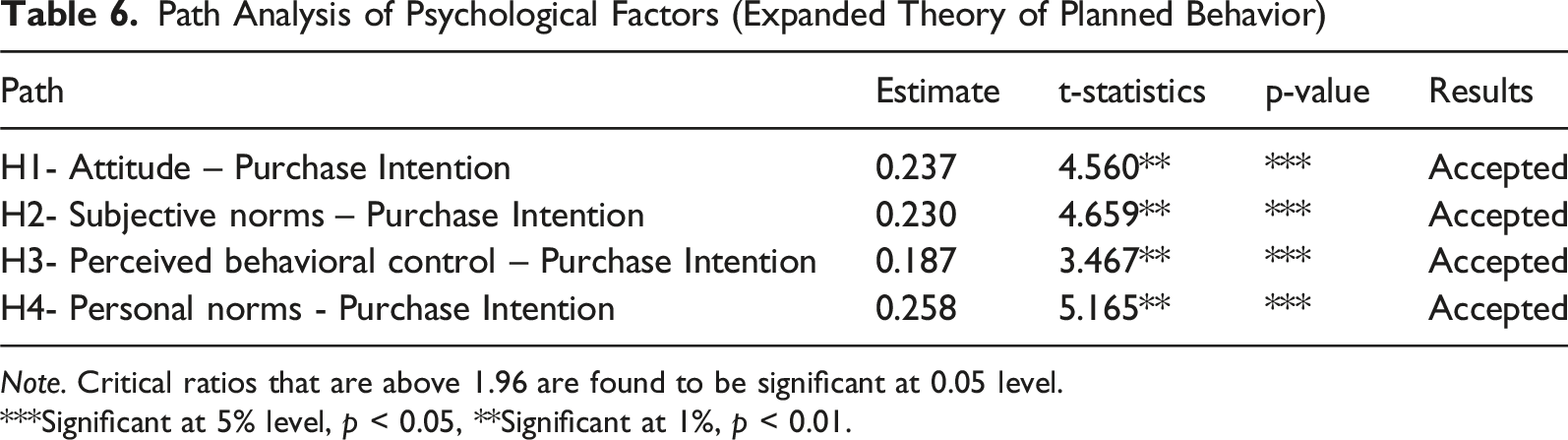
Note. Critical ratios that are above 1.96 are found to be significant at 0.05 level.
***Significant at 5% level, p < 0.05, **Significant at 1%, p < 0.01.
Path Analysis of Technical Factors (Innovation Characteristics)
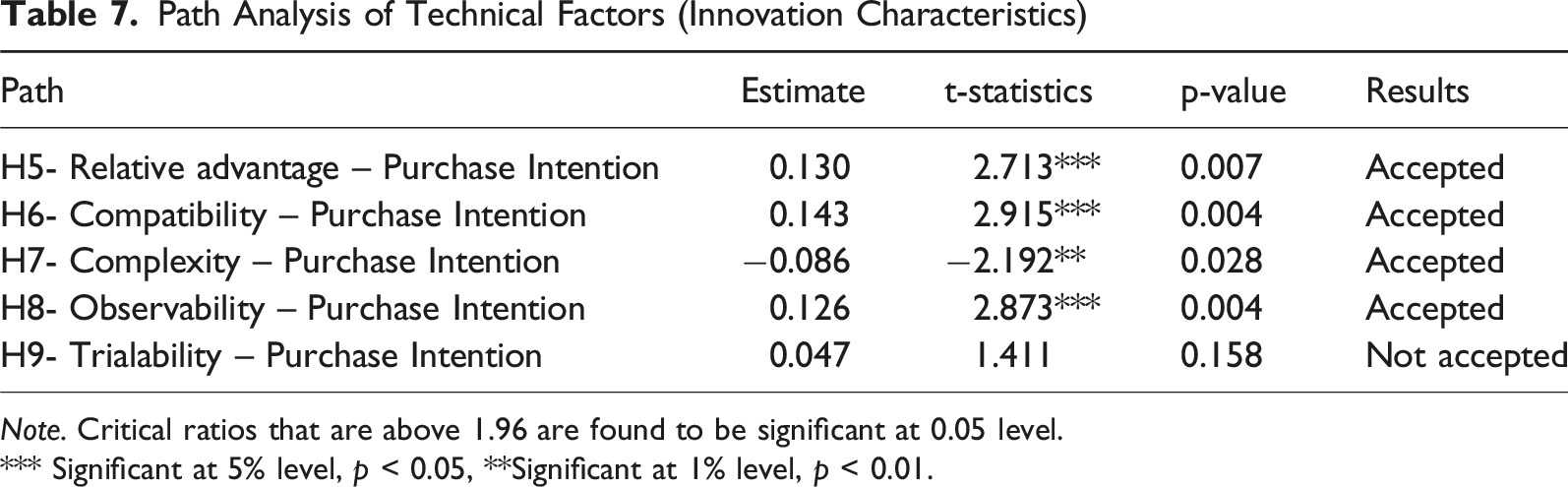
Note. Critical ratios that are above 1.96 are found to be significant at 0.05 level.
*** Significant at 5% level, p < 0.05, **Significant at 1% level, p < 0.01.
The path analysis results of psychological constructs reveal that personal norms have the highest positive and significant influence on purchase intention (t-value = 5.165, p < 0.01). Subjective norms (t-value = 4.659, p < 0.01), followed by attitude (t-value = 4.560, p < 0.01) and perceived behavioral control (t-value = 3.467, p < 0.01) have also positive and significant influence on purchase intention. Therefore, H1, H2, H3 and H4 have been accepted (Figure 3). Structural equation model results for psychological factors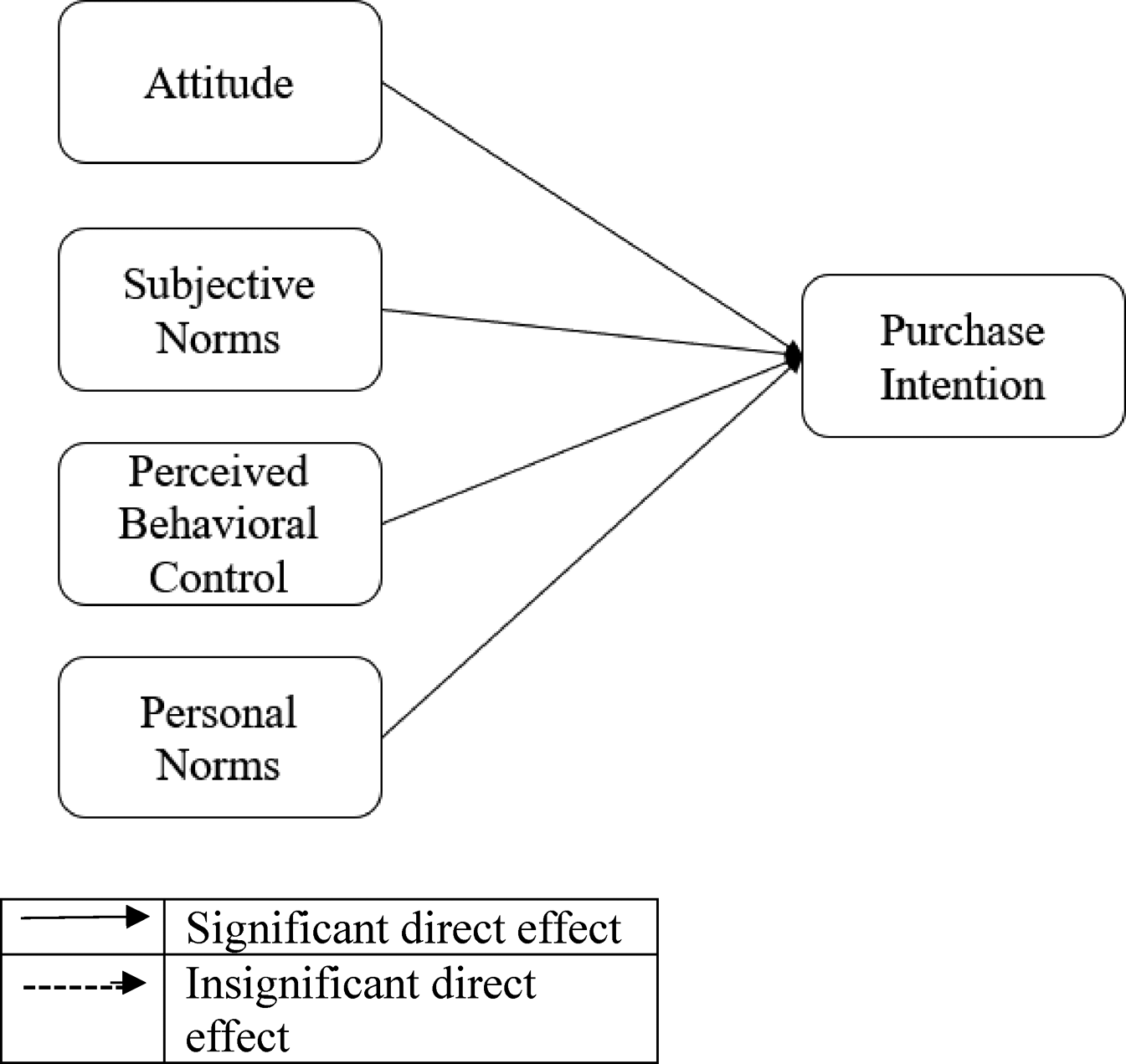
The path analysis results of technical factors reveal that compatibility has the highest positive and significant influence on purchase intention (t-value = 2.915, p < 0.01). Observability (t-value = 2.873, p < 0.01) followed by relative advantage (t-value = 4.560, p < 0.01) have also positive and significant influence on purchase intention. Complexity has a negative significant influence on purchase intention towards energy efficient air conditioners (t-value = −2.192, p < 0.05). Therefore, H5, H6, H7 and H8 have been accepted. However, trialability has not been found significantly influencing the purchase intention (t-value = 1.411, p > 0.05). Thus, H9 has not been accepted (Figure 4). Structural equation model results for technical factors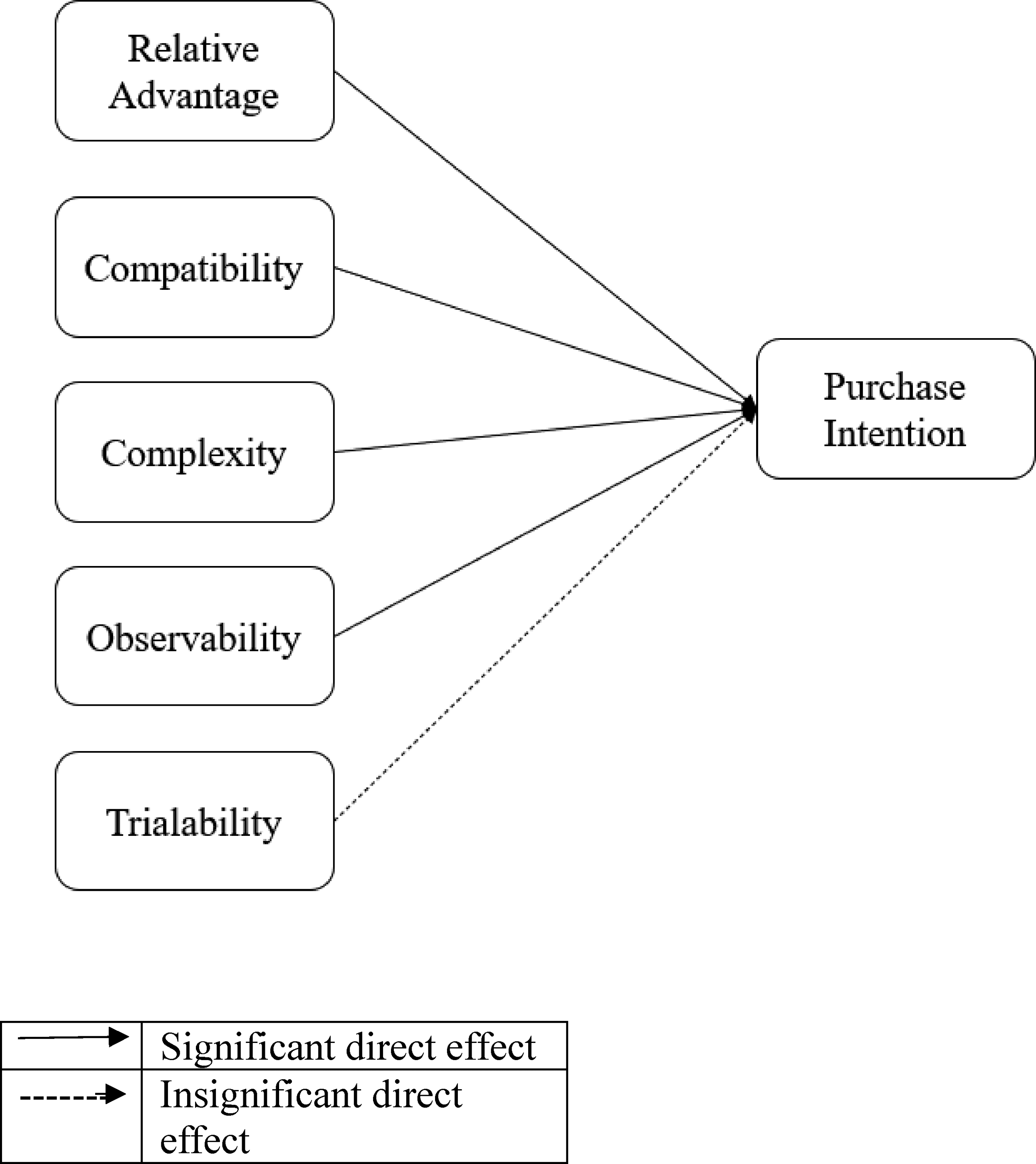
Mediation Analysis
Mediation Results for Psychological Constructs
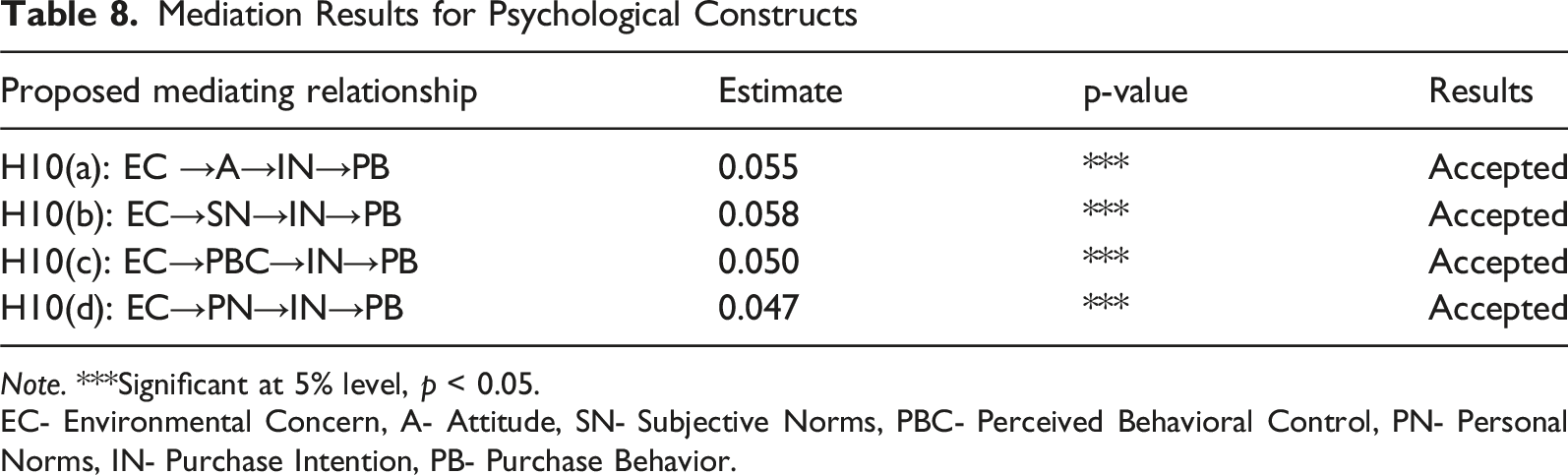
Note. ***Significant at 5% level, p < 0.05.
EC- Environmental Concern, A- Attitude, SN- Subjective Norms, PBC- Perceived Behavioral Control, PN- Personal Norms, IN- Purchase Intention, PB- Purchase Behavior.
Mediation Results for Technical Constructs
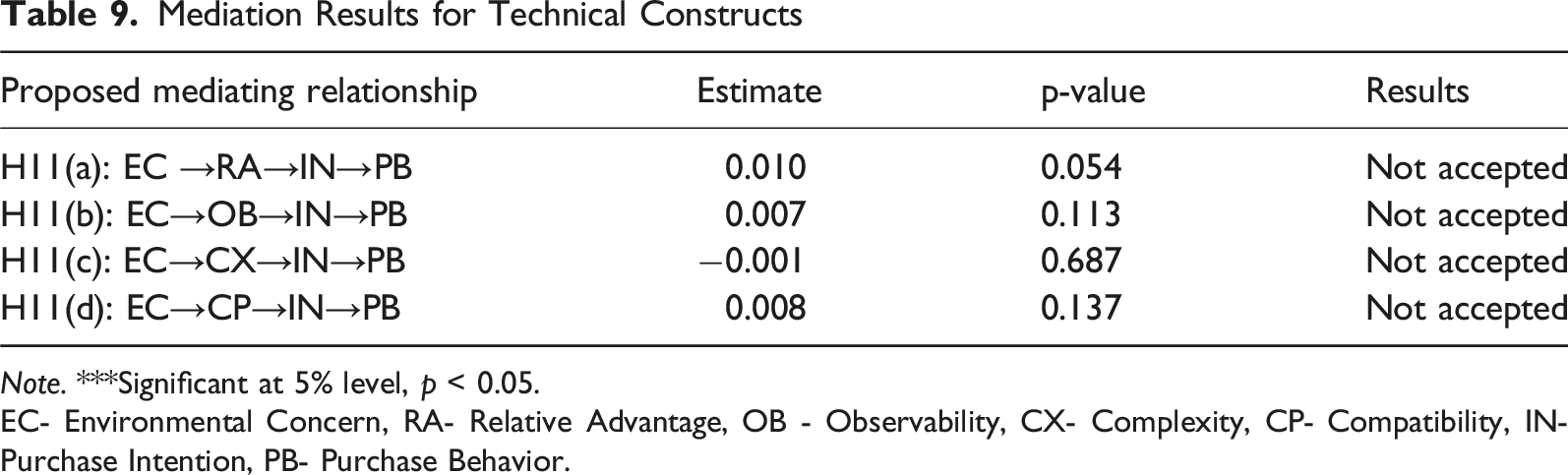
Note. ***Significant at 5% level, p < 0.05.
EC- Environmental Concern, RA- Relative Advantage, OB - Observability, CX- Complexity, CP- Compatibility, IN- Purchase Intention, PB- Purchase Behavior.
The path results show a significant serial mediation in terms of effects of environmental concern on purchase behavior the highest through subjective norms and purchase intention (β = 0.058, p < 0.01), followed by attitude and purchase intention (β = 0.055, p < 0.01), perceived behavioral control and purchase intention (β = 0.050, p < 0.01) and personal norms and purchase intention (β = 0.047, p < 0.01). Therefore, H10 (a), H10 (b), H10 (c) and H10 (d) have been accepted.
No significant serial mediation was observed by any of the DOI constructs in terms of indirect effects of environmental concern on purchase behavior. The serial mediation was found insignificant through relative advantage and purchase intention (β = 0.010, p > 0.05), observability and purchase intention (β = 0.007, p > 0.05), complexity and purchase intention (β = −0.001, p > 0.05) and compatibility and purchase intention (β = 0.008, p > 0.05). Therefore, H11 (a), H11 (b), H11 (c) and H11 (d) have not been accepted.
Discussion
The present study primarily has been carried out with two-fold objectives. First objective is to compare the influence of psychological factors (attitude, subjective norms, perceived behavioral control and personal norms) as identified by the expanded TPB model with that of technical factors (relative advantage, observability, complexity and compatibility) as identified by DOI model on the purchase intention of energy efficient air conditioners.
Second objective is to compare what extent psychological and technical constructs help in translating the influence of environmental concern on purchase intention and behavior in case of energy efficient air conditioners.
Ozaki (2011) has established the overlapping of expanded TPB constructs (attitude, subjective norms, perceived behavioral control and personal norms) and DOI constructs (relative advantage, observability, complexity and compatibility).
The study finds the similar patterns for both expanded TPB constructs and DOI constructs in terms of influence on purchase intention. All expanded TPB constructs have significant and positive influence on purchase intention towards energy efficient air conditioners. Previous empirical studies also establish the positive and significant influence of TPB constructs and personal norms on purchase intention towards energy efficient appliances (Apipuchayakul & Vassanadumrongdee, 2020; Hossain et al., 2022).
Similarly, all DOI constructs except trialability, have significant influence on purchase intention. Out of these constructs, three constructs, namely ‘relative advantage’, ‘compatibility’ and ‘observability’ have positive and significant influence on purchase intention, whereas ‘complexity’ has negative and significant influence on purchase intention. Previous empirical studies have also found positive influence of DOI constructs and negative influence of complexity on intention in case of solar energy (Pathania et al., 2017) and biogas production technology adoption (Ahmad et al., 2023).
Among the expanded TPB constructs, ‘personal norms’ have been found to be the highest influencing factor followed by ‘subjective norms’, closely followed by ‘attitude’ and then followed by ‘perceived behavioral control’. The present study conforms with the findings of studies carried out by Apipuchayakul and Vassanadumrongdee (2020) and Tan et al. (2017).
Similarly, among DOI constructs (comprising of technical factors), ‘compatibility’ has the highest influence on purchase intention closely followed ‘observability’, ‘relative advantage’ and then followed by ‘complexity’ (negative influences).
The directions and order of influence reveals the similar patterns between TPB and DOI constructs, in other words, between psychological and technical factors. This similarity in patterns observed in the present study also empirically validates the overlapping between TPB and DOI constructs as established by Ozaki (2011).
The present study further reveals that though there are similar patterns both with expanded TPB and DOI constructs in terms of direction and order of influence on purchase intention, yet there are differences between these constructs in terms of degree of influence on purchase intention. DOI constructs have been found relatively less influencing in comparison to the influence of TPB constructs on purchase intention.
None of the DOI constructs has been found translating the impact of environmental concern on purchase intention and behavior, whereas expanded TPB constructs have been found translating environmental concern into purchase intention and behavior. This has happened probably due to weak association between environmental concern and DOI constructs, and strong association between environmental concern and expanded TPB constructs.
Based on above, the existence of energy efficiency gap can probably be attributed to the marketing interventions that are generally focused on consumer’s self-interest in terms of saving on electricity bill. The current marketing interventions targeting technical aspects in general in terms of ‘saving on electricity bill’ are not robust in order to make a breakthrough into consumer’s inertia for not adopting energy efficient air conditioners (Asif et al., 2023; Dilotsotlhe, 2021). This is probably because interventions solely based upon DOI theory lack sensation and altruism.
Environmental concern may generate altruistic motivations that have been linked to individual’s moral pleasure (personal norms) and social pressures (injunctive norms) brought on by the ‘warm glow effect.’ According to the current study, environmental concern results in the development of subjective norms, an attitude that is favorable in terms of disposition, moral obligations that represent what is right and suitable, and the ability to overcome obstacles by increasing self-efficacy.
Implications
Theoretical Implications
The extended theory of planned behavior is more robust framework in terms of translating environmental concern into purchase behavior in comparison to diffusion of innovation framework. There are a few studies (hardly in energy efficient appliances) that empirically validate the relative impact of the ‘extended theory of planned behavior’ vis a vis ‘diffusion of innovation theory’.
Social Marketing Implications
Most of the marketing campaigns of the firms producing energy efficient air conditioners have been found oriented towards technical aspects, such as relative advantage, observability i.e. use by others, and needs of the consumers (Dilotsotlhe, 2021; Pathania et al., 2017). However, these are not sufficient enough to bridge energy efficiency gap. It is extremely critical to go beyond consumers’ self-interests by promoting environmental benefits also in their marketing communication. Here comes the role of social marketing. Considering the significant prevalence of environmental concern among Indian households and significant sequential mediation of TPB factors, social propositions can make a considerable impact. Hence, it draws the attention of social marketer to design social marketing interventions based on attitude, social reinforcements, activating personal norms, and using automatic and reflective motivation tools.
There can be three types of interventions: education, marketing and law. Education and social marketing program can play a pivotal role for voluntary behavior change. In the social marketing program, the intervention mix may include incentivizing, enabling access, engaging people for adopting for energy efficient air conditioners and exemplifying the desired behavior (Jackson, 2005). These interventions will help targeting diverse consumer segments for adopting the said pro-environment behavior. ‘Consumers with a conscience’ are highly motivated and avoid guilty feeling about environmental damage. Such consumers can be provided easy access of these appliances. The marketers may showcase the vivid demonstrations of those consumers, who carry pride in adopting energy efficient appliances. Such exemplification of rewarding consumers publicly on social media websites or on brand’s websites may activates subjective norms. This will encourage the ‘basic contributors’ who are sceptical about behavior change, but possess a desire to conform to social norms. Some potential customers are ‘currently constrained’, who do not think that they can do much towards environment protection. Such people can be actively engaged by building a community, in which valuable content and experiences can be shared, and doubts can be addressed through feedback. Incentive plans, such as easy credit instalments can be useful for ‘long-term restricted customers’, who are unable to afford initial outlay, due to other priorities. There seems to be no need to enforce the use by implementing law in this context because there already exists significant environmental concern among the selected society.
Social marketing practitioners may use ‘automatic and reflective motivation’ tool to promote ecological benefits along with direct benefits to increase sensitivity towards the environment in the society. This will give rise to consumer’s empowerment with which they feel that they can make a difference. Marketers may install calculator tool that show how much a consumer can save on energy bills per month which in turn leads to how much saving the environment from degradation. This will help in developing favourable attitude towards energy efficient air conditioners.
Education may build and stimulate the personal norms. The persuasive messages such as, ‘stay cool and comfortable, while keeping your environment pleasant’ and ‘reciprocate to nature’s blessings by using energy efficient air conditioners’ may put onus on citizens for pro-environment behavior. The society in general needs to be educated by organizing educational programs using different platforms how energy guzzler appliances contribute to environmental damage.
The overlapping between expanded TPB and DOI constructs manifests that integrated marketing communication based on both the types of constructs will put synergetic impact on purchase intention. For instance, an energy efficient air conditioner can be promoted by explaining relative advantage in terms of its pay-back period (‘power up your savings’) and also by driving an emotive factor through ‘signed petitions and commitments’ that they would be a pride citizen contributing to the healthy environment through the use of energy efficient appliances.
Limitations and Future Scope of Study
The current study compares the relative effectiveness of expanded TPB model with DOI model in the case of purchase behavior towards energy efficient air conditioners. The context of the study is limited in terms of a product, place and households covered. Future studies can be carried out with a larger sample, multiple products and wider regions to generalize the findings of the study in case of pro-environmental purchase behavior situations. Though every effort has been made to rule out social desirability bias, yet it can’t be completely ruled out in a self-reported behavior. Future research could focus on actual purchase behavior through a longitudinal analysis to capture behavioral changes over time. The present study did not test the moderation effects of demographic variables such as education and income. Those effects may be studied in future studies. Social marketing practices can be designed by using the significant factors of the study to determine the success factors for bridging the gap between theory and practice.
Footnotes

Ethics Considerations
The study has been carried out with the approval of the Research Advisory Committee of the author’s parent institute (DR B R Ambedkar National Institute of Technology, Jalandhar). Ethical standards of the research have been strictly adhered to in terms of no influence on the participants, ensuring wilful participation of respondents, keeping confidentiality, and apprising the participants about the purpose of study and its publication. The Research Advisory Committee is constituted for every research scholar, whose chairman is Dean Academic or any other senior professor of the institute as his nominee. Other members include the head of the department and other faculty members who act as research advisors. The research scholar presents the entire research plan before the committee including method of data collection, population and selection of respondents. The data collection process starts after the approval of the research plan by the Research Advisory Committee.
Consent to Participate
The participants consent was obtained verbally and then the instrument (survey questionnaire) was served to the participants. The authors have further ensured adherence to ethical standards of research as carrying out biased free study and no influence or pressure was exerted on participants.
Funding
The authors received no financial support for the research, authorship, and/or publication of this article.
Declaration of Conflicting Interests
The authors declared no potential conflicts of interest with respect to the research, authorship, and/or publication of this article.
Author Biographies
Appendix
Considerations
Source studies
(Ha & Janda, 2012; Hua & Wang, 2019)
(Chen & Tung, 2014; Fornara et al., 2016; Han et al., 2010; Hua & Wang, 2019; Shi et al., 2017)
(Alam et al., 2014)
(Barbarossa & De Pelsmacker, 2016; Steg et al., 2005)
(Dunlap et al., 2000; Kilbourne & Pickett, 2008; Shi et al., 2017)
(Apipuchayakul & Vassanadumrongdee, 2020; Mohamed, 2010)
(Apipuchayakul & Vassanadumrongdee, 2020)
(Jansson, 2011; Kapoor & Dwivedi, 2020; Rogers, 2003)
(Alam et al., 2014; Pathania et al., 2017; Rogers, 2003)
(Pathania et al., 2017)
(Dilotsotlhe, 2021; Pathania et al., 2017; Rogers, 2003)
(Pathania et al., 2017).