







Abstract
Background:
This study addresses the HIV/AIDS epidemic that constitutes a major health issue in South Africa, the country most burdened by the virus in the world.
Focus of the Article:
It is an empirical study that investigates predictive behavioral patterns between traditional components of the theory of planned behavior and the previously identified social marketing behavioral enhancers and intentions to perform preventative sexual behaviors promoted under the Abstinence, Being faithful, and Condomize campaign.
Research Question:
The main question this study attempts to answer is: Is it relevant to increase the theory of planned behavior components by incorporating the social marketing behavioral enhancers’ variables to design programs that successfully influence individuals to adhere to the preventative sexual behaviors?
Importance to the Social Marketing Field:
Results will tell social marketers, through design programs fighting the spread of the HIV set within a theory of planned behavior theoretical framework, which of the social marketing behavioral enhancers are worth integrating into their model to induce behavioral change.
Methods:
Theory of planned behavior models extended to social marketing behavioral enhancers for abstinence, faithfulness, and condom use were used as theoretical frameworks to test how well they are good fits of the empirically manifested structural models. Gauteng was chosen, because three of the five metropolitan municipalities with a HIV prevalence greater than 10% are located in this province. Data were collected by means of questionnaires administered to a sample chosen randomly, using a multi-stage stratification method. A quota was determined for each suburb or city considered according to the size of its population compared to the overall Gauteng population to ensure representativeness of the study’s sample.
Results:
The study’s theoretical frameworks fitted the data well, but results also revealed insignificant causal relationships between HIV/AIDS knowledge and all Abstinence–Being faithful–Condomize intentions. Similarly, no predictive relationships were found between accessibility to HIV/AIDS information and intention to use condoms, while attitudes toward abstinence and condom use were insignificant with their respective intentions. However, their positive correlations with predictive variables suggest that they influence intentions indirectly.
Recommendation for Research:
Researchers are invited to conduct further studies to test the model in a different context. Indeed, this study does not investigate whether relationships between HIV/AIDS knowledge, accessibility to HIV/AIDS information, and attitudes toward abstinence and condom use would remain insignificant or that it could not change over time in a research ground other than Gauteng. Opportunities should be explored to augment the traditional theory of planned behavior components by variables other than the social marketing behavioral enhancers, in order to build a more robust model that will incorporate more significant factors to design successful programs.
Limitations:
Collecting data from only one province constitutes a limitation in terms of drawing conclusions for the whole South African population.
Keywords
To propose a remedy to problems that arise in society, particularly in the health sector, several theoretical models were proposed to help understand the determinants of human behaviors and the intentions to perform them (Mermelstein & Revenson, 2013). Numerous studies reveal that the trans-theoretical model and theory of planned behavior are the most extensively used models, with the latter offering the advantage that it may be applied in the analysis of virtually all significant health behaviors and, to a lesser extent, in predictive investigations and the design of health interventions (Taylor et al., 2006). Similarly, empirical evidence from several health domains indicates that the theory of planned behavior is more effective in predicting behaviors when augmented by additional variables to its traditional attitudes, subjective norms, and perceived behavioral control as suggested by Conner and Armitage (1998). Among some examples confirming the extension of the theory of planned behavior model, a study conducted at Midwestern University in Chicago that investigated the prediction of risky sexual behaviors incorporated past sexual risk behavior, anticipated affect, moral norms, sexual excitation, sexual inhibition, and sensation seeking (Turchik et al., 2010). In research conducted in Australia, Robinson et al. (2008, pp. 2559–2567) extended the theory of planned behavior to descriptive norm, moral norm, anticipated regret, and donation anxiety to explain the intention to donate blood among non-donors. Hence, in the effort made to increase the predictive validity of the theory of planned behavior through the addition of external variables, Ayikwa and De Jager (2017) proposes the integration of social marketing behavioral enhancers including accessibility to HIV/AIDS information, accessibility to condoms, and level of HIV/AIDS knowledge as factors influencing sexual behaviors and intentions in the context of the combating the epidemic.
This study thus proposes three structural models that integrate the components of the theory of planned behavior, social marketing behavioral enhancers, and the intentions to perform preventative sexual behaviors in an attempt to ascertain whether there are good fits between the elements of the empirically manifested structural models and theoretically hypothesized models. Indeed, besides its singularity in that it incorporates the social marketing behavioral enhancers alongside the traditional theory of planned behavior constructs, behavioral studies that propose to investigate concomitantly the three preventative sexual behaviors known as ABC (Abstinence–Being faithful–Condomize) are rare or non-existent.
Theoretical Background
The theory of planned behavior is an improved version of the theory of reasoned action that has added perceived behavioral control to the two previous factors of attitude and subjective norms proposed by Ajzen and Fishbein (Kiriakidis, 2015). They posit that intention is the most immediate antecedent of any voluntarily controlled behavior that captures its motivational influences (Madden et al., 1992). These beliefs were divided into two distinct concepts that took into account their behavioral and normative perspectives from which the theory of reasoned action’s components attitude and subjective norms were derived (Ajzen & Fishbein, 1974). However, in their quest to better understand behavioral patterns, scholars and academics have proposed and tested external variables that do not influence intentions through affecting either attitude and subjective norms or both. Thus, additional variables such as personal norms (Fishbein, 1967), moral obligations (Gorsuch & Ortberg, 1983; Zuckerman & Reis, 1978), and competing attitudes (Davidson & Morrison, 1983) were considered for inclusion in the theory of reasoned action model or its expansion. This did not leave indifferent one of the fathers of the theory of reasoned action, Ajzen (1985), who returned to the charge on the same subject by this time suggesting the incorporation of a third determinant emanating from the notion of perceived control over behavioral achievement. Thus was born the theory of planned behavior, which extends the boundary of the theory of reasoned action’s condition of pure volitional control by incorporating individuals’ perceptions of their ability to perform a given behavior (Pakpour & Sniehotta, 2012). The newly developed model displays a direct path between perceived behavioral control and both intention and behavior implying that it does not necessarily influence behavior through intention like attitude and subjective norms.
Over time, researchers realized on the basis of empirical evidence that the use of theory of planned behavior as a theoretical framework made it possible to better explain the factors motivating the performance of a behavior and/or intention, referring to it if one added other variables (Robinson et al., 2008; Turchik et al., 2010). This is why some disciplines, such as social marketing, dedicated to behavior change to promote human well-being and especially health, have begun to identify additional variables that may influence human behavior and intention. According to Andreasen (1994, p. 110): “Social marketing is the application of commercial marketing technologies to the analysis, planning, execution, and evaluation of programs designed to influence the voluntary behaviour of target audiences in order to improve their personal welfare and that of their society.” It is not a question of considering any non-profit activity but rather one that is based on market research and which uses segmentation and targeting techniques as well as marketing mix strategies to design programs intended to change a behavior deemed at risk, without resorting to coercive means (Cheng et al., 2010; French et al., 2010).
Social marketers resort to theoretical frameworks when seeking to identify influential factors and understand the context in which change in behavior shall occur in order to design effective interventions. Although they provide a huge amount of information, frequently used cognitive behavioral models from classic theories such as the theory of planned behavior propose a limited number of variables, and this slightly handicaps the understanding of behaviors and intentions (Fishbein & Yzer, 2003). A study conducted in Addis Ababa using the theory of planned behavior has showed that its variables were less sufficient in predicting voluntary HIV counseling and testing (Mirkuzie et al., 2011). Another compared the theory of reasoned action, theory of planned behavior, and an extended theory of planned behavior model which demonstrated that the augmented model had slightly better fit indexes and predictive value (Gomes & Nunes, 2017). Therefore, researchers have found it necessary to either combine a number of variables of these aforementioned theories or integrate other important aspects they have not as yet considered, as was the case with the integrated model of behavior prediction (Diteweg et al., 2013). This model differs from the theory of planned behavior by adding two additional variables to predict behavior, namely, skills (e.g., knowledge) and environmental constraints (e.g., stigma). Similarly, a study conducted in Botswana among college students by Faimau et al. (2016), by means of a systematic review of articles emphasizing on the theoretical basis of interventions conducted in sub-Saharan Africa, highlights the work of a couple of researchers who developed conceptual frameworks assuming that knowledge directly predicts sexual behavior or indirectly through intention (Michielsen et al., 2012). Likewise, a study comparing the basic theory of planned behavior model and an adapted version that integrated three information behaviors among which the exposure to HIV/AIDS information demonstrated that the proposed model improved predictions, explaining more than twice as much variance as the original information model (Meadowbrooke et al., 2014). Furthermore, researchers in the Netherlands showed that condom coverage through an HIV intervention reduced the burden of the disease by 99% (Bom et al., 2019). This evidence from various health behavior studies in relation with HIV/AIDS prompted the inclusion of knowledge, accessibility to HIV/AIDS information and condoms in this study.
In their research conducted as part of the fight against the epidemic, one of the major public health problems on the African continent, Ayikwa and De Jager (2017) have identified the three abovementioned factors that influence individuals’ adherence to preventative sexual behaviors. Although the researchers suggest that these variables be incorporated to expand the preventative sexual behaviors’ models, no attempt to test how they are structured into validated models has been made. This study intends to do so for intentions to abstain from sex, to being faithful to one partner and condomizing using the structural equation modeling techniques. Elements of the theoretical models developed to be tested are presented in Figure 1.
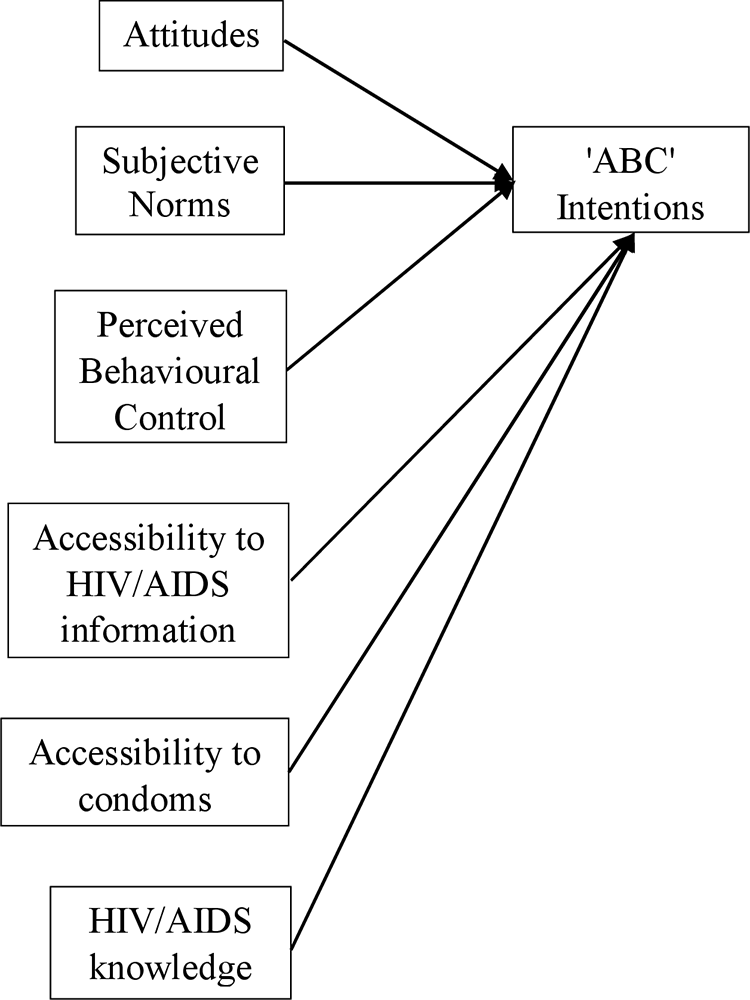
Path model for the theory of planned behavior extended to social marketing behavioral enhancers.
Method
Participants and Sampling Method
This study consisted of a sample of 607 South African’s Gauteng Province inhabitants, of whom 310 (51.1%) were female and 297 (48.9%) male aged ≥ 18 years old. All were interviewed by well-trained surveyors, and participation was voluntary. In order to ensure that the study’s sample was a representative distribution of the Gauteng Province’s population, researchers determined a quota for each suburb or city considered according to the size of its population compared to the overall Gauteng population. Participants were chosen randomly using a multi-stage stratification method that consisted of dividing Gauteng in terms of its administrative metropolitan and district municipalities. The majority of the participants (277 or 45.6%) live in Johannesburg, followed by Tshwane (150 or 24.7%), Ekurhuleni/East Rand-Germiston (124 or 20.4%
Instruments
In this study, besides the demographic characteristics that were captured to profile participants, 15 instruments were used to measure each parameter involved in the theoretical framework. All instruments comprised items previously used to measure the parameters considered in other studies conducted in sub-Saharan Africa and more specifically the Southern Africa region as debated by scholars such as Diteweg et al. (2013), Sacolo et al. (2013), Ugwu (2012), and Mathews et al. (2009). Given that these items were gathered to form a newly non-administered questionnaire, some items were amended following consultation with academics, scholars, and professionals working in the study’s domain of interest. Their expertise helped essentially in adjusting the wording and formatting of questions found to be ambiguous or too verbose. After these amendments were made, a pilot study was conducted to optimize its reliability and validity. After performing an exploratory factor analysis (EFA) and reliability tests using the software program SPSS Version 23, 31 of the 173 items retained were dropped as highlighted in Table 1. Items removed from this study’s questionnaire were left aside on the basis that they either had a factor loading < .3 or showed correlation > .9 with another item within the same construct, causing a collinearity issue or because it decreased the internal consistency estimates (Cronbach’s alpha) or had low item discrimination ability (i.e., a low item–total correlation).
Validity and Reliability Analysis Using Exploratory Factor Analysis (EFA) and Cronbach Alpha.

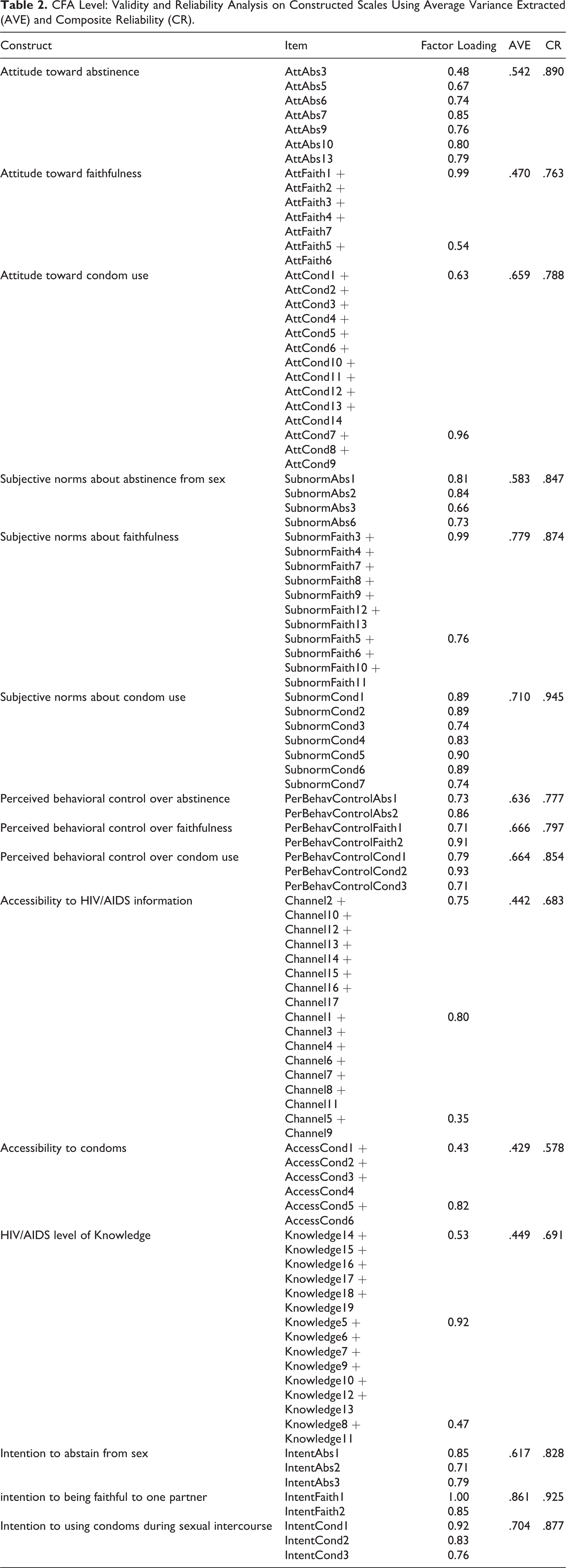
Factor analysis used principal component analysis and orthogonal varimax rotation extraction method for scaled variables to group items in a data set called factor on the basis of strong correlations, exploring the underlying theoretical structure of the phenomena (Tabachnick & Fidell, 2013). Therefore, in view of the structural equation modeling procedure, items loading within the same factor explaining a latent variable have been combined as measurement of the underlying dimension they represent (Streiner & Norman, 2003). In case of one factor explaining a latent variable, items loading within the specific factor are considered singularly as observed variable at confirmatory factor analysis stage as illustrated in Table 2. However, prior performing the EFA based on the unweighted least squares extraction method for variables measured through dichotomous (binary) options, a tetrachoric correlation matrix was estimated using the TETRA-COM Macro for SPSS as suggested by Lorenzo-Seva and Ferrando (2012, pp. 1191–1196). Attitude, subjective norms, perceived behavioral control, and intentions toward abstinence, being faithful to one partner, and condom use required a 5-point Likert-type scale measure (from totally disagree to totally agree), while accessibility to HIV/AIDS information and level of knowledge regarding HIV/AIDS utilized dichotomous answers (yes or no). Accessibility to condoms was assessed through a 3-point Likert-type scale (not easy, easy, and very easy).
CFA Level: Validity and Reliability Analysis on Constructed Scales Using Average Variance Extracted (AVE) and Composite Reliability (CR).
Research Design and Data Analysis
The three preventative sexual behaviors of intentions toward abstinence, being faithful to one partner, and condom use promoted by social marketing campaigners addressing the epidemic under the well-known Abstinence–Being faithful–Condomize label were the dependent variables. The independent variables were constituted by the three theory of planned behavior components of attitude, subjective norms, and perceived behavioral control in relation to abstinence from sex, faithfulness to one partner, and condom use as well as social marketing behavioral enhancers including accessibility to HIV/AIDS information and condoms and level of knowledge regarding HIV/AIDS. The dependent and independent variables covered all constructs in the theoretical frameworks developed in accordance to the suggestion by Ayikwa and De Jager (2017).
The data that captured information of items retained and reorganized by component variables that best describe each construct’s dimension, identified after EFA, were processed to assess the study’s hypothesized model through structural equation modeling techniques using the software program AMOS Version 23.
Results
Validity and Reliability Analysis on the Constructed Scales
Prior to drawing all the study’s constructs in the three final models with regard to the Abstinence–Being faithful–Condomize intentions, a confirmatory factor analysis was performed on each dimension providing its respective reliabilities and discriminant validities through average variance extracted and composite reliability tests. The components that showed factor loading < .4 were removed for being the major causes of poor fitting of the construct’s measurement model, while the threshold used for average variance extracted and composite reliability was set at ≥ .5 and ≥ .6, respectively, as suggested in Hair et al. (2010). However, a lesser value of the standard factor loading for convergent validity (≥ .35) and/or average variance extracted (≥ .4) was accepted in order to proceed with the overall model fit on the condition that offending estimate does not occur (Huang, 2007). Offending estimate is manifested by negative error covariance and/or standardized regression coefficient close to 1 (Shyu et al., 2013). Similarly, composite reliability value ≥ .5 was accepted to ascertain reliability following Nunaly’s suggestion (Shyu et al., 2013). Thus, accessibility to HIV/AIDS information and condoms has been able to keep all their component variables. The performing of validity and reliability tests at confirmatory factor analysis level, by means of average variance extracted and composite reliability, enabled the study to drop 40 more items contained in underperforming factors, as highlighted in Table 2. Consequently, items of factors that qualified as a unique underlying dimension of their respective constructs were used as observed variables.
Structural Equation Modeling Analysis
All three tested extended theory of planned behavior models, with regard to Abstinence–Being faithful–Condomize intentions, fitted the data well. All fit statistics were at an acceptable level for intentions to abstain from sex, being faithful to one partner, and using condoms during sexual intercourse as the following demonstrates: Intention to abstain: CMIN = 553.11; DF = 234; CMIN/DF = 2.36; p = .00; GFI = .93; NFI = .91; CFI = .94; TLI = .93; RMSEA = .05; SRMR = .04. Intention to being faithful to one partner: CMIN = 300.85; DF = 89; CMIN/DF = 3.38; p = .00; GFI = .94; NFI = .93; CFI = .95; TLI = .94; RMSEA = .06; SRMR = .05. Intention to use condoms during sexual intercourse: CMIN = 661.95; DF = 211; CMIN/DF = 3.14; p = .00; GFI = .91; NFI = .92; CFI = .94; TLI = .93; RMSEA = .06; SRMR = .05. The overall evaluation of these indices thus led to the validation of the extended TPB models for Abstinence–Being faithful–Condomize intentions. However, results in the path diagrams displayed in Figure 2, 3, and 4 highlighted the non-significance of HIV/AIDS knowledge as predictor of all three Abstinence–Being faithful–Condomize intentions. Similarly, no causal relationship was found between attitudes toward abstinence from sex and condom use during sexual intercourse and their related intentions. Results likewise indicated that accessibility to HIV/AIDS information was statistically insignificant in predicting the intention to use condoms during sexual intercourse. All the other paths shown in the extended theory of planned behavior models for Abstinence–Being faithful–Condomize intentions are significant, as critical ratios were above 1.96.
Results in Figure 2, 3, and 4 suggest the existence of causal relationships between the intention to abstain from sex and accessibility to HIV/AIDS information (β = .35; p ≤ .01), subjective norms (β = −.25; p ≤ .05), and perceived behavioral control (β = .28; p ≤ .01). In line with the aforementioned SEM results, it has been concluded that the respondents’ reported uncertainty about abstaining from sex (intention to abstain from sex: M = 3.20; σ = 1.29) is driven by their poor exposure to HIV/AIDS information (accessibility to information: M = .19; σ = .22) and personal choice not to refrain from engaging in sex, admitting that abstinence is under their control (perceived behavioral control over abstaining from sex: M = 3.95; σ = 1.33), while challenged by family and religious related values (subjective norms about abstaining from sex: M = 3.57; σ = 1.57) that sex should be performed within wedlock. Social marketers should therefore design programs that consider better exposure to HIV/AIDS information, promote abstinence, and increase family and social networks’ influence with regard to abstaining from engaging in sex before marriage and consequently enhance individuals’ will to refrain from sexual intercourse.
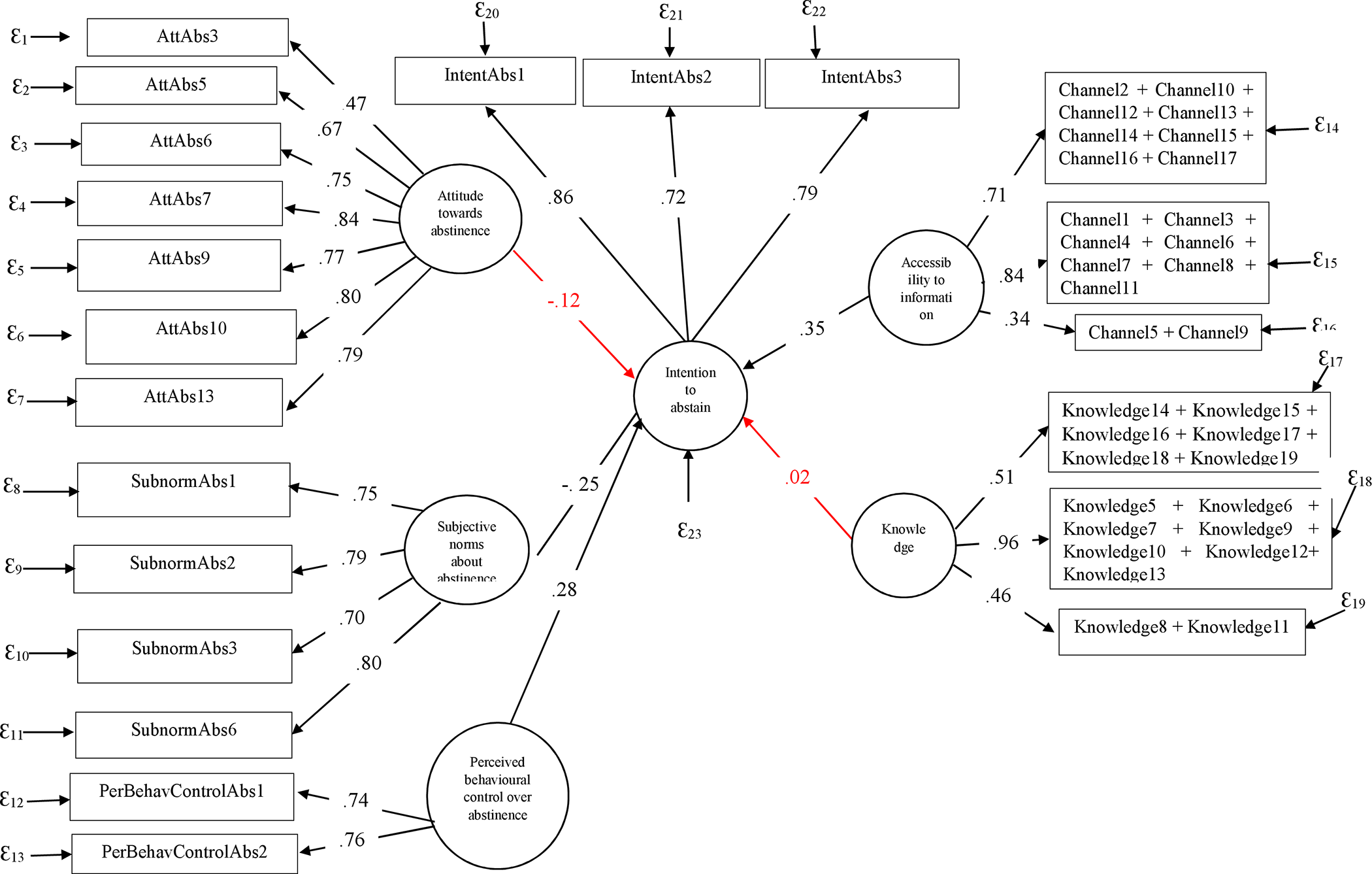
Structural model of the theory of planned behavior extended to social marketing behavioral enhancers for abstinence.
The structural equation modeling results of the extended theory of planned behavior model for intention to being faithful to one partner identified accessibility to HIV/AIDS information (β = −.21; p ≤ .01), attitude (β = .77; p ≤ .01), subjective norms (β = .78; p ≤ .01), and perceived behavioral control (β = .97; p ≤ .01) as predictors of the intention to being faithful. These results lead to the conclusion that respondents’ reported intention to being faithful to one partner is driven by their favorable attitude toward faithfulness (attitude toward faithfulness: M = 4.07; σ = .22) and family and social network values that deem it important to be faithful to the partner (subjective norms about faithfulness: M = 3.93; σ = 1.32) as well as their perceived behavioral control over being faithful (perceived behavioral control over faithfulness: M = 4.16; σ = 1.35), while challenged by their poor exposure to HIV/AIDS information (accessibility to information: M = .19; σ = .22). Thus, social marketers are recommended to implement programs that consider better exposure to HIV/AIDS information, promoting faithfulness, while reinforcing individuals’ favorable attitude and the influence of family and social networks with regard to faithfulness as well as their perceived control over being faithful to one partner.
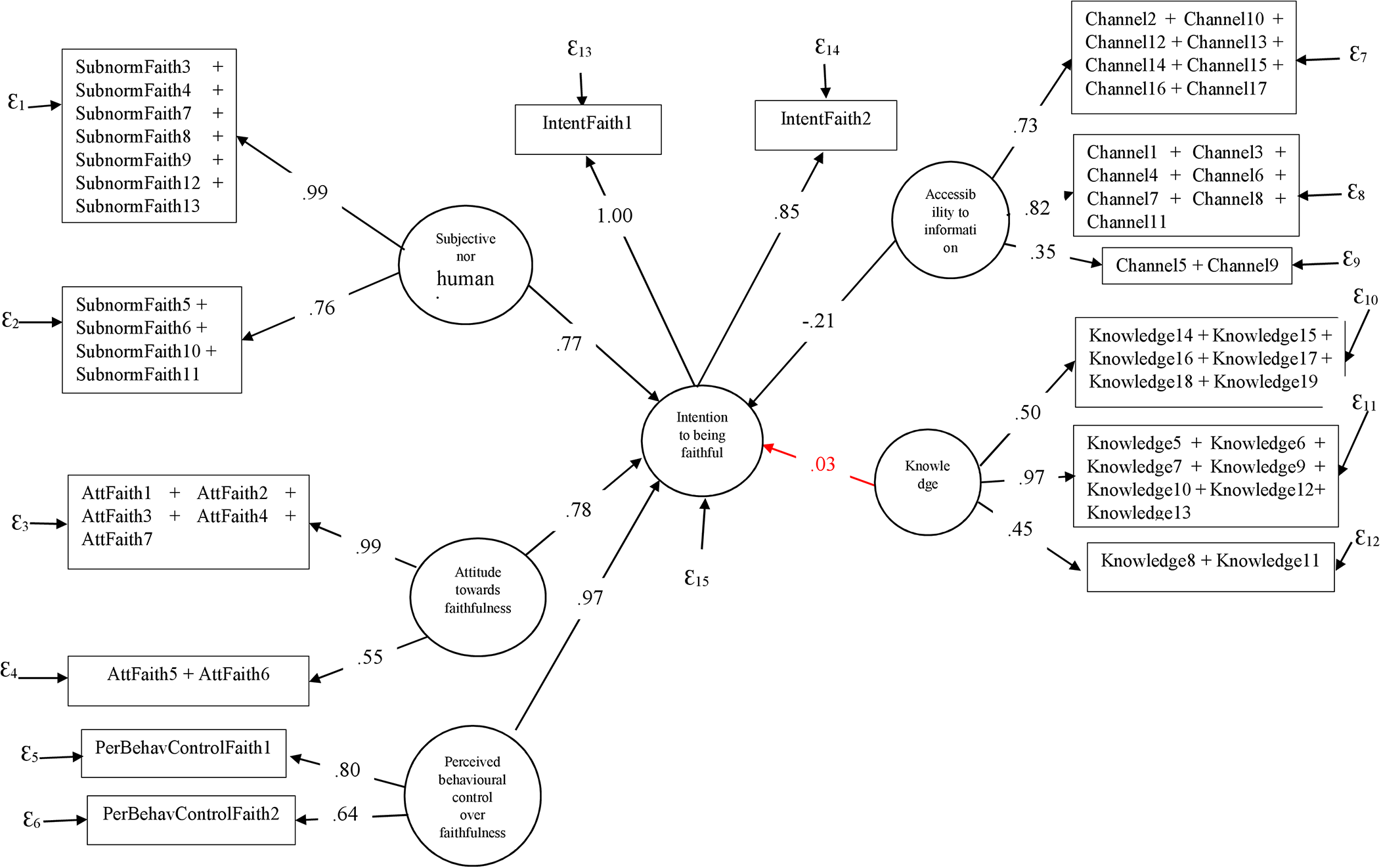
Structural model of the theory of planned behavior extended to social marketing behavioral enhancers for faithfulness.
Results of the extended theory of planned behavior model for the intention to use condoms in Figure 2, 3, and 4 identified accessibility to condoms (β = .37; p ≤ .01), subjective norms (β = .23; p ≤ .01), and perceived behavioral control (β = .66; p ≤ .01) as predictors of intention to use condoms during sexual intercourse. These results reflect that respondents’ reported intention to use condoms during sexual intercourse is driven by the ease of obtaining condoms (accessibility to condoms: M = 2.01; σ = .66), their family and social networks’ opinion about condom use (subjective norms about condom use: M = 3.64; σ = 1.31), and their perceived behavioral control over condom use (perceived behavioral control over condom use: M = 4.01; σ = 1.31). Hence, social marketers are invited to design programs that increase distribution of condoms, while reinforcing family and social networks’ opinion with regard to the use of condoms as well as individuals’ perceived control over using condoms during sexual intercourse.
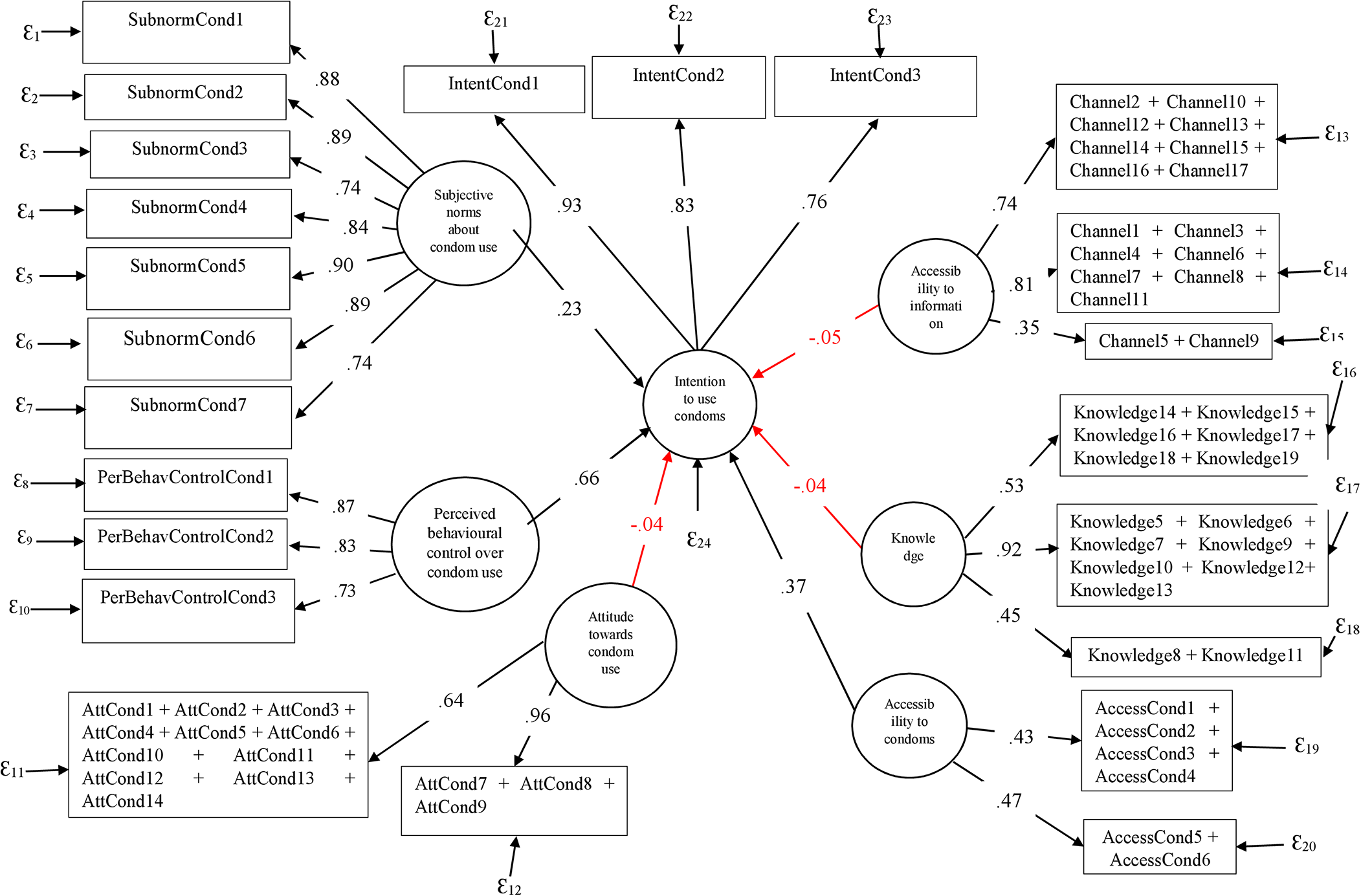
Structural model of the theory of planned behavior extended to social marketing behavioral enhancers for condom use.
Although no significant causal relationship was found between HIV/AIDS knowledge and all three Abstinence–Being faithful–Condomize intentions and between accessibility to HIV/AIDS information and intention to use condoms during sexual intercourse as well as between attitudes toward abstinence and condom use and their related intentions, they remain variables of importance for influencing the Abstinence–Being faithful–Condomize intentions because of their significant correlations with predictive variables as shown in Table 3.
Correlation Between Latent Independent Variables.
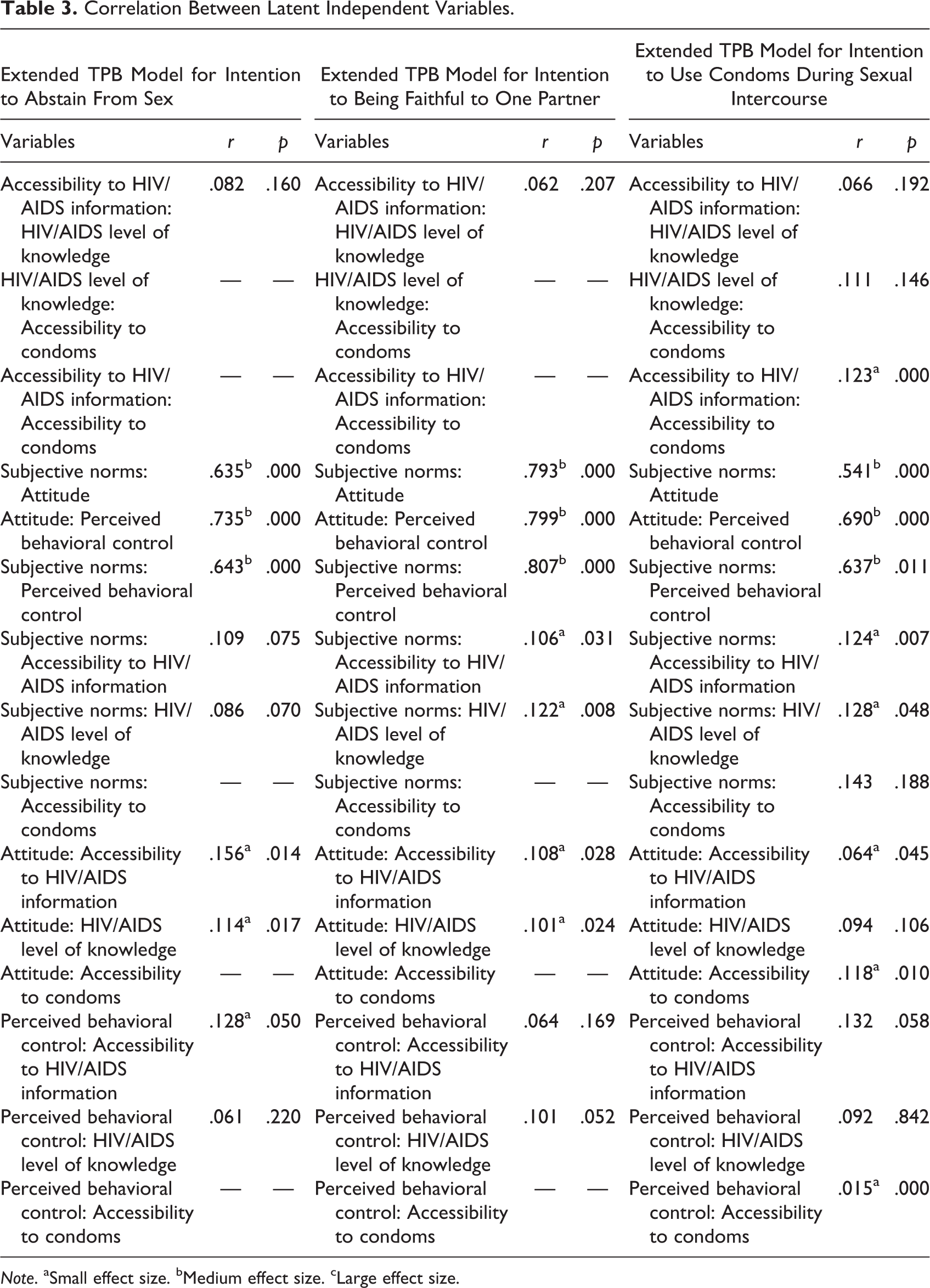
Note. aSmall effect size. bMedium effect size. cLarge effect size.
Conclusion and Recommendations for Further Research
This study validated the theoretical framework proposed by Ayikwa and De Jager (2017) of predicting intentions to perform preventative sexual behaviors using structural equation modeling procedures. It contributed in demonstrating the relevance of extending the theory of planned behavior to social marketing behavioral enhancers to better predict human intentions to perform Abstinence–Being faithful–Condomize behaviors based on empirical evidence. Insignificant variables in predicting intentions to adhere to preventative sexual behaviors such as knowledge about HIV/AIDS, accessibility to HIV/AIDS information, as well as attitudes toward abstinence and condom use can be considered as strategic factors that indirectly induce the needed behavior change’s intention through influencing other predictive variables. Thus, it is worth integrating the identified social marketing behavioral enhancers to the theory of planned behavior models to predict preventative sexual behaviors and when designing and implementing HIV/AIDS programs to combat the spread of the virus and eliminate the disease.
Although this study is a logical continuation of Ayikwa et al. (2019), it is nevertheless different in many ways. First, the type of models built previously were measurement models, while this study comprises a structural part highlighting the nature and strength of causal relationships between the components of the theory of planned behavior extended to social marketing behavioral enhancers and intentions to perform preventative sexual behaviors. Second, the inclusion of intentions enabled this study to have both independent and dependent variables. In the previous study, all variables of the theory of planned behavior extended to social marketing behavioral enhancers were independent variables. Third, the final extended theory of planned behavior measurement models in this study does not consider escalating accessibility to HIV/AIDS information, accessibility to condoms, and HIV/AIDS level of knowledge as reflective latent variables of social marketing behavioral enhancers’ second-order latent variable. Indeed, the previous study was a comparative one between first and second-order extended theory of planned behavior models extended to social marketing behavioral enhancers. Finally, the previous study investigated simultaneously abstinence, faithfulness, and condom use in the same model, while the present one analyzes each preventative sexual behavior independently from others.
A suggestion for future research is to examine the prospect of other variables other than the social marketing behavioral enhancers considered in this study that have the potential to influence intentions to perform preventative sexual behaviors to further strengthen the theory of planned behavior in order to affect behavior change. Inclusion of other variables for predicting preventative sexual behaviors identified by previous researches in the context of the struggle against the HIV/AIDS alongside the theory of planned behavior and social marketing behavioral enhancers’ components in empirical testing of the model could be pertinent. The synergy they might create can lead to the design and implementation of powerful and successful social marketing programs and campaigns. Another aspect to be examined would be the predictive and mediating role of demographic characteristics in the prediction of preventative sexual behaviors. Broadening the field of data to be collected to provinces other than Gauteng is necessary to get a larger and representative sample of South Africa to help authorities to implement a nationwide policy. The South African experience can also be replicated in the whole Southern Africa region and elsewhere across the continent to alleviate the devastation caused by the epidemic. Furthermore, longitudinal research using this study’s questionnaire would be interesting to test the stability of the models. Thus, the impact of cyclical effects could be disassociated from the structural to keep a universal version of the models.
It clearly appears from the above that this study encountered two major limitations that are related to time horizon and geographical coverage. Indeed, it employed a cross-sectional approach for data collection that consisted of the observance of the unit of analysis at one point in time. Furthermore, the study was conducted only in Gauteng Province, while the strengthening of its findings requires that research be conducted in more, if not all, South African provinces.
Footnotes
Declaration of Conflicting Interests
The author(s) declared no potential conflicts of interest with respect to the research, authorship, and/or publication of this article.
Funding
The author(s) received no financial support for the research, authorship, and/or publication of this article.
