







Abstract
Male experiences of domestic and relational violence have been only marginally explored in the literature. In connection to this, attitudes in the community and among service providers and criminal justice system entities can vary dramatically. This variance in attitudes creates an instability which has a differential impact on the help-seeking behaviors of victims. Additionally, help-seeking behaviors are often influenced by internalized shame and confusion on the part of the survivors themselves when their social constructions of masculinity do not align with lived experience. More is needed to understand the nature of male survivorship in situations of relational violence. A systematic review was conducted to begin organizing the data on the topic. This review started with 15,547 peer-reviewed articles. Those were systematically narrowed to a total of 16 of the most recent pieces of empirical science on the topic. The final articles were thematically analyzed. Findings suggest (a) cultural stigma around constructions of masculinity, (b) fear of disclosure, and (c) negative experiences with criminal justice and support system responses, among the highest drivers for the disparate experience and hesitation to seek help.
Keywords
The definition of domestic violence (DV) varies depending on the context in which the term is used and encompasses intimate partner, relationship variant, and family violence across diverse spectrums (McLeod et al., 2021). The first mention of the term “domestic violence” was used in 1973 by a British politician arguing for more protection of “Battered Wives” (House of Commons Sitting, 1973). Feminist movements have created a wealth of research into female victims of DV since then. As a result, most academic and general knowledge on the subject is centered around the female victim (Weldon & Htun, 2013).The feminist paradigm argues DV to be primarily perpetrated by men are with women as their victims (Dobash & Dobash, 2004). This paradigm suggests DV can be explained through a patriarchal perspective, where men use violence to maintain power and control over their female partners (Dobash & Dobash, 2004; Machado et al., 2018). DV research has largely excluded male victims due to males being historically (and stereotypically) viewed as the perpetrators rather than the victims of violence. However, the family violence paradigm contends that men and women are equally prone to engage in DV and become victims as well as perpetrators (e.g., Dutton & Corvo, 2006; Graham-Kevan & Archer, 2009; Hines & Douglas, 2010). This perspective highlights violence as a human issue and that dyad and/or family relationships should be prioritized (Archer, 2000; Machado et al., 2018). The Model of System Relational Violence adds to the complexity of these perspectives by demonstrating how violence in relationships can manifest as far more than discreet physical or sexual acts, and how those can be derived from baseline levels of relational interaction that fluctuate between healthy and unhealthy spaces over time (McLeod et al., 2021).
Research using both meta-analyses (Archer, 2000; Desmarais et al., 2012) and general population surveys (Breiding, 2014) has revealed that intimate partner violence (IPV) is just as common among male and female victims. Violence against male victims is currently underreported by both national and international scientific communities (Margherita et al., 2021). Further, perceptions of violence are individualized and can fluctuate based on perspectives (McLeod et al., 2021).
The World Health Organization (WHO) (2012) recognizes that men are victims of IPV and sexual violence, both within same-sex and heterosexual relationships (Hogan et al., 2021). According to National Intimate Partner and Sexual Violence Survey, male victimization is a considerable public health concern. Almost a quarter of men in the United States have reported experiencing relational violence (Centers for Disease Control and Prevention, 2020). Also, across the United States, nearly 1 in 10 men have reported experiencing sexual violence, physical violence, and stalking by an intimate partner during their lifetime (CDC, 2020). Among the studies, men have been found to experience IPV on a greater scale than previously (Hines & Douglas, 2019; Jasinski et al., 2014). Moreover, between 2010 and 2014, 2.9% of men and 1.7% of women in Canada reported suffering physical and sexual IPV in their current relationships in the last 5 years based on the Canadian General Social Survey (Burczycka, 2016; Lysova et al., 2019). Internationally, multiple studies reported that men had IPV experiences in their lives (Gueta & Shlichove, 2022; Machado et al., 2018; Ringwald et al., 2022; Tenkorang et al., 2021; Tsang et al., 2021). A study was conducted to examine the prevalence of past-year IPV experience and perpetration among women and men living in an informal settlement in Kenya and factors associated with IPV among 273 women and 429 men (Ringwald et al., 2022). This study’s results revealed that women and men experienced similar levels of IPV, but a significantly higher proportion of men reported physical and sexual IPV perpetration, another study in Kenya reported that 6.8, 3.6, and 20.1% of Kenyan men had experienced physical, sexual, and emotional violence, respectively (Tenkorang et al., 2021). Furthermore, another study conducted among individuals in a hospital emergency department in Hong Kong revealed a higher representation of family violence among Chinese male victims, as opposed to females, in the 20 to 49 years old category, and more male victims in critical conditions than female IPV victims (Chan et al., 2013; Tsang et al., 2021).
Men DV Survivors’ Help-Seeking Attitudes
Multiple researchers have investigated how male victims of IPV seek help less often than women for the full range of physical and mental health problems connected to the phenomenon (Chen & Chan, 2021; Johnson, 2005; Straus, 2009; Tsang et al., 2021). There are numerous documented reasons why men underreport DV victimization, some of which are much different than the reasons for underreporting among women. Men report avoidant behavior toward seeking care from others and professional help due to stigma-related fears of gender-based biases and shame (Lysova & Dim, 2022; Tsui, 2014). Men tend to fear that if they disclose, they will be labeled as the abuser and will encounter a lack of male-oriented DV services (Machado et al., 2017) as well as distrust by the police (Tsui, 2014). One study found that men were more likely to report to the police if they were physically attacked and less likely to report other types of abuse (Drijber et al., 2013).
Many internal and external hurdles to help-seeking have been found by research done in the United States and Europe that directly and indirectly focused on men’s experiences of help-seeking after female-perpetrated IPV (Machado et al., 2016; Taylor et al., 2022; Walker, 2020). In a study of 302 men seeking help for intimate partner abuse (IPA) victimization in the United States, the police and DV agencies were reported among the least helpful support services encountered (Douglas & Hines, 2011). In another study, male victims of IPA were more likely to complain about a lack of investigation regarding their victimization (Felson & Paré, 2007). Male victims had also reported that when they called the police during an incident of female-perpetrated violence; the police did not always respond or take a report (Cook, 2009; Hines & Douglas, 2010). In some cases, the police showed no empathy or willingness to listen to the experiences of male victims of IPV (Lysova et al., 2020, 2022; McCarrick et al., 2016). In a study of 372 male victims of IPA in the Netherlands, less than 32% of the men had approached the police about their victimization, while only 15% of the men registered an official report to the police (Drijber et al., 2013).
Men are less likely to see themselves as victims, with 76% of surveyed males not seeking help because they were unaware of their own victimization (Machado et al., 2016). The impact that perceived victimization from DV can have on male views of masculinity is a significant barrier that keeps men from reporting to others or accepting the situations themselves (Addis & Mahalik, 2003; Berger et al., 2005; Gerber, 1991). There is a wealth of literature that shows that men are ambivalent even when strongly encouraged to seek out competent mental health care related to following social conventions and ideals of traditional masculinity (Berger et al., 2013; Lysova et al., 2020; Seager, 2019; Yousaf et al., 2015). Fear of disclosure was highlighted as a significant obstacle to formal help-seeking among male victims of DV (Huntley et al., 2019). In addition, the lack of awareness and mistrust of support services among men, as well as their feelings of shame and embarrassment, can be a barrier for men DV survivors (Bates, 2019; Douglas & Hines, 2011; Drijber et al., 2013; Huntley et al., 2019; Machado et al., 2016, 2020; McCarrick et al., 2016; Tsui et al., 2010).
Furthermore, help-seeking can be different among the LGBTQ+ population. There is an urgent need for research on the barriers that keep males, gay and straight, cisgender, and transgender people, from getting help (Brown et al., 2011; Willis, 2009). Men and members of racial and sexual minorities are less likely to seek help because they are frequently less likely to confess (Haegerich & Hall, 2011). Additionally, men appear more prone to seek informal assistance (like friends) than professional support services when their informal network welcomes their sexual orientation (Freeland et al., 2018). In addition, being a member of a sexual or gender minority can restrict access to services due to stigma and frequently lead to inadequate service responses (Donne et al., 2018; Freeland et al., 2016; Todahl et al., 2009).
This is mainly due to social, legal, and cultural aspects affecting how the general population and academics view and understand domestic and IPV. Because of this discrepancy, there is a disproportionately small amount of research and studies centered on the prevalence, attributes, experiences, and variances of IPV in male victims. Due to a lack of critical research on male experiences as victims of IPV, there are few male-specific measures for assessing DV issues among men. Male victims have often been studied using tools that have only ever been used to evaluate the female population. Therefore, the current lack of research regarding male victims of DV and their help-seeking challenges is warranted. In the present study, we aim to explore men’s barriers to seeking help.
Theoretical Frameworks to Better Understand Male DV Survivors
According to an intersectional perspective, society should realize that a problem requires consideration of all aspects of an individual’s identity rather than only seeing it as a matter of race or gender (Sokoloff & Dupont, 2005). By concentrating exclusively on one identity marker (such as race or gender), we cannot fully comprehend and address the issue (Sokoloff & Dupont, 2005). Using an intersectional perspective, we can better understand how people are viewed (Crenshaw, 2017). This can help us comprehend the obstacles to care, complex traumas, and repressive systems that impact people’s daily lives. Understanding this will help us better understand how these elements may influence the abuser’s use of control methods and a victim’s capacity to seek assistance and have their story believed by law enforcement (Crenshaw, 2017; Ozturk, 2020). Men who have experienced DV may encounter difficulties in the criminal justice system due to issues with masculinity, social norm bias, and other factors. Understanding the causes of their help-seeking barriers and the oppression of men will enable us to create an appropriate intervention for their needs and assist them in dealing with social barriers.
The Model of Systemic Relational Violence (MSRV) is helpful for reconceptualizing DV experiences. The empirically driven model reenvisions relationship-based violence as a system of behavioral control rather than any one discreet event or isolated behavior (McLeod et al., 2021). In this model, the abusive party in the relationship seeks control over the behavior of the abused. When the abused party moves toward greater autonomy, the abuser will use sentinel events to force the abused back into compliance. These events or tactics can fluctuate over time and weave indistinguishably in and out of more typical relationship behavior norms, blurring the lines between healthy and unhealthy behaviors and interactions. From this model, however, a system of control is at the core of a violent relationship, and an abuser will use whatever means that are most accessible to retain that control. Sometimes, this can be physical abuse, and at other times emotional or psychological, like threats to take away access to parent–child relationships. Nonetheless, the MSRV suggests that all these controlling behaviors are interrelated and contribute to the effectiveness of the abuser (McLeod et al., 2021).
Method
Search Strategies
The systematic review aimed to understand the help-seeking challenges of male victims of DV. The objectives were to systematically identify the studies that reported men’s experiences of domestic and relational violence and synthesize their findings. The present review is based on the results from the databases, which are Web of Science, ProQuest, Social Work abstracts, PubMed, and SocINDEX. To discuss current literature, the articles were selected between 2012 and 2022. The Boolean search strategies were utilized to combine keywords such as: “male victims,” “prosecution,” “criminal justice,” “male survivors,” “domestic violence,” and “relational violence,” “help-seeking behaviors,” and “coping mechanism,” coping strategies “police,” “hospital,” “domestic shelters,” and “to report.” Also, we included two terms to narrow the search as “men” and “intimate partner violence.”
Selection Process
For inclusion, studies are required to (a) be written in English; (b) include qualitative, quantitative, or mixed methods; (c) focus only on male survivors; (d) include the time studies between 2012 and 2022; and (e) be only peer-reviewed journals. Studies were excluded if they did not meet the inclusion criteria. Preferred reporting items for systematic reviews and meta-analyses (Liberati et al., 2009) flow diagram was utilized for the study selection process as shown in Figure 1.
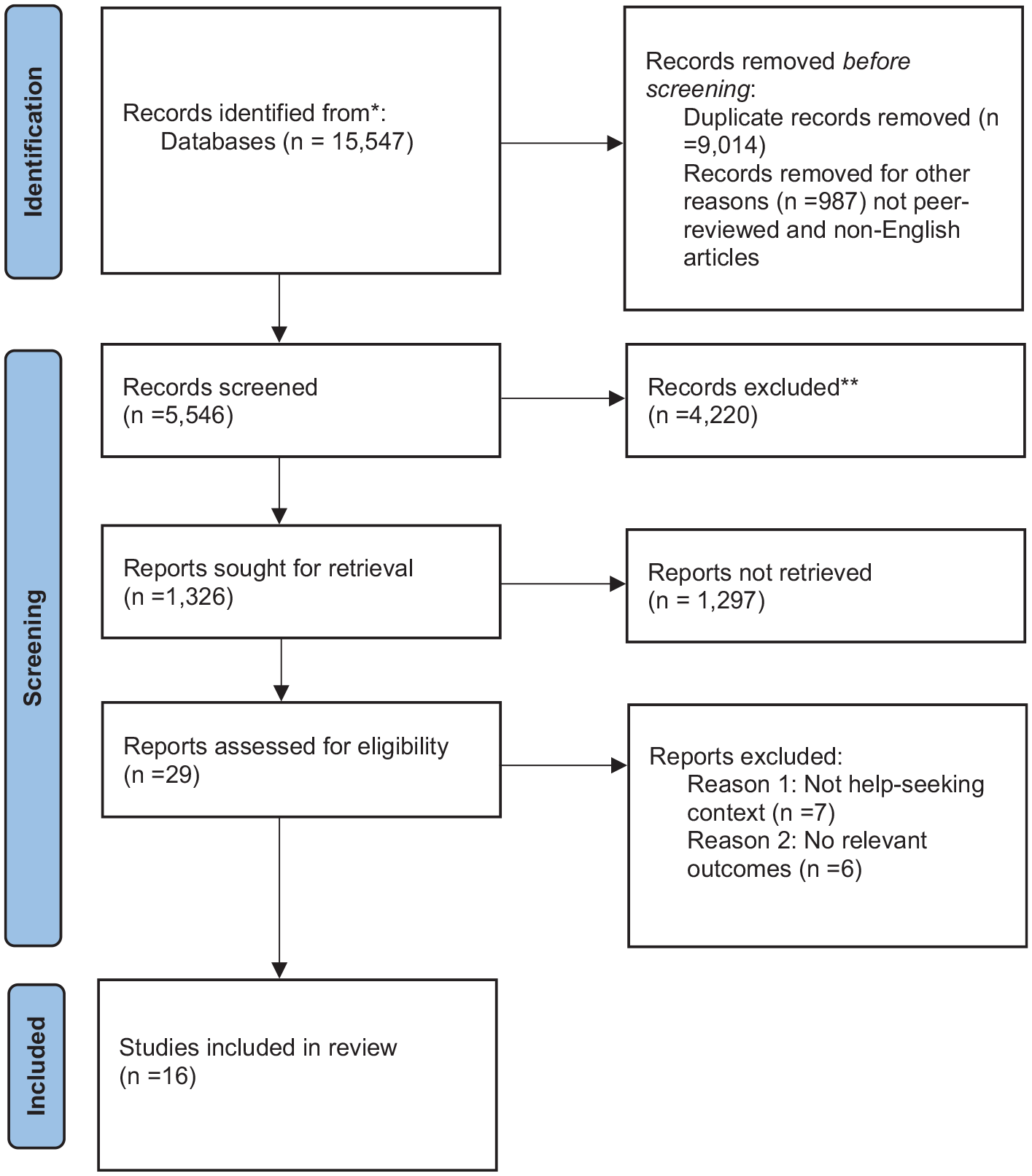
Review Flow
Reviewing Process
The data were analyzed from the included articles. Two investigators first screened titles and abstracts to address the review study’s research question, followed by subsequent searching for full texts. Two investigators identified and coded the study’s title, the participants’ demographic features, author and publication information, and the study’s aims in the data extraction form. The second and fourth authors resolved any disagreements about selecting articles.
The initial search yielded 15,547 potential articles. After duplicates were removed, 5,456 articles were uploaded into Endnote. Following the first round, the second author reviewed the title of the articles at the initial search to remove any apparent female victims not related to male DV. After that, 1,326 articles were screened by titles and abstracts. Reviewing the 1,326 articles, 29 were selected to be thoroughly and deeply reviewed, including reference pages for the gray search. After carefully reviewing the 29 included articles and references, we ended up with 16 articles that met the study’s eligibility criteria.
Data Extraction and Quality Assessment
We included qualitative, quantitative, and mixed-method studies in this presented analysis. A systematic qualitative review can effectively integrate the results of qualitative and quantitative surveys and produce mixed-research syntheses (Sandelowski et al., 2007). The thematic analysis provides a highly flexible approach that can be modified for the needs of many studies, providing a rich and detailed yet complex account of data (Braun & Clarke, 2006; King, 2004). Thematic analysis is also helpful in summarizing key features of a large data set, as it forces the researcher to take a well-structured approach to handle data, helping to produce a clear and organized final report (King, 2004). In the included quantitative studies, the data analysis was descriptive and examined the help-seeking strategies of the victims. Therefore, thematic analysis can be used to analyze qualitative and quantitative data results.
The eligible studies for complete review are reported in Table 1, including the title of the study, author name and year, method, participants’ demographic information, study country settings, and topic by two authors. The second author deeply analyzed the data using Braun and Clarke’s (2006) thematic analysis method to identify themes among the included studies. To increase the trustworthiness of the study, the second author discussed and reported the emerging themes along with other authors. The authors followed Braun and Clarke’s (2006) six-phase thematic analysis technique. In the first step, all the included studies were read and re-read to become familiar with the data. In the second step, the data was organized meaningfully and systematically. After the data were organized, we examined and highlighted the codes, some of which fit into a theme. In the fourth step, we reviewed and developed the preliminary themes; after that, we defined the themes to what each theme is about. In the final step, we reported each theme. The themes were summarized, patterns were identified by the second author, and any discrepancies were resolved by discussion with all the authors in terms of transitoriness.
Included Studies.
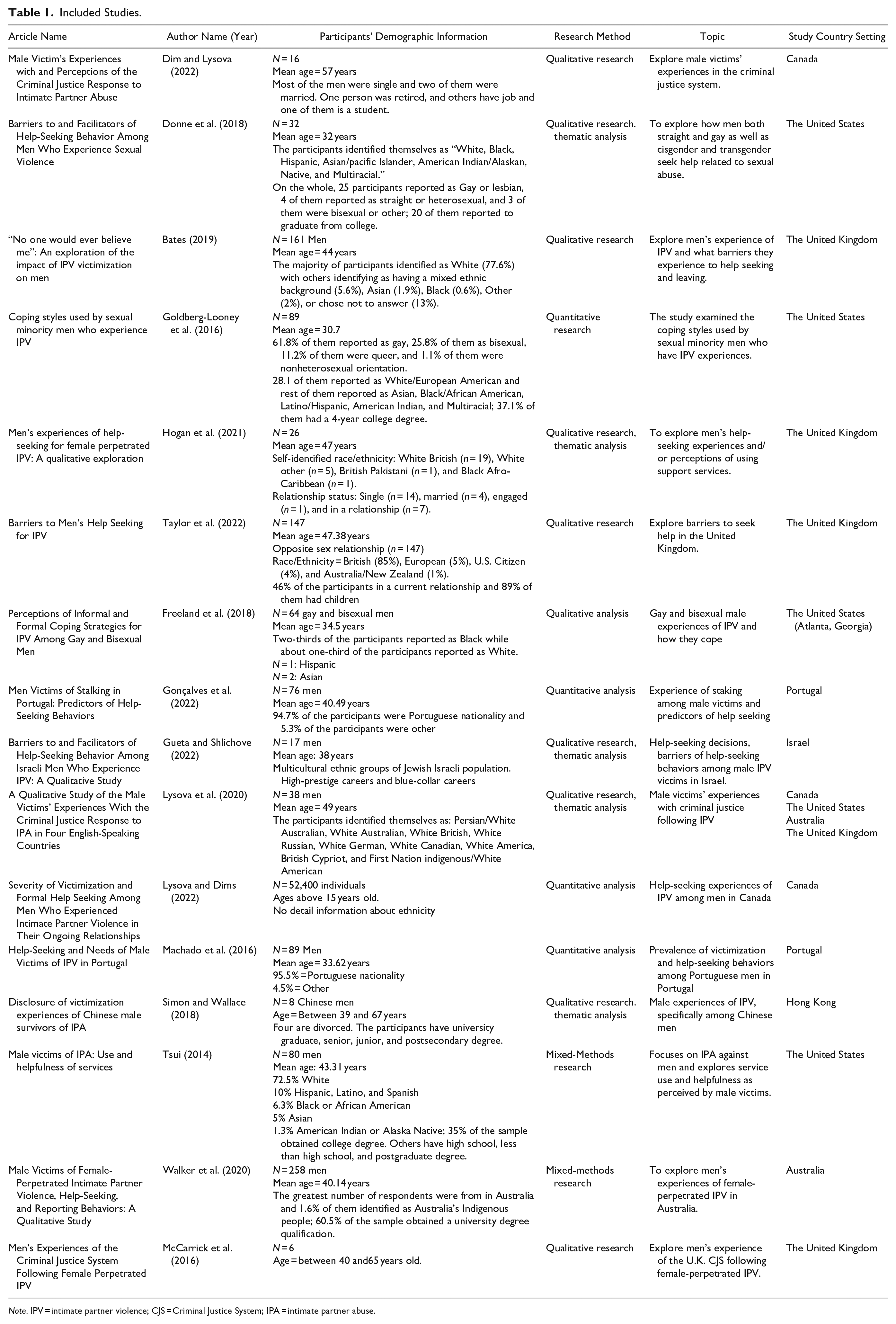
Note. IPV = intimate partner violence; CJS = Criminal Justice System; IPA = intimate partner abuse.
Results
The initial search across the different databases retrieved 15,547 articles, of which 5,456 were irrelevant based on the screening criteria. A total of 29 articles were assessed at the complete text screening stage, and 16 articles were selected to be part of the systematic review. The studies were published in peer-reviewed journals between 2012 and 2022 and used qualitative, quantitative, and mixed methods. The included studies focused on various help-seeking experiences of DV of men victims and obstacles of help-seeking attitudes.
Characteristics of the Study Population
Overall, 16 articles provided demographic information about the participants, such as their gender, age, and race/ethnicity. Some studies intentionally included men of diverse sexual and gender identities (Donne et al., 2018; Freeland et al., 2018; Goldberg-Looney et al., 2016;), and others recruited among heterosexual men and did not specify these details (Bates, 2019; Machado et al., 2016; McCarrick et al., 2016; Simon & Wallace, 2018; Tsang et al., 2021). Most studies mentioned the details of age range for recruitment. The studies were conducted in Israel, Kenya, Hong Kong, Portugal, Canada, Australia, the United Kingdom, and the United States (Bates, 2019; Dim & Lysova, 2022; Donne et al., 2018; Freeland et al., 2018; Goldberg-Looney et al., 2016; Gonçalves et al., 2022; Gueta & Shlichove, 2022; Hogan et al., 2021; Lysova & Dim, 2022; Lysova et al., 2020; Machado et al., 2016; McCarrick et al., 2016; Simon & Wallace, 2018; Taylor et al., 2022; Tsui, 2014; Walker et al., 2020).The majority of the included studies mentioned the participants who identified as White, Black/African American, Hispanic/Latino, Asian/Pacific Islander, Chinese, Portuguese, Canadian, Korean, Israeli Arabs, Australia/New Zealand, European, and mixed ethnicity (Bates, 2020; Donne et al., 2018; Freeland et al., 2018; Gueta & Shlichove, 2022; Hogan et al., 2021; Lysova et al., 2020; Taylor et al., 2022; Walker et al., 2020). Some of the included studies mentioned the participant’s marital status as single, married/non-married or common-law relationship, cohabitation, divorced/separated, and widower (Dim & Lysova, 2022; Freeland et al., 2018; Gonçalves et al., 2022; Hogan et al., 2021; Lysova & Dim, 2022; Machado et al., 2016; Simon & Wallace, 2018; Tsang et al., 2021; Tsui et al., 2014; Walker et al., 2020). Other studies mentioned that some participants identified as being in a current relationship during the study (Bates, 2020; Hogan et al., 2021). Some of the included studies stated the participants’ employment status, education level, and occupations (Dim & Lysova, 2022; Donne et al., 2018; Freeland et al., 2018; Goldberg-Looney et al., 2016; Gonçalves et al., 2021; Gueta & Shlichove, 2022; Machado et al., 2016; Simon & Wallace, 2018; Tenkorang et al., 2021; Tsang et al., 2021; Tsui et al., 2014; Walker et al., 2020).
Themes
The three themes emerged from the included studies, which helped address the current study’s aim. The themes were cultural stigma and masculinity, fear of disclosure, and negative experiences with support services (Table 2).
Critical Findings.
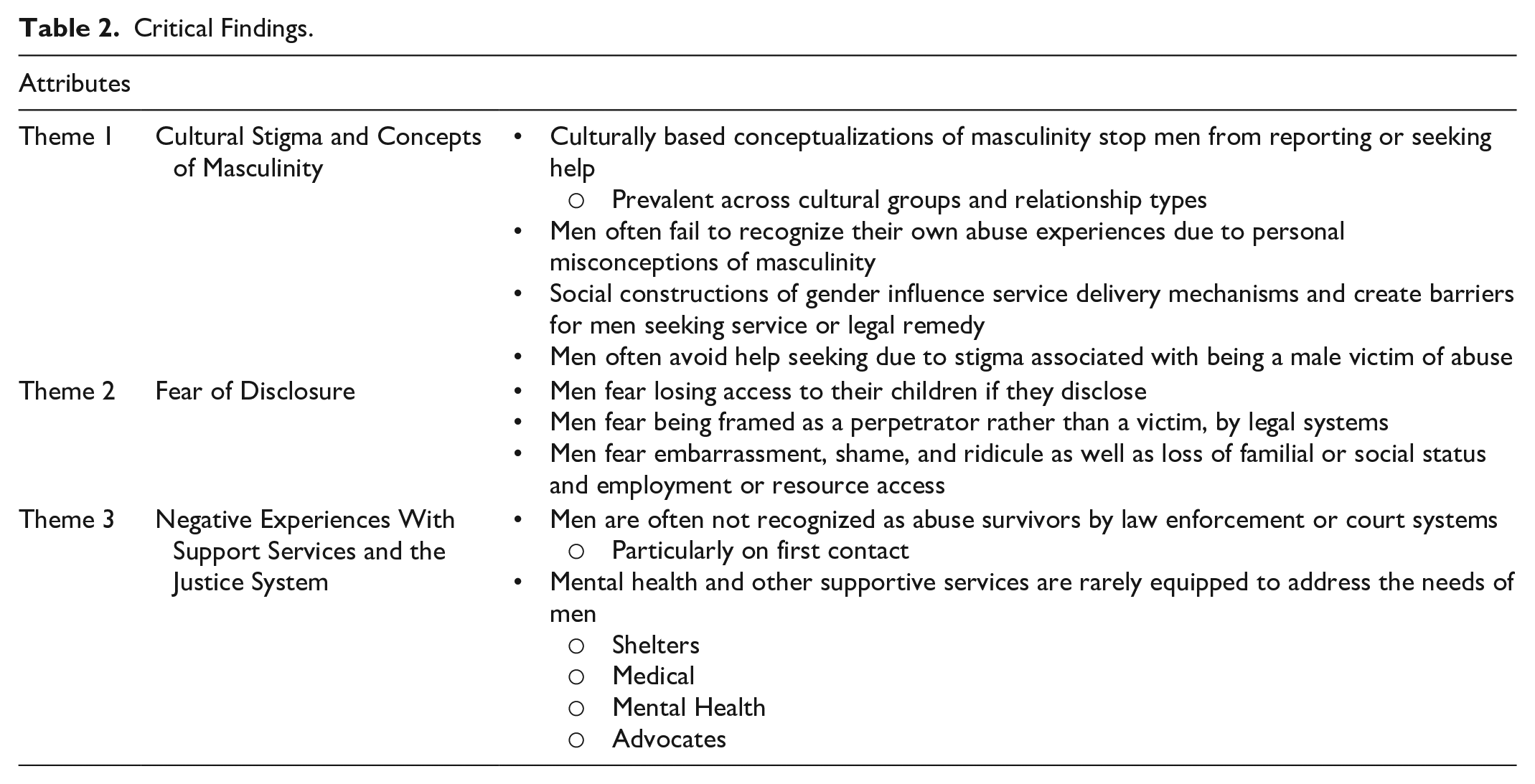
Theme 1: Cultural Stigma and Concepts of Masculinity
The studies stated how cultural expectations and masculinity hinder them from seeking help. Most studies highlighted how men faced sociocultural gender-based expectations that created challenges in seeking help. This was directly connected to hesitation to access services. The studies showed how traditional gender norms encourage men to appear strong and unemotional and how seeking help makes men appear weak in social spaces where men are measured by their resilience (Bates, 2019; Donne et al., 2018; Gueta & Shlichove, 2022; Hogan et al., 2021; Lysova et al., 2020; Machado et al., 2016). One participant reported: “I am not believed, and people look at me as if I am pathetic and not a real man for allowing it to happen to me” (Bates, 2019, p. 501).
Another participant reported: “Pride is not it, male pride, I suppose, don’t want to admit you, I don’t know . . . I suppose it’s a weakness, isn’t it; you think you’re weak because you let your wife beat you up” (Hogan et al., 2021, p. 938).
In addition, the participants mentioned cultural stigma and how cultural expectations depict male gender roles as strong and dominant (Gueta & Shlichove, 2022; Hogan et al., 2021; McCarrick et al.,2016; Simon & Wallace, 2018; Tsang et al., 2021). The participants spoke of fears that others would not believe their abuse stories (Gueta & Shlichove, 2022; McCarrick et al., 2016; Taylor et al., 2022; Tsang et al., 2021). For example, one Israeli man reported that: Can you imagine that . . . an Israeli man [would] go to the police? Maybe a Scandinavian man . . . European . . . American . . . Canadian. But an Israeli man [who] lives in the Israeli reality and goes through . . . Would an Israeli man ask for help from police officer in dealing with a woman? No way. (Gueta & Shlichove, 2022, p. 5)
A British man reported that “It is a shame like that I expect from society or because I have not measured up in like some way to my perception of what I should be as a [male] member of society” (Hogan et al., 2021, p. 938). In addition, for some men, there was a perception that a public admission of these phenomena would bring dishonor to their families.
Men with diverse sexual orientations mentioned that they felt male victims of IPV in male/male relationships were not given the same respect as female victims who had experienced IPV in female/male relationships (Freeland et al., 2018). This was due to the belief that men are not expected to experience IPV. Gay and bisexual men reported seeking help would be difficult for LGBTQ+ victims out of concerns around stigma (Donne et al., 2018; Freeland et al., 2018; Goldberg-Looney et al., 2016). One of the participants said: And are you gonna go? Because you’re ashamed about it. You’re a man and you’re allowing another man to beat on you. That’s my attitude. Like I said, I could whoop him. The point is another man going for help cause another man is beating on him. And that’s embarrassing. That’s my opinion. (Freeland et al., 2018, p. 309)
Theme 2: Fear of Disclosure
Participants noted several reasons for not disclosing their experience of abuse to family and friends and why they hesitated to seek help from informal and formal resources. The first and strongest reason was the fear of their children being left behind. Participants described that their partners continually threatened a loss of relationship with their children against them, so they feared losing custody if they reported the abuse (Dim & Lysova, 2022; Taylor et al., 2022; Tsang et al., 2021; Walker et al., 2020). Also, the male DV survivors repeatedly spoke about how female abusers utilized the perception of the gendered aggressor narrative to gain full child custody and showed great concern in their children being coerced into rejecting them (Dim & Lysova, 2022; Taylor et al., 2022).
Another fear that male DV victims described was how they felt a cultural duty to protect their partner and felt embarrassed to share with their family and friends how they, themselves, had been hurt (Simon & Wallace, 2018; Tsang et al., 2021; Walker et al., 2020). One participant reported, “I did not want them to think badly of my partner” (Walker et al., 2020, p. 5). Male DV victims reported various reactions from family and friends when they disclosed their abusive relationship and asked for help. Participants were concerned that seeking help would negatively impact their roles within their families, communities, and workplaces (Taylor et al., 2022; Walker et al., 2020). Participants said their friends and family would be shocked and surprised, and some reported expectations that family and friends would not believe them or would downplay the seriousness of the abuse (Taylor et al., 2022; Walker et al., 2020). One participant said, “Friends do not believe me that my ex-partner could behave as she does” (Walker et al., 2020, p. 6). Male victims mentioned friends and family implying that they were at fault for provoking the maltreatment. One participant said: “I was bashed over the head with an iron by a partner. My male friends laughed at me, and the few women I told asked what I did to provoke such an action” (Walker et al., 2020, p. 6).
Gay and bisexual participants identified unique challenges in relying on friends and family. Many advised that they could not rely on this form of support because friends and family were not supportive of their same-sex relationship (Donne et al., 2018; Freeland et al., 2018; Goldberg-Looney et al., 2016).
Another reason male victims hesitate to disclose is that most male victims thought no one would believe them if they didn’t have witnesses or evidence of physical harm (Dim & Lysova, 2022; Walker et al., 2020). One Canadian participant reported that “Her abuse was verbal and only destroyed my mind. There were no physical marks,” and another Canadian participant mentioned that “The police would not believe me, and it was verbal, and it was like they would do nothing” (Dim & Lysova, 2022, p. 11).
Theme 3: Negative Experiences With Support Services and Justice System
Participants shared how the criminal justice system and police officers, notably, appeared to have a gender-stereotypical perception of IPV, which led to inadequate support of male victims (Dim & Lysova, 2022; Freeland et al., 2018; Hogan et al., 2021; Lysova et al., 2020; Machado et al., 2016; Taylor et al., 2022; Walker et al., 2020). One participant reported, “I was not only not listened to, but I was also threatened with arrest if I continued to make these allegations because women just do not do those sorts of things” (Walker et al., 2020, p. 7). The participants often encountered negative experiences in courts, limiting the desire of many to engage in help-seeking behaviors (Lysova et al., 2020). Furthermore, gay and bisexual victims stated how police were recognized as a common way to address IPV in female/male relationships but that most of them had a negative perception of using the criminal justice system to solve IPV in their communities (Freeland et al., 2018). The victims spoke of how police had difficulty recognizing the perpetrator partner because it was a relationship between two men, and the judge did not take them seriously (Freeland et al., 2018). One participant said, We had to go to court on the issue where you could actually look at me and tell something had gone on. I had pictures to prove it, I had tons of stories to tell. And because I get in front of the judge, and the judge kind of like dismisses it. . . . But I felt slighted because I felt like I wasn’t taken seriously. (Freeland et al., 2018, p. 307)
Moreover, for men who sought help from IPV services and mental health professionals, the response often led to feeling more victimized. Many felt IPV support services would not help them simply because they were men (Bates, 2020; Hogan et al., 2021; Machado et al., 2016; Taylor et al., 2022). The victims reported that they had not been believed and had been mocked or laughed at (Bates, 2020; Hogan et al., 2021; Machado et al., 2016; Taylor et al., 2022). One participant reported: I was transferred to a bigger hospital after my first week of stabbing recovery. Straight back into the ICU. A young doctor asks me as they wheeled me in “So tell me, did you deserve it or is she just a crazy bitch?” (Bates, 2020, p. 502)
Another victim reported, “Support wasn’t out there, not in my eyes, I couldn’t see any support for male domestic abuse, you know, I never saw any support out there” (Hogan et al., 2021, p. 938).
The lack of supportive services and even a fundamental recognition of male victimization deter help-seeking behavior among male victims of DV (Hogan et al., 2021; Lysova & Dim, 2022; Lysova et al., 2020). Participants explained how recognizing their victimization by traditional sources, such as lawyers and mental health professionals, promoted their help seeking. This type of behavior could be evidenced by responses that confirmed their need for protection and direct advice on how to get help for IPV. Professionals’ directive and protective attitudes were described as facilitating further help seeking, particularly for gay and bisexual men (Freeland et al., 2018; Gueta & Shlichove, 2022; Taylor et al., 2022).
Some gay and bisexual men spoke about how IPV organizations exclusively provide for women victims, so they were often unsure of where to go (Freeland et al., 2018). One gay victim said, “I think women are better known in the community. Not sure the gay man knows there are resources available which are similar” (Freeland et al., 2018, p. 306). In addition, some participants struggled to find the “right fit” or a professional who would be “suitable enough” to understand their perspectives and support them in a nonjudgmental way (Freeland et al., 2018). One participant noted another barrier is “just finding someone I am comfortable talking with. Because I may not necessarily be comfortable to talking to just anybody. I need to be comfortable with that person” (Donne et al., 2018, p. 196).
Study results detailed how the severity of their IPV experience and the way(s) they felt legitimized and accepted as a victim, significantly affected their willingness to attempt help seeking (Gonçalves et al., 2021; Tenkorang et al., 2021). In Kenya, 24.8% of men in one study sought help from informal support networks such as family and friends, compared to 10.6% who sought help from traditional agencies (Tenkorang et al., 2021). Research among men victims of stalking in Portugal highlighted how they search only for help when they have experienced a more significant negative impact in their lives (Gonçalves et al., 2021).
Discussion
This research was conducted to explore the literature available on male survivors of DV and their challenges with help-seeking attitudes. While the literature on male survivors of DV is growing, we acknowledge that there is a wealth of research available on female victims of DV but far less on men. The literature on DV survivorship has primarily excluded the male voices and, in doing so, speaks to the cultural alienation that men have experienced when dealing with the phenomenon. This article offers insight into a male experience with DV and potential reasons for underreporting and a lack of help-seeking behaviors. We have provided in our findings the context of literature and theoretical framing to address the research question. We presented three emerging themes found in the data. These are cultural stigma and masculinity, fear of disclosure, negative criminal justice response, and experiences with support services. Utilizing the theories mentioned above on intersectionality and the MSRV, we can continue to unpack these themes.
The first theme of cultural stigma and masculinity shows up in the literature in the various studies. The data suggest a broad spectrum of acceptance related to men as victims of DV. This indicates the socialization of maleness in childhoods, homes, educational institutions, and communities and is further complicated by the concepts of intersectionality. From this perspective, a “man” is not a unidimensional person but can be a father, husband, community leader, or any of a wide variety of identities in unison. The socially constructed measures of maleness do not consider the intersecting complexity of lived experience in the lives of men and therefore make it difficult for men to seek help. The WHO acknowledges that men are victims of IPV and sexual violence. Their report further states that there is no difference between same-sex and heterosexual relationships in terms of why the violence happens.
With social expectations of masculinity being intrinsically connected to power, it bears to reason why many of the men from this data had serious concerns about others believing them. They knew they were being abused but didn’t know how to prove it without witnesses and physical evidence.
The cultural socialization of men, the acculturation of being a man, and the given honor of being the head of your household, whether heterosexual, bisexual, or homosexual, is an enormous undertaking in our society, often held with great reverence. Cultural constructions teach men from infancy that they are expected to lead family units in clear and decided ways. Men are culturally expected to be physically strong, intellectually impressive, and financially wise. The men in this study consistently report if they have found themselves in a violent relationship and are not seen as the provider and protector, the community questions every aspect of their identity, including physical, intellectual, and cultural capabilities.
The second theme of fear of disclosure seems to be connected to everything else and is reinforced by the lack of support when men disclose. The studies showed how traditional gender norms encourage men to appear strong and unemotional and how men believe seeking help (disclosure) makes them look weak. The men from the data stated their awareness of these cultural norms, as evidenced by the jokes, disbelief, the downplay of the seriousness of their abuse, and questions about the victims themselves provoking the attacks and abusive behaviors. The data spoke of the embarrassment caused by preparing to disclose to family, friends, and authorities, much less the psychological and emotional impact following through on the disclosures. Fear was ever present.
The studies on male DV outline several reasons for not disclosing. When men become brave enough to seek help (formal or informal), professionals, as well as those in informal support systems, should keep the following in mind:
Men fear the loss of custody of their children
Men fear others thinking that their partner is the wrong person
Men fear feeling embarrassed and carrying the shame
Men fear the community seeing them as unable to protect their family
Men are fearful of their change in role within their community and workplace
Men fear family and friends implying they provoked the assault
Men fear the loss of support of their family and friends, especially if they are in a same-sex relationship
These fears are prevalent in the hesitation impacting men who are experiencing DV and challenged by the idea of seeking help.
The third and final theme is negative criminal justice response and diminished experiences with support services. DV is a prolonged and complicated assault, only the surface of which is visible to the criminal justice system. The criminal justice system has shown a documented bias negatively impacting men who experience DV. The system reacts to and toward men as if the violence is unrealistic unless there is a serve physical breach of safety for the man, such as being stabbed by a partner. Some of the statements toward the men by police officers were received in the data as cavalier, inconsiderate, and disrespectful, with no understanding of the complexity of violence within intimate relationships.
The study participants tried to make sense of the criminal justice system and their interactions with police officers. To demonstrate further disconnection from the realities of the phenomenon, the criminal justice system consistently set in motion referrals to resource services that had difficulty providing adequate support for the male victims and their families. Systemic intervention is warranted.
This review found that there are many reasons why males underreport DV victimization. Most of these are much different from the reasons for underreporting among women. The three themes provide a way to assist those who work with male victims of DV.
Implications
Identifying barriers to help-seeking behaviors by men who have experienced DV provides insights into implications for practice. The barriers men face in legal services are perceived as lack of trust, fear of losing their children’s custody, and not believing men as victims. These barriers show why DV services need to recognize the unique experiences of DV men survivors and provide appropriate intervention to meet their unique needs. Professionals in the field should be mindful of non-judgment and aware of the intersecting barriers of male victims’ encounters. Therefore, it is crucial to develop efficient and effective intervention and prevention programs to meet the unique needs of men who are DV survivors. Also, it is significant to mention that DV is not only a female issue. It can occur among men and in all types of relationships. The current literature on help-seeking challenges for male DV survivors provides information from existing qualitative, quantitative, and mixed-method studies. The present study offers various sample sizes and cultural knowledge to future researchers to explore further needs of male survivors.
In the current review, seeking help in the criminal justice system is often unfruitful for men (Dim & Lysova, 2022; Freeland et al., 2018; Hogan et al., 2021; Lysova et al., 2020; Machado et al., 2016; Taylor et al., 2022; Walker et al., 2020). Male survivors are hesitant to contact professional agencies as they fear losing their children’s custody and not being believed (Dim & Lysova, 2022; Taylor et al., 2022; Tsang et al., 2021; Walker et al., 2020). In addition, men often don’t recognize themselves as victims. Professionals in the criminal justice system play a significant role in ensuring victims benefit from the criminal justice process. In the current study, men reported negative experiences with police officers, judges, and other criminal justice professionals (Table 3).
Implications.
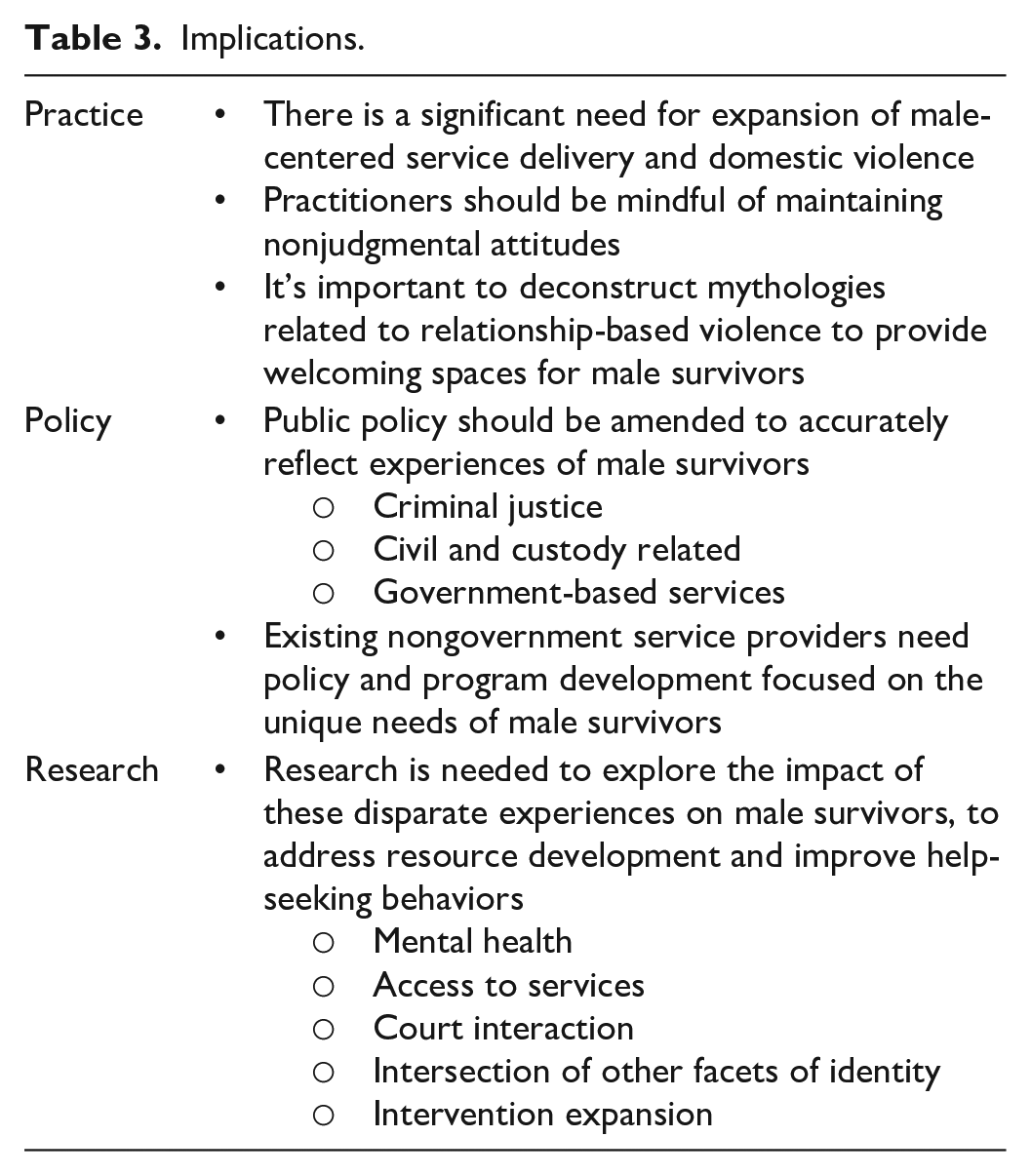
Strengths, Limitations, and Future Directions
Multiple strengths were identified in this study. First was the diversity of the sample. The study includes male voices from various geographic locations, educational backgrounds, ages, and sexual orientations and reflects the full range of experiences available in the current literature. Data included in this review incorporates perspectives from around the globe and across multiple paradigms of culture and identity. In addition, the present study provides qualitative, quantitative, and mixed-method research with varying sample sizes. There are also several limitations existing in the present study. The study only reviewed English language peer-reviewed journals. While efforts were made to enhance the international scope of their review, other data in different languages could have been an asset. In addition, the present study only focused on specific databases, so future research might broadly focus on comprehensive databases and searches. Significant gaps identified for future research could include a focus on coping strategies, mental health issues, or positive experiences with legal resources. The findings from this study also suggest that more research is needed to explore what a DV experience entails and how those quantifiers are differential based on the survivor’s gender and relationship type.
Conclusion
The present study contributes to understanding barriers to help-seeking attitudes of men DV victims in society. We critically explored and summarized these studies to understand men’s challenges when seeking help formally or informally in the community. The study includes men from various cultures, and the current research highlights those men with similar experiences and fears when seeking help. Men believe that cultural acceptance, cultural constructions of masculinity, and a lack of support and resources, are all challenges for them to access meaningful support.
Footnotes
Declaration of Conflicting Interests
The author(s) declared no potential conflicts of interest with respect to the research, authorship, and/or publication of this article.
Funding
The author(s) received no financial support for the research, authorship, and/or publication of this article.
Author Biographies
