







Abstract
Parent–Child Attachment (PCA) and Hostile Attribution Bias (HAB) are closely related to aggression, but findings regarding their relationships are inconsistent. There is a lack of understanding of the underlying mechanism between PCA and aggression. This review employed meta-analysis approaches to investigate the associations between PCA and aggression, as well as between HAB and aggression, and the mechanism for the PCA–aggression association. An article search was conducted in CNKI, PubMed, PsycINFO, Web of Science, ProQuest, and Google Scholar. Totally, 118 studies involving general populations and those at high risk for aggression were included. Results revealed negative associations between Parent–Child Attachment Security (PCAS) and aggression (ρ = −.267, p < .001) and positive associations between Parent–Child Attachment Insecurity (PCAI) and aggression (ρ = .240, p < .05). HAB and aggression were found to be positively associated (ρ = .303, p < .001). As for the PCAS–aggression association, a larger effect size was found in females than in males. The HAB–reactive aggression association was stronger than the HAB–proactive aggression association. In Eastern culture, the association between HAB and aggression was stronger than in Western culture. HAB mediated the association between PCAS and aggression. Our findings contribute to the understanding of the occurrence and development of aggression by establishing an association between attachment theory and the social information processing model. The practical implications include interventions targeting cultivating PCAS and alleviating HAB, which might serve as effective ways to reduce aggression, yet aggression type, gender, and cultural background should be taken into consideration.
Introduction
Aggression poses profound issues for individuals, families, and society, incurring major adverse impacts (Kawabata et al., 2010; Naumova, 2022). Substantial research has identified Parent–child Attachment (PCA) and Hostile Attribution Bias (HAB) as two interconnected factors predicting aggression (Colton et al., 2023; Dodge, 2006; Gallarin et al., 2021; Moretti et al., 2004). PCA elucidates the developmental origins of aggression (Bowlby, 1973), whereas HAB provides insights into its behavioral occurrence (Crick & Dodge, 1994). However, findings on PCA–aggression and HAB–aggression links vary (Martinelli et al., 2018; Savage, 2014; Tuente et al., 2019). Determining the magnitude and mechanisms of these associations is thus critical.
Conceptualization of Aggression and PCA
Existing categorizations of aggression inform the framework for understanding aggression in this study. Aggression can be categorized into physical, verbal, and relational aggression (Li et al., 2013; Martinelli et al., 2018). Furthermore, examining the motivations behind aggressive behavior can be categorized as either reactive aggression (arising as a response to perceived threats, provocation, or frustration) or proactive aggression (deliberately initiated to achieve specific goals or desired outcomes) (Vitaro et al., 2006). The consequences of aggression encompass both physical and psychological harm (Anderson & Bushman, 2002; Felippe et al., 2021). Additionally, aggression can be distinguished as either trait or state aggression (Tremblay & Belchevski, 2004). Trait aggression refers to a stable characteristic or disposition within an individual predisposing them to engage in aggressive behavior more frequently or intensely than others. In contrast, state aggression is more influenced by situational factors rather than inherent traits.
In alignment with the characteristics outlined above, this study defines aggression as any behavior or attention directed toward another person with the intent to cause physical or psychological harm. Given that prior research predominantly regarded aggression as a trait-like behavior, this study specifically focuses on trait aggression (Reyna, 2011; Tremblay & Belchevski, 2004).
Attachment is initially defined as the affectional bonds between individuals and caregivers in an infant’s and caregivers’ early interaction (Bowlby, 1973). Bowlby (1977) and Ainsworth et al. (1978) regarded this affectional bond as a “relatively long-enduring tie” characterized by a “need to maintain proximity.” These early affectional bonds play a crucial role in shaping an individual’s attachment types. Ainsworth et al. (1978) proposed two primary attachment types: secure attachment and insecure attachment, the latter encompassing various patterns (e.g., ambivalent attachment, anxious-avoidant attachment). In contrast to infant–caregiver emotional bonds, adult emotional bonds are primarily motivated by sexual and affiliative factors (Kobak & Madsen, 2011). Consequently, Bartholomew and Horowitz (1991) identified four distinct attachment patterns in young adults: secure, anxious-preoccupied, dismissive-avoidant, and fearful-avoidant attachment patterns. Attachment can also be categorized based on attachment figures into PCA and adult attachment (Griffin & Bartholomew, 1994; Moretti & Peled, 2004).
PCA further subdivides into Parent–Child Attachment Security (PCAS) and Parent–Child Attachment Insecurity (PCAI), representing the two attachment types under consideration in this meta-analysis. This choice is grounded in attachment theory’s emphasis on parents as primary attachment figures during a child’s socialization, influencing attachment styles with other figures in later life (Bowlby, 1973, 1988). Moreover, variations in the effect size of the PCA–aggression association (e.g., Ooi et al., 2006; Zhao et al., 2020) necessitate further exploration through meta-analytical methods.
Attachment Theory and Aggression
Attachment theory (Bowlby, 1973, 1988) offers a framework for understanding the development of aggression in an individual’s early life. According to attachment theory, early attachment security not only yields positive outcomes in terms of regulating emotions and promoting prosocial behavior (Cooke et al., 2018; Deneault et al., 2023) but also acts as a protective barrier against anxiety and aggression (Colonnesi et al., 2011; Fearon & Roisman, 2017). Conversely, attachment insecurity, including its subdimensions such as attachment anxiety and attachment avoidance, appears to have detrimental effects on positive child outcomes and may elevate levels of aggression (Savage, 2014).
A key concept in attachment theory, the “internal working model,” elucidates the impact of attachment on aggression (Bowlby, 1973, 1988). Internal working models are cognitive representations of an individual’s beliefs about themselves and others, shaped by early interactions with caregivers. These models significantly influence individuals’ psychological expectations regarding future interpersonal interactions, providing a cognitive foundation for processing and interpreting new interpersonal information (Gillath & Karantzas, 2019). Securely attached individuals tend to develop internal working models that perceive others as trustworthy, benevolent, and deserving of connection. This leads them to resolve interpersonal conflicts amicably and display a lower inclination toward aggression (Dallaire & Weinraub, 2007). Conversely, individuals with attachment insecurity may form internal working models that view others as unreliable, hostile, and uncaring. This predisposes them to resort to aggressive behaviors when facing interpersonal challenges, contributing to the development of aggression (Hennefield et al., 2022).
Previous empirical research and meta-analyses have explored and identified significant correlations between attachment and aggression overall (e.g., Fearon et al., 2010; Voulgaridou & Kokkinos, 2020; Zhao et al., 2020). However, past meta-analytic reviews have not specifically delineated the unique relationship between PCA and aggression. Given the pivotal role of parents as primary attachment figures, a targeted meta-analytic investigation is warranted to clarify the specific connection between PCA and aggression.
Potential Moderators of the Association between PCA and Aggression
Attachment theory and numerous empirical studies have consistently shown a significant association between PCA and aggression. However, the strength of this association may be influenced by various factors, including age and gender (Ooi et al., 2006). First, it is essential to investigate whether age plays a role in the PCA–aggression association. Some theorists argue that early attachment remains stable from infancy through adulthood, continually influencing cognition and behavior (Fraley, 2002). Conversely, others contend that the effect of early attachment on these outcomes may diminish with development (Li et al., 2023; Maalouf et al., 2022). Second, exploring the potential moderating effect of gender is crucial. A previous meta-analysis found that the link between attachment insecurity and childhood externalizing behaviors, including aggression, was stronger among boys compared to girls (Fearon et al., 2010). However, Hubbard and Pratt (2002) discovered that key predictors of female delinquency largely resemble those of males.
Other factors that could impact the PCA–aggression association include the choice of measurement instruments, study quality, subtypes of aggression, cultural context, and characteristics of the study samples. Since there is no established integrative framework for these factors, the current study aims to explore them in an exploratory manner to understand their potential roles in moderating the PCA–aggression relationship.
Social Information Processing Model, HAB, and Aggression
The Social Information Processing (SIP) model, proposed by Crick and Dodge (1994), provides insights into the emergence of aggressive behavior. This model posits that an individual’s aggression is a response to external stimuli, influenced by the process of SIP. Within this framework, HAB plays a crucial role. HAB refers to an individual’s cognitive tendency to interpret another person’s ambiguous behavior as having hostile intentions (Osgood et al., 2021). HAB occurs during the information representation stage of SIP and is considered a direct trigger for aggression (Tuente et al., 2019).
Numerous studies have established the association between HAB and aggression within the context of the SIP model (e.g., Crick & Dodge, 1996; Hiemstra et al., 2019). However, there remains room for advancing our understanding through an updated meta-analysis. While previous reviews have explored the HAB–aggression link, they had limitations. For example, a meta-analysis involving children and adolescents reported a significant pooled effect size (r = .17) between HAB and aggression (Orobio De Castro et al., 2002). However, this review was conducted two decades ago and did not include adult populations or explore moderators. A more recent narrative review by Tuente et al. (2019) expanded to adults but lacked statistical aggregation of effect sizes. Given the time elapsed since previous reviews and their limitations, it is imperative to conduct a new meta-analysis synthesizing the latest research on HAB–aggression association and investigating sources of heterogeneity in effect sizes.
Potential Moderators of the Association Between HAB and Aggression
While the HAB–aggression association has been well-established, the correlation strength varies across studies (Martinelli et al., 2018). This variability may be explained by potential moderators. Specifically, previous research suggests HAB links more closely to reactive aggression than proactive aggression (Bailey & Ostrov, 2008; Martinelli et al., 2018). The SIP model posits reactive aggression arises from impulsive responses to perceived threats, shaped by HAB (Crick & Dodge, 1994). In contrast, proactive aggression pursues rewards absent real or perceived threats (Vitaro et al., 2006). Therefore, the HAB–reactive aggression association likely differs from that between HAB and proactive aggression.
Additionally, culture may serve as a moderator in the relationship between HAB and aggression. The cultural agency model of criminal behavior (Schmidt et al., 2021) theoretically suggests that culture influences both HAB and its associated outcomes, although empirical evidence supporting this model is limited. Given this theoretical framework, it is crucial to empirically examine whether culture exerts a moderating effect on the HAB–aggression link. Therefore, the current study seeks to investigate the potential moderating roles of culture and aggression type in the association between HAB and aggression. Furthermore, we explore other potential factors that may act as moderators of this relationship.
Mediating Role of HAB in the Association Between PCA and Aggression
The precise mechanisms underlying the association between PCA and aggression represent a pivotal topic in both theoretical and empirical research. Dodge’s model, which examines factors influencing HAB and subsequent aggression (Dodge, 2006), identifies two crucial components: neural predispositions and the socialization process, encompassing attachment experiences. These factors collectively shape cognitive schemas, governing the emergence of HAB and potentially leading to aggressive behavior. Here, “schema” refers to cognitive structures governing information processing, including beliefs about oneself, others, and future scenarios, primarily influenced by early interactions and experiences with primary caregivers (Mash & Dozois, 2003).
The concept of “schema” closely aligns with the notion of an “internal working model” in attachment theory, both recognized as cognitive elements essential for processing social information. Attachment theory suggests that individuals who develop secure attachments with their parents (PCAS) during their formative years tend to form positive internal working models. Conversely, those with insecure attachments (PCAI) in early life are more likely to develop negative internal working models. Drawing from attachment theory and the SIP model, it is reasonable to propose that individuals characterized by PCAS are less inclined to develop HAB, resulting in reduced tendencies toward aggression. Conversely, individuals with PCAI are more likely to harbor HAB, potentially leading to increased levels of aggression. Therefore, synthesizing the SIP model and attachment theory provides a robust theoretical framework for exploring the mediating role of HAB in the PCA–aggression association.
Several empirical studies (e.g., Balan et al., 2018; Li et al., 2022) have suggested the mediating function of HAB in the relationship between PCA and aggression. In a meta-analysis comprising 27 studies (including 9 on HAB and 18 on other forms of negative attribution bias), the findings reveal a modest to moderate pooled effect size for attachment insecurity and negative attribution bias (r = .22) (Li et al., 2022). Notably, Balan et al. (2018) identified the mediating effects of negative automatic thoughts in the relationship between attachment security and bullying among 476 adolescents. However, to our knowledge, no studies have yet employed meta-analytic techniques to investigate the mediating role of HAB in the PCA–aggression association.
The Present Study
This study aims to investigate the associations between aggression and PCA and HAB. Furthermore, it seeks to examine the mediating role of HAB in the association between PCA and aggression. The specific research objectives are as follows: (a) to comprehensively explore the overall strength of the PCA–aggression association; (b) to comprehensively explore the overall strength of the HAB–aggression association; (c) to identify potential moderators that may influence the PCA–aggression association; (d) to identify potential moderators that may influence the HAB–aggression association; and (e) to assess and analyze the mediating role of HAB in the PCA–aggression association.
It is important to note that all the potential moderators considered in explaining variations in the strength of these relationships are exploratory. This approach is chosen due to the absence of substantial evidence supporting constructing a comprehensive theoretical model that encompasses all conceivable moderators. Furthermore, our study includes samples drawn from both the general population and individuals at risk for aggression. This decision was made because previous research has predominantly focused on these specific groups, resulting in a substantial volume of data available for meta-analysis and ensuring robust statistical power.
Methods
Literature Search
Following the Preferred Reporting Items for Systematic Reviews and Meta-Analysis (Page et al., 2021) guidelines and preregistered in PROSPERO (registration number: CRD42023391360), we conducted a systematic literature search. Initially, we performed independent searches for each term in the following databases: CNKI, PubMed, PsycINFO, Web of Science, and ProQuest. To capture studies related to aggression, we employed the terms: “aggressi*,” “delinquent behav*,” “conduct problems,” “behav* problem*” and “external* behav*.” Given the focus of our meta-analysis on PCA, we used the term “attachment*” and included subtypes of attachment. We also included terms related to parent–child relationships: “mother relation*,” “father relation*,” “parental relation*,” as well as terms like “rejection,” “abandonment,” “safe haven,” and “secure base.” For HAB, we used the following search terms: “hostile,” “hostile attribution bias,” “social information processing,” “hostile intent attribution*,” “aggressi* cogniti* bias,” and “social cogniti* processing.” We combined these three sets of terms using the “AND” operator. In cases where multiple articles were published using the same sample, we included only one of the papers. Additionally, we used Google Scholar to search for any additional relevant studies. We manually screened the reference lists of the obtained research studies and examined previous reviews of the relevant literature. To gather correlation data, we also reached out to some researchers via email.
Inclusion and Exclusion Criteria
Studies eligible for inclusion in this meta-analysis met the following criteria: (a) inclusion of community samples and aggressive risk samples; (b) reporting of at least one Pearson’s correlation coefficient to represent relationships between variables of interest, or the provision of other statistics that could be translated to Pearson’s r, such as F and t; and (c) availability of studies in either English or Chinese languages.
Studies that met any of the following criteria were excluded from this meta-analysis: (a) studies focused on attachment figures other than parents; (b) studies focused on forms of aggression such as cyber-aggression, micro-aggression, and violence; and (c) studies involving offenders, psychopaths, or other groups with special psychological problems.
Data Coding
The authors coded the data to guarantee the correct rate of coding. Pearson’s correlation coefficient (r) was used as the effect size. Effect size, sample size, author(s), and publication year were coded. Other potential moderators of interest were coded, including age, gender, sample group, culture, attachment dimensions, aggression dimensions, research design, and the type of measures of three variables (attachment, aggression, and HAB). The coding details of these variables are illustrated in Appendix A.
Evaluation of the Study Quality
According to the characteristics of the examined studies, the study quality and potential bias were assessed using the National Institutes of Health Quality assessment tool for observational cohort and cross-sectional studies (National Institutes of Health, 2014). Scores from the national institutes of health’s quality assessment greater than 80% of the total score were considered to be of good quality; between 60% and 79% were regarded as fair; lower than 60% were deemed to be poor quality (George et al., 2022).
Meta-Analytic Procedure
In pursuance of the first four aims of our study, we conducted several three-level meta-analyses. The final aim of our study was examined by meta-structural equation modeling techniques (Cheung, 2015). The three-level meta-analyses were conducted using R version 4.1.2 (R Core Team, 2016), and the meta-structural equation modeling approach was achieved by using an online tool: shinyapps.io (Jak et al., 2021).
The dependence of effect sizes was considered in the three-level meta-analysis by dividing the variance of effect size into three levels: the variance between participants (level 1), the variance between effect sizes from the same study (level 2), and the variance between studies (level 3). The Metafor package (Assink & Wibbelink, 2016; Viechtbauer, 2010) was used for conducting three-level meta-analyses in the current study. The Fisher’s Z score was used to analyze the r statistic because of its non-normality distribution before it was converted back to r. Given that the measurement error may underestimate the real effect size, we corrected the measurement error of interested variables according to Schmidt and Hunter’s (2015) random effects meta-analytic technique (Dahlke & Wiernik, 2019). The statistical symbol “ρ” was used to refer to the corrected pooled effect sizes.
For the three-level meta-analysis, sensitivity analyses were first used to check the robustness of the pooled effect sizes (Harrer et al., 2021). The potential publication biases were then tested. Since we anticipated heterogeneity brought on by a variety of potential moderators, the random effect model of the three-level meta-analyses was chosen sequentially to estimate the pooled effect sizes. The heterogeneity of effect size was tested by the I2 and Q statistics (Higgins & Thompson, 2002). In the case of heterogeneity, meta-regressions were conducted to find the moderators of effect sizes.
The meta-structural equation modeling approach is a statistical technique that pools correlation coefficients of multiple variables from primary studies and then accommodates them in structural equation models (Jak & Cheung, 2018). To the best of our knowledge, there is no method for dealing with dependence effect sizes in meta-structural equation modeling (Jak & Cheung, 2020). Previous meta-structural equation modeling studies and classical meta-analysis have revealed that if effect sizes from multiple time points are reported in the literature, and the literature reports multiple effect sizes for one relationship simultaneously, the composite effect size is adopted (Schmidt & Hunter, 2015). By employing the full information maximum likelihood estimation method in the one-stage meta-structural equation modeling, we handled missing correlation coefficients (Jak & Cheung, 2020).
Results
Study Selection
The literature screening process resulted in 14,767 initial hits from the database search. After removing duplicates, 6,753 records were screened by title and abstract for relevance. Two independent coders conducted this screening with an acceptable inter-rater agreement of 87%. Additionally, manual searches of reference lists, relevant reviews, and direct author contacts yielded further studies. In total, 118 independent studies comprising 128 samples and 399 effect sizes with 65,408 participants met the inclusion criteria and were included in the meta-analyses. There were no date restrictions on publication status. The initial literature search was conducted on May 26, 2023, and extra search terms (e.g., rejection, abandonment, safe haven, secure base) were introduced on July 30, 2023, to enhance the comprehensiveness of the database search. Figure 1 provides a flow diagram depicting the complete literature screening process.
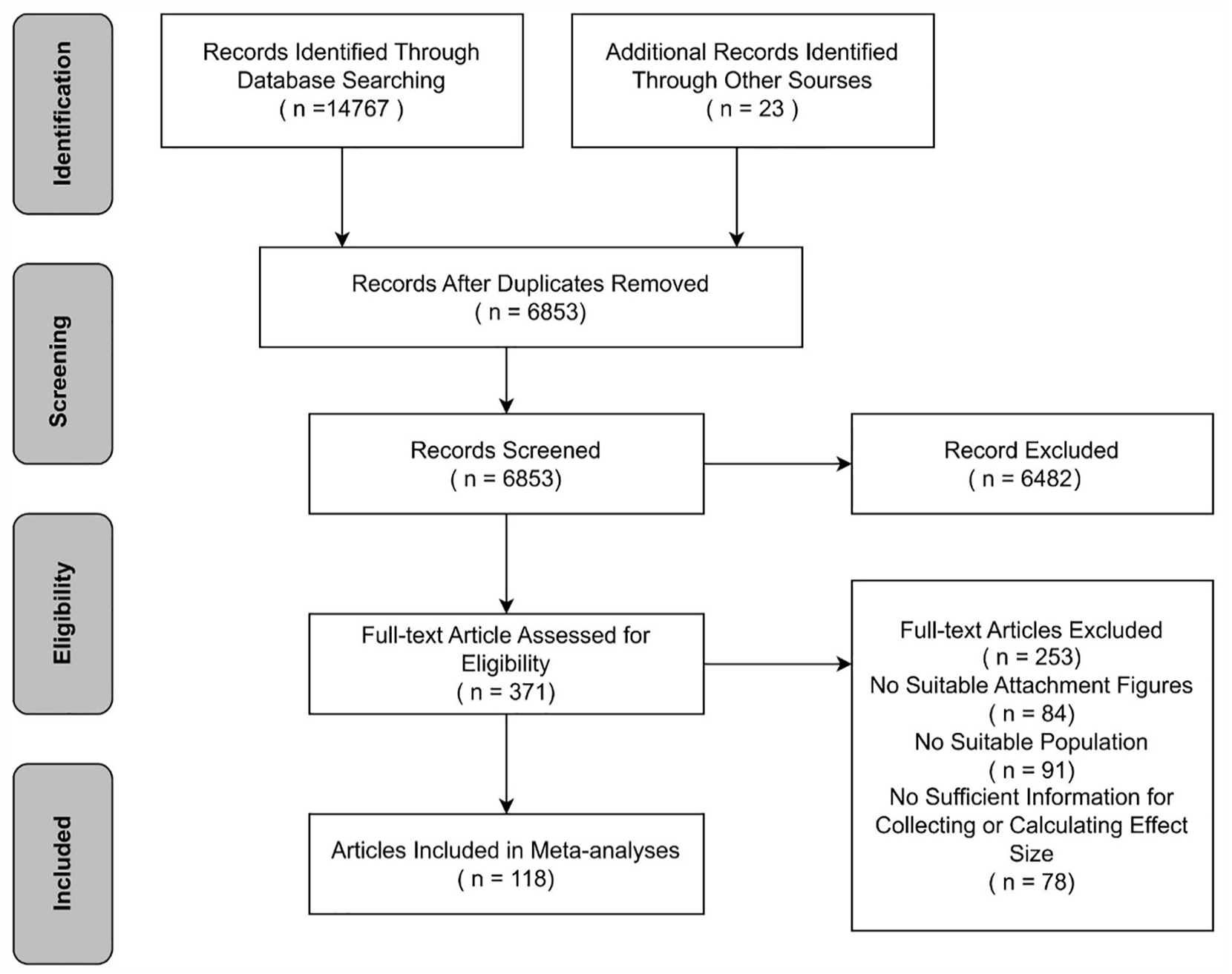
Preferred Reporting Items for Systematic Reviews and Meta-Analyses flow diagram of literature research.
Coding Agreement and Study Characteristics
To determine the coding reliability of categorical and consistent variables, the intraclass correlations coefficient (ICC) statistic and the Kappa statistic were used (Henriques et al., 2022; Wolak et al., 2012). The reliability ranged from .81 (Kappa) to 1 (ICC), illustrating an acceptable agreement between the two raters. All coding discrepancies were resolved through discussion with two other experts concerning the field of attachment and aggression. At last, a consensus was reached. The participant numbers in the included studies ranged from 34 to 3,213, with a mean size of 530. The participants’ average ages ranged from 3.7 to 33.8 years (M = 15.74; SD = 6.59). Of these, 41 studies involved child samples, 35 studies included adolescent samples, and 40 studies included adult samples. However, the ages of the participants in six studies were not reported. Eight studies included samples that were at risk of acting aggressively. The publication year of the studies ranged from 1991 to 2022. The studies were conducted in 21 countries. The main coding information can be found in Supplemental Appendixes A, B, and C.
Results of Sensitive Analyses
Studentized deleted residuals statistics (>2.5 are identified as influential cases) and Cook’s distance statistic (>0.45 are identified as influential cases) were used to check the influential cases (Cook & Weisberg, 1982). The results are illustrated below: (a) four effect sizes were recognized as an outlier and deleted in the HAB–aggression model; (b) three effect sizes were recognized as an outlier and deleted in the PCAS–aggression model; (c) there was no outline in other databases; (d) there was no significant difference in pooled effect sizes between published and unpublished studies (ps > .05); and (e) there was no significant difference existed in pooled effect sizes between different study quality groups (ps > .05).
Results of Publication Bias
Due to the subjective nature of the funnel plot, and it cannot account for multilevel data. Thus, a Meta-Analysis of Multilevel data using the Maximum Likelihood (MAML Egger’s regression) method, a variant of Egger’s regression test considering the clustered data structure, was used to test the publication bias (Rodgers & Pustejovsky, 2021). Specifically, we conducted a three-level meta-regression of effect sizes on co-variables that were weighted by the sample number of each effect size. The results showed no significant regression coefficient for the co-variables in the models (PCAS–aggression model: B = 0.927, p = .12; PCAI–aggression model: B = 0.111, p = .93; HAB–aggression model: B = −0.312, p = .34; PCAS–HAB model: B = −2.033, p = .10). This indicated no evidence for the probability of publication bias.
Results of Main Effect
The results were obtained from the random effect models of three-level meta-analyses. In terms of PCAS–aggression association, the result showed a negative pooled correlation (ρ = −.267; 95% CI = [−0.323, −0.210]), exhibiting a small-to-moderate effect size (Cohen, 1992). As for the PCAI–aggression association, the result showed a positive relationship (ρ = .240; 95% CI = [0.057; 0.407]), exhibiting a small-to-moderate effect size. As for the HAB–aggression association, a positive relationship (ρ = .303; 95% CI = [0.270, 0.336]) was found, exhibiting a moderate effect size. We also analyzed the pooled effect size of the PCAS–HAB association, and the results showed a negative relationship (ρ = −.230; 95% CI = [−0.368; −0.083] between them. Bcause the limited number of effect sizes with the PCAI–HAB association leads to low statistical power in the meta-analysis, we did not analyze this association. Table 1 depicts the results of the main effect analyses.
Pooled Effect Sizes of Associations between Parent–Child Attachment, Hostile Attribution Bias, and Aggression.
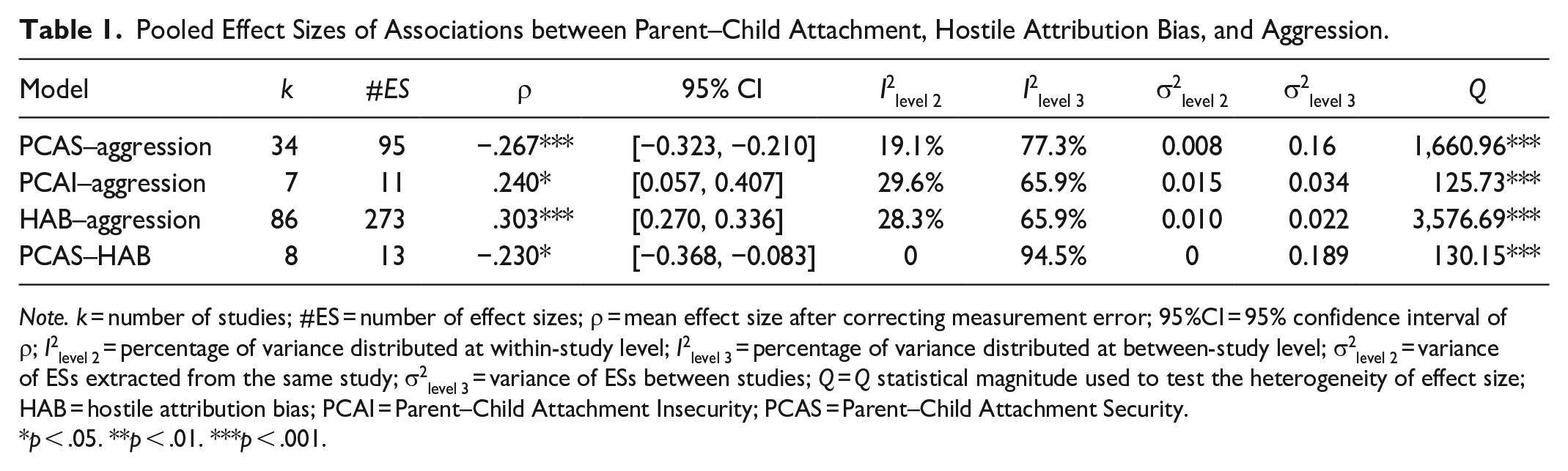
Note. k = number of studies; #ES = number of effect sizes; ρ = mean effect size after correcting measurement error; 95%CI = 95% confidence interval of ρ; I2level 2 = percentage of variance distributed at within-study level; I2level 3 = percentage of variance distributed at between-study level; σ2level 2 = variance of ESs extracted from the same study; σ2level 3 = variance of ESs between studies; Q = Q statistical magnitude used to test the heterogeneity of effect size; HAB = hostile attribution bias; PCAI = Parent–Child Attachment Insecurity; PCAS = Parent–Child Attachment Security.
p < .05. **p < .01. ***p < .001.
Results of Moderate Analyses
To explain the heterogeneity of effect sizes, potential moderators were added to the regression model simultaneously to explore the sole influence of each factor. Continuous moderator variables were centered and categorical variables were dummy-coded in the models. In the PCAS–aggression model, gender was the only factor that played a moderating role. Specifically, studies with a higher percentage of females showed a stronger negative association (B = −0.011, p < .05) (see Table 2).
Results of Moderators for the Effect Sizes.
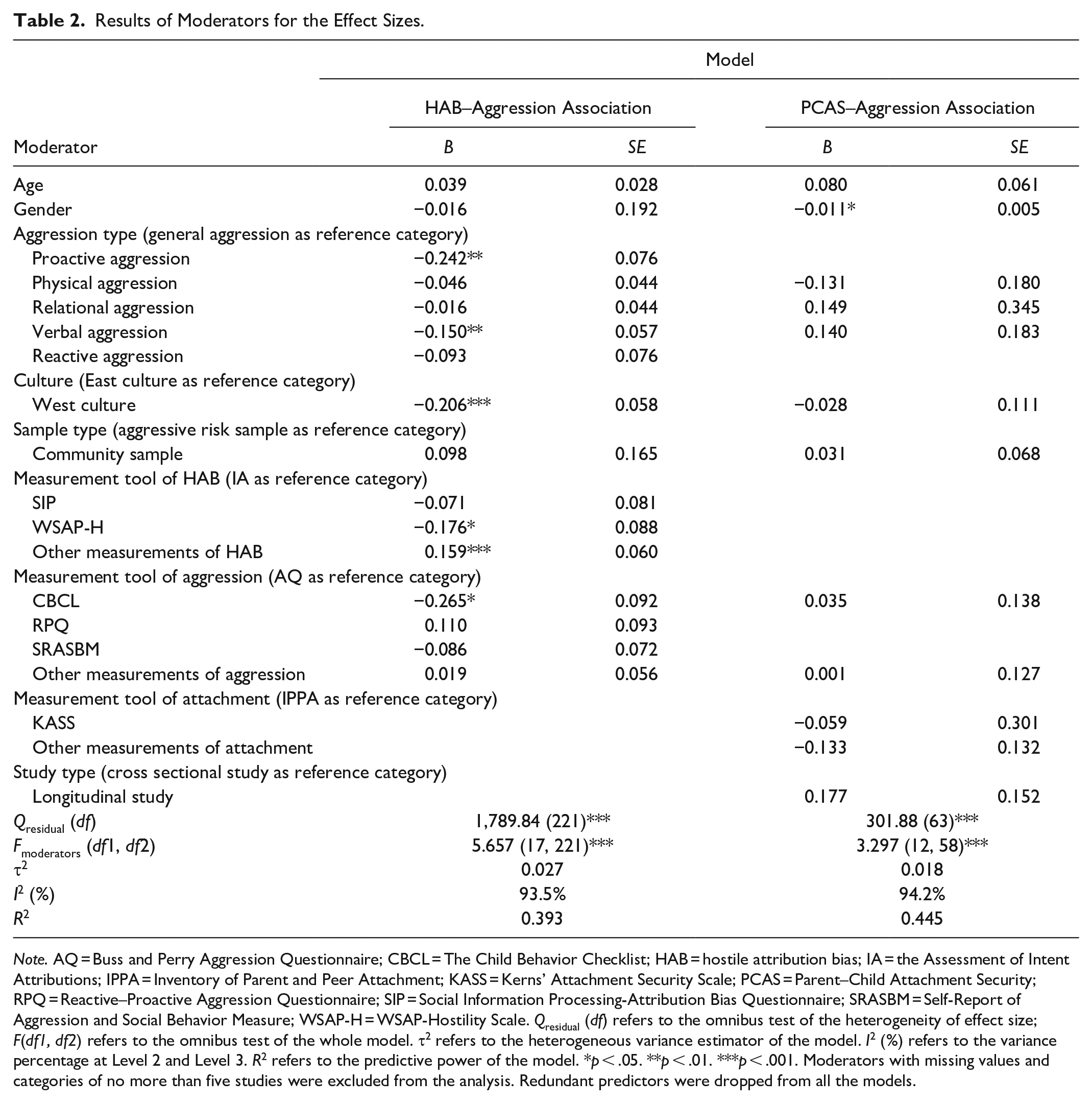
Note. AQ = Buss and Perry Aggression Questionnaire; CBCL = The Child Behavior Checklist; HAB = hostile attribution bias; IA = the Assessment of Intent Attributions; IPPA = Inventory of Parent and Peer Attachment; KASS = Kerns’ Attachment Security Scale; PCAS = Parent–Child Attachment Security; RPQ = Reactive–Proactive Aggression Questionnaire; SIP = Social Information Processing-Attribution Bias Questionnaire; SRASBM = Self-Report of Aggression and Social Behavior Measure; WSAP-H = WSAP-Hostility Scale. Qresidual (df) refers to the omnibus test of the heterogeneity of effect size; F(df1, df2) refers to the omnibus test of the whole model. τ2 refers to the heterogeneous variance estimator of the model. I2 (%) refers to the variance percentage at Level 2 and Level 3. R2 refers to the predictive power of the model. *p < .05. **p < .01. ***p < .001. Moderators with missing values and categories of no more than five studies were excluded from the analysis. Redundant predictors were dropped from all the models.
In the HAB–aggression meta-regression model, aggression type, culture, measurement tool of HAB, and aggression played moderating roles. The Bonferroni correction method (Jafari & Ansari-Pour, 2019) was used to test the effect size differences of moderating variables with more than two categories. On controlling other co-variables, the association between HAB and reactive aggression (ρ = .371) was significantly stronger (p < .001) than the association between HAB and proactive aggression (ρ = .320). The association was significantly stronger (p < .001) in Eastern culture (ρ = .415) than in Western culture (ρ = .267) (see Table 2). The measures of HAB and aggression could significantly moderate the association between HAB and aggression. Given that, commonly, the measurement tools moderate the effect size in most meta-analyses, but these tools were not the focus of our study; hence, we have not discussed these variables in detail.
We also conducted subgroup analyses to reveal the concrete effect size under the condition of each category of moderates (see Table 3). Other meta-analytic models contained fewer studies, which would result in low statistical power for analysis. Therefore, we did not conduct meta-analyses on these models.
Pooled Effect Size for Moderator Categories in the Association Between Hostile Attribution Bias and Aggression.
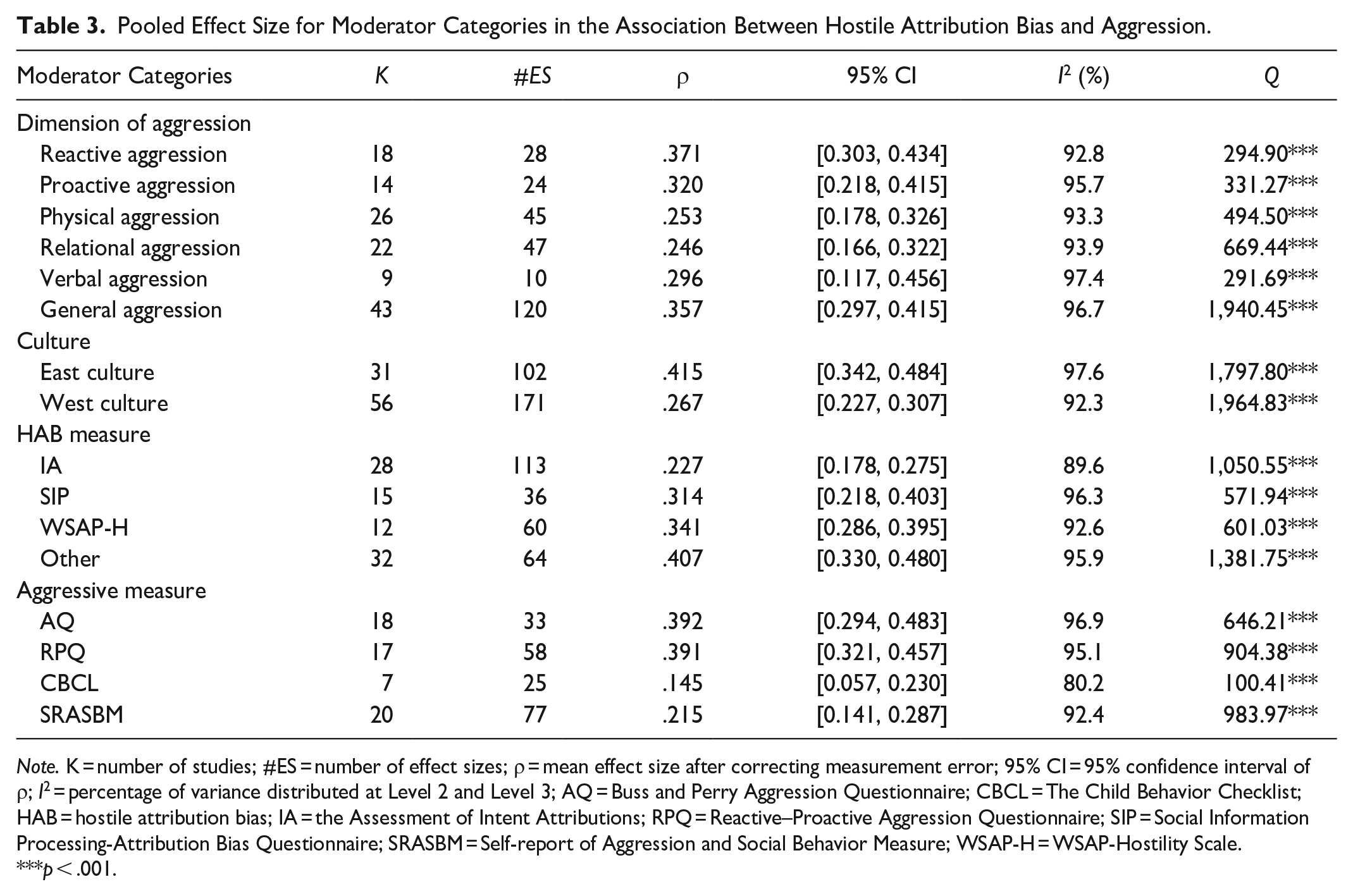
Note. K = number of studies; #ES = number of effect sizes; ρ = mean effect size after correcting measurement error; 95% CI = 95% confidence interval of ρ; I2 = percentage of variance distributed at Level 2 and Level 3; AQ = Buss and Perry Aggression Questionnaire; CBCL = The Child Behavior Checklist; HAB = hostile attribution bias; IA = the Assessment of Intent Attributions; RPQ = Reactive–Proactive Aggression Questionnaire; SIP = Social Information Processing-Attribution Bias Questionnaire; SRASBM = Self-report of Aggression and Social Behavior Measure; WSAP-H = WSAP-Hostility Scale.
p < .001.
Result of One-Stage Meta-structural Equation Modeling
The one-stage meta-structural equation modeling was performed, taking attachment security as the independent variable, HAB as the mediator, and aggression as the dependent variable. The path coefficient product term was used to examine the indirect effects of the types of attachment on aggression through HAB (Preacher & Hayes, 2008). The results obtained are as follows: (a) the regression coefficient of HAB on PCAS was significant (β = −.19, p < .001); (b) the regression coefficient of aggression on HAB was significant (β = .26, p < .001); and (c) the regression coefficient of aggression on PCAS was significant (β = −.24, p < .001).
HAB negatively mediated PCAS–aggression association and the indirect effect was −.048, 95%CI = [−0.076, −0.019], which reached a significant level. The pooled zero-order correlations between variables of interest are reported in Table 4. It is worth noting that although the one-stage meta-structural equation modeling could also detect the pooled correlation coefficients between the variables of interest, the coefficients were based on the composed correlation of a single study with lower statistical power than effect sizes obtained from three-level meta-analyses. For this reason, based on the results of the three-level meta-analyses, we concluded the association between PAC and aggression as well as HAB and aggression.
The Correlation Coefficients Matrix of Parent–Child Attachment Security, Hostile Attribution Bias, and Aggression.
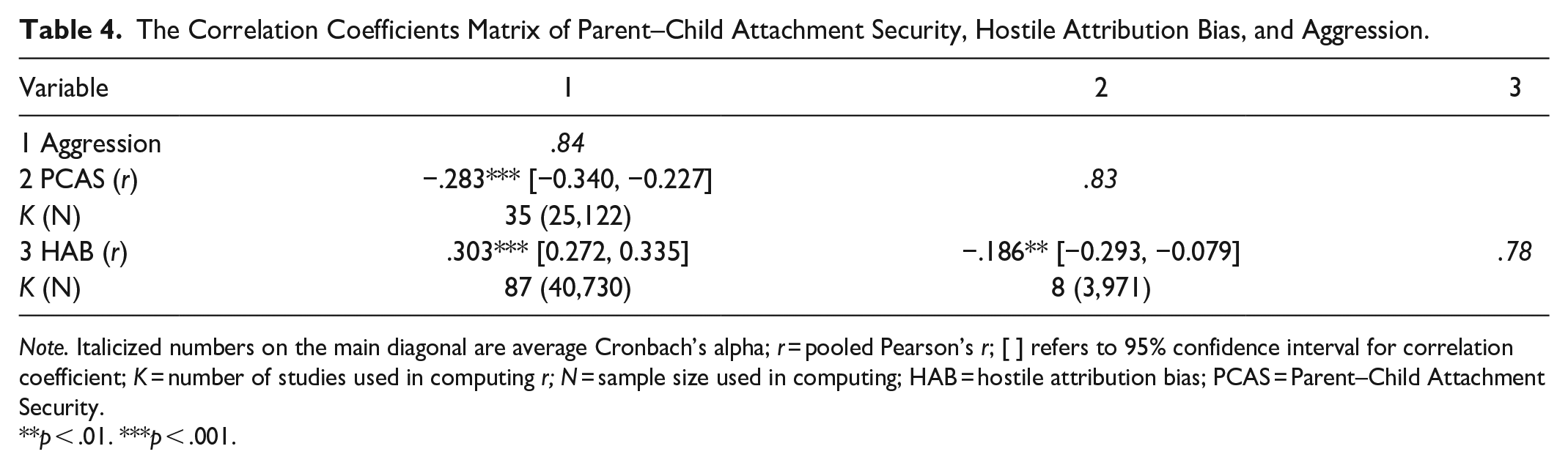
Note. Italicized numbers on the main diagonal are average Cronbach’s alpha; r = pooled Pearson’s r; [ ] refers to 95% confidence interval for correlation coefficient; K = number of studies used in computing r; N = sample size used in computing; HAB = hostile attribution bias; PCAS = Parent–Child Attachment Security.
p < .01. ***p < .001.
Discussion
The current study delved into the associations between PCA and aggression, as well as HAB and aggression. Moreover, we identified several moderating factors that influence these associations, including gender, aggression type, culture, and measurement tools of HAB and aggression. The results from three-level meta-analyses unveiled some key findings. Specifically, we found that PCAS exhibited a negative relationship with aggression and HAB. In contrast, PCAI and HAB demonstrated a positive correlation with aggression. Furthermore, the study provided evidence to support the notion that HAB plays a mediating role in the relationship between PCAS and aggression. This integrated model draws from attachment theory and the SIP model, enhancing the understanding of the development and manifestation of aggression.
Attachment and Aggression
This study stands as the first meta-analysis to scrutinize the link between PCA and aggression. Individuals who have secure attachments with their parents tend to exhibit lower levels of aggressive behavior, according to our findings. The negative correlation between PCAS and aggression is consistent with attachment theory (Bowlby, 1988; Moretti et al., 2004). According to Juan et al. (2020), preschool children who exhibited higher PCAS at age three were less likely to display aggressive behavior by age five, based on a study of over 2,000 American children. In a short-term longitudinal study of over 2,000 Greek teens, Voulgaridou and Kokkinos (2020) found that PCAS negatively predicted relational aggression after 6 months. Conversely, our analysis revealed a positive association between PCAI and aggression. Due to the limited statistical power resulting from the small number of studies and effect sizes (K = 7, #ES = 11), caution should be exercised when interpreting this conclusion. This study provides evidence that supports attachment theory, indicating that exposure to PCAI increases the risk of aggressive behavior. Previous research corroborates our findings on the association between PCA and aggression.
Our meta-analysis revealed a moderation effect of gender on the association between PCAS and aggression. The meta-regression results showed that, when controlling for other variables, the link between PCAS and aggression was stronger in females than in males. This implies that PCAS has a more effective preventive impact on the development of aggression in females. This result supports Fearon et al.’s (2010) findings that PCAI is linked with more externalizing behavior in boys than girls. In summary, males seem to derive less benefit from attachment security and are more susceptible to the negative effects of attachment insecurity, rendering them more inclined toward aggression in this context.
Our meta-analysis found no moderating effect of age on the link between PCAS and aggression, which supports Bowlby’s initial proposition that early attachment has an enduring influence over time (Bowlby, 1973). This suggests that the protective effect of secure parent–child bonds endures through adolescence and adulthood, despite accumulating social influences. However, other studies reveal the association attenuates from childhood to later developmental stages (Li et al., 2023; Maalouf et al., 2022). A potential explanation is the cross-sectional nature of most included studies in the current meta-analysis could obscure small declines in strength over time within samples. To comprehensively investigate developmental variations, future research should integrate longitudinal designs with multiple assessments spanning from early childhood onwards. This approach can elucidate whether the association between PCAS and aggression remains stable or diminishes throughout the lifespan.
HAB and Aggression
The current study found that HAB was positively related to aggression, with a small-to-moderate effect size (ρ = .303) among a broad age range. However, the effect size (r = .17) found in the prior meta-analysis (Orobio De Castro et al., 2002) was small. The increased magnitude of effect size may be attributed to the following: First, the effect size in the current study was an adjusted pooled correlation accounting for the measurement error, given that the measurement error may underestimate the actual strength. Second, most previous studies included samples from Western culture, whereas the current meta-analysis involved studies conducted in both Western and Eastern cultural backgrounds. The moderating analysis in our study indicated that the HAB–aggression association is stronger in Eastern than in Western cultures. So, it enhanced the average effect size. Third, we also included adult samples in the current meta-analysis which might have increased the average effect size. Overall, our finding expanded the previous meta-analysis on the association between HAB and aggression and revealed the overall magnitude of this association.
This study also found that culture had a moderating impact on the association between HAB and aggression. In Eastern cultures, the positive connection between HAB and aggression was stronger than in Western cultures. Our finding supported the cultural agency model of criminal behavior which claims that culture plays a crucial role in the influence of dynamic risk factors on aggression and other criminal behavior (Schmidt, et al., 2021). Empirical studies also have similar findings. For example, Kawabata et al. (2010) included 197 Japanese and 99 US fourth-grade children in their study. They found that relational aggression is more strongly associated with depressive symptoms among Japanese children than among American children. However, there may be other possible explanations for this cultural difference in the association between HAB and aggression, such as inequality in measurements of HAB and aggression between the two cultures.
Furthermore, the type of aggression moderates the association between HAB and aggression. HAB was more strongly related to reactive aggression than proactive aggression. The result is consistent with previous studies (Martinelli et al., 2018; Van Bockstaele et al., 2020). Our results confirmed the central claim of the SIP model that HAB is only associated with reactive aggressiveness. Finally, our results revealed that the strength of the relationship between HAB and aggression was significantly moderated by the specific measures used to assess these constructs. This underscores the importance of future research utilizing psychometrically robust instruments with strong reliability and validity when investigating the HAB–aggression link to enhance methodological rigor and confidence in findings.
The Mediating Role of HAB in PCAS–Aggression Association
Our finding that HAB mediates the association between PCAS and aggression integrates attachment theory and the SIP model (Dodge, 2006). This mediating role elucidates the mechanism through which PCAS impacts aggression. Specifically, PCAS represents positive internal working models that shape adaptive SIP, including reduced HAB, which subsequently lowers aggression levels. Our meta-analysis is the first to demonstrate HAB’s mediating role in the links between attachment and aggression, contributing new evidence.
However, full mediation was not established, suggesting additional mechanisms beyond HAB are also involved. Future research should investigate other potential mediators. Replicating this mediation is also needed, preferably using longitudinal and experimental designs to elucidate causality. Examining conditional indirect effects across various contexts and individual factors, such as cultures, and developmental stages can refine the mediation model.
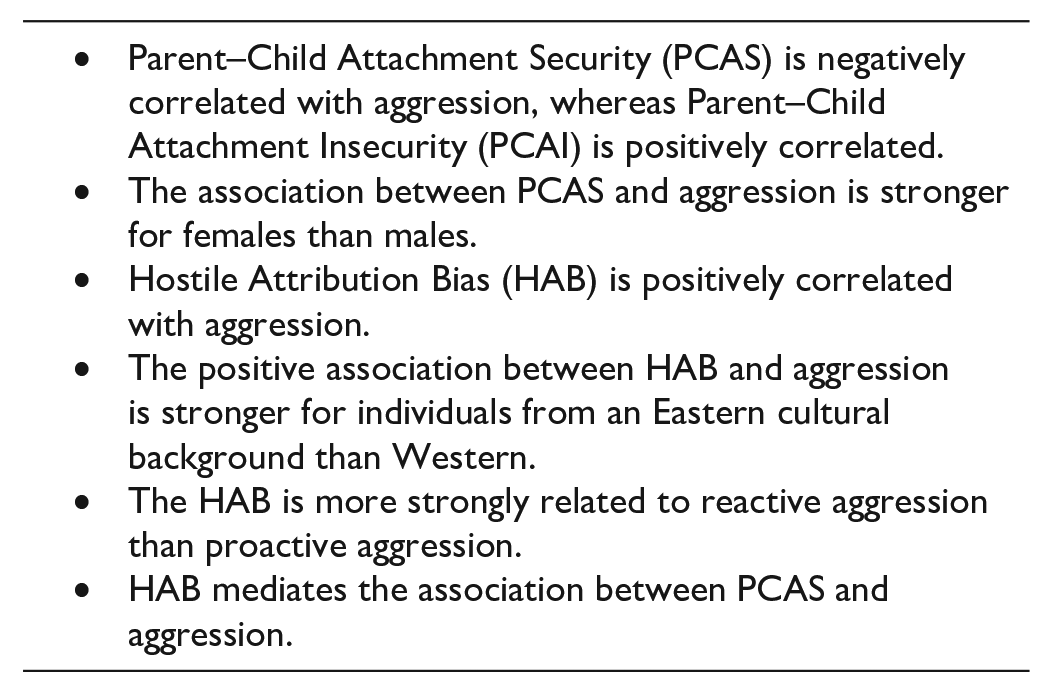
Summary of Critical Findings
Limitations
There are several limitations in the current study. First, the limited number of studies included in the meta-analyses may have resulted in low statistical power, restricting our ability to explore the mechanisms underlying the influence of PCAI on aggression and to investigate potential moderators in the meta-regression models. For example, we did not categorize participants based on age into different developmental stages (e.g., early childhood, mid-childhood, adolescence, emerging adulthood, and adulthood) to examine the impact of developmental stages on the relationship between attachment and aggression. In future meta-analytic studies, a larger number of studies should be included to enhance statistical power. Second, the scarcity of experimental studies or cross-lagged longitudinal studies included in our meta-analysis limits our ability to address the issue of causation. More empirical research is required to explore the causal relationship between PCA, HAB, and aggression. Third, due to participants often expressing their perceptions of attachment to their parents at older ages (e.g., 15 years old), or because their parents report the information, some of the recruited research on attachment may suffer from measurement bias. Therefore, the pooled effect estimates in our study may have been biased, and these results should be interpreted with caution.
Additionally, the current study primarily included samples from North America (e.g., the United States, Canada), Europe (e.g., Germany, the United Kingdom), and East Asia (e.g., China, Japan), and samples were taken from both the general population and aggressive risk groups. Therefore, caution should be exercised when generalizing the findings to populations with different cultural backgrounds, geographic regions, and groups. For instance, the stronger association found between HAB and aggression in Eastern versus Western cultures may not necessarily apply to other cultural groups not represented in the analysis. Future research should aim to recruit diverse cultural groups from around the world to determine the generalizability versus specificity of these findings.
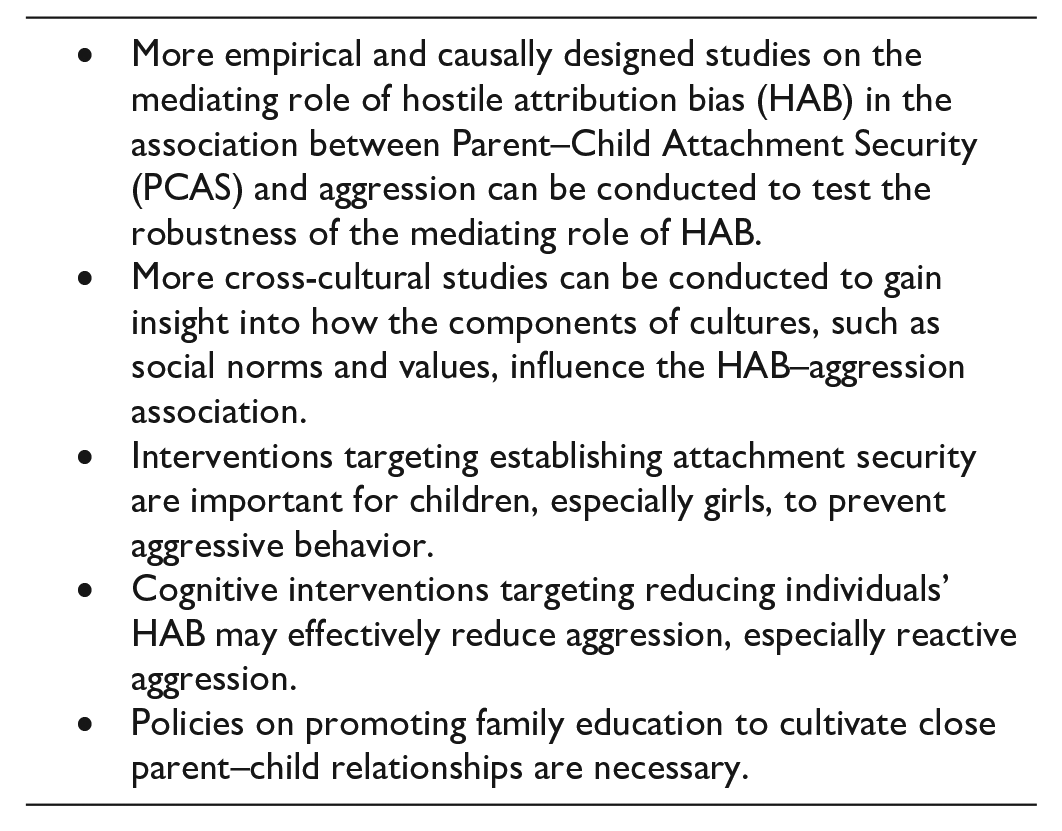
Summary of Implications for Research, Practice, and Policy
Conclusions
We conducted meta-analyses to examine the complex relationships between PCA and aggression and HAB and aggression. Additionally, we investigated the underlying mechanisms that explain the link between PCAS and aggression. Our findings reveal several important insights: (a) PCAS helps protect against aggression; (b) PCAI and HAB increase the risk of aggression; (c) the link between PCAS and aggression is influenced by gender, with females having a stronger association; (d) the link between HAB and reactive aggression is stronger than the relationship with proactive aggression; furthermore, the link between HAB and aggression is stronger in Eastern compared to Western cultures; and (e) HAB plays a critical role as a mediator between PCAS and aggression. Our study clarifies the interplay between attachment, HAB, and aggression, enhancing our understanding of their dynamics and implications.
Supplemental Material
sj-docx-1-tva-10.1177_15248380231210920 – Supplemental material for The Role of Parent–Child Attachment, Hostile Attribution Bias in Aggression: A Meta-Analytic Review
Supplemental material, sj-docx-1-tva-10.1177_15248380231210920 for The Role of Parent–Child Attachment, Hostile Attribution Bias in Aggression: A Meta-Analytic Review by Xizheng Xu, Yunpeng Wu, Yawen Xu, Miaomiao Ding, Senlin Zhou and Simin Long in Trauma, Violence, & Abuse
Footnotes
Authors’ note
We confirm that appropriate consideration has been made to protect intellectual property rights related to this work. There are no known obstacles to this publication in terms of intellectual property rights and publication time.
Data availability statement
Data will be made available on request.
Declaration of Conflicting Interests
The authors declared no potential conflicts of interest with respect to the research, authorship, and/or publication of this article.
Funding
The author(s) disclosed receipt of the following financial support for the research, authorship, and/or publication of this article: General Project in Humanities and Social Science Research of Ministry of Education of China (Grant No.23YJC880115 ).
Supplemental Material
Supplemental material for this article is available online.
Author Biographies
References
Supplementary Material
Please find the following supplemental material available below.
For Open Access articles published under a Creative Commons License, all supplemental material carries the same license as the article it is associated with.
For non-Open Access articles published, all supplemental material carries a non-exclusive license, and permission requests for re-use of supplemental material or any part of supplemental material shall be sent directly to the copyright owner as specified in the copyright notice associated with the article.
