







Abstract
This systematic review evaluates the psychometric properties of instruments used to assess intimate partner violence or domestic violence (IPV/DV) in South Asia. It addresses the need for culturally sensitive tools in IPV/DV research. The review identifies and critically examines IPV/DV instruments used in South Asian countries, assessing their cross-cultural validation and psychometric strength. Method: Databases, including PubMed, PsycINFO, Web of Science, ProQuest, and Cochrane Library, were searched between June 1 and June 30, 2024. Out of 1,347 studies screened, 35 studies were assessed for full-text eligibility, 26 were excluded as they did not meet criteria, resulting in 9 studies being included for analysis. High reliability was found for: The Domestic Violence Questionnaire for Indian women (Cronbach’s α = .94), Intimate Partner Violence Scale used among women with mental illness (Cronbach’s α = .92), The Economic Coercion Scale used in Bangladesh (ordinal α = .88), Domestic Violence Scale for Intimate Partners in Pakistan (Cronbach’s α = .951) and The Indian Family Violence and Control Scale, achieved high internal consistency .951. Additionally, an adaptation of the “Extended-Hurt Insult Threaten and Scream” was validated in Nepal. These tools developed in India, Bangladesh, Pakistan, and Nepal showed high internal consistency and reliability, though cross-cultural validation remains a challenge. The review highlights the need for further adaptation and validation of instruments to assess various types of IPV/DV to ensure their cultural relevance and effectiveness across diverse South Asian populations.
Keywords
Introduction
According to the World Health Organization (WHO), violence is defined as the intentional use of force or power against oneself or others, with a high likelihood of resulting in physical or psychological harm. Intimate partner violence (IPV) is a form of domestic violence and refers to any behavior by a current or former male intimate partner within the context of marriage, cohabitation, or any other formal or informal union that causes physical, sexual, or psychological harm (WHO, 2021). The World Bank highlights that there are severe consequences of violence against women in South Asia, such as the highest female child mortality rate. It also reports a significant incidence of intimate partner violence or domestic violence (IPV/DV; Solotaroff & Pande, 2014). IPV/DV is a widespread global health issue, particularly affecting women’s mental and physical well-being (Miller & McCaw, 2019; UN Women & World Health Organization, 2020). The impact of IPV/DV on women’s health is as severe as other major public health crises, such as cancer or malaria, underscoring the urgency of addressing this issue (Bishwajit et al., 2016; Murthy & Smith, 2010).
Globally, approximately one in three women has experienced physical or sexual violence, with 30% having faced domestic violence from their partners (UN Women & World Health Organization, 2020). In South Asia, the situation is even more alarming, with around 55% of women reporting IPV/DV (Yoshihama & Luo, 2020). However, the prevalence of IPV/DV varies significantly across countries in the South Asian region. The prevalence of IPV/DV across South Asia varies considerably, as shown in Figure 1.
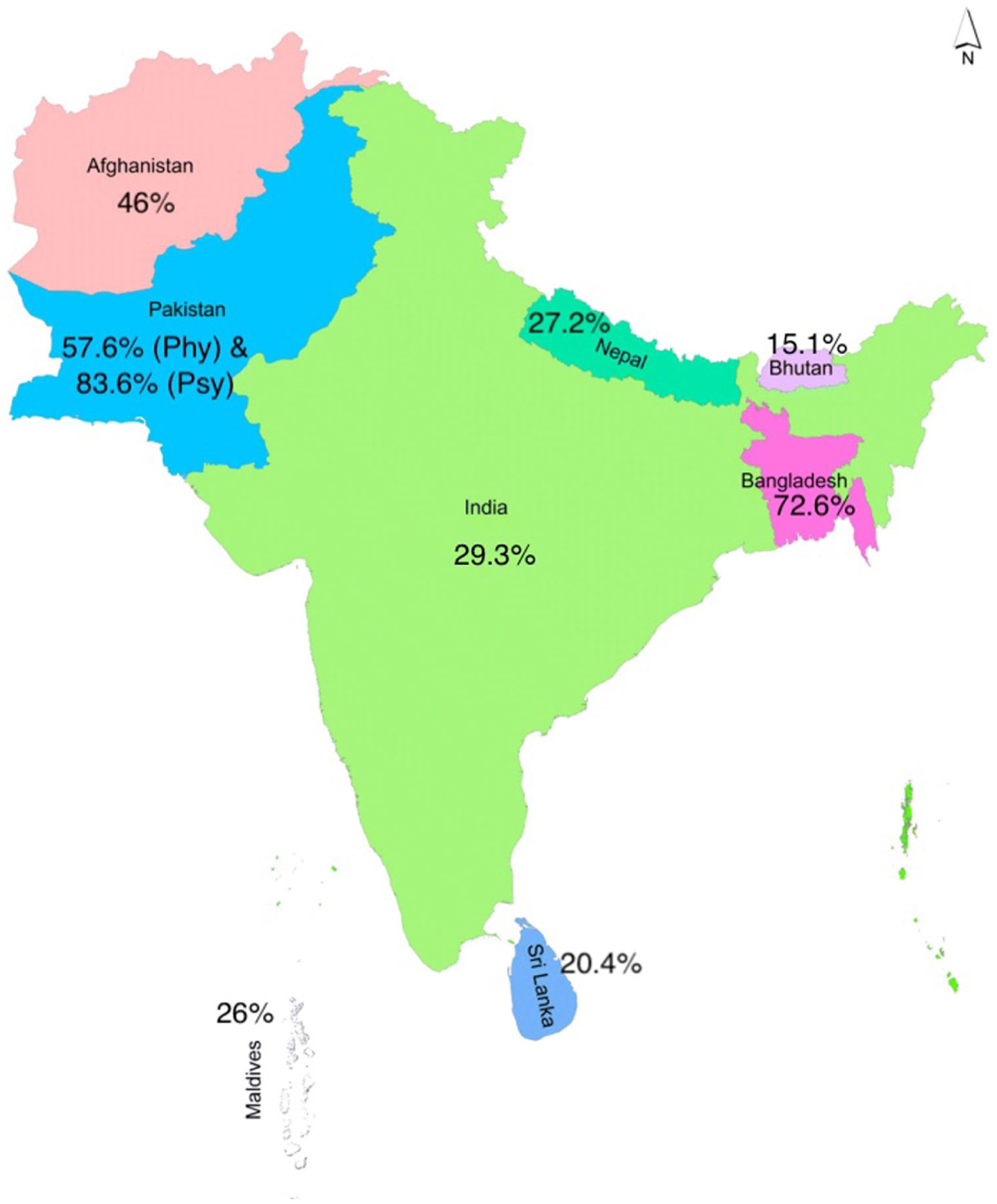
Geographical distribution of South Asian countries showing prevalence rates of intimate partner violence based on official national or state-level data (Afghanistan, Bangladesh, Bhutan, India, Maldives, Nepal, Pakistan, and Sri Lanka).
In India, 29.3% of women (aged 18–49 years) and in Afghanistan nearly 46% of women (aged 25–60 years) have reported experiencing physical or sexual violence at the hands of their partners (Akbary et al., 2022; NFHS-5 (2019–2021), 2022). In Pakistan, a cross-sectional study (N = 759) revealed that 57.6% of women reported lifetime physical violence, while psychological abuse was reported by 83.6% (Ali et al., 2011). In Nepal, 27.2% of women in intimate relationships have experienced some form of violence, with 23.2% reporting physical violence and 12.8% emotional violence (Mani Sapkota et al., 2024). Bangladesh shows varying IPV/DV rates across regions, ranging from 42% to 76% (Stake et al., 2020). A survey (N = 21,688) conducted by the Bangladesh Bureau of Statistics (2016) found that 72.6% of ever-married women had experienced violence by their husbands at least once in their lives (Bangladesh Bureau of Statistics, 2016). Bhutan reports a lifetime prevalence of partner physical or sexual violence as 15.1% among ever-partnered women, with 8.7% experiencing severe violence (Bhutan, 2017). In Sri Lanka, 20.4% of ever-partnered women have faced physical and/or sexual violence, with women in the age groups of 45 to 50 years and 25 to 34 years being the most affected (Subhashini et al., 2020). In the Maldives, one in three women reports experiencing violence in their lifetime, with one in four subjected to IPV/DV. Furthermore, 26% of women aged 15 to 49 years believe that certain circumstances justify a partner’s violent actions (Maldives Bureau of Statistics, n.d.; UNFPA Maldives, n.d.).
Additionally, methodological issues in violence research present complex global challenges, particularly in sampling due to cultural diversity and the hidden nature of violence, especially among marginalized groups (Fraga, 2016). IPV/DV is deeply connected with cultural norms, social taboos, and gender role attitudes (Dahal et al., 2022; Lomazzi, 2023; Perrin et al., 2019). This cultural entrenchment often leads to underreporting, making it difficult to obtain accurate data. Research studies must navigate these sensitivities carefully, using culturally appropriate methods and ensuring confidentiality to encourage honest responses (Bishwajit et al., 2016; Miller & McCaw, 2019).
Longitudinal and cross-cultural studies face additional challenges in cultural adaptation and translation of IPV/DV measures. Measurement tools must be culturally sensitive, as varying definitions of violence complicate cross-regional comparisons. Language barriers and literacy issues may further hinder data collection, leading to inaccurate results. Addressing these issues is crucial for generating reliable evidence to guide effective violence prevention and intervention strategies worldwide (Fraga, 2016; Hossain & McAlpine, 2017).
A few systematic reviews have identified significant gaps and provided suggestions for studying gender-based violence research in humanitarian settings (Hossain & McAlpine, 2017; Mahapatro Meerambika, 2017). Methodologies must align with research questions and contexts, and despite data limitations, clear definitions and gender-specific data are crucial (Ali Hyder & Aman Malik, 2007; Ali et al., 2020).
Despite the high prevalence of IPV/DV in South Asia, there is a significant gap in culturally sensitive, validated instruments for measuring IPV/DV. This gap limits the ability to accurately assess the true scope and impact of IPV/DV. Tools developed in one country may not generalize across diverse populations due to cultural differences, impacting accuracy. This challenge becomes evident when assessing constructs of violence, as participants may not fully capture the relevant domains due to differences in their understanding abilities. Therefore, tools need to undergo cross-cultural adaptation or should be developed for a specific culture using appropriate methods before being used in research or assessment, to ensure valid data and accurate evaluations (Stevelink & Van Brakel, 2013). Scales assessing IPV/DV are essential tools for quantifying experiences of violence, enabling researchers to identify patterns and measure the severity and frequency of abuse. The Composite Abuse Scale, for example, has been widely used for its multidimensional assessment of physical, emotional, and sexual violence (Hegarty et al., 1999, 2005).
A previous review by Ravi et al. (2023) examined culturally responsive DV tools but included a broad mix of studies from both South Asian countries and South Asian diaspora populations, particularly research conducted in the United States. While their review highlighted culturally specific forms of abuse, it did not apply structured psychometric appraisal frameworks and was not designed to assess measurement tools within the distinct sociocultural contexts of South Asian countries. The present review addresses this gap by focusing exclusively on IPV/DV instruments developed or validated within South Asia, offering the first region-specific synthesis of their reliability, validity, and cultural adaptation. By applying established frameworks such as Preferred Reporting Items for Systematic Reviews and Meta-Analyses (PRISMA; Page et al., 2021), Consensus-based Standards for the selection of health Measurement Instruments (COSMIN; Gagnier et al., 2021), and Grading of Recommendations, Assessment, Development, and Evaluation (GRADE; Schünemann et al., 2023), this review provides a more systematic appraisal of methodological quality and identifies critical measurement gaps. In doing so, it offers readers clear evidence of the limited availability and variable psychometric robustness of IPV/DV tools in South Asia, underscoring the need for stronger, contextually grounded measurement research in the region (Ravi et al., 2023).
The current study builds on the previous systematic review on the topic by including issues related to a specific timeframe, regional languages, and cultural adaptations or development, focusing exclusively on studies within South Asian countries. This systematic review aims to identify, synthesize, and evaluate the psychometric properties of instruments used to measure IPV/DV in South Asia. It will be among the first to provide updated insights into IPV/DV measurement tools, particularly recent cross-cultural adaptations or developments of the measurement tools.
Method
Design
This systematic review was carried out to evaluate the psychometric characteristics of IPV/DV assessment tools. The process adhered to the guidelines outlined in the PRISMA (Page et al., 2021) as well as the COSMIN (Gagnier et al., 2021) to assess the methodological quality of the tools. The Modified GRADE (Bossuyt et al., 2006; Schünemann et al., 2023) framework was employed to assess the quality of the available evidence.
Eligibility Criteria and Search Strategy
The eligibility criteria required studies to involve women aged 18 and older, to use self-report questionnaires, and to be published in peer-reviewed journals in English done over the past 15 years (May 2009–May 2024). Studies also had to describe scale construction/development/adaptation and validation of instruments within South Asian populations, including Afghanistan, India, Bangladesh, Bhutan, the Maldives, Nepal, Sri Lanka, and Pakistan. Excluded studies focused on children, prevalence rates, gray literature, partner attitudes, or interventional studies, ensuring a targeted review of relevant literature. The search terms were connected using the Boolean operator “OR,” while the operator “AND” was used to interlink these subject heading terms. The review was not restricted to any other specific setting, but the publication date was limited to this time frame. The language of the review was restricted to English.
The search terms were developed using the PICO (Population, Intervention, Comparison, Outcomes) framework for electronic database searches. Various MeSH terms from the PubMed library were employed, following the PICO strategy to ensure comprehensive coverage. The search terms were “Partner Violence,” Intimate Partner Violence,” “Intimate Partner Abuse,” “Domestic Violence,” “Abuse,” “Interpersonal Violence,” “Gender-Based Violence,” “Domestic and Family Violence,” “Spousal Abuse,” “Wife Abuse,” “Afghanistan,” “Bangladesh,” “Bhutan,” “India,” “Maldives,” “Nepal,” Pakistan,” “Sri Lanka,” “Adults,” “Scale,” “Measurement,” “Instrument,” “Tool,” “Measures,” “Questionnaires,” “Screening Tool,” “Screening,” “Validity,” “Reliability,” “Adaptation,” “Psychometric Development,” “Sensitivity and Specificity.” The electronic databases searched included PubMed, PsycINFO, Web of Science, ProQuest, and the Cochrane Library.
For this review, “culturally sensitive” IPV/DV instruments were defined as tools that incorporate culturally relevant behaviors or constructs, include input from local stakeholders (such as experts, service providers, or survivors), and undergo structured translation and cultural adaptation procedures. This definition aligns with established cross-cultural measurement guidelines (Beaton et al., 2000; Sousa & Rojjanasrirat, 2011; Wild et al., 2005), and with IPV frameworks that emphasize culturally specific forms of violence, norms, and relationship dynamics (Heise, 2011).
Screening Studies and Data Extraction
The studies were screened using Covidence software by two authors, AK and PT, followed by a full-text review based on the inclusion criteria described above. Discrepancies in study selection were resolved through discussion and consensus between the two reviewers. The authors also performed a manual review of the reference lists and bibliographies of the selected articles to identify other relevant studies. Data extraction was conducted using a structured tabular format created by the authors to identify information relevant to the review. The format included the following fields: author/year, country, scale name, aim, administration method, sample characteristics, sample size, the language of scale, number of scale items, and reported psychometric properties (reliability, validity, and cultural sensitivity measures). Authors, AK and AD, carried out data extraction.
Data Synthesis
Findings from the studies were narratively synthesized to describe the study characteristics, the IPV/DV measures, and provide an overview of the reliability and validity of the measures. Additionally, the synthesis outlined the measures taken in the adaptation and development of IPV/DV instruments to ensure cultural appropriateness.
Assessment of the Methodological Quality
The COSMIN Risk of Bias Checklist was used to assess the methodological quality of each Patient-Reported Outcome Measure (PROM) found in the studies (Gagnier et al., 2021; Mokkink, 2018). The measurement properties evaluated included content validity (the extent to which the items adequately reflect the construct of interest), structural validity (the degree to which the scores of a PROM reflect the dimensionality of the construct), internal consistency (the degree of interrelatedness among items), cross-cultural validity (the extent to which the performance of items is equivalent across different cultural contexts), reliability (the extent to which scores are free from measurement error and yield consistent results), measurement error (the systematic and random error not attributed to true changes), criterion validity (the extent to which scores correspond to a gold standard), construct validity (the degree to which the PROM measures the theoretical construct it intends to assess), and responsiveness (the ability of the instrument to detect change over time).
Each property was rated using a four-point scale: Very Good, Adequate, Doubtful, or Inadequate. The results for each study were summarized to identify the most appropriate scales for use. Authors AK and PT independently completed the Risk of Bias Checklist.
Results
Study Selection
A total of 1,348 papers were identified through the search. In de-duplication, 413 papers were removed, and a systematic screening of titles and abstracts was conducted with 934 papers. 899 papers were excluded at this stage as they did not meet the scope of the review. 35 papers were retrieved for full-text review (Figure 2). After scrutinizing the full texts using the inclusion and exclusion criteria, we identified nine papers for the review. The most common reason for exclusion at this stage was that studies were carried out with a non-South Asian population. The process is summarized in Figure 2. Three papers provide details of the adaptation or validation of 3 IPV/DV measures, namely, the Nepalese Abuse Assessment Screen (N-AAS; Manandhar et al., 2023), The South Asian Violence Screen (SAVS), and Extended-Hurt, Insult, Threaten, and Scream (E-HITS). Six papers present results from the process of selecting items or developing and field-testing new measures: Domestic Violence Questionnaire (DVQ); IPV scale; Economic Coercion Scale-20 (ECS-20); Indian Family Violence and Control Scale (IFVCS); Domestic Violence Scale for Intimate Partners and Economic Coercion Scale 36 (ECS-36).
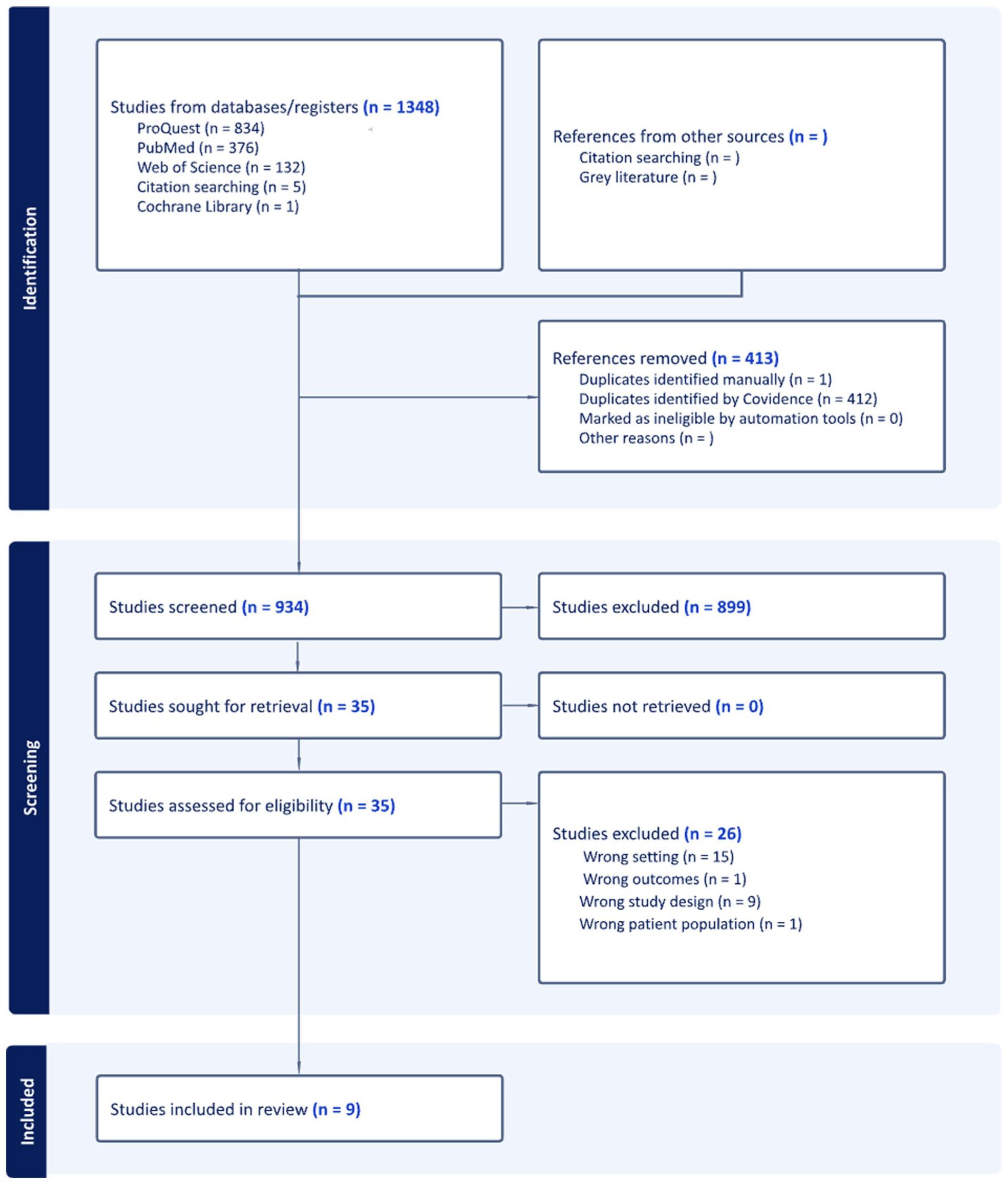
PRISMA flowchart of study selection process.
Demographics and Characteristics of Measures
Three studies were published from India, two from Nepal and Bangladesh respectively and one from Pakistan (See Table 1). Soglin et al. (2021) conducted their study with South Asian immigrant women living in the United States. Many of the studies (N = 5), which include ECS-20 (Miedema et al., 2023), IFVCS (Kalokhe et al., 2016), ECS-36 (Yount et al., 2022), E-HITS (Samjhana Shakya, 2023), and DVQ (Indu et al., 2011), were carried out within the community by household sampling or in settings such as banks. Two studies, Domestic Violence Scale for Intimate Partners (Parveen & Bano, 2023) and IPV scale (Vranda et al., 2022), reported sampling both community and clinical populations. The N-AAS (Manandhar et al., 2024) includes samples from clinical settings, such as outpatient services in obstetrics and gynecology and medical clinics.
Demographic Details and Key Characteristics of the Selected Scales, Tools, and Measurement Instruments Included in the Review.
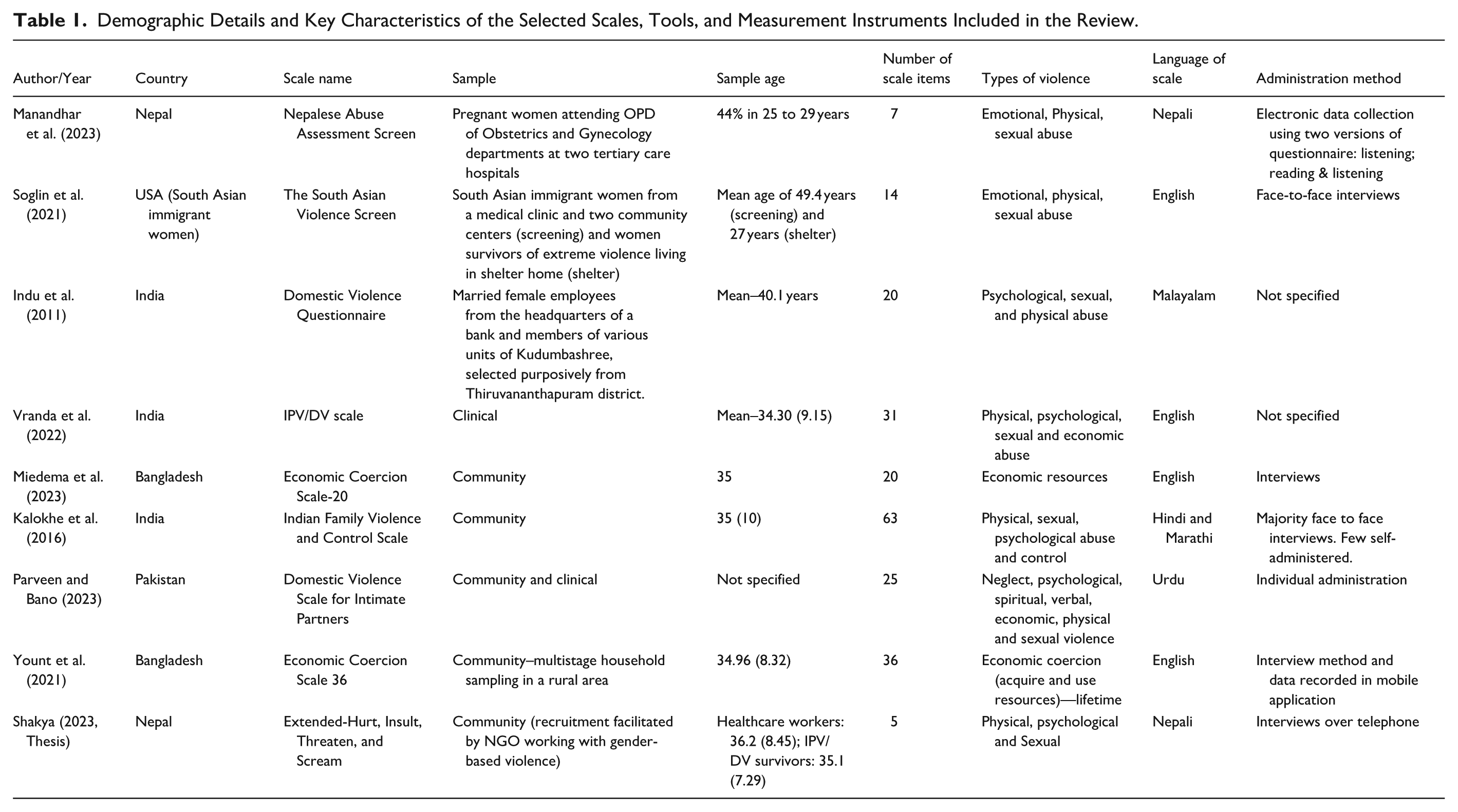
In five studies, the participants' mean age was reported to be in the mid-thirties. All but one study (Parveen & Bano, 2023) recruited only female participants. The number of items in the measures ranged from 5 to 63. Four measures are in English, with the others in languages including Marathi, Malayalam, and Nepali. Most measures were administered individually, either through in-person interviews or over the telephone. Two studies also mentioned using technology, such as mobile applications, to administer and record the data.
The psychometric properties of the included instruments are presented in Table 2.
Psychometric Properties of the Included IPV and DV Measurement Tools, Including Reliability, Validity, and Cultural Sensitivity.
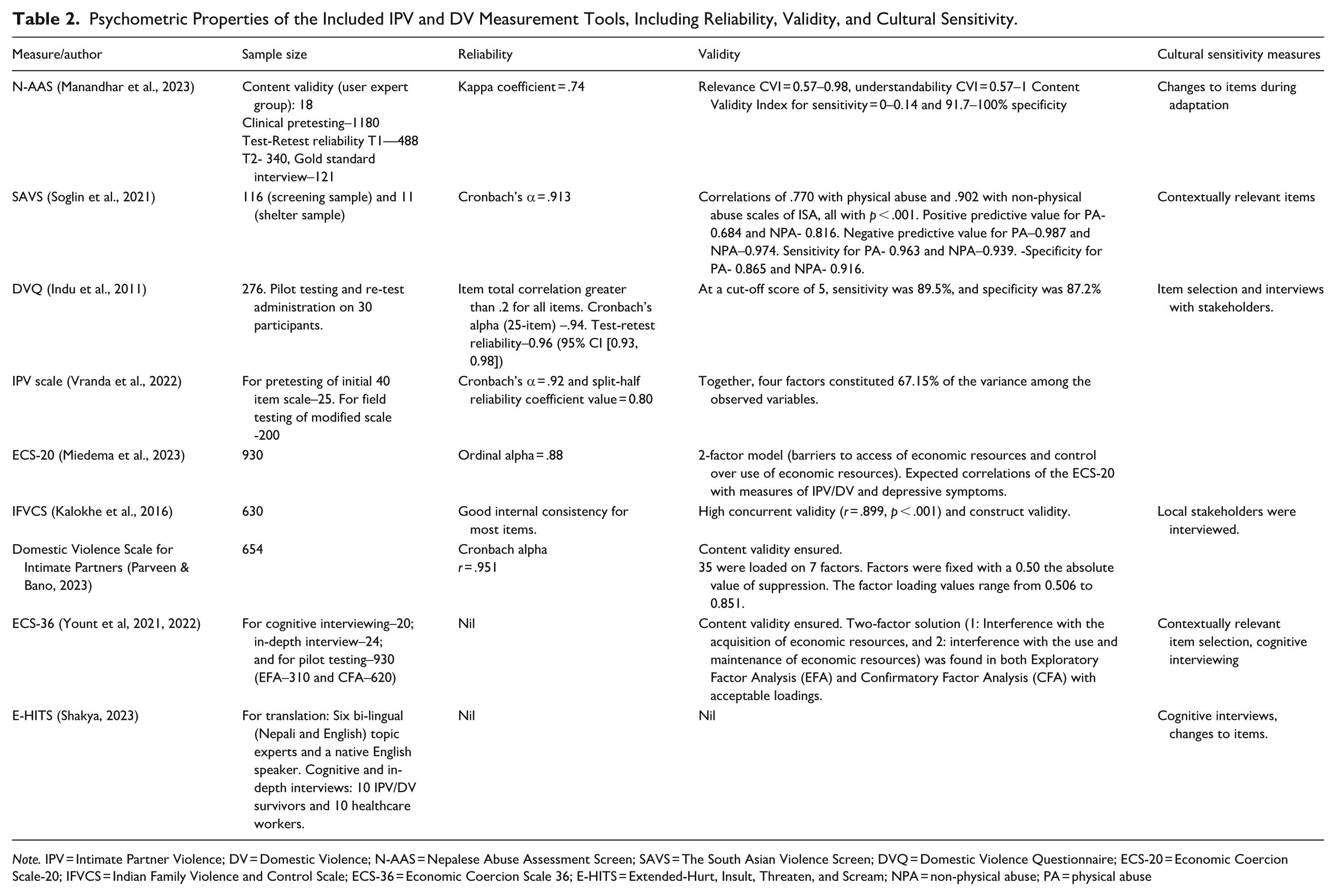
Note. IPV = Intimate Partner Violence; DV = Domestic Violence; N-AAS = Nepalese Abuse Assessment Screen; SAVS = The South Asian Violence Screen; DVQ = Domestic Violence Questionnaire; ECS-20 = Economic Coercion Scale-20; IFVCS = Indian Family Violence and Control Scale; ECS-36 = Economic Coercion Scale 36; E-HITS = Extended-Hurt, Insult, Threaten, and Scream; NPA = non-physical abuse; PA = physical abuse
Reliability
Seven studies reported reliability findings. N-AAS (Manandhar et al., 2023) was seen to have good inter-rater reliability. Internal consistency was good for SAVS (Soglin et al., 2019). Item–total correlation, internal consistency, and test–retest reliability were all above acceptable ranges for DVQ (Indu et al., 2011). IPV scale (Vranda et al., 2022) reported good internal consistency and split-half reliability. Theoretical reliability was good for ECS-20 items (Miedema et al., 2023). In the Item Response Theory Analysis for IFVCS (Kalokhe et al., 2016), most items demonstrated good internal consistency, with only 7 of 63 items failing to reach statistical significance. The Domestic Violence Scale for Intimate Partners (Parveen & Bano, 2023) was reported to have high internal consistency.
Across the included studies, internal consistency was reported almost exclusively using Cronbach’s alpha. Only one study, the development of the ECS-20 (Miedema et al., 2023), reported more robust indices, including ordinal alpha (.88), ordinal omega (.88), and the greatest lower bound (.94). No other instruments provided McDonald’s omega, composite reliability, or CFA-based reliability indices, which are recommended in contemporary psychometric practice. Although alpha values were generally acceptable, reliance on alpha alone is limiting because it assumes tau-equivalence and is sensitive to the number of items on a scale. The lack of stronger reliability indicators represents a notable gap in the psychometric evaluation of IPV measures in South Asia. Overall, the reliability findings of the included IPV/DV measurement tools are summarized in Table 2.
Validity
Across the included instruments, validity testing varied widely in both method and quality. Content validity was the most commonly assessed domain, typically evaluated through expert review, participant feedback, or content validity indices. IFVCS (Kalokhe et al., 2016) demonstrated very good content validity based on structured expert and participant evaluations, while N-AAS (Manandhar et al., 2023), ECS-20 (Miedema et al., 2023), ECS-36 (Yount et al., 2022), the IPV Scale (Vranda et al., 2022), and the Domestic Violence Scale for Intimate Partners (Parveen & Bano, 2023) showed adequate to doubtful content validity using similar expert-based approaches. SAVS (Soglin et al., 2021), and E-HITS (Samjhana Shakya, 2023) provided only inadequate content validity evidence, with minimal indication of systematic assessment.
Structural validity evaluated mainly through exploratory or confirmatory factor analysis was very good for IFVCS (Kalokhe et al., 2016), ECS-20 (Miedema et al., 2023), and ECS-36 (Yount et al., 2022), and adequate for SAVS (Soglin et al., 2021) and DVQ (Indu et al., 2011). In contrast, the IPV Scale (Vranda et al., 2022) showed doubtful structural evidence, and tools such as N-AAS (Manandhar et al., 2023), the Domestic Violence Scale for Intimate Partners (Parveen & Bano, 2023), and E-HITS (Samjhana Shakya, 2023) demonstrated to be inadequate in this dimension.
Criterion validity was assessed using correlations with established IPV measures or sensitivity/specificity analyses. N-AAS (Manandhar et al., 2023) and DVQ (Indu et al., 2011) showed very good criterion validity, supported by strong associations with external reference scales and accurate cut-off scores. Construct validity was assessed through hypothesis testing or associations with theoretically relevant variables. It was found to be very good for N-AAS (Manandhar et al., 2023), SAVS (Soglin et al., 2021), and DVQ (Indu et al., 2011). It was adequate for IFVCS (Kalokhe et al., 2016) and ECS-20 (Miedema et al., 2023), and was inadequate for the remaining tools.
Cross-cultural validity was the weakest domain; with most instruments rated as inadequate or doubtful due to reliance primarily on translation or limited cognitive interviewing. Only SAVS (Soglin et al., 2021), IFVCS (Kalokhe et al., 2016), ECS-36 (Yount et al., 2022), and ECS-20 (Miedema et al., 2023) demonstrated adequate evidence of cross-cultural validity. Responsiveness was rarely assessed and was largely inadequate, except for N-AAS (Manandhar et al., 2023), SAVS (Soglin et al., 2021), IFVCS (Kalokhe et al., 2016), DVQ (Indu et al., 2011), and ECS-20 (Miedema et al., 2023), which showed very good to adequate sensitivity to change.
Overall, validity findings (Table 2) indicate that IFVCS (Kalokhe et al., 2016), N-AAS (Manandhar et al., 2023), SAVS (Soglin et al., 2021), DVQ (Indu et al., 2011), and ECS-20 (Miedema et al., 2023) have comparatively stronger validity profiles. However, substantial gaps remain across the evidence base, particularly in structural, cross-cultural, and responsiveness testing. Overall, the validity findings of the included IPV/DV measurement tools are summarized in Table 2.
Cultural Sensitivity
Six studies described measures to make the scales sensitive to cultural differences. While adapting E-HITS, Shakya (2023) carried out cognitive interviews, reworded screening items, and selected appropriate vocabulary and idiomatic phrases to ensure equivalence of meaning (e.g. physical assault was translated to raising a hand). Other steps taken included the addition of user instructions to the E-HITS tool, modifications to the question structure, the Likert scale, and screening items to align with cultural norms (e.g. instead of intimate partner, referring to any household member). Yount et al. (2022) used a sequential, mixed-methods design involving literature and qualitative research to identify locally salient acts of economic coercion for developing ECS -36. They added contextually relevant items such as involvement in microfinance (missing in earlier scales) and used cognitive testing to make the scale more culturally applicable. Items that did not apply to the sample (e.g. credit debt) were removed. Kalokhe et al. (2016) gathered information about what lay community members and individuals with expertise in the fields of domestic violence (DV) and marital counseling perceived as constituting DV so that culturally relevant items for IFVCS could be developed. Manandhar et al. (2023) made the following changes while adapting N-AAS: removed the body mapping exercise, excluded items about fear, added culturally relevant types of abuse (e.g., food denial), and expanded answer choices to include in-laws as possible perpetrators.
Quality Assessment Results
The ratings of the nine studies using the COSMIN checklist are summarized in Table 3. The studies are organized in descending order based on the number of measurement properties found to be good or adequate. The N-AAS is rated the highest, indicating sufficient evidence for six of the nine measurement properties: content validity, reliability, validity (measurement, criterion, and constrictive), and responsiveness. It is followed by SAVS, IFVCS, and the DVQ, demonstrating evidence for four measurement properties. The rest of the studies reported evidence for three or fewer psychometric properties.
COSMIN Evaluation of the Selected Measurement Tools Developed or Adapted for South Asian Countries, Including Ratings of Psychometric Properties.
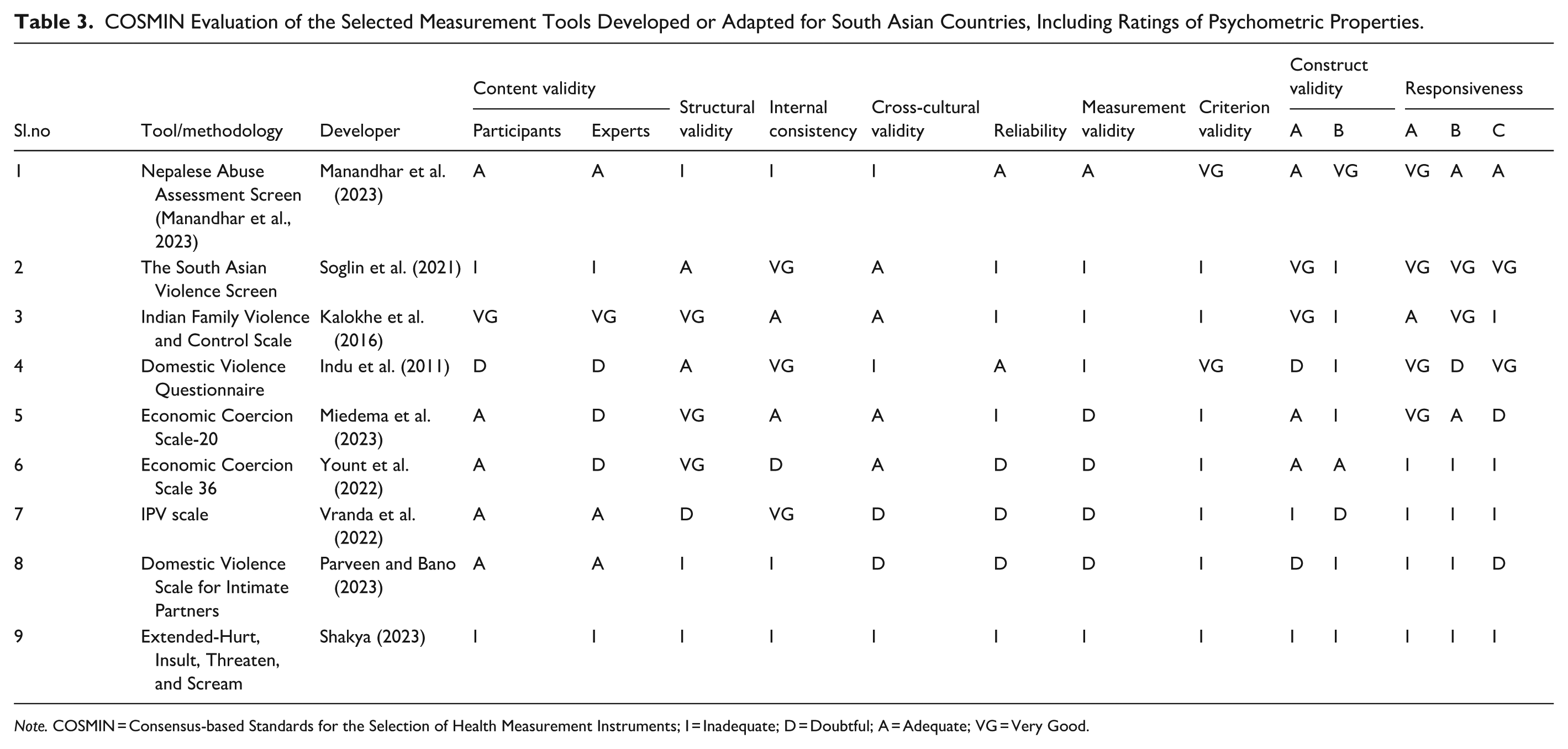
Note. COSMIN = Consensus-based Standards for the Selection of Health Measurement Instruments; I = Inadequate; D = Doubtful; A = Adequate; VG = Very Good.
Scoring and Response Options Across IPV/DV Measures
IPV/DV scales often employ diverse scoring formats, such as binary (yes/no), Likert-type scales, or composite scores. In our systematic review of nine studies, three scales, namely, the N-AAS (Manandhar et al., 2024), ECS-36 (Yount et al., 2022), and ECS-20 (Miedema et al., 2023), employed binary (yes/no) response options. The remaining six studies, which are the SAVS (Soglin et al., 2021), DVQ (Indu et al., 2011), IPV scale (Vranda et al., 2022), IFVCS (Kalokhe et al., 2016), Domestic Violence Scale for Intimate Partners (Parveen & Bano, 2023) and E-HITS (Samjhana Shakya, 2023) used Likert-type scales. Binary formats are effective for identifying the presence of abuse but lack depth in capturing its intensity or recurrence. These are often used as screening tools, supplemented by qualitative interviews for deeper insights. Conversely, Likert-type scales, where participants rate the frequency or severity of abuse (e.g., 1 = Never, 5 = Very Often), provide greater sensitivity to gradation and changes over time. This makes them valuable for intervention studies and understanding the relationship between IPV severity and outcomes like mental health.
Discussion
South Asian countries share certain cultural traits, yet each nation has distinct characteristics that shape the experience of IPV/DV. These cultural differences highlight the need for validated, culturally adapted tools that can address the specific regional, social, and methodological challenges within this context (Hossain & Mcalpine, 2017; Ruiz-Pérez et al., 2007). Such tools are crucial for accurately capturing the unique perspectives of individuals, particularly women, who often face deeply personal and culturally rooted IPV/DV-related challenges.
This systematic review synthesizes evidence on the psychometric properties of nine IPV/DV assessment tools based on studies that evaluated their performance within South Asian populations. Across the included tools, six tools: namely the DVQ (Indu et al., 2011), IPV Scale (Vranda et al., 2022), ECS-20 (Miedema et al., 2023), IFVCS (Kalokhe et al., 2016), Domestic Violence Scale for Intimate Partners (Indu et al., 2011), and ECS-36 (Yount et al., 2022), were developed specifically for the South Asian context. These tools were created by selecting relevant items or by developing and field-testing new measures with input from diverse South Asian populations to ensure cultural relevance.
Across the nine included instruments, the content in each item covered a range of behavioral domains relevant to IPV. Most tools assessed physical, psychological, and sexual abuse through items capturing acts such as hitting, threatening, humiliation, or forced sexual activity. Measures such as IFVCS (Kalokhe et al., 2016) and the ECS (Miedema et al., 2023) also included items reflecting on coercive control, financial restriction, interference with access to resources, and monitoring of daily activities. Tools like N-AAS (Manandhar et al., 2023) and SAVS included brief screening items reflecting recent experiences of emotional, physical, or sexual harm. In contrast, E-HITS (Samjhana Shakya, 2023) and the IPV Scale (Vranda et al., 2022) primarily rely on frequency-based items that assess how often abusive behaviors occur, rather than incorporating detailed behaviorally specific items. As a result, these tools may have relatively limited coverage of broader relational dynamics and contextual aspects of IPV. These domain descriptions illustrate what each tool captures while avoiding the use of copyrighted verbatim items.
The COSMIN and GRADE assessments indicate notable variation in methodological quality across tools. IFVCS (Kalokhe et al., 2016), N-AAS (Manandhar et al., 2023), DVQ (Indu et al., 2011), and SAVS (Soglin et al., 2021), showed comparatively stronger evidence, particularly in content validity, internal consistency, and, where available, criterion or structural validity and appear more suitable for cautious use in South Asia. ECS-20 (Miedema et al., 2023) and ECS-36 (Yount et al., 2022) also demonstrated acceptable construct validity supported by factor analyses. In contrast, the IPV Scale (Vranda et al., 2022), the Domestic Violence Scale for Intimate Partners (Parveen & Bano, 2023), and E-HITS (Samjhana Shakya, 2023) showed weaker evidence due to limited validity testing and incomplete psychometric reporting (Table 3).
Furthermore, the DVQ (Indu et al., 2011) has been previously adapted and utilized in studies within India, showing preliminary feasibility in capturing experiences of IPV in this population. However, it is important to note that the DVQ (Indu et al., 2011), like other IPV measures, has not undergone comprehensive psychometric testing across diverse Indian populations, and caution should be exercised when generalizing its findings.
Overall, GRADE ratings reflected low to moderate certainty of evidence, underscoring methodological gaps such as small samples and limited validation domains. Reliability assessments relied overwhelmingly on Cronbach’s alpha, which is limited by its assumptions of tau-equivalence and sensitivity to item number. No study reported McDonald’s omega or CFA-based composite reliability, which are better suited for multidimensional constructs such as IPV. This reliance on alpha represents an important psychometric gap in IPV research in the region. This overreliance on alpha is consistent with global IPV measurement trends but highlights an urgent need for more rigorous psychometric testing in South Asia, including the use of CFA-based reliability, omega, and item-level analyses. So, this limitation restricts their broader applicability, highlighting the need for additional research to establish robust cross-cultural adaptation, validity and reliability testing across languages and demographic groups. Addressing these gaps can improve the cultural relevance, comparability, and practical utility of IPV screening and research across diverse South Asian settings (Fraga, 2016; Kelmendi, 2013). A summary of the critical findings of this review is presented in Table 4.
Critical Findings of the Review.
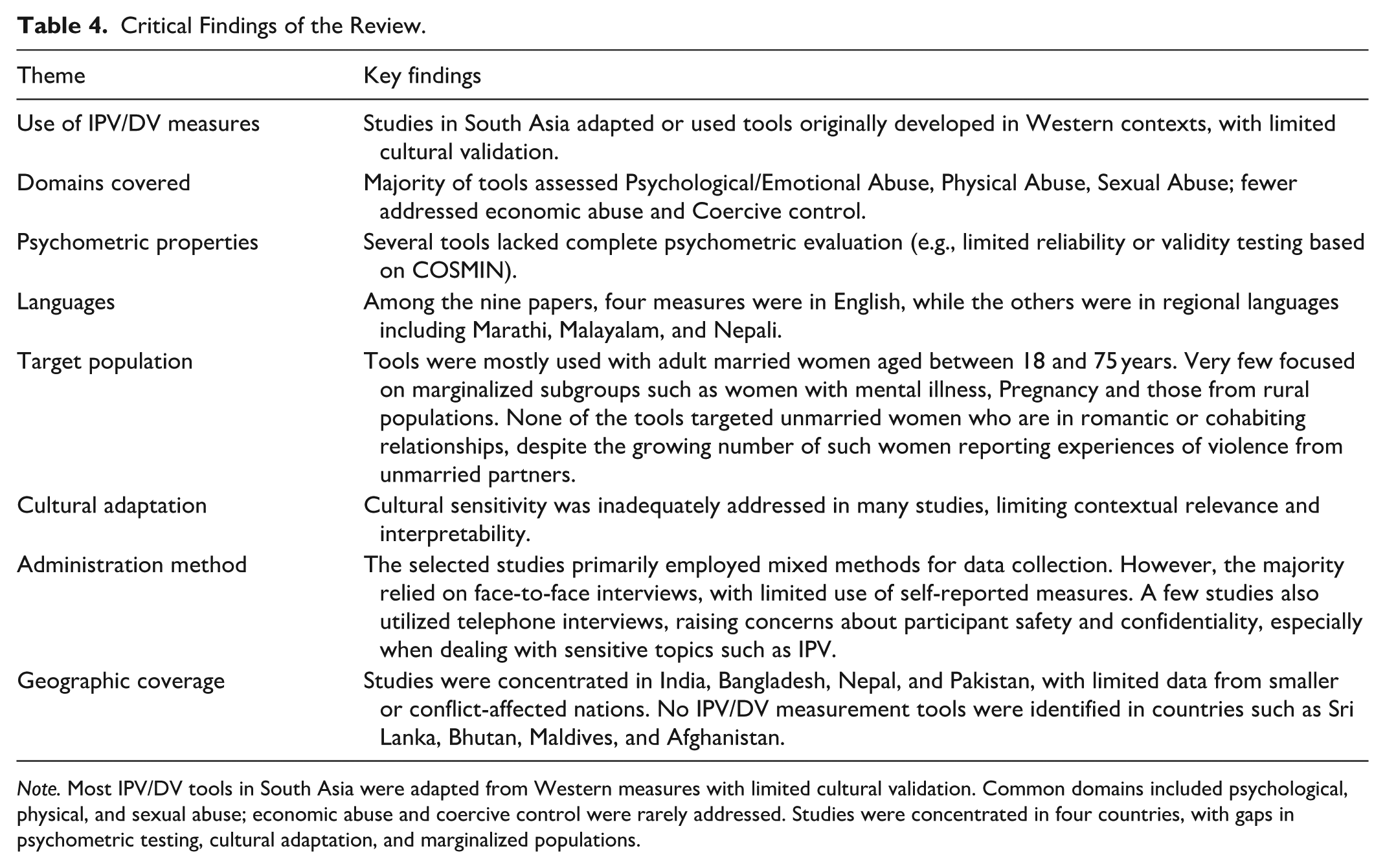
Note. Most IPV/DV tools in South Asia were adapted from Western measures with limited cultural validation. Common domains included psychological, physical, and sexual abuse; economic abuse and coercive control were rarely addressed. Studies were concentrated in four countries, with gaps in psychometric testing, cultural adaptation, and marginalized populations.
Lack of Measurement Invariance and Implications for Generalizability:
None of the included studies (Table 1) examined measurement invariance across languages, population subgroups, or South Asian regions. This represents a significant methodological gap, particularly given the linguistic, cultural, and socio-economic diversity of the region. Without invariance testing, it is unclear whether the IPV measures function equivalently across different groups, raising the risk of misclassification or biased comparisons. The absence of such testing limits cultural sensitivity and undermines the generalizability of findings, both within countries such as India, where tools may be used across multiple states and across South Asian contexts more broadly. Future validation studies should incorporate formal measurement invariance procedures to ensure that IPV/DV tools provide meaningful and comparable scores across diverse populations.
Bell and Naugle’s (Bell & Naugle, 2008) contextual model of IPV highlights multiple interacting domains, situational factors, cognitive and emotional processes, coercive control, and relationship dynamics that shape the occurrence and impact of violence. When viewed through this theoretical lens, most tools in this review primarily focus on physical, psychological, and sexual acts, with fewer measures capturing broader constructs such as coercive control, economic restriction, or relational power dynamics. Instruments like the IFVCS and the ECS address some aspects of control and resource restriction, but several others (e.g., IPV Scale, DVQ, E-HITS) remain limited to incident-based behaviors. This theoretical framing helps identify conceptual gaps and underscores the need for IPV tools in South Asia to incorporate domains beyond violent acts to better reflect the complexity of women’s lived experiences.
Another important implication for measurement quality is differences in response formats in the assessments. Binary items are useful for rapid screening but may oversimplify complex patterns of abuse. Likert-type scales capture frequency and severity more sensitively but require careful cross-cultural adaptation to ensure consistent interpretation across languages. They are also vulnerable to social desirability and acquiescence biases. These issues can be reduced by using items with clear explanations or examples (Evans et al., 2016; Hall et al., 2018; Hegarty et al., 1999, 2005; Kelmendi, 2013). Incorporating behaviorally specific items that describe concrete acts further improves accuracy, as such items uncover more IPV cases and reduce interpretive variability (Rossi et al., 2015). Therefore, integrating behaviorally specific items into IPV research can lead to more precise and reliable data, ultimately informing better interventions and support mechanisms for affected individuals.
Ravi et al. (2023) conducted a comprehensive review of culturally responsive DV measurement tools, identifying seven studies including one unpublished work from the same author focused on South Asian and immigrant communities (Ravi et al., 2023). However, the present review makes a distinct contribution in three ways: (1) it is region-focused on South Asia and includes additional studies through 2023 that were not covered previously; (2) it applies standardized measurement-quality frameworks (COSMIN) and evidence-certainty grading (GRADE) to produce comparative ratings of instrument quality; and (3) it offers a deeper psychometric critique such as recommending omega/IRT over exclusive reliance on Cronbach’s alpha; maps item domains to Bell & Naugle’s contextual IPV model; and highlights major gaps such as lack of measurement invariance testing. Together these differences provide a more actionable, regionally relevant appraisal for researchers, clinicians, and policymakers working in South Asia. Contrasting author Ravi’s review, which included studies from the USA (NYC and L.A. County) and Ethiopia (Awi Zone), our review specifically targeted South Asian contexts. This focus ensured that the findings directly apply to the region, strengthening the validity and relevance of our conclusions (Ravi et al., 2023).
This overlap with Ravi’s findings not only reinforces the validity of our review but also highlights the critical need for culturally adapted tools that address the unique dynamics of IPV/DV in South Asia. These dynamics include in-law abuse, economic control, and restrictions on women’s autonomy. By focusing on these culturally specific factors, our review contributes to the ongoing discussion about improving IPV/DV measurement in South Asia, making it both relevant and timely.
Some other measurements were reviewed, such as those used by Bhatta et al. (2019) and Arumugaperumal et al. (2024), which were adapted for South Asian populations but lacked full psychometric assessment. For example, the WHO Violence Against Women Instrument (VAWI) was used without verifying its reliability or implementing comprehensive language adaptation. These limitations resulted in biases, particularly by restricting the sample populations to those proficient in English, and excluded a broader, linguistically diverse representation of South Asian populations. Consequently, these studies were not included in our review (Arumugaperumal et al., 2024; Bhatta & Assanangkornchai, 2019).
Another significant issue highlighted by the Lancet Psychiatry Commission on IPV/DV and Mental Health is the urgent need for IPV/DV measurement tools that account for mental illness, particularly for populations experiencing both IPV/DV and mental health challenges (Oram et al., 2022). In South Asia, there is a critical gap in well-validated tools that assess IPV/DV in the context of mental illness, a particularly vulnerable population. This gap underscores the need for future research, as survivors of IPV/DV often face co-occurring mental health issues, which complicate their experiences and require tailored interventions. Without tools specifically designed to assess both IPV/DV and mental health concerns, interventions for these survivors remain insufficient and ineffective. This highlights the urgent need for the development of culturally and contextually appropriate IPV/DV measurement tools that can address these dual challenges and support more effective interventions for South Asian populations.
Implications for IPV/DV Interventions
The implications of these findings for policy, practice, and future research are summarized in Table 5. The development of freely accessible, culturally sensitive tools offers an encouraging model for interventions that address IPV/DV across diverse South Asian populations. Expanding the availability of such tools could enable practitioners to design targeted, effective care plans for IPV/DV survivors, and it will be helpful for policymakers. Moreover, addressing the psychometric gaps identified in this review is crucial for ensuring that these tools are both scientifically rigorous and culturally appropriate. These efforts will help enhance the accuracy and efficacy of interventions, contributing to the broader goal of reducing IPV/DV in South Asia, particularly for individuals with mental health challenges.
Implications for Policy, Practice, and Research.
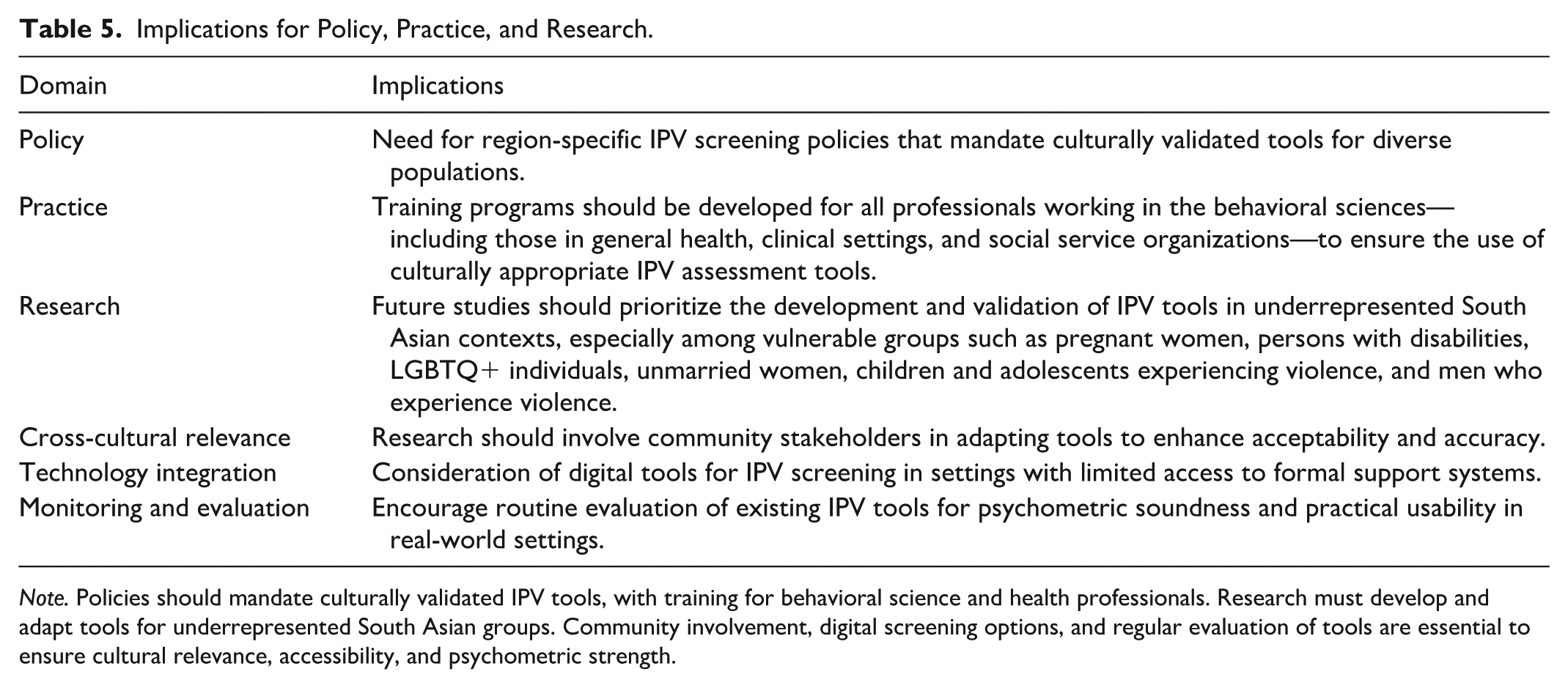
Note. Policies should mandate culturally validated IPV tools, with training for behavioral science and health professionals. Research must develop and adapt tools for underrepresented South Asian groups. Community involvement, digital screening options, and regular evaluation of tools are essential to ensure cultural relevance, accessibility, and psychometric strength.
Limitations and Strengths
A key strength of this review is its specific focus on IPV/DV measurement tools within South Asia, a region with high prevalence and substantial cultural diversity. To our knowledge, this is the most comprehensive and up-to-date review of IPV/DV instruments in the region, synthesizing the largest number of available tools and evaluating them using established frameworks such as PRISMA, COSMIN, and GRADE. The review also benefits from a systematic approach and detailed data extraction, which enhances methodological transparency.
However, several limitations should be acknowledged. The reliance on English-language publications may have resulted in the exclusion of relevant tools documented in local languages. Additionally, the high exclusion rate from 1,348 records to nine included studies reflects the limited availability of research reporting psychometric properties in South Asia. Many excluded studies focused only on prevalence, qualitative experiences, or intervention outcomes without using a validated instrument, and others lacked sufficient methodological detail to allow COSMIN appraisal. These factors may narrow the scope of the review but also highlight the urgent need for more rigorous scale development and reporting in the region.
The included studies represented diverse groups across Nepal, India, Bangladesh, Pakistan, and South Asian immigrants in the United States, using multiple languages and varied clinical and community settings. However, most studies lacked detailed demographic data such as caste, ethnicity, and socioeconomic status, limiting generalisability. These gaps highlight the need for future validation research that includes marginalized groups and tests to see whether IPV tools perform equivalently across cultures and languages.
Conclusion
This systematic review highlights the urgent need for well-validated, culturally responsive tools to assess IPV/DV across South Asian countries. While existing instruments offer valuable cultural insights, many lack comprehensive psychometric validation and adaptation across diverse South Asian regions. Our findings reveal a broader gap in psychometric evaluation, especially in test–retest reliability, and emphasize that merely translating tools is insufficient to capture the cultural nuances of IPV/DV in these communities.
The review stresses the importance of developing standardized, culturally adapted tools to assess IPV/DV experiences and support adapted intervention strategies accurately. These tools are crucial for improving the scientific rigor of IPV/DV research in South Asia and ensuring the effective implementation of support services. Expanding access to such tools, particularly those that are freely available and contextually relevant, will allow practitioners to address IPV/DV more effectively, contributing to a broader goal of reducing violence in the region.
Future efforts should prioritize the development and rigorous testing of IPV/DV measurement tools that are both linguistically and culturally adaptable. These efforts are essential for improving IPV/DV intervention and prevention strategies, ultimately enhancing support for survivors across South Asia, particularly for those with mental health challenges.
Supplemental Material
sj-docx-1-tva-10.1177_15248380261443482 – Supplemental material for A Systematic Review on Psychometric Properties of Instruments Assessing Intimate Partner Violence in South Asian Countries
Supplemental material, sj-docx-1-tva-10.1177_15248380261443482 for A Systematic Review on Psychometric Properties of Instruments Assessing Intimate Partner Violence in South Asian Countries by Afreenbanu A. Khadirnavar, Princy Mariam Thomas, Abhilasha Das, Kavita V. Jangam, Kelsey Hegarty, Veena Satyanarayana and Prabha S. Chandra in Trauma, Violence, & Abuse
Footnotes
Acknowledgements
We thank Laura Bozicevic, University of Liverpool, for her advice and support for assistance in Quality Assessment.
ORCID iDs

Funding
The authors received no financial support for the research, authorship, and/or publication of this article.
Declaration of Conflicting Interests
The authors declared no potential conflicts of interest with respect to the research, authorship, and/or publication of this article.
Supplemental Material
Supplemental material for this article is available online.
Author Biographies
References
Supplementary Material
Please find the following supplemental material available below.
For Open Access articles published under a Creative Commons License, all supplemental material carries the same license as the article it is associated with.
For non-Open Access articles published, all supplemental material carries a non-exclusive license, and permission requests for re-use of supplemental material or any part of supplemental material shall be sent directly to the copyright owner as specified in the copyright notice associated with the article.
