







Abstract
Interactive book reading (IBR) has proven effective for increasing children’s lexicons with most of the results based on students’ learning of nouns. Little is known about the application of IBR to instructional verbs (i.e., words used during the instruction of academic content). To address this gap, 122 prekindergarten children were recruited from seven elementary schools. Each school was randomly assigned to the intervention group or the control group. Children in the intervention group were taught 12 instructional verbs across a 3-week period using interactive book-reading strategies. Children assigned to the control group only received implicit exposure to instructional verbs during teacher talk. Children in the book-reading group knew significantly more words on a receptive picture identification task than children in the control group both at posttesting and at follow-up testing in the fall. No significant group differences were noted at spring testing.
Vocabulary knowledge and competency contribute significantly to a student’s academic and reading success (Loftus, Coyne, McCoach, Zipoli, & Pullen, 2010; National Institute of Child Health and Human Development [NICHHD], 2000; Stahl & Nagy, 2005). Given the vast magnitude of the English vocabulary, selecting words that will contribute significantly to the development of a mature lexicon is of paramount importance and has been the subject of much discussion and investigation (Beck, McKeown, & Kucan, 2002; Biemiller, 2005; Coyne, Simmons, Kame’enui, & Stoolmiller, 2004). One widely accepted system for selecting vocabulary words is the Tier system approach introduced by Beck and colleagues (2002). In this system, words can be classified as Tier 1 words (i.e., words most children come to school knowing), Tier 2 words (words that provide precision to communication and have functional utility across contexts), or Tier 3 words (words that are discipline-specific and thus have little generalizability across settings and activities outside of those discipline areas). For increasing lexical functionality and utility, Beck and colleagues recommend instruction focus on Tier 2 words.
Much has been written regarding the selection of Tier 2 words within the context of children’s literature (Beck et al., 2002; Coyne et al., 2004; Loftus et al., 2010), and a few studies have focused on Tier 2 words organized by semantic category such as moods or people (Baumann, 2009; Beck, Perfetti, & McKeown, 1982; McKeown, Beck, Omanson, & Perfetti, 1983). Several researchers have sought to support educators in the selection of Tier 2 words through the creation of word lists. Coxhead (2000) and more recently Gardner and Davis (2014) have generated a corpora of vocabulary that appear with high frequency in English language academic texts and that play a central role in academic success (Biemiller, 2010; Chall, 1996; Townsend, Filippini, Collins, & Biancarosa, 2012). One class of academically related Tier 2 words receiving little attention in the literature is instructional verbs. Upon entry into school, children are bombarded by instructional verbs in the form of teacher explanations, questions, and mands (e.g., “I sorted my objects by color. Now you sort your objects by color.”). Instructional verbs will be operationally defined as those verbs found in the Common Core State Standards (National Governors Association Center for Best Practices & Council of Chief State School Officers, 2010) and used during instruction for the purpose of directing student engagement with academic content and concepts. Words such as “identify,” “describe,” “sort,” and “compare” are but a few examples of instructional verbs. Failure to understand instructional verbs and thus what a teacher or textbook is asking of a child has the potential of creating a rift in the child’s engagement with the learning process.
Shared Book Reading
Shared book reading is a developmentally natural context for providing exposure to sophisticated vocabulary in contextually supportive environments (Loftus et al., 2010; NICHHD, 2000; Neuman, Copple, & Bredekamp, 2000; U.S. Department of Education, Institute of Education Sciences, What Works Clearinghouse, 2015). Embedding adult supported child–text interactions within book-reading dynamics can enhance children’s acquisition of the rich and sophisticated vocabulary found in most children’s books (Eunice Kennedy Shriver National Institute of Child Health and Human Development, 2010; Pollard-Durodola et al., 2011; Wilkinson & Houston-Price, 2013). During high-quality interactive reading, attentive adults use questions and recursive commentary to create a conversation between the children, the text, and the adult (Kindle, 2009). Additional gains in vocabulary development can be achieved when purposeful word instruction is extended through relevant and varied interactions with the novel words outside of the storybook context (Beck & McKeown, 2007). For example, Coyne, McCoach, Loftus, Zipoli, and Kapp (2009) found that kindergarten students learned more complete and accurate word meanings through book reading coupled with postreading interactive activities as compared with teacher embedded definitions during reading or incidental exposure to the words during reading. Postreading activities consisted of the adult engaging the students in a discussion about the word’s use in the story; children differentiating examples from nonexamples of the word’s use in various contexts followed by open-ended questions designed to elicit an extended response from the child.
To date, most studies have relied on published storybooks as the source for word selection (Biemiller & Boote, 2006; Chlapana & Tafa, 2014; Elley, 1989; McKeown & Beck, 2014; Penno, Wilkinson, & Moore, 2002; Robbins & Ehri, 1994). The availability and naturalness of storybooks are compelling reasons for their use. However, Tier 2 vocabulary indicative of fictional writing (e.g., “sauntering,” “verandah,” and “quiver,” Pullen, Tuckwiller, Konold, Maynard, & Coyne, 2010; “terrace,” “thrash,” and “serene,” Coyne et al., 2010) does not typically mirror the vocabulary heard during instruction. Therefore, the words learned by students via storybook reading may not immediately support academic success. This disconnect between storybook and instructional verbiage is of particular concern for children from low socioeconomic backgrounds and those who are English language learners (ELLs) who present with a lack of vocabulary competency and limited lexical inventories (Biemiller, 2001; Hart & Risley, 1995).
Rationale for Study
Children learn more from listening to engaging stories than from completing contrived activities (Elley, 1989). However, a review of the literature yielded few studies in which a preponderance of instructionally relevant verbs occurred in a single story (Beck & McKeown, 2007; Coyne et al., 2010; Justice, Meier, & Walpole, 2005; Silverman, 2007). Given the overwhelming empirical support favoring interactive book reading (IBR), it seems a natural direction to blend IBR with targeted instruction of instructional verbs. Determining the appropriateness of IBR for teaching verbs is of particular importance given that verbs connect phrases and are central binding agents of a sentence. The sentences “Bob ate an apple” and “Bob smashed an apple,” highlight the relevance of verbs to accurate comprehension. Because verbs connect ideas and are contextually influenced, their exact meanings are more nebulous than their concrete counterparts, nouns, and thus more difficult for children to learn (Kan &Windsor, 2010). Examining grammatical word class as a mediating factor in the application of shared book reading addresses a noted gap in the current literature (Wasik, Hindman, & Snell, 2016).
The aim of this research study was to use the grammatical word class of instructional verbs as a driver for delineating word classes susceptible to student learning via shared book-reading experiences. Specifically, the current study sought to determine if instructional verbs could be learned via investigator-created books during an interactive shared reading task. The study was designed to address the following two research questions:
Results of the present study would be an initial step toward ascertaining the effects of established shared book-reading practices for teaching instructional verbs. Within the overarching research goal, results would begin to allow the investigators to parse out the effects of vocabulary instruction by word class.
Method
Participants
Children
Participants were 122 children recruited from seven schools participating in a summer program sponsored by an urban school district in the southeast United States. Demographics of the participants are presented in Table 1. Six of the seven participating schools were located in neighborhoods characterized by low socioeconomic status. The seventh school drew students from low to middle socioeconomic neighborhoods. Schools were randomized to either the book-reading group (four schools, n = 70) or the control group (three schools, n = 52). Because group assignment occurred at the school level with enrollment rates varying by school, it was logistically impossible to balance the group sample sizes. Demographics for the two groups are presented in Table 1. None of the participating children had an identified disability. For descriptive purposes, the continuous variable of age was summarized by mean and standard deviation and days present was summarized by median and interquartile range (IQR). Categorical variables including gender, ethnicity, bilingualism, and preschool experience were summarized by numbers and percentages. The Fisher exact or chi-square test with Yates correction was used to compare groups on categorical variables. A two-tailed t test compared these two groups on the continuous variables of age, attendance, and pretest scores. There were no significant group differences in gender, age, preschool experience, or pretest scores. The groups did differ significantly in the qualities of ethnicity and bilingualism (p = .0004 and p = .0005, respectively). More children in the control group were Hispanic and spoke Spanish than in the intervention group.
Descriptive Statistics by Group at Pretesting.
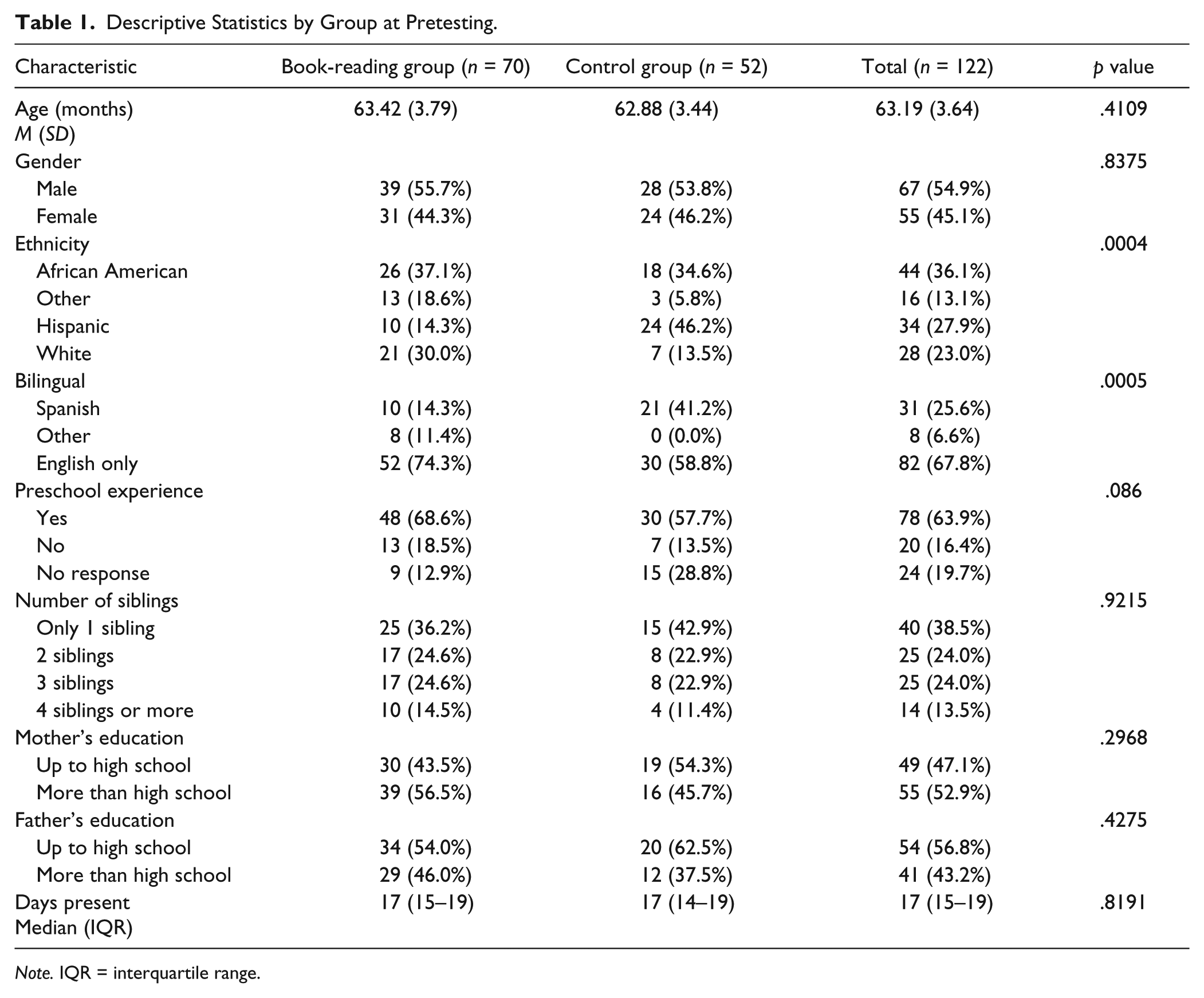
Note. IQR = interquartile range.
Setting
All intervention activities were delivered to children in a large group setting in a classroom. Children sat on a carpet and the interventionist was seated in a chair in front of the group of children for all intervention activities.
Target Instructional Verbs
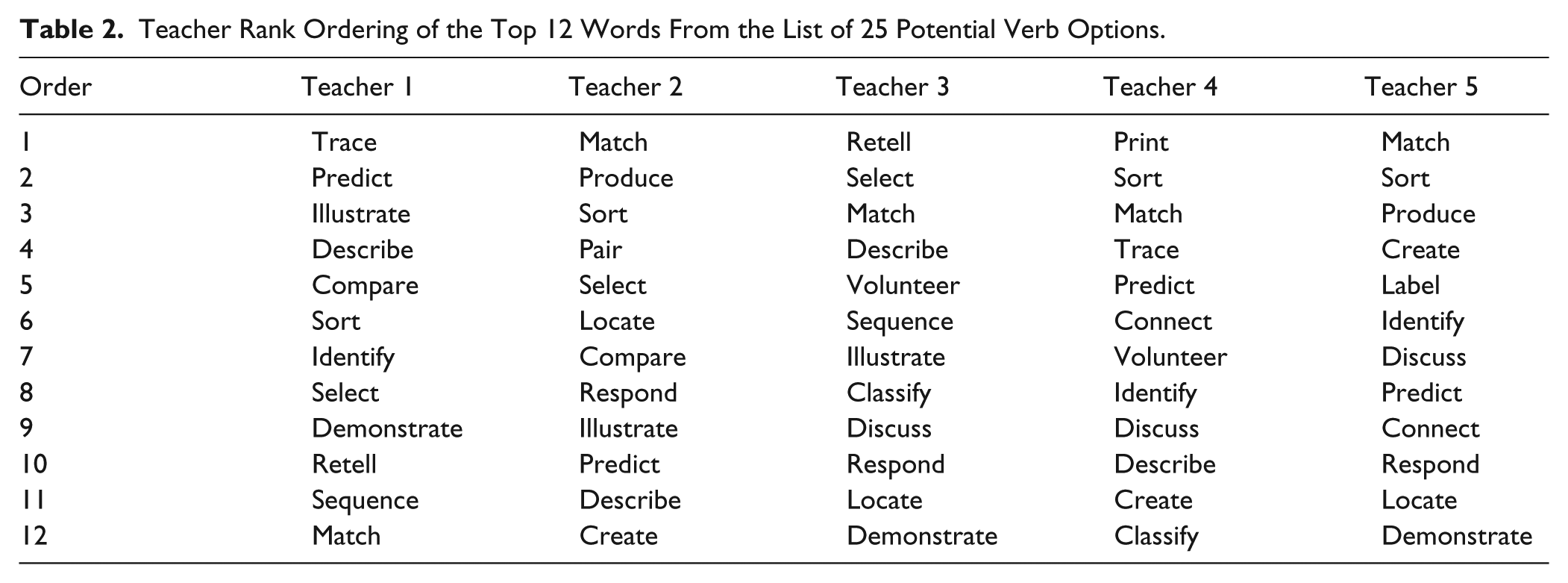
The first two authors independently generated a list of instructional verbs appearing on the “Academic Word List” (Coxhead, 2000) and our state’s Kindergarten Academic Standards. To be selected, the word had to be a verb, had to possess the qualities of a Tier 2 word (Beck et al., 2002), and had to possess high instructional potential as defined by the investigator’s ability to generate three concrete examples of the word’s use within an instructional context (e.g., sort the shapes). The list was culled to 25 words through continuous peer review by two faculty in Communication Sciences and Disorders with expertise in child language who were independent of the study. Five kindergarten teachers were asked to review the final list of 25 verbs and to select the top 12 verbs that children should know by the end of the kindergarten school year. The teachers used their own definition for determining a word’s “knowness.” The 12 verbs appearing on at least three of the five teachers’ lists were used in the study. Table 2 presents teachers’ rankings of the top 12 words. The final words selected for use in the study were identify, predict, match, sort, create, select, illustrate, locate, describe, discuss, respond, and demonstrate.
Teacher Rank Ordering of the Top 12 Words From the List of 25 Potential Verb Options.
Storybooks
Four stories were written to teach three instructional vocabulary words each. Table 3 provides specific information regarding each story. Each of the three words appeared four times in the story, for a total of 12 exemplar exposures. We elected to provide multiple exposures within the story based on the work by Robbins and Ehri (1994), who found that children learned more words when they appeared in a story twice versus once. Selected story topics were reflective of events that children attending the program would reasonably have experienced as judged by the first author’s knowledge of the participant pool and verified by a kindergarten teacher from each of the seven participating schools, thereby decreasing interference from poor world knowledge or prior experience. “Maria’s Great Weather Mistake” and “A New Color for Javon” focused on activities occurring in a preschool setting. “Sophie’s Exciting Birthday” and “Camping Trip or Trick” reflected common life events.
General Description of the Four Stories.
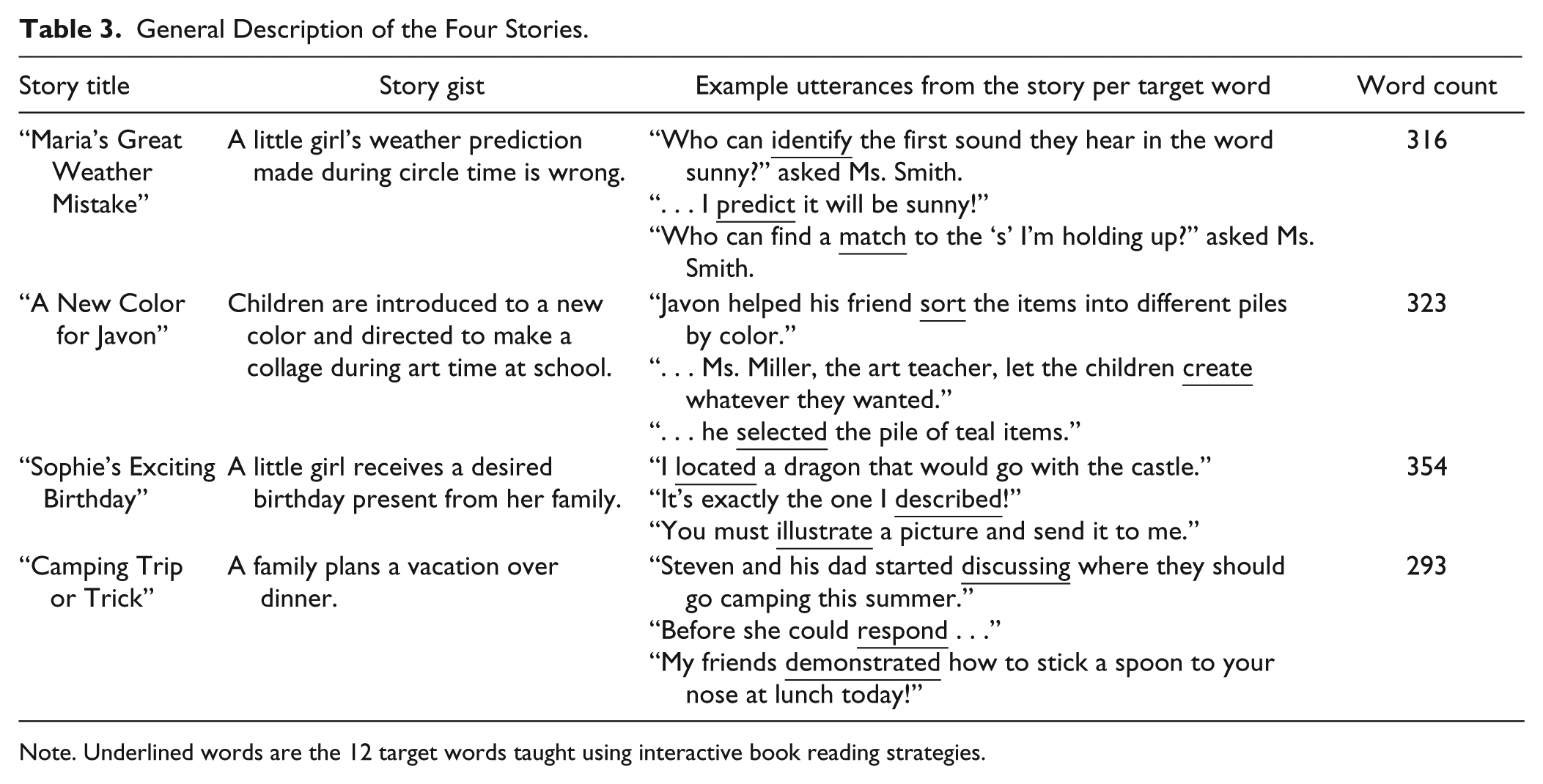
Note. Underlined words are the 12 target words taught using interactive book reading strategies.
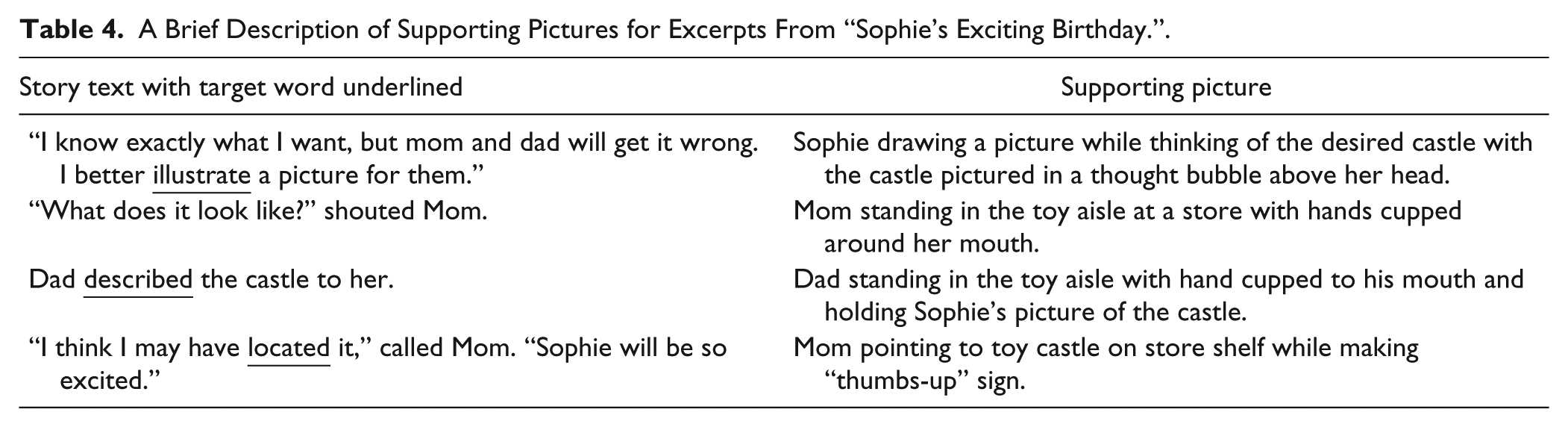
Books were created in Microsoft PowerPoint. Each page of the book had no more than two sentences and contained a contextually supportive photograph. Table 4 provides an excerpt from “Sophie’s Exciting Birthday” with corresponding picture descriptions. Photographs were either purchased from a commercial vendor or staged. Final photographs were judged by the first two authors to be of clear picture quality and to concretely depict the gist of the two corresponding sentences. The characters in the stories were representative of adults and children, males and females, and individuals identified as Hispanic, African American, and Caucasian. Books were professionally printed and spiral-bound. The layout of the books allowed for the pictures and text to be visible to the children while the protocol was simultaneously visible to the interventionist.
A Brief Description of Supporting Pictures for Excerpts From “Sophie’s Exciting Birthday.”.
The printed books and storybook protocols were put through two layers of piloting. First, the stories and the before, during, and after reading tasks were piloted with an 11-year-old child and an 8-year-old child who knew the 12 instructional verbs. Open-ended questions solicited feedback regarding the clarity of the instructions, word definitions, examples and nonexamples, and pictures. Feedback regarding the aesthetics of the story pages, gist of the stories, and general interest of the story content also was solicited. The storybook protocols were revised according to garnered feedback from the two children (“What is that a picture of?” “The background is too dark. I can’t see the words.” “Who is that?”), reviewed by the two children a second time, and revised. Next, the updated books and storybook protocols were piloted with a 5-year-old child, and reviewed by a kindergarten teacher with 6 years of experience. As with the older children, open-ended questions were asked to solicit reviewer comments. Feedback from the 5-year-old child and kindergarten teacher were integrated into the stories (e.g., pictures were revised to address comments like “Kids might mistake that (pointing to picture) for sorting because we do that in the classroom a lot”). The child and teacher reviewed the stories and tasks a second time. Feedback was incorporated into the final version of the stories and storybook protocol.
Assessment
A 12-item receptive vocabulary assessment was developed to measure the number of instructional verbs the children learned receptively over the 5-week summer session. The format and administration of the measure were similar to the Peabody Picture Vocabulary Test, Fourth Edition (PPVT-4; Dunn & Dunn, 2007) and to previous studies on IBR (Houston-Price, Howe, & Lintern, 2014; Loftus et al., 2010; Pullen et al., 2010). Children were individually assessed and asked to point to the colored picture from a field of four choices for the word presented. The four choices consisted of the target word (e.g., “sort”—a girl sorting colored pom poms), a semantically related word (i.e., partial semantic feature of word’s meaning and/or antonym; for example, “sort”—a woman dumping trash, so not sorting), an object (e.g., “sort”—a gift), and a phonemic distractor (e.g., “suit” for “sort”). The arrangement of the four pictures on the page and the order of presentation of the target verbs were randomized at each testing time. Testing initiated with two practice trials followed by the 12 test items. Responses were scored as correct or incorrect for a total possible score of 12 points.
The second investigator constructed the measure. The first author and a graduate student majoring in speech-language pathology reviewed the pictures. Pictures were replaced if (a) the action of the verb was poorly depicted, (b) the picture did not fit one of the foil categories, or (c) was of poor visual quality. The measure was pilot tested with the same children and teacher used when pilot testing the storybook protocol plus two children ages 10 and 7 years who knew the words. The children and teacher were directed to justify each response. For any response that resulted from a guess or from process of elimination, the picture was revised until the respondent could explain which features of the picture supported his or her answer.
Procedures
Pretesting
The receptive measure was administered during the first week of the summer program to each child individually in a quiet setting.
Control group
A total of 52 children at three of the schools were included in the control group. These children participated in the school-sponsored summer program; however, they did not receive IBR with the investigator-created books. These children were pretested and posttested at the same intervals as the children in the treatment group to determine whether incidental learning of instructional vocabulary occurred.
Intervention
The current study took place within the classroom setting at each school assigned to the book-reading condition. The graduate student assigned to that school as part of a clinical experience read the story to all the children in a large group setting during Weeks 2 through 4 of the summer program. The graduate student sat in a chair facing the children, so that materials were visible to all children, who were sitting on the floor. The teachers working in the program assisted solely with behavior management.
All four books were read in a randomized order to each of the groups assigned to the book-reading condition. Each book was read on two consecutive days during Week 2 or 3, and a third time during Week 4. For example, during Week 2, Treatment Group 1 read “Sophie’s Exciting Birthday” (Days 1 and 2) and “Maria’s Great Weather Mistake” (Days 3 and 4). During Week 3, “Camping Trip or Trick” (Days 1 and 2) and “A New Color for Javon” (Days 3 and 4) were read. In Week 4, all four books were read a final time. This sequence was specifically selected to provide multiple exposures to the words across time (NICHHD, 2000; Penno et al., 2002).
The following tenets of rich vocabulary instruction were embedded throughout the intervention. Instruction occurred prior to, during, and following reading using a systematic and explicit format consisting of definitions written using age-appropriate vocabulary and supported by contextual examples, such as “Mom sorted the laundry” and “The teacher discussed the playground rules with the children” (NICHHD, 2000; Puhalla, 2011; Stahl & Fairbanks, 1986; Swanson, Hoskyn, & Lee, 1999). Activities that required the child to pronounce the word thus establishing a phonological representation (Biemiller & Boote, 2006; Juel, Biancarosa, Coker, & Deffes, 2003; Silverman, 2007) and to actively process the word’s meaning, as described below, were embedded throughout instruction (Beck & McKeown, 2007; Silverman, 2007; Storkel & Morrisette, 2002; Wasik & Bond, 2001). Each book-reading activity lasted 20 min in duration.
Reading 1
Prior to the first reading, the adult introduced the three target words by referring to them as “magic words.” Children practiced saying each word aloud and stating its definition via an imitative task in a choral response fashion. No student-to-teacher interaction occurred during the reading. As per Biemiller and Boote (2006), greater benefits in student learning have been noted when children were allowed the opportunity to hear a story prior to placing any learning demands on them. After the reading, an interactive game called, “Guess the Word” was played. Guess the Word required the children to select the correct definition from two choices presented by the adult (McKeown & Beck, 2014). No text was visible to the children; instead, a large number 1 and number 2 printed on a page in the book were shown. For example, “Which words go with illustrate?” Adult points to the 1 and says, “to draw a picture” then points to the 2 and says, “to read a book.” The adult confirmed or corrected the children’s responses and restated the word with its definition. For example, “If you said to draw a picture you were right. Illustrate means to draw a picture.” To minimize correct responses attributable to chance, the definition for each word was presented twice for a total of six items. Items missed by any child in the group were presented for a third time. To promote unison group responses and thereby minimize children mimicking one another, the adult pointed to the children when it was their turn to respond to the questions. The students were exposed (i.e., heard and/or said the word), to each word a total of 20 times.
Reading 2
At the beginning of the lesson, the adult informed the children that each time a magic word appeared in the story they were to provide the definition for the word. While reading the story, the adult followed a three-step process similar to the one used by Tuckwiller, Pullen, and Coyne (2010) each time a magic word appeared. The adult inserted the definition of the magic word within the text (e.g., “Ms. Miller, the art teacher, let the children ‘create’ or make whatever they wanted.”), restated the definition for the word, directed the children to repeat the definition, and then continued reading. After the story was read, children were asked to determine the accuracy of the word’s use within context by identifying pictures illustrating examples and nonexamples of the words’ meanings using a format similar to that used by Coyne and colleagues (2009). Instruction began with the children repeating the word and definition presented by the adult. Next, the children were instructed to provide thumbs-up if a picture accurately depicted the meaning of the word or thumbs-down if it did not. For example, “Does this picture show someone illustrating?” with a corresponding picture of a girl drawing. Three examples and two nonexamples were presented for a total of five items per word. A total of 34 exposures to each word occurred during Reading 2.
Reading 3
At the beginning of the last reading, the children were directed to raise their hands when they heard the magic words in the story. When one of the three magic words appeared in the story, the adult would stop and ask the children to state the magic word heard and to define it. The adult corrected spoken errors by having the children repeat the correct definition after her. The after-reading activity was similar in format and presentation to the Reading 1 after activity, except that the children were presented with a definition and directed to select the correct word from two choices presented. For example, “Which word means to draw a picture? Illustrate (adult points to number 1) or describe (adult points to number 2).” Each word was presented two times for a total of six items. Missed items were presented for a third time. The students encountered each word a total of 15 times during Reading 3. The control group received no explicit instruction on the 12 words.
Posttesting
Word learning was assessed during the last week of the summer program. The word order of the test was randomized to control for testing effects. The posttest was the same as the pretest, but the pictures were randomized to decrease testing effects. The children were again asked to point to the picture illustrating the word stated by the examiner from a field of four choices.
Follow-up testing
The same receptive measure was administered at 2 months (fall) and 8 months (spring) after posttesting. The pictures in the test were again randomized to control for testing effects. Children were again tested individually. All children were enrolled in kindergarten during this testing interval.
Fidelity of Implementation
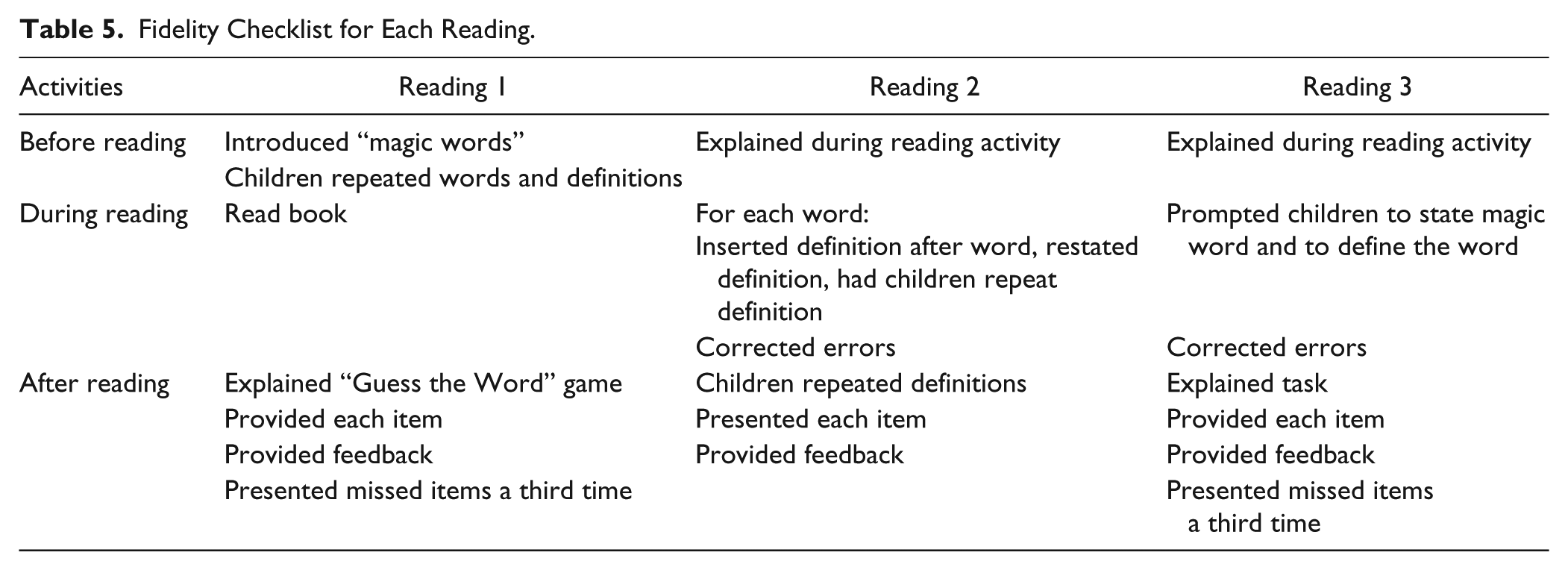
As presented in Table 5, three observation checklists were constructed to assess treatment fidelity of Reading 1 (seven items), Reading 2 (six items), and Reading 3 (seven items). Checklist items reflected the before, during, and after reading activities specific to each reading thus accounting for the variance in the number of items among checklists. Prior to initiation of intervention, each of the four graduate student interventionists demonstrated 100% proficiency on each of the three observation checklists for each of the four books. Once intervention was initiated, all 12 sessions conducted by each of the four interventionists were video recorded using an iPad, and the second author observed and rated each interventionist implementing the intervention once each week. A research assistant (RA), blinded to the study’s purpose, scored all 48 videos (four interventionists × 12 treatment sessions) using the observation checklist appropriate for the specific reading session (1, 2, or 3). A point-by-point analysis of the checklist found that the script was adhered to on average with 95% accuracy (range = 90%–100%) for each of the 48 intervention sessions. Deviations from the script such as repeating a word or rereading a sentence typically occurred as a response to spontaneous child behaviors. Interrater agreement between the RA’s checklist ratings and the second author’s checklist ratings of the 12 sessions observed was 100%.
Fidelity Checklist for Each Reading.
Statistical Analysis
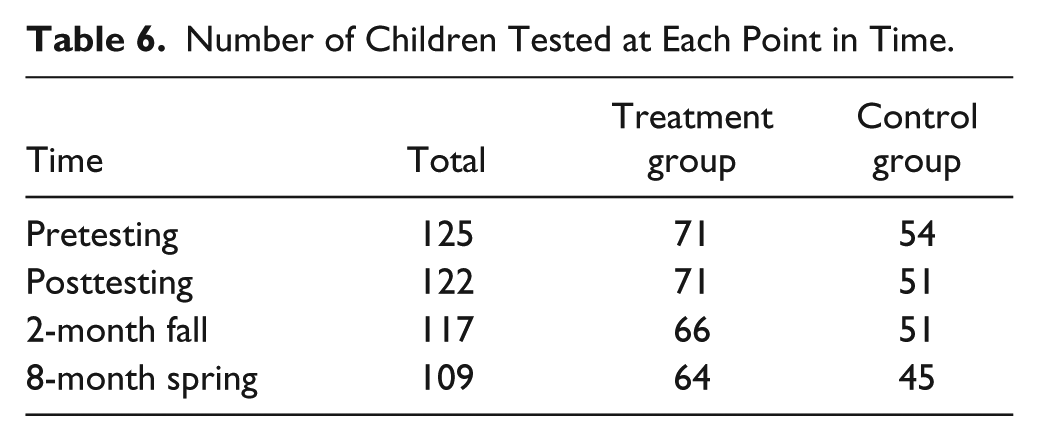
For descriptive purposes, test scores were summarized by means and standard deviations. Attrition was noted across testing times as shown in Table 6. Total attrition from pretest to 8-month follow-up testing was seven children from the book-reading group and nine children from the control group. To account for observed attrition, a multivariate linear mixed model was performed to fit the test scores over time, accounting for the correlation within individuals by Proc Mixed procedure in SAS 9.4 (SAS Institute, Inc., Cary, NC, USA). Within the linear mixed model, we adjusted for confounding factors such as days present, gender, ethnicity, and bilingual by treating them as covariates. A square term of time was included in the model to obtain a better fit. Statistical significance was set to p < .05. A power analysis with an effect size of 0.15 and alpha level of .05 showed that a sample size of 122 participants obtained 90% power.
Number of Children Tested at Each Point in Time.
Results
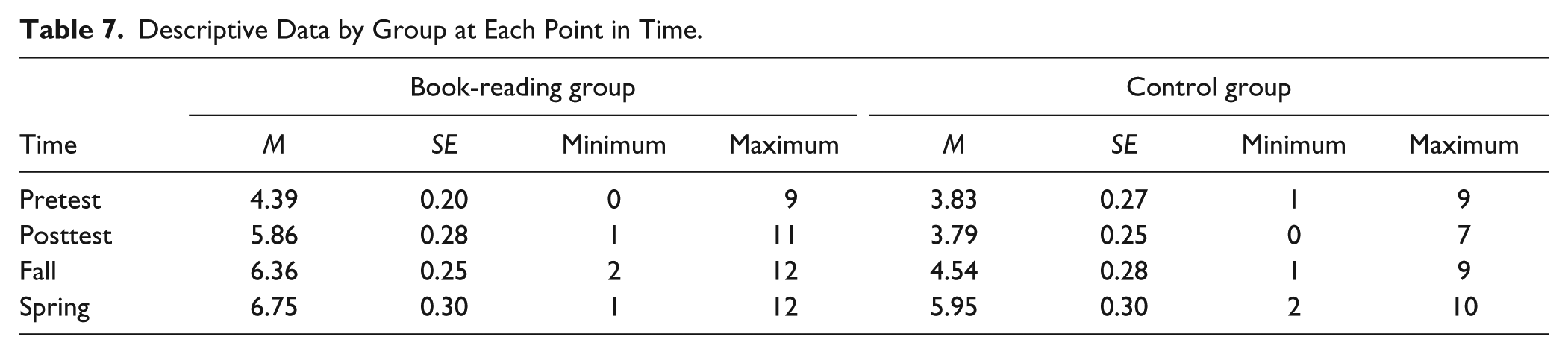
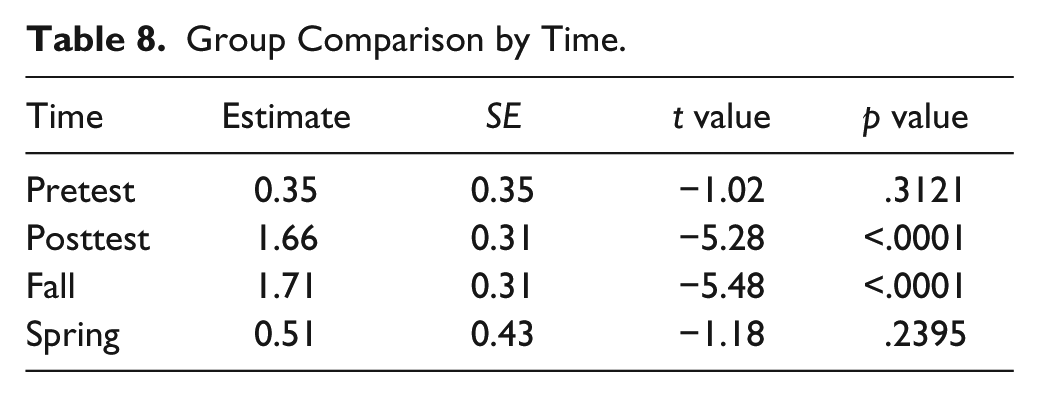
The first research question was interested in ascertaining the immediate effects of interactive shared book reading for teaching instructional verbs as compared with no targeted intervention. The means and standard errors for the test scores are shown in Table 7. Initially, no significant group differences were noted at pretesting (p = .3121) between the book-reading group and the control group as depicted in Table 8 and Figure 1. As Table 1 suggests, age, gender, preschool experience, number of siblings, mother’s education status, and father’s education status were not associated with the group (p < .05); thus, these variables were not confounding factors and did not have to be adjusted in the model. As shown in Table 8, results from the linear mixed model indicated that the book-reading group knew significantly more words at posttesting and at 4-month follow-up testing than the control group (p < .0001, respectively). However, no significant differences were noted between the book-reading group and the control group at the 8-month follow-up that occurred in the spring of the kindergarten year (p = .2395). Table 8 also provides estimates for group differences at each point in time. The book-reading group knew an average of 1.66 and 1.71 words more than the control group at posttesting and at a 4-month follow-up in the fall of kindergarten, respectively.
Descriptive Data by Group at Each Point in Time.
Group Comparison by Time.
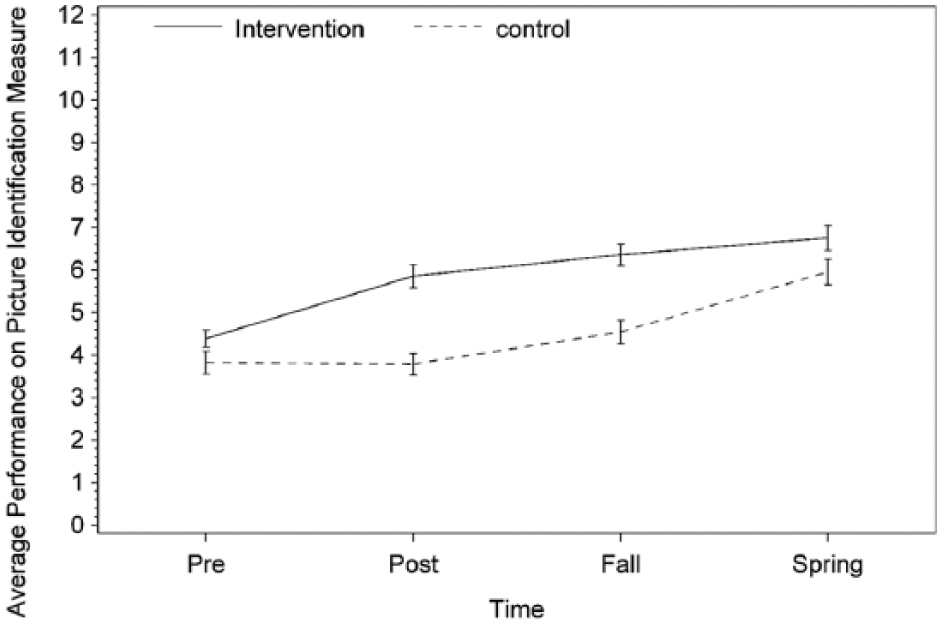
Means and standard error of test scores across time.
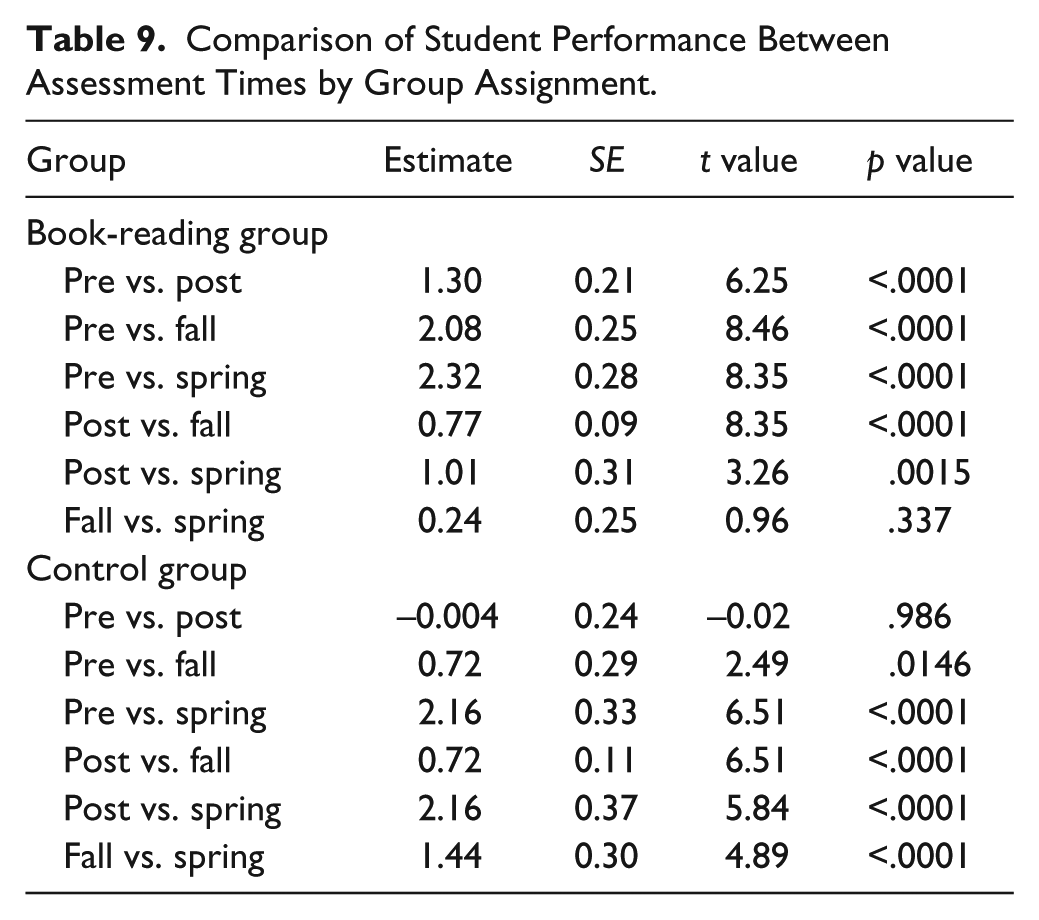
If students did learn this set of 12 words as a result of the intervention, then the next step was to determine if word knowledge was retained across time. As visually depicted in Figure 1 and supported by the results from the linear mixed model presented in Table 9, the book-reading group’s knowledge of taught words grew significantly from pre- to posttest (p < .0001), from post to fall (p < .0001), but not from fall to spring testing (p = .337). Although no significant changes were noted in the control group’s performance between pre- and posttest (p = .986), students did show significant growth (p < .001) from post to fall, and from fall to spring.
Comparison of Student Performance Between Assessment Times by Group Assignment.
An item analysis at the word level was conducted to determine if specific words were more amenable to learning through IBR than others. While no definitive patterns were revealed, some general trends were noted. Regardless of group assignment, the word match was known by more children at all four points in time than any other word. The words match, respond, create, predicate, and sort were in the top six words known by the most children regardless of group assignment at each point in time. The words locate, select, describe, identify, and discuss were in the bottom six words known by children regardless of group assignment and time. No consistent order of ranking within the two word sets was observed.
Discussion
The purpose of the current study was to utilize IBR to teach instructional verbs. Instructional verbs have not been specifically targeted in previous studies but are critical to academic success. Overall, more verbs were learned by the book-reading group than the control group after controlling for language differences between the groups. The lack of verb learning noted by the control group at posttesting indicates implicit exposure during a 3-week window was not sufficient for learning to occur. Lexical growth in target words was noted in both groups from posttesting to spring testing during the Kindergarten school year. Maintenance of word learning exhibited by the book-reading group over the course of the school year suggests that IBR had a lasting effect on children’s receptive knowledge. The control group, too, demonstrated lexical growth across time, so that by spring, group differences were ameliorated. We cannot definitively account for observed growth across time, but we surmise changes in the control group (and book-reading group) are attributable to teacher-delivered vocabulary instruction or to implicit learning resulting from repeated exposure to the words during instruction over the course of 7 months (e.g., “Who can predict what will happen next in the story?”). Regardless, the book-reading group began their kindergarten year knowing approximately two more instructional verbs than their counterparts.
The findings indicate that accepted IBR practices are effective for teaching verbs and thus are a first step toward examining grammatical word class as a factor in word learning, an identified gap in the literature (Wasik et al., 2016). Children in the study increased their receptive knowledge of instructional verbs by 14%. This observed increase is similar to outcomes reported in a recent systematic review of the literature (Wasik et al., 2016), which reports word learning gains ranging from 0% to 11% (Beck & McKeown, 2007; Leung, 2008; Robbins & Ehri, 1994; Sénéchal, 1997; Sénéchal, Thomas, & Monker, 1995; Silverman, 2007; Silverman, Crandell, & Carlis, 2013) and from 16% to 25% (Beck & McKeown, 2007; McKeown & Beck, 2014; Penno et al., 2002; Sénéchal et al., 1995), with a few studies reporting increases around 40% (Blewitt, Rump, Shealy, & Cook, 2009; Ewers & Brownson, 1999) and 72% (Blewitt et al., 2009). While results are positive, the number of verbs learned (14% increase) was below our expectation, given our adherence to best practice and the high number of exposures to each word (69 total per word) over time (three book-reading episodes), practices employed by previous studies reporting greater word learning outcomes (Biemiller & Boote, 2006; Coyne et al., 2010; Coyne et al., 2004; Pollard-Durodola et al., 2011; Wasik & Bond, 2001). Possible explanations for the smaller increase in word learning highlight how our findings could direct future research and classroom application.
To date, support favoring IBR as a tool for increasing children’s vocabulary is based primarily on word learning gains of mixed grammatical word sets composed primarily of nouns and, to a lesser extent, verbs and adjectives (Pollard-Durodola et al., 2011; Puhalla, 2011; Wasik & Bond, 2001; Wasik et al., 2016). For example, of the 68 science terms taught to preschool children in a study by Pollard-Durodola and colleagues (2011), only 19% of the words were verbs. Blewitt and colleagues (2009) reported a 44% increase in words learned, but only nouns were targeted. We believe that grammatical word class is a plausible explanation for the less than expected increase in word learning.
Verbs are difficult to learn even for adults (Forbes & Farrar, 1993; Gillette, Gleitman, Gleitman, & Lederer, 1999; Hirsh-Pasek & Golinkoff, 2006; Tardif, 1996). Unlike concrete nouns, whose meanings tend to be isolated to a single referent, the actual beginning and ending of a verb’s meaning can become fuzzy. For example, does the meaning of the word sort also include the agent who is sorting and/or the objects being sorted? To understand sort, a child must also be able to perceive semantic differences among entities to form groups. Perhaps quality stories, explicit instruction, word definitions, and adult questioning, all procedures indicative of high-quality IBR and used in the present study, are but only a few necessary pieces of the IBR package when the target grammatical word class is verbs. Teacher-mediated activities requiring action by the child may also be necessary for the integration of verbs into a child’s lexicon. Example action type activities may include having children sort objects as part of a math lesson about graphing or having children identify pictures that start with a specific sound. Silverman (2007) reported vocabulary gains in a mixed grammatical set of words at 23% when book-reading activities were augmented with attention to the spoken and written forms of words and with contextual examples outside of the context of the book and the children’s experiences. Our findings highlight the need for future studies to parse out the effects of IBR by grammatical word class.
Second, we do not believe the length of the intervention, 4 weeks, is a sufficient explanation for the less-than-expected increase in word learning. Previous studies that were administered across a longer period of time taught more words selected from a greater number of books as compared with the current study. Instead of length, dissecting the effects of dose frequency (i.e., number of readings per unit of time; Warren, Fey, & Yoder, 2007) may prove to be a more fruitful comparison among studies. Operating within the confines of the school calendar, book-reading activities occurred each day, 4 days a week for 3 weeks in the current study. Each book was read 3 times, a frequency similar to many other IBR studies (Blewitt et al., 2009; Coyne et al., 2009; McKeown & Beck, 2014; Penno et al., 2002). Whereas daily reading sessions were followed in the present study, IBR studies reporting word learning gains at 25% or greater spaced book-reading sessions across weeks (Blewitt et al., 2009; Penno et al., 2002). Thus, the dose frequency used in the present study may not have been optimally tuned to maximize learning.
Poor memory consolidation is a reasonable explanation for the effects of dose frequency observed. Memory consolidation posits that repeated encounters with the same information across varied contexts strengthen the neural transfer from short-term memory to long-term memory (Davis, Di Betta, Macdonald, & Gaskell, 2009; Davis & Gaskell, 2009; Palmer, Havelka, & van Hooff, 2013). Thus, the “massed” nature of the IBR schedule delivered in the same context (i.e., book-reading activities) across time as was used in the current study may have been insufficient for facilitating the transfer of word learning from short-term memory into long-term memory. The retention of newly learned skills, including vocabulary, has shown to improve when learning episodes are spaced across time versus an episode of massed learning (Cepeda, Coburn, et al., 2009; Cepeda, Pashler, Vul, Wixted, & Rohrer, 2006; Donovan & Radosevich, 1999; Janiszewski, Noel, & Sawyer, 2003; Lee & Genovese, 1988). The effect of dose frequency on verb learning is rich with avenues for future investigation.
When considering dose frequency, an interesting aspect of intervention intensity was observed that warrants consideration. Warren and colleagues (2007) defined “dose” as the number of teaching episodes a child receives. Children in the current study were exposed to each word 69 times as compared with estimated exposure rates ranging between 1 and 24 as reported in a systematic review of 36 studies by Wasik and colleagues (2016). A visual inspection of the data provided by Wasik indicates that as the number of exposures to the word increased so did the reported gains in words learned. Following this trend, it would be expected that the high dose of 69 exposures would have translated into high rates of word learning. This inconsistency between the present study and the literature highlights several factors warranting future investigation: (a) What is the minimum dose necessary for verb learning? (b) How do dose and dose frequency interact? and (c) What IBR procedures optimize children’s learning of verbs?
Limitations
As with any experiment, we recognize limitations within our study. First, based on anecdotal observations, two of the stories may not have been intriguing enough to pique and to maintain students’ attention. However, we do not view this as a sufficient reason in and of itself for explaining the small increases in verb learning noted, given the tenets of effective vocabulary instruction were inherent in all activities. The use of investigator-created passages for the purpose of teaching specific words is certainly not unique to our study (Houston-Price et al., 2014; Wasik et al., 2016). Furthermore, the majority of studies on IBR used commercially available books for which no established selection criterion exists for determining the appropriateness of the text for teaching words.
A second recognized limitation is the assessment measure. Although we followed previously published guidelines for creating a receptive one-word measure, the pictures may not have illustrated the verbs clearly enough to accurately measure learning. Our attempts to depict an action in a static format (i.e., picture) may have required a greater level of inferencing on the children’s part than we anticipated. For example, the picture used for the word “demonstrate” was of a man demonstrating a karate move to a group of children seated in front of him in a school gymnasium. To select the correct picture, the child had to integrate world knowledge with the target word’s meaning. Future research is needed to validate alternatives to the “accepted” picture selection test, which are best suited for assessing receptive learning of verbs.
A third limitation was the amelioration of group differences at spring testing. This finding could either be considered a limitation of the current study or a limitation of current vocabulary practices in kindergarten classrooms. The words selected for use in the study were drawn from the Academic Word List (Coxhead, 2000) and our state’s Kindergarten Academic Standards and were identified as important to kindergarten success by practicing kindergarten teachers. Given the importance of the words to learning, we would have hoped that all children in the current study knew all 12 words by spring testing. The fact that neither group demonstrated significant growth at spring testing is disconcerting.
Conclusion
IBR using investigator-created stories was effective for significantly increasing receptive word knowledge of instructional verbs at posttesting. Increased receptive word knowledge occurred at a greater rate as compared with no explicit vocabulary instruction delivered through book reading with results being maintained across time in children transitioning into kindergarten. Small increases in verb learning in relation to instructional time highlight the need for future studies to parse out the effects of IBR by word class and dose schedule. The lack of continued growth in fall and spring in the treatment group’s receptive knowledge of tested words points to the ineffectiveness of implicit exposure for teaching instructional verbs.
Footnotes
Declaration of Conflicting Interests
The author(s) declared no potential conflicts of interest with respect to the research, authorship, and/or publication of this article.
Funding
The author(s) received no financial support for the research, authorship, and/or publication of this article.