







Abstract
Systemic discrimination within nursing and healthcare institutions continues to shape inequitable workforce experiences and leadership opportunities for 2SLGBTQI+, Indigenous, and Black nurses. These inequities have implications not only for the nursing profession but also for health system performance and the delivery of culturally safer care. In 2024, the Registered Nurses’ Association of Ontario (RNAO) established the Health Equity Consortium (HEC) to coordinate collective action across three equity-focused nursing interest groups. This paper argues that the HEC constitutes a policy-relevant organizational response to structural inequities in nursing, demonstrating how professional associations can operationalize equity, diversity, and inclusion through governance, advocacy, and capacity-building mechanisms. Guided by Critical Social Theory, the analysis draws on the concepts of liberation and conscientization to examine how shared experiences of marginalization are mobilized into coordinated policy and practice interventions. The paper highlights key outcomes associated with the HEC, including the advancement of anti-racism initiatives, the integration of equity-focused content into professional development and education, and the creation of leadership pathways for underrepresented nurses. It further illustrates how collective advocacy within a formal organizational structure can influence policy priorities, strengthen accountability, and support system-level change. The HEC provides a transferable model for embedding equity within professional governance and health policy frameworks. Its approach underscores the role of nursing leadership in advancing structural change and offers insights for policymakers and health organizations seeking to address workforce inequities and improve the inclusiveness of healthcare systems.
Keywords
Introduction
Systemic inequities within the nursing workforce are a pressing health policy issue, shaping leadership representation, workforce sustainability, and the delivery of equitable and culturally safer care. Professional nursing associations have a central role in addressing this with urgency.
This paper positions the Health Equity Consortium (HEC) as a policy-relevant response to structural inequities in nursing, showing how professional associations can advance equity, diversity, and inclusion through governance, advocacy, and capacity-building. Guided by Critical Social Theory, it explores how shared experiences of marginalization are translated into coordinated policy and practice interventions. The HEC's impact includes advancing anti-racism efforts, embedding equity in education, creating leadership pathways, and strengthening policy influence and system-level accountability.
The Registered Nurses’ Association of Ontario (RNAO) is the professional association representing 57,250 + registered nurses (RNs), nurse practitioners, (NPs), and B.Sc.N. students in Ontario, Canada. It is deeply committed to celebrating, embracing and advancing diversity within the nursing profession. The Association powers nurses from diverse communities and health sectors to drive change in nursing and society through collaboration and policy advocacy. RNAO members’ collective experiences inform efforts to improve health outcomes for all. A workforce equipped to combat racism, homophobia, transphobia and all forms of discrimination will better understand and serve diverse populations. RNAO hosts more than 31 nursing interest groups. Among them are the Rainbow Nursing Interest Group (RNIG), the Indigenous Nurses and Allies Interest Group (INAIG), and the Black Nurses Leading Change Interest Group (BNLCIG), have distinguished themselves as key change agents, working together to champion equity, diversity, and inclusion (EDI) across the profession.
The RNAO's “In Focus” initiative, launched in 2021, highlights the organization's commitment to equity, diversity, and inclusion by showcasing key areas of advocacy related to 2SLGBTQI+, Indigenous, and Black nurses. While primarily designed as a knowledge translation and engagement tool, this initiative reflects broader organizational efforts to make equity-focused work more visible and accessible, supporting alignment across practice, leadership, and policy priorities (RNAO In Focus-2SLGBTQI+, 2024; RNAO In Focus Black Nurses, 2024; RNAO In Focus-Indigenous, 2024).
In 2024, the Health Equity Consortium (HEC) was established in recognition of the unique strengths of each interest group. This opportunity to better harness these contributions led to the creation of RNAO's HEC and offered a supportive environment for members of the RNIG, INAIG, Black Nurses Task Force (BNTF), and BNLCIG to reflect on and discuss strategies for addressing inequities in the nursing profession and healthcare system. Equity can be defined as the absence of unfair, avoidable or remediable differences among groups of people, whether those groups are defined socially, economically, demographically, or geographically or by other dimensions of inequality (e.g., sex, gender, ethnicity, disability, or sexual orientation) (World Health Organization, 2025). The HEC responds to the needs identified by RNAO's health equity interest groups to discuss experiences with all forms of discrimination, dismantle systemic racism within the nursing profession, and create safer spaces for those who access healthcare. The consortium meets quarterly to share perspectives, set priorities, and explore opportunities for collaboration.
Through integrating the historic and current experiences of 2SLGBTQI+, Indigenous and Black nurses, along with input from RNAO staff who led initiatives, partnerships, policy advocacy and capacity building, the RNAO uncovered powerful stories to enhance collective action and outcomes. While each interest group's uniqueness was already established, their collective strength had yet to be fully realized. This untapped potential led to the creation of RNAO's HEC.
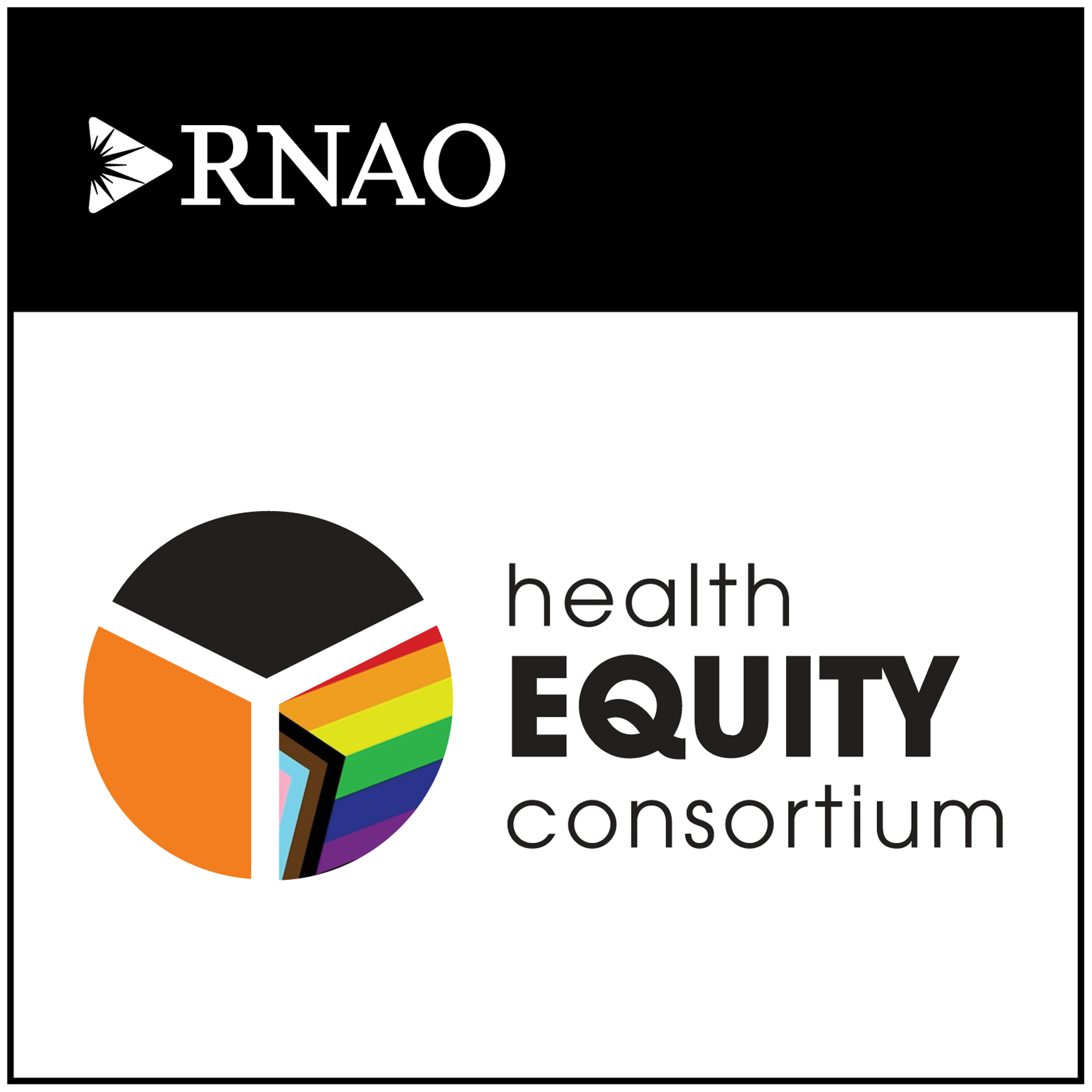
The icon combines three equal segments unified in a pie diagram, so they are perceived as equal and necessary parts of the whole. The rainbow colours section symbolizes the RNIG specified by the 2SLGBTQI+ community, the orange section identifies INAIG, and the Black section represents BNLCIG. Those elements form a perfect circle, the symbol of wholeness, completeness and protection, balancing vitality and dynamism with a sense of gravitas. Three symbolic pieces are separated and united at the same time by white space, with visual reference to the piece sign, meaning love, acceptance and respect. It signifies both the differences and the shared aspirations.
A visual identity of the HEC was thoughtfully designed to reflect the values of inclusivity, respect and collaboration. The goal was to create a clear, concise symbol that would be noticed, remembered and talked about.
Background: Workforce Inequities and Policy Context in Ontario
To situate the development of the Health Equity Consortium within its broader policy and practice context, it is important to consider the demographic composition of Ontario's nursing workforce and the persistent inequities experienced by marginalized communities. Ontario's population is among the most diverse in Canada (Canadian Census, 2021). This diversity is reflected—though not equitably—within the healthcare workforce. Existing evidence demonstrates disparities in representation, leadership access, and workplace experiences among Indigenous, Black, and other racialized nurses, as well as among those who identify as 2SLGBTQI+. These inequities are shaped by intersecting structural factors, including systemic racism, colonial legacies, and heteronormative institutional practices, and are reinforced through organizational and policy environments that have not fully addressed barriers to equity. Understanding this context is critical to examining the rationale for the HEC and its potential to address workforce inequities through coordinated, policy-relevant action.
The total population of visible minorities/racialized groups in Canada is 36,328,480 (Government of Canada, 2021) and 46.6% of them (1,286,140) reside in the city of Toronto, Ontario (Canadian Census, 2021). Visible minority is defined as persons who are non-Caucasian in race and non-white in color (Government of Canada, 2021). The top 10 visible minorities/ racialized groups in Canada are South Asian (2,571,400), Chinese (1,715,770), Black (1,547,870), Filipino (957,355), Arab (694,015), Latin American (580,235), Southeast Asian (390,340), West Asian (360,495), Korean (218,146), and Japanese (98,890). The First Nations or Indigenous Peoples are not considered visible minorities. Their population is 683,340 First Nations peoples and 560,335 Métis people residing in Canada.
The 2SLGBTQI+, Indigenous, and Black people living in Ontario have experienced discrimination and inequity in their workplaces and broader nursing community. To better understand racism, discrimination and inequity of these groups, race-based data was collected by several organizations. The College of Nurses of Ontario (2024) (CNO) collected race-based data on registered nurses (RNs), nurse practitioners (NPs) and registered practical nurses (RPN) residing in Ontario. The CNO is the licensing organization for all practicing nurses in Ontario. It collected race-based data on 31,428 participants. Respondents reported that 32.2% of them were Indigenous/Inuk/Métis or racialized including mixed race, 64% were White and 6.8% (1,936) were Black. The CNO found a considerable disparity in leadership roles across race among practicing nurses. The greatest prevalence of roles were respondents who were White, followed by Arab, Middle Eastern or West Asian; however, all other racial identities were underrepresented in leadership roles. Leadership roles were defined as one of the following employment positions: Executive leadership, Senior Managers, or Middle Managers.
Similarly, the University of Toronto (2023) conducted an employment equity survey on race-based data between 2017 and 2023. They found that 60.7% were female, 36.5% were men and 1.4% were Trans-persons. Among respondents, 17.0% identified as 2SLGBTQ+, 1.3% as Indigenous, and 53% as racialized or people of colour (n = 3,734). The ethnocultural identities of all employees were: 50.5% White, 30.0% Asian, 9.3% Mixed races, 7.9% Black, 6.0% Middle Eastern and 4.6% were Latin American or Hispanics.
These persistent and intersecting inequities underscore the need for coordinated, policy-informed approaches, positioning the HEC as a strategic response to advancing workforce equity and addressing structural barriers within nursing.
Theoretical Framework
To critically examine how the HEC responds to these structural inequities, this paper draws on Critical Social Theory (CST) as a framework for understanding and advancing transformative change within nursing and healthcare systems.
Critical Social theory is a science that facilitates liberation from conscious and unconscious social, political and economic constraints; and changing constraining conditions (Habermas, cited in Stevens, 1989; Wilson-Thomas, 1995). Stevens (1989) asserts “there is no single critical theory” (p. 57). Critical social theory entails a process of understanding how individuals communicate and develop symbolic meanings to uncover constraints that prevent free, equal and uncoerced participation in society (Habermas, cited in Stevens, 1989).
Stevens (1989) referred to six assumptions, seven concepts and seven propositions of critical social theory. The first two assumptions are: 1) “All theory and research are political because the social, economic and political processes of a society are reflected in the microcosm of scholarly investigation”; 2) “Oppressive structural relations pervade modern industrial society; and these structures are taken for granted, as they function automatically and remain unexamined” (Stevens, 1989, p. 59). Two concepts are used because of their relevance to this collaboration. They are: 1) “Liberation, that is freedom of individuals from the constraints and coercion of oppressive social structures that are understood within a social collective context” (Stevens,1989, p. 60). 2) “Conscientization is learning to perceive social, political and economical contradictions and finding ways to take action against oppressive contradictions” (Hedin, 1986 cited in Stevens, 1989, p. 60).
In terms of propositions, CST serves “to enlighten individuals and groups about the positions they occupy and the prevalent interest that are served. Once individuals recognize themselves in the critical interpretations offered, they are conscientized” (Stevens, 1989, p. 60). Its goal is to “facilitate change in structural conditions that (a) inhibit communication; (b) limit life options; (c) constrain actions; and (d) impose unequal economic, gender or racial imperatives” (Stevens, 1989, p. 60).
As a theoretical framework Critical Social Theory fosters a critical analysis of the environment and scientific inquiry into people's lived experiences from a nursing perspective. An idea supported by Habermas (cited in Stevens, 1989), who proposes exposing recognized and undisclosed patterns of domination of individuals and groups and uses a process of understanding how individuals communicate and develop symbolic meanings to uncover constraints that prevent free, equal and uncoerced participation in society (Stevens, 1989, p. 58).
In this paper, we applied two concepts of the Critical Social theory: Liberation and Conscientization to better explain and address negative experiences shared in RNAO's HEC by the 2SLGBTQI+, Indigenous and Black nurses. Liberation has enabled members of these groups to recognize constraints and coercion of oppressive social structures such as racism, discrimination and inequity. Alternatively, through conscientization, members of the groups have recognized social and economic contradictions that inhibit their progress in career advancement in nursing and have taken corrective measures to address them.
The HEC operationalizes CST as theoretical framework to guide a structured space for collective reflection and action, transforming individual experiences of marginalization into coordinated advocacy. In CST terms, the HEC facilitates both conscientization and liberation by supporting nurses to challenge and reshape the organizational and policy environments that sustain inequities.
Firstly, we will discuss the RNIG followed by the INAIG and lastly, the BNTF and the BNLCIG. These groups share similar needs and experiences. For example, their basic needs include to be treated with respect, dignity and fairness in the workplace and to eliminate discrimination and systemic racism in nursing and the broader healthcare system.
Rainbow Nursing Interest Group
The RNIG, established in 2007 within the RNAO, advocates for inclusive nursing practices and equitable environments that support 2SLGBTQI+ communities. Historically, individuals within these communities have faced systemic discrimination rooted in homophobia, transphobia, and heteronormative healthcare structures, contributing to stigmatization, social exclusion, and disparities in access to care and health outcomes (Bauer et al., 2009; Poteat, German & Kerrigan, 2013).
Transgender and nonbinary individuals, in particular, experience disproportionately high rates of violence and harassment within both society and healthcare settings, reflecting persistent cisnormative and binary frameworks (James et al., 2016; Scheim, Bauer & Pyne, 2014).
These inequities extend into the nursing workforce, where 2SLGBTQI+ nurses may encounter discrimination, microaggressions, and exclusionary workplace cultures despite their professional competence (Eliason, Dibble & DeJoseph, 2011; Gauthier et al., 2025; Harding et al., 2012). Such experiences contribute to mistrust, reduced workplace satisfaction, and barriers to full participation in professional environments, ultimately reinforcing broader health inequities.
Recent studies and reports from 2024 and 2025 have highlighted ongoing challenges faced by the 2SLGBTQI+ community within healthcare environments (Canadian Labour Congress, 2023; Comeau, Johnson & Bouhamdani, 2023; Government of Canada, 2023). As part of the HEC, members of RNIG share a unified commitment to examining and addressing patterns of stigmatization, inequities, and discrimination experienced by marginalized and underrepresented communities in Ontario. Cultural disparities rooted in colonialism have historically affected also the Two-Spirit and gender-diverse individuals within Indigenous communities, where experiences of discrimination have created unique challenges and further marginalized this group since the onset of colonization (Mongibello, 2018). Within the HEC, RNIG collaborates with the INAIG and the BNLCIG to address shared and intersecting forms of discrimination.
This collaboration creates opportunities for collective dialogue and coordinated advocacy, enabling members to move beyond individual experiences toward systemic analysis and action. From a Critical Social Theory perspective, this reflects a process of conscientization, whereby nurses critically recognize the structural forces shaping their experiences and mobilize this awareness into collective strategies for change.
RNIG has also expanded its educational and advocacy efforts through accessible platforms such as webinars, including recent initiatives focused on 2SLGBTQI+ health equity and best practice guidelines. These efforts support ongoing professional development and contribute to more inclusive and culturally safer care environments. In alignment with RNAO's broader commitments, RNIG continues to advocate for safer spaces in healthcare and for person-centred, respectful care for individuals across the spectrum of sexual and gender diversity.
Through its participation in the HEC, RNIG contributes to a broader shift toward collective leadership and structural change. This aligns with the concept of liberation within Critical Social Theory, as coordinated advocacy and organizational engagement work to challenge and transform the systemic conditions that sustain inequities within nursing and healthcare systems.
Indigenous Nurses and Allies Interest Group
The INAIG was established in March 2021 within the RNAO to provide a space for Indigenous nurses and their allies. Founded by an Indigenous nursing student representative with the Nursing Students of Ontario (NSO). INAIG emerged in response to the need for stronger Indigenous representation in nursing and for advocacy that extends across education, practice, leadership, and health systems. INAIG works to foster a supportive and inclusive environment where Indigenous nurses can connect, share knowledge, and advance priorities related to Indigenous health, equity, and professional representation. Through RNAO's support, INAIG continues to advocate for the integration of Indigenous perspectives in nursing and health care and for action aligned with the Truth and Reconciliation Commission's Calls to Action. (# 21–24) (Honouring the truth, 2015).
INAIG is committed to cultural safety by fostering inclusive environments for Indigenous nurses and allies. The group foster a deeper understanding of Indigenous health among non-Indigenous nurses, promoting culturally competent care that acknowledges the unique histories and experiences of Indigenous Peoples. As part of the HEC, INAIG collaborates with the RNIG and the BNLCIG to address shared challenges and advocate for systemic changes that reduce discrimination and promote health equity across Ontario. While recognizing common issues, INAIG also emphasizes the unique barriers faced by Indigenous nurses, particularly Inuit or Métis nurses, and prioritizes their inclusion in health equity discussions. Additionally, INAIG advocates for addressing the historical and ongoing impact of colonial policies on Indigenous representation in nursing. To address these challenges, INAIG is dedicated to raising awareness about Indigenous health issues and advocating for more Indigenous nurses within the healthcare system. Recent initiatives include partnering with the RNAO's Indigenous Health Program to develop educational campaigns and co-host webinars focused on creating safer healthcare spaces for Indigenous Peoples. Through these efforts, INAIG strives to honor the principles of respect, inclusivity, and reconciliation, ensuring Indigenous leadership and voices are valued in healthcare (In the Spirit of Reconciliation, n.d.).
Indigenous populations continue to face socio-economic hardships and historical disparities that must be addressed to ensure the healthcare system provides culturally appropriate and sustainable care. The lasting effects of colonial and Eurocentric practices have had a direct and lasting impact on the non-advancement and sustainment of optimal health outcomes for First Nation, Métis, and Inuit peoples (Metis Nation of Ontario, 2025).
Although, Indigenous peoples have endured various injustices, including forced assimilation, oppression, treaty rights violations, racial profiling, loss of language, religious influences, high incarceration rates, gender bias against Two-Spirit individuals, and the Missing and Murdered Indigenous Women, Girls and Two-Spirit (MMIWG2S+) crisis, they are taking steps to correct them. These issues stem from historical traumas such as Indian Residential Schools, Indian Day Schools (Pind & Carleton, 2022), the Sixties Scoop (removal of children from their homes), and the Child Welfare Crisis, all of which have had profound and intergenerational effects on Indigenous families and communities. Nurses are tasked with providing accessible, timely, and culturally appropriate care, yet they often face insufficient resources to effectively address the health needs of this population. INAIG contributes leadership and advocacy by raising awareness of Indigenous health issues, strengthening Indigenous representation in nursing, and supporting change within professional and health care spaces. Through the HEC, Indigenous nurses are helping to cultivate culturally safer spaces, strengthen reciprocal relationships, and support ongoing reconciliation efforts. For example, the RNAO has included a Knowledge Keeper from the Indigenous community as a voting member of its Board of Directors to contribute to the organization's governance and business decisions. RNAO has led the re-design of the current Champions training curriculum, this project is being led by an Indigenous HEC member.
Measures such as Cultural Revitalization, Language Reclamation, Land Preservation, Economic Development, sustained Equitable Government Funding, and supporting Indigenous Social Determinants of Health to improve health outcomes, are crucial to eliminate health disparities (Loppie & Wien, 2022). Nurses can contribute by advocating with evidenced-based knowledge, participating in cultural competency awareness training, and expanding their understanding of this marginalized and diverse population (Boisclair, 2019).
Collaboration among the INAIG, RNIG, and the BNLCIG under the leadership of the RNAO, results in a firm commitment to dismantle systemic barriers within healthcare and education, advocate for greater representation, and promote culturally safe practices. This work is part of an ongoing commitment to reconciliation, accountability, and justice. Rather than positioning Indigenous Peoples as responsible for repairing harms imposed by colonial systems, this approach recognizes the responsibility of institutions, organizations, and health systems to take meaningful action while supporting Indigenous leadership, knowledge, and self-determination.
The Black Nurses Task Force (BNTF) & the Black Nurses Leading Change Interest Group (BNLCIG)
The BNTF of the Registered Nurses’ Association of Ontario (RNAO) was established in June 2020, following the tragic murder of George Floyd in the United States of America on May 25, 2020. Mr. Floyd's death served as a stark reminder, even in Canada, of the pervasiveness of anti-Black racism and catalyzed the need for focused action within the nursing profession.
The BNTF was created with a clear mandate: to confront and dismantle anti-Black racism and discrimination in all facets of nursing—including professional organizations, academic institutions, regulatory bodies, associations, and the broader healthcare system. The task force was comprised of two co-chairs and 15 self-identified Black nurses from diverse regional and healthcare sectors across Ontario. These nurses brought a wide range of experiences and perspectives, representing roles such as undergraduate and graduate nursing students, nurse practitioners and other clinicians, researchers, educators, and directors of nursing.
In 2022, the BNTF released a comprehensive report (Registered Nurses Association of Ontario, 2022) outlining its achievements and presenting over 22 recommendations aimed at fostering systemic change. Among these was a recommendation to establish an interest group dedicated to Black nurses and nursing students. Another outgrowth of the BNTF was a best practice guideline (BPG), entitled, “Addressing Anti-Black Racism in Nursing". In the meanwhile, the Black Nurses Leading Change Interest Group (BNLCIG) was formed in 2021. The BNLCIG seeks to carry forward the momentum initiated by the BNTF by advocating for the integration of its recommendations within Ontario and beyond. The membership consists of self-identifying Black nurses and nursing students from diverse sectors and settings, united by their mission to combat anti-Black racism in nursing and healthcare. With the RNAO's support, the BNLCIG plays a vital role in advancing the professional development for its members by providing continuous education and addressing issues that directly affect them. The group offers a platform to showcase the achievements of exemplary Black nurses and nursing students through webinars and other virtual events, creating safer spaces for inspiring conversations and fostering connections that lead to new partnerships and lasting alliances. These initiatives strengthen community bonds while supporting mentorship, sponsorship, and career advancement—particularly in environments where Black nurses continue to face systemic barriers and underrepresentation in leadership roles.
Despite the presence of highly qualified Black nurses, selection panels predominantly favour White candidates for advancement—a reality that underscores the ongoing need for advocacy and reform (Van der Heever & van der Merwe, 2019). Until true equity and fairness are achieved, Black nurses will continue to face obstacles to career advancement, limited professional growth opportunities, and job dissatisfaction (Jefferies, States & MacLennan, 2022).
Members of the BNTF have published articles that address dismantling systemic racism and discrimination in nursing, providing guidance to foster a more equitable and inclusive community (Cooper Brathwaite, Versailles & Haynes, 2022a; Cooper Brathwaite et al., 2022b). Furthermore, the BNLCIG has successfully submitted three pivotal resolutions to RNAO's Annual General Meeting in 2024. These resolutions call for: (a), the implementation of an anti-Black and anti-Indigenous racism course in undergraduate nursing curricula; (b), the integration of anti-Black racism content into continuing education and professional development for all healthcare professionals; and (c), strategies to attract, support, and retain Black nurses, particularly in nurse practitioner programs and primary healthcare settings. These resolutions were approved and submitted to the RNAO staff for implementation. Looking to the future of systemic change, the BNLCIG is committed to developing evidence-based practice guidelines that incorporate anti-oppressive, anti-racist, and culturally sensitive principles, as well as considerations of social and environmental determinants of health. This work is central to improving public health policies, healthcare access, and service delivery, and aligns with the BNLCIG's motto: “Paving the Way to an Equitable Nursing Community.”
Positive Outcomes of the Health Equity Consortium
In 2024, the HEC developed and implemented three leadership awards in health equity: one for each of the three (3) groups/communities: 2SLGBTQI+, Indigenous, and Black. In 2025, at the RNAO Annual Meeting, these awards were given for the first time to RNAO members (RNs/NPs) who belonged to one of the three groups or communities, and shown meaningful advocacy for one of them. Additionally, three Black members of the HEC were invited as experts’ panelists to participate in “Addressing Anti-Black Racism in Nursing BPG.” Expert panel members contributed valuable expertise to the development of the RNAO BPG. These guidelines are now completed and were launched at the end of February 2026. Finally, the Indigenous nurses formed the Indigenous Committee Working Group in partnership with the Guidelines International Networks to provide health equity and cultural safety practices in health. Lastly, these three groups have their own “safer space” at RNAO's head office. This committee explores and applies the Tup-Eyed Methodologies such as seeing health care approaches from a different perspective, that is, integrating Indigenous and Western healthcare. Together, these three groups are committed to creating a more inclusive and equitable healthcare environment for all.
By working together, these three interest groups have begun to deepen their insight of the opportunities and added value that collaboration can bring, laying the groundwork for more coordinated and impactful efforts. With the development of its action plan, RNAO's HEC is taking the first steps in a longer-term journey to deepen understanding and action around equity, diversity, and inclusion. In this initial phase, HEC will continue to focus on internal engagement, working with executive members, the Board of Directors, the Assembly of Leaders, and the broader membership to explore what it truly means to embed EDI and respect for vulnerable populations into everyday practice. From there, this work will grow outward, engaging nurses and healthcare professionals beyond RNAO, with the hope of contributing to more inclusive and respectful healthcare environments across the system.
This progress illustrate how organization-based initiatives can move beyond symbolic commitments to equity, instead contributing to tangible shifts in power, representation, and decision-making within the nursing profession.
Discussion
Discrimination is a pervasive issue, disproportionately affecting marginalized communities and limiting their access to essential resources and opportunities. Understanding its impact is key to addressing systemic inequities and fostering a more inclusive society.
Discrimination refers to the unequal treatment of individuals in comparable situations based on distinguishing characteristics such as race, ethnicity, gender, (dis)ability, sexual orientation, or other categorical statuses (Fibbi, Midtboen & Simon, 2021). Ethnic or racial discrimination specifically occurs when individuals or groups are treated unfairly due to their race, skin color, descent, national origin, or ethnic background (Fibbi, Midtboen & Simon, 2021). This form of systemic and interpersonal bias is deeply embedded in societal structures, policies, and institutions, resulting in disproportionate barriers for marginalized communities.
From a CST perspective, the inequities experienced by 2SLGBTQI+, Indigenous, and Black nurses are not isolated occurrences but reflect entrenched structural conditions embedded within health systems and professional governance. These conditions shape access to leadership, influence workplace dynamics, and constrain equitable participation, reinforcing the need for systemic rather than individual-level responses. Indeed, the application of CST has assisted members of the HEC to highlight their lived and living experiences of discrimination and inequity in nursing and the broader community as well as work towards positive outcomes. Members of these three groups and other racialized groups routinely experience discrimination which significantly restricts their access to equitable employment opportunities, and fair treatment within educational and healthcare systems (Canadian Human Rights Commission, 2023; Statistics Canada, 2020). These systemic inequities perpetuate the unequal distribution of wealth, power, and resources, further entrenching cycles of poverty and marginalization (Williams, Lawrence & Davis, 2019).
Addressing discrimination is a matter of social justice and is also a critical public health priority. Social justice is described as a virtue or social value that guides human interactions and on particular, the fair distribution of society's benefits, advantages, and assets, not just by law and in the courts but in all aspects of society (The Manitoba Human Rights Commission, 2026). Advancing equity-focused policies, dismantling systemic barriers, and promoting inclusive practices are essential to mitigating the harmful impacts of discrimination and fostering healthier, more resilient communities. For Black nurses, this may mean facing both racial discrimination within predominantly white healthcare institutions and gendered expectations that limit career advancement or diminish professional recognition (Iheduru-Anderson, 2020; Jefferies, States & MacLennan, 2022).
Several studies (Cineas & Schwartz, 2023; Mitchinson et al., 2021; Premji & Etowa, 2015) have reported that Black and black, indigenous, and people of color (BIPOC) nurses have experienced systemic racism in nursing. Cineas and Schwartz (2023) found that Blacks and BIPOC nurses reported that systemic racism prevented them from getting leadership positions and advancing their careers in the nursing profession. These findings were supported by Mitchinson et al. (2021) who investigated the reasons for delay of career advancement for Black, Asian and Minority Ethnic nurses and midwives in the United Kingdom (UK). After controlling for all other variables, they found that ethnicity was a barrier to career advancement. Ethnic minorities spent more time (75.8 months) working at entry level nursing positions, which had an association of (β = 30.72, p < 0.001) with job promotion. Similarly, Premji and Etowa (2015) found that Black nurses in Canada were overrepresented in front line positions and were not hired in leadership positions. Mitchinson et al. (2021) also found that only 22 of the participants had applied for leadership positions and 11 were successfully promoted. These researchers concluded that there should be a reduction in application bias so that Black, Asian, and minority ethnic nurses and midwives would not be disadvantaged regarding career development opportunities.
Similarly, the Royal College of Nurses of the United Kingdom (UK) conducted a survey on nursing staff (Mcllroy & Maynard, 2021). They found that White nurses were promoted more frequently than Black and Asian staff nurses with the greatest gap between 35 and 44 age groups. Out of 10,000 respondents of their survey, 35.2% were Black nurses and 38.3% were Asian nurses who were promoted once in their career while 66% White nurses had been promoted several times. Although Black and Asian nurses had the qualifications for the role, were capable and deserving of these positions, yet the positions were given to their White colleagues. Therefore hiring practices should be changed to include a panel of diverse interviewers when interviewing for job promotions as well as mentoring Black and BIPOC nurses who are interested in leadership roles.
Additionally, Iheduru-Anderson (2020) found that African Americans were not promoted in faculty or leadership positions in the United States although they had the educational qualifications and nursing experience. These findings were supported by Canadian researchers (Bouabdillah et al. 2021, Hamzuvi, 2021) who found an underrepresentation of BIPOC nurses in leadership and faculty positions in Canada.
The HEC is deeply committed to addressing the persistent patterns of stigmatization, inequities, and discrimination experienced by marginalized and underrepresented communities. By amplifying the voices of 2SLGBTQI+ nurses, Indigenous nurses, and Black nurses, HEC aims to dismantle systemic and institutional discriminatory practices that negatively impact their professional opportunities, well-being, and the quality of care delivered within healthcare settings. Our shared goal is to unite and leverage our collective strengths to promote equity, inclusion, and belonging across every aspect of the nursing profession and the broader healthcare system. And, through the lens of conscientization, these experiences can be understood as part of a broader process in which marginalized nurses critically recognize and name the structural forces shaping their professional realities. This awareness is a necessary precursor to collective action and policy engagement.
Healthcare administrators and nursing leaders have a critical role to play in confronting these inequities. They must actively tackle discriminatory hiring practices, review and reform biased policies, and eliminate systemic barriers that prevent equitable access to education, employment, and leadership pathways. Creating safer, supportive, and inclusive workplaces are essential to attract, recruit, and retain diverse talent in nursing and ensure that historically marginalized voices are valued and reflected at all levels of decision-making. This includes implementing anti-racism and anti-oppression frameworks, providing mentorship opportunities, and fostering environments where diverse nurses can thrive without fear of discrimination or tokenism. As Grinspun and Bajnok (2018) emphasize, nursing leadership must be rooted in social justice and equity, with a commitment to advocacy that challenges oppressive structures within healthcare.
Encouragingly, initiatives by the BNTF have demonstrated that collective advocacy and targeted action can lead to meaningful progress. The BNTF's efforts have raised awareness of the systemic barriers Black nurses face and have sparked organizational change aimed at improving representation, reducing discrimination, and creating equitable pathways for Black nurses in Canada. Such initiatives align with Grinspun's (2022) call for health system leaders to prioritize person- and community-centred care that is grounded in dignity, respect, and cultural safety for all. Such a shift reflects a move toward liberation, wherein collective leadership and advocacy are directed at transforming institutional practices, governance structures, and policy priorities. By embedding equity-focused initiatives within formal organizational processes, the HEC advances structural change rather than isolated interventions.
Furthermore, in early 2026, the HEC began developing a plan of action to help guide RNAO and the three groups—2SLGBTQI+ nurses, Indigenous nurses, and Black nurses—and to strengthen RNAO's ongoing commitment and advocacy for equity, diversity, and inclusion over the next three years.
Ultimately, advancing health equity requires a collective commitment to breaking down the structural inequities that have long marginalized racialized and 2SLGBTQI+ nurses. By doing so, we will strengthen the nursing profession and improve healthcare outcomes for the diverse communities we serve. As Grinspun and Bajnok (2018) note, nurses must lead courageously, advocating not only for patients and clients but also for their peers and the health system to achieve true equity and inclusion.
Overall, the application of CST highlights the importance of collective, organization-level responses in addressing systemic inequities within nursing. The HEC demonstrates how professional associations can move from recognizing inequities to actively restructuring the conditions that sustain them, aligning advocacy, governance, and policy action. This approach underscores the potential of coordinated leadership to advance workforce equity and contribute to more inclusive and responsive health systems.
Conclusion
This article describes the inequities and discriminations that 2SLGBTQI+ nurses, Indigenous nurses and Black nurses have experienced in nursing and the broader healthcare community. The HEC has supported and continues to support and advocate for members of these groups. This article is guided by Stevens (1989) Critical Social Theory, which entails a process of understanding how individuals communicate and develop symbolic meanings to uncover constraints that prevent free, equal and uncoerced participation in society (Habermas, cited in Stevens, 1989). The future goal of the HEC is to continue addressing inequities and dismantle systemic racism within the nursing profession and create safer spaces for those who access healthcare. Only through collective action, courageous leadership, and a shared commitment to equity can nursing, and the healthcare system realize a future where every person is valued, respected, and free from racism and all other forms of discrimination. Together, the RNAO, members of the 2SLGBTQI+ nurses, Indigenous nurses and Black nurses and allies of minority nurses will build a just, inclusive, and equitable future for nursing and for healthcare.
Footnotes
Acknowledgments
The authors wish to thank Daria Adèle Juüdi-Hope, RN, BScN, MPH, Co-chair Black nurses’ leading change Interest Group; Corsita Garraway, NP, BScN, MScN-FNP RN(EC), Co-chair of Black Nurses Task Force; Brenda Stade, NP, Guideline Development Methodologist RNAO; Tanya Costa, Program Coordinator, Indigenous Health Program, RNAO; Olga Gabrieleva, Senior Web and Graphic Designer, RNAO; and Grace Suva, RN, MN, Senior Manager, Indigenous Health Program.

Funding
The authors received no financial support for the research, authorship, and/or publication of this article.
Declaration of Conflicting Interests
The authors declared no potential conflicts of interest with respect to the research, authorship, and/or publication of this article.