






Abstract
This paper introduces a Multimodal Soundscape Walking (MSW) methodology to explore a city's cultural and linguistics complexities. Employing soundscaping and walking methods, the study views the city as a sentient being rather than a static entity. Guided by complexity theory, it demonstrates interconnections among human and non-human experiences. Findings reveal urban spaces as dynamic participants where languages and cultures synergize, fostering community and solidarity. Documented multimodal artifacts (sounds and images) provide insights into sociocultural dynamics. The project advocates celebrating cultural diversity in educational practices, amplifying communal knowledge while fostering hope, solidarity, and mutual learning.
Introduction and Background
Since I was a child, I have always been fascinated by the sounds I encountered while walking through the streets of my home country. I used to carry a cassette tape recorder and record all sorts of sounds I found during my walks while roaming my neighbourhood, streams of water, cars, stray dogs, birds, people’s conversations among others. When I arrived home, I would put on my headphones and replay the sounds to myself. I noticed the immersion-like feeling as I would revisit the experience during my walks. I realized I was not alone; I experienced a sense of connection with those sources of sound. Now that I am a grown up adult, this experience reminded me of Lefebvre’s rhythm analysis who described how daily routines and cycles influence our perception of time and space as rhythms to grasp the dynamics of everyday life that help us understanding the complexities of modern life (Lefebvre, 2013).
Although I draw on personal memories and emotional responses throughout this article, this is not an autoethnography in the strict sense (Ellis, 2004). I am not analyzing my own identity formation or cultural positioning as the primary object of study. Instead, I use my sensory responses (crying at Spanish music, feeling my heartbeat change) as data about the city, not about me. This aligns with Pink’s (2015) sensory ethnography, where the researcher’s body is an instrument for knowing others’ worlds, not the world under study.
In this article, I present the methodology I used to explore and capture the complexity of lived experiences in Belfast (Northern Ireland, United Kingdom). Urban and metropolitan cities in Europe have become more hyper-diverse cities as we move beyond the pandemic state of affairs, these are not only diverse in ethnic, demographic and socio-economic terms, but in terms of the attitudes, lifestyles, behaviours and materialities that intersect more traditional identity categories (Tasan-Kok et al., 2014) and Belfast does not lag behind (Doyle & McAreavey, 2014). As such, I wanted to investigate the cultural and linguistic hyper-diversification through multimodal methods and how these capture the complexities of what it means to live in a global city.
While some have been concerned with the relationship between (pedestrian) movement and (local) knowledge (Hall & Smith, 2014) and used walking is as a cinematic experience that carves a path through to be read in multiple ways (Murray & Järviluoma, 2020), I immersed myself in walking the main streets and other important places of the city to capture and sense their diverse richness. This exploratory study (Jupp, 2006) utilized a multimodal walking methodology (Springgay & Truman, 2017) and soundscaping/sound walking (Carlyle, 2007)—to understand, learn, and appreciate the urban social cultural and linguistic landscape from diverse perspectives.
While using this methodology, I learned that the city is not an isolated entity but a sentient being harbouring a multiplicity of individuals with diverse experiences of which we all become part. The methods used in this research project allowed me to experience the city as never before, as if it were a research participant with complex and diverse ways of living and being. I have called the city in this state as the Diver[City], a place where languages and cultures dance as dynamic systems that change over time through complex interactions (Bot et al., 2007). A place where all beings (humans and non-humans) interact with others’ hopes, expectations, fears, emotions, identities and concerns while experiencing the multiple spaces we all inhabit, share and treasure.
This project engaged two major goals, first, at a methodological level, it highlights the affordances of a multimodal, sensory, and walking methodology and second, at a conceptual level, it theorizes the city as a research participant and as a multifaceted complex urban space. I argue that the documented soundscapes accompanied by multimodal data (photos or videos) are symbolic representations of the diverse experiences of those who engage in the city. As an aesthetical multimodal, creative, and artistic inquiry project, I learned that languages and cultures are synergic and act an ecological system that foster collectivity and subjectivity through hope and solidarity beyond individuality and materiality.
Frame of Reference
This research project was guided by the concept of complexity theory to shed some light to a multimodal method and acknowledge the multiplicity of experiences in a multiplicity of contexts including the linguistic and cultural experiences of those who inhabit the city and how acknowledging this multiplicity allows for the understanding of multiple ways of being, doing and existing.
Complexity Theory
Complexity theory is a field of study that seeks to understand the inherent uncertainty and non-linearity complexity of systems and how they evolve. It is concerned with understanding the behaviour of complex systems, and how they can be modelled and analyzed to gain insight into their behaviour (Grobman, 2005). Complexity theory according to Byrne & Callaghan, (2022) states that the world—both the social and natural parts of it—should be seen as made up of systems that are complex, open (not isolated), and constantly changing (far from equilibrium). These systems are not just complicated, which would imply they can be broken down into simpler, predictable parts. Instead, to understand them, they need to be broken down into their components to explain how these parts interact based on their properties. However, doing so will not provide a complete picture, because these systems are interconnected and evolve in unpredictable ways (p. 22).
Although, complexity theory has emerged from theoretical computer science that focuses on classifying computational problems according to their inherent difficulty and determining the resources needed to solve them (Luisa, 2014), according to Flaherty (2019) complexity theory is a multifaceted, interdisciplinary area of study that challenges traditional scientific assumptions about order and predictability, particularly as they relate to social systems. It emerged in the late 20th century as a “second wave” of systems thinking, building upon and diverging from earlier general systems theory. Here, complexity theory is used to understand how social systems and structures emerge, evolve, and interact as social phenomena that emerge from the interactions of individuals within a system.
Furthermore, this non-linearity is directly related to the ideas of complex adaptive system (CAS) in which the word complex implies diversity, through a great number, and a wide variety of ubiquitous, self-organized, interdependent, yet autonomous parts (Lansing, 2003). Holland (2006) suggests that “CAS are systems that have a large numbers of components, often called agents, that interact and adapt or learn.”(p. 1) and that the adaptive part might refer to the system’s ability to alter, change, and learn from past experiences and the system part might refer to a set of connected and interdependent parts that form networks. These interconnections and patterns are part of how life is organized that can be studied at a subatomic level within quantum physics or at a societal level similar to a collection of individual agents with freedom that act in ways that are not always totally predictable such as a colony of termites, the financial market, or even a surgical team (Holden, 2005).
Complexity theory emphasizes interactions and the accompanying feedback loops that constantly change systems. While it proposes that systems are unpredictable, they are also constrained by order-generating rules (Cilliers, 1998) which might raise questions about the limits of what can be known and predicted. The behaviour of complex systems can be highly unpredictable, leading to philosophical discussions about determinism, free will, and the challenges of scientific prediction within the realm of universal chaos (Kauffman, 1995). What this means for Jantsch (1980) is that a complex system tends to challenge reductionist approaches in systems by emphasizing the importance of studying them as a whole, rather than just analyzing their individual components. This thought has vast implications for how we understand and explain phenomena in various domains, including biology, sociology, ecology, and the humanities. Complexity science offers a powerful new approach beyond merely looking at increasing connections, diversity, and interactions to promote creative adaptation, but how systems share principles that can be observed across time and space (Zimmerman et al., 1998).
Complexity theory offered me a framework for understanding social systems as dynamic, emergent, and sensitive to their history and initial conditions. In the end, it calls for a shift in methodology that embraces ideas of moving beyond traditional linear models to employ a more holistic and pluralistic approach (Flaherty, 2019; Guastello et al., 2009).
Operationalizing Complexity Theory in This Study
During my work as an ethnographer collecting data by walking the city, I saw complexity theory is not merely a framing device for my research; it actively structured my data collection and analysis. As Gear et al. (2018) argue, complexity theory can shape a researcher’s “theoretical perspective, conceptualization of the research problem, and selection of methodology and methods,” allowing the investigation to capture emergent insights that linear, reductionist approaches would miss (p. 2). Three principles of complexity thinking, in particular, guided my Multimodal Soundscape Walking (MSW) methodology: non-linearity, adaptive agents, and open systems.
Operationalizing complexity theory
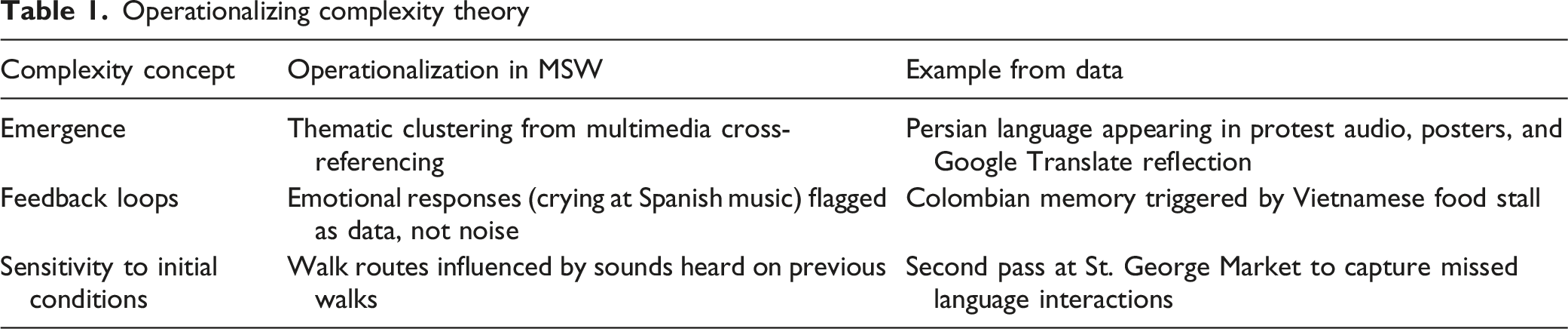
The mapping of complexity concepts onto analytical procedures as seen on the table above is not an end in itself but a point of departure. It shows that complexity theory, far from being an abstract backdrop, entered my research at the level of practical, embodied decisions: which sounds to follow, how to annotate field notes, what counted as a meaningful pattern. In this sense, complexity theory becomes a methodological attitude rather than a mere citation. It asks the researcher to remain open to surprise, to treat contradiction as data, and to accept that the city’s languages and cultures will never resolve into a single, tidy story.
Here complexity theory provided me with a point of reference where the concrete practices gave shape to my ongoing inquiry. The following section, Walking with Sounds, details how I operationalized complexity thinking through soundwalking, field notes, mapping, and intuitive multimedia analysis. For me as a walking ethnographer, the abstract principles of emergence, feedback, and openness become audible, visible, and traceable, I still remember one footstep, one recording, one reflection at a time.
Walking With Sounds
This research project utilized a multi-method approach to collect data, Multimodal Soundscape Walking (MSW) methodology was tailored to my own style of walking, listening, sensing, and reflecting as I was documenting the streets of the city of Belfast (Northern Ireland) during 2022 and 2023. Although I collected a vast number of sounds, videos, photographs, and field notes supplemented by maps of my walk, this article presents data from two key sites in the city: St. George Market and the city centre. MSW served as a way to document how I perceived the audiovisual experiences of the city while walking and paying attention to details of how the sounds mirror other people’s lives through their conversations, interactions, and communication with others.
Walking Methodologies
The art of walking while recording sounds or Soundwalking is not a novel concept, as a method of exploring the world has been around for more than a thousand years. Most ancient civilizations would depict walking routes from one place to another by listening to the sounds of nature, and places and documenting them on mental maps (Radicchi, 2017). Soundwalking refers to the actions of walking and recording sound, “… it is an action that is in progress associated to time, space and place, albeit on occasion vicarious or virtual”(Drever, 2021, p. 2). What characterizes the soundwalk as a sonic method, is precisely how it relates to the meta-concept of soundscape, and the ability to hear, record and sense the sounds of the environment. In the field of acoustic landscape studies (Sémidor, 2006) sounds can be noted and recorded on specific routes determined by the researchers, here the soundwalk is an essential part of the urban designer who pays attention to the different nuances of sound life in the city and although this method has been used by urban designers, others have used it for educational purposes (Springgay & Truman, 2017).
Walking as a method of investigating folk life in the city has mainly been used in the field of human geography and urban geography by looking at buildings, talking to the passerby, observing the dynamics of the city and participating in city events (Pierce & Lawhon, 2015). Various scholars have posited walking as a research method differently based on their subjective understandings of what it means to do empirical fieldwork (Duedahl & Stilling Blichfeldt, 2020; King & Woodroffe, 2017) whereas others have utilized walking research methods as a way to engage different relational, cultural and geographical contexts worldwide (Kwiatkowski, 2016). Walking as a methodology in qualitative research has been practiced and theorized through different approaches in the past few years (Lorimer, 2010; Springgay & Truman, 2017). As a researcher who has been fascinated with walking, I found that walking methodology would make sense for this study. As a methodology, walking has its value for conducting research that is situated, relational, and material in connection with participants and their contexts.
Building on the importance of place, sensory inquiry, embodiment, and rhythm within walking research (Lefebvre, 2013; Pink, 2009), this particular form of collecting data is accountable to the ethics and politics of the more-than-human: Land and geos, affect, transmaterial and movement. To this, Springgay & Truman (2017) consider the more-than-human dimensions and a wide range of walking methods and forms including long walks on hiking trails, geological walks, sensory walks, sonic art walks, processions, orienteering races, protest and activist walks, walking tours, mapping, school-based walking projects, and others. Walking methodology questions and challenges the mere idea of research subjects from an objective perspective, one of its main goals refers to “destabilizing humanism’s structuring of human and non-human, nature and culture” (Springgay & Truman, 2017, p. 14). In a sense, the research participants are not on the other side of the research spectrum but are in contact with the researchers and everything that surrounds them—the lines are blurred, thus disbalancing any empirical power relations.
Soundscaping
Soundscape describes how humans perceive the acoustics of diverse environments by immersing and carefully listening to the nuanced sounds emerging from myriad sources (Southworth, 1969). Westerkamp (1974) coined the term “soundwalking” and has advocated for the practice as a means of deepening our connection to the sonic environment. According to her, soundwalking is a practice combining walking and sound attention that involves purposefully paying attention to the sounds in your environment while taking a walk. It’s a form of mindful listening that encourages you to focus on the auditory experience of your surroundings, allowing you to become more attuned to the soundscape and the various sonic elements that make up your environment.
According to Schafer (1993), humans have suffered from an excess of acoustic information and a corresponding decline in our capacity to discern the finer details of sound. He believes that to grasp and categorize sounds by enjoying their beauty or ugliness, our duty should be to listen, evaluate, and create distinctions. He also suggests that humans might learn to distinguish the sounds that enliven and feed us so we can learn how to create healthier environments through soundwalks, which help us get more familiar with acoustics and aesthetics and train us to be more discerning and sensitive to the sounds around us. Here, “a soundscape consists of events heard not objects seen. Beyond aural perception is the notation and photography of sound” (p. 8).
Schafer (1993) argues that soundscaping involves purposefully listening to the sounds of a particular environment while walking through it. Soundwalks encourage participants to pay close attention to the sonic details of their surroundings, helping them become more attuned to the nuances of the soundscape. Schafer saw soundwalks as a way to engage with the auditory world and develop a heightened sense of listening awareness. Drawing on his work, I engaged in soundwalk as sound contemplation in the following 5 steps: (1) Choose a location: I decided where I wanted to take the soundwalks. I knew it could be a park, a busy city street, a forest, or any other environment with a variety of sounds; for this article, I chose the city centre and the popular St. George Market. (2) Prepare your senses: I took a moment before the walk to focus and centre myself on what my intentions were while engaging in soundwalk. I would tune in to my hearing and prepare to listen attentively. I prepared my sound recorder and headphones and got ready for the walk. (3) Walk and listen: I began walking at a comfortable pace, and as I moved, I paid close attention to the sounds around me. I tried to notice different layers of sound, their qualities, rhythms, and any changes that occur. I pointed the sound recorded to sounds that would be interesting to me concerning languages or how cultures would resonate with music or talk. (4) Stay open: I allow myself to let go of expectations and judgements. I embraced all sounds, even those I thought initially perceived as “noise.” Once in a while, I paused my walk to contemplate the beauty of diverse sounds going through my ears. (5) Reflect: After each soundwalk, I took a moment to reflect on my experience. I sat down and jotted down some notes in my journal. I considered the sounds that stood out to me, the emotions they evoked, and any insights I gained from this practice.
I purposely chose St. George Market and Belfast city centre for three reasons: (1) both are publicly accessible spaces where diverse populations converge; (2) pilot observations suggested high linguistic variety; (3) existing literature identified these sites as nodes of post-conflict superdiversity (Doyle & McAreavey, 2014). I excluded residential areas and private businesses to avoid intruding on domestic or commercial privacy.
Field Notes and Mapping
I conducted three formal soundwalks between October 2022 and November 2023, each lasting 2 to 4 h. In total, I recorded 47 min of audio, took 132 photographs, and wrote 12 pages of field notes. My thoughts, ideas, reflections, and observations were constantly recorded through the field notes and drawings during and after my walks (Creswell, 2011). Field notes ensure nuanced contextual information and rich data that later can be retrieved to be analyzed and cross-checked with literature that improves the depth of findings and later for further dissemination (Phillippi & Lauderdale, 2018). I carefully recorded both descriptive and reflective field notes with personal thoughts related to the insights brought by the sounds I heard and my own experiences. I also recorded emerging themes during my observations based on situations, people, spaces, and languages I heard. Figure 1 presents how I recorded my notes with the date and time of my recordings and used different colours to highlight connections with ideas. Saldaña & Omasta (2021) reminded me that although memory plays a key role in recording data, it is important to record the data as the memory can be unreliable. It is well known that “Social life is filled with such meticulous detail that no one can keep all that happened recorded accurately in his mind. Observations are best documented in some way through writing and/or visual methods for recall and analytic reference” (p. 71). In my three soundwalks, I recorded a total of 12 handwritten field notes in my notebook, I sometimes would glue pieces of paper from fliers or pamphlets that I would pick up along the way. Field notes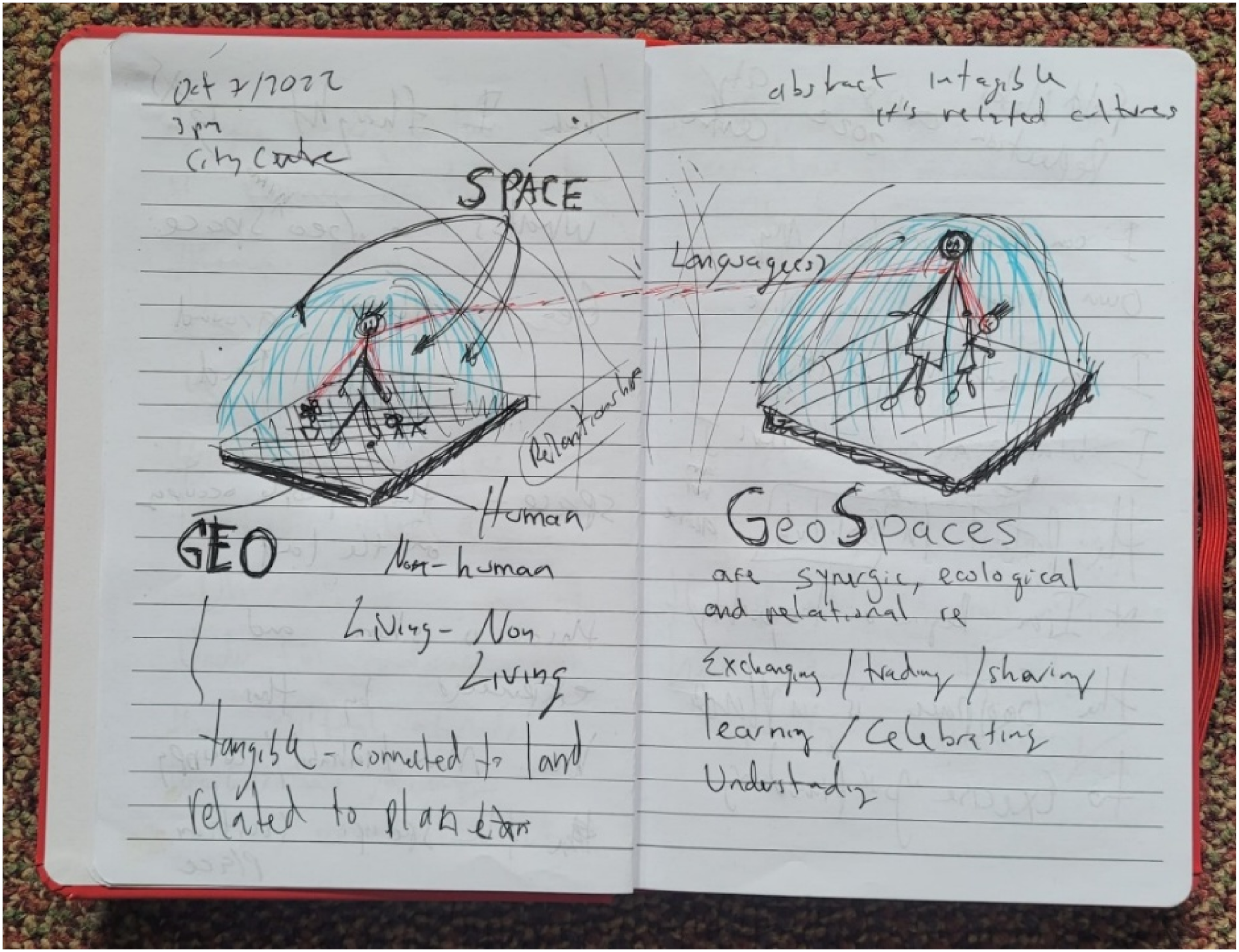
Additionally to taking notes, I also utilize a technique called mapping. According to Sato et al. (2014), the origins of mapping have a long history in which human interactions and relationships with geographic spaces and places are explored and these mainly deal with “The search for representing reality and its various interfaces employing images and maps have always been present in civilization” (p. 106). Here, mapping becomes central to life as it helps us depict the journey of our lives as individuals or as groups and are important social, cultural, and political phenomena in society. Maps are helpful because they can present a variety of complex social and environmental information in a way that is easy to interpret (Deluca & Matson, 2017). Futch & Fine (2014) explored the value of hand-drawn maps to illustrate an individual’s impressions of and relationships to a particular place, Figure 2 showcases how I illustrated my journeys throughout the different spaces I walked. Analog and digital mapping of walks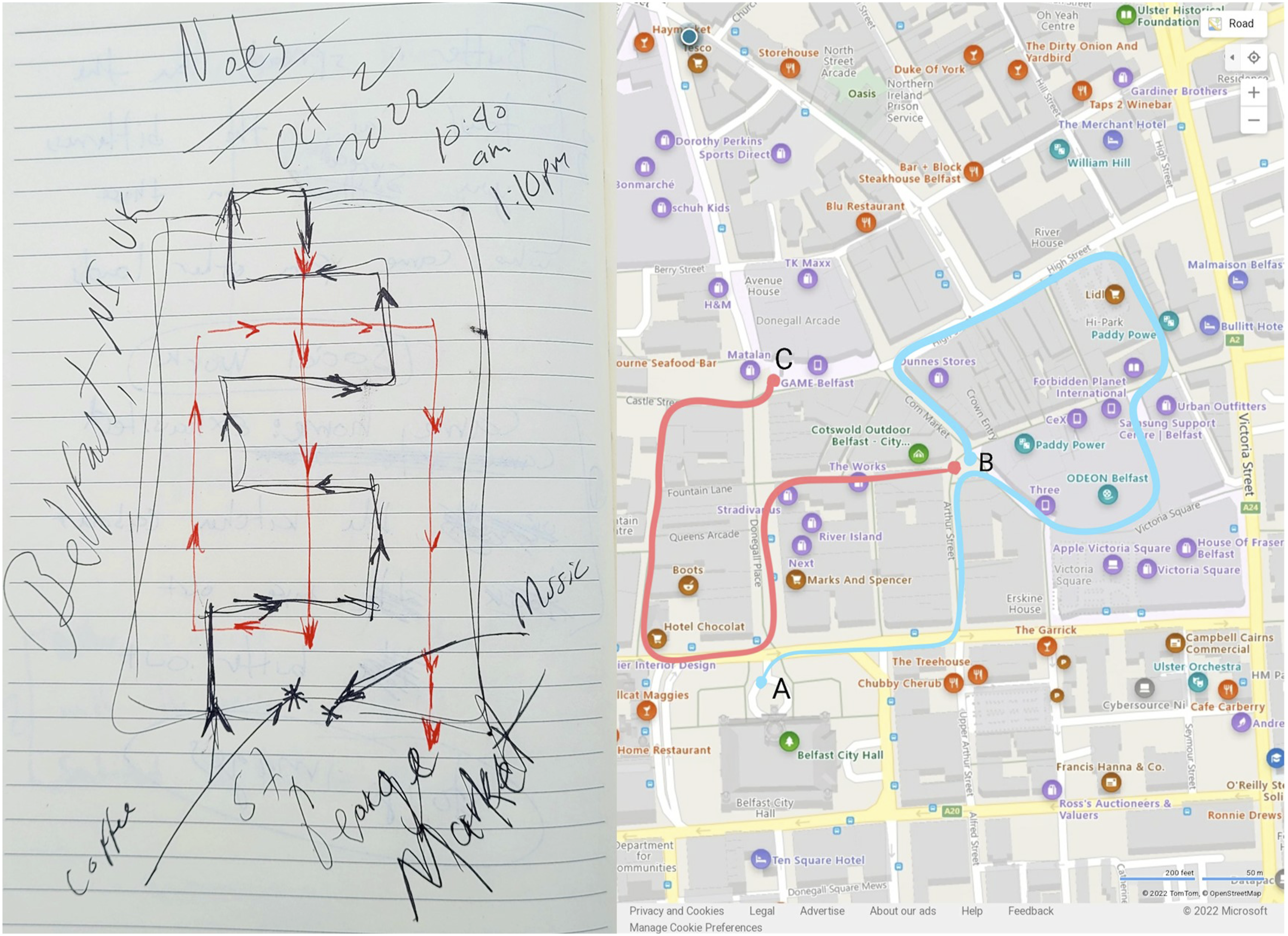
I specifically utilized mapping within a critical qualitative research lens as a way “to disrupt traditional hierarchies and open research spaces that are more equitable for participants, researchers, and readers” (Marx, 2023, p. 285). Indeed, mapping allowed me to understand that all beings occupy spaces sparsely and we all make space as we walk, it is almost as if we were talking to each other without even noticing—we were tracing paths along the way. Figure 2 on the left depicts a map of my walk at St. George Market, black means how I mapped the first half of my walk and red depicts a follow-up to record and see the path from other perspectives. Similarly, Figure 2 on the right (a digital version of the map) captures two walks and three different key points in my walk in the city centre of Belfast.
Field notes in this research allowed me to be detailed and systematic about the recordings I made during my observations, interactions, or experiences while conducting fieldwork. Field notes captured a wide range of information, including observations, conversations, behaviours, emotions, context, and other relevant data that contributed to my understanding of how humans engage in languages and cultures in different spaces.
As a visual researcher, mapping allowed me to synthesize information, reveal hidden relationships, and communicate complex ideas in a more accessible and understandable way. It can enhance both qualitative and quantitative research approaches by providing a visual framework for analysis and interpretation.
Combining field notes and mapping helped me to develop a holistic understanding of the research context. Field notes provide the narrative and depth, while mapping offers a structured and visual framework for organizing and synthesizing the data. Mapping and field notes were tools that helped to capture the nuances of my observations, feelings and emotions and served complementary roles in enhancing the depth and richness of the research process.
Towards Intuitive Multimedia Analysis
After collecting all the data (sounds, videos, photographs, journal notes and maps), I adapted Saldaña’s (2012) coding methods for multimedia data. I labelled them and organized them into folders on the computer for easy retrieval and further coding. After, I transferred codes to a spreadsheet with columns for: timestamp, language heard, cultural artifact observed, emotional response, and complexity-theory principle invoked. Intercoder reliability was not applicable as I am the sole researcher, but I conducted a second coding pass 4 weeks after the first to check consistency. To illustrate, here is how I coded a 45-s audio segment from St. George Market (file: SGM_20221002_1432): • Timestamp: 0:00–0:12—Busker singing “Let It Be” in English • Timestamp: 0:13–0:28—Family speaking Polish, child laughing • Timestamp: 0:29–0:45—Vendor calling in Arabic, clinking of glass
These three codes (English music, Polish conversation, Arabic vendor) clustered under the theme “Synergistic sound layering,” which I later linked to (Bot et al., 2007) dynamic systems theory of language coexistence. After this I conducted a four-step method through an intuitive multimedia analysis (IMA) (Figure 3). Intuitive multimedia analysis (IMA)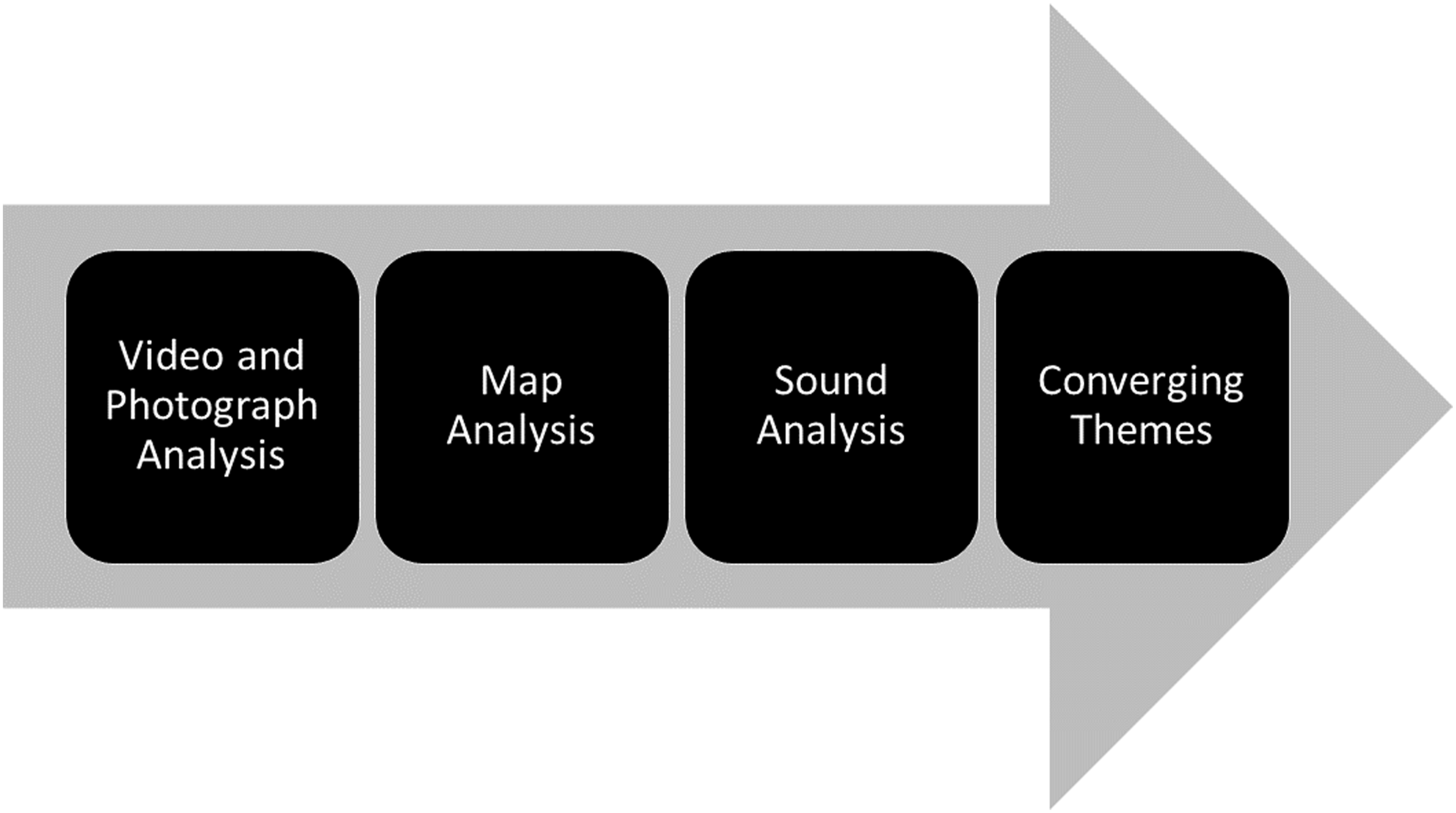
This approach complemented and enhanced the more formal analytical techniques I used previously, such as continuous coding and thematic analysis (Boyatzis, 1998; Saldaña, 2012) which in the end helped me to make sense of conflicting or ambiguous data by grasping the intricate social, cultural, and historical factors at play before, during and after the analysis.
The first step I took was to go over the visual part of the data. I initially used photograph analysis as a way to learn and “understand how societies are culturally and socially constructed, to critically uncover the meaning people place on certain activities, places, things and rituals and to record and analyze important social events and problems” (Cleland & MacLeod, 2021, p. 231). I made marks on the photos and wrote reflective notes on key aspects of how cultures/languages were exhibited, allowing myself to write about my emotions and feelings.
After that, I used a point pattern analysis within map analysis which “looks at the relationship between the locations of objects or events in space relative to the locations of other objects or events” (Deluca & Matson, 2017, p. 212) to understand how cultures and languages perform, correlate or overlap with each other based on my previous notes and marks on the photos. I noted the visible languages depicted in the photos and videos and how they would relate to any specific culture as I correlated with the languages I heard being spoken from the recorded sounds. Sometimes, some sounds and images evoke familiar places back home (Colombia).
The second step of this process was to look at the maps I created by hand or digitally, then retrace the walks and make notes on particular moments in which I experienced languages and cultures as being performed by community members. I cross-checked this information with the field notes I collected during and after the walks. As I was retracing my steps, I was transported to those places I visited and the sounds, smells and even memories of particular places.
In the third step of this analysis, I made a list of all the languages and cultures that I experienced by re-listening to the recorded soundscapes. I put on my noise-cancelling headphones and immerse myself in listening carefully and experiencing the walks again but this time paying careful attention to how languages, experiences and cultures intersect. I took notes on particular moments such as friends and families talking in their home languages, street vendors selling cultural artifacts and street musicians singing in different languages. Here, I used an anthrophonological approach to identify the presence and activities of human beings concerning their culture, tradition languages and habits (Pavan, 2017). I was here when I understood how language is key to human communication. It not only conveys meaning but hopes, fears, emotions and not only my own memories of similar places but those who share them with others while they walk.
In the last step of this intuitive analytical process, I used all the information obtained through the analysis of recasting my steps from the walks, my thoughts and emerging ideas and collated them on spreadsheets to further code the languages and cultures observed. Subsequently, I created an analytical display to see the correlations to create themes based on comparing the multimedia materials with the notes on the spreadsheets (Figure 4). Data synthesis and crosschecking
This process of playing with data and paying attention to the nuances of connected languages and cultures was very natural and intuitive to me, as I attempted to disentangle from objectivity. I felt I was part of the data, as immerse with the data and not a separate being from those collected multimedia objects—I was part of the data with my memories, feelings and emotions. I learned that collecting data and analyzing is bigger that I could I imagine, it was part of the self, but also in relation to other beings walking the city. This process was not objective but almost a spiritual connection with data and how it relates to other humans and non-humans.
The Diver[City]: A Research Participant
This section of the article describes how the city was portrayed as a participant of a research study. In qualitative research projects, participants play crucial roles in providing the data and rich insights necessary for the study (Bloomberg & Volpe, 2012). Their experiences, perspectives, and behaviours are central to understanding the phenomenon under investigation. The roles of participants in qualitative research can vary based on the research design, the specific methodology employed, and the nature of the research question and how research participants can better respond to these questions (Lichtman, 2012).
In this research study, I anthropomorphize the city as I envisioned it as my research participant (informant). A city that welcomes all communities from all walks of life, I have called it the Diver[City]. I see and feel the Diver[City] as a female subject because in the Spanish language, city means La ciudad which is a female noun. Through my walks while collecting the data, I sensed the city and I learned that she 1 is a complex sentient being, that is vibrant, dynamic, alive and in constant movement.
Methodologically, I chose to treat the city as if it were a research participant. This is not a literal claim about urban consciousness, but a heuristic device drawn from more-than-human scholarship (Springgay & Truman, 2017). By anthropomorphizing the city and asking “permission” before entering St. George Market, imagining her “consent,” I disrupted the extractive logic of traditional urban fieldwork. The city cannot literally give consent, but this framing reminded me to walk with care, attunement, and ethical accountability to the human and non-human beings that constitute urban life.
In a sense, I saw the city as a participant who I needed to ask permission and consent to take data from her streets. Like any other human being, the city has her own life and identity as noted in one of my research memos at the local market: On Sunday 2 October 2022, I stand before the doors of St. George Market in Belfast, and I asked if I could walk and take some data. I immersed myself in the cultures and languages as I zig-zagged the stalls and bumped into shoppers buying a hat or slurping a gelato. I encountered people from all levels of society, families, couples, and youth enjoying the live music at the sound of “Let It Be” while long-time friends chit-chat on a bench catching up on their old high school stories. According to locals, there are approximately 248 market stalls selling a variety of products including fruit, vegetables, antiques, books, records, pastries, art, clothes, and fish. One of the things I liked the most was its fusion of tempting specialty foods from around the world as well as handmade crafts, flowers, plants, local photography, pottery, glass, and metalwork. In this soundscape walk, I was able to gather two key themes. One is related to how the market is a mirror of the world, a reflection of diverse cultures under one roof and also the idea of movement or mobility. All market patrons are on the move but also reflects the idea of migration as a human activity of people moving from one country, locality, place of residence, etc., to settle in another. (Research Memo, October 2, 2022)
Here, I experienced one of the city’s roles as a participant with expertise on the matter or an insider in her own experiences. Her unique knowledge added depth and authenticity to my research findings, particularly in my focus on lived experiences or cultural phenomena of the communities experiencing the city itself. Here, the city acted as a participant that contributes to the contextual understanding of the phenomenon by providing information about the social, cultural, historical, or organizational context in which her experiences occur. This helped me as a researcher to interpret and analyze the data within its broader context. As such, I saw the city as a partner in reflexivity by helping me understand her own perspectives and biases by providing feedback and alternative viewpoints to challenge and support my own researcher’s awareness of the research process. The city as a participant, informed me of who she is, a place where we all live the world, a place where hope lies at her core and a place in solidarity.
A Site to Live the World
As I was collecting data, I noticed the city, as a research participant, like a human being with a history and experiences. I imagine the city as cosmopolitan being with an immigrant background. For example, St. George Market, in Belfast, like any other market, is a mirror of representation of the world. During my walks, I encountered a vibrant atmosphere filled with a diverse range of sights, sounds, and smells. In different areas of the market, I experienced a diverse range of goods, products, and services from various countries and cultures which typically cater to both residents and tourists, offering a unique shopping experience that showcases the global diversity of goods. For example, Figure 5 (left) presents artifacts of hand-made products from Nepal, toys, clothes, and household items while Figure 5 (right) advertises food from Thailand, not only for meat eaters but for vegans as well. Market stalls. Left products from Nepal, right Thai food (photo file: 002)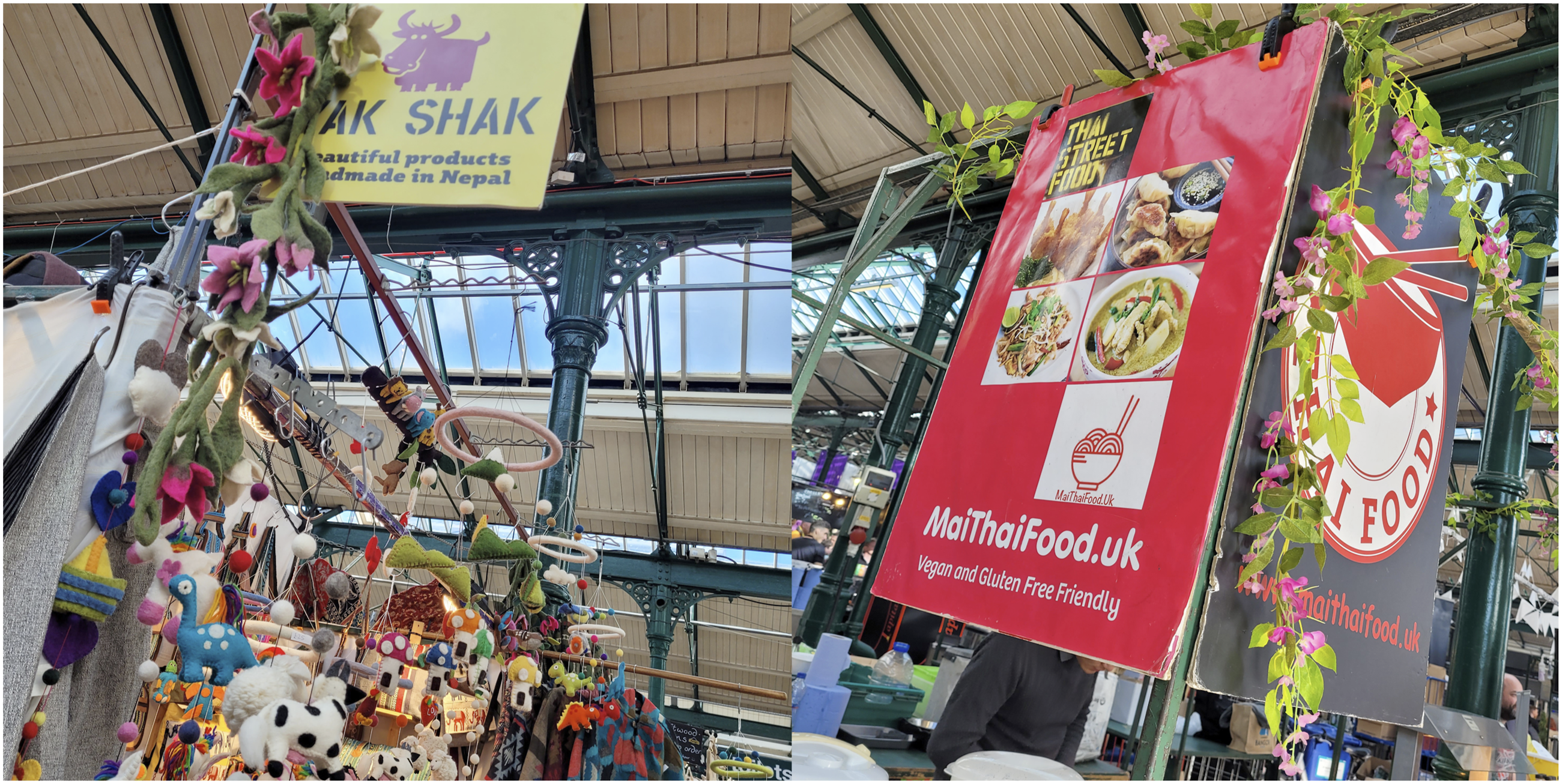
I imagined the city as if I were interviewing a research participant who is telling me about their lived experiences. As such, in this rewarding multi-sensory experience, I could not help but understand that this market brings together a wide variety of cultures and nationalities. In a sense, experiencing the market is like living the world and engaging with vendors and artisans. Here, the city, through its market, offered me thick descriptions (Saldaña & Omasta, 2021) and insights into the traditions, crafts, and stories that each person brings with them as a vendor or as a buyer when learning about the origins and significance of the products being sold which in the end can deepen our understanding of how cultures and languages intersect. I also imagined the city accepting an invitation for interview. To this, I remember I had a nice chat with the Yak Shak vendor discussing how most of his products from Nepal are similar to those from Latin America, with similar colours, patterns, and spiritual ideas. He also mentioned how we, as humans, are one and the market is a representation of that unity. He explained how the market provides multilingual and multicultural experiences under one roof. It almost seemed like the city was giving me these insights into their own experiences.
In the end, I realized that seeing the city as an active research participant helped me to understand that the city is alive, like a human being and anyone visiting the market is about immersing themselves in the culture and atmosphere from the first moment at the door listening to a local artist playing world music. The bustling activity of the market, with colourful stalls and displays and the dazzling array of products, from fresh produce and spices to handicrafts and clothing create lasting memories and unique stories to share with friends and family. To this date, I still remember tracing my steps and connecting to others as if I were travelling around the world with a friend (the city).
A Site for Hope
Lefebvre (2013) reminded me that the city is in constant movement, it never sleeps, almost as if it were a living being. As I was sitting down on a bench at St. George Market to rest from the walk, I had my head looking down and noticed all the people’s legs walking back and forth but also, animals’ legs, the wheels of strollers, wheelchairs, bicycles, and scooters coming and going (Figure 6). A family sitting next to me was talking about how happy they were to be living in this city as they “had made it” to safety after their immigration journey through different countries in Europe. This conversation was like a metaphor for what I was seeing, I reflected on the different journeys all people have experienced on this land. In a city that seemed to never stop, people from all walks of life passed by carrying their hopes and dreams as they wanted to make it to their destinations. All the movement I experienced while sitting down was just an example of people moving (migrating) to this land (McDermott, 2023). People migrate for various reasons, including seeking better economic opportunities, escaping persecution and discrimination, exploring new cultures, and fulfilling personal desires for change and growth (Van Hear, 1998). While sitting down and looking at people moving around the market, I thought about how migration is a complex interplay of social, economic, political, environmental, and individual factors that can have diverse impacts on communities, influenced by varying attitudes and policies across different societies and governments (Faist et al., 2013). One of the parents sitting next to me seemed to be happy to know that Belfast has opened the doors and windows of opportunity for him to have a job and provide his family with the necessary economic resources to move away from their precarious lives “back home,” in a sense, the city has brought him and his family some hope after “his movement journey” (migration). A welcoming city in movement (video file: 005)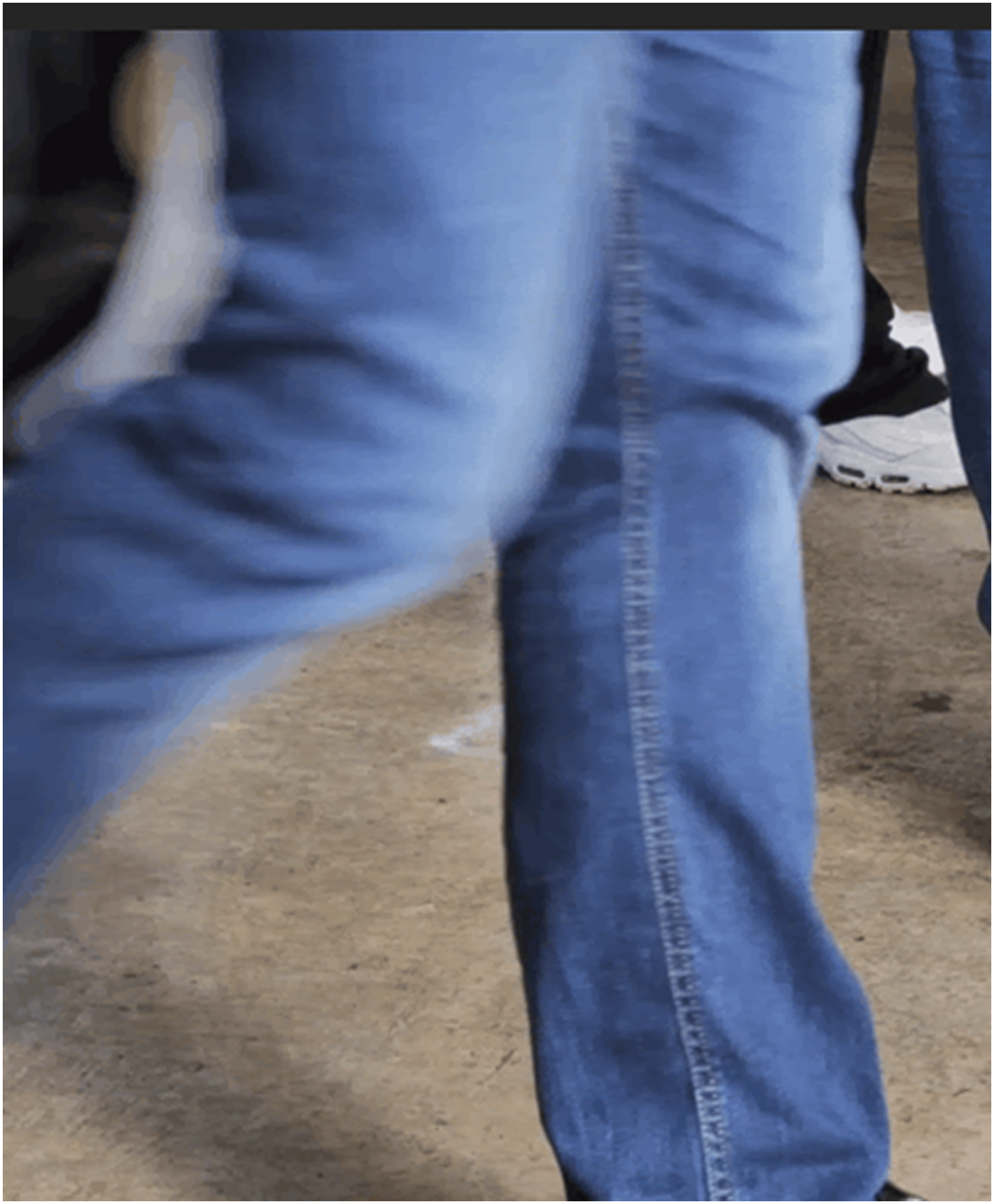
A Site for Solidarity
As I walk through the valley of concrete and asphalt, I sense the living city in solidarity with those who have been deprived of their rights. I set up my record and started walking from the city hall and immediately heard what appeared to be some kind of rally or protest against the Iranian regime and in support of the women’s fight against oppression in the country. I could hear the animosity and the cries for attention as they were speaking in a foreign language, I stopped and briefly asked, and they said they were speaking Persian and sometimes Arabic and English. I recorded a few minutes of this event and carried on walking, soon after, I encountered these two posers (Figure 7) depicting the face of a woman and messages in English and another language I was not aware of. I used my phone to use the photo translation app from Google and immediately detected and translated the other language into English, it was in fact Persian, the same language used in the protest (Audio File: Persian 001). The poster on the left presents a message in English and Persian, the poster on the centre presents the message in Persian and the figure on the right presents the translation from the Google app that reads “A general strike of workers is necessary.” Posters in solidarity (photo file: 003)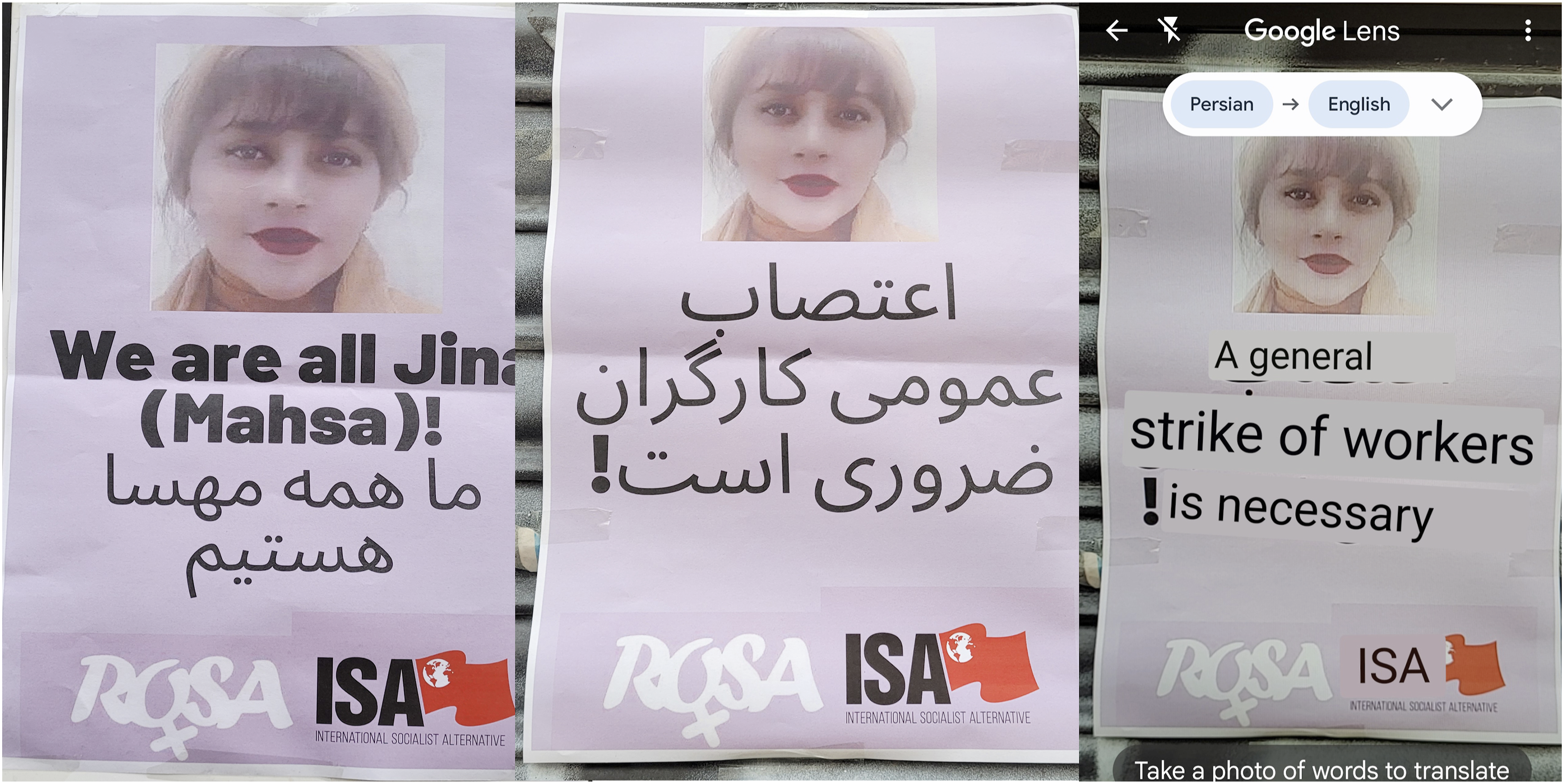
When I finished half of my daily walk, I sat down and took notes on this experience as I was astonished at how the sound, I had recorded that day from the protest was connected to the posters, as it seems the Persian language has been used with English to bring attention to an important international issue.
Throughout my different walks in the year 2022 and 2023, I also felt the city as a partner in crime, a research participant, a clever informant who shared her experiences with me. The city of Belfast like any other superdiverse city described to me the multiplicity of beings who she engages with, their cultures, languages, and identities. Through the city, I experienced the world, she offered hope to those who have been at the margins of society and showed some respect and solidarity to how needed the most. I learned to respect and see her with other eyes.
The Diver[City] as a Sensing Space
During this research project experience, I am reminded of what Moretti (2021) said about attending to the relationships among remembering, sensory emplacement, and urban materialities that accompany the kinesthetic inhabiting of the city through walking, standing, and sensing in place.
In a way, I learned to understand the city as a complex sentient being, I felt I was a participant in my feelings and emotions in contact with the city. As Pink (2015) asserts, a sensory ethnographer is someone who not only observes and documents but someone who senses and seeks to develop an emotional understanding of others and what they might also sense, experience or know. As such, while collecting the data, I sensed the city from various vantage points hearing, sensing, and remembering as a connected network of beings or “A system [that] can be described as a set of entities that are related to one another and influence one another, and a state of the system is the set of properties of its components at any particular moment in time” (Guastello et al., 2009, p. 244).
Drawing on Lefebvre (1992) the city carries its rhythms based on its public and private subjectivities. During my many walks, I reflected on how public and private lives converge at their past-present-future (Cotidianidad) where the lines of languages and cultures are blurred. (Fieldnotes, 10/24/22). Here, I theorize how the city becomes a sentient being those harbours, protects, and cares for all human and non-human beings, and their diverse ontoepistemological experiences from diverse perspectives (hearing, feeling, remembering, and connecting).
I learned that this is a pluriversal city that is experienced as an infinite interrelated system of relationships with diverse communities, people, living beings and non-living beings—a city with a heart (Figure 8). While I walk the city I meet different people, workers, couples, friends, families, fathers, mothers, children, dogs, and cats; all as I sense them interrelated in a throbbing city. They talk to each other asserting and celebrating their languages and their cultures as an intertwine infinite system. In my notes and jottings, I describe the city as a living being that pulsates like a heart infinitely. Walking, recording the sounds and taking photos allowed me to understand different worlds, different visions, different people, and different ways of being and thinking. The city became a sensory act of hearing, feeling, remembering, and connecting—a friend that welcomes all no matter who you are or where you come from. The city is as a complex infinite system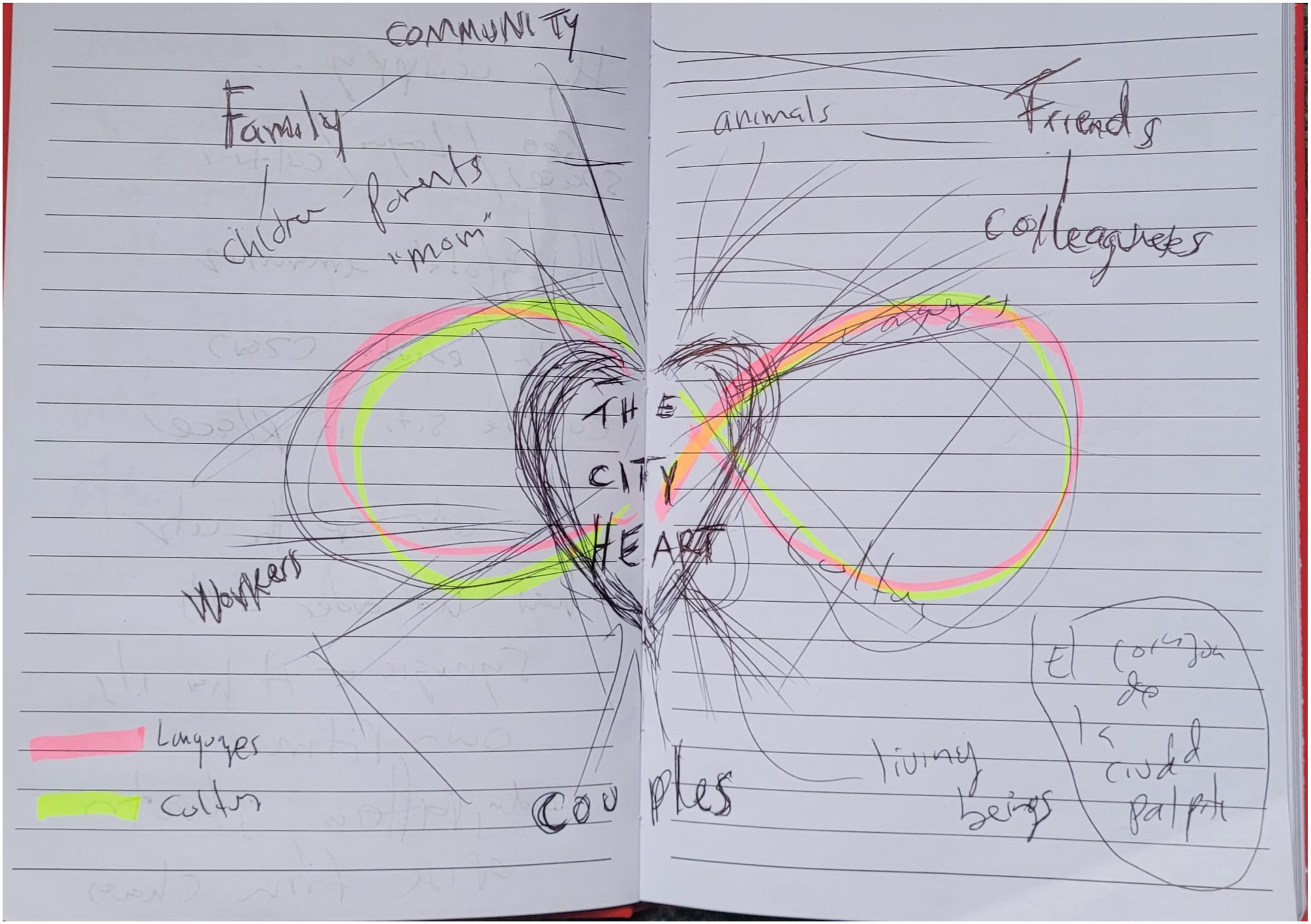
Hearing
Hearing is one of the main senses of the human body that allows us to perceive detect and interpret sound waves in the environment through the ears. During my sound walking experience, I realized that hearing is a complex process that involves capturing and carefully paying attention to the sounds, voices, and noises of the city (see audio excerpt below). Audio Excerpt 1 (transcribed from SGM_20221002_1432) [0:00–0:15] Distant busker: “When I find myself in times of trouble…” [0:16–0:22] Footsteps, my own breathing [0:23–0:31] Child’s voice (Polish accent perception): “Mamo, popatrz!” (Mom, look!) [0:32–0:40] Mother’s response in Polish, then switching to English to a vendor: “How much for this?” [0:41–0:52] this perfume is good for you sir [perception of an Arabic accent]
In the above example, I documented three languages (English, Polish, implied Arabic from the vendor’s accent) and two modes of address (parent-child intimacy, customer-vendor transaction). The non-linearity of complexity theory is audible here: these language events do not follow a predictable sequence but layer, interrupt, and echo each other. My heartbeat (recorded incidentally on the audio) quickened during the child’s excited call and the sudden interruption by the perfume vendor. In this sensory process, I needed to make sense of the sounds in the environment, where they are coming from, how they relate to each other and the relationships with those others who roam the streets. I could hear other voices, conversations, and exchanges of information in different languages, languages that I do not know but I could hear and feel their rhythm, cadence, pitch, and music.
I could hear myself breathing, I could hear how my heartbeat changed according to how the environment changed. If there was a lot of commotion, or bodies or people talking fast and passionately, my heartbeat would go faster. If I was in a quieter area my heartbeat would go calm. In a sense, it seemed that my breath was taking up the rhythm of the city, Lefebvre (2013) posits that the human body is composed of several rhythms; to observe rhythms outside of the body, the rhythm is the conjunction of the rhythmanalyst (the person who feels the rhythm) and the object of the analysis (the city) which allowed me to pause and be “present” of the sounds, languages and cultures of the city. Lefebvre describes this presence as the “facts of both nature and culture, at the same time sensible, affective and moral rather than imaginary” (p. 32).
Feeling
Pink (2015) reminded me that ethnographic work is not isolated and also helped me to understand that sensing/feeling can be interconnected and interknitted within research, the phenomena, and the participants (me and the others). Her work exhorted me to be a “sensory apprentice” by gaining knowledge through the mediated practice and paying closer attention to all my human senses in connection to the city. As I am walking the streets, I pause because I am listening to music in Spanish, and it is coming from speakers I cannot see. The excerpt below from my data depicts this sentiment. A busker’s guitar drifts out of a doorway. He sings in Spanish – a bolero I half-recognize from my mother’s kitchen. My throat tightens. On the recording, you can hear my exhale change, a pause in my footsteps. I stop walking and lean against a lamppost for a few seconds. My field note that evening reads: “Not nostalgia. Something more like a body remembering before the mind does. The city didn’t make me feel this. But it held the sound that unlocked it.” (Audio file: CC_20230415_1123: City Centre, near Castle Lane)
As I hear this music in Spanish, I start crying because immediately reminds me of my home country (Colombia). “These feelings, while immediate and in the present, arrive with a past that is never in the past, and engender an indeterminate future. One of the dangers of establishing a binary between affect and emotion” (Springgay & Truman, 2017, p. 45). I understood that this ethnographic experience was beyond objectivity, beyond the binaries of the past and the present, it is closer to home than I thought. It attends to my subjective sensoriality (sensor-reality) of experiencing the city, others, and our unseen relationships.
Remembering
As I was walking through the stalls of the market, I could smell some of the food and there was a distinct smell that brought memories. I needed to find out where this smell was coming from, I walked a few metres following the scent and noticed it was a Vietnamese food stall, and the smell was coming from the fresh rice. I took a wee sniff and immediately brought back memories of when my mother used cloves and garlic when cooking. The cook told me that it was a traditional recipe from his family back in Vietnam. Not only did this bring memories of home but also a connection to family relationships and how important the conversations around meals are for Colombians (Latin Americans) (Casotti, 2006). A similar moment was experienced when I saw green plantains being sold in one of the African stores in the city. It reminded me of Patacones (smashed fried green plantains) and how my walk in the market triggered other connections with other places in the city and transcended the boundaries of physical spaces by taking me back to my home country, its traditions, and relationships. Remembering, here, was an act of interconnecting with others and their cultural practices. I marked this spot on the rough map of that walk with a small star, with the word “patacones?” in pencil. I never found the source, but the smell lingered for three more stalls. My senses were not passive receivers; they were pulling me off my planned route. For Pink (2015), all senses are interconnected, inseparable, subjective, and experiential, thus making them part of a sensing experience that invites researchers to comprehend our perceptions of social, material, and intangible elements of the places we visit in relation to others.
Connecting
Data recorded evidenced of how I sensed or felt the city as a living organism that has the ability to experience and perceive consciousness, including the capacity to feel, perceive, and respond to stimuli. Here, I do not claim that the city possesses biological sentience. Rather, my sensory engagement with Belfast produced experiences of the city as sentient and as some moments of affective resonance I could only describe using animistic language. This is an epistemological claim about how I came to know the city, not an ontological claim about what the city is. Pink (2015) argues that sensory ethnography reveals how researchers and environments co-produce meaning; my “sentient city” language is an attempt to honour that co-production. For me, the city in this state is what I have called the Diver[City], a space and place that acknowledges, welcomes, and celebrates all who inhabit the city. It creates and recreates an intelligent system that is advanced enough to exhibit behaviours and responses that are similar to those of conscious beings.
Following Haraway (2013) and Tsing (2015), I use anthropomorphism strategically, not to deny difference between humans and cities, but to make visible the kinds of attentiveness that extractive methodologies obscure. When I was collecting the data, I remember saying to myself “the city offered me thick descriptions,” and I meant that my embodied, sensory, walking practice generated insights that sitting at a desk or conducting formal interviews could not. The city-as-participant is a pedagogical fiction that helped me listen differently.
Walking and recording the sounds of the city to capture and document how languages and cultures intersect allowed me to understand that the city is not a monolith but an entity with rights and responsibilities for all its inhabitants. According to Lefebvre (1996), the right to the city “manifests itself as a superior form of rights: the right to freedom, to individualization in socialization, to habit and to inhabit” (p. 174). That is, the idea of the urban as the place where differences can come together and generate something new—the level of mediation between the global and the private that has the form of centrality, encounter, and interaction, and how these different aspects are related to each other, and how they are socially produced (Lefebvre, 1992).
With this in mind, I argue that the city as a space is not a concrete monolith nor a living being in which diverse beings inhabit, experience, and change the city itself. I posit that the concept of Diver[City] as a sentient being is used as a performative act of the living creatures that are capable of experiencing and perceiving their surroundings from those who do not necessarily have this human ability, such as plants or inanimate objects (rocks, dirt, pavement etc.). Here, I borrow from my research field notes, I wrote “The Diver[City] is a sentient being where cultures and languages collide.” It is alive, and I sense this as a new home for some and a long dwelling for others, regardless, we all belong and share the endearing space within and its interconnectedness (City centre, Belfast, Northern Ireland, UK, November 14, 2022). I hear and feel the city as it helps me to remember my home country, tradition, and culture but also helps me to connect with others, their cultures, traditions, and ways of being.
To depict this sentiment and attempt to illustrate the ideas, I sorted out to use AI technology to generate images of how I envisioned this diversity, Figure 9 represents the sentiment of the Diver[City] as portrayed by Midjourney (a generative artificial intelligence program and service). The Diver[City] is not static but in a constant movement where bodies collide and carry their hopes, their dreams, their fears and also their lives packed in their suitcases, their baby strollers or shopping bags. The city as depicted by AI technology
The city as a symbolic representation of our connection with others, their languages, cultures, and lives as experienced by my senses (hearing, feeling, and remembering) represents ongoing and almost infinite connections and possibilities of being while interacting with others within the realms of the city. In a sense, the city becomes like “A system can be described as a set of entities that are related to one another and influence one another, and a state of the system is the set of properties of its components at any particular moment in time” (Guastello & Pincus, 2009, p. 244). In the end, I learned “the global is associated with space, capital, history and agency while the local, conversely, is linked to place, labour, and tradition — as well as with women, minorities, the poor and, one might add, local cultures” (Escobar, 2001, p. 155).
Feeling/Thinking the Diver[City]
This article has presented a Multimodal Soundscape Walking (MSW) methodology to gain a better understanding of the city as a geographical space from the perspective of its intersecting cultures and languages as perceived by multimodal data collection. Here, the city has been envisaged as a research participant who is a vibrant sentient living being that provides not only information to the researcher but offers a space for solidarity and diversity celebration. I experienced Belfast as a Diver[City] with my senses as it helped me to connect with past, present, and future and allowed me to understand that the city is not a monolith but a space for connections, movement and infinite linguistic and cultural experiences in which communities exercise their right to be and live (Batty, 2009).
Cities are the quintessential example of such complex systems, urban areas serve as an example and a backdrop for a diverse array of human endeavours, encompassing services, governance, education, commerce, markets, and finance. Here, cities act as networks closely linked to similar systems that are dynamic, ever-changing that share similar spaces and modes of living (Batty, 2009). Presently, urban living prevails as the predominant lifestyle, continuing amidst the ongoing urbanization process. Despite the complex historical challenges associated with cities, such as traffic congestion, pollution, health concerns, diseases, crime, inequality, and informal settlements, cities remain alluring to people despite these drawbacks (Rybski & González, 2022).
I argue that Belfast, like any other cosmopolitan city in the world, is located as a space in which languages and cultures converge synergically with no boundaries, as all sorts of bodies interspersed at the rhythm of their hearts reminiscing their relationships with their families, friends, and their entire communities. I experienced this to be particularly interesting to international new arrival communities who have found a place to stay, relate, and exercise their cultural and linguistic practices in a welcoming and friendly new context—this is the Diver[City].
This Diver[City] lives within a pluriverse of possibilities to learn from others and experience other ways of living and knowing. It allows people to visit other parts of the world without actually having to travel providing an understanding of the different cultures and languages, thus creating polyphonic awareness. An ongoing plotting of these experiences have been displayed on an interactive map (Link).
This article opened with complexity theory as a frame. Having presented the MSW methodology and Diver[City] findings, I now return to that frame to ask: what did complexity theory do for this study? For multimodal and sensing methodologies, I pose three key aspects.
First, it justified my refusal to isolate variables. I did not count language frequency or map cultural artifacts with GPS precision. Instead, complexity theory allowed me to see the relationships among sounds, the way a Vietnamese food stall’s scent triggered a Colombian memory in my body, which then attuned me to a Polish family’s laughter. These are not linear cause-effect chains but emergent properties of a system I temporarily entered.
Second, complexity theory explains the replicability problem. Another researcher walking the same streets on the same day would produce different data and not because either of us is wrong, but because complex systems are sensitive to initial conditions (my mood, my route, my language abilities). In my view, MSW does not aim for replicability; it aims for thick attunement.
Third, complexity theory opens pedagogical possibilities. If cities are complex adaptive systems, then learning to listen to them is a form of ecological literacy. The MSW methodology I have outlined can be taught not as a fixed protocol but as a set of dispositions: curiosity, slowness, multi-sensory attention, and comfort with unpredictability.
Finally, as spring unfolds, I walk [XXX] Street, near [UNIVERSITY], I cannot help but hear folks speaking other languages than English sitting at the café, drinking coffee, and having a laugh or having heated conversations and although I do not understand what they say, I can tell they feel at home. A few blocks down, I pause and take a photo (Figure 10) that represents the core sentiment of being at home. Although people might not have been born and raised on this land, the different spaces, relationships and connections that are made in the Diver[City] are symbolic representations that complex systems can cohabit and welcome all to create the spaces we can all live well with each other in a world worth living (Reimer et al., 2023). A welcoming sign from the Diver[City]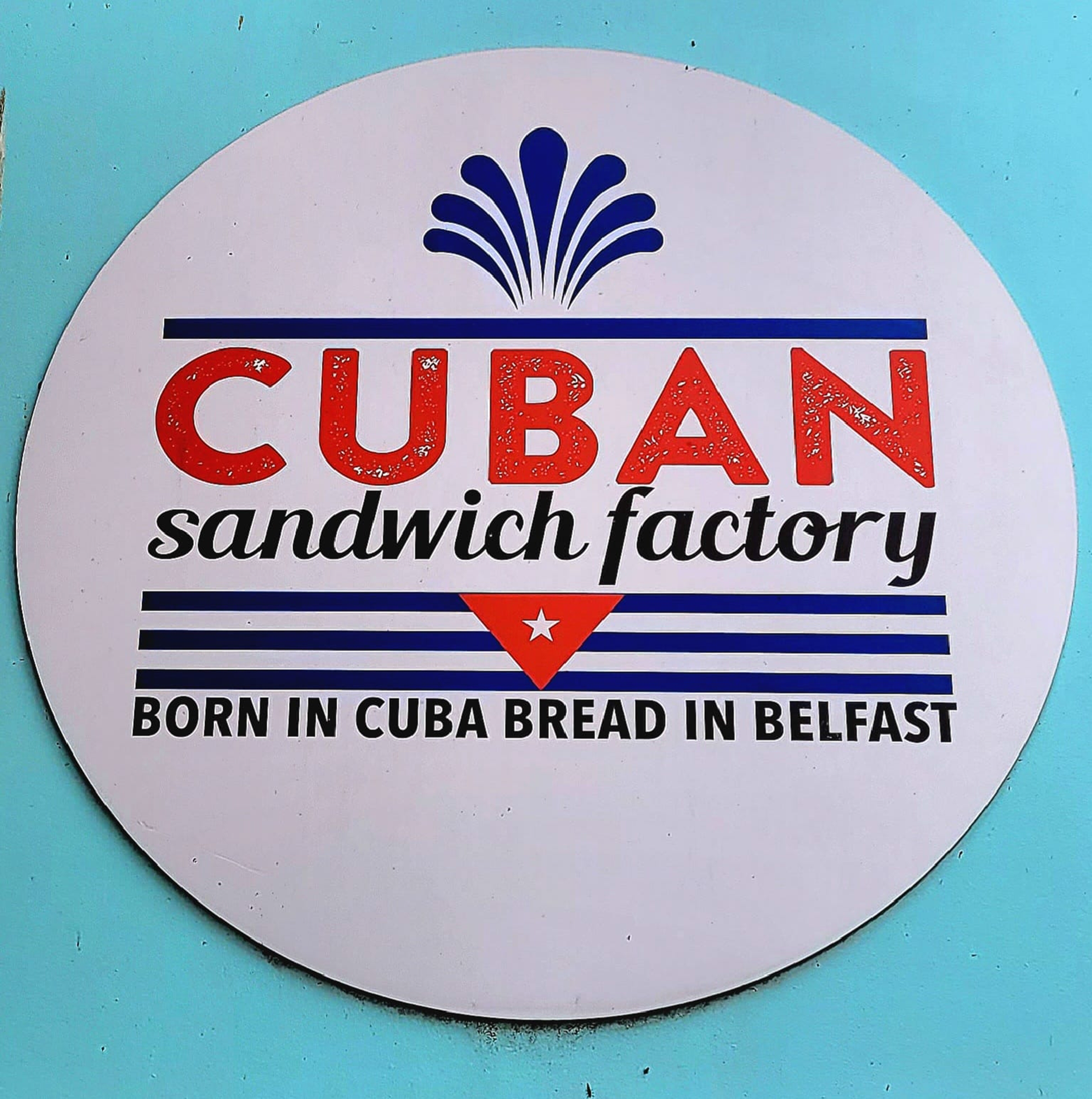
Footnotes

Ethical Considerations
This research was approved by the ethics committee at the School of Social Sciences, Education and Social Work at Queen’s University Belfast.
Funding
The author disclosed receipt of the following financial support for the research, authorship, and/or publication of this article: Offered by the Faculty Research Initiatives Fund by Queen’s University Belfast.
Declaration of Conflicting Interests
The author declared no potential conflicts of interest with respect to the research, authorship, and/or publication of this article.
Data Availability Statement
Data acquired for this research can be accessed by request to the author.