







Abstract
The purpose of this research was to examine the utilization of artificial intelligence (AI) in organization development (OD) through a comprehensive review of existing literature. We also propose potential avenues for future research on AI in OD. We conducted a systematic literature review of 68 studies on AI in OD based on Cummings and Worley’s four OD categories (i.e., human process, human resource, strategic change, and technostructural interventions). We first summarized and analyzed key information about how AI is implemented in OD contexts, and then examined the underlying theories or theoretical frameworks utilized in OD studies focusing on AI. We examined the application of AI in OD, potential ethical concerns, and recommendations for future research and practice using AI in OD. The paper concludes with discussion and implications for research and practice.
Keywords
Introduction
Artificial intelligence (AI) is technology that can perform cognitive functions related to human activities and tasks that require some level of intelligence, including creativity, interaction, learning, and problem-solving (Graßmann & Schermuly, 2021; Rai, 2020). With the advancement of technology and rapid innovations, AI has emerged as a pivotal catalyst for societal change to enhance people’s lives in diverse areas, including education, healthcare, and the workplace (Stone et al., 2016). For example, AI utilizes machine learning to analyze extensive datasets and identify patterns. People then use this information to make predictions or take action, such as classifying potential job applicants into prospects based on historical data (Newitz, 2017).
Considerable research attention has focused on the applicability of AI in the workplace (Gallego & Kurer, 2022; Vrontis et al., 2022; Wilkens, 2020). For instance, AI performs collaborative tasks between humans and machines in both physical (e.g., metal injection and cutting) and virtual (e.g., information processing in financial services) contexts (Wilkens, 2020). AI can also support recruiting, selection, and training processes and embody the knowledge and decision-making abilities of a human expert (Pan et al., 2021; Vrontis et al., 2022). According to recent research, advancing and embracing AI for human resources has become a dominant topic (e.g., Banton, 2019; Charlwood & Guenole, 2022; Maity, 2019; Niehueser & Boak, 2020; Qamar et al., 2021; Tambe et al., 2019). e.g., organizations (e.g., Amazon) have utilized AI to make data-driven decisions for recruitment (Kambur & Akar, 2022; Soleimani et al., 2022), and a number of organizations have used AI to develop their employees through human-AI hybrid coaching (Graßmann & Schermuly, 2021; Terblanche et al., 2022a).
Although previous studies have explored the diverse roles of AI in human resources in the workplace (e.g., Bhatt & Muduli, 2023; Ekuma, 2023; Hamouche et al., 2023; Park, 2024), few studies have explored the role of AI in organization development (OD). As a core area of human resource development (HRD), OD is an area of applied behavior science emphasizing organizational culture, structures, processes, members, and environments to improve the whole system, increase participation, and promote effectiveness in organizations (McLean, 2005). In this regard, more research is needed to understand the diverse functions of AI in OD and to help employees, managers, and organizations adopt and make better use of AI. This knowledge can help researchers and practitioners expand their perspectives and practice on the use of AI in the workplace, which can ultimately contribute to both employee and organizational performance.
The current study aims to examine how AI is utilized in OD research through a comprehensive systematic review of existing literature. We also propose potential avenues for future research and practice on AI in HRD. The guiding research questions are as follows: (1) What themes around AI in OD have been discussed in previous studies? (2) What is the impact and effectiveness of AI in enhancing OD practices? (3) What is a potential future agenda for AI research in OD contexts?
This study contributes to HRD in several ways. First, the findings from this study can direct the attention of HRD researchers and practitioners toward the emerging trends and uses of AI that have been overlooked in the HRD field. Second, it offers a detailed summary of AI applications and ethical concerns compared to other OD interventions, particularly examining the effectiveness in bringing about strategic change in human resources. Third, the study enhances HRD researchers’ and practitioners’ perspectives of AI by providing practical and theoretical insights into how the application of AI-based interventions can revamp OD. Lastly, it addresses compelling theoretical and practical questions related to HRD issues arising from the use of AI.
Theoretical Background
Organization Development
Although many authors have attempted to define OD in both the literature and practice, there is no consensus on a single definition of OD (Cummings & Worley, 2019; Egan, 2002). Some reasons include (1) a misunderstanding of the concept of OD, (2) a misunderstanding of similar OD-related terms such as learning organization, (3) different values and perspectives of OD practitioners (Egan, 2002), and (4) the diverse purposes of OD practitioners (Cummings & Worley, 2019).
Several definitions of OD have been introduced since OD was first implemented in the 1950s (Egan, 2002). Some of these definitions have been adopted more frequently, but they commonly include the following factors: target-oriented (individuals, group, organization), the application and transfer of behavioral science knowledge and practice, collaboration, processes, long-term or planned strategies, systems orientation, development, and outcomes (Cummings & Worley, 2019; Egan, 2002; McLean, 2005). The current study adopts the following broad definition as it incorporates most of these factors: “OD is a system-wide application and transfer of behavioral science knowledge to the planned development, improvement, and reinforcement of the strategies, structures, and processes that lead to organization effectiveness” (Cummings & Worley, 2019, p. 2).
OD practitioners design and implement interventions to change or develop their targets. Aligned with our selected definition of OD, Cummings and Worley (2019) categorized these interventions into four major types of planned change: (1) human process interventions, (2) human resource interventions, (3) strategic change interventions, and (4) technostructural interventions. Human process interventions focus on individuals within organizations and their interaction processes, such as communication, problem-solving, decision-making, leadership, and group dynamics (Cummings & Worley, 2019). Human resource interventions aim to successfully integrate individuals into the organization such as talent recruitment, goal setting, employee motivation, career development, and well-being (Cummings & Worley, 2019). Strategic change interventions focus on the strategic allocation and implementation of organizational resources for a competitive advantage in the larger environment (Cummings & Worley, 2019). Technostructural interventions focus on technology and structures at the organizational level to connect individuals with technology in work/task allocation in departments, coordination among departments, production, and work design (Cummings & Worley, 2019). Given that OD is implemented systemwide, all issues and problems are interrelated. Therefore, the interventions should be designed considering the integrated and interconnected relationships in the organization. For example, OD practitioners must make strategic decisions to gain a competitive advantage. They must also consider the fit with the organization’s technology and structure, goal setting and motivation for employees, and ways to interact and communicate.
Artificial Intelligence
Artificial intelligence (AI) has become a buzzword since OpenAI’s launch of the publicly available version of ChatGPT in 2022 (OpenAI, 2022). Before we examine how AI is practiced and integrated in OD, it is critical to define AI and machine learning and how the definitions guided this study. AI, a term developed by emeritus Stanford Professor John McCarthy in 1955, was introduced as the science and engineering of making intelligent machines. More recently, McCarthy (2007) defined intelligence as “the computational part of the ability to achieve goals in the world” (para. 2). According to Merriam-Webster, (n.d.) Dictionary, artificial is defined as “humanly contrived” or “man-made” (n.d.). Combining the two words, AI is the science and engineering of computational ability to achieve goals in the world created by humans. Some examples of the application of AI include game playing, speech recognition, understanding natural language, computer vision, expert systems, and heuristic classification (McCarthy, 2007).
AI refers to machines that can do tasks requiring intelligence when performed by humans (Kurzweil, 1990). The basic premise of AI is that “every aspect of learning or any other feature of intelligence can in principle be so precisely described that a machine can be made to simulate it” (McCarthy et al., 2006, p. 12). Machine learning (ML), a subfield of AI, enables “machines to gain human like intelligence without explicit programming” (Das et al., 2015, p. 31). Computer agents can improve performance and behaviors (e.g., perceptions, knowledge, thinking, actions) with big data and experience. For example, a computer program used for a task learns and improves based on experience using a performance measure (Das et al., 2015). Through this learning process with large data, recent research has emphasized that machines can learn similarly to humans. In this study, we explore various OD studies encompassing broadly defined AI (e.g., ML, machines with human-like intelligence) based on Cummings and Worley’s (2019) four main OD interventions: human process interventions, human resource interventions, strategic change interventions, and technostructural interventions).
Methods
Search Strategy
We conducted a systematic literature review (SLR) as our primary methodology to identify studies that have investigated AI in OD. A major advantage of SLR is that it allows researchers to thoroughly integrate the extant literature, evaluate the findings, and offer evidence-based information while minimizing research bias (Briner & Denyer, 2010; Cho, 2022). The four authors conducted a scoping review to determine the most relevant search terms. This process entailed narrowing the scope of our review and testing various combinations of preliminary terms, which were then refined to gain both relevance and comprehensive terms in the final search.
In accordance with PRISMA guidelines (Page et al., 2021), an extensive systematic literature search was performed between December 2022 and January 2023. Key terms for the search included “artificial intelligence” AND [organization development OR organizational development OR organizational change OR change management OR organizational process OR organizational structure] and “artificial intelligence” AND [“training and development” OR “coaching” OR “mentoring” OR “job design” OR “action learning” OR “team building” OR “learning organization” OR “organizational learning” OR “succession planning” OR “strategic planning”]. We searched the following databases: Web of Science, ABI/Inform Collection, and EBSCO, including APA PsycInfo, APA PsycArticles, Academic Search Premier, and Business Source Elite. The first search query focused on the association between AI and OD, whereas the second query explored the relatedness of AI to each of the OD interventions (see McLean, 2005).
We conducted the search without date restrictions to ensure we did not exclude older but still relevant publications. During this search, the types of documents were limited to peer-reviewed journal articles written in English. Thus, books, book chapters, dissertations, or working papers were excluded from our search. A total of 21,739 documents were obtained through the literature search. The list of results with the full citations and abstracts was transferred to RefWorks for further screening. We then removed all duplicates across the databases using RefWorks, which yielded 18,717 records. The four authors were involved in initially screening the titles and abstracts of the 18,717 records. They consistently communicated to ensure coding reliability and to resolve any discrepancies. We eliminated obviously irrelevant articles (e.g., the application of AI for health-related issues such as surgery or a heartbeat monitoring system, the development and learning of AI algorithms, or the implications of AI for environmental issues such as ozone and winder energy prediction). The full texts of the 136 refereed articles that passed this initial screening were reassessed using the eligibility criteria (described in the following section).
Eligibility Criteria and Coding Procedure
Studies that met the following criteria were included in the systematic review: (1) studies conducted in a workplace setting, excluding articles that examined the implementation of AI in K-12 education, higher education, and similar contexts; (2) studies that are peer-reviewed to ensure the quality of research, and (3) studies with a primary focus on both AI and its implications for OD, according to Cummings and Worley’s (2019) OD categories. We acknowledge that AI is an emerging area of study, and valuable insights can be derived from non-peer-reviewed sources. However, our decision was made to exclusively assess the peer-reviewed sources. This decision is based on the purpose of this review, which is to examine the underlying theories or theoretical frameworks that serve as guiding principles for researchers in their pursuit of AI research.
This process identified 68 refereed articles that were included in the systematic review. We coded each article with the purpose of systematically organizing and reviewing the identified articles. We first extracted the author(s)’ name, publication year, purpose/research question(s), research design, data collection/analysis method (if applicable), findings, and implications or recommendations for a future research agenda and recorded the findings in a matrix format. Second, the four coders evaluated each article collectively and then synthesized the findings independently. In an effort to reduce research bias, the first author conducted an independent review of the matrix and the coding protocol (Wright et al., 2007). The systematic review process, resulting in our final sample of 68 articles, is illustrated in Figure 1. The flow of the PRISMA Diagram of the systematic literature search.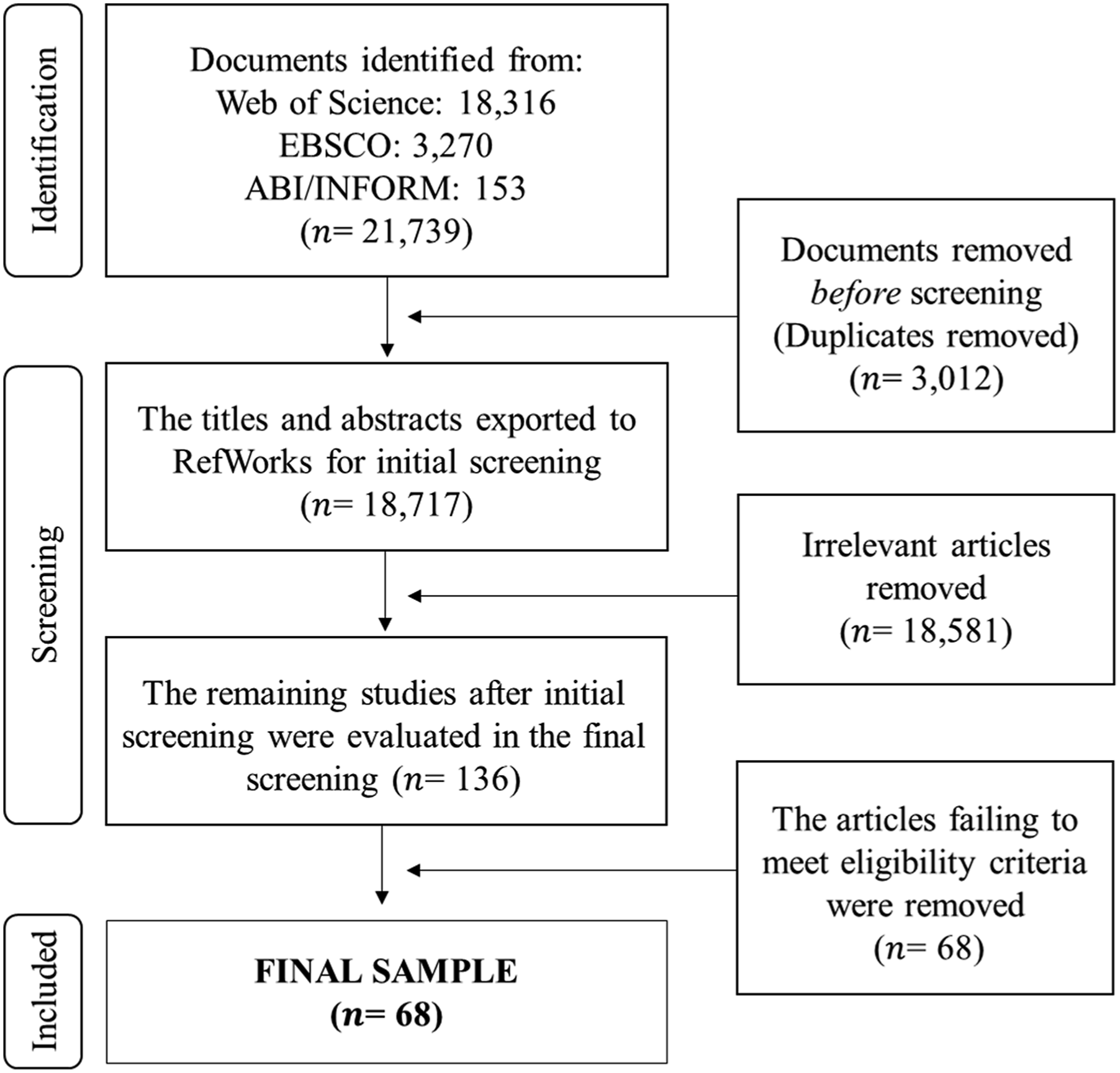
Findings
Overview
Articles for this review spanned five years (2017–2022), with 2017 as the first year for which we found articles related to the topic of AI and OD. The final sample included 68 articles across 54 academic journals from 2017 to December 2022. Articles published in 2023 were not included in this review, as the search was conducted in early 2023. Of the 68 articles, 43 were empirical studies, 20 were conceptual papers, and six were literature reviews (Figure 2). Among the empirical studies, 23 were quantitative studies (including experimental studies), 15 were qualitative, and five were mixed methods studies. Of these publications, 2021 was a period of exponential growth and a significant milestone where AI and OD research evolved from a conceptual idea to a dedicated and independent research domain. Prior to 2021, the vast majority of papers were conceptual (9 of 15 studies), with few empirical studies (6 studies). From 2021 onwards, however, 38 were empirical studies compared to 16 conceptual papers. AI and OD research by year and type.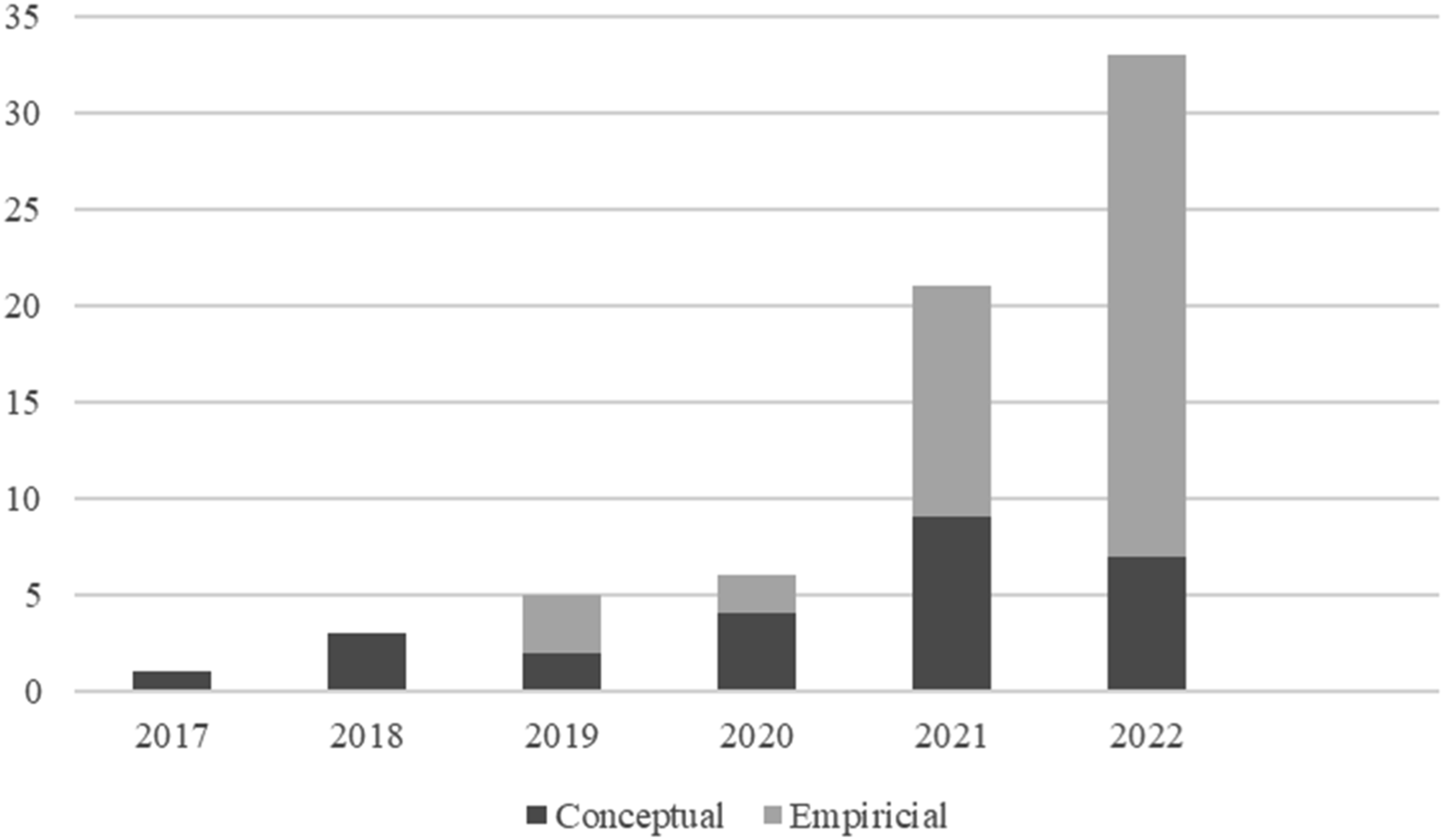
A List of Publication Outlets of AI and OD Research.
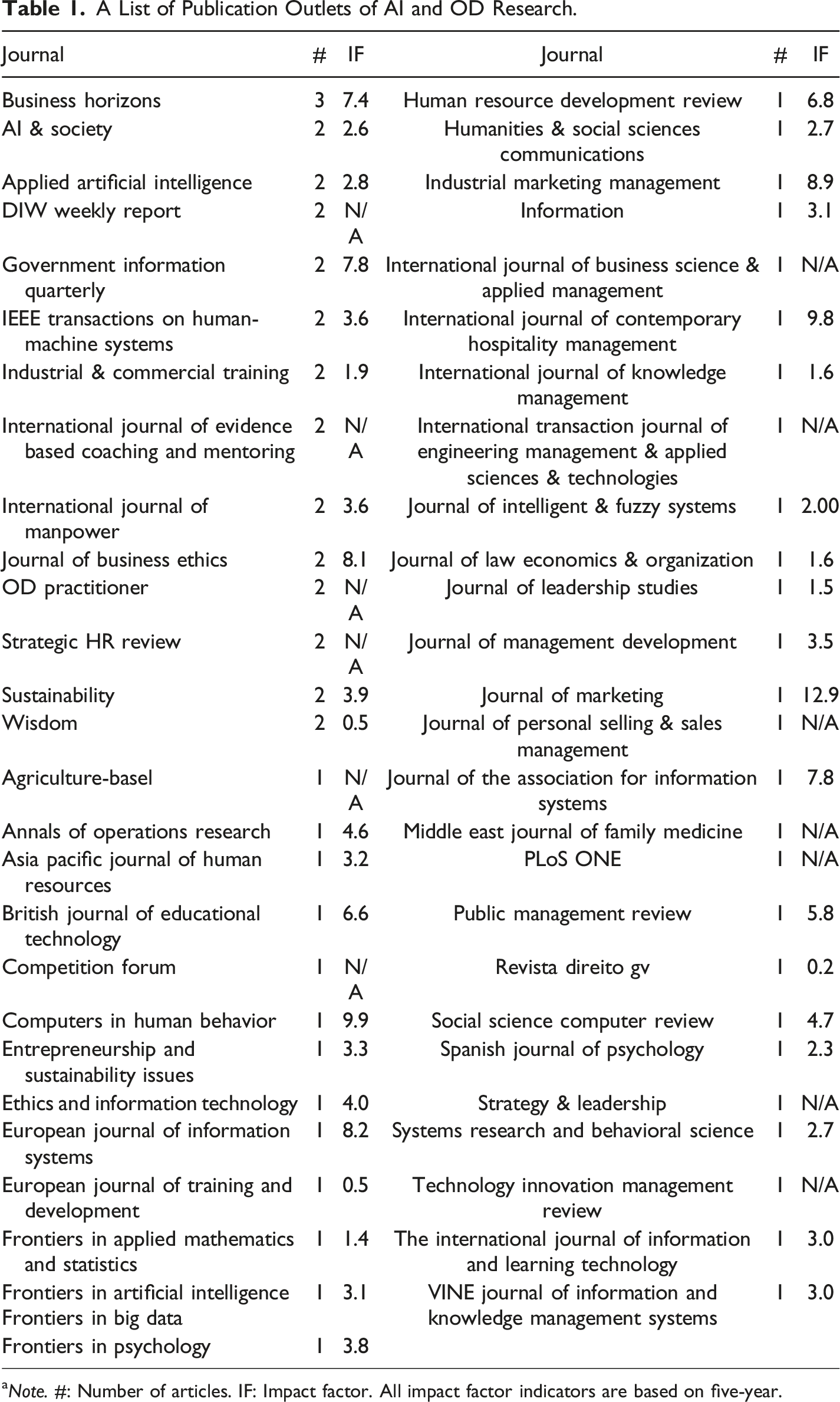
aNote. #: Number of articles. IF: Impact factor. All impact factor indicators are based on five-year.
A variety of OD interventions were identified across the 68 articles. In accordance with Cummings and Worley’s (2019) framework on the four major OD interventions, we sorted the 68 documents into the corresponding intervention categories. A total of 28 studies examined interventions pertaining to human resources (e.g., recruitment, training, coaching, and mentoring). Strategic change was the focus of 25 studies (e.g., risk management, AI adoption for digital innovation), followed by human processes in eight studies, and technostructural in four studies. While not providing details on a specific area of intervention, four studies emphasized the overall importance of AI in the field of OD.
Theory/Theoretical Framework
Only 22 of the 68 studies were based on grounding theories or theoretical frameworks. The findings come as no surprise given that a considerable portion of the documents were non-empirical. The theoretical foundations for the 22 reviewed documents primarily stemmed from (a) technology-related theories (e.g., designing an AI coach framework [DAIC], sociotechnical systems theory, or the technology acceptance model); (b) resource-based theories (e.g., resource-based view, dynamic capabilities); and (c) organization-related theories or models (e.g., job design theory or Q-theory of takeovers). Eight of the studies employed technology-related theories, integrating AI as a type of technology, to examine how it affects an organization’s effectiveness or decision-making. For example, Chen and Zhou (2022) used the technology acceptance model to argue that individuals’ acceptance of AI is dependent upon perceived usefulness and perceived ease of use of AI. Recent studies conducted by Terblanche and colleagues (Terblanche, 2020; Terblanche et al., 2022a) also demonstrated the effectiveness of AI coaching, drawing a link between AI and the efficacy of human coaching.
The findings of five studies also indicated that AI can be leveraged as a strategic resource to drive a sustained competitive advantage and facilitate innovation in organizations. Specifically, several studies (e.g., Rana et al., 2022; Rosendale & Dieter, 2021) acknowledged that AI is a valuable, rare, not easily imitable, and non-substitute resource for organizations, thus meeting the criteria for a competitive advantage (Barney, 1991). Akter et al. (2021) suggested that cultivating an organizational culture that fosters AI initiatives and practices can help improve performance based on the resource-based view and micro-foundations of dynamic capabilities. From a perspective rooted in the theory of conservation of resources, Qiu et al. (2022) contended that the integration of AI into hospitality services could provide valuable resources for employees to enhance task performance and help them effectively manage emotional stress, thereby reducing physical and mental exhaustion.
Summary of Theories or Theoretical Frameworks Implemented in the Reviewed Studies.
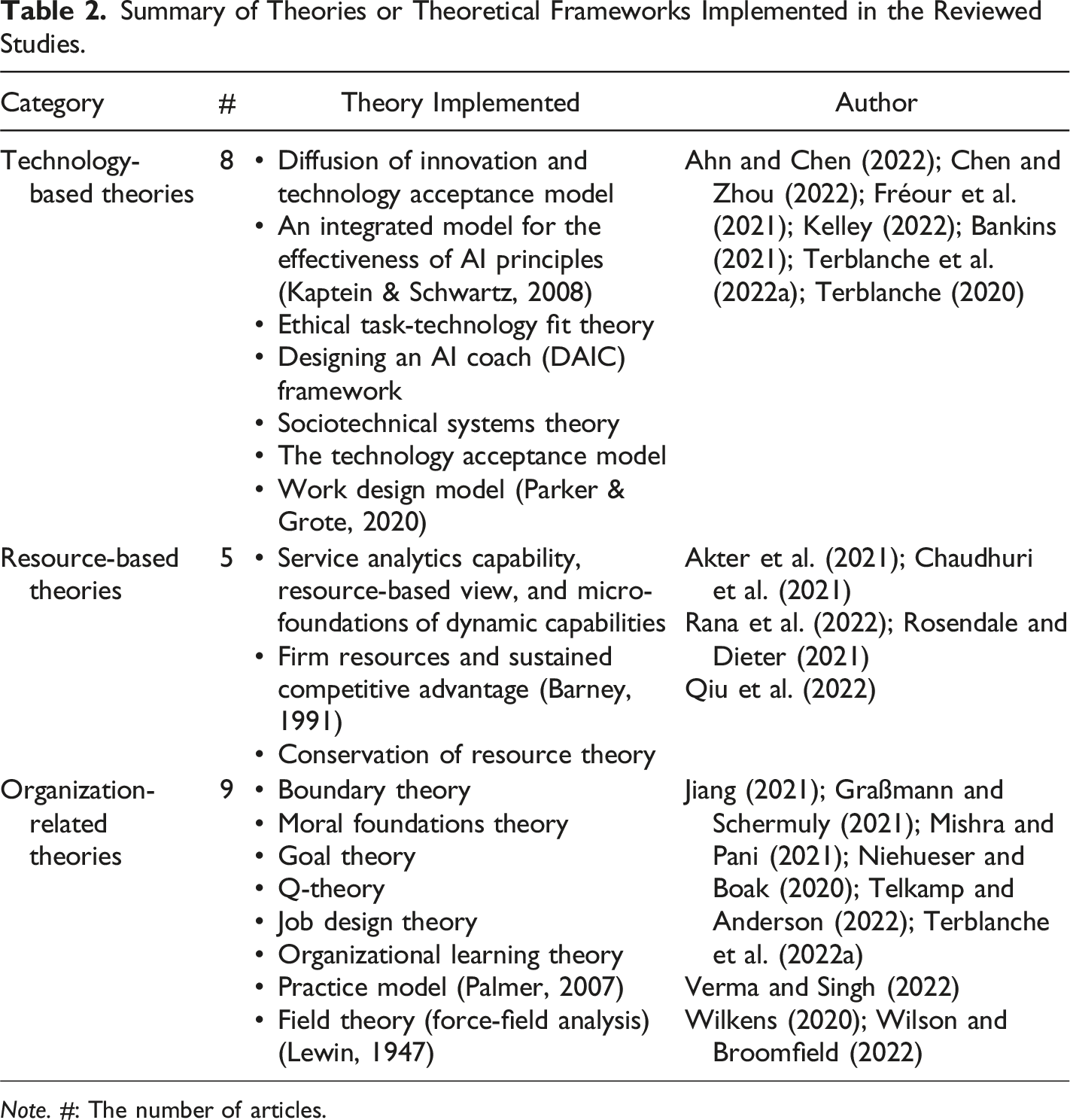
Note. #: The number of articles.
Application of AI in OD
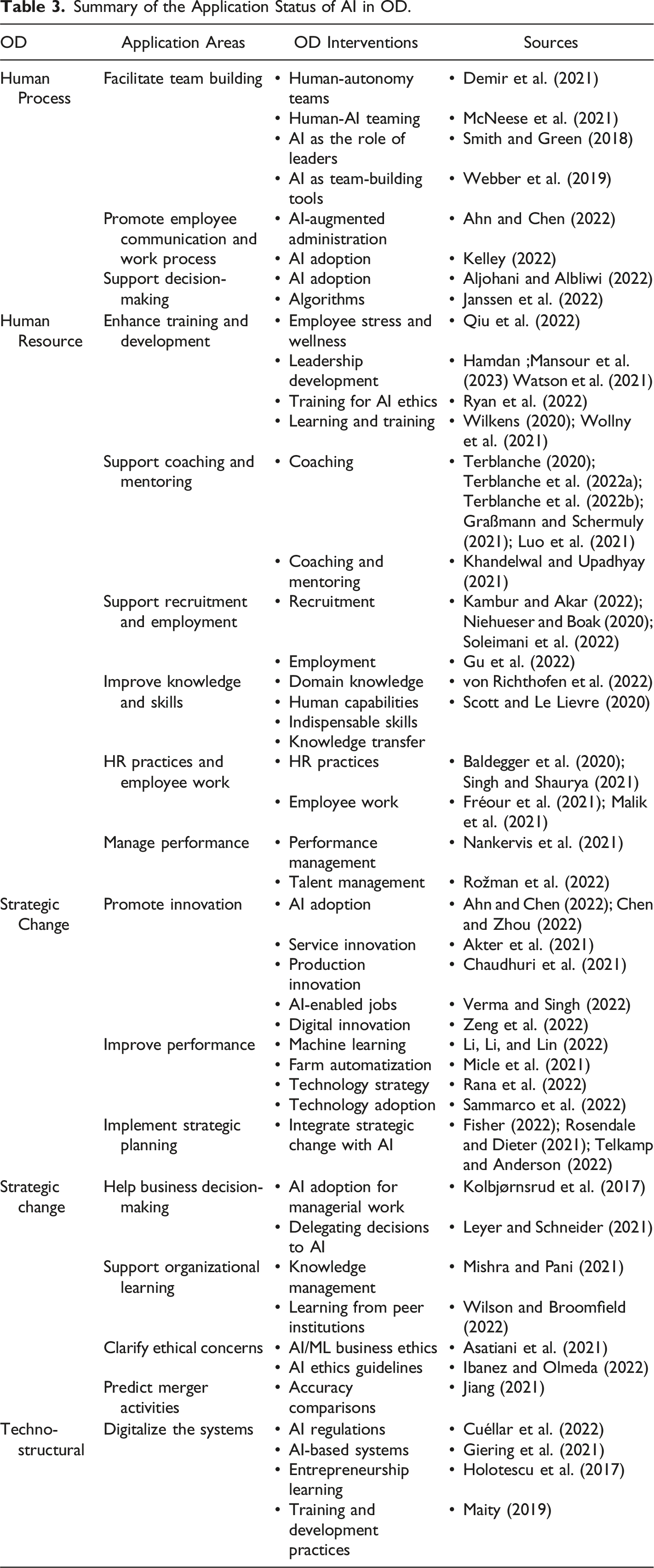
Summary of the Application Status of AI in OD.
Human Process
Eight studies discussed how AI can be applied in human process interventions. AI has contributed to team building (4 studies), employee work (2), and decision-making (2). For effective team building, AI can enhance team members’ trust by supporting team communication and team autonomy (Demir et al., 2021). AI-only teams or mixed human-AI teams showed higher performance than human-only teams in team building processes such as team cognition, team situational awareness, and team performance (McNeese et al., 2021). AI can also provide specific and unique feedback and tailored tools for teams to improve tasks in given areas (Webber et al., 2019). Regarding employee communication and work processes, AI can improve work efficiency, communication, management support, training, reporting, monitoring, and evaluation by implementing the effective adoption of AI principles in practices (Ahn & Chen, 2022; Kelley, 2022). In terms of decision-making, using AI applications can improve the quality, speed, and acceptance level of decision-making in training and development, appropriateness, and effectiveness of AI (Aljohani & Albliwi, 2022). In addition, AI algorithms can help decision makers make more accurate and consistent decisions in government contexts (Janssen et al., 2022).
Human Resource
In the reviewed studies, 27 were related to the application of AI in human resource areas: training and development (7 studies), coaching and mentoring (6), recruitment and employment (4), HR practices and employee work (4), knowledge and skills (4), and performance management (2). To enhance training and development, organizations adopted AI in various training programs (Hamdan Mansour et al., 2023; Qiu et al., 2022; Ryan et al., 2022; Watson et al., 2021; Wilkens, 2020; Wollny et al., 2021). For example, AI can support programs to reduce employee stress and improve wellness (Qiu et al., 2022), leadership development (Watson et al., 2021), and training for AI ethics (Ryan et al., 2022). AI has also frequently been adopted in coaching and mentoring contexts (Graßmann & Schermuly, 2021; Khandelwal & Upadhyay, 2021; Luo et al., 2021; Terblanche, 2020; Terblanche et al., 2022a, 2022b). AI-based coaching and mentoring systems can provide real-time coaching and feedback by analyzing recorded sales conversations (Khandelwal & Upadhyay, 2021). An AI chatbot coaching system can also help users reach their goals in scenario-based business contexts (Terblanche et al., 2022a, 2022b). In relation to recruitment and employment, AI can improve the efficiency and speed of recruitment processes (Niehueser & Boak, 2020) and enhance employment in the service industry by enhancing AI-related expertise (Gu et al., 2022).
AI can also improve employee knowledge and skills by providing resources and opportunities to practice (Scott & Le Lievre, 2020; von Richthofen et al., 2022). AI can help employees identify new tasks and roles, recognize new skill requirements, and integrate existing domain knowledge with emerging skills and knowledge (von Richthofen et al., 2022). In HR practices, AI can be useful for planning training and development processes, integrating tactical performance appraisal, and shifting HR functions to transform digitalization and automation (Singh & Shaurya, 2021). In terms of employee work, AI can be easily adopted in repetitive jobs and unmotivated tasks (Fréour et al., 2021) and improve autonomy, creativity, innovation, work flexibility, and job performance (Malik et al., 2021). For performance management, AI can increase employees’ productivity and improve their job performance by enhancing HR processes and effectiveness (Nankervis et al., 2021). AI can also help organizations manage talents by supporting, acquiring, and retaining talented employees, improving training and development, and enhancing engagement and performance (Rožman et al., 2022).
Strategic Change
Twenty-five studies reported the current application of AI in strategic changes in multiple areas: promoting innovation (6 studies), improving performance (4), implementing strategic planning (3), helping decision-making (2), supporting organizational learning (2), clarifying ethical concerns (2), and predicting merger activities (1). To promote innovation, organizations adopted AI in service, production, and work areas (Akter et al., 2021; Chaudhuri et al., 2021; Chen & Zhou, 2022; Verma & Singh, 2022). For instance, Chaudhuri et al. (2021) demonstrated how AI adoption can help organizations enhance production innovation by establishing a data-driven cultural environment and improving innovative quality and processes. In terms of improving performance, organizations have used AI to assess operational inefficiency, increase the perception of organizational risk, enhance organizational resilience, and promote health (Li, Xie, et al., 2022; Micle et al., 2021; Rana et al., 2022; Sammarco et al., 2022). AI applications also helped organizations improve performance in their supply chains by improving organizations’ resilience and ability to handle disruptions during the COVID-19 outbreak (Sammarco et al., 2022). To establish and implement strategic planning, AI can be integrated into existing systems and promote strategic change by enhancing the awareness of AI roles and communications related to concerns and issues (Fisher, 2022; Rosendale & Dieter, 2021; Telkamp & Anderson, 2022). Rosendale and Dieter (2021) indicated that AI-integrated systems could help effective strategic planning by producing shared values and lasting competitive advantages in an organization.
AI is also a useful tool for business decision-making (Kolbjørnsrud et al., 2017; Leyer & Schneider, 2021). Managers have used AI in decision-making related to employee hiring and promotion and to monitor and evaluate employee performance (Kolbjørnsrud et al., 2017). Leyer and Schneider (2021) noted that managers can delegate decisions to AI when they trust that the suggestions and decision outcomes from AI are reliable. In terms of organizational learning, AI can be used for competency development and knowledge management to enhance customer segmentation, operations, and logistic efficiency (Mishra & Pani, 2021). For intergovernmental learning communities, AI can manage organizational boundary issues related to leadership, business operations, vendor relationships, data ownership, team organization, and pilot projects (Wilson & Broomfield, 2022).
Regarding ethical concerns about the use of AI, several studies discussed how to establish business ethics to respond to ethical problems or issues caused by AI, how to interpret and make decisions based on data from AI and ML (Asatiani et al., 2021), and how organizations can apply AI ethics guidelines and principles in their practices (Ibanez & Olmeda, 2022). More information about ethical concerns is discussed in the next section. AI can also predict merger activities. Using machine learning, Jiang (2021) analyzed merger activities, identified the difference between being acquired and acquiring in merger activities, and predicted an organization’s likelihood of merging from words alone on test datasets in the same period.
Technostructural
In the technostructural area, four studies revealed that AI can contribute to digitalizing existing systems. Regarding AI regulations, Cuéllar et al. (2022) noted that managers should pay more attention to bias/discrimination, privacy, safety, and transparency issues related to AI adoption and investments. Given that AI-based systems have been prevalent in the workplace, employees need to balance collaboration between AI-based systems and humans and understand how to improve AI-related knowledge and skills (Giering et al., 2021). AI can also enhance entrepreneurship learning, specifically, when young entrepreneurs need to learn specialized strategies and policies for entrepreneurship in smart cities, including the economy, environment, governance, mobility, and people (Holotescu et al., 2017). In addition, AI can enhance training and development processes and practices in organizations by improving employee engagement and training transfer and providing useful learning tools (Maity, 2019).
Ethical Concerns/Issues
Summary of Ethical Concerns and Issues Using AI in OD.
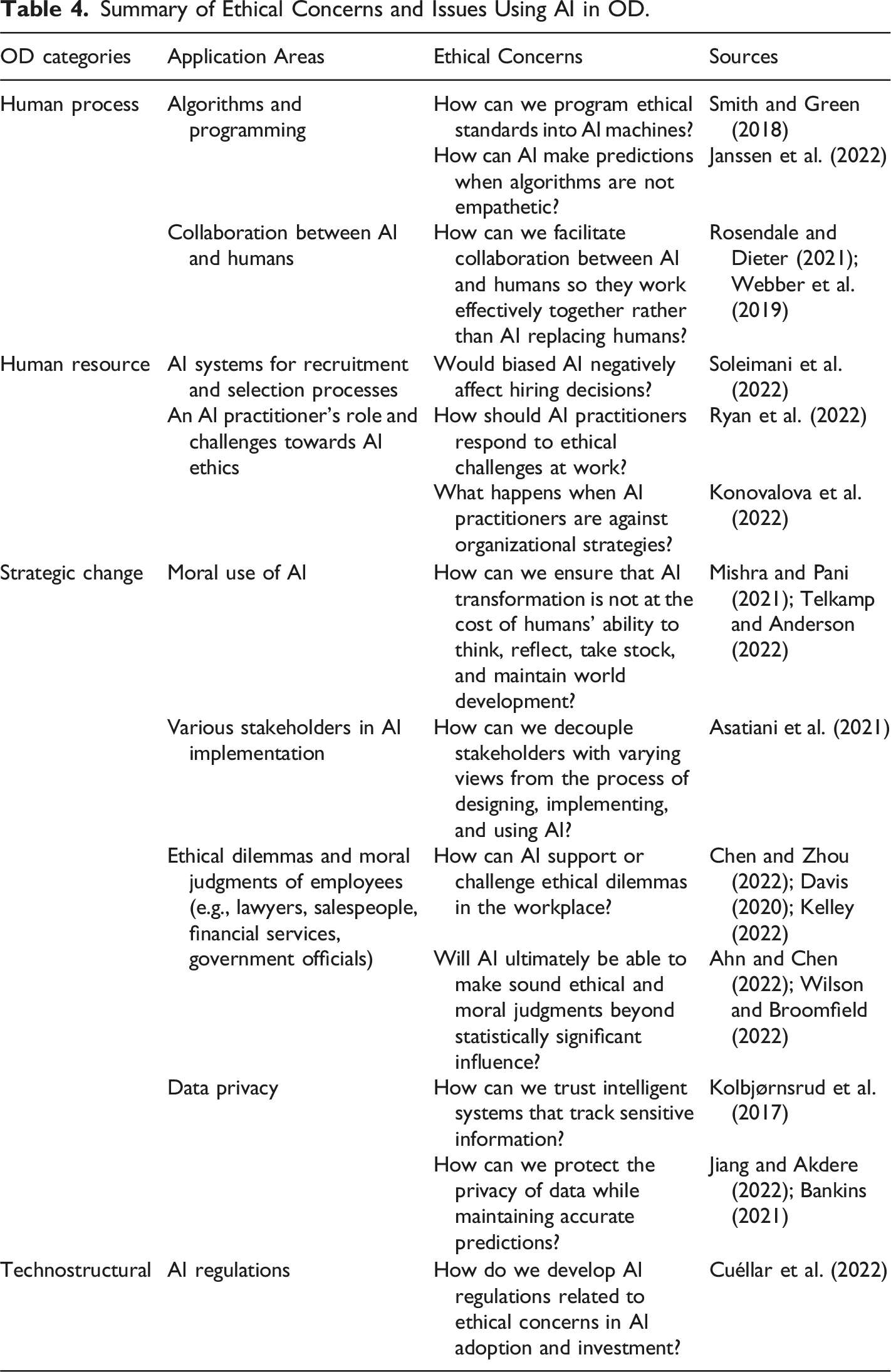
Among the 68 reviewed studies, only 19 (27.9%) mentioned ethical considerations when implementing AI in OD. Reports on ethical concerns included multiple topics: (1) algorithms and programming, (2) collaboration between AI and humans, (3) AI systems for recruitment and selection processes, (4) AI practitioners’ role and challenges in AI ethics, (5) moral use of AI, (6) various stakeholders’ concerns in AI implementation, (7) ethical dilemmas and moral judgments of employees, (8) data privacy, and (9) AI regulations.
Many studies emphasized concerns about implementing ethical standards in AI programming (Smith & Green, 2018) and possible solutions when AI algorithms do not function ethically as intended (Janssen et al., 2022). For instance, even when algorithms are programmed to be empathetic and ethical, biased AI may negatively affect human resource management processes such as recruitment and selection (Soleimani et al., 2022). These issues may be resolved through collaboration between AI and humans. If they work together effectively, AI can be a great complement rather than a threat to replacing human jobs (Rosendale & Dieter, 2021; Webber et al., 2019).
For organizations to ethically implement AI in OD processes, various stakeholders may need to agree on various perspectives related to designing, implementing, and using AI (Asatiani et al., 2021). For example, practitioners, leaders, and stakeholders may need to explore strategies decoupling the ethical use of AI to mitigate challenges of depending on AI practitioners to respond to ethical challenges (Ryan et al., 2022) and differing views of organizational strategies (Konovalova et al., 2022). Research related to ethical dilemmas and moral judgments of employees has also been introduced in diverse sectors such as the legal industry (e.g., Davis, 2020), sales (e.g., Chen & Zhou, 2022), financial services (Kelley, 2022), and government officials (e.g., Ahn & Chen, 2022).
Finally, data privacy is an ongoing concern as organizations want to collect accurate data and private information without invading privacy and tracking sensitive information (Bankins, 2021; Jiang & Akdere, 2022; Kolbjørnsrud et al., 2017). In terms of technostructural areas, developing AI regulations based on ethical standards is an important issue in AI adoption and investment (Cuéllar et al., 2022).
Suggested Areas for Utilizing AI
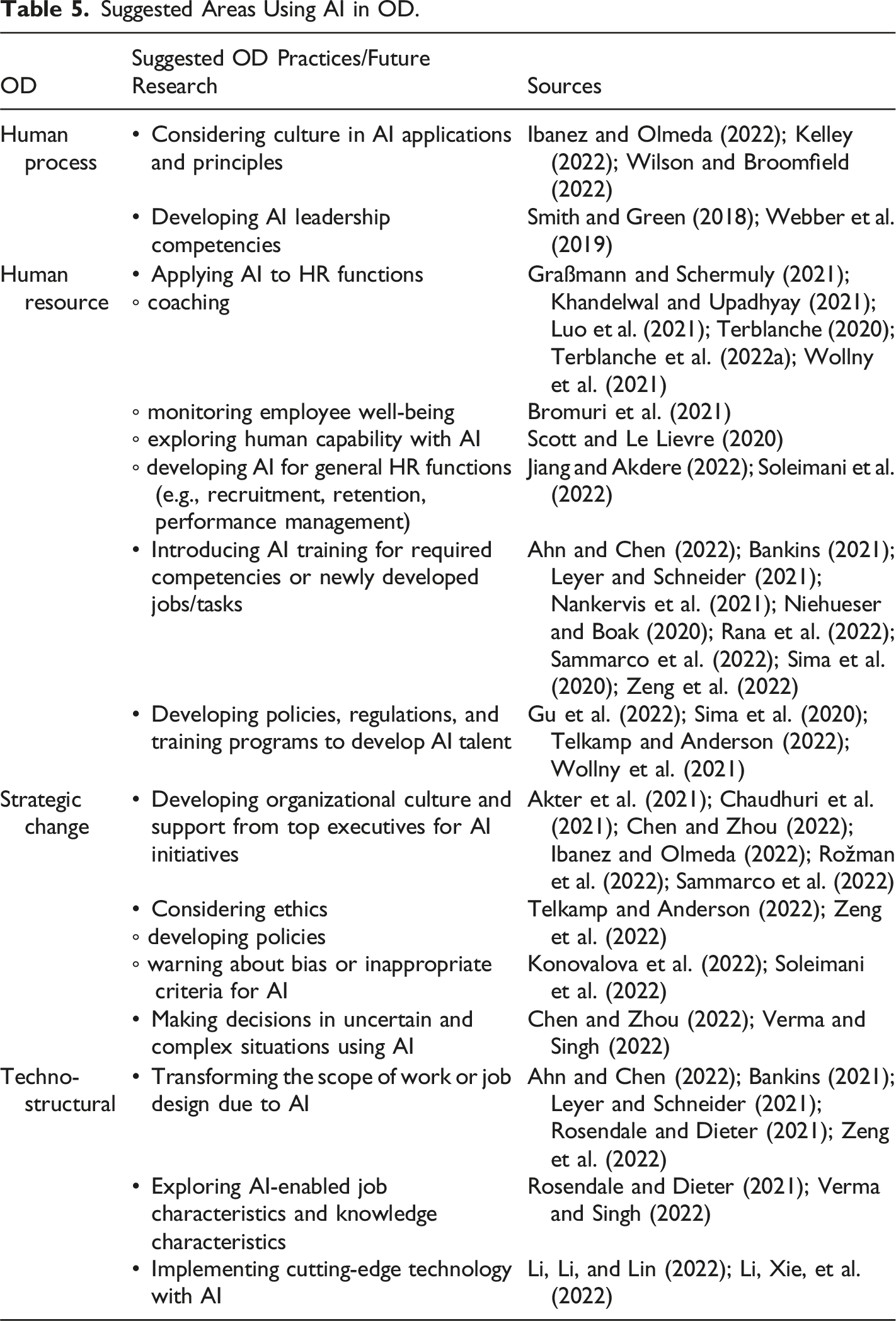
Suggested Areas Using AI in OD.
Human Process
Only five studies suggested future research and practical implications for human process interventions including cultural considerations (3) and leadership competencies (2). Three studies indicated that it is critical to consider the national and/or organizational culture for AI applications and principles. For example, levels of uncertainty avoidance and power distance for each country may play a significant role in developing national AI-related laws and policies related to allowing or limiting AI applications and adaptations (Kelly, 2022). Wilson and Broomfield (2022) also argued that organizational culture must be considered for the development and implementation of AI applications and principles since public sector organizations are often more conservative and bureaucratic, which can make the organizations less flexible and open to new and/or not widely adopted tools or technologies. In addition, two studies called for research and development of AI leadership competencies, but both assumed that leaders would need to manage both human employees and AI tools and facilitate their interactions. e.g., Smith and Green (2018) called for studies exploring how to lead human interactions with AI tools that do not have critical human characteristics such as emotions.
Human Resources
Of the 68 reviewed studies, most suggested the implications of human resources interventions to successfully integrate individuals into the organization. While several studies highlighted AI applications in general HR functions (e.g., recruitment, retention, performance management) without further detail (e.g., Jiang & Akdere, 2022; Soleimani et al., 2022), others focused on AI applications in particular HR implications. e.g., six studies examined or explored how to apply AI to coaching and suggested that future studies explore the antecedents, outcomes, processes, and modality (e.g., hybrid coaching between human coaches and AI, equipment with augmented reality/virtual reality) in various organizational contexts. In addition, Bromuri et al. (2021) recommended that AI applications monitor employee well-being as organizations collect data on employees’ stress levels. They suggested that interventions based on the data can reduce employees’ stress and enhance their well-being. Scott and Le Lievre (2020) also called for more studies exploring human capability with AI in the field of OD as the literature does not discuss how to apply AI in the field but primarily discusses the overall significance of AI. Many studies also suggested that organizations need (a) to introduce AI to their managers and employees without resistance, (b) to identify required competencies for newly developed/modified jobs and tasks to be performed by AI, and (c) to provide training programs for managers and employees. Furthermore, Gu et al. (2022), Sima et al. (2020), Telkamp and Anderson (2022), and Wollny et al. (2021) strongly recommended the development of policies, regulations, and training programs to develop AI talents because the dynamic flow of labor across industries is expected as AI capacities are adapted and developed.
Strategic Change
Thirteen studies suggested future research and practical implications for strategic change interventions focusing on strategic allocation and implementation of organizational resources for a competitive advantage. Studies suggested establishing organizational culture and support from top management for AI initiatives and applications (6), ethical considerations (5), and applying AI in decision-making (2). Six studies suggested that organizations need to establish their culture for AI initiatives and applications, which must be strongly supported by top management. Without a sense of urgency, organizational culture, and continuous support from top management, employees are likely to reject AI initiatives and will not want to change. Although many studies briefly suggested considering ethics, the suggestions were scant and shallow. Five studies recommended considering ethical considerations in AI applications. In particular, Telkamp and Anderson (2022) and Zeng et al. (2022) recommended developing policies and regulations to consider ethical issues, including (a) the level of consensus among stakeholders from various cultural contexts and (b) the level of forgiveness or punishment of AI systems when they violate moral foundations. Konovalova et al. (2022) and Soleimani et al. (2022) warned about bias and inappropriate criteria in AI applications, which could negatively influence the outcomes of AI applications. For example, an AI hiring system that Amazon previously implemented discriminated against female candidates. Although AI has been implemented for decision-making in various OD processes such as recruitment, retention, and performance management (Kolbjørnsrud et al., 2017), Chen and Zhou (2022) and Verma and Singh (2022) argued that AI should be used more actively to make decisions in uncertain and complex situations as organizations collect more data.
Technostructural
Nine studies suggested future research and practical implications for technostructural interventions focusing on technology and structures at the organizational level to connect individuals with technology. Suggestions included transforming the scope of work or job design using AI (5), exploring AI-enabled job characteristics and knowledge characteristics (2), and implementing cutting-edge technology with AI (2). Several studies suggested transforming the scope of work and job design using AI applications (Ahn & Chen, 2022; Bankins, 2021; Leyer & Schneider, 2021; Rosendale & Dieter, 2021; Zeng et al., 2022). Rosendale and Dieter (2021) and Verma and Singh (2022) particularly suggested exploring the transformation and design of job and knowledge characteristics using AI applications and integrating AI into tasks, work behaviors, and soft skills such as communication. Li, Xie, et al. (2022) also suggested exploring the implementation of AI with various cutting-edge technologies (e.g., AR, VR) to transform the workplace and how employees work (e.g., virtualization for operations or cooperation).
Overall, researchers in the reviewed studies suggested various implications for future research and practices based on their findings. However, most studies did not include concrete implications because practices have not been adequately studied, designed, or implemented. Therefore, suggestions from the studies were often scant and shallow, focusing instead on broad impacts and implications. For example, studies suggested what to do, but did not describe how to implement the suggestions.
Discussion and Implications
Overview/Theory
By reviewing the literature on AI in the field of OD, we identified general trends in AI and OD research. First, the number of empirical studies in OD has grown exponentially since the introduction of AI. In 2017 and 2018, no empirical studies were conducted. However, in 2022, 82% of the articles were empirical, indicating that OD scholars have paid significant attention to AI and examined pragmatic applications in the domain. However, the extent to which AI has been applied in OD remains limited. The primary focus has been on monotonous, repetitive, and administrative HR tasks and responsibilities, such as recruitment and training.
Based on our analysis, we highly encourage practitioners to use AI strategically in the field of OD, specifically in relation to strategic roles such as decision-making and risk management. We also encourage researchers to continue incorporating a broad spectrum of theoretical underpinnings for AI in OD. This systematic review demonstrates that scholars have employed various theoretical lenses to guide the integration of AI in OD. Scholars have recognized AI as a valuable asset or resource to enhance organizational learning, facilitate change, and promote competitiveness. However, researchers should be cautious when considering the adoption of existing technology-related theories (e.g., technology acceptance model, technology fit theory) due to the unique ability of AI (e.g., generative AI) to independently produce outputs unlike other technologies (e.g., augmented reality, internet of things, or robotics).
Application Status
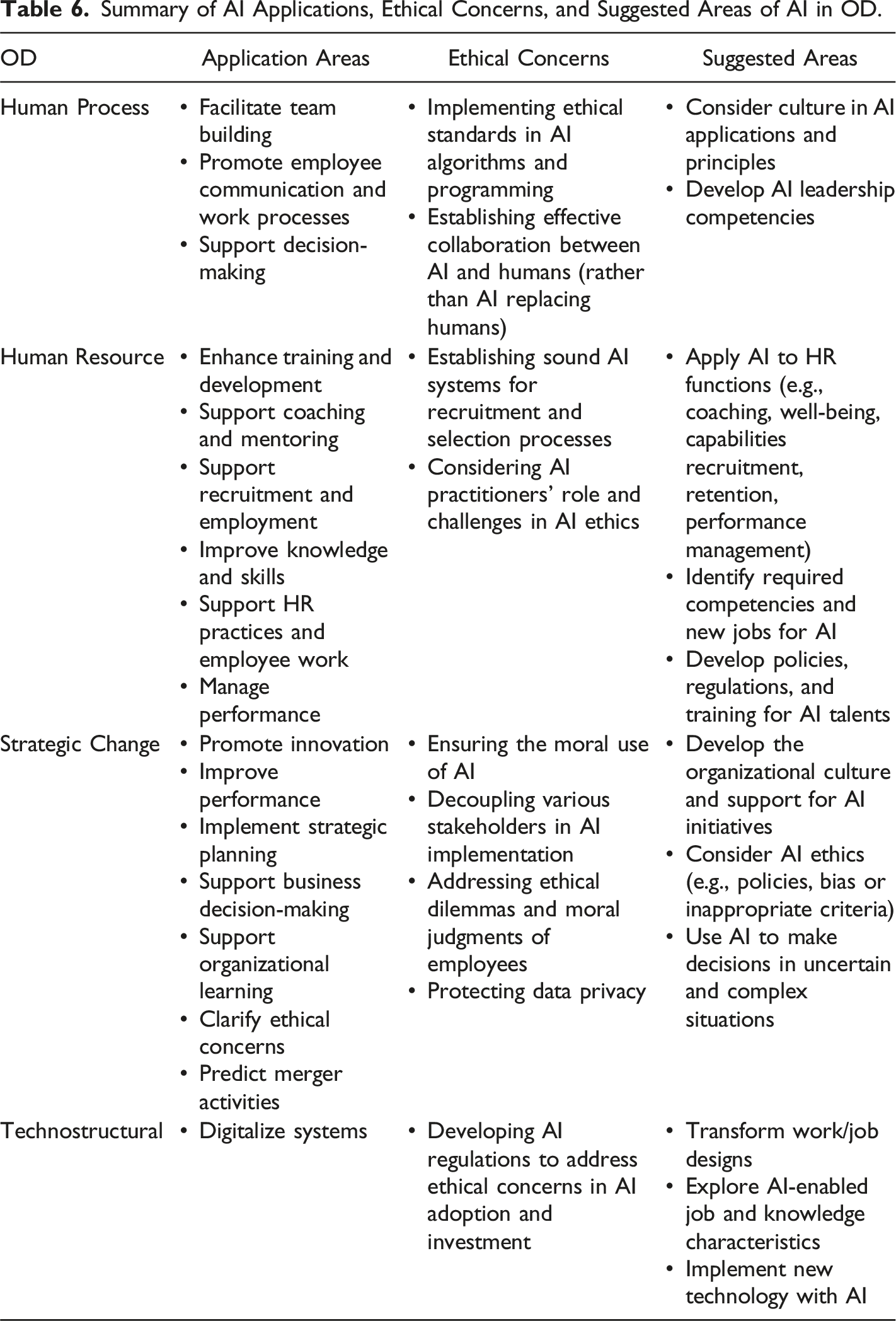
The findings provide interesting insights about the application status of AI. Most cases have focused more on human resources and strategic change interventions rather than human processes and technostructural areas. In terms of human resource interventions, AI has frequently been adopted to design and provide developmental opportunities (e.g., training and development, coaching, and mentoring) for employees and leaders. In terms of strategic change interventions, AI has played a pivotal role in promoting innovation and improving performance to advance organizational effectiveness. Before discussing AI applications for organizations, various types of technologies have been applied in human resources and strategic change areas such as adopting e-HR systems and change management software. In an organizational context where technology is leveraged, introducing AI may be relatively smooth, given that it is a conducive environment to utilize new technology.
However, it may take more time to apply new AI approaches to individual interactions (human process interventions) and technology-based organizational structures (technostructural interventions) from OD perspectives. In terms of human processes, AI may not have sufficiently evolved technologically to handle the intricacies and complexities of interpersonal interactions and dynamics, so AI applications in this area may be less common. In terms of technostructural interventions, it could be challenging to thoroughly examine the considerations and potential risks when integrating the overall organizational structure and processes with AI. Additionally, management needs to assess how well-prepared the organization is for AI-technostructural integration and if the organization is sufficiently advanced technologically to meet the organizational needs and complicated aspects of the organization.
Ethical Concerns
It is surprising that only 19 of the 68 studies (27.5%) either mentioned or addressed ethical concerns related to implementing AI in OD. Although one study focused heavily on AI ethics (e.g., Kelley, 2022), other studies only briefly touched on potential ethical concerns that may arise in the future. More studies on AI in OD, HRD, and HRM practices should consider addressing ethical issues and approach AI implementation with caution as it may harm privacy, expose sensitive information, and lead to biased decision-making. Examining and reporting on ethical issues should become common practice for AI researchers.
Training is necessary for employees, leaders, and stakeholders to reach a consensus on the organizational ethical standards for AI. In the early stages of AI adoption, most training is likely to focus on technical training on how the AI system works. However, a long-term strategy for the successful adoption of AI in OD practices should also involve ethical training. Even in the early stages of AI development, AI practitioners have expressed concerns about ethical challenges regarding their role (Ryan et al., 2022). Thus, practitioners should be able to express their concerns when conflicts arise, when their beliefs differ from organizational strategies (e.g., Konovalova et al., 2022), when stakeholders have varying views (e.g., Asatiani et al., 2021), and when they face dilemmas at work (e.g., Ahn & Chen, 2022; Chen & Zhou, 2022; Davis, 2020; Kelley, 2022). An organizational culture needs to be fostered that values openness towards raising concerns, and an environment for free and open discussions. To do so, training programs that focus on team building and relational skills may be necessary.
Although AI adoption involves AI practitioners who are proficient in technology, other stakeholders simply consume the technology and leaders make decisions without understanding the underlying technology, algorithms, and intelligent systems. The varying levels of expertise related to AI may create confusion among organizational members. Without active communication across members of the organization, AI machines may not function as intended (Janssen et al., 2022; Smith & Green, 2018). It may also lead to biased AI decisions (Soleimani et al., 2022), and hinder people’s ability to reflect on and make sound ethical and moral judgments (Ahn & Chen, 2022; Mishra & Pani, 2021; Telkamp & Anderson, 2022).
Suggested Areas for AI Applications
Given that AI technologies have developed quickly, almost all of the reviewed studies assumed or argued that AI is inevitable and has permeated various aspects of organizations. In addition, the studies discussed the transformation of the scope of work, job design, and job characteristics for employees and managers in various industries and organizations. Given the assumptions and transformation, the reviewed studies primarily suggested how AI should be applied in the field of OD and how organizations should prepare for the huge change due to AI. These suggestions can be synthesized into two major themes: a sense of urgency and developing an organizational culture and support.
First, almost all studies suggested a sense of urgency in introducing AI to employees and managers. Organizational members are not likely to actively participate in AI initiatives unless they understand the reasons and advantages. Several change models and theories (e.g., Lewin’s planned change model, McLean’s OD process model) have highlighted this sense of urgency in the diagnosis and/or planning phases (Cummings & Worley, 2019; McLean, 2005). Without a clear understanding of the change, the impacts, and the outcomes, organizational members are not likely to be motivated to engage in the activities and initiatives. Thus, the reviewed studies strongly recommended introducing AI, AI initiatives, and the impacts on employees and managers so employees will have positive attitudes and be prepared for the changes.
Second, organizations should prepare the organizational culture and support the changes. Many studies highlighted that organizations must develop their culture (e.g., vision, mission, strategies, policies, regulations, practices, and procedures) to support AI initiatives. Organizational support theory (Eisenberger et al., 1986) indicates that voluntary favorable actions taken by organizations can help employees focus on achieving organizational objectives and ensure organizational membership and identity. These outcomes are significantly related to job satisfaction, retention, and performance (Kurtessis et al., 2017). Likewise, many studies suggested that organizations must develop a culture to support AI initiatives and applications. Several studies (e.g., Ibanez & Olmeda, 2022; Kelley, 2022; Wilson & Broomfield, 2022) also emphasized the need to consider the national culture (e.g., values, norms, customs) to develop the organizational culture for AI initiatives and applications because favorable support in one country (e.g., monetary incentives) may not be effective or may not be applicable to other countries. Several studies (Smith & Green, 2018; Webber et al., 2019) also recommended exploring and developing leadership competencies to lead employees, implement AI tools, and interactions between humans and AI. Employees may perceive social support from leaders as organizational support. Thus, it is critical for leaders to be first introduced to AI and develop appropriate competencies. However, while many studies provided valid and insightful suggestions, the suggestions were often shallow and scant because AI is still in a developing stage, with relatively few concrete or commercialized AI applications. Therefore, we call for more studies on AI applications in the field of OD.
Theoretical Contributions and Future Research
From a scholarly perspective, this study provides a comprehensive review of general information about AI and OD research (i.e., publication years, research types, and publication outlets), theories or theoretical frameworks used in AI and OD studies, application of AI in OD, ethical concerns and issues, and where AI could be applied in OD. Our findings provide fundamental information that can lead to further exploration of how AI can affect employees and organizations by highlighting various areas in OD. Based on the findings, more research is needed to link related theories and AI applications, improve and expand the applications and range of AI in OD, and elaborate on ethical standards using AI in organizational contexts.
Our main findings can also guide researchers to initiate future empirical studies to further explore areas of AI applications in organizational contexts and OD. Scholars should also identify the interrelationships between technological applications and organizational characteristics to enhance our knowledge of how AI affects employees, teams, jobs, and organizations. The findings of this review lead to further research questions: • What areas within OD should be identified to effectively leverage AI and enhance the overall quality of AI applications? • What enablers and barriers will impact the application of AI in OD at the individual, job, leadership, and organizational levels? • What job characteristics are needed to consider AI applications for different industries? • What new skills and competencies should HRD professionals develop to apply AI for OD? • How can organizations ensure ethical standards to protect employees’ rights and data privacy when using AI for OD? • How can organizational efforts foster employees’ ability to adapt to the use of AI in their work? • How do different countries respond to AI applications in OD?
Implications for Practice
From a practice perspective, our findings help practitioners better understand how AI can improve work practices and OD. By reviewing specific cases of AI application in OD, practitioners can explore potential areas for AI adoption and identify appropriate ways to use AI in their organizational contexts. For instance, AI applications can be used to reduce employee stress, improve wellness (Qiu et al., 2022), and facilitate coaching and feedback in sales (Khandelwal & Upadhyay, 2021). Our findings also provide useful information for practitioners to consider possible challenges (e.g., employees’ resistance, practical gaps before, during, and after applying AI in OD), and the required preconditions and preparation (e.g., cost and technological system) to design and implement AI in specific programs.
Practitioners could further explore their roles in implementing and supporting AI-oriented OD programs. Before implementing AI-based training and change management programs, practitioners could prepare ethical guidelines and practical manuals to promote training and change processes based on their employees’ experiences related to AI and organizational contexts. To promote an organizational climate for employees to adjust to AI-based interventions, practitioners could collaborate with leaders to discuss specific plans and considerations to align with organizational strategies and readiness, and to develop training to enhance employees’ knowledge and skills.
Limitations
There are several limitations in this study. Methodologically, we did not review studies conducted in 2023 because we completed our search and coding in January 2023. Including more recent studies can add new information and perspectives to summarize AI in OD. As the landscape of AI research is rapidly changing, it is challenging to keep up with the surge of AI literature published in various fields. Thus, we focused on providing the HRD community with a snapshot of how AI has been utilized in the workplace and providing insights about what may be examined further. In addition, since the public launch of ChatGPT was in late 2022, our review includes limited analysis of generative AI research as it is in the early stage. Further research should focus on this rapidly developing AI technology in business. Given our reliance on Cummings and Worley’s (2019) OD categories, our findings might be disproportionately influenced by their framework. Emerging and cutting edge OD interventions and approaches could be excluded in discussing AI applications.
Footnotes
Declaration of Conflicting Interests
The author(s) declared no potential conflicts of interest with respect to the research, authorship, and/or publication of this article.
Funding
The author(s) disclosed receipt of the following financial support for the research, authorship, and/or publication of this article: This work was supported by the Korea HRD SIG of the Academy of Human Resource Development.
Author Biography
 .
.
.
.
.