






Abstract
Microbial contamination in ready-to-eat (RTE) meat products poses a significant food safety risk, as evidenced by previous reports of high aerobic plate counts and pathogen prevalence. Understanding the post-unpacking dynamics of bacterial communities is crucial for guiding consumer practices. In this study, 90 RTE meat samples of which the varieties include beef products, chicken products, duck products, pig products, mutton products, and donkey products, were collected to analyze microbial community structure by 16S rRNA amplicon sequencing. These samples were collected on the 7th, 14th and 21st day respectively after unpacking. In all these samples, Proteobacteria and Firmicutes made up more than 98% of total bacteria. Pseudomonas, Staphylococcus, Psychrobacter, Carnobacterium, and Shewanella were the most abundant genera on average in the 90 samples. Microbial communities of samples on day 21 were significantly different (p < 0.05) from those on day 7 and day 14. The patterns of microbial community change over time were similar between the two sampling sites, Shandong and Henan. On day 14 and day 21, the microbial group clusters were significantly different from each other when grouped by unpacking site factor (Permanova index < 0.05). The abundance of potential spoilage and pathogenic bacteria, such as Pseudomonas, Staphylococcus, and Enterobacteriaceae, increased after 14 days of storage. Variety-specific operational taxonomic units showed very low abundance in the microbial community. In conclusion, this study demonstrates that the unpacking environment, rather than the meat species, becomes the dominant factor influencing bacterial community succession after 14 days of storage. This finding highlights the critical importance of minimizing post-unpacking contamination and suggests that the storage time after opening should be strictly controlled, particularly beyond 2 weeks, to mitigate the growth of potential spoilage and pathogenic bacteria.
Keywords
Introduction
Ready-to-eat (RTE) meat products are safe to consume without further preparation, though they may be reheated to enhance taste or appearance. The main categories include braised meat in sauce, sausage, cooked dried meat, smoked meat, fried meat, etc. The flavor of RTE meat is welcomed by many Chinese consumers, but their nutrient composition also makes microbial growth.
From 2003 to 2015, a total of 1050 outbreaks of foodborne diseases in schools were reported in China, with a cumulative incidence 37281. The number of incidence caused by meat and its products ranked top 3. (Zhijie et al, 2018) In 2022, 0.16% of 99,341 “ready-to-eat” food samples were positive for Salmonella. At distribution, positive results for L. monocytogenes in RTE foods were rare (<0.1–1.0%) (Efsa and Ecdc, 2023).
Two surveys on bulk RTE meat products based on the microbial culture method were conducted in 2016 and 2013. The 2016 survey showed that 29.68% (1,017/3,427) of samples had an aerobic plate count above 105 CFU/g and 33.17% (1,139/3,434) of samples were contaminated by coliforms over 100 CFU/g. The prevalence of L. monocytogenes in China in 2016 and 2013 was 2.18% and 2.41%, respectively. The prevalence of Salmonella spp. in 2016 and 2013 was 0.75% and 1.01%, respectively. The prevalence of Staphylococcus aureus in 2016 and 2013 was 0.79% and 1.09%, respectively (Yang et al., 2018).
Microbial contamination in RTE meat is relatively serious. Therefore, it is necessary to study the dynamics and influencing factors of the microbial community in RTE meat—a task that is challenging using traditional culture-based methods. In this study, high-throughput sequencing of 16S rRNA amplicons was used to analyze the microbial community of 90 RTE meat samples. The impact of storage time, place of production and package opening, and variety of meat on the microbial community of RTE meat was studied
The relative importance of intrinsic factors (e.g., meat type) versus extrinsic factors (e.g., unpacking site) during this critical period remains unclear. Therefore, the objective of this study was to investigate the successional dynamics of bacterial communities in RTE meats during 21 days of post-unpacking refrigerated storage and to quantitatively assess the impact of storage time, unpacking site, production site, and meat type using high-throughput sequencing technologies.
This study aimed to employ high-throughput sequencing to track the successional dynamics of microbial communities in RTE meat products over 3 weeks post-unpackaging. The relative influence of storage time, unpackaging location, production site, and meat type was also evaluated. It should be noted that this study did not directly sample the microbial communities of the unpackaging environment (e.g., refrigerator, kitchen air). Therefore, conclusions regarding environmental impact are inferred primarily from patterns of change observed in the product’s own microbial community.
Previous studies have mainly studied the levels of microbial contamination and the presence of pathogens in RTE meat products at the time of purchase or before the package was opened. However, little is known about how the bacterial community changes after the consumer opens the package. While numerous studies have surveyed microbial contamination in RTE meats at the point of sale, the dynamic evolution of bacterial communities after package opening—a critical point of potential contamination during domestic storage—remains underexplored. Therefore, this study specifically investigates the succession of the microbiota in opened RTE meat products stored under refrigeration conditions (7, 14, and 21 days), aiming to fill this knowledge gap and provide data-driven insights into post-opening spoilage risks.
Materials and Methods
Sample collection and preparation
In total, 90 samples from 30 prepackaged RTE meat products were collected from Shandong and Henan monitoring stations of China. These samples were produced from 12 regions in China. Table 1 shows the number of samples from different regions. From the perspective of the variety of meat among these 30 samples, the number of beef products, chicken products, duck products, pig products, mutton products, and donkey products were 9, 7, 6, 5, 2, and 1, respectively. Products were stored in the refrigerator. Samples were collected on the 7th, 14th, and 21st day respectively after the package was opened. All samples were uniformly stored in a standard laboratory refrigerator at 4°C after unpackaging to simulate domestic refrigeration conditions and minimize variability introduced by different refrigerator environments.
The Sample Number from Different Regionsa,b
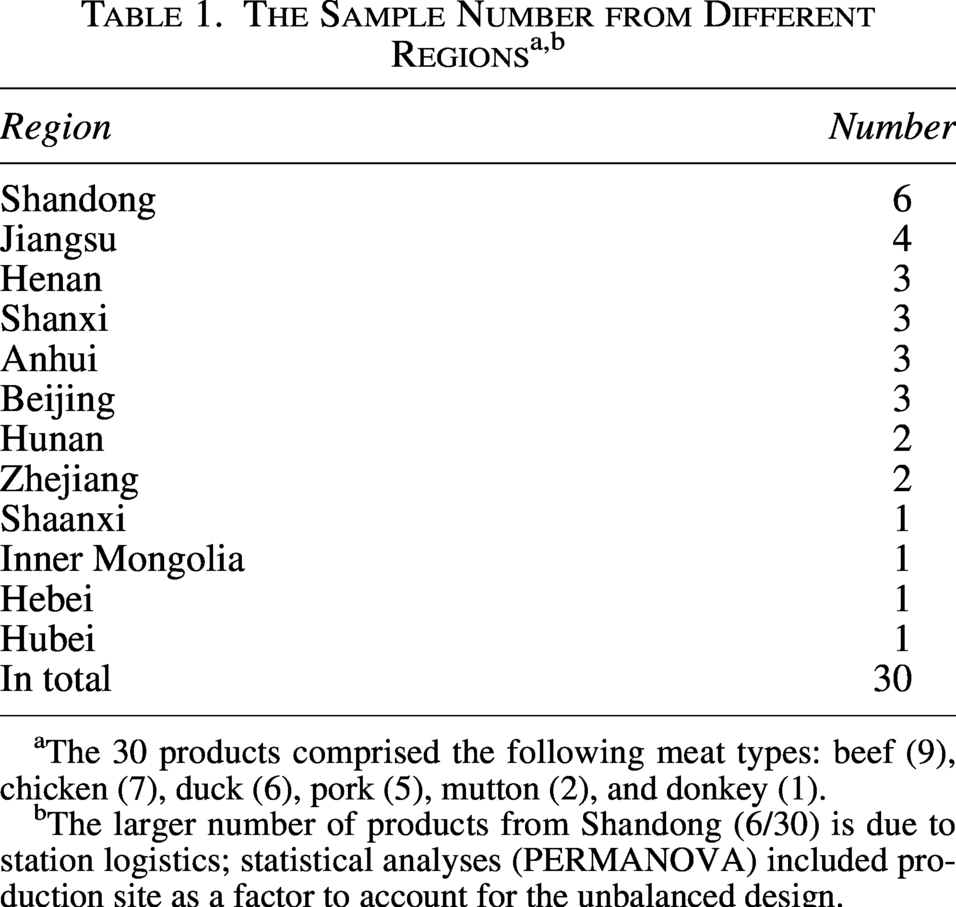
The 30 products comprised the following meat types: beef (9), chicken (7), duck (6), pork (5), mutton (2), and donkey (1).
bThe larger number of products from Shandong (6/30) is due to station logistics; statistical analyses (PERMANOVA) included production site as a factor to account for the unbalanced design.
DNA extraction and high-throughput sequencing
Two grams of each sample were grinded and suspended in 5 mL phosphate-buffered saline. After shaking at 220 rpm at 4°C for 30 min, the microbial genomic DNA was extracted from each sample. Genomic DNA was extracted from the microbial pellets using the method described by Guo et al (Guo et al., 2014), a widely adopted approach for microbial community analysis of meat products (Zhao et al., 2022). The V3-V4 region of 16S rDNA from each sample was amplified by PCR using the bacterial universal primer pair 341 F (CCTAYGGGRBGCASCAG)/806R (GGACTACNNGGGTATCTAAT). The library was constructed using a TruSeq® DNA PCR-Free Sample Preparation Kit (Illumina, San Diego, USA), and high-throughput sequencing was conducted using a HiSeq2500 platform according to the manufacturer’s instructions.
Bioinformatics analysis
Raw data were assigned to samples based on their unique barcode and truncated by cutting off the barcode and primer sequence. Paired-end sequencing reads were merged using FLASH to get the raw tags (Magoč and Salzberg, 2011). Then the raw tags were filtered by QIIME v1.7.0 (Caporaso et al., 2010) to remove low-quality tags. Operational taxonomic unit (OTUs) were picked from the remaining tags using QIIME at a sequence similarity threshold of 97%, and the representative sequence of each OTU was annotated with RDP Classifier v2.2 (Wang et al., 2007) and Green Gene Database (DeSantis et al., 2006). The OTU abundance data was normalized according to the sample with the least sequences. All subsequent analyses were performed based on this normalized data.
For the diversity analysis, Bray-Curtis similarity coefficients were calculated based on OTUs data and plotted on a nonmetric multidimensional scaling (NMDS) graph to show the similarity among samples using the software PAST version 3.11 (Hammer et al., 2001). One-way analysis of similarities (ANOSIM) and one-way PerMANOVA was performed with the distance measure set as Bray-Curtis. The Simpson index was calculated to indicate the α-diversity of each sample. Molecular Ecological Network Analysis (MENA) was conducted on http://ieg4.rccc.ou.edu/mena/main.cgi with the the majority parameter to be “Only keep the genes/OTUs with 30 in total 90 samples” and other parameters to be default. LDA EffectSize (LEfSe) analysis was conducted on http://huttenhower.sph.harvard.edu/galaxy/ with all parameters to be default. Heat maps were generated by Heatmap Illustrator software version 1.0.3.7.
Statistics
The data in this study were analyzed with one-way analysis of variance (ANOVA) using R software. The differences were considered significant at p < 0.05. The resulting data were presented as the means ± SD.
Results and Discussion
General description of microbial community structure in ready-to-eat meat products
Sampling from these products was conducted on 7 days, 14 days, and 21 days after unpacked. The microbial flora in these 90 samples was determined by high-throughput amplicon sequencing. The results showed that phylum Proteobacteria were the majority in most samples in the first 21 days after package opening (Fig. 1A). The exceptional samples included B04, B14, B27, B30, C14, D10, and D14, in which bacteria of Firmicutes accounted more than half of the total bacteria. In all these samples, Proteobacteria and Firmicutes made up more than 98% of total bacteria, with the remained bacteria belonging to the phyla such as Bacteroidetes, Actinobacteria, and others.
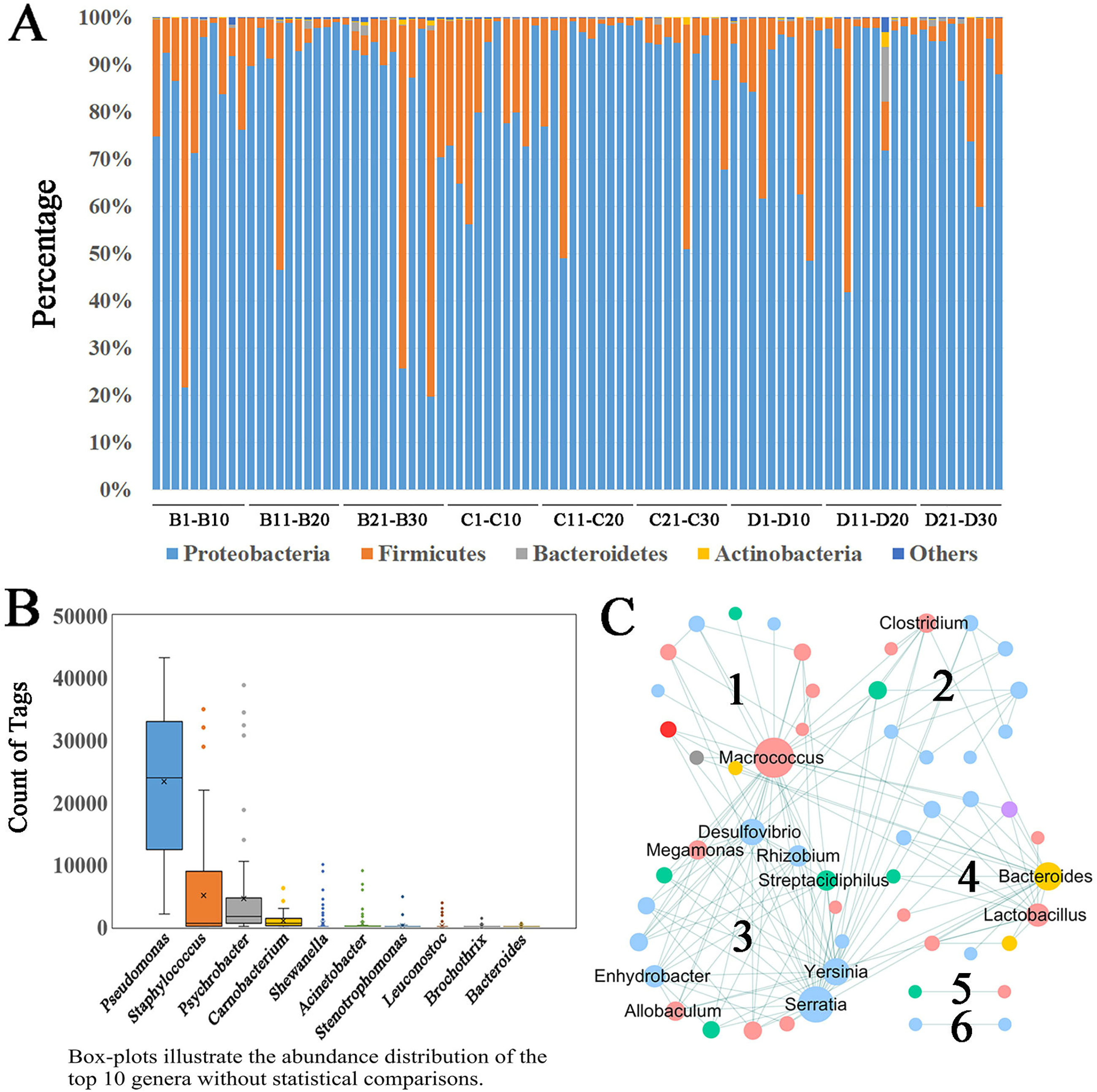
General description of Microbial Community Structure in RTE meat products sampled at 7, 14, and 21 days post-unpacking.
On the genus level, 124 known genera were identified from the samples. Pseudomonas, Staphylococcus, Psychrobacter, Carnobacterium, and Shewanella were the most abundant genera on average in the 90 samples (Fig. 1B). Fifty-four genera present in more than 30 samples were submitted to MENA Pipeline for analyses of interaction networks in microbial communities. These bacterial genera were grouped into 6 clusters according to their variation in different samples (Fig. 1C), Macrococcus, Serratia, Bacteroides, Yersinia, Desulfovibrio, Lactobacillus, Enhydrobacter, Clostridium, Megamonas, Rhizobium, Streptacidiphilus, and Allobaculum being the central nodes of the interaction networks. Although these genera at the central nodes were not the most abundant ones, their roles in functions might be important due to their abundant interactions with other genera.
The dominance of Pseudomonas and Psychrobacter, which are common psychrotrophic spoilage organisms, along with members of the Firmicutes such as Carnobacterium, is consistent with the refrigerated storage conditions of the products and their recognized role in meat spoilage.
We cannot get species-level names for all bacteria because the 16S rRNA method has limitations. However, for some OTUs, we could name the species. Supplementary Table S2 shows the average read counts of five important species (Enterococcus cecorum, Leuconostoc mesenteroides, Psychrobacter sanguinis, Staphylococcus sciuri, and Pseudomonas fragi) on days 7, 14, and 21.
Evolution of microbial community in ready-to-eat meat products
The microbial community in the RTE meat products changed with time after package opening. The microbial communities in samples from the Shandong and Henan monitoring stations are shown in the NMDS plots (Fig. 2A and B). In both NMDS charts, the microbial communities of samples of day 21 showed separateness from those of samples of day 7 and day 14, while microbial communities of samples of day 7 and day 14 mixed together. Both one-way ANOSIM and one-way PERMANOVA confirmed the above observation by calculation of similarities between samples (Supplementary Table S1). Microbial communities of samples of day 21 showed significant differences (p < 0.05) with microbial communities of samples of day 7 and day 14. According to the MENA result, the main bacteria in RTE meat products were grouped into 6 clusters. The proportion of each cluster in samples of day 7 and day 14 were very similar, while samples of day 21 presented larger ratios in cluster 2 and cluster 4, and less ratios in cluster 1, cluster 3, cluster 5 and cluster 6 (Fig. 2D). The mean value of α diversity (Simpson index) showed a slight increase, but these changes were not significant (p > 0.05) (Fig. 2C). One factor is that the constant refrigerated temperature (4°C) selectively favors psychrotrophic taxa while suppressing mesophilic competitors, which may limit overall richness expansion. (Demaître et al., 2023) Another is that as storage time extends, competitive exclusion among established psychrotrophic species may constrain further increases in diversity. Similar observations have been reported in RTE chicken stored at 4°C. (Qiu et al., 2022) Overall, these observations suggest that refrigerated storage imposes a strong ecological filter that limits α-diversity expansion despite prolonged storage.
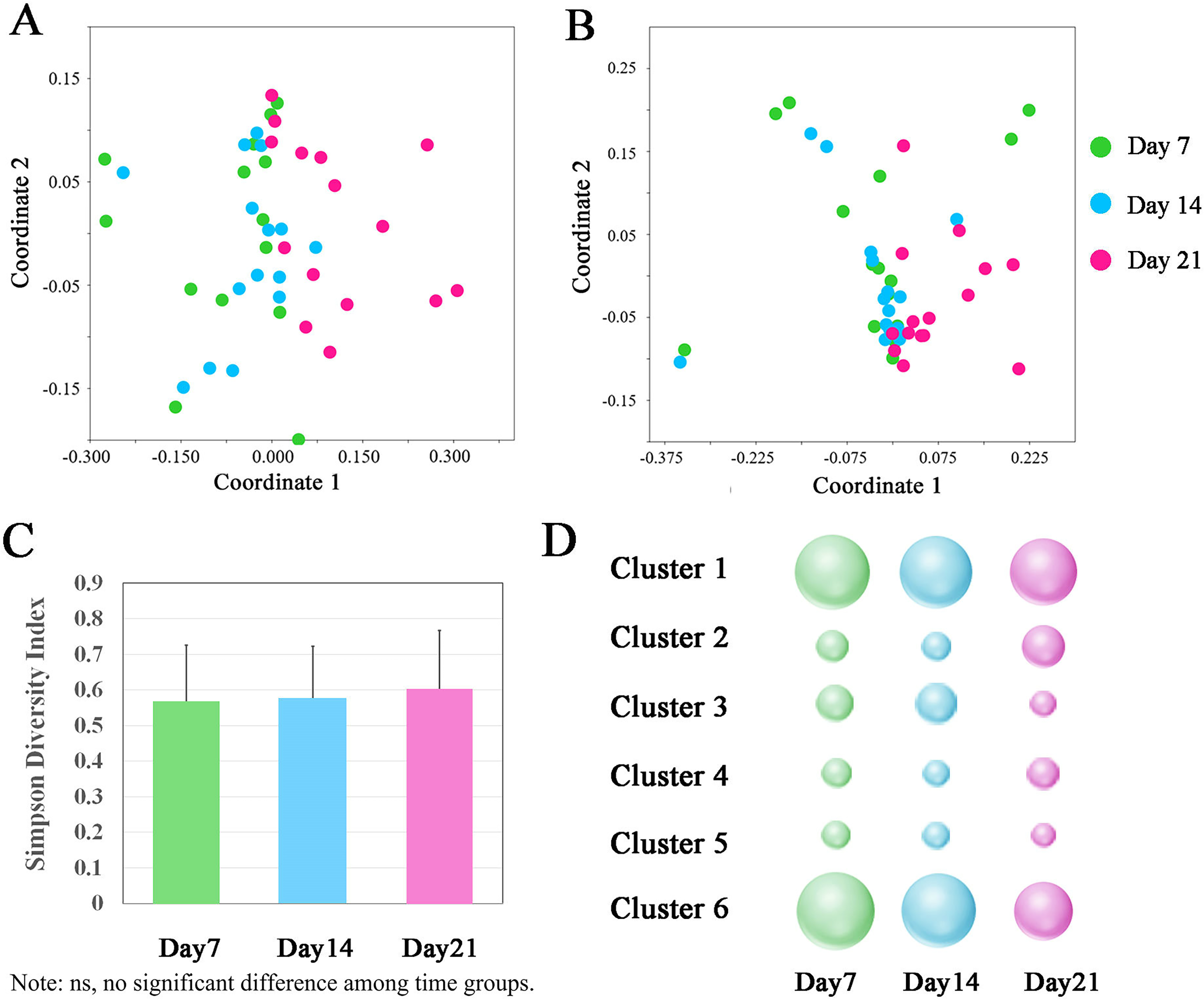
Time-dependent microbial community of the RTE meat products after unpacked. NMDS plots of microbial communities in samples from Henan
The NMDS plots clearly illustrated a distinct separation of the microbial communities at day 21 from those at day 7 and day 14 (Fig. 2A,B), indicating a significant temporal shift. This was statistically supported by both ANOSIM and PERMANOVA (p < 0.05). Notably, the communities at day 7 and day 14 largely overlapped, suggesting a relative stability during the first 2 weeks post-unpacking. The PERMANOVA analysis showed that the microbial communities differed significantly between the Shandong and Henan samples on day 14 and day 21 (p < 0.05). However, the overall succession trend was observed in both regions.
The change of specific bacterial genera with the storage time increasing
To find the change of specific bacterial genera with the storage time increasing, the sequencing data were submitted to the online LEfSe tool. As shown in Figure 3A and B, 14 genera decreased and 21 genera increased with the increasing of storage time (samples of day 21 compared with samples of day 7 and day 14) in the samples from Henan monitoring stations. Similarly, 15 genera decreased and 21 genera increased with the increasing of storage time in the samples from Shandong monitoring stations. The consistent changes in the samples from the two monitoring stations included the increase of Lentibacillus, Enterococcus, Leuconostoc, Phascolarctobacterium, Campylobacter, Shewanella, Erwinia, Serratia, Yersinia, and one unknown genera, and the decrease of Brochothrix, Lactococcus, and three unknown genera. Among the increase of the genera, Erwinia, Serratia, Yersinia belonged to Enterobacteriaceae and might be related to the food safety risk of the RTE meat products. The heat map (Fig. 3C) of the above genera with consistent change showed that genera such as Shewanella, Leuconostoc, Enterococcus, Erwinia, Serratia, Yersinia were universally abundant in samples of day 21, but they were present very few in the samples of day 7 and day 14.
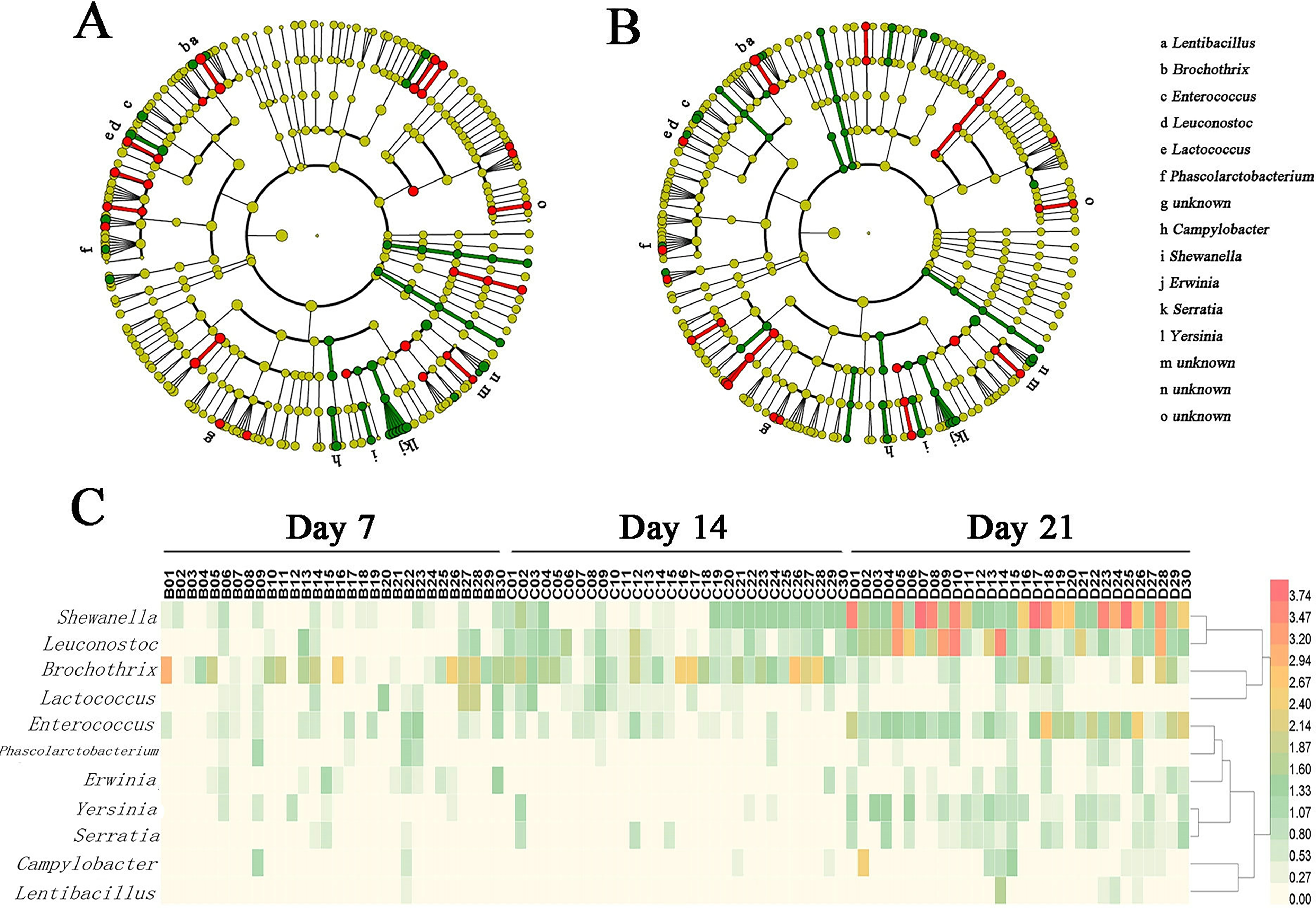
Time-dependent specific bacterial genera of the RTE meat products after unpacking. The LEfSe analysis of the significantly changed bacterial genera between samples of day 21 and samples of day 7 and day 14 from Henan
The notable increase in genera belonging to the family Enterobacteriaceae, such as Erwinia, Serratia, and Yersinia (Fig. 3C), is of particular concern. While species-level resolution for Serratia and Yersinia was limited by the 16S V3-V4 region, the enrichment of these Enterobacteriaceae genera after 14 days post-unpackaging suggests an elevated food safety risk when opened RTE meat products are stored more than 2 weeks, consistent in the previous reports in refrigerated RTE meat products. (Qiu et al., 2022) Their proliferation after 14 days underscores a potential elevated food safety risk during extended storage after opening.
Of particular note, the notable increase in genera belonging to the family Enterobacteriaceae, such as Erwinia, Serratia, and Yersinia (Fig. 3C), is consistent with the inference of post-unpackaging environmental contamination. As these genera are commonly found in domestic and retail environments (e.g., on kitchen surfaces or in refrigerators), their proliferation supports the hypothesis that environmental microbiota introduced after unpackaging became the primary source of contamination during extended storage, rather than the initial microbiota derived from the production process. Although previous studies have reported the presence of Listeria monocytogenes in RTE meat products (Yang et al., 2018), no OTUs belonging to the genus Listeria were detected in any of the samples by 16S rRNA amplicon sequencing in this study. One explanation is the low abundance of Listeria in the samples or limited amplification efficiency of the primers, suggesting that Listeria may not be a dominant member of the microbial community in opened RTE meat products under conventional refrigeration conditions.
Unpacking site: a decisive factor for the evolution process of microbial community
Many factors could affect the evolution process of the microbial community of RTE meat products. In this study, the geographical location (unpacking site and production site) and meat species factors were analyzed. Permanova analysis was used to assess the effect of different factors on the microbial community structure. As shown in Figure 4, when samples were grouped by unpacking site, meat species, or production site, the group clusters were not significant on day 7 (Permanova index > 0.05). However, on day 14 and day 21, the microbial communities showed significant separation based on the unpacking site factor (Permanova index < 0.05). Although direct microbial profiling of the unpacking environments was not performed, this result indicates that the microbial composition was subjected to a strong selection pressure associated with the unpacking site during the later storage stages. It is plausible to speculate that bacteria introduced during the unpacking process (e.g., from kitchen surfaces, hands, or the refrigerator) gradually became dominant and ultimately steered the community succession from day 14 onwards. In contrast, the influence of meat species was not a significant factor throughout the entire storage period. This temporal lag likely reflects an initial period during which production-derived microbiota persist, followed by gradual replacement as environmental taxa with superior psychrotrophic fitness and competitive traits proliferate under refrigerated conditions.
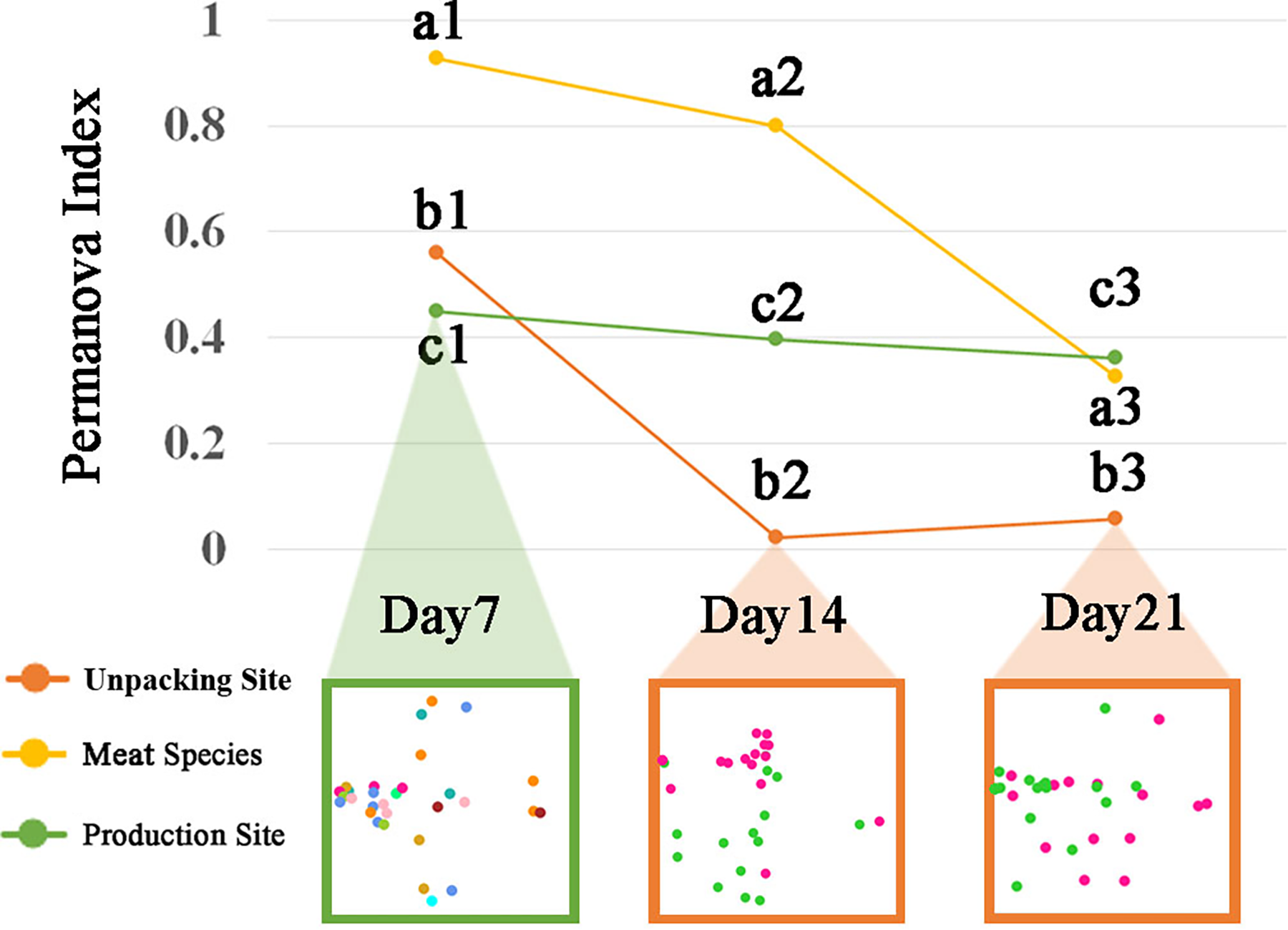
PERMANOVA index when the samples were grouped by different factors (unpacking site, meat species, and production site). The NMDS plots of samples were grouped by production sites, unpacking sites and meat species of day 7, 14, and 21.
Influence of meat species on the development of microbial community
The different nutrients in different meat species may have influence on the development of microbial community. The α diversity of the microbial community in chicken products was significantly higher than that in beef products. The α diversity of microbial community in the other meat products showed no significant difference (Fig. 5A). Permanova index showed a decreased trend from day 7 to day 21 in the analysis of meat species in, which means meat species had more influence on the microbial community in the late stage of storage than that in the initial stage. However, the meat species was not the decisive factor throughout whole storage period (Fig. 4). Still, it makes sense to find meat species specific bacteria in the microbial community of RTE meat. The Venn diagrams showed that 295 core OTUs with the mean value of more than 1 tag were present in all kinds of meats (Fig. 5B). There were 97 specific OTUs in beef meat, 121 specific OTUs in chicken meat, 57 specific OTUs in duck meat, 76 specific OTUs in mutton meat, and 75 specific OTUs in pork meat (Fig. 5B). Most of these specific OTUs showed very low abundance in the microbial community. Some of these specific OTUs were present in heat map (Fig. 5C). None of these OTUs showed high abundance in the majority of samples of the same meat species. The consistently low abundance of meat-specific OTUs across samples indicates that, under refrigerated storage, extrinsic factors such as handling and storage environment exert a stronger selective pressure than intrinsic nutrient composition of different meat types, limiting the utility of meat-specific OTUs as biomarkers.
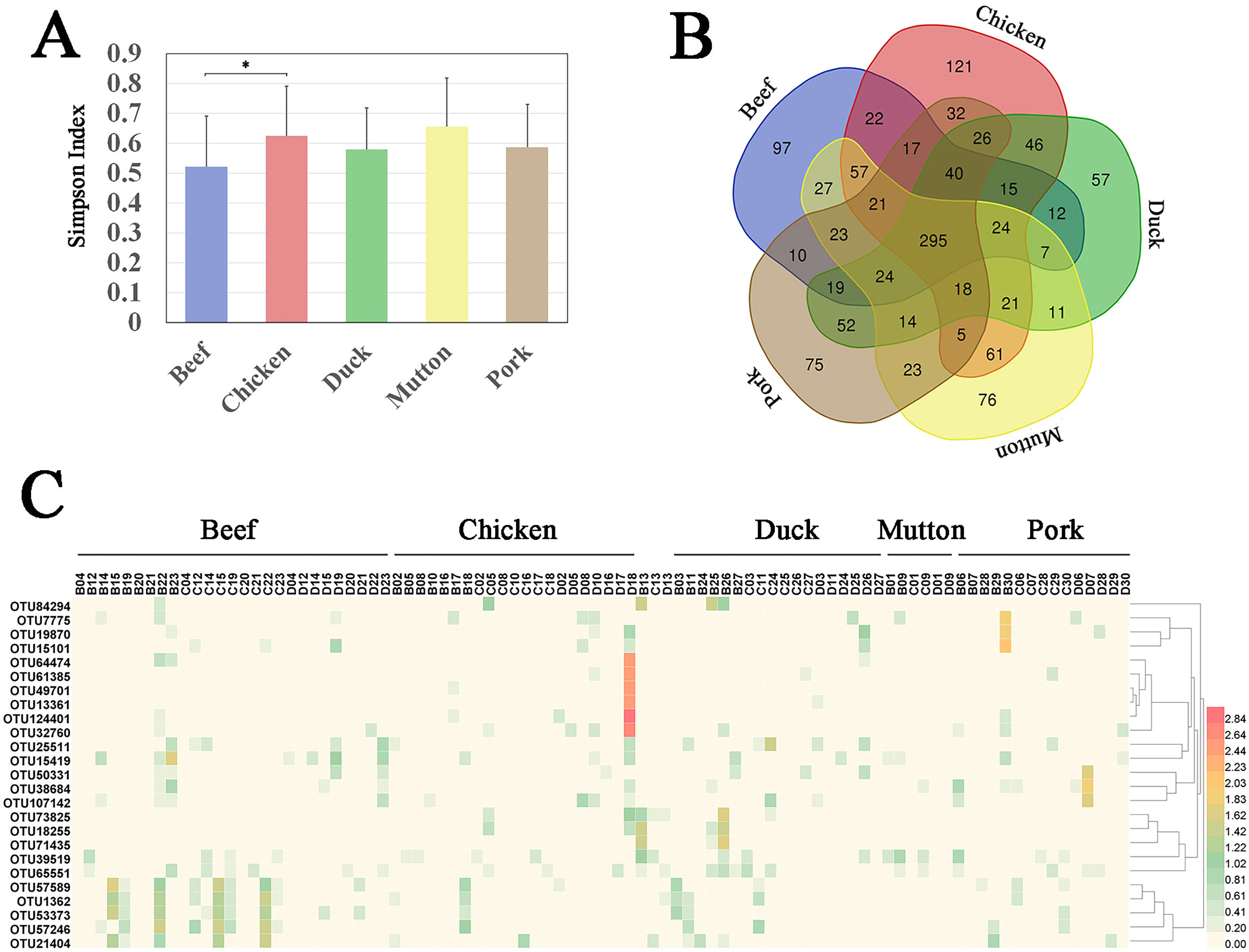
Influence of Meat Species on the Microbial Community.
These findings suggest that opened RTE meats should be consumed within 2 weeks and stored in clean environments.
Future studies should integrate direct environmental sampling with product analysis to explicitly verify the transmission pathways inferred here. Metagenomic shotgun sequencing of both RTE meat samples and corresponding environmental swabs (e.g., refrigerator shelves, kitchen countertops, and packaging materials) would enable source-tracking analyses with tools like FEAST or SourceTracker to quantitatively attribute microbial contamination to specific environmental sources. Additionally, culturomics approaches could help recover viable environmental isolates for comparative genomics, providing mechanistic insights into the adaptive traits that enable certain taxa to dominate during extended refrigerated storage. This would more definitively establish causality between unpacking environment and post-opening microbial succession, guiding evidence-based recommendations for consumer food safety practices.
Conclusion
In this study, high-throughput sequencing of 16S rRNA amplicons revealed the successional dynamics of microbial communities in RTE meat products during 21 days of post-unpackaging refrigerated storage. Proteobacteria and Firmicutes dominated the bacterial composition. The microbial community structure changed significantly by day 21, with an increased abundance of potential spoilage organisms and pathogens such as Erwinia, Serratia, and Yersinia. While direct sampling of the unpackaging environment was not conducted, our data strongly suggest that the unpackaging site (storage environment) superseded meat type as the key external factor shaping the microbial community after 14 days of storage. This finding underscores the critical importance of strictly controlling the storage time after opening (particularly beyond 2 weeks) and maintaining a clean unpackaging environment to mitigate food safety risks. Future studies should include direct sampling of the unpackaging environment to more explicitly verify this relationship.
Supplemental Material
sj-docx-1-fpd-10.1177_15353141261466183 — Supplemental material for Unpacking Environment Overrides Meat Type in Shaping the Bacterial Community and Potential Spoilage Organisms of Ready-to-Eat Meats During Refrigerated Storage
Supplemental material, sj-docx-1-fpd-10.1177_15353141261466183 for Unpacking Environment Overrides Meat Type in Shaping the Bacterial Community and Potential Spoilage Organisms of Ready-to-Eat Meats During Refrigerated Storage by Shuran Yang, Xiaozhe Qi, Zixin Peng, Li Bai, and Dajin Yang
Supplemental Material
sj-docx-2-fpd-10.1177_15353141261466183 — Supplemental material for Unpacking Environment Overrides Meat Type in Shaping the Bacterial Community and Potential Spoilage Organisms of Ready-to-Eat Meats During Refrigerated Storage
Supplemental material, sj-docx-2-fpd-10.1177_15353141261466183 for Unpacking Environment Overrides Meat Type in Shaping the Bacterial Community and Potential Spoilage Organisms of Ready-to-Eat Meats During Refrigerated Storage by Shuran Yang, Xiaozhe Qi, Zixin Peng, Li Bai, and Dajin Yang
Footnotes
Author Disclosure Statement
No competing financial interests exist.
Funding Information
This work was supported by
References
Supplementary Material
Please find the following supplemental material available below.
For Open Access articles published under a Creative Commons License, all supplemental material carries the same license as the article it is associated with.
For non-Open Access articles published, all supplemental material carries a non-exclusive license, and permission requests for re-use of supplemental material or any part of supplemental material shall be sent directly to the copyright owner as specified in the copyright notice associated with the article.
