







Abstract
An evaluation was conducted on a university peer mentoring program for Latina/o college students (mostly freshmen and first generation) at a Hispanic-Serving Institution. Data were collected across 3 years from 458 Latina/o students with mentors and 86 Latina/o students without mentors (Year 3). Quantitative and qualitative data indicated mentees viewed peer mentors as social capital (e.g., emotional and academic support). Mentees reported increased university integration and connection at posttest, significantly greater than nonmentored students.
Although progress has been made in increasing Latina/o student enrollment in college, institutes of higher education have been less successful in retaining and graduating these students (Castillo et al., 2006; Fry & Lopez, 2012). In 2014, the percentage of Latina/o students completing a bachelor’s degree was still substantially lower than Whites, Blacks, and Asians (Krogstad, 2016). Many Latina/o college students are the first in their family to attend college (Chen, 2005; Piedra, Schiffner, & Reynaga-Abiko, 2011). First-generation status has been found to be a strong predictor of students leaving college before their second year even after accounting for factors such as working full-time, financial aid status, gender, and race/ethnicity (Lohfink & Paulsen, 2005; Padgett, Johnson, & Pascarella, 2012; Somers, Woodhouse, & Cofer, 2004). These students often lack basic knowledge about college, including degree expectations and planning, expenses and funding, and career preparation (Moschetti & Hudley, 2014; Pascarella, Pierson, Wolniak, & Terenzini, 2004), placing them at risk for nonenrollment, poor adjustment, and lack of persistence (Ishanti & DesJardins, 2002). Once in college, first-generation students tend to make less time for studying, are less interested in extracurricular activities, and struggle understanding course requirements (Collier & Morgan, 2008; Davis, 2010). Students whose parents possess a college degree may have an advantage over first-generation students because their parents are often able to help them navigate college life (i.e., applying to college, selecting courses, applying for financial aid, and understanding course expectations) (Ishanti, 2003, 2006; Nunez, 2009). Latina/o college students from immigrant families typically have parents who are unfamiliar with the U.S. educational system, and therefore are at an even greater disadvantage when offering advice on how to navigate the higher education system (Ceballo, 2004; Kim & Schneider, 2005; Schneider, Martinez, & Ownes, 2006).
According to Tinto (1997, 2006), students’ level of involvement, connectedness, and integration with the university are important determinants of their academic persistence and success. A review of the literature illustrates that mentoring has been found to improve students’ academic and social integration, therefore increasing the chances of overall academic success (Austin, 2006; Hall & Jaugietis, 2011; Hu & Ma, 2010; Kendricks, Nedunuri, & Arment, 2013; B. Sanchez, Reyes, & Singh, 2006). Although there are multiple definitions of mentoring, Stanton-Salazar and Spina (2003) define mentors as individuals who challenge their mentees to strive for certain goals, help them develop necessary skills, aid them in coping with challenges, provide moral support, and share key resources and opportunities. Peer mentoring in the academic setting is where a more experienced student helps a less experienced student (mentee) improve overall academic performance by providing advice, support, and knowledge (Colvin & Ashman, 2010). Consequently, the main goal of peer mentoring is to facilitate students’ academic and social integration into the college (Morales, Ambrose-Roman, & Perez-Maldonado, 2015). Peer mentoring programs have been found to decrease drop-out rates by successfully promoting favorable academic and social outcomes for students and by negating students’ feelings of isolation and disengagement (Leidenfrost, Strassnig, Schabmann, Spiel, & Carbon, 2011; R. J. Sanchez, Bauer, & Paronto, 2006). These programs have been found to engage students while improving academic achievement (Salinitri, 2005) and student retention (Nora & Crisp, 2007; Ward, Thomas, & Disch, 2010).
Thus, a peer mentoring program was implemented at a Hispanic-Serving Institution (HSI) in Southern California to increase students’ social capital and feelings of university connectedness, with the goal of increasing their retention and graduation rates. This study only presents the results for the Latina/o students.
Social Capital and University Retention
Social capital, which is defined as the value of a relationship with another person that provides support and assistance in a given social situation (Stanton-Salazar, 2001), is a particularly useful framework for examining the impact of significant individuals on Latina/o college students’ experiences. According to social capital theory, networks of relationships can aid students in managing an unfamiliar environment (Attinasi, 1989) by providing them with valuable information, guidance, and emotional support (Stanton-Salazar, 1997). To date, a great deal of research on social capital in education has been aimed at understanding challenges faced by ethnic minority high school students (e.g., Attinasi, 1989; Monkman, Ronald, & Théramène, 2005; Stanton-Salazar & Dornbusch, 1995).
Stanton-Salazar (2001) found that Latina/o students who reported a lack of social and academic support from teachers and peers as well as a feeling of being disconnected from school also reported being more likely to drop out of high school. Furthermore, low-income Latina/o students were found to be more engaged in high school classroom activities when they perceived positive relationships with teachers and peers (Hudley & Daoud, 2008). More recently, research has begun to investigate the role of social capital in college enrollment and persistence. Findings from these studies indicated that students who lack access to social capital have decreased chances of applying to and attending college (Cabrera, Deil-Amen, Prahbu, Terenzini, Lee, & Franklin, 2006; Perna & Titus, 2005). Once in college, differences in the quality and quantity of social networks that students are able to access may explain differences in academic engagement and persistence particularly among Latina/o students (Rios-Aguilar & Del-Amen, 2012). These findings reinforce the importance of relationships for college success and overall adjustment (Larose, Bernier, & Soucy, 2005).
Peer Mentoring as a Form of Social Capital
First-generation college students, especially those from underprivileged backgrounds, who manage to surmount barriers and matriculate to college often struggle to access beneficial social capital on campus (Prospero & Vohra-Gupta, 2007; Saunders & Serna, 2004). Research suggests that peer mentors represent an important form of social support that can aid students in social and academic integration (Crisp & Cruz, 2009; Rodger & Tremblay, 2003). In addition to social support, undergraduate mentoring programs often provide academic support, role modeling, and to a lesser extent, setting goals and/or helping with career paths (see review by Gershenfeld, 2014). Mentoring programs have been found to increase retention in higher education by providing support, reinforcement, and emotional sustenance that aids students in recognizing they are capable of succeeding in college (Nora & Crisp, 2007). Furthermore, Latina/o student engagement in academic discussions and participation in on and off campus activities were found to have a direct impact on their decision to remain in college (Cabrera et al., 2006).
Overall, social capital literature points to the value of meaningful relationships for increasing student access, retention, achievement, and motivation (Ceballo, 2004; Farmer-Hinton & Adams, 2006; Hopkins, Martinez-Wenzl, Aldana, & Gandara, 2013; Nunez, 2009; Perna & Titus, 2005; Saunders & Serna, 2004), and it is generally acknowledged that peer mentoring programs promote student success, connection, and persistence (Astin, 1996; Brown & Davis, 2001; Crisp, 2010; Crisp & Cruz, 2009; Hughes & Fahy, 2009). Thus, it is important to further examine peer mentoring as a form of social capital in fostering student success among students from marginalized groups (e.g., Tierney & Venegas, 2006).
University Peer Mentoring Program
Recognizing the value of peer mentoring as a form of social capital, a peer mentoring program for freshmen was started at an HSI comprehensive university in Southern California. In the first year of the peer mentoring program, it was piloted in two classes in two departments. In subsequent years, the peer mentoring program was instituted in UNIV 100 (i.e., an orientation course that prepares students for their college career). Freshmen can choose to enroll in UNIV 100. Some UNIV 100 sections were part of the peer mentoring program, which placed students in cohorts of 20 to 25 during their first semester. Mentored cohorts grouped students by major or grouped undeclared students together. Although the goal of the grant was to increase retention and graduation rates of Latina/os, all students in classes with peer mentors were given equal services by the assigned peer mentors.
Mentors were recruited in a campus-wide recruitment effort through fliers delivered to department and college advisement offices and the Educational Opportunity Program (EOP). Some mentors were recruited after completing the program as a mentee. Depending on their major, mentors were matched with a discipline-based cohort (except for the undeclared cohorts). Mentors participated in a summer training (10 hr) and follow-up meetings to meet the needs of the mentees. Some of the training topics included professionalism, confidentiality, student leadership development skills, how to organize group activities, fostering effective communication with mentees, creating good relationships with students with disabilities, goal setting exercises, working with students from diverse populations, utilizing the community of mentors, developing positive coworker relationships, and creating a safe and welcoming environment for undocumented students. Also, mentors were trained to spot warning signs that a mentee was struggling in class (e.g., frequent tardiness or absenteeism). The more experienced mentors were trained and encouraged to help the newer mentors (i.e., tiered mentoring). Mentors were paid hourly, working 6 to 10 hr a week during the semester.
There were two peer mentors per cohort, but some highly experienced mentors led their cohort individually. Mentors were expected to attend all UNIV 100 class meetings along with their mentees. Mentors modeled proper behaviors for mentees during the UNIV 100 class (e.g., being on time, participating in class discussions). Furthermore, mentors were expected to cofacilitate in-class sessions on strategies for academic success. Mentors engaged mentees in one-on-one meetings to become acquainted with each other and maintained one-on-one contact with them throughout the semester (e.g., phone calls and emails). The mentors regularly met with the UNIV 100 faculty to plan and coordinate classroom activities. The mentors also familiarized their mentees with at least one academic resource on campus (e.g., library, career center, or tutoring center). In addition, the mentors arranged for groups of mentees to attend a campus activity (e.g., athletic event, play). If the mentors identified students who were struggling, the mentors would intervene to help the student improve.
Research Questions
The following research questions guided the evaluation of the peer mentoring program:
Method
Procedures and Sample
The university committee for the protection of human subjects approved the study. The study was conducted across 3 years with four samples of Latina/o student mentees. Across all 3 years, undergraduate students were used as peer mentors. However, in Year 2 of the program, graduate student peer mentors were also used in some sections of the UNIV 100 classes. The data for those mentees were examined separately from data from undergraduate student peer mentors. In all 3 years, participants were given a survey at posttest to get feedback about the peer mentor and the peer mentor program.
In Year 1 of the program, the peer mentoring program was offered in two classes in two departments which included 60 Latina/o mentees. Paper surveys were given at the end of the semester during the class. In Year 2 of the program for Group 1, pretest and posttest paper surveys were collected in the first and last week of UNIV 100 classes from 153 Latina/o students with undergraduate peer mentors. In Year 2 of the program for Group 2 (i.e., graduate student peer mentors), a paper survey was administered at the end of the semester to 100 Latina/o mentees. The mentees were asked to answer questions about how they felt at the beginning of the semester (recall) and currently (i.e., end of the semester). As the surveys were completed during class in Years 1 and 2, no incentive for participating was provided. In Year 3 of the program, pretest and posttest data were collected online (explained below) from 228 Latina/o students (146 with a peer mentor and 82 without a peer mentor). The demographic characteristics for the Latina/o student participants for each year are shown in Table 1. As shown in the table, the demographics are very similar across each subsample.
Characteristics of Latina/o Mentee Participants Each Year.
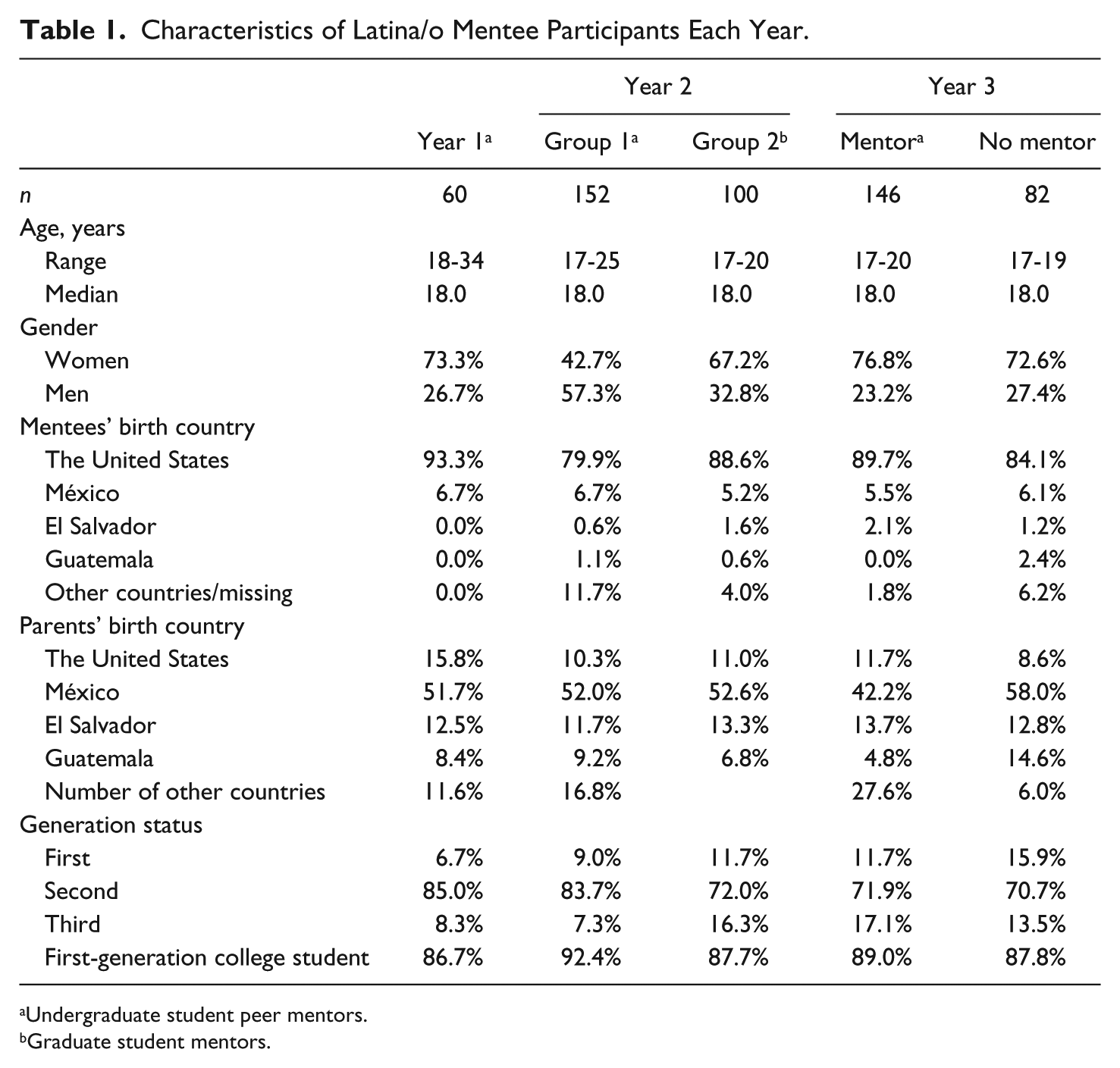
Undergraduate student peer mentors.
Graduate student mentors.
In Year 3, a pretest–posttest, comparison group design (i.e., quasi-experimental) was used. Of the 52 sections of UNIV 100, 19 sections had peer mentored sections (i.e., treatment group). The remaining sections (i.e., without peer mentors) served as a comparison group, although some sections were excluded from the comparison groups (i.e., honors sections, deaf and hard-of-hearing sections) to make the treatment and comparison groups more similar. For Year 3, surveys were posted online at Qualtrics.com. Email addresses were taken from UNIV 100 class lists. The panel function in Qualtrics was used to ensure anonymity. Specifically, a unique code was assigned to each email address, which was then used to match the pretests to the posttests. A link to the pretest was emailed to students during the first week of the semester, and a link to the posttest was emailed during the last week of the semester. To increase participation in the online survey, reminder emails were sent, and 30 participants with completed surveys (i.e., 15 at pretest, 15 at posttest) were randomly selected to receive US$15 gift cards to a nationwide discount store.
Measurement
In all 3 years, mentees’ demographic information was collected (e.g., age, ethnicity, parents’ birth countries, and parents’ education). Also, the mentees were asked to rate their agreement with eight statements about their peer mentor’s help (see Table 2), such as (1) “Was supportive,” (2) “Informed me about university events (e.g., plays, sport events),” and (3) “Helped me understand the requirements of my major.” Response choices follow 1 = strongly disagree, 2 = disagree, 3 = agree, and 4 = strongly agree. Mentees were also asked to rate their peer mentor on eight attributes (see Table 3), such as “Had a positive attitude toward students,” “Cared about my academic success,” and “Overall rating of the peer mentor.” Response choices follow 1 = very low, 2 = low, 3 = average, 4 = high, and 5 = very high. In all 3 years at posttest, mentees were asked to rate their agreement on whether the peer mentor made them feel more connected to the university with responses ranging from 1 = strongly disagree to 4 = strongly agree.
Percentage of Latina/o Mentees Who Responded “Agree” or “Strongly Agree” About the Peer Mentor Each Year.
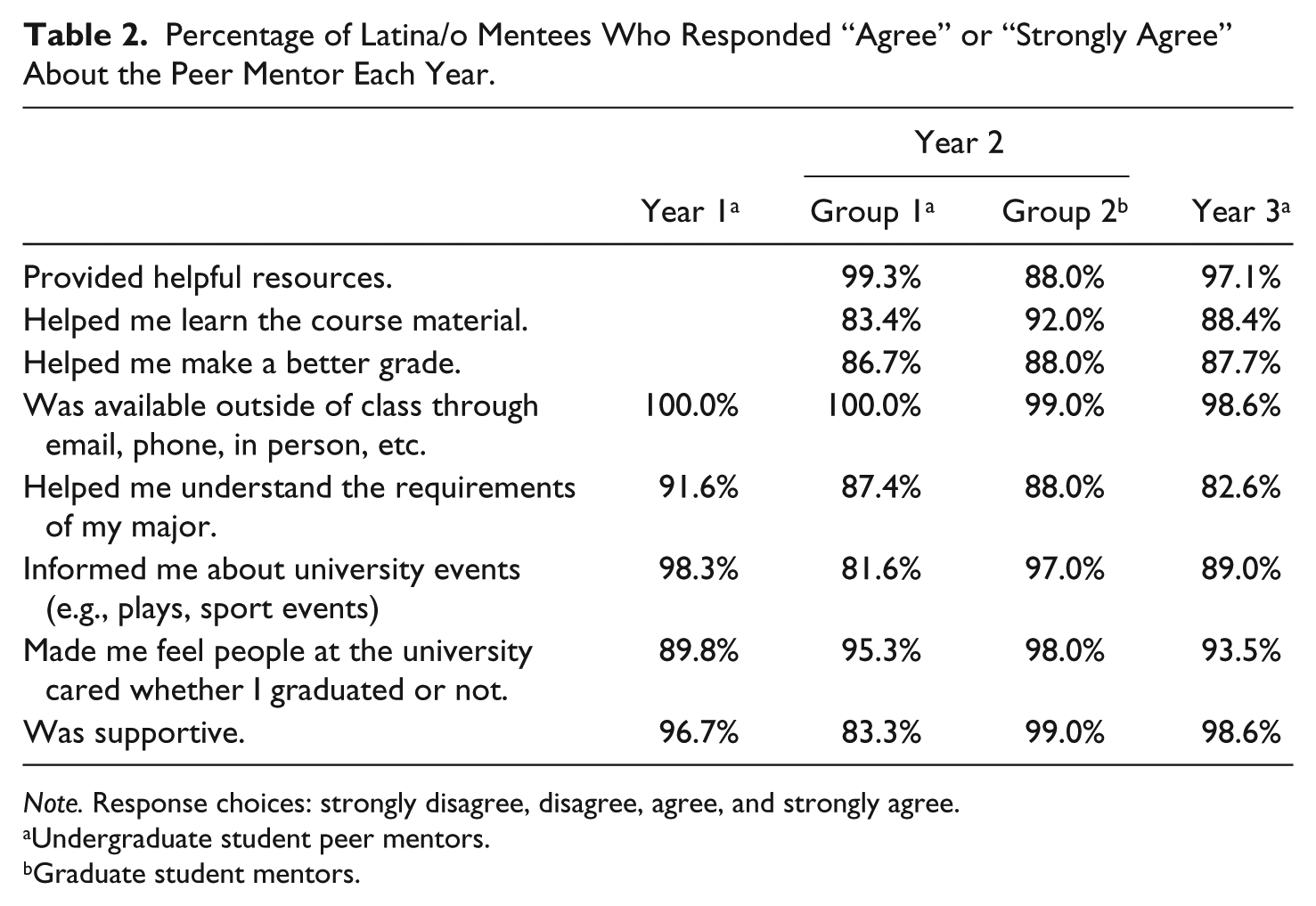
Note. Response choices: strongly disagree, disagree, agree, and strongly agree.
Undergraduate student peer mentors.
Graduate student mentors.
Paired Samples t Tests Comparing Mentored Students’ Pretest to Posttest Scores—Year 2.
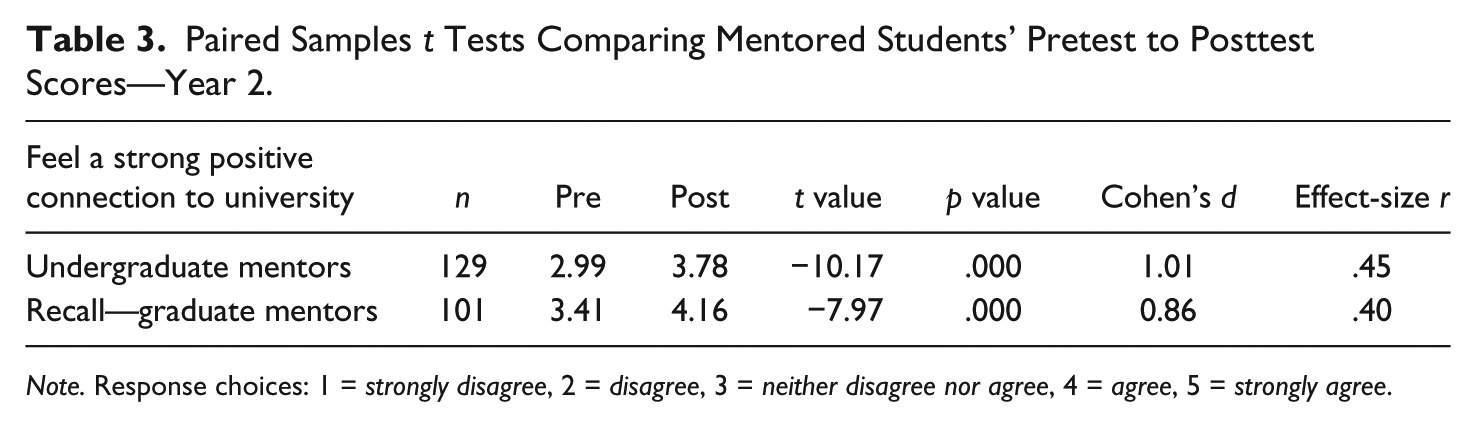
Note. Response choices: 1 = strongly disagree, 2 = disagree, 3 = neither disagree nor agree, 4 = agree, 5 = strongly agree.
In Year 2 at pretest (i.e., beginning of the semester) and posttest (i.e., end of the semester), the mentees with undergraduate peer mentors were asked to rate their agreement on a statement (i.e., “I feel a strong positive connection to the university”). The mentees with graduate student mentors only completed a survey at the end of the semester where they were asked to recall how they felt at the beginning of the semester and also how they currently felt (i.e., at the end of the semester). The response choices follow 1 = strongly disagree, 2 = disagree, 3 = somewhat disagree, 4 = somewhat agree, 5 = agree, and 6 = strongly agree.
In Year 3, four additional items were added to the pretest and posttest for the mentees and comparison group: (a) “I feel very integrated into the university community,” (b) “I feel an active part of the university community,” (c) “I have at least one person who I can turn to for emotional support at the university,” and (d) “I have at least one person who I can turn to for academic support at the university.” The responses ranged from 1 = strongly disagree to 6 = strongly agree.
In all 3 years, mentees were asked two open-ended questions: (a) “What did you find was beneficial about the peer mentors?” and (b) “How could the peer mentors be improved for next year?” First, a researcher read through all the responses and developed initial themes (i.e., open-ended coding; Bogdan & Biklen, 1998). Next, a researcher and/or trained research assistant coded the data to match those themes (i.e., focused coding; Bogdan & Biklen, 1998). If a new theme was found during the focused coding, then previous responses were revisited to see whether the theme was missed. After all responses were coded, the codes were double-checked by trained research assistants. If there was any disagreement between the initial coder and the second coder, a third coder (i.e., one of the main researchers) made the final decision. The codes were then organized by theme, along with corresponding quote(s) that demonstrated each theme.
Results
All statistical analyses were run using SPSS 24 for Mac. To answer Research Question 1, frequencies were run on Latina/o mentees’ level of agreement with statements about their peer mentors. As shown in Table 2 across each sample, the vast majority Latina/o mentees agreed or strongly agreed (ranging from 82.6% to 100%) that the peer mentors were forms of social capital. Specifically, students reported that peer mentors (a) provided helpful resources, (b) helped learn course materials, (c) helped make better grades, (d) were available, (e) helped to understand major, (f) informed mentees about university events, (g) made mentees feel someone at the university cared, and (h) were supportive.
For Research Question 2, frequencies were first conducted on mentees’ posttest responses. Specifically, the vast majority of Latina/o mentees agreed or strongly agreed (i.e., 95.0% Year 1, 96.1% Year 2, and 92.0% Year 3) that the peer mentors helped them feel more connected to the university. Next, paired samples t tests were run comparing Year 2 mentees’ pretest to posttest on level of perceived connection to the university. As shown in Table 3, students mentored by undergraduate peer mentors reported significantly higher university connection from pretest to posttest (t = −10.17, p < .001). Also, students mentored by graduate student mentors reported significantly higher university connection on the end-of-the-semester survey when comparing recalled feelings versus current feelings (t = −7.97, p < .001).
Next, ANCOVAs were conducted to compare Latina/o mentees with Latina/o students without a peer mentor on integration and support at the university. The dependent variables were the posttest scores, while pretest scores were used as covariates. As shown in Table 4, the mentees reported significantly higher scores than students without peer mentors, even after controlling for pretest scores. In comparison to nonmentored Latina/o students, the mentees reported significantly higher scores on (a) feeling integrated at the university (F = 5.70, p = .018), (b) feeling an active part of the university (F = 4.85, p = .029), (c) a positive connection to the university (F = 5.88, p = .016), (d) having at least one person they could turn to for emotional support (F = 6.09, p = .014), and (e) having at least one person they could turn to for academic support (F = 5.52, p = .020).
ANCOVAs Comparing Mentored Versus Nonmentored Latina/o Students’ Posttest Scores, Controlling for Pretest Scores—Year 3.
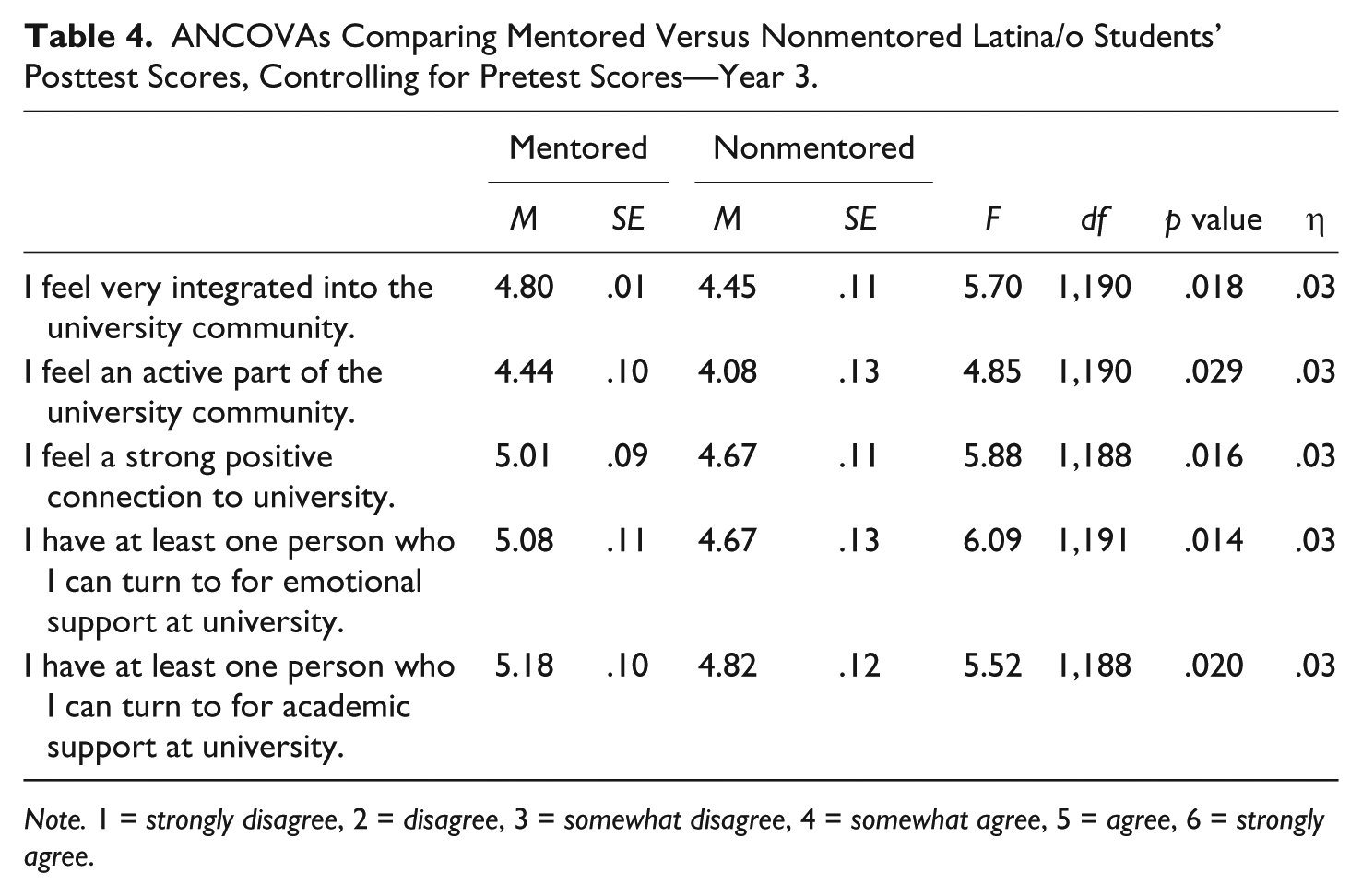
Note. 1 = strongly disagree, 2 = disagree, 3 = somewhat disagree, 4 = somewhat agree, 5 = agree, 6 = strongly agree.
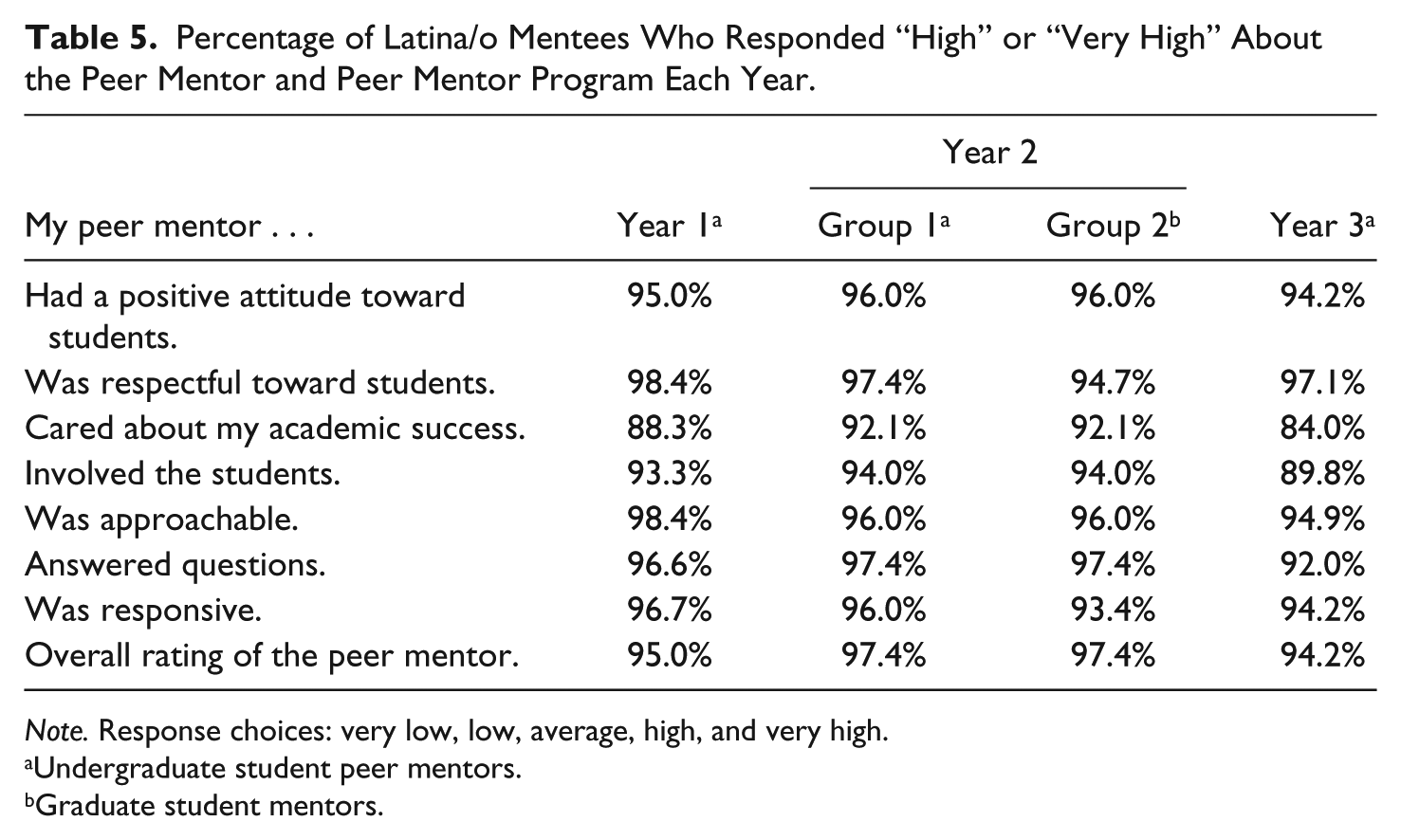
For Research Question 3, frequencies were run on the Latina/o mentees’ ratings regarding qualities of their peer mentors (e.g., positive attitude, respectful, cared about their academic success, approachable, responsiveness). As shown in Table 5, the majority of the Latina/o mentees surveyed (ranging from 84.0% to 98.4% for each item) rated their peer mentor as being “high” or “very high” on each mentor attribute. The vast majority (i.e., 94.2%-97.4%) of the Latina/o mentees gave an overall rating of their mentor as “high” or “very high.”
Percentage of Latina/o Mentees Who Responded “High” or “Very High” About the Peer Mentor and Peer Mentor Program Each Year.
Note. Response choices: very low, low, average, high, and very high.
Undergraduate student peer mentors.
Graduate student mentors.
For Research Question 4, Latina/o mentees’ open-ended responses about perceived benefits were examined. Across the 3 years, there were 11 themes that emerged the most, listed in order from most frequently mentioned theme to least frequently mentioned theme: (a) general assistance/answer questions (e.g., “Any question you had she was quick to answer it or find the answer to it”); (b) friendly, approachable, available (e.g., “ . . . she was available and always responsive made it easy to approach her and made me comfortable”); (c) emotional support (e.g., “The peer mentor is like a helping hand, someone I knew that could help me whenever I needed the help. They were supportive and understanding and fun to be around”); (d) relatable (e.g., “found their relatability [sic] beneficial. The sole fact that they are around our age, they more truthfully can understand and assist our situation”); (e) academic advice (e.g., “It was good to know I had someone to ask school related questions to at any time”); (f) familiarization with university events/resources/buildings (e.g., “I was informed about CSUN events and resources”); (g) adjusting to university (e.g., “Knowing there is always someone there for you really helped me get though problems in the 1st semester of college”); (h) academic help (e.g., “Provided information about events on campus, assignments due in class, helped create study groups to help one another complete assignments”); and (i) time management and study habits help (e.g., “Building time management and organization skills”). In general, the mentors seemed to be a good source of social capital and reiterated the themes in the peer mentor rating scale. Most mentees mentioned multiple attributes of their mentors. For example, a Latina in Year 3 stated, “I found that they were very nice and always available to help. They were great help in advice tips and also they were someone you can turn to when you are stressing. They helped academically, physically and emotionally.” Also, a Year 2 Latina mentee with a graduate student mentor stated multiple attributes, “I found it beneficial that they attended class so they knew what we were discussing that day. If later on we had a question, we could ask them and they knew the material since they went to class. I also found the one on one meetings beneficial since we could confide in our mentor and receive advice/help with different resources.” A freshman Latina in Year 2 stated, “I am new to CSUN and my peer mentor helped me find resources that I needed and that I might need. She also encouraged me to pursue my dream and showed me that it is not an easy road but an achievable goal.” Another Latina in Year 2 stated, “She helped me SO much with assignments, deadlines, advice, and much more! She was always there when I texted/emailed her. She’s the best mentor!” And finally, a Latino in Year 1 stated, “With their experience they are able to shine their light on students like me to a strong academic future.” It should be noted that approximately 3% of the Latina/o mentees stated the peer mentors were not helpful and/or there were no perceived benefits of the peer mentor program.
For Research Question 5, Latina/o mentees’ open-ended responses about suggested improvements were examined. Across the 3 years, the most frequent response (i.e., 37.9% of the mentees) was that the peer mentor program did not need improvement. For example, a Latina in Year 3 stated, “For next year, the peer mentors should be exactly how they were this year.” Approximately 21.2% of the mentees suggested the mentors could be more involved, and about half of those mentees suggested ways they could be involved. For example, a Latino in Year 3 stated, “They could do more academic activities and maybe be your personal tutors and help you in your studies.” Similarly, a Latina in Year 1 suggested, “More activities with peer mentors. More help on major assignments.” Approximately 9.1% of the Latina/o mentees said they wished they had peer mentors in other courses, and about 3.2% of the mentees stated they wished they had the mentors in later semesters or all 4 years at the university. A small percentage (<5%) of Latina/o mentees suggested the peer mentors should (a) be more knowledgeable and give better advice (e.g., “Learning more about advice they could give to the students on their majors”), and (b) have more focus on classwork/academics (e.g., “They should have more study groups”). Also, a few mentees had suggestions for the teachers or coordinators associated with the peer mentor program. Specifically, they felt there should be more clear expectations outlined to the students regarding the roles of the peer mentors. For example, one Latina in Year 2 stated, “I think maybe a more clear understanding of what we will be doing with our peer mentor would be helpful because I was confused as to why we had to go to activities in the beginning.” And finally, a few Latina/o mentees (<1.9%) felt the peer mentor program was not necessary or that it should be made optional.
Discussion
The purpose of this study was to examine Latina/o students’ views of a peer mentoring program at a HSI in Southern California. The quantitative and qualitative data indicated the Latina/o mentees (most of whom were freshmen and first-generation college students) viewed their peer mentors as forms of social capital (e.g., emotional and academic support). Also, the results indicated that the Latina/o mentees reported increased integration and connection to the university at the end of the semester, and this increase was significantly greater than a comparison sample of nonmentored Latina/o students. The data also indicated the vast majority of the Latina/o mentees viewed their peer mentors positively. Although most mentees had no suggestions for the program and/or mentors, some mentees made some good recommendations worth consideration.
As mentioned previously, the Latina/o mentees perceived their peer mentors as social capital (i.e., relationship with another person that provides support and assistance, Stanton-Salazar, 2001). Specifically, the quantitative and qualitative data showed that the mentors were perceived as providing helpful information about the campus and major, academic support, encouragement, and emotional support. The mentors were perceived as caring, respectful, available, and responsive, which is consistent with how peer mentors have been described in the literature (Leidenfrost et al., 2011). Social capital may be especially helpful to first-generation Latino college students as they learn to navigate a new environment, such as the university (Attinasi, 1989; Rios-Aguilar & Del-Amen, 2012). As one first-generation Latino mentee stated, “They (peer mentors) allowed us to become familiar with our new lives at the university and make us a better student.” The qualitative comments suggested the mentees benefitted from the one-on-one and group interactions with the peer mentors (e.g., “I felt as if she was another friend I could count on for whenever I needed her”) and had increased opportunities to be involved in campus activities (e.g., “The peer mentors were helpful when asking about resources and events around campus”). The peer mentors also helped introduce the mentees to others on campus, which can increase university integration. As a Latino mentee stated, “They (peer mentors) introduced us to university faculty and staff. Also told us we should network and get involved.” This perception of available social capital may explain (at least partially) why the mentees had increased connection to and integration in the university at the end of the semester, even more so than students without peer mentors. This finding is consistent with research that shows that mentors can enhance social and academic integration (Crisp & Cruz, 2009), ultimately increasing student success and persistence (Astin, 1996; Crisp, 2010; Hughes & Fahy, 2009).
Although most Latina/o mentees stated the peer mentors and/or program was good in its current form, some mentees provided valuable feedback for the program coordinators or future mentoring programs. In general, the mentees who made suggestions were interested in having more interactions with the peer mentors in class and outside of class. Also, some mentees stated they would like to have mentors in other classes, or have the current mentors stay with them in subsequent semesters. Thus, the relationship and/or interactions with the peer mentors appeared to be valued by the Latina/o mentees. Program coordinators, faculty teaching the courses with the peer mentors, and the peer mentors could brainstorm ways to increase interactions through more in-class activities or more mentor-coordinated group activities outside of class (e.g., attending university events together). Another recommendation by some mentees was that the peer mentors should be more knowledgeable and give better advice. One recommendation for future programs would be for the peer mentor program to coordinate with the academic advisors in the departments to provide training or reading materials for the mentors. And finally, a few mentees suggested that faculty or mentors should provide more clear expectations regarding the roles of the peer mentors. The peer mentor program coordinator could provide an outline of peer mentor duties and expectations for students that could be put on course syllabi and/or verbally explained to the students.
Limitations
Some limitations of the evaluation of the university peer mentoring program should be acknowledged. First, the program and data were collected from Latina/o mentees at a 4-year, comprehensive university in Los Angeles, which is designated a HSI. It is possible that Latina/o mentees may respond differently from non-HSI universities, other types of higher education (e.g., community colleges, Research 1 Universities), or states with fewer Latinos. Although the results are consistent with other mentoring studies, the results should be interpreted cautiously until similar peer mentoring programs targeting Latina/o mentees are evaluated.
Next, the evaluation did not disaggregate the Latina/o mentees by nativity, country of origin, age, or parents’ educational attainment. Similarly, the demographic characteristics of the mentors were also not considered in the evaluation. It is possible that these factors might influence the mentees’ ratings and comments. Future studies might want to consider the demographic characteristics of both the mentees and mentors.
Also, the qualitative data used in this evaluation came from written responses to two questions about perceived benefits and recommendations for improvement. Richer responses with more details could be gleaned from interviewing or conducting focus groups with subsets of the mentees. And finally, feedback from the peer mentors and/or faculty would be beneficial.
Conclusion
This study was an evaluation of whether a peer mentoring program helped Latina/o students at a comprehensive HSI university in Southern California. The peer mentors seemed to be a source of social capital as the Latina/o mentees perceived the mentors as providing emotional support, academic support, role modeling, and career help, and also increased their integration and connection to the university. The results of this evaluation were similar to other studies on the value of university mentoring programs (see review by Gershenfeld, 2014). Other higher education institutes trying to increase the social capital of Latina/o students should look at the outcomes of this program and other programs when developing and implementing their own programs.
Footnotes
Declaration of Conflicting Interests
The author(s) declared no potential conflicts of interest with respect to the research, authorship, and/or publication of this article.
Funding
The author(s) disclosed receipt of the following financial support for the research, authorship, and/or publication of this article: This project was funded by the Developing Hispanic-Serving Institutions Program Title V of the U.S. Department of Education (#PO31S100051).