







Abstract
The purpose of this multi-institutional qualitative study was to understand the educational pathways of Latino males by underscoring the unique role female family members play in their academic pursuits—through the voice of these young men. Findings demonstrate female family members were identified as being primary supporters of their educational pursuits, and actively leveraged different sources of cultural capital to help Latino males enroll and persist through postsecondary education. This study reinforces extant literature on the importance of family in the educational pathways of Latina/o students. Furthermore, it makes a unique contribution by highlighting the important role female family members hold in the Latino family as educational advocates.
Latino males continue to lag behind their female counterparts in P-20 educational attainment at alarming rates (Sáenz & Ponjuán, 2016). Although multiple reports expose enduring leaks along the educational pipeline, seminal studies indicate that family involvement increases their likelihood of enrollment and persistence into postsecondary education (Auerbach, 2004; Gándara, 1995; O’Donnell & Kirkner, 2014; Portes, 1998; Tierney, 1999; Yosso, 2005). In fact, family involvement has been positively linked to academic achievement, school attendance, good grades, and college persistence (Greenwood & Hickman, 1991; Holcomb-McCoy, 2010; Jeynes, 2007). The importance of family has been highlighted but not the unique roles of individual family members—namely Latinas.
Initial studies identify the role of mothers, and other female family members, as key in establishing college-going behavior among Latina/o children (Denner, Laursen, Dickston, & Hartl, 2016). In fact, Durand (2011) established that Latina mothers view themselves as responsible for conveying the importance of education to their children and keeping them on track toward graduation. The driving force behind their involvement is fueled by their desire for their children to have a better future. Mothers are seen as essential in the educational pathways of their children, yet, little research has been conducted on identifying their unique role. Villenas and Moreno (2001) found Latina mothers serve as advocates for their children by providing a sense of cultural integrity in an effort to help their children dismantle the deficit perspectives some educators have of Latina/o students. However, this is an emerging area of study. We were unable to find a single study that centers on the unique role Latina mothers, and/or other female family members, hold in the college-going behaviors of Latino males.
As aforementioned, the influence of family has been identified as instrumental in developing college-going behavior for Latina/o students. Community cultural wealth emphasizes the importance of familismo—the role of family in the Latino culture—and the importance of institutions acknowledging such influence (Yosso, 2005). Thus, we utilized community cultural wealth as a framework to understand how Latino males speak of the impact Latina family members have on their educational pathways.
Purpose of Study
When assessing the educational experiences of Latina/o students, it is vital to consider the invaluable role family plays throughout their pathways (Marquez Kiyama, Museus, & Vega, 2015; Yosso, 2005; Zarate, 2007). Recent studies found family involvement increased Latina/o students’ likelihood of college enrollment and persistence (Denner et al., 2016; Gándara, 1995; Márquez Kiyama et al., 2015; Portes, 1998; Ruiz, 2007; Tierney, 1999; Yosso, 2005). Family involvement has been positively linked to higher academic achievement, school attendance, perceptions of school, good grades, college aspirations, and overall sense of well-being (Holcomb-McCoy, 2010; Márquez Kiyama et al., 2015). In addition, generational values such as resilience, persistence, and hard work are embedded within the Latino family culture (Kiyama, 2010), demonstrating that Latino males possess numerous sources of cultural wealth and knowledge that is not always acknowledged by college educators. Limited research has focused on the role Latino fathers hold in the educational pathways of their children. For example, Quiñones and Marquez Kiyama (2014) uncovered that Latino fathers’ involvement was in the form of agency and advocacy for their children—within an educational system, they did not trust but understood the importance of their engagement. However, little is known about the unique role female family members play on the educational pathways of Latino males.
We understand that it is equally important to explore the influence of women on the educational success of Latinas, however, this study is only concerned with the role they hold in the educational attainment of Latino males, particularly due to the persistent gender gap in educational attainment (Sáenz & Ponjuan, 2009, 2016; U.S. Department of Education, 2001). Hence, this qualitative research study is a phenomenological investigation of how Latino males describe the role of female family members on their educational pathways. Study participants included 130 Latino males attending selected 2-year and 4-year institutions in Texas. Twenty-three focus groups were conducted to learn about their shared experiences and their perception of the role female family members play in their educational pathways. The primary purpose was to answer two overarching research questions:
Background and Literature Review
Despite increased enrollment in postsecondary education, Latino males fail to persist (Fry & Taylor, 2013; Texas Higher Education Coordinating Board [THECB], 2013). Experts predict a major crisis is inevitable, should current trends continue (College Board Advocacy & Policy Center, 2010; Harper & Harris, 2010; Sáenz & Ponjuán, 2016). The economic implications are colossal considering a sizable subset of the population remains uneducated. In a majority–minority state such as Texas, the state has acknowledged the crisis and has set statewide goals to address high attrition rates. However, before establishing goals, we need to better understand the issue at hand. The Texas Higher Education Coordinating Board (THECB) claims that although college enrollment has significantly increased for Latina/os, their reported levels are still far below the Closing the Gaps by 2015 statewide college persistence targets, demonstrating that it requires a larger and more orchestrated effort to address this issue (THECB, 2013). However, the issue is not unique to Texas. In early 2014, President Obama launched My Brother’s Keeper initiative placing a national spotlight on the pertinent issue. The initiative seeks to address the gender achievement gap by helping young men of color achieve their maximum potential through research-based educational programs and services. The program continues to gain support from public officials, educators, and political representatives. To date, over 250 communities in all 50 states have pledged to support and more than US$600 million has been committed to the initiative (The White House, Office of the Press Secretary, 2016).
Research studies have identified several factors affecting Latino males in higher education. Challenges such as financial barriers (Fry, 2005; Sáenz & Ponjuán, 2016; Zarate & Burciaga, 2010), lack of academic preparation (Fryer, 2006; Sáenz & Ponjuan, 2009), and elevated high school dropout rates (Krogstad, 2016) continue to affect their persistence. Despite Latina/os making gains in high school completion, they continue to drop out at higher rates than any other racial or ethnic group. In 2014, Latina/o high school dropout hit a record low (12%) but it remains considerably higher than Blacks (7%), Whites (5%), and Asians (Krogstad, 2016). In addition, Latino males continue to lag behind their female counterparts (Harris & Harper, 2010; Lee & Ransom, 2010; Sáenz & Ponjuan, 2011) indicating that they face different challenges on their college pathways. A possible explanation that has been presented is the gendering of education as feminine (Harper, 2010).
Gendered Education
Early on, children are taught how to act based upon their assigned gender. Socialized gender roles play a pivotal function in the identity formation process of young males (Davis, 2010; O’Neil, Helms, Gable, David, & Wrightsman, 2010). The first teachers and role models for children are found within their homes. The function of household rearing has traditionally been assigned to the women and as such mothers play an integral role in the lives of young men (Durand, 2011). At an early age, boys begin to associate feelings, domestic chores, and even education as feminine (Davis, 2010; Harper, 2010), and therefore unmanly. This, in turn, reinforces the misconception that education is not for boys (Davis, 2010). These initial effects of gendering education as feminine tend to carry over into their educational pathways (Harper, 2010). Once in college, the long-standing misconception that the schooling system is gendered to only serve males has resulted in the lack of structural support for men of color (Harper & Harris, 2010; Sáenz & Ponjuan, 2009). These socialized norms tend to be consistent across social groups.
Although most theories utilized to inform school curriculum were formulated in the 1960s and 1970s, they were predominantly based on White, heterosexual, young, middle class men (Harper & Harris, 2010). These theories did not account for the male student of color experience, therefore, failing to address their diverse needs. To understand how this is harmful for men of color, Harper and Harris (2010) offered five common misconceptions about males in college: (a) every male student benefits similarly from gender privilege; (b) gender initiatives need not include men unless they are focused on reducing violence and sexual assault against women; (c) undergraduate men do not encounter harmful stereotypes, social and academic challenges, and differential treatment in college environments because of their gender; (d) male students do not require gender-specific resources and support; and (f) historical dominance and structural determinism ensure success for the overwhelming majority of college men.
Although the aforementioned assumptions negatively affect the educational experiences of young men of color, they are clearly out of their control. The problem is deeply embedded within institutional structures, educational history, and U.S. social norms. Institutional change could take decades to occur but within-family change could happen much faster. Young men have better control over the impact peer and familial influences have on their academic performance (Yosso, 2005). Understanding the important role families, and more specifically Latina family members, play in the lives of Latino males will provide the necessary knowledge to better support them on campus. Mothers, after all, have been identified as the primary educators within the home and their influence must be understood (Durand, 2011).
Educational Involvement of Latino Families
Familismo fosters a strong sense of support and involvement from family members, resulting in close family ties that are integral for student success (Quiñones & Marquez Kiyama, 2014; Ruiz, 2007). Families also keep Latino males motivated and encourage them to meet deadlines and tasks to “do something better with their lives” (Farmer-Hinton, 2008, p. 148). Parental involvement takes on many forms and ranges from frequent discussions, or consejos (advice), to educación (manners, values, and life lessons), and the adoption of shared goals and expectations (Denner et al., 2016; Yosso, 2005; Zarate, 2007). Gonzalez, Stoner, and Jovel (2003) found the “accumulation of high volumes of social capital from various individuals . . . expanded the students’ opportunities for college” (p. 167). Thus, the home environment promotes “social, cognitive and academic development, particularly for bicultural children and/or from low-income families” (Olivos, 2004, p. 27). However, educators and college administrators often overlook the aforementioned types of parental and familial involvement as they deviate from traditionally accepted approaches (Yosso, 2005); ultimately disenfranchising parents from taking on an active role in the education of their children.
Parents encounter numerous obstacles in their attempt to support their children’s academic experiences. The lack of access to important information about college preparation and planning keeps many Latino parents at the margins (Marquez Kiyama et al., 2015; Tornatzky, Cutler, & Lee, 2002; Torrez, 2004). As educational attainment and college success are strongly connected to parents’ education level (Fann, Jarsky, & McDonough, 2009), we must understand how to bridge the gap for first-generation college students. This is particularly important given parents without a college education often lack sufficient institutional knowledge to help their children navigate the college-going process (Auerbach, 2004; O’Donnell & Kirkner, 2014). On the contrary, college educated parents have a significant advantage in preparing their children for academic success. They share information related to financing postsecondary education, choosing an educational institution, and provide advice on how to successfully navigate college (Auerbach, 2004; Fann et al., 2009).
Llamas and Morgan Consoli (2012) found students who reported a high level of support from their family while in college, exhibited higher levels of academic success. Similarly, students who felt very little or no family support while in college, reported higher levels of stress and lower levels of satisfaction. For many parents who lack a college education, the desire to help their children simply is not enough. The lack of access to appropriate information and financial means leaves parents feeling helpless (Kiyama, 2010). Nonetheless, Latino parents continue to invest in their children’s education because they know the value of a college degree (Denner et al., 2016; Marquez Kiyama et al., 2015; O’Donnell & Kirkner, 2014). Familial support plays an integral role in students’ abilities to overcome challenges and persist when faced with adversity (Llamas & Morgan Consoli, 2012).
Even when Latino parents decide to get involved, they often encounter institutional obstacles that keep them from actively engaging in their children’s education. Quiñones and Marquez Kiyama (2014) identified that Latino fathers in their study distrusted the educational system and felt they were being purposefully kept out. Furthermore, although Latina/o parents aspire to engage with school administrators, programs, meetings, events, and such types of activities are often held during times working families cannot attend; and are not planned with the unique cultural needs of Latina/o parents (O’Donnel & Kirkner, 2014). Yet, Latina/o parents remain involved in their children’s education—in ways that school officials remain unaware (Auerbach, 2004). Durand (2011) found that Mexican mothers take on the role of ensuring their children maintain strong cultural beliefs and values, which contribute to positive school behaviors. In addition, mothers helped their children develop a cohesive cultural identity by establishing educational goals and overall higher life aspirations.
The Role of Latina Mothers and Female Family Members
A growing body of literature highlights the important role female family members play in the college-going culture of the children (Auerbach, 2004; Delgado-Gaitan, 1994; Durand, 2011; Kiyama, 2010; Villenas & Moreno, 2001). However, it is still an emerging area in higher education. Farmer-Hinton (2008) identified that mothers have a “strong influence on students’ college aspirations” (p. 130). They play a central role in their “children’s development, socialization, and earliest school experiences” because by default they serve as their first teacher (Durand, 2011, p. 258). Most studies on Latina/o families do not disaggregate by gender, thus concealing the important role Latinas play in promoting the well-being and development of young men (Durand, 2011). Delgado-Gaitan (1994) and Villenas and Moreno (2001) conducted powerful ethnographic studies on Latina mothers. Their findings reveal that mothers take on an instrumental role in teaching their children buen sentido (common sense), family loyalty, and proper behavior. Such values can be beneficial in helping Latino males succeed academically. In addition, mothers learned how to “advocate for their children’s needs in schools” despite encountering unwelcoming environments (Delgado-Gaitan, 2005).
A longitudinal study that examined Latina mother–child relationships from elementary through middle school found that mother’s involvement had a positive impact on their son’s math performance and both girls’ and boys’ math confidence (Denner et al., 2016). Furthermore, Villenas and Moreno (2001) posited mothers were instrumental in providing children a sense of cultural integrity to help them tackle the deficit framing and labels ascribed to minority and/or immigrant students. Although there is an abundance of research highlighting the importance of family for Latina/o students, very few studies focus on the important role female family members play in Latino male’s educational pathways and none, to our knowledge, highlight how Latino males describe the role their female family members play on their educational pathway. This study seeks to fill a gap in the literature by sharing specific examples of how female family members have affected the educational success of Latino males through the voice of these young men.
Theoretical Framework
Bourdieu (1986) coined the term “cultural capital” (p. 246) to refer to the cultural competencies learned simply by being part of the privileged groups in society. This concept helps explain social mobility through the use of nonfinancial social assets such as familial networks, knowledge, and privilege. However, Bourdieus’s (1986) theory is often interpreted by applying a deficit perspective in its attempt to explain the educational achievement gap between Latina/os and Whites. Bourdieu (1986) claimed students who lack cultural capital need to somehow be “fixed” (Valdez & Lugg, 2010; Yosso, 2005, p. 226). Yosso (2005) utilized Latina/o critical race theory (LatCrit) to establish the concept of community cultural wealth and to challenge the deficit framing ascribed to students of color. She challenges the marginalizing misconception that people of color have no forms of cultural wealth.
Yosso (2005) identified various forms of community cultural capital (aspirational, linguistic, familial, social, navigational, and resistance) demonstrating that students of color indeed possess numerous funds of knowledge, and are in fact, bearers of information. Three forms of cultural capital are utilized in the study: aspirational capital, which refers to having high expectations or dreams; familial capital, which connects funds of knowledge through kinship ties; and finally navigational capital, which acknowledges the skills needed to successfully maneuver through social institutions. The foundation of these various forms of capital is the home, proving that despite some parents lacking formal education, they understand the importance of instilling cultural values that will help their children succeed.
Women tend to take on the child-rearing responsibilities, consequently, their influence is pivotal in how their children perceive education (Durand, 2011; Farmer-Hinton, 2008). Latino parents reported that “being involved in their children’s lives and providing moral guidance resulted in good classroom behavior” (Zarate, 2007, p. 9). Parents taught their children the importance of being bien educados, or having buena educación, as a means of honoring their family and themselves everywhere they go. Buena educación refers to the cultural notion of possessing “emotional, moral, educational and occupational consciousness” and values such as honesty, integrity, respect, and good moral character (Yosso, 2005, p. 79). Ultimately, this leads to engaging the entire family in the educational endeavors of the children. Latino parents are no longer asking themselves “whether [their children] should go to college. . . [but rather] which college they will attend” (Tierney, 1999, p. 83). Although many Latino parents cannot help them navigate educational institutions, they help by teaching their children how to be responsible, hardworking, and persistent (Denner et al., 2016; O’Donnell & Kirkner, 2014).
Family involvement for Latino parents takes on two forms: academic and nonacademic (Zarate, 2007). Academic involvement consisted of asking about homework, listening to a child read, and visiting their classroom. Nonacademic involvement includes monitoring school attendance, giving advice or consejos, discussing future planning, and teaching good morals and respect (Zarate, 2007). The influence of family is deemed pivotal in increasing the likelihood of college enrollment and persistence. In addition, strong family relationships have been found to increase the likelihood of persistence among Latino males (Sánchez, Esparza, Colón, & Davis, 2010). The unique challenges Latino males face when pursuing a higher education degree can be understood by examining the role family members play in their educational pathway. Community cultural wealth has been utilized by scholars to understand the importance of family (as a whole) on the educational pathways of Latina/o students. Consequently, community cultural wealth was utilized to help appreciate how Latino males view the role of their female family members on their educational pathways.
Methods and Data
This study is part of a larger multi-institution qualitative study that focused on identifying overall success factors for Latino males in higher education. In this substudy, participants highlight the vital role(s) Latina family members have played in their college-going process. The purpose of this study was to understand how Latino males (1a) view the role of their female family members in their educational pathways, (b) identify what forms of community cultural wealth Latinas leveraged to help Latino males persist, and (c) understand how female family members shaped Latino male educational experiences on campus.
To examine these complex processes, a qualitative approach offered the ability to gain rich descriptions of students’ perceptions of Latina family members in their lives, as well as to explore the meanings and interpretations given to specific decisions, events, and ideas (Miles & Huberman, 1994). Attention to contextual and circumstantial details allowed us to give special consideration to particular aspects of the students’ experience that quantitative approaches might typically overlook (Gubrium & Holstein, 1997). A phenomenological approach was chosen as a means to illuminate the phenomena of how Latino males reported the influence of their female family members on their educational pathways (Willis, 2007). Because phenomenology focuses on the lived experiences of social and psychological phenomena shared by participants, this approach suits the subject and purpose of this study (Moustakas, 1994; Welman & Kruger, 1999). Although phenomenology is typically implemented when in-depth individual interviews are conducted, phenomenology was utilized in this study within our focus group design. Focus groups are congruent with phenomenological research as “they stimulate discussion and open up new perspectives” (Bradbury-Jones, Sambrook, & Irvine, 2008, p. 663). In a focus group setting, participants are more inclined to share individual experiences if others experiencing the same phenomenon are vociferous about such occurrences. Consequently, we were able to gain a deeper understanding of the phenomenon under investigation.
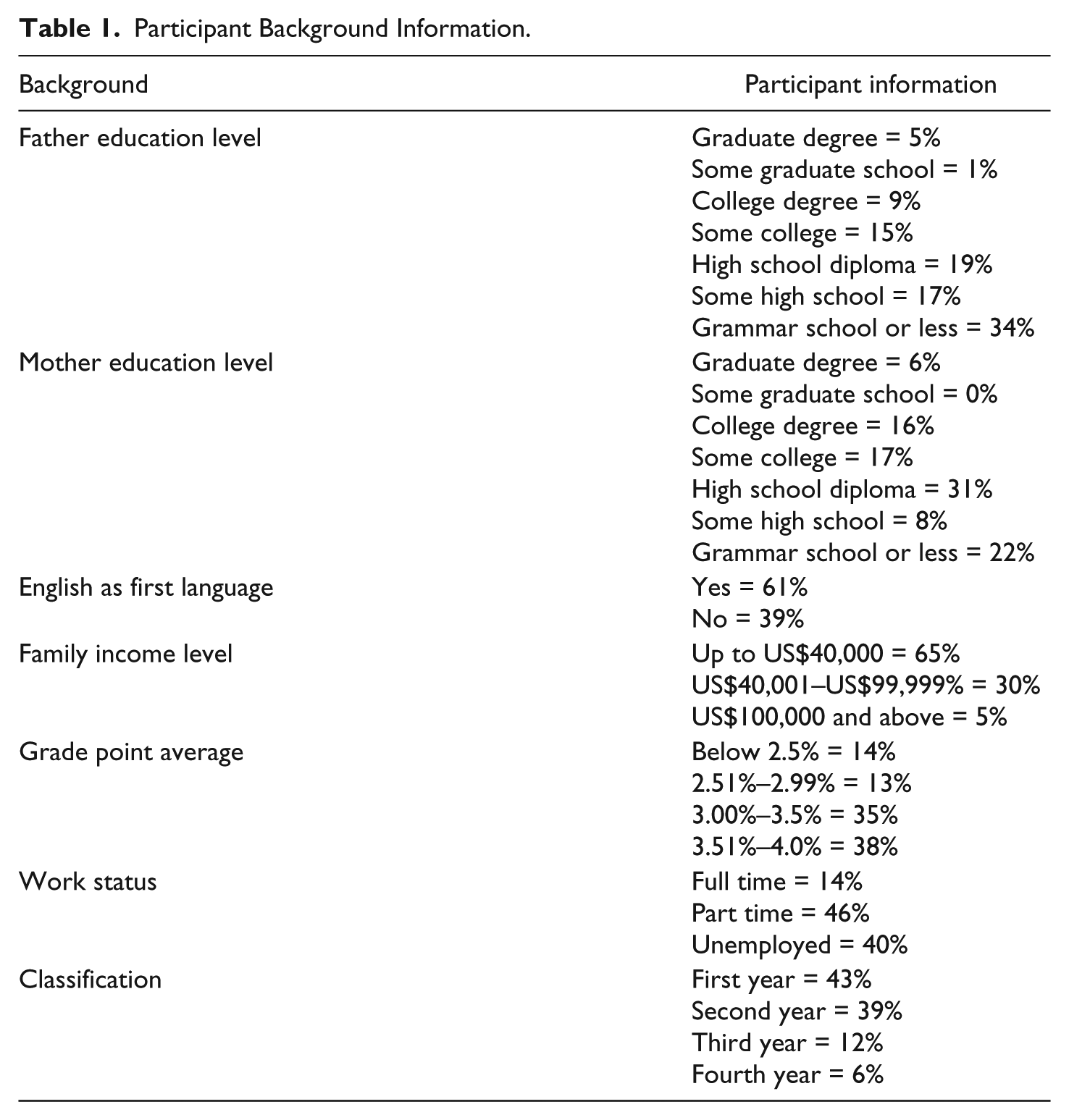
The research team conducted 23 focus groups with 130 Latino male students who were enrolled full-time and part-time at nine selected 2-year and 4-year institutions in Texas. Seven 2-year institutions and two 4-year institutions participated in this study. The 4-year institutions were large public universities located in urban or suburban contexts and served over 25,000 students. The seven participating public 2-year institutions were located in suburban and urban contexts and served anywhere from 7,000 to 45,000 students. Latino males participating in this study were (a) above the age of 18 years, (b) identified as Latino or Hispanic, (c) identified as men, and (d) were currently enrolled part- or full time at one of the research sites. Over half (65%) of all participants came from homes with incomes less than US$40,000 per year, one third (34%) had fathers with an educational background of grammar school or less and a little over one third (36%) of fathers had completed some or all of high school. The mother’s educational background was similar, 39% had an educational background of grammar school or less and the same number had completed some or all of high school. Over half of all participants were working part time while enrolled in college (46%). Participants varied in terms of year in college but most were in their first or second year (82%). Most participants had grade point averages above 3.0 (72%) and 61% of them reported English as their primary subject (Table 1). Participants were encouraged to speak in English to facilitate data analysis, but were given the choice to select the language they felt most accurately allowed them to express their sentiments.
Participant Background Information.
To recruit participants, the principal investigator (PI) established relationships with each research site gatekeeper—a designated individual that assisted the research team with gaining access to participants on campus and reserving space for interviews. Each focus group had 4 to 8 participants, lasted around 1.30 hr, and was audio recorded and later transcribed. Transcripts were then coded (initial open coding, followed by a more detailed codebook coding) and significant patterns within the data were noted and hypothesized as possible explanations, and propositions for the findings, particularly in light of the constructs of the chosen theoretical framework (Saldaña, 2009). To aid in the data analysis process, the research team also engaged in ongoing conversations and memo-writing activities, which assisted in understanding how Latino males viewed the role of female family members in their educational pathways and highlighted emerging themes within the data (Creswell, 2014; Saldaña). During this stage, significant patterns within the data were noted and possible explanations and propositions for the findings were proposed.
Researcher Positionalities
This research endeavor was the product of a collaborative effort. The PI is a Latino man, and his research team for this project included three Latinas. The four researchers came to this work from a variety of positionalities, including gender identity, college generational status, and professional work experience. Professional backgrounds include social activism and nonprofit work, K-12 teaching, community college administration, 4-year university teaching, and higher education administration. Possessing activist and educator roots, each of the team members shares a commitment to producing more equitable educational environments. Although each researcher viewed the data from a different perspective (i.e., one may start with an orientation toward gender equity and then incorporate a cultural perspective or vice versa), the group collaborated to arrive at shared interpretative meanings and conduct analyses that were subject to rigorous discussions of multiple interpretations. Furthermore, we each wrote analytical memos throughout the data collection and analyses activities, which were used to help triangulate interpretations and provided a space for us to explore our own positionalities. In short, the group’s multipositionality composition and dedication to this research endeavor allowed us to delve deeply into the data, consider multiple possible interpretations, and produce a trustworthy analysis.
Findings
Using Yosso’s (2005) community cultural wealth model, Latino males reported female family members played a critical role in their educational success. For example, participants described how female family members leveraged several forms of cultural capital in supporting their educational pathways: aspirational, familial, social, and linguistic capital. Female family members set high expectations for academic success, reinforced a college-going culture, and served as sources of motivation for these young men. The following sections highlight how Latino males perceived the influence of their female family members on their educational experiences.
Mothers Set High Expectations and Motivate Their Sons
Latino males attributed a large part of their educational success to their mothers and identified them as being primary supporters of their educational pursuits, as well as, their main source of inspiration. Participants conveyed their mothers built high levels of aspirational capital by establishing high expectations of educational success and serving as strong sources of motivation throughout their educational experiences.
Most participants shared the unquestionable appreciation of educational attainment in their families despite many of their parents not having a college education. Albeit their parent’s desires to pursue an education, most were forced to work to economically sustain their families at a very young age. Studies show there is some credence to investigating the role of family and socioeconomic status (SES) in Latino male educational success (Sánchez et al., 2002). This study found that although education is a family value, mothers were the ones who emphasized the expectation that their sons attend college.
Well I know in my household, even though my mother doesn’t have a high school diploma or college education, education was always stressed. Or not stressed, but she always put it on me like, “Get your education; that will get you where you want to be in life.” (Martin, 2-year institution)
Martin’s quote accentuates his mother as a conveyer of aspirational capital. Despite her lack of formal education, she understands the importance of establishing educational goals for her children and upholds it as a family value. She comprehends the importance of a college education and sets high expectations for her children. She aspires for her children to have a good future and believes education is the best way to achieve that goal.
Some participants shared that in addition to their mother’s stressing the importance of a college education they also served as a source of motivation. Mothers were noted to support their son’s educational goals by inspiring them to persist toward degree completion. Latino males shared that once enrolled in college, their motivating force to succeed was often the desire to make their mothers proud. This strong sense of obligation to the family is evident throughout research studies of Latina/os (Fuligni & Pedersen, 2002; Suàrez-Orozco & Suàrez-Orozco, 1995). The unconditional support of mothers for their sons was evident across focus groups. When participants encountered difficulties or felt stressed, they often turned to their mothers for advice, support, and encouragement.
Resistance capital proved to be valuable especially when students encountered challenges. When Mario feared dropping out of high school, his mother convinced him to endure: My mom just pushed me all the way. She was the one that . . . there was a point where I thought about dropping out of high school. She was like, “No, you can’t do that.” So here I am. (Mario, 2-year institution)
As a result of his mothers’ influence, this young man understood that dropping out of high school was not an option. His mother’s support propelled him to graduate high school and go on to college. Her unwavering support helped him overcome barriers that could have interfered with his education. She bestowed upon him aspects of resistance capital by helping him resist and overcome challenges on his educational pathway. Mario learned how to overcome adversity and ultimately enrolled in college. For the majority of participants, resistance capital proved to be a valuable asset during difficult times.
Participants attending both 2-year and 4-year institutions described how their mothers early on instilled the expectations of educational success and college graduation.
I always knew that I would go to college. I just always had that mentality of going. I’m going to go to college. I’m going to go to college. I’m going to college just because it was engrained in my head. . . my mom would always tell me, “You’re, you’re going to do this. You’re going to do this.” She ingrained it into my head so I knew. (Juan, 4-year institution)
Consistent messaging from his mother about the expectation to attend college made his enrollment a reality. More than establishing an expectation, she helped him understand that he belonged in higher education. He concludes by stating “she ingrained it into my head so I knew.” Juan’s mother empowered him with the tenacity and understanding that he belonged on a college campus. In accordance with other study participants, Juan’s mother passed on her aspirational and resistance capital onto him. She realized the importance of positive messaging and established high expectations from an early age, which manifested themselves through his successful enrollment in higher education.
Latino males reported their mothers equated a college education with the possibility of a good career and social mobility. They communicated to their sons the expectation they enroll and persist through college graduation. Latina mothers consistently communicated their commitment to helping their children achieve higher levels of academic success than their own. Participants highlighted how their mothers pushed them beyond their personal aspirations and inspired them to achieve even more than they ever felt possible. A student from a 2-year institution shared that his mother, “forced [him] to go higher than [he ever] aimed” while another student at the same institution mentioned that his mother “wanted [him] to do better than what they [his parents] were doing you know economically.” In both cases, their mothers provided aspirational capital by not only setting high expectations for educational success, but also by helping them understand that they could achieve more than what they believed possible. Succinctly, mothers yearned for their sons to achieve higher levels of success than they had achieved themselves and were actively involved in the process.
Participants acknowledged coming from homes that were filled with support and validation. David stated that his mothers’ support is limitless and consistent, which has served as a continual source of strength for him.
I mean, here I am, and my mom supports me every single day. She told me yesterday, she was like, “Uh, it doesn’t matter how long it takes you to graduate, but as long as you get it, as long as you graduate.” And that’s all that matters. She supports me as much as she can. (David, 4-year institution)
David feels an unconditional support from his mother, she does not seem to be worried by the amount of time it will take him to graduate, just as long as he does. He understands there is pressure to graduate in 4 years, but he knows it will be okay if he takes a bit longer. Although David’s mom is not a college graduate, he knows she will support him “as much as she can.” This empowers him to persist despite the obstacles he has encountered. His persistence is a direct consequence of his mother’s unwavering support and encouragement.
Participants also expressed countless ways in which their mothers supported their education. Mothers served as a sort of “counselor” by providing guidance regarding their decision-making process whereas others would surprise them with homemade food. These young men were constantly encouraged to persist to increase their prospect of a better future. Adrian discussed his mother’s influence on his decision to return to college.
Mom kind of encouraged me a little bit, cause, like after I stopped going to school the first time, I just worked and had a lot of different jobs. Some of them weren’t actually bad. . .But after a while, I learned that you can only go so far without an education. So, eventually, I just bit the bullet and decided just to go back and continue my education. Mom had a big influence. She’s the one that said I should go back. (Adrian, 2-year institution)
His story demonstrates how his mother’s influence, coupled with his own self-reflection, enabled him to return to college. Despite him dropped out, his mother kept encouraging him to re-enroll and it eventually paid off. His mother “had a big influence” on him returning to college and continuing on the pursuit of his educational goals. They both leveraged forms of aspirational capital and resistance capital. Establishing the goal of obtaining a college degree was informed by aspirational capital and his return to college, despite his early departure, demonstrates the strength of his resistance capital. Adrian’s testimony highlights the critical role his mother played in his decision to return to college and persist.
An overarching theme was the self-imposed obligation Latino males felt in achieving educational success to honor the hard work and sacrifices their mothers had made for them. Edwin utilized the desire to make his mother proud as the driving force to help him persist.
The one person I do everything for is my mom. I mean, I can say when I first started college, I didn’t stop because I didn’t want to be looked upon as a failure toward my mom, and so I know of the. . . one person that I can do it for the most is my mom, just so, “Hey, I accomplished it. You’re proud of me. And I did what I had to do.” (Edwin, 2-year institution)
Edwin’s testimony exhibits the sense of responsibility he feels toward his mother. Although he had experienced difficulty at the beginning of his educational pathway, he persisted to make his mother proud. His mother served as a form of resistance capital—the student did not want to be “looked upon as a failure” so he persisted because he did not want to disappoint his mother.
Similarly, the ability to bring pride and “bragging rights” to one’s mother was also identified as positive influence by participants. By underscoring the multiple forms of aspirational capital available to Latino males, Latina mothers have ultimately served as a driving force behind Latino males’ persistence. Not only do mothers motivate their sons to go to college, they also want them to succeed professionally. Cipriano’s mother sees college only as a milestone and she established long-term professional expectations for her son.
And so, my mom always says, “Yes, I want those bragging rights.” But it’s also because she wants those positive bragging rights. She, she doesn’t want to just say, “We went to college.” She wants to say, “They went to college. They got a degree. Now they have this job at some major corporation or they’ve started their own business.” And, she wants us to be able to make a name for ourselves. (Cipriano, 4-year institution)
Cipriano’s mother set high expectations beyond college graduation, which helps him stay on track. She expects all her children to attend college to be successful. The message was clear—his graduation would not only be a personal accomplishment but also a family triumph. Cipriano’s success ultimately provides her with “bragging rights” to share his accomplishments with their social network. In addition, this statement reveals that the mother not only wants her sons to graduate college because of the benefits a college degree affords, but also because of the notable status it affords the entire family. These mothers see college degree completion as an imperative step toward building lifelong success. As aforementioned, aspirational capital can take multiple forms for these Latino men, in this case, it extends beyond college graduation to the professional realm.
Sisters Reinforced Expectations, Provided Support and Inspiration
Like their mothers, sisters were identified by participants as having an instrumental role in helping them enroll and persist in college. Some sisters were older and had attended college, establishing a precedence and the expectation of enrollment to their younger siblings. Martin shared his desire to continue the college-going culture within his family by enrolling in a 2-year institution.
They’ve [his sisters] all gone to universities and gotten master’s and bachelor’s and they told me I have to follow in their footsteps. So I decided to come to college and start off here at [a two-year institution]. (Martin, 2-year institution)
Martin’s sisters had already established a college-going precedence in his family and serendipitously motivating him to enroll. Familial capital is evident through his families’ expectations of enrolling, attending, and graduating from college. Martin notes he must “follow in their footsteps,” and complete his degree because that is what is expected of him. In addition, he also benefited from the navigational capital gained from his sisters’ prior experiences in applying, navigating, and graduating from college. Having a close relative with strong college knowledge not only informs the enrollment process but also increases the likelihood of persisting through graduation.
Sisters were also identified as being valuable in helping Latino males decide to attend college in the first place. Josue reminisced about how his sister called him to action, challenging him to enroll in college and “do something” with his time, rather than waiting for a possible career to surface.
I was just enjoying the time off and my sister called me and said, what are you doing? You’re just at the house. She said, “why don’t you start going to school and do something?” And that’s what happened. (Josue, 2-year institution)
Josue, unlike other participants, was not actively seeking a college education. However, his sister helped him realize that college was important for his future. The fact that he refers to his enrollment in college as “that’s what happened,” reveals that his sister had a powerful influence on his educational pursuits. Evidently, his sister served as a rich source of familial capital, it was her encouragement and advice that ultimately propelled him to enroll.
Participants reported their sister’s support went beyond that of high expectations and encouragement. Alejandro discussed how his sister’s financial support allowed him to succeed and remain in college. Her financial support directly affected his persistence.
I have two sisters here, and it’s pretty much without them I wouldn’t be able to, to go to school. I’m staying with one of my sisters, and then I have a job working for my other sister. . . She’s pretty flexible with me. Whenever I need time off to study, or if something’s come up. I always, she can always work around my schedule, and, like I said, staying with my other sister, saves me a lot of money as far as what I pay in rent. . . (Alejandro, 4-year institution)
Alejandro acknowledges that without his sisters, he would not have the opportunity to remain enrolled. His flexible work schedule is possible because his sister is his employer and his reduced living costs provide him with the ability to focus on his education. In addition, their support afforded him with the flexibility he needed to meet both his educational and financial needs. Familial capital and support are evident through his sister’s awareness of his needs—without their help Alejandro knows “[he] would have to drop out.”
Finally, participants identified their younger siblings as a sort of inspiration. They directly influenced the way in which Latino males approached higher education, primarily in the form of setting a good example for them to follow. For example, Melvin’s younger sister serves as a source of motivation for him.
I do it for family, but I think my most inspiration comes from within because I want set that example. I mean, like I said, I do have a little sister. . . I want her to follow in my footsteps. I don’t want her to be, “Well, so-and-so went but they didn’t accomplish anything.” Like no, don’t do that. I do it for her. (Melvin, 2-year institution)
Melvin acknowledges that his family as a whole is a source of inspiration but he highlights the need for his younger sister to have someone modeling college-going behavior. Not only does he internalize his success as a sort of social capital that could be passed on to his sister, but he also takes pride in serving as an example of what is possible. Melvin’s story exemplifies what goal setting and educational attainment look like. His story serves as a source of aspirational capital for his younger sister, particularly, because he wants her to follow in his footsteps—a unique form of navigational capital as described by Yosso’s (2005) theory. This young man’s strong desire to become an example for his younger sibling shows the interconnectedness of family in the lives of Latino males in our study. For Melvin’s sister, familial capital provided by her brother may serve as the key to her enrollment in college. Paradoxically, his younger sister may not realize how much impact she is having on his educational pursuits.
Many study participants expressed being the first in their family to attend college. Adrian emphasized his status as a first-generation student helped him understand the importance of establishing un buen ejemplo for his younger sister.
For me what influenced me is that I’m a first at everything. The first to graduate in my family from high school and the first one to attend college. I’m just trying to be a good example for my sister so she can keep on going with her education and try to get her. . . trying to set a good example for her. She’s already thinking of not going to college so I’m just trying to influence her. . . I’m trying to get my education here and hopefully set a good example for my family. (Adrian, 2-year institution)
As a first-generation high school graduate and college student, he adopted the responsibility of setting a good example for his sister. Even though he realizes that his sister may decide to not attend college, he continues to press forward in hopes of imparting upon her the desire to attend. Once again, the importance of serving as a role model for their younger sister(s) is indicative of the importance of family for these young men. Just as they receive support and encouragement from their female family members, they too feel the responsibility to give back by being a good ejemplo to follow.
Extended Female Family Members Provide Support and Mentoring Relationships
Latino males also identified extended female family members as pivotal in their educational pathways. Students referred to their female family members as their “foundation” and “backbone,” which directly affected their educational success. Participants identified that going to college is not an individual endeavor but rather a family undertaking. Thus, through familial capital even extended female family members were identified as playing a significant role in encouraging Latino males to maximize their learning experiences as college students.
[My family has]. . . been very supportive, my grandmother, my aunts, my cousins, my sisters, I mean, they keep telling me to go for it, get what you can out of it, get what you can out of it. They keep telling me they’re proud of me. I mean, they’re all behind me and that’s a good thing. It feels good. It feels real good. (Tomas, 2-year institution)
Tomas identified several extended female family members as having a positive influence on his persistence in higher education. Their support came in different ways, for example, they encouraged him to take advantage of his time in college, helped financially, and created space for him to study at home. Although most have no formal education they are intentional about supporting Tomas’s goals. Their expressed pride in his accomplishments reinforced his decision to attend college. He states, “they don’t know but they do lots for me.” This type of family support has strengthened his possibilities of academic success and persistence (Moreno, 1999). He draws upon familial capital as a form of goal setting and persistence. In addition, familial capital strengthens the kinship bonds that provide Latino males with the emotional and moral support needed to successfully navigate their educational pathways.
Participants also identified more tangible, or practical, means of support extended to them by their female family members. They varied across Latino male focus groups and ranged from financial security, flexible working schedules, care packages, emotional and moral support, as well as facilitating transportation to and from campus. For example, Gustavo who was enrolled in a 4-year institution shared that although he had a very supportive family, it was his grandmother who encouraged him the most. She would support him by “. . . sending me money, care packages, and all that. So, you know, I got full support.” Although the emotional and moral support of his family was important, the care packages and money facilitated his success on campus.
Female family members were also identified as taking on numerous roles such as mentors and/or consejeras (advisors). They provided participants with information about preparing for and navigating campus culture, helped financially, and connected them with faculty on campus. The majority of participants identified their navigational capital to be most valuable—particularly because most are first-generation students. Support and encouragement was important but knowing who to talk to on campus kept them enrolled. Yet, their influence began far before students enrolled on campus. As matriarchs of their families, grandmothers had the ability to influence their grandson’s decision to attend specific institutions.
The reason I came to [this campus] was because I’ll be the first one in my family to go to college. And, pretty much, my grandmother had told me to come over here ’cause it was a great school. (Danny, 4-year university)
Despite Danny being a first-generation college student—his grandmother had never attended college—she recommended that he attend that specific university. His grandmother had gained some level of understanding about the importance of institutional prestige, and consequently, encouraged her grandson to attend that university because it was a “great school.” Her consejos and encouragement helped him graduate from high school and enroll in college, making him the first of his family to attend.
Two participants identified their sisters-in-law as having a significant impact on their educational success. They served as informants, sharing with them acquired institutional knowledge that would guide them through the complex system of higher education. Participants learned about the importance of navigational capital and skills needed to succeed academically.
It was, basically, my sister-in-law that said, “Hey, you should go to [this university].” She’s about to graduate with an Accounting degree, and she basically became my mentor, and sat me down and said, . . .She’d gone through and learned all of it the hard way, and she basically sat me down and said, “You need to get into this. You need to get to know this professor, this professor, this professor.” . . .I wouldn’t have the opportunities I have now, had it not been for her pushing me into it. (Rafa, 4-year institution)
Mentorship served as a means of conveying important information and connecting Latino males to essential campus resources and key individuals. Rafa trusts the mentorship and advice of his sister-in-law because she has been successful navigating the college system. He, in turn, is able to benefit from her accumulated navigational capital—which improves his likelihood of educational success. Rafa added that his sister-in-law took additional time to help him integrate to the college environment, My sister-in-law, actually when I came in, she introduced me, she would take me to a teacher’s office and introduce me. . . it kind of broke that barrier. It, it kind of gave a connection between me and the professor, and that the same time, it also kind of gave me the mentality of I have to meet her expectations because she introduced me. I owe it to her to be there, to, to get a good grade, and to show that she is a good, kind of like, she’s a good person, or ’cause she’s a 4.0 student, as well, so it’s her introducing me and saying, he’s a good student. He’s awesome. You’re lucky to have him in class. He’ll do really well, kind of put the bar really high, and I had to strive to make sure that I achieved it, not to disappoint her or to make her look bad in any way.
Rafa’s sister-in-law knew the importance of connecting with faculty members while in college and was able to impart that knowledge to her brother-in-law. Through her mentorship, Rafa was able to learn about the complexities of navigating the college system. She provided him with both navigational and familial capital by personally introducing him to professors and speaking highly of his potential. Rafa expressed feeling a sense of obligation to excel academically but felt comfortable approaching his professors for help. That personal introduction to his professors empowered him with the confidence to seek help without the concern of being perceived as deficient.
Discussion
This study affirms the powerful role female family members play in the educational success of Latino males—as emphasized by these young men. The role of female family members in sharing community cultural wealth via aspirational, familial, and navigational capital was evident throughout the study. Findings demonstrated that familismo and intergenerational support systems result in stronger bonds between Latina family members and Latino males, which is consistent with prior studies on Latina/o families (Quiñones & Marquez Kiyama, 2014; Ruiz, 2007). This study highlights stories told by Latino males about the strong influence their mothers, sisters, grandmothers, aunts, and even sisters-in law have on their educational pathways. Participants made it clear that the women in their family were their largest supporters, motivators, advisors, and mentors. The importance of family in the educational pathways of Latina/o students has been highlighted by numerous studies (see Bensimon & Dowd, 2009; Crisp & Nora, 2010; Hurtado & Carter, 1997; Hurtado, Carter, & Spuler, 1996; Hurtado & Ponjuán, 2005; Sáenz & Ponjuan, 2011; Solorzano, Ceja, & Yosso, 2000), but this study is unique in highlighting the specific role Latina female family members hold in Latino male’s educational pathways.
Study findings specify how aspirational capital (Yosso, 2005) is passed on from female family members to these young men, despite them lacking appropriate knowledge about the college-going process. Furthermore, this study counters deficit-based assumptions about Latina/o families and their assumed lack of active involvement in the education of their children. Overall, despite most participants being first-generation college students, they reported feeling supported and validated by their parents. This is congruent with prior research that identified a relationship between high levels of parental involvement and increased levels of educational aspirations for their children (Moreno, 1999). The influence of aspirational and resistance capital fostered by female family members was evident across focus groups. Institutions of higher education must learn to celebrate the numerous forms of cultural capital utilized by Latino families to help foster college-going behaviors.
Finally, this study extends current scholarship on community cultural wealth (Yosso, 2005) by highlighting the critical role extended female family members have on the educational pathways of Latino males. Prior research mostly focuses on the role of immediate family members and how they influence the educational pathway of Latina/os. This study can provide an alternative view at how family is assessed for Latina/o students. In addition, this study provides a deeper understanding of ways Latino families support each other to increase Latina/o college students’ enrollment and persistence in college (Llamas & Morgan Consoli, 2012).
Limitations and Delimitations
This study focused on the perception Latino males have of their female family members’ influence on their educational pathways. Overall, the purpose of this study was to understand how Latino males (a) view the role of their female family members in their educational pathways, (b) to identify what forms of community cultural wealth Latinas leveraged to help Latino males persist, and (c) to understand how female family members shaped Latino male educational experiences on campus. The decision to focus on female family members in no way suggests that male family members do not play a crucial role in their decision-making process or persistence toward a college degree. The intention was never to compare the role of male and female family members but rather to make a unique contribution to the literature. This delimitation was made to focus specifically on Latina family members to gain an in-depth understanding of how women directly influenced the lives of Latino males.
The sample for this study consisted of 130 Latino males enrolled in higher education. Although the sample size enabled the research team to cover a broad range of student experiences, the study does not disaggregate by institutional characteristics (i.e., 2-year vs. 4-year institutions), therefore, disaggregating by institutional type may reveal unique differences for universities, community colleges, geographical location, minority-serving institution status, and so on. As a result of these limitations, findings are not necessarily generalizable to all types of institutions or all higher education stakeholders. However, they do provide a glimpse into the unique role female family members play in the lives of Latino males.
Family interactions, particularly those of female family members, may differ depending on the type of institution that a Latino male is attending or their unique family structure. In spite of these challenges, we feel confident in the utility of findings that emerged from the study. They are aligned with community cultural wealth framework (Yosso, 2005) and serve to illuminate the experiences of these young men and how they view the role of Latina family members on their educational pathways.
Implications for Policy and Practice
The study highlights the important role female family members play in the college-going process of Latino males. Findings suggest Latina family members play a supportive and primary role in Latino male student’s college-going decision-making process, persistence, and graduation. Female family members, in particular, provide a network of support and encouragement that yields a strong foundation for Latino males in their pursuit of postsecondary degrees. Latinas were identified as role models, advisors, and mentors sharing their knowledge about how to navigate the college system to helping establish personal connections with faculty. Applying a community cultural wealth framework entails recognizing that Latino males are more likely to persist “because” of their family support (Tierney, 1999). It is particularly important for researchers and educators alike to move away from deficit-based assumptions about minoratized populations. This study purposefully integrated an asset-based approach to highlight ways in which institutions and Latino families could partner to serve Latino males. Findings accentuate the unique role female family members hold in the college pathways of these young men; despite many not having a college education or knowing how to navigate college, Latinas were identified as primary motivators for the majority of study participants.
This study also offers several implications for institutional leaders and administrators concerned with supporting Latino male students in higher education. Institutional leaders and administrators should promote awareness among the campus community of the important role Latina family members (and Latino families in general) play in the lives of Latino males. Building awareness of this phenomenon has the ability to improve the manner in which higher education officials interacts with Latino families and, in particular, with Latina family members. Understanding the potential for engaging Latina family members in the college-going process may open conversations on how to increase persistence, academic success, and graduation of Latino males.
Institutions of higher education can engage Latina family members in dialogue around how to best serve Latino males on campus. Furthermore, institutions could be intentional about leveraging female family members’ influence on Latino males to address educational barriers as they arise during their college years—including academic progress, social dilemmas, and health and wellness issues (Auerbach, 2004; Moreno, 1999). Finally, community cultural wealth offers a means of understanding key cultural values that institutions could leverage in developing programs properly suited to serve Latino males. Creating awareness, involving Latino families in the education of their children, and providing support can eliminate some of the barriers Latina/os face.
Future Research
Future research should also examine the complex role of male family members and the influence these men have on the college decision-making process and persistence of Latino males in higher education. Although this research area is beyond the scope of this project, exploring the unique role male family members have on the educational pathways of Latino males could help us better understand how to support these young men. It could illuminate how institutions of higher education might better engage individual family members of Latina/o students to effectively establish a web of support—even prior to their enrollment in higher education. Likewise, additional research might also explore how institutional context affects the way in which Latina female family members influence the college-going process of Latino males. Research in this area might compare different institutional contexts such as public versus private or predominantly White institutions versus Hispanic-serving institutions; exploring a variety of contextual settings would provide a nuance understanding of how contextual factors could affect family engagement.
Footnotes
Acknowledgements
The authors acknowledge the generous support of TG, Texas Guaranteed Student Loan Corporation, for their support of this research.
Declaration of Conflicting Interests
The author(s) declared no potential conflicts of interest with respect to the research, authorship, and/or publication of this article.
Funding
The author(s) received no financial support for the research, authorship, and/or publication of this article.