







Abstract
This article addresses concerns about English competencies among Hispanic English as a second language (ESL) science students that perpetuate underrepresentation of Hispanic individuals in scientific discourse. Faculty and student perception surveys completed at the University of Puerto Rico at Cayey suggest that Hispanic ESL undergraduates require increased productive competencies in English. Those science majors with weak proficiency in English are significantly disadvantaged and current institutional practices don’t address their needs. Recommendations include course development focused on productive competencies and interdisciplinary collaboration.
Most educators would agree that undergraduates planning for a career in the sciences need instruction in how scientists communicate. Yet, recent studies continue to identify concerns about students’ communication competencies for scientific purposes (e.g., Stanley & Lewandowski, 2016) and one suggested reason is that science faculty prioritizes knowledge content over process and communication competencies. Some solutions to improve students’ preparation include embedding science communication alongside science content in existing courses (Jandciu et al., 2015) and developing new instructional strategies to help students gain discipline-specific writing competencies (Clabough & Clabough, 2016). But the most common solution that institutions of higher education have implemented is the development of new courses with a focus on scientific communication (Brownell, Price, & Steinman, 2013; Kolber, 2011). New course outlines typically include preparation in all four skills of language competency: reading, writing, speaking, and listening. These skills are often divided into two types: receptive skills, which refer to the comprehension of language through reading and listening, and productive skills, which require students to produce meaningful language through speaking and writing (Harmer, 2007, p. 265). However, owing to wide recognition that students lack productive skills, new course material often focuses on writing and oral communication competencies (Stuber-McEwen & Thielen-Belveal, 2008; Walton & Baker, 2009). Yet, most students show more confidence with receptive skills and report that even when course content prioritizes productive skills, they are typically given more instruction in writing than speaking (Mercer-Mapstone & Matthews, 2015).
Concerns about the lack of productive competencies are magnified among students with English as a second language (ESL). English, the lingua franca of science, is frequently required of ESL science majors who need high levels of competency to earn places in graduate schools and gain a foothold in academia or industry. After graduation, ESL scholars are increasingly required to disseminate their work in English (Curry & Lillis, 2004; Uzuner, 2008), yet many lack adequate preparation in English language editing skills (Mišak, Marušić, & Marušić, 2005; Pearson, 2011). Despite these needs, in locations where English is taught as a second or foreign language, passive language comprehension skills are usually prioritized over active language use (Schneider, 2011, p. 224) and ESL science students may not receive any instruction in using English specifically for scientific communication (e.g., de Oliveira, dos Santos, da Costa Souto, & Dias, 2014).
Concerns about lack of English language competencies may significantly affect academic progress critical to anticipated careers in the sciences for ESL students already within the U.S. educational system, both in the mainland United States and the Spanish-speaking U.S. territory of Puerto Rico. In Puerto Rico, issues related to English competency among first-language Spanish-speaking undergraduates are complex because of their status as U.S. citizens and their right to complete their education in the mainland United States. For these students, deficient English language competencies have the potential to limit or even put a stop to future careers in scientific professions (both in Puerto Rico and the mainland United States) that frequently favor applicants with internships, research experiences, scholarships, and graduate studies only available in mainland U.S. institutions or through U.S. federal programs. Furthermore, it is important to recognize the polemic nature of English language use in Spanish-speaking Puerto Rico that necessarily implicates assimilation to (or resistance of) U.S. ideology and norms. Pousada (1999) explains, English has long been viewed on the island as both a tool of liberation and an instrument of oppression. Children are told from the earliest grades that English will be vital for their educational and professional advancement, while they are also cautioned that learning it too well may endanger their Puerto Rican identity. (p. 33)
In the context of increased demand for preparing Hispanic ESL (H-ESL) undergraduates for Natural Sciences disciplines that are dominated by English language practices, specifically in the Spanish-speaking U.S. territory of Puerto Rico, this study tests the hypothesis that Spanish-speaking students require specialized training for them to compete in scientific careers dominated by English language practices. The study questioned: (a) whether perceived or actual lack of English competency among Puerto Rican undergraduates at the University of Puerto Rico at Cayey (UPR Cayey) limits these H-ESL students in scientific fields, (b) how current institutional practices in ESL at the University potentially disadvantage students in scientific disciplines, and (c) whether localized solutions can prepare students effectively for scientific careers dominated by English language practices. Anticipated findings are relevant to not only the 11 campuses of the University of Puerto Rico system and other institutes of higher education in Puerto Rico but also the wider network of 492 Hispanic Serving Institutions (HSIs) and the 333 Emerging HSIs throughout United States serving a total of 59.1 million Hispanic students in the United States, plus 3.3 million in Puerto Rico in 2017 (Hispanic Association of Colleges and Universities, 2018). Findings may furthermore add to the increasing body of work focused on second language learning as it applies to professional preparation in science, technology, engineering, and mathematics (STEM) fields.
Review of the Literature
Studies relating to English competency and success in English-dominant academic programs indicate that, regardless of discipline-specific knowledge or aptitude, deficiencies in English communication skills can not only limit professional advancement but also function as a barrier at all educational levels. At the K-12 level, English language competencies have been found not only to influence students’ socialization patterns affecting learner status (Braden, 2018) but also to restrict their access to and achievement in academic opportunities in the classroom and wider school setting (Ortmeier-Hooper, 2008). After compulsory schooling, entrance-level exams for tertiary education in scientific disciplines often require English language competencies that school-leavers cannot demonstrate (Ong Sook & Chee Keong, 2015), and frustration is common among ESL students who have repeatedly failed English competency exams for science programs (Johns, 1991). For those who are admitted, undergraduate students quickly learn that English language skills, specifically in reading comprehension, summary and paraphrase skills, are vital to their progress (Braine, 1989; Hartshorn, Evans, Egbert, & Johnson, 2017). For those ESL students who continue to the graduate level, English competence continues to impede progress in common assessment activities such as collaborative writing projects (Cheng, 2013), industry placement experiences (Felton & Harrison, 2017), and composition of a traditional thesis or dissertation (Dong, 1998). As a result, and particularly for those students interested in STEM fields, competency in English plays a critical role in dropout rates, both in school (Bedrossian, 2018; Watt, 1994) and at university (Curry, 2000), where noncompletion among Hispanic undergraduates continues to exceed any other ethnic group in the United States (McFarland, et al. 2018).
Although many Hispanic students have a positive attitude toward learning and using English as a vehicle of scientific communication (Herrando-Rodrigo, 2015), the problem of H-ESL students being left behind in classes dominated by English language practices may start as early as high school in the United States (Parker, 2014). Challenges for H-ESL graduates also perpetuate into professional life. In a study on the perceptions and practices of senior Spanish academics regarding research dissemination in English, Pérez-Llantada, Plo, and Ferguson (2011) recognize that limited production skills disadvantage H-ESL academics, specifically in speaking rather than academic writing (p. 18). Most of their interviewees commented that “not being fluent in English was a significant handicap in international conferences when presenting their papers and fielding questions from the audience” (p. 23). So, even after receiving graduate degrees, many Spanish-dominant academics continue to struggle with presenting their ideas in English at international conferences and may have an additional burden in relation to perceived difficulty, dissatisfaction, and anxiety when disseminating their findings in English (Hanauer & Englander, 2011).
One proposed strategy to address the concerns of ESL students in STEM fields is to promote interdisciplinary collaboration that moves away from the traditional academic divisions and encourages what Cortese (2003) describes as a more “interdisciplinary systems thinking” (p. 18), which he claims all institutes of higher education, and particularly minority serving institutions, need to institutionalize. Without experiencing interdisciplinary collaboration, Hall and Weaver (2001) explain that the skills required for effective collaboration in multidisciplinary projects are critically lacking among health care professionals because they do not learn such strategies at university. Yet, contrary to the traditional division of discipline-specific faculties, models of interdisciplinary collaboration have recently expanded and continue to unite faculties of the Language Arts and Natural Sciences, specifically thanks to the development of Medical Humanities curricula. Some institutions even offer models of how such interdisciplinary collaboration might help ESL students succeed in preparation for scientific careers dominated by English language practices. For example, the Departments of English and Horticulture at Iowa State University have collaborated to develop a well-received foundation course in communication skills that focuses on teaching communication and information literacy skills within the context of horticulture (Dinkelman, Aune, & Nonnecke, 2010). Another initiative, offered in 2013 at the University of Rhode Island, involved collaboration between faculty specialists in microbiology and writing studies who team-taught an honors course on Writing Science for the Public in which students conducted research on local water quality and disseminated their results and recommendations to the residents of the community (Amador & Miles, 2016). Although, at present, these models do not target ESL students, there is no reason why such programs could not be adapted to meet the communication needs of ESL undergraduates.
Materials and Methods 1
The research was conducted at the University of Puerto Rico at Cayey (UPR Cayey) in the second semester of the 2017-2018 academic year where 1,483 undergraduates—almost one half of the student population—major in Natural Sciences programs. The University, a 4-year public institution with a 100% Hispanic student body, is classified as a Baccalaureate College of Arts & Sciences by the Carnegie Foundation and, despite its modest size, ranks 18th in the United States among source institutions for Hispanic PhDs in natural and social sciences (National Science Foundation, 2015). The research design, and specifically the design of the survey items, was informed by (a) the findings of a pilot survey at the University’s Rio Piedras campus, (b) a review of current and archived syllabus aimed at improving language skills, and (c) a series of interviews with each of the directors of the Natural Sciences Departments. A mixed methods research design, illustrated in Figure 1, was used to gather data concurrently from the three activities: (a) evaluations from a series of three workshops for students of the Research Initiative for Scientific Enhancement (RISE) Program, (b) a survey of Natural Sciences students, and (c) a survey of Natural Sciences faculty. In the first data-collection activity, the workshop evaluations, the participants of the RISE workshops were either preselected by their admission into the RISE Program or self-selected through attending the workshops. A total of 39 students of the Natural Sciences participated in first workshop evaluations, 35 participated in the second, and 24 participated in the last. The second and third data-collection activities comprised a survey for students and faculty members of the Natural Sciences, in which participation was voluntary among all eligible contributors (i.e., all 1,483 students and all 66 faculty members of the Natural Sciences). The self-selection of participants followed a nonprobability sampling method described by Summers (1991), as suited to the generalization of findings to an institution where the sample was taken.
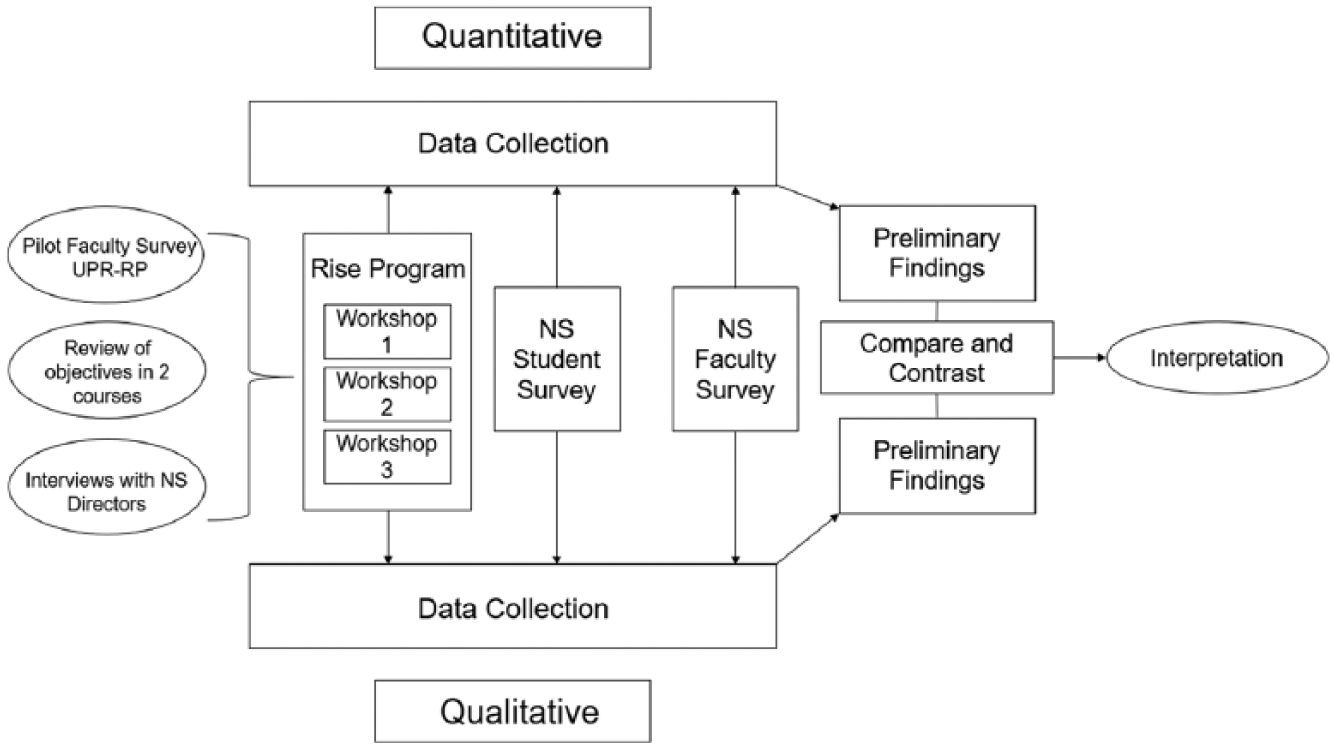
Illustration of the mixed method research design applied in the study.
The evaluation instrument given to RISE Program workshop participants included seven criteria that students evaluated on a 0 to 5 scale and an open-response section. The evaluations were administered immediately after each workshop and had a 100% response rate. The student survey comprised a series of multiple-choice questions and a shorter series of open questions (see Supplemental Appendix 1). The survey, administered in Spanish, was accessible online via university email accounts and via a QR scan code posted around the campus’s two Natural Sciences buildings. A total of 259 undergraduate students participated in the student survey from a potential 1,483 participants making a 17% response rate. Of these 259 students, about half were majoring in Biology (130 frequency, 50.2%), and most of the other participants were majoring in either the Natural Sciences general program (58 frequency, 22.4%) or Chemistry (56 frequency, 21.6). There were only 13 participants (5.0%) majoring in the much smaller Mathematics-Physics Department and two majoring in Pedagogy in Natural Sciences (0.8%). The faculty survey similarly comprised multiple-choice and open questions (see Supplemental Appendix 2). It was administered in English and accessible in print and online via university email accounts. A total of 36 faculty members participated in the survey of a potential 66 participants making a 55% response rate.
Both the quantitative and qualitative data generated from the three data collection activities were concurrently analyzed as complementary strategies in the research design, following a model suggested by Auerbach and Silverstein (2003, pp. 23-28). Qualitative data were analyzed by preparing the transcription of responses and then using exploratory and inferential analysis methods to identify statistically significant trends. Microsoft Excel was used for the data entry process, whereas the STATA v15.1 program was used for data analysis. Variables were analyzed descriptively and analytically. In relation to the descriptive statistics, data were processed using the average, maximum, minimum, standard deviation, and the range of the variable created to evaluate the perception of the participants in relation to their competence in the English language. For the rest of the variables, percentages were observed. In relation to analytical statistics, the chi-square test was used to observe the possible differences between the variables under study and logistic regression models to estimate probabilities related to the research questions.
A composite index to determine participants’ level of English competency across the criteria of reading, writing, speaking, and listening was developed. Question items of the survey were taken into consideration to determine this index for each subcompetency, and the answers of each question were formulated in a Likert-type scale from 1 (minimum) to 5 (maximum). The maximum point for each skill was calculated multiplying the number of questions by 5, for example, writing has three questions and a maximum value of 15 points. Participant answers were summed to find the absolute value of each skill, which was then normalized by dividing this absolute value with the maximum sum for each skill, for example, a participant with a total value of 10 points in the writing skill has 0.66 (10/15) writing points after the normalization. This process was completed for the four skills. At the end, the English Competency Index (ECI) was determined by the average of the skills’ normalized value as shown below:

Results 2
Lack of English Competency Limits H-ESL Students
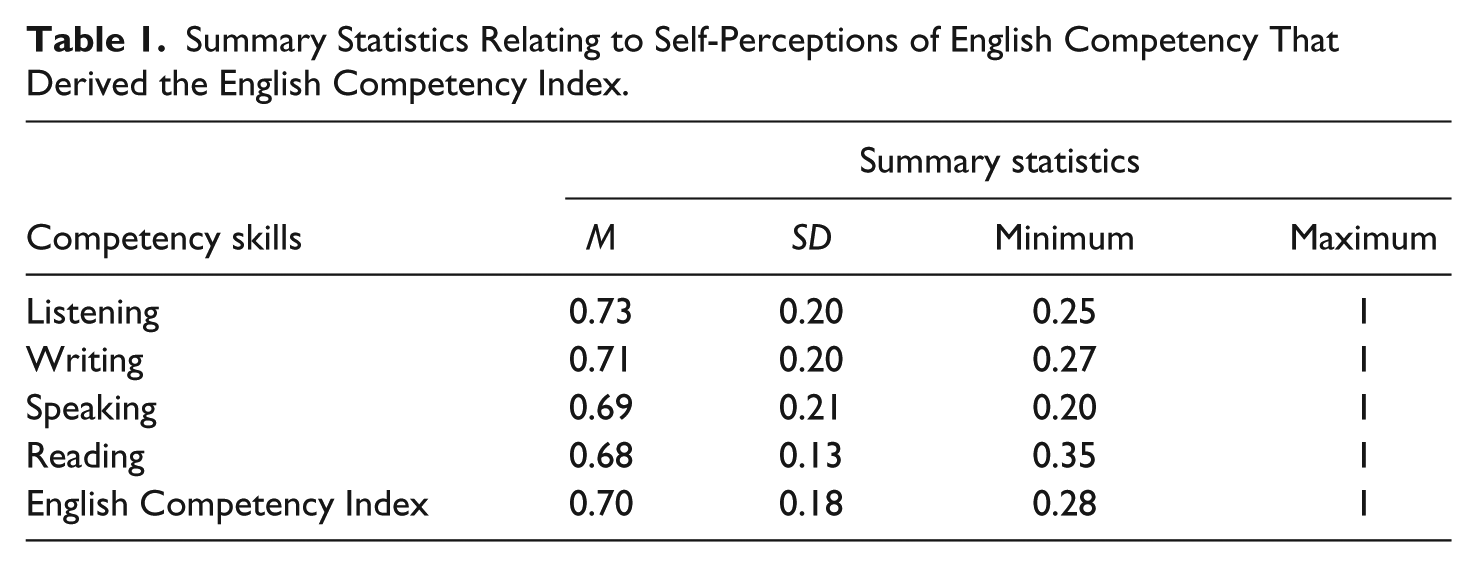
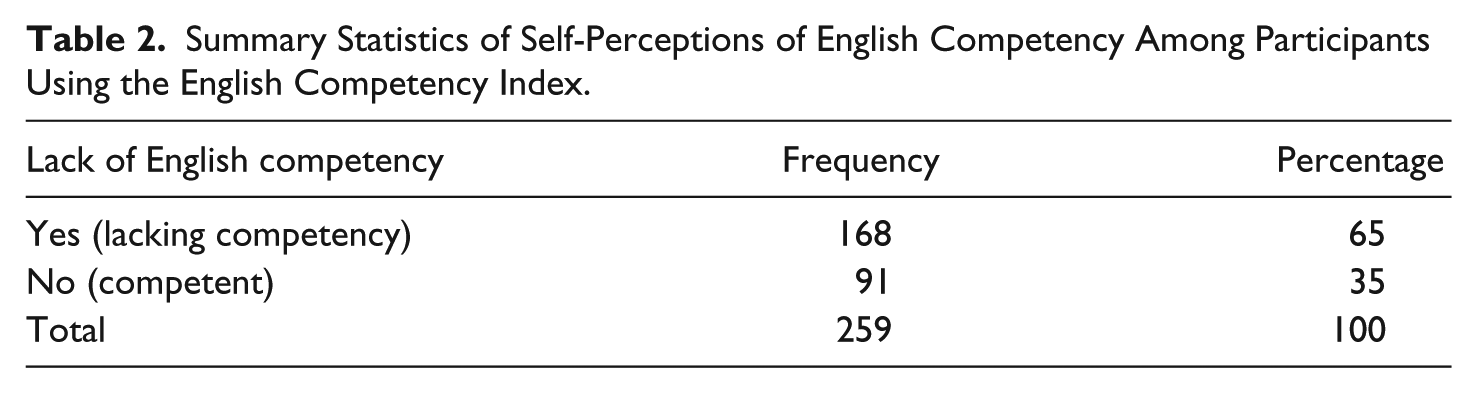
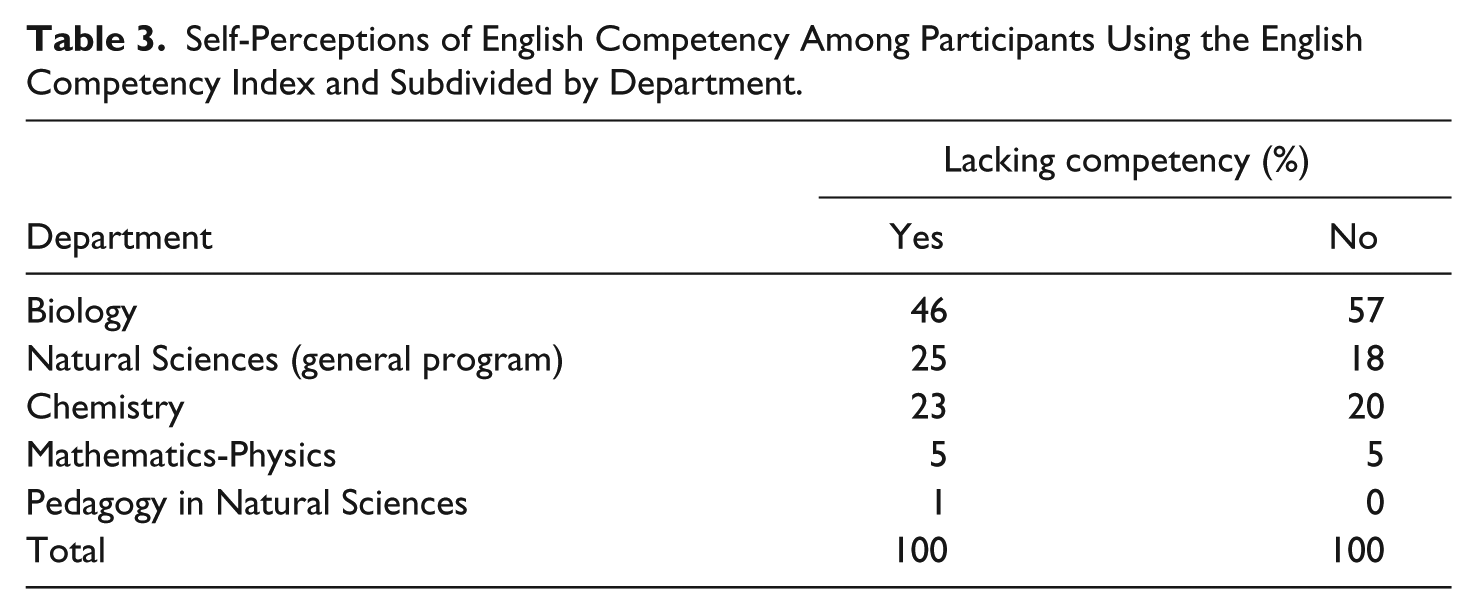
Faculty and student participants agreed that H-ESL students of the Natural Sciences lacked competency in English. Institutional data for the 2017-2018 freshman cohort indicate that of the 323 students admitted to Natural Sciences majors, less than half (47%) had advanced English competencies according to the results of the College Board entrance examinations. 3 Most of the cohort (53%) were required to take classes in either Intermediate English (41%) or Basic English (12%) using syllabi designed specifically to support ESL students. Furthermore, self-perceptions of English competency among the participants suggest that students’ confidence levels in their own English competency were even lower. The data from the student survey were used to determine an ECI related to students’ listening, writing, speaking, and reading confidence in English against an 80% comprehension cut-off point, aligned with the division between Intermediate and Advanced competency based on the College Board exam results. Table 1 presents the summary statistics of self-perceptions English competency that derived the ECI. The analysis of this data, summarized in Table 2, shows that 65% of the research participants believe that they lack English competency. Application of a chi-square test (χ2 = 4.16, p = .38) to this complete data set determined that there is no statistical difference in the rates of English competency among students in different majors of the Natural Sciences, see Table 3.
Summary Statistics Relating to Self-Perceptions of English Competency That Derived the English Competency Index.
Summary Statistics of Self-Perceptions of English Competency Among Participants Using the English Competency Index.
Self-Perceptions of English Competency Among Participants Using the English Competency Index and Subdivided by Department.
In apparent agreement with student self-perceptions of low competency, many of the faculty reported that their students had difficulty with competencies related to second-language acquisition issues, such as grammar, syntax, orthography and vocabulary. Additional competencies that faculty believed their students lack may be equally applicable to native speakers, such as developing paragraphs, using and citing sources correctly, and using the correct style for a specific format or audience. Student perceptions aligned with faculty responses with most participants agreeing that they lacked competency in English, specifically relating to citing correctly, understanding scientific concepts, summarizing and paraphrasing effectively, knowing the structure of essays and paragraphs, and translating from Spanish to English. Data from both faculty and student surveys show a general tendency for both groups of participants to consider that students struggle with grammar and vocabulary more than any other issue, see Table 4. However, chi-square testing determined that there was no statistical difference between the faculty and student perceptions of the significance of either grammar deficiencies (χ2 = 0.015, p = .90), or vocabulary deficiencies (χ2 = 0.007, p = .92).
Perceptions of Weakest English Composition Skills Among Students.
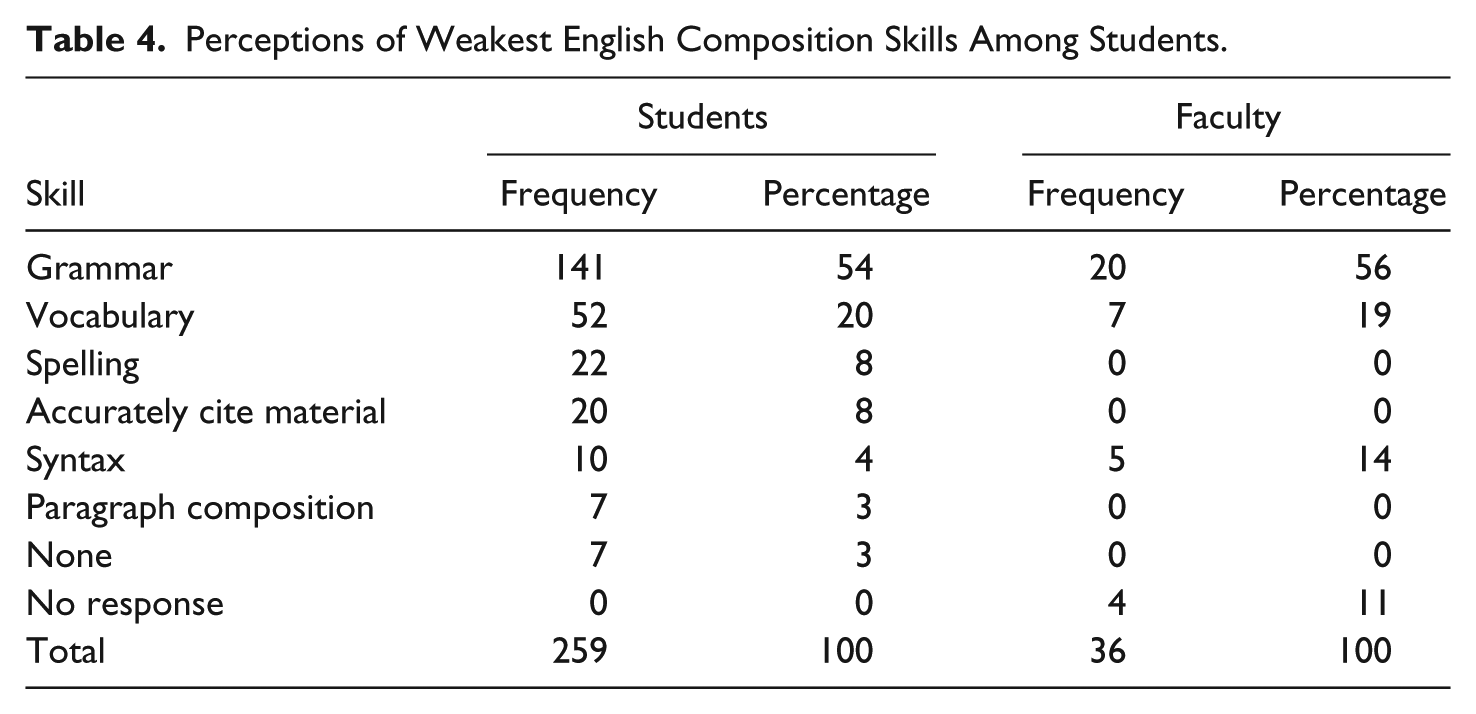
Self-perceptions from qualitative data reinforce findings about lack of English competency and associated frustrations among students, for example, one student described himself as part of a larger group, “personas como yo que venimos de escuelas publicas con una deficiencia en el área de inglés (people like me who come from public schools with a deficiency in English).” Another commented, “en la ciencia el inglés es el idioma universal y es necesario saber muchos términos complejos, los cuales se me hacen cuesta arriba en inglés, pero a la perfección en español (English is the universal language in science and it is necessary to know a lot of complex terms that feel like an uphill struggle, but I know them perfectly in Spanish).” In sum, both students and faculty agree that students lack both fundamental language competencies in English grammar, syntax, and vocabulary in addition to the more advanced stylistic issues that native speakers also need to develop, like paragraphing skills, controlling tone and style, and building effective arguments.
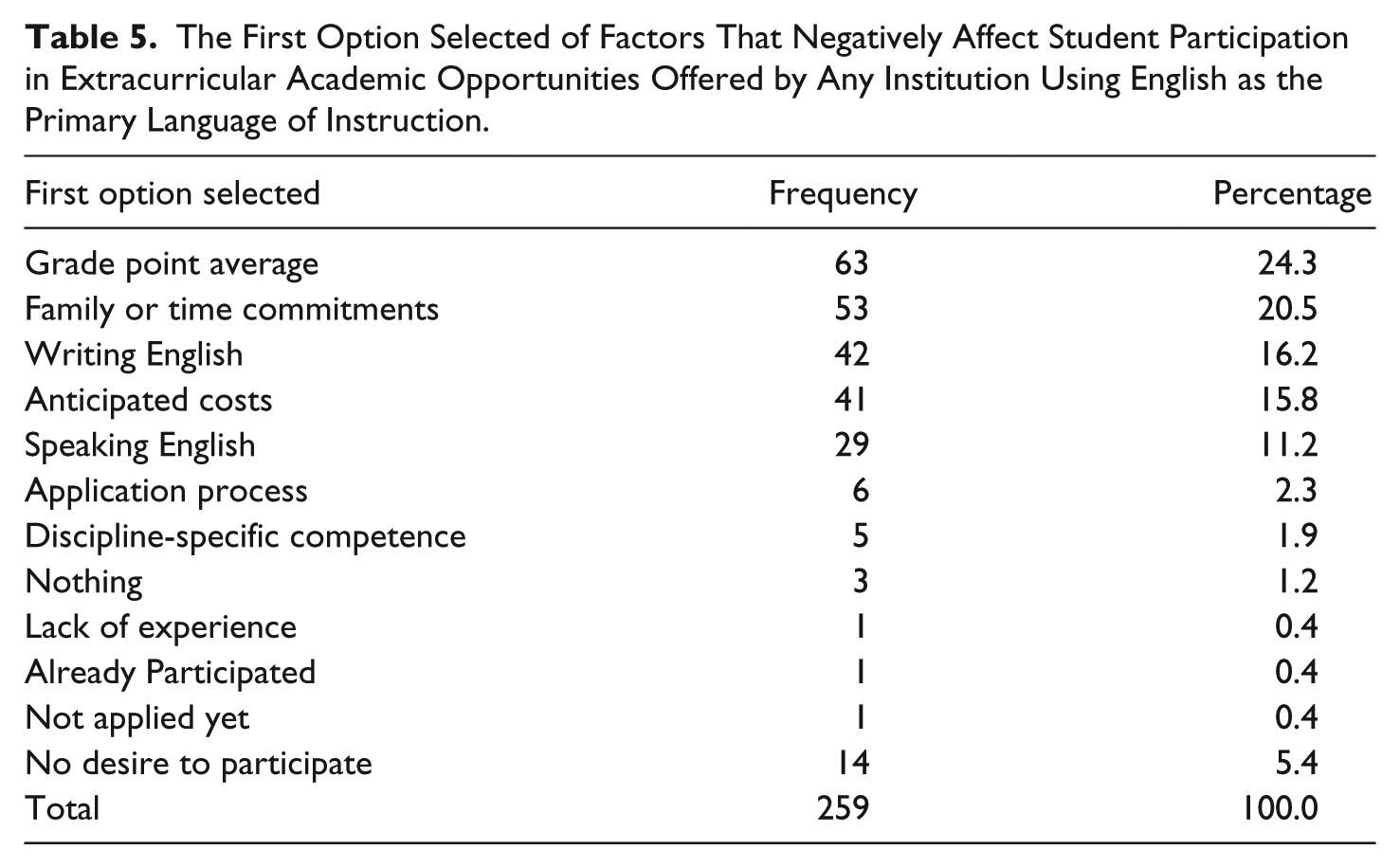
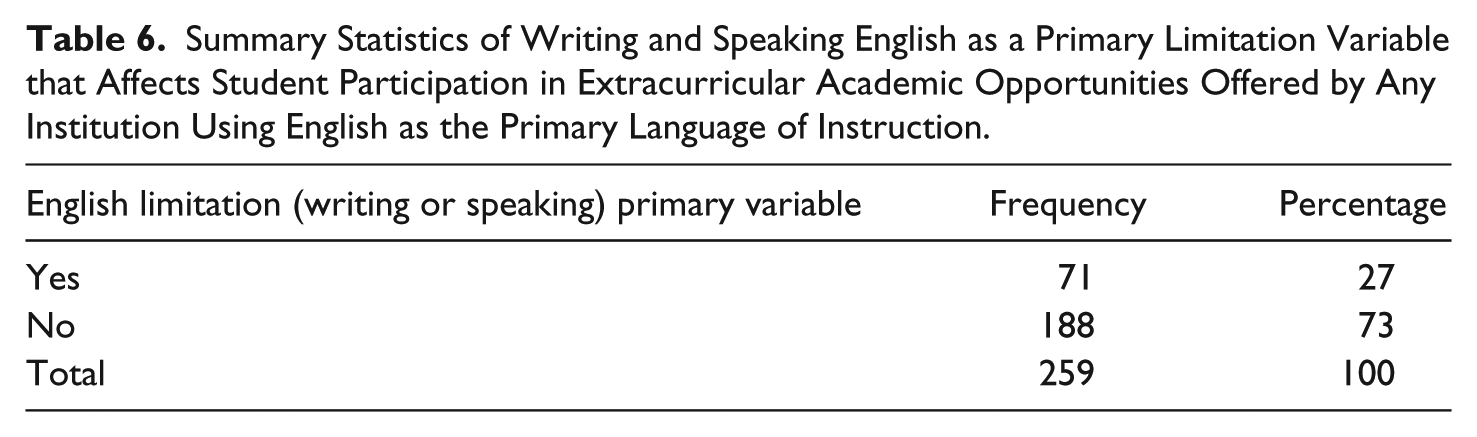
To evaluate whether the lack of English Competency creates limitations for H-ESL students in scientific fields, the survey asked the students participating in the survey what factors negatively affected their participation in extracurricular academic opportunities such as discipline-related internships, workshops, short courses, research experiences, or academic trips offered by any institution using English as the primary language of instruction. Data analysis found that writing English and speaking English were among the top five first reasons selected by the students along with: concerns about grade point average (GPA), family or time obligations, and anticipated costs (see Table 5). Writing and speaking English as an English limitation variable was defined, and data showed that about 1 of 4 (27%) of students indicated that English competency prevents their participation in extracurricular academic opportunities (see Table 6). A logistic regression model (β = −3.43, p = .000) determined the impact of the lack of English competency and English limitations and showed that students with self-perceived English deficiencies have a 47% probability of not participating in discipline-related internships, workshops, short courses, research experiences, or academic opportunities by any institution using English as the primary language of instruction.
The First Option Selected of Factors That Negatively Affect Student Participation in Extracurricular Academic Opportunities Offered by Any Institution Using English as the Primary Language of Instruction.
Summary Statistics of Writing and Speaking English as a Primary Limitation Variable that Affects Student Participation in Extracurricular Academic Opportunities Offered by Any Institution Using English as the Primary Language of Instruction.
Perception results indicate that lack of competency in English not only affects students’ chances of success at the undergraduate level but also limits their academic progress at the postgraduate level. The survey asked the faculty whether it was beneficial for students to have high levels of competency in English for undergraduate studies. The overwhelming majority (83%) said that students either “definitely” (50%) or “probably” (33%) needed high-levels of competency in undergraduate classes. Both students and faculty confirmed that the types of work undergraduates might be expected to complete in English for their classes included the following: writing lab reports, research papers, analytical responses, scripting and preparing notes for presentations, composing scientific posters, writing short answers based on reading comprehension, proposals, abstracts, monographies, giving answers for quizzes or tests and personal writing (such as email communication, preparing resumes, and applications for research programs). Both the Director of the Biology Department and the Director of the Natural Sciences Department expressed concern that students who lack competency in English are often unable to pass entrance exams for graduate programs in their disciplines. For example, the Director of the Biology Department explained one example of an exercise that undergraduates often find challenging and is commonly administered by Puerto Rico’s only public institute of higher education with a graduate medical sciences campus; applicants must write (under timed conditions) the abstract of a previously unseen scientific article. For some students, struggling with this task means an abrupt end to their application at the medical sciences campus. Qualitative data from the student survey showed that undergraduates recognized not only the importance of English but also the limitations that language deficiencies can cause. One student commented, “los estudiantes de naturales lo necesitamos para casi todo. Hay muchos estudiantes pasando muchas dificultades a causa de esto (Natural Sciences students need it [English] for nearly everything. There are a lot of students experiencing difficulties because of this).” Another student recognized that English was critical for “el desarrollo profesional de los estudiantes . . . el beneficio a largo plazo (students’ professional development [and] . . . long term benefits).”
Indeed, even beyond graduate studies, data show that students will need English competencies to access opportunities and advance professionally, not only for careers in academia but also in private industry. The survey asked faculty, “In your discipline, do most professions (in academia or industry) require high levels of competency in writing English?” and results indicated that 89% of participants agreed that students “definitely” need English in their subfield. Furthermore, the faculty who responded to the survey represented a wide range of subdisciplines in Chemistry (e.g., Organic Chemistry, Analytical Chemistry, and Physical Chemistry), in Biology (e.g., Oceanography, Genetics, and Medical Zoology), in Mathematics (e.g., Applied Mathematics, Bioinformatics, and Pure Mathematics), in Physics (e.g., Astronomy, Experimental Condensed Matter Physics, and Chemical Physics), and in Education. Given the overwhelming and multidisciplinary faculty assertion that students “definitely” need high levels of competency in writing English for either academia or industry, English language competency is likely to be a problem for the 209 participants of the survey (81%) who said they have plans to continue into graduate studies, and particularly for the 202 students (78%) who indicated that they would be interested in seeking work in the United States. Institutional data show that many of those students considering programs in the United States do apply and some are accepted, for example, 35% of Natural Sciences students who went onto graduate studies in 2017 entered programs in the United States. However, even if students do not attend graduate schools in the United States, any graduate program in the Natural Sciences in Puerto Rico will also require a high level of competency in English because graduate programs on the island are aligned with the U.S. educational system and accredited by the same institutions (e.g., Middle States Commission on Higher Education). Thus, results indicate that lack of English competency among UPR Cayey’s H-ESL students may potentially limit their ability to access and benefit from educational programs (at both the undergraduate and postgraduate levels) and access employment opportunities in the sciences, regardless of their subdiscipline. Although these issues are often effectively addressed with academic counseling and strong mentoring relationships with tenured faculty, institutional tendencies to appoint increasing adjunct faculty means less opportunity for such support. At UPR Cayey in the 2010-2011 academic year, there were 139 tenured faculty compared with 24 adjunct faculty; in the 2015-2016 academic year, only 108 tenured faculty remained, and the number of adjunct faculty increased to 33. Over this time, institutional data also show that the student-to-faculty ratio has increased, further complicating mentoring efforts.
Current Institutional Practices Disadvantage H-ESL Students
The data indicated that at UPR Cayey, students do not get much practice with using English for the sciences. The Director of the Natural Sciences Department commented that, currently, there are no institutional requirements that professors explicitly teach English skills for the sciences through their regular courses in the Natural Sciences at UPR Cayey. Spanish is used in most Natural Sciences classes as the language of instruction, a trend that the faculty also recognized in the survey; 73% of faculty said that their own communication in English with the students (written or spoken) was either “not much” (42%) or “none” (31%). Although there is no requirement for Faculty of the Natural Sciences to have any competency in English as a requirement for appointment and advancement, the majority are either bilingual (Spanish-dominant) or fluent in both English and Spanish. Many of these faculty members choose to publish their research in English, for example, since 2012, a total of 35 research publications have been written by 11 professors from the Departments of Biology, Chemistry, and Mathematics-Physics, and most (94%) of these publications were written in English. Perhaps, owing to their fluency in both languages, all directors of the four Natural Sciences Departments mentioned the frequency of lexical borrowing from English in class discourse, specifically when referring to scientific concepts and procedures for which the Spanish equivalent is not well-known or is not commonly used, such as words for equipment (e.g., beaker and stand), for technology (e.g., website and online), for teaching tools (e.g., quiz and handout), for scientific process (e.g., investigation and research), and for dissemination (e.g., poster and abstract). However, such practices can negatively affect student perceptions; a comment from one student indicated a belief that certain scientific vocabulary “does not have a direct or clear translation in Spanish,” demonstrating a faulty logic that might promote negative perceptions of scientific research conducted and published in languages other than English.
As there is no institutional expectation to integrate English skills in science curricula, undergraduates majoring in the Natural Sciences enroll in general courses offered by the English Department to cover the 12 credits in English required for graduation. However, there are currently no courses that are dedicated to communication skills for the sciences and so these credit requirements are typically fulfilled through General Education courses in Basic English, Intermediate English, or advanced seminars in literature or linguistics. Basic and Intermediate courses aim to improve students’ academic reading and writing skills and typically cover different types of expressive and formal texts using core skills-based textbooks with text samples. Advanced seminars typically focus on a specific literary genre or theoretical framework (e.g., British Literature, Feminism, Gender, and Literature) or a linguistic topic (e.g., Discourse and Grammar, Phonetics and Phonology). Although the English Department does offer some specialized writing courses (e.g., Legal Writing and Analysis, Rhetoric and Advanced Composition) at present, none of these relate to Scientific Communication. Although some courses might include readings related to general-interest scientific subjects, they rarely model the technical skills needed for discipline-specific writing, and students are not expected to master scientific writing skills for assignments. Furthermore, the courses offered by the English Department are taught by faculty members who are specialists in pedagogy, literature, or linguistics. There is no expectation or requirement that these faculty are knowledgeable in communication styles or technical vocabulary for scientific disciplines.
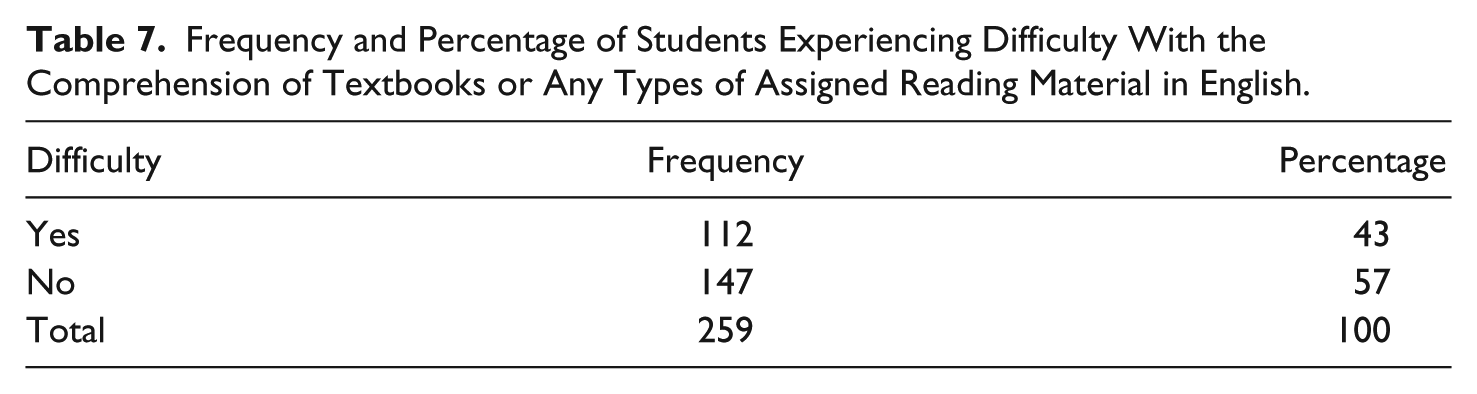
The limited amount of English practice students receive in their Natural Sciences classes is not well balanced in terms of productive and receptive skills. In stark contrast to the language of instruction, most reading material assigned in Natural Sciences classes is written in English; 75% of faculty who responded to the survey said that either “the majority” (56%) or “everything” (19%) that they assigned students to read was written in English. The quantity of assigned reading material in English is likely to be a problem for about half (43%) of survey participants who expressed that they have difficulty understanding textbooks or any types of material in English (see Table 7). Without discipline-specific instruction to assist in the comprehension of reading material in English, the disadvantages already experienced by these students with low competency in the language are likely to be exacerbated. And, although professors use much less English in their own communication with the class compared with the reading material they assign, trends observed in the data indicate that a higher expectation is placed on student’s receptive skills in English (reading and listening) than their productive skills (writing and speaking), see Table 8. The focus on student’s receptive skills is reinforced by qualitative data from faculty responses to an open question that asked what should be in a Scientific Writing course. Of the 27 responses to this open question, 21 comments (78%) ironically prioritized reading competencies, for example, one comment from a Natural Sciences professor suggested that the focus of a Scientific Writing course should be “Improving reading efficiency and comprehension” and another commented that “They need to know a lot of technical vocabulary to understand what they are reading.” In spite of the fact that this question was designed to elicit suggestions for composition skills, only nine responses (33%) suggested writing skills, all of which referenced reading skills, for example, “rewrite in their own words” and “how to cite without plagiarize[ing].” Such comments illustrate faculty concerns with reading competencies as a priority.
Frequency and Percentage of Students Experiencing Difficulty With the Comprehension of Textbooks or Any Types of Assigned Reading Material in English.
Results From the Survey of Natural Sciences Faculty Indicating Percentages of Participant Responses About Work Assigned in English by Type and Amount.
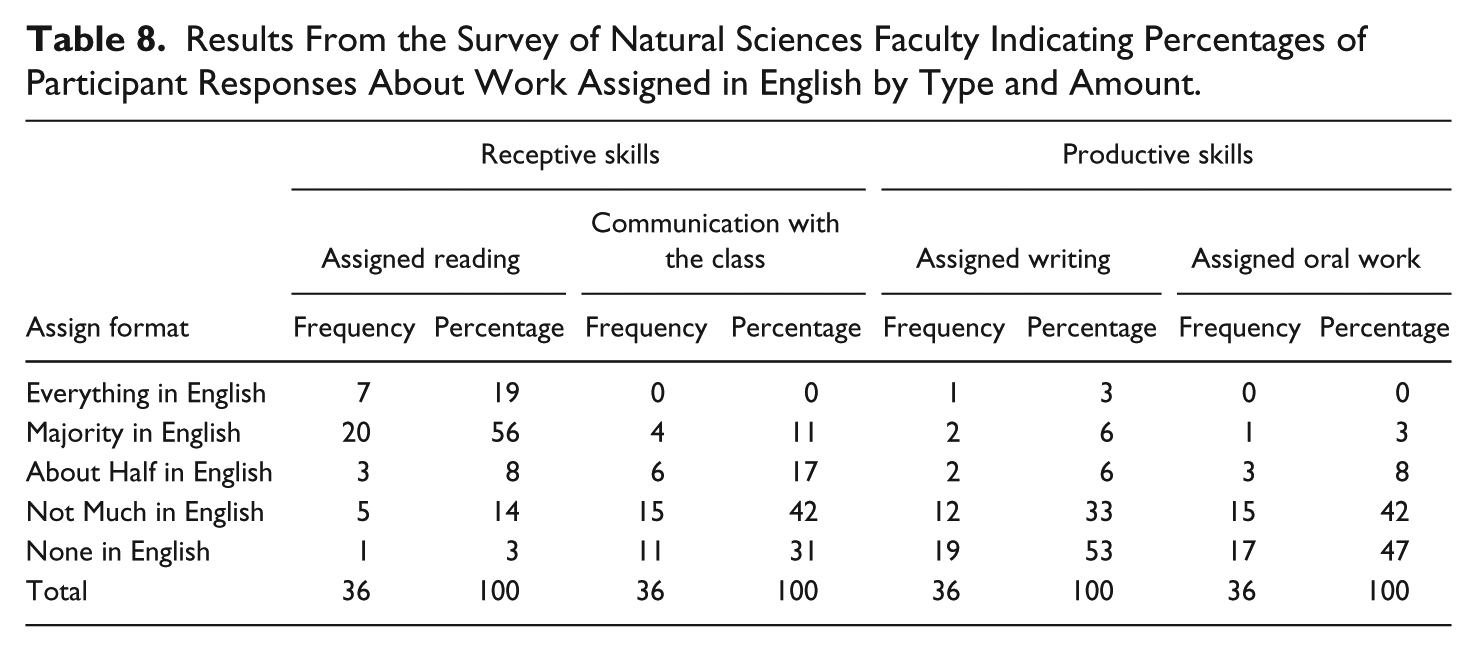
In Natural Sciences classes, students are not expected to produce much work in English, either spoken or written, despite its academic importance. One student who answered an open question about how a workshop in English would be beneficial responded, “In every way, since writing [in English] is an essential thing used in daily life and academically.” Yet, lack of practice in English perpetuates errors as students feel that their only choice is to mentally compose work in Spanish before translating it. For example, a RISE workshop student recognized the common problem that, “we make mistakes when translation [translating] from Spanish to English.” According to the faculty survey, when asked how much written work they require their students to complete in English, 85% of professors said, “not much” (34%) or “none” (51%). Even the limited amount of English practice students receive in their Natural Sciences classes may potentially disadvantage students with low competency in the language. The survey asked students what types of work they had been assigned in Natural Sciences classes that required English language content. More than half of the participants indicated, as a first option, that theoretical essays (33%) and lab notebooks (20%) were the most common assignment with English content (see Table 9). Grouping the top two assignment–type variables shows that 53% of work requiring English content was in the form of informative prose, the highest frequency of which relies upon critical reading of theoretical material, which is typically assigned in English. A logistic regression model (β = −.67, p = .009) was used to compare this data with the previously presented results showing that about half of the participants have difficulty understanding textbooks or any types of material in English (typically needed to compose theoretical papers and which inform lab notebooks). Analysis showed a 53% probability that students experiencing difficulty with the comprehension of textbooks or any types of assigned reading material in English will also be assigned to submit either theoretical essays or lab notebooks written in English.
The First Option Selected of Types of Composition Work Assigned in Natural Sciences Classes That Requires English Language Content.
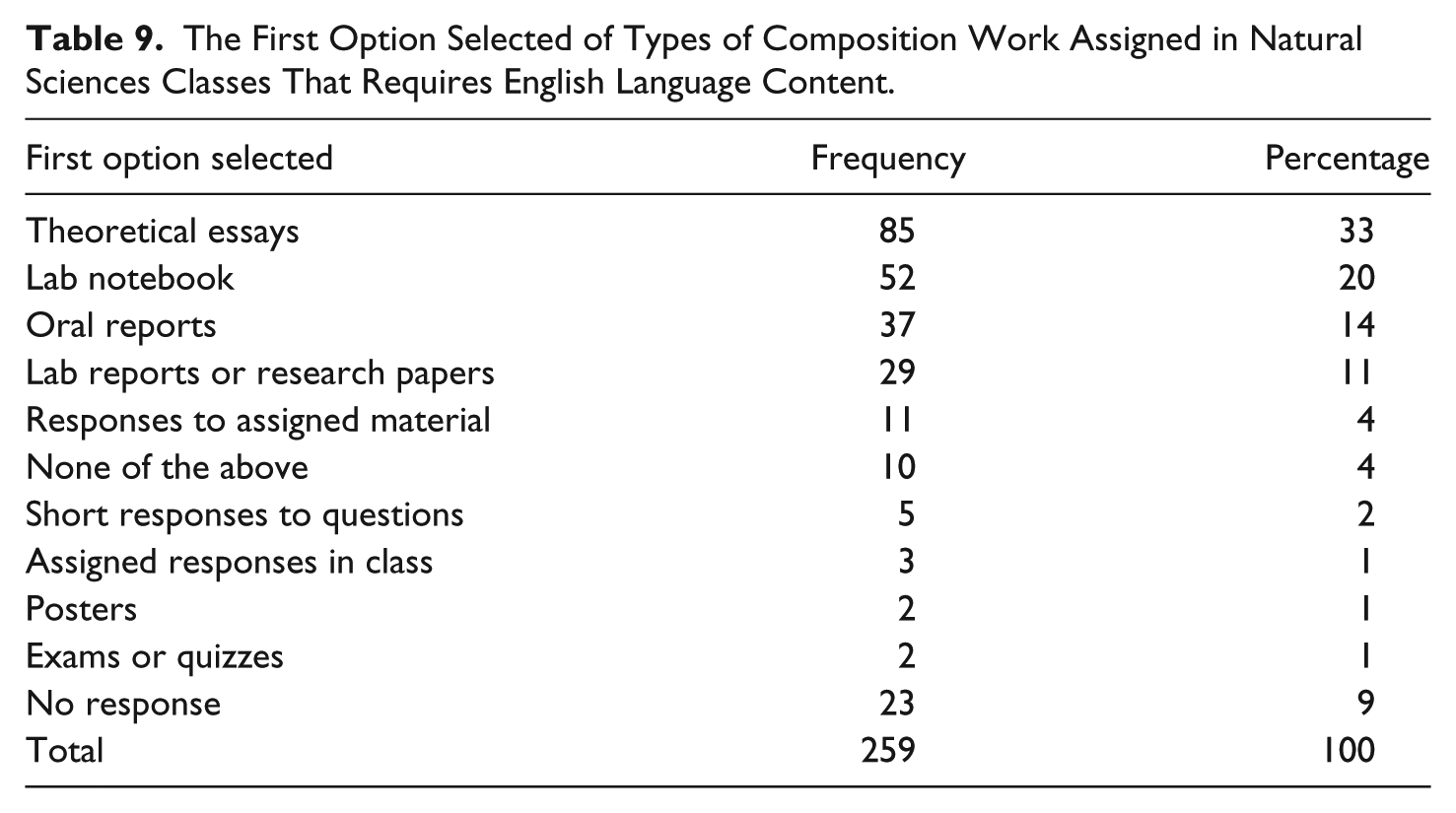
Natural Sciences faculty require their students to speak in English significantly less than they are required to write in English; when asked how much oral work they require their students to complete in English, 89% of professors said, “not much” (42%) or “none” (47%). The resulting trend shows that the Natural Sciences faculty give more opportunities in class for their students to practice receptive skills than productive skills in English. Furthermore, this trend identified in the faculty survey correlates with perceptions indicated in the student survey. Students evaluated themselves higher in receptive skills in English (listening and reading) than productive skills (speaking and writing). Only 14% of students evaluated their own competency in writing skills in English as either “not much” or “nothing” compared with 24% who evaluated their competency in speaking skills as either “not much” or “nothing.” Furthermore, many students spoke about their desire to improve production skills (and specifically oral fluency) in the open question, typified by one participant who wanted to practice “Principalmente, la comunicación oral, pero también la comunicación escrita.” (mainly oral communication, but also written communication, emphasis added). Most students responded to the question about what they wanted to improve in ways that reflected that their productive skills, and specifically skills in “construccion de oraciones y parrafos (composing sentences and paragraphs)” and “Como mejor redactar y presentar trabajos (how to revise and present work).” In contrast, very few students stated that they wanted to improve reading skills, and no participants identified listening skills as an area they needed to improve. When the survey asked Natural Sciences students how much English they understood, more students evaluated their comprehension skills in reading and listening higher than their skills in speaking and writing (see Figures 2 and 3).
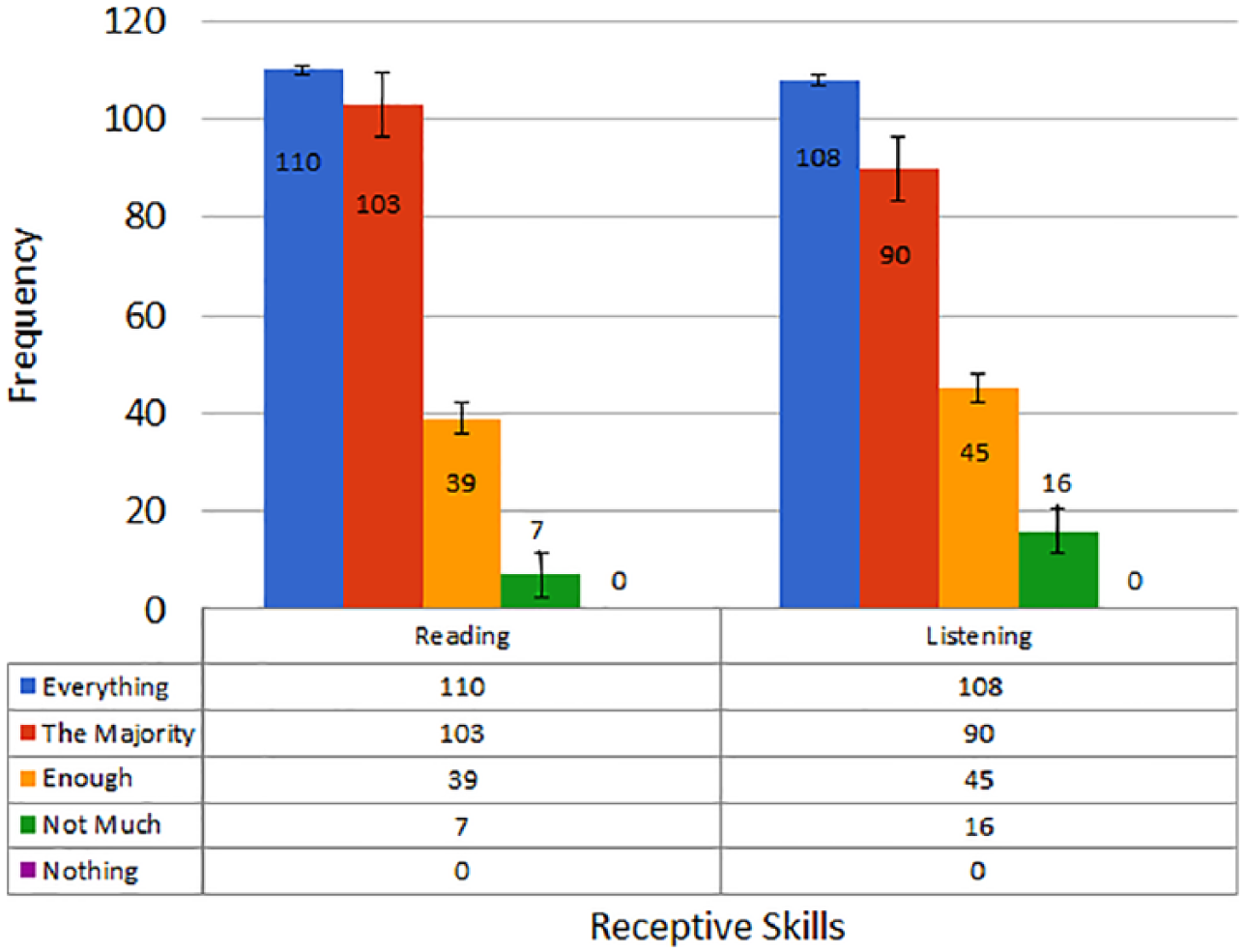
Frequency data of self-evaluation of receptive skills (reading and listening comprehension) among students (n = 259).
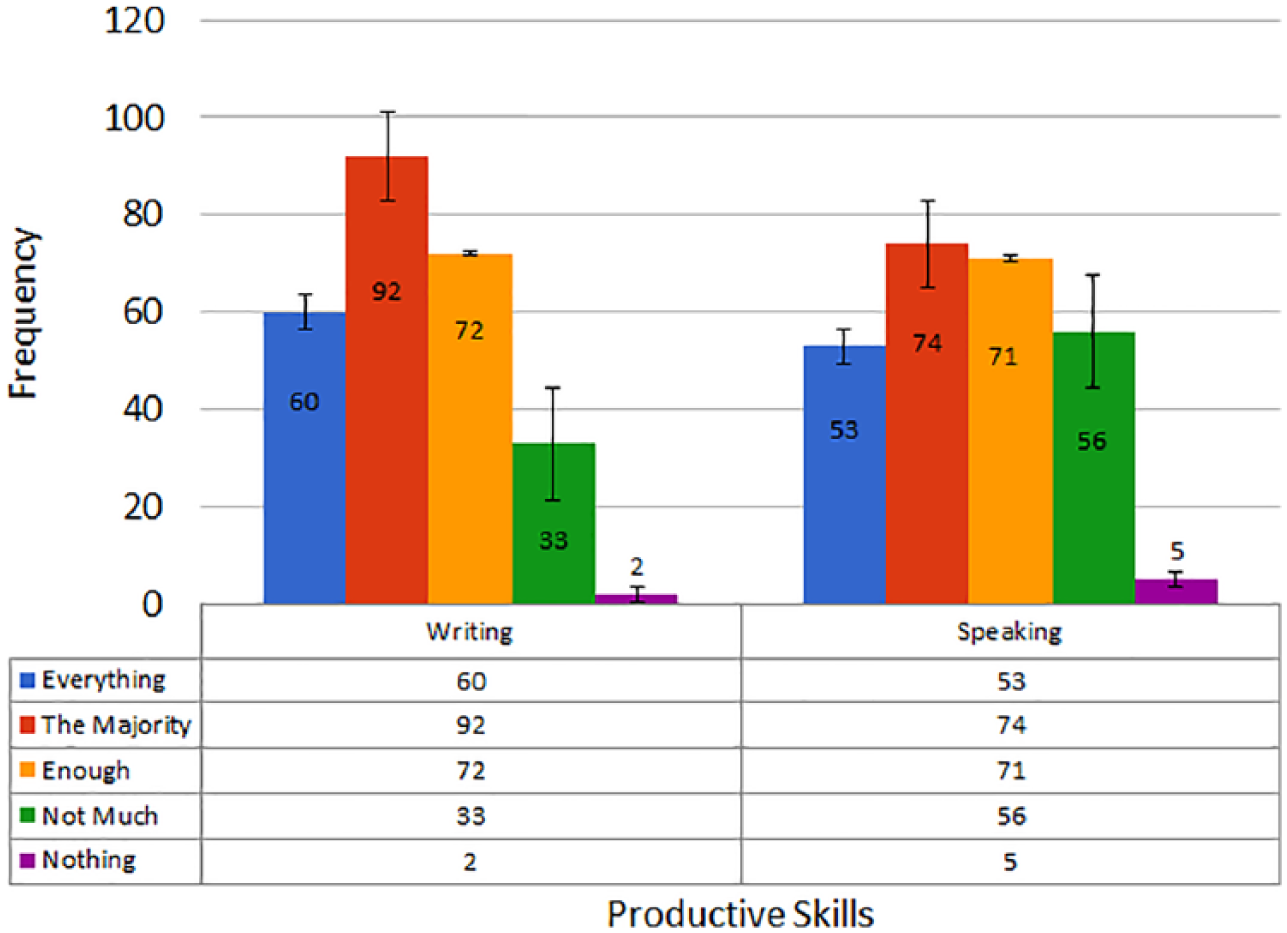
Frequency data of self-evaluation of productive skills (writing and speaking comprehension) among students (n = 259).
The two peak categories in the graph showing receptive skills (Figure 2) indicate that most participants felt they understood either “everything” or “the majority” regarding reading and listening in English. In comparison, the two peak categories in the graph showing productive skills (Figure 3) indicate that the participants felt they understood either “the majority” or “enough” regarding reading and listening in English. In comparison with graph showing responses for receptive skills in which no students said “nothing” and very few said, “not much,” in the graph showing confidence with the production of English, there is a marked increase in the number of responses indicating “not much” and some even evaluated their own competency in writing and speaking skills as “nothing.” Overall, students evaluated their own receptive skills in English significantly higher than their productive skills. In sum, the data show that current institutional practices disadvantage Natural Science students who do not get much practice using English for the sciences, and the minimal practice they do get is much more focused on receptive skills than the meaningful production of English.
Localized Solutions Can Help Prepare Students
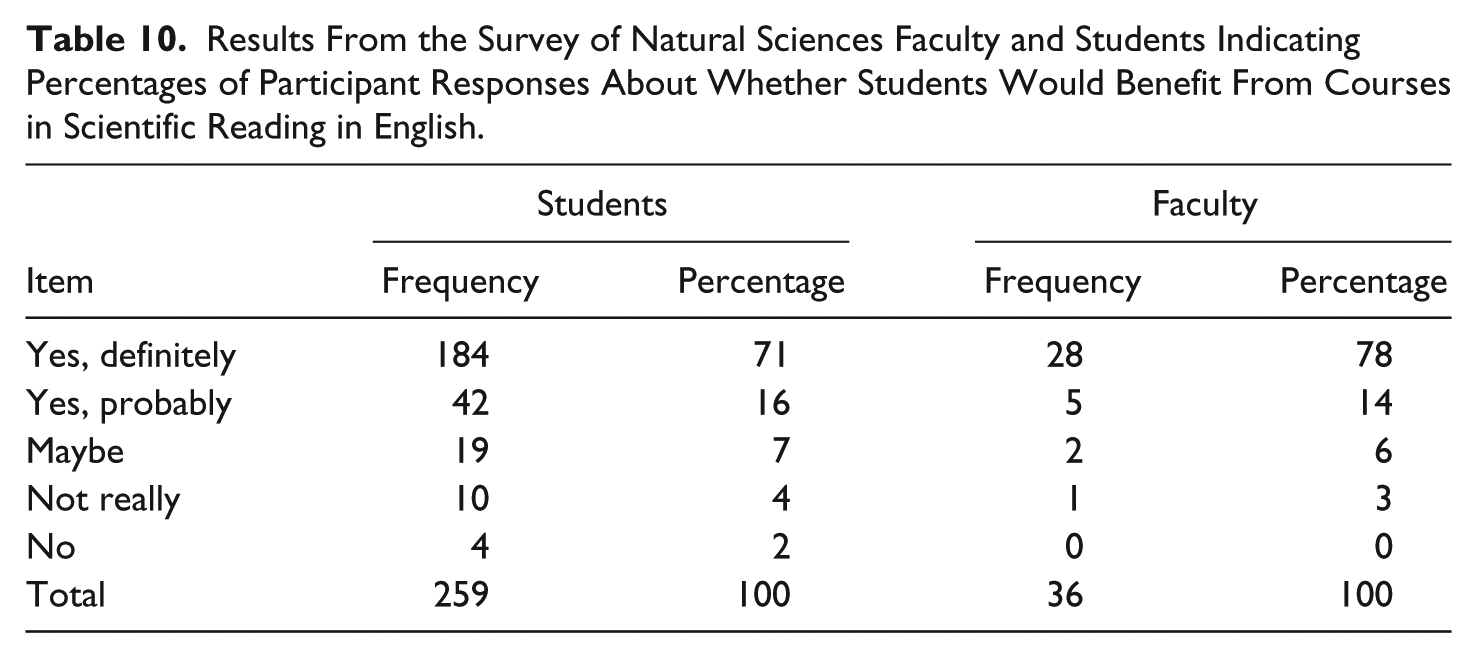
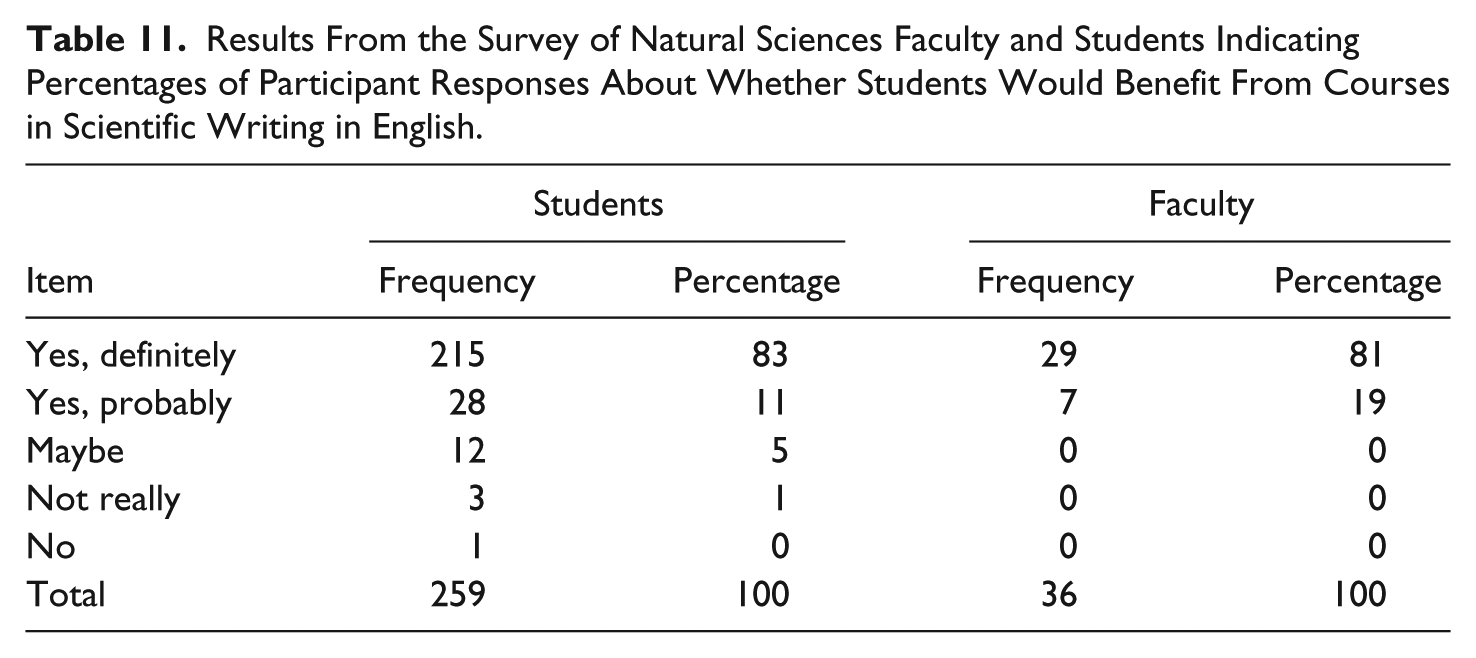
Students and faculty agree that new courses specializing in scientific reading and scientific writing would benefit students. Although the overwhelming trend shows that both faculty and students agree that students would benefit from courses, it is interesting to note that most responded “yes, definitely” rather than “yes, probably.” And that both faculty and students respond more favorably to the proposal for a writing course than a reading course (see Tables 10 and 11). Faculty favor both courses highly with only a 3-point difference between the 78% and 81% responding “yes, definitely” to reading and writing courses (respectively). However, students appeared to favor the writing course more significantly with a 12-point percentage difference between the 71% and 83% responding “yes, definitely” to the reading and writing courses, respectively. Using a chi-square test (χ2 = 1.10, p = .89) for the data relating to value perceptions of a new Scientific Reading course, data showed that there is no statistical difference between students and faculty opinions related to the benefit from the development of a dedicated course to improve the students’ skills in the reading and comprehension of material written in English. Similarly, applying a comparative chi-square test (χ2 = 1.79, p = .18) to the data for the first two answers (“yes, definitely” and “yes, probably”) relating to value perceptions of a new Scientific Writing course, data also determined that there is no statistical difference between student and faculty opinions related to the perceived benefits from the development of a dedicated course to improve the students’ skills in composing and editing scientific material such as lab reports and assignments written in English.
Results From the Survey of Natural Sciences Faculty and Students Indicating Percentages of Participant Responses About Whether Students Would Benefit From Courses in Scientific Reading in English.
Results From the Survey of Natural Sciences Faculty and Students Indicating Percentages of Participant Responses About Whether Students Would Benefit From Courses in Scientific Writing in English.
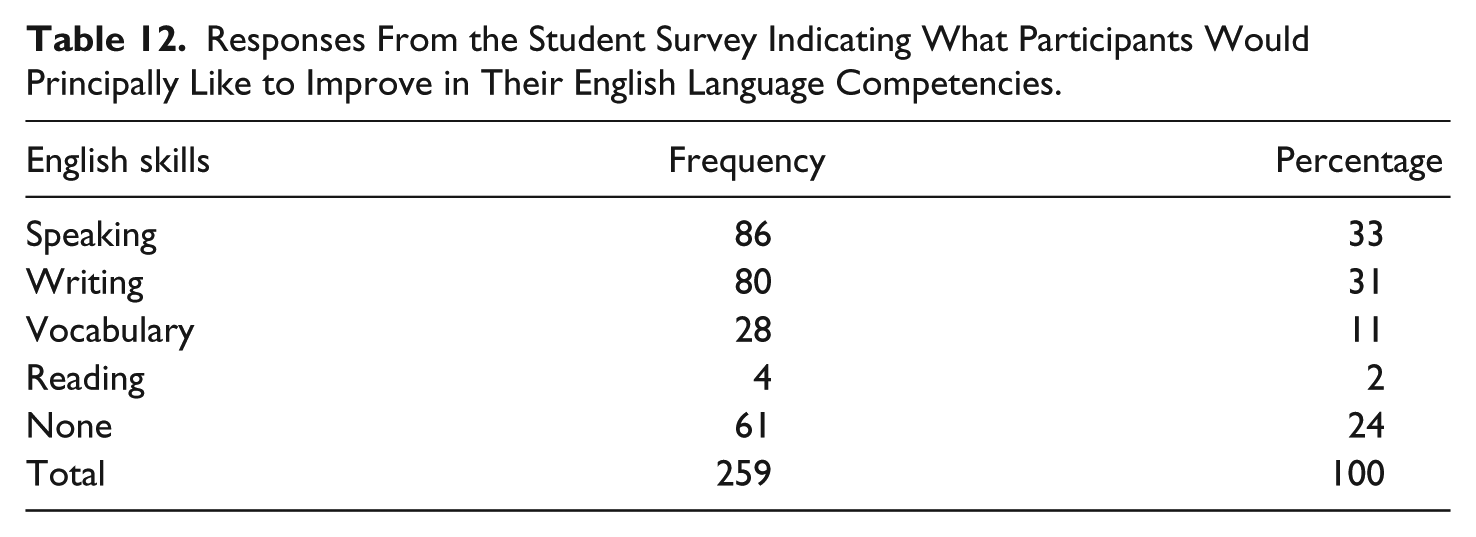
Results already presented show how lack of English competency limits H-ESL students and current institutional practices disadvantage them. Specifically, about 16% and 11% of participants indicate that writing and speaking skills, respectively, stop them from applying to extracurricular academic opportunities (see Table 5). Aligning with these findings, the survey asked students what (if anything) they would most like to improve in their English language competencies, about 31% and 33% of participants indicated that they mostly wanted to improve writing and speaking skills, respectively (see Table 12). Using a logistic regression model (β = 1.34, p = .000), data showed that there is a 30% probability that students who indicated that they primarily wanted to improve writing skills also have a deficiency in written composition. Similarly, data showed that there is a 17% probability that students who indicated that they primarily wanted to improve speaking skills also have a deficiency in speaking skills (regression model β = 0.875, p = .028). This means that, of all the Natural Sciences undergraduates who participated in the student survey, one in three students (around 30%) and more than one in six students (17%) not only feel limited by English competencies but also express a desire to improve these skills.
Responses From the Student Survey Indicating What Participants Would Principally Like to Improve in Their English Language Competencies.
Faculty evaluations of a series of proposed objectives for both scientific reading and scientific writing courses were all rated as either a “priority” or “important.” The highest priority among faculty (with 80% of participants selecting this option) was that students should learn to “develop cohesive sentences, paragraphs and texts.” Although students were not presented with proposed objectives, when asked whether they would be interested in enrolling in a course that would address needs in scientific communication in English, the overwhelming majority (78% of participants) said that they would enroll with 47% of the total number of participants stating “yes, definitely” and 31% stating “yes, probably.” The remaining participants predominantly said “maybe” (16%) and only a small number (6%) said that they would not be interested, many of whom explained why in an optional feedback space: one student commented, “Ya me gradúo, pero entiendo que muchos otros estudiantes se beneficiarían del curso. También entiendo que el conocimiento que tengo del inglés no sería necesario (I [am going to] gradaute now, but I understand that a lot of other students would benefit from the course. I also understand that my knowledge of English would make [any new course] unnecessary).” Another student explained, “No lo encuentro necesario para mí personalmente pero sé que hay otros estudiantes que se beneficiarían mucho. (I don’t find it [any new course] necessary for me personally, but I know that other students would benefit from it a lot).” So, even those who would not enroll in new course offerings recognize their importance for the larger student population.
Discussion
Lack of English Competency Limits H-ESL Students
Results show that many H-ESL students lack competency in English, in all four areas evaluated in the ECI: listening, writing, speaking, and reading. Furthermore, these students are limited in their academic and professional advancement by lack of competency in English. Results do indicate that not only most of the students lack English vocabulary and grammar competencies but also self-awareness of their own limited competencies is likely to negatively affect undergraduates’ participation in extracurricular academic opportunities offered by any institution using English as the primary language of instruction. As a result, they experience significant challenges and frustration when faced with entrance requirements to graduate schools and, if admitted, struggle at the graduate level to maintain GPAs necessary for competitive advancement in scientific disciplines. Indeed, this may be one of the contributing factors that explains why “Hispanics or Latinos” are one of the five groups named by the National Institutes of Health (2018) as underrepresented in the scientific workforce. Many graduate programs assume that incoming students master English and their syllabi require students to prepare research proposals, give presentations, compose posters, and write publishable articles in English based on original research. If H-ESL students aren’t prepared or don’t feel confident writing in English, or even if they need more time for assignments because they can’t express themselves as easily as they could in their native Spanish, they may find that their grades reflect this lack of confidence. Throughout the United States, and even in Spanish-speaking Puerto Rico, practically all scientific reading material used for educational purposes is published in English. Yet, H-ESL students’ English competencies are likely to affect the accuracy and speed with which they can skim-read scientific material and integrate the acquired knowledge into their own written work. This, consequently, is likely to impact the evaluation of any work measured against an assessment rubric oriented toward native competencies. Yet, if H-ESL students receive lower grades than their English-dominant peers in graduate school, the difference is likely to be interpreted as a lack of competency in the subject rather than a language-related issue when transcripts are scrutinized.
H-ESL students may require support in the form of academic counseling to access course material and excel in written and oral work in English, yet the current higher education system in Puerto Rico, and the United States more generally, is not designed to meet their needs. Recent studies indicate that even when they make it to graduate school, H-ESL students are not receiving adequate academic counseling that might help them manage the language-related issues that limit their progress (Talamantes et al., 2016). As a result, many begin to feel like they don’t belong and experience “the imposter syndrome” described by González (2006) in which they are more likely to undervalue themselves and their work. This syndrome perpetuates poor rates of noncompletion at the graduate level and, if students do graduate, prompts their entry into less-recognized or lower-paid professions perceived as “safer.” Furthermore, the current model of higher education appears institutionally designed to continue the trend of H-ESL students undervaluing themselves because administrators favor increasing numbers of transient, part-time, and adjunct faculty with few office hours and little permanence with which to build mentoring relationships. This is the case at UPR Cayey, where institutional data show a trend of decreasing tenured faculty. Part-time faculty give fewer courses and offer fewer office hours, ultimately spending less time on campus which limits their students’ chances to develop a strong mentoring relationship. In addition, an increase in the ratio of students to faculty means that the few office hours that part-time faculty can offer are divided among more students.
H-ESL science graduates are not only at a disadvantage compared with native-speaking students in terms of formal course assessment but also disadvantaged if they fail to recognize the subtle stylistic variations that are critical for effective interpersonal communication in English with peers and supervisors. For example, in their native Spanish, pronoun selection between the informal “tu” (you) and the more formal “usted” and their associated verb conjugations mark status explicitly, and cultural norms in Puerto Rico also permit the omission of explicit politeness markers such as “por favor” (please) even in formal, polite requests. Yet, in many nations that use English natively or as a professional lingua franca, the single second person pronoun “you” can make deference less explicit, and the omission of an explicit politeness marker has the potential to suggest an abrupt tone. Such stylistic details are often not included in core English curriculum, but they may be critical for international networking and collaboration. In short, if H-ESL students lack practice with English in both professional and informal contexts and also fail to develop communicative competencies in class, then they may lack the language skills essential not only for evaluation and dissemination but also for professional networking and collaboration.
Current Institutional Practices Disadvantage H-ESL Students
Students need practice if they are to develop skills in reading, writing, and communicating in English for the sciences, but the General English courses offered by the English Department at UPR Cayey that students need to graduate do not give them this specialized practice. Although skills covered in General Education courses are designed to be transferable (e.g., constructing arguments, analyzing interpretations, and using supporting evidence), these skills are not necessarily being effectively transferred to scientific communication if the wider value of the skill is not identified beyond the immediate context of the practice (e.g., narrative writing or literary criticism). Thus, although students of the Natural Sciences take at least 12 credits in English, the practice they get using English is not immediately relevant to their anticipated careers.
Results that indicate students do not get much practice using English for the sciences reflect a problematic trend in education. Spanish is commonly used in Natural Sciences classes as the language of instruction throughout K-12 and in undergraduate education in Puerto Rico. The authors acknowledge that this practice reflects the genuine concerns of many educators who worry that the sole use of English as a language of instruction might disadvantage or even exclude some students. Many educators avoid using English as the language of instruction in Spanish-speaking Puerto Rico based on beliefs that advanced English proficiency is a prerequisite for subject matter learning. However, studies indicate, even at the elementary level, bilingual teaching practices can help English language learners (Christian, 1996; Slavin & Cheung, 2005), and the integration of science content and ESL acquisition can enhance both domains (Stoddart, Pinal, Latzke, & Canaday, 2002).
Results indicate that professors in Natural Sciences classrooms often integrate words from English rather than use both languages as instructional methods. This type of lexical borrowing is often associated with vocabulary for which the Spanish equivalent is not well-known or not commonly used. Sustained lexical borrowing from English limits not only students’ abilities to learn scientific vocabulary in Spanish but also their abilities to build a functional scientific vocabulary in English beyond naming certain classroom materials and concepts. This might go some way to explain why English vocabulary was the most common request when students were asked what they would like to learn in a scientific writing class. Students appear to recognize that the limited exposure to English they get in Natural Sciences classes is not sufficient to enable them to develop functional communication skills in English for their anticipated scientific careers.
One of the most worrying trends identified in the data is the lack of balance between receptive skills (listening and reading) and productive skills (speaking and writing) in Natural Sciences classes. The fact that students evaluate themselves higher in receptive skills than productive skills suggests that although they might understand English, they have less confidence using it. This interpretation of the data is reinforced by student responses showing that they rate the value of a proposed writing course more significantly than a proposed reading course. If students lack confidence when it comes to writing or speaking their ideas in English (even if this is not related to competency), then they are more likely to express themselves in fragments or remain silent, a problem already identified among H-ESL academics in the study conducted by Pérez-Llantada, Plo, and Ferguson (2011). This trend of being less comfortable with spontaneous oral production of English compared with prepared written production of English corresponds to the data that the undergraduate student survey provided, indicating significantly lower self-evaluation of competency in speaking than in writing comprehension. Such worrying trends in the data mean that institutions of higher education serving H-ESL students are likely perpetuating problems already experienced among senior Spanish academics by graduating the next generation of H-ESL scientists who are not confident to publish their work and even less confident to present in the international language of the sciences. If institutes of higher education continue with these current institutional practices, they risk graduating students who will be passive recipients of scientific knowledge rather than active participants in scientific discourse.
Localized Solutions Can Help Prepare Students
Both the faculty and students at UPR Cayey favored new scientific reading and writing courses designed for H-ESL undergraduates and approved the design of these courses specific to the needs of the student population. Units in the proposed courses target skills in vocabulary acquisition, grammatical accuracy, and identification and use of a style appropriate to specific audiences (the three most significant trends in the student survey) supplemented by reinforcement of syntactic constituency to enable students to identify differences between English and Spanish default structures governing sentence-level composition (the most significant trend in the faculty survey). To a lesser extent, motivated by a less significant response from both students and faculty, the courses will also integrate exercises on orthography, paragraphing, and citations. Assigned reading material for each course also integrates recommendations from the Natural Sciences faculty derived from interviews, responses to open questions, and personal communications. The data show that, of all the Natural Sciences undergraduates who participated in the survey, one in three students (around 30%) and more than one in six students (17%) not only feel limited by English competencies but also express a desire to improve these skills, and it is exactly these students that are likely to enroll in and benefit from newly created courses based on English language competencies for scientific purposes.
Integrating the recommendations from faculty relates to an important secondary outcome of this interdisciplinary study. Although the primary outcome was to identify the needs of undergraduate students at UPR Cayey who plan to pursue studies and careers in the sciences, the authors also aimed to establish conduits of communication between the English and Natural Sciences Departments. By initiating contact in the curriculum-development stages, continued communication will ideally facilitate feedback and enable collaboration once the courses are offered to students in a way that will leverage the technical–scientific expertise of the Natural Sciences faculty and combine that with the textual–analytical and composition expertise of the English Department faculty. Collaboration between the English and Natural Sciences Departments at UPR Cayey will therefore not only leverage discipline-specific expertise in using English for scientific communication but also model collaborative strategies that students will need in future careers.
To conclude, the results and associated discussion in this study support the hypothesis that H-ESL students require specialized training to compete in scientific careers dominated by English language practices. Because English is an essential skill in many scientific disciplines, lack of English competency significantly limits H-ESL students of the Natural Sciences. Furthermore, current institutional practices at UPR Cayey (and potentially many Hispanic Serving Institutions) disadvantage these students as they don’t get much practice in using English for scientific communication and the practice that they do get is not well balanced in terms of receptive and productive skills. The good news, however, is that localized solutions can not only increase students’ skills and levels of confidence but also model collaboration strategies and leverage expertise among departments to better prepare the next generation of H-ESL science graduates.
Supplemental Material
Appendices_1_and_2 – Supplemental material for Hispanic ESL Science Majors Need More Practice Using English for Scientific Purposes
Supplemental material, Appendices_1_and_2 for Hispanic ESL Science Majors Need More Practice Using English for Scientific Purposes by Sally J. Delgado, Johann J. Collazo Reyes, Sofía I. Gómez Dopazo, Emmanuel A. Rodríguez Díaz and Ketsy M. Torres Arroyo in Journal of Hispanic Higher Education
Footnotes
Declaration of Conflicting Interests
The author(s) declared no potential conflicts of interest with respect to the research, authorship, and/or publication of this article.
Funding
The author(s) received no financial support for the research, authorship, and/or publication of this article.
Notes
Supplemental Material
Supplemental material for this article is available online.

Author Biographies
References
Supplementary Material
Please find the following supplemental material available below.
For Open Access articles published under a Creative Commons License, all supplemental material carries the same license as the article it is associated with.
For non-Open Access articles published, all supplemental material carries a non-exclusive license, and permission requests for re-use of supplemental material or any part of supplemental material shall be sent directly to the copyright owner as specified in the copyright notice associated with the article.
