







Abstract
This paper examines how higher education (HE) policy and institutional frameworks in Colombia respond to the aspirations, experiences, and definitions of success of Indigenous students from rural and remote communities. Drawing on a structured review of literature informed by decolonial theory, the study analyses the ways in which Western-centric HE paradigms shape access, participation, and outcomes for rural and remote Indigenous students, often privileging market-driven notions of success over culturally grounded aspirations. The findings highlight persistent structural barriers related to geography, language, curriculum relevance, and institutional recognition, as well as the active role of Indigenous organisations in challenging these limitations through intercultural and Indigenous-led HE initiatives. The paper argues that meaningful inclusion in HE requires moving beyond access-based policies towards approaches that recognize Indigenous epistemologies, collective aspirations, and rural contexts as central to educational success.
Introduction
The enactment of the 1991 Constitution introduced a political milestone for Indigenous rights in Colombia. Emerging from a political tradition that had long denied Indigenous rights, the Constitution acknowledges Indigenous peoples as Colombian citizens. It provides special measures to ensure their well-being and preserve their cultural traditions. However, the Constitution’s scope has been constrained by the lack of clear legal frameworks to safeguard these rights, compounded by the enduring internal conflict within the country. Social pressure from Indigenous organisations has been essential in advancing their rights within these constraints, with education being a central element of their claims before and after the promulgation of the 1991 Constitution. As part of this, the response of higher education (HE) institutions to Indigenous needs and aspirations has remained a persistent subject of inquiry and deliberation.
This paper examines existing literature on how well HE in Colombia meets the aspirations and needs of rural and remote Indigenous peoples, focusing on policy frameworks, structural limitations, and their experiences in HE. It situates these issues within broader debates on educational inequality, neoliberal reform, and decolonial approaches to HE. This study complements previous work by Garcia and Rolls (2023), which suggests that while HE policy is framed as a vehicle for self-realization, the Western centric lens through which this policy is framed, often overlooks aspirations and notions of self-realization from other cultural standpoints. Building on this, the current paper highlights how Western-centric policies and institutional practices continue to limit rural and remote Indigenous participation and success.
The concept of success is important to consider when examining HE policy objectives for Indigenous students, as it elucidates the inherent tensions between Indigenous aspirations and the government’s political priorities. As noted by Saldívar (2012) and Garcia and Rolls (2023), there has been a proliferation of universities in Latin America, including Colombia, in response to the increasing demand for HE. The expansion of HE in Colombia, marked by a quadrupling of student enrolment in recent decades (Organization for Economic Co-operation and Development, 2016), has been shaped not only by internal institutional developments but also by the broader context of neoliberal reforms. This expansion reflects the “economisation of education” (Ball, 2016, p. 1047), where HE is framed as a mechanism for producing human capital aligned with labour market demands. The prioritisation of technical and technological education responding to market needs, along with the growth of private HE institutions and the expansion of student loans, all exemplify how neoliberal principles have underpinned recent Colombian HE policy.
This context brings complex implications. While HE access has increased, quality and equity remain pressing concerns within this neoliberal agenda. Evidence suggests that low-income students are most often enrolled in low-fee private HE institutions, which tend to offer lower-quality education (Melo et al., 2017; Nel Páez & Teelken, 2016). Likewise, the limited expansion of public HE institutions without proportional increases in funding has intensified competition for places, further disadvantaging marginalized groups (Castaño-Duque & García-Serna, 2012; Castillo, 2011; The World Bank, 2012). Thus, the expansion of HE in Colombia reflects a neoliberal process that risks widening educational inequalities.
Furthermore, the Western-centric approach to measuring success has largely been assessed in terms of the economic outcomes of HE graduates, such as securing employment, achieving financial autonomy, and fulfilling consumerist aspirations, further disadvantages Indigenous students. However, Nemogá-Soto (2018) explains that, for Indigenous people in Colombia, success is perceived more broadly, transcending individual outcomes and encompassing the collective impact of HE on families and communities. Indeed, Indigenous people have developed an active resistance against the dominant Western model through questioning from the inside and proposing alternative HE models that measure success in different ways, among other things (Nemogá-Soto, 2018).
The focus of this paper is on the experiences of rural and remote Indigenous students since in Colombia, rural Indigenous people represent a significant majority, comprising 79% of the total Indigenous population (Departamento Administrativo Nacional de Estadistica [DANE], 2019). Consequently, most of the existing literature has centred on Indigenous students’ experiences from rural/remote regions. Further, as Silva-Correa (2016), explain rural and remote Indigenous students face specific challenges in HE such as geographic isolation, limited access to education, language and inadequate infrastructure, which will be explored in this paper. These challenges differ from those experienced by urban Indigenous populations and must be understood within the context of rurality.
However, it is important to note that urban Indigenous students also face challenges distinct to their context, particularly regarding political and cultural recognition. In urban contexts Indigenous identity is often diluted or administratively fragmented because their legal and cultural recognition is tied to rural or ancestral territories. Urban migration can disrupt traditional forms of community organization and weaken access to rights and services that are linked to the territory such as traditional education, health, and cultural programs (Montoya-Peláez et al., 2021). Consequently, without affiliation to specific Indigenous organizations or rural communities, urban Indigenous students often struggle to demonstrate their Indigenous identity, which can significantly affect their access to HE.
While these experiences raise additional questions and issues regarding Indigenous students’ identity formation, particularly as they navigate institutions that may fail to recognize their collective rights, they fall outside the analytical scope of this paper. The following discussion therefore maintains a primary focus on Indigenous students from rural and remote communities who comprise the majority of Colombia’s Indigenous population and who experience structural barriers in accessing and navigating HE specifically related to their context. At the same time these experiences will be explored within broader debates on neoliberal reform and decolonial transformation in Colombian higher education.
This paper makes three key contributions: First, it extends the theoretical application of decolonial thought to the Colombian HE context, illustrating how Western-centric frameworks systematically marginalize Indigenous epistemologies and collective definitions of success. Second, it synthesizes evidence on the structural and institutional barriers faced by rural and remote Indigenous students, highlighting the critical role of Indigenous-led initiatives in shaping inclusive educational practices. Third, it offers a conceptual reframing of HE success beyond market-driven metrics, emphasizing relational, community-oriented, and culturally grounded criteria. In doing so, the study provides both a normative and practical foundation for policymakers, institutions, and Indigenous stakeholders seeking to design higher education systems that meaningfully recognize and support Indigenous knowledge, aspirations, and agency.
Methodology
To examine how Colombian HE responds to the aspirations of rural and remote Indigenous students, this paper adopts a critical integrative literature review grounded in decolonial theory. The following section outlines the theoretical framework and review strategy used to synthesize existing scholarship and identify structural, institutional, and epistemological patterns shaping Indigenous students’ participation in HE.
This review identifies the barriers and opportunities Indigenous students from remote and rural areas face in accessing and navigating HE in Colombia. The paper explores how structural inequalities, language policies, and institutional frameworks shape their educational experiences, and how Indigenous-led initiatives challenge hegemonic models. Decolonial theory provides the guiding theoretical framework for this study, particularly as discussed by Mignolo (E-International Relations, 2017), who suggests that “Decoloniality means first to delink (to detach) from that overall structure of knowledge in order to engage in an epistemic reconstitution” (para. 4). This reconstitution makes way for the epistemologies of the suppressed and facilitates a detaching from coloniality.
In this context is not simply concerned with the legacies of colonialism as a historical event but with coloniality, understood, following Mignolo (2008b), as enduring ways of power that privilege Western epistemologies, languages, and institutional models over non-Western ways of knowing. In Colombian HE, coloniality is evident in the privileging of Spanish as hegemonic language, the imposition of Western-centred standards of quality measuring and the prioritisation of Eurocentric disciplines and methodologies, disregarding Indigenous languages, knowledges and cosmologies (Moreno, 2011; Silva-Correa, 2016).
This perspective renders visible the structural inequalities shaping rural and remote Indigenous students’ experiences in HE. By drawing on decoloniality, the analysis interrogates how Colombian HE policy and practices reproduce those inequities, often framing Indigenous students’ inclusion within discourses of poverty reduction and employability rather than valuing their own cultural aspirations and epistemologies (Nemogá-Soto, 2018; Ortiz & Guzmán, 2008). Decoloniality also allows for the exploration of Indigenous responses to Western epistemologies through actions such as the development of HE models like the Universidad Autonoma Indigena Intercultural (UAIIN), which resist epistemic marginalisation and propose a different approach to knowledge. Hence, decolonial theory allows the findings of this paper to provide both an analytic and normative framework: from the analysis, it enables the identification of how coloniality structures access, retention, and success in HE; while from the norm, it supports the argument for intercultural and Indigenous-led approaches that promote genuine epistemic justice.
The review of the literature followed a systematic and iterative approach (Page et al., 2020) to identify the existing or emerging literature on this topic and, identify omissions and gaps (Peters et al., 2020). An integrative review strategy was also employed to identify main concepts and propose new understandings of the subject through diverse forms of synthesis (Torraco, 2005).
The inclusion criteria prioritized: (i) peer-reviewed journal articles but also included master’s and PhD theses, book chapters, and government or policy reports to capture grey and emergent literature, particularly in cases where peer-reviewed research on Indigenous HE in Colombia remains limited; (ii) literature published in Spanish or English; and (iii) published mostly between 2005 and 2023, with some older works included when considered seminal. Exclusion criteria included sources focusing exclusively on other levels of education, studies without clear reference to Indigenous students, or works outside the Colombian context unless offering comparative insights.
Searches were conducted between January 2024 and March 2025 in databases including Scopus, Web of Science, RedALyC, SciELO, and Google Scholar, using combinations of terms such as “Colombia” AND “higher education” OR “university*” AND “Indigenous” OR “First Nations” OR “Aboriginal” AND “success/aspirations/barriers.” Similar searches were run in Spanish. Reference lists of key articles were also scanned.
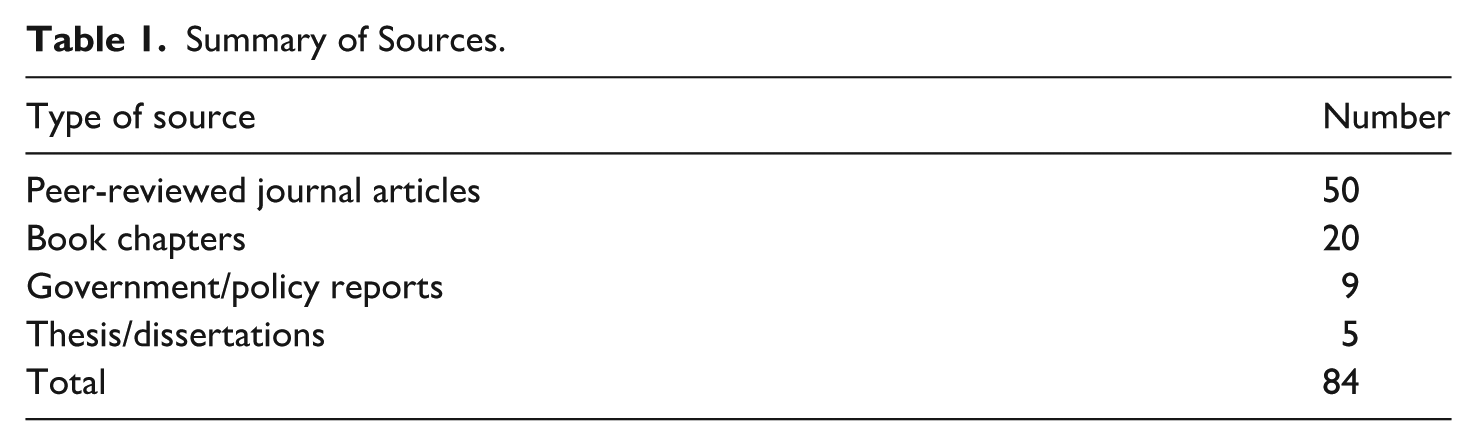
A total of 84 relevant sources were identified for inclusion in this review. These comprise 50 peer-reviewed journal articles, 9 policy or government reports, 20 book chapters, and 5 doctoral or master’s theses/dissertations. Of these, 53 were published in Spanish, 30 in English and one in Portuguese. Most of the sources (81) were published between 2005 and 2023, with 3 earlier documents included for their relevance to Indigenous HE policy in Colombia. Table 1 summarizes the number of sources by type.
Summary of Sources.
This process was designed to ensure transparency in source selection, thereby enhancing the reliability of findings regarding existing research on HE for Colombian Indigenous students. Furthermore, it maintained the flexibility required for the iterative inclusion of key literature identified during the review.
Findings and Discussion
Drawing on the literature identified through this review process, this section synthesizes key findings across four thematic areas: the historical and policy context of Colombian higher education, institutional frameworks affecting Indigenous participation, the limitations of Western paradigms as policy drivers, and the lived experiences and aspirations of rural and remote Indigenous students.
Background and Implications of HE Policy in the Colombian Context
Despite limited legal frameworks for Indigenous HE, Indigenous peoples have consistently highlighted its importance for self-determination in discussions with the Colombian government. Four key moments shape Indigenous education: pre-colonization, colonization with an evangelization agenda, post-independence integration into Western society, and recognition in the 1991 Constitution (Cabrera Solarte, 2019; Chavaco et al., 2005; Guido Guevara et al., 2013; Rojas & Guzmán, 2005). This research focuses on the latter two phases, as they best capture how recent developments in Indigenous HE address student aspirations and needs.
The 19th century marked the assimilationist period for Indigenous people, where the education system, dominated by religious dogma, saw education as an opportunity for cultural control. After independence in 1810, Colombia entered a period of constant civil confrontations between the two dominant political parties, the Liberals and the Conservatives. In less than 80 years, the country adopted four different Constitutions, reflecting the instability of the period (Safford & Palacios, 2002). In 1886, the Conservatives consolidated their hegemony and enacted the 1886 Constitution, which remained in force for almost 100 years. This Constitution reflected a strongly Catholic vision, while excluding the voices and needs of other societal groups such as Indigenous peoples (Loango & Mazabel, 2021; Rojas & Guzmán, 2005).
Under this regime, Indigenous peoples, descendants of pre-Colombian inhabitants with distinct cultural systems and territorial claims (Martínez et al., 2025) and Afro-descendants were marginalized and subjected to social exclusion, being deemed culturally and racially inferior. Although both groups faced structural racism, their historical positioning differed. Indigenous peoples were often portrayed as “uncivilized” or “savage,” reinforcing dehumanization and justifying exclusion from full citizenship. In contrast, Afro-descendants, whose presence stems from the transatlantic slave trade and who developed unique cultural traditions in regions like the Pacific coast, were rendered invisible within the mestizaje narrative, obscuring their distinct identity and historical claims (Hooker, 2014). Loango and Mazabel (2021) suggest that both Indigenous and Afro-descendant peoples were seen as obstacles to modernization, while mestizos were gradually assimilated into the national project of mestizaje (Fajardo Mazorra, 2022).
For elites of European descent who occupied positions of privilege and control, particularly through the alliance between church and state under the 1886 Constitution (Pinzón, 2006), the education system served a goal to assimilate marginalized cultures into a society following Catholic values (Cabrera Solarte, 2019). Thus, the use of education as a tool of indoctrination functioned as a mechanism of cultural hegemony, systematically delegitimizing and marginalizing Indigenous and Afro-descendant knowledge systems and cultural practices. Rojas and Guzmán (2005) explain that these policies achieved this by erasing their languages, knowledge, and practices. From a decolonial perspective, Mignolo (2008a) argues that this logic of “coloniality of power” established racialized hierarchies that continue to shape HE in Latin America. Hence, the treatment of Indigenous peoples cannot be understood in isolation but as part of a system of colonial differentiation that relegated both Indigenous and Afro-descendant peoples to positions of inferiority, while mestizos were integrated as intermediaries in the racial hierarchy.
This assimilation perspective transcended the education sphere and impacted various aspects of Indigenous life. As part of this, governmental and ecclesiastical authorities had the power to determine the governance of Indigenous communities, which was perceived as a betrayal by Indigenous peoples because it disregarded their contributions to the independence process (Loango & Mazabel, 2021; Rojas & Guzmán, 2005). This approach had a considerable impact on Indigenous cultures due to the prohibition and criminalization of their language, traditions, and cosmovision. Consequently, important and invaluable Indigenous knowledge was lost, extending the acculturation process inherited from colonization (Loango & Mazabel, 2021; Rojas Curieux, 2019).
In contrast, more than a century later, in 1991, a new political Constitution that revolutionized Indigenous rights was issued. This Constitution represented the opposite of the previous one: it recognized Indigenous peoples as citizens and assigned them special rights. Regarding education, it acknowledged the ethnic and cultural diversity of the country, as well as the right of Indigenous peoples to conserve their languages and, therefore, to receive education in a way that is appropriate and aligned with their cultural identity (Navarro & Gastón, 2014; Nemogá-Soto, 2018; Silva-Correa, 2016). From this point on, Indigenous people were formally recognized as part of Colombian society. However, they continued to maintain their own cultural systems, ways of thinking, and cosmovision (Ariza, 2009; Silva-Correa, 2016).
In order to understand the implications and opportunities for this recognition in HE, a contextualized definition of Colombian HE is essential given the country’s complex institutional landscape. Law 30 of 1992 structured the system into three levels, technical professional institutes, university institutes, and universities, each offering programs of varying length and complexity (Congreso de Colombia, 1992; Montenegro, 1994; The World Bank, 2012). This includes institutions such as the Servicio Nacional de Aprendizaje (SENA), which provide technical training. However, as Ardila Franco (2023) notes, the system lacks recognition of non-university knowledge, reflecting the dominance of Westernized standards in defining quality and legitimacy. This narrow view marginalizes technical and community-based knowledge and reinforces a hierarchical model that overlooks Colombia’s institutional and epistemological diversity, perpetuating inequalities (Martin Calvo, 2018). Such a model privileges university-level education while excluding other valuable forms of learning, a significant issue in a country marked by deep inequality (Castro et al., 2017), where HE should promote social mobility and inclusion (Altbach & Knight, 2007; García Villegas et al., 2013).
Regarding agency-influenced approaches to education, the implementation of the 1991 Constitution and the subsequent public policy developments allowed greater participation of Indigenous people in the planning of education at different levels. Bolaños et al. (2008) and Rodríguez Reinel (2011) explain that this increased participation enabled the development of programs in Indigenous mother tongues, the establishment of special calendars, and the selection of instructors, teachers, and professors with appropriate cultural and language credentials. These changes, according to Cabrera Solarte (2019), have strengthened the social claims of Indigenous communities regarding the respect and recognition of their rights. However, these efforts have focused mainly on primary and secondary education.
In the HE sector, while many universities began developing internal programs to attempt to include Indigenous students, these programs encountered some limitations, such as their tendency to uniformize the category “Indigenous” without considering the Indigenous’ diverse cultural characteristics making it difficult for rural and remote Indigenous students to meet universities’ requirements (Moreno, 2011; Nemogá-Soto, 2018). Even though attempts at inclusion were made, for instance, the development of special enrolment pathways and ethno-education programs to train lecturers working with Indigenous students (Cabrera Solarte, 2019; Muñoz, 2015; Navarro & Gastón, 2014), these measures were deemed inadequate. Cabrera Solarte (2019) and Rodríguez Reinel (2011) argue that, although these initiatives represent important steps toward inclusion, they remain insufficient because Indigenous students are still required to conform to Western academic criteria for success. This is evidenced in the disparities in Indigenous student participation in Colombian HE. For instance, only ~6% of Indigenous people can access university education, and postgraduate participation is ~0.6% among Indigenous people compared to ~18.8% in the non-Indigenous population (El Observatorio de la Universidad Colombiana, 2014).
Admissions criteria have also been found to impact access for rural and remote Indigenous students. While many universities, both public and private, consider the ICFES/Saber 11 score as part of their admission criteria, the weight given to it varies. Some institutions base admissions solely on ICFES scores, while others combine them with institutional entrance exams or interviews. There are also universities that rely exclusively on their own internal admission tests (Valencia & Wagner, 2021). Thus, while these admission requirements are standard for all students pursuing HE in Colombia, rural and remote Indigenous students often face additional challenges in meeting these criteria due to systemic inequalities, language barriers, and limited access to quality preparatory education (Usma Wilches et al., 2018). This criterion is also embodied in HE public policy and are primarily centred on ensuring predetermined criteria for a “quality” curriculum. The criteria for this quality-centric approach are underpinned by the belief that HE should help to develop work “competencies” to enhance the country’s competitiveness in an international context (Garcia & Rolls, 2023; Moreno, 2011; Silva-Correa, 2016). While this perspective has been supported on the basis that it will help to attract international investors to improve employment rates and reduce poverty, it has tended to overlook the aspirations of Indigenous peoples regarding HE. Bolaños et al. (2008) and Moreno (2011) indicate that Indigenous people consider the collective construction of curriculum as an essential HE step, highlighting the importance of the objectives and cultural systems in shaping the education content.
Recently, online education has been promoted to expand HE access for students in rural and remote areas, including Indigenous communities (Nontoa & Mantuano, 2023). However, evidence suggests that while such initiatives may reduce geographic barriers, they risk reinforcing structural inequalities if not supported by culturally relevant content, adequate infrastructure, and sustained funding (Padilla et al., 2023). Mackenzie (2020) notes that expanding HE through loan schemes and distance modalities often imposes additional financial burdens on rural and remote Indigenous students, raising questions about whether these policies truly enhance or limit educational opportunities. Similarly, Mackenzie (2023) argues that the neoliberal “massification” of HE, including the growth of low-cost distance and online programs, may compromise equity and quality. These findings indicate that distance education, though potentially beneficial, must be critically evaluated regarding structural inequalities, program quality, and Indigenous knowledge systems and languages.
Institutional Frameworks for Indigenous HE in Response to Policy
Since the 2000s, a number of positive initiatives have been implemented both under and outside of the Ministry of National Education (MEN) auspices. First, an initiative in the early 2000s facilitated by the MEN established HE Regional Centres for remote communities and helped decentralize HE. While not explicitly targeting Indigenous students, this policy benefited rural and remote Indigenous students by providing access to HE programs (Cabrera Solarte, 2019). Similarly, in 2006, through Law 1084, universities were mandated to reserve 1% of enrollment for rural and remote students. (Cabrera Solarte, 2019). At the same time, independently of MEN, the Regional Indigenous Council of Cauca (CRIC) established the Universidad Autonoma Indigena Intercultural (UAIIN) to allow Indigenous people to develop their own HE initiatives. Later, in 2010, Indigenous organizations and MEN began discussions about the possible autonomous administration of Indigenous HE, including managing finances and curriculum development. Despite these positive reforms, a number of policy limitations continued to limit their realization. This was largely because the MEN emphasized that even Indigenous self-administrated education had to adhere to national HE standards, which, according to Fernandes (2014) and Cabrera Solarte (2019), represented a dilemma for Indigenous people because those standards do not guarantee culturally appropriate education. In 2018, after a protest led by Indigenous communities, among other agreements aimed to improve conditions for Indigenous peoples, the Colombian Government agreed to initiate the process of granting licensing to the UAIIN. This was an important milestone because it constituted a way to ensure public economic resources for an Indigenous-managed university (Espinoza, 2013; Mato, 2018)
Equal access to HE remains a challenge for rural and remote Indigenous peoples in Colombia. The 1991 Constitution advanced Indigenous rights, yet a gap persists between legal recognition and daily realities. Although Colombia has ratified the United Nations Declaration on the Rights of Indigenous Peoples, guaranteeing access to education at all levels, Indigenous communities still face insufficient support to access higher education (Nemogá-Soto, 2018). The HE system remains dominated by Western paradigms, and no central public policy governs Indigenous HE, leaving individuals reliant on individual universities’ policies for enrollment options (Nemogá-Soto, 2018; Ortiz & Guzmán, 2008; Silva-Correa, 2016). This reflects the ongoing marginalization of Indigenous peoples despite Colombia’s recognition as a multicultural nation in the 1991 reforms. Nemogá-Soto (2018) notes that this multiculturalism has largely been symbolic, with few concrete policies promoting equality. Moreover, while the Constitution assigns the government multiple responsibilities regarding Indigenous rights, these policies often conflict with the historical marginalization experienced by Indigenous communities.
This marginalization is reflected within the HE context, where despite official discourse about universities as a social mobility tool, the practical implementation of multiculturalism remains limited (Ortiz & Guzmán, 2008). Similarly, Rojas Curieux (2019) argues that although the 1991 Constitution afforded different rights to Indigenous peoples, it has failed to overcome the domination dynamics established by colonialism and the 1886 Constitution. In the same way, Moreno (2011) highlights the fact that, despite the constitutional advancements, HE for Indigenous people is a topic approached through the lens of “reduction of poverty” discourse without recognizing the needs and requirements of Indigenous peoples. Originating from a peace agreement, the Constitution has also failed to bring about pacification, with the country remaining immersed in an internal conflict where rural and remote Indigenous peoples are one of the major victims (Rojas Curieux, 2019).
Limitations of Western HE Paradigms as Policy Drivers
HE policy in Colombia remains shaped by enduring colonial and Western-centric frameworks that continue to structure access, knowledge, and success. However, scholars highlight its intrinsic biases related to class, ethnicity, and gender. Boidin et al. (2012) and Padilla (2021) argue that its fundamental flaw lies in its self-perception as authentic knowledge, thereby inhibiting learning from other knowledge systems. Likewise, Ortiz and Guzmán (2008), Londoño Calero (2017), and Sierra (2005) note that universities have traditionally been a place of exclusion, characterized by monocultural values, pedagogies, and epistemologies. In Colombia, these institutions have been historically shaped by colonial legacies, especially with regards to their governance structures, curricular models, and epistemological foundations (Boidin et al., 2012; Ortiz & Guzmán, 2008; Sierra, 2005).
While not all institutions are direct products of colonialism, the influence of colonial frameworks remains evident in the predominance of Western knowledge systems and exclusionary practices in universities (Boidin et al., 2012; Ortiz & Guzmán, 2008; Sierra, 2005). Walsh (2010) and Padilla (2021) confirm that in Latin-American universities, Western knowledge continues to be hegemonic, and generally underpinned by market-driven and individualistic success frameworks (Loango & Mazabel, 2021; Mato, 2018; Nemogá-Soto, 2018). In response, Indigenous-led initiatives such as the Universidad Autónoma Indígena Intercultural (UAIIN), challenge these hegemonic structures by centring Indigenous epistemologies and intercultural approaches (Padilla, 2021).
Further, decolonial thinkers such as Carvalho and Flórez-Flórez (2014), Mignolo (2008b), and Padilla (2021) have advocated for universal HE approaches, which emphasize the diversity of various cultural systems to empower students and change the hegemonic structures. Likewise, De Sousa Santos (2006) proposed to build a new university based on an “ecology of knowledge” where the Western paradigm would be replaced by a universal concept of knowledge clarity. In this way, “non-western” critical traditions and genealogies among Indigenous knowledge systems would become a structural part of HE. However, Ortiz and Guzmán (2008) indicate that the idea goes against the foundational precept of Western universities, which is based on a hegemonic cosmovision where “local” or “ethnic” knowledges are not valid because they are not universally applicable.
The positioning of Indigenous peoples as subjects of development underpins these hegemonic assumptions about what universities should provide. As subjects of development, the aim is to integrate them into industrialization, progress, and economic growth to improve their economic and social conditions and reduce their monetary poverty (Londoño Calero, 2017; Saldívar, 2012). This viewpoint works to replace their traditional ways of life with Western technical and scientific approaches to promote economic prosperity (Gutiérrez Garza, 2008; Saldívar, 2012). In addition, inclusion in a globalized capitalist context requires the integration of economically vulnerable groups into consumerism paradigms, where their personal worth is simply measured by their consumption capacity. Thus, HE is framed as a means to escape poverty rather than promote cultural inclusion, creating a comparative lens on how Indigenous peoples live versus how they “should” live. This reflects a hierarchical view of social inclusion, valuing individuals for their ability to engage in a consumerist society rather than addressing structural inequalities (Saldívar, 2012).
While the discourse regarding HE as a pathway to decrease poverty and promote development has been widely accepted by governments and multilateral organizations, according to Silva-Correa (2016), accessing HE does not necessarily lead to employment or better incomes, nor to the reduction of inequalities. Furthermore, Higham and Shah (2013) and Silva-Correa (2016) suggest that HE in its traditional form can exacerbate internal differentiation and inequalities for marginalized groups. For this reason, the topic of Indigenous HE goes beyond the problem of access and economic inclusion. From Indigenous perspectives, inclusion in HE should address changes in HE structure where their cosmovision, philosophy, and curricula should be present (Ortiz & Guzmán, 2008; Sierra, 2005).
The current context of HE for rural and remote Indigenous students brings two main challenges as a result of Western paradigm limitations. The first is the continued pursuit of mainstream HE as a bridge with Western culture, despite the limitations of its emphasis on consumerism and workforce integration is a measure of success and inclusion. The second challenge relates to the question of how Indigenous HE models could be restructured to provide different culturally inclusive curriculum and options for aspirations beyond “economic development” (Limon, 2004; Saldívar, 2012). These challenges become relevant for Indigenous communities as, depending on the chosen model, they are framed as recipients of aid in achieving economic prosperity or as an empowered population with valuable cultural knowledge.
In summary, Western HE claims universality under the guise of neutrality and objectivity. However, its inherent biases, rooted in colonialism, perpetuate exclusions based on class, ethnicity, and gender. Colombian universities, shaped by colonial legacies, prioritize Western knowledge systems and market-driven success frameworks. Critics such as Walsh (2010) and Padilla (2021) argue that these paradigms inhibit recognition of Indigenous epistemologies and marginalize their contributions. Decolonial thinkers like Mignolo (2008a) and De Sousa Santos (2006) advocate for pluriversal HE models, emphasizing cultural diversity and knowledge systems. Such approaches challenge Western dominance and promote inclusivity but require systemic restructuring
Considering Rural and Remote Indigenous Students’ Experiences and Aspirations Regarding HE
To reflect more deeply on the paradigm shifts required for a HE system that is responsive and relevant to Colombian Indigenous students, it is important to consider their current lived experience of HE. Predictably, for rural and remote Indigenous students’ the quality of their university experience and their ability to compete for places at the best universities impacts their learning and success. Although Cayon et al. (2017) indicate that while public universities, especially the larger national ones, are widely recognized for their academic excellence and research output; they often face challenges related to overcrowding, limited resources, and regional inequalities. Conversely, some private institutions, offer more personalized services and modern facilities, these can be an important advantage for students who come from non-traditional student backgrounds. While these disparities do not imply public universities are inferior, they often reflect differences in funding models, infrastructure, and student support services (Barbosa-Camargo et al., 2021).
Further, rural and remote Indigenous students who generally have a mother tongue other than Spanish may be disadvantaged by university admissions exams. Both public and private universities in Colombia may require entrance exams, interviews, or ICFES/Saber 11 scores, depending on their admission policies. While Spanish is the primary language of instruction and assessment, the ICFES exam also includes English language components, which can further disadvantage students from rural and remote communities with limited exposure to either language while ignoring their traditional languages (Cayon et al., 2017; Ministerio de Educacion Nacional [MEN], 2022). Even where they meet these standards, rural and remote Indigenous students often require relocation from their communities to urban areas, which poses considerable personal pressure and hardship. To illustrate, studying in unfamiliar urban contexts creates financial and social strains, even for those with scholarships or loans (Guapacha et al., 2018; Gutiérrez Garza, 2008; Ortiz & Guzmán, 2008; Silva-Correa, 2016).
Some universities support students’ adaptation to HE and urban life through programs promoting well-being and community connections, including incentives for academic projects. However, Silva-Correa (2016) notes that these projects must still adhere to Western standards of economic productivity and efficiency. Additionally, although university-led, such programs are often used by governments to portray Indigenous students as no longer marginalized (Nemogá-Soto, 2018; Silva-Correa, 2016), making them potentially tokenistic. Gil (2005) highlights the use of extracurricular cultural and social activities to aid rural and remote Indigenous students’ transition, but these rely on university policies. Sierra (2005) found that larger universities generally provide more support, whereas smaller institutions in smaller cities may operate under political logic, creating disparities in support based on students’ political affiliations.
The disconnection between rural and remote Indigenous students and their communities during their scholarship also has a considerable impact on their identity. Mayorga (2003), Silva-Correa (2016), and Nemogá-Soto (2018) argue that the emphasis on individual progress and consumerism that characterizes professional success in urban contexts often leads students to forfeit essential elements of their cultural identity. This loss of cultural elements can lead to conflict with traditional authorities, placing students in a dilemma: prioritize their professional aspirations or maintaining their cultural ties (Londoño Calero, 2017; Nemogá-Soto, 2018; Pancho et al., 2004). However, although the loss of essential elements of their cultural identity is a common consequence of accessing mainstream HE, many rural and remote Indigenous students have used those challenges to reinforce the sense of belonging to their communities. Silva-Correa (2016) has synthesized this phenomenon metaphorically as “being carried away by academia” or “being absorbed” by it. HE affects rural and remote students beyond academics, influencing their communities and necessitating recognition of this culturally rooted process. Ignoring it imposes individualistic Western values. To preserve community ties, students develop cultural, political, and educational spaces within HE, which Achicue-Piñacué (2014) highlights as supporting both community connections and political claims.
Another cultural element that becomes problematic is the cultural relevance of the curriculum in HE. Muñoz (2006), Sierra (2005), and Silva-Correa (2016) argue that university curricula are not pertinent to Indigenous values and aspirations, rendering knowledge acquired in HE as abstract and irrelevant when applied in Indigenous communities because it does not fit their needs. For this reason, authors such as Barreno (2003) and Silva-Correa (2016) indicate that inclusions should not be solely focused on access but also on ensuring effective participation of ethnic minorities in the HE by including Indigenous cultural contexts and knowledge systems across the curriculum.
Navarro and Gastón (2014) and Loango and Mazabel (2021) explain that for those who do obtain access to HE, Western universities still pose a challenge because they fail to address specific needs and cultural values. In effect, this inability is not neutral oversight; it is a structural mechanism that reproduces colonialist logics based on capitalist productivity paradigms. However, appropriate cultural education, when tailored to Indigenous contexts, can still be possible within the Western HE system, provided there is enough support to minimize the effect of racism, discrimination, and cultural adaptation challenges (Londoño Calero, 2017). Furthermore, there is a call for an intercultural educational perspective that promotes a dialogue between Western and Indigenous cultures to enable students to navigate Western culture and also facilitates the preservation and promotion of Indigenous knowledge (Londoño Calero, 2017; Navarro & Gastón, 2014). The exclusion of Indigenous knowledge and cosmologies from HE has had various implications for Indigenous students. Sierra (2005) and Ortiz and Guzmán (2008) highlight that this omission often causes isolation and alienation. By privileging Western knowledge, universities marginalize Indigenous worldviews, leading to prejudice when students express culturally rooted perspectives. Additionally, Silva-Correa (2016) notes that such exclusion reinforces harmful stereotypes, portraying Indigenous cultures as incapable of contributing valuable knowledge in HE, which undermines students’ experiences in HE.
The Colombian HE system has addressed inclusion policies from a socioeconomic perspective, by quantitatively including Indigenous students while subordinating their knowledge to the Western paradigm (Nemogá-Soto, 2018). Despite the efforts of the MEN to ensure retention and completion, the few elements of public policy towards Indigenous HE have uniformized Indigenous students without recognizing the unique characteristics of these diverse ethnic groups (Guapacha et al., 2018). Thus, this approach has simply reduced the right to participate in HE to a matter of access while at the same time failing to address issues of cultural inclusion and cultural sensitivity within the HE system (Sierra, 2005; Silva-Correa, 2016)
In sum, the pressure of access to Western HE has created a strong dilemma for Indigenous people about persisting in accessing Western HE or structuring their own HE models. Londoño Calero (2017) suggests that HE public policies created for Indigenous students are limited to ensuring the quantitative representation of these students within the HE system instead of a coherent and permanent policy created with Indigenous communities. This situation has the consequence that when graduated students return to their communities, they feel that the knowledge acquired may not align with their community’s needs or is not adequately valued because it is only directed at finding a job and reaching personal goals (Londoño Calero, 2017; Sierra, 2005).
Rural and Remote Indigenous Students’ Success and Aspirations
The previous sections have illustrated how HE can benefit rural and remote Indigenous communities and highlighted approaches by Indigenous organizations in Colombia to promote access to HE. However, it is also important to analyse individual aspirations for and experiences in enrolling in HE because, as highlighted in Silva-Correa (2016), these aspirations entail tensions that rural and remote Indigenous students must navigate and negotiate during and after the scholarships. These tensions arise from boundaries between “outside” and “inside” contexts, understanding “inside” as the traditional ways of living and “outside” as the urban and mainstream university lifestyles. Bustamante et al. (2004) and Villarroel et al. (2014) indicate that when Indigenous students have strong aspirations regarding the impact of HE on their communities, they usually want to return to their homelands and become politically involved, which represents a strong relationship with the “inside.” However, those aspirations are complicated by the clash between their newly acquired professional Western academic worldview and the traditional ways of doing things in their communities. Hence, in rural and remote Indigenous communities, graduated students are often seen as an imposition from the external academic world (Gil, 2005).
Rural and remote Indigenous students also have to navigate between community and personal aspirations because universities provide more resources for individual development than for community development. Additionally, the job opportunities to achieve personal wealth and development are greater in large urban areas (Bustamante et al., 2004; Silva-Correa, 2016; Villarroel et al., 2014). When rural and remote Indigenous students prioritize individual aspirations over community goals, this reflects a connection to the “outside.” In this context, creating symbolic cultural spaces is crucial. Silva-Correa (2016) notes that the concept of territory, or land as a cultural space, allows students to maintain strong community ties while transforming territory into a mobile concept to assert their presence in HE. An example is University Indigenous Councils, created by Indigenous students within mainstream universities, which provide spaces for dialogue, intercultural engagement, and political and cultural action. Though not formal university structures, these councils play a key role in preserving cultural identity and sustaining connections with their homelands (Guapacha et al., 2018; Ortiz & Guzmán, 2008).
For many students, pursuing HE is motivated by aspirations for social mobility and improved economic income (Silva-Correa, 2016). This aspiration rests on the assumption that HE provides greater chances of obtaining well-paid employment, thereby enhancing opportunities for social mobility. However, these goals can be constrained when rural and remote Indigenous students return to their communities due to limited labour markets in urban centres and cities. Silva-Correa (2016) argues that linking HE primarily to economic development and social mobility reflects a modernist view of individual success, reducing rural and remote Indigenous students’ achievements to employment outcomes while undervaluing personal agency, citizenship, and other graduate attributes. This perspective also assumes that personal success depends solely on individual effort (Silva-Correa, 2016). Montenegro and Meléndez (2014) note that this notion conceals significant inequalities, such as the quality gap between rural and urban education in Colombia, with students from urban secondary schools generally outperforming rural and remote students on university entrance exams. Likewise, Escobar (2014) observes that although HE claims to offer social mobility based on effort, rural and remote Indigenous students often must study what is available rather than what aligns with their aspirations
For rural and remote Indigenous students, success extends beyond the Western paradigm to encompass a balance between two worlds, involving not only individual achievement but also fulfillment of cultural obligations. When enrolling in universities, students bring diverse expectations, some aligned with the “inside” and others with the “outside.” Silva-Correa (2016) argues that they must constantly balance community and traditional responsibilities with individual aspirations shaped by the Western world. Thus, their goals are not solely professional or academic; their Indigenous identity plays a central role, shaping their HE experience through negotiation between the two worlds (Sierra, 2005; Silva-Correa, 2016). In contrast, the Western paradigm frames success as the outcome of individual choices and effort, placing pressure on students to achieve personal aspirations (Boliver & Byrne, 2013). Contrary to a simple rejection of Western paradigms, rural and remote Indigenous students aspire to obtain employment and ensure a comfortable standard of living but also aspire to achieve positive outcomes for their communities (Silva-Correa, 2016). Hence, when the Colombian HE system emphasizes the importance of developing “competencies” to train professionals who meet the market needs, a contradiction arises because competencies, a concept developed in the United States, the United Kingdom, and Germany in the 1970s, are grounded in the idea of achieving individual results by being efficient and productive in performing specific tasks (Moreno, 2011). While this approach may be helpful in improving employment rates, it is insufficient in achieving community impact within Colombian Indigenous communities, especially considering their cultural diversity (Sierra, 2005). Hence, this contradiction is evidence of the necessity for a HE system that not only addresses market goals but also respects and integrates the cultural knowledge and aspirations of Indigenous peoples.
Initiatives by Indigenous Organizations Toward More Culturally Inclusive HE
Indigenous organizations in Cauca, Colombia, have been central to promoting more inclusive HE, guided by the principles of “unity, land, and culture” (Nemogá-Soto, 2018). Since the 1970s, they have worked to improve HE access and integrate Indigenous knowledge into the education framework (Ávila et al., 2018). During the same period, “Popular Education” emphasized empowerment of marginalized communities, reinforcing demands rooted in community, territorial identity, and cultural continuity (Padilla, 2021; Walsh, 2010). Key demands focused on developing Indigenous educational models and rejecting assimilation policies (Guzmán et al., 2005). Some of these were addressed through ethno-education programs recognizing Afro-Colombian and Indigenous cultural traditions, providing access to HE that supported political claims on territory, culture, and autonomy, marking the start of intercultural education (Castillo Guzmán, 2014; Guido Guevara et al., 2013; Guzmán et al., 2005).
As a result of Indigenous pressure, governments have changed specific legal frameworks, the 1991 Constitution being the most relevant political change to improve Indigenous well-being (Londoño Calero, 2017). Likewise, after massive Indigenous mobilizations, in 1999, the National Government authorized the Regional Indigenous Council of Cauca (CRIC) to administer primary and secondary education in the Indigenous territories in Cauca (Nemogá-Soto, 2018). Although these changes represent important reform for Indigenous communities, they failed to achieve the necessary structural changes within the HE system. Consequently, Indigenous organizations, especially in Cauca, began considering the development of their own HE models tailored to their cultural needs (Gil, 2005). These initiatives aim to revive traditional knowledge and address the consequences of colonization and the imposition of Western paradigms. In 2003, the CRIC opened the Autonomous Intercultural Indigenous University (UAIIN) based on the idea of HE as an affective relationship to nature, earth, and the cosmos. To achieve this, the university offers programs such as revitalization of Mother Earth, good community living, and intercultural rights (Padilla, 2021). Finally, the changes regarding HE for Indigenous people, although publicized as institutional achievements, are, in fact, the result of Indigenous mobilization. Ferrão Candau (2010), Rojas Curieux (2019), and Rosado-May and Cuevas-Albarrán (2019) indicate that Indigenous organizations do not wait until they obtain a more convenient legal framework. They usually press for changes to achieve more favourable ones. Consequently, their educational objectives have been claimed within the current HE system while they also develop their own HE models to ensure they direct, organize, and build processes from a critical position regarding the Western education they want to transform (Bolaños et al., 2008; Rojas Curieux, 2019).
Conclusion
This paper has examined the literature regarding Indigenous peoples’ experiences in Colombia’s HE system, highlighting persistent gaps between their aspirations and definitions of success for further education and the extent to which these are being supported through (HE) policy and institutional frameworks Despite the 1991 Constitution recognizing Indigenous rights, public policies continue to privilege Western criteria for access, success, and program design, with reforms largely driven by Indigenous advocacy rather than government initiatives. Indigenous students navigate a tension between accessing mainstream HE knowledge and developing educational models rooted in their cultural needs (Ávila et al., 2018; Londoño Calero, 2017; López et al., 2009).
The findings of this review reveal a fundamental ontological friction between the current state of Colombian HE and the lived realities of Indigenous students. While contemporary institutions remain linked to market-driven imperatives and individualistic social mobility, a framework that frequently overlooks structural inequities, this paper argues for a profound philosophical reframing of the educational purpose. Indigenous conceptions of success transcend dominant metrics of linear retention and degree completion, emerging instead as a relational and collective process grounded in continuity rather than rupture. Within this paradigm, HE is not viewed as a vehicle for community departure, but as a site for the sustainment of relationships with land, culture, and collective responsibility. Consequently, meaningful reform requires Colombian HE to move beyond the instrumental “inclusion” of Indigenous bodies and to engage seriously with Indigenous epistemologies as foundational sources of HE policy and practice in reform. True success, therefore, must be measured not by the conventional HE success metrics, but by the extent to which the educational journey reinforces Indigenous ways of being, knowing, and relating in contexts marked by enduring colonial legacies.
Footnotes

Ethical Considerations
On the 16 May 2023 The research proposal “Self-determination and self-realization: Higher Education for Indigenous people in Colombia and Australia” was determined under the procedures of the Charles Darwin University Human Research Ethics Committee (CDU-HREC) to meet the requirements of The National Statement on Ethical Conduct in Human Research and was approved from the mentioned date of this letter to 26 May 2026. The paper “Success and Higher Education for Indigenous people in Colombia” is part of the mentioned research proposal.
Consent to Participate
The paper is the result of a Literature Review.
Funding
The authors disclosed receipt of the following financial support for the research, authorship, and/or publication of this article: The authors are member of Charles Darwin University. Edisson Giovanny Garcia Garcia is a PhD student who has been awarded an Australian Government Research Training Program (RTP) Scholarship. The RTP Scholarship includes the award of an RTP Stipend. The RTP Scholarship is tenable in the Doctor of Philosophy program at this University from 1 January 2022. The paper is part of his PhD Research. Nicola Rolls is a Senior Researcher in Language and Learning at Charles Darwin University. She is the principal supervisor of Edisson Giovanny Garcia Garcia.
Declaration of Conflicting Interests
The authors declared no potential conflicts of interest with respect to the research, authorship, and/or publication of this article.
Data Availability Statement
This paper adheres to the journal’s research data sharing policy, promoting transparency and reproducibility. The relevant metadata and supporting information are available upon request.