







Abstract
This research investigates the impact of Colombia’s flagship public university on academic and labor market outcomes. Utilizing a regression discontinuity design, findings reveal that admitted applicants significantly increase their enrollment probabilities, graduate rates, labor market entry, and wages compared to marginally non-admitted candidates. These results underscore the misconception that private institutions are superior, indicating that quality education outcomes are linked to institutional quality, whether public or private, and highlight the need for equitable resource distribution.
Introduction
In recent decades, there has been an urgent need for public policies to enhance both the coverage and quality of higher education, resulting in an unprecedented augmentation of human capital formation, with significant economic returns (Espinoza & Urzúa, 2015; Gunderson & Oreopoulos, 2020). The escalation in global higher education enrollment—soaring from 31.9 million in 1970 to 227.5 million in 2019—highlights this pressing trend, with Latin America significantly contributing to this growth, outpacing global averages. Notably, the region’s educational coverage has tripled, increasing from 14.22% to 44% since 1980 (González Velosa, 2017; Rama, 2009). Colombia exemplifies this phenomenon with a staggering rise in coverage from 8.14% in 1990 to 53% in 2018. However, the stagnation observed in recent years demands immediate attention to ensure sustained labor market integration and the effective demand for quality education (Dickson & Harmon, 2011). This growing emphasis on expanding both coverage and quality aligns with Sustainable Development Goal 4, which calls for ensuring inclusive and equitable access to education, including “affordable and quality technical, vocational and tertiary education” (United Nations, 2015, p. 19). In this study, we operationalize institutional quality as the multidimensional value added provided by the university across the student’s lifecycle. Specifically, we define quality through three measurable dimensions: (i) equity and inclusivity in access for low-income students, (ii) academic efficiency (credit completion and graduation rates), and (iii) socioeconomic transformation (enhanced employability and wage premiums). Understanding whether selective public universities can deliver such high-quality opportunities is therefore central to advancing SDG 4 in middle-income countries.
Enormous challenges have accompanied the expansion of higher education concerning public policies on how and to whom to fund (Carpentier, 2012; Choi, 2015; Piché, 2015; Toutkoushian & Shafiq, 2010; Williams, 2012; Winkler, 1995), which has resulted in greater competition for increasingly scarce public resources and higher household spending (Choi, 2015; Toutkoushian & Shafiq, 2010). This scramble for resources is cut across by the student’s choice of college type and quality. There is broad evidence in the US that people hold the preconceived idea that private Higher Education Institutions (HEIs) are better than public ones, which strengthens students’ preference for private colleges and reduces funding for public colleges (Newfield, 2016).
Extensive evidence, especially from the US, indicates that students do not make optimal decisions about the quality of college they attend, especially among low-income students, which affects short-term student outcomes (Dillon & Smith, 2017; Hoxby & Avery, 2013; Smith et al., 2013). Less evidence exists, especially for developing countries, on the effects of the public college quality students choose on long-term outcome variables. We study the long-term effect of attending the most selective and highest-quality public college in a middle-income Latin American country.
Our study is similar to Zimmerman (2014) and Goodman et al. (2017) in that they analyze the effect of college quality on academic performance and labor-market outcomes; however, they focus on relatively low-skill students, in contrast to our study, where students not admitted at the margin display high performance on admissions tests due to the high selectivity of the institution. Despite this difference, our results are consistent with their broader conclusion that access to higher-quality institutions improves student outcomes. Closer to our research is Hoekstra (2009), who analyzes the impact of attending a flagship state university using the RD design. Hoekstra (2009) finds that enrolling in a flagship state university in the US raises annual earnings by approximately 20% for white men 10 to 15 years after high school. The study suggests these gains are driven by enhanced human capital formation or signaling mechanisms. While the findings focused on white males—primarily due to constraints in the institution’s administrative data—suggestive positive effects were also observed for white women with a strong labor force attachment. Our research extends this literature by examining the causal impact of a flagship institution in a middle-income country context, where the demographic and socioeconomic composition of applicants is significantly broader. More recently, Mountjoy (2026) provided further causal evidence using a similar RD design across all public universities in Texas. The study finds that marginally admitted students gain an additional year of education, are 12% points more likely to earn a bachelor’s degree, and eventually earn 8% more than their rejected counterparts. These findings reinforce the significant marginal returns of public higher education systems. Our research extends this literature to a middle-income country.
Within Colombia, our study builds on a growing body of work evaluating the role of selective institutions and financial aid in shaping students’ trajectories. Saavedra (2009) seeks to identify the effect of peers and HEI quality resources on different outcomes. He found that exposure to high-quality peers and resources affects graduates’ employability and salaries. Saavedra uses national standardized test scores as a proxy for college admissions tests. Although many colleges use this test as one of several admission criteria, using scores as a forced variable requires making assumptions about possible college cut-off points; additionally, his work considers both public and private HEIs. In contrast, our research uses the Universidad Nacional de Colombia admissions test, which allows greater certainty about the cut-off points. Barrera-Osorio and Bayona-Rodríguez (2019) used the data of a flagship private Colombian college to confirm the signaling effect on salaries. Additionally, they find that attending a highly selective private college improves academic and employment trajectories. Our research extends these results to a flagship public institution.
Finally, Londoño-Vélez and colleagues studied the most extensive demand-side subsidy program in Colombia, the Ser Pilo Paga (SPP) Program. The intuition is that if lower-income students overcome financial barriers, they attend higher-quality HEIs. They find that benefiting from SPP increases enrollment rates at higher-quality private HEIs (Londoño-Vélez et al., 2020; Londono-Velez et al., in press). Paradoxically, SPP beneficiaries were enrolled mainly in high-quality private universities, even though many top public institutions, such as the Universidad Nacional, offer comparable or superior academic quality to the private institutions participating in the program. Therefore, these results primarily reflect the effects of higher-quality private colleges on student outcomes. Our research extends this study by considering the most selective public college in the country. More importantly, our results closely resemble the SPP results, reinforcing that the differential factor is quality rather than whether the HEI is public or private, which is an essential input for policymakers.
We exploit the entrance exam to the Universidad Nacional de Colombia to implement a regression discontinuity (RD) design, comparing applicants just above the cut-off point (threshold) on the entrance exam (i.e., admitted) with those just below the threshold (i.e., not admitted). We find that admission to a public, higher-quality HEI significantly affects access to higher education and wages. By focusing on those applicants close to the admissions cutoff, the study identifies impacts for students that are very similar but receive markedly different opportunities based only on this threshold. Therefore, the results can be attributed to attending the university. This research uses two estimates: intention-to-treat (ITT) and treatment-on-the-treated (TOT). The results suggest that those who are admitted are more likely to enroll in an HEI (20 p.p. or 32%), enroll in a 4-year college (26 p.p. or 48%), enroll in a public HEI (34 p.p. or 79%), and enroll in an accredited HEI (25 p.p. or 144%). In addition, admitted students enroll and pass more credits (0.75) and are more likely to graduate (13 p.p. or 52%). Finally, 6 years after application, enrollment increases the probability of employment (5 p.p., or 16%) and earnings (62%).
Our findings have implications for public policy for several reasons. First, they show the importance of public HEIs in increasing access to higher education; indeed, it is the only access alternative for many applicants (20%). Second, for lower-middle-income households, public-quality colleges are the only way to access high-quality HEIs. Third, high-quality public colleges enable graduates to earn higher wages, which is crucial to social mobility. Finally, and most importantly, these results are similar to those generated by the SPP, which transfers public resources to private colleges. We argue that by combining our results with those of the SPP, we can infer that college quality is the differentiating factor in student outcomes, regardless of whether the school is public or private, which contradicts well-documented preconceptions, at least for the US, that private HEIs outperform public HEIs. These results are significant for policymakers because such preconceptions have, at least in part, led to reduced funding for public HEIs (Newfield, 2016).
The Higher Education Funding Issue
Public resources remain an essential source of funding for higher education; however, they have not grown at the pace demanded by this sector’s expansion (Carpentier, 2012; Long, 2010; Mitchell et al., 2014; Williams, 2012; Winkler, 1995). According to Zhang et al. (2016), developed countries, except Finland, have changed their higher education funding policies to reduce public spending. This situation has several consequences. On the one hand, due to the significant private returns to higher education, education systems began to pass costs on to individuals through student loans (Choi, 2015; Toutkoushian & Shafiq, 2010). This trend has adverse consequences, particularly for the middle class, increasing individuals’ indebtedness and delaying the purchase of assets such as housing (Carpentier, 2012; Mitchell et al., 2014; Mogollon & Posso, 2022; Rau et al., 2013; Zhang et al., 2016). By contrast, competition for public resources is exacerbated among HEIs, public and private, due to the increase in voucher and other financial aid programs, especially for the most vulnerable population, which is free-market-based. This idea assumes that if the program provides a voucher to individuals, they will choose the best option among their set of possibilities. However, this is problematic in systems with little information or false beliefs about which HEIs are good and which are bad (Newfield, 2016). For example, in the US, there is a strong belief that private education is better than public education, which makes people with resources or access to credit prefer private colleges (Newfield, 2016).
Our research aims to inform outcomes for Colombia’s flagship public college by balancing them with other literature on private HEI outcomes funded with public resources. We can indicate that college quality is essential in student outcomes, regardless of whether the HEI is public or private. Our results contribute to the higher education literature by providing evidence against the well-documented misconception that private HEIs outperform public HEIs (Newfield, 2016).
Higher Education in Colombia
There are three levels of higher education in Colombia: the technical level (2-year colleges), the technological level (between 2- and 3-year colleges), and the professional level (4 years or more; 4-year colleges). There are four groups of HEIs, according to the type and level of training they offer: professional-technical institutions, technological institutions, colleges or technological schools, and universities. The main distinction between colleges and universities lies in their orientation: colleges focus on professional training, whereas universities focus on research (Bayona-Rodríguez & Sánchez, 2024). In our paper, except in the present section, we use the term “college” to refer to both colleges and universities.
In Colombia, although the number of students in public HEIs is similar to that in private HEIs, the number of private HEIs (72.9%) exceeds that of public HEIs (27.1%). Among public HEIs, universities constitute the majority (38.4%), followed by colleges (37.2%), technological institutions (12.8%), and professional technical institutions (11.6%). In contrast, among private HEIs, colleges are the majority (46.3%), followed by universities (23.4%; Bayona-Rodríguez & Sánchez, 2024; Melo-Becerra et al., 2017). Regarding the quality of HEIs, Colombia operates a national quality assurance system that differentiates between mandatory minimum standards (registro calificado) and voluntary High-Quality Accreditation (HQA; Duque, 2022). In this context, HQA serves as a signal of excellence, recognizing HEIs that demonstrate superior performance in areas such as academic outcomes, faculty qualifications, research activity, infrastructure, and student support (Gabalán-Coello et al., 2022).
In 2024, 30.4% of HEIs held High-Quality Institutional Accreditation (HQIA). Among accredited institutions, 78.3% are universities and 17.4% are colleges. Notably, the proportion of public HEIs with HQIA (44.2%) is significantly higher than that of private HEIs (24.9%), indicating that public institutions play a central role in supplying accredited, high-quality education (Bayona-Rodríguez & Sánchez, 2024). However, this institutional landscape has been shaped by what Mackenzie (2024) identifies as a neoliberal massification of Colombian higher education. This trend has implications for achieving sustainable development goals, as the rapid expansion of coverage may not always align with equitable quality. Furthermore, the role of funding mechanisms such as ICETEX has been scrutinized; Mackenzie (2022) suggests that, for many loan recipients, such systems may lead to a reduction in capability rather than expansion, highlighting the importance of the direct public funding model explored in this study.
When it comes to funding sources, significant differences exist between public and private education. Public education relies on multiple funding sources, the most important of which are public resources from the central government. By law, these resources are tied to inflation; consequently, they have not increased in real terms since 1993. The second source of funding comes from local authorities, while the third includes self-generated income. This self-generated income consists primarily of tuition fees, which tend to be very low, as well as income from services such as consultancy and participation in research grant proposals. In contrast, the main source of funding for private higher education institutions (HEIs) stems from tuition fees, with service sales following closely behind. With approval from the Ministry of Education, tuition fees at private HEIs can rise at rates exceeding inflation, allowing costs to steadily increase over the past three decades (Bayona-Rodríguez et al., 2023).
The Universidad Nacional de Colombia and Its Admission Process
According to the QS World University Rankings for 2024, the foremost institutions of higher education in Colombia include Universidad de los Andes, ranked 198th, followed by Universidad Nacional de Colombia at 226th, and Pontificia Universidad Javeriana at 347th. Notably, other Colombian universities are ranked 700 or higher (QS Quacquarelli Symonds, 2025). While rankings such as these are not definitive indicators of institutional quality, they do suggest that Universidad Nacional de Colombia stands out as the leading public university, significantly surpassing both public and private counterparts.
Established in 1867, the Universidad Nacional de Colombia (UNAL) has a substantial national presence, comprising four main campuses, five additional branches, and a total enrollment of more than 48,000 undergraduate students per semester, making it the largest public university in the country. This sizable student population represents approximately 9% of all students enrolled in public higher education institutions in Colombia. The university offers around 11,700 undergraduate slots each academic year, amid a competitive landscape of close to 105,000 applicants per annum (Universidad Nacional de Colombia, n.d.-a, n.d.-b, n.d.-c). Historical data reveal fluctuations in annual admission rates, ranging from 9.91% in 2009 to 11.20% in 2011 (Figure 1). It is pertinent to note that admissions occur biannually within the Colombian higher education system.
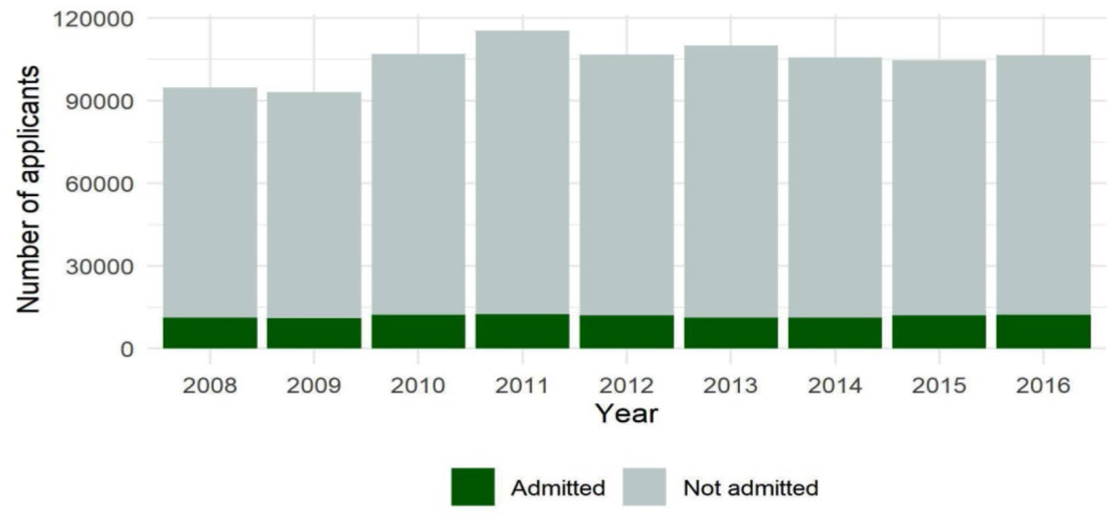
Number of applicants and number of students admitted to the Universidad Nacional de Colombia.
Given the competitive nature of admissions, the university employs a rigorous selection process, using a comprehensive entrance examination that evaluates candidates across five domains: mathematics, natural sciences, social sciences, text analysis, and image analysis. Notably, prior to the second semester of 2013, applicants were required to select their intended undergraduate program before receiving their exam scores. Consequently, the analysis conducted herein focuses on cohorts admitted prior to this change.
Finally, the Universidad Nacional de Colombia operates two distinct admission pathways: the regular process and specialized programs. Regular admission is the standard competitive track where applicants are selected based on a general score cutoff. In contrast, initiatives such as the Special Admissions Programs (Programa de Admisión Especial - PAES) and the Special Program for Admission and Academic Mobility (Programa Especial de Admisión y Movilidad Académica - PEAMA) are designed to facilitate access for specific marginalized populations, including ethnic minorities, victims of the internal conflict, and residents of remote regions. These special tracks operate under separate quotas and distinct selection criteria, which make applicants in these programs statistically non-comparable to those in the regular pool. Consequently, this study focuses exclusively on regular applicants to maintain sample homogeneity and ensure the internal validity of the regression discontinuity design.
Method and Data
Data
We use several sources of information: data from the admissions process of the Universidad Nacional de Colombia (Admissions), standardized test data from the Colombian Institute for Evaluation (Icfes), data from the System for the Prevention of Desertion in HEIs (SPADIES, by its acronym in Spanish Sistema de Prevención y Análisis de la Deserción en las IES), and the Labor Observatory (OLE, by its acronym in Spanish Observatorio Laboral para la Educación) of the Ministry of National Education.
Admissions
This source contains information on applicants and admissions to the Universidad Nacional de Colombia between 2007-II and 2013-I. This period was selected because we had no access to information prior to 2007-II, and because during the period studied, all applicants followed the same admission process, which changed from 2013-II onward. In addition, this analysis period allows us to refine our estimates of potential externalities arising from the SPP program, which began in 2015. The dataset comprises 601,072 records from applicants during the academic periods 2007-II to 2013-I. Exclusions were made for individuals applying to the PAES and PEAMA programs; those who did not participate in the admissions test; applicants with annulled test results despite participation; and candidates for music programs, which follow distinct evaluation criteria and attract a limited applicant pool. Consequently, the refined sample for this analysis included 573,616 records, representing 95.4% of the original dataset, encompassing test outcomes and relevant demographic and socioeconomic variables.
Icfes
Icfes is a governmental entity that, among its functions, oversees the design and administration of standardized tests to measure the progress of public and private educational institutions at all levels, contributing to the assurance of educational quality. For this research, we used the results of the Saber 11 test, a high school exit exam.
Ministry of National Education (MEN)
The Ministry of National Education has developed information sources to monitor higher education, particularly the SPADIES and OLE databases. In particular, the SPADIES database contains data on enrollment in HEIs in the academic period, the number of credits enrolled, the number of credits passed, and enrollment characteristics (e.g., first enrollment, degree). By contrast, the OLE database reports information on individuals’ labor market participation, such as whether they have a formal job and their wages.
Descriptive Statistics
As discussed throughout the identification and labor market analysis sections, the selection of the analytical sample—comprising cohorts from 2007-II to 2013-I—is a deliberate methodological choice based on four fundamental reasons. First, this timeframe provides the longitudinal perspective necessary to observe long-term labor market outcomes; since professional stabilization and wage growth typically manifest several years after graduation, these cohorts offer the professional maturity required for a causal analysis of earnings. Second, it ensures administrative consistency, as the university maintained a uniform admission protocol throughout this period before implementing structural changes in late 2013. Third, this window allows for a clean estimation environment, isolating the effects of institutional quality from the externalities of later large-scale financial aid shifts, such as the Ser Pilo Paga (SPP) program launched in 2015. Finally, by focusing on these cohorts, the study ensures macroeconomic comparability, as the graduates’ entry and early stabilization in the labor market occur prior to the structural shocks and market distortions caused by the COVID-19 pandemic.
Table 1 shows the descriptive statistics of the admitted and non-admitted applicants. Both groups are made up primarily of single applicants, with 96.6% of those not admitted and 97% of those admitted. There were fewer women (33.7%) in the admitted group than in the non-admitted group (53.4%). Admitted applicants are disproportionately represented among those from higher socioeconomic strata. Among admitted students, 15.4% come from strata 4, 5, and 6, whereas only 6.3% of non-admitted applicants belong to these higher strata. By approximately 3 months, those admitted are older and have more time between finishing high school and applying to college. A greater proportion of non-admitted applicants came from public high schools (55.1%) than of admitted applicants (47.1%).
Descriptive Statistics.
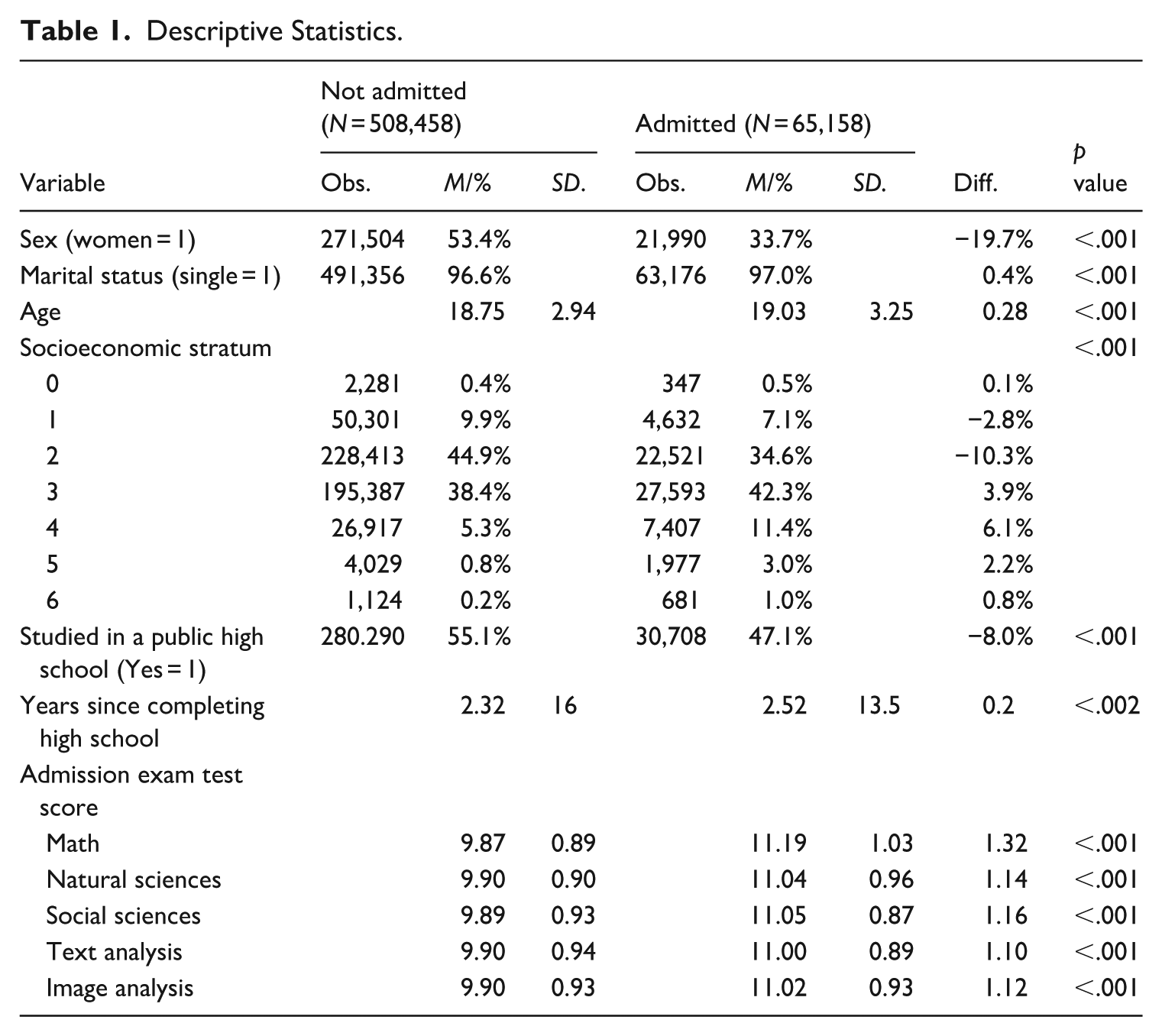
In short, the descriptive statistics show statistically significant differences between the admitted and non-admitted groups. This data means it is impossible to estimate the causal effect by comparing the two groups, as they are systematically different.
Identification Strategy
The Universidad Nacional de Colombia uses admission exam scores and a cut-off as criteria for admission. The cut-off point divides applicants into two groups: admitted and not admitted. This division is plausibly exogenous, particularly for applicants just around the cut-off point, because they cannot anticipate where they will fall in the distribution of test scores. We employ exogenous variation from the admissions process, which allows a regression discontinuity design to identify the college’s causal effect on academic and employment trajectories. This design relies on the premise that applicants on the cusp of the cut-off point share similar observable and unobservable characteristics. The only difference is that some are admitted while others are not.
We performed two operations to compare scores across different periods or cohorts. First, we standardized the cohorts’ scores for 2007-II and 2008-I, according to the test parameters from 2008-II onward (mean 500 and standard deviation 10). Second, we centered the score on the minimum admission score in each period, represented in Equation 1:

where
The cut-off would generate an artificial concentration at zero since the centered score is defined by the program and period using the minimum admission score. This criterion still ensures that the cut-off point separates those admitted from those not admitted and solves the concentration of zeros.
Regression Discontinuity Implementation
Implementing the Regression Discontinuity (RD) design involves using a forcing variable that assigns treatment based on a specific cutoff score. As a result, individuals who score above the cut-off receive the intervention, while those scoring below do not. There are two types of RD designs based on the degree of compliance with the assignment: Sharp Regression Discontinuity (SRD), which assumes that all individuals adhere to their assigned treatment, and Fuzzy Regression Discontinuity (FRD), which relaxes this assumption, allowing some individuals to not to comply with their allocation.
The RD design was implemented using a nonparametric model, as outlined by Calonico et al. (2020). This model relaxes the assumption about the functional form of the data by employing a polynomial approximation (Calonico et al., 2017). The estimators for both SRD and FRD are detailed in Equations 2 and 3, respectively.


where
The present research evaluates several outcome variables at different points in the applicant’s trajectory. In the first stage, the effect on access was assessed using the probabilities of enrolling at an HEI, a public HEI, a 4-year institution, or an accredited HEI. In the second stage, the effect on academic performance was assessed using the number of credits and the percentage of credits passed in the first semester. Finally, the effect on the labor market is studied 6 years after the application to the admission process, based on the probability of formal employment and wages. Finally, two estimates are considered: intention-to-treat (ITT) and treatment-on-the-treated (TOT).
Validity of the Methodology
The RD design assumes that (1) the probability of being admitted to college is discontinuous at the cut-off point, (2) there is no manipulation of the admission score, and (3) there is no discontinuity in the baseline variables around the cut-off point, which means that the only admission criterion is the exam score.
Discontinuity of Admitted Probability
Figure 2a, shows a discontinuity in the probability of admission at the cut-off point: it is close to 100% for applicant scores above the cut-off and close to 30% for scores just below it, then decreases to zero. This situation can be explained by the fact that an applicant could select up to three programs. Then, if the applicant was not admitted to their first choice, they could still be admitted to their second or third choice if their score was high enough. Meanwhile, Figure 2b shows that not all admitted individuals enroll at the college; the discontinuity jump is close to 50%.
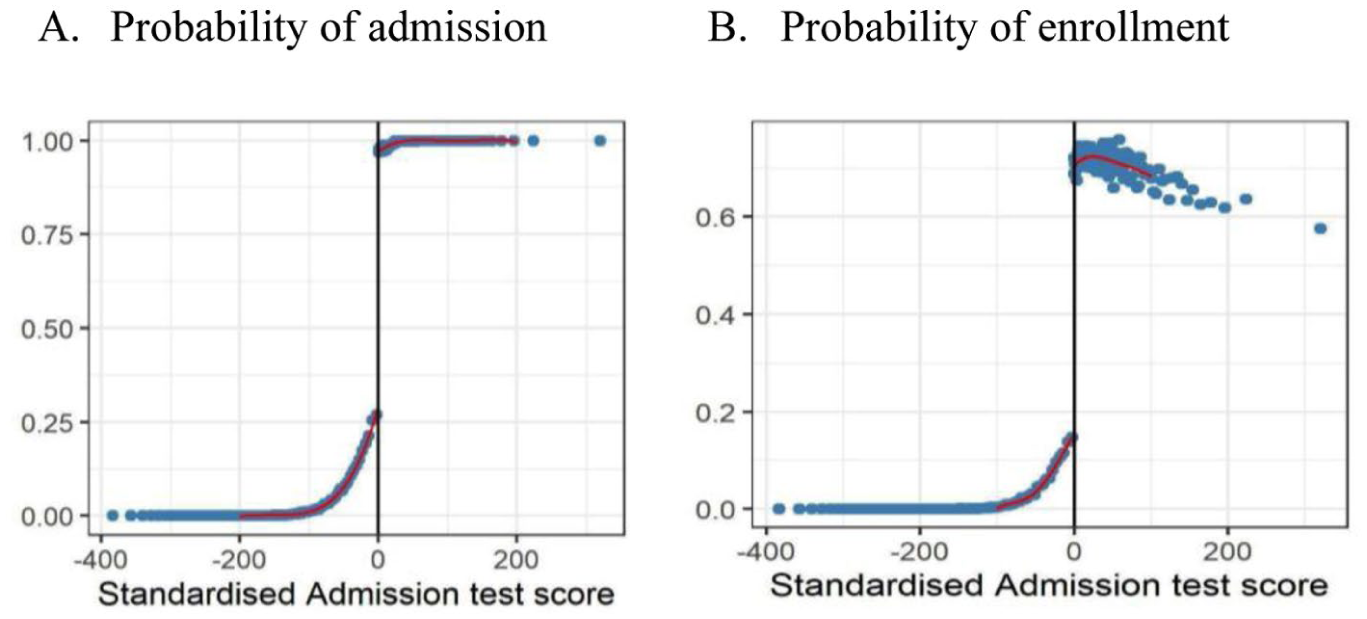
Probability of admission to university according to the standardized score. (a) Probability of admission (b) Probability of enrollment.
Nonmanipulation
There is no reason to think that the admission exam could be manipulated at the cut-off point. The admission exam is a standardized test administered nationally by a reputable security company; the marking is automated and follows established security protocols. In addition, the total score is standardized, which makes it unlikely that applicants will anticipate their score. Additionally, we performed a graphical exercise and a statistical test to validate the nonmanipulation assumption. Figure 3 shows the distribution of admission exam scores; the dotted line represents the cut-off point. We do not observe an accumulation of scores around this point. To complement this, we applied the statistical test developed by Cattaneo et al. (2018), and there is no statistical evidence of a jump in density around the cut-off point (Figure 4). Intuition, visual inspection, and statistical tests suggest that there was no manipulation of the admission exam scores.
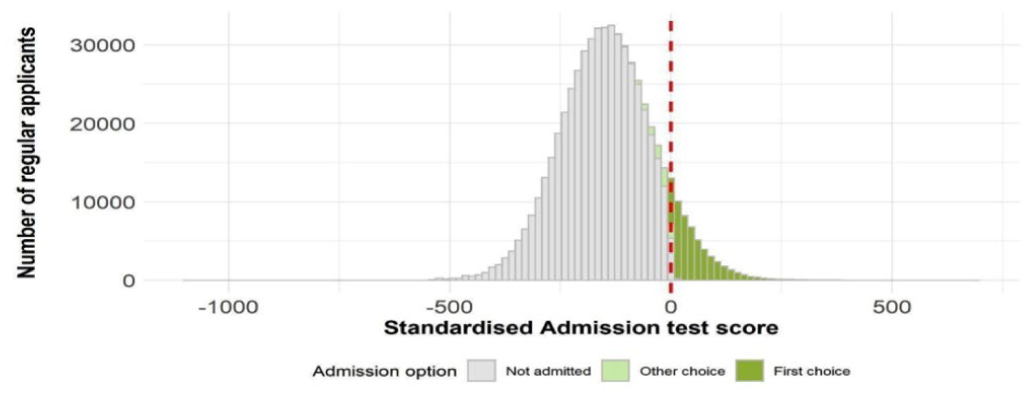
Distribution of standardized scores.
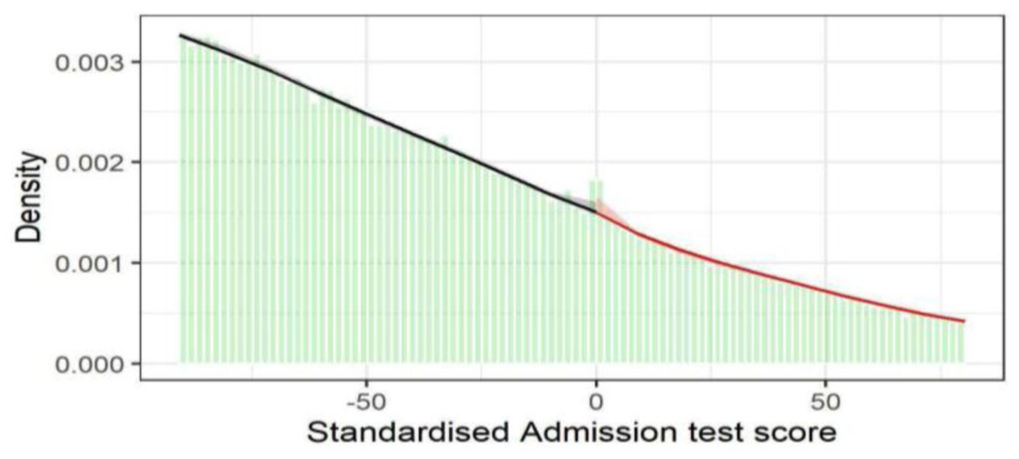
Density estimation uses as a cut-off point a random point between the maximum score of a non-admitted applicant and the minimum score of an admitted applicant.
Baseline Variable Continuity
For each baseline variable, we assessed its continuity at the cut-off point. The baseline variables analyzed were age, sex (percentage of women), marital status (percentage of single applicants), socioeconomic strata, type of school (percentage of applicants who attended a public high school, years since high school completion), and entrance exam score. Figure 5a to k, shows no jumps in the cutoff point for these variables. Additionally, Equation 2 was estimated using each baseline variable as the result variable. The estimate should be zero if the baseline variable is continuous around the cut-off. As shown in Table 2, all the estimates with the baseline variables are statistically zero. These results suggest that the two groups are equal in expectation within the bounds of the cut-off point.
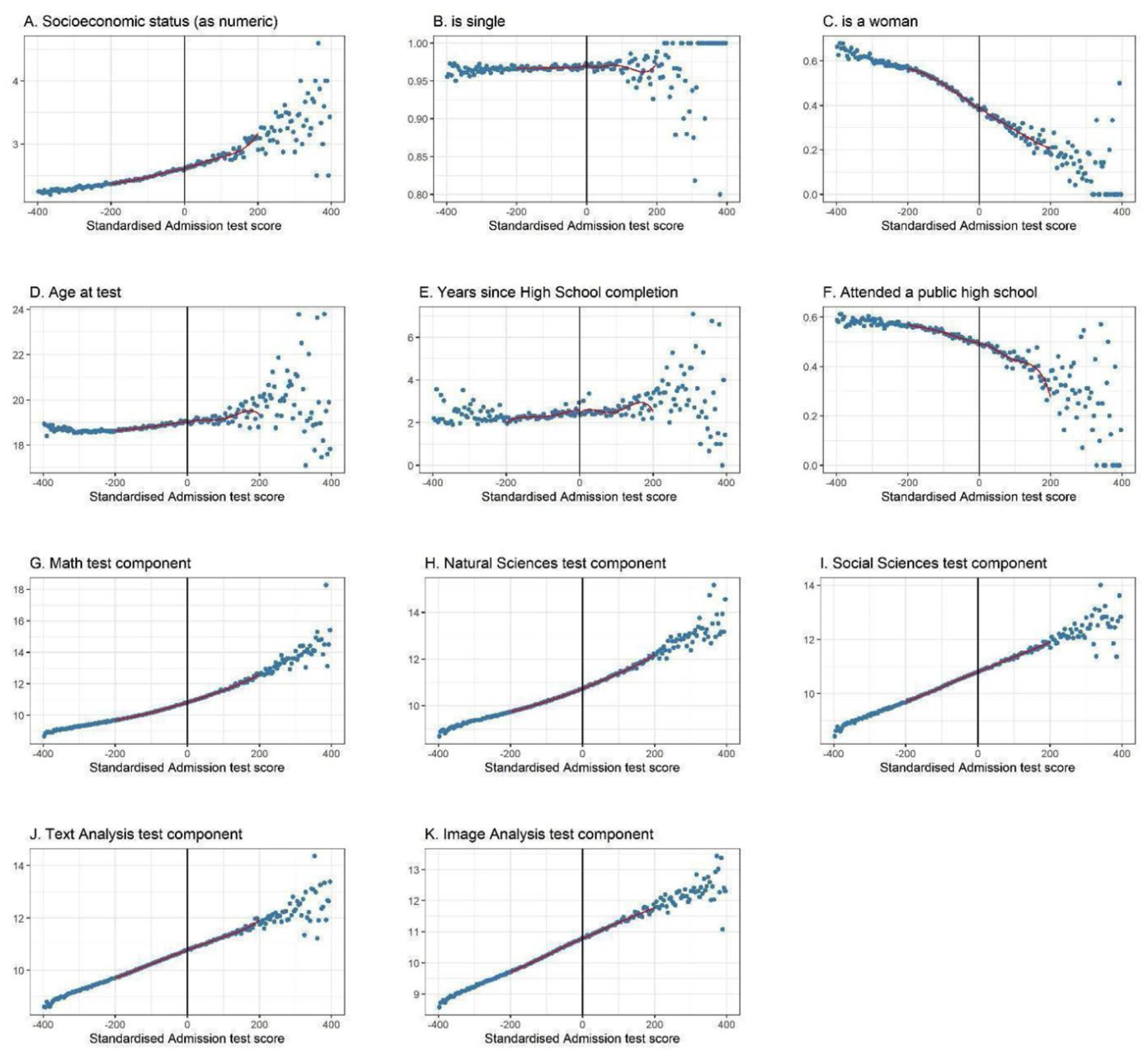
Continuity of the baseline variables at the cut-off point.
Baseline Variables Continuity.
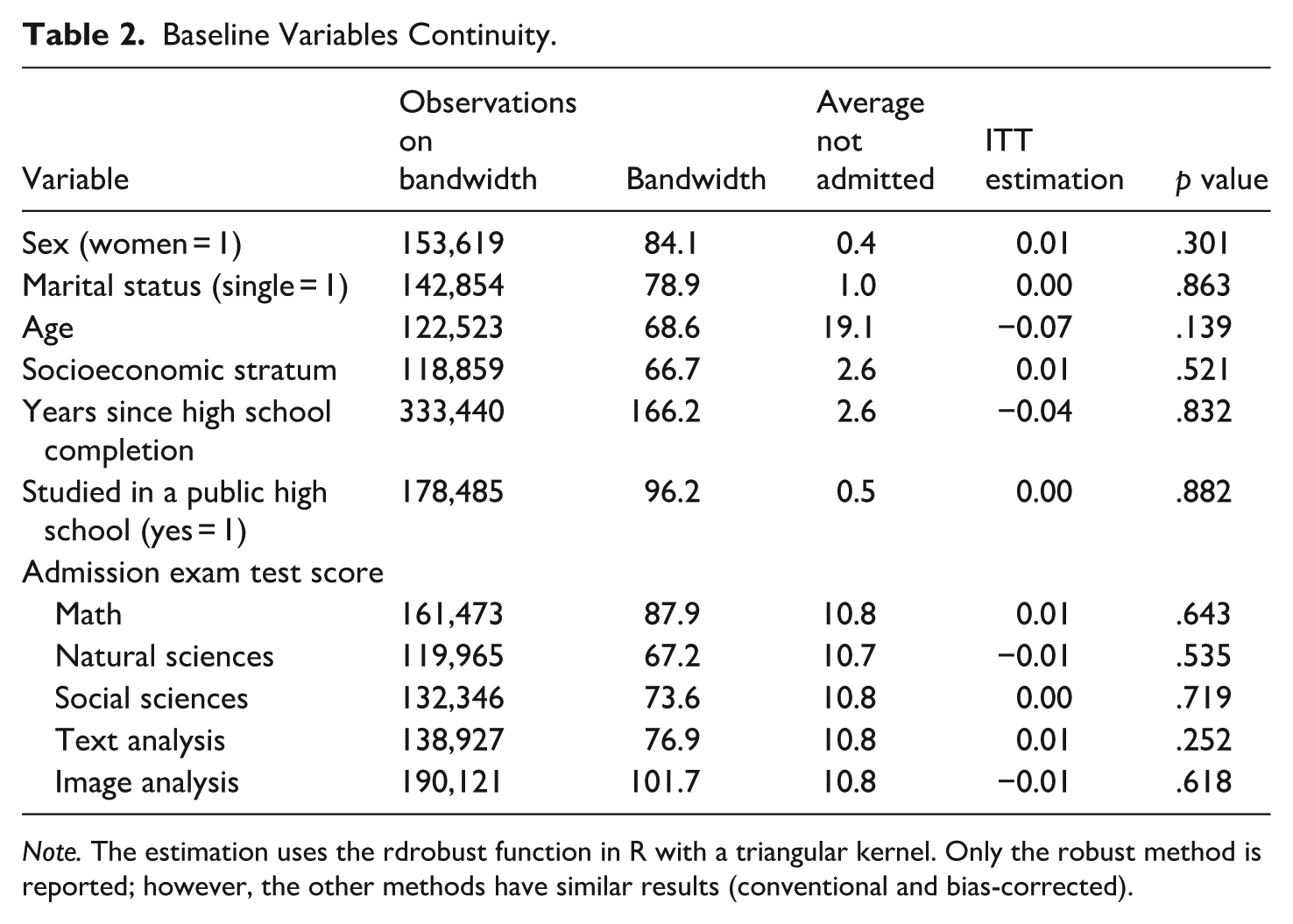
Note. The estimation uses the rdrobust function in R with a triangular kernel. Only the robust method is reported; however, the other methods have similar results (conventional and bias-corrected).
Results
We report the effect of admission to the Universidad Nacional de Colombia on several outcome variables using the rdrobust function in R with a triangular kernel. We report only the robust method; however, the conventional and bias-corrected methods have similar results in all estimations. Finally, the number of observations reported is the sample size of points around the cut-off point within the optimal bandwidth.
Impact on Access to Higher Education
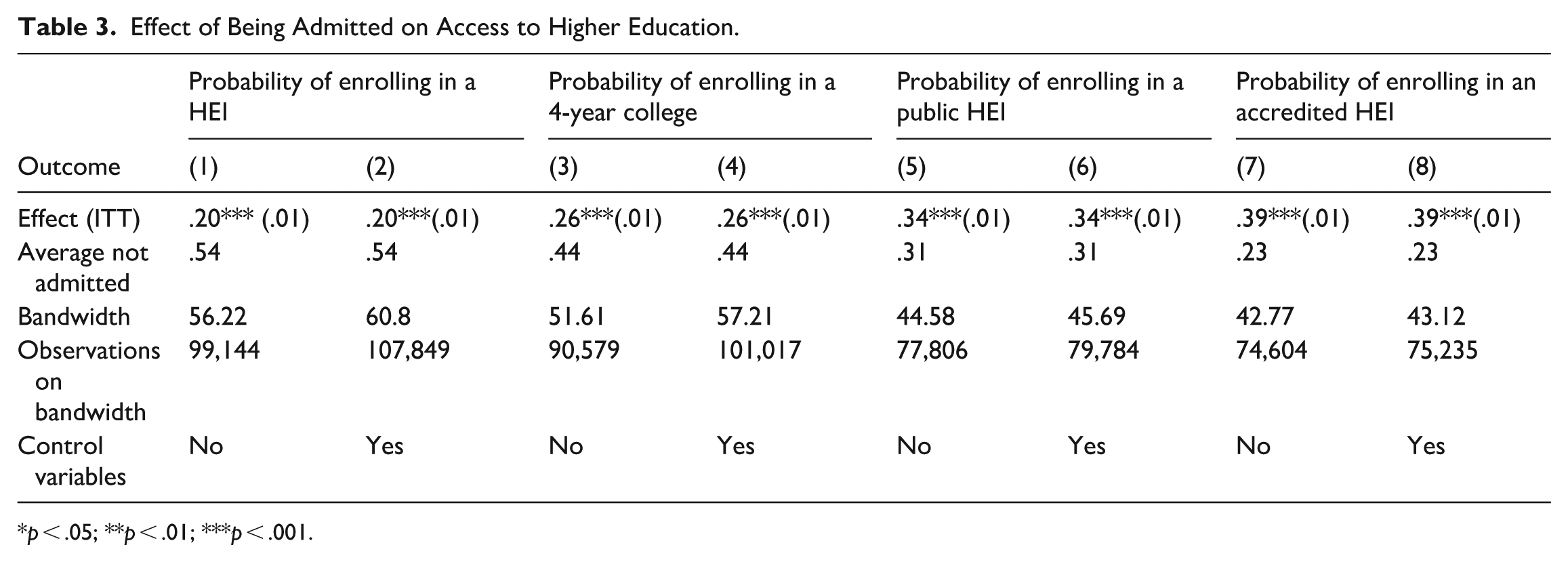
We estimated the effect of being admitted to the Universidad Nacional de Colombia on several outcome variables: the probability of enrolling in an HEI, which may include technical or technological training; the probability of enrolling in a 4-year college; the probability of enrolling in a public HEI, which means much lower costs than private HEIs; and the probability of enrolling in an accredited HEI, which is indicative of the quality of the education received. Table 3 presents the estimates in four panels. The first column corresponds to an overall estimate, while the second column presents the results adjusted for covariables. These results are complemented by Figure 6, which illustrates the effects.
Effect of Being Admitted on Access to Higher Education.
p < .05; **p < .01; ***p < .001.
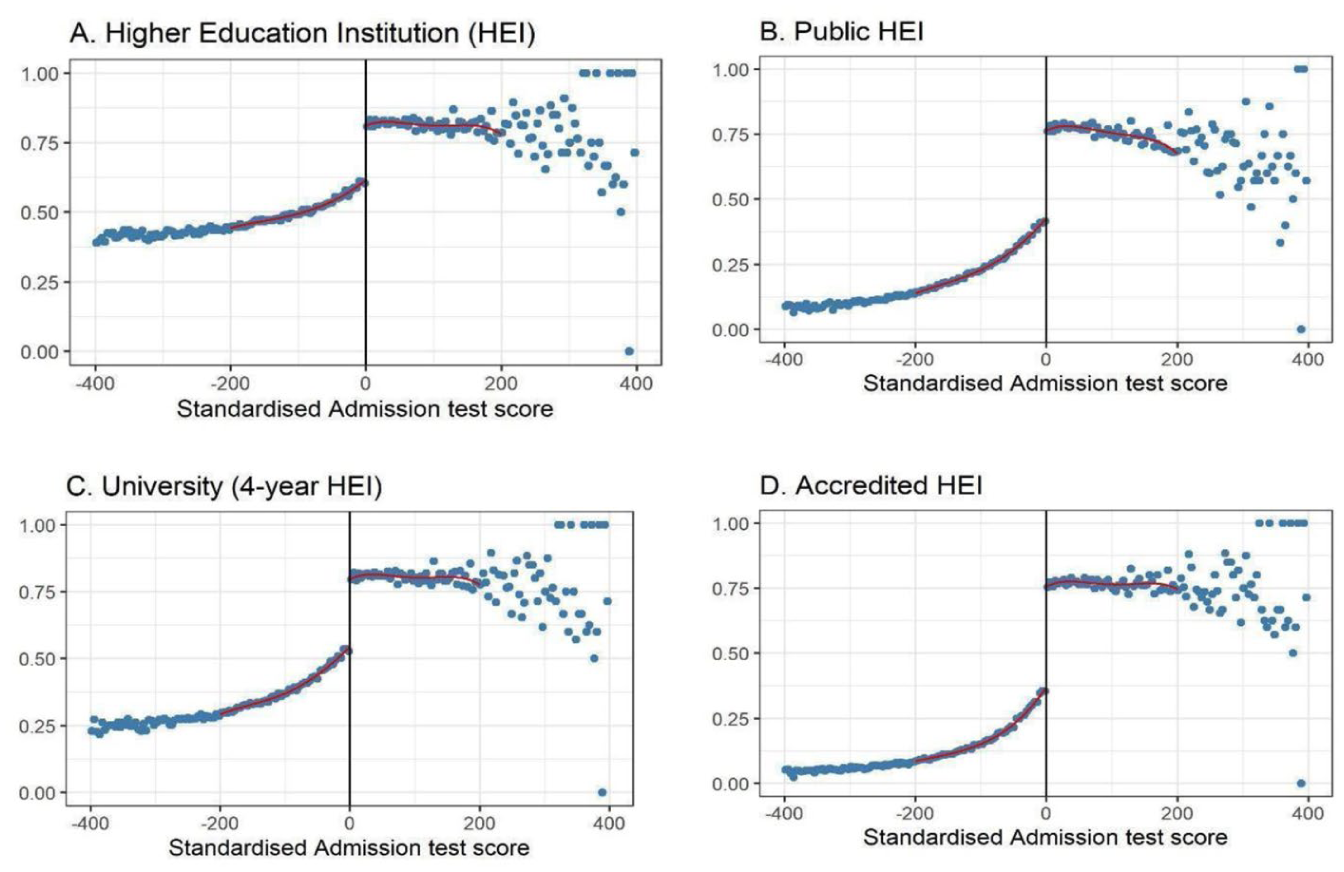
Effect of admission on enrollment in (a) a higher education institution (HEI), (b) a public institution, (c) a university and (d) an accredited institution.
Admission to the Universidad Nacional de Colombia has a positive and statistically significant effect of 20% points (p.p.) on the probability of enrolling in higher education, any HEI. As shown in Table 3 (Column 1), the baseline enrollment rate for applicants who narrowly miss the admission threshold is 54%, indicating that admission to the flagship university increases the probability of enrollment in higher education by 37%. This result suggests that flagship universities can be the sole higher education option for a significant proportion of applicants.
Being admitted increases the probability of enrolling in a 4-year college by 26 p.p., equivalent to 48%, Table 3 (Column 4). Additionally, being admitted increases the probability of enrolling in a public HEI by 34 p.p., or 79% (Column 6). Finally, being admitted increases the probability of enrolling in an accredited HEI by 39 p.p. (144%) (Column 8). These results are similar to those found in the impact evaluation of the SPP program by Londoño-Vélez et al. (2020), with the difference that most SPP beneficiaries chose private colleges of lower quality than the Universidad Nacional de Colombia, according to QS rankings.
In short, these results suggest that admission to the Universidad Nacional de Colombia significantly enhances students’ access to high-quality education. Admission to the flagship university increases the likelihood of access to an educational environment with greater institutional resources and a high-ability peer group, both critical to the development of human capital and professional skills.
In comparison, those applicants who are not admitted and are at the margin of the cut-off point are as academically good as those who are admitted. They lack access to private institutions of similar quality and are also less likely to benefit from government programs. The non-admitted individuals who are at the margin are mostly from socioeconomic strata 2 (37%) and 3 (42%), and according to data available from the Saber 11 test score, 67.9% live in families with monthly incomes of less than three legal monthly minimum wages, and 43.4% live in families with monthly incomes less than two. Additionally, the Saber 11 test scores of many non-admitted students are as good as those of students who benefited from the SPP. However, if this program existed in the period analyzed in this study, many non-admitted students would not have participated in the SPP because they did not meet the socioeconomic classification requirements.
Effect on Academic Performance
This section examines the impact of admission to the Universidad Nacional de Colombia on academic performance, conditional on enrollment in the higher education system. Specifically, the section analyzes the intensive margin of education by evaluating the number of credits registered and the credit completion rate during the first semester. In the long term, the section also estimates the effect of admission on the overall probability of degree completion.
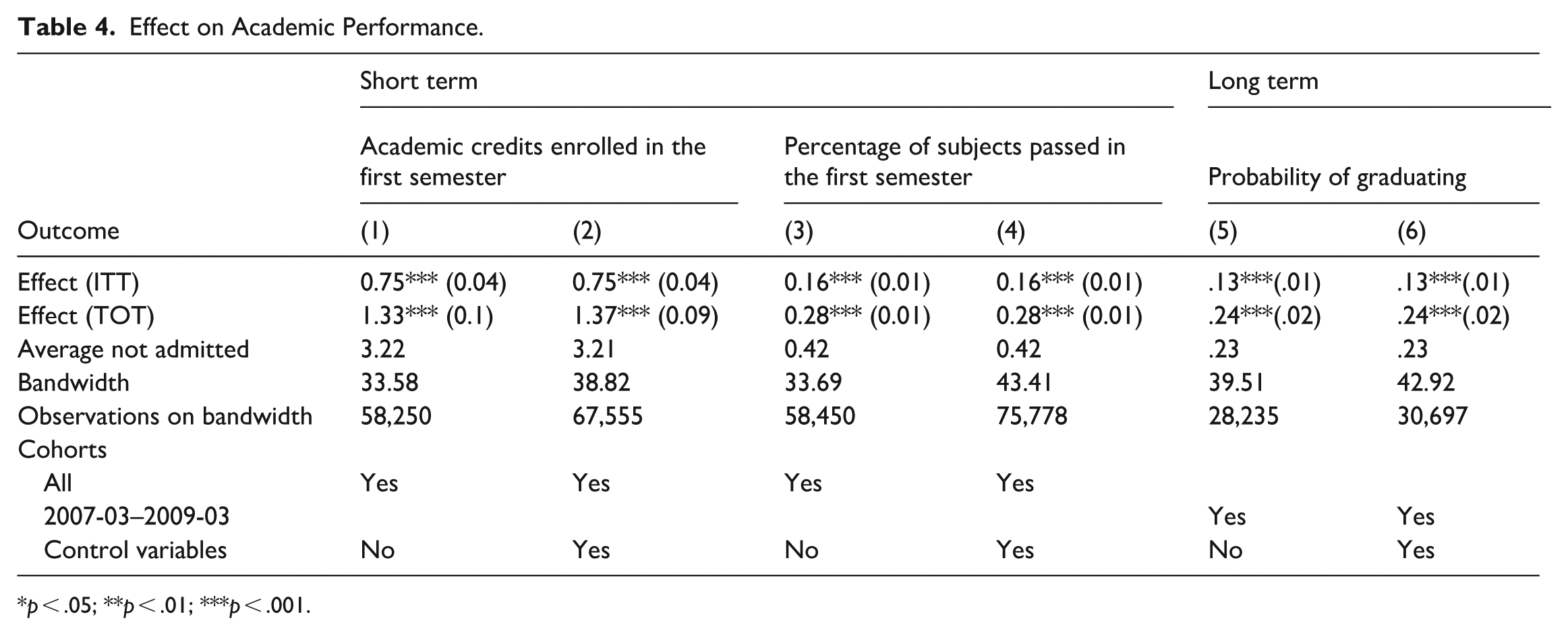
Table 4 summarizes the effects on academic performance. In the short run, being admitted increases the number of academic credits enrolled in the first semester by 23% (0.75 credits) for the ITT estimate and 41% (1.33 credits) for the TOT, relative to the baseline of 3.22 credits taken by the control group in alternative institutions (Column 1). Furthermore, Column 3 shows that admission increases the credit completion rate by 16 p.p. (a 38% relative increase over baseline) under the ITT and by 28 p.p. (a 66% relative increase) under the TOT. In the long term, Column 5 reports that admission has a positive and significant effect on the probability of system-wide degree completion, with an effect of 13 p.p. (a 56% relative increase) for the ITT and 24 p.p. for the TOT. These results indicate that admission to the flagship university not only facilitates entry but also significantly enhances the intensity and success of students’ academic trajectories compared with other institutions in the system.
Effect on Academic Performance.
p < .05; **p < .01; ***p < .001.
Effect on the Labor Market
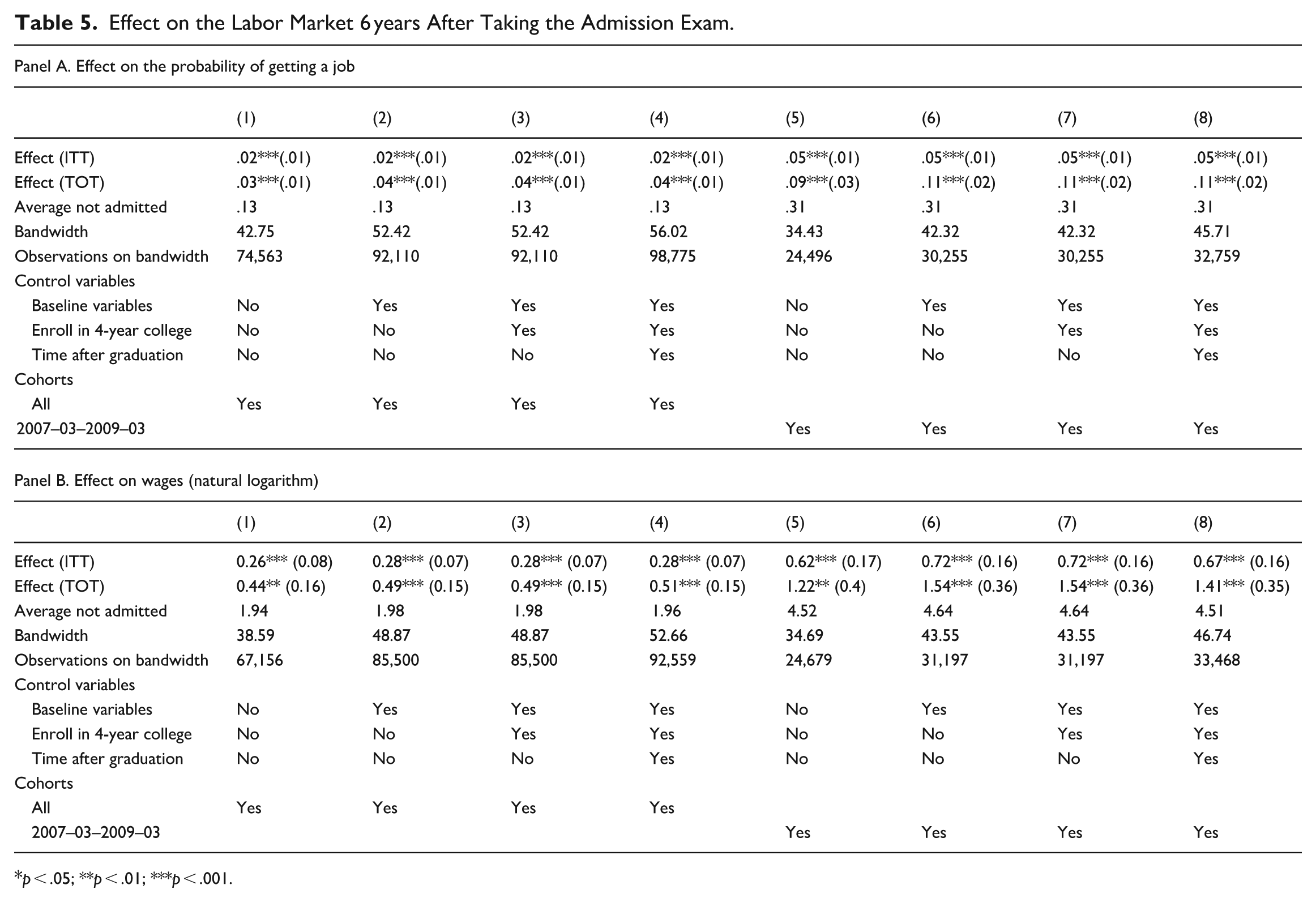
We estimated the effect of being admitted to and enrolling in the Universidad Nacional de Colombia on two labor market outcomes: the probability of getting a job and wages. For this purpose, labor market outcomes were measured 6 years after admission. Table 5 presents the estimates of the two outcome variables analyzed with different specifications. The estimates include different controls that could affect the outcome variables, such as baseline characteristics. The model is adjusted for two factors: whether the applicant enrolled in a 4-year college, which captures the type of HEI attended, and the time since degree, which captures the length of the program completed and labor market experience. Additionally, columns 5 to 8 make the same estimates as columns 1 to 4, but restrict the sample to student cohorts from the second semester of 2007 to the second semester of 2009. This restriction allows for having complete cohorts with enough time to graduate. In general, we find that the estimates are robust across specifications and that all estimates from the restricted sample are larger than those from the full sample. On the one hand, Panel A presents the results of the effect of being admitted and enrolling on the probability of joining the labor market, that is, obtaining a formal job. Both the ITT and TOT estimates in column 4 show positive and statistically significant effects of 2 p.p. (15.4%) and 4 p.p. (30.8%), respectively. In column 8, both the ITT and TOT estimates increase with the restricted sample, increasing to 5 p.p. (16.1%) and 11 p.p. (35.5%), respectively. By contrast, Panel B of Table 5 presents the effect of being admitted and enrolling on the natural logarithm of wages. The natural logarithm is used to interpret the results as percentage changes. The two estimates, ITT and TOT (column 4), show positive and statistically significant effects on wages of 28% and 51%, respectively. With the restricted sample, as shown in column 8, the ITT and TOT estimates increase to 67% and 141%, respectively.
Effect on the Labor Market 6 years After Taking the Admission Exam.
p < .05; **p < .01; ***p < .001.
Heterogeneous Effects by Socioeconomic Status
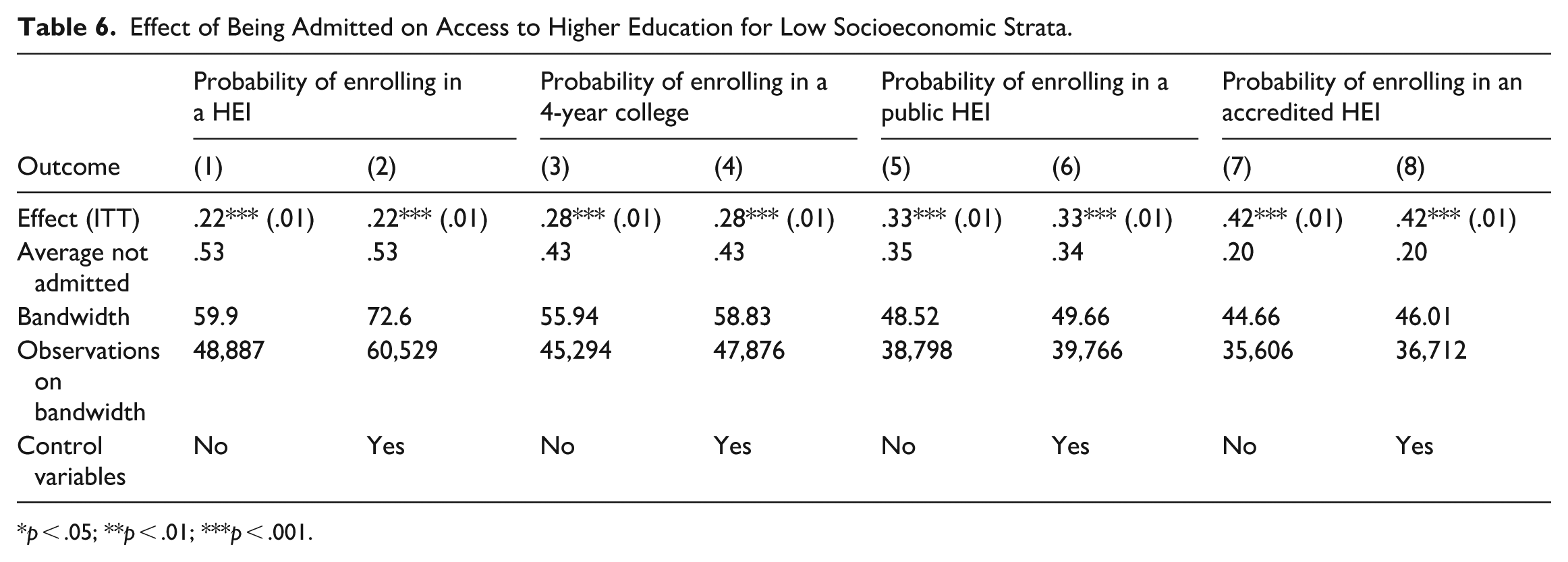
This section presents the heterogeneous results by socioeconomic level. For this purpose, we make the estimations but restrict the sample to applicants with the lowest socioeconomic levels. Table 6 presents the estimates for the access variables, which show that belonging to the lowest strata has an additional effect of 2 p.p. (10%) on the probability of enrolling in an HEI, an additional 2 p.p. (7.7%) on the probability of enrolling in a 4-year college, and an additional 3 p.p. (7.7%) on the probability of enrolling in an accredited HEI. The probability of enrolling in a public HEI decreased by 1 p.p. (2.9%).
Effect of Being Admitted on Access to Higher Education for Low Socioeconomic Strata.
p < .05; **p < .01; ***p < .001.
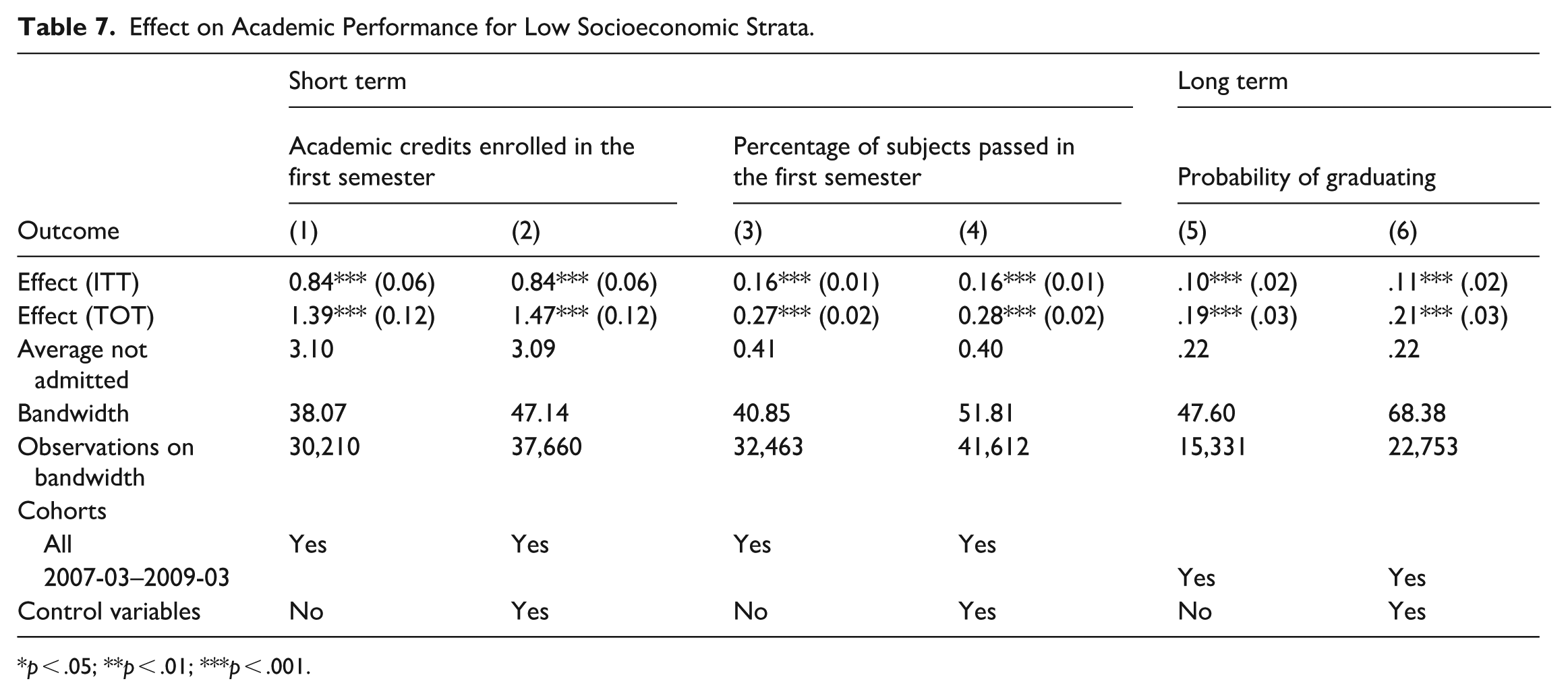
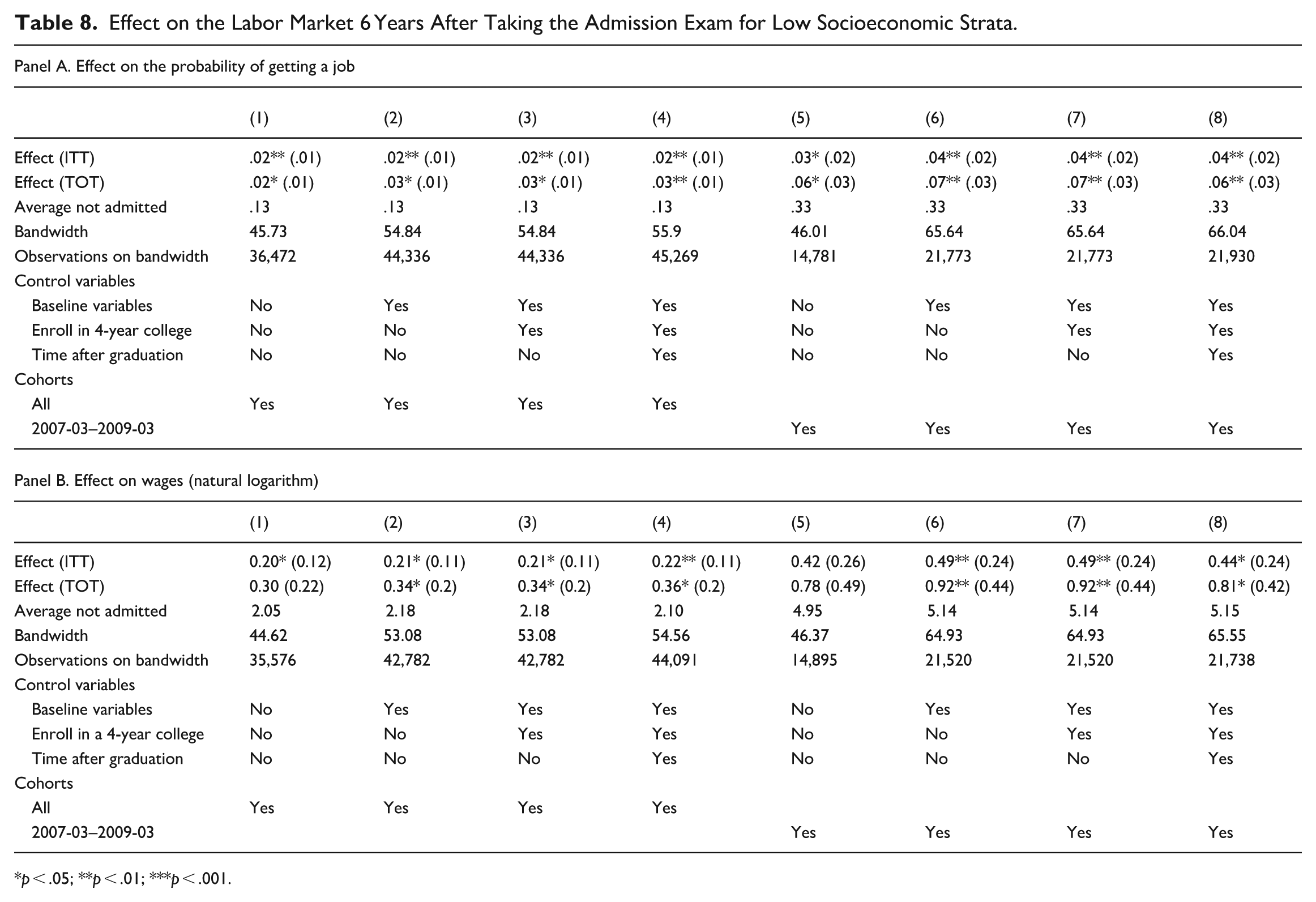
Table 7 presents the estimates for the academic performance variables. For the TOT estimation, belonging to lower strata has an additional effect of 9 p.p. on the credits enrolled in the first semester compared to the results in Table 4; there is no additional effect on the percentage of subjects who passed in the first semester, and it reduces the probability of graduating by 3 p.p. For the TOT estimation, belonging to lower strata has an additional 6 p.p. effect on credits enrolled in the first enrollment; it reduces the percentage of subjects who passed in the first enrollment by 1 p.p., and it reduces the probability of graduating by 5 p.p. Table 8 presents the estimates for the labor market variables. For the ITT estimation, compared to the results in Table 5, belonging to lower strata has an effect that is 6 p.p. smaller on the monthly wage. According to the TOT estimation, belonging to lower strata decreases the probability of employment attachment by 1 p.p. and decreases the monthly wage by 14 p.p.
Effect on Academic Performance for Low Socioeconomic Strata.
p < .05; **p < .01; ***p < .001.
Effect on the Labor Market 6 Years After Taking the Admission Exam for Low Socioeconomic Strata.
p < .05; **p < .01; ***p < .001.
Discussion and Conclusions
This research shows that admission to the Universidad Nacional de Colombia increases the likelihood that a student will attend a high-quality, publicly funded university. In contrast, those who nearly miss admission, despite having comparable skills, are more likely to enroll in vocational programs or lower-quality private HEIs, and some eventually leave higher education altogether. These results reveal not only the consequences of stratification but also the causal role of access to a high-quality public institution in shaping the trajectories of high-ability applicants, underscoring the importance of ensuring that high-quality opportunities are within reach.
Beyond documenting the known stratification of the Colombian education system, this study provides causal evidence that a flagship public university serves as a primary engine of social mobility. By employing a Regression Discontinuity design, we demonstrate that admission to the Universidad Nacional de Colombia is the sole gateway to high-quality higher education for a significant portion of high-ability, low-income applicants. Our findings reveal that for these individuals, the flagship university does not merely substitute for other institutions; rather, it expands the system’s frontier by closing a significant gap in total enrollment and doubling the probability of degree completion. This research thus quantifies the irreplaceable role of public elite institutions in breaking the cycle of inequality for the most talented students in a developing economy.
Applicants admitted and not admitted just at the cut-off point are similar in terms of academic skills and socioeconomic conditions. However, non-admitted individuals lack access to high-quality private HEIs comparable to the best public HEIs and have fewer resources to benefit from demand subsidy programs like SPP. Therefore, this implies that a group of individuals with high potential cannot benefit from high-level training. This situation is partly due to the high costs of higher education, which have risen disproportionately in recent years, not only in Colombia but also in other countries (Carpentier, 2012; Choi, 2015; Mitchell et al., 2014; Toutkoushian & Shafiq, 2010).
We argue that high-quality public HEIs, given the low costs to students, behave like government financial aid programs, and the outcomes of attending a high-quality HEI are similar regardless of whether it is public or private. The SPP is Colombia’s most extensive demand-side subsidy program, focusing resources and beneficiaries on private HEIs. The SPP results are about private high-quality HEIs. Our results are similar to those of Londoño-Vélez et al. (2020); for example, the SPP increases enrollment (56.5%) and access to an accredited HEI. In addition, we find that having a lower socioeconomic background has additional effects on access.
By contrast, we highlight that the beneficiaries of the SPP chose accredited private HEIs; however, according to the QS ranking, most private HEIs among SPP beneficiaries are of lower quality than at least the top four Colombian public HEIs. Therefore, we argue that high-skill students may have chosen lower-quality HEIs that they could have attended. This mismatch, widely documented in the US, could reduce student benefits (Dillon & Smith, 2017; Hoxby & Avery, 2013; Smith et al., 2013). Future research should investigate whether the SPP generates a mismatch and its consequences for student outcomes.
These findings align with and provide a robust rationale for recent Colombian policy shifts, such as the Gratuity Policy (Law 2307 of 2023), which seeks to eliminate financial barriers to public HEIs. However, our results suggest that access is only one part of the equation. The 56% relative increase in graduation rates and the substantial labor market premiums we found underscore that the flagship university’s value lies in its institutional quality. Consequently, we recommend that current policy efforts move beyond tuition-only subsidies and prioritize expanding the physical and academic capacity of public institutions (addressing the structural funding gap under Articles 86 and 87 of Law 30). Our evidence shows that for a significant proportion of high-ability applicants, there is no private substitute; therefore, increasing the capacity of high-quality public HEIs is not just an equity measure, but an essential strategy for national human capital development in line with SDG 4.
Our findings on the irreplaceable role of the flagship university are consistent with the high social rates of return documented by Mountjoy (2026), who estimates a 16% internal rate of return for society. Furthermore, consistent with Londono-Velez et al. (in press), our results underscore that access to high-quality environments is the primary driver of upward mobility in the Colombian context.
Finally, and more importantly, these results suggest that high-quality public HEIs can perform as well as those from demand-side subsidy programs that fund private HEIs, which breaks well-documented preconceptions, at least for the US, that private HEIs outperform public HEIs. These results are significant for policymakers because such preconceptions have led, at least in part, to reduced funding for public HEIs (Newfield, 2016). Such findings are significant for policymakers because these misconceptions have often led to reduced funding for public institutions. By demonstrating the efficiency and transformative power of the public flagship university, this study advocates rebalancing investment toward strengthening the public higher education sector.
Footnotes
Acknowledgements
We are incredibly grateful to the Universidad Nacional de Colombia for providing the information required to develop this research, to the School of Economic Sciences for their support, and to Laura Cañón and Felipe Ramírez for their valuable participation in the initial research stage.

Author Contributions
Hernando contributed to paper conceptualization, results analysis, literature review, and document writing.
Camilo contributed to organizing and cleaning the data, coding the estimation, analyzing results, writing literature reviews, and documenting.
Funding
The authors disclosed receipt of the following financial support for the research, authorship, and/or publication of this article: This work is based on the project “Análisis de la Educación Superior Pública en Colombia,” developed by the Facultad de Ciencias Económicas at the Universidad Nacional de Colombia. While the authors did not receive direct external funding for this project, the first author conducted this research during a sabbatical semester granted by the university.
Declaration of Conflicting Interests
The authors declared no potential conflicts of interest with respect to the research, authorship, and/or publication of this article.