







Abstract
Employees’ perception of their intrateam status plays an important role in the leader–member interaction process. Combining relational fairness theory and status theory, the present study reveals how leadership empowerment behavior (LEB) affects employee and team creativity. Specifically, we propose that LEB may increase employee creativity by elevating employee self-perceived status and enhance team creativity through fostering a feedback-seeking climate in the team. Moreover, we propose that, at the team level, team status conflict moderates the relationship between LEB and feedback-seeking climate such that LEB is only positively related to feedback-seeking climate when status conflict is low but not when it is high. We further propose that team feedback-seeking climate also mediates the interactive effect of LEB and status conflict on team creativity. Results based on data collected from a sample of 84 teams with 392 employees supported our hypotheses. We also discuss the theoretical and practical implications of these findings and propose future research directions.
Keywords
Creativity can be an indispensable resource that gives organizations unique advantages in highly competitive and dynamic environments (Amabile, 1988; Harris, Li, Boswell, Zhang, & Xie, 2014; Shalley & Gilson, 2004). Defined as the production of novel and useful ideas by employees, creativity is so desired in work settings that leaders often spend an inordinate amount of effort in trying to enhance it (Amabile, 1983; Jackson, Hitt, & Denisi, 2003; Ma, Cheng, Ribbens, & Zhou, 2013; Zhang & Zhou, 2014). Among the various factors that may promote the production of creativity, supportive behaviors of leaders have been found to be highly influential (e.g., DiLiello, Houghton, & Dawley, 2011; Jackson et al., 2003). In particular, a leader’s empowerment or empowering leadership behavior (LEB) is capable of positively influencing an employee’s individual creativity (Harris et al., 2014; Zhang & Zhou, 2014). Although several previous studies have attempted to explain the impact of leaders’ empowerment on employee creativity, few of them integrated the multilevel relationship between LEB and creativity at both the individual and the team level. Through the lens of relational fairness theory (e.g., Janssen & Gao, 2013) and status theory (e.g., Pettit, Yong, & Spataro, 2010), it is possible to reveal the mechanisms and integrate the two levels of analyses. In this research, we aim to develop a multilevel model to offer a more comprehensive understanding of how leader empowerment behavior may promote both employee creativity and team creativity.
To achieve this, we draw on relational fairness theory, which argues that people are more willing to cooperate when they feel valued, respected, and are treated fairly by a social group (van Dijke, de Cremer, Mayer, & van Quaquebeke, 2012; Janssen & Gao, 2013; Tyler, 1999). Previous studies drawing on relational fairness theory majorly focused on employees’ mandatory cooperation, such as required attendance and obedience. In our research, through the lens of perceived status, we developed a model in which LEB enhances employee creativity through promoting their self-perceived status.
In addition, according to relational fairness theory, feeling empowered can improve employees’ perception of their own status, which makes them feel psychologically safer, become more involved, and more willing to express ideas in their teams (Detert & Burris, 2007; Edmondson, 2003; Gao, Janssen, & Shi, 2011; Janssen & Gao, 2013). In teams with more leader empowerment behaviors, employees are more likely to consult others and reach out for a second opinion over work issues. Thus, a feedback-seeking climate is likely to be formed (De Stobbeleir, Ashford, & Buyens, 2011; Slowiak & Nuetzman, 2014; Ziguang, Wing, & Jian, 2007). In such a work climate, the work team would be exposed to a broader range of information, which would provide more opportunities to come up with new ideas and synthesize them into novel and useful ideas—that is, higher level of team creativity (Richter, Hirst, Van Knippenberg, & Baer, 2012; Tierney & Farmer, 2002, 2011).
However, when members compete with one another for higher status, there would be status conflict in the team. Influenced by status conflict in the team, employees’ attention toward generating new and useful ideas would be distracted, and they are likely to withhold their constructive feedback in order to avoid helping potential opponents. Thus, with high level of status conflict in the team, LEB would become less effective in creating a feedback-seeking climate (Bendersky & Hays, 2012). Therefore, status conflict may act as a boundary condition by buffering the positive relationship between LEB and the feedback-seeking climate.
Our study makes several unique contributions to current literature. First, by combining relational fairness theory (Janssen & Gao, 2013) and status theory (Anderson, Srivastava, Beer, Spataro, & Chatman, 2006; Pettit, Yong, & Spataro, 2010; Ridgeway & Berger, 1986), our study identifies the mediating role of employee self-perceived status in linking LEB to employee creativity. We enrich the literature by highlighting the role of perceived relational fairness and intrateam status in the functioning process of leadership behavior. Second, at the team level, our study provides evidence of the positive relationship between LEB and team creativity. By revealing the mediating role of a feedback-seeking climate, our study also articulates the mechanism through which LEB promotes team creativity from a meso perspective. Our findings extend the understanding of how LEB may form a desirable work climate by enhancing relational fairness. Third, our research recognizes status conflict as a boundary condition for LEB’s promoting effect on team creativity. It illustrates how essential it is for empowering leaders to enhance relational fairness, reduce status-related conflict, and avoid relational information that may confuse employees’ perception of their status, so that a feedback-seeking climate can be maintained to elevate team creativity. Fourth, our study extends relational fairness theory by shifting the motivational impact of perceived relational fairness from mandatory cooperation to discretionary cooperation, especially in the delivery of employee creativity and team creativity.
Theoretical Background and Hypotheses
Relational Fairness Theory
Relational fairness theory is associated with perceived relational treatment (Janssen & Gao, 2013). It is built on the presumption that people value their membership in social groups because group identification is materially and psychologically rewarding (Tyler, Degoey, & Smith, 1996). These social groups provide a source of self-validation, giving members information about the appropriateness of their attitudes and values (Tyler, 1989). Within these groups, interpersonal treatment during social interaction informs people of their status (Smith, Tyler, Huo, Ortiz, & Lind, 1998). If treated respectfully, a group member would regard himself or herself as possessing a high status (Janssen & Gao, 2013; Tyler, 1996). Based on this assumption, relational fairness theory further argues that a good relationship with authorities may generate the feeling of being valued, being fairly treated, and having high status in the group, which in turn motivates employees to respond favorably (Elliott, 2011; Tyler & Lind, 1992).
Studies are paying increasing attention to prosocial outcomes of fair treatment, such as building trust, stimulating discretionary cooperation, and generating intrinsic motivation and creativity (Tyler & Blader, 2003). It is argued that the quality of interpersonal treatment will shape one’s social identity. The more one identifies with a group, the more effort one would invest to help the group succeed (Tyler & Blader, 2003). Thus, people who are respected by other group members may perceive themselves as having higher status, be more motivated to make use of their distinctive abilities and conduct unique or creative actions voluntarily (Tyler & Blader, 2003).
Leadership Empowerment Behavior and Employee Self-Perceived Status
Psychological empowerment refers to a motivational construct manifested in four cognitions: meaning, competence, self-determination, and impact (Spreitzer, 1995). LEB involves leader behaviors aligned with the above four components. More specifically, LEB includes leadership behaviors, such as supporting, coaching, sharing power, raising autonomy, providing abundant information, and involving employees in the decision-making processes (Ahearne, Mathieu, & Rapp, 2005).
It is argued that empowerment can unleash employees’ potential, enhance their motivation, allow them to be more adaptive and receptive to their environment, and minimize bureaucratic hurdles that hinder responsiveness (Forrester, 2000; Spreitzer, 1995, 1996). With LEB, group leaders empower their followers by expressing confidence in their competence, valuing the significance of their work, and reducing bureaucratic constraints (Ahearne et al., 2005; Zhang & Bartol, 2010; Zhang & Zhou, 2014). By granting accessibility to material or psychological resources, LEB may provide employees with an information cue that helps them understand the meaning of their work. Through coaching and training, an empowering leader allows employees to learn skills, hone them at work, and grow their competence (Hon & Chan, 2013). Taking employees into the decision-making process, LEB enforces followers’ self-determination and feelings of being important (Manz & Sims, 1987).
According to relational fairness theory, employees’ status assessment can be decided by their perception regarding the quality of social interaction with the team authority (Tyler & Blader, 2003). LEB may raise followers’ status assessment and their perception of relational fairness by making them feel that their work is meaningful (Janssen & Gao, 2013; Tierney & Farmer, 2002), their capabilities are sufficient, they have control over their own behavior (Tyler & Lind, 1992), and their contributions are actually making a difference (Spreitzer, 1995). Empowering leaders may express support and treat followers fairly in exchange for their loyalty and contribution to work (Arnold, Arad, Rhoades, & Drasgow, 2000; Pennings & Woiceshyn, 1987). In summary, LEB may make employees feel fairly treated and promote their perception of their status (Janssen & Gao, 2013; Spreitzer, 1995).
Employees’ perception of their status reflects the respect, prominence, and influence they possess within work teams in their own eyes (Anderson, John, Keltner, & Kring, 2001; Berger, Cohen, & Zelditch, 1972). To be specific, employee self-perceived status refers to an employee’s perception of how he or she is valued and respected (Janssen & Gao, 2013; Tyler, 1999; van Dijke et al., 2012). Thus, we hypothesize the following:
Employee Self-Perceived Status and Employee Creativity
Amabile (1983, 1988) proposed a theoretical framework identifying intrinsic motivation, domain-relevant skills, and creativity-relevant knowledge as three important components for producing creativity. In line with Amabile’s framework, perceived relational fairness has been found to play a pivotal role in influencing employees’ intrinsic motivation and creativity (Simmons, 2011). According to relational fairness theory, employees can take fairness treatment from their empowering leader as positive feedback and support for their work. To be more specific, employees’ perceived status elevated by LEB may be interpreted as a supportive assertion of competence. Since perceived competence may increase one’s intrinsic motivation, employees’ discretionary cooperation, such as creative performance, may be increased by their elevated perception of status (Deci & Ryan, 1980; De Jesus, Rus, Lens, & Imaginário, 2013; Janssen & Gao, 2013; Tyler & Blader, 2003).
According to relational fairness theory, employees’ discretionary cooperation can be motivated by their desire for respect within their work teams. In addition, such discretionary cooperation can lead to additional effort for work (Janssen & Gao, 2013; Tyler & Blader, 2003). When employees feel their intelligence, effort, and potential are fairly valued and respected, their intrinsic motivation can be promoted, and they may feel that their focus and concentration on creative actions are facilitated (Deci & Ryan, 1980; Lind & Tyler, 1988; Sousa & Vala, 2002; Tyler & Blader, 2003; Tyler & Lind, 1992). Conversely, when a contributive employee’s proper status is not recognized, his or her intrinsic motivation and creativity can be inhibited. Hence, from the perspective of relational fairness theory, employees’ delivery of creativity may be predicted by employee self-perceived status. Therefore, we hypothesize the following:
As argued above, LEB can raise employees’ voluntary engagement in creative works due to an elevated feeling of being relationally fairly treated (Deci & Ryan, 1980; Zhang & Bartol, 2010). Relational fair treatment as indicated by perceived status may make employees more willing to search for information on a larger scale, spend more effort in considering things from multiple perspectives, and come up with new ideas (Zhang & Bartol, 2010; Zhang & Zhou, 2014). Thus, we hypothesize the following:
LEB, Feedback-Seeking Climate, and Team Creativity
We define team feedback-seeking climate as team members’ collective cognition about whether it is appropriate and even encouraged to seek feedback in the team. In a work team where virtues like mutual respect and trust are continuously fortified, employees tend to perceive one another’s feedback as given out of goodwill (Ashford, Stobbeleir, & Nujella, 2016; Kuenzi & Schminke, 2009). Members of such a team can form a shared perception that it is safe and conducive to ask for others’ opinions and feedback so that their own ideas can acquire common support or legitimacy. We argue that LEB can lead to higher levels of feedback-seeking climate in teams.
Specifically, empowerment theory argues that autonomy offered by LEB enhances employees’ feelings of self-control and allows them to be as flexible as the circumstances permit (Ahearne et al., 2005; Arnold et al., 2000). LEB can make employees feel free and safe to seek a second opinion when they are uncertain of their own or when they are pitching their ideas to the team. Meanwhile, LEB encourages employees to give sincere and meaningful feedback if they are asked (Ahearne et al., 2005). With the enforcement of LEB, such feedback-seeking interaction will develop into a climate. The more the LEB is conducted, the stronger the feedback-seeking climate will become, and thus, we hypothesize the following:
Compared with Amabile’s framework, team creativity is generated through a continuously interacting process in which a certain level of mutual respect, trust, and confidence are established before the productive part of work is delivered (Bass & Avolio, 1994; Taggar, 2002). In teams with a feedback-seeking climate, team members feel free to seek feedback proactively, which leads to more exchanges of information and ideas and more exposure of cognitive resources (Ashford, Blatt, & Vandewalle, 2003). Thus, individual ideas in such teams are more likely to be synthesized into team creativity (Chen et al., 2002).
According to relational fairness theory, since responsive feedback requests effort allocation or other relevant resources for the inquirer (Blader & Tyler, 2009; Janssen, 2004; Tyler, 1999; Tyler & Blader, 2003; van Dijke et al., 2012), such behavior may be taken as respectful and fair treatment by the responders (Janssen & Gao, 2013). In return for the respectful and fair treatment, the feedback inquirer is more likely to make good use of the feedback and may improve his or her work accordingly. The frequent exchange of feedback extends both the horizontal and the vertical information search scope of the work team and increases their delivery of creativity. Such a feedback-seeking climate can also provide an environment in which employees’ emotional state can be adjusted so that they feel relaxed and safe to share new ideas (Bledow, Rosing, & Frese, 2013; Gist, 1987; McAlister, Perry, & Parcel, 2008). Thus, we hypothesize the following:
Moderating Role of Status Conflict
By exerting LEB, leaders share power with their followers and grant them autonomy. They express confidence in their followers’ competence, recognize the importance of their work, invite them into decision-making processes, and reduce red tapes at work (Ahearne et al., 2005; Zhang & Zhou, 2014). Nevertheless, although LEB may create a feedback-seeking climate, it may not always be effective. According to relational fairness theory, employees are only motivated to contribute additional effort when they feel that their value to the group is fairly respected and their status is appropriate (Janssen & Gao, 2013; Tyler & Blader, 2003). When employees’ status is unclear and there is fierce competition for higher status, the power and autonomy granted by the leader will not be as functional as it could be.
Bendersky and Hays (2012) argue that, along with task conflict, relationship conflict, and process conflict, there is also status conflict in teams. Status conflict is caused by team members’ attempt to defend or elevate their own relative status. Status conflict can produce tension and animosity and distract team members from their tasks (Hackman & Morris, 1975; Schilpzand, Herold, & Shalley, 2011). Status conflict may diminish LEB’s enhancement of the feedback-seeking climate by damaging the fair treatment environment in the work team. When status conflict is frequent, it may cause ambiguity during employees’ assessment of the respect they receive. They may no longer feel that they are fairly treated and may begin to withhold their feedback-seeking behavior. If status conflict comes up frequently during teamwork, the association between LEB and feedback-seeking climate may be buffered. In contrast, when status conflict is low within the work team, LEB may send clear relational information to employees, raise their perception of relational fairness treatment, and reinforce a feedback-seeking climate. Therefore, we hypothesize the following:
In a team with low status conflict, there may be higher intrateam trust, and LEB can promote employees’ motivation to create (Chen, Sharma, Edinger, Shapiro, & Farh, 2011; Hon & Chan, 2013; Zhang & Zhou, 2014). In such a team, LEB can create a feedback-seeking climate where the frequency of opinion exchanges is high and the team is more likely to generate a collective work outcome of creativity (Chen et al, 2002). Hence, we hypothesize a mediated moderation model:
The theoretical framework of the entire study is shown in Figure 1.
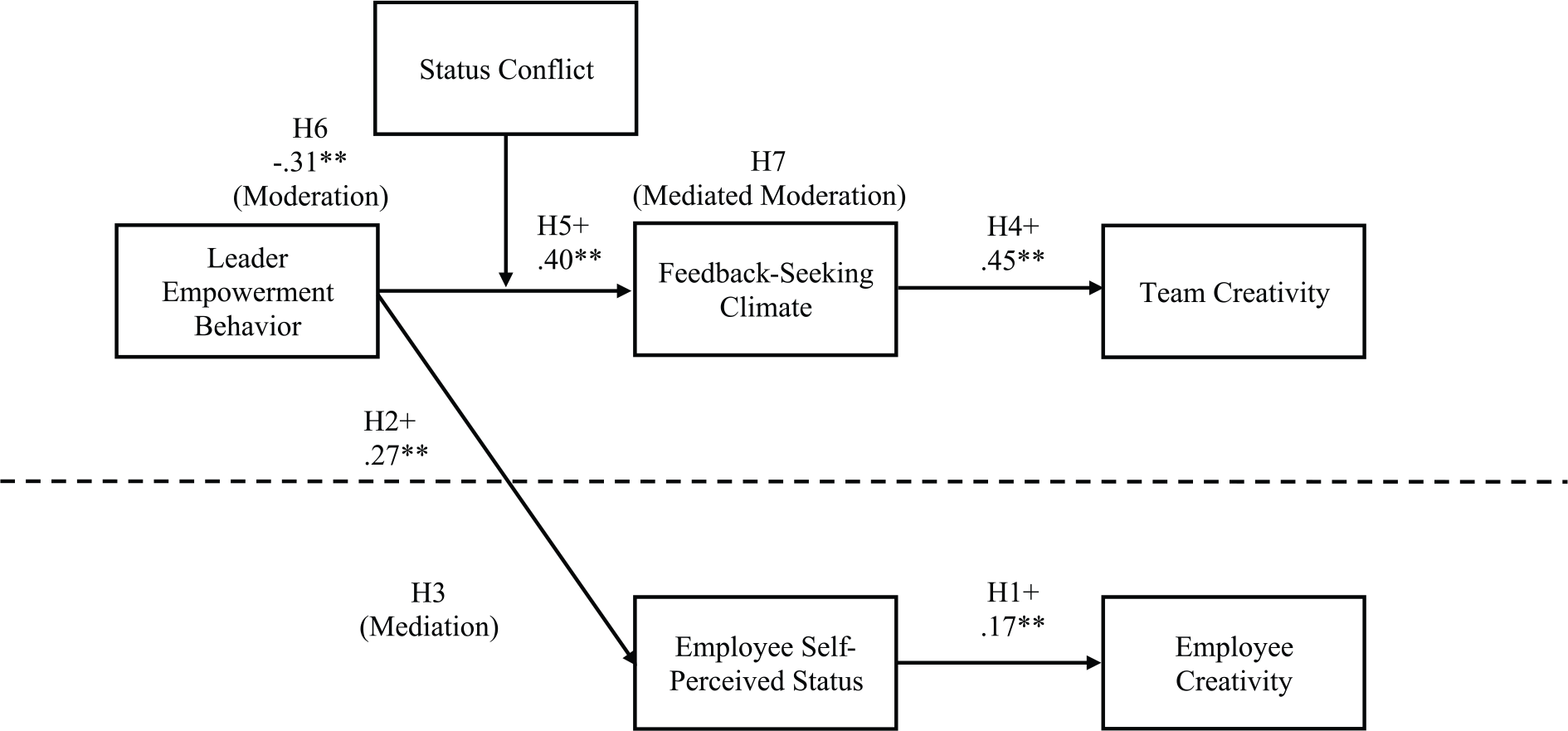
Theoretical framework. Leader empowerment behavior is reported by employees and aggregated in Wave 1; team creativity and employee creativity are reported by leaders in Wave 2; the rest of the variables are reported by employees in Wave 2; feedback-seeking climate and status conflict are aggregated variables.
Method
Participants and Procedure
We obtained access to the top-level managers and human resource managers of eight different companies from a major city in northeastern China. The companies specialize in industries such as telecommunication services, real estate, financial services, and pharmaceuticals. The respective work teams were selected from R&D, marketing, finance, administration, and the IT departments. According to the brief introductions by a CEO or human resource management, all team leaders worked closely with their followers at the same workplace and had certain degrees of task interdependence.
To prevent common method bias, the independent variables, dependent variables, and control variables were surveyed in two waves. In the first wave, LEB was measured. Two weeks later, in the second wave, the moderator, mediator, and dependent variables including employee self-perceived status, feedback-seeking climate, status conflict, team creativity, and employee creativity were surveyed. Personal information such as age, sex, and education were surveyed in both waves.
LEB was evaluated by employees and aggregated in the first wave of the survey. Team leaders evaluated their teams’ creativity as a whole and team members’ individual creativity in the second wave. Team members reported their self-perceived status, the feedback-seeking climate, and status conflict. The feedback-seeking climate and status conflict were later aggregated to the team level. We distributed 100 leader surveys and 600 employee surveys. After deleting unusable data, we received 477 matched survey forms, among which 84 were leader surveys and 393 were employee surveys. This resulted in a response rate of 84% for leaders and 65.5% for employees. Of the leader participants, 59 (70.2%) were men and 25 (29.8%) were women. Of the employee participants, 250 (63.6%) were men and 143 (36.4%) were women. The average age of the leaders was 44.7 years (SD = 6.4), while employees averaged 36.1 years (SD = 9.2). The average team leader’s length of education was 16 years (SD = 1.5), and for employees, it was 15.6 years (SD = 1.2).
Measure
All constructs were measured using 7-point Likert-type response scales ranging from 1 = strongly disagree to 7 = strongly agree. All measures were translated into Chinese following the procedure of translation and back-translation procedures (Brislin, 1986).
Leadership Empowerment Behavior
We used the twelve-item measure of Ahearne et al. (2005). A sample item was “My manager helps me understand how my objectives and goals relate to that of the company.” Cronbach’s alpha was .96. Since LEB was considered a group variable, a mean of Rwg, ICC(1) and ICC(2) were tested to verify the between-group variance. Two intraclass correlations (ICCs) were used because ICC(1) indicates the extent of agreement among ratings from members of the same group and ICC(2) indicates whether groups can be differentiated by the variables of interest (James, 1982). The average of Rwg for LEB was .89. ICC(1) was .52. ICC(2) was .83. All indicators were within an acceptable range, demonstrating a significant between-group variance.
Employee Self-Perceived Status
We used the three-item status scale developed by Tangirala and Ramanujam (2008). A sample item was “My team holds me in high regard.” Cronbach’s alpha was .86.
Feedback-seeking climate
We revised three items from the Ashford (1986) seven-item scale. There are two subscales of the Ashford scale: inquiry (asking directly for others’ opinions) and monitoring (acquiring others’ opinions by observing their attitude). The three revised items belong to the inquiry dimension. We did not use the monitoring dimension because it is impossible for one employee to know how often another employee acquires feedback by observation. The subjects of the revised items were changed from singular pronouns to plural pronouns. The items used were “In order to find out how well they are performing in their job, how frequently do your team members seek information from coworkers about their performance?”; “In order to find out how well they are performing in their job, how frequently do your team members seek feedback from your supervisor about their performance?”; and “In order to find out how well they are performing in their job, how frequently do your team members seek feedback from your supervisor about potential for advancement within the system?”. Cronbach’s alpha was 0.86. The average of Rwg for feedback-seeking climate was .88. ICC(1) was .33. ICC(2) was .73. All indicators were within an acceptable range, demonstrating a significant between-group variance.
Status Conflict
We used the four-item status conflict scale of Bendersky and Hays (2012). A sample item was “My team members competed for influence.” Cronbach’s alpha was .88. The average of Rwg for status conflict was .75. ICC(1) was .43. ICC(2) was .78. The average of Rwg was slightly below the cutting point of .80, but both ICC(1) and ICC(2) were within an acceptable range, demonstrating a significant between-group variance.
Employee Creativity
Employee creativity was measured by the four-item scale developed by Farmer, Tierney, and Kung-McIntyre (2003). A sample item was “This employee tries new ideas or methods.” Cronbach’s alpha was .91.
Team Creativity
Team creativity was measured by the four-item scale developed by Farh, Lee, and Farh (2010). A sample item was “The team output demonstrates that the team is capable of using existing information or resources creatively (in executing the project).” Cronbach’s alpha was .95.
Control Variables
Based on previous literature (e.g., Shalley, Zhou, & Oldham, 2004; Shin & Zhou, 2007), demographic variables can be associated with both individual and team outcomes. Therefore, we controlled employees’ age, sex, and educational level (years of education completed), as well as leaders’ age, sex, and educational level (Shin & Zhou 2007).
Results
Descriptive statistics, correlations, and scale reliabilities are presented in Table 1. Employee creativity is significantly correlated with employee self-perceived status (γ = .16, p < .01). Team creativity is significantly correlated with feedback-seeking climate (γ = .48, p < .01) and LEB (γ = .50, p < .01).
Descriptive Statistics and Correlations for Study Variables.
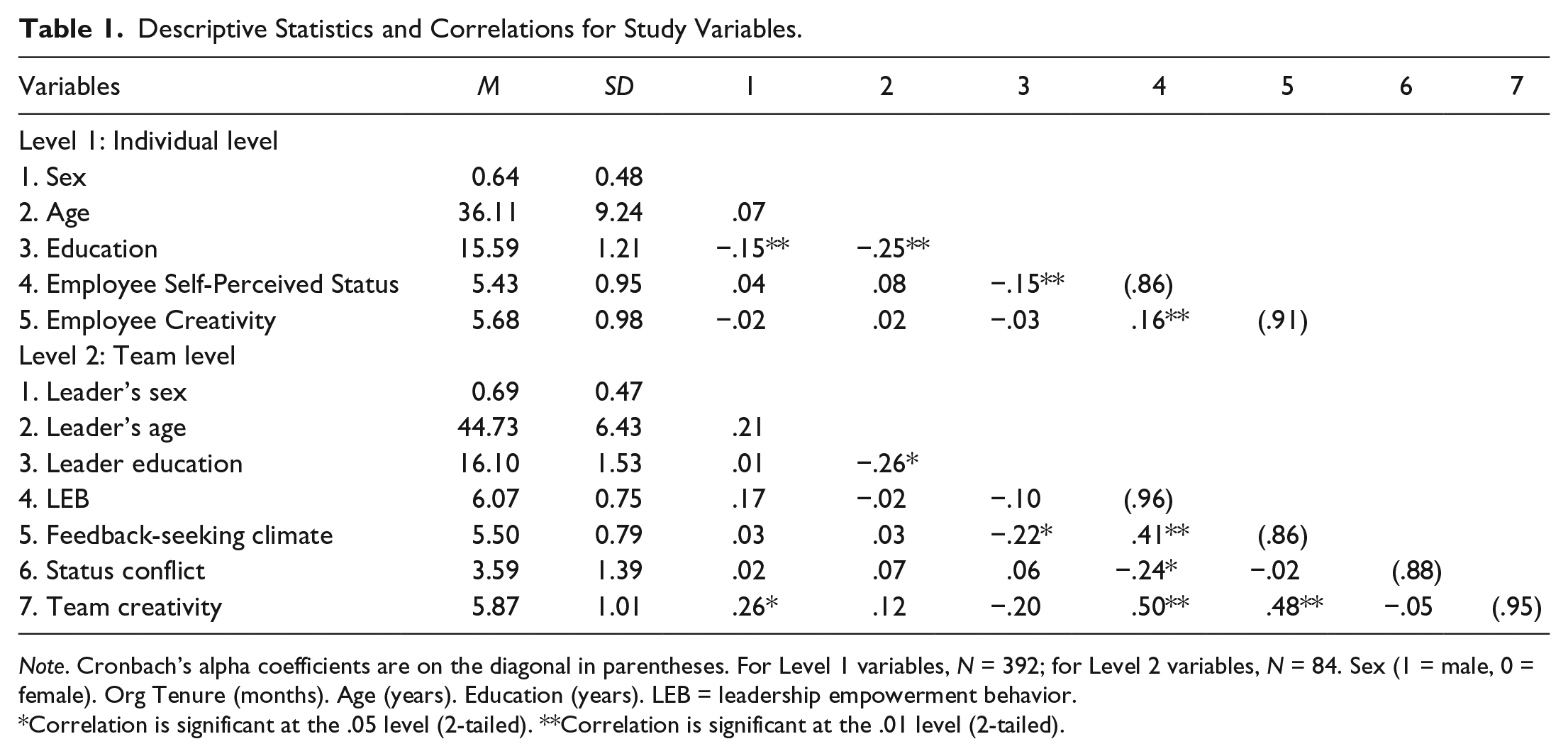
Note. Cronbach’s alpha coefficients are on the diagonal in parentheses. For Level 1 variables, N = 392; for Level 2 variables, N = 84. Sex (1 = male, 0 = female). Org Tenure (months). Age (years). Education (years). LEB = leadership empowerment behavior.
Correlation is significant at the .05 level (2-tailed). **Correlation is significant at the .01 level (2-tailed).
Confirmatory factor analysis was done to test the distinctiveness of the constructs. The results showed that the hypothesized six-factor (LEB, status conflict, feedback-seeking climate, team creativity, employee self-perceived status, and employee creativity) model fits the data well: χ2(419) = 1269.55, root mean square error of approximation (RMSEA) = .07, comparative fit index (CFI) = .87, and standardized root mean square residual (SRMR) = .06. It showed a significantly better fit than other five-factor models. As an example, the hypothesized six-factor model is significantly better than a five-factor model in which status conflict and employee self-perceived status are combined into one factor: χ2(424) = 1736.00, CFI = .80, RMSEA = .09, and SRMR = .11. It also had a significantly better fit than a one-factor model in which all items were loaded onto one latent factor: χ2(434) = 4413.03, CFI = .40, RMSEA = .15, and SRMR = .18. Overall, the results support the distinctiveness of our constructs.
Since the independent variable (LEB) and the dependent variable (employee self-perceived status) are at different levels, to test Hypothesis 1, we conducted hierarchical linear modeling. As Table 2 illustrates, LEB is positively related to employee self-perceived status (β = .27, standard error (SE) = .09, p < .01). Hence, Hypothesis 1 is supported.
Results of the Hierarchical Linear Modeling Analysis for LEB and Employee Self-Perceived Status.
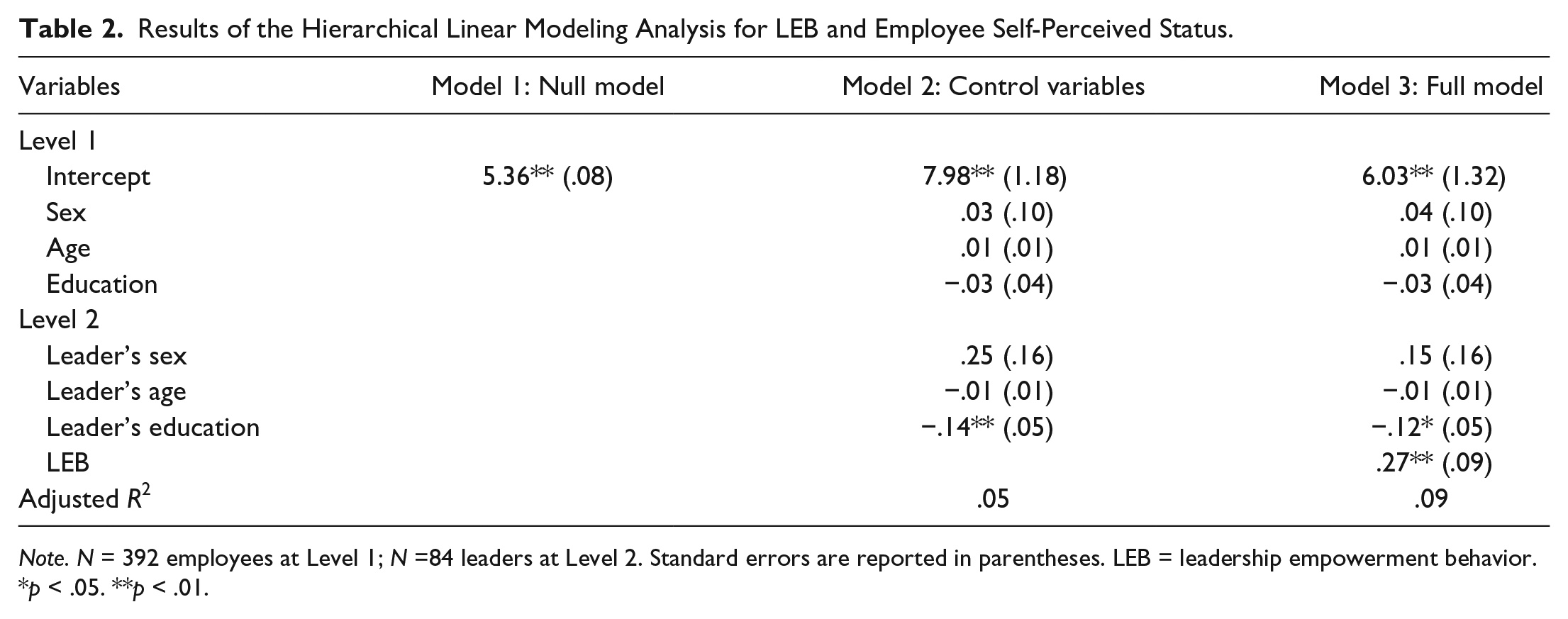
Note. N = 392 employees at Level 1; N =84 leaders at Level 2. Standard errors are reported in parentheses. LEB = leadership empowerment behavior.
p < .05. **p < .01.
We used regression analysis to test Hypothesis 2. As Table 3 shows, employee self-perceived status was positively related to employee creativity (β = .17, SE = .05, p < .01). Thus, Hypothesis 2 is supported.
Results of Regression Analysis for Employee Self-Perceived Status and Employee Creativity.
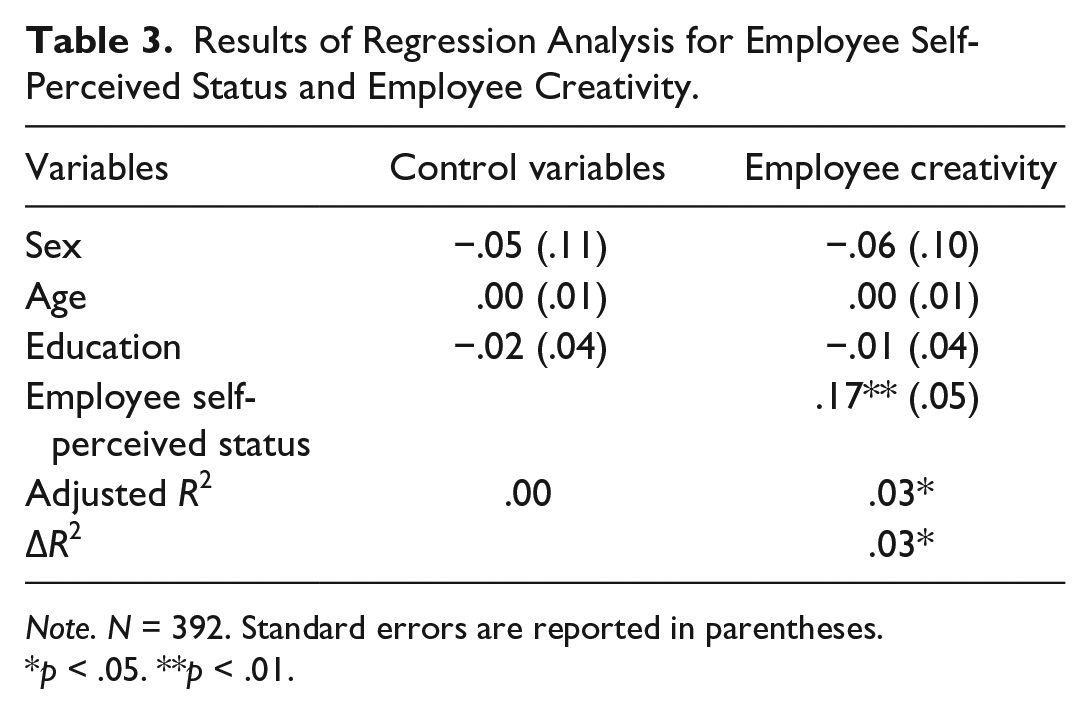
Note. N = 392. Standard errors are reported in parentheses.
p < .05. **p < .01.
To test the mediating effect of employee self-perceived status on the positive relationship between LEB and employee creativity in Hypothesis 3, we estimated indirect effects and their 95% confidence intervals, based on a distribution-of-the-product method implemented in the RMediation program (Tofighi & MacKinnon, 2011). MacKinnon, Lockwood, and Williams (2004) and Pituch, Whittaker, and Stapleton (2005) have provided evidence showing that the distribution-of-the-product method was more accurate in constructing confidence limits of an indirect effect. The results of our analyses indicate that employee self-perceived status has significant mediation effects on the positive relationship between LEB and employee creativity (indirect effect = .05, SE = .02, 95% CI [.01, .09]). Therefore, Hypothesis 3 is supported.
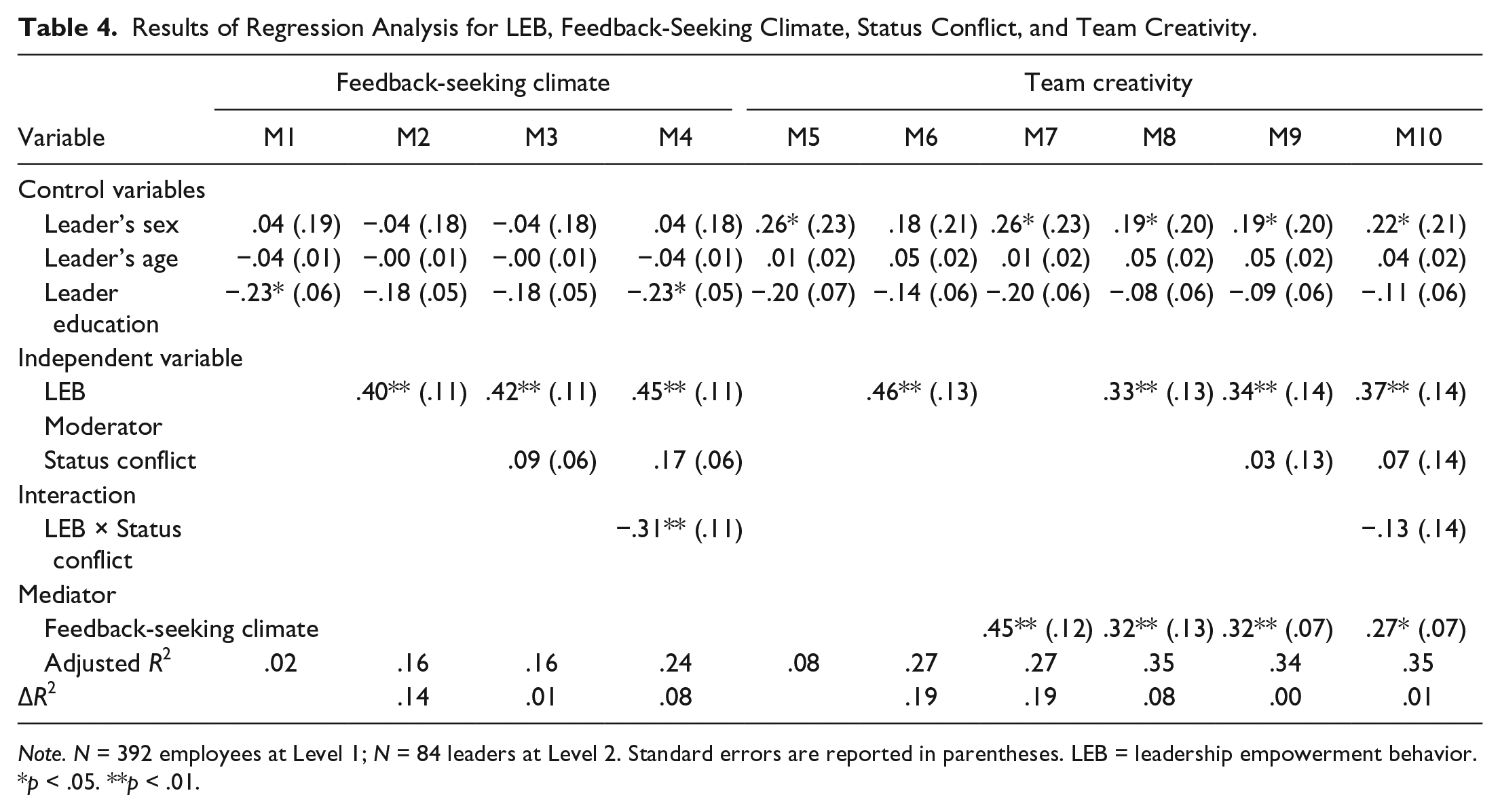
To test Hypothesis 4, we conducted regression analysis. As Table 4 (M2) demonstrates, LEB was positively related to feedback-seeking climate (β = .40, p < .01, ΔR2 = .14). Therefore, Hypothesis 4 is supported.
Results of Regression Analysis for LEB, Feedback-Seeking Climate, Status Conflict, and Team Creativity.
Note. N = 392 employees at Level 1; N = 84 leaders at Level 2. Standard errors are reported in parentheses. LEB = leadership empowerment behavior.
p < .05. **p < .01.
We used regression analysis to test Hypothesis 5. As the Table 4 (M7) shows, feedback-seeking climate was positively related to team creativity (β = .45, p < .01, ΔR2 = .19). Thus, Hypothesis 5 is supported.
To examine the moderating effect of status conflict proposed by Hypothesis 6, we followed the moderated causal-steps approach to regression analysis (Muller, Judd, & Yzerbyt, 2005). We entered the variables into the regression analysis in four steps, beginning with the control variables (Step 1), followed by the predictor (LEB, Step 2), the moderator (status conflict, Step 3), and the interaction term (LEB × status conflict, Step 4). The independent variable, moderator, and interaction term were mean centered (Aiken & West, 1991). Hypothesis 6 predicted that status conflict would moderate the relationship between LEB and feedback-seeking climate in a way in which the positive relationship between LEB and the feedback-seeking climate is weaker when status conflict is high, rather than low. As shown in Table 4 (M4), the interaction between LEB and status conflict was negatively related to the feedback-seeking climate (β = −.31, p < .01, ΔR2 = .08). We plotted the interaction using Aiken and West’s (1991) procedure by computing slopes one standard deviation above and below the mean of the moderating variable. As Figure 2 shows, the interaction patterns were consistent with the hypothesized relationships. That is, LEB is not significantly related to the feedback-seeking climate when the level of status conflict is high (r = .08, p = .65). However, when the level was low (r = .91, p < .01), LEB is positively related to the feedback-seeking climate, and the coefficient was significant. LEB is only positively related to feedback-seeking climate when the status conflict is low. Thus, Hypothesis 6 is supported.
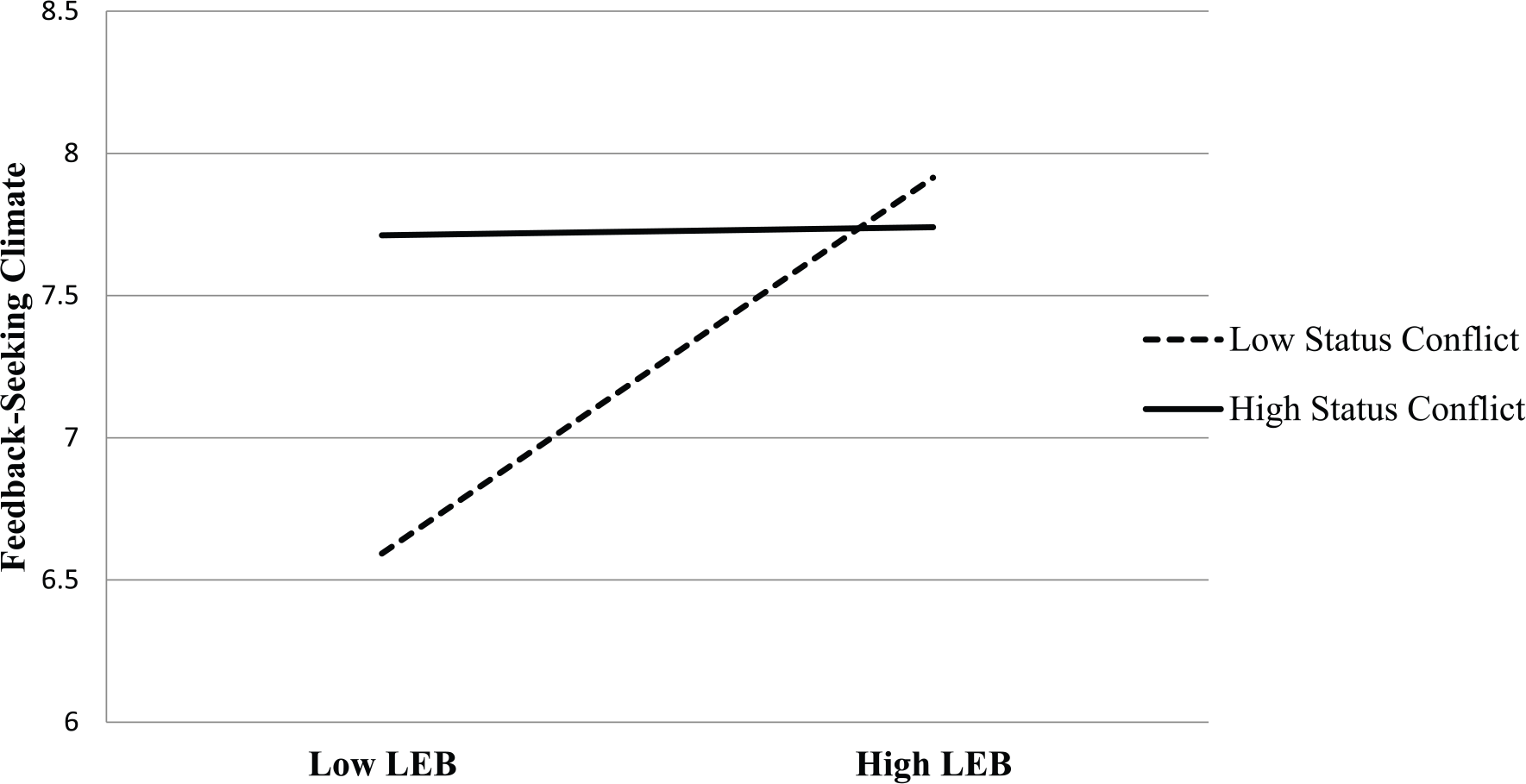
Moderating effect of status conflict on the positive relationship between leadership empowerment behavior (LEB) and feedback-seeking climate.
To test the mediated moderation model proposed by Hypothesis 7, we also followed the moderated causal steps approach to regression analysis (Muller, Judd, & Yzerbyt, 2005). We entered the variables into the regression analysis in five steps, beginning with the control variables (Step 1), followed by the predictor (LEB, Step 2), the mediator (feedback-seeking climate, Step 3), the moderator (status conflict, Step 4), and the interaction term (LEB × status conflict, Step 5). The independent variable, mediator, moderator, and interaction terms were mean-centered (Aiken & West 1991). Hypothesis 7 predicted that feedback-seeking climate would mediate the interactive effect of LEB and status conflict on team creativity. As shown in Table 4 (M10), feedback-seeking climate’s mediation effect is significant (r = .27, p < .05). Thus, Hypothesis 7 is supported.
General Discussion
By employing relational fairness theory, our study explores the relationship between LEB and multilevel creativity. Specifically, we proposed and found that LEB raises employee self-perceived status, which in turn, leads to higher levels of employee creativity. At the team level, we found that LEB has a positive effect on team creativity by nurturing a high level of feedback-seeking climate. In addition, our findings revealed that team status conflict moderates the relationship between LEB and feedback-seeking climate such that LEB is positively related to feedback-seeking climate when status conflict is low but not when status conflict is high. Feedback-seeking climate is further found to mediate the interactive effects of LEB and status conflict on team creativity.
Theoretical Contribution
Our research makes several major theoretical contributions to the literature. First, our research develops relational fairness theory by identifying the prosocial motivational function of perceived relational fairness. Combining relational fairness theory and status theory, our study provides a new lens to look at LEB and its function. Employee self-perceived status is identified as a key motivational driver for individual creativity. It demonstrates the important motivational role status can play in linking leadership behaviors to employees’ desirable work outcomes.
Second, employing relational fairness theory, our study developed a meso model linking LEB and team creativity. Meanwhile, the development of a feedback-seeking climate indicates that the desirability of a feedback-seeking behavior can be shared as a team-level norm. Moreover, the mediating effect of the feedback-seeking climate helps us further understand the mechanism by which the work environment may be optimized by LEB so that team creativity could be better delivered.
Third, our study reveals that conflict around status at the workplace may sabotage the effectiveness of LEB in team building. Status conflict may diminish employees’ trust with one another as well as the frequency of cooperative actions within the team and undermine LEB’s positive effect in fostering a feedback-seeking climate. Our study offers a new understanding regarding the boundary condition with which empowerment may lose its creativity-relevant enhancing capability.
Fourth, our study shifted the focus of relational fairness theory from employees’ mandatory cooperation (e.g., obedience) to their discretionary cooperation, specifically delivering creativity. Although in previous literature, research on relational fairness theory has already recognized the motivational function of perceived fairness treatment, it primarily focused on the unfair treatment, such as social injustice. In contrast, the current study identified a positive impact of perceived relational fairness.
Practical Implications
LEB includes behavior such as allowing employees to use their own discretion, asking for their opinions during making decisions, recognizing the importance of their work, and so on. It can help employees find meaning, develop competence, have self-determination, and feel the importance in their work, which can increase their perceived relational fairness. In general, instead of just pushing for new ideas, making employees feel that they are fairly treated and are working in a feedback-welcoming environment would be a better strategy to spur creativity. In addition, in the empowering process, leaders should avoid potential conflicts around status that would undermine the feedback-seeking climate and cause a reduction in team creativity.
Limitations and Future Research
Although this research makes several theoretical contributions and has important practical implications, it also comes with a few limitations. First, although we have already identified status conflict as a boundary condition on the relationship between LEB and feedback-seeking climate, there might be some other environmental boundary conditions that need to be discussed, such as leader–member exchange differentiation and cultural differences.Second, although relational fairness is underlined through our argument, we have not measured employee-perceived relational fairness directly. Future study may further develop the measurement of relational fairness and look into the exact function of such a construct. Alternatively, it is also possible for future studies to use individual-perceived relational justice as a proxy for relational fairness. In this study, we did not measure perceived relational justice for two reasons. First, our research intends to explore the mechanisms through which leader-empowering behavior affects team and individual creativity by integrating relational fairness theory and status theory. At the individual level, self-perceived status is consistent with both relational fairness theory and status theory. Second, previous research has already explored self-perceived status’ role in the framework of relational justice (e.g., Dijke, M. V., Cremer, D. D., Mayer, D. M., Quaquebeke, N. V., 2012). By employing self-perceived status as the mediator, we are able to contribute more to our understanding about the effects of leadership empowering behavior on employee creativity.
Third, although we attempted to avoid common-source bias by collecting data in two waves, the 2-week time period between the two data collection time points may not be long enough. Perhaps, a longer period of time between data collection points (e.g., 2 months) may be more effective in solving the problem. Instead of collecting data at two time points, it is recommended to collect data at three time points. Future studies may even conduct longitudinal research to verify the results provided here.
Fourth, we measured feedback seeking by asking each team member how often people on the team ask others for feedback. We chose to measure feedback-seeking climate this way because it is consistent with our definition, which emphasizes team members’ shared perceptions. Although team members may not be able to observe all feedback-seeking behaviors of other members immediately, over time they would be able to form a perception of whether it is appropriate and even encouraged to seek feedback through intrateam interaction. However, it may also be reasonable to measure the team feedback-seeking climate by asking each team member how often they seek feedback and aggregate the results accordingly. Nonetheless, it is likely that the results of the two approaches measuring feedback-seeking climate may be highly correlated.
By employing the relational fairness theory, our study has linked LEB to multilevel work outcomes of creativity. It has left a broad area of study on the influence of relational fairness on employees’ discretionary cooperation. Future studies may either consider other forms of such cooperation (e.g., organizational citizenship behavior) or look into higher-level boundary conditions, such as an organizational feedback–friendly culture (Baker, Perreault, Reid, & Blanchard, 2013).
Conclusion
Based on relational fairness theory and status theory, our study develops models and provides explanatory mechanisms for the positive impact of LEB on employee and team creativity. This research also shifts the focus of relational fairness from employees’ mandatory cooperation to discretionary cooperation. It extends empowerment theory by exploring its intrinsic motivational function. Our research also calls for more study on LEB and employees’ perception of status and relational fairness.
Footnotes
Declaration of Conflicting Interests
The author(s) declared no potential conflicts of interest with respect to the research, authorship, and/or publication of this article.
Funding
The author(s) disclosed receipt of the following financial support for the research, authorship, and/or publication of this article: This research was supported by the grants funded by National Natural Science Foundation of China (Grant No. 71602032)
