






Abstract
The P300-based brain-computer interface speller can provide motor independent communication to individuals with amyotrophic lateral sclerosis (ALS), a progressive neurodegenerative disorder that affects the motor system. P300 amplitude stability is critical for operation of the P300 speller. The P300 has good long-term stability, but to our knowledge, short-term habituation in the P300 speller has not been studied. In the current study, 15 participants: 8 ALS patients and 7 age-matched healthy volunteers (HVs), used 2 versions of P300 spellers, Face speller and Flash speller, each for 30 minutes. The ALS group performed as well as the HVs in both spellers and HVs did better with the Face speller than Flash speller while the ALS group performed equally well in both spellers. Neither intra-run P300 habituation nor inter-run P300 habituation was found. The P300 speller could be a reliable communication device for individuals with ALS.
Introduction
Amyotrophic lateral sclerosis (ALS; also known as Lou Gehrig’s disease) is a progressive neurodegenerative disease that affects the motor system.1,2 The prevalence of ALS is the lowest among persons aged 18 to 39 years, 0.5 per 100 000 population, and the highest among persons aged 70 to 79 years, 20 per 100 000 population. 3 ALS can lead to speech impairment, inability to swallow, and eventually respiratory malfunctions.2,4,5 Loss of communication impairs the quality of life for individuals with ALS; providing a communication tool can improve their quality of life. Brain-computer interface (BCI) technology enables motor independent interaction between an individual and external devices using brain electrical signals, particularly useful for individuals at later stage of ALS when they cannot use eye-tracking communication devices.6-9
One BCI device to aid communication is the BCI-speller. BCI spellers include P300, steady-state visual evoked potential (SSVEP), and motor imagery (MI) (for a review, see Rezeika et al 10 ). P300 speller and SSVEP spellers use event-related potentials (ERPs) elicited by external stimuli, while MI-BCI depends on the imagination of movement or tasks.
The P300 is a parieto-central positive deflection that occurs 300 to 600 ms following an infrequent target stimulus. 11 The first P300 speller described by Farwell and Donchin 12 was a row-column paradigm (RCP) that presents 36 letters and numbers in a 6 × 6 matrix. Each row and column randomly flashes. Users attend to the target character and count the number of times the row/column containing the to be selected letter flashes. The row/column flash containing the target letter serves as P300 eliciting event. The RCP is subject to the “adjacency-distraction problem,” caused by flashing rows or columns that are adjacent to the target, producing an unintended P300 13 ; and the “double-flash problem,” when the target row and column flash consecutively, resulting in missing the second flash.14,15 The Checkerboard Paradigm (CBP), addresses these by flashing sets of nonadjacent stimuli pseudo-randomly. 16
In addition to the display paradigm, many changes have been made to the visual stimuli including varying the character size, color, or sharpness,17-20 modifying intensification pattern through translation, rotation, or zoom in/out, 18 and changing luminosity and stimulus duration. 21 One modification that greatly outperform the traditional speller is the Face speller, in which the intensification of each character is superimposed by an image of human face. 22 Its superior performance is because human face can elicit N170 and N400, in addition to the P300, thus improving the classification. 23 One study reporting improved performance when using different faces rather than the same face suggested that a speller using the same face may suffer repetition effects, reducing the P300. 24 To our knowledge, no study has directly examined repetition effects in the Face speller.
The P300 can habituate (amplitude decrease), 25 reducing speller efficiency. P300 amplitude is inversely proportional to subjective probability26-28; perceived rarity of a character in the matrix might reduce due to familiarity and learning across trials.25,29 P300 amplitude also indexes attention allocated to the target, 30 which also may reduce over time31,32 impairing speller performance. Fatigue may develop due to sustained attention.33,34 Fatigue is common in ALS35,36 and up to 50% of individuals with ALS may experience some cognitive impairment,37,38 including declined attention. Thus, ALS patients may be particularly susceptible to P300 habituation leading to BCI errors.
To date, only 3 studies have examined the P300 habituation in long-term use of the P300 speller among ALS patients and 2 found the P300 to be stable over time. One study reported the P300 amplitude remained stable over 30 weeks in 1 ALS patient 39 while another study had similar findings across 10 sessions over 40 weeks among 6 ALS patients. 40 However, 1 study found slightly declined performance during the intermediate sessions when ALS patients completed ten 60-minute sessions of P300 speller tasks over approximately 6 weeks. 41 The authors suggested that the declined performance could be due to mild P300 habituation in the intermediate sessions. 42
These studies examined long-term P300 habitation; to our knowledge, no study has studied short-term P300 habituation in the P300 speller. Since communication may be brief thus it is important to assess the stability of the P300 during short-term speller use. In conventional visual oddball task, P300 habituation has been found over ten successive trial blocks with 10-minute interblock intervals (IBIs) 43 but not with long IBIs, 44 suggesting that attention may be restored with longer time lapse between trial blocks. Assessing the P300 within a short period might capture habituation due to moment-to-moment fluctuation of attention. Therefore, we chose to evaluate the potential short-term P300 habituation in 2 common versions of the CBP P300 speller: Flash speller and Face speller (see Methods section). We hypothesized that (1) the P300 would habituate within one 30-minute session of using the P300 speller and (2) the P300 habituation would be greater in individuals with ALS than HVs.
Methods
Participants
All HVs were recruited from the local community. Individuals with ALS were referred by the regional care manager (West Central Florida) of the ALS Association Florida Chapter. Of 13 individuals with ALS who responded (29 were invited), 9 met inclusion criteria: (1) impaired verbal communication, (2) normal vision or corrected vision, and (3) ability to read and understand English. All participants provided informed consent or assent with the help from the caregiver. Eight individuals with ALS (age = 55.85 ± 7.71 years, range 46-66 years; ALS Functional Rating Scale [ALSFRS] score of 13 ± 7.50) and 7 age-matched HVs (age = 56.7 ± 3.49 years, range 56-63 years) participated in the study. See Table 1 for demographic information for individuals with ALS. One patient discontinued the study due to health. The final sample included 7 individuals with ALS and 6 HVs by excluding data with excessive artifacts from 1 HV. One participant with ALS who was completely ventilation dependent was not able to use the P300 speller in the flashing rate of 4 Hz but could use it at a rate of 2 Hz. This individual’s data were analyzed separately. All participants had no prior experience with P300 spellers. The study was reviewed and approved by the institutional review boards at the University of South Florida.
Age, Sex, ALS Type, Year Diagnosed of ALS, and ALSFRS Score at Time of Participation.
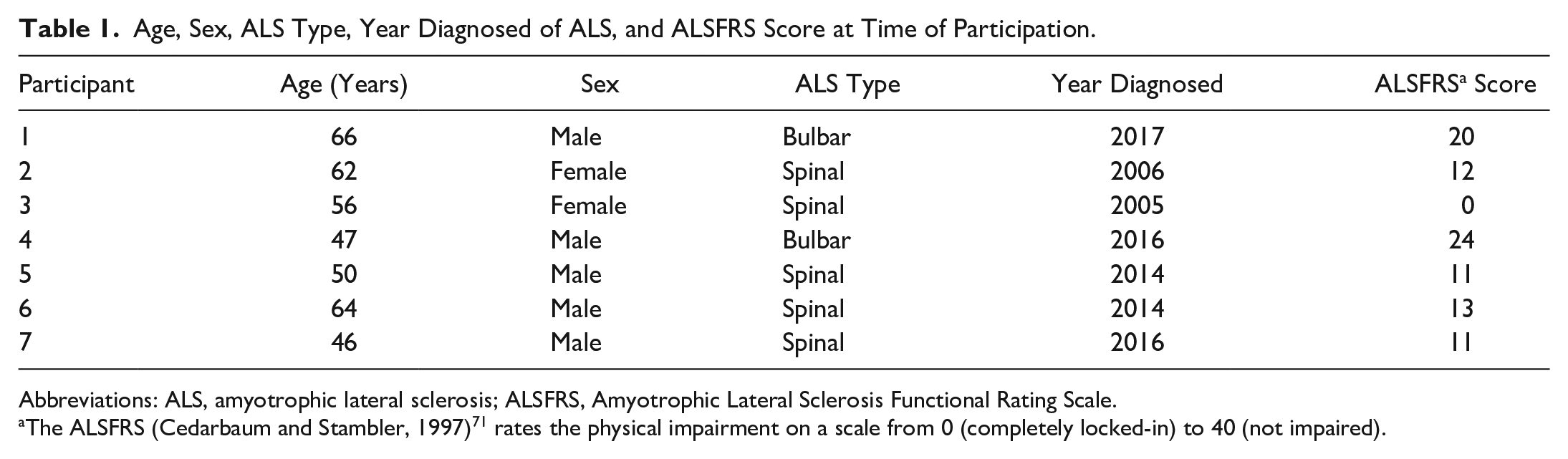
Abbreviations: ALS, amyotrophic lateral sclerosis; ALSFRS, Amyotrophic Lateral Sclerosis Functional Rating Scale.
The ALSFRS (Cedarbaum and Stambler, 1997) 71 rates the physical impairment on a scale from 0 (completely locked-in) to 40 (not impaired).
The P300-Based BCI Spellers
P300 speller operation and data collection were controlled by BCI2000 software (Wadsworth Center, New York State Department of Health).45,46 The stimuli were displayed on a Dell monitor in light gray on a black background. Participants were seated in a comfortable chair, wheelchair, or bed during the task and the distance to the monitor was adjusted until participants could comfortably see the display. The monitor displayed 26 letters and 10 numbers in a 6 × 6 matrix embedded in a 9 × 8 matrix (Figure 1). Since matrix size is relevant for the performance in a P300 speller, 47 we used a matrix with dots as placeholders that could later be replaced with useful functions such as links to email, Facebook, or request for help. At the beginning of each run, the to-be-spelled word was displayed in yellow on the top left corner of the matrix, with the first (target) character in the parenthesis next to the word. The message “Waiting to start” appeared over the matrix for 4 seconds, then the character (or face in the face version; see below) flashed at a 4-Hz rate in groups of 6 (the checkerboard paradigm). 16 After 10 flashes of each character, the item in the parenthesis changed to the second target letter and the flash paused for 3 seconds until the second target selection. When the last flash of the last target of the word concluded, the feedback “Time out” was displayed over the matrix (eg, “X” in the string “58VEX”). With all the parameters remaining the same, we used 2 versions of P300 speller:
Flash version: A group of 6 nonadjacent letters were highlighted. Participants were instructed to count the number of times the target item flashes.
Face version: Faces would cover 6 nonadjacent letters. Participants were instructed to count the number of faces covering their desired letter. 48
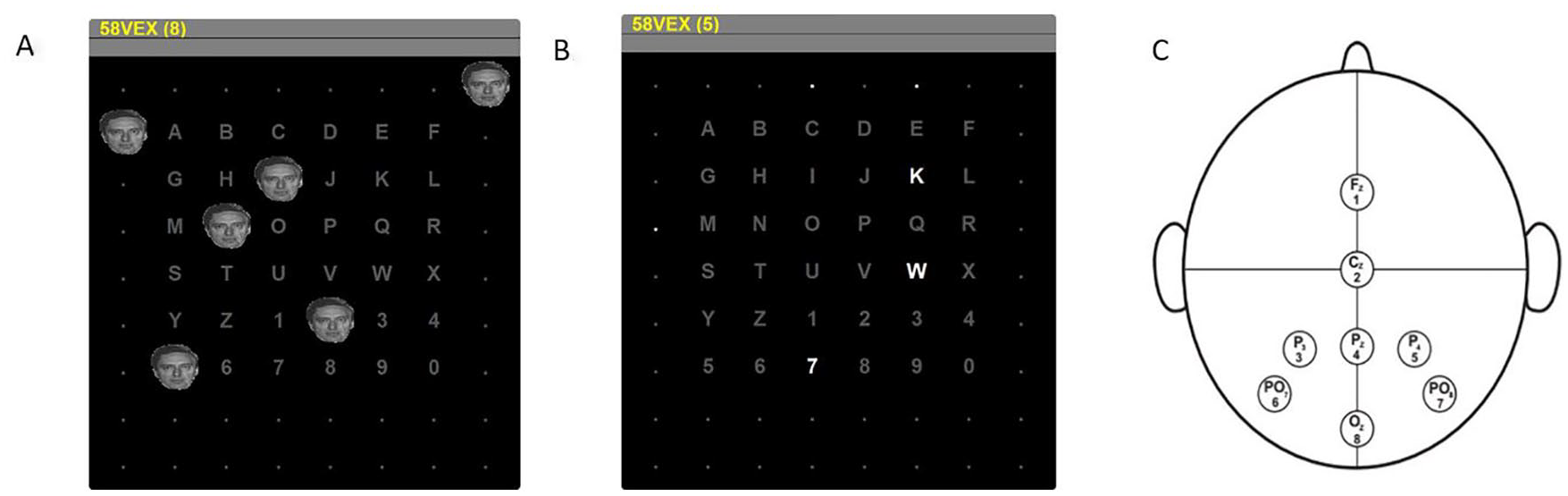
Calibration word displayed at the top of the 9 × 8 matrix. (A) Face version. A set of 6 faces in the pseudo-random fashion cover characters and dots. (B) Flash version. A set of 6 characters being intensified in the pseudo-random fashion. (C) Layout of the 8-channel EEG cap.
Procedure
The experiment was carried out either in the participants’ home (participants 3, 4, 5, and 6 from the ALS group) or in the BCI laboratory in the Department of Psychology at the University of South Florida (all HVs, and participants 1 and 2 from the ALS group). The laboratory has a desk and chair in a quiet research zone. Before each home visit participants were informed to provide a desk for the system, and caregivers were informed to limit potential distractors. Each participant completed one session with both the Face and Flash versions of the speller, order counterbalanced. With each version of the speller, participants were instructed to copy-spell a total of 25 letters and numbers that were evenly divided across 5 runs (eg, 58VEX, DAFT1, 3GRAM, QUICK, ZEBRA). To copy-spell 25 characters with 1 version of the speller took 30 minutes; thus, the entire study took about an hour excluding set up. Participants were instructed to silently count the flashes of each target item in the Flash version, and to count the number of faces covering each target item in the Face version. Participants could have a brief break with eyes closed following each run. At the end of the study, participants were asked which version of the BCI speller they liked better and why.
EEG Acquisition and Signal Processing
EEG was sampled at 256 Hz using a cap with 8 Ag/AgCl electrodes located at Fz, Cz, P3, Pz, P4, PO7, PO8, and Oz (Electro-Cap International, Inc), impedances less than 10 kΩ, referenced to the right mastoid and grounded to the left mastoid. EEG was amplified by a 8-channel g.USBamp biosignal amplifier (from g-tec), high-pass filtered at 0.5 Hz, low-pass filtered at 30 Hz.
Data Analysis
Performance Metrics
We measured (1) maximum accuracy (MA) over all runs; (2) least number of flashes required for the MA (LnFMA); (3) theoretical communication rate (characters/min); and (4) bit rate (bits/min; calculated as in Wolpaw et al 8 ). For each speller, the Mann-Whitney U test was applied to the above measures to examine differences in performance between the 2 subject groups. For each group, the Wilcoxon signed rank test was conducted to examine differences in performance between the 2 spellers.
EEG Data
EEG data from the 25 character selections were fed to the stepwise linear discriminant analysis (SWLDA) to determine the participants’ selection (see Krusienski et al 49 for detailed description of the analysis). EEG was segmented into 800-ms epochs with the flash onset at 0 ms. To examine the overall ERP patterns, ERPs for target and nontarget at Fz, Cz, Pz, and Oz were computed across all 5 runs for each participant. Subject ERPs were then averaged across each group to generate the grand average waveforms. The peak of the P300 was defined as the most positive point between 230 and 450 ms. Average peak amplitude and latency of the target P300 were computed at Fz, Cz, Pz, and Oz for each group. To examine the habituation effect within a session, early session ERPs were averaged from the first 2 runs (~10 minutes) and late session ERPs were averaged from the last 2 runs. For each group, the Wilcoxon signed rank test was conducted to compare the latency and peak amplitude of target P300 at Pz between early and late sessions for each speller. Additional analysis on intra-run habituation was conducted by comparing the ERPs of the beginning of 1 run (averaged from the first 2 letters: “58,” “DA,”, “3G,” “QU,” “ZE”) to ERPs of the end of 1 run (averaged from the last 2 letters: “EX,” “T1,” “AM,” “CK,” “RA”). Noisy data from 2 runs (1 from each group) were excluded. A 2 (time: first 2 letters vs last 2 letters) × 2 (version: face speller vs flash speller) × 2 (group: ALS vs HV) mixed analysis of variance was performed for the target P300 with time and version as within-subjects factors and group as a between-subjects factor.
Results
The Mann-Whitney U test did not reveal significant differences in age (U = 14, P > .05) between patients with ALS and HVs.
Performance Metrics
There were no significant differences in any of the performance measures between the 2 subject groups. For the ALS group, no version effect was found on any performance measures (all results presented P > .05). In the HV group, significant differences were found for LnFMA (P = .027; r = −0.451) and characters/min (P = .028; r = 0.434) (Table 2).
Performance Variables and Comparison Within Groups.
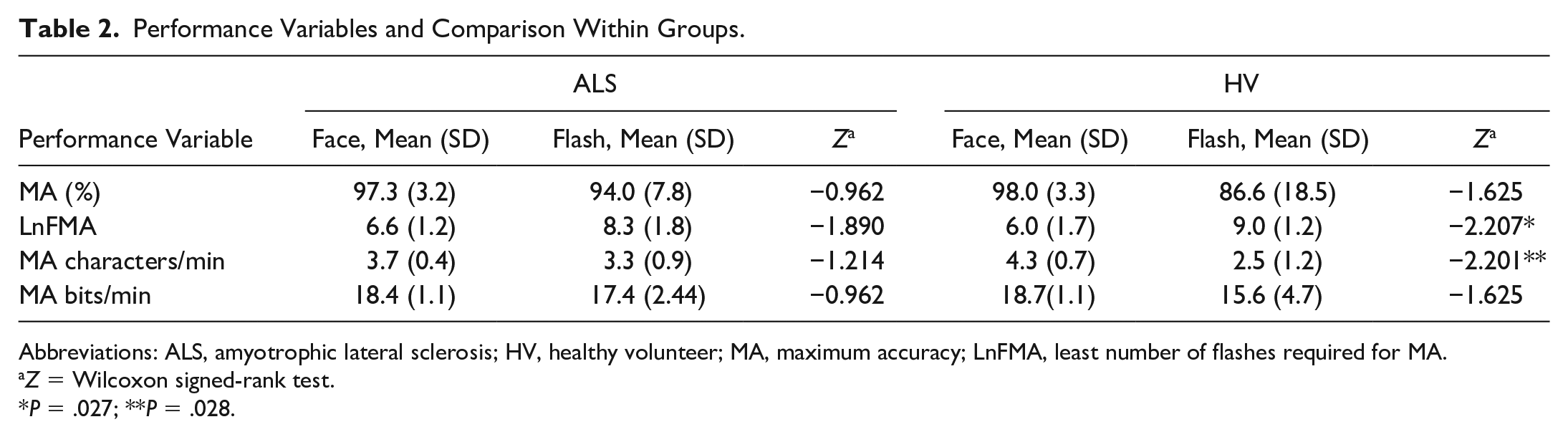
Abbreviations: ALS, amyotrophic lateral sclerosis; HV, healthy volunteer; MA, maximum accuracy; LnFMA, least number of flashes required for MA.
Z = Wilcoxon signed-rank test.
P = .027; **P = .028.
Overall ERP Pattern: ALS Versus HVs
Grand average waveforms for each group are displayed in Figure 2. For each speller, the amplitude and latency of the target P300 did not differ significantly between the 2 groups (Table 3). Face speller elicited larger P300 than the Flash speller in both groups, ALS group (Z = −4.286; P < .001), HV group (Z = −4.286; P < .001).
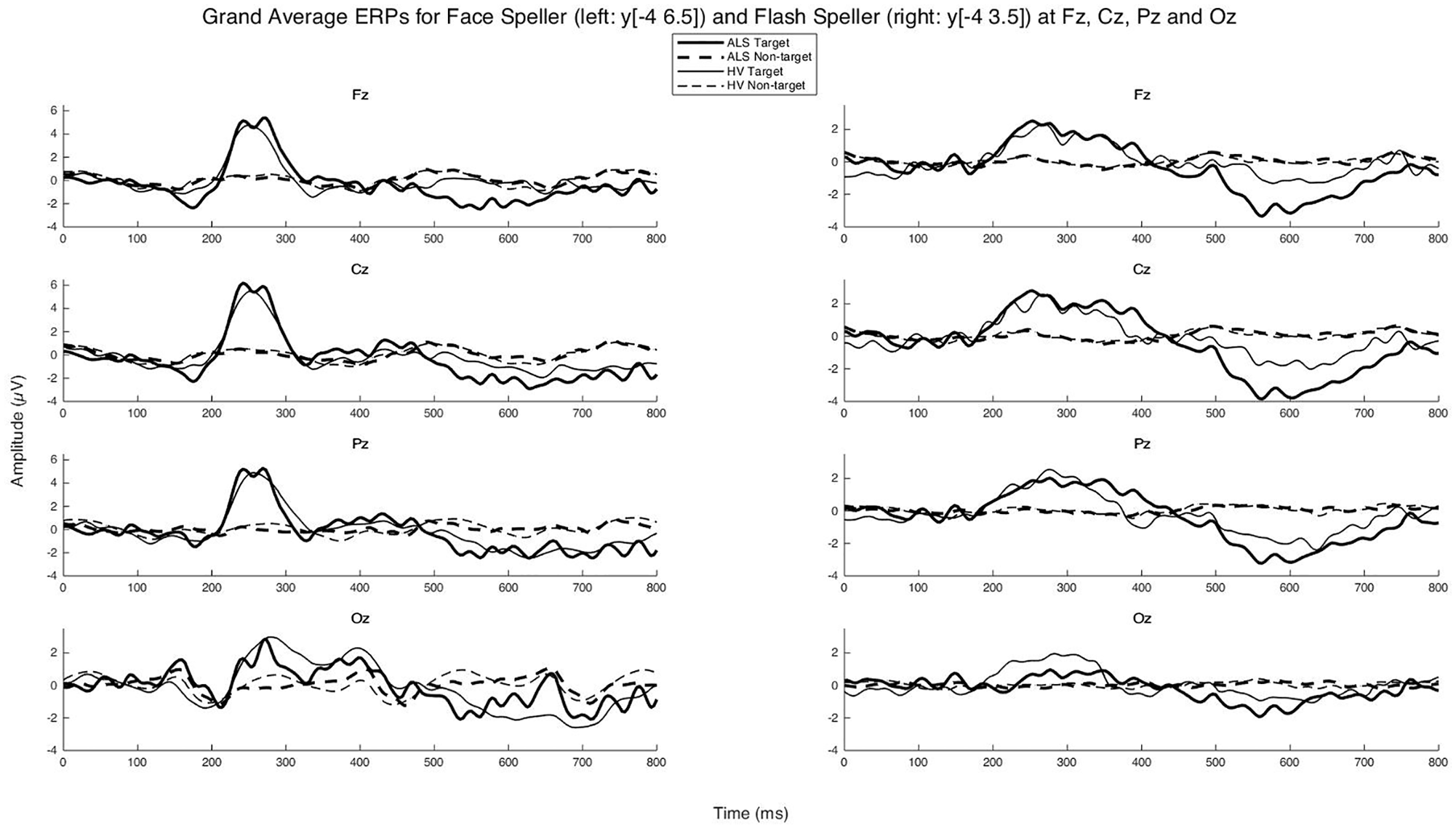
Grand average event-related potentials (ERPs) for Face speller (left: y[−4, 6.5]) and Flash speller (right: y[−4, 3.5]) at Fz, Cz, Pz, and Oz.
The Average Peak Amplitude (±SD) and Latencies (±SD) of Target P300 from Face Speller and Flash Speller for Each Group at Fz, Cz, Pz, and Oz (All 5 Runs).
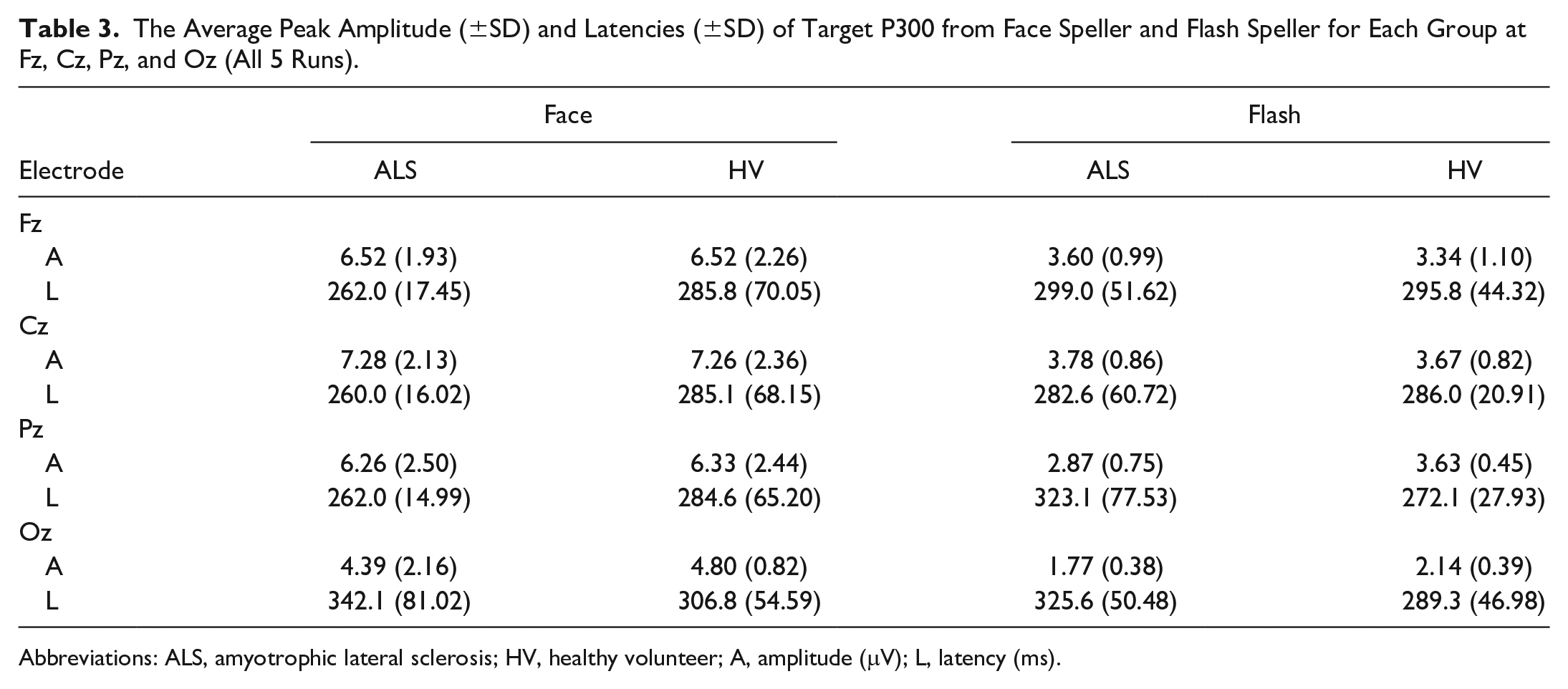
Abbreviations: ALS, amyotrophic lateral sclerosis; HV, healthy volunteer; A, amplitude (μV); L, latency (ms).
P300 Habituation
Grand average waveforms for early and late sessions are displayed in Figure 3. There were no significant differences in P300 amplitude or latency between early and late sessions, P > .05 (Table 4). Additional analysis on the intrarun habituation did not find significant differences in P300 amplitude and latency between the first 2 letters and the last 2 letters within a run, F(1, 56) = 2.06, P > .05 (Table 5).
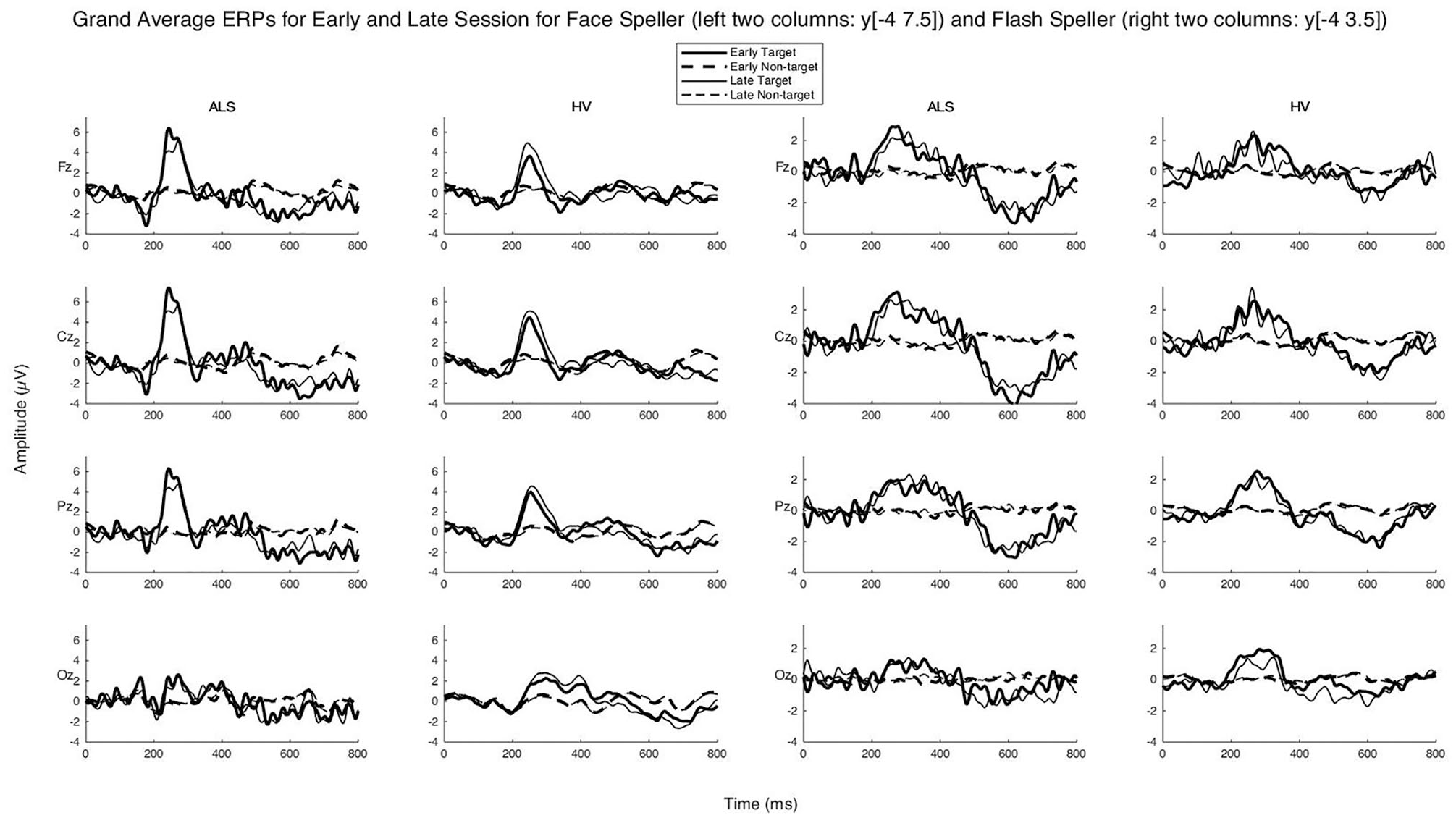
Grand average event-related potentials (ERPs) for early and late session for Face speller (left 2 columns: y[−4, 7.5]) and Flash speller (right 2 columns: y[−4, 3.5]) at Fz, Cz, Pz, and Oz.
Interrun Habituation: Average Latency (±SD) and Amplitude (±SD) of the Target P300 for Face Speller and Flash Speller From Early Session and Late Session at Pz.
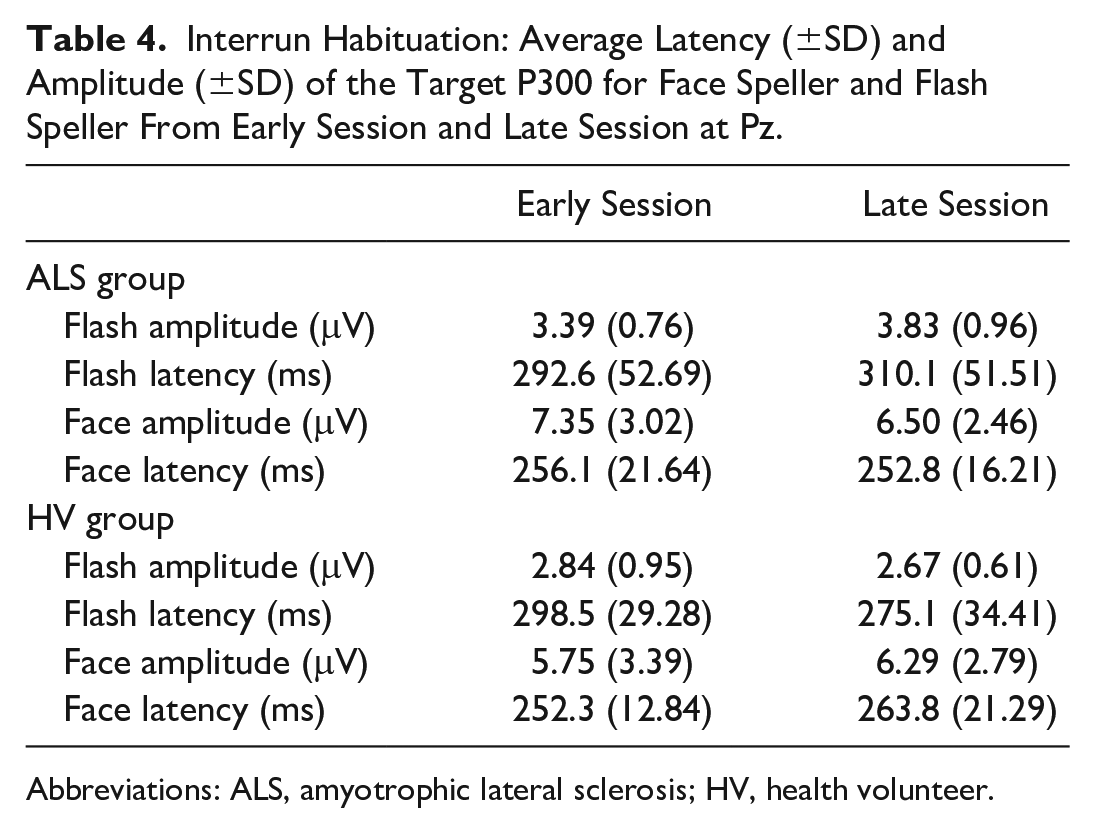
Abbreviations: ALS, amyotrophic lateral sclerosis; HV, health volunteer.
Intrarun Habituation: Average Latency (±SD) and Amplitude (±SD) of the Target P300 for Face Speller and Flash Speller From First 2 Letters and Last 2 Letters at Pz.
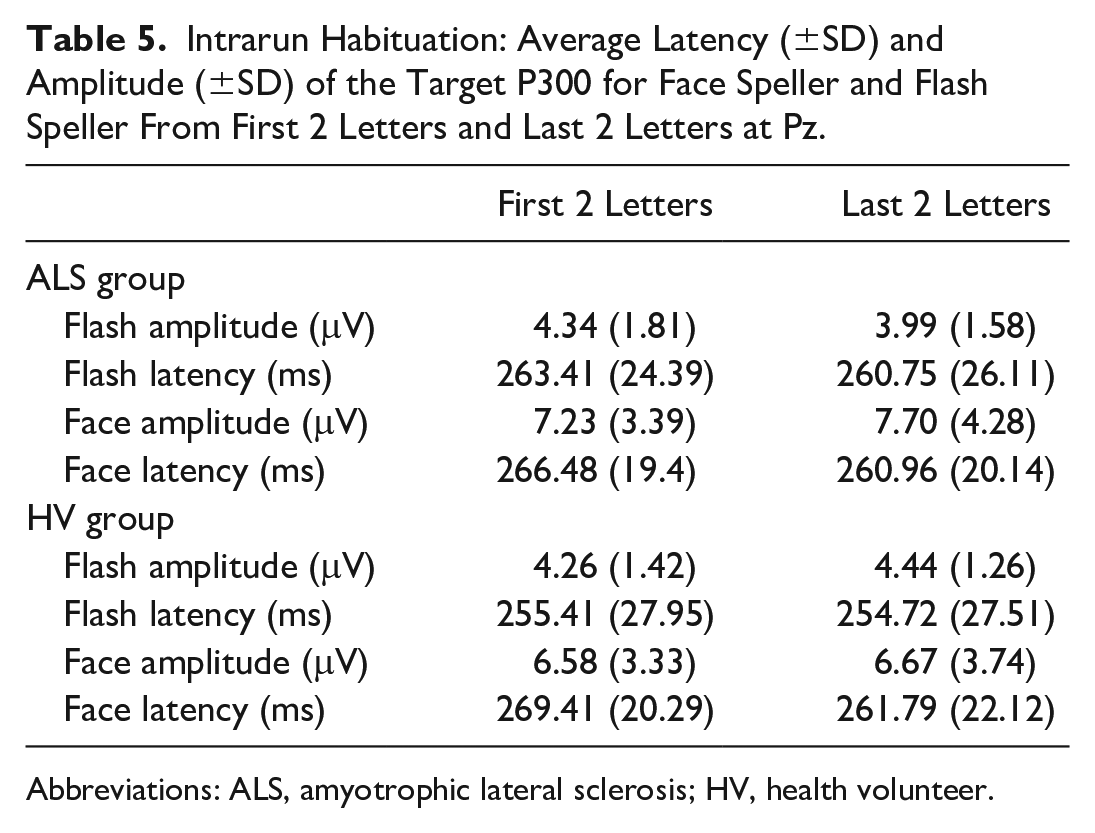
Abbreviations: ALS, amyotrophic lateral sclerosis; HV, health volunteer.
Self-Reported Preferences for P300 Spellers
Out of the 15 users, 12 preferred Flash over Face speller despite better performance in the Face speller. Flashing faces were reported as distracting because it required more effort to concentrate on the target. Three participants who preferred Face over Flash speller reported that the intensifications of adjacent letters were more distracting than faces.
Discussion
The current study primarily examined the P300 habituation within a 30-minute use of 2 P300-based BCI spellers (Face vs flash) in both individuals with ALS and age-matched healthy controls. Secondary aims were to examine whether BCI performance differed between the groups.
P300 Habituation
Within a 30-minute use of the P300-based BCI speller, no P300 habituation was found in either the Face or Flash spellers. Factors thought to reduce the P300 amplitude in short-term use of the BCI were reduction in subjective rarity and attention. These results indicate that rarity and relevance of the target were not affected by repetitive presentation. Three factors may have prevented attention reduction. First, researchers were present during the entire study and interacted with participants. Research in social psychology has shown that individuals perform better in tasks with the presence of observers.50-52 This social facilitation effect can be enhanced when the observer is an experimenter, for example, experimenter presence improved attention performance in hyperactive children when compared with mother presence. 53 Second, after each run, participants had a brief rest54-56; taking breaks might prevent attention reduction. Furthermore, the P300 in the speller might benefit from users’ intrinsic motivation57,58; operating the speller is more purposeful than performing a conventional oddball task in which both long- and short-term P300 habituation has been reported. In one study, healthy individuals performed an auditory oddball task across 8 sessions at 1-week or 1-month intervals and found that P300 amplitude slightly decreased in later sessions. 42 Similarly, another study found P300 habituated in a short 60-minute visual oddball task. 25 Although we did not directly assess motivation in the current study, enrolling required motivation as reflected in the recruitment process, that is, only 13 out of 29 patients responded to our invitation.
P300 Speller Performance
ALS patients performed equivalently with HVs within each version of the speller, indicating that the cognitive functionality of ALS patients meets the level of cognitive ability required for using the speller. Face speller outperformed Flash speller in HVs as indicated by higher characters/min and lower LnFMA than in the Face speller. However, ALS patients performed equally well in both spellers, suggesting that using face stimuli and letter stimuli did not change performance. This could be because Flash speller performance is already high, as indicated by the characters/min, 3.3 (2.1 ± 0.3, in another study with ALS patients using CBP Flash speller 59 ), and the mean bit rate, 17.4 (6.7-20, previously reported mean bit rate range59-61). The good performance of the ALS patients may be because ALS patients are intrinsically motivated to use a BCI speller because it provides a motor independent means of communication.62,63
Overall ERP Pattern
Unlike previous studies, the BCI P300 of ALS patients here is comparable to that of HVs.64-66 The robust P300 could be because these patients had good vision and stable health. 59 The larger P300 in the Face speller than the Flash speller could be because the face image was larger than the letters. One study reported better performance and larger ERPs in block-shaped stimuli than letter-shaped because the block stimuli were larger. 67 Another study reported larger P300 in face stimuli than size matched nonface stimuli and larger P300 in large nonface stimuli than small nonface stimuli although performance did not differ between the conditions. 68 Our study has extended these findings to ALS patients.
P300 Speller and Disability
Recent research suggests that an accuracy ≥70% is required to operate the P300 speller reliably. 69 One participant with late-stage ALS who was completely ventilation dependent was not able to use the speller reliably when the flash rate was 4 Hz, but could use it when the rate was slowed down to 2 Hz so the stimuli duration was extended (see Table 6 and Figure 4), suggesting that flash speed can be challenging for participants with late-stage ALS. Development of auditory or tactile P300 BCIs may benefit this population. 70
Performance Metrics for an End-Stage ALS Patient.
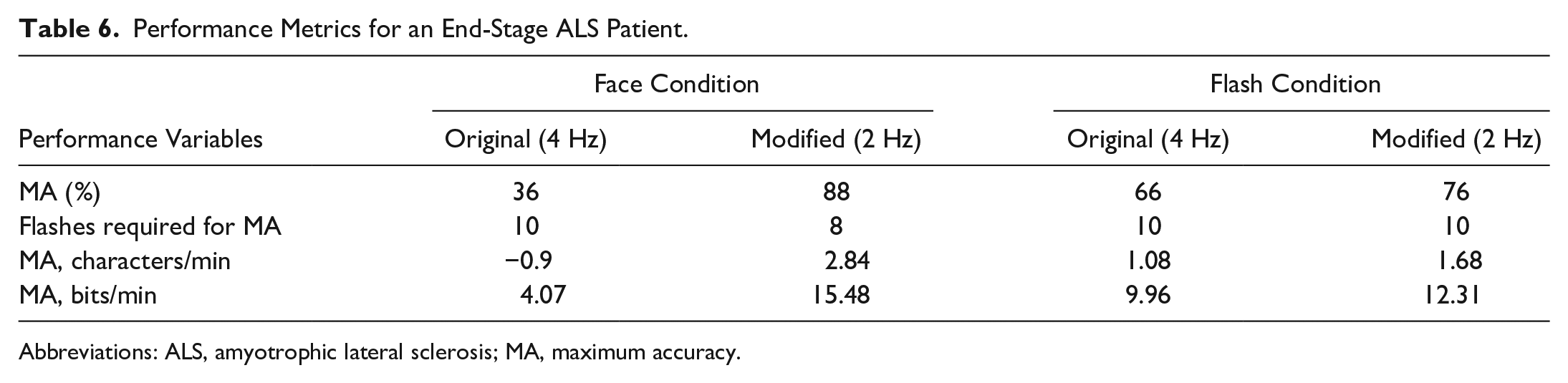
Abbreviations: ALS, amyotrophic lateral sclerosis; MA, maximum accuracy.
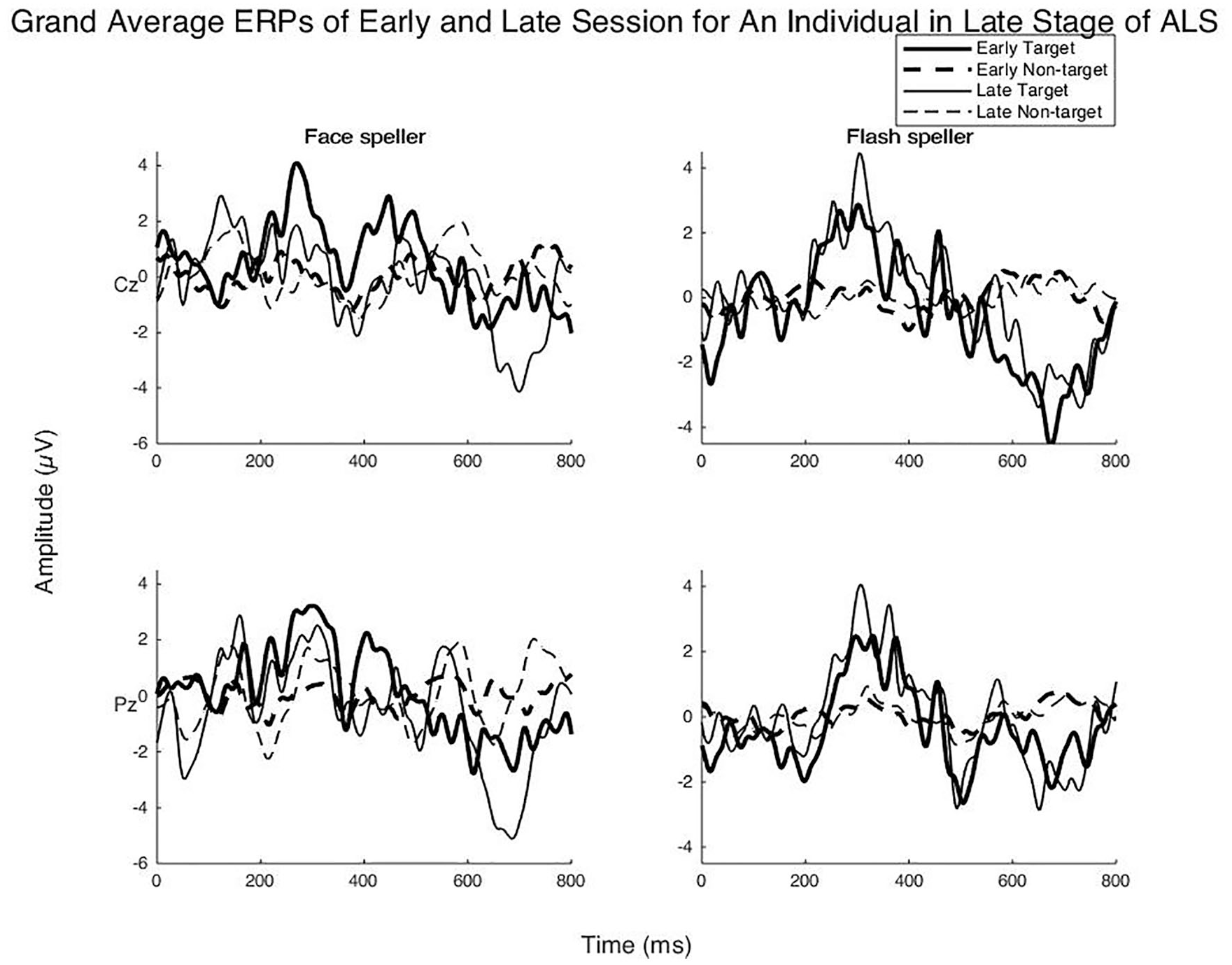
Grand average event-related potentials (ERPs) of early and late session speller at Cz and Pz for an end-stage amyotrophic lateral sclerosis (ALS) patient.
Study Limitations
The main limitation of the current study is the small sample size because of the low local prevalence of ALS and because most sessions required a home visit. Additionally, researchers were present during the entire task potentially affecting task performance. Also, the size of the faces was larger than the letters, potentially contributing to the ERP difference between the spellers.
Conclusions
The current study is the first to examine the P300 habituation during short-term (30 minutes) usage in 2 versions of P300 spellers, Face and Flash, in ALS patients and healthy controls. The findings suggest that the P300 does not habituate in 30-minute use of either speller. ERP patterns and speller performance do not differ between healthy controls and ALS patients. Motivation, presence of an observer, and taking adequate breaks may enhance P300 speller performance. These findings can be generalized to other P300-based BCI devices to improve their reliability to aid life of individuals disabled by ALS. Future design of P300 speller should consider varying the speed of stimuli presentation to meet the needs for individuals in varying stages of ALS and minimize the distraction induced by stimuli intensification.
Footnotes
Acknowledgements
We thank all the healthy volunteers, individuals with ALS and their caregivers for their valuable time to participate in the study; research assistant Justin Burgess for helping with partial data acquisition; Theresa M. Vaughan for her expertise and assistance throughout all aspects of our study.
Author Contributions
Xiaoqian Yu contributed to conception and design; acquisition, analysis, and interpretation; drafted manuscript; critically revised manuscript; gave final approval; agrees to be accountable for all aspects of work ensuring integrity and accuracy. Leandro da Silva-Sauer contributed to analysis, interpretation; critically revised manuscript, gave final approval; agrees to be accountable for all aspects of work ensuring integrity and accuracy. Emanuel Donchin contributed to conception, design, and interpretation of the data.
Declaration of Conflicting Interests
The author(s) declared no conflicts of interest with respect to the research, authorship, and/or publication of this article.
Ethical Approval
The study was reviewed and approved by the institutional review boards at the University of South Florida, and all participants/caregivers for ALS patients given informed written consent prior to the start of this study.
Funding
The author(s) disclosed receipt of the following financial support for the research, authorship, and/or publication of this article: This study received financial support from the National Institutes of Health (NIH) (Grant P41: EB018783 [NIBIB]).
