







Abstract
The study assessed the role of an activated carbon nanoparticle lymphatic tracer in reducing unintentional damage to the parathyroid glands during thyroidectomy for papillary thyroid non-microcarcinoma diagnosed intraoperatively by cryosections. A total of 103 patients with papillary thyroid non-microcarcinomas diagnosed by intraoperative cryosection were randomly assigned to receive routine radical thyroidectomy or radical thyroidectomy following administration of activated carbon nanoparticle lymphatic tracer to the contralateral thyroid, at the department of Thyroid Surgery, Sun Yat-sen Memorial Hospital (Guangzhou, China), between January 2012 and May 2013. The success of level VI lymphadenectomy and postoperative parathyroid function were compared. Administration of the activated carbon nanoparticle lymphatic tracer did not affect the frequency of recovered lymph nodes containing metastases; however, it did significantly reduce the incidence of permanent and transient hypoparathyroidism from 2 to 0 and 18 to 6, and reduced the mean recovery time for transient hypoparathyroidism from 57.0 days to 22.3 days. Administration of activated carbon nanoparticles to the contralateral thyroid after intraoperative cryosections did not contribute to lymphadenectomy for papillary thyroid non-microcarcinoma, but significantly protected parathyroid functions. This approach could decrease the morbidity of radical thyroidectomy and the occurrence of hypoparathyroidism.
Introduction
Papillary thyroid carcinoma is the most common form of malignant thyroid tumor and can be categorized by tumor size into microcarcinoma (tumor diameter less than 1 cm) and non-microcarcinoma (tumor diameter more than 1 cm). Non-microcarcinoma requires total thyroidectomy or near-total thyroidectomy and central neck (level VI) dissection.1,2 Hypoparathyroidism is one of the most common complications of thyroidectomy, in which the parathyroid is unintentionally devascularized or excised because it is difficult to discriminate and separate the parathyroid gland from the surrounding lymph nodes. 3 The yellow color of the parathyroid glands may be confused with the surrounding fat. The superior parathyroid glands are usually found 1 cm above the intersection of the inferior thyroid artery and the recurrent laryngeal nerve. The inferior parathyroid glands are commonly found near the lower thyroid pole, but their location is variable between individuals.4,5
Damage to the parathyroid gland can result from resections of the gland itself or injuries to its blood supply.6,7 Therefore, techniques by which parathyroid function can be protected intraoperatively have long been sought, including preserving the adipose tissues within the thyroid posterior capsule to avoid ligation of the thyroid blood supply; careful identification of the parathyroid glands to prevent inadvertent resection; and autotransplantation of the resected, devascularized parathyroid glands into the sternocleidomastoid muscle.8,9 Although the precise dissection of the parathyroid gland can contribute to its protection, currently used surgical procedures still result in transient or permanent hypoparathyroidism in 26.1% of thyroidectomies, according to a meta-analysis of 9 studies (2285 patients). 10 Conversely, preservation of the posterior thyroid capsule and thin-layer thyroid tissue may also negatively affect the success of thyroidectomy. 11
Using a lymphatic tracer in the resection of thyroid carcinoma can help in the identification of the parathyroid glands and thus contribute to their protection. 12 Carbon nanoparticles have been widely used in lymphadenectomy as tracers to identify the sentinel lymph nodes draining malignant tumors.13-15 Particles with a mean diameter of 150 nm exceed the size of the capillary endothelial cell gap (20-50 nm), and thus cannot enter the blood vessels. 12 However, they are able to traverse the lymphatic capillary endothelial cell gap (120-500 nm) and may be phagocytized by macrophages. 12 Thus, these carbon nanoparticles specifically accumulate in the lymph nodes, staining them black. 16
It has been reported that activated carbon nanoparticles injected directly into papillary thyroid microcarcinoma contributed not only to the sentinel node biopsy but also to parathyroid gland protection. 12 In that study, the activated carbon nanoparticles were administered to tumors in patients previously diagnosed with papillary thyroid microcarcinoma by fine needle aspiration biopsy. When thyroid cancer cannot be confirmed by preoperative fine needle aspiration biopsy, intraoperative cryosection of the thyroid is required for diagnosis. In this case activated carbon nanoparticles are not recommended as a lymphatic tracer as intraoperative cryosections may damage the lesioned thyroid.
We aimed to determine whether administration of carbon nanoparticle lymphatic tracer to the unresected side of the thyroid could provide lymphatic tracing in patients diagnosed with papillary thyroid non-microcarcinomas by intraoperative cryosections. Furthermore, we aimed to determine whether this application of the carbon nanoparticle lymphatic tracer contributed to the protection of the parathyroid glands during thyroidectomy.
Materials and Methods
Clinical Data
Between January 2012 and May 2013, patients diagnosed with papillary thyroid non-microcarcinomas by intra-operative cryosections at the Department of Thyroid Surgery, Sun Yat-sen Memorial Hospital (Guangzhou, China), were enrolled in the study. Inclusion criteria were (1) intraoperative cryosection diagnosis of papillary thyroid carcinoma, (2) tumor between 1 and 2 cm in diameter, (3) no goiter in the contralateral thyroid, and (4) no medical history of thyroid cancer, neck surgery, or tumor. Patients were randomly divided into experimental or control group. The randomization sequence was computer-generated and patients were allocated to one of the 2 groups using sequentially numbered opaque, sealed envelopes. The allocation sequence and preparation of the concealed envelopes was completed by a third person not involved in the study. The experimental group received a carbon nanoparticle lymphatic tracer during thyroidectomy. The study was approved by the ethics committee of the Sun Yat-sen Memorial Hospital and conformed to the principles of the Declaration of Helsinki. All patients provided written informed consent.
Surgical Procedure
The carbon nanoparticles (approved by the China Food and Drug Administration, #H20041829; Lai Mei Pharmaceutical Co, Chongqing, China) were used in the form of a standard CN suspension injection (1 mL = 50 mg). No toxic side effects were reported in humans.12,17-19
The thyroid was exposed under anesthesia and one lobe of the thyroid was resected. To avoid the interference with the carbon nanoparticles on the evaluation of intraoperative cryosections, the carbon nanoparticles were only injected on the other side of the thyroid gland after the diagnosis of thyroid cancer on intraoperative cryosections. The incision was sutured with pressure gauze packing to avoid potential carbon nanoparticles leakage. Patients diagnosed with papillary thyroid carcinoma by cryosection were enrolled in the study. The experimental group received a carbon nanoparticle suspension (Figures 1 and 2) 12 ; 0.05 mL was injected at 3 sites on the surface of the midinferior pole of the contralateral thyroid. If masses were present in the thyroid, direct injection of the masses was avoided. Twenty minutes later, total thyroidectomy or near-total thyroidectomy of the contralateral thyroid plus level VI lymphadenectomy or cervical lymph modified radical thyroidectomy were performed.
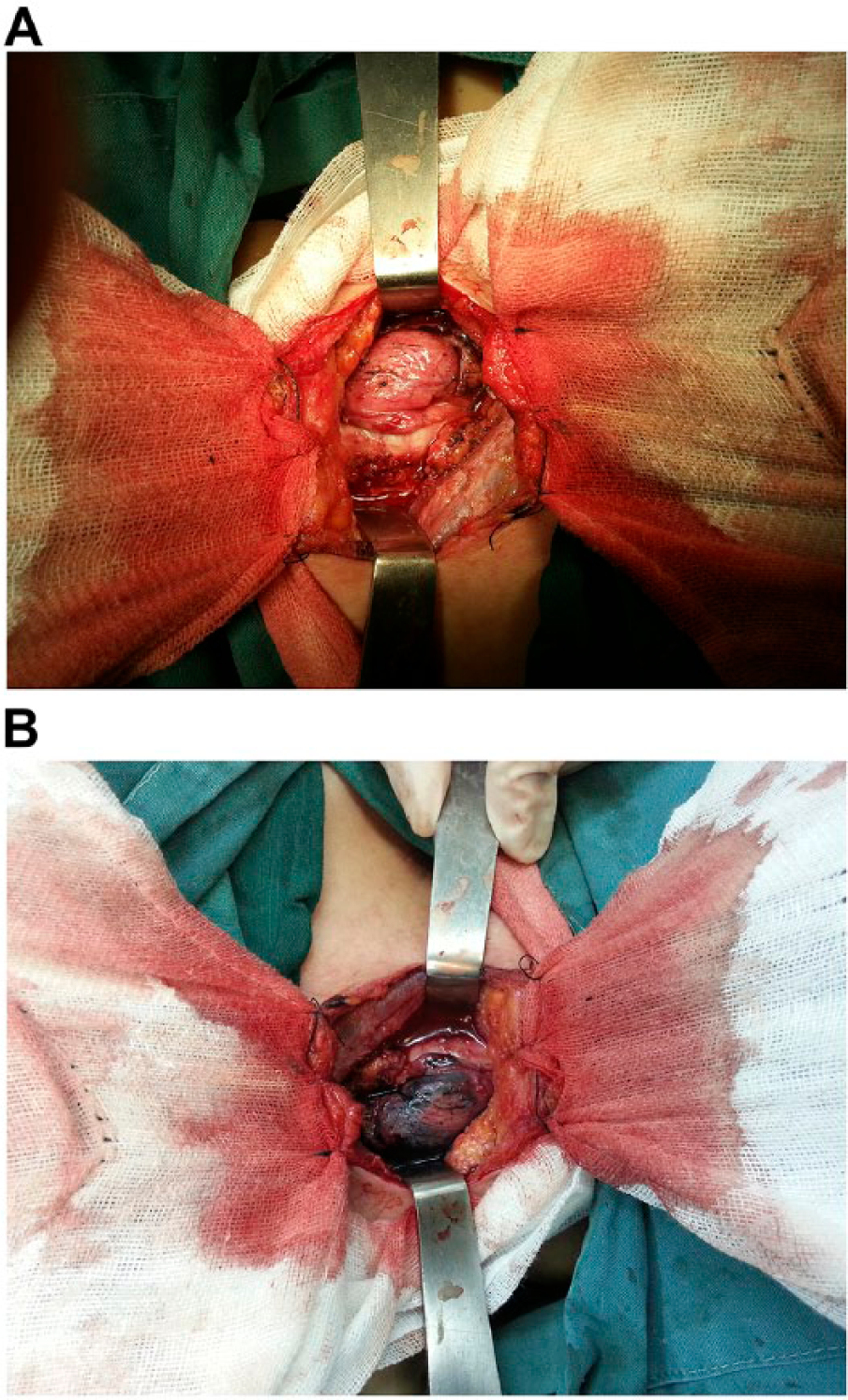
Thyroid gland before and after the administration of carbon nanoparticles. (A) Intraoperative image showing the thyroid gland and the similarity of the adjacent tissues and structures. (B) Tissues stained black are those that are drained by the lymphatic system around the thyroid gland.
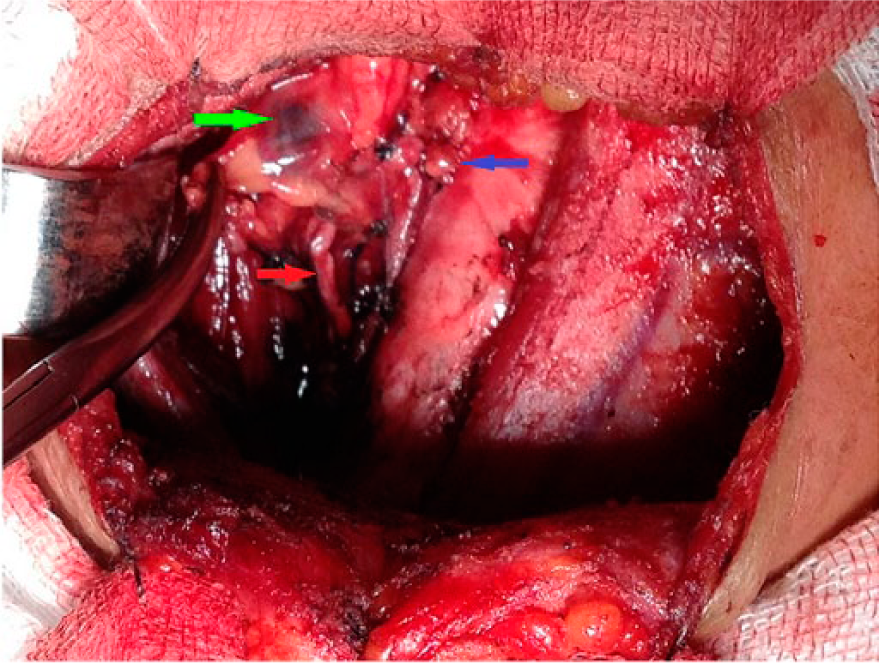
Identification of the parathyroid glands after administration of carbon nanoparticles. The parathyroid gland can be identified as it is paler than the surrounding tissues after administration of carbon nanoparticles. The green arrow indicates a lymph node. The dark blue arrow indicates a parathyroid gland. The red arrow indicates recurrent laryngeal nerve.
Main Observation Indexes
Postoperative and 6-month follow-up observation indices were the following: lymph node number and proportion of positive lymph nodes in the central compartment (level VI) lymphadenectomy; postoperative pathological examination to determine whether parathyroid glands were resected on the side receiving carbon nanoparticle suspension; presence of transient or permanent hypoparathyroidism; recovery time of transient hypoparathyroidism (≤30 days). Hypoparathyroidism lasting for more than 6 months or in which parathyroid function was maintained by administration of calcium and vitamin D was considered as permanent hypoparathyroidism.
Serum parathyroid hormone levels were measured 24 hours postoperatively using a Roche Modular E170 Analytic System (Roche Diagnostics GmbH, Mannheim, Germany). Serum calcium levels were measured using an AU5400 Olympus Chemistry Analyzer (Olympus, Tokyo, Japan).
Statistical Analysis
SPSS 19.0 (IBM, Armonk, NY) was used for statistical analysis. Categorical variables were compared using the χ2 test or Fisher’s exact test. Normally distributed continuous variables are expressed as means ± SD and were analyzed by Student’s t test. Nonnormally distributed continuous variables are expressed as median and range, and were analyzed by the Mann-Whitney U test. P values <.05 were considered as statistically significant.
Results
Clinical Characteristics of the Patients
The clinical characteristics and surgical procedures were not significantly different between the 2 groups (Table 1). A total of 103 patients were enrolled in the study: 49 in the experimental group and 54 in the control group. Seven patients in the experimental group and 8 patients in control group were diagnosed with bilateral papillary thyroid carcinomas by pathological examination after surgery. All of these 15 cases of papillary thyroid carcinomas were defined as microcarcinomas and excluded from the study. Lymph node metastases were identified in 27 patients in the experimental group and 28 in the control group. No complications related to the activated carbon nanoparticles occurred. No patients died during the 6-month follow-up.
Baseline Characteristics of the Patients in the 2 Groups.
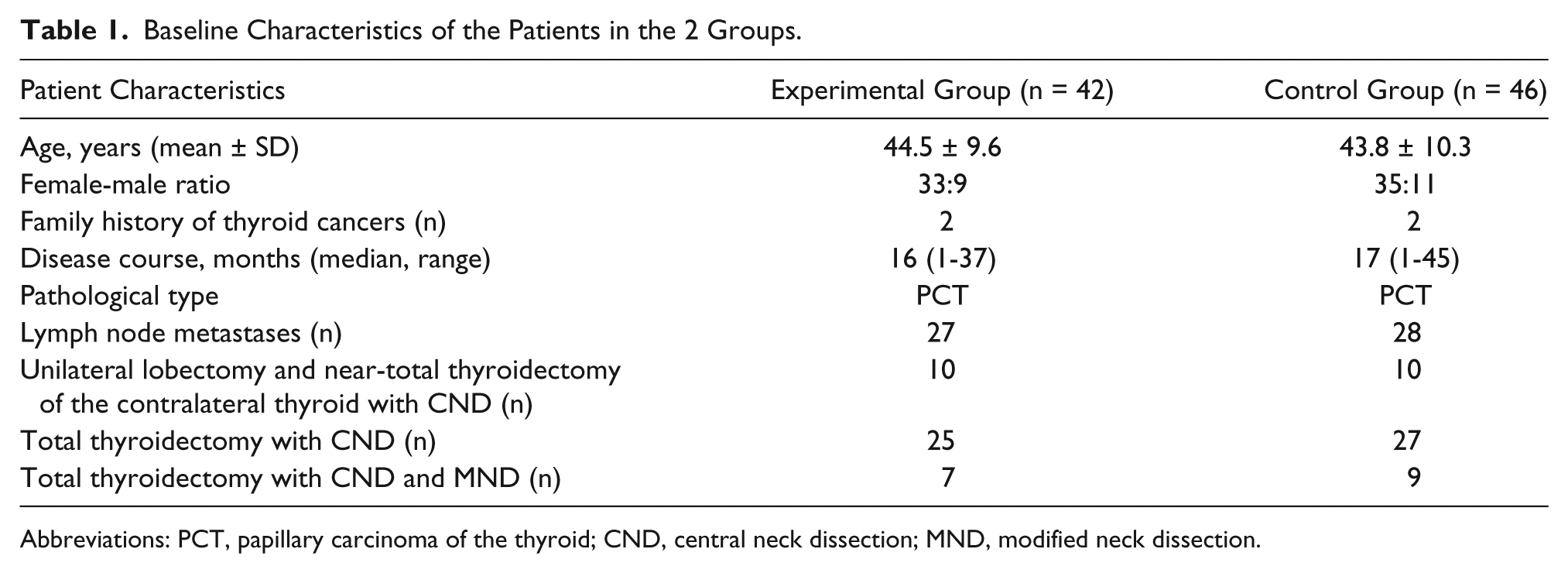
Abbreviations: PCT, papillary carcinoma of the thyroid; CND, central neck dissection; MND, modified neck dissection.
Administration of Activated Carbon Nanoparticles to the Contralateral Thyroid Does Not Affect Thyroid Lymphadenectomy
In the experimental group, 246 level VI lymph nodes were resected in 27 patients with lymph node metastases, and 116 of the resected lymph nodes contained metastases. The mean rate of metastasis detection in resected lymph nodes was 47.15%, and the number of metastasis-positive lymph nodes resected was 4.3 per patient. In the control group, 251 level VI lymph nodes were resected in 28 patients with lymph node metastases, and 123 contained metastases. The mean rate of metastasis detection in the resected lymph nodes was 49%, and the number of metastasis-positive lymph nodes resected was 4.39 per patient. There was no significant difference in the mean number of metastases or rate of positive lymph node detection between the 2 groups (P > .05, Table 2).
Comparison of Lymph Nodes Dissected in Level VI of Patients With Lymph Node Metastases in the 2 Groups.
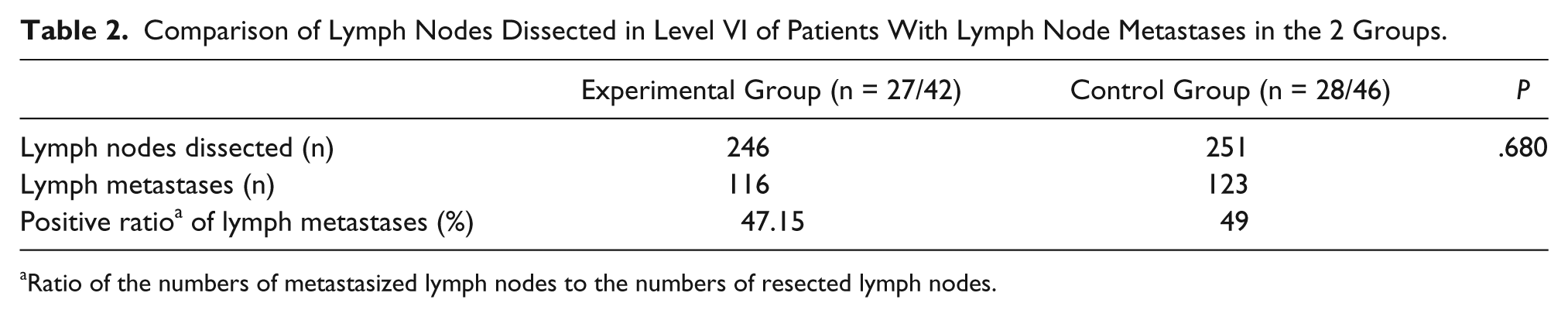
Ratio of the numbers of metastasized lymph nodes to the numbers of resected lymph nodes.
Administration of Activated Carbon Nanoparticles to the Contralateral Thyroid Protects the Parathyroid Gland
Postoperative pathological examinations confirmed that parathyroid tissue was unintentionally excised in 3 patients (7.1%) in the experimental group and in 11 patients (23.9%, P < .05) in the control group. Eighteen (39.13%) patients in the control group suffered from transient hypoparathyroidism, which was significantly higher than in the experimental group (6 patients, 14.3%, P < .05; Table 3). The mean recovery time for transient hypoparathyroidism was significantly shorter in the experimental group (22.3 days) compared with the control group (57 days, P < .05). No permanent hypoparathyroidism occurred in the experimental group, but 2 patients in the control group did not recover after 6 months, and continued to depend on calcium and vitamin D supplementation, suggesting a benefit of the use of activated carbon nanoparticles, although the difference between the 2 groups was not statistically significant, probably due to the small sample size (Table 3).
Indexes of the Postoperative Parathyroid Function.
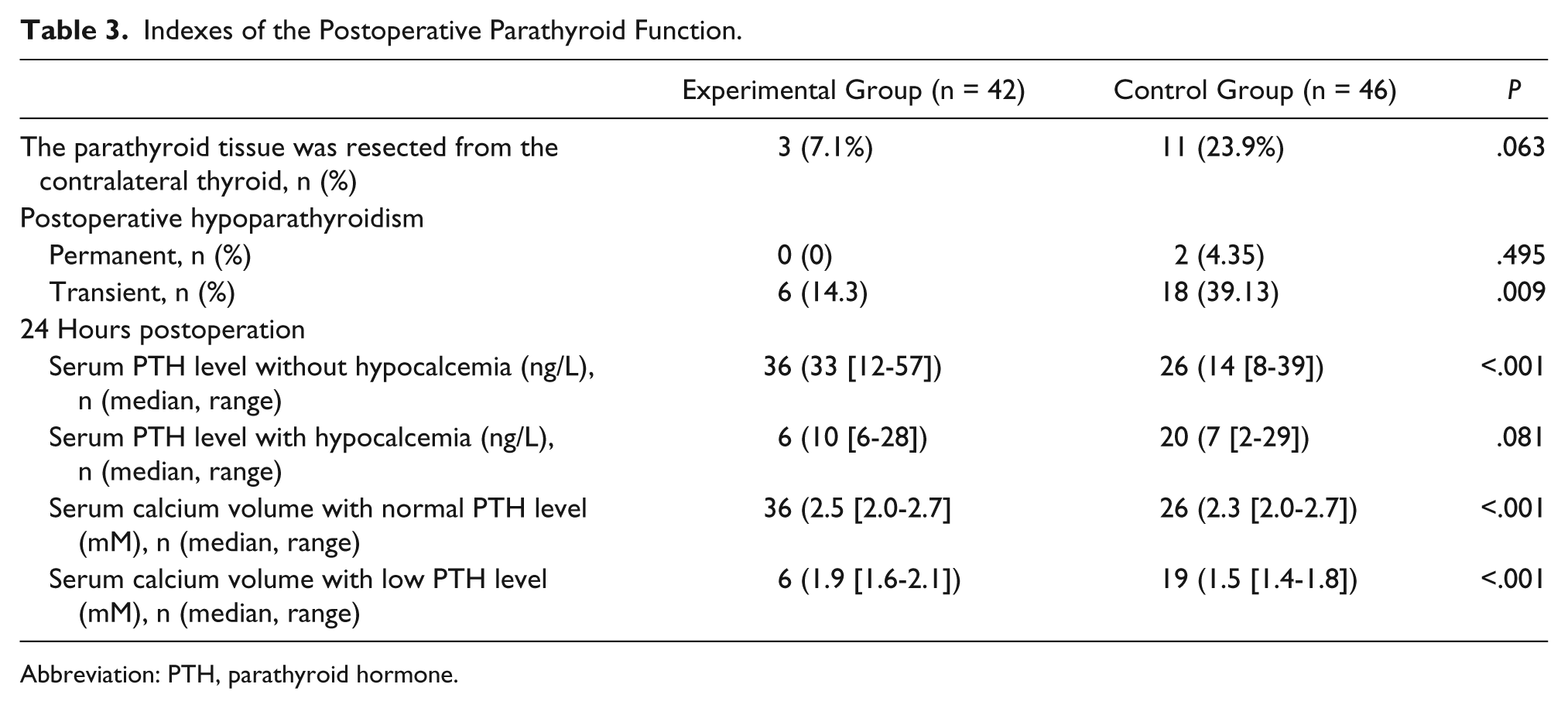
Abbreviation: PTH, parathyroid hormone.
Discussion
In order to evaluate the role of an activated carbon nanoparticle lymphatic tracer in the reduction of unintentional damage to the parathyroid glands in radical thyroidectomy, we enrolled patients with papillary thyroid non-microcarcinomas diagnosed by intraoperative cryosection in an exploratory trial. Patients were randomly assigned to receive routine radical thyroidectomy or radical thyroidectomy following administration of activated carbon nanoparticle lymphatic tracer to the contralateral thyroid. We found that the activated carbon nanoparticle lymphatic tracer did not increase the number of lymph nodes resected nor improved the rate of resection of positive lymph nodes, but did contribute to the protection of parathyroid glands. Administration of activated carbon nanoparticles reduced resections of the healthy parathyroid tissues and prevented permanent hypoparathyroidism. Additionally, the incidence of transient hypoparathyroidism was significantly lower in the experimental group. The recovery time of patients with postoperative transient hypoparathyroidism in the experimental group was significantly shorter than that of the patients in the control group, and the length of time patients were dependent on calcium and vitamin D supplementation was shortened, indicating fewer or less severe parathyroid damage. Though the rates of transient postoperative hypoparathyroidism were relatively high in both groups (14.3% in the experimental group vs 39.13% in the control group), no patient in the experimental group suffered from permanent postoperative hypoparathyroidism, indicating remaining of parathyroid function in this group of patients.
It was previously reported that the administration of activated carbon nanoparticles to patients that have been preoperatively diagnosed with papillary thyroid carcinomas could significantly improve level VI lymphadenectomy and protect parathyroid function. 12 However, the use of this technique in patients with papillary thyroid carcinomas diagnosed by intraoperative cryosection had not yet been reported. The potential leakage of activated carbon nanoparticles from the lesions during intraoperative cryosection may pose a concern; however, we have determined that these concerns are unwarranted. Leakage of activated carbon nanoparticles was prevented by suturing the thyroid incisions, by using pressure gauze packing, and by avoiding injecting excessively quickly or with excessive pressure.
Hypocalcemia has been reported to be the most frequent complication resulting from thyroid surgery, but the incidence of hypocalcemia varies from study to study, ranging from 1.2% to 75.19%.2,14 The wide range in hypocalcemia incidence reflects the range of procedures that fall under the title “thyroidectomy,” such as total lobectomy, total thyroidectomy, and subtotal thyroidectomy with a monolateral remnant or with bilateral remnants. The frequency at which parathyroid glands are unintentionally excised varies between these procedures, but the protection of at least one gland is crucial for patients with bilateral thyroid cancer due to the important role played by the parathyroid gland in maintaining calcium/phosphorus balance.
The nanoparticles are used for better contrast and hence to increase the likelihood of identifying the nodes. Contrast agents such as methylene blue and India ink are associated with adverse reactions (neurotoxicity for methylene blue) in some patients and diffuse in all fluids.20,21 On the other hand, the carbon nanoparticles enter the lymphatic vessels but not the blood vessels, making them specific to lymphatic vessels. 21 The main objective for using nanoparticles is therefore to improve node harvest. The protection of the parathyroid glands is a novel finding of the use of carbon nanoparticles. Methylene blue or India ink does not have these advantages. Furthermore, novel applications of carbon nanoparticles might be tried in future studies, like using them before surgery to identify the sentinel node, but additional studies are necessary to address this point.
The present study was limited by the small number of patients from a single center. Hence, further studies involving a larger sample size from multiple centers should be conducted.
Conclusions
In conclusion, we observed that the administration of activated carbon nanoparticles to the contralateral thyroid of patients during unilateral thyroid resection could improve the survival rate of parathyroid glands. Unilateral administration of carbon nanoparticles into the thyroid represents a safe and effective approach, which not only effectively reduced the incidence rate of hypoparathyroidism but also reduced the time taken for parathyroid function to recover postoperatively. However, administration of this lymphatic tracer did not contribute to level VI lymphadenectomy.
Footnotes
Author Contributions
Study concept and design: Miaoyun Long, Honghao Li
Acquisition of data: Miaoyun Long, Dingyuan Luo, Feiyu Diao, Mingqing Huang, Kai Huang, Xinzhi Peng, Shaojian Lin and Honghao Li
Analysis and interpretation: Miaoyun Long, Dingyuan Luo, Feiyu Diao, Mingqing Huang, Kai Huang, Xinzhi Peng, Shaojian Lin and Honghao Li
Study supervision: Miaoyun Long, Dingyuan Luo, Feiyu Diao, Mingqing Huang, Kai Huang, Xinzhi Peng, Shaojian Lin and Honghao Li
Miaoyun Long and Honghao Li contributed to conception and design; Miaoyun Long, Dingyuan Luo, Feiyu Diao, Mingqing Huang, Kai Huang, Xinzhi Peng, Shaojian Lin and Honghao Li contributed to acquisition of data, or analysis and interpretation of data; Miaoyun Long, Dingyuan Luo, Feiyu Diao, Mingqing Huang, Kai Huang, Xinzhi Peng, Shaojian Lin and Honghao Li have been involved in drafting the manuscript or revising it critically for important intellectual content; all authors have given final approval of the version to be published.
Declaration of Conflicting Interests
The author(s) declared no potential conflicts of interest with respect to the research, authorship, and/or publication of this article.
Funding
The author(s) received no financial support for the research, authorship, and/or publication of this article.