







Abstract
Environmental engineering design is a key course for students in environmental engineering, as it aims to develop their skills in analyzing, evaluating, and solving environmental problems. However, with the rapid development of modern information technology (IT), this course needs to adapt to the changing times and leverage the benefits of modern IT. In this article, the applications, role, and influence of modern IT in environmental engineering design are discussed, the relevant practical cases demonstrating the use of modern IT applications are presented, and some suggestions to improve and enhance the course by using modern IT are proposed. Modern IT can not only improve the teaching outcomes and quality of environmental engineering design but also stimulate students’ creativity and practical abilities, as well as foster innovation and optimization in the teaching methods and content of environmental engineering design. This article has the potential to advance the field of environmental engineering education.
Introduction
Environmental engineering is an interdisciplinary subject that integrates various fields of knowledge and skills, such as mathematics, physics, chemistry, biology, geography, meteorology, civil engineering, water resources, electrical, and mechanical. Environmental engineering design is a core component of environmental engineering, which involves applying theoretical and practical insights to address specific environmental challenges. Environmental engineering has undergone significant evolution, propelled by advancements in information technology (IT) in the 21st century. Here, IT refers to a broad set of digital technologies that use computers as the core, networks as the infrastructure, and data as key resources to support information processing, communication, and intelligent decision-making (National Academies of Sciences Engineering and Medicine, 2019). Traditionally, environmental engineers concentrated on providing drinking water and treating wastewater. However, the scope of the field has broadened to encompass pollution control in air, water, and soil. Presently, IT plays an integral role in environmental engineering, facilitating precise data gathering, modeling, and the creation of sustainable designs. It shapes design methodologies that underscore ecological principles and comprehensive strategies. When confronting intricate challenges, the incorporation of contemporary IT ensures effective and sustainable resolutions to environmental issues. The course of environmental engineering design is a key course that aims to equip students with the methods and skills of environmental engineering design and enhance their innovation and comprehensive quality (Pubule et al., 2019). However, environmental engineering design education faces an ongoing challenge of fostering competent and creative minds in a dynamic landscape.
In recent years, a growing body of international reports has attempted to quantify the extent to which modern IT has been integrated into engineering education. According to the National Academies of Sciences Engineering and Medicine and UNESCO, >70% of universities in developed regions such as North America, Western Europe, and parts of East Asia (e.g., China and Japan) have partially or fully incorporated digital technologies—including simulation tools, online platforms, and data-driven learning—into engineering curricula (Reimers, 2024; The Global Education Monitoring Report Team, 2025). However, in many developing regions, including parts of Africa, South Asia, and Southeast Asia, it is estimated that 40–60% of universities still rely predominantly on traditional teaching methods, such as lecture-based instruction and textbook-centered learning, due to constraints in infrastructure, funding, and technical expertise (Detmer, 2022; Lim et al., 2022). These disparities highlight a critical global gap between technologically advanced and resource-constrained educational systems. Traditional teaching methods, though solid, have some limitations that hinder the comprehensive growth of students. For instance, there may be gaps between theoretical content and practical application, rigid teaching approaches, outdated teaching modes, and subjective evaluation criteria (Wang, 2022; Martirosov et al., 2023). In addition, traditional teaching methods in environmental engineering design education have several limitations that impact student learning. For instance, relying solely on textbooks and lecturing using boards often fails to provide students with the expected depth of knowledge. These methods can lead to disengagement, boredom, and a lack of enthusiasm for the subject matter. Meanwhile, students may become narrowly focused on textbook content, limiting their exposure to extracurricular knowledge and real-world engineering projects. Consequently, there is a disconnection between students’ abilities and the practical requirements of professional enterprises (Wang, 2019). These issues undermine the effectiveness of education in preparing aspiring environmental engineers.
Environmental quality is a growing concern for human society as social economy and living standards improve. However, environmental problems are also becoming more complex and prominent (Kirschke and Newig, 2017). The traditional environmental engineering design method is inadequate for the needs of modern society and requires the integration of more advanced IT. Meanwhile, the specific gap that modern IT aims to address within the existing educational framework lies in the personalization and adaptability of learning experiences. Traditional teaching methods often follow a one-size-fits-all approach, where students receive uniform instruction regardless of their individual learning styles, paces, or interests. However, this approach fails to cater to the diverse needs of students, leading to disengagement, frustration, and suboptimal learning outcomes (El-Sabagh, 2021). Modern technology, such as personalized learning platforms, data analytics, and artificial intelligence (AI, which refers to computational methods and algorithms that enable machines to perform tasks requiring human-like intelligence, such as data analysis, pattern recognition, and decision support), seeks to bridge this gap by tailoring educational content, assessments, and feedback to each student’s unique profile. By doing so, it can enhance student engagement, promote self-directed learning, and maximize educational effectiveness (Pan, 2023). Thus, to cope with the increasing demands of a society driven by economic development and technological innovation, a paradigm shift in pedagogical strategies is imperative. A reform that aligns with the current and future demands and the intrinsic nature of the environmental engineering discipline is needed. In this quest for transformative education, modern IT is a series of techniques that use computers as the core, networks as the basis, data as the resource, software as the tool, and intelligence as the feature, which offers a powerful catalyst, enabling immense support and innovation for the environmental engineering design curricula, enabling it to adapt to changing environmental needs and conditions (Masic et al., 2011; Mhlongo et al., 2023).
Modern IT has introduced various tools and platforms to the teaching classroom, such as multimedia, network, cloud computing (refers to the on-demand delivery of computing resources—including storage, processing power, and software—over the internet, enabling scalable and collaborative data access), AI, and others. These technologies enrich the content, diversify the methods, increase the flexibility, and enhance the effectiveness of teaching (Haleem et al., 2022). The impact and prospects of modern IT—its networked ecosystem, digital capabilities, intelligence augmentation, and interactive potential—are particularly relevant for enhancing the learning environment for environmental engineering design (Kamalov et al., 2023). The integration of modern IT into the curriculum of environmental engineering design is imperative for a comprehensive educational approach. This includes the incorporation of multimedia elements—such as videos, interactive simulations, and virtual field trips—to enable students to virtually explore water treatment facilities or visualize pollution dispersion via three-dimensional models. Networking and collaborative tools are essential for facilitating real-time discussions, project coordination, and the exchange of knowledge, allowing students to collaborate on design projects, share ideas, and garner feedback from both peers and experts. Cloud computing provides indispensable resources for data storage and collaborative workspaces, thus enabling remote project development and file sharing. AI tools are instrumental for data analysis, predictive modeling, and informed decision-making, with algorithms capable of optimizing environmental impact assessments and suggesting sustainable design alternatives. Lastly, the deployment of Internet of Things (which refers to interconnected physical devices equipped with sensors and communication capabilities that collect and exchange real-time environmental data) sensors for real-time environmental monitoring allows students to gather data on variables such as air quality, water pollution, and energy consumption, thereby deepening their understanding of the implications of their designs (Dale et al., 2021; Tuyen et al., 2021; Asli and Sefika, 2022). The thoughtful integration of these technologies into environmental engineering design education not only addresses current challenges but also promotes creativity and equips students for a dynamic, interconnected future. Moreover, modern IT can offer many up-to-date, comprehensive, and diverse teaching resources for environmental engineering design courses, such as relevant laws and regulations, standards, norms, cases, data, and software from domestic and foreign sources. This makes the teaching content more realistic and consistent with the demands of the current era. Modern IT can also encourage teachers to update their knowledge structure and professional level continuously, and improve their teaching skills and abilities (Ng et al., 2023; Reychav et al., 2023). Therefore, the benefits of modern IT in optimizing teaching conditions, expanding content sources, innovating teaching approaches, and refining assessment frameworks are apparent.
The incorporation of modern IT into environmental engineering education is congruent with numerous pivotal educational goals. Enhanced learning resources, provided by modern IT in the form of web pages, instructional videos, and photographs of installations and apparatus, augment students’ comprehension of intricate environmental concepts, facilitating the visualization of applications and processes in the real world. IT also bolsters communication among students, educators, and professionals, while enabling the efficient dissemination of alerts pertaining to novel developments, research findings, and industry trends, thereby ensuring that students remain informed and adaptable to the ever-evolving environmental challenges (Bungay, 2021). Furthermore, exposure to IT tools enhances problem-solving skills, as students engage in data analysis, scenario simulation, and conclusion formulation. Utilizing advanced techniques such as big data analytics or AI algorithms to refine water treatment processes, for instance, hones critical thinking and decision-making capabilities. Interdisciplinary collaboration is another area where modern IT plays a pivotal role, fostering virtual cooperation among environmental engineers, scientists, policymakers, and other professionals, thus preparing students for real-world collaborative endeavors (Dale et al., 2021). In addition, IT empowers students to investigate sustainable solutions, enabling them to model environmental impacts, conduct life cycle analyses, and devise eco-friendly systems (Elnaggar, 2024). In essence, the integration of IT with environmental principles promotes creativity and innovation. In summation, the assimilation of modern IT arms future environmental engineers with technical acumen, versatility, and a comprehensive grasp of environmental challenges, which are in alignment with the profession’s fundamental competencies. The use of modern IT in environmental engineering design education has advanced through various methods, such as virtual simulations, remote collaborations, project-based learning, and case studies. These methods have enhanced the effectiveness of teaching, stimulated the interest of students, developed their skills, and fostered a culture of innovation. However, modern IT also faces some challenges in this context, such as information security, equipment obsolescence, pedagogical training for educators, and resource consolidation and sharing (Alosaimi, 2016; Jing, 2021).
Despite the growing adoption of modern IT in environmental engineering design education, robust empirical evidence regarding its impact on student learning outcomes remains limited (Li, 2025). Future research should therefore focus on systematically evaluating how specific technologies—such as AI, augmented reality (AR), and data-driven platforms—affect students’ conceptual understanding, design competencies, and systems thinking abilities (Matos et al., 2025). There is a need for longitudinal and comparative studies that examine different levels of technology integration and pedagogical approaches. Furthermore, future work should explore how modern IT can be effectively aligned with outcome-based education (OBE) or project-based and problem-based learning (PBL) frameworks, including competency-oriented assessment and feedback mechanisms (Syeed et al., 2022; Naseer et al., 2025). The application of learning analytics and experimental or quasi-experimental research designs will also be essential to establish causal relationships between technology use and educational outcomes (Bin Qushem et al., 2025; Oliva-Córdova et al., 2025). Addressing these directions will contribute to a more evidence-based and pedagogically grounded integration of modern IT in environmental engineering education.
This article aims to analyze the application and impact of modern IT on environmental engineering design courses and to propose practical solutions and recommendations, such as strengthening information governance, upgrading equipment infrastructure, improving educator competencies, and creating robust resource repositories. The ultimate goal is to reinforce the students’ ability in design and innovation, enabling them to overcome traditional limitations and engineer a sustainable future. This article intends to provide guidance for an educational environment where modern IT and environmental engineering design can collaborate to produce innovative and responsible leaders for our planet’s future.
Significance of Modern IT in Environmental Engineering Design Education
The integration of modern IT with pedagogical objectives and content is crucial for augmenting student learning experiences (Gümüş et al., 2024). Educators, by strategically utilizing tools such as interactive whiteboards, virtual reality (VR), and online collaboration platforms, can foster dynamic learning environments that promote student engagement and creativity. A variety of assessment methods, such as project-based learning and peer assessment, offer comprehensive insights into student progress, facilitating personalized feedback and adaptive learning opportunities. Moreover, the ongoing development of pedagogical skills within the Technological Pedagogical Content Knowledge framework enables educators to refine their teaching methodologies (Koehler et al., 2013). Professional development initiatives that emphasize reflective practices and instructional design are instrumental in enhancing educators’ proficiency in integrating modern IT tools. The reliable evaluation of teachers’ technological competencies underpins personalized professional learning trajectories, strengthening their modern IT capabilities. In essence, the judicious incorporation of modern IT, anchored by educational principles and bolstered by robust assessment protocols, is poised to significantly enrich the experiences of both instructors and learners (Sosa and Manzuoli, 2019).
Multimedia technology
Multimedia technology refers to the use of computers and other equipment to integrate and communicate text, image, sound, animation, video, and other media (Fig. 1). It overcomes the limitations of time and space, enhances the expressiveness and attractiveness of teaching information, stimulates students’ interest and initiative, and improves teaching efficiency and quality (Xie, 2020). For instance, teachers can use multimedia presentation software to create engaging courseware, demonstrating abstract concepts, complex processes, and difficult-to-observe phenomena. Students can use multimedia production software to produce their own work and showcase their ideas and abilities. Teachers and students can also use the multimedia network platform for remote collaboration and communication, and expand teaching resources and horizons (Abdulrahaman et al., 2020).
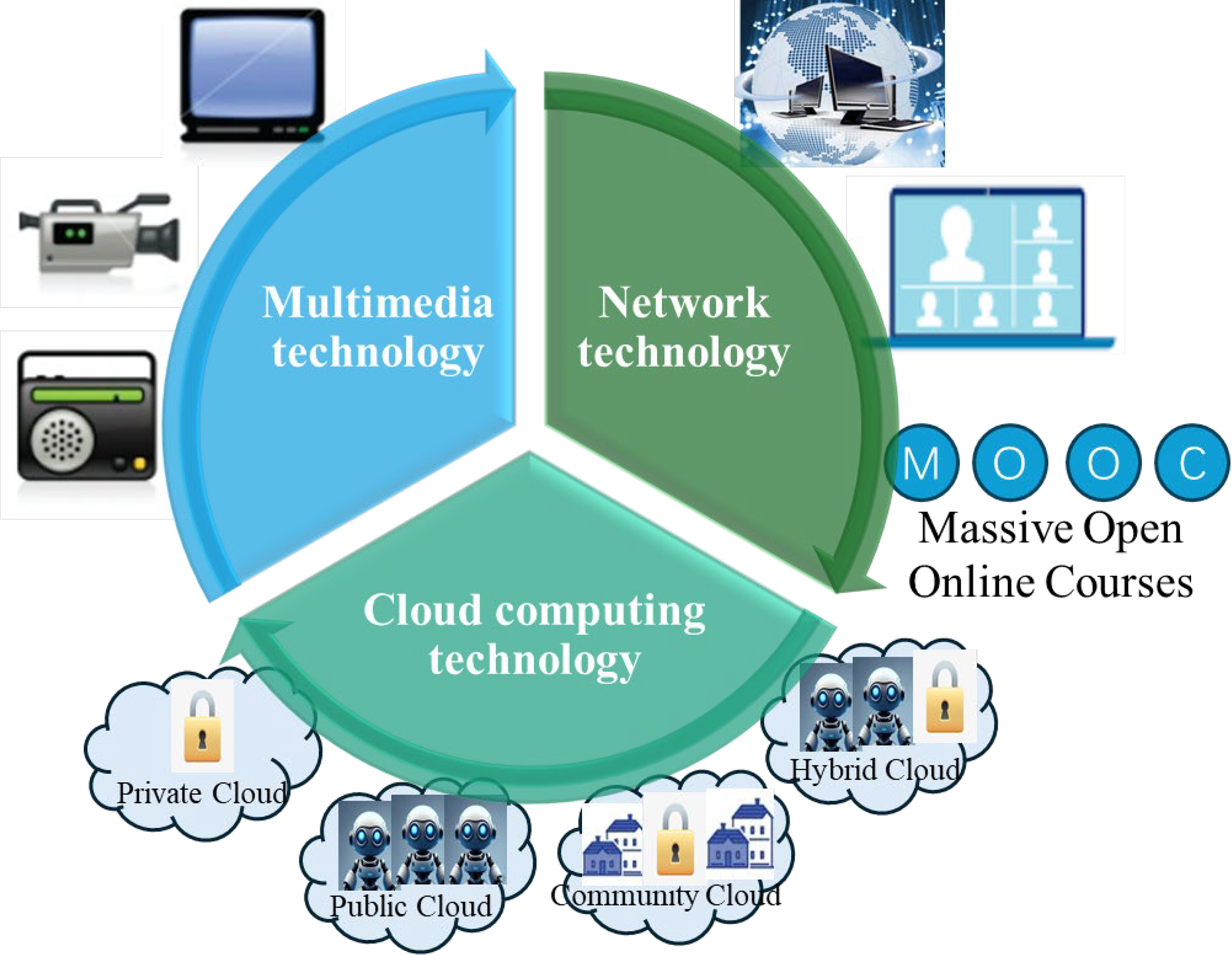
Multimedia technology, network technology, and cloud computing technology of modern IT.
Multimedia technology can not only enrich teaching content but also change teaching methods. The traditional teaching methods are usually characterized by one-way knowledge transfer by teachers, passive acceptance of information by students, and lack of interaction and feedback. Multimedia technology can enable two-way communication between teachers and students, and among students, and increase the interest and effectiveness of teaching activities. For example, teachers can design interesting questions through the multimedia question-and-answer system, assess students’ learning, and provide timely evaluation and guidance. Students can express their views and opinions through a multimedia voting system and participate in class discussions and decision-making. Teachers can also simulate the real situation through the multimedia simulation system, allowing students to practice and explore in the virtual environment to enhance the depth and breadth of learning (Marougkas et al., 2023). Guaña-Moya et al. report that the use of interactive technologies leads to a significant increase in student motivation (23%) and knowledge retention (31%) (Guaña-Moya et al., 2024).
In addition, multimedia technology can enhance teaching resources and quality by offering diverse and abundant information in various formats. Unlike traditional teaching resources, such as paper books, newspapers, and pictures, which are limited in quantity and form and may not suit the needs and interests of different students, multimedia technology can utilize the network, database, CD, and other storage and transmission media to provide teachers and students with a variety of text, image, sound, video, and other information (Guan et al., 2018). For instance, teachers can use the multimedia demonstration system to display animations, charts, videos, and other materials to improve the teaching effect and appeal. Students can use the multimedia retrieval system to query and obtain the information they need to broaden their knowledge and vision. Furthermore, multimedia technology can foster teaching innovation and quality by stimulating the creativity and imagination of teachers and students and providing new ideas and means for teaching. Traditional teaching methods, such as lectures, demonstrations, and exercises, often follow fixed patterns and steps that may lead to rigidity and uniformity of teachers’ and students’ thinking. Multimedia technology can enable teachers and students to create personalized courseware, games, tests, works, reports, presentations, and other products through the multimedia production and editing systems to enrich the teaching content and form and showcase their talent and style (Bereczki and Kárpáti, 2021).
The rapid social and technological changes in the contemporary world demand a shift from traditional education that focuses on knowledge transmission to quality education that emphasizes the holistic development of students. Multimedia technology is a powerful tool to facilitate quality education. It enables interdisciplinary, cross-cultural, and integrative teaching that transcends the rigid boundaries of the course. It allows for open, asynchronous, and personalized teaching that overcomes the temporal and spatial constraints of the classroom (Dwivedi et al., 2022). It fosters the creativity and innovation of teachers and students, and leads to original, unique, and valuable teaching outcomes. Therefore, multimedia technology is a promising and potent modern educational technology that offers new ideas, methods, means, and resources for education. It plays a significant role in enhancing education quality, advancing education equity, promoting education reform, and cultivating outstanding talents. However, multimedia technology also poses some problems and challenges, such as high equipment costs, difficult maintenance, complex operation, and uneven content quality (Dhawan, 2020). Therefore, multimedia technology can not only enhance the effectiveness and efficiency of education but it also poses some challenges and risks. In the context of environmental engineering design education, its application should be closely aligned with discipline-specific learning tasks. For example, multimedia tools such as process flow animations, 3D plant layout visualizations, and simulation videos can be used to illustrate complex systems such as wastewater treatment processes, air pollution control systems, and solid waste management facilities, thereby improving students’ conceptual understanding and spatial cognition (Huang, 2003; Paar, 2006). To use multimedia technology appropriately and responsibly, educators should consider the following principles: (i) align the selection and application of multimedia technology with the learning objectives and content, and avoid superficial or irrelevant use of technology; (ii) integrate multimedia technology with pedagogical methods, and avoid overreliance on technology or neglect of teaching strategies; (iii) recognize the impact of multimedia technology on teachers and students, and avoid the fallacy of technological determinism or technocentrism; (iv) update and improve multimedia technology continuously, and avoid obsolescence or inadequacy of technology. By following these principles, educators can maximize the positive role of multimedia technology in education and contribute to the development of a modern, efficient, and high-quality education system.
Network technology
Network technology (Fig. 1) enables the connection of terminals in different locations through wired or wireless means, facilitating information transmission and sharing. This technology overcomes the constraints of geography and time, allowing remote synchronous or asynchronous teaching activities, expanding teaching coverage and audience scope, enhancing communication and cooperation between teachers and students and among students, and diversifying teaching content and form (Fabriz et al., 2021). Network video conferencing system (NVCS) is a technology that enables real-time communication of video and audio signals over a network, either point-to-point or multipoint. NVCS can be used by teachers to deliver remote lectures or seminars and to interact with experts or peers from different regions or countries. This can enhance teachers’ professional knowledge and vision, increase teaching resources and collaboration networks, and improve teaching quality and effectiveness. Students can also join remote classes or activities through NVCS, and exchange or collaborate on projects with peers from different regions or countries. This can foster students’ learning interest and motivation, broaden learning resources and social networks, and improve learning skills and outcomes (Liu et al., 2022).
In addition, online course platforms or Massive Open Online Courses (MOOCs) are technologies that use the web to deliver online course content and services, enabling large-scale online education. Teachers can create and publish their own online courses using these technologies, or join online courses from other institutions or individuals (Bettiol et al., 2022). This can enhance teachers’ innovation and impact, broaden teachers’ audience and income, and improve teachers’ career development and satisfaction. Students can use these technologies for self-study or elective courses, or enroll in online courses offered by other institutions or individuals. This can increase students’ learning options and flexibility, extend students’ knowledge and skills, and improve students’ learning efficiency and performance. At the same time, online resource libraries or search engines are technologies that collect, store, retrieve, analyze, and display information using the network, which can enable the acquisition and utilization of massive information (Hussain, 2023). Teachers and students can access various types and levels of teaching materials, such as literature, data, images, videos, and software, from online resource libraries or search engines. This can improve teachers’ and students’ information literacy and analysis skills, diversify teachers’ and students’ information sources and references, and enhance teachers’ and students’ information processing and application skills.
Network technologies have broad and profound implications for education, offering new opportunities and challenges for teachers and students. However, they also demand new educational paradigms, models, methods, and assessments. Therefore, we need to continually explore and innovate to adapt to the changes that network technology brings to the basic education of environmental engineering design.
Cloud computing technology
Cloud computing technology offers various features, such as service, elasticity, scalability, low cost, and reliability, and can be classified into four basic types: public cloud, private cloud, community cloud and hybrid cloud (Fig. 1; Golightly et al., 2022). By virtualizing and integrating numerous computing resources distributed across different locations, cloud computing technology provides scalable services and resources on demand. This technology can lower the costs and challenges of teaching maintenance, enhance the utilization and security of teaching resources, enable centralized management and analysis of teaching data, and support personalized and intelligent teaching services. For example, teachers can use cloud storage services to store and back up teaching materials, use cloud computing platforms for big data analysis and mining, and use cloud application software for online production and editing. Students can use cloud desktops or virtual machines to access various operating systems and application software, use cloud databases or servers for data processing and program running, and use cloud collaboration tools for team collaboration and sharing. Teachers and students can also use the cloud education platform to obtain personalized learning resources and intelligent learning aids (Bhutoria, 2022).
Cloud computing technology can enhance the teaching of the basic course of environmental engineering design by increasing the efficiency, breadth, and innovation of the content. The main methods of applying cloud computing technology in this course are as follows: (i) building the operating environment of environmental engineering design software using virtual machines and containers from the cloud platform, enabling students to access and use them anytime and anywhere, without installing and configuring complex software; (ii) using online collaboration tools from the cloud platform to facilitate real-time communication and feedback between teachers and students, as well as teamwork among students, to improve teaching interaction and engagement; (iii) using big data analysis services from the cloud platform to process and analyze large-scale data involved in environmental engineering design, improve data processing capabilities and efficiency, and support data-driven design decisions; (iv) using AI services from the cloud platform to implement intelligent assistance functions in environmental engineering design, such as intelligent identification, intelligent optimization, and intelligent recommendation, improve design quality and efficiency, and stimulate students’ innovative thinking.
Cloud computing technology can be applied to the basic course of environmental engineering design to reduce teaching costs, save teaching resources, and dynamically adjust the allocation and use of computing resources according to teaching needs. This can avoid resource waste and idle, and reduce the maintenance and update costs of hardware equipment (Al-Jumaili et al., 2023). Moreover, cloud computing technology can improve teaching quality and enrich teaching content. It can enable teachers and students to access the latest environmental engineering design theories and methods, as well as the most advanced software tools and services, increasing the breadth and depth of teaching content. Furthermore, it can cultivate students’ ability, promote students’ development, enhance students’ mastery of the basic knowledge and skills related to cloud computing, improve students’ ability to analyze and solve complex problems, and foster students’ innovation awareness and team spirit. However, the application of cloud computing technology in the basic course of environmental engineering design also faces some challenges and problems, mainly in the following aspects: (i) Security and stability of cloud platform. The cloud platform may have risks such as data leakage, service interruption, and network delay, which may affect the teaching effect and user experience. Therefore, it is necessary to choose a reliable cloud service provider and take corresponding security measures and backup strategies. (ii) The costs and benefits of using cloud platforms. Cloud platforms typically charge based on usage, which can lead to increased teaching costs. Therefore, it is necessary to reasonably plan and manage the use of cloud resources and evaluate its impact and value on teaching effectiveness. (iii) The adaptability and training of teachers and students. Cloud platforms may require teachers and students to acquire and master new operating methods and skills, which can increase the workload and difficulty of teaching. Therefore, it is necessary to provide appropriate training and guidance, as well as sufficient practical opportunities and support for both teachers and students.
Cloud computing technology can enhance the efficiency and quality of teaching, as well as foster the skills and innovation of students, when applied to the basic course of environmental engineering design (Baharuddin et al., 2021). Some cloud-based teaching modes that support collaborative and data-driven design tasks have been proposed. For example, in a typical wastewater treatment plant design project, students can use cloud platforms to access shared datasets (e.g., influent water quality, flow rates), perform process simulations, and collaboratively develop design schemes in real time (Ngwenya et al., 2025). Such an approach enables distributed teamwork, version control of design outputs, and iterative optimization of engineering solutions, thereby closely mirroring real-world engineering workflows. However, this mode also introduces specific risks and challenges that require careful planning. Technological disparities remain a critical concern; unequal access to devices, high-speed internet, and specialized software may limit some students’ ability to fully participate in cloud-based design tasks (Farley and Burbules, 2022). In addition, the use of shared cloud environments for engineering data (e.g., project files, simulation results) raises concerns regarding data security, intellectual property, and privacy protection. Achieving an appropriate balance between technological advancement and data governance is therefore essential (Liu and Khalil, 2023). The integration of modern IT within educational frameworks holds substantial promise for augmenting learning outcomes and fostering equitable access (Roshanaei et al., 2023). Despite these challenges, cloud-based learning environments offer significant pedagogical advantages when tailored to the context of environmental engineering design. Personalized learning can be implemented by assigning differentiated design tasks or simulation parameters based on students’ backgrounds and progress. Interactive tools, such as process simulation software and virtual plant models, can enhance students’ understanding of complex systems and improve retention. Moreover, instructors can use cloud-based analytics to monitor students’ design processes (e.g., model iterations, parameter adjustments), enabling timely feedback and process-oriented assessment (Lo and Wong, 2023). To ensure effective implementation, several context-specific strategies are recommended. First, institutions should provide standardized access to essential design software and cloud resources to reduce inequities. Second, course design should integrate real-world engineering scenarios (e.g., wastewater treatment, air pollution control system design) to enhance authenticity and engagement. Third, clear protocols for data management, including data sharing, storage, and intellectual property protection, should be established. Finally, ethical considerations—such as informed consent, data privacy, and algorithmic transparency—must be embedded into both teaching practice and course content (Zhou, 2022). Overall, the integration of cloud computing with environmental engineering design education provides a powerful platform for collaborative, data-driven, and practice-oriented learning. However, its effectiveness depends on context-sensitive design, equitable access, and the alignment of technological tools with pedagogical objectives.
Practical Application of Modern IT in Environmental Engineering Design
Recent case studies have highlighted the practical application of modern IT in the field of environmental engineering design education. In one notable study within the ecological engineering curriculum, a systems-based pedagogical approach integrates ecological principles into engineering design. By incorporating multimedia simulations (e.g., GIS-based visualization, AR perspectives), students can engage with real-world scenarios, which may support the contextualization of concepts such as wetland restoration and the ecological impacts of interventions on biodiversity (Dale et al., 2021; Ler, 2023; Marzialetti et al., 2024; Yin et al., 2025). This comprehensive educational experience equips students with a nuanced understanding of ecological systems, enabling them to weigh environmental, economic, and social considerations while leveraging IT tools for sustainable design. Beyond ecological systems, modern IT has been widely applied in core environmental engineering domains. (i) In drinking water treatment and supply, process simulation software (e.g., EPANET and WaterCAD) allows students to model water distribution networks, optimize hydraulic performance, and assess water quality under varying operational conditions (Zhdyreva, 2019; Sidiropoulos et al., 2025). Through scenario-based learning, students can evaluate disinfection strategies, pipeline failures, and contamination risks, thereby enhancing their decision-making capabilities in ensuring safe and reliable water supply. (ii) In wastewater collection and treatment, IT tools such as GPS-X, BioWin, and digital monitoring platforms are used to simulate biological treatment processes, nutrient removal efficiency, and energy consumption (Cendan et al., 2026). Students can analyze real-time or historical operational data to optimize treatment performance, diagnose system inefficiencies, and design adaptive control strategies. These experiences bridge the gap between theoretical process design and practical plant operation. (iii) In the field of solid waste management, geographic information systems (GIS) and optimization algorithms are applied to design efficient waste collection routes, site selection for landfills, and recycling system planning (Kwikima and Ngole, 2025). By integrating spatial data analysis with environmental impact assessment, students can develop cost-effective and sustainable waste management strategies while considering policy and societal constraints. Furthermore, IT plays a critical role in addressing air pollution and global environmental challenges by enabling students to utilize atmospheric dispersion models (e.g., AERMOD) and data analytics platforms to simulate pollutant transport, evaluate emission control strategies, and assess impacts at regional and global scales, including climate change and carbon reduction pathways (Bayraktar and Mutlu, 2024). Data-driven approaches also enable the analysis of CO2 mitigation strategies in alignment with the United Nations Sustainable Development Goals, fostering a global perspective on environmental engineering solutions (Vintere, 2020). Another study focuses on sustainable product design, where IT-supported life cycle assessment tools are integrated into engineering education. By employing sustainability indicators, students are encouraged to redesign products with a holistic understanding of environmental, economic, and social dimensions. Comparative analyses of alternative solutions allow them to identify optimal strategies, enhancing both their analytical and strategic competencies (Esparragoza et al., 2018). Collectively, these case studies demonstrate that modern IT not only enhances conceptual understanding but also enables students to engage with complex, data-rich, and interdisciplinary engineering problems. By bridging theoretical knowledge with practical applications across water, wastewater, solid waste, and air pollution domains, these approaches can improve students’ readiness to tackle real-world environmental challenges and promote sustainable engineering practices (Lo, 2024).
In addition, in the dynamic landscape of educational technology, two prominent trends have emerged: AR and AI. AR seamlessly blends virtual elements with the real world, creating immersive environments that engage students and deepen their understanding. In the context of environmental engineering education, AR offers novel opportunities. Through interactive 3D models and simulations, students can explore complex concepts such as pollution dispersion, ecosystem dynamics, and sustainable infrastructure. Field trips, once limited by physical constraints, can now be transformed into captivating and memorable learning experiences (Solmaz et al., 2021). Concurrently, AI revolutionizes education by providing tailored learning experiences, streamlining administrative tasks, and enhancing teaching methodologies. Within environmental engineering, AI plays a pivotal role. Real-time monitoring of air and water quality, predictive modeling of environmental hazards, and resource optimization are all powered by AI algorithms. For instance, meteorological data can be harnessed to improve flood prediction and simulate pollutant dispersion patterns. By integrating AI into the curriculum, students are exposed to tools for data analysis, modeling, and decision-making, which may support the development of these competencies when appropriately scaffolded in instructional design (Nti et al., 2022; Konya and Nematzadeh, 2024). Therefore, the convergence of AR and AI holds immense potential for reshaping environmental engineering education. As students prepare to tackle the challenges of sustainable development, these technologies empower them with the tools needed to navigate a rapidly changing world.
Implementation of Modern IT in Environmental Engineering Design Teaching
Modern IT plays a vital role in enhancing the quality and efficiency, reducing the cost and risk, and achieving the intelligence, digitization, and visualization of environmental engineering design. However, the implementation of modern IT presents a dichotomy of benefits and challenges. The migration of data between legacy and new systems necessitates meticulous attention to data integrity, interoperability, and adherence to privacy standards to ensure a successful integration (Dawood et al., 2023). In addition, resistance to change among teachers and students remains a significant barrier, often arising from disruptions to established teaching and learning practices. This challenge can be mitigated through inclusive change management strategies, such as stakeholder participation in planning, targeted training, and continuous technical support. Another critical issue is the effective monitoring and evaluation of technology use. Continuous tracking of learning processes and system performance is essential to optimize digital tool utilization and to identify areas for pedagogical and technical improvement (Hamlaoui, 2021). To better contextualize these challenges, modern IT applications in environmental engineering design education can be broadly categorized into several key domains, including information management systems, computer-aided design (CAD), VR, and AI. These technologies, while offering significant pedagogical benefits, also introduce specific implementation challenges related to data governance, technical complexity, resource requirements, and instructional integration. Therefore, addressing these challenges requires not only technological solutions but also pedagogical alignment and systematic curriculum design. To provide a structured overview of the major applications of modern IT in environmental engineering design education, along with their corresponding benefits and challenges for both students and teachers, a summary is presented in Table 1.
Summary of Modern Information Technology Implementation in Environmental Engineering Design Education: Key Takeaways for Students and Teachers
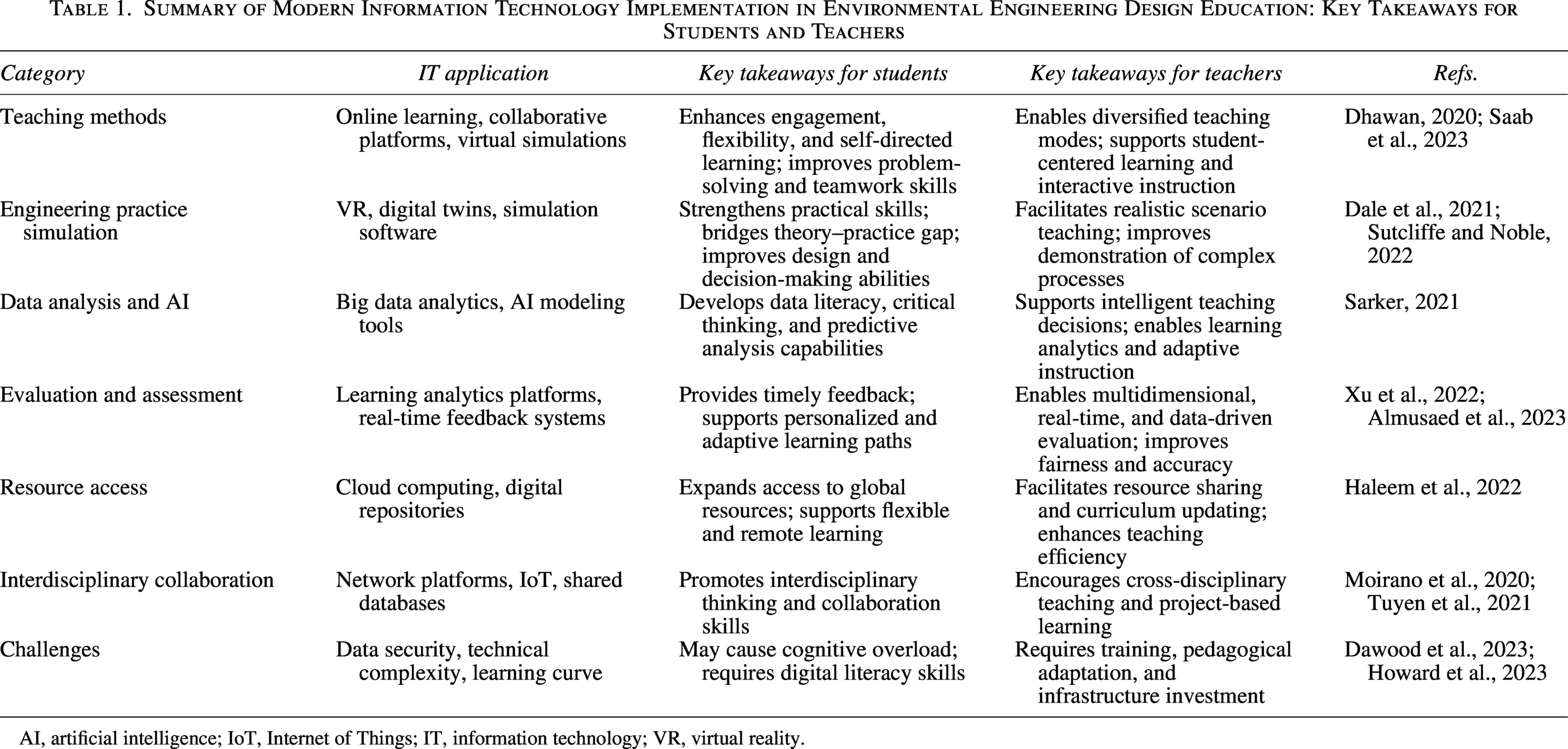
AI, artificial intelligence; IoT, Internet of Things; IT, information technology; VR, virtual reality.
Improve and optimize teaching methods
Environmental engineering design courses can benefit from various forms and modes of teaching methods enabled by modern IT, such as network teaching, distance teaching, collaborative teaching, inquiry teaching, and scene teaching. These methods can make the teaching process more flexible, diverse, and interactive. Modern IT can overcome the limitations of time and space, and facilitate remote synchronous or asynchronous teaching and learning, as well as broaden the teaching coverage and audience scope (Dhawan, 2020). Moreover, modern IT can enhance the communication and cooperation between teachers and students, as well as among students, and stimulate students’ initiative and creativity. To achieve student-centered learning and holistic skill development, educators must align evaluation strategies, learning objectives, and instructional methods. Assessments should not only gauge academic achievements but also consider students’ physical, emotional, social, and moral growth (Nowinski et al., 2021). Simultaneously, effective instruction ensures that students truly grasp the intended knowledge. By integrating these dimensions, education systems can foster holistic development and prepare students for the multifaceted challenges of the future. In addition, modern IT can create real or virtual scenario environments, simulate the actual environmental engineering design process, and foster students’ comprehensive quality and practical ability (Cho and Park, 2023; Saab et al., 2023; Martinelli et al., 2025). To effectively use modern IT to reform the teaching mode of the environmental engineering design course, the following aspects need to be explored and practiced:
The course of environmental engineering design is a comprehensive and highly practical course that aims to train students to master the basic principles, methods, and skills of environmental engineering design, as well as the ability to analyze and solve environmental engineering problems. The teaching objectives should highlight these aspects, while taking into account the needs and characteristics of students with different levels, majors, and backgrounds. The teaching content should keep pace with the development of the field of environmental engineering; reflect the latest theories, technologies, and cases; and demonstrate the scientific, cutting-edge, and practical nature of the discipline. The selection of appropriate teaching methods and means is also crucial for the success of the course. Modern IT provides a variety of teaching methods and means for environmental engineering design, but not all of them are suitable for all teaching scenarios and audiences. Therefore, it is necessary to choose the most suitable teaching methods and means according to the teaching objectives, contents, audiences, and conditions, considering various factors comprehensively. For example, network teaching or distance teaching can be adopted to teach basic knowledge and theories, using multimedia resources or online platforms to show and explain; collaborative teaching or inquiry teaching can be adopted for case analysis or design practice, using network tools or virtual platforms to communicate and collaborate; scenario teaching or gamification teaching can be adopted for scenario simulation or project evaluation, using simulation systems (e.g., sewage treatment plant online monitoring simulation system) or immersive environments to experience and evaluate. A scientific, reasonable, fair, and effective evaluation and feedback mechanism is essential for ensuring the quality and efficacy of teaching and learning, as well as for fostering continuous improvement and innovation. Evaluation refers to the methods and standards for assessing the outcomes of the teaching and learning process, while feedback refers to the ways and means for addressing and enhancing the issues identified by the evaluation. The evaluation and feedback mechanism should take into account the role and impact of modern IT in the teaching and learning process, as well as the roles and responsibilities of different stakeholders (such as teachers, students, and administrators). To enhance the role and potential of modern IT in environmental engineering design courses, we propose to improve the training and guidance of teachers and students, who are both the agents and the users of this technology. Teachers need to acquire the basic knowledge, operation methods, application cases, and teaching strategies of modern IT, so that they can design, implement, and evaluate their teaching with it. Students need to learn the basic knowledge, operation methods, application cases, and learning strategies of modern IT, so that they can use it for learning exploration, practical creation, and achievement display. This will improve their information literacy and skills, as well as their innovation awareness and ability.
Modern IT offers novel ideas and tools for environmental engineering design courses, which can enhance the efficiency and quality of teaching and learning and foster the innovation and development of pedagogy. However, modern IT is not a panacea, nor a substitute for conventional teaching methods, but a complementary and synergistic approach. Therefore, when applying modern IT to reform the environmental engineering design course, it is essential to adhere to certain principles and rules, to pay attention to humanistic care and value guidance in the teaching and learning process, and to achieve the organic integration of modern IT and environmental engineering design course (Li, 2021).
Reform and innovate teaching evaluation
Environmental engineering design courses are essential for training environmental engineering students, as they involve analyzing environmental problems, devising solutions, and designing projects. To enhance the quality and effectiveness of this course, a reasonable and effective teaching evaluation method is needed to monitor and provide feedback on the students’ learning process and outcomes. The conventional teaching evaluation method often emphasizes the assessment of the students’ knowledge and skills, but neglects the development and evaluation of their innovation, teamwork, and communication abilities. Furthermore, the conventional teaching evaluation method is usually unidirectional, static, and delayed, and it fails to timely understand the students’ learning situation and difficulties, and to offer them timely guidance and assistance (Khorsandi et al., 2012).
The teaching evaluation of environmental engineering design courses is influenced by the development and application of modern IT, which creates new features and trends. To enhance the teaching quality and outcomes of environmental engineering design courses, a scientific and rational evaluation system is required to monitor and provide feedback on students’ learning processes and results. Modern IT offers several benefits for the evaluation of environmental engineering design courses, such as:
A multidimensional and multilevel teaching evaluation system is proposed to overcome the limitations of the traditional teaching evaluation based on examination results. The traditional method neglects students’ performance in class participation, group cooperation, project implementation, etc., which cannot fully reflect students’ learning outcomes and ability levels. By using modern IT, such as network platforms, intelligent devices, big data analysis, and other means, students’ learning data in different aspects and stages can be collected and processed to form a comprehensive teaching evaluation index system (Xu et al., 2022). The system includes process evaluation, comprehensive evaluation, self-evaluation, peer evaluation, teacher evaluation, and so on. This can make the teaching evaluation more comprehensive, objective, and fair, and better stimulate and cultivate students’ motivation, creativity, and collaboration. In addition, educators seeking a comprehensive assessment of student performance can employ a combination of direct and indirect measures. Direct measures encompass various aspects, including seatwork, quizzes, research reports, case study analyses, and oral presentations. These tangible assessments provide insight into individual student progress. In addition to direct measures, educators can leverage indirect indicators to gain a broader perspective. These include course evaluations, student surveys, retention rates, and alumni feedback. By examining these multifaceted data points, institutions can better understand the overall effectiveness of their educational programs (Cornell University, 2024). To achieve real-time, dynamic, and feedback-based teaching evaluation, traditional methods that are conducted after the course completion are inadequate. They have a long-time span, making it difficult to identify and address problems promptly and to provide timely guidance and incentives to students. Modern IT can monitor and record students’ performance in classroom participation, group collaboration and project implementation through network platforms, intelligent devices, and big data analysis. It can also dynamically generate and update teaching evaluation reports and provide immediate feedback and suggestions to students and teachers. This way, teaching evaluation can be real-time, dynamic, and feedback-based, allowing for timely adjustments of teaching strategies and methods, and facilitating students’ progress and improvement (Almusaed et al., 2023; Flores, 2023). To achieve quantitative, standardized, and scientific teaching evaluation, modern IT is essential. Traditional teaching evaluation methods often rely on subjective judgment or simple scale scoring, which lack unified standards and norms and are prone to bias or inconsistency. By contrast, modern IT can utilize network platforms, intelligent devices, big data analysis, and other tools to quantify, standardize, and scientifically process students’ learning data. However, the pursuit of standardization and objectivity in assessments via contemporary IT is fraught with challenges. Subjectivity constitutes a significant obstacle, as biases may be inadvertently introduced by human evaluators. In addition, cultural differences can influence the interpretation of standardized benchmarks. Technological constraints may also impede the uniformity of measurements. Furthermore, the inflexibility of stringent standards may not accommodate contextual subtleties (Williamson and Piattoeva, 2019). To surmount these issues, stringent governance structures, perpetual optimization, and cognizance of inherent biases are imperative (Ahlemann et al., 2023). Meanwhile, quantitative indices play a crucial role in assessing program success. Specifically, the relevance index [RI, Eq. (1)] is defined as the weighted average of alignment scores between student-related indicators and program objectives and contextual needs; the efficiency index [EI, Eq. (2)] is defined as the ratio of outputs to inputs; the effectiveness index [EFI, Eq. (3)] is defined as the proportion of achieved objectives relative to the intended targets (Lamprousis and Golfinopoulos, 2025); the impact index [II, Eq. (4)] is defined as the weighted sum of long-term outcome indicators; and the sustainability index [SI, Eq. (5)] is defined as the ratio of sustained benefits over time (The Organisation for Economic Co-operation and Development (OECD), 2019). All indices need to be normalized to ensure comparability across different evaluation dimensions. These indices contribute to a holistic understanding of student achievement and program effectiveness, facilitating evidence-based decision-making in education (Fisher, 2010). Moreover, it can employ statistics, AI, machine learning, and other techniques to develop and optimize teaching evaluation models and algorithms, thereby enhancing the accuracy and effectiveness of evaluation (Sarker, 2021): To achieve individuation, differentiation, and adaptability in teaching evaluation, modern IT can be utilized to overcome the limitations of traditional methods. Traditional teaching evaluation often adopts a uniform approach that neglects the individuality and diversity of students and fails to accommodate the needs and characteristics of different learners. By using network platforms, intelligent devices, big data analysis, and other tools, modern IT can conduct personalized, differentiated, and adaptive analysis of students’ learning data, and generate and deliver customized teaching evaluation schemes and suggestions based on students’ background, interest, ability, progress, and other factors (Major et al., 2021). In addition, the implementation of personalized and adaptive evaluation schemes, which align with pedagogical objectives, necessitates a multifaceted approach. Initially, it is imperative to evaluate learner characteristics using both direct measures, such as task responses, and indirect measures, including clicking behavior (Cornell University, 2024). Subsequently, instructional adaptations should be made based on these assessments, with alterations to content, pacing, or delivery mode. The incorporation of adaptive testing is advisable; this approach utilizes technology to provide instantaneous, individualized feedback. Furthermore, the utilization of crowdsourced web tools can bolster personalized education by offering tailored learning pathways and resources. It is essential to continuously monitor the efficacy of these educational adaptations and refine them to cater to the unique requirements of each learner (Burr et al., 2023; Hadi Mogavi et al., 2024). This can help students discover the most appropriate learning path and goal for themselves.





In conclusion, the advent of modern IT has created new possibilities and challenges for the assessment of environmental engineering design courses, which demand continuous exploration and innovation to align with the educational development goals. We should leverage the benefits of modern IT to build a comprehensive, multilayered, real-time, dynamic, feedback-oriented, quantitative, standardized, scientific, personalized, differentiated, and adaptive evaluation system for the teaching quality and outcomes of environmental engineering design courses. This would provide effective assurance and enhancement for the pedagogical excellence and effectiveness of these courses. Meanwhile, in the domain of environmental engineering education, the incorporation of modern IT is crucial for providing real-time feedback, an essential element for effective pedagogy. Interactive simulations can facilitate the modeling of environmental processes, such as hydrodynamics and contaminant transport, with immediate feedback that enhances educational outcomes. Virtual laboratories serve as platforms for conducting experiments with design variables, offering dynamic feedback upon manipulation. Peer review systems can promote a cooperative learning atmosphere, enabling the exchange of design ideas and fostering real-time discussions that support iterative improvement (Stenseth et al., 2022). AI-driven automated grading systems rapidly assess project submissions based on criteria including sustainability, safety, and efficiency. Moreover, live design competitions, like hackathons, inspire collective problem-solving on pragmatic issues, with prompt feedback fostering innovation and analytical thinking (Wallwey et al., 2022). These pedagogical approaches collectively reinforce active learning, permitting students to refine their designs and receive timely advice, thus augmenting the learning experience in environmental engineering design curricula.
In addition, in addressing the challenges associated with the integration of technology in educational settings, strategic approaches are essential. It is recognized that learners may encounter a steeper learning curve when adapting to new technologies (Howard et al., 2023). Therefore, it is advisable to commence with simpler tools and progressively introduce more complex features. Scaffolding and support should be provided during the initial stages to assist learners in developing confidence and competence. While technology can augment learning experiences, an overreliance should be avoided (Ghamrawi et al., 2024). A balanced integration of digital tools with traditional methods, such as face-to-face interactions and hands-on activities, is recommended. This balance encourages critical thinking and problem-solving skills that extend beyond the use of technology. Furthermore, explicit training in digital literacy skills is paramount. Learners should be educated on how to proficiently navigate software, critically evaluate online information, and safeguard their privacy, thereby fostering a comprehensive understanding of technology. Regular feedback from learners regarding their experiences with technology should be solicited, and reflection on the advantages and limitations of specific tools should be encouraged. Such feedback is invaluable for refining instructional strategies and adapting technology use. Assessment methods should be diversified beyond digital quizzes and tests to include project-based assessments, oral presentations, and collaborative activities, thus evaluating learners’ comprehension rather than their technical skills alone. Lastly, a balance between virtual and face-to-face interactions must be maintained to enhance learning and mitigate the isolation that can result from technology use, which is also the value of education (Sutcliffe and Noble, 2022). Successful technology implementation in education necessitates meticulous planning, continuous evaluation, and adaptability to cater to individual needs.
Implementation of Modern IT in Environmental Engineering Design Coursework and Provision of Facilities
Modern IT can enhance the form and content of environmental engineering design courses, as well as their quality and outcomes. This has profound implications for the course itself and its related aspects.
Improve the adaptability and flexibility of the course
The environmental engineering design course should respond to the evolving social, economic, and scientific contexts by updating and optimizing its content and resources to suit different students’ needs and levels. Modern IT offers effective support and assistance for this course, enabling it to achieve dynamic updating, open sharing, and wide dissemination. Modern IT can be applied to environmental engineering design in various ways, such as (i) developing a web-based teaching platform that integrates diverse teaching resources and tools, such as courseware, video, case, simulation, discussion, and test, to offer students rich learning materials and interactive modes (Capone and Lepore, 2022); (ii) adopting a project-oriented teaching mode that divides the environmental engineering design process into multiple subtasks, which are completed by students in groups, and submitted, displayed, and evaluated on the online platform. This can enhance students’ practical skills and teamwork spirit, as well as stimulate their innovative awareness and active learning attitude; (iii) designing project content and requirements with different levels of difficulty and depth according to the characteristics of students from different majors and levels, so that each student can find their own learning objectives and challenges. This also enables teachers to flexibly manage and guide the teaching process, and adjust their teaching strategies and interventions in time based on the progress and feedback of students; (iv) utilizing the advantages of the online platform to establish connections and collaborations with domestic and foreign experts, enterprises, and institutions in related fields and invite them to participate in project guidance, review, exchange, and other activities, providing students with a broader perspective and more diversified resources. Moreover, the outcomes of this course will be publicly displayed to society, and accept the evaluation and feedback from various aspects, to increase the social impact and recognition of this course. This can improve the adaptability and flexibility of environmental engineering design courses.
Improve practical skills and comprehensive quality
The aim of the environmental engineering design course is to enable students to acquire the fundamental principles and methods of environmental engineering design, and to develop their practical skills and comprehensive qualities. Modern IT can facilitate the achievement of this aim by enhancing the following aspects of the course teaching: (i) The interaction and participation of the course. Teachers can use online teaching platforms, such as MOOCs and microclasses, to offer various teaching resources, such as video lectures, case studies, expert interviews, and online quizzes, which allow students to learn and review at their own pace and according to their own needs (Ogunyemi et al., 2022). Moreover, the online teaching platforms also enable convenient communication among teachers and students, and among students themselves, through forums, questions and answers, group discussions, etc., which foster the exchange and collaboration of the course, and stimulate the students’ motivation and creativity. (ii) The collaboration and team spirit of the course. Teachers can employ project collaboration tools such as Google Docs, Microsoft OneDrive, and Trello to organize students into groups to work on environmental engineering design projects (McCool and Mitchell, 2024). With these tools, students can share and edit documents, tables, charts, etc. in real time, monitor project progress and task allocation, conduct instant discussion, and feedback, and improve the effectiveness and quality of team collaboration. (iii) Enhance the situational and experimental aspects of the course. Using scenario simulation software, such as Revit and ArcGIS CityEngine, teachers can create realistic or virtual environmental engineering design scenarios (Edwards et al., 2015), enable students to perform design experiments in simulated cities or ecosystems, observe the environmental impact and effect of design alternatives, and foster students’ creative thinking and problem-solving skills. In conclusion, modern IT can provide a powerful support for the environmental engineering design course, assist in teaching the theoretical knowledge and methods of environmental engineering design, develop students’ practical skills and comprehensive competencies, and improve the teaching outcomes and satisfaction of the course.
Improve the application of the course
Modern IT can provide new teaching methods and tools for environmental engineering design courses, such as CAD, computer-aided manufacturing (CAM), computer-aided engineering (CAE), and building information modeling (Berselli et al., 2020). These technologies can make the teaching content more vivid, engaging, and effective. With modern IT, environmental engineering design can achieve high-speed, high-precision, and high-quality results, improve the design level and efficiency, and realize the visualization, dynamism, and interactivity of the design process. Moreover, modern IT can enhance the comprehensibility and operability of the design, and enable the integration, intelligence, and automation of the design, thus improving the competitiveness and innovation of the design. For instance, (i) CAD can improve the design efficiency and accuracy, avoid human errors and redundant work, and facilitate the adjustment and optimization of the design schemes. For example, in the design of water treatment plants, CAD software can be used to draw various diagrams and perform water balance, hydraulic calculation, and other analyses. (ii) CAM can improve the drawing efficiency and quality, save paper and ink, and facilitate the storage and transmission of graphic files. For example, in the design of solid waste landfills, CAM software can be used to generate or convert various CAD graphic files, and output them to a plotter to produce standardized construction drawings. (iii) CAE enhances the efficiency and accuracy of analysis and simulation, broadens the scope and depth of analysis and simulation, and provides more information and evidence. For instance, in the design of air pollution control, CAE software can be applied to perform numerical simulation of pollutant emission, diffusion, transport, deposition, and other processes to predict the concentration distribution and impact range of pollutants (Sola-Guirado et al., 2022).
In addition, environmental engineering design can benefit from various applications of modern IT, such as (i) To ensure the air quality standards during the Beijing Olympic Games, Beijing implemented several measures, such as restricting vehicles, halting construction, and closing pollution sources. The Beijing Municipal Environmental Protection Bureau used the Air Quality Model, adapted to the local conditions of Beijing, to forecast and evaluate the air quality of Beijing during the Olympic Games, and adjusted the relevant measures accordingly (Xing et al., 2011). (ii) Environmental problems can be analyzed rapidly, accurately, and comprehensively using GIS and remote sensing technology, providing scientific evidence for engineering design (Pei et al., 2021). (iii) Environmental engineering programs can be evaluated and compared in various aspects using computer simulation and optimization technology, offering effective support for engineering decision-making (Pan et al., 2023). These information technologies can not only enhance the quality and efficiency of environmental engineering design but also foster students’ innovative ability and comprehensive quality. To better synthesize the key dimensions of modern IT implementation in environmental engineering design coursework and facilities, including their implications for both students and teachers, a summary is provided in Table 2.
Key Takeaways of Modern Information Technology Implementation in Environmental Engineering Design Coursework and Facilities
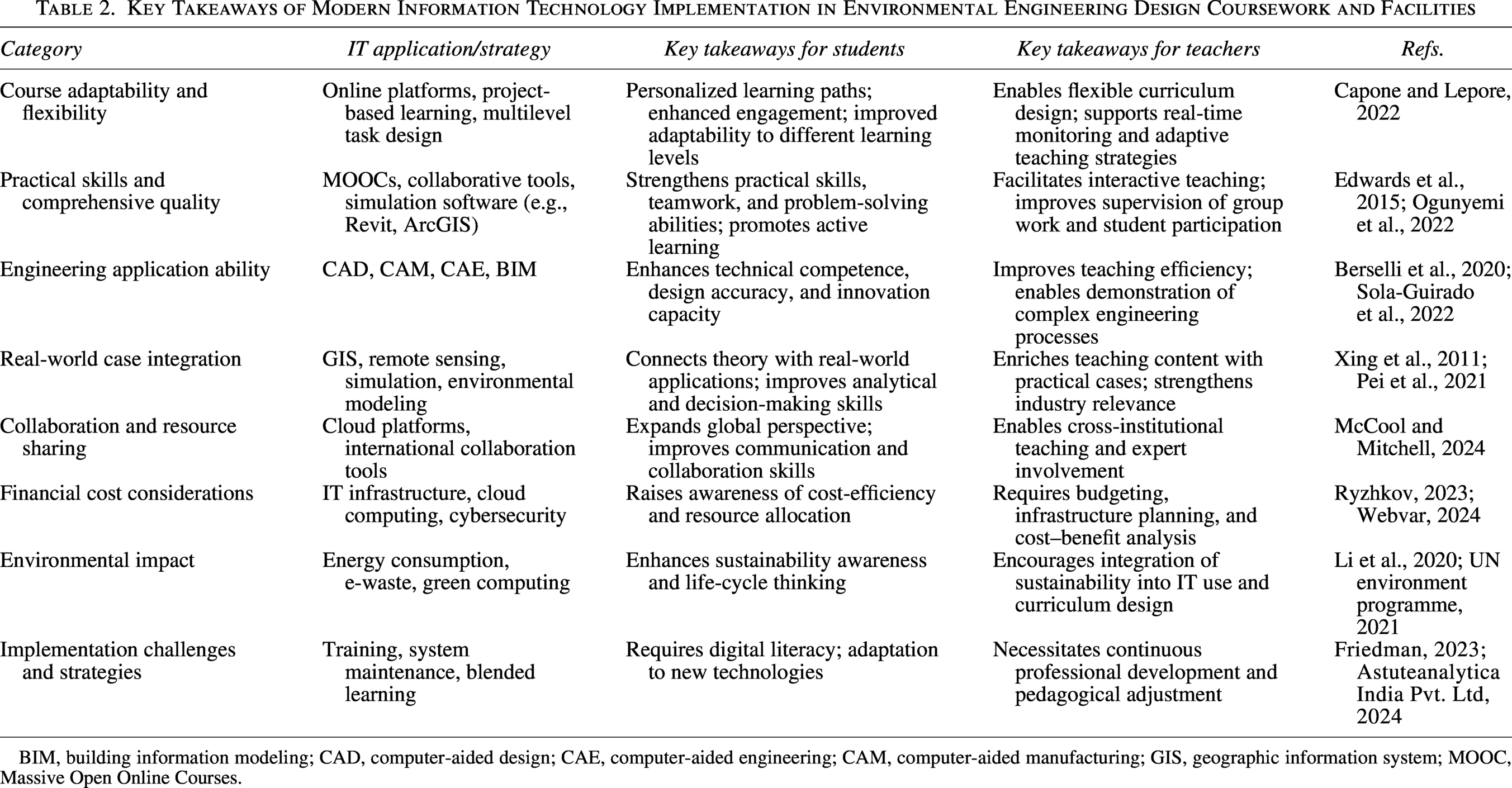
BIM, building information modeling; CAD, computer-aided design; CAE, computer-aided engineering; CAM, computer-aided manufacturing; GIS, geographic information system; MOOC, Massive Open Online Courses.
Financial costs and environmental impact of modern IT use
The adoption of modern IT in environmental engineering education entails substantial financial and environmental considerations. On-premises deployments often require significant initial investments, including infrastructure design, hardware acquisition, and system integration. For instance, customized IT infrastructure platforms may cost between $100,000 and $500,000 (Ryzhkov, 2023). In addition to these upfront costs, long-term expenditures related to maintenance, upgrades, and energy consumption can be considerable, often exceeding initial expectations. These financial demands are further illustrated by large-scale energy use and market trends. For example, in the United States, data centers in 2020 are project to consumed ∼73 billion kWh (Shehabi et al., 2016), highlighting the energy-intensive nature of digital infrastructure. While virtualization offers long-term cost-saving potential, it requires substantial upfront investment. Operating systems that fall behind in updates can degrade performance, and running new software on outdated hardware presents challenges. On-premises databases, although essential, often come with high costs and binding agreements with vendors. Notably, cloud spending is surging, with the software and IT services sectors poised for double-digit growth in 2024, driven by cloud-related expenditures. Public cloud service spending is expected to increase by 20.4% in 2024 due to both price adjustments and increased utilization (Webvar, 2024). Furthermore, cybersecurity investments are on the rise, with ∼80% of chief information officers planning to augment spending on cyber/information security in 2024 (AstuteAnalytica India Pvt. Ltd., 2024). Effective infrastructure management remains crucial for cost reduction and resource optimization.
Beyond financial considerations, the environmental implications of modern IT are equally significant. The production of digital devices relies on carbon-intensive processes, while data centers contribute substantially to electricity consumption and greenhouse gas emissions (UN Environment Programme, 2021). Furthermore, rapid technological obsolescence generates increasing volumes of electronic waste, exacerbating resource depletion and environmental pollution (Luderer et al., 2019; Li et al., 2020). Taken together, modern IT adoption is not a neutral or inherently beneficial process; rather, it entails trade-offs that require careful management. For environmental engineering design education, this underscores the need to move beyond a sole focus on technological advancement toward a more balanced approach that integrates cost-awareness and sustainability considerations. Accordingly, educators should promote resource-efficient digital practices, foster critical evaluation of technology use, and incorporate concepts such as green computing and life-cycle thinking into the curriculum.
Challenges and Limitations of Integrating Modern IT into Education
The integration of modern IT into education represents a critical pathway toward modernizing educational systems, advancing equity, and enhancing instructional quality. However, the process remains fraught with significant challenges, involving digital inequality, disparities in infrastructure, inadequate teacher preparedness, curricular rigidity, and institutional inertia. A central concern is digital equity. As educational resource allocation increasingly relies on technological platforms, disparities in access to digital tools and network connectivity directly influence students’ learning opportunities and outcomes (Meng et al., 2024). In economically disadvantaged regions, many households lack basic digital devices such as computers or tablets, and some communities face inconsistent electricity or internet access. Furthermore, digital literacy varies substantially between families; some students and parents lack even rudimentary computer skills or the ability to navigate digital learning platforms. These disparities deepen the existing “technology gap,” entrench educational inequality, and limit long-term opportunities for disadvantaged students in the digital era. Meanwhile, infrastructural imbalances further hinder modern IT deployment in education. While urban schools are progressively establishing smart classrooms and networked campuses, many rural or underresourced schools struggle with outdated equipment, incomplete connectivity, and frequent power interruptions. The absence of dedicated technical support exacerbates these issues—malfunctions often remain unresolved, leading to disrupted teaching and reduced instructional efficiency. Hardware upgrades and maintenance are frequently delayed due to budget constraints or administrative bottlenecks, widening the digital divide between regions (Padte, 2024).
Curriculum inertia also poses a significant barrier. Traditional curricula, structured around textbooks and teacher-led delivery, are typically linear and closed, lacking the flexibility, interactivity, and personalization required in digital learning environments. In many cases, digitization efforts simply replicate existing content without redesigning learning objectives, activities, or assessments to align with new modalities. Digital learning platforms often offer poor content quality or limited interactivity, failing to engage students meaningfully. To address these challenges, systematic curriculum redesign is required. First, learning objectives should be redefined based on OBE principles, explicitly incorporating competencies such as problem-solving, interdisciplinary integration, digital literacy, and collaborative innovation (Alwakid et al., 2025). Second, teaching activities should shift from passive knowledge transmission to project-based and PBL, supported by digital tools such as simulation platforms, virtual labs, and collaborative design environments (D’Elia et al., 2025). Third, digital content should be modularized and interactive, integrating multimedia resources, real-world case studies, and adaptive learning pathways to enhance personalization and engagement. Equally important is the reform of assessment systems. Meanwhile, assessment systems remain tethered to conventional written tests, overlooking competencies such as creativity, collaboration, and digital literacy that are essential in a technology-enhanced content (Mavri et al., 2024). This misalignment between technological innovation and curricular frameworks undermines the transformative potential of digital education. Therefore, conventional written examinations should be complemented or replaced by diversified evaluation approaches, including process-based assessment, peer evaluation, portfolio assessment, and project deliverables, which better capture students’ creativity, teamwork, and practical competencies. Furthermore, learning analytics embedded in digital platforms can be leveraged to provide real-time feedback and support continuous improvement (Khor and K, 2024). In addition, institutional resistance remains a major impediment. Despite the proliferation of government policies promoting digital education, some lack coherence, long-term vision, or effective implementation (Tremblay et al., 2023). Some regions prioritize infrastructure development over pedagogical effectiveness, emphasizing visible outcomes over substantive impact. School leadership is frequently ill-equipped to manage technological transitions, leading to fragmented applications and weak cross-departmental coordination. Furthermore, data privacy and ethical concerns surrounding educational digitalization remain unresolved (Berson et al., 2025). Mechanisms to protect student data and ensure legal compliance are still underdeveloped, underscoring the urgent need for regulatory clarity. Therefore, integrating modern IT into education constitutes not merely a technological shift but a fundamental transformation of educational systems, ideologies, and practices, which demands a holistic, multidimensional strategy. Only through the concurrent advancement of educational philosophy, teacher professional development, curricular innovation, and institutional reform can the full potential of educational informatization be realized—promoting equity, enhancing quality, and equipping learners for the demands of modern education.
Conclusions and Perspectives
Modern IT provides novel approaches for environmental engineering design courses by enriching teaching content and practice while enhancing flexibility and efficiency. As discussed in this study, the integration of IT enables digitalization, visualization, intelligence, and collaboration of the design process, thereby improving design quality and fostering students’ innovation and comprehensive competencies. At the same time, the application of IT also introduces challenges, including issues related to data security, intellectual property, and the transformation of teachers’ roles. These challenges highlight the need for appropriate pedagogical adaptation and responsible use of technology in educational contexts. As previously emphasized, educators are increasingly required to act as facilitators and collaborators in technology-enhanced learning environments, working alongside students to support innovation and problem-solving. Furthermore, this study highlights that effective integration of IT should align with pedagogical objectives and support student-centered learning. Approaches such as collaborative learning, problem-oriented tasks, and technology-supported design practices—play a critical role in enhancing students’ engagement and practical abilities. Despite the increasing role of technology, the human element remains essential in ensuring meaningful learning experiences. Looking ahead, environmental engineering design courses are expected to further evolve with the continued development of IT. Future efforts should focus on optimizing the integration of technology with established teaching practices, maintaining educational quality, and ensuring balanced and effective application. By building on the approaches discussed in this study, IT can continue to serve as a key driver for innovation in environmental engineering education.
Authors’ Contributions
Y.W.: Conceptualization, supervision, funding acquisition, methodology, formal analysis, investigation, writing—original draft, review, and editing.
Footnotes
Data Availability Statement
The data supporting the findings of this study are available within the article.
Author Disclosure Statement
The authors declare that they have no known competing financial interests or personal relationships that could have appeared to influence the work reported in this article.
Funding Information
No funding was received for this article.