






Abstract
Intensive Therapeutic Lifestyle Change Programs have shown promise in improving cardiometabolic risk factors over short durations. This pilot study evaluated the effectiveness of a 12-day residential wellness program in rapidly improving selected cardiovascular disease risk factors. Eighteen participants attended a 12-day residential wellness camp emphasizing plant-based nutrition, structured physical activity, and lifestyle education. Baseline and post-intervention measurements included anthropometrics, blood pressure, lipid profiles, fasting glucose, and fitness assessments. HbA1c was measured at baseline. Paired t-tests evaluated changes in biomarkers, and Hedges’ g effect sizes were calculated. Sixteen participants completed the program. Significant reductions (P < 0.05) occurred in systolic and diastolic blood pressure, body mass index, and total cholesterol, with medium to large effect sizes. Triglycerides and LDL-C demonstrated nonsignificant reductions. One-mile walk time improved significantly. Three participants reduced/discontinued diabetes medications, and four adjusted hypertension medications. Participation in a 12-day residential wellness program resulted in meaningful improvements in selected cardiovascular risk factors and functional fitness outcomes. Medication reductions highlight the potential of short-term intensive lifestyle interventions to rapidly improve cardiometabolic health. Larger, controlled studies with follow-up to assess sustainability of outcomes are warranted to confirm these findings.
Keywords
“The 12-day residential wellness program led to significant improvements in multiple selected CVD risk factors, even as some participants reduced their medications for diabetes and hypertension.”
Introduction
Cardiovascular disease (CVD) remains a leading cause of morbidity and mortality worldwide. Intensive Therapeutic Lifestyle Change Programs (ITLCPs), including residential and community programs focusing on diet and physical activity, significantly reduce CVD risk factors in both the short and long term. 1 McDougall et al reported that a 12-day program emphasizing a very low-fat vegan diet and exercise resulted in significant reductions in body mass index (BMI), total cholesterol (TC), and low-density lipoprotein cholesterol (LDL-C) levels in participants. 2 Recent research by Davis et al highlighted the effectiveness of a 14-day lifestyle intervention program in reducing biomarkers for metabolic syndrome in a high-risk population. 3 DeRose et al observed a significant drop in homocysteine levels after just 1 week on a vegan diet. 4
Longer-duration residential ITLCPs have demonstrated more substantial results. Ornish et al found that a 24-day program incorporating stress management and dietary changes improved ischemic heart disease biomarkers. 5 Similarly, Bloomer et al showed a 21-day “Daniel Fast,” which included ad libitum intake of plant-based foods, improved multiple biomarkers, including TC, systolic blood pressure (SBP), and diastolic blood pressure (DBP). 6
Despite evidence supporting the effectiveness of short-term ITLCPs, there are no programs with recently published data in peer-reviewed journals. This pilot study aimed to evaluate the effectiveness of a 12-day residential wellness program in rapidly improving selected CVD risk factors.
Methods
Study Approval
This study was approved by the Ohio University Institutional Review Board (Protocol 22-X-77).
Recruitment of Participants
During orientation of the 12-day residential wellness camp (August 7-18, 2022), participants were invited to consent to the use of their data for this study. The research team explained the study and answered questions during the initial educational session. Participation was voluntary, and individuals were assured that their decision to participate would not affect their camp experience. Written consent forms were provided and collected anonymously. Opportunities for questions were offered both in group settings and individually.
Program Description
The wellness program was conducted in Huttonsville, West Virginia, by the Mountain View Conference of the Seventh-day Adventist (SDA) Church. The program cost was $999, with discounts and scholarships available for those with limited finances.
Participants with physical limitations were provided with personalized exercise programs to suit their individual needs. Daily afternoon pool aerobics sessions were available, and gentle post-meal walks were encouraged to promote physical activity and well-being.
Data Collection
Medical Monitoring
Data Analysis
Descriptive statistics were calculated for each dependent variable at baseline and post-intervention. Paired sample t-tests were conducted to assess changes over time, with an alpha level set at 0.05. Hedges’ g effect size was calculated for each variable and interpreted as small (≤0.39), medium (0.40-0.69), or large (≥0.70).
Results
Participant Characteristics
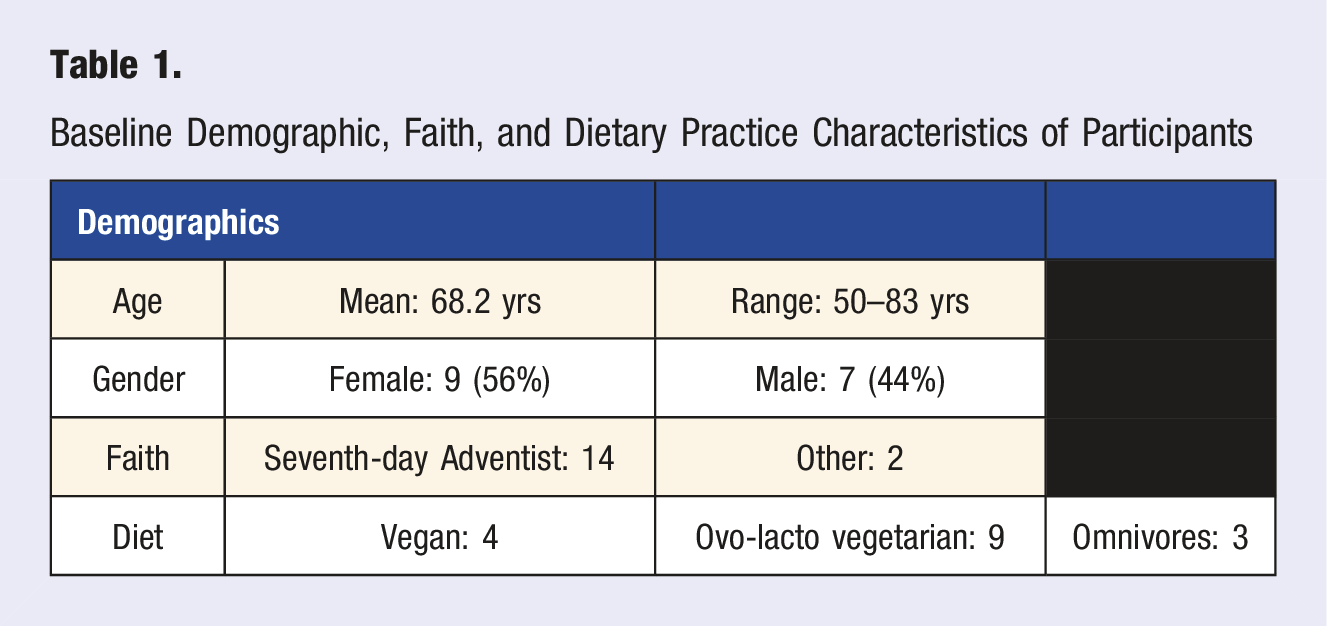
Baseline Demographic, Faith, and Dietary Practice Characteristics of Participants
Medication changes and fasting blood sugar outcomes by baseline HbA1c category.
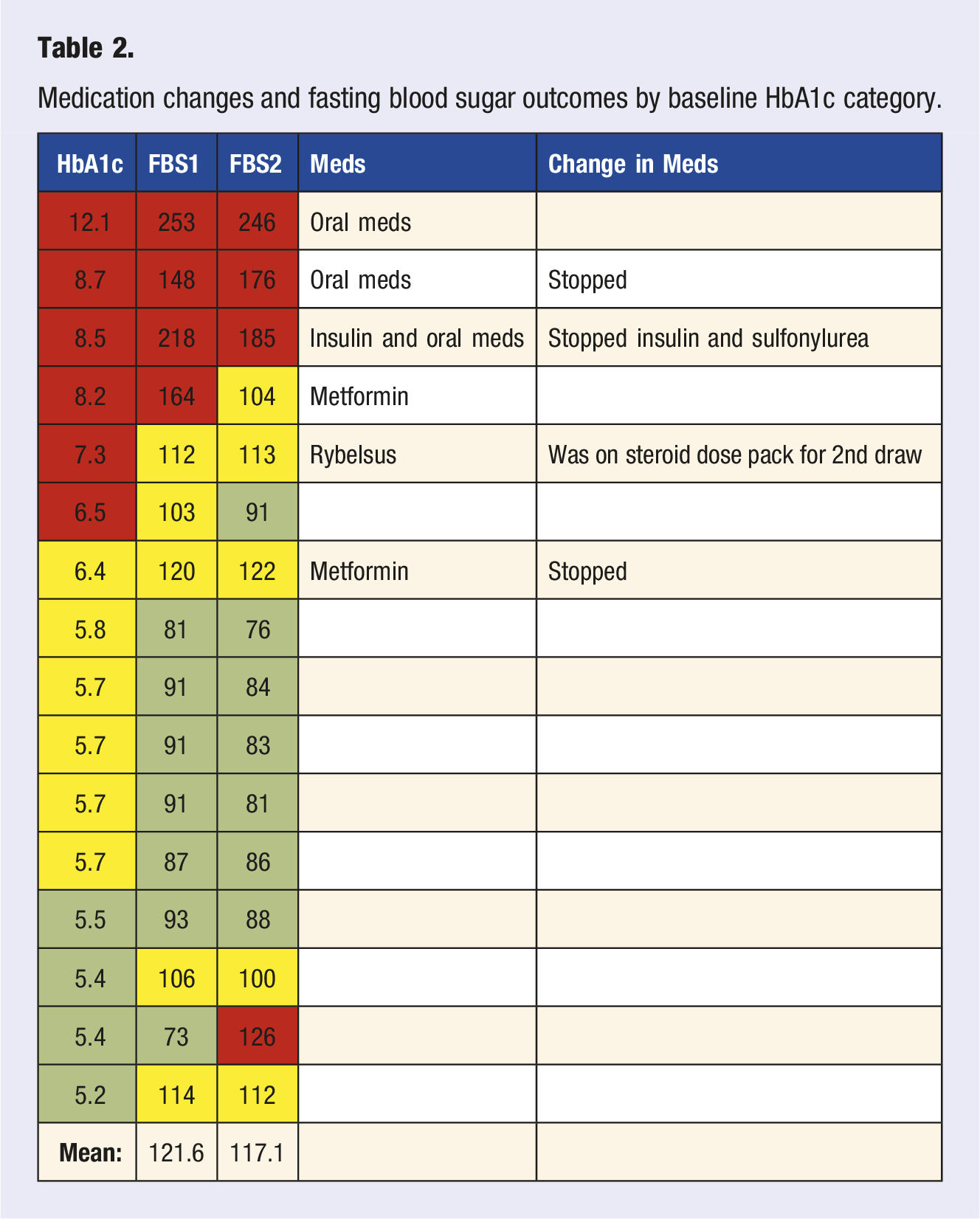
Table 2 summarizes medication changes and nonsignificant trends in change in fasting blood sugar stratified by baseline HbA1c status. Shading represents glycemic categories: red = diabetes, yellow = prediabetes, green = normal. Participants with elevated HbA1c showed reductions in fasting blood sugar and medication use, indicating possible early metabolic improvements. The isolated FBS2 value of 126 mg/dL occurred in a participant with a previously normal fasting glucose (FBS1) and no baseline impaired glucose regulation. This value possibly reflects transient physiological variation (eg, stress response, sleep disruption, or dawn phenomenon) or measurement variability, rather than a sustained change in glycemic status.
Biomarker Outcomes
Pre–post Changes in Clinical and Functional Outcomes With Effect Sizes.
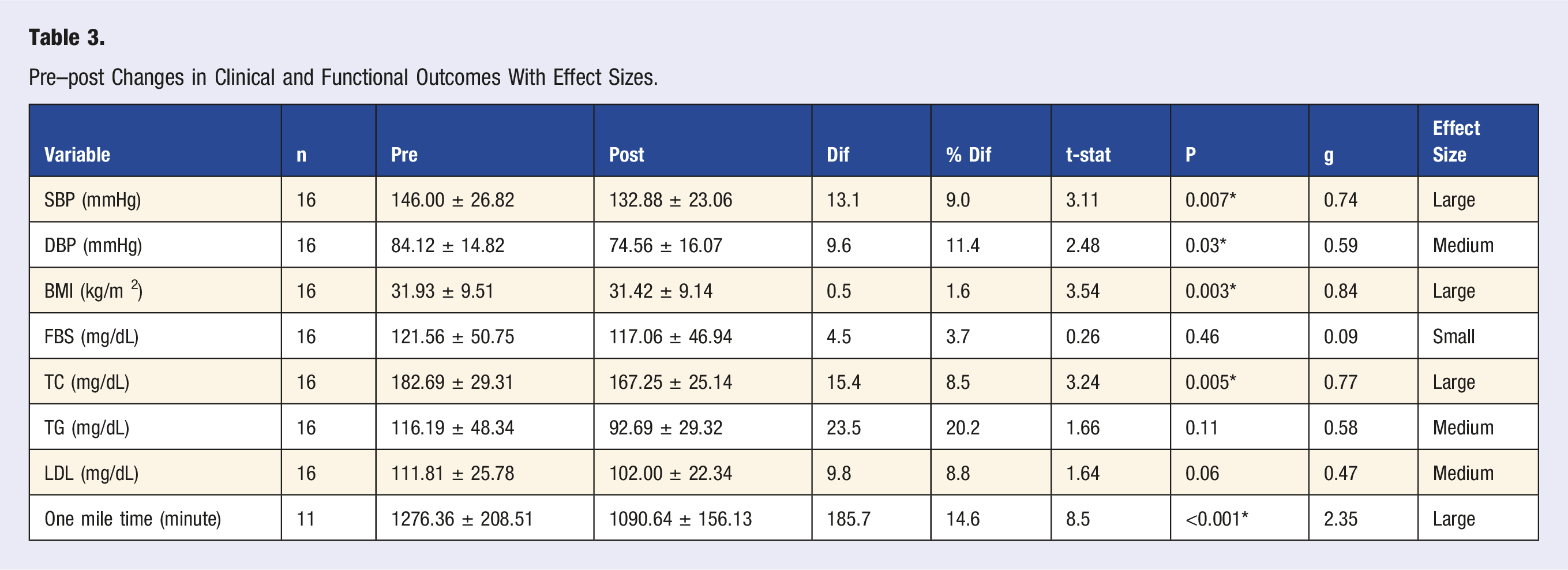
Results comparing baseline and post-intervention variables. SBP: systolic blood pressure (mmHg); DBP: diastolic blood pressure (mmHg); BMI: body mass index (kg/m2); FBS: fasting blood sugar (mg/dL); TC: total cholesterol (mg/dL); TG: triglycerides (mg/dL); LDL: low-density lipoprotein cholesterol (mg/dL); One Mile Time: time to walk one mile (minutes); Pre: baseline measurement and standard deviation; Post: post-intervention measurement and standard deviation; Dif: difference in pre and post values; % Dif: percent change from pre to post values; t-stat: t-value for associated paired-test; p: p-value for associated paired t-test; g: Hedge’s g effect size; *signifies significant changes (P < 0.05).
Nonsignificant reductions in triglycerides and LDL-C were observed, each with a medium effect size. No significant change was observed in FBS. There was a nonsignificant trend in improvement of diabetes status (Table 2).
Changes in Medications
By the program’s end, at least three participants had reduced or ceased diabetes medications (Table 2), and four had adjusted anti-hypertension medications due to hypotension.
Some participants reported poor sleep quality due to the lack of air conditioning or heating and uncomfortable beds, which may have impacted their overall experience and potentially mitigated some of the health improvements.
Discussion
Summary of Results
The 12-day residential wellness program led to significant improvements in multiple selected CVD risk factors, even as some participants reduced their medications for diabetes and hypertension.
Comparison with Previous Studies
The significant reductions in SBP, DBP, BMI, and TC align with findings from other ITLCPs. Similar to McDougall’s findings of an 11% reduction in TC and a 6% decrease in BP over 12 days, our study observed significant improvements in a comparable timeframe. 2 DeRose et al found a 13% decrease in homocysteine levels after a 10-day vegan diet. 4 These results suggest that short-term, intensive lifestyle interventions can rapidly improve selected CVD risk factors.
The findings also corroborate the results of Davis et al, which demonstrated that a 2-week lifestyle intervention program could reduce metabolic syndrome biomarkers in high-risk populations. 3 Modeled after Davis et al, The Fit 4 You Retreat™, a 2-week lifestyle intervention program sponsored by the Allegany East Conference of Seventh-day Adventists, in Boyertown, Pennsylvania, our intervention similarly revealed that significant improvements can consistently occur within a short-term timeframe. This highlights the potential for rapid, impactful changes in health outcomes when evidence-based lifestyle strategies are implemented effectively.
The Complete Health Improvement Program (CHIP), recently rebranded as PIVIO, is one of the most extensively studied ITLCPs. CHIP has demonstrated comparable improvements in biomarkers among free-living participants over 2-3 months. 11 In contrast, our program provided a controlled environment with a uniform diet and exercise, potentially enhancing the efficacy and speed of health improvements. Three month measurements would allow for a better comparison with CHIP.
The one-mile timed walk is a practical measure of functional aerobic capacity and provides meaningful insight into cardiovascular fitness within short-term lifestyle interventions. Previous research examining autonomic responses to aerobic activity demonstrates that steady, submaximal exercise elicits predictable shifts in sympathetic and parasympathetic balance. Chiang et al found that regular aerobic exercise enhances parasympathetic activity and improves autonomic regulation, supporting the use of functional walking tests as indicators of cardiovascular health. 12 These findings suggest that the one-mile timed walk serves not only as a performance measure but also as a reflection of underlying physiologic adaptations associated with improved endurance and cardiovascular function. 12
The
Limitations
• • • • • • • • •
Implications for Practice
The rapid improvements observed suggest that residential short-term ITLCPs may be effective in managing selected CVD risk factors. Additionally, the program’s modest tuition and availability of financial assistance indicate that intensive residential lifestyle interventions can be delivered in a manner that is financially accessible and scalable in real-world settings. Healthcare providers might consider recommending such programs as adjuncts to traditional medical therapies, particularly for patients with cardiometabolic risk factors who may benefit from structured lifestyle support beyond what is feasible in routine clinical practice.
Conclusion
Participation in a 12-day residential wellness program resulted in significant improvements in BP, BMI, and lipid profiles among adults with elevated CVD risk factors. The program also facilitated reductions in medication use for some participants. These findings suggest that short-term, intensive lifestyle interventions can lead to rapid improvement in health outcomes. Further research with larger, more diverse populations and controlled study designs with follow-up to assess sustainability of outcomes is warranted to evaluate the benefits of such programs fully.
Footnotes
Acknowledgments
Special thanks to the Mountain View Conference of the SDA Church, Dr. David Emerson, the camp staff, and volunteers for their contributions. Ohio University provided research oversight and statistical support.

Ethical Considerations
This study was reviewed and approved by the Ohio University Institutional Review Board (Protocol 22-X-77). All study procedures adhered to institutional research standards and the ethical principles outlined in the Declaration of Helsinki. Participation was voluntary, and all individuals were informed that their decision to participate or decline would not affect their experience in the wellness program.
Consent to Participate
Written informed consent was obtained from all participants before enrollment in the program evaluation. Participants provided written consent both to participate in the 12-day wellness program and to allow the use of their de-identified program evaluation data for publication.
Consent for Publication
Not applicable. This manuscript does not include any identifiable personal data, images, or videos requiring consent for publication.
Author Contributions
Funding
The authors received no financial support for the research, authorship, and/or publication of this article.
Declaration of Conflicting Interests
The authors declared the following potential conflicts of interest with respect to the research, authorship, and/or publication of this article: Three of the authors are members of the Seventh-day Adventist Church, the denomination associated with the organization that sponsored the wellness program. This affiliation did not influence the study design, data collection, analysis, interpretation, or the decision to submit the work for publication. The authors declare no financial conflicts of interest and no other potential conflicts with respect to the authorship or publication of this article.