







Abstract
Introduction
Social media has allowed patients with rare diseases to connect and discuss their experiences with others online. This study analyzed various social media platforms to better understand the patient's perception of arteriovenous malformation.
Methods
Twitter, Instagram, and TikTok were searched to find posts about patients' experiences with arteriovenous malformations (AVM). Posts unrelated to the patient’s experience were excluded. Posts were coded for the relevant themes related to their experience with the disease, as well as engagement, and gender.
Results
The most common theme was raising awareness about the condition (87.0%). Recounting symptoms (50.2%), spreading positivity (17.5%), and survival (8.3%) were other common themes. Other prevalent themes were pain (5.2%) and fear of a rare disease (3.5%). Approximately half of AVM-related Instagram (47.93%) and TikTok (52.94%) posts raised awareness about the condition. Most Instagram (67.75%) and TikTok (89.71%) posts focused on recovery and rehabilitation. Most TikTok posts discussed “survival” or “death” (57.35%), while the majority focused on spreading positivity (79.41%). Most posts were made by women (69.6%). Females were more likely than males to post about the scientific explanation of AVMs (p = 0.003).
Conclusion
Social media allows patients across the country and the globe to discuss their experiences with uncommon diseases and connect with others. It also allows AVM patients to share their experiences with other patients and the public.
Introduction
Social media usage within the last decade has risen exponentially.1–6 Nearly 70% of adult Americans use social media daily, which has become an integral part of our daily lives. 7 Social media allows users the opportunity to connect with numerous individuals by sharing relevant images and videos. Additionally, social media enables users to share their personal stories with others throughout the country and the world. 8
In healthcare, social media allows patients the ability to provide feedback and personalized perspectives from their point-of-view regarding their medical condition. 9 Specifically, prior studies within the neurosurgical literature have examined the perception of various neurological conditions on social media platforms.8–11 These studies gather that specified knowledge from the patient's perspective regarding neurological diseases can enable physicians and healthcare professionals to better care for the patient’s desires and perspectives.12–18 To our knowledge, no study to date has examined patient perception of brain arteriovenous malformations (AVMs) as portrayed on social media platforms.
Importantly, recognizing the perspectives of patients suffering from medical diseases and chronic illnesses can appreciably improve healthcare delivery and management, particularly for patients encountering life-altering diagnoses such as brain AVMs. This study aims to provide the first in-depth investigation of AVMs as told through the patient perspective by analyzing Twitter, Instagram, and Tiktok social media posts to provide insight that may improve physician understanding of their patients’ concerns.
Methods
Twitter, Instagram, and TikTok social media platforms were examined to identify posts regarding patient experiences with AVM. The popularity and transparency of these social media platforms to the public warranted their inclusion in this study. Due to increased privacy settings, Facebook was not included as a social media platform.
The platforms were searched for posts that included #Arteriovenousmalformation, #AVMneurosurgery, or #AVMbrain. Only posts regarding a patient’s experience with AVM were included. Posts made by friends and family of AVM patients were included. The same individual could include multiple posts. Procedure occurrence was determined through each patient’s social media post history. Posts regarding AVM research or education were excluded as they do not relate directly to the patient's experience.
The Python tool SNSCRAPE was used to identify Tweets. 19 Approximately 3000 tweets were identified, with 995 included in the final analysis. The Instagram search yielded over 10,000 posts made between February 2017 and June 2023, of which 338 were included. TikTok does not reveal the total number of posts presented for a given search. However, 68 TikTok posts were included per the previously mentioned inclusion criteria.
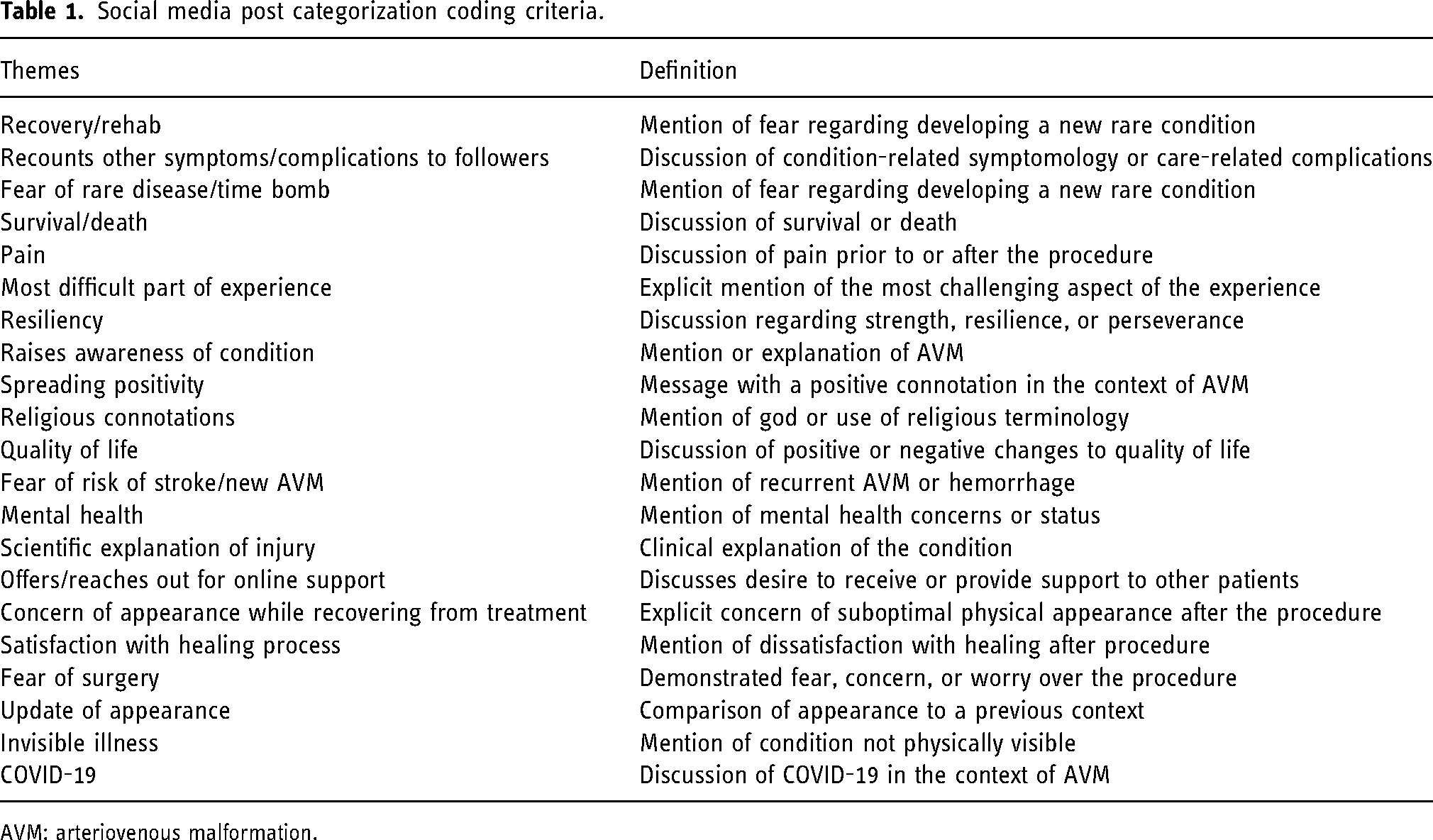
Several hundred preliminary posts were utilized to generate a preliminary list of themes. Guidelines were developed to categorize each post by theme. All posts were then categorized by theme utilizing the criteria (Table 1). Two independent investigators categorized the posts into none, one, or multiple themes. A third investigator mediated discrepancies until a unanimous decision was reached. These frequencies are listed as proportions. Categorical variables are compared using Fischer exact or χ2 tests to assess differences in focus across platforms, individuals, and experiences. Platform differences were analyzed to determine utilization differences across media types. Statistical significance for theme frequency is calculated using t-test or ANOVA. All analyses use STATA V18.0 (StataCorp, College Park, TX).
Social media post categorization coding criteria.
AVM: arteriovenous malformation.
Results
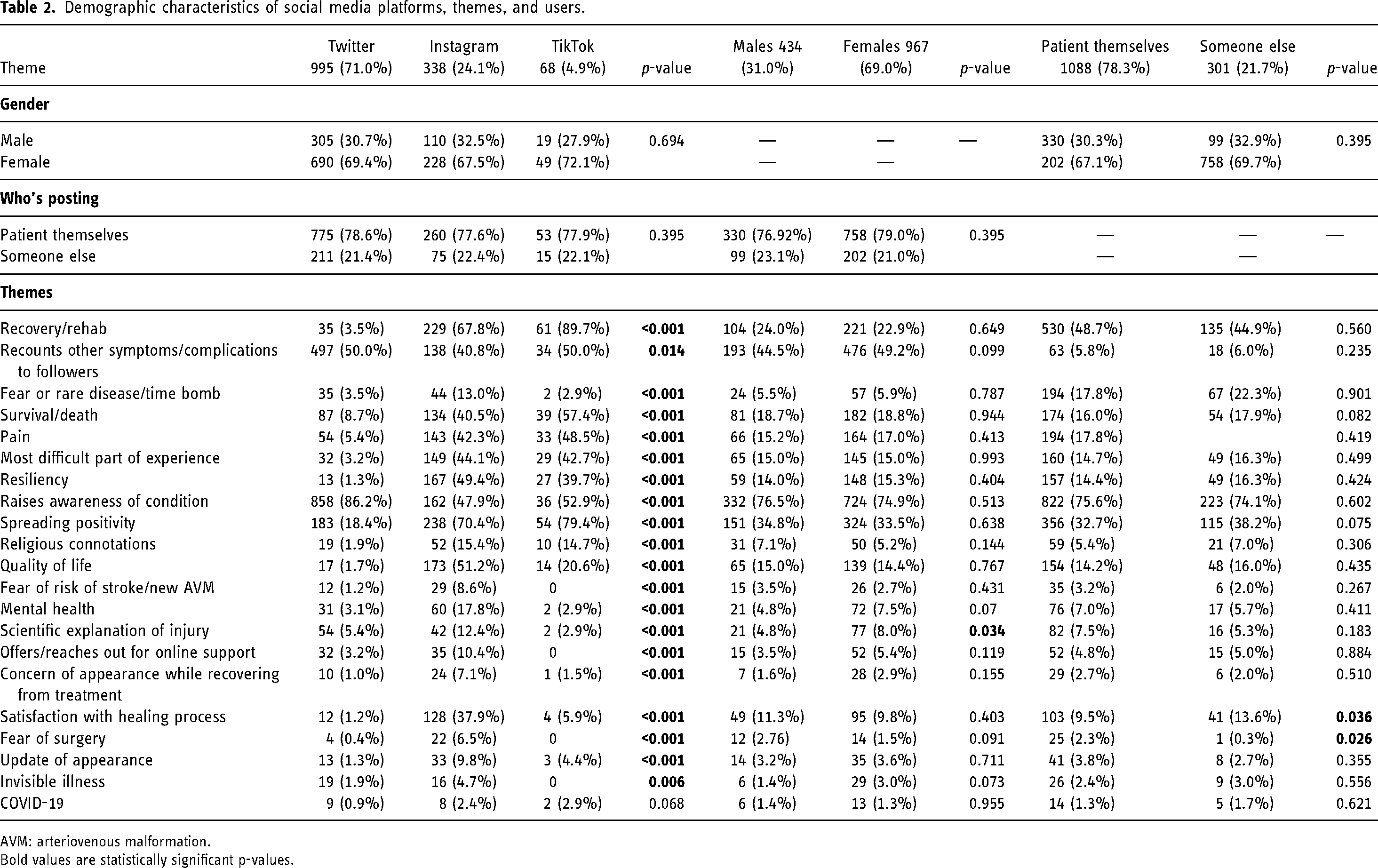
A total of 1401 posts related to the care of AVMs were identified. Among these, 995 (71.0%) were tweets, 338 (24.1%) were Instagram posts, and 68 (4.9%) were TikTok posts (Table 2). Across all posts, 1088 (78.3%) were made by the patient themselves, while 301 (21.7%) were made by someone else (Table 2). Females made up 69.4% of Twitter posts, 67.5% of Instagram posts, and 72.1% of TikTok posts (Table 2). Males made 30.7% of Twitter posts, 32.5% of Instagram posts, and 27.9% of TikTok posts (Table 2).
Demographic characteristics of social media platforms, themes, and users.
AVM: arteriovenous malformation.
Bold values are statistically significant p-values.
The themes of the posts differed across the three platforms (Table 2). Instagram and TikTok posts were more likely to discuss recovery/rehabilitation, survival/death, pain, the most challenging part of the experience, resiliency, and spreading positivity. They had greater religious connotations than Twitter posts (p < 0.001). Instagram posts were more likely to discuss fear of rare diseases/“time bomb,” quality of life, mental health, scientific explanation of injury, offering/reaching out for online support, appearance while recovering from treatment, satisfaction with the healing process, fear of surgery, and updates of appearance compared to TikTok and Twitter posts (p < 0.001). Instagram posts were also more likely (p = 0.006) to discuss the “invisible illness” than TikTok and Twitter posts. TikTok and Twitter posts were more likely (p = 0.014) to recount other symptoms/complications to followers than Instagram posts. Twitter posts were more likely (p < 0.001) to raise awareness of the condition compared to Instagram and TikTok posts (Figure 1 and Table 2).
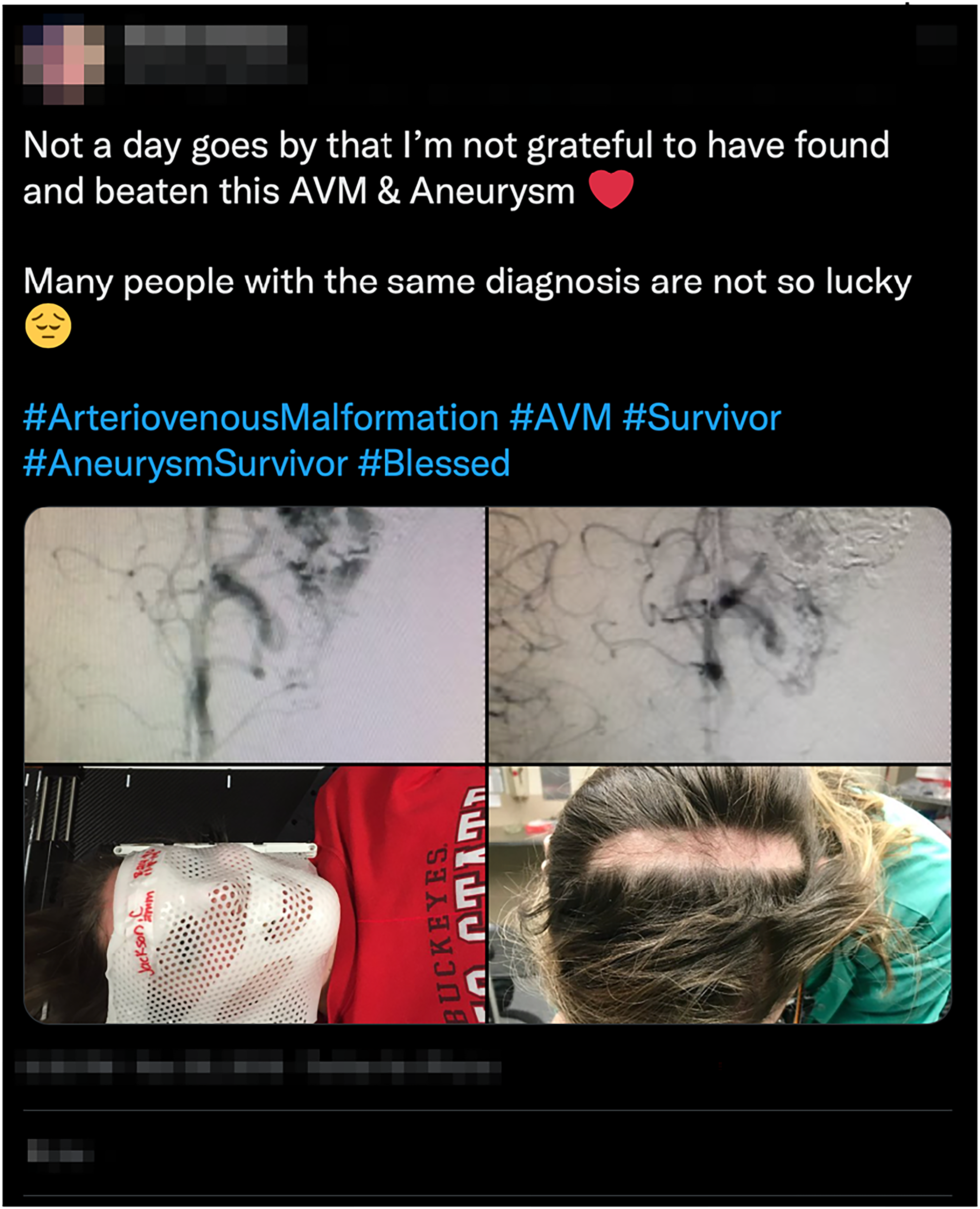
Social media (Twitter) post encompassing themes of “raising awareness of condition” and “survival/death.”
Posts regarding satisfaction with the healing process were more likely (p = 0.036) to be made by someone else (13.6%) compared to the patient (9.5%) (Table 2). Furthermore, posts regarding fear of surgery were more likely (p = 0.026) to be made by the patient themselves (2.3%) compared to someone else (0.3%). More posts under the “spreading positivity” theme were posted by friends/family rather than the patients themselves (38.2% vs. 32.7%, respectively, p = 0.075). Analysis of differences in theme prevalence by sex found that females were more likely to post about the scientific explanation of injury than males (8.0% vs. 4.8%, respectively; p = 0.034) (Table 2). No other themes significantly differed by the sex of the poster.
Discussion
Social media allows patients and relatives to share healthcare experiences with other users worldwide, enabling healthcare professionals to understand their patients' concerns better. About 70% of all posts were by females, which is similar to prior research. 20 Additionally, females were more likely to post about the scientific explanation of the injury than males. These results are akin to those demonstrated in other social media studies of patients with other cerebrovascular conditions. 13 This posting discrepancy between males and females may reflect differences in the individual patient experience depending on the specific condition each patient deals with and the overall usage of social media. Prior studies found that females generally have a larger social media presence than males. 13 This may elucidate the potential differences noted between sexes regarding posts within this study. Physicians should work to personalize their patient discussions to focus on the points most concerning or prevalent to each patient.
Patients had differing foci when describing the AVM treatment experience compared to relatives and friends. Patients were more likely to focus on the fear of undergoing the procedure. This is likely because patients are undergoing treatment for their condition and are thus more concerned with their safety and treatment outcome.21–23 This underscores the importance of physicians being empathetic toward their patients and tending to their patients’ concerns by demonstrating the safety measures and precautions in place. Personalizing discussions with patients by addressing the specific points that are most concerning to each individual can foster better patient–physician relationships and improve patient satisfaction with their healthcare experience.
On the other hand, posts made by different individuals were more likely to focus on satisfaction with the healing process. Within cranial neurosurgery, patients often cannot directly see incision scars, but those close to them physically can see the marks. Thus, those close to the patient may consider the healing process more often as they are frequently reminded of the physical appearance of these marks.24,25 Physicians should tailor their discussion on strategies to optimize wound healing to promote overall patient well-being and consider patient emotional concerns before and after the surgical procedure.
Limitations
There are several limitations to address in this study. First, younger people are more likely to have a presence on social media than more senior individuals. In turn, this leads to an underrepresentation of older AVM patients on social media. Second, social media posts without hashtags potentially excluded certain relevant posts. Third, private posts were inaccessible, limiting this analysis to publicly available posts. Fourth, there is no method to verify the clinical accuracy of a patient's post. 26 However, social media allows patients to freely discuss their condition, while surveys typically have inherent biases. Fifth, poster demographics could not be determined for further analysis. Sixth, we included only a limited number of social media platforms.
Conclusions
Thematic social media analysis offers insights into patient experiences and the way AVMs are portrayed publicly. Social media serves as a means for patients and relatives to share their experience with AVMs online, and their gender and identity influence their focus. Neurosurgeons can consider these findings when facilitating conversations with their patients to improve patient care.
Footnotes
Acknowledgements
We would like to acknowledge Nicholas Webb, PhD, Union College, Schenectady, NY, for his assistance in coding the data scrapper.
Declaration of conflicting interests
The authors declared no potential conflicts of interest with respect to the research, authorship, and/or publication of this article.
Funding
The authors received no financial support for the research, authorship, and/or publication of this article.
