






Abstract
Current research lacks systematic understanding of cross-scale correlations between micro-texture geometry and macro-lubrication behavior. This study presents a multi-scale collaborative optimization methodology for gear micro-textured meshing interface (MTMI). An objective function targeting macroscopic interfacial performance is formulated, and a topology optimization strategy is employed to achieve optimal micro-element texture (MET) configuration. The homogenization analysis captures the modulating effects of MET on interface enriched lubrication (IEL) and stress fields, while topology optimization transcends conventional parametric geometric constraints, enabling the generation of non-regular MET topological patterns tailored to complex operating conditions, thereby ensuring optimal macroscopic anti-scuffing load-bearing capacity (ASLBC). The proposed scheme is validated through numerical simulations of two representative problems capturing distinct lubrication regimes: (1) IEL, characterizing transient load-bearing dynamics governed by temporally evolving MET configurations and (2) ASLBC, elucidating steady-state load-bearing capacity modulation via spatially heterogeneous MET distributions. A Taylor expansion-based surrogate model is developed to efficiently explore the MET configuration design space, significantly enhancing computational efficiency and solution accuracy for multi-scale optimization. While the gradient-based algorithm cannot guarantee local optimality, extensive numerical simulations and cross-validation studies demonstrate consistent convergence toward high-performance MET configurations, with sensitivity analyses of design parameters further confirming the engineering applicability of the optimized solutions.
Keywords
Introduction
Gears have become critical foundation components in high-end marine engineering equipment due to their outstanding advantages in transmission efficiency, speed ratio range, precision, and fatigue resistance. 1 Their design and manufacturing in-volve multiple interdisciplinary coupling issues, including precision tooth profile machining, backlash control, time-varying meshing stiffness analysis, installation error compensation, and bearing clearance matching. These aspects reflect the strongly non-linear and extremely complex nature of transmission systems, attracting continuous and in-depth research by scholars worldwide.2–4 In the field of mechanical engineering, the meshing interface of machined gears appears macroscopically smooth and often anisotropic. However, at the microscopic scale, it is composed of numerous asperities and valleys with varying geometric dimensions, exhibiting a certain direction-al characteristic in interface texture.5–7 The meshing behavior of gear interfaces can be regarded as the rolling, sliding, and mutual extrusion of these microscopic asperities. Differences in micro-morphology directly reshape the interfacial meshing behavior. On a rough interface, only the protruding asperities actually bear the load. Once the con-tact load exceeds a critical threshold, these asperities collapse, leading to a sharp in-crease in frictional resistance and energy dissipation at the meshing interface. By altering the local contact state, the micro-morphology of the meshing interface plays a crucial role in regulating the load-bearing and anti-scuffing performance of gears. Fractal theory overcomes the size-dependence limitation of conventional approaches by introducing interfacial roughness as a characteristic parameter, enabling a more accurate description of rough interfaces.8–10 By means of a scale-independent fractal function, the Majumdar–Bhushan (M–B) model is able to reconstruct the morphology of a rough interface composed of micro-asperities.11–13 Based on the M–B fractal function, a fractal interface contact model is established to correct the backlash error of micro-scale rough interfaces caused by the contact of asperity peaks. The modified backlash is then applied to the gear transmission system to analyze the influence of fractal parameters on the dynamic load-bearing response characteristics of the system.14,15 A comparison among constant backlash, probabilistically distributed backlash, and fractal backlash demonstrates the distinct advantage of fractal backlash in characterizing the true backlash at meshing interfaces, confirming its higher accuracy and adaptability.16–18 Based on the fractal theory of textured micro-elements, a meshing torque transmission model for convex–concave asperity rough interfaces is established, enabling the quantitative characterization of how fractal parameters govern the time-varying meshing stiffness (TVMS). The study reveals that TVMS is positively correlated with the fractal dimension but negatively correlated with the characteristic fractal scale coefficient. Among these parameters, the fractal dimension is identified as the dominant factor governing the variation in meshing stiffness.19–21 A multi-degree-of-freedom dynamics model is established for gear pairs meshing whose contacting tooth flanks possess fractal morphologies that are not simply reducible to two-dimensional profiles. The study reveals that as the fractal dimension increases and the characteristic scale coefficient decreases, the contact stiffness at the interface tends to become more uniform, meshing impacts are suppressed, and the efficiency of vibrational energy dissipation improves, thereby enhancing the smoothness of gear trans-mission.22,23 Research in this field has largely been based on two-dimensional fractal rough interface theory, which overlooks the morphological characteristics along the tooth width direction, a critical dimension that governs the true contact footprint. Those models fail to capture the actual contact mechanics occurring within real meshing interfaces. 24 The analytical expression for the contact stiffness of a single rough interface is derived from Hertzian theory, while the TVMS between micro-asperity interfaces is obtained through the roughness distribution function. 25 To address this issue, a three-dimensional fractal rough meshing interface model is developed, in which the micro-elements contact model for convex–concave asperities is derived and a distribution function characterizing the rough interface morphology is defined. This approach reveals the influence of fractal parameters on the rough interface gap and the TVMS, thereby providing a theoretical basis for subsequent studies on modifying the mechanical behavior of asperity micro-element contacts.26,27 Literature review reveals no prior studies on such micro-element fractal models. 28 Existing studies have attempted to extend the three-dimensional M–B equation to anisotropic fractal meshing interfaces by introducing random phases, aiming to characterize the directional features of rough asperity micro-elements. However, the inherently uncontrollable nature of random phases makes it impossible to generate rough profiles with specific distributions of convex–concave asperities on demand, nor can it produce regularly oriented micro-textures.29,30 This strategy is still insufficient to support a rigorously anisotropic fractal model of micro-scale roughness in gear meshing interfaces.
Current gear meshing optimization methods face fundamental limitations: Taguchi methods struggle with continuous variables and interaction effects; ad-joint-based approaches require objective differentiability, precluding contact nonline-arities; particle swarm algorithms exhibit slow convergence and parameter sensitivity. 31 While the solid isotropic material with penalization (SIMP) method has im-proved boundary crispness, it remains confined to single-material distribution. 32 Meanwhile, lubricant distribution is shifting from macro-scale homogeneity to micro-textured multi-scale synergy. Yet existing research predominantly isolates macroscopic and microscopic problems, lacking a unified optimization framework. Fractal roughness theory is inherently descriptive, limited to characterization rather than proactive design. Engineering demands are transitioning from understanding rough interfaces to designing functional interfaces, where micro-textures actively modulate interfacial behavior. This imperative has catalyzed research into micro-texture topology optimization. Fractal theory offers pivotal insights: optimal interfaces require hierarchical multi-scale architectures. Single-scale textures suit only specific operating conditions, whereas biomimetic multi-scale textures accommodate broader operation-al ranges. Micro-texture topology optimization necessitates a multi-level framework spanning macro-layout, meso-geometry, and micro-roughness. Fractal theory elucidates topography-performance relationships, providing both biomimetic inspiration and mathematical formalism. This convergence marks a paradigm shift in tribology from passive adaptation to active control, charting new pathways for high-performance gear transmission systems.
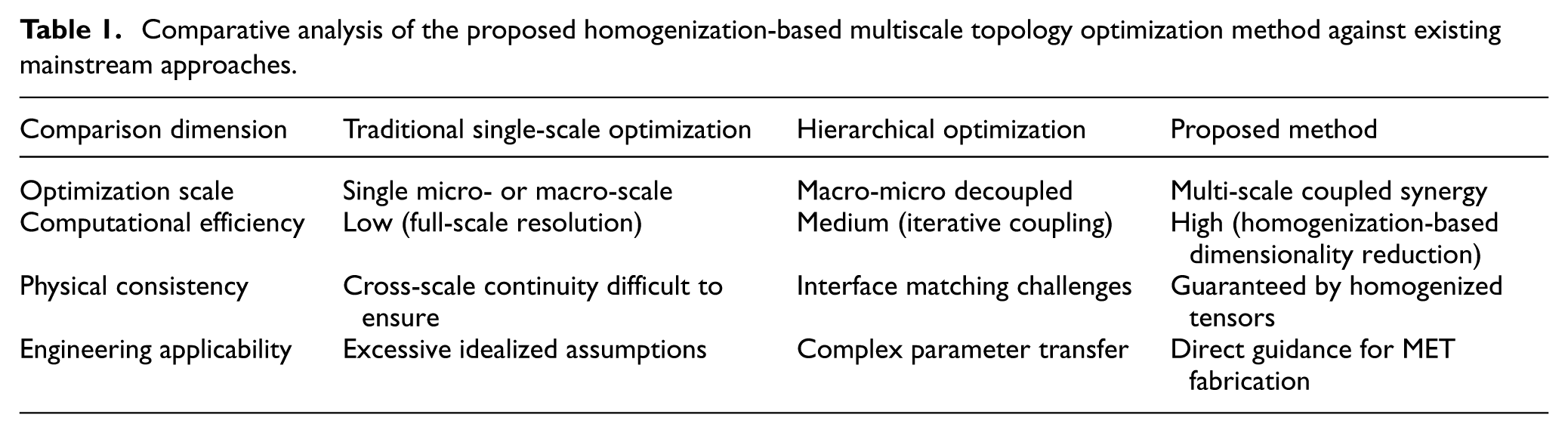
Three mainstream approaches are compared: (a) empirical parametric scanning methods optimizing groove and dimple geometries via single-variable analysis; (b) surrogate model-based optimization (e.g. NSGA-II coupled with CFD) employing single-objective or weighted multi-objective formulations; and (c) the homogenization-based multiscale topology optimization method proposed herein. The comparison criteria include design degrees of freedom, computational efficiency, synergistic optimization capability for micro-texture morphology and distribution, and consideration of lubrication-load carrying coupling mechanisms. The core innovation lies in the proposed approach’s ability to achieve accurate performance prediction without presupposing texture shapes, while obtaining non-intuitive microstructure configurations through topology optimization, thereby overcoming the limitations of decoupled shape-distribution optimization inherent in conventional methods. Table 1 summarizes the distinctions between the proposed homogenization-based multiscale topology optimization framework and existing mainstream approaches. By leveraging homogenized constitutive tensors with spatiotemporal variability, this method enables real-time coupling between micro-texture configurations and macroscopic interface performance, eliminating the sequential workflow of microscopic optimization followed by macroscopic validation required by traditional methods, while simultaneously improving computational efficiency.
Comparative analysis of the proposed homogenization-based multiscale topology optimization method against existing mainstream approaches.
This study proposes a homogenization-based multi-scale collaborative optimization methodology for gear MTMIs. An optimization objective function targeting macroscopic interfacial performance is formulated within the multi-scale theoretical framework, and a topology optimization strategy is employed to achieve optimal MET configuration design. The homogenization analysis characterizes the modulatory effects of MET on local flow and stress fields, while the topology optimization breaks through conventional parametric geometric constraints, enabling the generation of irregular MET topological patterns adaptive to operating conditions, thereby ensuring optimal macroscopic ASLBC.
Multiscale modeling of micro-textured meshing interfaces with micro-element texture configurations
The line contact thermo-elastohydrodynamic lubrication (TEHL) model proposed is illustrated in Figure 1. It incorporates rolling–sliding motion, micro-texture, and roughness characteristics to simulate textured interface lubrication meshing and load-bearing behavior that more closely approximates real engineering conditions. The anisotropic 3D fractal rough meshing interface is characterized by equivalent ellipsoidal METs with directional distributions. A 3D anisotropic fractal interface model representing multi-DOF nonlinear dynamics is constructed, establishing mathematical mapping between microscopic topographical parameters (fractal dimension, anisotropic stretching, asperity aspect ratios) and macroscopic dynamic response. The meshing interface possesses multi-scale micro-texture morphology characteristics. The rectangular micro-texture configuration is selected as the fundamental geometric primitive in this study, considering its (i) decoupled dimensional controllability for parametric sensitivity analysis, (ii) compatibility with precision laser manufacturing processes, and (iii) establishment of benchmark data for subsequent comparative evaluation with optimized bio-inspired textures. Rectangular equal-section grooves are adopted as the basic micro-texture units, with a geometric width of
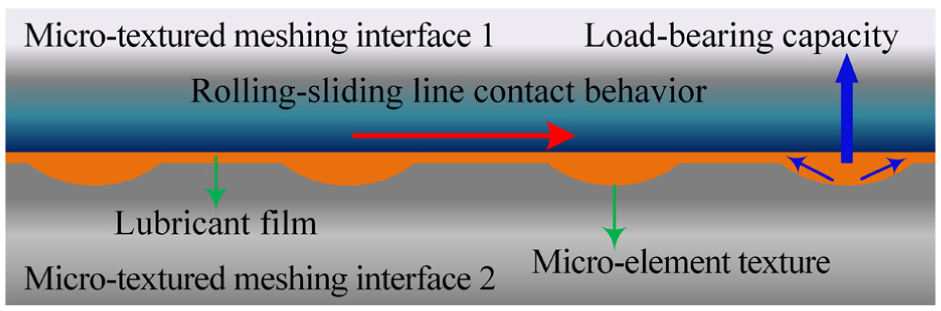
Line contact elastohydrodynamic lubrication model.
Based on the geometric characteristics of micro-textures, a priori design strategy is proposed to achieve synergistic optimization of feature scale and spatial distribution. Under the practical constraints of limited resolution and configuration freedom in existing micro-texturing technologies for meshing interfaces, this strategy offers engineering feasibility. Advanced manufacturing techniques enable the in-situ construction of high-precision, periodically reproducible complex microstructures on tooth interfaces, providing new degrees of freedom for lubrication performance regulation. By extending the hydrodynamic lubrication design of meshing interfaces to a harmonizable scale, the influence mechanism of micro-texture configuration patterns on the lubrication load-bearing coupling response at the interface is systematically characterized using homogenization theory. Furthermore, topology optimization is introduced to inversely design the micro-unit configuration pattern itself. This constitutes the core breakthrough direction of the present study, aiming to establish a cross-scale mapping relationship between micro-texture configuration and lubrication performance, thereby achieving high-precision customization of complex texture patterns and synergistic enhancement of lubrication and load-bearing performance. This perpendicular distribution configuration has been proven to significantly enhance the load-bearing capacity of the meshing interface. At the meshing point, the transient line contact of a gear pair can be equivalent to a pair of cylindrical rollers with curvature radii

Equivalent cylindrical roller model for the transient line contact of gear pairs.
The size of micro-texture elements typically ranges between 1.0 and 100.0 μm. In contrast, the MET on the meshing interface generally falls within the range of 0.1–1.0 μm, as illustrated in Figure 3. The macroscopic geometric dimensions of gear pairs, such as the radius of curvature at the meshing point, are measured in millimeters. As a gear contact interface problem, the macroscopic lubrication load-bearing response can be synergistically regulated through optimization of inter-face micro-textures. When appropriate micro-textured units are applied to the geo-metric features of the contact interface, the dynamic lubrication behavior, within a multi-scale mechanical framework, becomes dominated by the global microscale thin film. This thin film evolves into the classical Reynolds equation at the characteristic scale of the micro-textures.

Micro-textured gear pair rough line contact elastohydrodynamic lubrication model: (a) Micro-textured gear meshing pair and (b) Micro-element convex-concave asperity roughness model.
Based on the assumption of an incompressible Newtonian fluid at the interface and ignoring unilateral constraints from cavitation contact, the thin film model discards all physical nonlinearities, providing a clean starting point for constructing a multi-scale optimization framework. This formulation simultaneously outputs both dissipative and non-dissipative information at the interface, the non-dissipative component manifests as the self-generated fluid pressure, the solution to the thin film equation, which directly contributes to the net load-bearing capacity. A multiphysics model correlating MET distribution parameters with the ASLBC of IEL is established by comprehensively considering the coupled characteristics of stress fields, film thickness distributions, and temperature fields. This study reveals two non-standard key characteristics of multiscale hydrodynamic lubrication, challenging the conventional understanding of scale-optimization theory. A tensor-based spatiotemporal evolution model is developed to characterize the homogenized response of micro-textures, elucidating the adaptive lubrication and load-bearing mechanisms induced by varying interface conditions. The work provides theoretical support for the design of high-load-capacity lubrication systems.
Multiscale collaborative optimization of micro-textured configurations for meshing interfaces
Considering the design issues of MET configurations at the macroscopic scale, a universal analytical framework is developed. This study considers the characteristics of stress, film thickness, and temperature fields, among other factors, to establish a model that correlates MET distribution parameters with the load-bearing performance of the IEL. The evolution of IEL load-bearing capacity under the influence of multi-scale MET parameters is optimized, and the coupling relationships between macroscopic parameters, such as load distribution, speed, and structural configurations, and microscopic parameters, including micro-asperity peak heights, texture orientation, and autocorrelation lengths, are explored, as shown in Figure 4. The former tracks the continuous decay of the instantaneous film thickness over time, while the latter describes the directional gradient of the film thickness
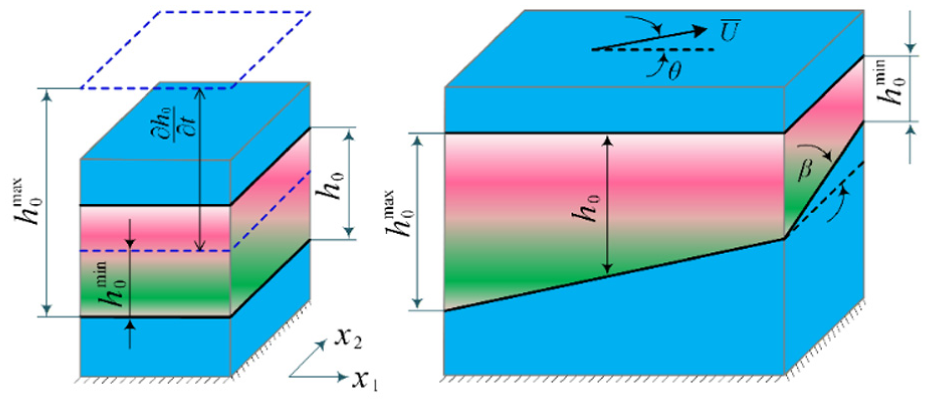
Interfacial hydrodynamic contact exhibits two typical macroscopic regimes: medium layer film lubrication and the ASLBC problem, both reflecting the spatiotemporal evolution of film thickness within the meshing zone.
Regarding the lubrication enrichment issue at the meshing interface, the upper interface moves only tangentially with a velocity
The average film thickness

where,

where,

Based on the macroscopic two-dimensional interface

Herein, with the introduction of the gradient term:
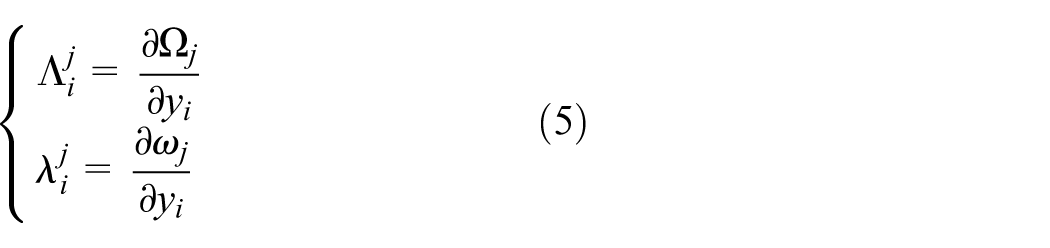
where, the two unknown vectors,
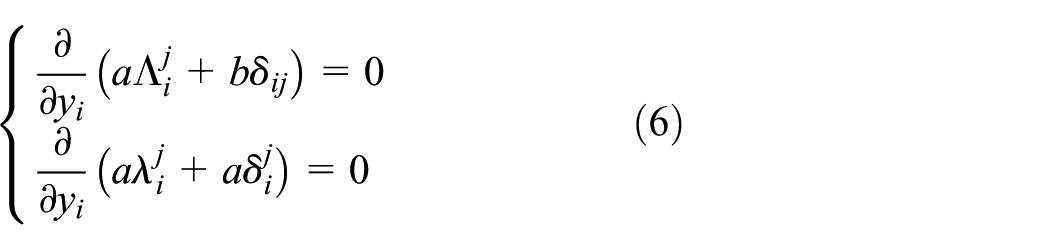
where,

An equivalent description is also acceptable as follows:

Considering the above derivation, an explicit mapping between MET configuration parameters, macroscopic lubrication performance, and ASLBC can be systematically established. This provides an interpretable and quantifiable theoretical foundation for subsequent sensitivity analysis in MET design. It follows that

The coupling mechanism between the lubricant medium layer film and meshing load-bearing capacity, along with the corresponding MET parameter characterization, is expounded. The numerical solution for the homogeneous case (
Under the homogenized condition, the analytical results for both problems illustrated in Figure 4 are compiled in Figure 5 to serve as a reference for subsequent investigations. The homogenization approach is usually adopted to characterize the MTMIs under TEHL, with the Reynolds equation serving as the governing equation. When multi-scale MET effects are considered, the lubrication behavior of meshing interfaces becomes highly sensitive to the representative parameters.37–39 This modeling procedure normally requires the lubricant film thickness
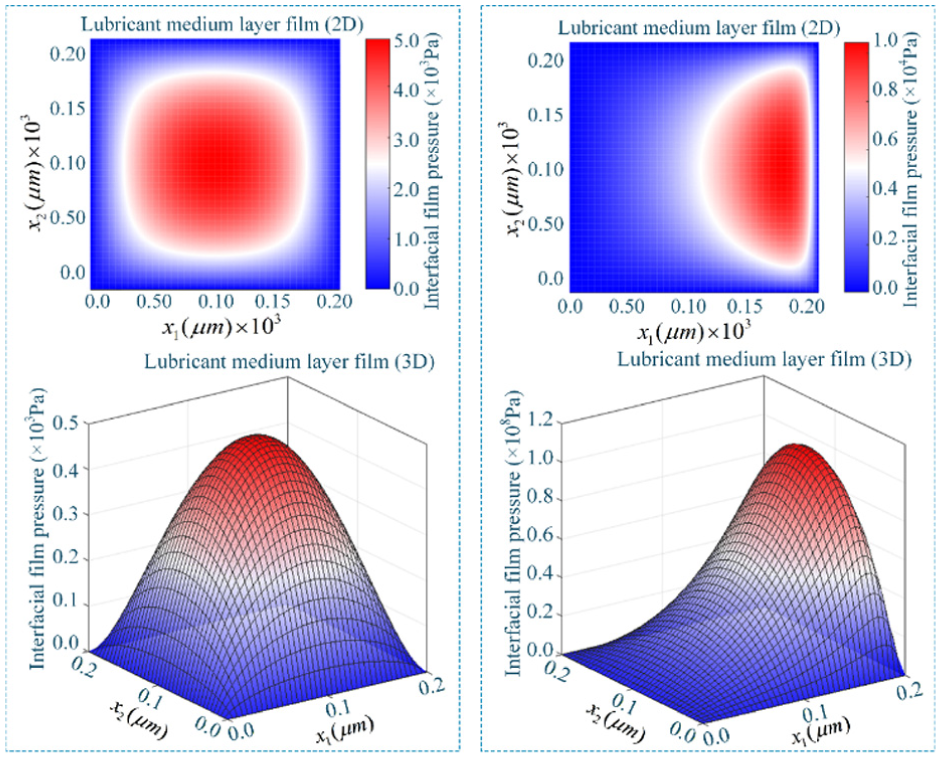
Leveraging the coupling mechanism between the lubricant medium layer film and meshing ASLBC.
Characterization of design variables in MET geometry-performance relationships
Since the non-uniform film-thickness h of the lubricant medium layer within the MET pattern triggers two coupled problems of type

Additionally, it is stipulated that the average value across the entire domain of the textured interface micro-element within the meshing region shall be zero.

With specific design parameters set, when
The morphological filtering operator
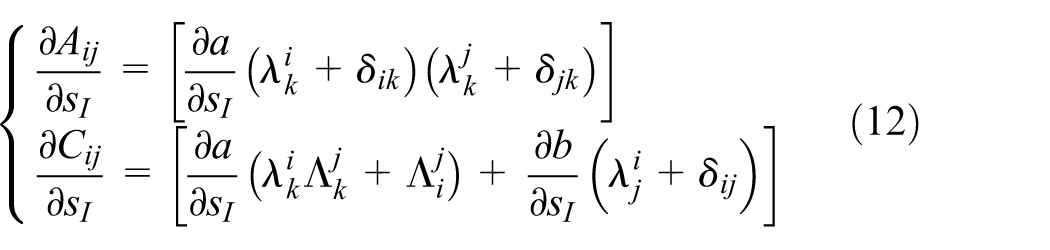
To compute the required local sensitivities
Sensitivity analysis of numerical discretization for multiscale characterization of micro-textured interfaces
In both the IEL and ASLBC macro-scale problems, the meshing interface
In the ASLBC problem, the upper interface undergoes periodic reciprocating motion, thus requiring computations to be performed over the entire meshing cycle.
40
This cycle is discretized into

On portions of the boundary

Let

As such, equation (14) may be expressed alternatively as:

The reduction in computational cost is directly manifested in the requirement to solve only a single linear system (i.e. the system regarding the adjoint variable
A progressive meshing strategy is adopted, with a baseline element size of 0.1 mm specified for the bulk fluid domain, while local refinement is applied to critical regions such as gear meshing contact zones, reducing the element size to 0.02 mm. Hexahedral structured grids are employed to better capture boundary layer flow characteristics. Five prismatic layers are arranged adjacent to the gear meshing interfaces, with a first-layer thickness of 0.001 mm and a growth rate of 1.2, satisfying wall-resolved requirements. This approach ensures an optimal balance between computational accuracy and efficiency.
Homogenization-based multiscale topology optimization for micro-textured interfaces
Accounting for global operating condition constraints, the objective function

The objective function value ϕ and its sensitivity with respect to the design variables

Figure 6 illustrates the considered MET configuration design optimization problem and its associated objective functions. If the target values are determined based on the known homogenized MET configuration of the MTMI, implying physical realizability, the process essentially equates to MET reconstruction. Conversely, should the target values be prescribed independently of the MET configuration inherent to the meshing interface, the pursuit of approximating the equivalent constitutive tensor
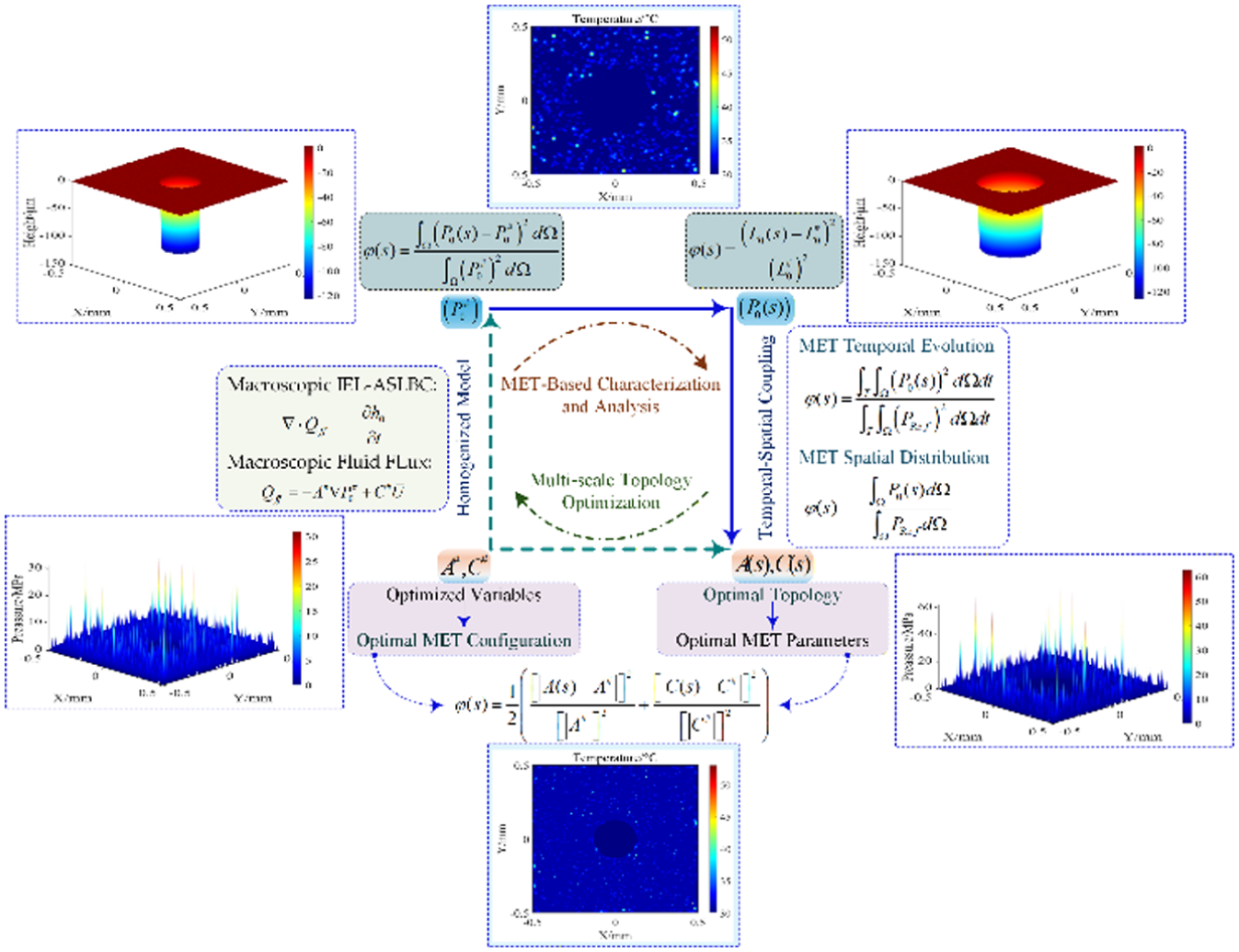
The MET configuration optimization problem and its corresponding objective functions.
A dual coupled convergence criterion based on relative residuals and variable increments is developed for the numerical solution of nonlinear equation systems. Considering the mesh discretization scales and physical field magnitudes, the convergence thresholds are set to
The characterization and analysis of the MET are predicated upon the instantaneous configuration of the IEL medium film.43–45 For MET characterization, the local film thickness variation is quantified by geometric parameters
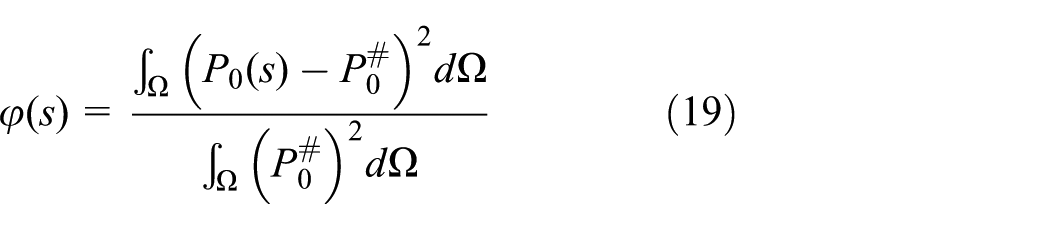
The objective function is driven to zero to obtain a micro-texture design that yields an identical pressure distribution to the target micro-texture.46–48 This MET problem formulation also enables visual assessment of MET performance within a multiscale analysis framework, specifically regarding its capability to reconstruct a given micro-texture. It is noted that the maximum pressure
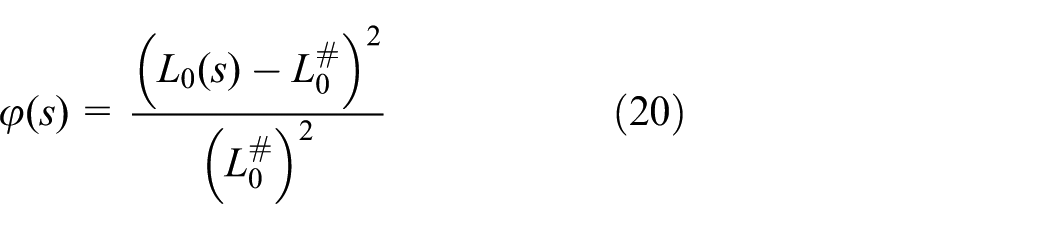
To intuitively characterize the multi-scale MET configuration variations, representative profiles are extracted along selected cross-sections for comparative analysis and visualization. The geometric parameters of the MET are specified as
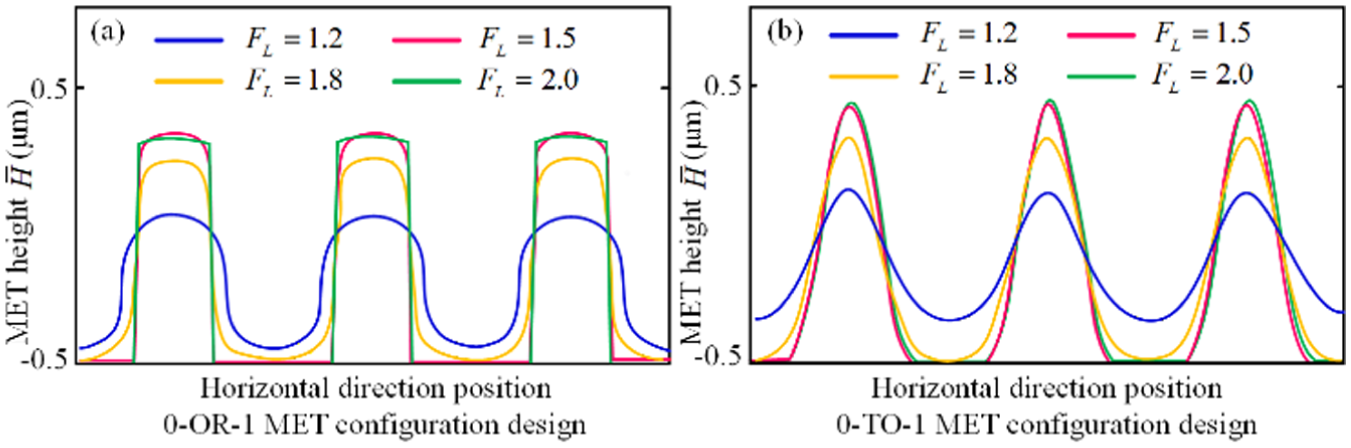
Comparative analysis of multi-scale MET configuration design: (a) Horizontal direction position 0-OR-1 MET configuration design and (b) Horizontal direction position 0-TO-1 MET configuration design.
Meanwhile, the design objective of the 0–TO–1 (gradient/transition) is to generate smooth texture micro-elements with continuously varying MET height
Spatiotemporal coupling optimization of MET for enhanced meshing load-bearing capacity
This study investigates the issue of maximizing load-bearing capacity under the spatiotemporal variation of MET parameters. Two distinct operating conditions are imposed on the interface rolling–sliding velocity
Discrete (square-wave) velocity curve: A constant velocity of
Continuous (sinusoidal) velocity curve: The velocity follows the function
For both operating conditions, the rolling–sliding motion at the meshing interface initiates from the maximum film thickness
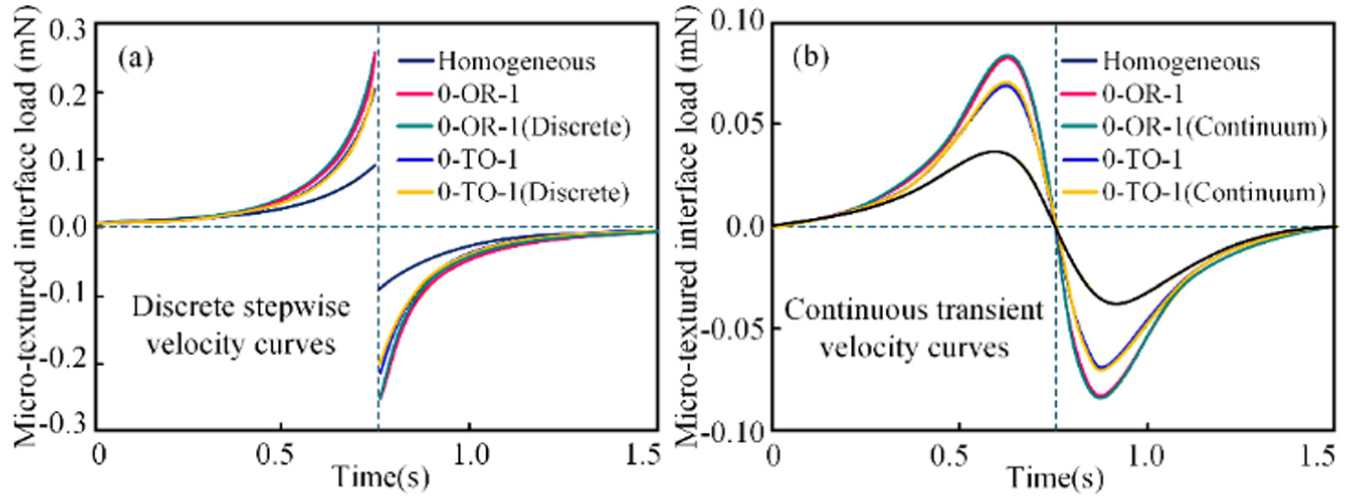
Evolution of load-bearing capacity in MTMIs throughout the IEL cycle: multi-scale MET configuration design and optimization for dual-velocity regimes: (a) Discrete stepwise velocity curves and (b) Continuous transient velocity curves.
The Reynolds cavitation boundary condition is enforced, wherein the cavitation pressure is prescribed as either ambient or saturated vapor pressure. The numerical implementation employs a formulation based on the penalty function method.18,52,53

To transform the optimization problem into a tractable minimization form and accelerate convergence, a negative sign is introduced. For normalization and scaling purposes, the reference pressure is set as
The optimization results are summarized in Figure 7. Interestingly, although the macro-scale velocity field distributions differ significantly, the obtained MET configuration designs are nearly identical. This indicates that for this problem, the optimal MET is relatively insensitive to macroscopic operating conditions (velocity fields). The cross-validation results in Figure 8 further support this conclusion: the MET configuration optimized under one velocity field distribution still exhibits nearly overlapping load–time curves under another velocity condition. Even under the 0–TO–1 design constraint, the optimization results show distinct geometric sharpening features, which are crucial for maximizing load-bearing capacity. Based on the aforementioned MET configurations, the time-varying load history over a half-period is calculated using a multi-scale analysis method. The varying curves in Figure 8 demonstrate that micro-textured interfaces significantly enhance the meshing load-bearing performance. It should be noted that although the 0–TO–1 design exhibits sharp features, the introduction of a linear filter limits the degree of sharpening, resulting in its instantaneous load-bearing capacity at any meshing moment being consistently lower than that of the 0–OR–1 design. The degree of optimization approximation for each MET design can be evaluated by calculating the load factor. Figure 7 presents the load coefficients (load factors) corresponding to each MET configuration design. These values reveal the physically achievable upper limit for the target value
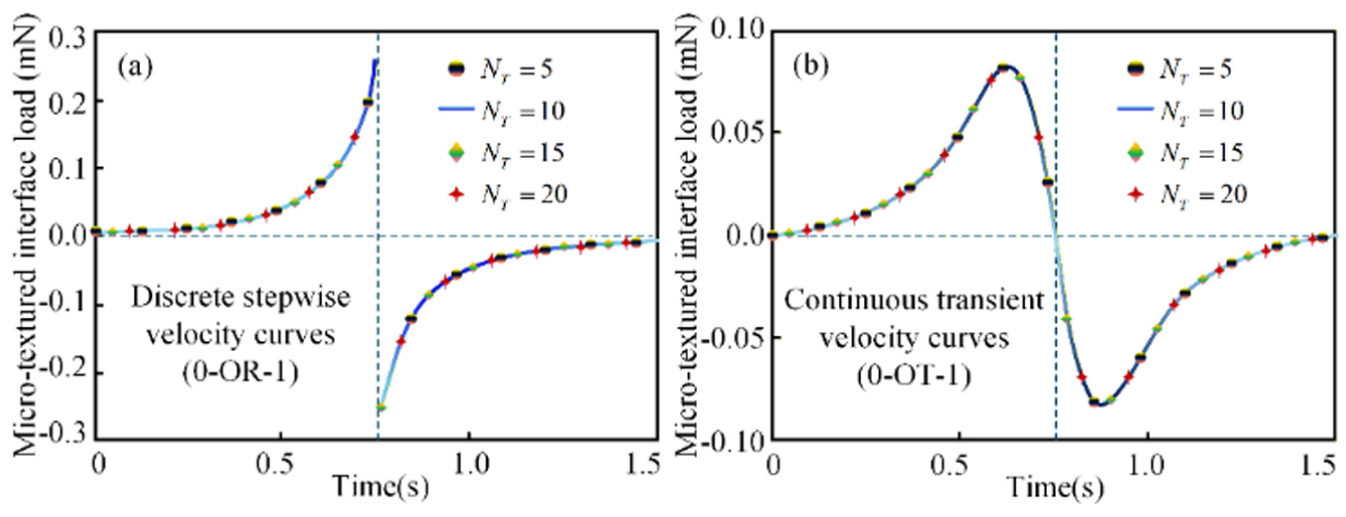
The temporal domain is partitioned into 100 time steps to accurately resolve the transient characteristics of meshing load-bearing distributions: (a) Discrete stepwise velocity curves (0-OR-1) and (b) Continuous transient velocity curves (0-OT-1).
Nevertheless, retaining the time integration in the objective function with a moderate
Multi-scale geometric configuration and spatial distribution of MET in modulating the ASLBC
For the IEL problem with MET geometry and the ASLBC in meshing interfaces, the spatial variations of homogenized coefficients
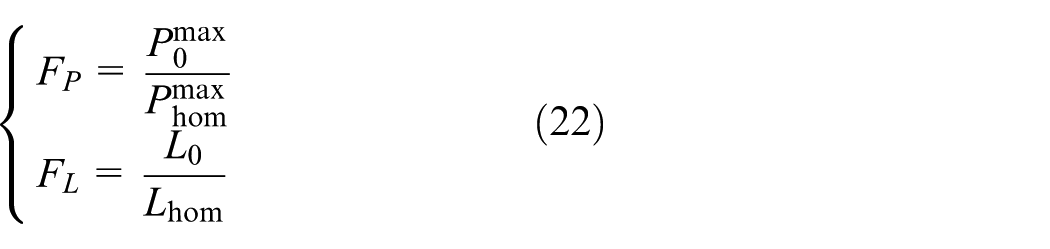
The MET geometric parameters are specified as

where,
Analyzing the temporal and spatial variations of the initial film thickness

Furthermore, to maintain compact notation, let

Numerical simulation analysis identifies
The meshing ASLBC problem with MET configuration is revisited to determine the expansion point, employing the 0–OR–1 microtexture as a representative case where the tensors
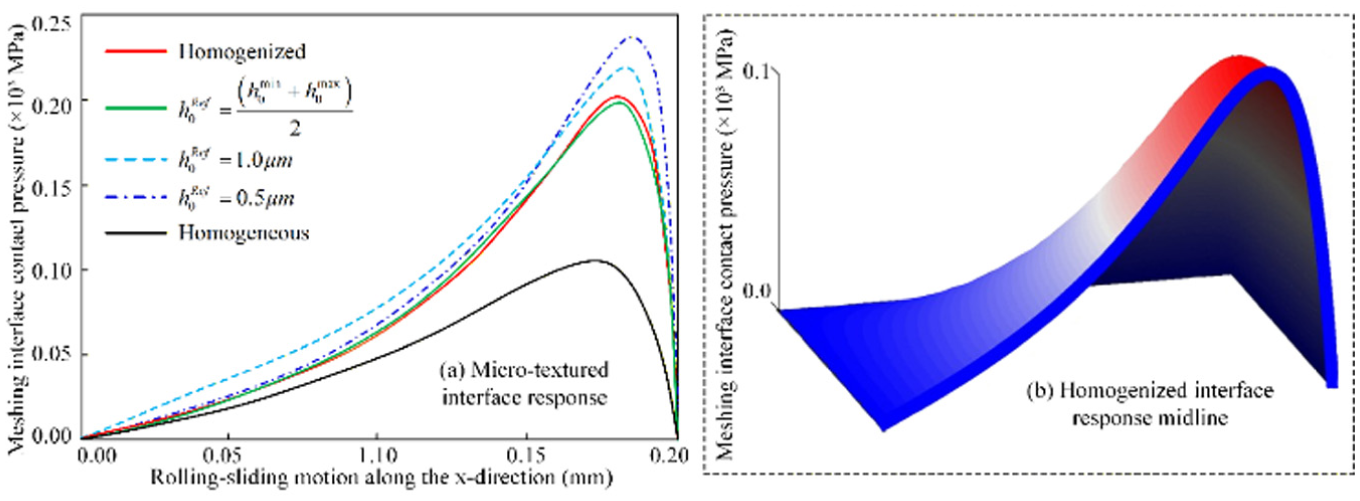
Comparative analysis is performed between Taylor expansion-based predictions of the initial parameters
The MET configuration follows the 0–OR–1 optimization outcome. To achieve higher accuracy in MET design evaluation, an exact homogenization error-free treatment is employed under specified operating conditions. Taylor expansion approximation methods are utilized to quantify the influence of MET parameters previously treated as constants, aiming to maximize the meshing ASLBC of the micro-textured interface for each case. Investigations reveal that the performance superiority of micro-textured meshing interfaces is largely independent of the specific film thickness distribution. Across various film thickness regimes (results not shown), the near-circular cavity configuration consistently emerges as the optimal MET topology throughout the meshing time domain. This finding offers significant computational advantages, as it eliminates the need for complex topology optimization procedures and enables the adoption of parametric MET configuration schemes with reduced degrees of freedom.
Although previous studies indicate that most macroscopic problem parameters exert negligible influence on optimal MET configuration design, the imposition of different boundary conditions in solving equation (3) yields markedly distinct outcomes. The homogeneous Dirichlet condition of zero pressure at domain boundaries has been adopted as the default in all preceding cases. When this is replaced by setting the normal component of the interfacial fluid flux (equation (2)) to zero at the boundary edges, the resulting MET configurations exhibit pronouncedly elongated characteristics. When employing zero-flux boundary conditions, the optimal texture configuration exhibits an asymmetric distribution with a shift of approximately 12%–15% toward the outlet edge. This offset effectively suppresses cavitation zone expansion through enhanced thermal effects. Under zero-Dirichlet boundary conditions, the texture distribution appears relatively symmetric, it may induce non-physical negative pressure phenomena in the outlet region.
56
The influence of the MET morphology parameter set
Optimized multiple linear regression algorithm with parameter correlation
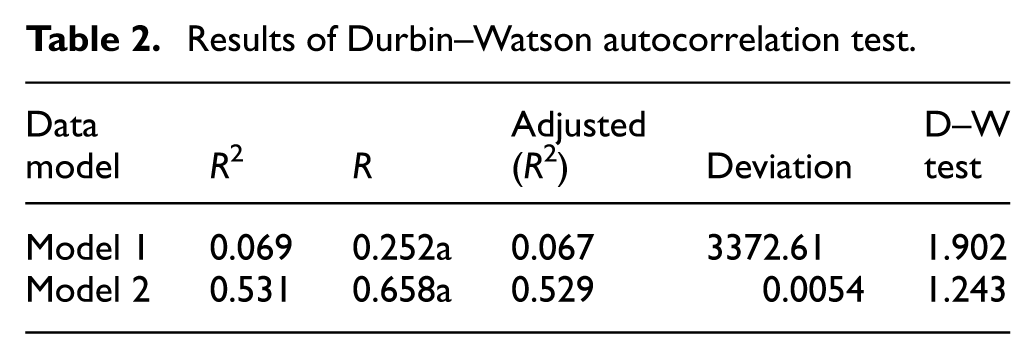
The D–W statistics for Data Model 1 (with meshing load-bearing capacity as the dependent variable) and Data Model 2 (with interface friction coefficient as the dependent variable) are 1.902 and 1.243, respectively, indicating the absence of autocorrelation in both linear regression models. The results presented in Table 2 are derived from the Durbin–Watson (D–W) test analysis. Further analysis reveals that MET parameters exhibit a relatively weak influence on the meshing load-bearing capacity, whereas their impact on the interface friction coefficient is considerably more pronounced. The coefficients of determination (R2) for Data Model 1 and Data Model 2 are approximately 0.069 and 0.531, respectively, with approximate standard deviations of 3372.61 and 0.0054.
Results of Durbin–Watson autocorrelation test.
The multi-dimensional dataset encompassing MET parameter combinations, meshing load-bearing capacity, and interface friction coefficients is imported into the Scientific Platform Serving for Statistics Professional (SPSSPRO) analytics platform, wherein the Technique for Order Preference by Similarity to Ideal Solution (TOPSIS) method is employed for multi-objective decision analysis. The meshing load-bearing capacity is designated as a positive indicator (benefit-type criterion), while the interface friction coefficient is designated as a negative indicator (cost-type criterion). The weights for each evaluation index are objectively determined through the entropy weight method. Based on the aforementioned analytical outcomes, the regression coefficients for the multiple linear regression (MLR) equations are obtained, as presented in Table 3. The mathematical expressions for Data Model 1 and Data Model 2 is formulated as follows:
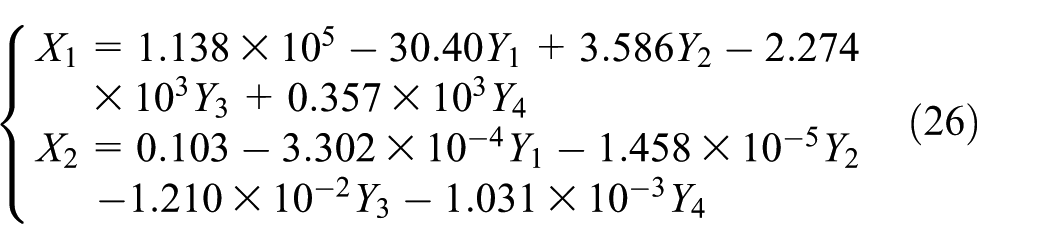
where
Parameter estimation in multiple linear regression model.
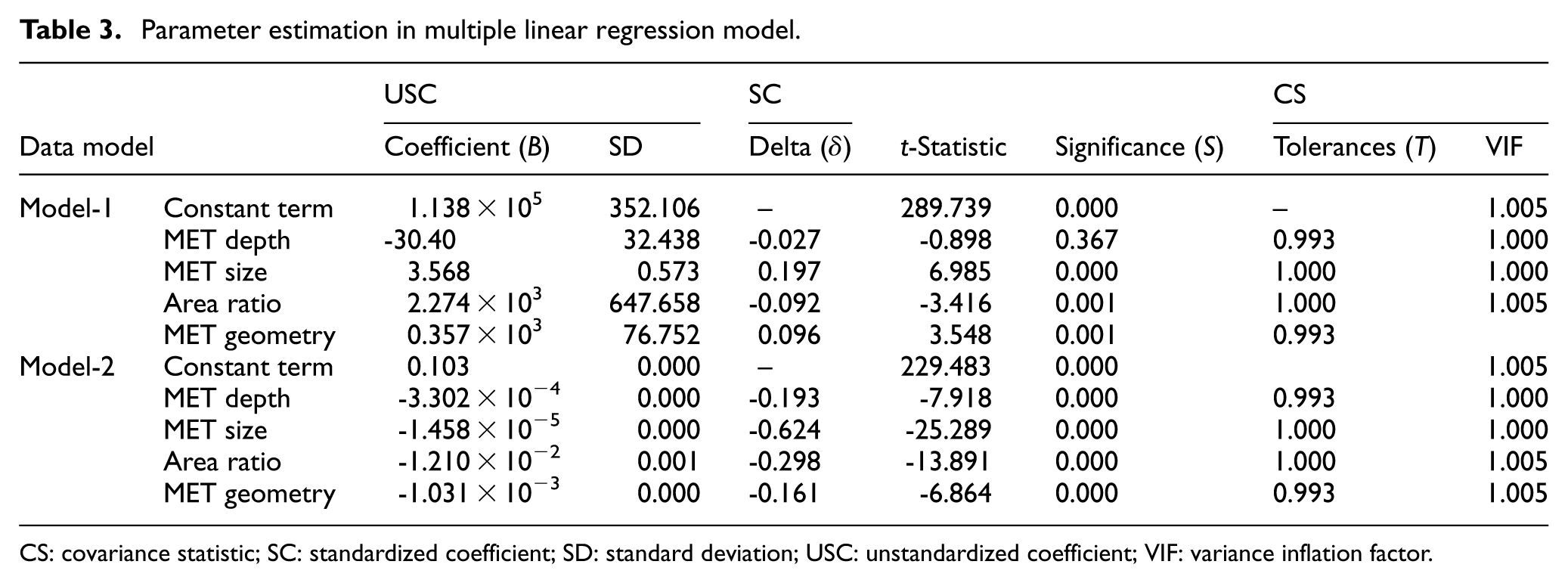
CS: covariance statistic; SC: standardized coefficient; SD: standard deviation; USC: unstandardized coefficient; VIF: variance inflation factor.
The significance value of MET depth in Data Model 1 is 0.367 (greater than 0.05), indicating that MET depth is not a statistically significant factor, as presented in Table 3. Considering the parameter importance across Data Model 1 and Data Model 2, the sensitivity ranking of meshing load-bearing capacity to MET parameters follows the order: dimension, area ratio, geometric configuration, and depth. Similarly, the sensitivity ranking of interface friction coefficient to MET parameters is dimension, area ratio, depth, and geometric configuration. The parameter sensitivity of interface friction coefficient obtained in this study aligns with the findings, demonstrating that MET depth exerts a less pronounced influence on interface friction coefficient compared to area ratio. This ranking differs from the results derived through the sequential factor analysis (SFA) standard deviation method, which may be attributed to the limited dataset employed in SFA. Following TOPSIS optimization, the optimal meshing load-bearing capacity and interface friction performance are achieved under the following conditions: characteristic dimension of 500 µm, area ratio of 40%, MET depth of 5.0 µm, and geometric configuration of transverse slit MET (TSl-MET). The optimized performance metrics are meshing load-bearing capacity of 1.106 MPa and interface friction coefficient of 0.0679. Compared with the untextured interface, the friction coefficient is reduced by 13.7%. Furthermore, relative to the results obtained via the SFA method, the friction coefficient exhibited an additional reduction of 4.58%.
Discussion of the results
The synergistic macroscopic response of IEL and ASLBC can be directionally modulated through micro-texturing. Optimizing the MET topology with the maximization of ASLBC at the meshing interface as the objective parameter holds significant engineering value. Existing research predominantly focuses on meso-scale MET morphological design, necessitating the development of full-scale numerical analysis methods for contact pressure distribution tailored to macroscopic MTMIs. However, as the characteristic scale of MET configurations diminishes, this analytical approach faces severe computational efficiency challenges. Current studies predominantly conduct topology design based on preset interface MET configurations, with geometric features largely confined to simple morphologies such as circular/square dimples and cylindrical protrusions, which inadequately exploit the potential of micro-textured IEL in modulating meshing ASLBC.
Qualitative comparisons with published experiments validate the multiscale numerical model. (1) Nonlinear saturation of MET depth effects: The predicted ASLBC saturation trend agrees with MTMI data in Wang et al. 20 Their tribological tests showed friction reduction plateaus when dimple depth exceeds ∼3–5 μm, aligning with the model-predicted diminishing returns in load-bearing capacity. Excessive depth increases flow resistance and attenuates hydrodynamic effects, yielding marginal ASLBC gains. (2) Optimal area density: The model predicts optimal MET area density of 15%–20%, consistent with the ∼18% reported for gear meshing load-bearing interface in Wang et al. 31 Despite differing metrics (ASLBC maximization vs friction minimization), both studies converge to similar ranges, suggesting a universal optimum for textured interface lubrication. Trend consistency across key parameters validates the model’s physical rationality and reliability. This agreement demonstrates effective capture of core lubrication mechanisms, providing credible guidance for experimental design and engineering applications.
This paper presents an anisotropic three-dimensional fractal rough contact model of discrete micro-elements that more closely approximates real gear meshing interfaces, and unveils the underlying mechanisms governing their dynamic load-bearing characteristics. The study further uncovers the periodic evolution law of gear transmission errors induced by the fractal characteristics of interface micro-elements. By integrating textured micro-elements into the dynamic system of the meshing interface, the accuracy of parameter identification is improved, and the influence mechanism of anisotropic interface roughness on the dynamic behavior of textured micro-elements is clarified. This work provides a quantifiable theoretical basis and a feasible technical pathway for optimizing precision machining parameters of meshing interfaces.
Although the gradient-based optimization algorithm employed cannot strictly guarantee local optimality, large-scale numerical simulations and cross-validation studies demonstrate that this method can stably converge to MET configurations with significant performance improvements, and sensitivity analyses of key design parameters further confirm the engineering applicability of the optimization results. Future research could be extended toward the coupling optimization of texture orientation and operating conditions, with the objective of establishing more generalized and universally applicable design guidelines.
Conclusions
The proposed MET design framework opens new avenues for computational MTMI engineering, offering both numerical efficiency and topological flexibility. However, further investigation is required to fully evaluate and expand its application potential.
Prior investigations have primarily utilized interfacial contact pressure distribution and meshing load-bearing capacity as macroscopic optimization objectives. Nevertheless, the modulation of interfacial lubrication characteristics and tribological load-bearing performance warrants equal consideration. Within the TEHL regime, establishing a mathematical characterization of IEL-mediated ASLBC regulation within the multi-scale framework, alongside analyzing its sensitivity to MET configuration design parameters, constitutes an imperative research endeavor.
The current strategy of employing a uniform MET configuration across the entire meshing interface, while enabling macroscopic topological optimization due to spatiotemporal variability, necessitates the deployment of differentiated optimal MET configurations in distinct interface regions within permissible design constraints, or even the realization of gradient MET with continuous evolution along the interface. The primary challenge in achieving this lies in the significant increase in MET configuration variable dimensionality, which directly exacerbates the numerical computational cost of the optimization problem.
Both the macroscopic solution domain and the clearance distribution are currently prescribed as predetermined conditions. If integrated with existing macroscopic topological optimization methodologies to achieve concurrent optimization of MET distribution morphology and macroscopic topology, a multi-scale interfacial engineering design system would be established, thereby opening new research directions for computational multi-scale IEL-coordinated ASLBC regulation.
Despite the significant improvements in macroscopic ASLBC achieved by the topologically optimized non-regular MET patterns, their practical manufacturability merits consideration. Although the generated configurations depart from conventional parametric geometries, the resulting topological contours are predominantly characterized by smooth, gradually varying profiles rather than high-frequency, discontinuous features. This inherent characteristic renders the optimized designs highly compatible with advanced ultra-precision surface texturing techniques, particularly laser micromachining with focal spot modulation or mask-projection micro-ablation. Furthermore, homogenization analysis reveals that the optimized stress fields alleviate localized stress concentrations at texture boundaries, thereby reducing the risk of fatigue spalling during service. Consequently, the proposed methodology not only delivers superior tribological performance in the numerical domain but also yields a tangible, processable geometry readily translatable to physical gear surface engineering applications.
Footnotes
Appendix
Acknowledgements
The authors would like to thank the Huaqiao University (HQU) and Heilongjiang Institute of Technology (HLJIT) for their support. Authors sincerely appreciate all participants for their contributions.
Handling Editor: Andrea Mura

Author contributions
Conceptualization, Xigui Wang and Yongmei Wang; methodology, Weiqiang Zou; software, Jiafu Ruan; validation, Xigui Wang, Yongmei Wang, and Jiafu Ruan; formal analysis, Weiqiang Zou; investigation, Jiafu Ruan; resources, Yongmei Wang; data curation, Weiqiang Zou; writing—original draft preparation, Weiqiang Zou and Xigui Wang; writing—review and editing, Xigui Wang, Yongmei Wang, and Jiafu Ruan; visualization, Jiafu Ruan; supervision, Jiafu Ruan and Weiqiang Zou; project administration, Yongmei Wang and Weiqiang Zou. All authors have read and agreed to the published version of the manuscript.
Funding
The authors disclosed receipt of the following financial support for the research, authorship, and/or publication of this article: This research was funded by the National Natural Science Foundation Sponsored Project (project approval number: 52475257), the National Key Research and Development Program Project (grant no. 2023YFB3406301), the Fund Project for Technological Field of National Defense Science and Technology Plan 173 (2024-JCJQ-JJ-2020) and (2024-JCJQ-JJ-2043), the Marine Propulsion Research and Development (MPRD) Program (grant no. MG20220203).
Declaration of conflicting interests
The authors declared no potential conflicts of interest with respect to the research, authorship, and/or publication of this article.
Data availability statement
All relevant data are provided within the manuscript.
Contribution of each individual co-author
No conflict of interest exits in the submission of this manuscript, and manuscript is approved by all authors for publication. We would like to declare on behalf of our co-authors that the work described was original research that has not been published previously, and not under consideration for publication elsewhere, in whole or in part. All the authors listed have approved of the manuscript, that is, enclosed.