







Abstract
Early childhood (EC) leadership literature indicates few theoretically based studies identifying and testing different models and characteristics of leadership. Objectives were thus to identify, describe and analyse what leadership meant to key EC participants; to consider roles, responsibilities and characteristics; to investigate core components; to capture practice and judge how it was understood and enacted. A case-study approach used 12 sites and multiple data-gathering methods: questionnaires; interviews; and in-depth ‘day in the life’ video vignettes. Participants described their organizations as hierarchical in structure and traditional in strategic decision-making, yet collaborative in culture and operational functioning. Variation in leadership, management and administration patterns across settings indicated multiple leadership roles in diverse EC settings. Principal components analysis revealed that those with postgraduate qualifications favoured ‘leaders as guides’; those with professional heritages other than teaching leaned towards ‘leaders as strategists’; those with NVQ qualifications tended towards ‘leaders as motivators’; those with postgraduate qualifications also valued ‘leaders as business oriented’. New models of leadership are thus worthy of consideration. Leaders acknowledged difficulty in standing back and reflecting, recognizing an essential aspect of leadership was ongoing thinking and decision-making, inaccessible unless they ‘talked-aloud’ whilst engaging in professional practice. This suggests a need to increase self-understanding and alternative routes to problem-solving.
Introduction
In this article we explore early childhood (EC) leadership that took place at a time of great change in England in services for children. The Children Act (Department of Education and Skills [DfES], 2004), building on a previous Green Paper Every Child Matters, set out five outcomes for all children that high-quality universal services should help them achieve. The 10-year childcare strategy, Choice for Parents, the Best Start for Children(Her Majesty’s Treasury, 2004) and the Childcare Act (DfES, 2006) that followed aimed to provide long-term goals and a vision to ensure that every child should get a positive start in life and that parents should be given more choice in balancing work and family life. Since this time, reports including the update to the Children’s Workforce Strategy (DfES, 2007), The Children’s Plan (DCSF, 2007) and Building Brighter Futures: The Next Steps(DCSF, 2008) have continued to map out the direction of children’s services for the future and a vision for a new workforce that included a new Early Years Professional. This in turn generated a challenge to create effective leaders to run children’s services and early years settings throughout the country. They are now charged with managing related areas of care, health and family support, integrated with education and leading, deploying and developing staff with different professional perspectives and related qualifications and with experience, diverse in quality and effectiveness. Despite a difficult financial situation, Teather (2011) recently announced that the Department for Education had pledged a good spending review settlement for early years services, including recruitment and deployment of graduate leaders and continuing support for children’s centre leadership through the National Professional Qualification in Integrated Centre Leadership. The independent report on the Early Years Foundation Stage (Tickell, 2011) has also recommended a progression structure for qualifications, linking these to leadership qualifications and identifying clear career pathways for practitioners. Continuing professional development for all who work with young children was also emphasised in the Nutbrown Report (Nutbrown, 2012).
Indeed, effective EC leadership is widely accepted as being a key constituent in achieving organizational improvement (see for example, Office for Standards in Education, 2008). However, our own review of EC leadership literature (Muijs et al., 2004) found research to be limited and dominated by a relatively small number of researchers (for example, Bloom and Sheerer, 1992, 1997, 2000; Rodd, 1996, 1997, 1999, 2006). One interesting distinction between the field of EC leadership and other fields that have been studied is the extent to which women occupy leadership roles, which contrasts strongly with the business world.
Such research as exists is not well informed by theory and research in the broader field of leadership studies, in education, public sector or business leadership. Much of the existing literature has focused on the roles and characteristics of EC leaders gathered largely through self-report. There appear to be few case studies of effective EC settings or quantitative analyses of what effective EC leadership practice is in terms of processes and outcomes. Some researchers of EC leaders have turned to school sector leadership research, though even here evidence for the impact of leadership on learning outcomes for children is disputed. The influence of leadership has been described by Hallinger and Heck (1998) and Leithwood et al. (2004) as modest though by contrast, Marsano et al. (2005) have claimed it as quite substantial. In response, Robinson (2006: 63) argued for the need to redirect attention to effective educational leadership research so that stronger connections with learning, pedagogy and assessment were made, and fewer links to ‘generic’ leadership research. She emphasized that generic leadership research might provide guidance about influences and processes involved in leadership and about the character and dispositions required to exercise the particular influence that we call leadership, but it offered little or nothing that addressed questions about the direction or purpose of the influence.
In short, while generic leadership research can inform us about how to influence, and about the values that should inform the influence process (for example, democratic, authoritative, emancipatory), it is silent about whatthe focus of the influence attempt should be.
This suggests a need to identify what effective educational leadership practices and outcomes in general should be and within the specific field of EC, which has a scarcity of leadership research despite the high potential for activity in the field.
Leadership as an Aspect of Organizational Life
In the mainstream literature, definitions of leadership abound, involving traits, behaviours, situational contingency, function and effectiveness, vision, values, intelligence and wisdom. At its most fundamental level, leadership requires followership. Some degree of social influence exerted by one person to gain support from others is required in order to achieve a common task or goal or transformation (Avolio and Bass, 2002; Bass, 1985), with Yukl (2006) providing a comprehensive review of definitions of leadership, popular theories and styles of leadership.
Suffice it to say that criticisms of traditional approaches to leadership in terms of qualities, ‘traits’ or characteristics led theorists to investigate leadership as a set of behaviours, and attempts were made to identify broad leadership styles of successful leaders (see Spillane et al., 2004, for a thorough review of the area). Style of leadership was often seen as contingent to the situation, suggesting that approach should be matched to situation (Vroom and Sternberg, 2002) and to followership (Hersey et al., 2008).
The influence of leaders on organizational outcomes is generally recognized as an important element of leadership performance or effectiveness (Day and Lord, 1988; Kaizer et al., 2008). As Kaizer et al. (2008) have noted, however, distinctions between performance and effectiveness need to be made. While job performance relates to the contribution of behaviour to the achievement of organizational goals, job effectiveness relates to evaluation of the results or outcomes of such performance. Job effectiveness will also be influenced by many internal and external factors that are to varying degrees in the control of the leader. Identifying factors that enhance collective action towards organizational goals is important in establishing predictors of leadership performance. Hence, Kaizer et al. (2008) distinguish leader effectiveness, leader emergence and leader advancement (that involves the attainment of leadership over a career) in their consideration of performance.
This suggests that interpersonal, cognitive and administrative skills may be at play. Recent theories of leadership have included multiple intelligences as forms of leadership (Gardner, 1995); transactional or transformational leadership that creates positive change in followers (Avolio and Bass, 2002); visionary leadership (Sashkin, 1988; Strange and Mumford, 2005). Sternberg (2007) proposed a model for developing expert leaders that synthesizes wisdom, intelligence and creativity. From this emerges a notion of ‘practical intelligence’ and good leadership as creative decision-making.
Uhi-Bien et al. (2007), however, have noted that leadership models of the last century have been products of a top-down bureaucratic paradigm. These might have been effective for an economy premised on industrial production but are not well suited to a more knowledge-oriented economy. Complexity science, they argue, that studies complex systems with many interacting parts, suggests a different paradigm for leadership, as a complex interactive dynamic from which adaptive outcomes, for example, learning, innovation and adaptability, emerge. Notions of leadership rooted in stable attributes, roles and responsibilities, power, hierarchy and influence of one person, with vision, direction and moral purpose, presuppose a traditional leader operating in a relatively unchanging environment. Such theory fails to take account of multiple, shared or joint leadership emerging in contemporary theory.
Bennis (1999) has identified wider globalizing trends and influences on leadership. Describing a world in which political and technological complexity and change encourage collaboration and teamwork, he has called for an end to traditional leadership. Post-bureaucratic organizations evolving into federations, networks, clusters, cross-functional teams and temporary systems need a new kind of alliance between leaders and the led, and more indirect form of influence for leaders to be effective. In other words, leaders will have to learn new skills, neither understood nor taught in business schools and hence rarely practised. In this ‘new reality’, intellectual capital rather than capital – ‘brain power, know-how human imagination’ – may be the criterion for success.
Leadership in this context is likely to be conceptualized as a situational, socially constructed and interpretative phenomenon (Hujala and Puroila, 1998), residing not in the leader and examined in relation to social interaction in the setting, the local community and a wider social and cultural context. Drawing on activity theory and theories of distributed cognition, Spillane et al. (2001) have conceptualized educational leadership practice as a distributed practice that involves formal and informal leaders, followers and a variety of organizational tools and artefacts. For Spillane and Diamond (2007), the distributed leadership practice is constituted in the interaction of school leaders, followers and the situation.
Implications for EC Leadership
This world of social, economic and technological change is described by Giddens (1990, 1991) as ‘late modernity’ and characterized as destabilizing traditional family forms, school and work life, including institutional arrangements made for EC, social relationships within institutions and the children themselves. This suggests the need to take account of the complex, contradictory and diverse demands being made of EC leaders both inside and outside their work environment. It also suggests the need to reassess leadership theories that address contemporary challenges in a changing and globalized world and, as noted by Ebbeck and Waniganayake (2002), there is much to be gained from advances in theory and research across disciplines.
Waniganayake (2000) proposed a distributed EC leadership model with organizational learning at the centre and the possibility of more than one leader or even multiple leaders or specialists within the organizational centre, each with expertise in a particular domain of operation. For leadership to work, all of these leaders would need to work together, to plan this participatory and decentralized approach cohesively and strategically. Given the rapidly changing societal context, the distributed model relying on building relationships through existing knowledge and empowerment based on confidence offers one way forward. Leadership then emerges through creation of a culture of learning and shared knowledge in collaborative ways.
This was the context as our own study in England was first being planned with a group of local leaders keen to explore EC leadership and willing to interrogate their own practice. A corresponding interest in studying EC leadership came from the team of researchers themselves who represented a variety of research interests and perspectives on EC leadership and who had an interest in reassessing leadership theories that address contemporary challenges in a changing and globalized world. The first stage was to set some clear objectives to shape our joint exploration of EC leadership.
Objectives
The research objectives proposed attempted to take account of what was known already about EC and what we wanted to find out. Given the dearth of EC leadership studies it was clear that our study would be exploratory in nature. The research thus aimed:
to identify, describe and analyse what leadership means to key participants in EC settings;
to consider the nature of the roles, responsibilities and characteristics of leadership in EC settings;
to investigate the core components of effective EC leadership, its knowledge, skills, attitudes and strategic intent, that is, vision, goals and operational objectives;
to capture EC leadership practice and judge how it is understood and enacted.
Methods
A collective case-study approach was adopted, using multiple sites (Herriott and Firestone, 1983) to represent the full range and diversity of EC settings in England and multiple data-gathering methods. The interest in the individual cases in the collection was ‘instrumental’ (see Stake, 2000), in the sense that the intention was to provide insight into and advance understanding of EC leadership.
i) Sampling Process
Twelve settings were located in a large Midlands city, representing the full range of EC provision:
three private nursery and daycare settings;
two voluntary family centres;
four nursery and reception classes in infant and primary schools, the ‘foundation stage’ unit (for three- to five-year-olds);
three integrated children’s centres providing a range of services for children birth to four years, their families and the community.
Maximum variation in type of establishment, size, status and complexity was ensured and participants recommended by the local EC adviser on the basis of high-quality leadership practice, identified on the basis of relevant OFSTED inspections. The 12 leaders had taken part in a preliminary leadership seminar that brought together researchers and 25 EC leaders to pool their existing knowledge before considering what the next stage of their joint investigation of leadership should be. The participating leaders were particularly keen to reflect upon their practice and self-evaluate in a supportive climate, acknowledging both the dynamic and contextualized nature of ‘quality’ in leadership.
ii) Data-gathering Methods
As case researchers seek both what is common and particular about the case/s, an attempt was made to draw out the nature of the site (or case), its background and physical setting, within the broader changing policy context, in the light of other similar cases through which this case was recognized (if at all), with the aid of informants through whom the case could be known (Stouffer, 1941). Accordingly, data-gathering methods were selected in order to gather data on all the above, with an emphasis on the particular but not avoiding generalization where this seemed appropriate. The direction of data-gathering from survey to interview, through to direct observation and diary record allowed issues (‘foreshadowed problems’ of Stake, 2000) that emerged at one stage to be pursued in the next phase. At the same time, multiple sources of information (methods, investigators and theories) provided triangulation.
Methods thus comprised:
Questionnaires to all staff and governors in each setting (a total of 194 were distributed);
Semi-structured interviews with the 12 EC leaders;
Group interviews with six other staff, including middle leaders (where they existed);
In-depth ‘day-in-the-life’ vignette of each leader, accessed through one-day diary records and five-hour video-taped observations, with a final review to begin data analysis and reduction for a 30-minute compact disk of edited highlights.
iii) Design
Questionnaire topics covered background information, leadership roles and responsibilities, leadership in the current context and training and development needs. Questions were fixed-choice to ease analysis, using rating scales and ranking. The draft instrument was piloted with 10 EC leaders and scrutinized by a recognized international expert (Rodd, personal communication, 2005). Small adjustments were then made.
Follow-up interviews with the leaders and group interviews with six staff allowed in-depth exploration of areas identified by the survey. Open questions focused on definitions and perceptions of leadership, roles, responsibilities and functions; and decision-making and culture. Standard prompts and probes were made, where necessary.
A diary proforma was designed for leaders to maintain a record of the day against a time-line, during and/or at the end of the ‘day-in-the-life’ video recording as time permitted. Leaders were encouraged to review the record, to identify any particular ‘critical moments’, incidents or activities that arose and any questions that they might have for clarification by the researcher who accompanied the cameraman. The researcher kept a similar record though, as observer, this was a running record across the day. A day was set aside to watch five one-hour tapes of video footage with each leader with a view to capturing highlights, short clips of one to three minutes, occasionally longer, of leadership roles, responsibilities, functions and decision-making being enacted, using the diary record to aid selection of sequences. Leaders were also prompted to consider whether what they saw was consistent with their initial definition of leadership and matched the ‘typical day’ in their life that they were asked to describe in interview. A pre-edit log sheet with times, duration, scene description and comment was made in order to assist the video editor in compiling the 30-minute clips.
iv) Analysis
For the survey data, parametric and non-parametric analyses were carried out, as appropriate: ordinary and categorical principal component analysis, Spearman correlations, Kruskal-Wallis and Likelihood ratio chi-square, Mann-Whitney significance test and Cronbach’s alpha scores. Any emergent, situated issues that arose could then be fed into interview questions. Leader and staff-group interview data were examined question by question and N-Vivo analysis carried out to identify any further themes, issues and trends. Selection of 30-minute video highlights was led by leaders and supported by their diary records that helped to organize the viewing and reviewing process that was interrogated further by questions identified by leader and/or researcher. Leaders were also asked to present a small illustrative video clip for their fellow leaders at a final joint review meeting. Leaders’ own diary records provided both a basis for selection of video themes and highlights and a basis for triangulation.
At the request of leaders, the 30-minute video-highlights were reviewed independently by researchers and emerging themes compared and revised till consensus about interpretation was achieved. In order to gain some degree of quantification, an attempt was also made to classify the short clips within each leader’s collection, in order to achieve event recording within video highlights. In this case, the ‘event’ was the short leader-selected clip, so it had a beginning and ending and specific time period. It offered some means to quantify what people did and how social interaction was routinely enacted in a compressed time sequence of the highlights for exploratory purposes.
Results
i) Survey Results
One hundred and ninety-four questionnaires were distributed across 12 institutions representing a range of EC settings. The survey targeted all staff in the 12 organizations, fulfilling various roles, including middle leadership, accountable to the main leaders. One hundred and thirty-one questionnaires were returned (a 68% response rate). Twenty-nine out of 36 staff who were carrying a leadership role responded (an 81% response rate).
a) Demographics
There were four male respondents, one in administration, one a teaching assistant and two with unspecified positions. Three of the men were between 50 and 59 and the fourth between 30 and 39. They were generally older than the rest of the sample (Mann-Whitney U = 100.5, p = 0.03) (Table 1).
Age of respondents.
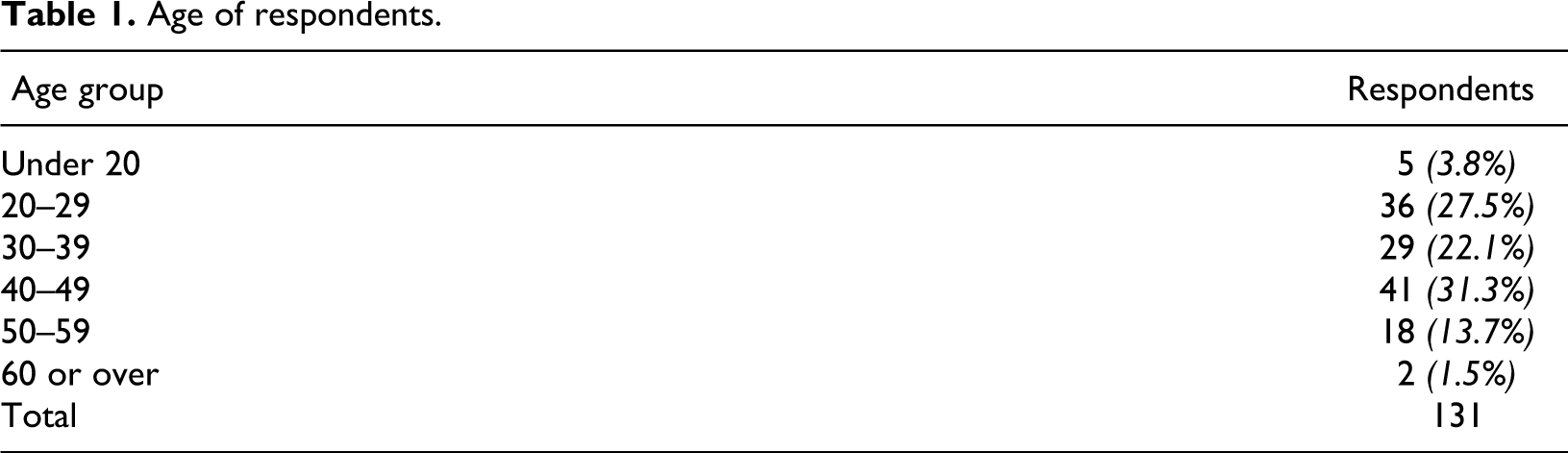
The ages of the majority of respondents were fairly evenly distributed between 20 and 49.
There were differences in the experience of respondents in different positions (Kruskal-Wallis c2 = 29.4, p = 0.009) and between leaders and non-leaders (Mann-Whitney U = 890.5, p = 0.002, one tailed). Those in leadership positions had had six or more years experience in EC settings. with the exception of two team leaders with three to five years experience and two owners with two years or less.
b) Training
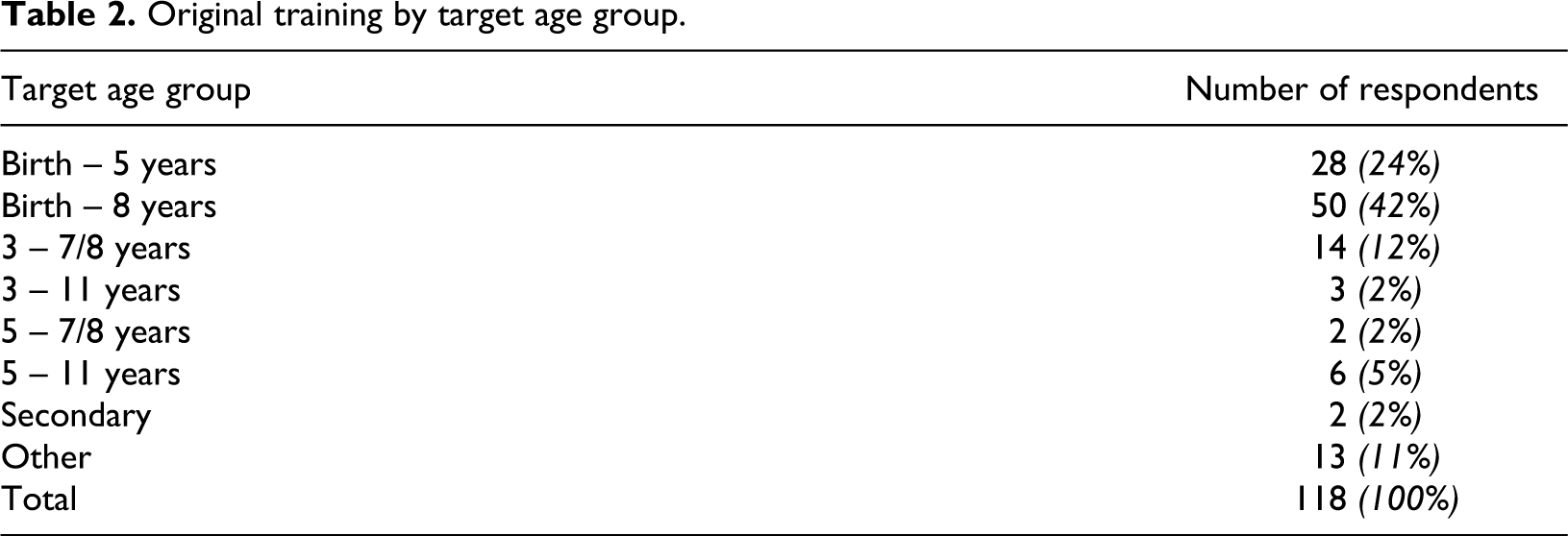
Of 118 respondents, 78 (66 percent) had training related to children from birth upwards, 17 (14 percent) had training from three years upwards and 23 (20 percent) from five years upwards. Many respondents had thus not initially received training to work with very young children (Table 2).
Original training by target age group.
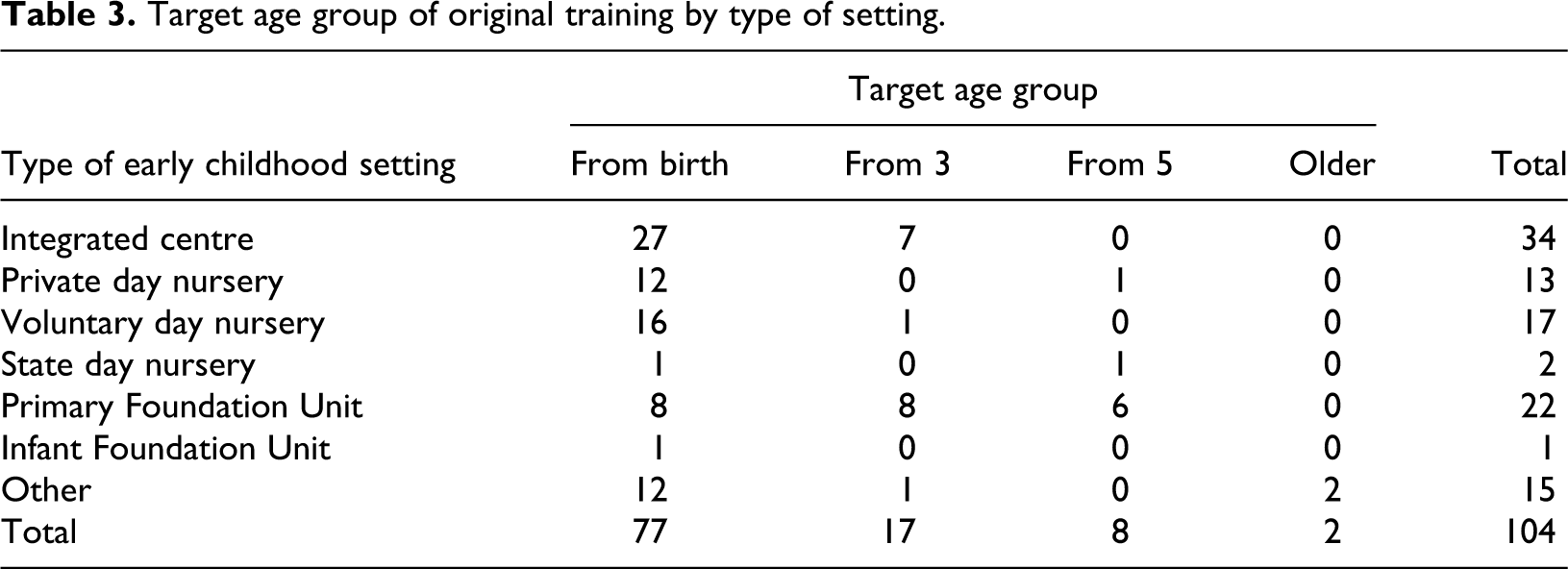
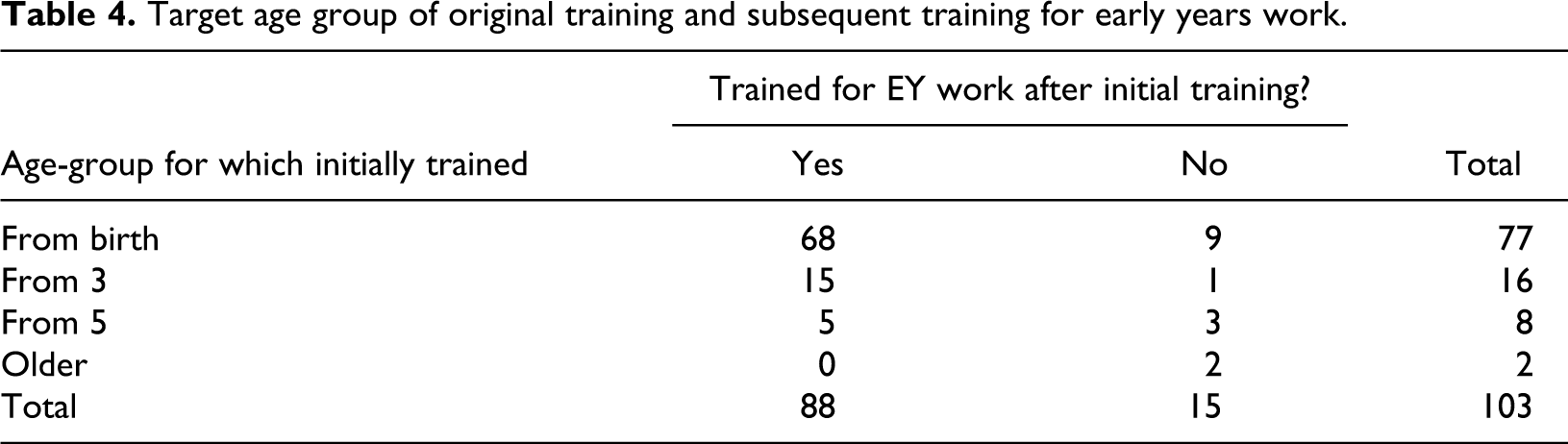
Half of those reporting no initial training for working with children under five also reported no subsequent training (Table 4). These included one owner, one foundation-stage leader and three teachers (Tables 3–5).
Target age group of original training by type of setting.
Target age group of original training and subsequent training for early years work.
Types of subsequent training for early years work, completed and in progress.
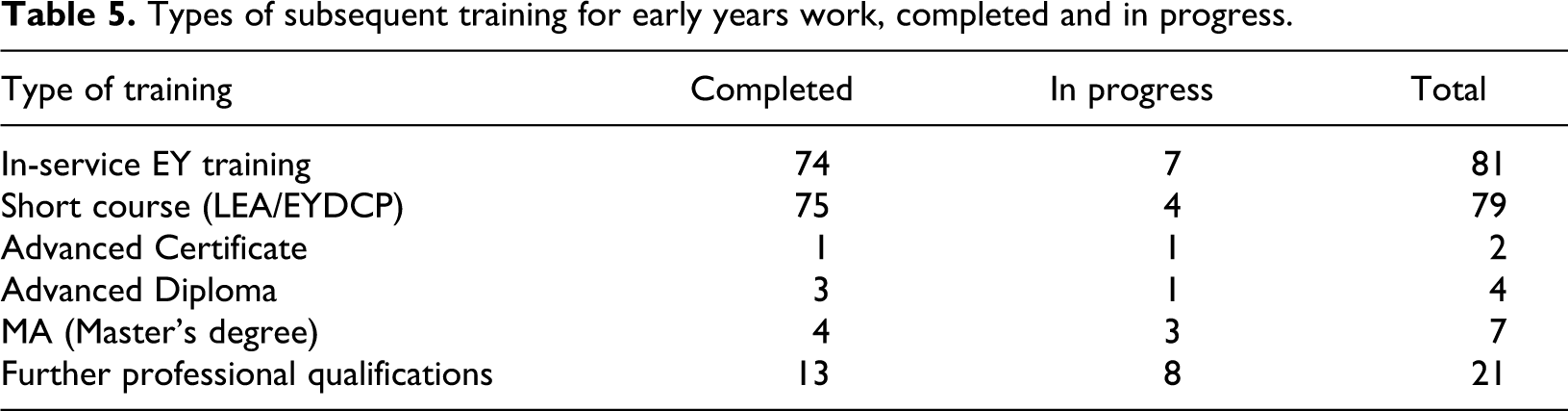
The four with master’s degrees were in leadership positions, aged between 30 and 49 and with less than 16 years’ experience in EC settings. Three of them were initially trained to work with children under five.
c) Roles, Responsibilities and Functions
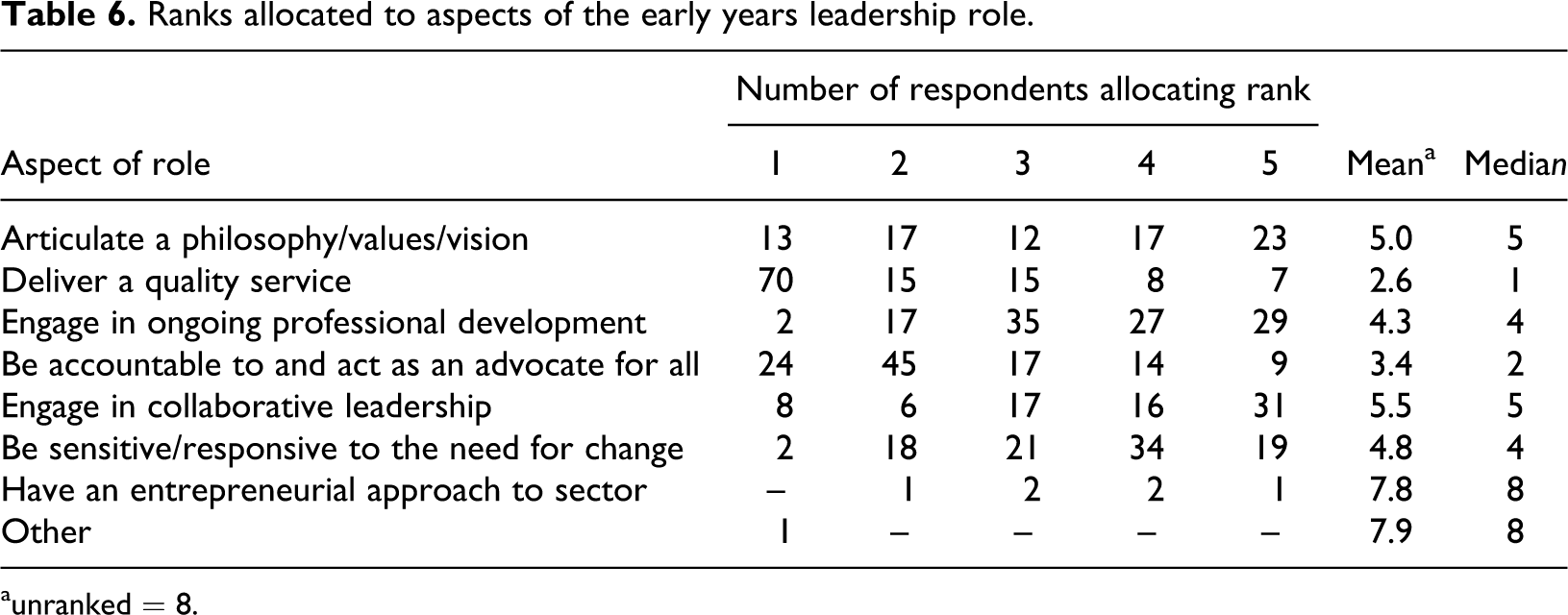
Respondents were offered seven aspects of the leadership role (and the opportunity to add another) and asked to rank the top five in order of importance. To simplify analysis unranked items were taken to have a rank of 8 (Table 6).
Ranks allocated to aspects of the early years leadership role.
aunranked = 8.
There was high agreement that the most important aspect of the role is to deliver a quality service, ranked first by 53 percent of respondents, so the median rank was first and had the best mean rank (2.6). The aspect considered next most important was being accountable to and acting as an advocate for children, parents, staff, the profession and the general community, with a mean rank of 3.4. At the other extreme was an entrepreneurial approach, mindful of the competition with others in the sector, which nobody ranked first and which was included in the top five by only six people (Table 6).
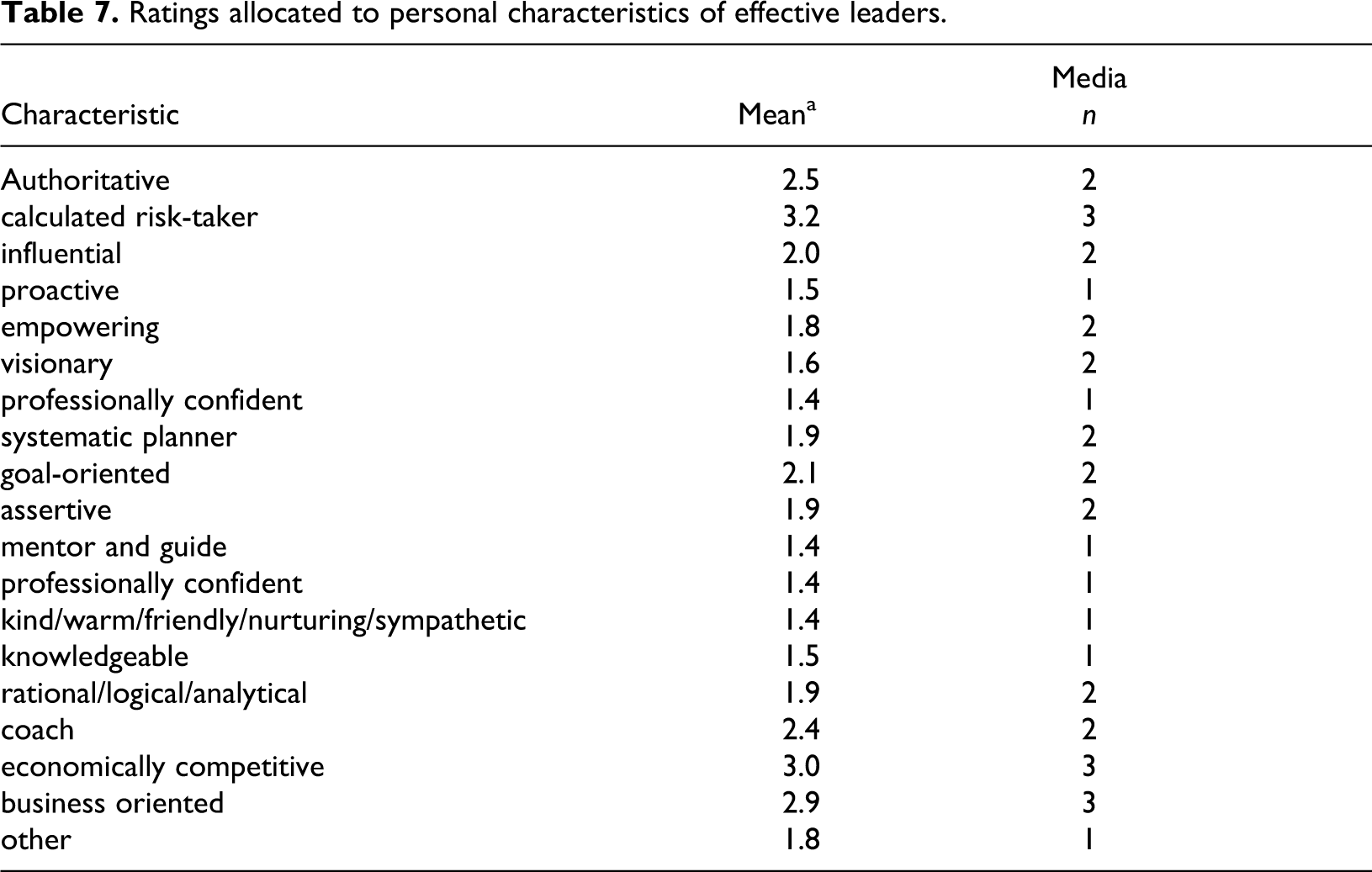
d) Personal Characteristics of Effective Leaders
The question regarding characteristics of effective leaders was in Likert scale form.
In Table 7 respondents who did not rate a particular characteristic are omitted, whereas for later analysis they are counted as giving a rating of ‘moderately important’. The two who gave no responses to this question at all are omitted from all analysis relating to it. Only being a calculated risk-taker, being business-oriented and being economically competitive had mean ratings at or below ‘moderately important’, with ‘being business-oriented’ just above. Principal components analysis was used to seek for trends in the pattern of responses. This is a way of identifying patterns in data and expressing them in such a way that similarities and differences are highlighted. The advantage is that it reduces the number of dimensions but without much loss of information. Two forms of analysis were used, the more complex of which took account of the ordinal nature of the data. However, as the results of both approaches were similar, the simpler version is to be preferred and is presented here. Principal components analysis reveals the major ways in which responses differ. In practice, the first principal component (PC1) usually indicates that the main way in which responses differ is that some respondents are more positive about most things and some are less positive about most things. This was the case here: PC1 simply indicated that the main way in which respondents differed amounting to 24% of the total variance) was in the levels of importance that they attached to the characteristics of leadership in general. This is of little interest in showing the structure in the pattern of responses and is not dealt with further.
Ratings allocated to personal characteristics of effective leaders.
The next three principal components (PC2–PC4) successively make allowances for each respondent’s score on previous PCs and reveal the next aspect in which most differences can be found between patterns of response. Each PC represents a contrast between two groups of items which do most to separate out the respondents into those who are relatively more positive about one group and those relatively more positive about the other. The two groups of variables are arbitrarily assigned positive values in one case and negative in the other. In Table 8, the contrasted items are listed under the headings Pole 1 and Pole 2. Although the assignment of the labels is as arbitrary as the assignment of positive or negative values, this does avoid any apparent favouring of one list against the other.
Schematic list of personal characteristic variables contrasted in principal components 2, 3 and 4.
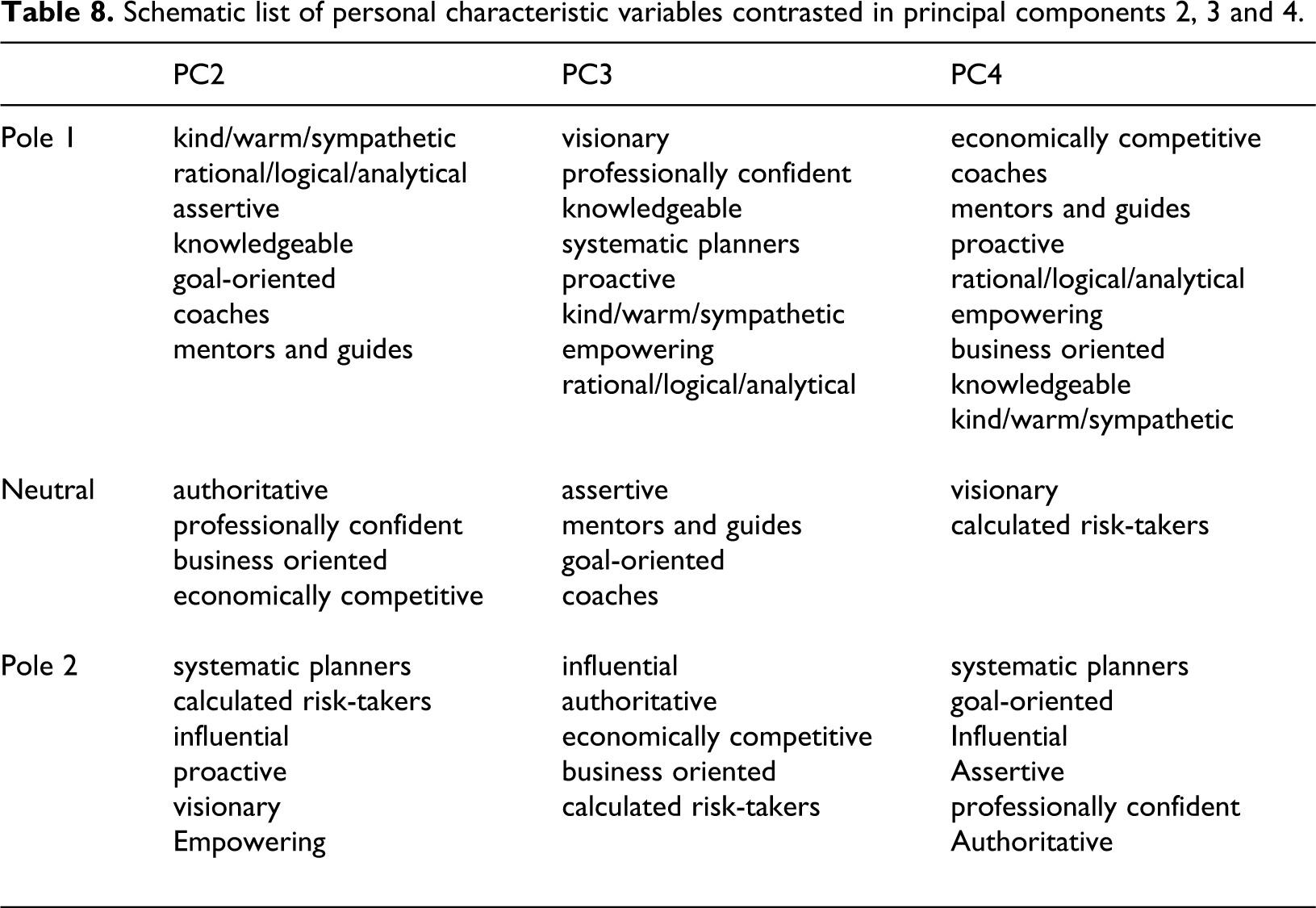
With regard to deciding what is common between the items at a single pole or what the poles mean, researchers are in no privileged position relative to readers. Certain sets of variables always appear close to each other in each of the lists, for example, ‘economically competitive’ and ‘business-oriented’. The most surprising is the group consisting of: being kind, warm, friendly, nurturing and sympathetic; being rational, logical and analytical; and being knowledgeable. Some of these characteristics would usually be seen as opposed to each other (warm and friendly against cold and analytical) but the same respondents were rating them high and the same respondents were rating them low. This may suggest tentatively that a balance between these qualities is what some people see as making a good leader. In PC2 it seems these qualities are allied with people-centred qualities such as coaching and mentoring: that is, an emphasis is placed on things allied to the warm, friendly side. PC3, which explains less variance and is only important once the scores for PC1 and PC2 are discounted, appears to link these qualities to professional qualities and contrast them with economic concerns. PC4 is difficult to interpret. Readers may form their own views.
Against the background of this principal components analysis, a comparison was made between different types of respondent. Those with postgraduate qualifications tended towards the first pole of principal component 2 (favouring warmth, rationality, knowledgeability, assertiveness, goal orientation, coaching, mentoring and guiding) and those with ‘other’ qualifications towards the second (favouring systematic planning, risk-taking, influence, proactivity, vision and empowerment) (F 5,95 = 3.7, p = 0.004). Those with NVQ qualifications tended towards the first pole of principal component 3 (favouring vision, warmth, professional confidence, systematic planning, proactivity and empowerment) and postgraduates towards the second (favouring influence, authority, economic competitiveness, business awareness and risk-taking) (F 5,95 = 2.6, p = 0.03). These differences between groups suggest that the PCs do have some importance, although further work would be required before any strong claims could be made for them.
e) Who Makes the Decisions?
Asked who made the decisions in their organization, the total number of ‘all the time’ responses, suggests that at least some of the respondents saw more than one group of people ‘making the decisions all of the time’. It seems reasonable to assume that at least some respondents have interpreted ‘all the time’ to mean ‘a lot’, ‘some of the time’ to mean ‘a little’, and ‘none of the time’ to mean ‘not at all’.
Rating of preponderance of decision-making by various actors.
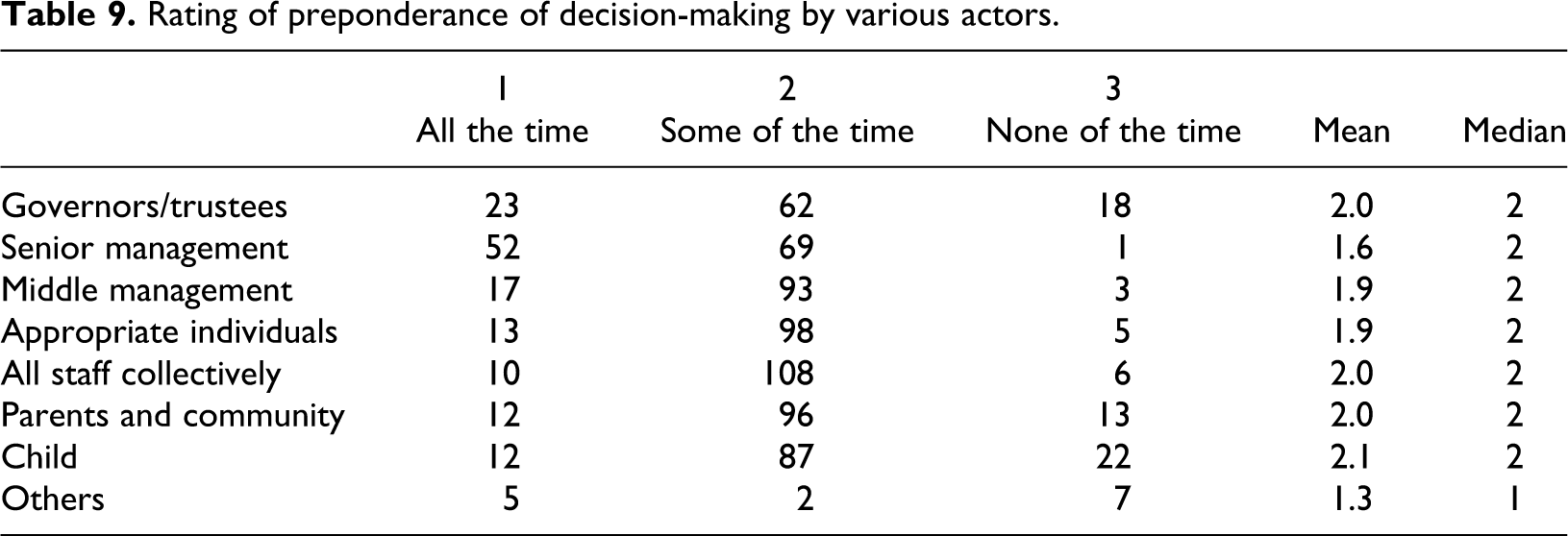
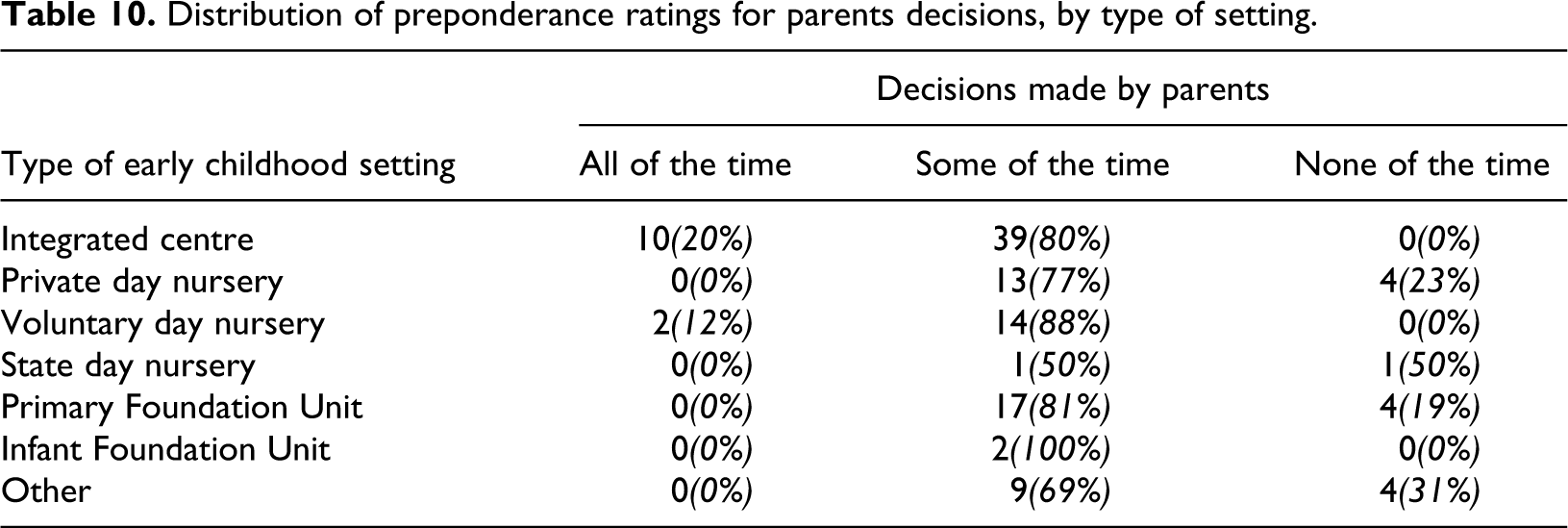
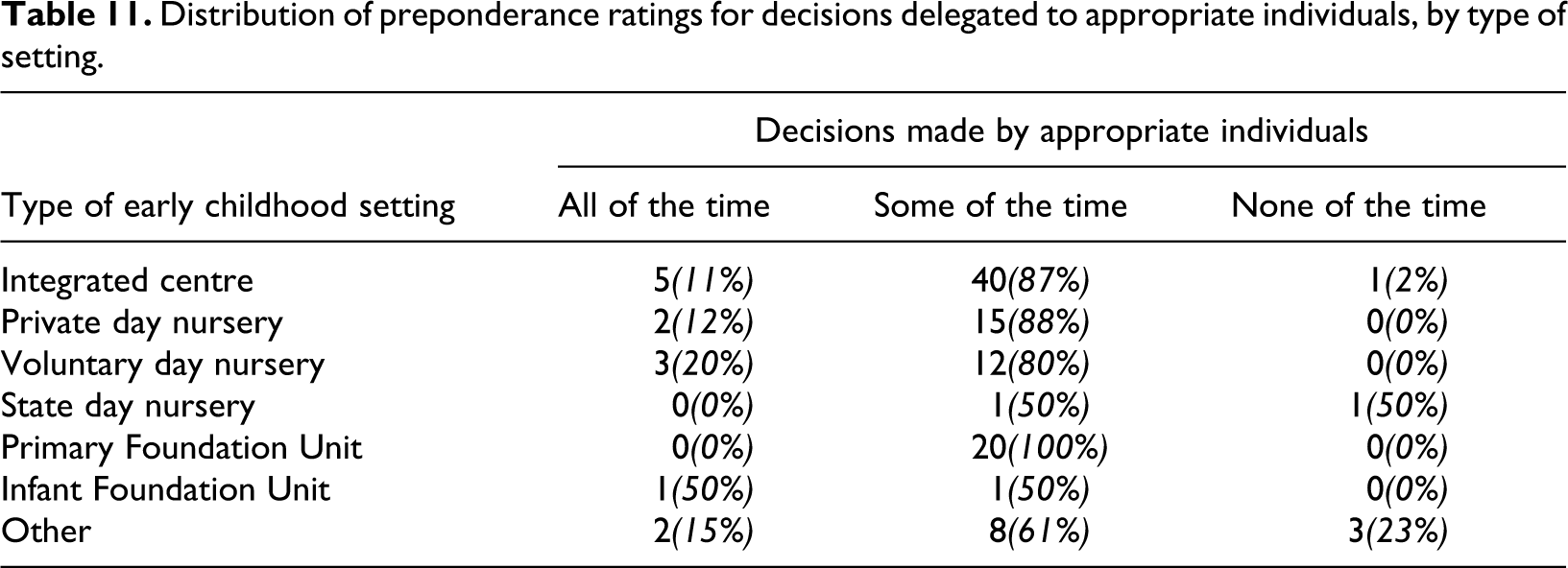
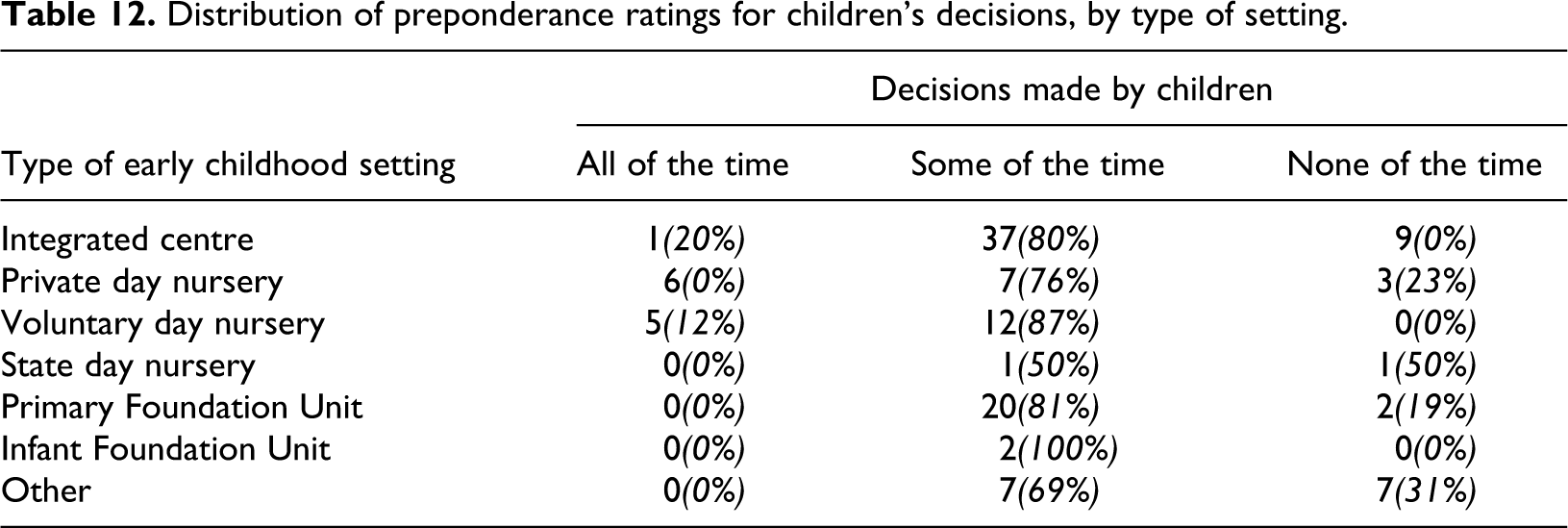
For all participants the median rating is ‘some of the time’. The child was reported as having the least input to decisions, but only slightly less than parents and the community, all staff collectively and the governors or trustees! There was evidence for a different response from participants from different types of setting. Table 10 shows that respondents from integrated centres were disproportionately more likely to say that parents made decisions all the time and less likely to say they never made decisions (Likelihood Ratio c2 (12) = 38.0, p < 0.0005). Respondents from state day nurseries and ‘other’ settings were disproportionately more likely to say decisions were never delegated to appropriate individuals (Likelihood Ratio c2 (12) = 23.1, p = 0.027) (Table 11). Respondents from private or voluntary day nurseries were disproportionately more likely to say decisions were made by children all the time (Likelihood Ratio c2 (12) = 42.5, p < 0.0005) (Table 12).
Distribution of preponderance ratings for parents decisions, by type of setting.
Distribution of preponderance ratings for decisions delegated to appropriate individuals, by type of setting.
Distribution of preponderance ratings for children’s decisions, by type of setting.
ii) Interviews
Interviews are presented within key themes clustering around leadership definitions and perceptions; roles, responsibilities and functions; and decision-making. There were nine British white females, one Indian-heritage female and one Bangladeshi-heritage male. (One leader left her post and was unavailable to take part.) Three led integrated centres, three led foundation stage units (one also a deputy head teacher), two led voluntary-sector family day care and two private day care settings.
Leaders’ perceptions and definitions of leadership were wide-ranging. Generic theory and principles of leadership were described as common and transferable across sectors, though some felt that what characterized EC leadership as distinct was ‘more emotion and less standing back’ and by a particular quality in caring. Previous experiences, role models and academic study were acknowledged as important influences. Distinctions were made by leaders between future-oriented leadership, linked with the realization of visions, strategic planning and moving people forward; and present-oriented management, concerned with day-to-day systems, functions and operations. Group interview participants similarly stressed leadership qualities that impacted on them and future-oriented leadership that related to ‘direction’ and ‘development of staff’ (Table 13)
Definitions and perceptions of leadership.

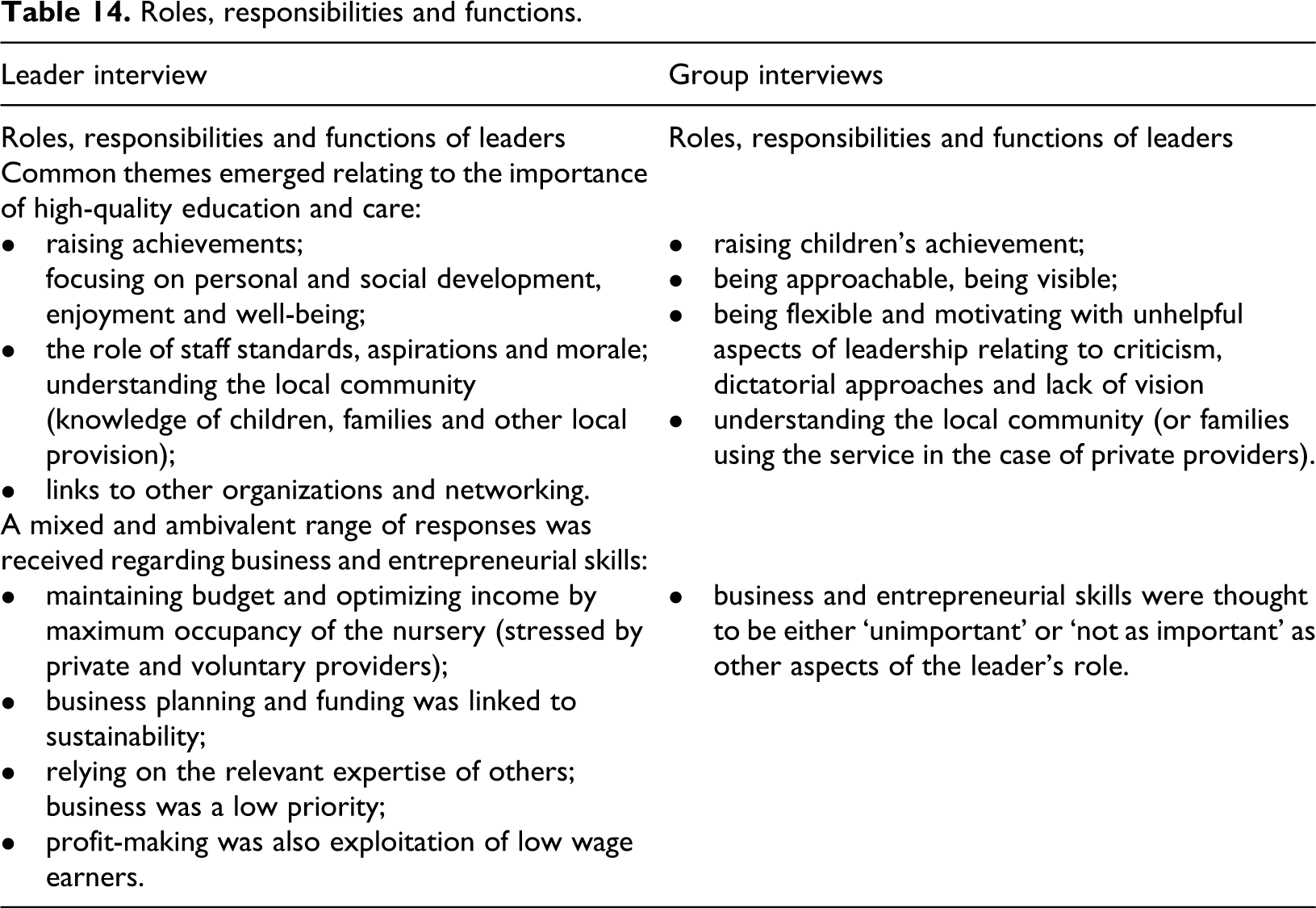
With respect to roles, responsibilities and functions, leaders’ interviews stressed provision of high-quality education and care, and children’s achievements, consistent with survey findings. Views concerning business and entrepreneurial skills were mixed as in the survey. The importance of maintaining a budget and optimizing income were stressed by both voluntary and private providers. One private provider linked business skills to sustainability but acknowledged the ‘fine line between making it a business and making it a place for children’. Another acknowledged that it had been necessary to develop business skills but other professionals, such as accountants and solicitors could be relied upon. Leaders from the voluntary sector were reluctant to engage with this topic. One said: ‘I would like to say, No. . . but we need to have knowledge of business planning and funding in order to sustain ourselves.’ The other stated: ‘I came here from the private sector because I did not like the idea of making a profit. . . exploiting those on low wages.’ Two integrated centre leaders acknowledged the importance of entrepreneurial skills but relied on the expertise of others. Another integrated centre leader noted that business experience was important but indicated that the public sector was different from the private sector: ‘you don’t have to make a profit and you have some responsibility which is moral and ethical as a public body’. Foundation stage leaders did not see this as their role: ‘the head does most of this budgeting’; ‘I don’t need entrepreneurial skills in my role. . .’ Interview responses thus illuminated the mixed set of views concerning business and entrepreneurial skills that emerged from survey findings. Staff responses were similar to leaders’ responses though ‘business and entrepreneurial’ skills were not regarded as important as other aspects of the role (Table 14).
Roles, responsibilities and functions.
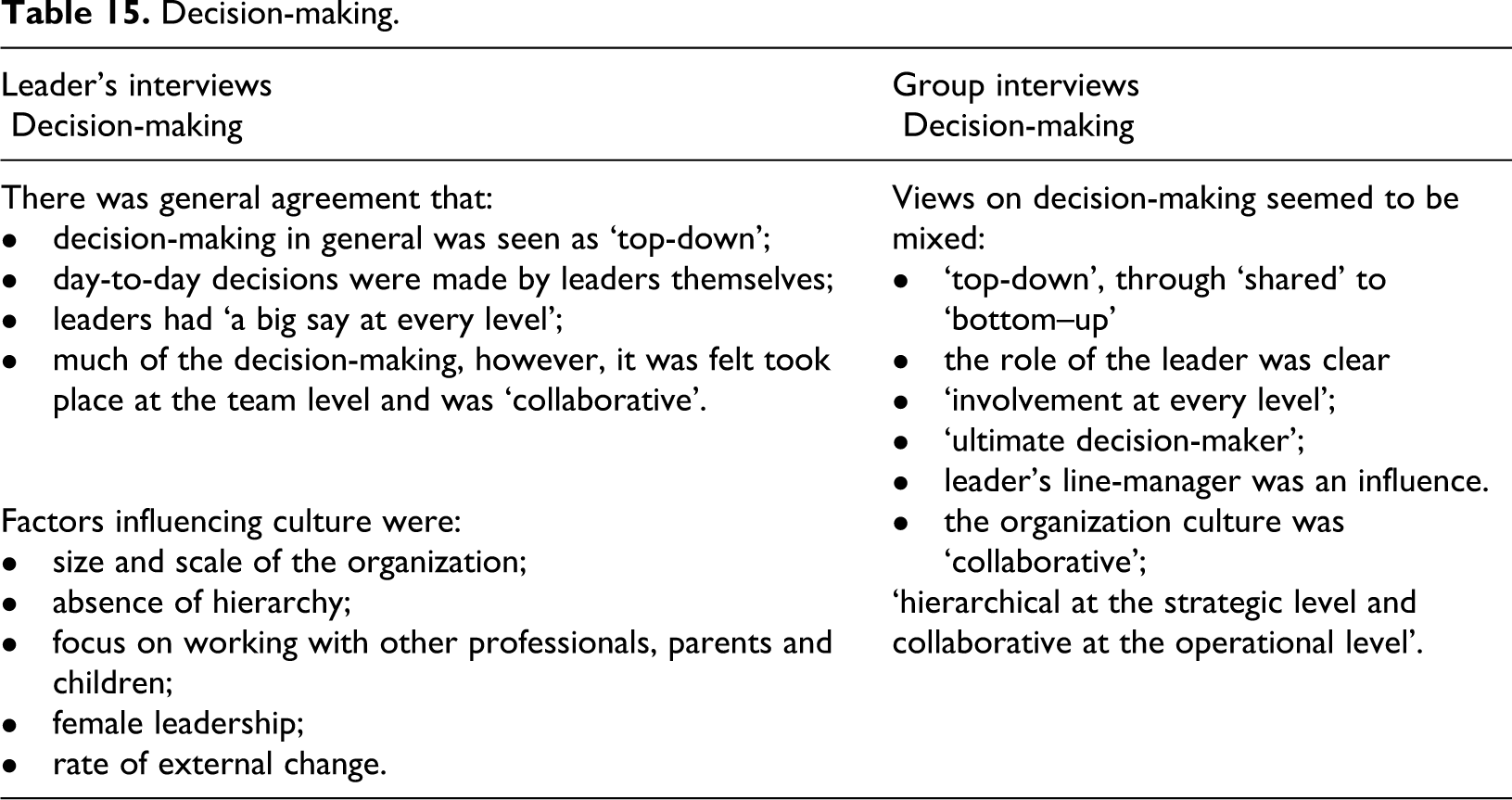
Decision-making tended to be seen as ‘top down’ by leaders and staff. Both groups felt that they ‘had a big say at every level’. One leader said: ‘I am a very powerful person’. The opinions of group interview participants about decision-making appeared to be more mixed though it seemed agreed that the leader made strategic decisions and teams made operational decisions. Decision-making at the team level was thus emphasized and a sense of a collaborative culture conveyed. In summary, the organization was regarded as ‘hierarchical at the strategic level and collaborative at the operational level’ (Table 15).
Decision-making.
iii) Video Highlights
In interview, leaders were asked to describe a typical day. They offered a rich and varied range of responses that included meetings, paperwork, telephone calls, staff interactions, communication with parents and children, training and visiting other establishments, planned and unplanned events. Their reports were consistent with both observed practice and their diary records.
Roles, Responsibilities and Functions
Video highlights reflected both the varied range of activities that leaders reported and the sense of change and development in the sector, identified at different points in interview data. A number of ways of examining leaders’ behaviour was considered and indeed tried out. One way of distinguishing the leaders in different early childhood settings was by the relative emphasis that they placed upon key leadership, management and administrative tasks in the context of their reported roles and responsibilities and their observed behaviours and skills. In order to verify this, an attempt was made to quantify activities or events in terms of administration (day-to-day technical tasks and efficiency), management (operational functions) or leadership (direction, vision and empowerment) through event sampling within the 30-minute video highlights. Leaders’ activities were thus coded and frequencies established (how many times an activity occurred for each type of activity). (Table 16 provides the frequencies and sample events in each category.)
Event sampling of 30-minute video highlights.
Shows frequency data (how many times an administration, management or leadership activity/event occurred) and one exemplar task.
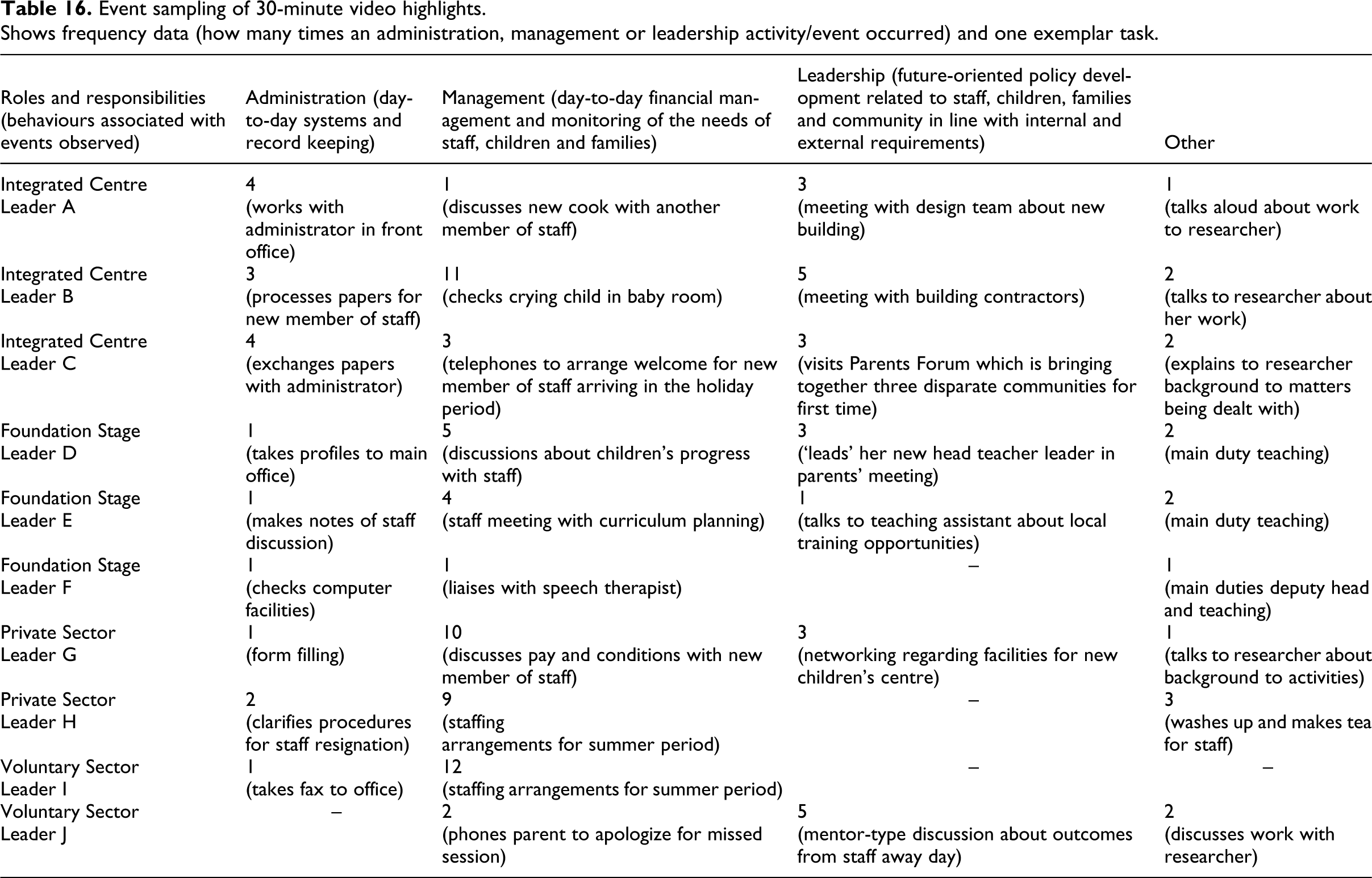
Foundation-stage leaders were observed to retain major responsibility for planning, teaching, co-ordinating staff and recording and reporting the progress of individual children. Administration, management and leadership duties were carried out, if at all, in the relatively small amount of time formally allocated to these tasks through planned delegation to other staff and teaching assistants. Their work was distinctly marked by its high intensity and pace throughout the day. Having a cohesive team that included other teaching staff, the school special educational needs co-ordinator, nursery nurses or teaching assistants, and external agencies such as the speech therapist, appeared to be a priority. This generated multiple leadership roles that required effective communication and co-ordination of people (adults and children), time and resources and, hence, the curriculum. Relationships appeared to be both task- and person-oriented, with foundation-stage leaders successfully completing work with and through others, while maintaining respect and trust. A teamwork environment allowed staff to feel that decision-making was shared as multiple leadership roles were discharged in the course of teaching processes. Much activity was ‘invisible’ in the sense that it began before the school day started, with staff meetings and parent consultations often being carried out after school, and other administrative activities taken home, indicated through leaders’ diary records:
6.00 pm welcoming new parents. . . 7.30 pm clearing up and thanking everyone. Home! 9.00 pm rang three newly qualified teachers. 9.15 pm completing written weekly plan for Reception Year for photocopying tomorrow, checking all paperwork for zoo trip, checking emails. Bed before midnight will be early for me!
The foundation-stage leaders were all experienced practitioners, confident in their leadership role to work collaboratively, as well as support the personal development of less-qualified staff through the qualifications framework, marked or celebrated in the course of the observation.
In contrast, private and voluntary sector leaders were observed to spend much of the day engaged in general administrative and managerial tasks, related to such matters as staff cover over the impending holiday period, dealing with staff salaries, processing fees, dealing with parents, talking to children, staff and their professional community. Leaders who focused on administrative tasks had no paid administrative support, in varying degrees relying on other staff for assistance.
What distinguished integrated children’s centre leadership was its location within a complex organizational structure and governance. Partnerships with other agencies working with different codes of practice, conditions of work and regulatory frameworks, were required to plan and deliver services to meet joint outcomes, adding significantly to the complexity of management. In contrast to foundation-stage leaders but in common with private and voluntary sector leaders, integrated centre leaders were managing indirect service delivery to meet the requirements of different service frameworks and changing external priorities. This entailed managing large capital expenditure and concurrent budgets, which researchers observed through meetings and telephone calls with the local authority, builders, architects and other agencies such as social services, as well as through their personal reflections on future funding, staff development and concerns over longer-term sustainability. Responsibilities included large-scale personnel management, centre administration, community development, building external partnerships with stakeholders, as well as incorporating different teams of health, education and social professionals. More face-to-face participatory forms of leadership were possible where workers were co-located on a single site but this was by no means always the case, with distributed and shared leadership styles emerging as much from circumstances as choice.
Decision-making
Foundation-stage leaders were observed to work collaboratively at the team level with teachers, teaching assistants and other professionals in the setting. They were relaxed and friendly, ‘hands-on’ yet task-focused, since they retained an overall responsibility for the quality of teaching and learning in the setting that was fed into wider decision-making within the overall school structures.
By contrast, private-setting leaders and one of the voluntary sector leaders were observed to consult with staff but while operating an ‘open door’ policy remained much of the time physically separated in their offices, apparently working in a less collaborative manner.
The integrated centre leaders were observed co-ordinating multiple tasks, staff teams and projects though shared decisions related to operational matters and decision-making delegated to team leaders. As one integrated centre leader declared, the most exhausting aspect of open communication, shared decision-making and allowing ‘everyone to have their say’ was that it took considerable time, patience and energy. Democratic decision-making could be short-circuited, however, through pressure of time, tiredness or the urgency of reaching a decision. The integrated centre leaders themselves were typically located within a wider local authority framework that was observed by staff and researchers to influence the decisions they could make.
Influences on Leadership
The challenge of change and growth to existing organizational cultures was an ever-present feature of the video-highlights, with major new building work being planned and carried out in all the integrated centres, one voluntary sector and one private sector setting that was changing to integrated centre status, while an established primary school was developing ‘wrap-around’ care and extended-day provision. Leaders of integrated centres were observed in meetings with builders, visiting building sites, discussing plans with colleagues and architects, in disputes about pathways and visiting adjacent settings to get ideas about fitments and furnishings. All spoke of leaders’ finding themselves taking on major operational tasks, necessitated by the changing nature and scale of their organizations.
Meeting the demands of large-scale financial management, developing new administrative or technical expertise for areas in which they had no training or experience and which must consequently be learned ‘on-the-job’, was a challenge. Crucial to this process was the capacity of leaders and staff to accommodate to change, have a clear vision, recognize existing knowledge of those around them and empower on the basis of areas of expertise and inclusive in terms of diverse interests, cultures and capabilities.
Collective Views on Video Highlights
When the leaders met to share their successes and challenges, there was much laughter and many exclamations at the pace of work, their own (tired) appearance and the difficulty in taking a break as day care and ‘wrap-around’ care continued to be provided throughout the year. It was regarded a challenge to maintain quality in provision, in team-building and training throughout the year. They applauded themselves on responding to a new national childcare strategy in the local context and ‘holding focus’ in what they regarded as unique circumstances. They noted that new career pathways were opening up though at the time of their meeting, early childhood leadership training was still confined to those in integrated children’s centres. They described themselves as ‘leading by example’ and responding ‘on the spot’, intuitively.
They characterized the challenges in the EC sector in terms of changed structures for children’s services and increased bureaucracy that was not moving as fast as staff in settings. They also felt that senior personnel and line-managers did not necessarily understand what was to be done. The increased multi-agency dimension to work created a number of challenges associated with information-sharing, leading a team that might not necessarily be co-located, and more fundamental differences in work culture such as pay, conditions and professional ethos. The status of work in the sector in general was still regarded as low, though changing. Current changes in structure and organization of staffing in school contexts, they felt, might not necessarily advantage EC leaders. The business and entrepreneurial side to the work was regarded as a particular challenge, given that ‘it was hard to make a profit in deprived areas’. Job and task overload was a recurrent feature and the need to make time for reflection and self-evaluation acknowledged. This raised a number of questions. Who leads the leaders and where does (or should) such support come from? How do leaders assess their success in the knowledge that different leadership capabilities will be required for different circumstances? It was noted that while leaders might have line-managed supervision, with the exception of one, they did not have a mentor (Table 16).
Discussion
At this point, each objective will now be re-examined in turn.
Objective 1: in terms of leadership models and informal theories held participants across the sector participants described their organizations as hierarchical in structure, hence traditional and positional in leading the way in strategic decision-making processes yet collaborative in culture and operational functioning. The strong sense of collegiality expressed by staff and the observed pooling of initiative by teams was suggestive of the possible utility of the distributive model of leadership that emerges from a group or network of individuals working together (Gronn, 2002; Harris, 2005; Spillane et al., 2001).
Objective 2: in respect of the nature of leadership roles, responsibilities and characteristics a different balance of leadership, management and administration across settings emerged, indicating the existence of multiple leadership roles in diverse domains of EC settings. It was clear that leadership function was contingent upon the context and circumstances of particular EC settings as leaders themselves indicated in the review of the video highlights. The survey revealed the high level of agreement that the most important aspect of the role was to deliver a quality service. This was echoed in interviews with leaders and staff. The scale of the organization, that is the number of children and parents enrolled and hence staffing levels, appeared from video highlights to influence the degree of specialization, delegation and distribution of leadership activity. Of necessity, the extent of team’s concerted action(Gronn, 2002) in foundation-stage units was continuous and intense, within the context of vertical lines of decision-making and accountability. Size of institution and hence overall levels of resourcing also influenced technical functions and responsibilities, with private and voluntary leaders carrying out their own administrative and management tasks. All suggested the pragmatic nature of leadership approaches adopted. It is noted that adopting an entrepreneurial approach, mindful of competition with others in the sector, was not ranked highly in the survey, obtained an ambivalent response in interview and yet, in practice, was seen to have a huge impact on the leader’s role.
Video highlights showed integrated-centre leaders working in large organizations demanding specialized knowledge, functions and activities structurally dispersed within a single site or across multiple sites and creating different boundaries in leadership. The form of leadership that emerged was one that recognized and indeed depended upon the specialist knowledge of others, whether related to community development, child and family need, staff or centre administration. This engendered empowerment of others through sharing of knowledge and complex responsibilities by collaborative means to sustain and promote long-term organization learning. There appeared to be openness in integrated centre leaders to widen the boundaries of leadership. While there were reported constraints from the directive ‘top-down’ local authority hierarchy in which these EC centres operated, there was a participative internal culture and team dynamic that also exerted ‘bottom-up’ influence on practice.
Objective 3: in terms of core components and characteristics of effective strategic and operational leadership, the principal components analysis contrasted those participants who attributed relatively high importance to one group of variables with those who attributed relatively high importance to another. This may account for the differential emphasis placed on different elements of leadership, consistent with interview and video findings. Those with postgraduate qualifications, that is those with a teaching qualification and/or master’s degree (see Table 8) favoured warmth, rationality, knowledgeability, assertiveness, goal orientation, coaching, mentoring and guidance (hence, valuing leaders as guides). Those with ‘other’ qualifications, some with different professional heritages, favoured systematic planning, risk-taking, influence, proactivity, vision and empowerment (favouring leaders as strategists). Those with NVQ qualifications, to be found in some cases in the private and voluntary sector, tended to favour vision, warmth, professional confidence, systematic planning, proactivity and empowerment (leaders as motivators), while postgraduates also valued influence, authority, economic competitiveness, business awareness and risk-taking (leaders as business-oriented).
Objective 4: an exploration of how leadership practice was judged, understood and enacted was achieved largely through video-recording, reduction and review. In their final review meeting, leaders acknowledged a difficulty in standing back from and reflecting upon their own practice and called upon the view of the researchers who recognized and fed back to them that an essential aspect of leadership was ongoing, moment-by-moment thinking and decision-making, inaccessible unless leaders themselves ‘talked-aloud’ as they engaged in professional practice. This suggests a need for developing effective EC reflective and strategic skills to increase self-understanding, thinking about complex problems and looking for alternative routes to problem-solving and a role for mentoring.
Our leaders had developed a tacit leadership knowledge that had not been explicitly taught and usually was not even verbalized. In some cases, being observed prompted leaders to talk aloud about decisions as they were taking them, thus revealing their exercise of creative, analytical and practical skills or ‘practical intelligence’ (Sternberg et al., 2000). It may also account for the regret that they expressed in interview at the lack of wise role models when they were at the start of their careers. While the acquisition and application of practical intelligence may be a long-term goal, however, balancing among intrapersonal, interpersonal and extrapersonal interests requires considerable experience and expertise. As yet we may still not have the necessary formal knowledge base to communicate it effectively. It raises the more fundamental question of the extent to which leadership can be distributed and accounts for the finding that organizations were regarded as hierarchical at the strategic level and collaborative at the operational level.
Finally, in the case of this small-scale study, the exploratory nature of both the methods used must be emphasized and the provisional nature of the findings acknowledged.
Conclusions
Theorizing is beginning to connect internationally with key concepts in educational, public sector or business leadership. The slowness of this process may result from sector differences or the complexity of the field, characterized by great diversity of institutions, state, private and voluntary.
Ebbeck and Waniganayake (2002: 28) concluded that definitions of early childhood leadership work lacked clarity, coherence and comprehensiveness, due to a ‘failure to take into account changing circumstances and the consequent evolution of appropriate roles and responsibilities’. They argued for paradigm shift and reconceptualization of early childhood leadership within what they described as the ‘distributive leadership model’. Findings from this study certainly suggest that while EC leadership carries core functions related to leadership, management and administration, this can take many forms. Bennett et al. (2003) put forward three distinctive elements of distributed leadership that have a direct resonance with EC settings. First, this is an emergent property of a group or network of interacting individuals that contrasts with leadership as a phenomenon arising from the individual. Second, it widens the boundaries of leadership to consider which individuals and groups might be brought in and contribute to leadership. Third, it acknowledges that capabilities and expertise are distributed across many in the organization and that, if brought together within a trusting and supportive culture, can lead to concertive action (Gronn, 2002).
A distributed perspective makes social context and the inter-relationships therein an integral part of the leadership activity (Spillane et al., 2001). It focuses upon interaction and exploration of complex social processes, which aligns very closely with the findings from this study. From the distributed perspective, leadership is best understood as ‘practice distributed over leaders, followers and their situation and incorporates the activities of multiple groups of individuals’ (Spillane, 2001: 20). It implies a social distribution of leadership where the leadership function is ‘stretched over the work of a number of individuals and the task is accomplished through the interaction of multiple leaders’ (Spillane, 2001: 20). It also implies that inter-dependency rather than dependency, embracing the way in which leaders of various kinds and in various roles share responsibility. Within EC settings there is evidence that leadership is being ‘stretched’, with emphasis primarily upon engendering collaborative ways of working. While EC leadership takes different forms and carries different structures, there is evidence from this study of a core vision, collegial ways of working and a climate of trust and openness. There are real constraints in the term of non-negotiable and hierarchical lines of accountability both within and outside the organization but the rate of external social and cultural change provides a stimulus for rethinking EC leadership (Harris, 2004; 2005). In their recent review of the research evidence about educational leadership (Leithwood and Level (2005: 45) recommend that future research work needs to.
The distributed perspective also offered a different model of leadership practice that was compatible with the scale and range of children, families and communities, professionals and agencies involved and, hence the degree of specialization, delegation and distribution of responsibility required within EC settings. There was an observed need for EC leaders to develop and ‘bring staff on’, that is ‘distribute’ leadership through the setting to meet the challenge of recruiting and training a workforce fit for future EC services. Different models of leadership were demanded in order to take account of the partnerships with other agencies and the cooperation within leadership teams that has created flatter organizational structures and collaborative cultures. If distributed leadership is to be construed as an emergent property of relationships rather than the function of an individual or individuals, then more opportunities for group, team and whole-organization professional development will be needed. It is unlikely that one model or a single leadership approach can be appropriate for such a diverse sector, in other words, flexible leadership is the way forward. What is important is to extend and progress the debate about values and purposes of best practice and choices and priorities concerning the boundaries of EC leadership. Most importantly, EC settings should be placed at the forefront of developments in leadership theory and practice.
Finally, in terms of impact, the study has already generated interest of both academic and EC user groups. It has been reported in textbook form, already in second edition, and chapters have appeared in key childhood study texts. It has been presented at professional conferences held, for example, by the Early Years Workforce Group and academic conferences of British and American Education Research Association. It has led to keynotes such as the Round Table conference of the Universities of Griffith, Brisbane, Deakin and Melbourne in Australia. In terms of advancement in leadership knowledge, the study findings indicate that while professional leadership knowledge is likely to be more effective when planned, principled and accessible for application, in fact much leadership learning is serendipitous, incidental and hidden from view. Far from being prepositional or strategic knowledge, it is a personal craft knowledge that is local and situated. If being led in multi-agency teams means different things to practitioners with different qualifications and heritages, questions are raised – what is known about effective multi-agency leadership; what do leaders know; what knowledge is essential; and who produces this knowledge? While there may be a developing formal EC leadership knowledge base, these findings suggest that there is also an informal knowledge operating that generates practical principles. It captures essential elements of practice and serves to organize action in particular situations (Schön, 1983, called it ‘knowing in action’). This also suggests a distinction to be made between leader-practitioner as consumer (user) of others’ leadership knowledge and leader-practitioner-researcher as producer, creator and user of knowledge in the field. The challenge now lies in formalizing the leadership knowledge that practitioners believe, imagine and reflect upon that, while legitimate, must also be warranted with solid evidence provided to justify the new knowledge claims being made.
Footnotes
Acknowledgements
ESRC supported this project RES-000–22–1121.