







Abstract
The early childhood education system in Hong Kong operates within a corporate governance framework. However, there is a lack of research on the interaction between principalship and corporate governance in kindergartens and childcare centres. This study aims to address this gap by examining how a preschool education coordinator (PEC), working under corporate governance principles in a non-governmental organization (NGO), influenced the resignation decisions of principals. Using micro-political theory, this study examines power dynamics, conflicts, and decision-making processes that led to principals’ resignations. This phenomenological case study utilized a focus group discussion with three principals who had resigned from the NGO. Through thematic analysis, three key themes emerged from the study: changing governance and accountability, conflicting educational values and beliefs between the preschool education coordinator and the principals, and contrasting leadership behaviours and styles. The findings of this study have significant implications for the local community, as well as offering valuable insights that can inform and benefit international audiences interested in early childhood education leadership development and human resources management. As early childhood education systems worldwide grapple with similar challenges, understanding the relationship between corporate governance and principalship can help devise strategies for enhancing organizational effectiveness and ensuring principal retention.
Keywords
Context of study
In the classic children story The Gruffalo (
Donaldson, 1999
), a mouse walks through the wood and meets three animals: a fox, an owl, and a snake. Each of the animals intends to eat the mouse by inviting him to their home. However, the sneaky mouse rejects each invitation and uses wily tricks to avoid danger by telling each animal that he is going to dine with his friend, a Gruffalo, which is a horrific creature with scary features that likes to eat animals. Each animal runs away due to fear of the Gruffalo. Later, the mouse encounters a real Gruffalo, which attempts to eat the mouse. However, the mouse tells the Gruffalo that he is the scariest animal in the wood and asks the Gruffalo to follow him as they walk. When walking through the woods, the animals are terrified and escape. Impressed by the strength of the mouse, the Gruffalo feels threatened and runs away.
Since 2005, the early childhood education (ECE) landscape in Hong Kong has undergone significant changes. Prior to that year, pre-primary services were supervised by different authorities. The Education and Manpower Bureau (EMB) (currently renamed the Education Bureau [EDB]) oversaw kindergartens for children aged three to six, while the Social Welfare Department (SWD) regulated day nurseries and childcare centres for children aged two to six (Rao et al., 2003). While kindergartens focused more on academics, both types of institutions offered structured and performance-oriented learning programmes to prepare children for primary school (Opper, 1992).
However, starting in the academic year 2005–2006, there was a shift towards harmonization in the monitoring of pre-primary services. The EMB and SWD established a joint office to regulate early childhood services for children aged three to six (Rao and Li, 2009; EMB, 2003). As part of this harmonization policy, the EMB took the initiative to consolidate kindergartens and childcare centres under the management of Educational Services to ensure efficient and effective educational management that benefits the various stakeholders, including students who receive high-quality educational services (Gillan, 2006).
Since then, kindergartens and kindergarten-cum-childcare centres have been privately operated as standalone institutions managed by non-profit-making organizations or private independent organizations under a corporate governance structure (Wong and Rao, 2015). The type of operation depends on their sponsoring organizations, which can be voluntary agencies or private enterprises (EDB, 2020). It is important to note that since the 2017–2018 school year, local non-profit-making kindergartens joining the Kindergarten Education Scheme 1 have received direct subsidies from the Hong Kong SAR government (HKSAR, 2023). However, these kindergartens are not directly operated by the government and enjoy a considerable level of autonomy in terms of their daily management, curriculum design, and pedagogies (Ko et al., 2016); instead, they are independently managed and influenced by their sponsoring organizations, which provide the main financial support to the kindergartens (Bautista et al., 2021). Sponsoring organizations are expected to “be responsible for implementing education policies, planning and managing financial and human resources, ensuring that kindergarten education services are provided in a proper manner, and devising self- improvement measures.” (EDB, 2023, 1–1). Few scholars have criticized this Scheme for contributing to the spread of neoliberal ideology, creating a more market-driven system, and depoliticizing the teaching profession (Yuen, 2021). Kindergartens typically offer half-day classes, with each class lasting three hours. Kindergarten-cum-childcare centres, which are kindergartens that incorporate the operation of a childcare centre within their registered premises, provide whole-day programmes. This governance structure includes rules and regulations that govern the operations of kindergartens and childcare centres and define the rights and responsibilities of their stakeholders (Wong and Rao, 2015).
Within this corporate governance structure, a hierarchical and top-down governance structure has been established within the school sponsoring body. Preschool Education Coordinators (PECs) play a vital role in overseeing and managing educational service programmes in collaboration with principals and teachers from different kindergartens and kindergarten-cum-childcare centres operated by non-governmental organizations (NGOs). PECs, who are required to possess substantial teaching experience and professional kindergarten principal training, are responsible for planning, coordinating, and managing resources to align with the organization's vision. The effectiveness of this governance structure relies heavily on the coordinating roles of PECs. PECs supervise daily operations and tasks in kindergartens and childcare centres. Their main responsibility is to ensure the overall quality of education and childcare services in line with the organization's policies and guidelines. PECs report to and are supervised by the director of educational services and are responsible for staff employment, teacher professional development, financial management, school development, and administrative management. The education director, in turn, reports to a regional chief executive officer and, if applicable, an international chief executive officer. This corporate governance structure encompasses various administrative layers with staff functions positioned above the principals and teachers (Figure 1).
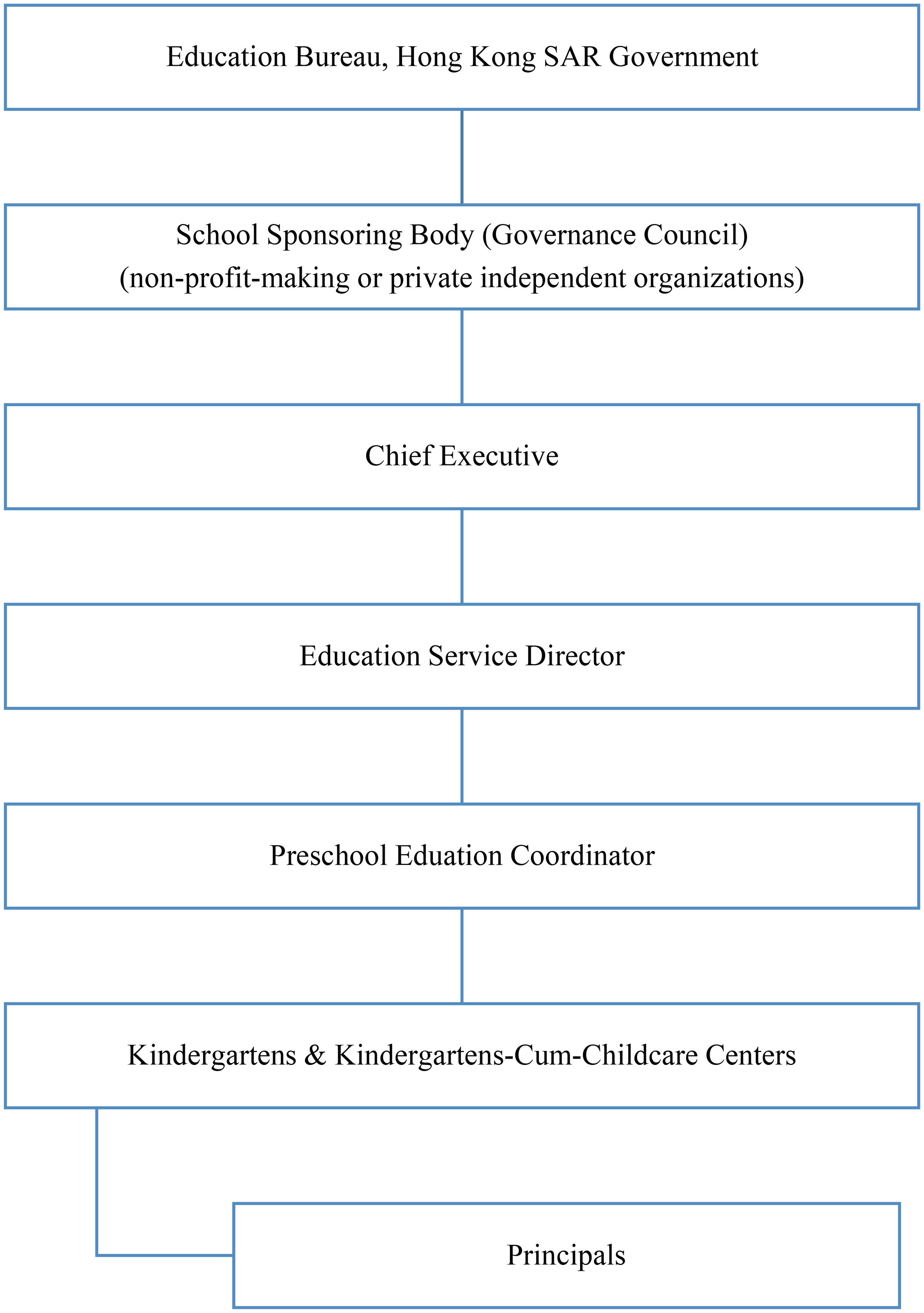
Governance structure of early childhood education system in Hong Kong.
The Curriculum Development Council (CDC, 2017) advocates for a decentralized (school-based) curriculum and child-centred pedagogy, positioning principals at the top of the organizational structure of kindergartens. These principals are described as having “the most power in schools” (Bush, 2023, 529). Their pivotal role involves managing kindergartens and leading curriculum development (Chan, 2014). However, these principals face high levels of stress and expectations, which are compounded by external quality assurance reviews (Tong, 2023). The increasing subsidization from the Hong Kong SAR (HKSAR) government has heightened their accountability. In response to the Macao Special Administrative Region government's plan to provide fee-free ECE (Macao Government Information Bureau, 2005), there were calls for the HKSAR government to substantially increase investment in ECE in Hong Kong and promote high-quality services. This distinctive backdrop eventually led to the introduction of an “education voucher” programme in 2007 (Wong and Rao, 2015). Additionally, in response to the curriculum revamp in 2017, the Kindergarten Education Scheme was launched. Consequently, principals within the ECE sector inevitably encounter various dilemmas and struggles in their leadership practices (Chan, 2018). These challenges stem from the fact that the ECE system in Hong Kong operates under an expanding neoliberal model that prioritizes market efficiency and individual self-interest (Yuen, 2021), whilst little government control has “resulted in deterioration in the structural and pedagogical quality of kindergartens” (Rao et al., 2018, 30). Moreover, parental preferences and academic expectations exert considerable influence on the operations of kindergartens (Ho, 2008; Fung and Lam, 2011; Yuen, 2021). Therefore, the study employs the micro-political theory to understand the complexities and power dynamics within the ECE system in Hong Kong, exploring the underlying concerns and potential behind-the-scenes issues (Bridgeland and Thomas, 1979) that principals may face within the corporate governance model.
Corporate governance in education
Corporate governance plays a crucial role in shaping educational leadership and management practices. While the concept of corporate governance originated in the business management field, its application has expanded to the education sector. It involves establishing a framework of policies, regulations, and accountability mechanisms to ensure effective decision-making, transparency, and ethical conduct. The application of corporate governance principles has become increasingly prevalent in the ECE sector.
In recent years, there have been significant changes in the field of education, including ECE, in terms of structure and behaviour (Abdeldayem and Aldulaimi, 2018). The adoption of corporate governance principles has influenced the operations and decision-making processes of school organizations and principals (Renders and Gaeremynck, 2012). On the one hand, the adoption of corporate governance practices in ECE organizations has had a deep impact on their operations. It has introduced frameworks and structures that facilitate transparency, accountability, and efficient decision-making. By implementing these principles, ECE organizations have to establish clear lines of responsibility, improve financial management, and enhance overall governance.
On the other hand, the adoption of corporate governance principles has influenced the value-creation and decision-making processes of principals within ECE institutions (Huse, 2007). Corporate governance principles emphasize the importance of involving various stakeholders, fostering collaboration, and ensuring that decisions are based on data and best practices. This shift in decision-making has led to more effective and informed choices, ultimately benefiting the institution and its stakeholders.
Effective corporate governance practices can profoundly impact leadership within early childhood education (ECE) organizations (Tibiletti et al., 2021). These practices shape the roles and responsibilities of principals, governing boards, and stakeholders, promoting accountability, collaboration, and appropriate resource allocation. The connection between corporate governance and leadership suggests these practices can influence principals’ decision-making and job satisfaction, impacting turnover rates. Strong governance structures prioritizing transparency, collaboration, and equitable resource allocation empower principals to make informed decisions aligned with their vision (Aras and Crowther, 2016), leading to increased job satisfaction and reduced turnover. Prioritizing and implementing effective corporate governance tailored to organizational needs is essential for creating a supportive environment, enhancing leadership capabilities, and promoting stability and retention in the ECE field.
It is crucial to be aware of the potential risks of unintended consequences when implementing corporate governance in ECE. There is the possibility of conflicting with the desired goals of ECE (Ranson, 2008). The limited theoretical literature on corporate governance in ECE, along with the challenges of applying general governance frameworks to ECE organizations, highlights the need for tailored governance structures (De Silva Lokuwaduge and Armstrong, 2015; James et al., 2023). ECE organizations have unique characteristics that require governance frameworks specifically designed to address their distinct needs and goals. The absence of comprehensive frameworks that consider the specific nature of ECE organizations may contribute to issues of turnover among principals. Recognizing the importance of adapting governance structures to the ECE context, policymakers and stakeholders can work towards developing comprehensive frameworks that effectively support ECE institutions, address their unique challenges, and potentially reduce turnover rates among principals. Adaptive leadership practices may be crucial for ECE leaders to effectively lead their organizations for flexibility and responsiveness to changing circumstances around the context of corporate governance (Boylan, 2018; Klein et al., 2019). This is crucial because “leadership actions can be structurally or culturally determined” by contextual factors such as power dynamics, organizational politics, interpersonal relationships, resource distribution, and policy frameworks (Brauckmann et al., 2023, 11).
Micro-politics theory and principals’ retention
Micro-politics theory, advocated by Blasé and Blasé (1997, 2002), Lindel (1999), and Hoyle (1982), offers valuable insights into power dynamics within educational organizations. This theory examines social dynamics, formal structures and interpersonal relationships that influence decision-making processes, providing a deeper understanding of power dynamics. According to Blasé and Blasé (1997, 2002), micro-politics involves the use of both formal and informal power by individuals and groups to achieve their goals. Blasé and Blasé emphasize the significance of social dynamics, interpersonal relationships, and personal connections in shaping power and influence within educational contexts.
Expanding on the ideas of Blasé and Blasé (1997, 2002), Lindel (1999) focuses on power distribution within formal structures and systems, such as hierarchies and policies. In addition to power dynamics, Lindel investigates issues of influence, conflict resolution, and coalition building within educational organizations, highlighting the multifaceted nature of micro-politics. Hoyle (1982) explores the informal power struggles and alliances that occur behind the scenes in educational organizations. He recognizes the presence of multiple power centres representing different interests and perspectives, emphasizing the strategic behaviours individuals employ to gain influence and control over resources and decision-making processes.
In the field of ECE, principals face numerous demands and challenges resulting from marketization and accountability. While extensive research (e.g., Schaack et al., 2022) has been conducted on teacher resignation, including its internal and external factors, there has been a lack of investigation into the resignation of principals in the context of ECE. This is where micro-politics theory can offer valuable insights.
A study conducted by Wells (2015) examined the factors influencing the retention of novice kindergarten principals, identifying key elements that shape their decisions to remain in their roles. These factors include qualifications, working environment, relationship with the preschool education centre director, interest in ECE, and level of happiness. Given the limited research, to obtain a more comprehensive understanding of principals’ retention in ECE, it is crucial to conduct a thorough investigation of the broader governance system, including the inspection system, and to examine how such factors affect principals’ decisions to resign.
To gain a deeper understanding of governance dynamics and their impact on principals’ decisions, this study integrates micro-politics theory, focusing on power dynamics and decision-making (Berscheid, 1994; Manning and Kunkel, 2013). Due to practical methodological limitations in accessing and gathering sufficient data (i.e., dyadic observation) on social actors, the study does not examine individual interactions and relationships. Guided by the research question, How do power dynamics and decision-making processes involving the preschool education coordinator shape the experiences, perspectives, and decision-making of former kindergarten principals who resigned after the appointment of the new coordinator?, the study aims to investigate principals’ perceptions of power dynamics and leadership dynamics with the PEC. By exploring the PEC's influence on principals’ resignation decisions, the study seeks to uncover the micro-political processes within the governance structure and leadership dynamics. Analysing stakeholder interactions and negotiations can contribute to understanding power dynamics, decision-making, and resource allocation in education. This can inform strategies for promoting effective governance, addressing conflicts, and cultivating supportive environments to enhance principal retention.
Method
Research design
This phenomenological case study (Groenewald, 2004) seeks to gain insights into the lived experiences and subjective perspectives of Hong Kong principals who shared similar educational vision and had the same experience of resignation from the same NGO, which directly operates more than 10 non-profit-making kindergartens and childcare centres under the Kindergarten Education Scheme. By linking the micro-level experiences of the principals to the macro influences of the neoliberal educational system, this study provides a platform for principals to articulate their perspectives and extract meaning from their lived experiences (Larkin et al., 2006; Wong et al., 2024). Applying Yin's (2009) case study methodology for explaining specific phenomena, the study specifically focuses on exploring and capturing the essence of the principals’ shared experiences, enabling a systematic and innovative examination of their narratives regarding their experiences during the PEC leadership turnover (Pacherie, 2017). The unit of analysis in this case study is defined as the lived experiences of resigned principals within the NGO. By examining the collective stories of these principals within the specific organizational context, the study aims to enhance our understanding of the phenomenon and provide insights into the factors and implications surrounding their resignation in the broader educational system (Caelli, 2000).
Participants and setting
Given that the purpose of this phenomenological case study is to uncover and capture the depth and richness of individual experiences rather than seeking broad generalizability, a purposive sampling approach (Campbell et al., 2020) was used due to the limited number of potential participants. This approach allows for a more detailed and focused exploration of the PEC leadership turnover through an examination of the participants’ shared lived experiences and subjective perspectives within the organizational context (Degand, 2015). The key participants in this study were a small, homogeneous group of three principals who had resigned from their positions within the same NGO. They had worked with a new PEC (who was previously a principal in a private independent kindergarten operated by a private profit-making enterprise) for two to three years before leaving their positions. The participants, Principal Swan, Principal Horse, and Principal Frog (all names are pseudonyms), were all female. Principal Swan had 22 years of service in a kindergarten-cum-childcare, Principal Horse had 25 years of experience teaching young children in a kindergarten-cum-childcare centre, and Principal Frog had 33 years of experience as a kindergarten principal. The three participants had been familiar with each other for over a decade. All their kindergartens were in local public housing estates with a lower socio-economic status, and they implemented school-based curricula. At the time of the interview, they had already started their new positions in different educational organizations.
Data collection
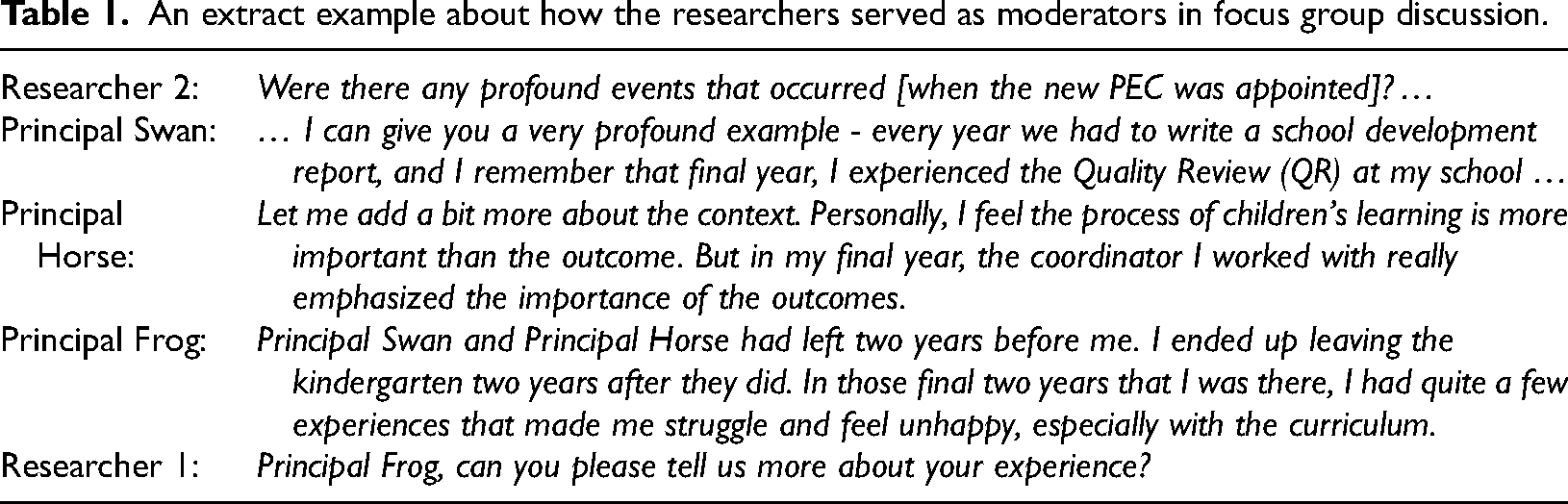
Ethical approval was obtained from the university, and the study was conducted in compliance with the university's research ethics guidelines. Participation was voluntary, and informed consent was obtained from all three former principals. To ensure confidentiality, a unique code was assigned to each participant, thereby maintaining confidentiality during all stages of data collection and analysis. Given the circumstances of the COVID-19 pandemic in July 2021, an online focus group discussion was organized to prioritize the safety of all participants. To ensure accurate documentation, the online discussion was digitally recorded. The focus group discussion was conducted with the assistance of an in-depth and less-structured open-ended interview protocol (Bevan, 2014). The following are examples of the interview questions: Why did you decide to leave your position as a principal after the arrival of a new PEC? Reflecting on a typical meeting with the PEC, how would you describe your experience? The use of a focus group discussion allowed this homogeneous, likeminded group of participants who collectively possessed knowledge about the phenomenon to share their experiences in their own ways (Cyr, 2019). The participants were empowered to express their individual perspectives and engage in meaningful and manageable small group discussion that yielded fresh insights through group interaction in a trusting, relaxing, comfortable, and non-judgemental environment (Ivanoff and Hultberg, 2006, 127). The researchers serve as moderators to guide explicit in-depth, balanced group discussion, where participants are encouraged to share their perspectives and contribute their experiences in an equal way (McLafferty, 2004) (see an example in Table 1).
An extract example about how the researchers served as moderators in focus group discussion.
Data analysis
Before conducting the data analysis, the interview data, totalling 170 min, were transcribed onto 54 A4-sized pages. To ensure credibility, participant checking was employed, seeking confirmation from the participants regarding the accuracy of their perspectives (Jeong and Othman, 2016). The participants were given the opportunity to review the transcription of the interview, ensuring a faithful and comprehensive representation of their personal perspectives and ideas (Frechette et al., 2020). Following an interpretative phenomenological analysis approach (Phillips et al., 2016), thematic analysis was conducted to provide a qualitative, detailed, and nuanced account of the data in a well-structured manner (Clarke and Braun, 2017). The analysis involved an inductive process in which themes were derived from the raw data without predetermined classifications (Naeem et al., 2023). Two researchers independently read and reviewed the transcribed interview to identify and explore emerging themes and patterns in the participants’ subjective experiences. With the help of the Delve qualitative analysis tool (Akujuobi and Zhang, 2017), they conducted a thorough analysis, cross-examining the coding and categorizations to organize the emergent themes and interpret the findings. In the case of divergent views on the coding and categorizations, the researchers engaged in discussion to reach a consensus and develop an interpretative understanding of the data's meaning, thus enhancing the trustworthiness of the study (Smith, 2004).
Findings
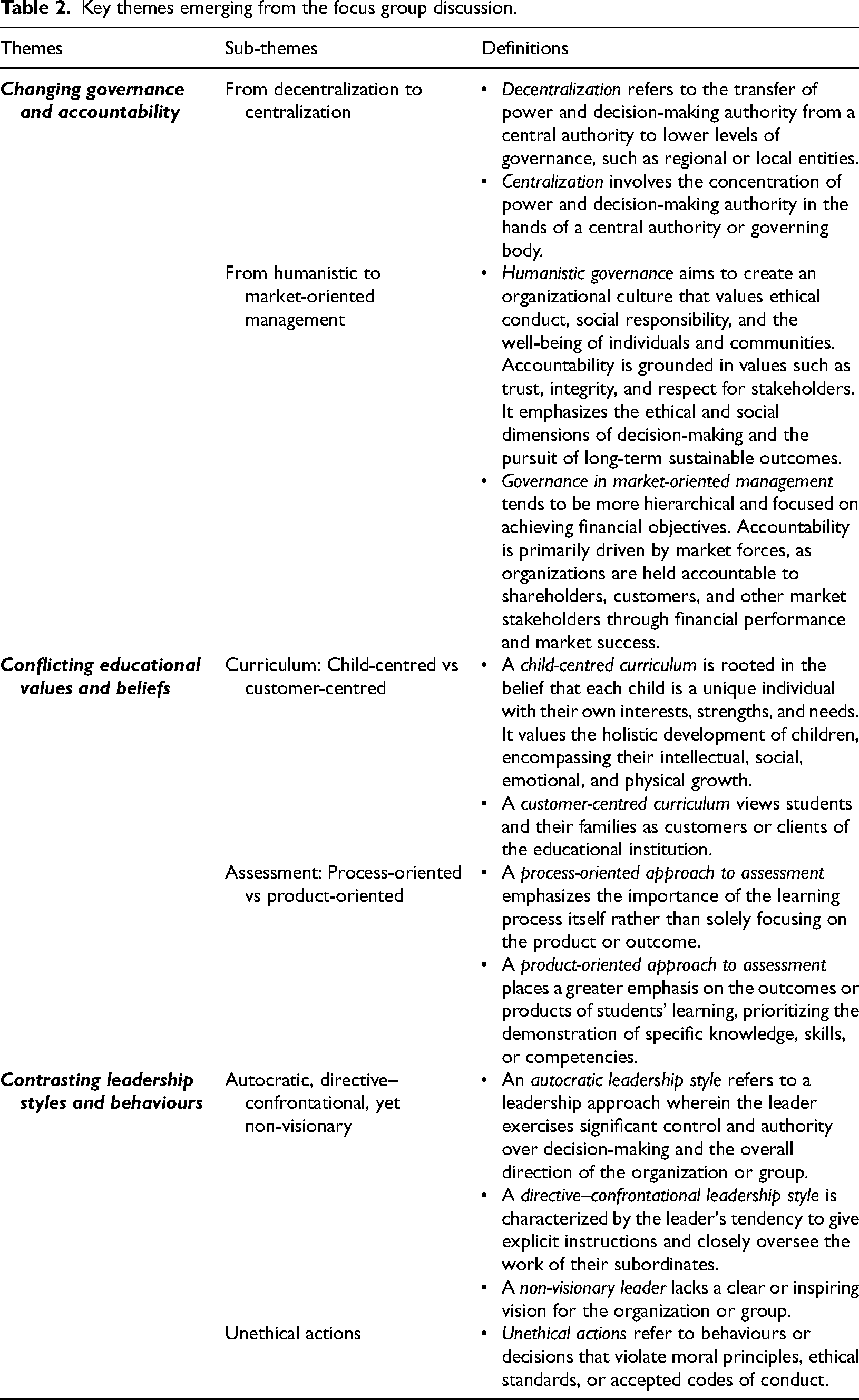
Three key themes emerged from the study: changing governance and accountability, conflicting educational values and beliefs between the PEC and the principals and contrasting leadership styles and behaviours (Table 2).
Key themes emerging from the focus group discussion.
From entrance to exit: changing governance and accountability
From decentralization to centralization
All three principals expressed their love for children and their desire to help them. They shared a common understanding of the NGO's commitment to humanistic education when they began teaching at the NGO's kindergartens and kindergarten-cum-childcare centres. The principals had previously had positive experiences with school-based curriculum development. Principal Swan shared that:
In the era of the preschool education coordinator Ms. Butterfly, we started doing school-based management based on our own needs. However, after she [the new PEC] arrived, that whole atmosphere has been changing. This has become a devilish centralization. She does not allow you flexibilities in school-based development.
The principals highly valued the autonomy they once enjoyed in making school-based decisions and shaping curriculum development within their kindergartens or childcare centres. This autonomy provided them with a sense of agency and allowed them to align their practices with their pedagogical beliefs. However, due to the turnover of top managers that the NGO had experienced over the past two decades, a shift in power dynamics occurred.
The increased level of accountability embedded in the NGO's policy direction reflected the exercise of power within the micro-political landscape. The imposition of yearly programme plans and reporting requirements for quality assurance signified a top-down hierarchical relationship between the NGO and its subordinate kindergartens and kindergarten-cum-childcare centres. The top management's absolute power and control over the subordinates limited the principals’ autonomy and decision-making authority.
These changes in power dynamics led to tensions and conflicts within the organization. The principals felt disempowered and perceived a loss of influence over the direction and decision-making processes. This shift from autonomy to accountability reflected the complex interplay of power, control, and decision-making within the micro-political context of the NGO.
From humanistic to market-oriented management
The principals’ observations revealed an intriguing shift within the NGO's top management, transitioning from a humanistic approach to a market-oriented one. Initially, when they first entered the teaching profession, the principals were drawn to the NGO's dedication to serving the community. As they assumed formal leadership roles, the NGO provided them with enriching opportunities, such as overseas exchange programmes, to explore innovative curricula, endowing them with a sense of empowerment to drive curriculum change. However, with the changes in the top management team and the introduction of external quality assurance measures mandated by government policies, market-oriented management practices began to dominate. Principal Frog conveyed that:
I am a principal, and I don’t have a significantly higher salary. However, I don’t understand why money is now perceived as being so important. Why do we need to reduce our manpower? In reality, what one school truly needs is manpower. Human beings are not cheap, especially this group of principals and teachers who have undergone extensive professional training over the years.
The organization increasingly emphasized market-driven strategies to attract prospective students and parents, potentially compromising the principals’ autonomy in managing the kindergartens independently.
This internal shift in governance implied a redistribution of power dynamics, potentially leaving the principals feeling disempowered and discouraging them from exercising autonomy in their roles. Consequently, conflicts and crises might arise, jeopardizing the quality of the educational services provided (Gillborn, 1994). The clash between the initial humanistic approach and the subsequent market-oriented focus underscored the micro-political tensions and challenges faced by the principals within the evolving organizational context.
From coordination to confrontation: conflicting educational values and beliefs between the PEC and the principals
Curriculum: child-centred vs customer-centred
The concerns raised by the principals regarding the new PEC's implementation of a customer-centred curriculum highlighted the complex power dynamics within the organization. The shift towards a customer-centred approach prioritizing parents’ preferences for an academic-driven approach over a play-based approach had sparked apprehension among the principals.
According to the principals, the PEC's perspective on ECE pedagogy (e.g., the Montessori approach) was narrow and distorted, disregarding its true value. Principal Frog expressed that:
For me, I think when you need to do photo shooting, why not let children discuss and play to show the real face of how children explore. These fake photos are not natural. We do encounter many conflicting views regarding how children learn.
This misalignment in educational values between the principals and the PEC created a clash that could lead to incompatibility with the newly implemented curriculum.
Such conflicting views reflected the underlying micro-political tensions within the organization, with different stakeholders holding differing perspectives on educational philosophies and practices. The principals’ concerns highlighted the potential challenges in reconciling diverse educational values and the need for effective communication and collaboration to ensure a coherent and meaningful implementation of the curriculum that aligned with the principles of ECE.
Assessment: process-oriented vs product-oriented
The concerns raised by the principals regarding the assessment tool for understanding student learning reflected the intricate dynamics of power and decision-making within the organization. The principals recognized the importance of assessing students’ learning progress to inform their instructional decisions and had previously developed a research-based assessment tool that embraced a holistic understanding of students based on various dimensions.
However, the accounts provided by the principals suggested that the new PEC had disregarded the value of process-oriented assessment and imposed a narrow product-oriented approach by mandating the use of workbooks to assess students’ learning outcomes. This imposition created confusion and contradictory pressures for the principals, as their professional judgement and autonomy in curriculum and assessment decisions were compromised. Principal Horse shared that:
She [the new PEC] really likes worksheets. This is what we all know about her. … During that year I resigned, I know that our kindergartens produced 40 workbooks for Nursery to K3.
The micro-political landscape within the NGO appeared to be shaped by the dominant influence of external market-driven demands from customers, specifically parents. The principals’ requirement to comply with these demands rather than rely on informed professional judgement demonstrated the subordination of educational goals to the external pressures of the market. This position of the PEC highlighted the negative consequences of prioritizing market forces in driving organizational decision-making, potentially undermining the principles of effective educational practices (Hoyle, 1999).
From trust to terror: contrasting leadership behaviours and styles
Autocratic, directive–confrontational, yet non-visionary style
Applying micro-politics theory, the principals’ discussion shed light on the changing leadership dynamics due to the arrival of the new PEC. The principals consistently identified the autocratic and directive–confrontational leadership style (Truong and Hallinger, 2017) exhibited by the PEC, which raised concerns about the clarity of the directions for school development. Principal Frog shared that:
She [the new PEC] came to our sharing session and asked us many tricky questions to challenge our work. This made some curriculum development representatives scared and want to step down.
Principal Frog's account highlighted the PEC's challenging and intimidating approach, indicating the PEC's failure to demonstrate open and appreciative attitudes when receiving opinions during communication.
These observations reflected the micro-political dynamics within the organization, with the PEC's leadership style influencing the flow of power, decision-making, and communication. This autocratic and confrontational approach could create an environment of fear and discouragement, undermining the collaborative and inclusive nature of effective leadership. The inability to foster open dialogue and value diverse perspectives inhibited the exchange of ideas and compromised the potential for innovative and meaningful school development.
Unethical actions
The principals’ concerns about the leadership of the new PEC revealed the presence of unethical actions and imbalanced power dynamics within the organization. The principals observed instances of unfair treatment. For example, teachers and principals experienced biased opportunities for promotion based on personal preferences rather than merit or qualifications. Principal Horse expressed that:
When leaving, I needed to find a replacement principal. The usual procedure is for someone to apply within a set timeframe. The PEC favoured my vice principal, but initially, she didn’t apply. She called me and asked why I hadn’t encouraged my vice principal to apply. I explained that I had asked, and she declined. The PEC requested to speak with her directly. After their conversation, my vice principal applied, but it was past the deadline, which was unfair to other applicants. It appeared fair on the surface, but the PEC had already chosen her preferred candidate secretly.
Furthermore, the principals discovered that they were required to use a new assessment tool without proper adherence to legal procurement procedures. These findings emphasized the imbalanced power dynamics between the PEC and the principals, resulting in conflicts in decision-making, task distribution, and resource allocation.
These conflicts, stemming from the PEC's unethical actions and the resulting imbalance of power, had the potential to hinder the organization's growth and effectiveness. The micro-political landscape within the organization became a battleground in which power struggles and favouritism undermined fairness and the principles of good governance (Webb, 2008; Safina, 2015). These findings highlighted the importance of addressing and rectifying imbalances in power and unethical practices to foster a healthier and more productive organizational environment.
Discussion
Navigating the complexities: empowering corporate governance through managing power dynamics
This study examines the complex power dynamics and micro-political tensions within the corporate governance framework of an organization under the loose-control educational system (Rao et al., 2018). It emphasizes the importance of understanding the shifts in decision-making authority and their implications for the professional expertise and power dynamics between principals and preschool education coordinators (PECs) (Blasé and Blasé, 1997, 2002; Hoyle, 1982, 1999; Lindel, 1999). The findings reveal the disempowerment and limited autonomy experienced by principals due to alterations in the governance framework of the NGO, underscoring the existence of multifaceted micro-political tensions and power struggles (Brauckmann et al., 2023; Huse, 2007). These power imbalances can lead to complicated decision-making, hampered communication, and hindered educational initiatives, ultimately affecting organizational effectiveness.
To address the challenges, it is vital to cultivate an environment that encourages collaboration, open communication, and shared decision-making. Senior management should adopt an interprofessional approach (Reeves et al., 2018) to promote cohesive collaboration between principals and PECs, mitigating power imbalances and facilitating inclusive decision-making. Conflict resolution, role clarification, and maintaining principals’ professional freedom (Connolly and Hughes-Stanton, 2020) can enhance collaborative efforts and foster an internal culture of support. Stakeholder roles are redefined to ensure all voices are heard and valued (Zhang et al., 2021). By actively recognizing and addressing power imbalances, the organization can promote a more equitable and inclusive environment for better alignment between educational objectives and market forces.
Addressing unethical practices, such as favouritism and unfair decision-making, is also crucial, as they significantly impact the organizational climate (Vveinhardt and Bendaraviciene, 2022). Ethical principles and good governance practices, including integrity and accountability, should guide the actions and decision-making processes of PECs and principals to ensure the integrity and ethical standards of the organization (Freeman et al., 2006).
Navigating the PEC's transition: balancing divergent visions and power dynamics
This study reveals the potential challenges faced by the preschool education coordinator (PEC) when transitioning from a principal role in a private kindergarten to leadership roles in NGO-operated kindergartens. It focuses on the need to balance divergent visions and power dynamics, as exemplified by the resignations of three experienced principals due to the turnover of a new PEC. The study explores the complex interplay between the professional expertise and decision-making authority of experienced principals, and the shifting roles and expectations of the PEC who assumes leadership positions in NGO.
PECs play a pivotal role in promoting effective educational practices and ensuring the smooth functioning of kindergarten programmes. They occupy a unique position that allows them to collect knowledge from stakeholders, potentially leading to innovative decision-making. However, PECs’ past experiences in the private sector may shape their attitudes, identities, and decision-making (McCarthy et al., 2010) in this corporate governance context, creating complex micro-political dynamics when interacting with principals as instructional leaders (Yin et al., 2022). These power struggles can significantly impact decision-making, communication, and the alignment between educational objectives and market-driven priorities. Understanding and addressing these challenges is crucial for PECs to effectively lead and manage NGO-operated kindergartens. They should work with principals to “internalize the external accountability policies and shape them to the particular needs” of the organization (Seashore Louis and Robinson, 2012, 629). Cultivating an environment that encourages collaboration, open communication, and shared decision-making can promote a more equitable and inclusive environment (Cooper and Nelson, 2022).
To address the micro-political tensions faced by PECs, there is a need to empower PECs for cultivating open communication and establishing collaborative decision-making processes with principals. This can involve providing professional development on change management and communication, implementing mentorship programs, and creating feedback mechanisms to address misunderstandings proactively. By fostering dialogue and mutual understanding, NGO can support PECs in navigating their new leadership roles and aligning educational goals with organizational priorities.
Navigating micro-political tensions: empowering principals in governance transitions
The transition in governance within an NGO led to significant micro-political tensions as stakeholders, especially principals, navigated shifting power dynamics and reconciled divergent visions. The study reveals the micro-political strategies employed by the principals, who positioned themselves as teaching professionals. They leveraged their expertise in pedagogy and child development to legitimize decision-making and influence policy, proactively building coalitions with like-minded stakeholders (Barnett et al., 2012). This highlights the importance of recognizing informal power structures and actively building relationships and networks to positively influence decision-making processes.
Seeing the personal and professional toll experienced by the principals led to their eventual resignation, there should be further investigation for a nuanced understanding of the challenges faced by educational leaders navigating governance transitions and power dynamics. Facing an evolving framework and clashing visions, principals should adopt adaptive leadership, where resilience and inclusive decision-making for balancing diverse perspectives should be better developed (Boylan, 2018). They should manage both formal and informal power dynamics, establishing alliances with like-minded peers, building relationships with key stakeholders, and engaging in informal negotiations, leveraging social capital. Principals can employ strategic communication, selective information sharing, and strategic alliances to counter the PEC's attempts to centralize control amidst evolving power dynamics.
Conclusion
The Gruffalo tale serves as a powerful metaphor for representing the experiences of principals who have resigned from their positions in NGO-operated kindergartens. In this metaphorical representation, the PEC takes on the role of the mouse, displaying behaviours that create fear and uncertainty within a market-driven corporate governance context, ultimately leading the principals to make their decisions to depart.
The findings of the study shed light on the critical role of PECs and emphasize the influence of power dynamics, conflicts, and market-driven pressures on principals’ decisions to resign. The study underscores the importance of effective support, communication, and collaboration between the PEC and principals in alleviating principals’ fears and concerns. It highlights the challenges principals face in navigating the power dynamics associated with PECs and the market-driven corporate governance context, whilst there should be a need for principals to develop strong leadership skills and strategies to effectively manage and negotiate these power dynamics.
The study identifies the need to harmonize power dynamics within the organizational context, advocating for creating an environment that supports successful leadership and addresses the unique challenges faced within the ECE context. Understanding the unique challenges and organizational contexts in which principals operate is fundamental for comprehending their experiences and decision-making processes.
While this study offers valuable insights, it is important to acknowledge its limitations. The research focused on a specific NGO in Hong Kong, which may limit the generalizability of the findings to different contexts. Future studies should explore a wider range of organizations (i.e., non-profit-making vs. private enterprises) and locations to enhance the transferability of the results. Additionally, the study relied on self-reported data obtained from a small sample of principals, and incorporating multiple perspectives from teachers, parents, and other stakeholders would provide a more holistic understanding of the organizational dynamics at play.
Despite these limitations, the study significantly contributes to the research on ECE leadership and human resources management within NGOs. By examining the experiences of principals within a corporate governance model, the research offers valuable insights into the complexities of leadership and the factors that influence principals’ decisions to resign. These findings can inform the development of leadership development programmes, effective communication strategies, and supportive policies that promote a positive working environment and enhance the retention of experienced and effective principals.
In summary, this study enhances our understanding of the interplay between PECs, principals’ leadership practices, and principals’ resignation decisions within market-driven corporate governance contexts. The insights gained from this study have far-reaching implications for leadership development, human resources management, and policymaking in the ECE field, both locally in Hong Kong and internationally.
Footnotes
Declaration of conflicting interests
The authors declared no potential conflicts of interest with respect to the research, authorship, and/or publication of this article.
Funding
The authors disclosed receipt of the following financial support for the research, authorship, and/or publication of this article: This work was supported by the CUHK Faculty of Education Departmental Research Grant 2021-2022,
