







Abstract
The main purpose of this research is to assess the impact of four types of energy-saving houses on environment in terms of CO2 emission. In the tropical climate, House 1 is designed as an integration of modified Trombe wall and roof solar collector using concrete block and concrete tiles, House 2 is normally built by concrete blocks and concrete tiles, House 3 is built as usually found in Thailand by red clay bricks and concrete tiles, and House 4 is built with lightweight autoclave concrete blocks and well-insulated roof. All house model dimensions are 1.3 × 1.3 × 2.5 m3. The collection of inventory data is associated with the construction stage, average household electricity consumption, maintenance in the using stage, and energy usage in the demolition stage. Electricity for residential consumption is based on the temperature collected through the experimental data in each house in 1 year. Subsequently, the environmental performance is assessed by Impact 2002+ life cycle impact assessment methods. The result shows that House1 has the highest score in terms of energy and environmental performance which can reduce the amount of CO2 emission contributing to global warming even from the first year of operation.
Keywords
Introduction
Currently, the energy efficiency policy has played a significant role in every sector. More energy-saving tools and techniques have been introduced and developed, including designs of energy-saving building or an application of energy-saving materials to replace the traditional ones. Nevertheless, energy-saving materials require a large amount of energy for the manufacturing processes and some of them have a dramatic impact on the environment. Therefore, this research does not only focus on the energy-saving outcome but also pay attention to the life cycle of the tools or materials used in the design leading to a conclusion whether these tools or materials could really save energy and reduce the environmental impact. Bunnag et al. (1997) discussed the possibility of offering thermal comfort without inducing mechanical energy cost in houses built in European style and situated in hot and humid climate. It has been concluded in their work that roof solar collector (RSC) induces natural ventilation and reduces heat collected in buildings which allows thermal comfort. Furthermore, heat removal from habitation was studied using a metallic solar wall (MSW; Hirunlabh et al., 1999). The inside temperature of MSW is almost the same as the ambient air temperature, ensuring human comfort due to the ventilation produced by the MSW. When both techniques are integrated, the final product becomes the construction technique called the solar chimney (SC) as shown in Figure 1. It has been found that the structure of SC can be equipped within an air-conditioned building to control the induced air flow rate. The SC is very efficient for decreasing the air condition (AC) load. When in this operating mode, the saving is much higher, about 30% (Khedari et al., 2003).
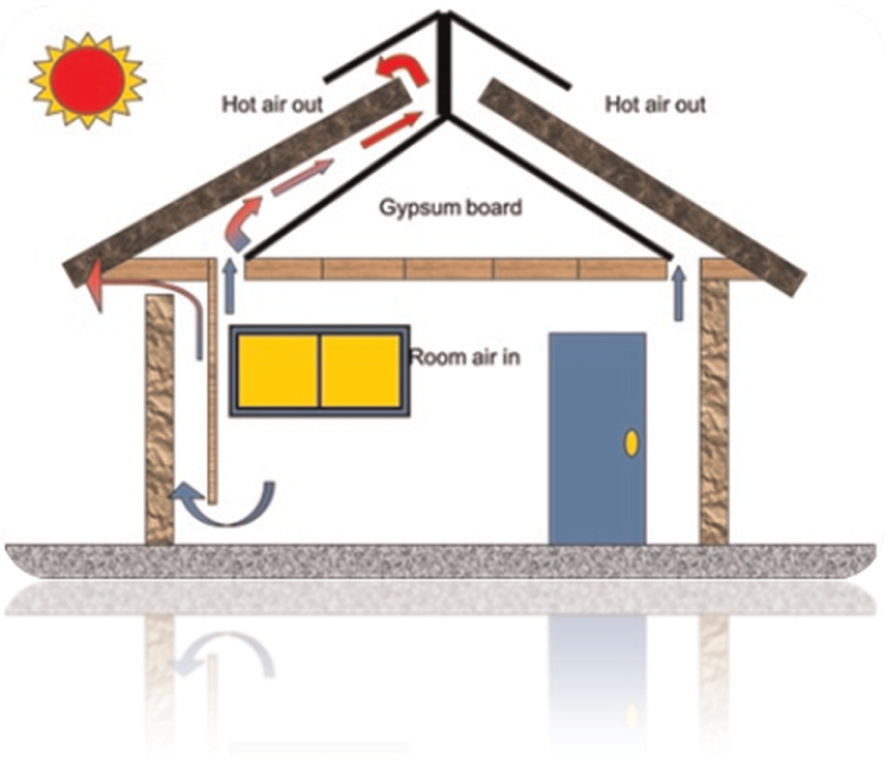
Characteristics of the house with solar chimney.
According to the fact that construction methods have an impact on energy consumption of the building, Gustavsson et al. (2010) studied the effect of the materials used in construction industry and insulation panels on the energy consumption. The study indicated that the energy supply system consumed the main factor, that is, the highest amount of CO2 emission. Further studies pointed that the amount of CO2 emission from the wooden building and energy supply systems was lower than those of concrete structures. In addition, from the environmental life cycle assessment on office buildings in Thailand (Kofoworola and Gheewala, 2009), it was found that this connected to the energy supply system affected the environment the most. This signifies that the types of the materials used in construction of office building which have an impact on the volume of used energy under the weather conditions should be brought for further study. Therefore, the objective of this work is to assess the impact of energy-saving buildings especially the residential buildings that use a variety of materials and construction technique on the environment in terms of CO2 emission. It is expected that this work will provide insight knowledge of how to select the proper materials and techniques in housing construction under such a hot and humid climate as Thailand.
Methodology
The research process is conducted according to the ISO 14040 (1997) standard and this consists of material preparation, construction, building function, repair, and maintenance until building removal and building destruction after expiry. The database in this research is from actual data collection and reference data from Thai National Life Cycle Inventory Database, including generated information from SimaPro 7.3 program.
Life Cycle Inventory
Life Cycle Inventory (LCI) is data collection of the input and output of the material, energy, and waste through the whole building life cycle.
Construction material and house construction
The manufacture of the building materials is composed of many sub-processes. Opaque wall materials include common brick, cement block, and autoclaved aerated concrete. Roof materials include concrete roof tile, fiber cement roof tiles, and natural fiber roof tiles. Most of the energy used in excavation and construction is for transporting materials from the place of origin to the house construction site. Energy used on site by excavation and construction equipment is assumed to be about 1% of the life cycle energy so it is included in the LCI (Bowyer et al., 2002).
Building construction
The models of four houses are built in the dimension of 1.3 m × 1.3 m × 2.5 m with various construction techniques. Each model can be described as follows:
House 1 (H1). Built by concrete blocks and concrete roof with SC technique as shown in Figure 2(a).
House 2 (H2). Built by concrete blocks and concrete roof as shown in Figure 2(b).
House 3 (H3). Built by red clay bricks and concrete roof as shown in Figure 2(c).
House 4 (H4). Built by lightweight autoclave concrete blocks and concrete roof with fiberglass insulator as shown in Figure 2(d).
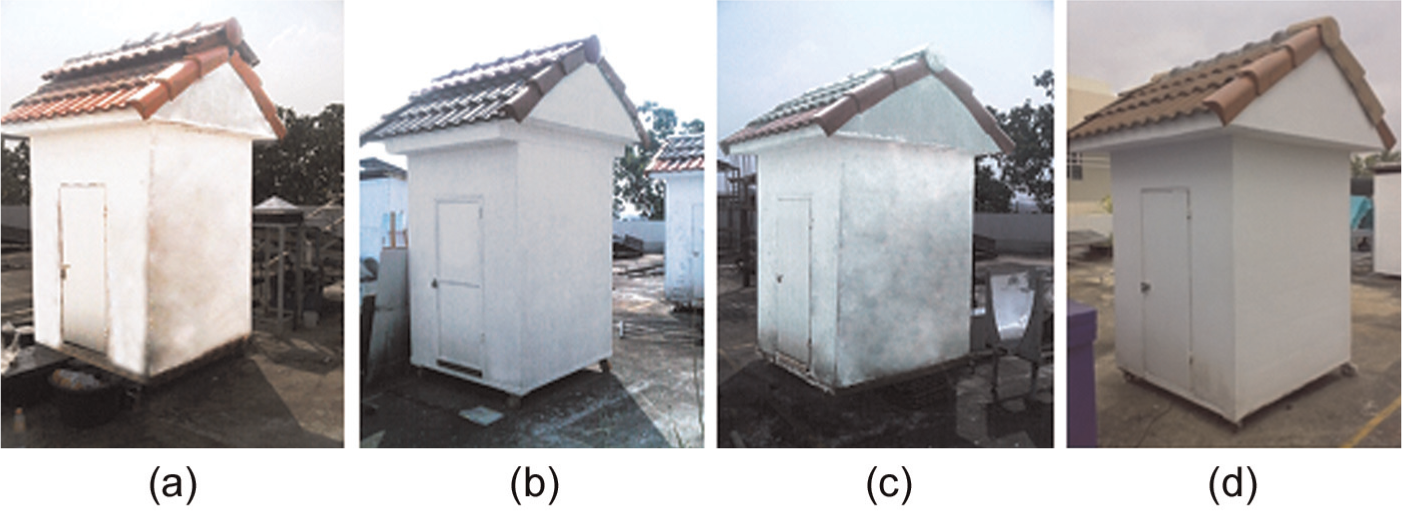
Four house models in this research: (a) built by concrete blocks and concrete roof with SC technique, (b) built by concrete blocks and concrete roof, (c) built by red clay bricks and concrete roof and (d) built by lightweight autoclave concrete blocks and concrete roof with fiberglass insulator.
House usage
The activities consist of cooling and ventilating the buildings. The operational energy consumption of the houses will be calculated based on the analysis of data on mechanical and electrical equipment as well as the usage pattern of the building (daily usage 24 h/day, 7 days/week). The actual electricity consumption records for the building exist only for a period of less than a year as the building is still new at the time of study. The calculation results show a good correlation with the actual electricity consumption records, thus verifying the calculations. The analyzed energy consumption (electricity) results are subsequently converted into emission by multiplying with emission conversion factors. These factors are based on the life cycle assessment of Thailand electricity grid mix database which is obtained from “Thai National Life Cycle Inventory Database” by the National Metal and Materials Technology Center. House usage will be considered from electricity consumption based on house models, with various construction techniques. The inside temperature in each house model will be analyzed referring to heat transfer into house, air flow rate, and electricity consumed by an air-conditioner.
Repair and maintenance
Emissions from the maintenance stage will be computed based on the lifespan of the materials and the same procedure as that used for the manufacture of the building materials will be followed. The total calculated life cycle mass includes the mass of the installed materials and the mass of the materials replaced through maintenance over the life cycle of the building. The frequency of maintenance is based on both the information from construction contractors and the information found in Chau et al. (2007) and Kofoworola and Gheewala (2008).
Building, destroying, and removal
This research uses removal concrete building data, which requires 51.5 MJ/m2 of diesel (Thomas et al., 1996, quoted in Kofoworola and Gheewala, 2008). In this research, scrap materials of the building will be divided into two parts for construction materials: recycle and landfill.
Life cycle impact assessment
Life cycle impact assessment (LCIA) is the information of resource usage, energy consumption, and discharge of waste through the whole life cycle of the house in the space of 1 m2 as environmentally indicated by assessing Impact 2002+.
Life cycle interpretation
Life cycle interpretation studies will be computed, analyzed, and concluded.
Results and discussions
The results are collected by dividing the data into two groups according to their priority.
Product manufacturing and unit processes
The data about the manufacture of the materials in Thailand are collected and used for further LCI analysis which involves data collection and calculation to quantify the inputs and outputs of the materials and the energy associated with a product system under study. The energy used in producing the material is collected by dividing the data into two groups according to the standard of carbon footprint for product (CFP) of ISO-14067. They are direct greenhouse gas (GHG) emissions and energy indirect GHG emissions as the retrospective environmental impact. The analysis in this study begins with the manufacture of the products from the preparation of the materials to the final product without taking into account the usage and the destruction or the removal. The results are shown in LCI using the assessment in Simapro program as shown in Tables 1 and 2.
LCI analysis of wall materials weight of 1 kg.
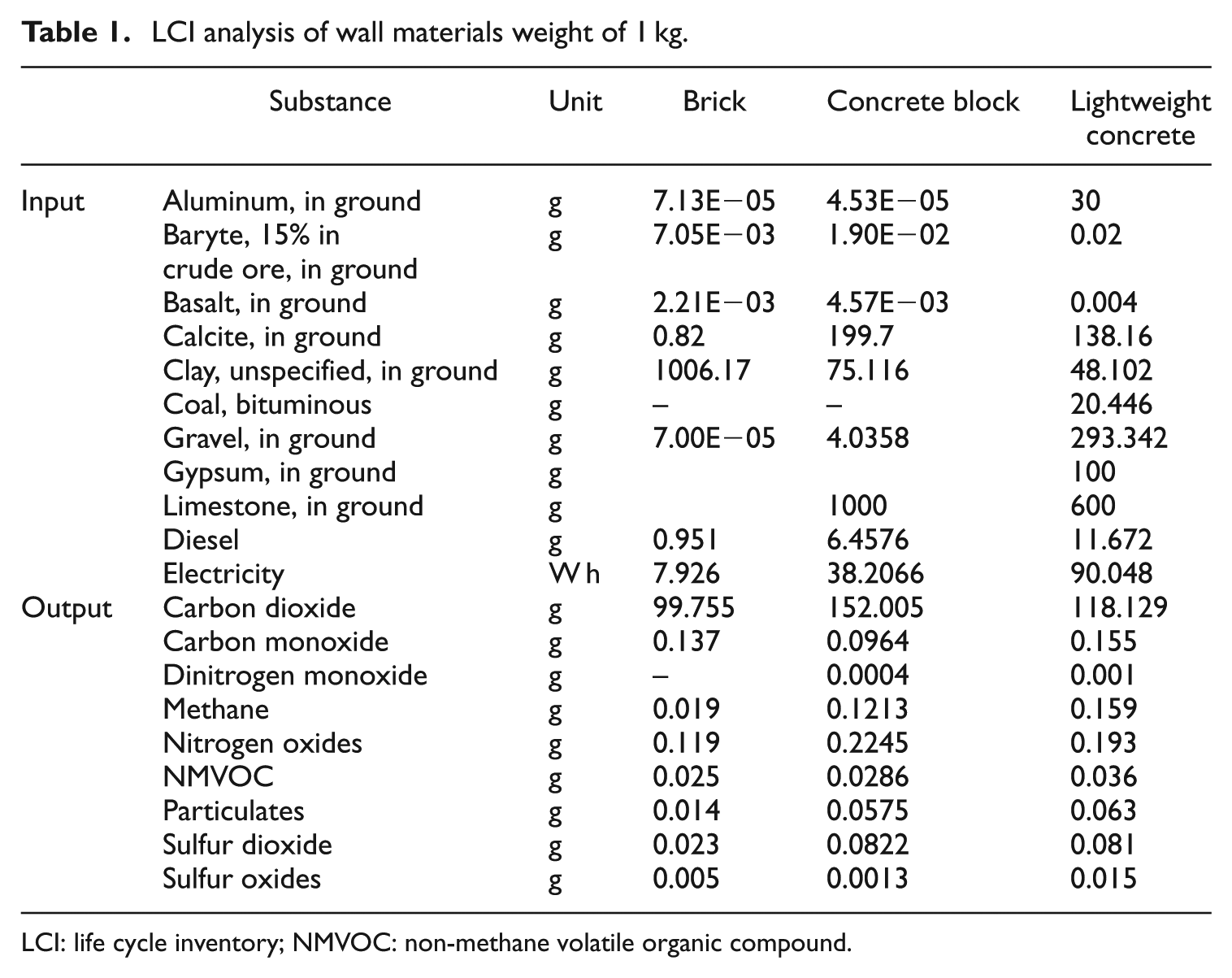
LCI: life cycle inventory; NMVOC: non-methane volatile organic compound.
LCI analysis of natural fiber roof tiles of 1 kg.
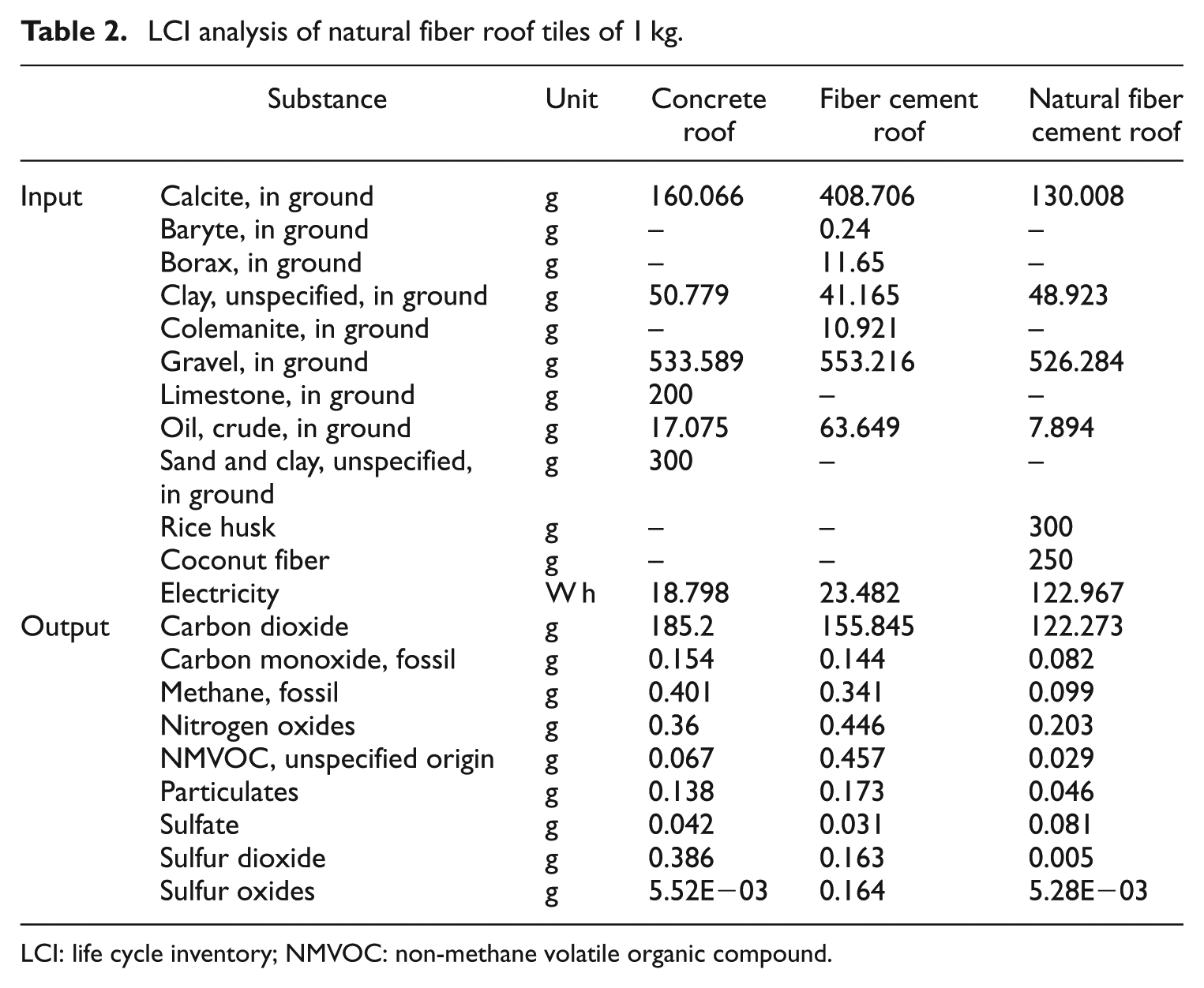
LCI: life cycle inventory; NMVOC: non-methane volatile organic compound.
Building construction
The four house models as shown in Figure 2 were constructed to collect data. The material data were collected from six building materials, and the other materials used in the construction were taken from Simapro 7.3 program, Thai National Life Cycle Inventory Database by National Metal and Materials Technology Center (MTEC) and Thai LCA Network at Chiang Mai University.
Comparison of different materials in houses
Life cycle assessment occurs by bringing many kinds of materials in building structures into a practical action. The differences in the temperature occurred in four houses are compared. As a result, the received scores are used for comparing the energy consumed by air-conditioners.
Result of the differences in houses
The experiments of the four houses were carried out from July 2012 to June 2013.
In summer
The readings were made from March to June 2013, starting from the lowest ambient temperature at 5:00 h and then the temperature was gradually increased during the day since the heat outside was gradually conducted into the house. From Figure 3, from 6:00 h, it was found that the inside temperature of H1, H2, and H3 was lower than the ambient temperature until 13:00 h when the temperature inside H2 and H3 started to get higher than the ambient temperature. However, the temperature inside H1 was still lower than the ambient temperature until 18:00 h. Regarding the ambient temperature, the hottest period was during 13:30 h at 37.9°C. At this point, the differences among these four houses were noticeable. For H1 with SC, the heat accumulated at the outer wall induced the air circulation resulting in the ventilation of the SC. This made the temperature inside H1 still lower than the ambient temperature until 18:00 h. For other houses, the heat was accumulated at the wall without the help of air circulation like that of the SC in H1 resulting in the higher temperature of H2 and H3 than the ambient temperature. Unlike H1, H2, and H3, the temperature inside H4 did not show a large swing for the whole day. During daytime between 12:00 and 18:30 h, the house had lower inside temperature than those of H2 and H3 because the rate of heat transfer from outside to inside the building was smaller due to the installation of the heat insulator. Between 0:00–8:30 and 17:00–23:30 h, H4 had higher temperature than other houses because the accumulated heat inside the building could not be transferred out of the building due to the effect of the heat insulator.
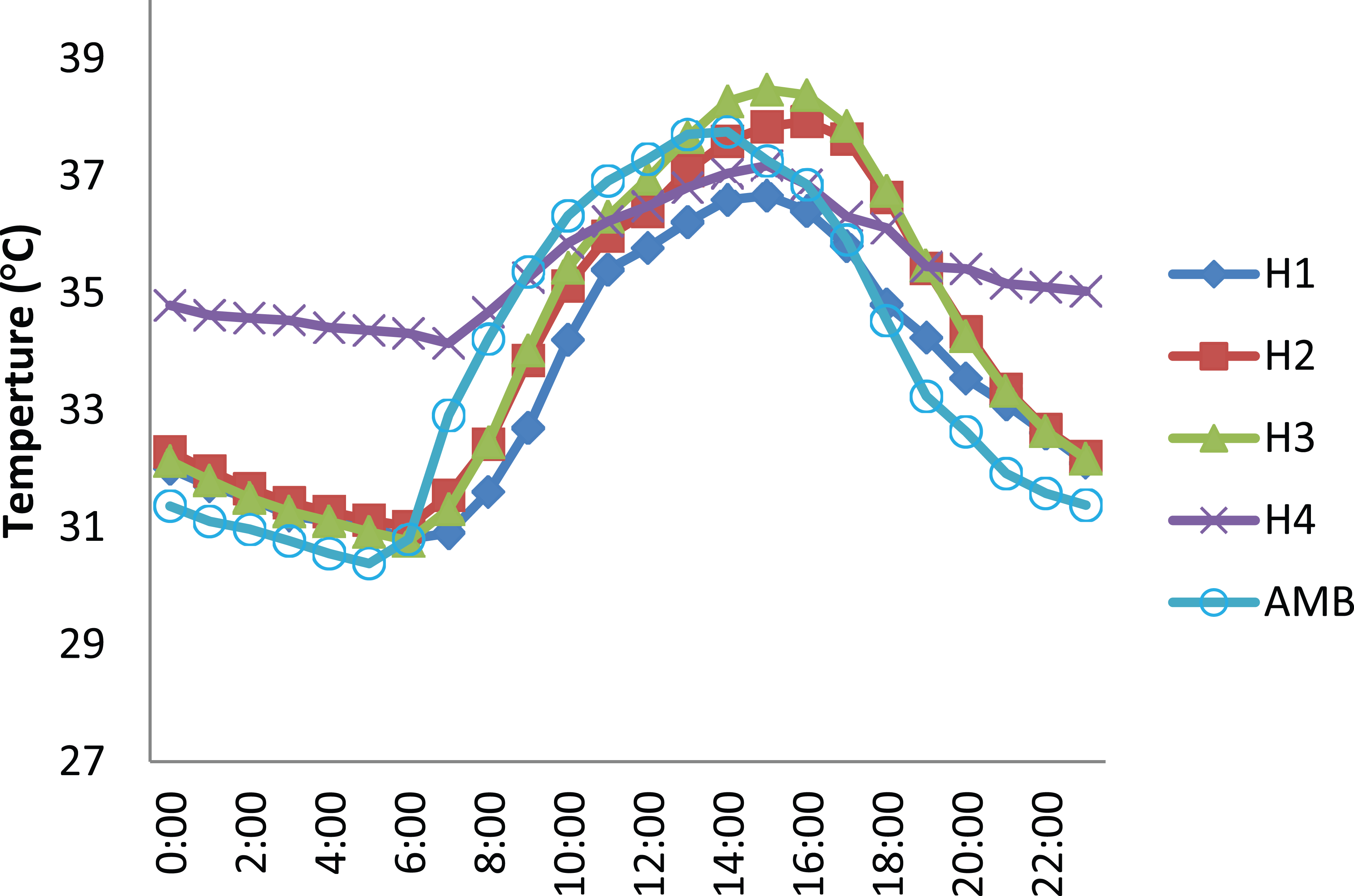
Four houses’ temperature in summer.
In monsoon season
The readings were made between July and October 2012 as seen in Figure 4. This period experienced the highest variability of the ambient temperature when compared with other seasons. The lowest ambient temperature was at 5:30 h and the highest ambient temperature was between 14:00 and 15:00 h. From 5:30 h, the temperature inside H1, H2, and H3 was then increased gradually according to the heat accumulated inside the houses. After 12:00 h, the temperature inside H2 and H3 became higher than the ambient temperature since heat was accumulated inside the house. However, during daytime, the temperature of H1 was still lower than the ambient temperature since there was the effect of air circulation through the SC that could reduce the inside temperature. The temperature of H1 becomes nearly the same as those of H2 and H3 again after 19:00 h as the heat accumulated during the daytime was transferred outside the houses as well as those found in summer (Figure 3). As for H4, a small temperature swing was observed all day because of the heat insulation properties as experienced in summer (Figure 3).
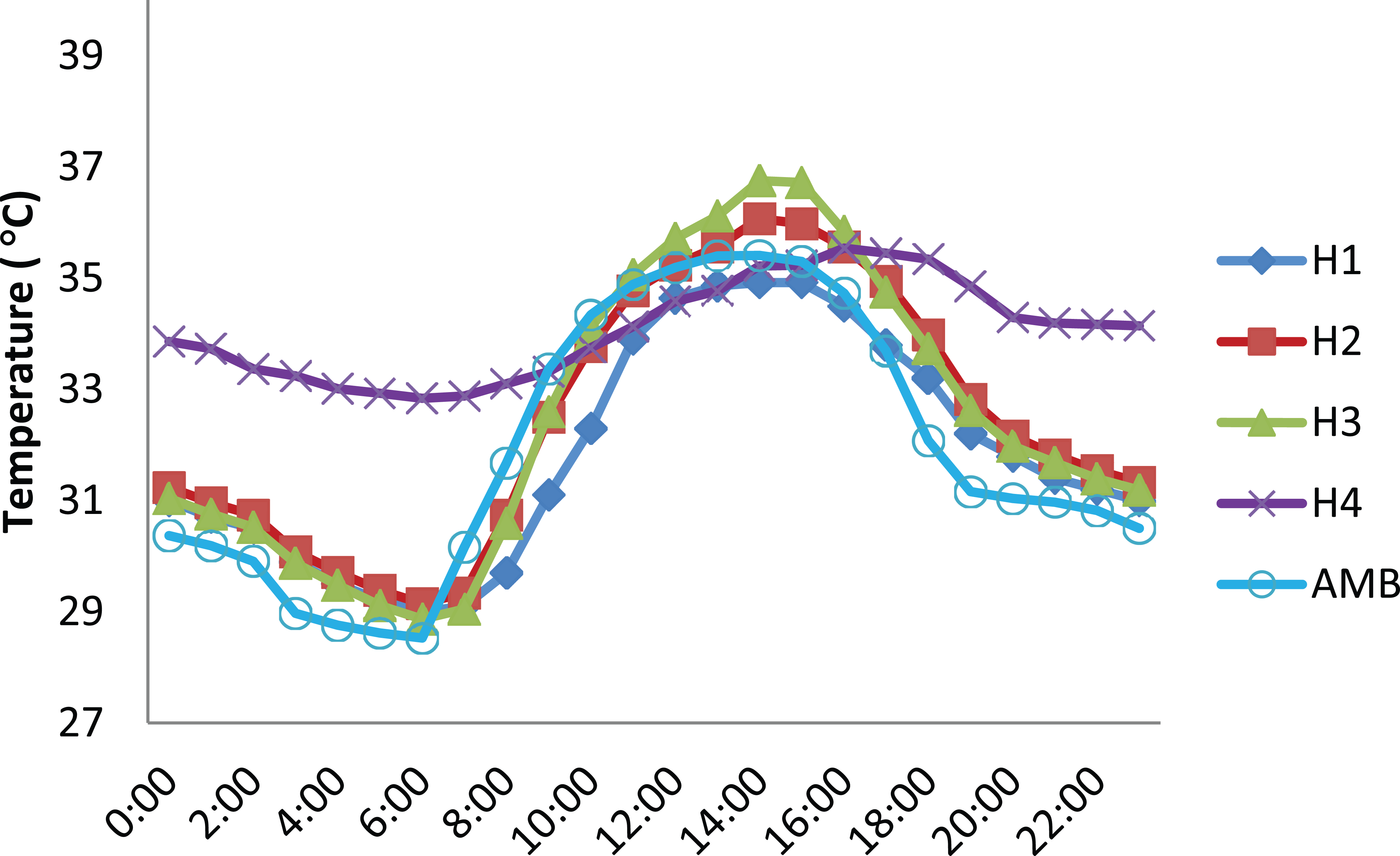
Four houses’ temperature in monsoon season.
In winter
The readings were made during November 2012 and February 2013. This period encountered only a slight change in temperature. The lowest ambient temperature was at 5:00 h. During the day, it was found that the temperature in H1, H2, and H3 is varied in the same direction as the ambient temperature. However, during 7:00–15:00 h, it is found that the temperature within H1 is below the ambient temperature as a result of the air circulation effect through the SC. However, the temperature variation in H2 and H3 is a result of heat transfer only through the materials. This explains the reason why the temperature in H1 house is lowest during the daytime. The temperature of H4 was lower than the ambient temperature because some heat cannot be conducted through the insulator of H4. During the nighttime between 19:00 and7:30 h, the temperature in H4 was the highest. This is due to the insulator which obstructed the heat to transfer out of the house; therefore, the variation in temperature is between 1°C and 1.5°C through the whole day, which, in other word, means that the temperature remains stable all day long.
The experiments in all four houses in various ambient temperatures showed that most of the time of the year, the house with SC technique (H1) had the lowest temperature even in the daytime when compared to the ambient temperature due to the use of RSC and modified Trombe wall (MTW). The temperature inside the houses that used concrete block and concrete roof (H2) showed the highest peaks at the time during 10:00–14:00 h when compared with other houses because of the heat accumulation. This is due to the fact that the heat conductivity of the material of H2 was high when compared to those of other houses, so the heat was transferred into H2 easily. At nighttime, the temperature in H2 was nearly the same as the ambient temperature also because of the high heat conductivity of the materials. It can be found that the house that used brick and concrete roof (H3) showed the second highest peak during 10:00–14:00 h among the four houses. This is similar to H2 because of the same reason. It was observed that the house that used thermal insulation (H4) had the lower heat conductivity as compared to those of H2 and H3. As a result, the heat conductivity of materials was so low that it was able to prevent the heat entering into H4 during daytime effectively. However, the house had 1°C–2°C higher than ambient temperature at nighttime because the heat accumulated inside the house during the daytime could not be transferred outside immediately when the ambient temperature dropped due to the fact that the insulator had low heat conductivity (Figure 5).
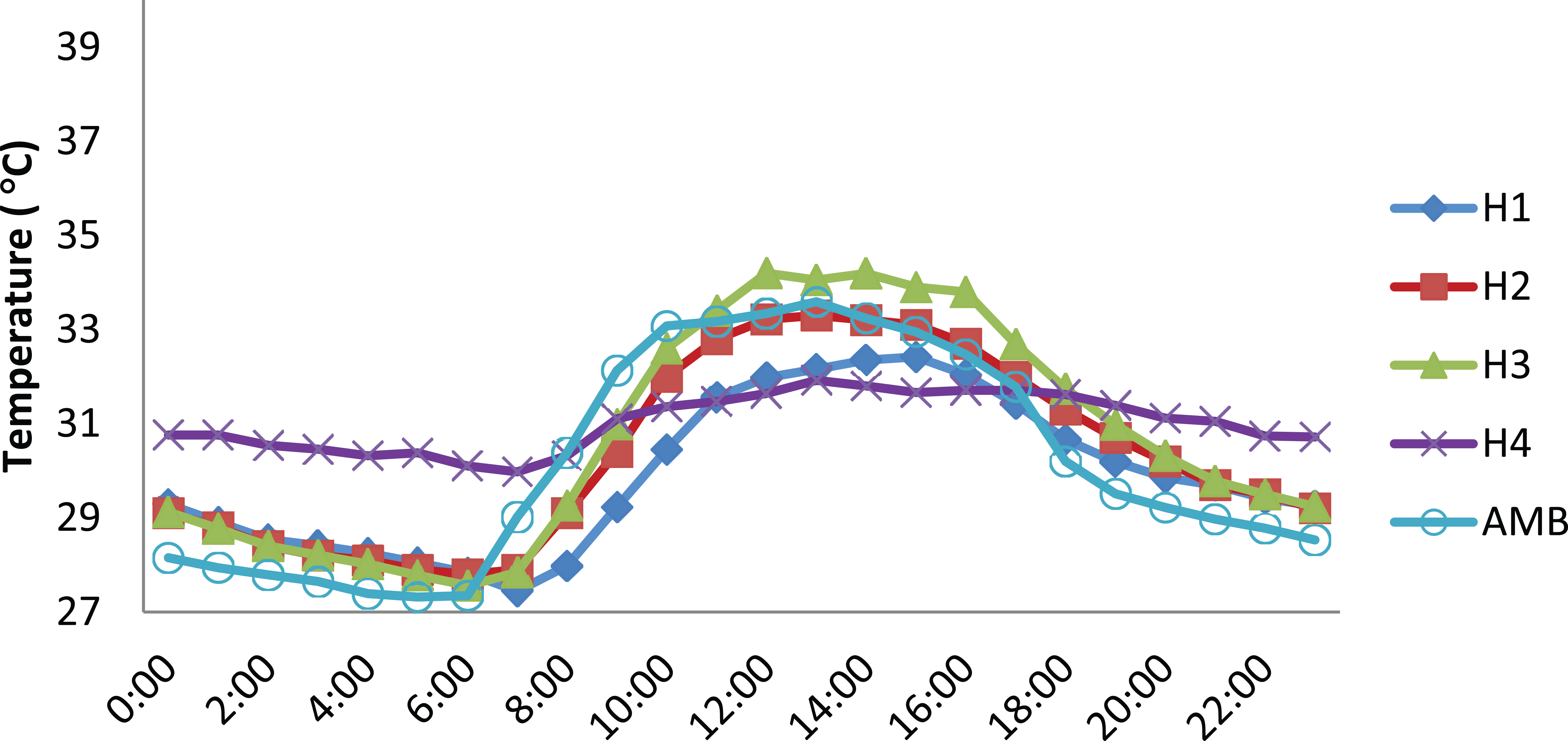
Four houses’ temperature in winter.
Energy used by air-conditioners
The calculation of energy used by air-conditioners in each house with the area of 1.69 m2 is based on the air-conditioner usage at 1000 btu/H as seen in Figure 6. Since the percentage of energy saving in air-conditioners would increase 6.14% for a decrease of 1°C (Kongkiatumpai, 1999), the energy used by air-conditioners in the house models is summarized as follows.
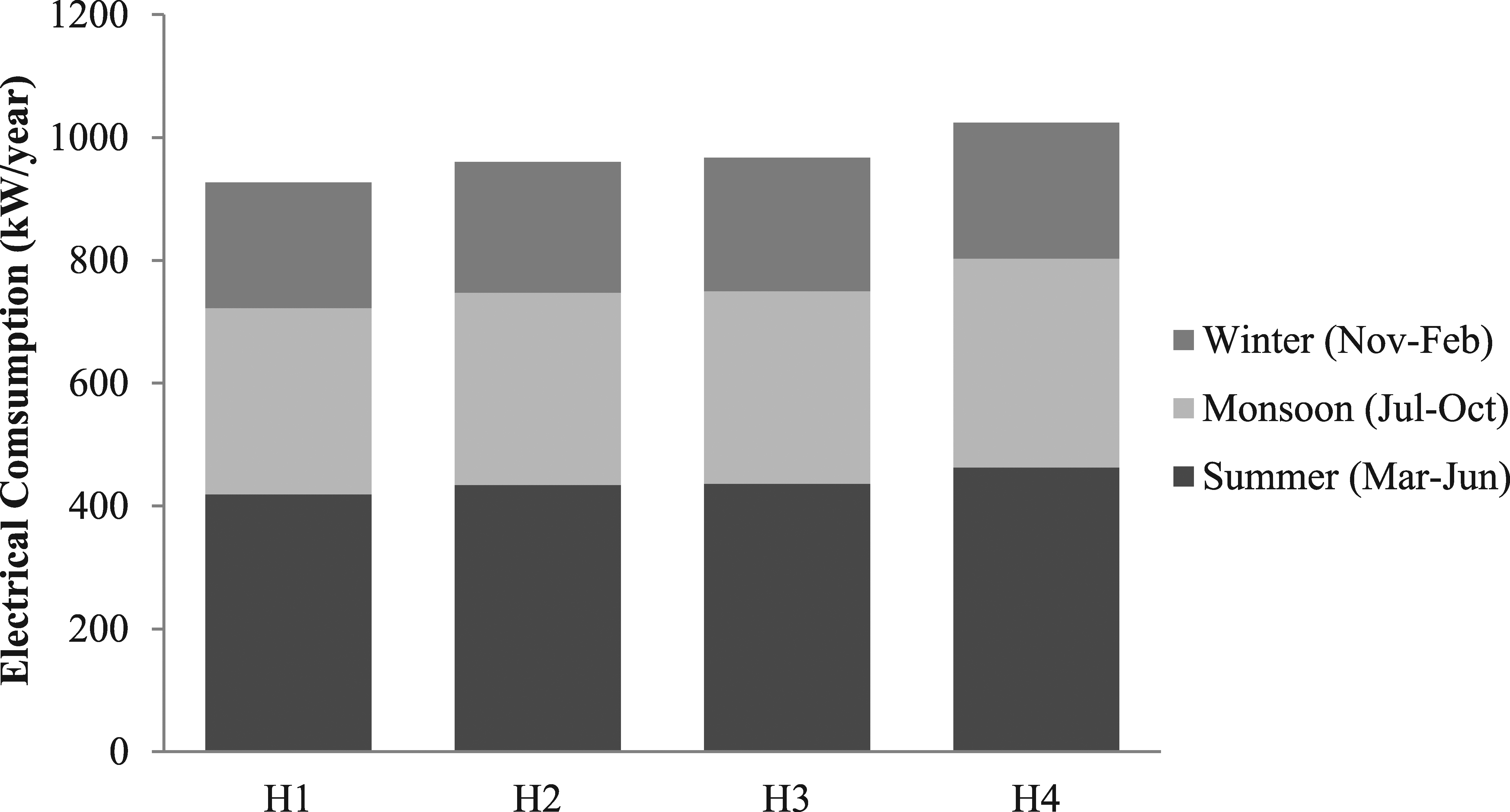
Average amount per year of electronic usage of air-conditioner at 24 h in all four houses.
SC house (H1)
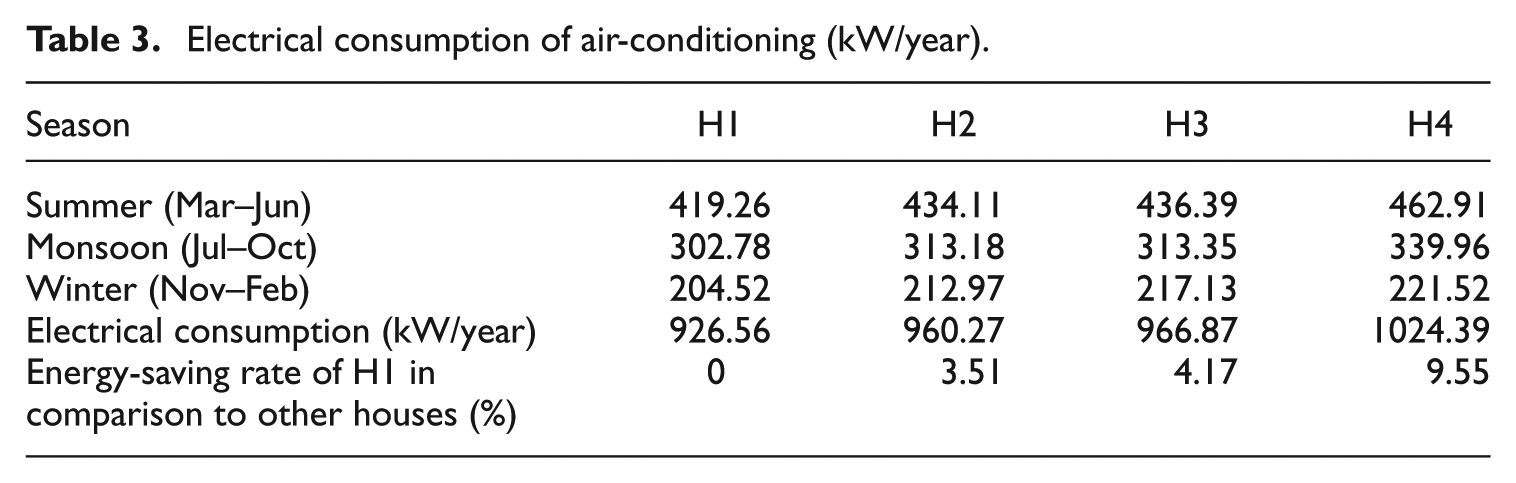
It is obvious that the house using SC technique requires more materials because of the MTW and RSC techniques. However, the energy consumed by the air-conditioner in H1 is the lowest. In addition, the energy used since the beginning of material production until the practical action for 1 year is analyzed. According to the environmental accounting analysis, it can be shown that within 1 year, the house that used SC technique has the lowest average energy. It could save energy up to 9.55% when compared to H4 as shown in Table 3.
Electrical consumption of air-conditioning (kW/year).
General houses (H2, H3)
Both houses were entirely built with bricks and concrete blocks. The result of the average temperature is shown in Figures 3 to 5. It can be seen that the houses have high level of heat during daytime. Moreover, the temperature in the houses is higher than the surrounding temperature. As a result, it is necessary to use more energy than usual.
Thermal insulation house (H4)
It has been shown that lower temperature can occur during daytime when compared to H2 and H3. However, high temperature at nighttime can be found in H4 because heat cannot be easily transferred from the inside to the outside. As a result, the energy used by the air-conditioner is high.
A house repair and maintenance
In the process of repair and maintenance, the lifetime of each material is a factor to consider. The proportion of the material changed in the building is set up from the reference of the past research (Chau et al., 2007; Kofoworola and Gheewala, 2008) by calculating only building materials which must be changed from lifetime of each house.
Demolition and disposal
Demolition process of concrete building requires power from diesel of 51.5 MJ/m2 as suggested by Thomas et al., 1996, quoted in Kofoworola and Gheewala, 2008. The waste arising from the house construction of this research will be disposed in compliance with the Department of Industrial Policy, Ministry of Industry, Thailand. These wastes are in category 17, which can be divided into four groups, namely, (a) recycling for reuse, (b) being used as fuel in cement kilns, (c) hazardous waste incinerator, and (d) hazardous waste landfills. From data collection, there is no incident of the waste being used as fuel in cement kilns. Therefore, only recycling and landfill methods can be used in this research, in which all data are generated from Simapro 7.3 program because there is still no concrete/established process and database about the construction waste management in Thailand.
Assessment of environmental impact
The environmental analysis is managed in order to find the life cycle during the working time in the building. The energy consumed by air-conditioners is measured to forecast the cost of energy of each house in 50 years. This will be assessed as the end of impact by setting the lifespan of building at 50 years (Adalberth et al., 2001; Guggemos and Horvath, 2005; Jonsson et al., 1998; Kofoworola and Gheewala, 2008). The results can be summarized as follows.
The IMPACT2002+ method is usually adopted to analyze normalized scores at damage level considering the four damage-oriented impact categories: human health, ecosystem quality, climate change, and resources or, alternatively, the 14 midpoint indicators divided for the interpretation phase of LCA (carcinogens, non-carcinogens, respiratory inorganics, ionizing radiation, ozone layer depletion, respiratory organics, aquatic ecotoxicity, terrestrial ecotoxicity, terrestrial acid/nutria, land occupation, aquatic acidification, aquatic eutrophication, global warming, non-renewable energy, and mineral extraction). The results show that thermal insulation house (H4) has the highest value in climate change, and resources are the most significant category as shown in Table 4. The assessment of environmental impact of house models is summarized that in terms of climate change, H1 could reduce the greenhouse effect by 7%/m2 when compared to H4 which uses energy-saving material. In terms of ecosystem quality, H1 shows higher impact than H2 and H3 because H1 requires more material in construction technique. Apart from that, H4 shows more impact than other houses because it uses more amount of material in the building and it has more environment impact.
Damage assessment values associated with four model houses by Impact 2002+.
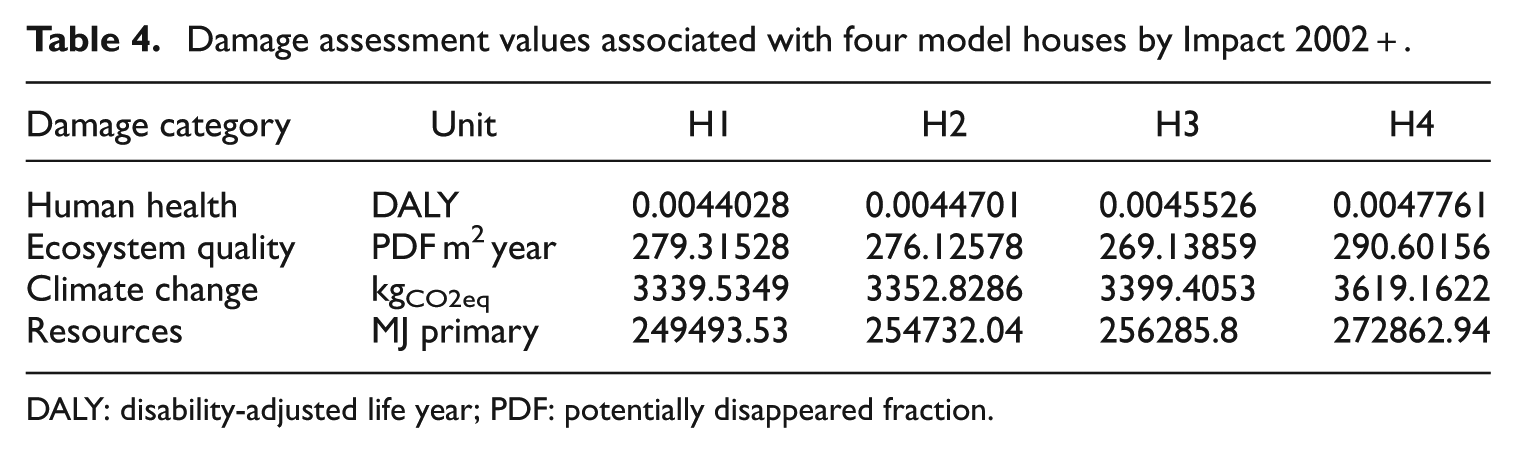
DALY: disability-adjusted life year; PDF: potentially disappeared fraction.
From the environmental impact in Figure 7, the single score assessment shows that these four houses have environmental impact mostly in terms of resources because electrical power from air-conditioner is taken into consideration. The house that is the most environmental friendly is H1 with SC due to the fact that the average temperature in the house for the whole year is minimal and there is air ventilation in the house for the whole day which is suitable for tropical countries like Thailand. This helps to reduce electricity consumption. In Figure 8, it shows that H1 also has the least environment impact on climate change. That means H1 is the friendliest house to the environment.
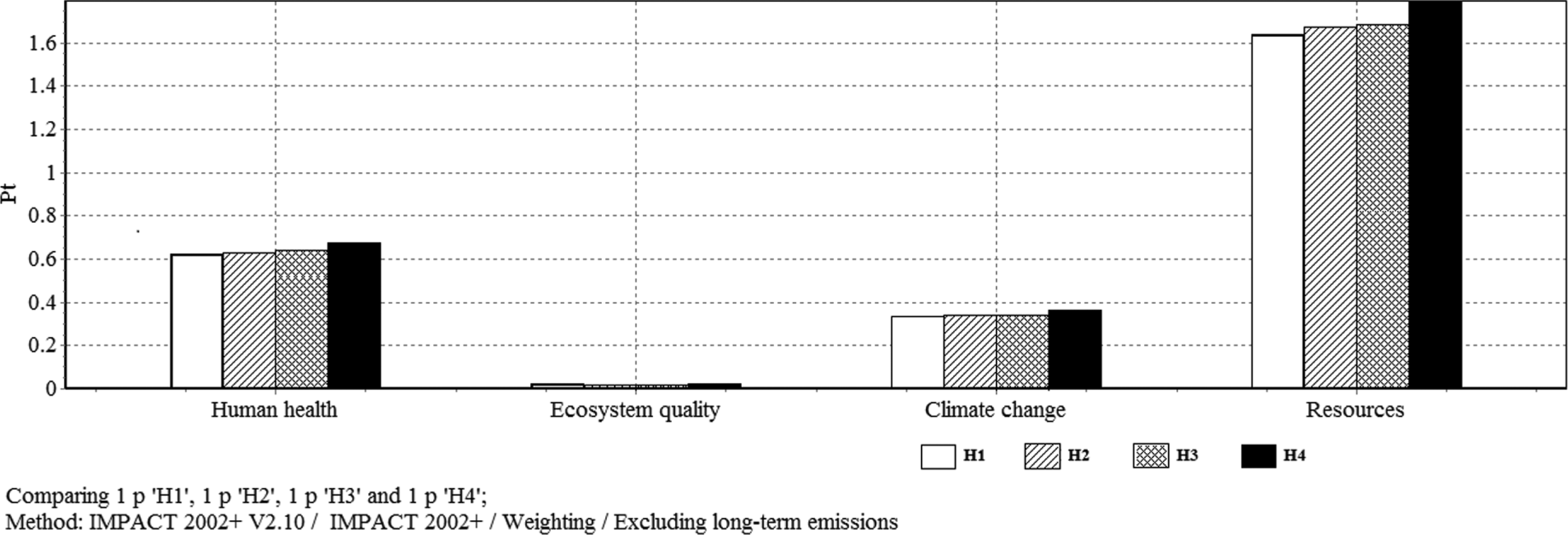
Comparison of the weighting using Impact 2002+ technique in all four houses.
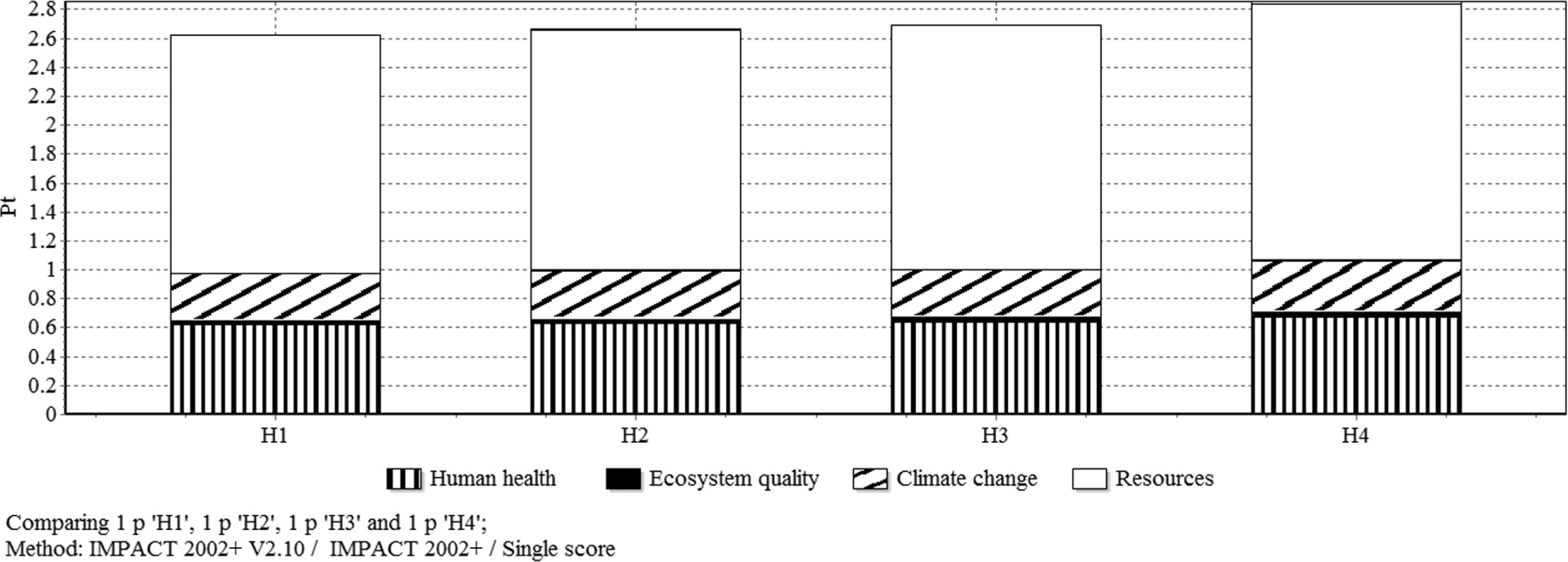
Comparison of the single score using Impact 2002+ technique in all four houses.
Conclusion
This research presents the usefulness and the importance of the housing construction which emphasizes on energy saving and environmental conservation. As can be seen, this research provides not only choosing the proper materials in construction but also using the proper techniques suitable to Thailand’s climate which affects the entire energy consumption. When the passive cooling technique is used, it leads to the reduction in air-conditioning. The house with SC could reduce most of the energy inside the building; in other words, it could save up to 9.55% when compared to the house with energy-saving materials because there is passive cooling air ventilation inside the house, resulting in the lower or similar inside room temperature to the environment temperature. The house that uses energy-saving materials turns out to consume more energy and to have the most environmental impact. It could be seen that energy-saving materials are not applicable in all environments. To construct a building in particular geographical climate, it needs to consider a proper engineering technique suitable to each location rather than mere active cooling technique.
Footnotes
Acknowledgements
The database used in this article is taken from Simapro 7.3 program, “Thai National Life Cycle Inventory Database,” by MTEC and Thai LCA Network at Chiang Mai University.
Declaration of Conflicting Interests
The author(s) declared no potential conflicts of interest with respect to the research, authorship, and/or publication of this article.
Funding
The author(s) disclosed receipt of the following financial support for the research, authorship, and/or publication of this article: This work was supported by The Royal Golden Jubilee PhD Program and the National Research University Project of Thailand, Office of the Higher Education Commission.