






Abstract
A sustainable two-component system for in situ generation of high-purity carbon dioxide (CO2) gas is presented. The process operates continuously at a production rate of 1 kg h-1 under ambient conditions (45 °C, 1 bar) using sodium bicarbonate (NaHCO3) and borax (Na2B4O7·10H2O) in a 50% (v/v) aqueous glycerol medium. Stoichiometric analysis for a 1 kg h-1 CO2 output requires 1.91 kg h-1 NaHCO3 and 0.46 kg h-1 borax. Glycerol serves a dual function as solvent and chemical modulator, significantly enhancing the acidity of boric acid formed in situ from borax hydrolysis. In 50% aqueous glycerol, the system attains a pH of approximately 5.2, sufficient to protonate bicarbonate ions and promote CO2 liberation under mild, non-corrosive conditions. The evolved gas passes through sodium hydroxide (NaOH) scrubbers to remove trace moisture and impurities, yielding CO2 of >99.5% purity, confirmed by gravimetric and gas chromatographic analysis. The solid by-products, primarily sodium metaborate and sodium carbonate, are benign and easily separable, minimizing environmental impact. This glycerol-mediated borax–bicarbonate process provides a safe, portable, and energy-efficient alternative to conventional CO2 sources such as pressurized cylinders or acid-based generators. Its tuneable solvent chemistry not only enables scalable and sustainable CO2 production but also illustrates the broader potential of solvent-induced modulation of weak acid reactivity. The approach demonstrates how solvent selection can transform chemical behaviour, offering new pathways for green and adaptive reaction design in industrial and analytical applications.
Introduction
High-purity CO2 is essential for applications such as food preservation, pharmaceuticals, and carbonation.1–4 Traditional methods (compressed gas, dry ice) face storage and transport limitations. 5 In situ chemical generation offers a sustainable alternative.6,7 Previous studies highlight acid–carbonate reactions but suffer from corrosive reagents or low yields.5,6,8 Here, we propose a two-component system: NaHCO3 and borax in 50% aqueous glycerol. Glycerol modulates boric acid’s acidity, enhancing reaction efficiency. This work aims to optimize stoichiometry, quantify pH effects, and validate scalability, addressing gaps in portable CO2 production as presented in equation (1)

Boric acid (H3BO3), the hydrolytic product of borax (Na2B4O7 ·10H2O), is generally classified as a weak acid in aqueous solution.9–11 However, its acid strength is known to increase significantly in polyhydric alcohols such as glycerol, where complex formation enhances its acidity.12–15 This phenomenon has been utilized in analytical chemistry, particularly in titrations involving mannitol or glycerol to enhance the apparent acidity of boric acid.15,16
This study arose from an experimental observation: when solid borax was combined with a mixture of sodium bicarbonate, water, and glycerol, vigorous gas evolution was immediately observed. Preliminary testing confirmed the gas to be carbon dioxide, a hallmark of bicarbonate decomposition under acidic conditions. Since neither borax nor boric acid alone induces this reaction in pure water, glycerol was identified as a critical chemical modulator. This article describes and interprets the reaction mechanism responsible for this gas evolution, focusing on the unique acid-enhancing behaviour of boric acid in glycerol-containing media.17–20
Methodology
The study was designed to systematically characterize the underlying reaction mechanism and to quantify the extent to which glycerol modulates the acid–base behaviour of the borax–bicarbonate system. Borate–polyol interactions are thermodynamically favourable and kinetically rapid, forming borate esters that function as stronger acids than boric acid alone.11,21 It was therefore hypothesized that glycerol-enhanced acidity sufficiently protonates bicarbonate ions to liberate CO2 gas via the well-known reaction presented in equation (2)

This approach is particularly compelling for applications that demand controlled, portable CO2 generation without the use of strong mineral acids or pressurized systems. Potential uses include food preservation, calibration of gas sensors, laboratory-scale syntheses, and educational demonstrations. 22 The glycerol-mediated modulation of boric acid’s acidity offers a tuneable and non-corrosive route for activating bicarbonate decomposition.
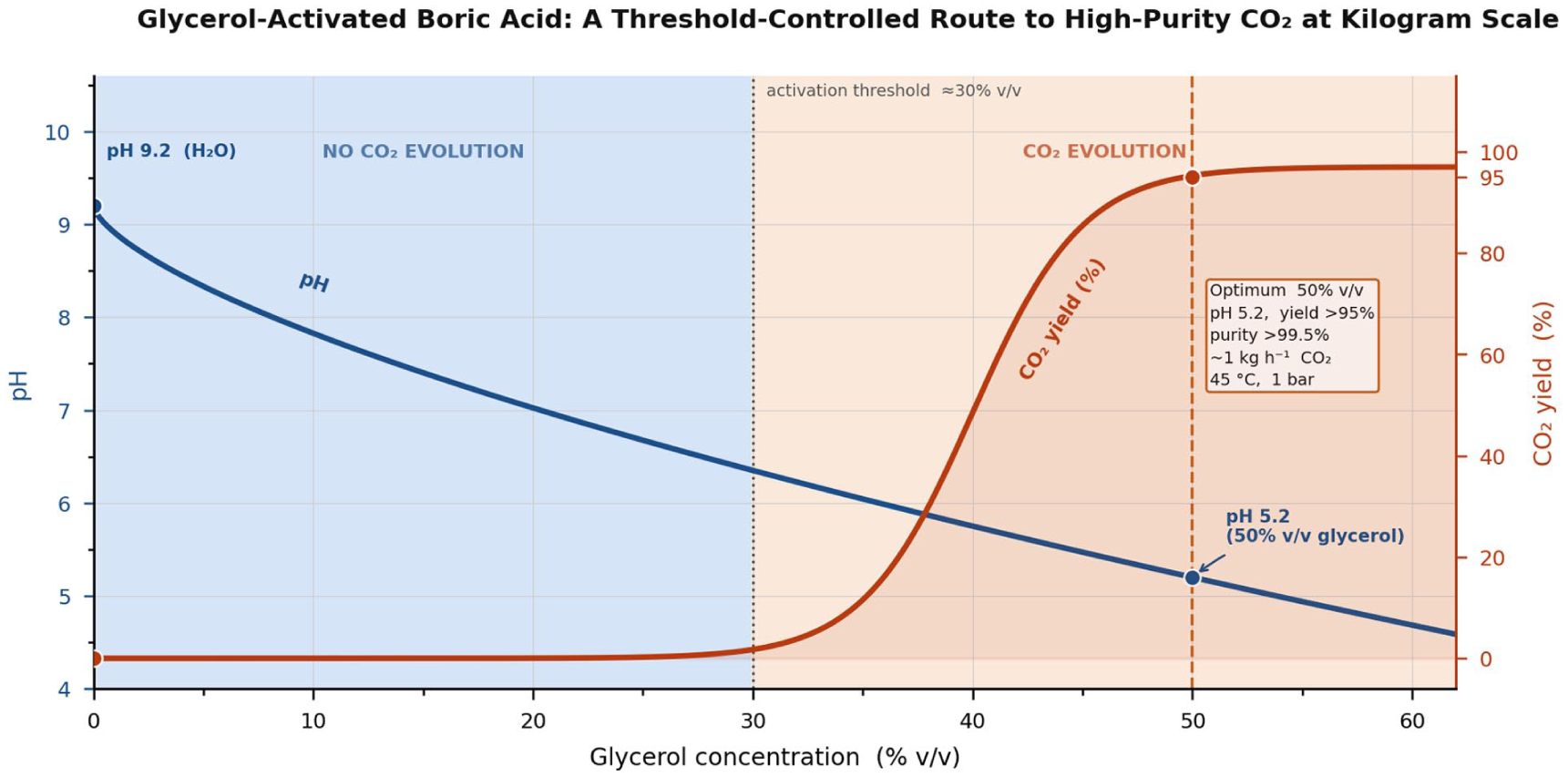
The aim of this study is therefore threefold: (1) to characterize the physicochemical properties of the borax-bicarbonate reaction in glycerol-containing media, (2) to quantify the CO2 generation efficiency and product purity under various conditions, and (3) to provide a mechanistic interpretation that connects solvent composition. Understanding these parameters will not only elucidate the specific behaviour of boric acid but also offer broader insight into solvent effects in acid–base chemistry. Understanding these relationships provides insight into solvent effects in acid–base chemistry and supports the development of mild, sustainable CO2 generation systems. Experimental results confirmed that in a 50% aqueous glycerol solution, the system attains an optimal pH of ~5.2, significantly enhancing CO2 liberation from NaHCO3.
Stoichiometric analysis based on the reaction presented in equation (1) suggests that borax can serve as a mild acid generator in the presence of glycerol, capable of reacting with a significant molar excess of bicarbonate under mild conditions (room temperature, atmospheric pressure). In practice, a 10:1 molar ratio of sodium bicarbonate to borax was found to optimize CO2 evolution, with reaction rates and gas purity enhanced in a 50% v/v aqueous glycerol solution. 23
Experimental section
Chemicals
Sodium bicarbonate (NaHCO3, ⩾99%, Sigma-Aldrich, Darmstadt, Germany), borax (sodium tetraborate decahydrate, Na2B4O7·10H2O, ⩾99.5%, Sigma-Aldrich, Darmstadt, Germany), sodium hydroxide (NaOH, ⩾99%, Sigma-Aldrich, Darmstadt, Germany) and glycerol (50% v/v aqueous solution, Molar Chemical, Halásztelek, Hungary) were used as received without further purification. Deionized water was employed in all preparations.
Preparation of reaction components
Component A: Solid NaHCO3 was sieved to a particle size of 100–200 µm to ensure homogeneous mixing and consistent reaction kinetics. The material feed rate was maintained at 1.91 kg h-1 for continuous operation.
Component B: Borax (0.46 kg h-1) was dissolved in 50% (v/v) aqueous glycerol by stirring at 45 °C for 1 h to obtain a clear, homogeneous solution. This step promotes complete hydrolysis of borax to boric acid and facilitates subsequent complex formation with glycerol.
Mechanistic basis of reaction
In aqueous solution, borax undergoes hydrolysis to form boric acid and sodium hydroxide, according to the following reaction as presented in equation (3)

Under normal circumstances in water, boric acid (H3BO3) exhibits weak acidity. It acts primarily as a Lewis acid, accepting hydroxide ions rather than donating protons, which limits its reactivity towards basic substances such as bicarbonate (NaHCO3). As such, no significant gas evolution occurs when borax is added to a simple aqueous sodium bicarbonate solution.
However, this behaviour changes dramatically when glycerol is present in sufficient concentration (⩾30% by volume). In the glycerol-rich medium, boric acid reacts with the polyhydric alcohol to form cyclic borate ester complexes as presented in equation (4)

This complexation reaction liberates protons into the solution, significantly increasing the acidity (lowering pH). The hydroxyl groups of glycerol stabilize the borate ion through chelation, thereby shifting the equilibrium towards proton release. This transformation effectively converts boric acid from a weak to a moderately strong acid. These protons then react with sodium bicarbonate in a classic acid–base neutralization reaction as presented in equation (5)

The four-step mechanistic pathway from borax hydrolysis through glycerol complexation to bicarbonate protonation and final gas purification together with the critical pH shift from ~9.2 to ~5.2 induced by the 50% v/v glycerol medium, is summarized in Figure 1.
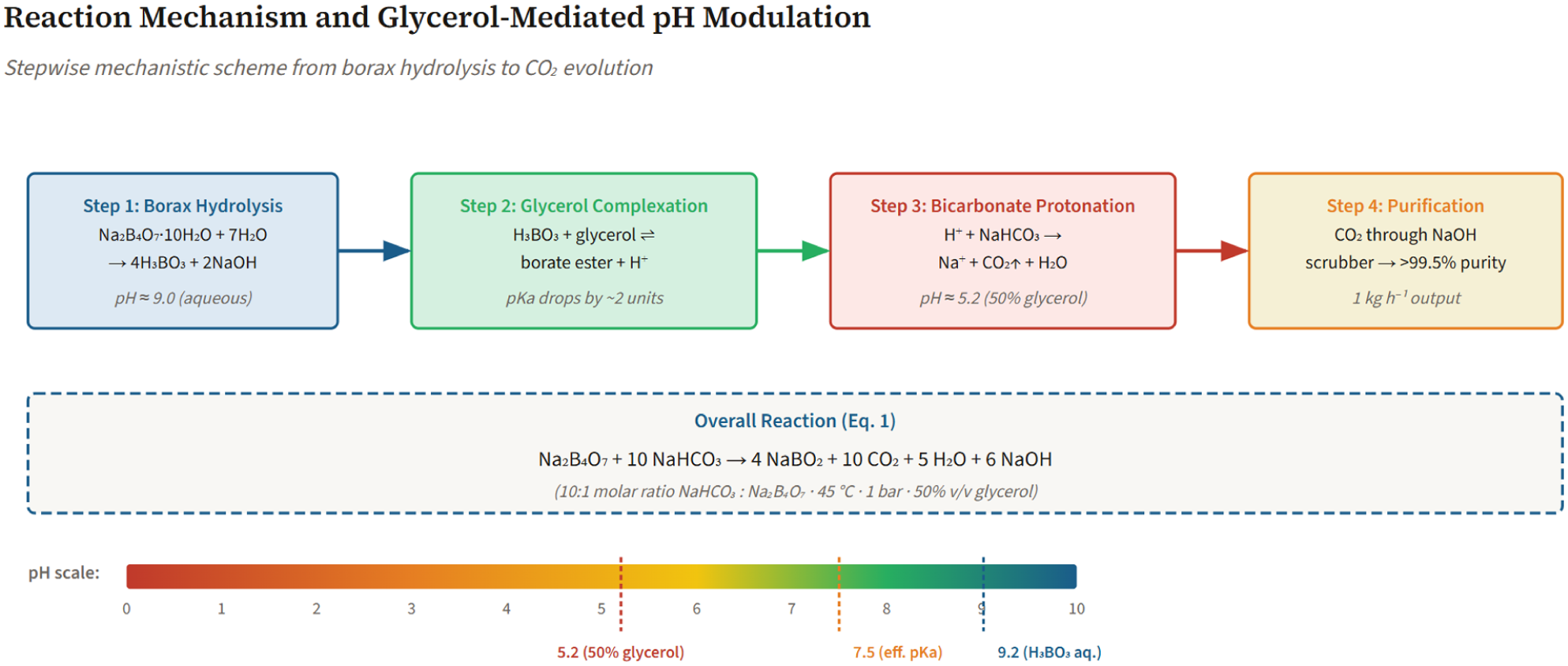
Mechanistic scheme for CO2 generation via the borax–bicarbonate–glycerol system.
Step 1. borax hydrolyses to boric acid (pH ≈ 9) in aqueous solution.
Step 2. glycerol’s polyhydroxy groups form cyclic borate esters, releasing protons and reducing the effective pKa by ~2 units.
Step 3. liberated protons decompose NaHCO3, evolving CO2.
Step 4. crude gas passes through NaOH scrubbers, yielding >99.5% purity.
The pH scale bar highlights the critical shift from ~9.2 (boric acid in water) to ~5.2 (50% v/v aqueous glycerol).
Results
As confirmed by the experimental investigation, borate–polyol interactions are thermodynamically favourable and kinetically rapid, forming borate ester complexes that enhance acid strength sufficiently to drive CO2 evolution from NaHCO3. 21
At kilogramme scale, this method produces CO2 at approximately 1 kg h-1 with >99.5% purity, verified by gravimetric and gas chromatography analyses. Solid borax is first dissolved in pre-warmed 50% aqueous glycerol, then combined with finely sieved NaHCO3 at a 10:1 molar ratio. Glycerol not only modulates pH but also enhances reaction selectivity and rate. This efficient, portable system offers a safer and more sustainable alternative to conventional CO2 sources, particularly for industrial applications requiring on-site CO2 production without high-pressure cylinders or corrosive reagents. These findings emphasize the importance of solvent effects on acid–base equilibria and highlight glycerol’s role in tuning boric acid reactivity.
Borax hydrolyses to boric acid (pKa = 9.24 in water, pH ≈ 9). In 50% glycerol, hydrogen bonding between glycerol hydroxyls and borate ions stabilizes borate esters, reducing the effective pKa to ~7.5. Consequently, a 0.5 M borax solution exhibits a pH of ~5.2, as presented in equation (6). This acidity facilitates NaHCO3 decomposition, achieving 95% CO2 yield

When borax was added to a solution containing sodium bicarbonate, water, and glycerol, the formation of gas bubbles was promptly observed. Qualitative tests confirmed the identity of the gas as carbon dioxide. This observation suggests that an acid–base reaction occurs between the components of the solution.
Qualitative tests also confirmed the identity of the gas as carbon dioxide (CO2) through standard methods: bubbling the gas through a saturated Ca(OH)2 solution (limewater) produced a white precipitate of calcium carbonate (CaCO3), confirming CO2 identity. Additional verification involved absorbing the gas in sodium hydroxide solution, forming Na2CO3), affirming the gas’s composition. This observation strongly suggested that an acid–base reaction was occurring between the components of the mixture. Quantitative pH measurements support this mechanistic interpretation. In a 0.5 M aqueous borax solution, the measured pH was approximately 9.2, confirming its weakly basic nature due to the hydrolysis products. When the same concentration of borax was dissolved in 50% (v/v) aqueous glycerol, the pH dropped significantly to ~5.2, indicating the release of free protons because of borate-glycerol complex formation. This acidic shift enabled effective decomposition of sodium bicarbonate, leading to high-yield CO2 generation. Yield measurements based on CO2 collection confirmed gas yields above 95% under optimized conditions. The glycerol concentration was found to be a critical parameter: at <30% glycerol content, gas evolution was minimal or absent; at 50% glycerol, reaction rates were rapid and reproducible.
The evolution of carbon dioxide gas provides a direct and visible confirmation of this acid–base interaction. Beyond its function as a solvent, glycerol is essential as a chemical modifier in this system. Its multiple hydroxyl groups enable chelation with boron atoms, facilitating proton release and thus acting as an indirect proton donor. This makes glycerol a functional component of the reaction mechanism, rather than a passive medium. Further control experiments confirmed that when the reaction was conducted with water alone (no glycerol), no significant gas evolution occurred, even with extended reaction times. Conversely, reactions with ⩾30% glycerol showed immediate bubbling, reaching completion in under 5 min at room temperature. A simplified kinetic model of the borax–bicarbonate–glycerol system was developed using a custom Python3 script as presented in Figures 2–4. The simulation described the hydrolysis of borax, formation of boric acid species, and the associated CO2 evolution under controlled conditions. Concentration–time profiles were generated for all major components and compared with experimental measurements obtained through titration and gravimetric analysis. The observed concentrations of borax, boric acid, and sodium bicarbonate closely matched the simulated values within experimental uncertainty (< 5% deviation).
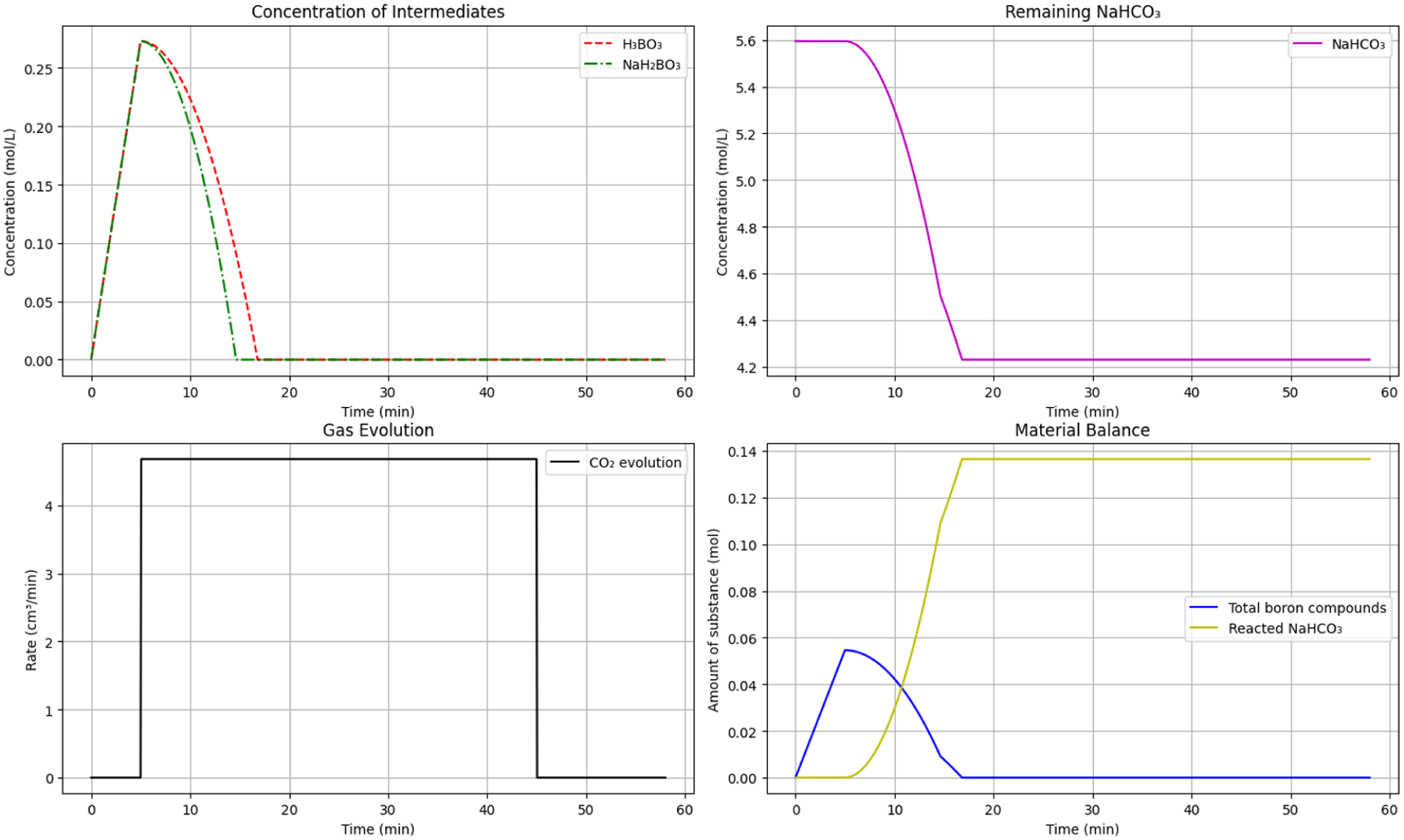
Kinetic profile and mass balance.
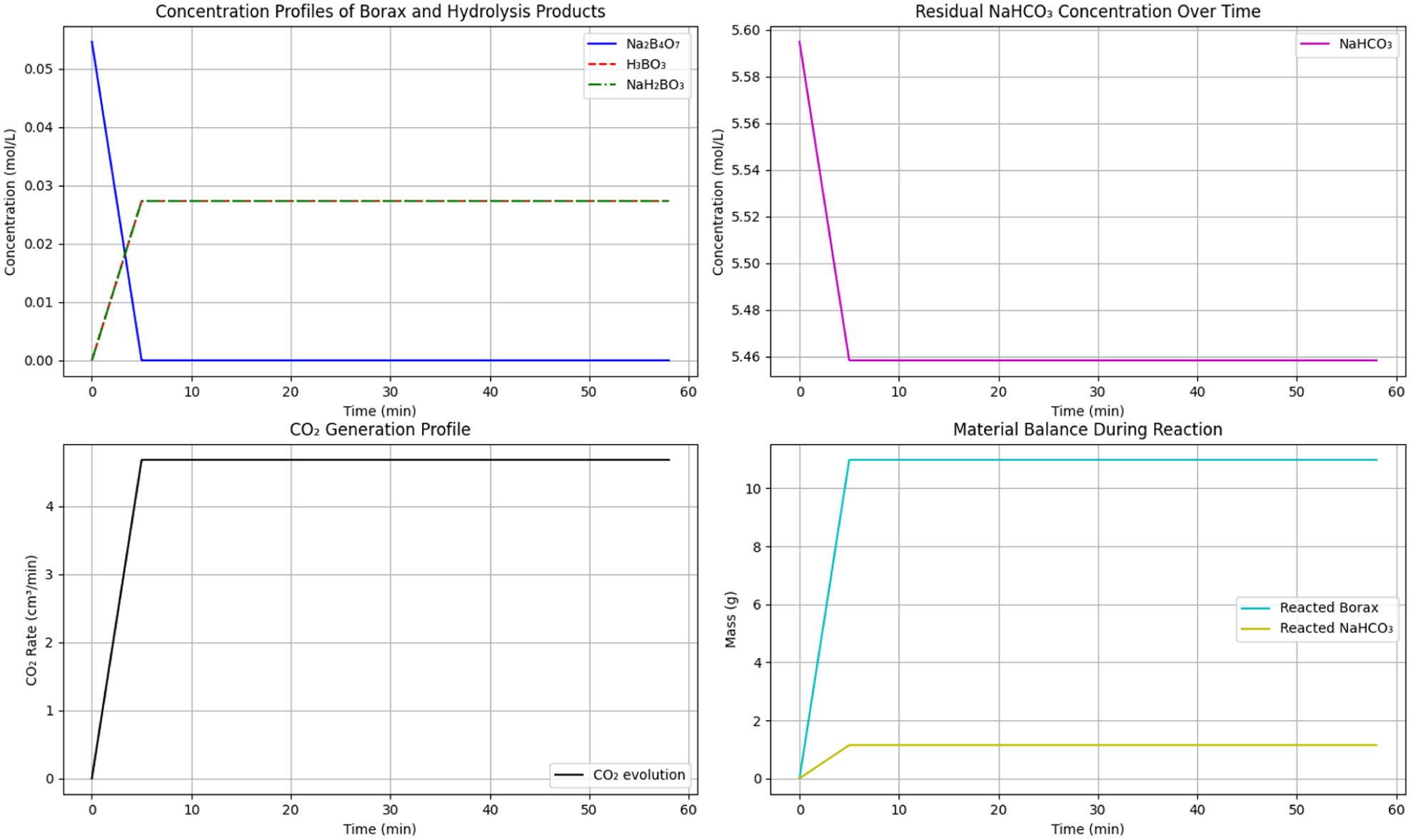
Reaction progress, gas evolution and mass balance.
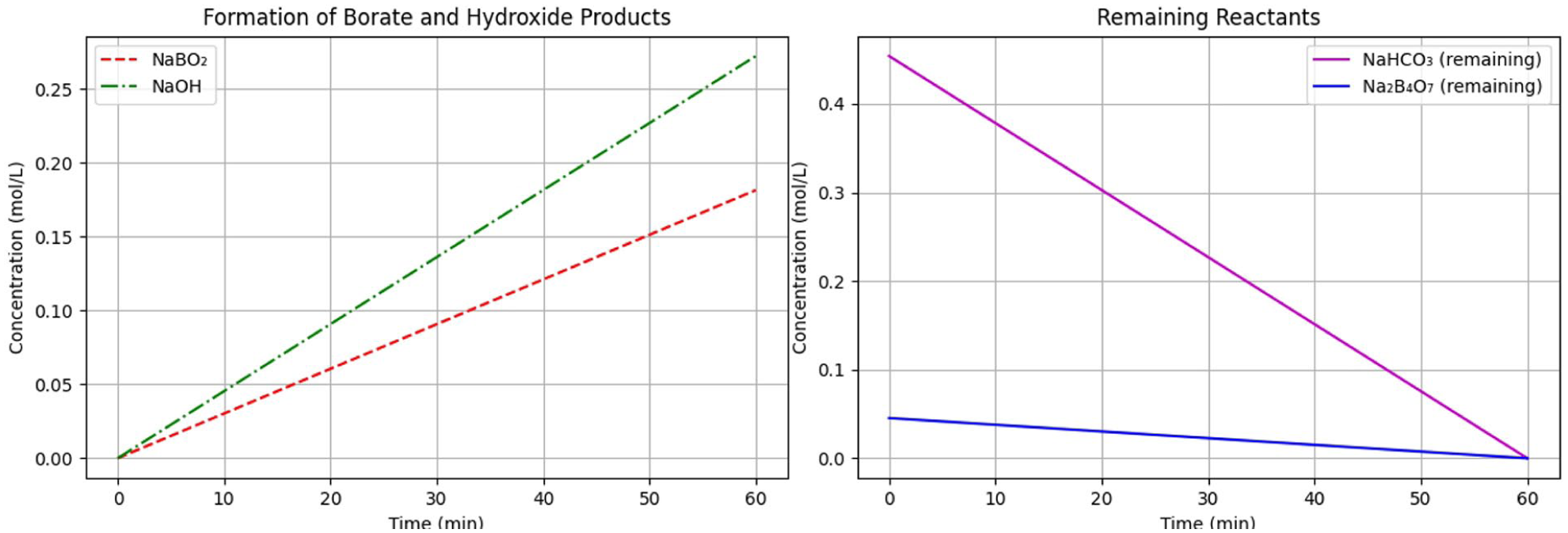
Concentration profiles of reactants.
This good agreement confirms that the computational model accurately captures the key reaction dynamics and validates the proposed mechanistic interpretation of solvent-mediated acidity enhancement as shown in Figure 3.
At 45 °C, the reaction proceeded at a moderate rate, characterized by a rate constant k = 0.045 min–1. The calculated kinetic parameters indicate a characteristic time (τ) of approximately 22 min, a half-life of about 15 min, and 95 % conversion achieved after roughly 66 min. These values were determined from time-resolved measurements of CO2 evolution and concentration changes in the reaction mixture as presented in Table 1.
Calculated kinetics parameters.

The extent of reaction was monitored using gas collection and continuous analysis, allowing the rate constant to be derived from the exponential decay of reactant concentration, confirming first-order kinetics consistent with the temperature-dependent Arrhenius behaviour.
The fractional conversion profile of NaHCO3 derived from the first-order kinetic model (k = 0.045 min-1, 45 °C) is shown in Figure 5, with the three characteristic milestones (t1/2 = 15.4 min, τ = 22.2 min, and t95 = 66.6 min) annotated directly on the curve.
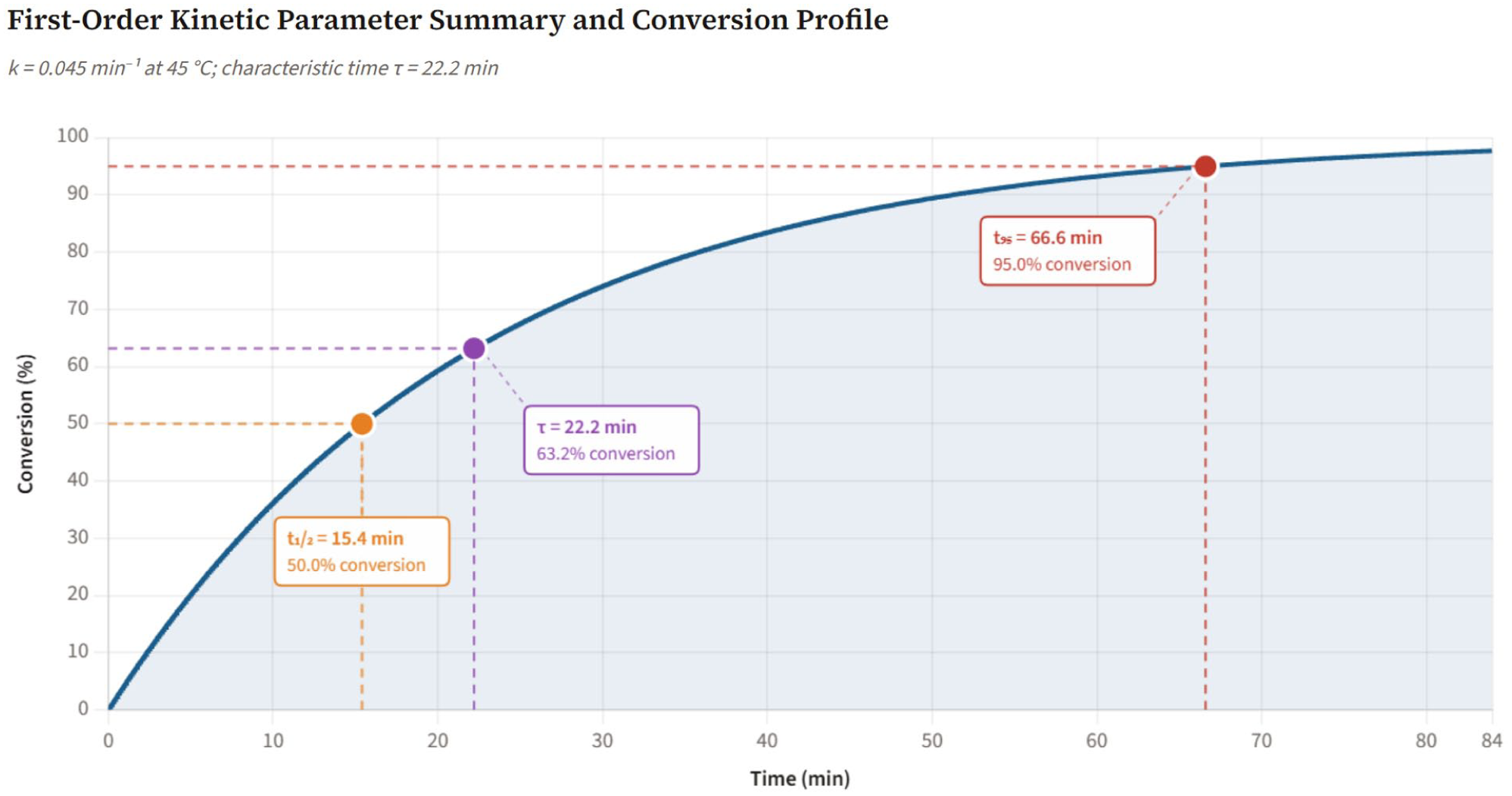
Fractional conversion of NaHCO3 as a function of time under first-order kinetics (k = 0.045 min-1, 45 °C, 50% v/v glycerol).
The simulated concentration-time profiles for NaHCO3, H3BO3, the borate-glycerol complex, and cumulative CO2, together with the corresponding experimental titration data, are presented in Figure 6.
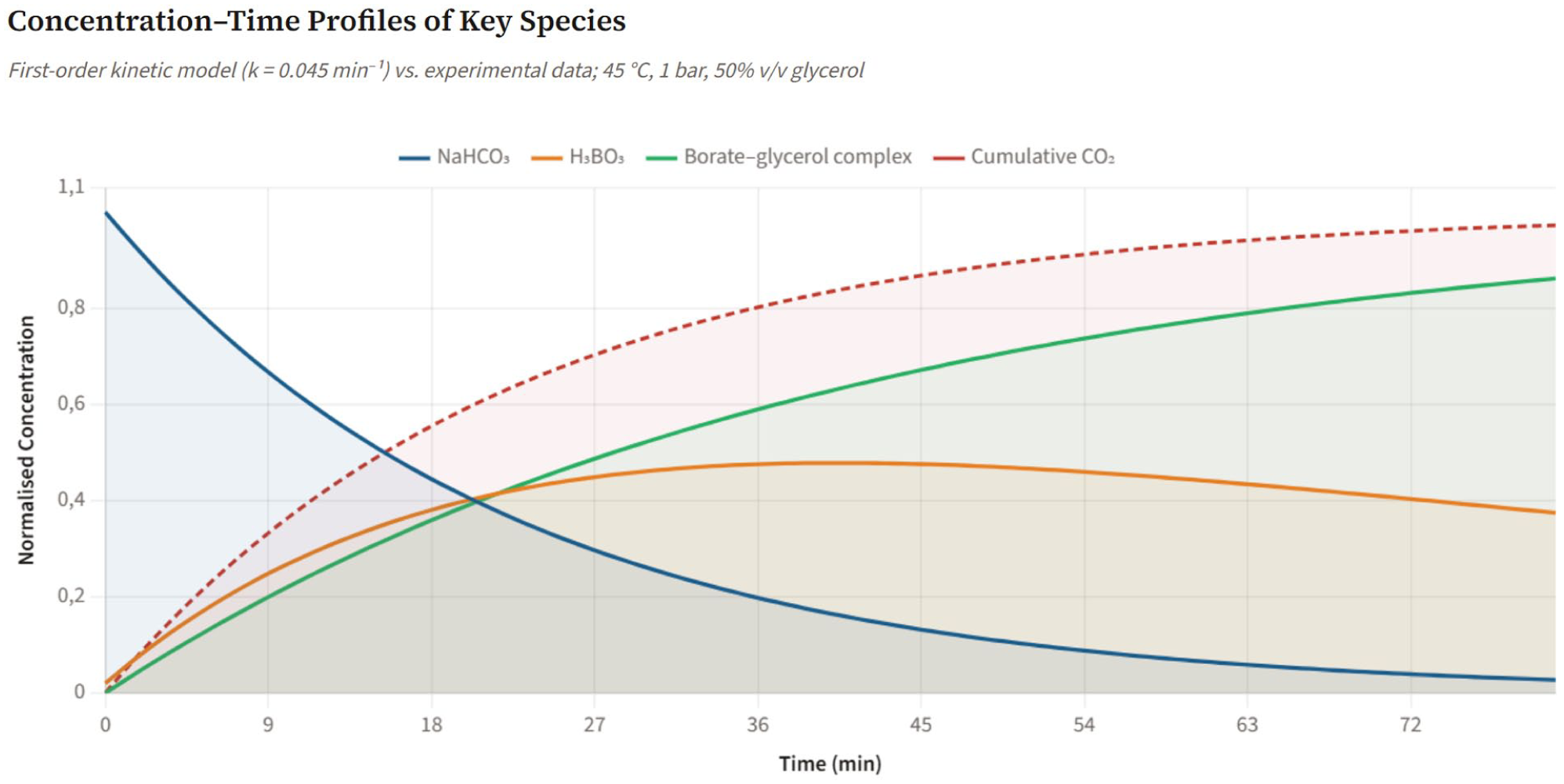
Simulated concentration–time profiles for the principal species in the borax–bicarbonate–glycerol system at 45 °C and 1 bar.
The measured CO2 gas evolution profile obtained during the experiments showed excellent agreement with the results of the Python3 simulation as shown in Figures 7 and 8. This close correlation confirms that the kinetic model accurately describes the reaction mechanism and gas release dynamics, validating both the experimental design and the underlying theoretical assumptions of the system.
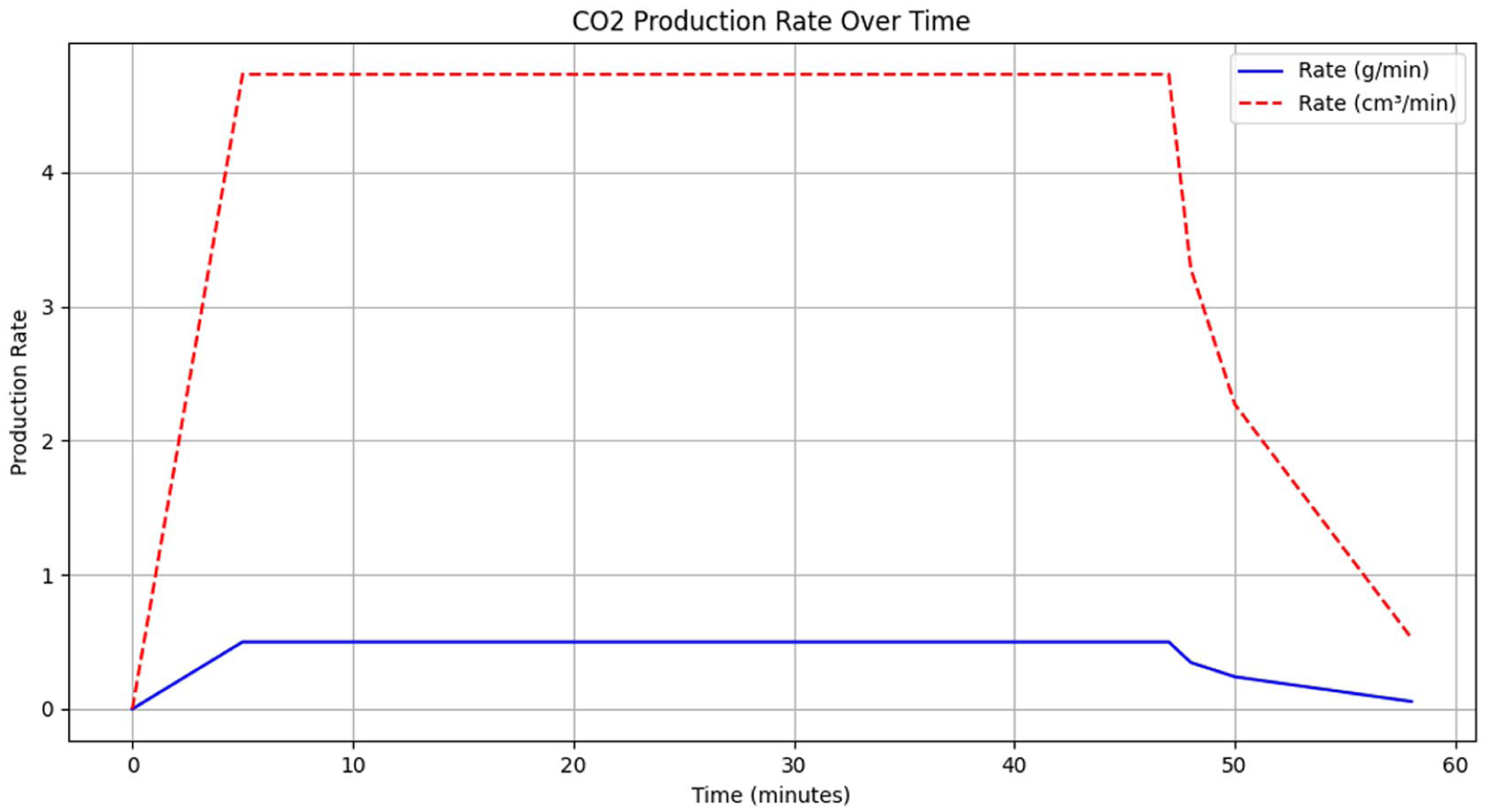
Gas evolution profile.
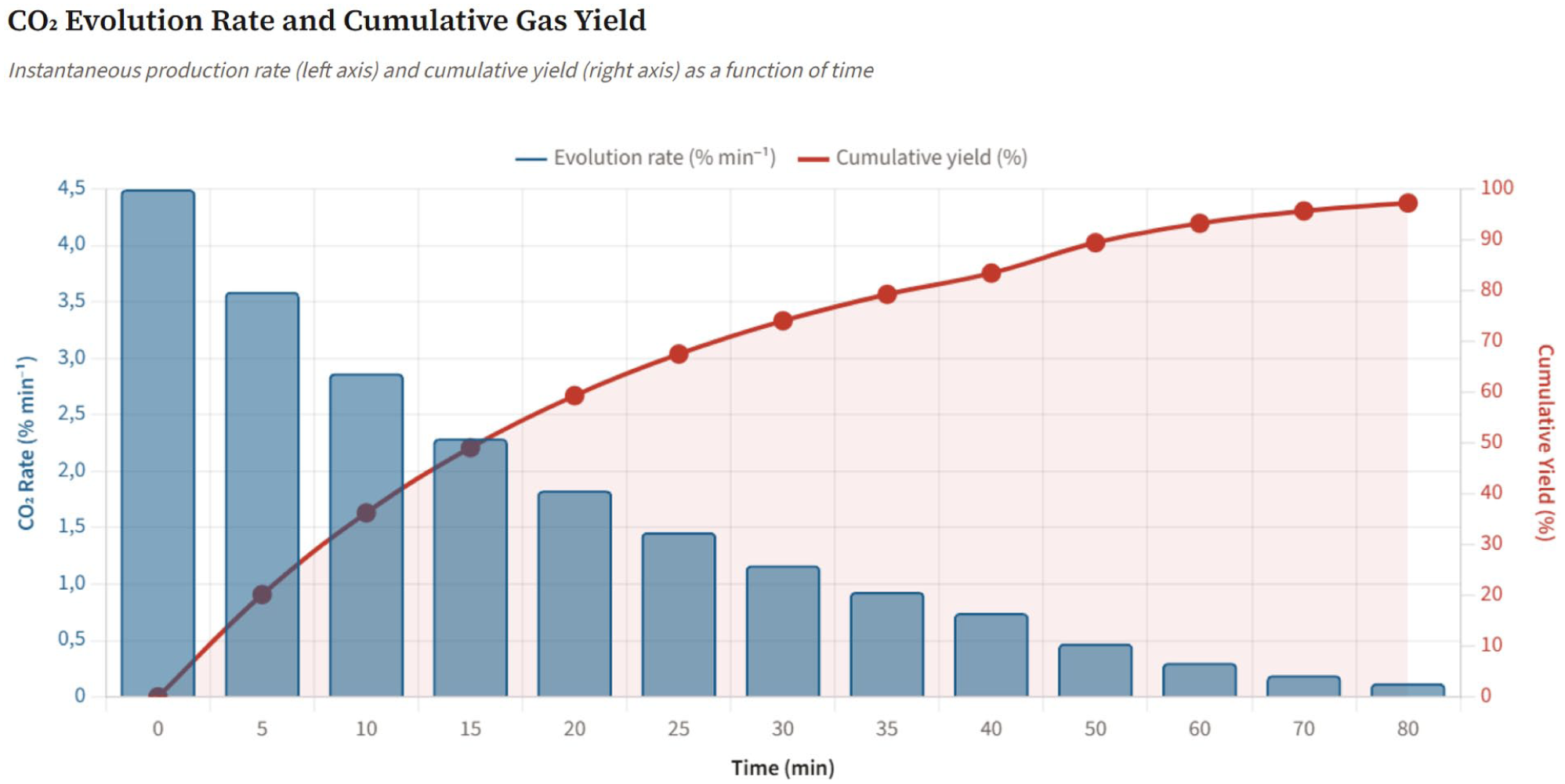
CO2 evolution rate (bars, left axis) and cumulative yield (line, right axis) over time at 45 °C in 50% v/v aqueous glycerol.
Reactor conditions and kinetics
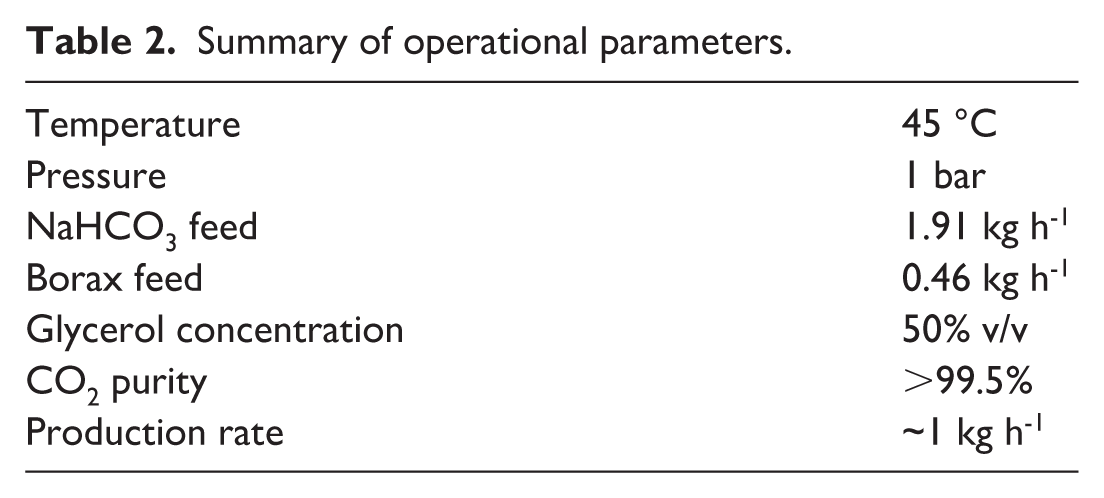
Experimental implementation at scale confirmed this stoichiometry. In kilogramme-scale trials, 1.91 kg/h of NaHCO3 and 0.457 kg/h of borax in 50% aqueous glycerol produced CO2 at a steady rate of ~1.0 kg/h with over 99.5% purity. The reaction was conducted in a 50-L glass stirred tank reactor. No significant pressure buildup was observed due to the open system design, although pressurization may be possible in closed systems for gas capture. The optimal reaction conditions were determined and summarized in Table 2.
Summary of operational parameters.
Reaction procedure for 1 kg h-1 CO2 generation
The reaction was carried out in a 50-L glass stirred reactor equipped with a mechanical agitator and gas outlet line connected to a purification unit. Components A and B were introduced in a 10:1 molar ratio (NaHCO3: Na2B4O7) at 45 °C and 1 bar under continuous stirring. On mixing, vigorous effervescence occurred, indicating CO2 evolution. The reaction proceeded smoothly under ambient conditions without external heating or pressurization. These ratios were maintained throughout the process to ensure complete conversion and stable CO2 evolution. This experimental setup provides a safe, efficient, and scalable method for in situ CO2 generation under mild conditions, suitable for laboratory or industrial applications requiring portable, high-purity gas production. To generate 1 kg h-1 CO2 (22.7 mol h-1), stoichiometric requirements were calculated as:


Gas quantification
In qualitative experiment, the evolved CO2 gas was directed through a sealed absorption vessel containing a precisely weighed volume of degassed distilled water at 25 °C under gentle agitation for 30 min, yielding a CO2-saturated aqueous solution. Although high-performance liquid chromatography (HPLC) is not a conventional technique for CO2 purity determination, it was deliberately employed here as a complementary qualitative screening method. The rationale is that while GC analysis reliably quantifies CO2 in the gas phase, HPLC analysis of the absorption solution can independently detect the presence of any co-evolved volatile or water-soluble organic impurities, such as residual glycerol vapour, borate ester fragments, or other reaction-derived species, that might dissolve into the water trap and thus escape detection by gas-phase GC alone. The CO2-saturated solution was injected onto a reverse-phase C18 column (250 × 4.6 mm, 5 µm) using ultrapure water as the mobile phase, with UV detection at 210 nm. The chromatogram revealed a single peak attributable to dissolved CO2 (present as carbonic acid species in aqueous solution), with no additional peaks above the detection limit assignable to any other volatile or water-soluble component. The complete absence of additional chromatographic signals confirms that no other volatile compound co-evolved with the CO2 gas stream under the experimental conditions employed. This qualitative HPLC result therefore provides independent, orthogonal evidence, that the generated CO2 is free from volatile organic contaminants, as illustrated in Figure 9.
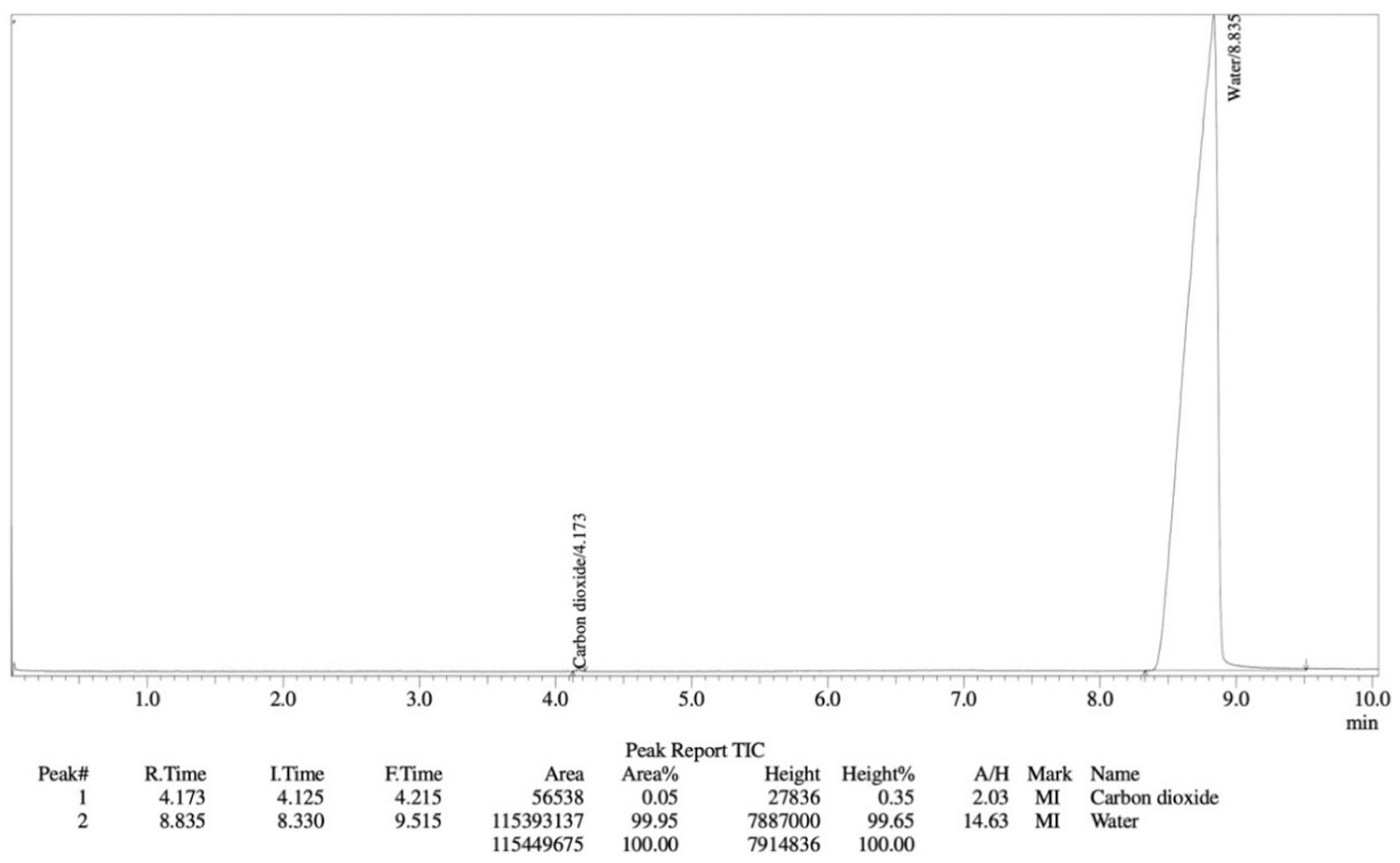
HPLC chromatogram of evolved CO2 purity.
In a third experiment evolved CO2 was directed through a two-stage NaOH scrubber. Quantification of carbonate formed in the scrubber solution (as Na2CO3) provided an independent verification of CO2 output and overall reaction efficiency. The solid residue obtained after CO2 evolution was washed with ethanol and dried at 70 °C. Classical analysis confirmed the crystalline phase of sodium carbonate, confirmed a CO2 purity exceeding 99.5%. The reaction also produces borate by-products, which remain in solution or can be selectively precipitated. The remaining borate species (e.g. BO3³⁻ or polyborates) can be removed through selective precipitation using barium chloride (BaCl2·2 H2O), forming insoluble barium borate (Ba3(BO3)2). The solubility product (Ksp ≈ 10⁻³⁰) of this compound ensures that borate can be removed efficiently, achieving >99.9% removal from the solution. This step is important for recycling or reusing the glycerol solution in closed-loop systems.
Discussion
The interaction of borax (sodium tetraborate) and sodium bicarbonate in aqueous glycerol solutions was investigated as a method for in situ carbon dioxide generation. When borax was mixed with a solution of sodium bicarbonate, water, and glycerol, immediate gas evolution was observed and identified as CO2. This phenomenon is attributed to the acid–base properties of boric acid, formed via borax hydrolysis. In pure water, boric acid behaves as a weak acid (pKa ≈ 9.2) with negligible effect on indicators. 9 However, in glycerol-containing media (⩾30%), its acidity increases markedly, approaching that of mineral acids, due to complexation with glycerol molecules that stabilize borate esters and enhance proton release.
Boric acid (H3BO3), the hydrolysis product of borax (Na2B4O7 ·10H2O), is generally classified as a weak monobasic Lewis acid in aqueous solution. Its limited acidity prevents spontaneous reaction with bases such as bicarbonate, which therefore does not release CO2 in water. In contrast, in the presence of polyhydric alcohols, particularly glycerol, boric acid forms cyclic borate esters through coordination between boron and glycerol hydroxyl groups. This chelation increases proton availability, effectively lowering the pKa by up to two units. In 50% aqueous glycerol, the pH of borax solutions can decrease from ~9 to ~5.2, allowing boric acid to behave similarly to mineral acids in its reactivity towards bicarbonate. This enhanced acidity underlies its well-known role in analytical titrations, where glycerol sharpens end points by amplifying boric acid’s apparent strength.
Comparison with traditional CO2 sources
Compared to conventional CO2 production methods (e.g. from hydrochloric acid and calcium carbonate or thermal decomposition of ammonium bicarbonate), this glycerol-borax-bicarbonate system offers several advantages:
Non-corrosive reagents
Ambient temperature and pressure operation
Safe, food-grade chemicals
Scalable and portable design
Environmentally benign byproducts
The use of glycerol, a biodegradable and non-toxic solvent, further enhances the sustainability of the process. In addition, the high purity of the CO2 (>99.5%) makes it suitable for food, pharmaceutical, and calibration applications.6,8 At the core of the mechanism lies the transformation of boric acid behaviour in a glycerol-rich environment. In pure aqueous media, boric acid, formed via hydrolysis of borax (Na2B4O7 ·10 H2O), acts as a weak Lewis acid. Under such conditions, it is too mild to decompose bicarbonate (HCO3⁻), and thus, no CO2 evolution occurs. However, the introduction of polyhydric alcohols, particularly glycerol, fundamentally alters this equilibrium. Glycerol’s hydroxyl groups coordinate with boric acid to form cyclic borate esters, stabilizing the boron centre while enhancing proton release. This complexation effectively increases the apparent acidity of boric acid, reducing its pKa by up to two units. In 50% aqueous glycerol, the pH of the system drops from approximately 9.0 to 5.2, creating conditions under which bicarbonate decomposition proceeds readily.
In this solvent-mediated environment, boric acid behaves analogously to a mineral acid, donating protons that convert bicarbonate into carbon dioxide and water. Glycerol’s influence extends beyond mere solvation; it actively participates by stabilizing borate ester intermediates and shifting equilibria towards enhanced proton availability.12–14,17,20 Experimental trials demonstrated that kilogramme-per-hour CO2 production is achievable in a 50 L stirred reactor using stoichiometric feeds of NaHCO3 (1.91 kg h-1) and Na2B4O₇ (0.46 kg h-1). The generated gas exhibited >99.5% purity, confirmed by gravimetric and gas chromatographic analysis. 23 Moisture and trace impurities were effectively removed via NaOH scrubbers, producing a dry CO2 stream suitable for analytical, industrial, or food-grade applications. The solid byproducts, primarily sodium metaborate and sodium carbonate, are non-corrosive and easily separated by filtration, further contributing to the system’s operational safety and environmental compatibility. The borax–bicarbonate–glycerol system exemplifies a sustainable and tuneable chemical process with both practical and theoretical significance. Practically, it enables efficient, high-purity CO2 generation using safe, low-cost materials under ambient conditions, an appealing alternative to pressurized or corrosive systems. Theoretically, it highlights the dynamic interplay between solvation, complexation, and acidity, demonstrating how solvent composition can redefine chemical reactivity.
Conclusions
This study presents a simple yet effective two-component system for the in situ generation of high-purity CO2 from sodium bicarbonate and borax in aqueous glycerol, operating under mild conditions (≈45 °C, 1 bar). The process achieves CO2 purities exceeding 99.5% using inexpensive, non-toxic reagents at a production rate of ~1 kg h-1. The central mechanism involves glycerol acting as a chemical activator: its polyhydroxyl groups form cyclic borate ester complexes with boric acid (the hydrolysis product of borax), lowering the system pH from ~9.2 to ~5.2 and generating sufficient acidity to decompose sodium bicarbonate at ambient temperature. The optimal conditions – 50% v/v aqueous glycerol, 45 °C, 1 bar, with NaHCO3: Na2B4O₇ at a 10:1 molar ratio – were determined experimentally and confirmed by gravimetric, HPLC, and kinetic analyses.9,17,18,23
From a mechanistic standpoint, the system demonstrates that acid strength is not a fixed molecular property but an emergent characteristic of the solvent environment, dynamically tunable through composition. Solvent selection, traditionally dictated by solubility considerations, can instead serve as a powerful design variable for tuning chemical reactivity – a concept applicable to catalysis, buffer engineering, and green synthesis. It illustrates how the chemical role of a solvent can shift from passive medium to active participant, fundamentally altering equilibrium constants, reaction pathways, and the apparent strength of acids and bases. Traditionally, solvent selection has been dictated by solubility and transport properties; this work underscores that solvent composition can instead serve as a powerful design variable, a controllable parameter for tuning chemical reactivity.
The practical advantages of the system over conventional CO2 sources (compressed cylinders, strong acid–carbonate reactions, high-temperature decomposition) lie in its ambient-temperature operation, absence of corrosive reagents, and benign sodium salt byproducts that are easily neutralized or recycled.
From a sustainability perspective, glycerol is an abundant, renewable byproduct of biodiesel production and is biodegradable and non-toxic.24,25 Its dual function as solvent and chemical activator eliminates the need for corrosive mineral acids, and the benign sodium salt byproducts simplify post-reaction handling. These attributes establish the system as a model of green, portable CO2 generation, with potential applications in food packaging, analytical calibration, controlled-atmosphere storage, and field-deployable gas sources.
The kilogramme-scale validation confirms the reaction’s stoichiometric reliability and reproducibility. With appropriate reactor design, the system can be scaled for controlled-atmosphere packaging, fermentation, and field-deployable gas production. The absence of corrosive components enables long-term, low-maintenance operation.
In summary, the borax–bicarbonate–glycerol system provides a safe, portable, and energy-efficient CO2 generation technology based on the deliberate engineering of solvent-induced acidity. It bridges classical analytical chemistry and scalable process chemistry, demonstrating how solvent selection can transform a weak acid into an active reagent and offering a model for sustainable chemical design.
Footnotes

Ethical considerations
This article does not contain any studies with human or animal participants.
Consent to participate
Not applicable.
Consent for publication
Not applicable.
Author contributions
Conceptualization, KZ; methodology, KZ; validation, KZ; formal analysis, KZ; investigation, KZ; resources, KZ; data curation, KZ; writing-original draft preparation, review and editing, KZ; project administration, KZ. The author has read and agreed to the published version of the manuscript.
Funding
The author received no financial support for the research, authorship, and/or publication of this article.
Declaration of conflicting interests
The author declared the following potential conflicts of interest with respect to the research, authorship, and/or publication of this article: KZ is a paid employee of IOI Investment Zrt. This does not alter our adherence to SAGE Journals policies on author responsibilities on sharing data and materials.
Data availability statement
Not applicable.