







Abstract
Founded in the year of 2004, the 20-year-old Chinese Football Association Super League (CSL) serves as a representative of the development of Asian football. Research focused on match performance within the CSL has gained momentum in recent years. This study provides a systematic review of match performance analysis in the CSL, detailing the analytical methods, core topics, major findings, and current research trends. Following the PRISMA 2020 guidelines (Preferred Reporting Items for Systematic Reviews and Meta-Analyses), a structured search was conducted in the Web of Science (WOS), PubMed and Scopus databases using targeted keyword combinations, initially identifying 184 studies. After thorough screening, 45 studies were included in the review. These studies were classified into three categories: descriptive analyses, comparative analyses, and predictive analyses. Findings reveal that comparative and predictive analyses are dominant, while descriptive analysis remains essential for data contextualisation. Technical and physical performance analyses are the main research topics to date. Observations suggest the CSL is evolving toward a high-intensity style, with foreign players and substitutes playing pivotal roles. Contextual and environmental factors have been shown to substantially impact match performance. Future research will likely trend towards standardised definitions, speed zones and data, expanding studies on contextual and environmental factors with an emphasis on tactical analysis, goalkeeper performance, set-piece situations, and distinct phases of play.
Introduction
Football matches are highly complex and dynamic due to the interaction of multiple variables and inherent uncertainties. 1 Coaches often rely on experience and memory during matches; however, given the fleeting nature and volume of information, they can typically recall only a limited portion of events. 2 This limitation may lead to gaps in post-match analysis and hinder the design of targeted training sessions. In recent years, match performance analysis has played an increasingly critical role in football leagues globally, including the CSL, where its adoption presents both challenges and opportunities. By providing objective, reliable records of match events, match performance analysis allows coaches to evaluate both team and individual performance comprehensively.3,4 It is now widely considered essential in professional football, supporting training design, match evaluation, and player profiling.3,5,6
In European and international football leagues, research on match performance analysis is extensive, with numerous studies employing a variety of statistical methods, such as analysis of variance, regression models, and machine learning techniques, to identify key indicators of technical, tactical, and physical performance under varying contextual factors.3,7,8 Systematic reviews have emphasised the global importance of match performance analysis, identifying trends, key indicators, and best practices.9,10 However, the CSL, with its distinct developmental context within Asia, has evolved uniquely since its establishment in 2004 by the Chinese Football Association, rising quickly to become one of Asia's premier football leagues, noted for its competitive intensity and strong fan engagement.11,12 In recent years, the CSL's performance in the AFC Champions League has further boosted its international profile. 13 Consequently, an in-depth review on the studies of match performance analysis in the CSL is not only crucial for understanding its influence within Asian football but also valuable for revealing the trends that underscore the CSL as a representative of football's growth in Asia.
Research on CSL match performance analysis began relatively late, with the first English-language article on the topic published in 2016 in the International Journal of Performance Analysis in Sport. 14 Over the past few years, the volume of articles on CSL match performance has increased significantly, providing insights into technical, tactical, and physical performance from various perspectives, such as differences in performance between foreign and domestic players, the impact of substitutes, and performance under varying contextual factors.15–17 Although these studies offer valuable insights, most CSL research remains isolated and fragmented, each addressing a specific topic in isolation. As a result, there has been no comprehensive review that synthesises findings on CSL match performance, which makes it difficult to fully understand the characteristics and developmental trends in CSL performance.
This study aims to provide a systematic review and analysis of research on CSL match performance, addressing the following questions: (1) What are the most common types of analysis and topics in current CSL match performance research? (2) What are the main findings of existing studies? (3) What are the limitations of current research, and what are the directions for future research? Through this review, we aim to not only enhance understanding of CSL performance characteristics but also to provide valuable insights and guidance for future research, team management, and potential improvements within the league.
Methods
Search strategy
According to the PRISMA 2020 guidelines (Preferred Reporting Items for Systematic Reviews and Meta-Analyses), a systematic review of the existing literature on match performance analysis in adult male football within the CSL was conducted. The review began with the earliest available published English literature and involved electronic search in the WOS, PubMed, and Scopus databases, which were chosen for their extensive coverage and relevance to sports science and performance analysis literature, with the search cut-off date being June 24, 2024. To ensure a comprehensive literature search, Boolean operators “AND” and “OR” were used to combine targeted keywords. The keywords were carefully selected to cover the main elements of the study, including the sport (‘football’ or ‘soccer’), the specific league (‘Chinese Football Association Super League’, ‘Chinese Super League’, ‘CSL’, or ‘Chinese football teams’), and key aspects of performance evaluation (‘match analysis’, ‘performance analysis’, ‘notational analysis’, ‘game analysis’, ‘patterns of play’, ‘techni*’, ‘tactic*’, ‘physical’, ‘pass*’, or ‘run*’). This combination was chosen to capture a wide range of literature on technical, tactical, and physical aspects related to CSL match performance, which enhances the comprehensiveness and relevance of the reviewed studies. All documents were managed using EndNote X9.1, which facilitated the removal of duplicate records and the screening of literature. The analysis was carried out by two reviewers (WZY and DRC).
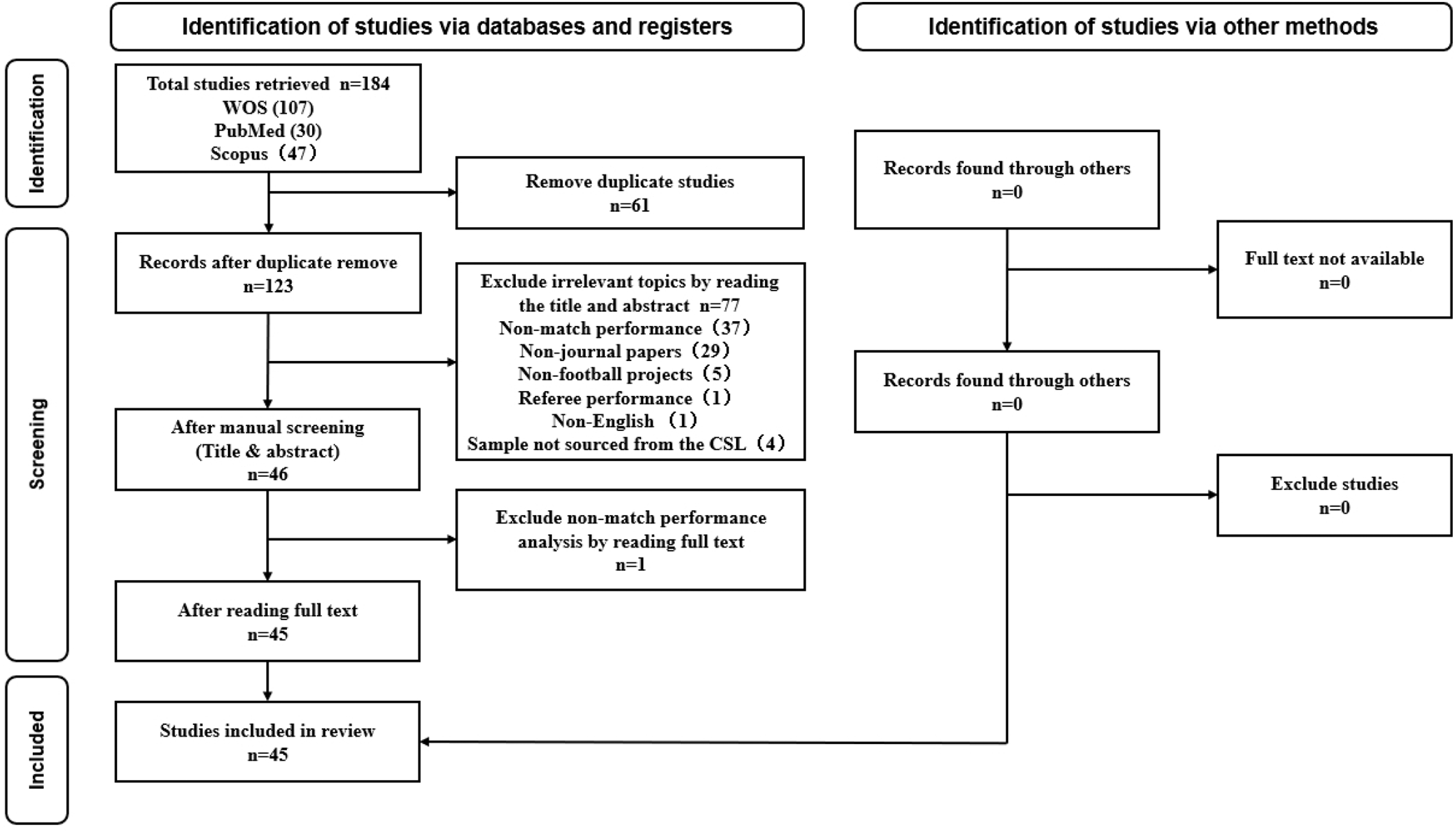
Literature screening flowchart.
Inclusion and exclusion criteria
Papers were included if they met all the following criteria: (1) The research sample data originated from the CSL; (2) Empirical studies related to match performance analysis, including technical and tactical evaluations, time-motion analysis, and statistical compilation; and (3) Published in peer-reviewed English-language journals.
Studies were excluded if they met any of the following criteria: (1) They were not related to football, such as rugby; (2) They involved match performance analysis not related to players, such as analyses of referees; (3) They pertained to data on female football players; (4) They did not include relevant data; and (5) They were conference abstracts, theses, case reports, or reviews.
Methodological quality assessment
As match performance analysis studies inherently involve data from matches and are thus typical quantitative research, this study utilised the literature quality assessment scale developed by Sarmento et al. 10 specifically for match performance analysis. This scale was adjusted and modified based on the background of match performance analysis after evaluation by five senior researchers with extensive experience in performance analysis. It is designed as a risk-of-bias assessment form specifically for match performance analysis. The scale consists of 16 items, with a score of 1 assigned for meeting the criteria, 0 for not meeting the criteria, and “not applicable” noted where appropriate. Consistent with previous research,10,18 percentage scores were used as the final literature quality assessment standard. The percentage score is calculated as (score/total score) × 100%, with the following classifications: (1) low methodological quality, with a score < 50%; (2) good methodological quality, with a score between 50% and 75%; and (3) excellent methodological quality, with a score ≥ 75%.
Results
Search results and study selection
Using Boolean search methods as previously described, a total of 184 articles were retrieved from the three selected databases (WOS: 107; PubMed: 30; Scopus: 47). After removing 61 duplicate records, 123 articles were left for screening. Initially, 77 articles were excluded based on a review of the title and abstract. Subsequently, the full texts of the remaining 46 articles were reviewed, resulting in the exclusion of 1 article, leaving of total of 45 articles. Additionally, no articles were obtained through other sources. Therefore, a final total of 45 articles were included in this study. The flowchart is shown in Figure 1.
Study characteristics
The basic characteristics of the literature are presented in Table 1. The articles included in this review on match performance analysis in the CSL were first published in 2016, with research samples drawn from CSL matches between 2012 and 2021, spanning 10 seasons of the league. In terms of analysis types, the classification method of Sarmento et al. 9 was adopted, categorising match performance analysis into descriptive analysis, comparative analysis, and predictive analysis (Figure 2). The discussion and analysis in this study are also based on these three categories. Among the included studies, 34 articles involved descriptive analysis, 28 involved comparative analysis, and 29 involved predictive analysis. We summarised the research topics in CSL match performance analysis, finding that 32 studies focused on technical performance, 20 on physical performance, and 8 on tactical performance. Additionally, 3 studies examined the impact of rules, technical actions, and behavioural events on match time. Regarding data sources, 14 studies used data from Amisco, 12 from OPTA, and 8 from Champdas, 3 studies combined data from two of these databases, all of which have had their reliability and validity verified.19–21 Data from Sina Sports, China Sports Media, the CSL official database, or the NetEase Super Data Live Broadcast System was used in 5 articles, though the reliability of these databases was not mentioned. Additionally, 2 studies independently collected data using experienced observers, whose data validity and reliability were verified. Only 1 article did not report its data source.
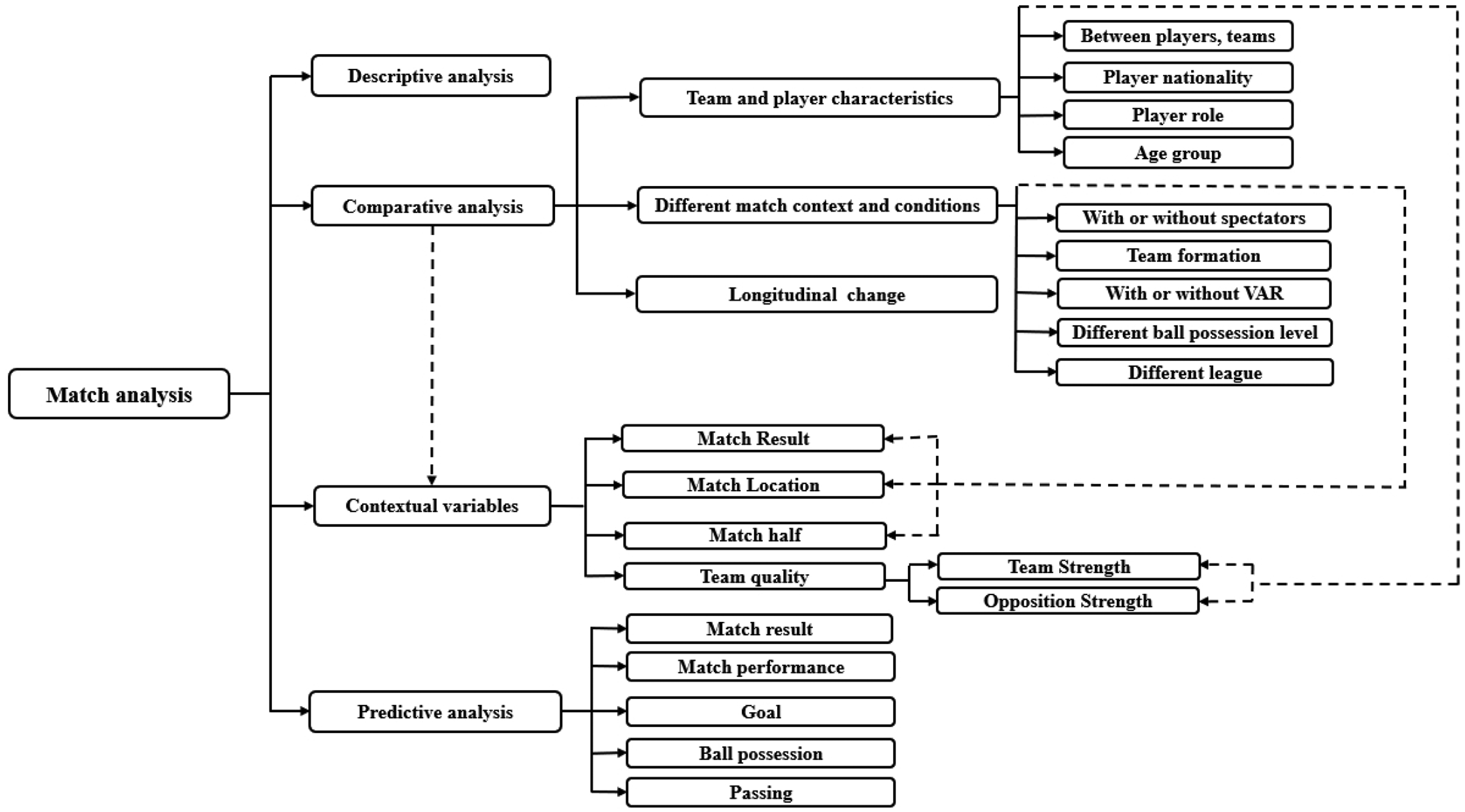
Scopes of match analysis (adapted from Sarmento et al. 9 ).
Basic characteristics of the included literature.
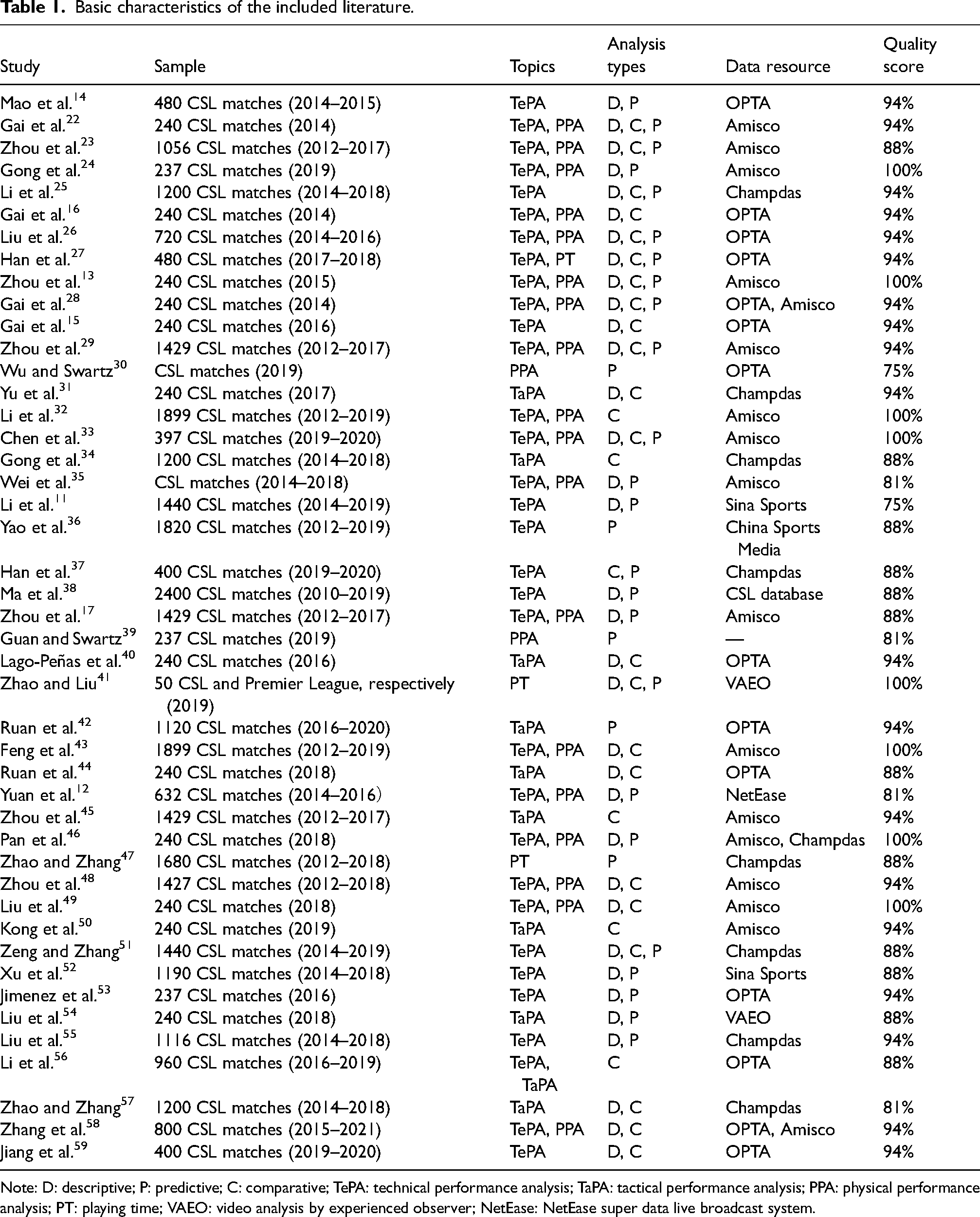
Note: D: descriptive; P: predictive; C: comparative; TePA: technical performance analysis; TaPA: tactical performance analysis; PPA: physical performance analysis; PT: playing time; VAEO: video analysis by experienced observer; NetEase: NetEase super data live broadcast system.
Methodological quality assessment
The methodological quality assessment was achieved by a scale specifically designed for studies of match performance analysis. 10 Inter-observer reliability of the assessment was tested using the KAPPA value in this study, with the average KAPPA value across the 16 items being 0.96 (with a 90% confidence interval of 0.93–1), indicating very high consistency among the observers in evaluating the quality of the literature. Based on the results of the literature assessment: (1) the average score across all assessed studies was 91%; (2) seven studies achieved a score of 100%; (3) no study scored below 75% (Table 1). Therefore, we consider the included studies to represent the highest quality in terms of literature evaluation.
In the quality assessment of the included studies, the primary areas of point deductions were: (1) failure to obtain appropriate ethical approval or informed consent; and (2) lack of description regarding the limitations of the study.
Discussion
Descriptive analysis
Descriptive analysis involves presenting raw or adjusted data (standardised data) as means or medians, accompanied by measures of variability such as standard deviation, range, or percentiles. 60 Descriptive analysis is not the primary focus of current research, but it has become a standard paradigm for presenting data in the results section, providing foundational data for subsequent comparative and predictive analyses. Among the included studies, only 11 did not provide descriptive data. In current research, descriptive analysis summarises the overall activity patterns of teams or players during matches, 9 such as the distribution of various match events and physical performance metrics. However, existing descriptive analysis lacks in-depth exploration of critical match scenarios or specific phases, such as attacking phases, defensive phases, and transitions between attack and defence. While descriptive analysis provides foundational data for research, there remains significant room for improvement in the detailed description and contextual analysis of specific match phases.
In the CSL, the average match duration was 96.68 min, with an average effective playing time of 52.91 min. Fouls and out-of-bounds accounted for the longest periods of stoppage time, with durations of 7.85 and 7.56 min, respectively. 41 Teams in the CSL achieved approximately 9–14 shots per game,33,38,49 with a shot accuracy rate of around 30%-54%.33,38 The average number of passes per game ranged from 300 to 450,14,22,49,51 and the average total distance was approximately 103–109 km.14,17,23,33,49 For individual players, the running distance per match was about 8.8–11 km.28,48,58 However, we were unable to summarise the running characteristics of CSL players across different speed zones due to variations in the speed thresholds defined by different studies, as shown in Table 2. This inconsistency hinders the generalisation of running characteristics and the comparison of research results.
Speed zones for physical performance in the CSL.
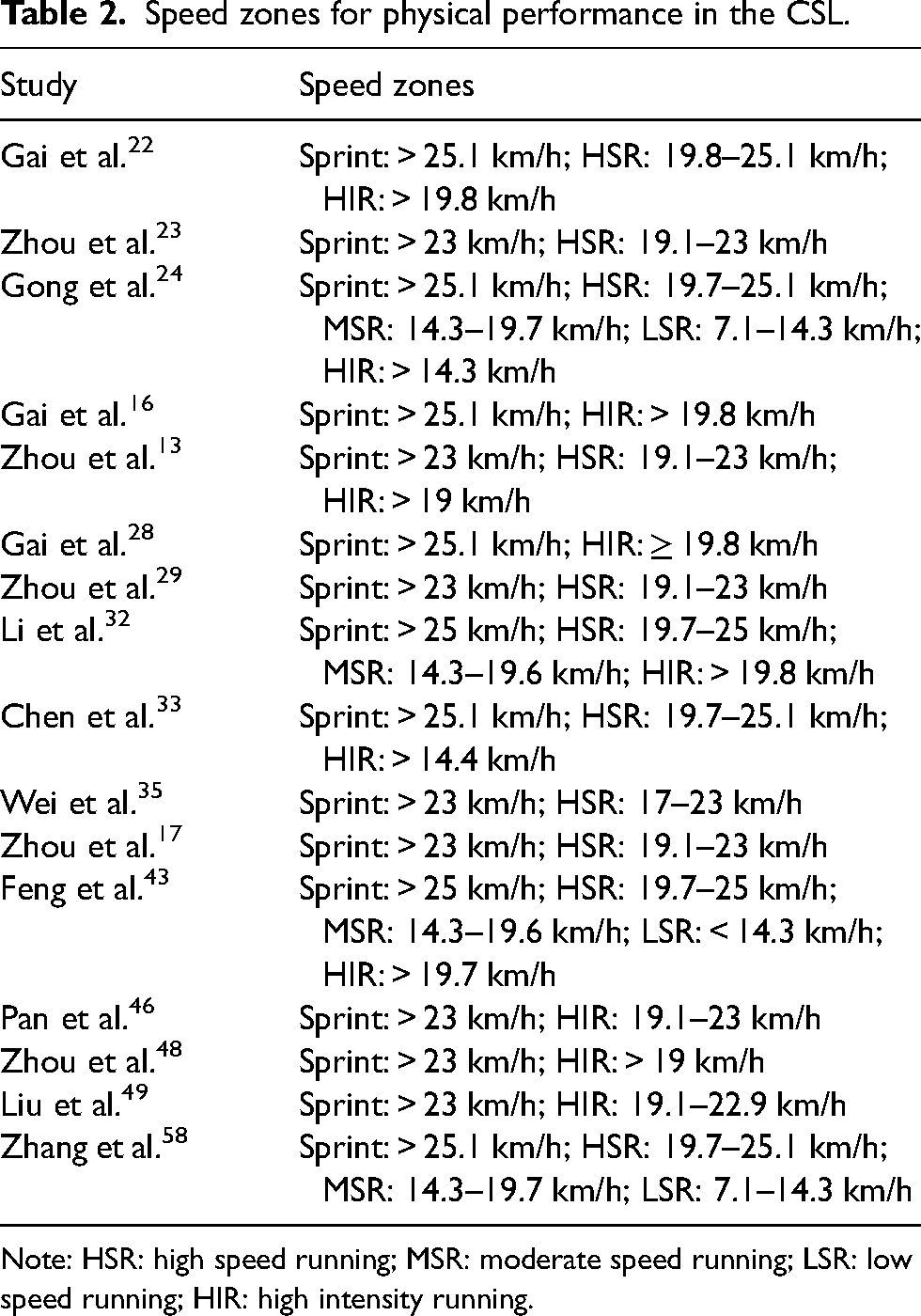
Note: HSR: high speed running; MSR: moderate speed running; LSR: low speed running; HIR: high intensity running.
In the analysis of technical-tactical and running metrics, some studies converted these indicators into per minute standardised data.16,46 Compared to using the data from the entire match, presenting data per minute is a better approach, as it eliminates the impact of match duration variations due to stoppage time. Additionally, when analysing technical-tactical metrics measured in counts, studies such as those by Mao et al., 14 Zhou et al., 23 Ruan et al. 44 have employed mathematical formulas to convert the data into values adjusted for 50% ball possession. This approach effectively removes the influence of ball possession on technical performance indicators.
Comparative analysis
Different team and player characteristics
In comparative analyses of CSL match performance, there has been no direct comparison between different player positions; instead, player position was typically used as a grouping variable. This differs from the findings of Sarmento and colleagues. 9 The most frequent focus in CSL match performance comparative analyses was on comparing different team and player characteristics (such as team strength, player roles, player types, and age groups), with a total of 12 studies addressing these comparisons (Table 3).
Empirical studies with predominantly comparative analysis based on the team and player characteristics.
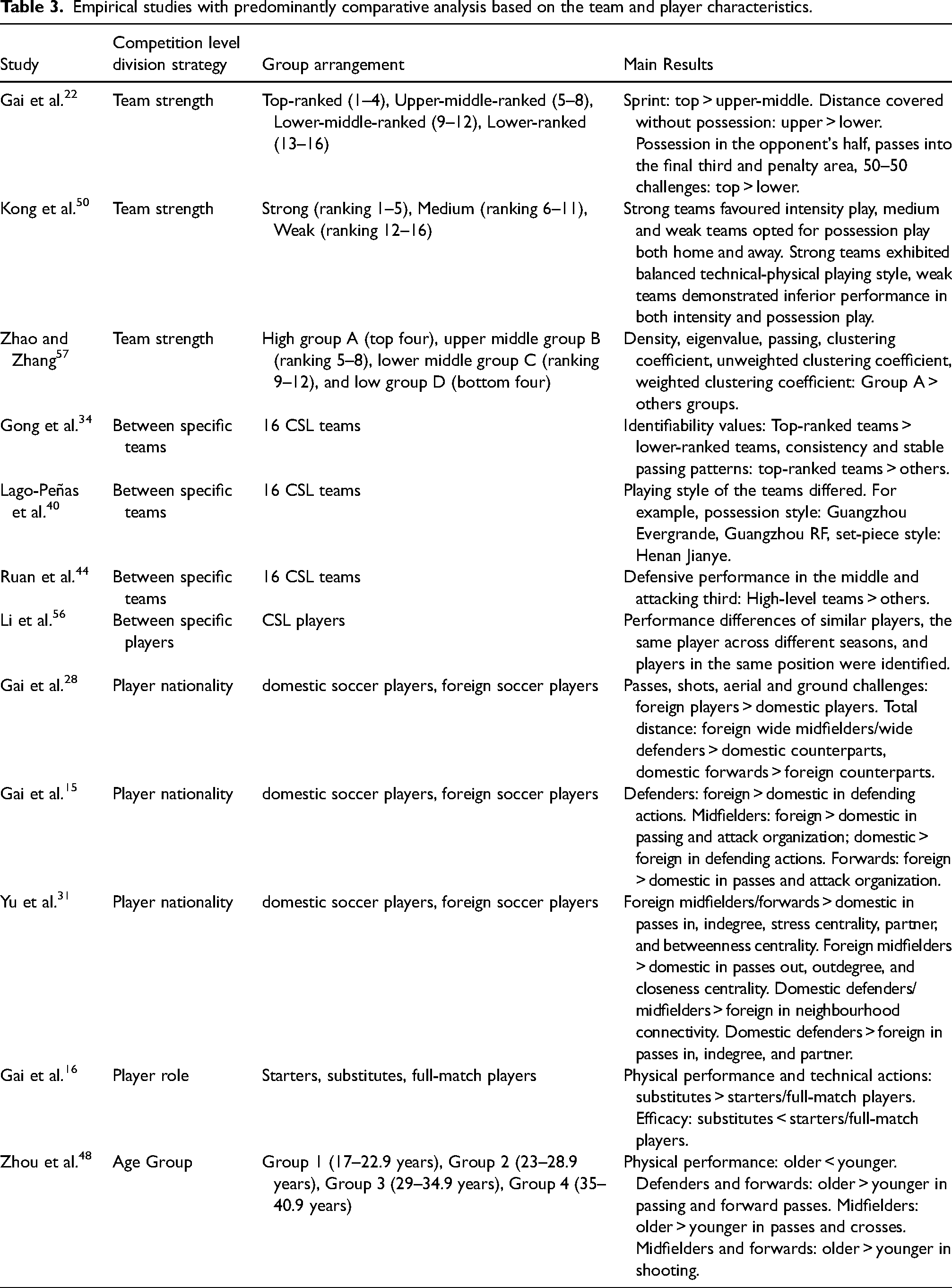
In CSL teams, stronger teams demonstrated superior physical and technical performance. 22 These teams tended to adopt a high-intensity, aggressive style of play and exceled in passing-related abilities.50,57 Although stronger teams adopted an aggressive style of play, they still placed significant emphasis on maintaining possession, featuring a consistent and identifiable playing style, along with stable passing patterns. 34 In contrast, mid- and lower-ranked teams were more inclined to adopt a ball possession-based approach; however, weaker teams (those ranked in the bottom five of the league) often struggle with effective ball control. 50
About comparisons of player types in the CSL, foreign players outperformed domestic players, often holding key positions within the team and playing crucial roles across various positions.15,28,31 In terms of running performance, foreign players, except for forwards, exhibited a greater total running distance compared to domestic players. Furthermore, foreign wide midfielders surpassed domestic players in both sprinting and high-intensity running. 28 In terms of technical performance, foreign players across all positions exhibited stronger outcomes on key metrics. For example, defenders achieved more duels and higher success rates, midfielders exceled in key passes and successful dribbling, and forwards demonstrated superior dribbling success. 15 In terms of tactics, foreign players served more frequently as pivotal links in offensive passing sequences, connecting teammates to build the attacking framework. Domestic players, by contrast, were often positioned more peripherally within the passing network, limiting their involvement in offensive construction and were typically assigned more defensive responsibilities within the team.15,31
Lago-Peñas et al. 40 and Ruan et al. 44 used factor analysis to construct the playing styles and defensive styles of CSL teams, comparing the differences in these styles between teams and assessing the extent to which teams rely on specific playing styles. Li et al. 56 employed mathematical modelling to compare the performance of different players, as well as the same player across different seasons. For example, they compared the playing styles of Alex Teixeira and Wei Shihao, who share similar styles, and the performance of Wu Lei in the 2017 and 2018 seasons. Combining team and individual performance style assessments can be valuable for coaches in tactical planning, training design, and for club management in player recruitment decisions.
One study compared the match performance differences among players of different roles, finding that substitutes exhibited higher physical output and completed more technical actions per minute than starting players and those who played the full match. However, substitutes were identified to be less efficient. 16 Additionally, another study compared the differences in match performance of players across different age groups, revealing that younger players displayed better physical performance, while older players demonstrated superior technical skills, 48 which suggests that as the increasing of age, the technical ability and match experience helps compensate for the decline in running capacity in CSL players.
Different match context and conditions
In comparative analyses of CSL match performance, 12 studies focused primarily on different match contexts and conditions, such as match location, match result, ball possession percentages, different leagues, halves of matches, with and without spectators, with or without video assistant referee (VAR), and team formation (Table 4). Among these, 5 studies compared match performance under different match locations. Three of these studies categorised match locations as home and away,13,26,57 while two studies included comparisons with neutral venues.37,59 The latter was due to the COVID-19 pandemic, which resulted in CSL matches being concentrated at neutral venues. The findings indicate that a home advantage exists in the CSL, with home teams outperforming away teams in key metrics deceive to winning (e.g., shots, passing accuracy) and underperforming in metrics detrimental to winning (e.g., fouls committed, yellow cards).13,26,57 When teams shift from home venues to neutral grounds, their performance declines, particularly in offensive metrics (such as goals, shots and shots on target), while fouls and yellow cards increase significantly.37,59 Notably, after the introduction of the VAR in the 2018 season, CSL players’ fouls were suppressed, referees’ decisions became more objective, and the home advantage was somewhat diminished. 27
Empirical studies with predominantly comparative analysis based on the match context and condition.
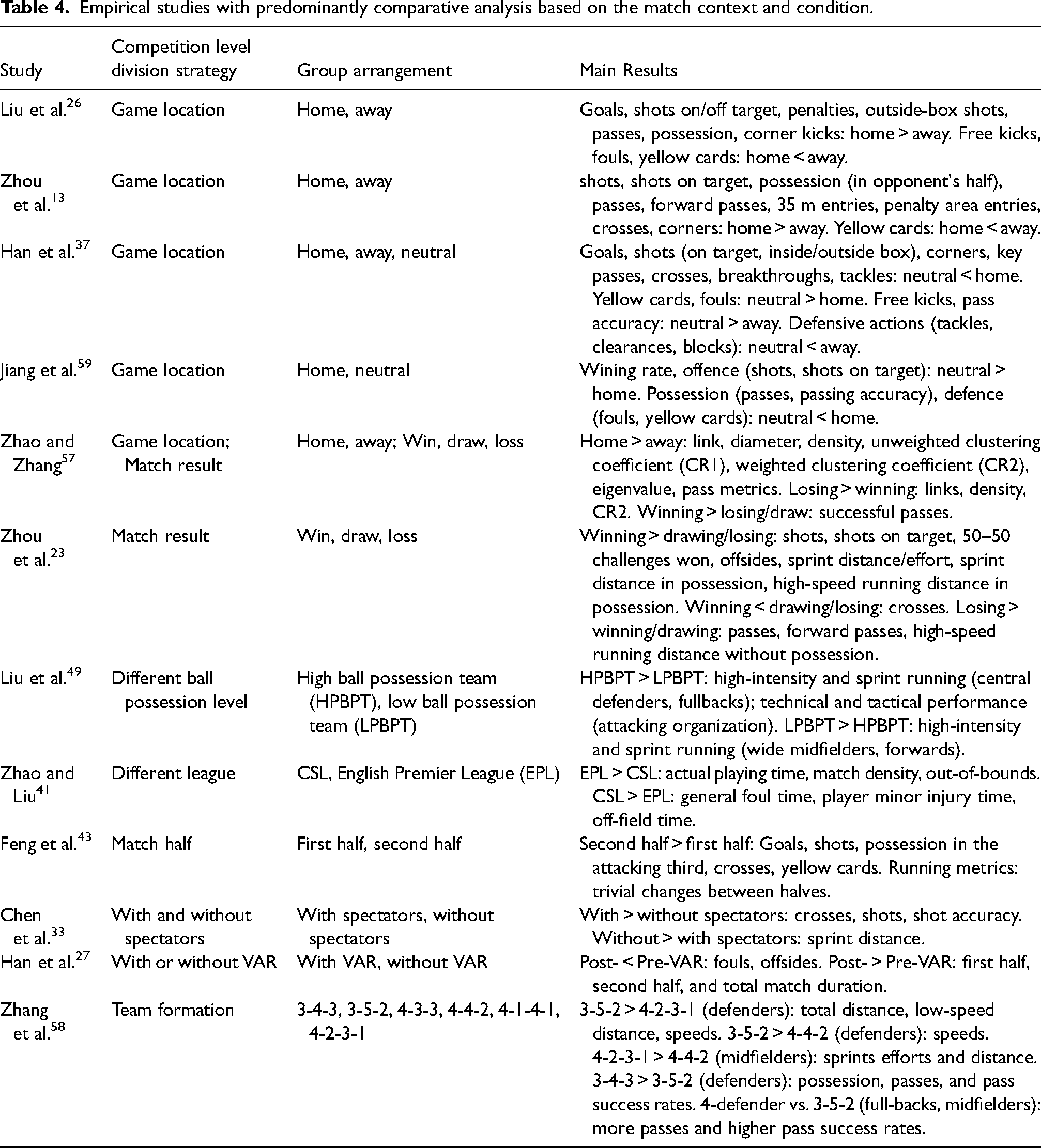
There are 2 studies that compare CSL match performance in matches with different outcomes. Winning teams exhibited significantly higher values in metrics such as shots, shots on target, crosses, 50–50 challenges won, offsides, sprint distance and frequency, as well as sprint and high-intensity running distance both in their own and the opponent's possession, compared to teams that drew or lost. 23 Additionally, winning teams showed higher values in the passing network metrics of eigenvalue, passes and diameter. 57 These findings suggest that winning teams play more directly and aggressively in the CSL.
There is a study that compares performance between the first and second half of matches. In the CSL, players’ physical performance did not show significant changes between the halves, while the values for several attacking related technical performance indicators increased. 43 Additionally, several other interesting comparisons were made. Zhang et al. 58 compared the match performance across different formations in the CSL and found significant differences in the physical and technical performance of players in different positions depending on the formation. Chen et al. 33 examined the impact of spectators on CSL players’ match performance, confirming that the presence of spectators did indeed influence both technical and physical performance. Regarding ball possession, teams with higher possession demonstrated superior technical performance compared to those with lower possession. Central defenders and full-backs in high-possession teams engaged in more high-intensity running, while midfielders and forwards in low-possession teams performed more high-intensity running. 49 This indicates that CSL teams often control possession on the flanks and in the defensive midfield, while forwards and midfielders need to run more actively to regain possession. Another study compared match duration between the CSL and the English Premier League (EPL), finding that the effective match time in the CSL is lower, with interruptions mainly caused by human factors. 41
Longitudinal change
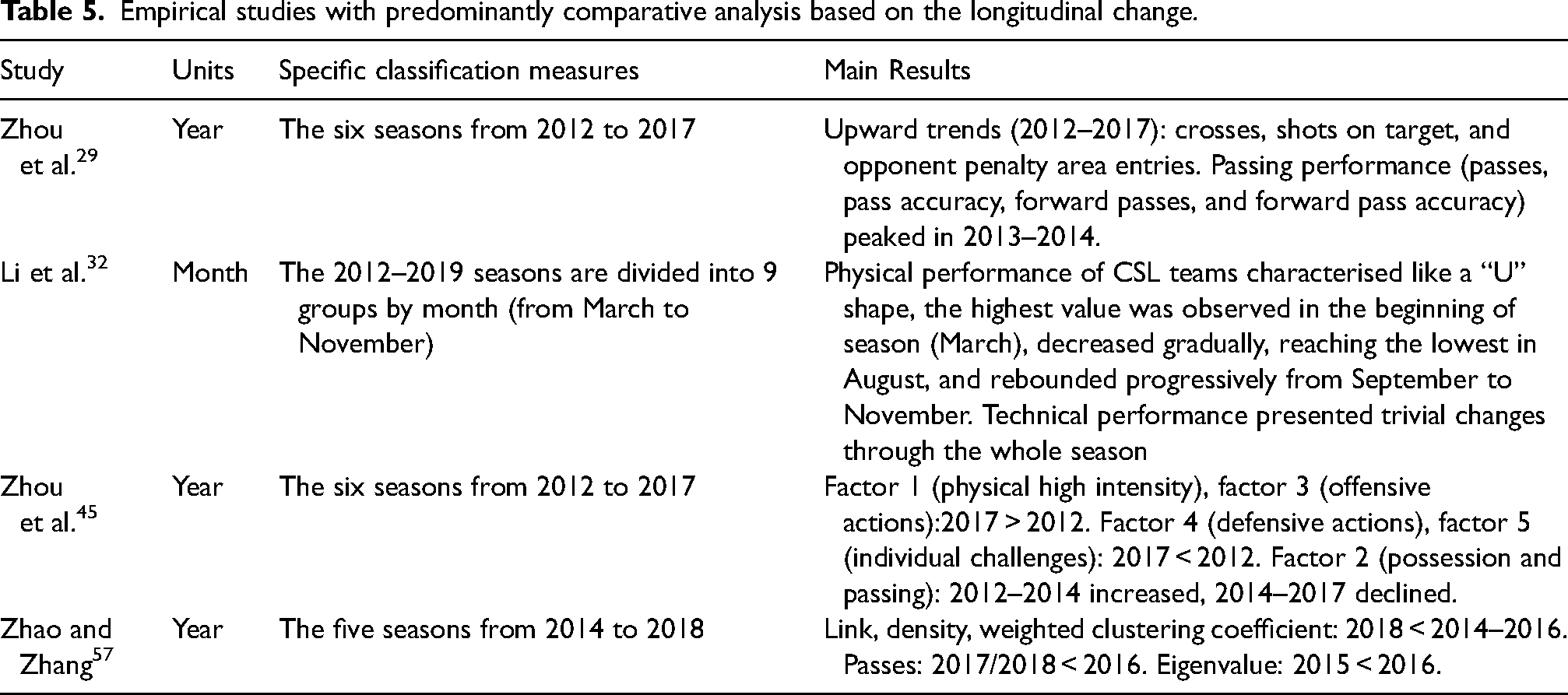
Longitudinal comparative studies provide strong evidence for the development trends in CSL match performance (Table 5). While the total running distance in the CSL has remained relatively stable, the distance covered at high intensity has shown an increasing trend. In terms of technical performance, there has been an increase in the number of crosses, shots on target, and entries into the opponent's penalty area. 29 Therefore, we believe that the CSL is evolving towards a style that emphasises offense and high intensity. Research on tactical styles supports this view, suggesting that the CSL is shifting towards a high-intensity, more direct attacking style, with the possession-based style gradually losing prominence. 45 Studies using passing networks also indicate a decline in possession-oriented play in the CSL. 57 Throughout a season, physical performance tends to follow a “U-shaped” pattern, peaking at the beginning and end of the season; technical performance remains relatively stable, but towards the end of the season, teams increase their offensive metrics (such as forward passes and time in individual possession) as they strive to earn more points. 56
Empirical studies with predominantly comparative analysis based on the longitudinal change.
Predictive analysis
Sarmento et al. 9 noted that predictive research in football match performance analysis was relatively scarce before the year of 2014. However, this study presents a contrasting finding, with 29 studies involving predictive analysis specifically in CSL match performance research, 24 of which focus primarily on predictive analysis (Table 6). This discrepancy may be attributed to the evolution of match performance analysis over the past decade. Simple comparative analysis is no longer sufficient to explore the relationships between events in football matches. The development of predictive mathematical models and algorithms (e.g., generalised linear models, discriminant analysis, machine learning) has supported match performance analysis, making predictive analysis a mainstream aspect. A common characteristic of these studies is their focus on determining the most effective strategies to improving match performance. 9
Empirical studies with predominantly predictive analysis.
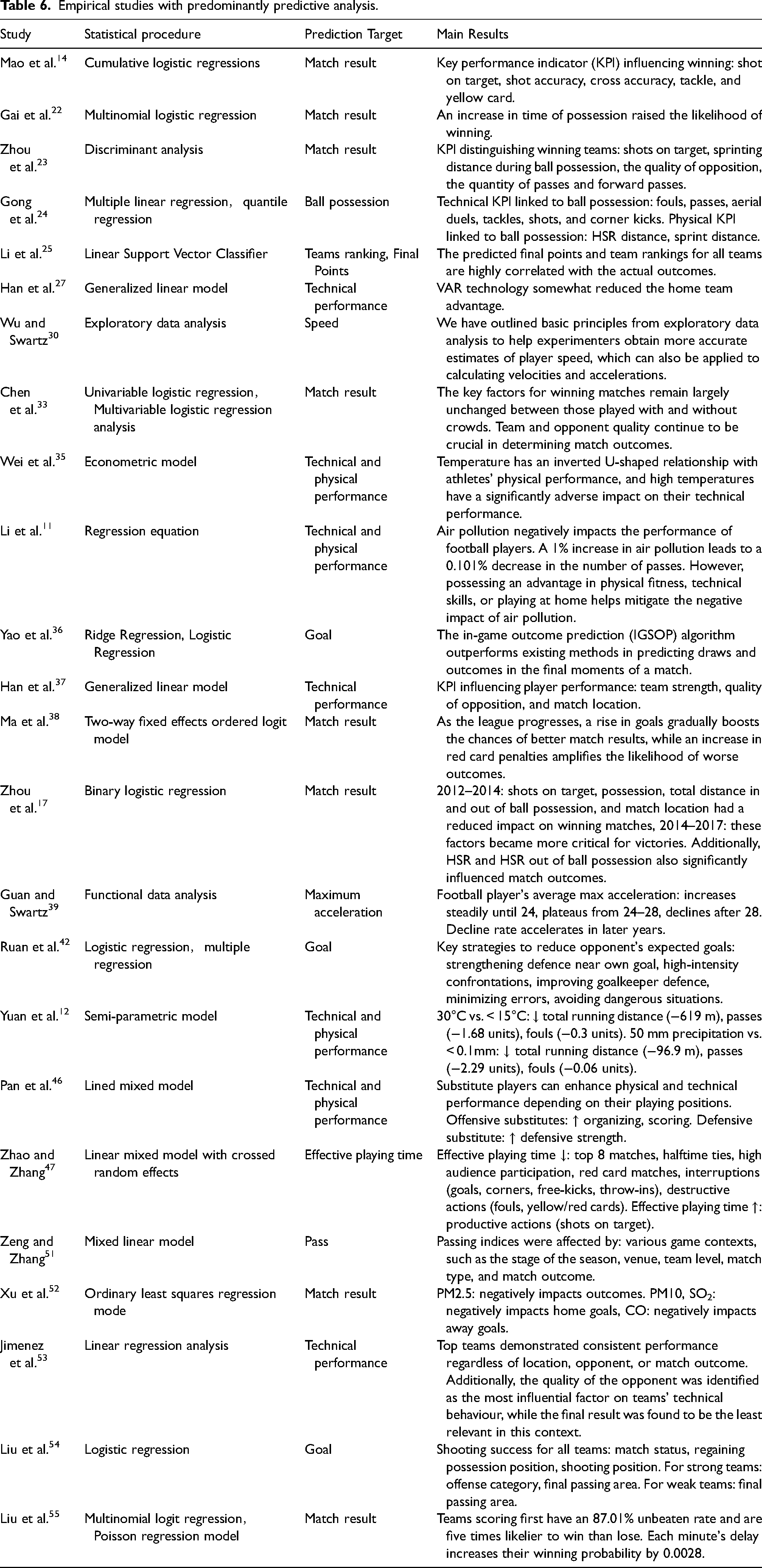
Currently, predictive research on CSL match performance primarily focuses on predicting match outcomes and performance (technical and physical performance). Metrics such as the number of shots on target, shot accuracy, possession rate, sprint distance, and high-speed running distance were identified as key performance indicators influencing the probability of winning in CSL matches.14,17,22,23 Teams that scored the first goal are more likely to win, and the probability of winning increases when the first goal is scored later in the match. 55 Additionally, contextual factors (e.g., opponent quality, match location) and environmental factors (e.g., PM2.5, CO) were also important determinants of match outcomes.17,23,52
Contextual factors, such as team strength, opponent strength, and match location, significantly impacted CSL players’ technical performance. 37 Among these, the strength of the own team is crucial: top teams exhibit consistent performance, outperforming opponents regardless of other contextual factors. 53 Substitute players generally outperform starters and full-time players in terms of technical and physical performance, allowing coaches to enhance team performance through strategic substitutions. 46 The introduction of VAR has also influenced match performance to some extent, primarily by reducing the number of fouls and offside. 27 Additionally, technical and physical performance are affected by environmental factors such as air pollution, temperature, and humidity.11,12,35
Three studies focus on predicting goals. Li et al. 11 utilised machine learning algorithms to forecast the probability of goals in real-time based on in-match data. Ruan et al. 42 examined how predicting the opponent's goal probability reflects the effectiveness of a team's defence. Liu et al. 54 identified match status, regaining possession position, and shooting position as key variables affecting goal scoring.
Additionally, there are individual predictive studies focused on ball possession, team rankings, end-of-season points, speed, maximum acceleration, match time, and passing. Key factors influencing team's ball possession include fouls, passes, aerial duels, tackles, shots, corner kicks, sprint distance, and high-speed running distance. 24 Li et al. 25 developed a machine learning-based predictive model that effectively forecasts team rankings and final league points. Wu and Swartz 30 constructed a more reliable model for calculating player speed, while Guan and Swartz 39 developed a model to predict acceleration and age to assess athletic performance. Zhao and Zhang 47 found that game interruptions (goals, corner kicks, free kicks) and destructive actions (yellow cards, red cards, and fouls) negatively impact effective match time, whereas productive actions (shots on target) have a positive effect. Zeng and Zhang 51 analysed the factors influencing passing metrics across different player positions, providing support for coaches in targeted training and tactical planning.
Contextual variables
Contextual variables or situational factors refer to the varying competitive conditions under which soccer matches are played, and these factors can influence the behaviour and performance of both teams and individual players. 61 Contextual factors mainly include match outcomes, match status, team strength (both the team and the opponent team), match location, and the halves of the match. Among the 44 articles reviewed, 30 considered contextual variables, indicating that the integration of performance metrics with contextual factors is the prevailing trend in current CSL performance analysis. There are three primary approaches to considering contextual variables in CSL performance analysis: (1) Categorisation of contextual variables: this method involves using contextual variables as categorical variables to group and compare data. For instance, studies like Gai et al., Zhou et al., Liu et al.22,23,26 (2) Exploring the impact of contextual variables: this approach investigates how contextual variables influence match performance. Examples include studies by Gong et al., Zhou et al., Jimenez et al.17,24,53 (3) Modelling contextual variables as fixed effects: this method involves incorporating contextual variables as fixed effects in mathematical models, enabling the calculation of dependent variables while accounting for the influence of these contextual factors. Studies by Li et al., 32 Feng et al. 43 exemplify this approach.
In studies analysing CSL match performance, match outcomes are categorised into several types: win, draw, and loss23,32,47,57; win and non-win 25 ; loss and non-loss 44 ; and goal difference.51,53 Among these, winning teams generally demonstrate superior performance in technical, tactical, and physical metrics.
Home advantage is also a prominent topic in the analysis of match performance. In the CSL, home advantage significantly influences match outcomes and performance metrics.17,37,51,53,57 The likelihood of victory increases for the home team if they score the first goal. 55 However, after the introduction of VAR, the degree of home advantage in the CSL has somewhat declined. 27 Additionally, temperature and humidity posed greater challenges to the away team, 12 while playing at home can mitigate the adverse effects of poor air quality. 11 Nevertheless, one study presents a differing view, arguing that the home team is more affected by air pollution. 52 This discrepancy may result from differences in the selection of performance metrics, the covariates considered, and the statistical methods employed.
Team strength is another crucial factor influencing match performance.17,51 It generally encompasses both the team's own strength and that of the opponent, typically categorised by the final rankings of the season. Teams with greater inherent strength were less affected by other variables, thereby achieving superior performance in matches.11,53 Stronger teams in the CSL were more likely to adopt fast-paced, high-intensity styles of play, 50 and matches between top teams tended to have reduced effective playing time. 47
Additionally, the match period (1st or 2nd half) and the phases of the season have also been shown to influence CSL match performance to some extent.43,51 Notably, environmental factors were significant determinants of match performance as well.11,12,35,52 According to Zhou et al., 13 technical performance was more affected by situational factors, while physical performance was more influenced by environmental conditions.
Limitations and recommendations for future research
First, the operational definitions of relevant metrics have not been standardised, and some studies have not standardised the data. For example, in-consistencies in speed zones make cross-study comparisons challenging, and data on distance and counts have not been converted to per-minute values, making them susceptible to errors due to variations in match duration. Future research should adopt standardised definitions of metrics, speed zones and ensure that data processing uses standardised methods (e.g., in accordance with FIFA's “Football Language”).
Second, contextual and environmental factors have been under considered. Football matches are complex systems influenced by multiple factors. Currently, the consideration of contextual factors is relatively consistent, mainly focusing on match location, team strength, and match outcomes. Research on environmental factors is limited to air quality, temperature, and humidity. Future studies should incorporate more contextual factors (e.g., match progression) and environmental factors (e.g., weather, altitude) into the analysis of CSL match performance.
Third, there is a lack of research on match phases from a micro perspective. Most current CSL match performance analyses adopt a macro perspective, treating the entire match data as a single sample. However, football matches consist of five phases: established attack, established defence, transition from attack to defence, transition from defence to attack, and set pieces. 62 Future research should focus on a micro perspective, using match phases as samples for analysis. This approach would provide more practical guidance for coaches in training design and match preparation.
Fourth, research on the match performance analysis of tactics, goalkeepers, and set-pieces remains limited. Current studies on CSL tactics primarily rely on technical and physical performance metrics, utilising factor analysis to construct playing styles. However, these studies tend to overlook critical dimensions such as time, space, and the number of players involved. Additionally, there is an absence of studies specifically examining the match performance of goalkeepers and set-pieces in the CSL. Future research should aim to enrich the analysis of CSL match performance by incorporating these additional dimensions.
Conclusion
The CSL is receiving increasing attention in the research area, with prediction and comparative studies emerging as the predominant research types. Presenting descriptive data has become the fundamental paradigm in research. Research topics mainly focus on technical and physical performance analysis, with fewer studies on tactical performance. To ensure the reliability of results, it is crucial to use databases with validated reliability; if manual statistics are employed, data should be subject to reliability checks. Standardised data is expected to be a major trend in future research, as it effectively mitigates the impact of differences in match duration and possession rates.
The CSL is evolving towards a style that emphasises attacking play and high intensity. Foreign players play a crucial role in matches, with many of them primarily responsible for organising the attack, while domestic players are more often tasked with defensive duties. Additionally, substitutes have proven to be effective contributors during matches. Contextual factors are significant in influencing CSL match results and performance, with current research mainly focusing on factors such as team strength, opponent strength, match venue, and match outcomes. Stronger teams can mitigate the impact of various other factors. Additionally, research on environmental factors affecting match performance is in its early stages, with studies confirming that air quality, temperature, and humidity influence CSL players’ performance.
In future research, on one hand, the operational definitions of indicators and speed zones should be standardised according to FIFA guidelines, and data should be processed with standardisation techniques. On the other hand, it is important to broaden the scope and depth of research by exploring a wider range of contextual and environmental factors, enriching the analysis of tactical, goalkeeper, and set-piece performance, and focusing on match phase-related studies.
Footnotes
Acknowledgments
None.
Declaration of conflicting interests
The authors declared no potential conflicts of interest with respect to the research, authorship, and/or publication of this article.
Funding
The authors disclosed receipt of the following financial support for the research, authorship, and/or publication of this article: This study was funded by the Graduate Education Innovation Plan Project of Guangdong Province (2024SFKC_027) and the Sports Performance Analysis and Scientific Training Innovation Team (2024WCXTD030).
