







Abstract
Penalty kicks in FIFA World Cups often play a decisive role in determining match outcomes. Our study analysed 64 in-match penalties from the 2014, 2018, and 2022 FIFA Men's World Cups, focusing on player running behaviours (fluent vs. non-fluent) to investigate the prevalence of specific penalty strategies during these tournaments. Penalty strategy (keeper-independent and keeper-dependent), situational (tournament year, tournament stage, match period, match status), individual (footedness), and performance indicators (shoot direction, goalkeeper's action, outcome) were collected from the three successive World Cups. Chi-square tests were conducted to evaluate the relationships between indicators and strategies. Adjusted standardised residuals were calculated to identify significant cell contributions and support further analysis.
Introduction
The FIFA World Cup is one of the highest levels of competition and among the most-watched sporting events globally. 1 The average number of goals scored in the 14 World Cups from 1966 to 2018 was 2.57 per match. 2 A study regarding penalty kicks in UEFA Euro and FIFA World Cup matches between 2000 and 2010 showed that the in-match penalty scoring rate was 68% and teams scoring penalties had a 61% chance of winning, while those conceding had only a 29% chance. 3 A long-term study of penalty kicks in La Liga showed a penalty kick scoring rate of around 75%. 4 Thus, a penalty kick has a rather high scoring rate and might have a significant impact on match outcomes.5,6
To analyse the penalty kick, researchers chose different contexts to study the relevant variables. Almeida et al. argued that penalty kicks had been mainly analysed in two contexts. 5 The first was in laboratory or other non-game and well-controlled settings (video-simulation tasks and experimental conditions), aiming the analysis of perceptual, physical and strategic aspects of performance.7–11 The second was in-game situations, enabling the identification of prominent factors that affect both players’ performances and the penalty kick outcome.4,5,12–15 The major strength of these latter studies rests on the high ecological validity of assessing elite performers in a real-world sport competition. 13 Our study focused on in-game situation to analyse the players’ strategy in penalty kicks.
From a behavioural perspective, the penalty outcome depends, above all, on the emerging results of the “penalty taker—goalkeeper” dyadic interaction.5,7 The penalty strategy is a reflection of this dyadic interaction. Kuhn defined two penalty kick strategies, 16 keeper-independent: the shooter chooses a target direction in advance and disregards any actions of the goalkeeper during the run-up; and keeper-dependent: the shooter chooses a temporary target direction in advance but does not make a final decision on the direction of the shot until the very last moment based on the goalkeeper's behaviour. Morya et al. found that kickers performed best when goalkeepers committed to one side around 400 ms before ball contact, 17 while Van der Kamp showed that the keeper-dependent strategy led to reduced accuracy when players had less time to adjust their kick direction. 18 Noël et al. showed that “attention to the keeper”, “stagnant run-up”, and “'inside foot” were good predictors of keeper-dependent penalty kicks, with a prediction success rate of 91.7%. There was no significant difference between the two strategies in scoring rates. 9 Pinheiro et al. analysed variables from the OSPAF (Open Soccer Performance Analysis Framework) and OpenPose (a motion capture technology used to assess human body movements) systems,19,20 finding that slower run-up speed, intermittent pauses during the run, the penalty taker's gaze not directed at the ball, deceptive behaviours, and lower ball speed were associated with a goalkeeper-dependent strategy. 21 Zhou and Inomata introduced the terms “shooter-independent” and “shooter-dependent” saving strategies. 22 They concluded that goalkeepers should use a “shooter-independent” strategy to judge shot direction and a “shooter-dependent” strategy for timing the save and tracking the ball's trajectory. However, the advantage remains with the penalty shooter, especially when the penalty shooter is a “specialist”.23,24
Previous research identified several factors influencing penalty success. 19 Situational analyses suggested a lower scoring rate during the middle phase of matches (30:01–60:00). 3 Kinematic findings highlighted that alignment between the supporting foot and shot direction improved success rates (82.8% when matched). 15 Regarding kicking technique, an optimal run-up angle (15–45°) combined with instep contact was recommended for accuracy and power. 25 Gaze behaviour studies showed that focusing on the ball enhanced shot quality, 26 while psychological studies revealed that pressure-induced anxiety and elevated respiration rates increased error likelihood. 27 Shot direction was also critical, with higher success probabilities toward the top corners and lower success rates for bottom-targeted shots.5,6,12,24,28
While valuable insights on penalty kicks have been drawn from domestic leagues and club competitions,6,13,29 limited research has explored these factors within the specific contexts of the FIFA World Cup. The rule about penalty kick was modified in 2016, permitting feinting during the run-up. This might further influence players’ penalty strategies. 29 Our study systematically examined in-match penalties from the 2014, 2018, and 2022 FIFA Men's World Cups, focusing on players’ running behaviour as a novel factor in analysing penalty strategies. Based on the investigations of Noël et al. and Pinheiro et al.,9,21 we examined the relationship between penalty strategies and situational variables (tournament year, stage, match period, match status), individual characteristics (footedness), and performance indicators (shot direction, goalkeeper actions, and penalty outcomes). This study offers new insights into penalty kick strategies in FIFA World Cups, providing practitioners with valuable knowledge to better understand and implement effective approaches.
Methods
Sample
The study included 64 in-match penalties (including those in regular and extra time and excluding penalty shoot-outs) from all 192 matches in three consecutive Men's World Cups in 2014, 2018, and 2022. All illegitimate penalties, those needed to be classified as foul were excluded from the sample. For retaken penalty kicks, the original penalty kicks were excluded and only the retaken penalty kicks were included. 12 Ethics committee approval of the current study was gained from the local University.
Data collection procedures
This study followed a quantitative research design with video analysis as the primary data collection method and auxiliary information collected from different websites. Four types of indicators were selected for data collection, (1) situational indicators (tournament year, tournament stage, match period, match status); (2) strategy indicators (keeper-independent and keeper-dependent); (3) individual indicator (footedness); 12 and (4) performance indicators (shot direction, goalkeeper's action, and penalty outcome).5,12 The variables were coded according to the definitions (Table 1) and Microsoft Excel 2019 was used to integrate all the coded data. Regarding the source of the data, situational indicator data on penalty kicks in 2014, 2018 and 2022 World Cups were collected from publicly available soccer websites (www.whoscored.com and www.statbunker.com). The matches where penalty kicks were awarded were identified from websites. Multi-camera video clips of these penalty kicks were then obtained from CCTV (tv.cctv.com) and TikTok (www.douyin.com). The clips were imported into Windows Media Player for data collection, focusing on strategy, individual, and performance indicators.
Indicators and descriptions.
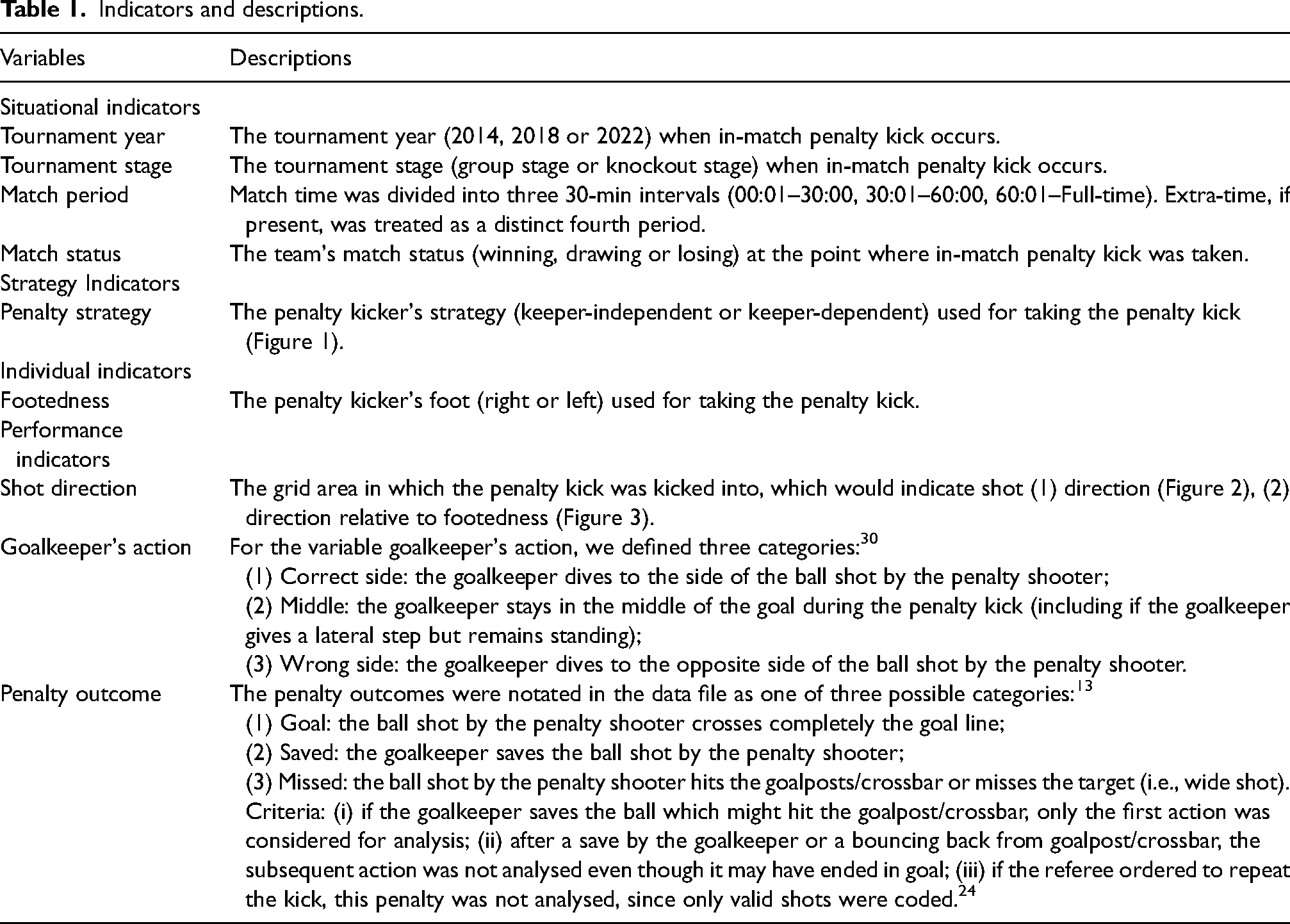
Indicators and coding
Table 1 showed the definitions of situational, strategy, individual and performance indicators.
The authors selected ‘run-up fluency’ and ‘attention to the keeper after a pause’ to determine the penalty kick strategy (Figure 1), by combining the three indicators identified by Noël et al. and the five from Pinheiro et al.9,21
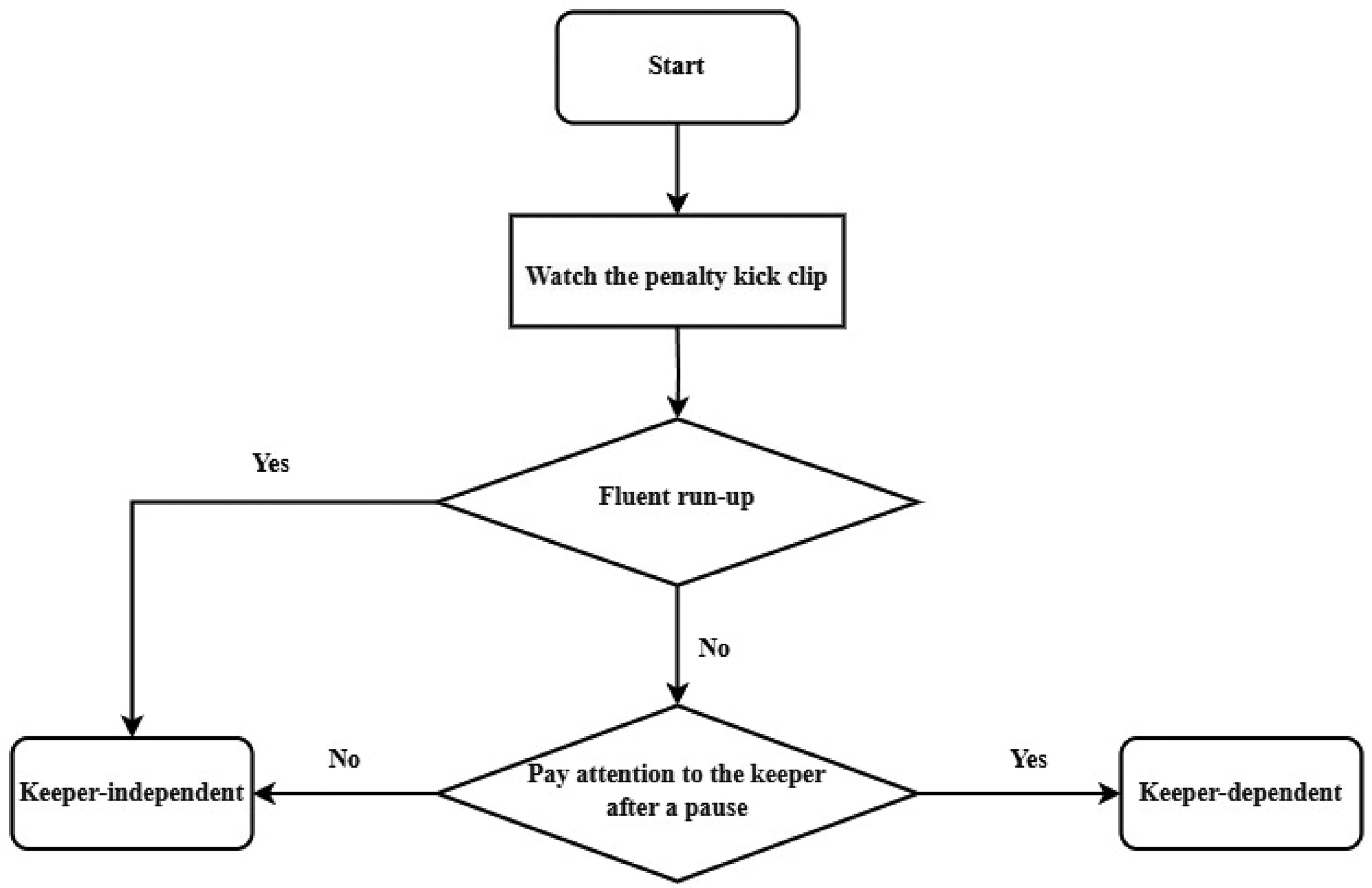
Penalty strategy decision tree.
The reason for emphasising “after a pause” is that in a real penalty kick scenario, it does not matter whether the penalty kick shooter pays attention to the keeper's actions in the first few steps of the run-up, as the keeper will not really make a save at this point, and the penalty kick shooter will not be able to shoot the ball immediately. When the run-up of the penalty kicker is not fluent, the “ attention to the keeper after a pause “ is more reflective of the intention of the penalty kicker. The definitions of the terms “fluent run-up” and “ pay attention to the keeper after a pause “ are as follows:
Fluent run-up: When a kicker runs directly towards the kicking position to strike the ball at a constant speed or at an accelerated rate, the run-up is deemed to be fluent; when there is any deceleration during the run-up to the strike, the run-up is deemed to be not fluent. When the penalty kicker's run-up is short, the excessive rise and fall in the height of the centre of body gravity affects the speed of displacement in the horizontal direction, and the run-up should be regarded as not fluent; Attention to the keeper after a pause: a kicker who looks up at the keeper after a pause in his run-up is paying attention to the keeper after a pause, while a kicker who does not look up or only to the sides of the goal is not paying attention to the keeper after a pause (primarily checking the replay camera clip behind the goalkeeper).
The direction of penalty kicks was primarily observed using a camera positioned behind the penalty kicker, providing a clear view of the point of impact of the shot. Each penalty kick was recorded by coding the grid area in Figure 2 (adapted from Horn et al.
12
). If the ball hit the goal posts or crossbar, it was assigned to the nearest grid region for consistency.
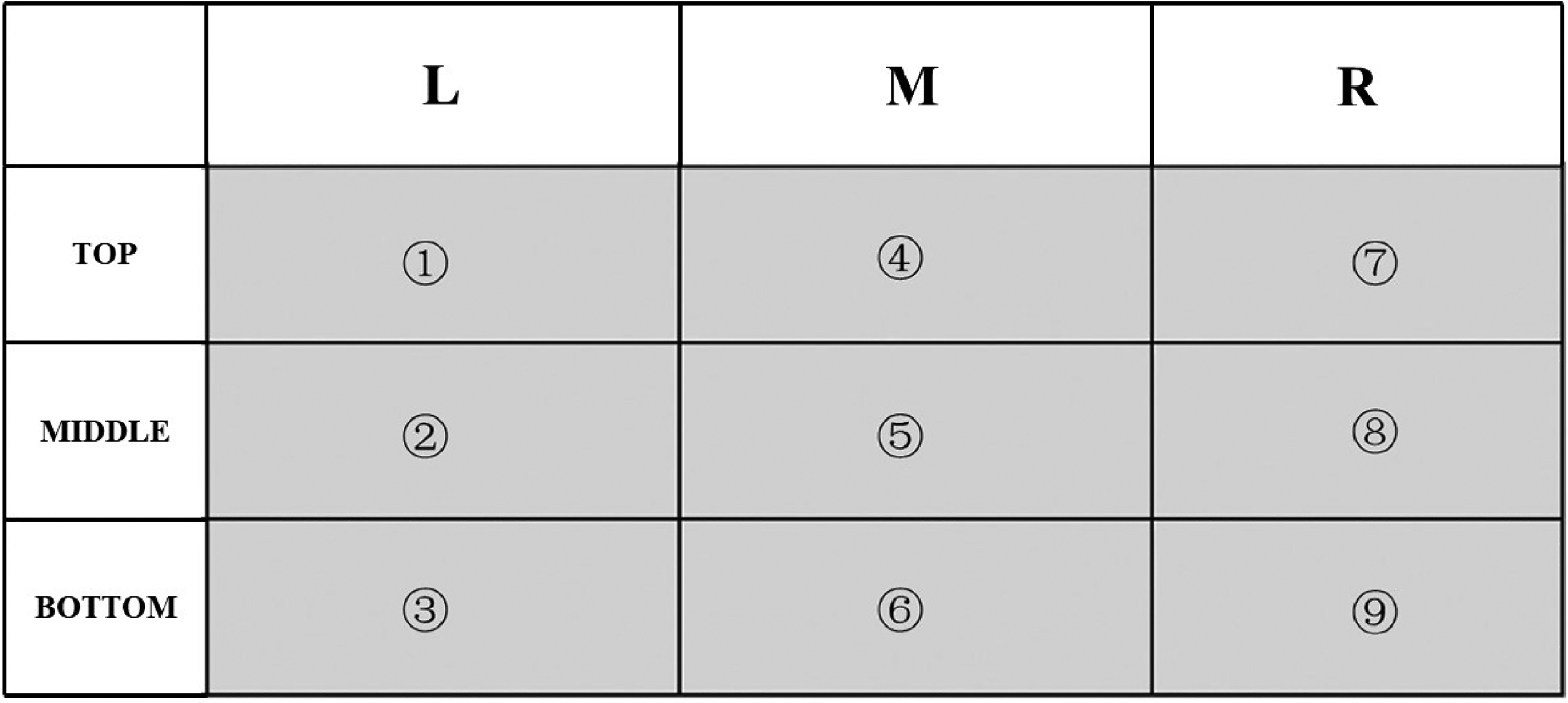
Goal grid – shot direction(adapted from Horn et al. 12 ).
To analyse penalty kick directions in relation to the kicker's footedness, we categorised the goal into nine zones (Figure 3, adapted from Horn et al. 12 ). The zones are labelled as K, M, and F, representing kickers’ side (K), middle (M), and far side (F) from the perspective of the kicker. For a right-footed player, K refers to the left side of the goal (their natural side),14,30 while for a left-footed player, K refers to the right side. For example, if a right-footed kicker targets the top left corner of the goal (zone ① in Figure 2), it is recorded as ①. However, for a left-footed kicker, the same zone is recorded as ⑦. This recoding ensures that penalty kick directions can be systematically analysed with respect to footedness.
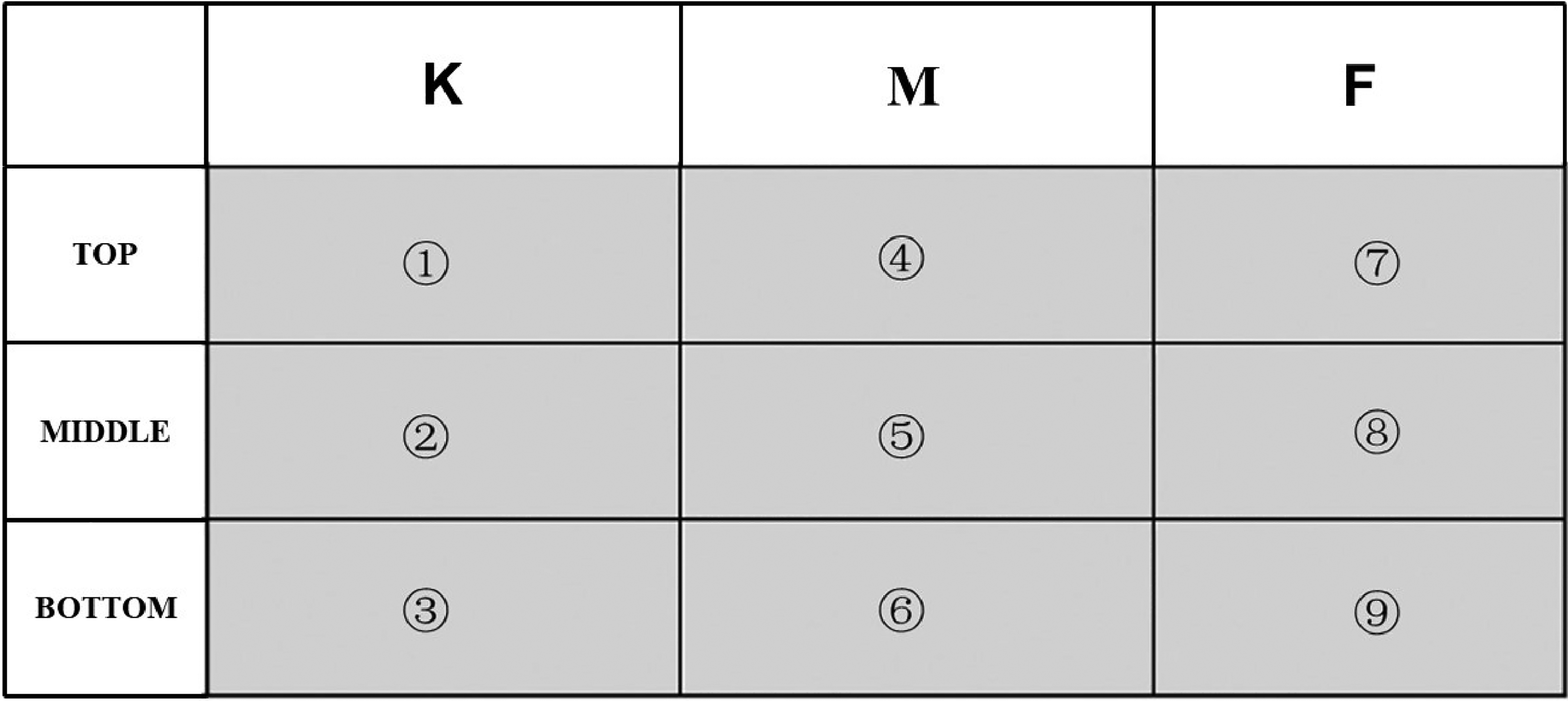
Goal grid – shot direction relative to footedness(adapted from Horn et al. 12 ).
Reliability
Situational indicators were collected from the WhoScored website with data from Opta Sports, 31 a recognised and authoritative sports data provider. The inter operator reliability of the company's observational system (OPTA Client System) used to collect football match statistics was identified as reliable reaching an acceptable level of Kappa, ICC, r and SEM values. 32 The cross-validation of data collected from the WhoScored website was conducted by consulting the Statbunker website, and no inconsistencies were identified.
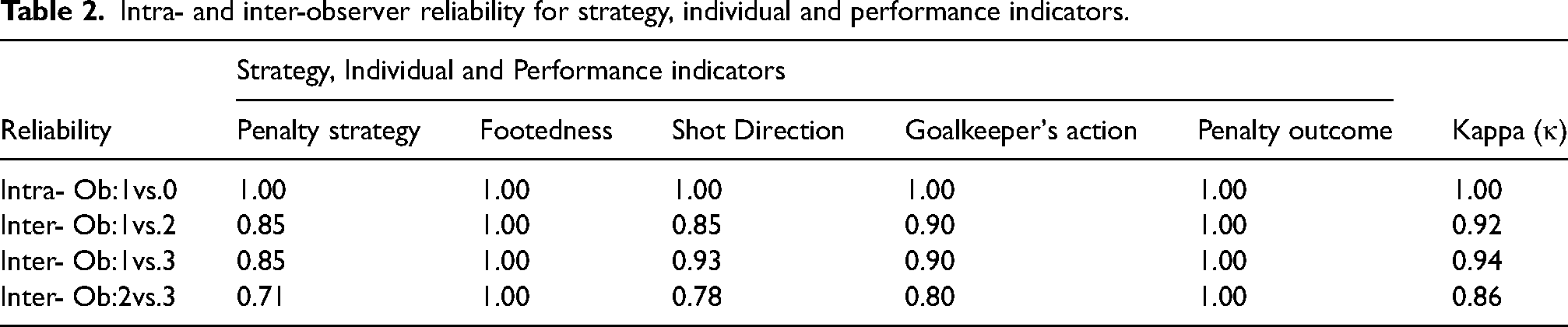
For strategy, individual and performance indicator's reliability was tested by intra- and inter-observer coding consistency. For intra-observer reliability procedures, the Ob1(the first author) completed a test-retest protocol with an 8-week period separating to prevent possible learning effects (Ob:1vs.0). The first author (Ob1) and two previously trained observers (Ob2 and Ob3), both are students from the China Football College of Beijing Sport University, notated 16 penalty kicks randomly selected from the total 64 penalties (≈25%). The inter-observer reliability was assessed using data notated by all observers in a coding session. Kappa (κ) was calculated to evaluate intra- and inter-observer agreements. Table 2 demonstrates a strong degree of intra- and inter-observer consistency in kappa values (κ). 33
Intra- and inter-observer reliability for strategy, individual and performance indicators.
Statistical analysis
Microsoft Excel 2019 was used to analyse the distribution and success rates of penalty strategies in FIFA Men's World Cup matches in 2014, 2018 and 2022. The data were analysed using IBM SPSS Statistics 26. Chi-square tests and cross-tabulations were performed to examine the differences in penalty kick strategies across the selected indicators. The effect size was determined using Cramer's V and classified as small (ES ≥ 0.1), medium (ES ≥ 0.3), and large (ES ≥ 0.5), 34 assuming one degree of freedom. To further analyse significant results from the chi-square test, adjusted standardized residuals were computed. Residuals falling outside the interval [–2, 2] indicate cells that significantly deviate from the expected values. Positive residuals reflect observed values exceeding expectations, whereas negative residuals indicate observed values falling below expectations. 35 Graphs were made using GraphPad Prism 8.0.1 to visualise the results. The significance level was set at 95% (p < 0.05).
Results
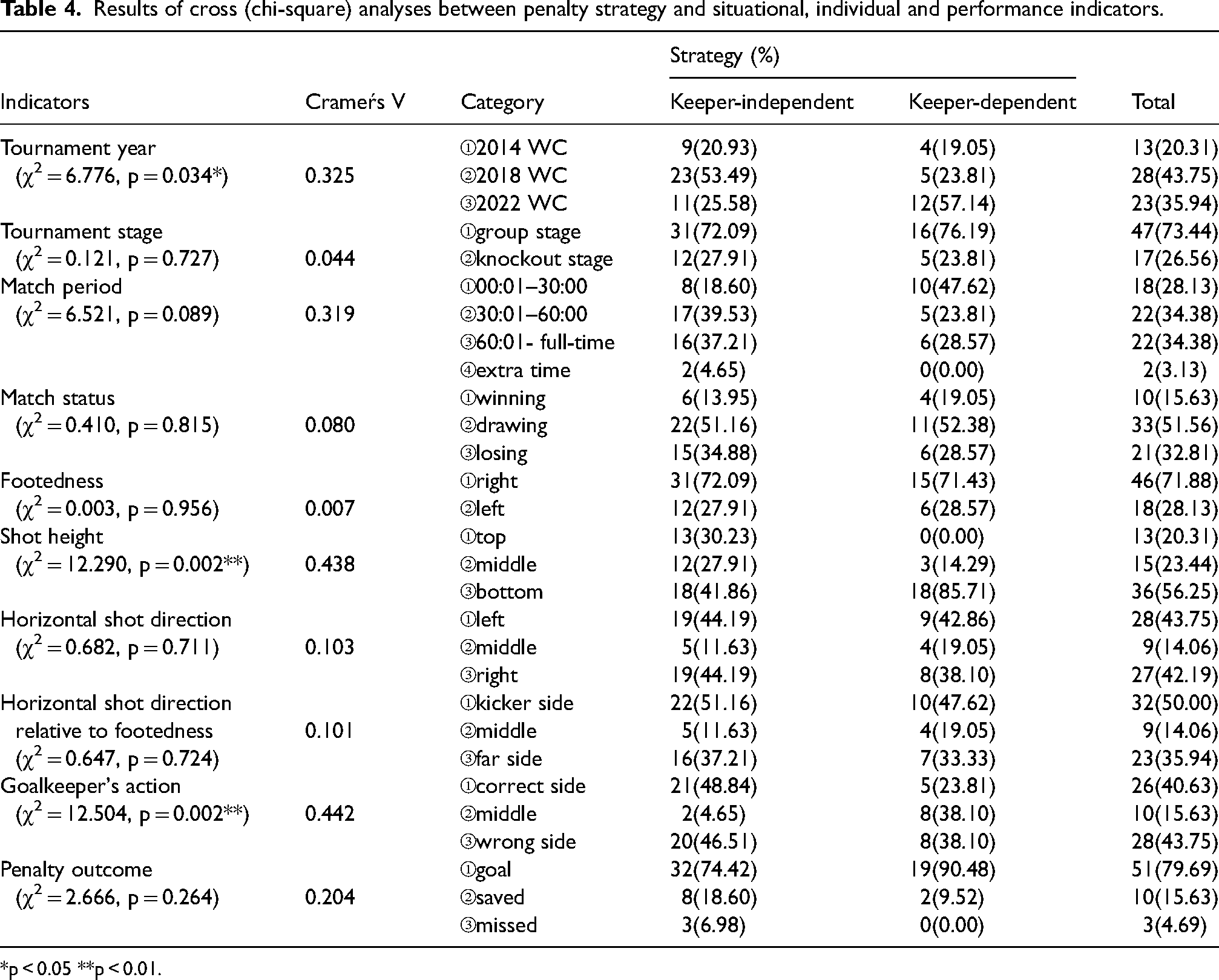
As shown in Table 3, the penalty kick scoring rate decreased in each of the three World Cups, and the scoring rate of the keeper-independent penalty kick strategy also decreased in each of the three World Cups. The keeper-dependent penalty kick strategy had a higher scoring rate (90.48%) than the keeper-independent strategy (74.42%).
Statistical analysis of penalty kick strategies in FIFA Men's World Cup matches 2014, 2018 and 2022.

Table 4 shows the distribution (frequency and percentage) of penalty kick strategies in situational, individual and performance indicators (Table 1) in their respective categories. Chi-square analyses were used to investigate the relationship between the differences in the above indicators in penalty kick strategies. Table 4 demonstrates that the variables tournament stage, match period, match status, footedness, horizontal shot direction, horizontal shot direction relative to footedness and penalty outcome were not significantly associated with penalty kick strategy. Even though, match period exhibited a medium effect size, whereas horizontal shot direction, horizontal shot direction relative to footedness, and penalty outcome displayed small effect sizes. Tournament year (p < 0.05), shot height (p < 0.01), and goalkeeper's action (p < 0.01) were significantly associated with penalty strategy, each demonstrating medium effect sizes.
Results of cross (chi-square) analyses between penalty strategy and situational, individual and performance indicators.
*p < 0.05 **p < 0.01.
Adjusted standardised residuals were used to further explore the relationship between penalty strategy and associated variables. In Figures 4, 5 and 6, ID represents keeper-independent strategy, while D refers to keeper-dependent strategy. In 2018, the keeper-dependent strategy was used significantly less frequently than expected (ASR = −2.2), whereas in 2022 it was employed significantly more frequently than expected (ASR = 2.5). Conversely, the keeper-independent strategy was utilised more often than expected in 2018 (ASR = 2.2) and less often than expected in 2022 (ASR = −2.5) (Figure 4). Keeper-dependent penalties were strongly associated with low shots, occurring significantly more frequently than expected for this shot height (ASR = 3.3), while being significantly less common for top shots (ASR = −2.8). In contrast, keeper-independent penalties were significantly more frequent for top shots (ASR = 2.8) and less frequent for low shots (ASR = −3.3). Shots aimed at the middle of the goal showed no significant association with either penalty strategy (Figure 5). Furthermore, keeper-dependent penalties were more associated with goalkeepers remaining in the middle of the goal (ASR = 3.5). Although keeper-independent penalties were more associated with goalkeepers anticipating the penalty direction correctly, this increase was not statistically significant (ASR = 1.9). No notable differences were observed when goalkeepers dived to the wrong side of the shot (Figure 6).
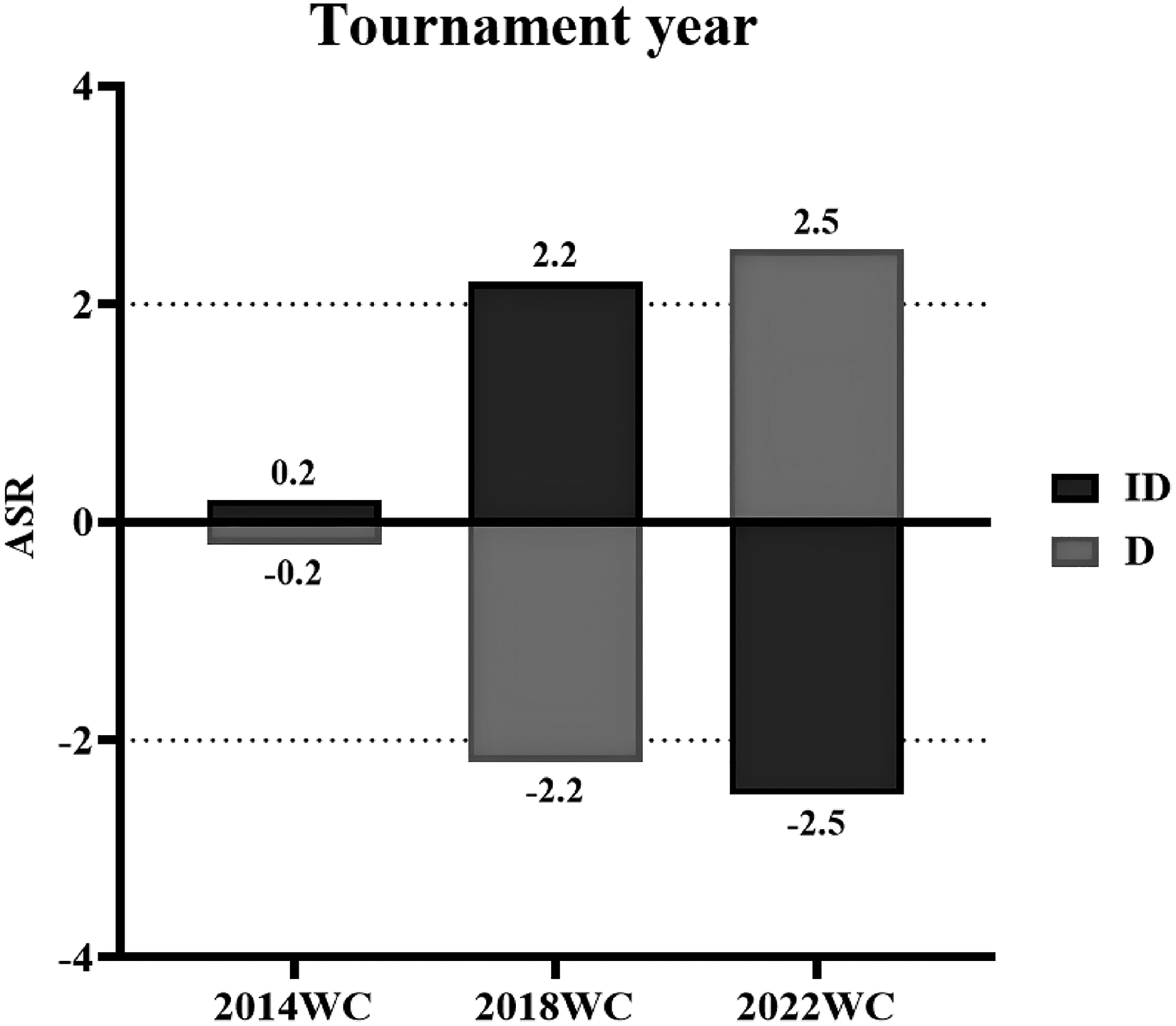
Adjusted standardized residuals of tournament year.
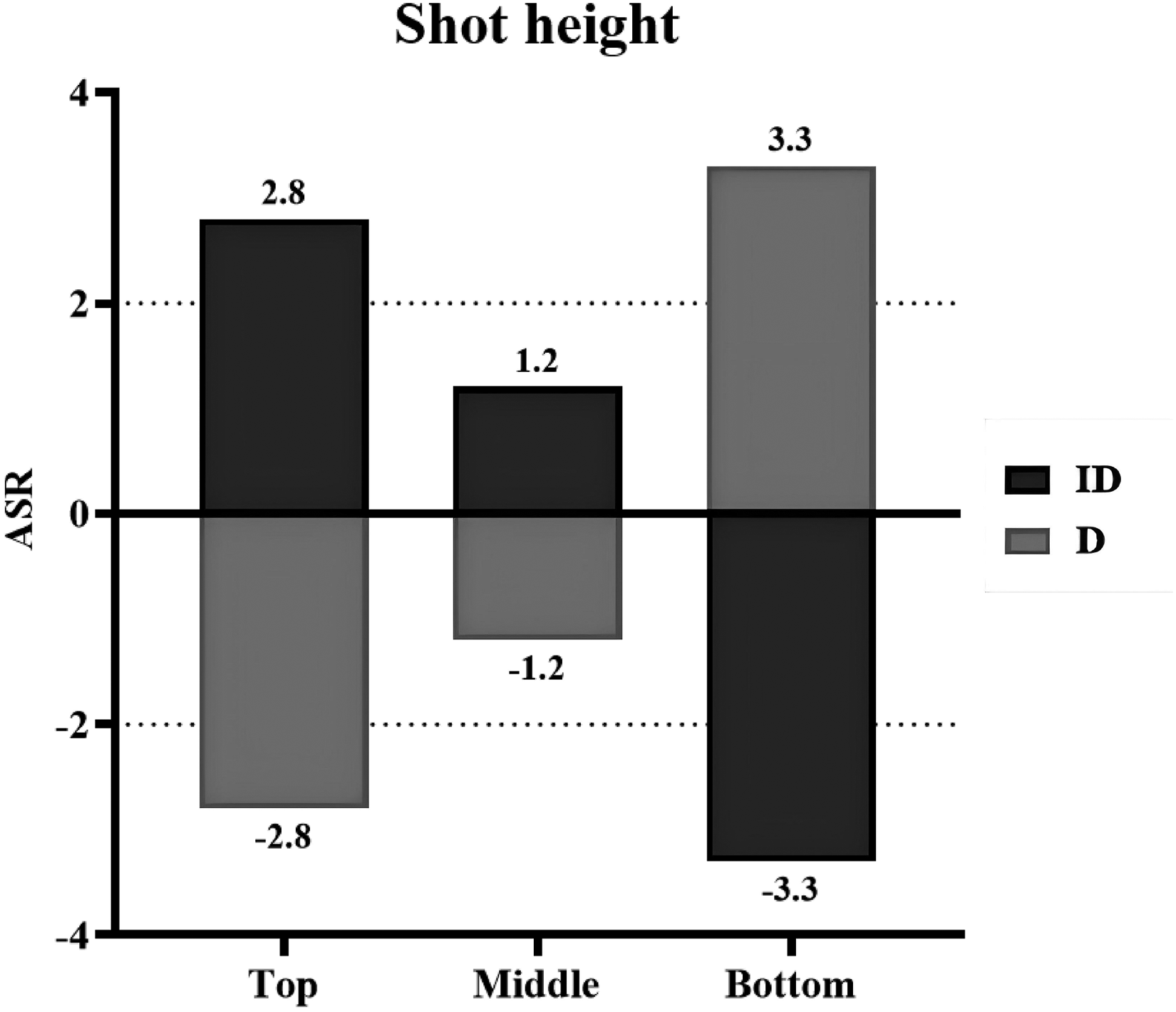
Adjusted standardized residuals of shot height.
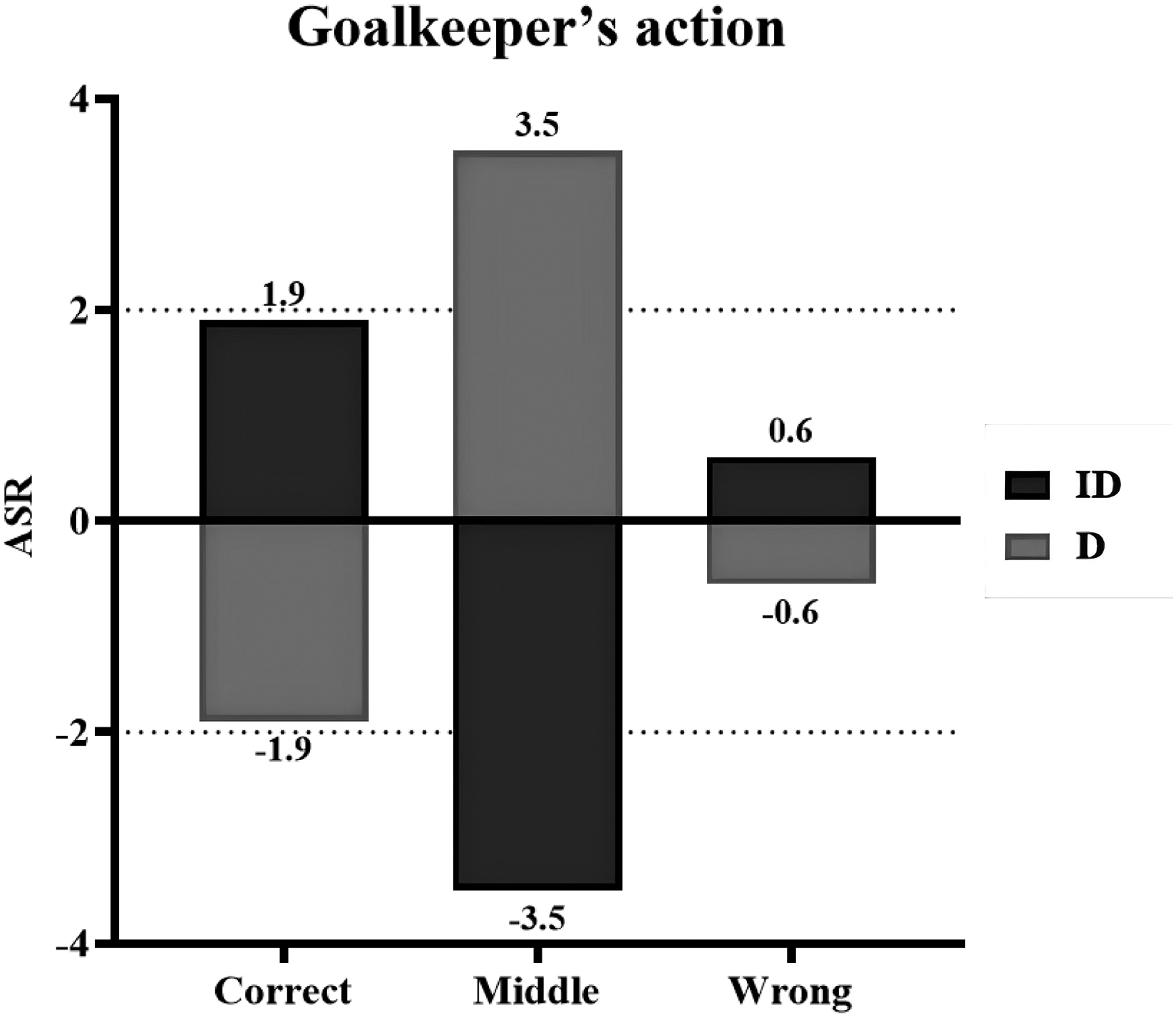
Adjusted standardized residuals of goalkeeper's action.
Discussion
This paper presented a novel method to classify penalty kick strategies through video analysis, offering insights into the penalty strategies observed in recent FIFA World Cup tournaments. The results showed that penalty strategies were significantly associated with tournament year, shot height, and goalkeeper responses in the 2014, 2018, and 2022 FIFA Men's World Cups. Despite the lack of statistical significance, the medium effect size between penalty strategies and match period, along with the small effect sizes for horizontal shot direction, horizontal shot direction relative to footedness, and penalty outcome, indicated practically meaningful associations.
There was a significant and medium effect shift in penalty kick strategies across the 2014, 2018, and 2022 FIFA Men's World Cups, with a remarkable increase in the use of the keeper-dependent strategy in 2022 compared to 2018. More in-match penalties (52.17%) were taken using the keeper-dependent strategy, surpassing the use of the keeper-independent strategy in 2022 FIFA World Cup. However, this still fell short of Kuhn's recommendation that 75% of penalties should follow a keeper-dependent approach. 16 The significant rise in keeper-dependent penalty strategies in 2022 may be linked to events from the 2018 FIFA World Cup. In that tournament, there were notably more penalties than in 2014. However, the success rate for scoring was much lower. This trend of more penalty calls but fewer goals in 2018 may have influenced penalty shooters in the 2022 World Cup to adjust their in-match penalty strategies. The modification of the penalty kick run-up rule in 2016 also opened up more possibilities for such adjustments of strategies. 29
Previous studies have indicated that shot height is significantly associated with penalty kick outcomes.5,12 This paper shows that penalty kick strategies vary significantly in shot height, with keeper-dependent strategies leaning towards low shots, while keeper-independent strategies target the top more frequently than expected. Most penalties were shot towards the bottom of the goal in the two lower corners, in line with the results of previous studies.5,12 Horn et al. argued that most penalty shooters tended to aim for the bottom of the goal rather than the top, as shooters did not fully exploit the goalkeeper's limited ability to reach the two top corners. As a result, penalty takers may not take full advantage of this weakness.12,36 However, Horn et al. did not consider the effect of different penalty kick strategies on shot height. 12 This study found that keeper-independent penalty strategies were significantly associated with higher shots, with less low shots and more high shots than expected. Further research is needed to explore whether a bias exists in the use of this strategy. In contrast, keeper-dependent strategies tended to target the lower part of the goal more often, exploiting the goalkeeper's difficulty in timing saves. This tendency was a practical choice, as the shooter aimed for the larger area left open by the goalkeeper. It is worth noting that the keeper-independent strategy was more likely to use instep kicks, while the keeper-dependent strategy favoured inside kicks. 10 The use of instep kicks under the keeper-independent strategy generates greater ball speed, 37 making it easier for players to target the upper part of the goal. Overall, the impact of shot height on penalty outcomes should be considered in the context of different strategies and the kicking techniques employed.
Penalty strategies resulted in significant differences in goalkeepers’ actions, with goalkeepers staying in the middle significantly more often when the shooter chose a keeper-dependent strategy. The penalty kick rule states that when the ball is kicked, the defending goalkeeper must have at least part of one foot touching, in line with, or behind, the goal line. 38 The authors speculated that the difficulty for goalkeepers to predict the timing of the shooter's strike made the keeper-dependent strategy more effective. Zhou and Inomata suggest that goalkeepers should use a shooter-independent strategy to select the direction and a shooter-dependent strategy to anticipate the timing of the save. 22
The current IFAB's penalty rule consistently restricts the goalkeeper's ability to move early, putting them at a disadvantage when defending penalties. This limitation makes it harder for goalkeepers to judge the timing of their saves. Additionally, they face a disadvantage when trying to stop shots aimed at the top corner of the goal. When a shooter uses a keeper-independent strategy, the goalkeeper can easily judge the timing of the save and decisively dive to either side, rarely staying in the middle. This is because of the fluent run-up of this strategy, as Castillo et al. argued that goalkeepers could identify advance cues with independent strategy kickers more easily. 39 In contrast, when a keeper-dependent strategy is used, goalkeepers stay in the middle significantly more often. This lines in the reason that the timing of the save becomes harder to judge, even if the direction has been decided. The goalkeeper's timing is disrupted, making it difficult to predict when to act. More complex penalty strategies force goalkeepers to face equally complex decisions. In this study, almost half of the penalties with keeper-independent strategy were correctly anticipated by the goalkeeper. When the goalkeeper correctly anticipated the direction of the shot, the penalty success rate dropped to 57.7% (though even with accurate anticipation, a save was not guaranteed). In comparison, only 5 of the 21 keeper-dependent penalties were correctly anticipated, with a goal success rate exceeding 90% when the goalkeeper either misinterpreted the cues or remained in the middle. Van der Kamp argued that changing the direction of the penalty kick in the last moment reduced the accuracy of the kick, 18 but this study found that delaying the decision on the direction of the kick also reduced the probability of the goalkeeper judging it correctly.
Though match period was not statistically significant, a medium size effect was observed. Table 4 showed that the keeper-independent strategy was more common in the last 60 min, while the keeper-dependent strategy dominated the first 30 min. This distribution could perhaps be explained by player fatigue and declining focus as the match progresses,40,41 leading players to opt for the simpler keeper-independent strategy. Further research is needed to explore how match period may influence penalty strategies. Tournament stage and match status also did not have significant differences, suggesting players often use the same penalty strategy regardless of match context in one tournament. Footedness was not related to penalty kick strategy. Without considering footedness, shots were evenly distributed between the left and right sides of the goal. When footedness was taken into consideration, shooters tended to aim towards their “kicker side,” a tendency that aligns with the concept of the “natural kicker's side”.14,30 However, it was noted a small size effect. Shots to the centre were the least common, and the horizontal direction showed no significant link to strategy.
The keeper-dependent penalty strategy achieved a higher success rate (90.48%) compared to the keeper-independent strategy (74.42%), though this difference was not statistically significant, consistent with Noël et al.'s findings. 9 Despite the lack of statistical significance, the small effect size suggested that the keeper-dependent strategy offers a practical advantage, particularly in elite football, where even small differences in success rates can have significant implications. Zhou and Inomata did not differentiate between these two strategies in their study, suggesting that optimal penalty kicks can be identified by factors like the shooter's run-up angle, kicking technique, and shot direction. 25 However, this approach is more relevant for the keeper-independent strategy and less meaningful for the keeper-dependent one. Noël et al. argued that the success rates between the two strategies are similar, recommending that players use both strategies to make their penalties less predictable. 9 The keeper-independent strategy is simpler to execute and more difficult for goalkeepers to save when aimed at the upper third of the goal, but it becomes easier to save if the goalkeeper correctly anticipates shots directed to the lower two-thirds of the goal. The keeper-dependent strategy, while harder for goalkeepers to save when well-executed, is more complex, requiring significant practice and is more susceptible to psychological and physical factors.
In practice, penalty shooters should master two different penalty strategies and alternate between them to reduce the goalkeeper's predictability. When keeper-independent penalties are chosen, the upper 1/3 of the goal should be targeted. When keeper-dependent penalties are chosen, a penalties paradigm or routine should be built up first in daily training to minimise potential declines in ball accuracy caused by nervousness or fatigue.
Regarding the limitations of our approach, the first is that the sample size of this study was small, and a larger sample should be collected in the future to make the data and conclusions more convincing. Secondly, mixed strategy between independent and dependent strategy existed, but this paper classified all run-up fluent penalties as independent. Thirdly, the timing of the goalkeeper's action has a profound effect on penalty kick strategies. 17 Future research could consider collecting data related to the timing of the goalkeeper's judgement when examining penalty outcomes.
Conclusion
The keeper-independent strategy remained the more popular penalty strategy in the three tournaments. However, the keeper-dependent strategy was significantly more frequent in the 2022 FIFA Men's World Cup compared to 2018, underscoring the increasing importance of this strategy. The keeper-dependent strategy aimed towards the bottom of the goal more frequently. When facing this strategy, goalkeepers tended to remain in the middle, which reduced their effectiveness in making saves. Tournament stage, match period, and match status did not significantly impact penalty strategy, suggesting that players used the same strategy across different contexts. This study recommended that coaches and players should master and consolidate keeper-dependent penalty strategy in training and use different strategies flexibly to improve the penalty kick scoring rate.
Footnotes
Declaration of conflicting interests
The authors declared no potential conflicts of interest with respect to the research, authorship, and/or publication of this article.
Funding
The authors received no financial support for the research, authorship, and/or publication of this article.
