Abstract
Despite the growing interest in Women's Football, there is still limited evidence on the factors that determine success in this sport. The aim of this study was to analyze the Playing Styles of the national teams that participated in the 2023 FIFA Women's World Cup. The sample included all matches played in the tournament (n = 64). A total of 33 Performance Indicators were analyzed, obtained from the official FIFA website. Principal Component Analysis was used to reduce the number of variables, and upper and lower quartiles were calculated both overall and by confederation. The main results suggest that three Playing Styles were used during the 2023 FIFA Women's World Cup: Counterattack–Finishing, Elaborated Attack, and Reactive–Defensive. The use of Playing Styles varied across teams, showing that sporting success was based on maintaining a balance between Counterattack–Finishing and Elaborated Attack. Teams within the same confederation also differed in the Playing Styles they used, indicating the application of different strategies rather than a single shared trend. These findings may help optimize performance in Women's Football by supporting the adjustment of strategies to the most frequently used Playing Styles and by informing planning for future competitions.
Introduction
Despite the wide historical gap in the recognition of Women's Football (WF) and the late start of its world competitions compared to men's football,1,2 this sport has become an important discipline and has grown into a major sports phenomenon. This has increased the need to better understand the game dynamics of WF. 3 However, despite the growing scientific interest in this discipline, research on the characteristics of the game remains limited. 4
According to the existing literature in WF, and specifically in the 2023 FIFA Women's World Cup (FWWC), studies have analyzed goalkeepers’ actions, 5 physical demands according to playing position, 6 the relationship between offensive Performance Indicators (PI) and running performance, 7 goal frequency across 15- and 5-min intervals, 8 and performance in relation to match outcome, confederation of origin, and final tournament ranking.9,10 In addition, ball possession was compared between the 2019 and 2023 FWWC, 11 while technical-tactical differences between the 2023 FWWC and the 2022 FIFA Men's World Cup were examined. 12
On the other hand, playing style (PS) is defined by as “the characteristic pattern of play demonstrated by a team during matches. It will recur regularly in specific situational contexts, such that the measurement of variables reflecting PS will be relatively stable. Variables of importance include the movements of players and the ball, the interaction between players and, in general, will involve elements of speed, time, and space (location)” 13 (p. 367). In summary, PS is the observable result of the interaction of multiple factors across different phases of the game (attack, defense, and transitions). However, the available literature on PS in WF remains limited.
Specifically, in the context of the 2023 FWWC, three offensive PS based on ball possession were identified. One of these was characterized by a more direct approach, another by maintaining ball possession, and the third by a mixed style. The highest-ranked teams according to the FIFA ranking did not rely on a single PS during the 2023 FWWC, but rather on their ability to combine offensive strategies, integrating both fast-direct progressions and longer build-up sequences. 14 In addition, possession success is not associated with contextual variables such as tournament type, competition stage, or match period, but rather with variables related to game progression, such as penetrating passes, type of initial attack (counterattack), type of possession (long), and the opponent's defensive organization. 15 Following this line, five offensive patterns based on pass location and execution were identified, highlighting their use across the participating national teams. 16 Furthermore, defensive dynamics are influenced by match context, including variables such as match outcome, type of ball recovery, number of players involved in the action, and match time. 17
Along the same line, the statistical technique of Principal Component Analysis (PCA) is currently one of the most widely used strategies by researchers to manage large volumes of data. For example, in football, it has been used to study PS18–21 and to establish players’ performance profiles. 22 In addition, a reinterpretation of the traditional classification of playing positions was provided by grouping players according to the physical demands observed in competition. 23 Therefore, this technique facilitates the identification of patterns and relationships among variables, simplifies the interpretation of results, and supports better evidence-based decision-making based on the information these results provide.
However, these studies have focused on isolated components or specific aspects of the game, without addressing PS in an integrated manner according to the participating teams in the 2023 FWWC or their confederations of origin. Examining the relevance of PS in WF would help to better understand the evolution of the sport and its tactical impact at a global level, while also providing specific insights to optimize performance. Therefore, the general aim of this study was to analyze the PS of the national teams that participated in the 2023 FWWC. This was operationalized into two specific objectives: (i). to identify the PS developed during the 2023 FWWC; and (ii). to analyze the use of PS by each participating national team according to their confederation of origin. Based on these objectives, the following hypotheses were proposed: (i). participating teams used one predominant PS throughout the tournament; and (ii). teams’ PS use varied according to their confederation, showing a general trend within each confederation.
Materials and methods
Sample
The 64 matches of the 2023 FWWC were analyzed, including matches with red cards and those that included extra time. This tournament consisted of a Group Stage (n = 48 matches) and a Knockout Stage (n = 16 matches). Data were obtained from the official (https://www.fifa.com/es/tournaments/womens/womensworldcup/australia-new-zealand2023/scores-fixtures?country=ES&wtw-filter=ALL). 24 These datasets have been previously used in other studies.9,10,25,26
Variables
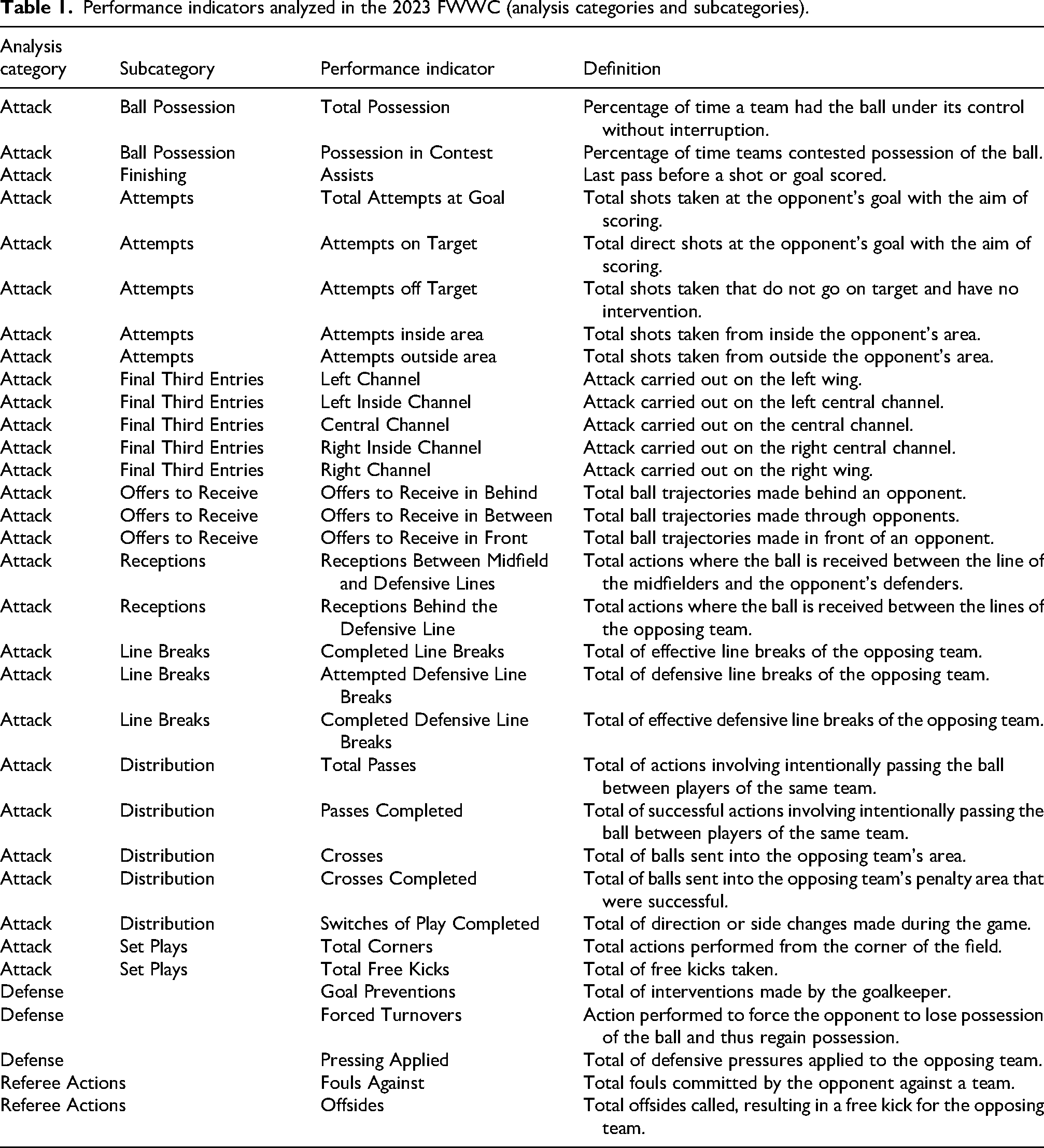
A total of 33 PI were analyzed, defined based on previous studies9,10,27,28 and categorized into offensive, defensive, and refereeing action variables (see Table 1).
Performance indicators analyzed in the 2023 FWWC (analysis categories and subcategories).
Procedure
As a first step, the performance data provided by FIFA on the ninth edition of the FWWC were tabulated in an ad hoc Microsoft Excel spreadsheet. As the data analysed were obtained from FIFA, inter-observer reliability was assumed. In recent international competitions, FIFA has developed its Football Data Ecosystem strategy, which was successfully implemented during the 2022 Men's World Cup. The collected data are shared with the staff of participating teams and relevant stakeholders, with the aim of enabling a single competition data platform. This Football Data Ecosystem seeks to provide consistent, high-quality information through multiple data sources and processors, including a real-time observer system and stadium tracking systems. 29
As a second step, before conducting the analyses, the data were normalized according to the total number of matches played by each participating team (seven matches = Spain, England, Sweden, and Australia; five matches = Japan, France, Netherlands, and Colombia; four matches = the United States, Nigeria, Denmark, Morocco, Jamaica, Switzerland, Norway, and South Africa; three matches = Germany, Brazil, Portugal, New Zealand, Canada, Italy, China, Philippines, Zambia, Ireland, Argentina, South Korea, Haiti, Costa Rica, Panama, and Vietnam).
Statistical analysis
As a first step, Principal Component Analysis (PCA) was used to reduce the dimensionality of the variables related to match statistics. 30 An orthogonal (varimax) rotation was applied to improve the interpretability of the components. 31 Sample adequacy was assessed using the Kaiser–Meyer–Olkin (KMO) statistic. 32 KMO values between 0.5 and 0.7 were considered mediocre, values between 0.7 and 0.8 were considered good, values between 0.8 and 0.9 were considered excellent, and values above 0.9 were considered outstanding. 33 In addition, individual items were required to obtain KMO values > .50. 30 The adequacy of the correlations among items was assessed using Bartlett's test of sphericity. Component selection was performed using parallel analysis and inspection of the scree plot. Variable extraction was set for loadings > .60. 30 From the grouping resulting from the model, the PS were identified, and their definition was based on the technical-tactical PI that formed each factor. Factor scores were extracted and saved as variables for further analyses.
Second, the use of PS was analyzed by team and by confederation (South American Football Confederation = CONMEBOL; Asian Football Confederation = AFC; Union of European Football Associations = UEFA; Confederation of African Football = CAF; Confederation of North, Central America and Caribbean Association Football = CONCACAF; Oceania Football Confederation = OFC). For this purpose, the upper and lower quartiles were calculated at both the overall level and by confederation, using the mean factor scores per team for each PS. Quartiles divide the data into four equal groups to assess dispersion and central tendency, constituting a valid method to classify team and player performance according to sport performance. 34 In this study, values above the upper quartile (Q3) were considered indicative of greater use of the PS, whereas values below the lower quartile (Q1) were considered indicative of lower use.
Finally, the influence of each factor was presented using scatter plots (F1 vs. F2; F1 vs. F3; and F2 vs. F3) (see Appendix 1). All analyses were conducted using Jamovi 2.4.7, 35 which uses the R programming language, 36 and JASP 0.18.3. 37
Results
The PCA conducted for the 33 PI revealed a statistically significant model (χ2525 = 3542.42; p < .001). The Kaiser–Meyer–Olkin measure of sampling adequacy (KMO = .89) confirmed that the data were suitable for analysis, with individual KMO values above .71. Bartlett's test of sphericity (χ2528 = 7425.05, p < .001) indicated that the correlations among items were sufficiently high to justify the PCA.
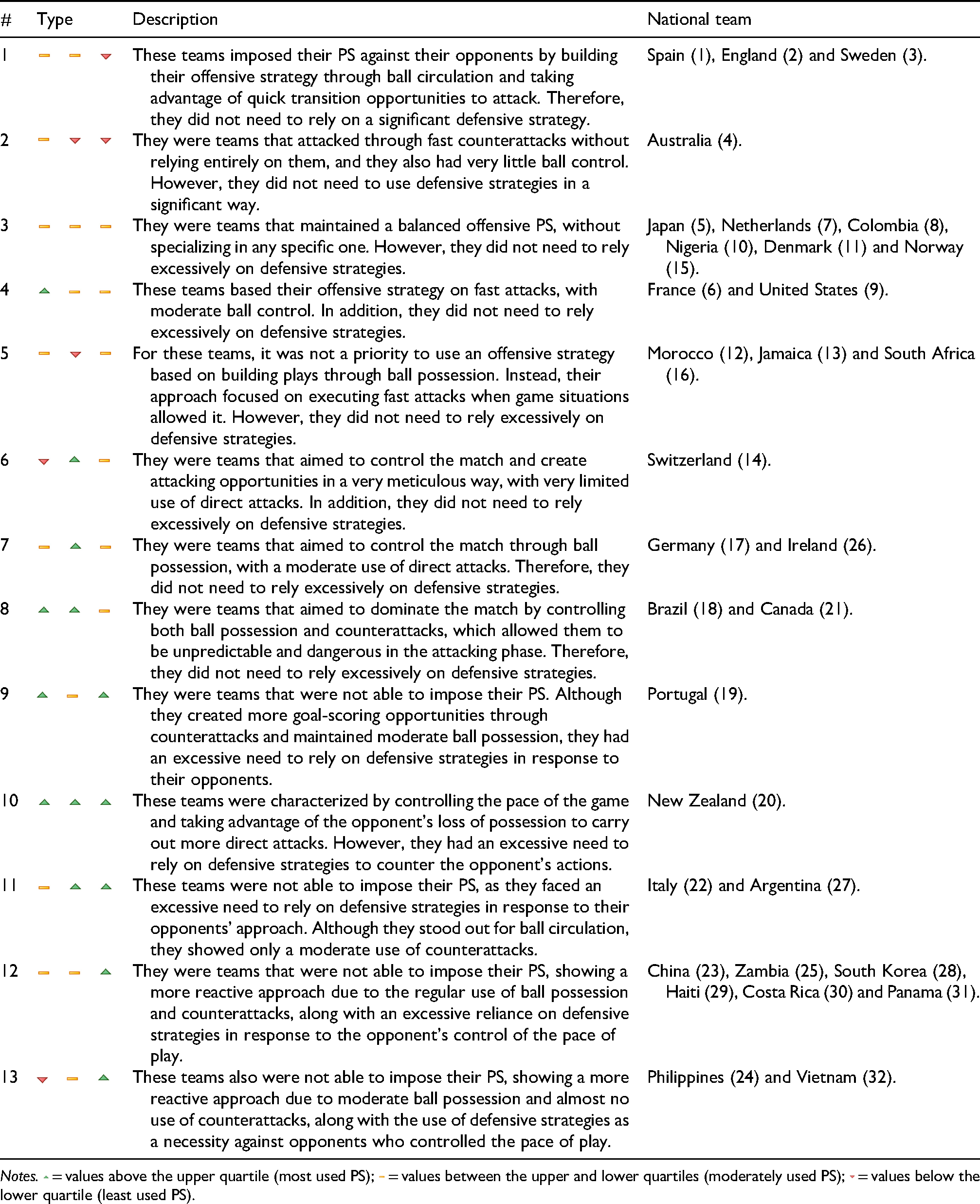
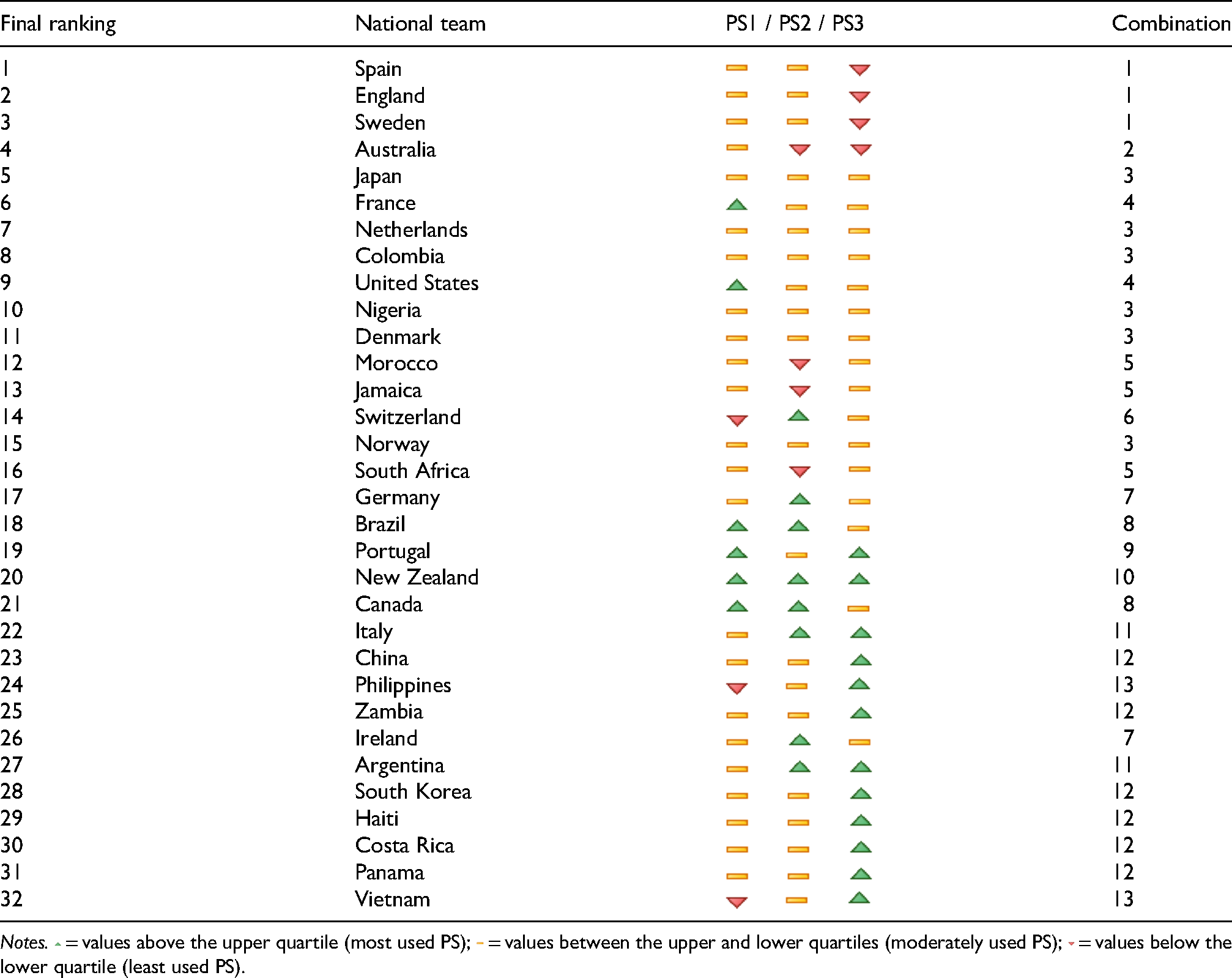
The model identified three PS used by the participating teams during the 2023 FWWC (eigenvalues > 2.00; explained variance = 68.79%) (see Table 2). Table 3 presents the factor loadings used to identify and interpret the PS. Table 4 illustrates the use of the PS based on the upper and lower quartiles, represented by arrows. The PS combination reflects the combination of usage levels (high, moderate, or low) of the three PS for each team; its interpretation is detailed in Appendix 2. The distribution of the playing styles (PS) and their respective descriptions are presented as follows:
Eigenvalues of the components and total variance explained.
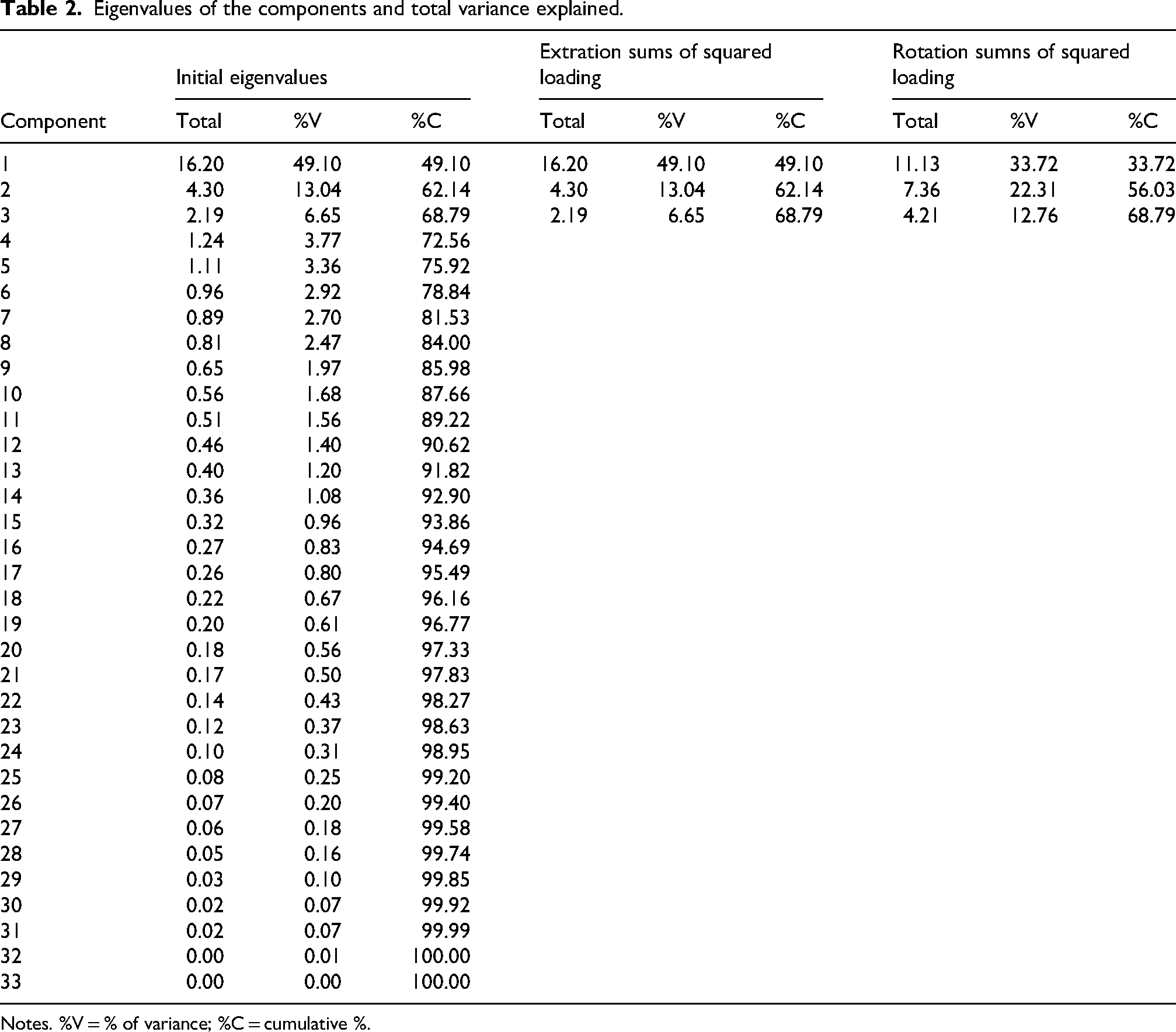
Notes. %V = % of variance; %C = cumulative %.
Rotated component matrix for the analyzed PI.
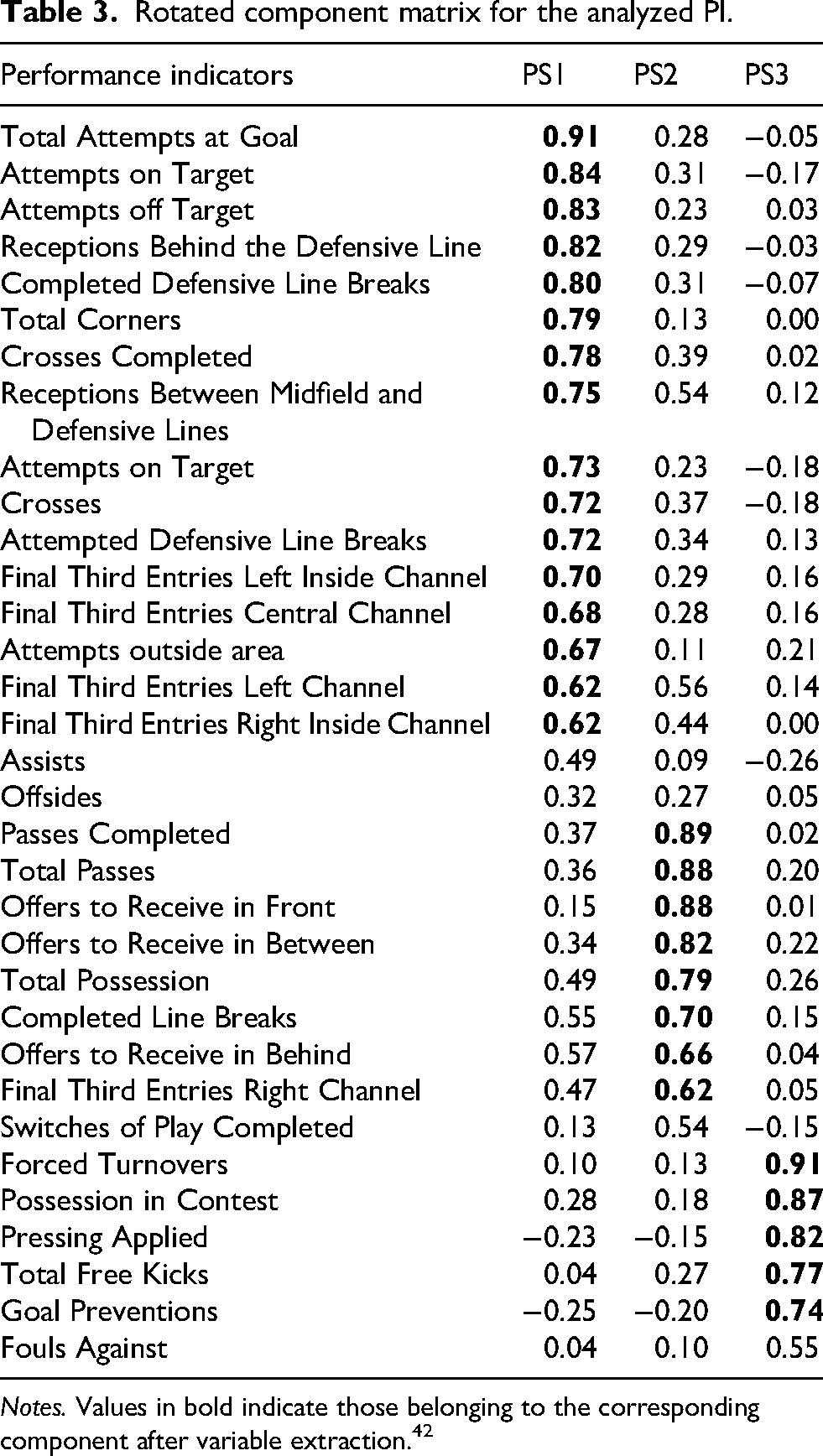
Notes. Values in bold indicate those belonging to the corresponding component after variable extraction. 42
Analysis of the use of ps by each national team.
In the other hand, the results regarding the use of each PS within each confederation are presented in Table 5. These results showed that among UEFA teams, those that stood out for a greater use of the Counterattack-Finishing PS were France, Germany, Portugal, and Italy. Teams that stood out for a greater use of the Elaborate Attack PS were Switzerland, Germany, Italy, and Ireland, while teams that stood out for a greater use of the Reactive-Defensive PS were Germany, Portugal, Italy, and Ireland. Among AFC teams, those that stood out for a greater use of the Counterattack-Finishing PS were Japan, China, and South Korea, while all teams showed a balanced use of the Elaborate Attack PS. In addition, Vietnam stood out for a greater use of the Reactive-Defensive PS.
Analysis of the use of playing styles by each national team within its confederation.
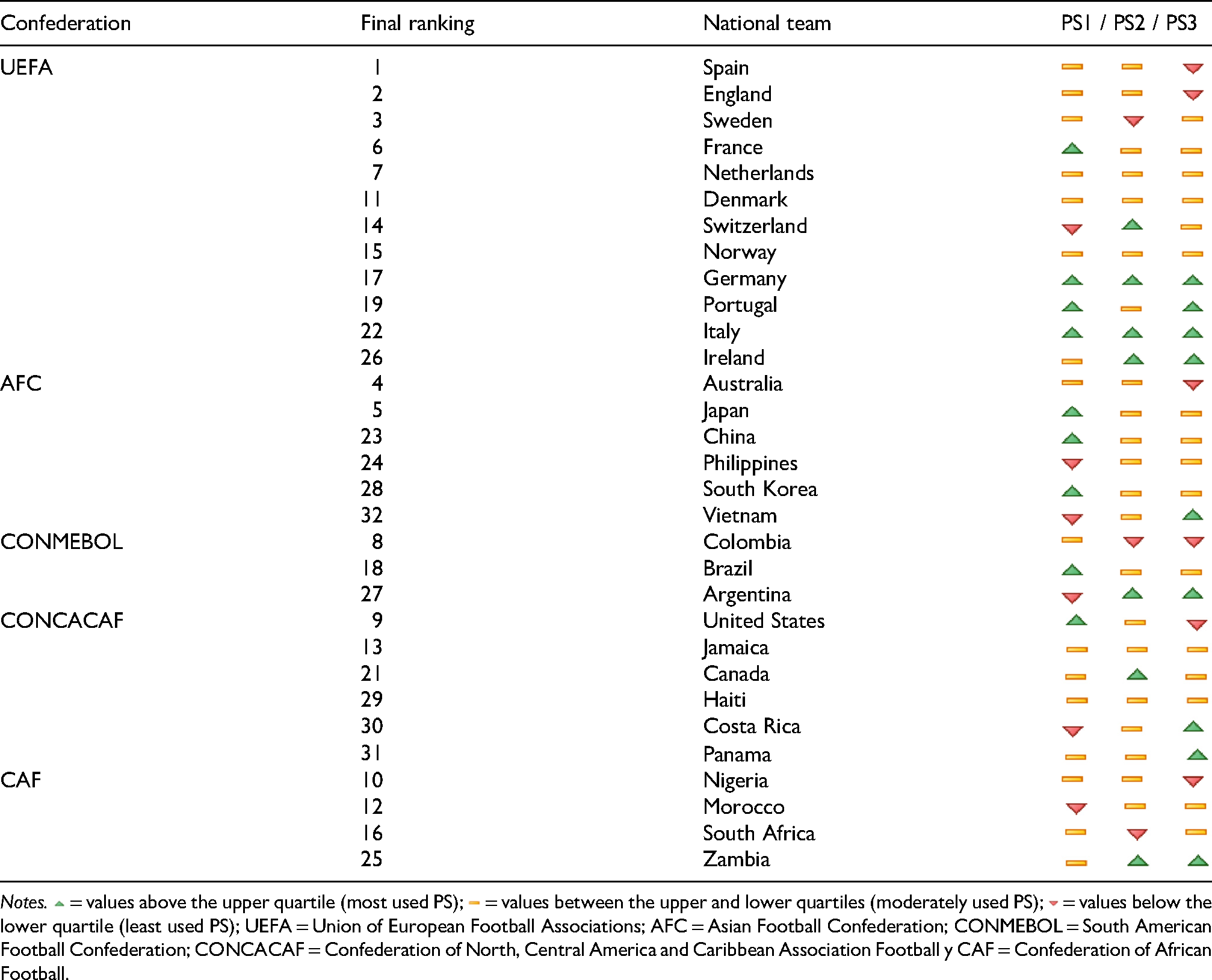
For CONMEBOL teams, Brazil stood out for a greater use of the Counterattack-Finishing PS, while Argentina stood out for a greater use of both the Elaborate Attack PS and the Reactive-Defensive PS. Among CONCACAF teams, the results showed that the United States was characterized by the Counterattack-Finishing PS, Canada stood out for a greater use of the Elaborate Attack PS, and Costa Rica and Panama stood out for a greater use of the Reactive-Defensive PS. Finally, among CAF teams, Morocco was characterized by a lower use of the Counterattack-Finishing PS, while Zambia showed a greater use of the Elaborate Attack PS and the Reactive-Defensive PS.
Discussion
The main aim of this study was to identify the PS used by the national teams that participated in the 2023 FWWC, analyze their use by each team, and examine their application within the context of their respective confederations. The results revealed three main PS used during the 2023 FWWC: Counterattack-Finishing, Elaborate Attack, and Reactive-Defensive. This finding highlights the influence of the specific circumstances of the tournament and the unique characteristics of each team. In addition, the use of PS by each team within its confederation showed that the application of these styles differed among teams from the same confederation.
The PS identified in this study: Counterattack–Finishing, Elaborate Attack, and Reactive–Defensive, are specific to the women's national teams that participated in the 2023 FWWC. Although a greater number of PS have been identified in other tournaments, those reported in this study are consistent with previous research, which has mainly highlighted two approaches: one style based on ball possession and organized progression through passing, and another characterized by a more direct approach based on shooting actions, set pieces, and ball recovery.18–20 Similarly, offensive PS based solely on ball possession in the 2023 FWWC, which are closely related to those identified in the present study, as one PS focused on fast offensive progression, another on maintaining possession until identifying the best attacking option, and a third combining both characteristics. 14 This reinforces the notable consistency of PS in world soccer, highlighting two well-defined styles. One of these is characterized by controlling the rhythm of the match through a meticulous build-up based on passing until creating the optimal opportunity to finish, while the other is defined by a more direct PS, with fast and unexpected attacks following ball recovery, generating multiple finishing actions.
This study identified variability in the PS employed by each national team, illustrating their tactical ability to adapt according to the specific demands of each match. It has been observed that more successful teams tend to adopt a more intense style of play, whereas mid- and lower-level teams rely more on ball possession. However, a balanced PS combining both elements has been associated with better positions in the final ranking. 38 This may be explained by the tendency of higher-performing teams to combine different playing strategies, alternating between more direct possessions and those involving greater ball retention, 14 concentrating their actions in attacking areas through combinative play. In contrast, lower-performing teams tend to play mainly in their own half with more direct attacks, which implies greater risk and less control of the game. 16 Therefore, defensive strategies such as reinforcing the defensive line near the goal, applying high-intensity pressure, and optimizing goalkeeper interventions are key solutions to reduce opponents’ finishing actions, 39 although defensive behavior is often adapted to match context variables such as match outcome, type of ball recovery, number of players involved, and match period. 17 Similarly, in the present study, the finalist teams stood out for a balanced offensive strategy, whereas other teams relied on more specific offensive approaches. This suggests that success is not determined by a single PS, but rather by the ability to adapt to match conditions. However, it is concerning that some teams still lack the ability to impose their own style and depend heavily on a highly reactive PS, which may indicate technical-tactical limitations. These teams face a significant challenge when competing against opponents that adopt more proactive and dynamic strategies.
Within confederations, national teams showed significant variation in their reliance on PS, highlighting the influence of cultural, tactical, and structural factors in the development of WF. During the 2018 FIFA Men's World Cup, European teams adopted a more intense and offensive PS compared to the other continents analyzed. 40 Specifically, differences were found between European and African teams in offensive variables related to shots, goals, ball possession, passes, and others. 41 During recent U-20 World Cups in both women's and men's categories, confederations displayed distinct playing patterns. European, Central American, North American, and Caribbean teams were characterized by a more positional and line-breaking attacking approach, whereas South American teams showed greater involvement in the final third of the pitch. 21 In addition, the strong performance of European and South American teams during the 2023 FWWC was linked to factors such as the quality of domestic leagues, the number of players competing in professional leagues, and players’ experience in high-level competitions. 10 However, the present study showed that not all teams within the same confederation follow a general trend, suggesting differences in sport performance among teams from the same confederation. This phenomenon appeared in some teams during the 2023 FWWC that stood out not because of their confederation, but due to their individual trajectory and performance, reinforcing the need for more specific and individualized analyses.
These findings highlight the importance of conducting detailed and individualized analyses to better understand the true performance and competitive potential of each team. The diversity of strategies and tactical approaches demonstrates that there are no universal solutions, and that success largely depends on how each national team optimizes its technical, tactical, and physical resources according to the specific demands of the competition. Furthermore, these findings provide practical tools to optimize performance in WF, allowing coaches, analysts, and national team staff to adjust their strategies based on the predominant PS. This approach promotes a balance between elaborate build-up play and direct finishing. Overall, these results not only contribute to tactical and strategic analysis, but also support the development of WF by identifying areas for improvement across multiple national teams, encouraging deeper analyses and a higher competitive level.
Limitations and future research
This study presents several limitations that should be considered. These findings should not be generalized to all forms of soccer or to all WF competitions, as they focus specifically on a single World Cup tournament, a particular competitive context, and one specific gender. In addition, when identifying the PS of the analyzed tournament, all matches were included, including those with red cards and extra time, which may have influenced the analysis. Nevertheless, the analysis conducted represents a valuable contribution to the growing body of scientific literature on WF and provides useful tools for national team coaching staff and analysts. These results may serve as a basis for strategic planning for the next World Cup cycle toward Brazil 2027, promoting a better understanding of tactical dynamics and optimal team preparation.
Furthermore, the use of Principal Component Analysis (PCA) proved to be an effective tool for identifying game trends. It also opens avenues for future research on the evolution and development of PS across upcoming international competitions. Additionally, it provides a basis for analyzing PS in relation to match outcome, final ranking, match type, home advantage, competition stage, and type of opponent in a more comprehensive and integrated manner, as it focuses on PS rather than individual variables.
Conclusions
The findings of this study allow us to conclude that during the 2023 FWWC, three PS were used: Counterattack-Finishing, Elaborate Attack, and Reactive-Defensive. Therefore, this study reinforces two widely recognized trends in world football, one focused on ball possession and passing, and another based on a direct and fast attacking approach.
In addition, the results revealed variability in the use of PS among the participating teams. Therefore, it can be concluded that sporting success during the 2023 FWWC was associated with maintaining an offensive balance (Elaborate Attack and Counterattack–Finishing), together with a limited use of defensive actions. However, some teams still adopted a predominantly Reactive–Defensive approach due to the offensive limitations they presented.
Finally, PS use varied among teams within the same confederation, indicating that teams adopted distinctive strategies that did not align with regional trends. This highlights the need to evaluate each team independently, as success was not linked to confederation, but rather to each team's specific performance and strategy.
Footnotes
Acknowledgment
This work was carried out with the support of the Grupo de Optimización del Entrenamiento y Rendimiento Deportivo (GOERD).

Ethical considerations
Not applicable. Ethical approval was not required for this study, as it was based exclusively on data obtained from FIFA's official and publicly available website. These data did not include personal or identifiable information.
Consent to participate
Not applicable. This study did not involve the direct participation of human subjects and used publicly available, anonymized data from FIFA.
Consent for publication
Not applicable. This study does not include identifiable personal data or individual information.
Funding
The authors received no financial support for the research, authorship, and/or publication of this article.
Declaration of conflicting interests
The authors declared no potential conflicts of interest with respect to the research, authorship, and/or publication of this article.
Data availability
The data used in this study are available at (https://www.fifa.com/es/tournaments/womens/womensworldcup/australia-new-zealand2023/scores-fixtures?country=ES&wtw-filter=ALL).
Appendices
Combinations and their description according to the analysis of PS use by each national team.