







Abstract
The psychoactive substance cannabis is the most-commonly used drug around the world, and its use is becoming more prevalent globally. Additionally, it is becoming available in an increasing variety of forms. As such, it is imperative that perioperative practitioners have an understanding of the drug, its effects, and its implications in perioperative care. There is currently a lack of a standardised approach to a patient who uses cannabis, and prospective studies prove difficult given the current legal status of cannabis. This literature review seeks to provide information regarding cannabis and its use. Specifically, we explore the systemic effects of marijuana as well as perioperative and anaesthetic implications so that safer, more effective care may be administered.
Keywords
Introduction: Understanding marijuana
Marijuana originates from a plant, Cannabis, and has three distinct species – indica, sativa, and ruderalis (Alexander & Joshi 2019, Tapley & Kellett 2019). The plant’s dried leaves, stems, flowers, and seeds are combined to form what is known as marijuana (Alexander & Joshi 2019, NIDA 2019).
Phytocannabinoids are cannabinoid receptor ligands found in plants. The most commonly used cannabinoids today include tetrahydrocannabinol (THC), cannabinol, and cannabidiol (CBD) (Beaulieu 2017, Lafaye et al 2017). THC is the most powerful psychotropic component, which functions as a CB1 and CB2 agonist, and is primarily concentrated in the flowering bud (Alexander & Joshi 2019). Cannabinol also operates as a CB1 and CB2 agonist but is mildly psychoactive (Beaulieu 2017). CBD lacks any psychoactive effects and instigates two pharmacologic responses depending on concentration levels; at high concentrations, CBD is a non-competitive CB1 antagonist, but also works as an inverse CB2 receptor agonist at various concentrations (Tapley & Kellett 2019).
Psychotropic effects from cannabinoids can persist up to 24 hours depending on the substance’s concentration of THC, administration route, and metabolism and elimination of THC (Alexander & Joshi 2019, Huson et al 2018). Inhalation into the respiratory system can occur by smoking or vaping. Smoking marijuana leads to an onset of effects within 15 minutes with a duration of action of about four hours (although effects can be seen up to 24 hours) whereas vaping causes a peak plasma concentration within ten minutes (Huson et al 2018, Tapley & Kellett 2019). When cannabis products are ingested orally, cannabinoids have a more variable onset ranging from 30 minutes to two hours but the duration of action is longer than inhalation (lasting between five and six hours) due to extended gut metabolism of THC (Huson et al 2018, Tapley & Kellett 2019). The popularity of topical CBD oils has increased recently, and transdermal application allows for greater permeability of CBD over THC; however, permeability is overall low (Tapley & Kellett 2019).
As marijuana has grown in popularity for recreational use, THC concentrations have increased over the past few decades. A recent 2019 study analysed Drug Enforcement Administration-confiscated marijuana products and found that THC concentrations increased from 8.9% to 17.1% over the period from 2008 to 2017 (Chandra et al 2019). This increase was observed alongside an escalation in the THC:CBD ratio from 23:1 to 104:1 in the same period (Chandra et al 2019). The increasing THC:CBD ratio reveals the desire to deliver marijuana that will give a more intense psychoactive response to recreational users, since CBD has been observed to soften some of the psychotic and memory impairment symptoms (Chandra et al 2019, Horvath et al 2019). The clinical relevance of higher THC levels includes a greater chance for a harmful reaction as well as a greater risk for addiction (NIDA 2019). There has also been a rise in emergency room visits related to marijuana use, which may be partially explained by this phenomenon (NIDA 2019).
General effects of marijuana
Pulmonary considerations
Acutely, vaped cannabis has no documented effects on advanced COPD lungs (Abdallah et al 2018). Past studies have shown acute bronchodilatory effects in healthy adults and those with asthma (Abdallah et al 2018). As of February 2020, 2807 patients have been hospitalised or died with E-cigarette, or vaping, product-use associated lung injury (EVALI) in the US (CDC 2020). These cases included various pneumonias including acute eosinophilic pneumonia, organising pneumonia, lipoid pneumonia, diffuse alveolar damage, acute respiratory distress syndrome, diffuse alveolar haemorrhage, hypersensitivity pneumonitis, peribronchiolar granulomatous pneumonitis, and rare giant-cell interstitial pneumonitis (Christiani 2019).
Smoking three to four cannabis cigarettes daily equals approximately 20 tobacco cigarettes in regards to bronchial injury, and cannabis smoke has a larger concentration of carcinogens than tobacco smoke (Echeverria-Villalobos et al 2019, Huson et al 2018). It has been shown that there is a 3-fold increase in tar ingestion with one-third more tar accumulation in the lungs (Huson et al 2018). Additionally, vaping oil also leads to inhalation of carcinogens and irritants (Echeverria-Villalobos et al 2019). Important to note is that the seemingly most common form of cannabis consumed in the UK is resin cannabis (hash) in a cigarette prepared with tobacco, also known as a joint, spliff, or reefer (Macleod et al 2015). Thus, confounding factors of mixing cannabis with tobacco must be considered.
Pulmonary effects of chronic marijuana use include large airway epithelial damage, oedema, and erythema (Huson et al 2018). Goblet cell hyperplasia also occurs, with an increase in secretions, destruction of ciliated epithelium and squamous metaplasia, and increased bronchial tone (Echeverria-Villalobos et al 2019, Huson et al 2018). Chronic use has also been associated with COPD, emphysema, and lung bullae (Memedovich et al 2018). Though acute cannabis use has no documented effects on advanced COPD lungs, exacerbation of chronic bronchitis symptoms, including wheezing and productive cough, occur earlier than in tobacco smokers (Huson et al 2018).
Cardiovascular considerations
Acutely, marijuana has been shown to cause a dose-dependent increase in heart rate and systolic blood pressure in new users upon starting to smoke (Echeverria-Villalobos et al 2019). This is because the sympathetic nervous system becomes activated while the parasympathetic nervous system is inhibited (Echeverria-Villalobos et al 2019). Consequently, noradrenaline reaches its maximum concentration 30 minutes after starting to smoke and is elevated for up to 120 minutes (Echeverria-Villalobos et al 2019). In low to moderate doses, THC causes an increase in heart rate (due to CB1 agonism in cardiac myocytes), blood pressure, and cardiac output (Huson et al 2018, Tapley & Kellett 2019). Conversely, at high doses THC causes bradycardia and hypotension (Huson et al 2018). When THC reaches its peak plasma concentration, there is a 20–100% increase in systolic BP lasting 60 minutes (Echeverria-Villalobos et al 2019). ECG changes can be varied and include atrial fibrillation, atrioventricular block, atrial flutter, and premature ventricular contractions (Huson et al 2018, Memedovich et al 2018). Marijuana use has been linked to ischaemia, and there is a reported 4.8-fold increased risk of myocardial infarctions within the first hour of use (Huson et al 2018).
There is growing research that as THC content increases, there is an association with adverse cardiovascular events (Huson et al 2018). In patients with a prior myocardial infarction, there is a 2.5-fold increased risk of dying with once per week marijuana use, with more frequent use demonstrating a 4-fold increased risk of death (Huson et al 2018).
Cerebrovascular considerations
Higher rates of ischaemic strokes are possible with marijuana use, and some cases show that people with ischaemic strokes had a recent increase in their usage or a chronic history of use (Huson et al 2018). A 2.3–2.9-fold increase in cerebrovascular accidents in 25–35-year-old marijuana users has been reported when compared to tobacco users, with posterior circulation most commonly affected (Echeverria-Villalobos et al 2019). A possible association exists with recent increase in THC concentration or dabbing practice, which is the vaporising of concentrated cannabis extracted from THC resin (Echeverria-Villalobos et al 2019).
Haematologic considerations
Cannabis has both pro- and anti-coagulation documented effects (Echeverria-Villalobos et al 2019). After exposure to high doses of THC, there are changes in the phospholipids of platelet membranes with an associated decrease in platelet counts and increase in platelet aggregation (Echeverria-Villalobos et al 2019).
Central nervous system considerations
Marijuana use has been associated with decreased cerebral blood flow, as well as amygdala, hippocampal, and white and grey matter volume changes, although there have been disagreements in the exact changes that occur (Memedovich et al 2018). Impairments in memory, and attention have also been reported (Batalla et al 2013).
Immune system considerations
Cell-mediated and humoral immune responses are known to be impaired by high doses of cannabinoids (Tapley & Kellett 2019). Interestingly, low doses of cannabinoids have been shown to cause immune stimulation in animals (Tapley & Kellett 2019).
Gastrointestinal considerations
Acutely, cannabis has effects of antiemesis as well as increased appetite (Alexander & Joshi 2019). Chronic effects include hyperemesis syndrome in which the user experiences ‘recurrent episodes of severe nausea, vomiting, and abdominal pain’ (Alexander & Joshi 2019).
Oncologic considerations
Marijuana use has been associated with an increased risk of testicular cancer (Memedovich et al 2018). Currently, there is mixed evidence on the association of marijuana with an increased risk of lung cancer (Memedovich et al 2018).
Obstetric considerations
Pregnant women who use cannabis have an increased risk of developing anaemia (Memedovich et al 2018). Children born to mothers who used cannabis during pregnancy have an increased risk for low birth weight, NICU stays, and learning, attention, and problem-solving deficits (Beaulieu 2017, Memedovich et al 2018).
Withdrawal considerations
Withdrawal symptoms include irritability, anger, aggression, anxiety, sleep trouble, decreased appetite, restlessness, depressed mood, abdominal pain, tremors, sweating, fever, chills, or headache (APA 2013). Symptoms occur in chronic users who abruptly quit using, with symptoms starting within 24 hours, peaking at one week, and then gradually decreasing over the next two to four weeks (Beaulieu 2017, Brezing & Levin 2018). Compared with males, females tend to develop dependence more quickly, and subsequently can develop more severe withdrawal symptoms (Alexander & Joshi 2019).
Discussion: Anaesthetic and perioperative implications of marijuana use
When perioperative practitioners encounters a patient with known or suspected cannabis use disorder, the lack of evidence-based approaches to patient care presents a unique challenge. This scenario creates many dilemmas for the surgical team in deciding whether to proceed, delay, or cancel the case. Table 1 summarises the below preoperative, intraoperative, and postoperative considerations of marijuana use
Perioperative considerations of marijuana use
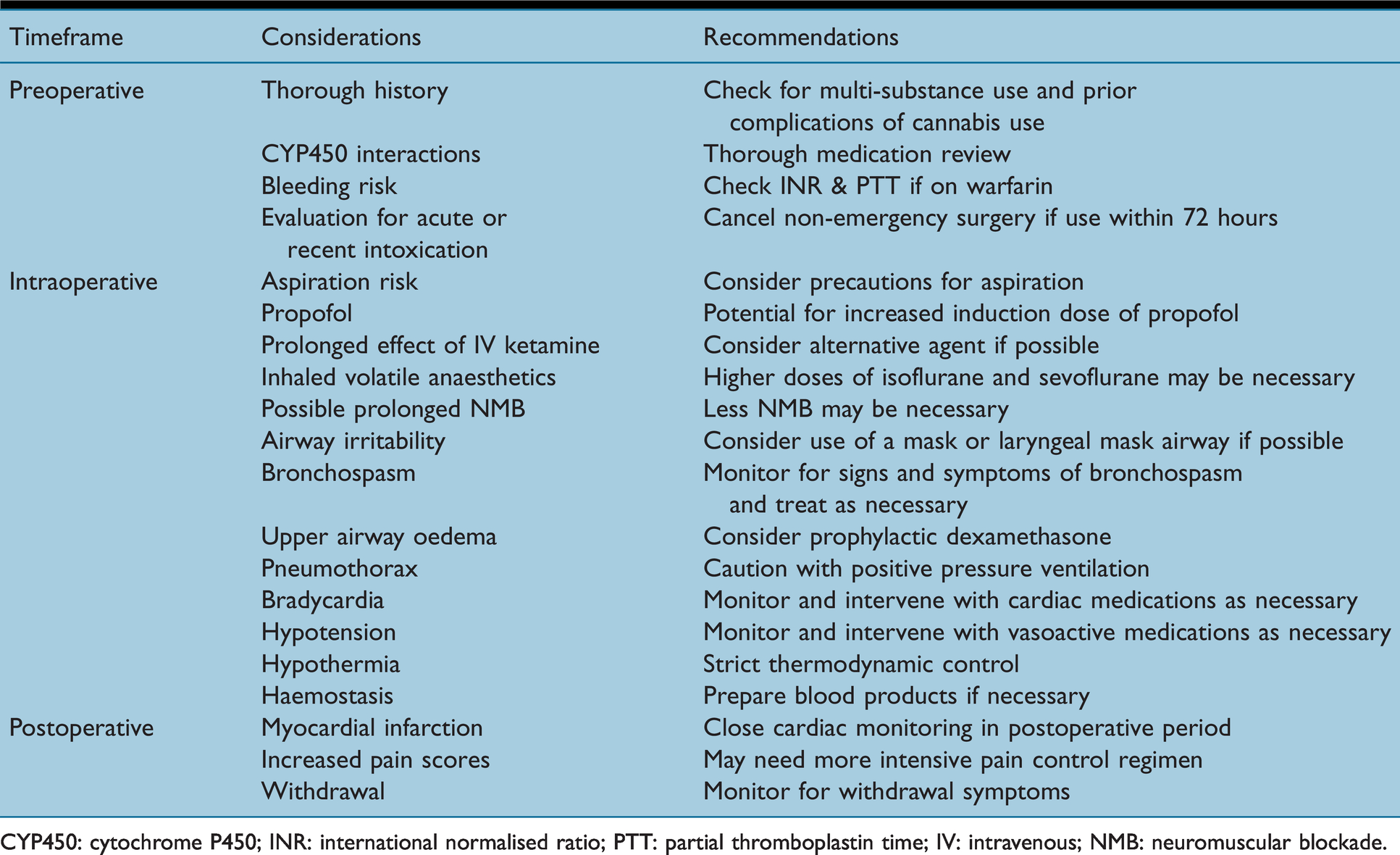
CYP450: cytochrome P450; INR: international normalised ratio; PTT: partial thromboplastin time; IV: intravenous; NMB: neuromuscular blockade.
Preoperative concerns
It is imperative that a thorough preoperative assessment is performed in patients using marijuana.
History: A detailed history is crucial, as many patients who abuse substances often use more than one drug, meaning there may be a combination of illicit substances in the patient’s system that may affect anaesthesia (Beaulieu 2017). Important to consider is that patients might respond better when the common drug name is used during questioning (Selvaggi et al 2017). Important historical points to elicit include the duration, frequency, route of administration, last use, and type of distributor of the marijuana (for example, illegal synthetics vs medical marijuana). History of complications from marijuana use should also be noted such as hyperemesis syndrome or chronic bronchitis (Echeverria-Villalobos et al 2019). A history of cardiovascular complications, especially peripheral, cerebral, or myocardial ischaemia, should also be explored and there should be a lower threshold for cardiac testing (for example, ECG) in cannabis users (Horvath et al 2019).
Medications: The cannabinoids from Cannabis are metabolised in the liver by cytochrome P450 enzymes, including CYP2D6 and CYP3A4, which can result in medication dose interactions (Tapley & Kellett 2019). As such, careful review of the patient’s medication list is invaluable.
Coagulation: The patient’s INR and PTT should be checked if the patient uses warfarin, as cannabis interacts with CYP450 and may prolong the effects of warfarin (Horvath et al 2019).
Acute intoxication: Because a urine drug screen may be positive for days after use but might not reflect acute intoxication, look instead for signs of recent use (Beaulieu 2017). Last time of marijuana use is important because sustained tachycardia in patients receiving general anaesthesia within 72 hours of marijuana use has been documented, likely due to the accumulation of cannabinoids in fatty tissue as well as slow elimination (Echeverria-Villalobos et al 2019). It is recommended that a non-emergency surgery should be cancelled if last use was within 72 hours (Echeverria-Villalobos et al 2019).
Prescribed cannabinoids: Although uncommonly prescribed, Sativex and Epidyolex are licensed for use in the UK as of November 2019 (NICE 2019). However, for paediatric patients in the US on FDA-approved synthetic cannabinoids, prescribed doses are advised to be continued on the day of surgery (Flannery et al 2019). Care should be taken, however, as there is a concern with the additive effects of sedatives, especially benzodiazepines (Flannery et al 2019).
Intraoperative concerns
There are a variety of intraoperative concerns when managing a patient who uses cannabis.
Aspiration risk: CB1 receptor expression, as well as THC with its anticholinergic effects, may result in gastroparesis (Echeverria-Villalobos et al 2019, Horvath et al 2019). Therefore, there should be heightened concern for aspiration risk, and aspiration precautions should be considered (Horvath et al 2019).
Induction of anaesthesia: Flisberg et al (2009) showed that total induction doses of propofol for successful insertion of a laryngeal mask airway was greater in chronic cannabis users. Therefore, consider that higher induction doses of propofol may be needed for successful induction.
Maintenance of anaesthesia: Many studies evaluating the effects of cannabis on maintenance anaesthesia thus far have been preclinical. Studies have shown that THC prolongs the action of IV anaesthetics, such as ‘pentobarbital, thiopental, ketamine, propanidid, and alfaxolone/alfadonlone’ (Echeverria-Villalobos et al 2019). This is important to consider in the cannabis user who was given one of these IV agents and subsequently seems to have a prolonged anaesthetic effect. In regards to inhaled volatile anaesthetics, higher doses of isoflurane and sevoflurane have been linked to cannabis users, with the effects of halothane being prolonged, so consider adjusting these doses as needed (Echeverria-Villalobos et al 2019, Tapley & Kellett 2019). Bispectral index (BIS) was shown to be increased in cannabis users, but there were multiple confounders in the studies (Tapley & Kellett 2019). Also to consider, the psychomotor effects of ketamine may be increased with CBD use (Tapley & Kellett 2019). Therefore, another anaesthetic may be more appropriate if possible.
Neuromuscular blockage: Animal studies have shown that cannabinoids inhibit acetylcholine (Echeverria-Villalobos et al 2019, Huson et al 2018). Therefore, cannabis users might have prolonged effects of neuromuscular blockers, the effects of which should be monitored for intraoperatively.
Acute intoxication: If the surgery is emergent and the patient is acutely intoxicated, look out for cardiovascular changes including myocardial infarction, tachycardia, hypertension, arrhythmias, sedation, and increased prolongation of anaesthesia (Beaulieu 2017).
Chronic use: Chronic marijuana users have respiratory changes comparable to tobacco smokers, and these changes may be present even sooner than tobacco smokers (Beaulieu 2017, Hudson et al 2018). As such, watch for airway irritability, cough, bronchospasm, uvular oedema, and airway obstruction (Beaulieu 2017, Horvath et al 2019). Prophylactic use of dexamethasone should be considered for prevention of upper airway oedema (Horvath et al 2019). Cannabis use is associated with developing a pneumothorax and bullous emphysema, so caution should be used when using positive pressure ventilation (Horvath et al 2019). A case of diffuse alveolar haemorrhage in the post-anaesthesia care unit has also been reported in one chronic cannabis user (Bucchino et al 2019). Cardiovascular concerns include bradycardia and orthostatic hypotension (Beaulieu 2017). A case was described in which severe hypotension developed intraoperatively in a patient who had used marijuana mixed with amphetamines (Cossu et al 2019). This case highlights the importance of understanding where the marijuana is purchased since it can be mixed with amphetamines when purchased illegally (Cossu et al 2019).
Withdrawal: Withdrawal symptoms (discussed prior) may complicate induction of anaesthesia, as well as postoperative recovery (Huson et al 2018). Risk factors for determining severity of symptoms include potency, amount used, female sex, and environmental/genetic factors (Echeverria-Villalobos et al 2019). However, no current treatment guidelines exist (Alexander & Joshi 2019).
Pain: CUD patients report higher postoperative pain scores, poor sleep, and need more rescue analgesics, so a multimodal analgesia plan with regional anaesthesia should be considered (Alexander & Joshi 2019, Beaulieu 2017). Of note, gabapentin combined with THC has overlapping pharmacological interactions and may have increased side effects when combined (Tapley & Kellett 2019).
Temperature: Previous cases have observed perioperative hypothermia and shivering in cannabis users, suggesting a possible association with decreased temperature regulation (Echeverria-Villalobos et al 2019). Close monitoring of temperature throughout the perioperative period is essential to avoid hypothermia-related complications.
Coagulation: Haemostasis may be limited by decreased platelets and increased platelet aggregation (Huson et al 2018). As such, consider keeping blood products nearby due to the potential for uncontrolled bleeding.
Postoperative concerns
Postoperative concerns remain crucial in post-anaesthetic care.
Cardiovascular: Goel et al (2020) found that there was no statistically significant difference in hospital mortality between patients with and without CUD. However, there was a 1.88 times higher risk for postoperative MI for patients with reported CUD (Goel et al 2020). Thus, careful monitoring of the cardiovascular system in the postoperative period is crucial.
Pain: Postoperative morphine use was higher in cannabis users with an estimated 23% increase in the amount of postoperative opioid use (Jamal et al 2019). As such, expect a greater need for postoperative pain control in these patients.
Withdrawal: Symptoms of cannabis withdrawal should be monitored for and treated as needed.
Conclusion
In conclusion, with the increase in use and availability of cannabis, it is important that the perioperative team understands the different types of cannabis available, the medical indications, and the effects of different components of recreational vs medical cannabis. Preoperative assessment is crucial, and it is imperative for a clinician to know what questions to ask in their assessment so that they can provide safe perioperative care. Equally as important is knowing what clinical signs to look for in the setting of cannabis intoxication, as well as complications from cannabis use. Additionally, understanding how acute and chronic cannabis use might affect anaesthesia and analgesia is key in order to safely and effectively manage patients. It is vital to understand the side effects and complications of cannabis use so that clinicians may educate patients on substance use. Surely, more research is necessary in many areas including marijuana’s effect on anaesthesia, marijuana’s effect on pain and opioid requirements, and the impact of legalisation on public health. Prospective studies will be invaluable in this regard if broad legalisation occurs. Lastly, the development of robust, evidence-based policies and/or guidelines is needed to better assist health care teams to provide the best care possible.
Competing Interests
None declared.
Funding
None declared.
