







Abstract

A 17-year-old girl presents to your sit-and-wait morning surgery with a photograph on her mobile phone of this fleshy lump. She describes having had the worst period cramps ever, severe abdominal pain and then passed a mass vaginally. She had a Nexplanon® fitted 6 months ago and has not had sex for 3 months.
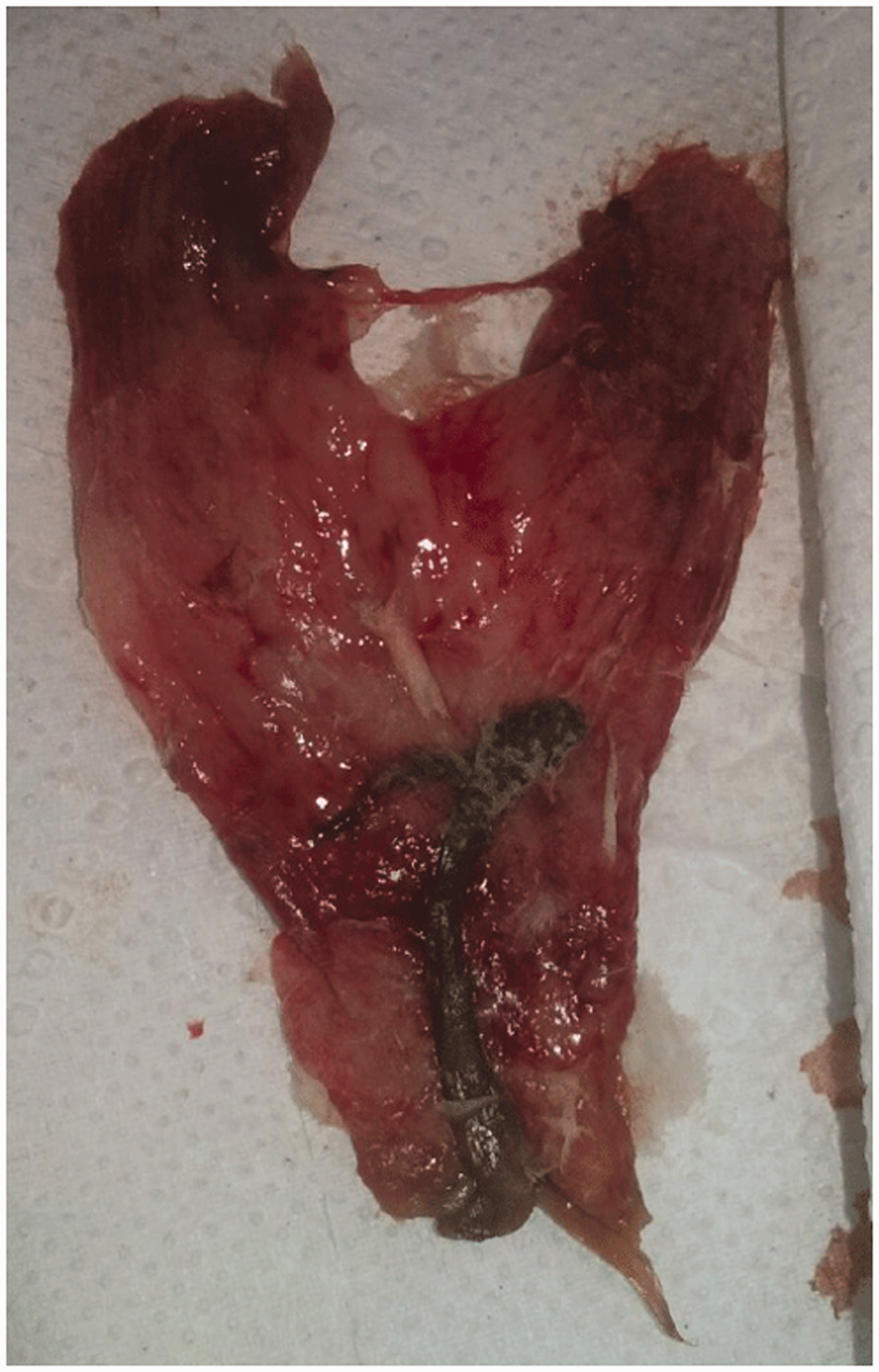 Reproduced from Nunes RD and Pissetti VC (2015). Licensed under CC BY 4.0.
This is a uterine or decidual cast
A uterine or decidual cast occurs when the entire endometrial lining is shed in one piece. They are uncommon but can be extremely painful to pass. They often cause the patient to present to primary care seeking reassurance and advice. A cast looks almost triangular, and if shed whole, the contours of the uterine cavity in a sort of fleshy model are visible on close examination. The pain associated with the passage of the cast can be severe as the patient is passing a 5 cm mass through the cervix.
Most uterine casts have no identifiable precipitating causes. However, there are case reports associated with ectopic pregnancy. They may be slightly more common in users of hormonal contraception, though having had a cast is not a contraindication for continued use, nor are they at increased risk of recurrent casts.
