






Abstract

RSPH reach over 200 million with alcohol calorie labelling campaign
New research shows that the majority of the population are unaware a glass of wine has the same number of calories as a slice of pizza. The Royal Society for Public Health is calling on the drinks industry and the newly appointed European Union Health Commissioner to introduce calorie labelling for alcoholic drinks. The call follows newly released research from the RSPH which shows strong public backing for the move and a general lack of awareness among consumers about the calories contained in alcoholic drinks.
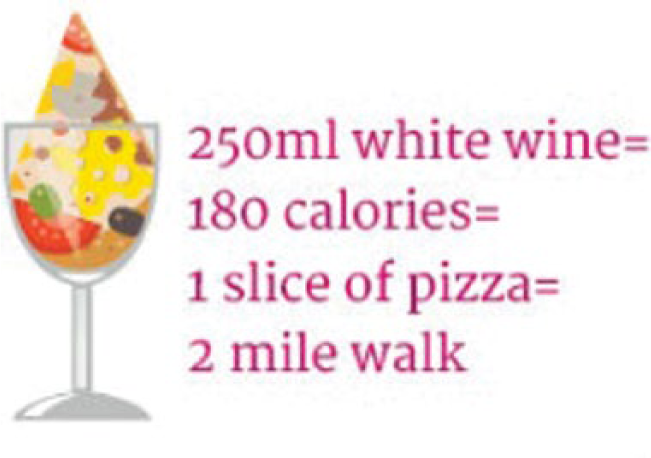
In a survey of over 2,000 people, the RSPH research found that over two-thirds (67%) of the public actively supports the addition of calorie labels on packaging of alcohol drinks, over 80% of the public did not know or incorrectly estimated the calorie content of a large glass (250 ml) of wine, and those presented with calorie information consume on average 400 calories less than those who are oblivious to the calorie content of their drinks (based on a small-scale experiment).
The European Commission has already publicly committed to make a decision by December 2014 on extending nutrition labelling (including calorie labelling) on alcoholic products. Shirley Cramer CBE, Chief Executive of RSPH said, ‘Calorie labelling has been successfully introduced for a wide range of food products and there is now a clear public appetite for this information to be extended to alcohol to help individuals make informed choices. With 2 in 3 adults overweight or obese and given that adults who drink get approximately 10 percent of their calories from alcohol, this move could make a major difference to waistlines of the nation. For more information, visit http://www.rsph.org.uk/alcohol’
Calorie labelling strategy reduces weight gain by 50%
Calorie labelling has been suggested for many years as a way to prevent obesity, but there has been very little evidence for its effect as yet. A UK-based study has now become the first to study the effectiveness of labelling long term, to help young people to avoid unwanted weight gain.
Early adulthood is a critical time for weight gain and the early development of obesity. Presented during Obesity Week 2014, this study examined the food choices and weights of students over two academic years: the first year with food calorie labels for only five weeks and the second year with clearly displayed labels for 30 weeks. During the first year, participants gained an average of 3.5 kg. During the second year, however, there was no change in the average weight initially measured, and participants ordered meals with 18% fewer calories than in the previous year. They also reported eating much less fat, saturated fat and cooking oils.
Calorie labelling can help people to understand the content of the food that they choose and make them aware of healthier options. While previous literature has not shown any benefit to labelling, these studies did not look at long-term exposure. As found in this study, consistent exposure of prominent calorie labelling is important and can lead to a 50% reduced likelihood of a young person gaining weight over a year. The strategy used in this study represents an effective, low-cost approach which may be useful in combating weight gain in young adults and may perhaps be transferable to other groups.
Source: Preventing weight gain with calorie-labelling. Obesity 2014; 22: 2277–83.
Thirdhand smoke continues to have harmful impacts
Scientists at the US Department of Energy’s Lawrence Berkeley National Laboratory have conducted a study looking at the potential harmful effects of thirdhand tobacco smoke in indoor air, with the aim of providing information supporting protective measures in the home. Thirdhand smoke is not widely studied, however it adsorbs strongly onto indoor surfaces and can remain harmful for a number of hours after a cigarette is smoked.
Looking at levels of over 50 volatile organic compounds and other airborne particles over a period of 18 hours after a cigarette is smoked, this study found that thirdhand smoke can continue to affect health for many hours: for example, two hours after smoking a cigarette, up to 60% of the harm from inhaling thirdhand smoke remains.
Overall, the study concluded that the total harm from thirdhand smoke increases dramatically in the first five hours after a cigarette is smoked indoors. Over the next five hours, this harm continues to rise, only starting to level out after ten hours. This evidence may be important in developing guidelines for protective measures in the home, due to the long timescale of damage from thirdhand smoke: even if a person is not in the room at the time of smoking, they may still be at risk from constituents of thirdhand smoke for many hours afterwards.
Source: Inhalable constituents of thirdhand tobacco smoke: Chemical characterization and health impact considerations. Environmental Science & Technology. Epub 2014 October 31, DOI: 10.1021/es5036333.
RSPH drives forward the Youth Health Champion movement
While the health and lifestyle choices of young people in the United Kingdom and throughout the World Health Organization (WHO) European Region continue to be reported on in public health circles and in the national media, RSPH has been busy devising and rolling out a practical response to the pressing issues affecting the health and wellbeing of young people.
RSPH is encouraging organisations to demonstrate their own commitment to empowering young people to make informed choices by supporting the youth health movement that is taking shape. By introducing a youth health champion initiative into the lives of adolescents, a ripple effect occurs as the enhanced confidence, communication skills and health improvement knowledge gained by the young people who participate impact both on their own lives and on those of the people closest to them. This feedback, along with other inspiring comments, was communicated by students at Manningtree School when the very first Youth Health Champion (YHC) certificates were presented by Duncan Selbie, Chief Executive of Public Health England, at the recent RSPH awards ceremony and official launch of the qualification. A video featuring these inspiring young people talking about their empowering experience on the programme can be found on the RSPH website. 1
Schools, local authorities, youth groups and other organisations are all getting involved in youth health champion initiatives and incorporating the innovative qualification into their programmes to add educational attainment and employability into the ever growing list of benefits. Key Public Health England objectives are addressed by the content which includes raising awareness of issues relating to encouraging physical activity, healthy eating, alcohol awareness, substance misuse, smoking cessation and sexual awareness. Crucially, links between schools and external health improvement agencies are explored and used for signposting. And the opportunity to plan and deliver health improvement campaigns gives students an invaluable practical element that develops leadership, team working and communication skills for the participants.
For schools, the programme fosters and further develops the national reach of some of the key features of the Healthy Schools Awards which are now local programmes administered by local authorities rather than on a national basis. Healthy Schools promotes physical and emotional health by providing accessible and relevant information and equips pupils and staff with the understanding, skills and attitudes to make informed decisions about their health. The youth health champion certificate moves this agenda forward by placing health and lifestyle messages right at the heart of educational activity.
Martin Page, Deputy Head of Manningtree School, has found that the youth health champion programme ‘has been one of the most effective vehicles I have come across in delivering the health aspects of our PSHE programme. Peer led sessions on health have been a huge success, students feel that they can connect with the YHC students and that the message is much clearer and more engaging’.
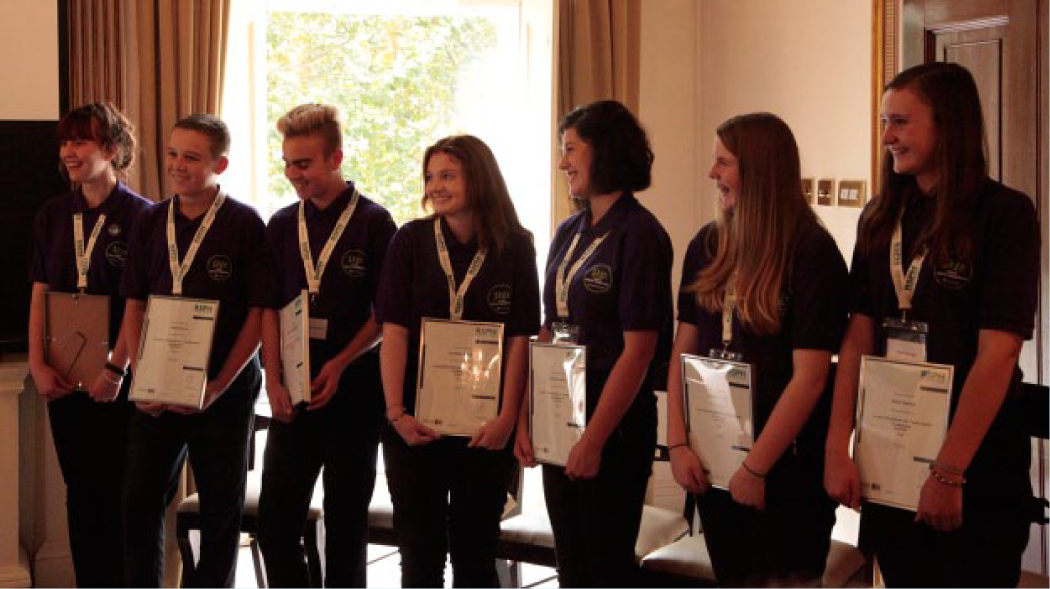
The profile of the YHCs around the school has meant that many students who in the past may not have known where to source help have gone directly to a YHC who has been able to signpost them to the right health professional.
There is an ever present need to tackle the growing burden of health inequalities, as Shirley Cramer CBE, Chief Executive of RSPH, reaffirmed at the launch and awards ceremony, commenting how it is crucial that we focus on the next generation and educate them from a young age on the importance of making healthy choices. Duncan Selbie made reference to the quote ‘I’ve learned that people will forget what you said, people will forget what you did, but people will never forget how you made them feel’. 2 This sentiment is particularly meaningful in the context of a programme that creates community and connection for young people at such a crucial transition time in their lives. These impressive young people and others who are given the opportunity to follow in their footsteps will have the opportunity to make a potentially very significant contribution to the wellbeing of their peers and wider community.
For more information on the RSPH Certificate in Youth Health Champions, please visit http://www.rsph.org.uk/youthhealthchampions.