






Abstract
Background
Medicine Food Homology (MFH) represents a fundamental concept in traditional health systems, describing natural substances with dual nutritional and therapeutic value. Despite growing global interest in MFH as a complementary health approach, a comprehensive analysis of its research landscape remains underdeveloped. This study provides a systematic bibliometric analysis to map the evolution and current state of MFH research.
Methods
We analyzed publications from Web of Science (1976-2026) using standard bibliometric methods. After rigorous screening, 509 articles were examined through CiteSpace and VOSviewer to identify publication trends, collaboration patterns, and research fronts.
Results
The analysis reveals exponential growth in MFH research since 2020, with China dominating the field (93.9% of publications). Keyword burst analysis identifies “network pharmacology” (strength: 4.08) and “machine learning” as dominant frontiers, signaling a shift toward artificial intelligence-driven precision nutrition. However, the output is heavily skewed toward narrative reviews and compositional studies, with a notable lack of high-quality mechanistic original research.
Conclusion
While MFH research is rapidly expanding, bridging the gap between traditional theory and international standards requires prioritizing multidisciplinary collaboration and rigorous randomized controlled trials. Integrating artificial intelligence with multi-omics data is essential to transition MFH into a cornerstone of evidence-based, personalized medicine.
1. Introduction
As an important component of the theoretical system of traditional Chinese medicine, the concept of Medicine food homology (MFH) originated from the dietary health preservation thought of five grains as nourishment in the “Inner Canon of Huangdi”. MFH theory has been systematically developed in ancient medical books such as “Shennong’s Herbal Classic” and “Food Therapy Herbal” for thousands of years. 1 This theory emphasizes that the boundary between food and medicine is not absolute, and many natural ingredients have both nutritional and therapeutic functions. 2 For instance, Astragalus and Angelica sinensis are not only common ingredients in daily diets but also can be used as medicine to strengthen the body and consolidate the foundation of health. 3 With the increasing burden of chronic diseases worldwide and the popularization of the preventive treatment concept, the value of MFH in health management is becoming increasingly prominent. 4 However, this field still faces challenges such as weak basic research, insufficient standardization, and poor integration between traditional Chinese and modern medical theories. For example, the efficacy evaluation of substances that can be used both as food and medicine mostly relies on traditional experience, lacking in-depth analysis from modern pharmacology and metabolomics, making it difficult to meet consumers’ precise needs.
Currently, research on MFH has shifted from single-component analysis to multi-disciplinary integration. Traditional research has mainly focused on the extraction of active components, such as polysaccharides and polyphenols, 5 and the verification of their efficacy, 6 while bibliometric analysis based on big data can reveal the research trends, hotspots, and knowledge gaps in the field. 7 Moreover, studies in this field show regional differences. Researches in East Asian countries focus more on the mining of ancient literature and the rules of compound prescriptions, while western countries pay more attention to the molecular mechanisms of single components and clinical trials. Bibliometric methods can quantitatively assess research influence, identify core author groups and institutional collaboration patterns, and provide a basis for optimizing research layouts. 8 This article aims to visually analyze the research dynamics in the field of MFH by combining bibliometric methods, with the expectation of providing data-driven decision support for theoretical innovation and industrial transformation of MFH.
2. Materials and Methods
2.1. Data Sources
A comprehensive literature search was conducted in the Web of Science Core Collection (WoSCC).9,10 The selection of this database was based on its status as the most authoritative and standardized source for bibliometric analyses in the biomedical and health sciences. 11 To ensure the reproducibility and rigor of the study, we restricted our analysis to the Science Citation Index Expanded (SCIE). While regional databases (e.g., CNKI, KCI) contain valuable local research, they often lack standardized metadata for global citation tracking and international collaboration analysis. Therefore, to specifically investigate the global dissemination, impact, and evolutionary trajectory of MFH research, we focused exclusively on publications indexed in SCIE. This design choice ensures that the findings reflect the international scientific consensus and collaborative networks rather than regional publication activities.
To ensure the comprehensiveness of the search results, a Topic search approach was adopted, with the specific search strategy being: TS=(homology medicine and food) OR TS=(medicine food homology) OR TS=(affinal drug diet) OR TS=(pharmaceutical food resource). The time range for literature publication was from January 1, 1976 to April 30, 2026. The initial search yielded 2474 papers. After excluding 21 non-English papers and 29 non-research/review papers, all remaining articles were further screened based on their title/abstract/content by two independent researchers.12,13 Before that, they were trained to ensure the uniformity of the literature screening criteria. Any discrepancies were resolved by a third senior expert until a consensus was reached. After excluding 1,915 articles not related to the research topic, such as botanical studies without functional food context, agricultural studies, and papers mentioning keywords only in citations. A total of 509 papers was ultimately included in the bibliometric analysis (Figure 1). Flowchart of literature screening (Visualized by Microsoft Office PowerPoint)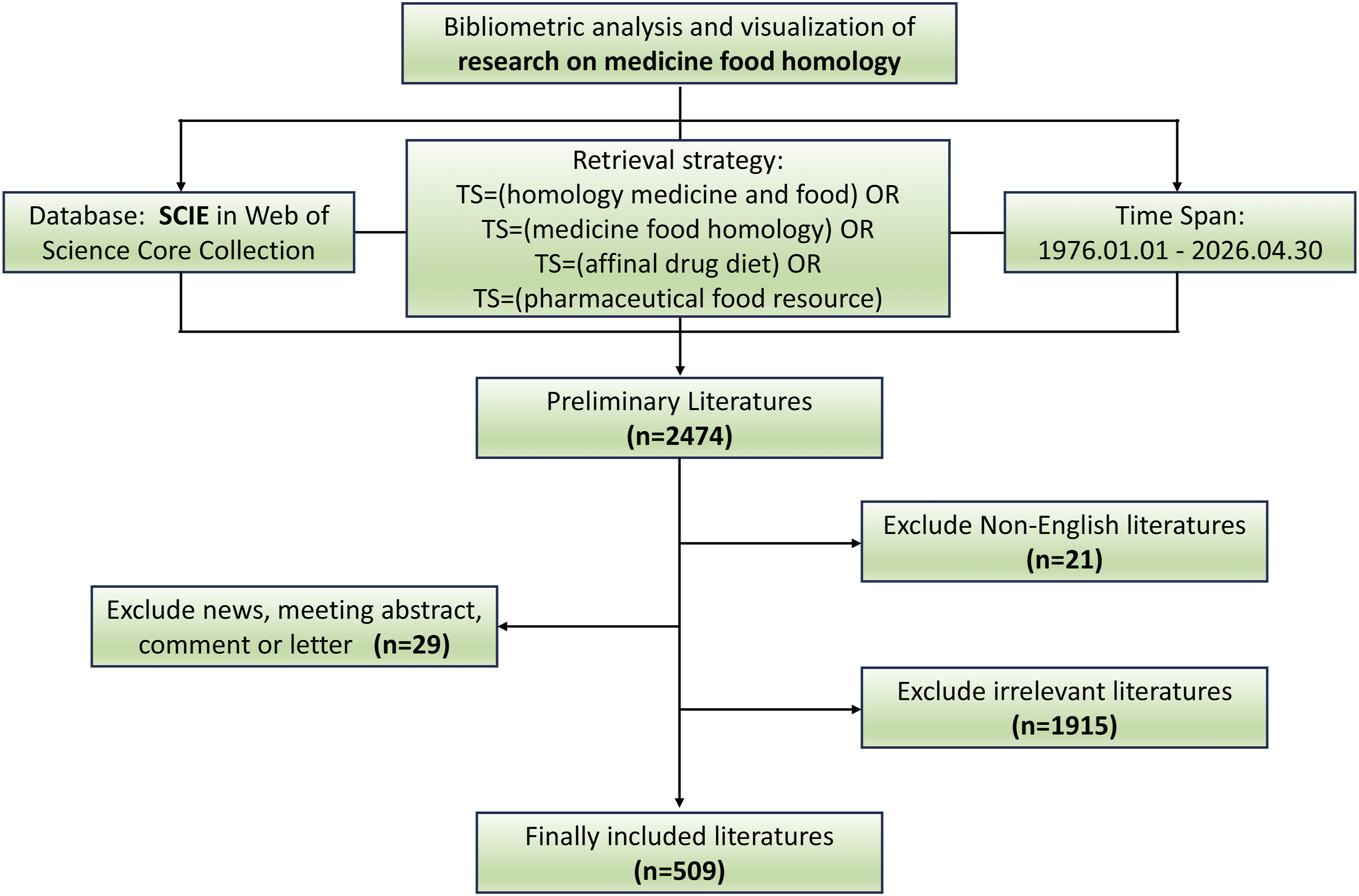
2.2. Data Analysis and Visualization
In this study, two classic bibliometric visualization software, CiteSpace (Version 6.4.R2_Advanced) and VOSViewer (1.6.20), were used for data analysis and visualization. CiteSpace, developed by Professor Chaomei Chen 14 from Drexel University in the United States, is a visualization software for literature analysis that helps researchers analyze citation patterns, keyword frequencies, author collaborations, etc., in a specific field, thereby revealing the research structure and trends in the discipline. VOSviewer, developed by Professors Van Eck and Waltman 15 from the Centre for Science and Technology Studies at Leiden University in the Netherlands, is an open-source software based on JAVA, mainly focusing on the visualization of scientific knowledge from literature data. In this study, CiteSpace was used for country, institution, co-cited author, keyword, and burst word analysis, while VOSviewer was used for journal, co-cited journal, author, and article citation analysis. For author analysis, different visualization strategies were adopted to address specific data characteristics. VOSviewer was employed for publishing author networks to better handle sparse data and highlight community structures. CiteSpace was utilized for co-cited author analysis to visualize citation linkages and perform cluster analysis, thereby distinguishing between collaboration networks and intellectual impact. Additionally, the annual distribution of publications was visualized using GraphPad Prism 8.0.2. An exponential trend analysis was fitted to the data to illustrate the growth dynamics, and the coefficient of determination (R2) was calculated to assess the goodness-of-fit. And the Compound Annual Growth Rate (CAGR) value was calculated to further quantify this growth trend. The data analysis, result presentation and writing of the paper all follow the guideline for reporting bibliometric reviews of the biomedical literature (BIBLIO). 16 (Supplemental Material).
3. Results
3.1. Distribution of Literatures
Among the 509 papers included in this study, although the retrieval period began in 1976, only one relevant report was found during 1976-2010. As shown in Figure 2, from 2011 to 2019, research in the field of MFH was very limited, with the number of papers each year being in single digits. However, starting from 2020, the number of literatures in this field began to increase significantly, especially in 2022 with 69 papers, 80 papers in 2023, 95 papers in 2024, and 131 papers in 2025. The results show a CAGR of 34.5% from 2011 to 2025, indicating that research in this field has shown an exponential growth trend in the past fifteen years. In addition, the R2 value for the exponential trend line was found to be 0.93, indicating that the upward trend is statistically robust and fits a strong positive correlation pattern. It should be noted that, the search cutoff date (April 30, 2026) means the 41 articles recorded for 2026 do not represent the full calendar year. To avoid skewing the growth rate calculation, we calculated the CAGR and R2 excluding the incomplete 2026 data. Annual publications related to research on medicine food homology (Visualized by GraphPad Prism 8.0.2)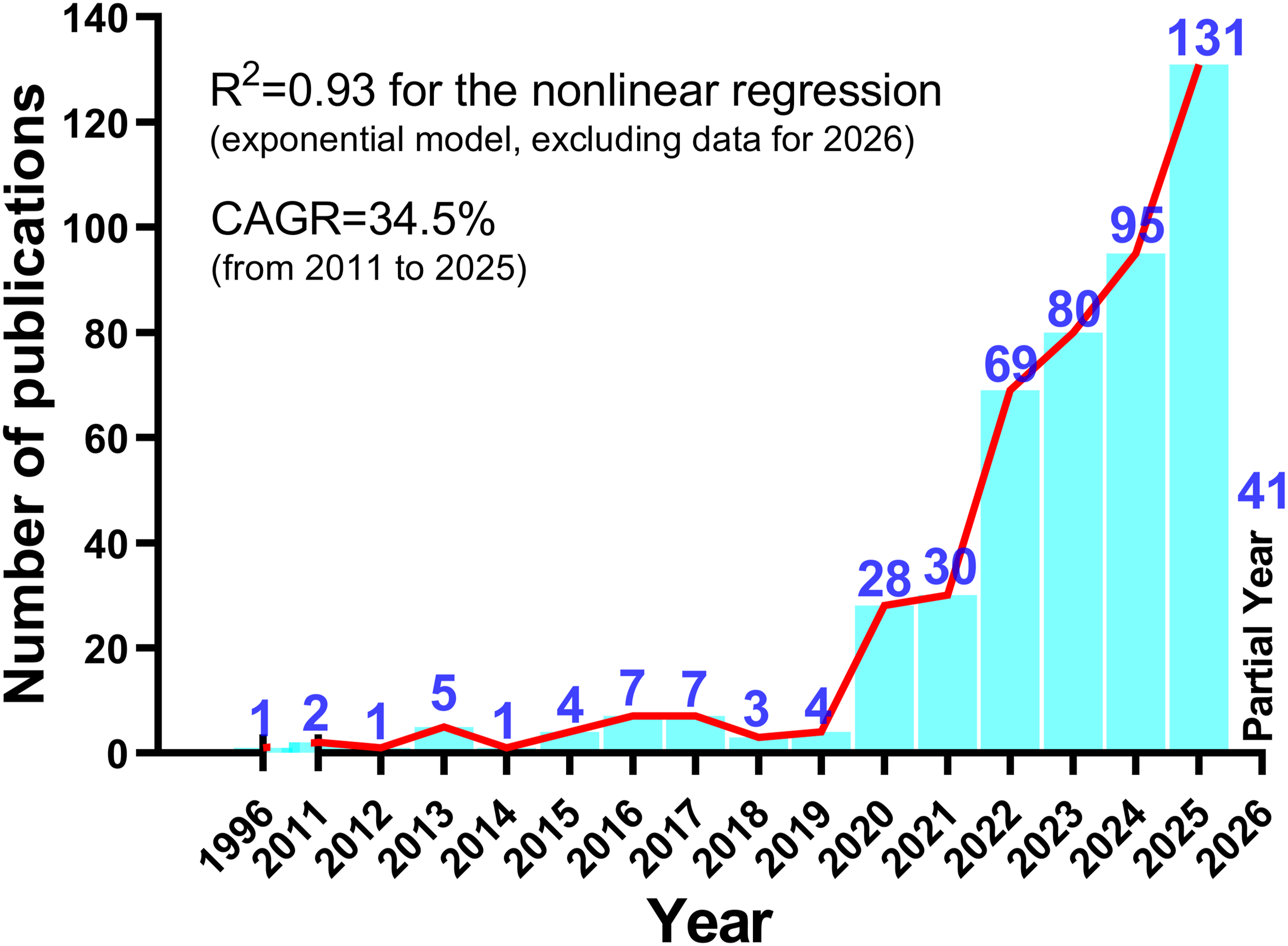
Among the 509 included publications, 112 (22.0%) were review articles. A detailed breakdown revealed that the overwhelming majority were narrative reviews (n=108, 96.4%), while only a small fraction consisted of systematic reviews (n=3) and meta-analysis (n=1). This predominance of narrative reviews suggests that while the field is rich in summarization, there is a growing need for more rigorous, protocol-driven systematic syntheses.
3.2. Analysis of Countries and Institutions
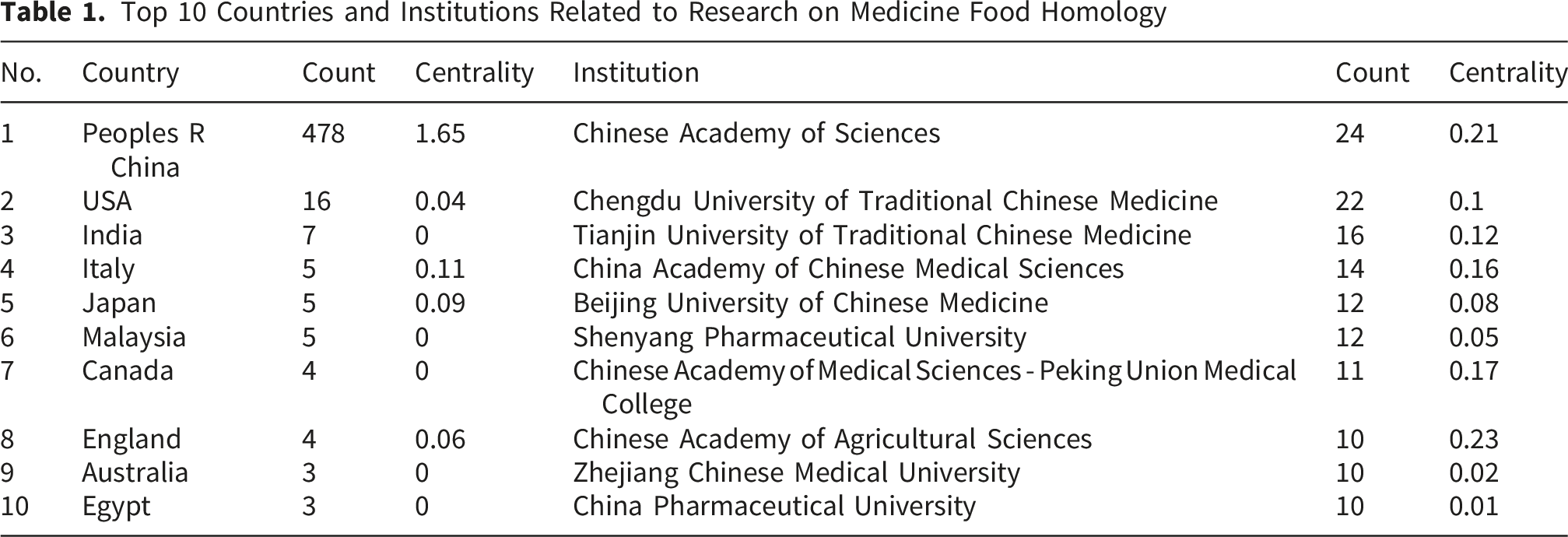
Top 10 Countries and Institutions Related to Research on Medicine Food Homology

National and institutional distribution of publications related to research on medicine food homology. (A) CiteSpace visualization map of different countries. (B) CiteSpace visualization map of different institutions
Based on the analysis of institutional contributions, the research landscape of MFH is characterized by a highly centralized output dominated by Chinese institutions, reflecting the field’s deep roots in TCM. The top 10 contributing institutions collectively produced 141 articles, accounting for approximately 27.7% of the total 509 publications, indicating a significant concentration of expertise (Table 1). Leading the rankings is the Chinese Academy of Sciences (24 articles), followed by Chengdu University of Traditional Chinese Medicine (22 articles) and Tianjin University of Traditional Chinese Medicine (16 articles). This distribution reveals a strategic alignment between comprehensive research academies and specialized TCM universities. Notably, the list includes not only traditional medical institutions (e.g., Beijing University of Chinese Medicine) but also pharmaceutical-focused universities (e.g., Shenyang Pharmaceutical University, China Pharmaceutical University) and agricultural research centers (e.g., Chinese Academy of Agricultural Sciences). This diversity underscores the interdisciplinary nature of MFH research, bridging pharmacology, clinical medicine, and agricultural sciences to drive innovation in functional foods. From the network analysis (Figure 3B), these institutions are generally concentrated and have strong connections among them, indicating that they have extensive cooperation in the research of MFH.
3.3. Analysis of Journals and Co-cited Journals
Top 10 Journals and Co-cited Journals Related to Research on Medicine Food Homology
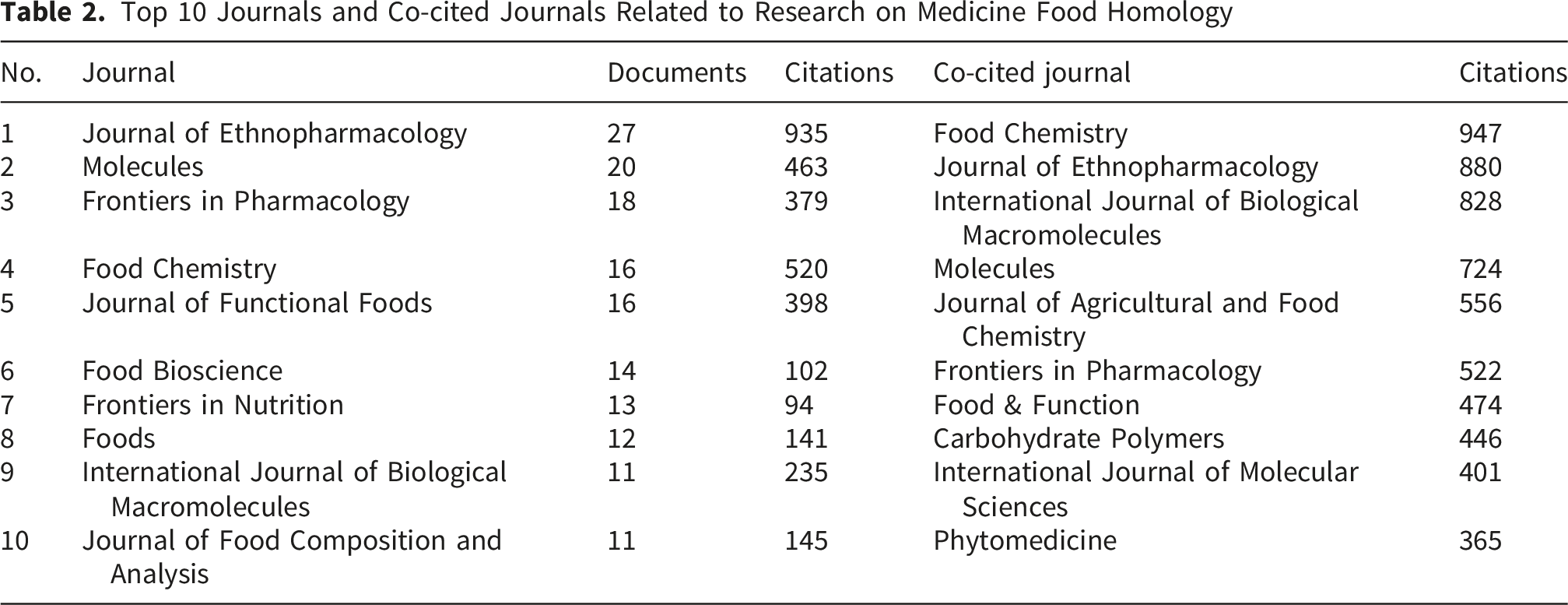
Although Frontiers in Pharmacology published only 18 papers, it received 379 citations, averaging 21.1 citations per paper. Notably, Food Chemistry, and Journal of Functional Foods in the food science field also had relatively high citation rates, and with 32.5 and 24.9 citations per paper, respectively. This indicates that apart from Journal of Ethnopharmacology’s leading position in the field of pharmacy, these two journals are the main target for research on the MFH, with high-quality papers published. Further network analysis (Figure 4A) shows that although these journals are distinguished by different fields, they are generally interwoven, presenting complex associations. Journals and co-cited journals distribution of publications related to research on medicine food homology. (A) VOSviewer visualization map of different journals. (B) VOSviewer visualization map of different co-cited journals
The analysis of the co-cited journals reveals that a total of 6,684 journals were cited by the 509 documents. Ranked by citation counts (Table 2), the top three were Food Chemistry (947 citations), Journal of Ethnopharmacology (880 citations), and International Journal of Biological Macromolecules (828 citations). Among the top 10 highly co-cited journals, five were the same as the top 10 publishing journals, further indicating the core status of these five journals in the field of MFH. Network analysis of these co-cited journals (Figure 4B) shows that although they also have complex network intersections, they can be divided into four main fields. Journals represented by Journal of Ethnopharmacology (red) are mainly specialized in ethnopharmacology and complementary medicine, while those represented by Food Chemistry (green) are mainly specialized in the field of food. In blue are mainly comprehensive journals, and yellow ones tend to focus on plant chemistry research. These four main directions cover the main journals of MFH, providing reference targets for research in this field.
3.4. Analysis of Authors and Co-cited Authors
Top 20 Authors Related to Research on Medicine Food Homology


Authors and co-cited authors distribution of publications related to research on medicine food homology. (A) VOSviewer visualization map of different authors. (B) CiteSpace visualization map of different co-cited authors. (C) CiteSpace cluster visualization of the co-cited authors
Based on this, the 24,047 co-cited authors were also analyzed. As shown in Figure 5B, there was a very complex overlap among these authors. Further cluster analysis revealed that these authors’ research was distributed across 13 different fields, indicating that the research on MFH covered the main disciplines in both the medical and food fields. Among these subject classifications, Infectious Diseases, Food Science & Technology, Pharmacology & Pharmacy, Nutrition & Dietetics, and Multidisciplinary Sciences are relatively independent, while the other disciplines have complex intersections. This reflects the phenomenon that among the co-cited authors, both specificity and commonality coexist across different disciplines (Figure 5C).
3.5. Analysis of Highly Cited and Co-cited Literatures
Top 10 High Cited Documents and Co-cited References Related to Research on Medicine Food Homology

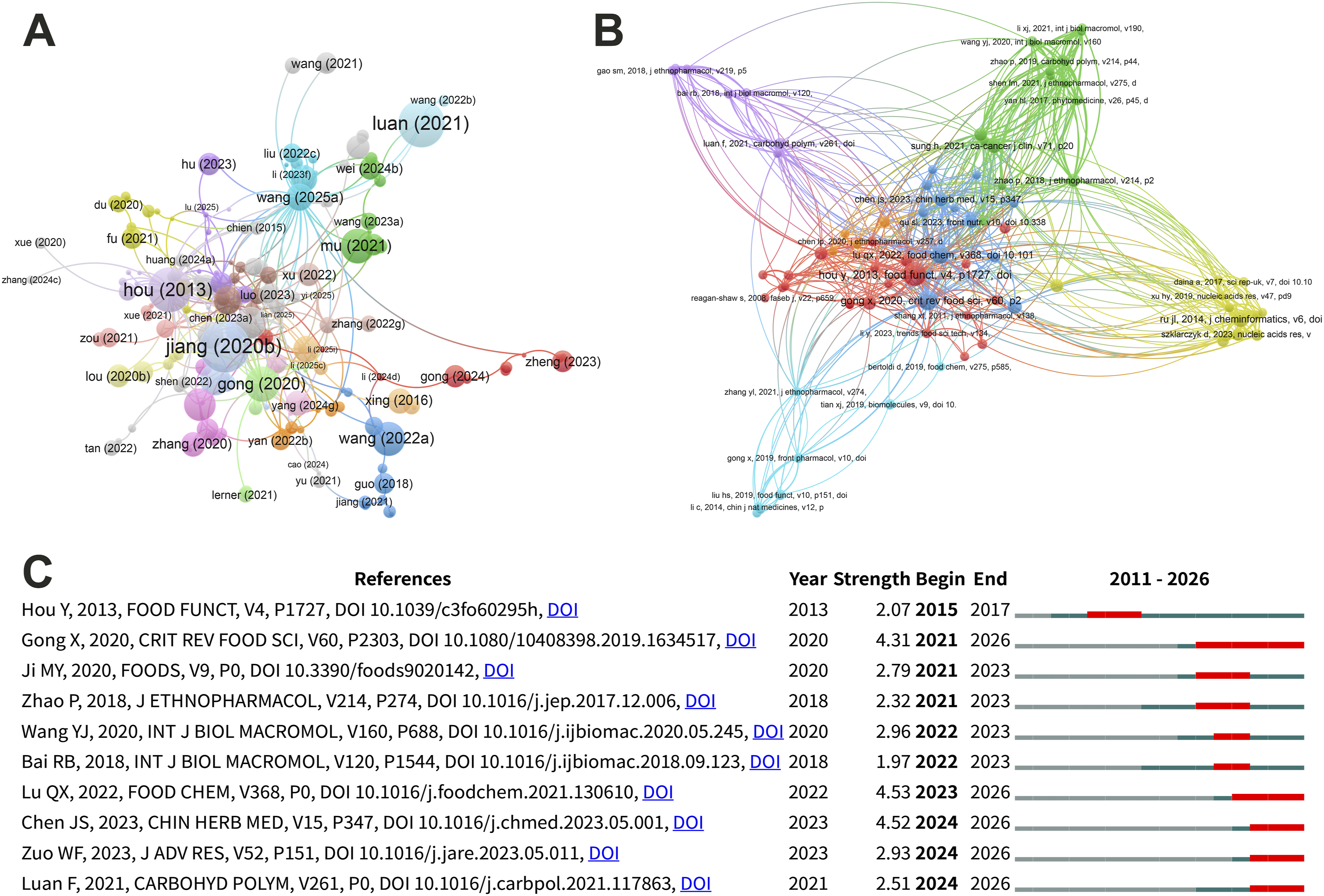
Citations and co-cited references distribution of publications related to research on medicine food homology. (A) VOSviewer visualization map of the high cited publications. (B) VOSviewer visualization map of co-cited references. (C) Top 10 co-cited references with the strongest citation bursts related to research on medicine food homology
Interestingly, among the top 10 highly cited papers, two are also among the top 10 co-cited papers in this field. Among them, the paper “Origin and concept of medicine food homology and its application in modern functional foods” published by Professor Hou, Yan from South China University of Technology in Food Function in 2013 has been cited 190 times. This paper has been cited 37 times by the 509 documents and ranks first among all co-cited documents. The second is the paper “Hypoglycemic effects of bioactive ingredients from medicine food homology and medicinal health food species used in China” published by Professor Gong, Xue from Baotou Medical College in Critical Reviews in Food Science and Nutrition in 2020, which has been cited 25 times in this field. The above results indicate that these highly cited and co-cited papers have extremely high influence in the field of MFH research.
Based on the network co-occurrence analysis, the association among these co-cited papers were visualized (Figure 6B). Although the co-cited papers have a complex network intersection, they can be divided into six main research directions. The purple area mainly focuses on the research of polysaccharides from Codonopsis pilosula, the cyan area mainly focuses on the research of Siraitia grosvenorii, the green area mainly focuses on the research of Polygonatum odoratum, and the yellow area mainly focuses on the research of related tools, such as the Traditional Chinese Medicine Systems Pharmacology (TCMSP) database and the STRING database. Besides, the red and blue areas mainly focus on comprehensive research on MFH.
Next, a burst analysis on these co-cited references were conducted (Figure 6C), which shows the burstiness of these references in terms of citation from 2011 to 2026. The results indicate that the majority of these co-cited references experienced their citation bursts mainly between 2021 and 2026. Interestingly, the reference with the highest burst intensity were the paper “Ingredients with anti-inflammatory effect from medicine food homology plants” and “Essential role of medicine and food homology in health and wellness”, with a burst intensity of 4.53 and 4.52, respectively. This is consistent with the results of the previous citation analysis. The paper “Hypoglycemic effects of bioactive ingredients from medicine food homology and medicinal health food species used in China” by Professor Gong, Xue, also with a high burst intensity of 4.31. This paper has the longest period of burst, indicating that it has received continuous attention from peers. Additionally, the papers by Professor Zuo, Weifang “Gut microbiota: A magical multifunctional target regulated by medicine food homology species” and Professor Luan, Fei “Extraction, purification, structural characteristics and biological properties of the polysaccharides from Codonopsis pilosula: A review” are currently showing continuous burst intensities, indicating that they are currently in the hotspots of citation.
3.6. Keyword Analysis
Top 20 Keywords Related to Research on Medicine Food Homology

From the perspective of network analysis (Figure 7A), these keywords have strong cross-connections, indicating that the research directions in this field are relatively close. Based on this, a cluster analysis on these high-frequency keywords according to the research subjects were conducted and 14 main research directions were obtained (Figure 7B). Most of these disciplines overlap, indicating that they have the characteristics of multi-disciplinary integration in the field of MFH. Among these 14 disciplines, there are still some independent ones, including “Nursing” (Cluster 12), “Food Science & Technology” (Cluster 7), and “Biotechnology & Applied Microbiology” (Cluster 5). It is suggested that the cooperation and communication among these research fields still need to be further strengthened. CiteSpace visualization map of keywords related to research on medicine food homology. (A) CiteSpace visualization map of different keywords. (B) Cluster analysis of the keywords based on their category. (C) Time-zone chart of different keywords
The time-zone map could connect one or more events in chronological order to form an intuitive description. Based on the interaction between keywords in a specific field, it aims to help explore the evolution trajectory and stage characteristics of a field. Figure 7C is a keyword time-zone map drawn by CiteSpace, which directly reflects the hot evolution path of the research field of MFH from the time dimension. It can be seen that the distribution of these keywords shows obvious time intervals. In the initial stage, the research in this field tended to focus on the separation of chemical components of MFH plants, with representative keywords such as “identification” and “extract”. With the passage of time, the research focus shifted to pharmacology, with representative keywords such as “antioxidant activity”, “apoptosis”, and “inflammation”. Since 2022, research represented by “network pharmacology” has gradually attracted attention. The burst word analysis further shows that the research hotspots in the field of MFH have changed over time in the past 15 years (Figure 8). Network pharmacology emerges as the dominant research frontier with the highest burst strength (4.08), indicating a systemic transition from traditional empirical studies to mechanism-oriented investigations targeting multi-component and multi-target interactions. Notably, five keywords: network pharmacology, molecular docking, colorectal cancer, gastric cancer, machine learning, and cell death, remain in an active burst state through 2026. This sustained momentum highlights a critical evolution where MFH research is increasingly converging with precision oncology and artificial intelligence. The focus on gastrointestinal cancers (colorectal and gastric) coupled with “cell death” suggests that MFH substances are being rigorously evaluated for their pro-apoptotic and anti-tumor potentials, moving beyond basic nutritional claims to clinically relevant therapeutic explorations. Top 20 keywords with the strongest citation bursts related to research on medicine food homology (Visualized by CiteSpace)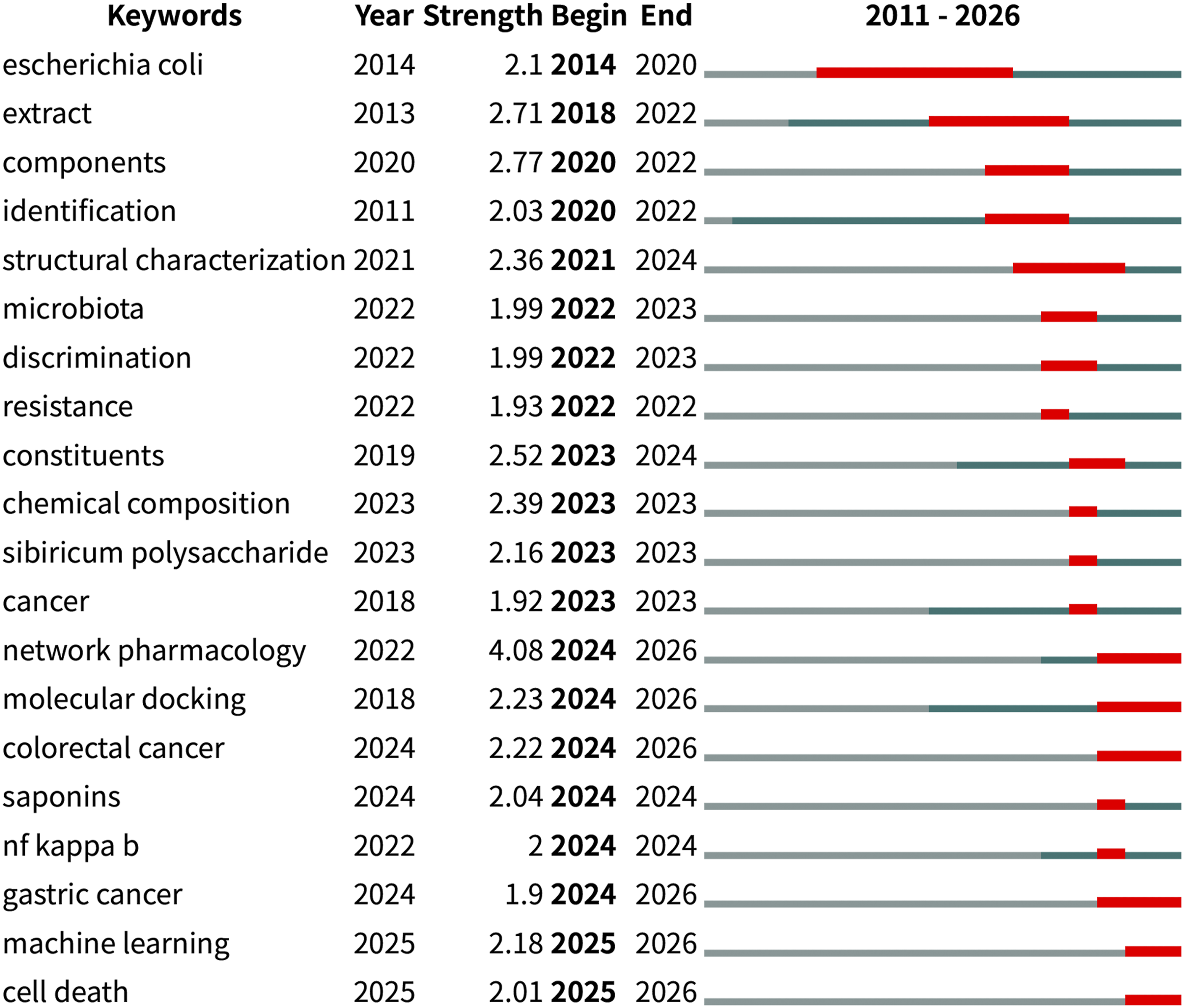
4. Discussion
Building upon the quantitative results revealing that reviews constitute 22.0% (112/509) of the literature, predominantly narrative reviews (n=105), and that highly cited milestones are overwhelmingly review articles, it is evident that the field currently prioritizes summarization over mechanistic discovery. While these reviews provide valuable overviews, our analysis of original research indicates a critical stagnation in investigative depth; the majority of primary studies remain confined to compositional identification and preliminary efficacy validation. There is a conspicuous paucity of studies delving into the intricate molecular mechanisms underlying MFH. Besides, most research still operates within the realm of traditional efficacy description, lacking the sophisticated experimental designs or translational models necessary to elucidate how these substances interact with biological systems at a systemic level, such as the interaction mechanism between gut microbiota and MFH are scarce.17,18 This “descriptive ceiling” significantly limits the academic impact and clinical translatability of MFH research. To elevate the field, future endeavors must pivot decisively toward high-quality original research. This entails moving beyond mere ingredient profiling to conducting rigorous, hypothesis-driven investigations, such as artificial intelligence technologies and randomized controlled trials, that dissect pharmacological pathways and establish definitive causal links. 19 Prioritizing such high-fidelity scientific output is essential for transitioning MFH from a collection of anecdotal traditions to an evidence-based discipline capable of informing global precision nutrition strategies.
Despite the exponential growth in publications, our analysis reveals a pronounced “geographic bottleneck” in MFH research, with output heavily concentrated in China (93.9%) and a lack of deep international engagement. Moreover, researches in China mostly focus on the compatibility rules of compound prescriptions and the interpretation of traditional culture, while the international academic community pays more attention to the molecular mechanisms and clinical trials of single components, resulting in obvious differences in research characteristics. The possible reasons for this difference include: First, the theoretical systems of traditional Chinese medicine and modern medicine are significantly different, and core concepts such as “Four Properties and Five Tastes” and “King, Minister, Assistant, and Messenger” in MFH are difficult for international peers to directly understand, and cultural identity has exacerbated the difficulty of theoretical dissemination. 20 Second, the international standards and certification systems are not yet compatible. The dynamic adjustment standards of China’s “List of Food and Medicine Substances” are relatively loose, while compared with China, the United States and the European Union have stricter approval requirements for herbal products. Third, the industry-university-research cooperation network has not yet formed cross-cultural linkage. China’s researches mostly rely on local resources, while international top teams tend to conduct independent component research, lacking a joint research mechanism. To solve the above problems, future research should start from the following aspects. First, promote the internationalization of the theoretical system by establishing a multilingual terminology database (such as the translation of “MFH”) and developing an evidence chain of evidence-based medicine (such as randomized controlled trial studies) to enhance the international academic discourse power. Second, build a collaborative innovation platform and work with international organizations to formulate unified standards for the detection of active ingredients and improve the international certification path for MFH products. Finally, deepen talent and technology exchanges by setting up joint laboratories and cultivating compound talents proficient in traditional Chinese medicine and modern technology to promote technology integration and achieve a global transformation from “experience-driven” to “data-driven”.
Extending beyond the geographical and methodological gaps, the keyword burst analysis (Section 3.6) signals a pivotal shift toward AI-driven precision medicine as the defining frontier for MFH. The dominance of “network pharmacology” (boasting the highest burst strength of 4.08) and the sustained activity of “machine learning” through 2026 signal a decisive departure from traditional reductionist approaches toward complex systems biology. This trend is further substantiated by the concurrent emergence of “molecular docking”, “cell death”, and specific oncological targets (e.g., colorectal and gastric cancers),21,22 suggesting that MFH research is rapidly evolving into a computationally intensive discipline. Future investigations must harness these sophisticated tools to decode the “multi-component-multi-target” synergy inherent in MFH, moving far beyond the mere verification of active ingredients. By integrating AI algorithms with multi-omics data, researchers can construct predictive models for individualized efficacy. 23 This convergence facilitates a critical transition from empirical prescriptions to data-driven precision nutrition, where MFH interventions are dynamically tailored to specific molecular phenotypes and metabolic needs. 24 Furthermore, the application of deep learning to predict herb-drug interactions and optimize compatibility rules will bridge the gap between traditional Chinese medicine theory and modern pharmacological standards. Ultimately, embedding artificial intelligence into the research pipeline is crucial for transforming MFH from a traditional practice into a sophisticated, evidence-based pillar of global preventive healthcare, ensuring its relevance in the era of digital medicine.
While this study provides a comprehensive overview of MFH research based on the SCIE database, several limitations should be acknowledged. First, the reliance solely on the Web of Science Core Collection (WoSCC) may have introduced a geographic bias. Although this ensures data standardization, it likely excluded high-quality regional research published in local databases such as CNKI and KCI, particularly foundational studies from China where MFH originated. Second, the timeliness of the data is constrained by the cutoff date (April 2026); the rapid pace of publication means very recent breakthroughs might not be fully captured. Finally, the bibliometric analysis is inherently descriptive and correlative; while we identified “network pharmacology” and “machine learning” as hotspots, this study does not experimentally validate the mechanisms or clinical efficacies of specific MFH substances. Future studies integrating multi-database sources and mixed-method approaches are warranted to overcome these limitations.
5. Conclusion
This bibliometric analysis, encompassing 509 publications from 1976 to 2026, charts the exponential evolution of MFH research. The findings highlight a pivotal shift toward AI-driven precision nutrition, evidenced by the dominance of network pharmacology and machine learning. While China leads in output, the field faces challenges in international theoretical integration and a scarcity of high-quality mechanistic original research compared to narrative reviews. To advance global health, future endeavors must prioritize multidisciplinary collaboration and rigorous RCTs. By harmonizing traditional wisdom with modern computational tools, MFH is poised to transition from experience-based practice to a cornerstone of evidence-based, personalized preventive healthcare.
Supplemental Material
Supplemental Material - A Bibliometric Analysis of Global Trends and Research Hotspots in Medicine Food Homology
Supplemental Material for A Bibliometric Analysis of Global Trends and Research Hotspots in Medicine Food Homology by Xiaolin Li, Minna Liu, Shengguang Wang, Yi Ding, Rong Wang, Wenbin Li, Xiaowei Zhou and Tianlong Liu in Natural Product Communications.
Footnotes
Author Contributions
XL: Writing-original draft; visualization; funding acquisition. ML: Writing the original draft; investigation; funding acquisition. SW: Writing-original draft; methodology. YD: Writing-original draft; validation; supervision. RW: Writing-original draft; methodology; supervision. WL: Conceptualization; writing-review & editing. XZ: Conceptualization; writing-review & editing. TL: Visualization; funding acquisition; writing-review & editing. All the authors have read and agreed to the published version of the manuscript. The authors declare that all data were generated in-house, that no paper mill was used and that no AI tool has been used for the generation of text or figures.
Funding
The authors disclosed receipt of the following financial support for the research, authorship, and/or publication of this article: This research was funded by the National Natural Science Foundation of China (82204746, 82003982), Natural Science Foundation of Gansu Province (25JRRA810, 25JRRA816, 24JRRA1129), Natural Science Foundation of Lanzhou (2024-9-132; 2024-9-135).
Declaration of Conflicting Interests
The authors declared no potential conflicts of interest with respect to the research, authorship, and/or publication of this article.
Data Availability Statement
Data will be made available on request.
Source of the Figures
All the figures were created by the authors. Among them, Figure 1 was created using the Microsoft Office PowerPoint software, Figure 2 was made with the GraphPad Prism software, and Figures 3- were produced using the VOSviewer and CiteSpace software. The specific software information can be found in the figure legends and methodology description.
Supplemental Material
Supplemental material for this article is available online.
Appendix
References
Supplementary Material
Please find the following supplemental material available below.
For Open Access articles published under a Creative Commons License, all supplemental material carries the same license as the article it is associated with.
For non-Open Access articles published, all supplemental material carries a non-exclusive license, and permission requests for re-use of supplemental material or any part of supplemental material shall be sent directly to the copyright owner as specified in the copyright notice associated with the article.
